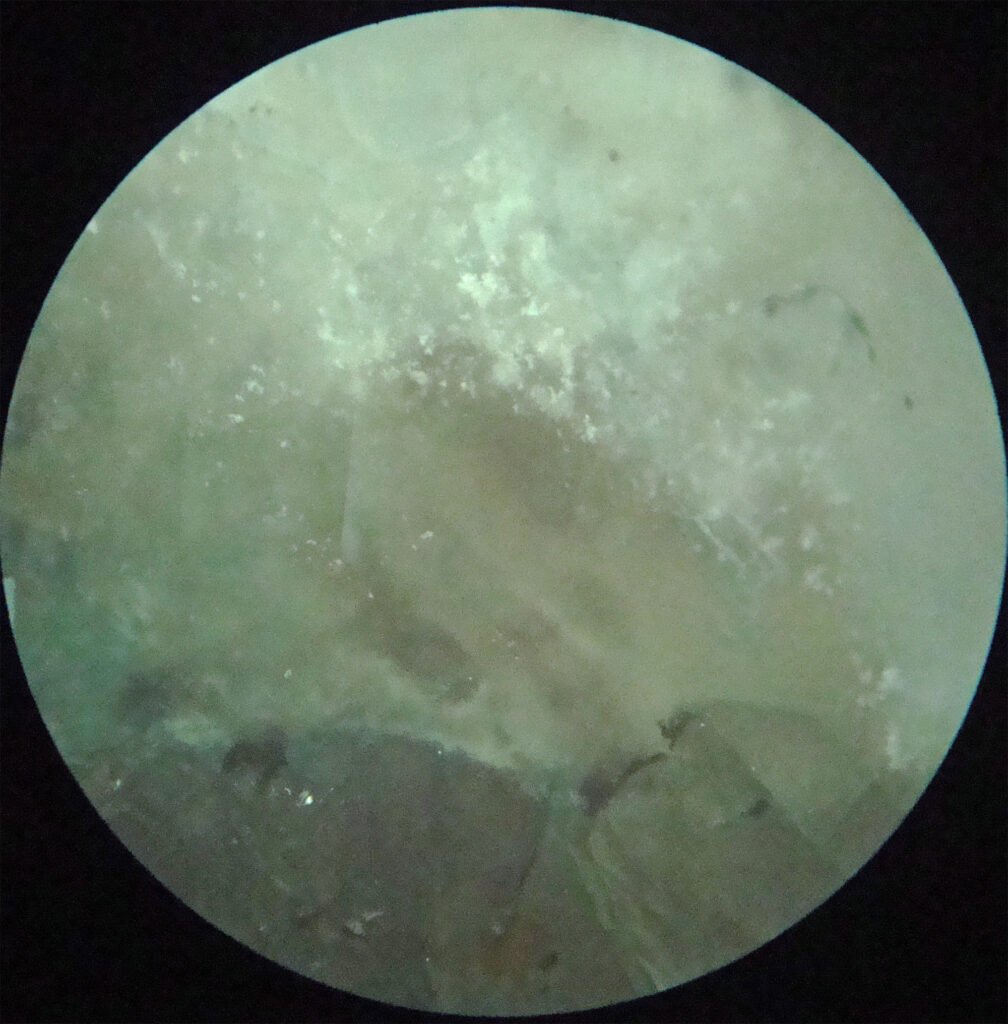
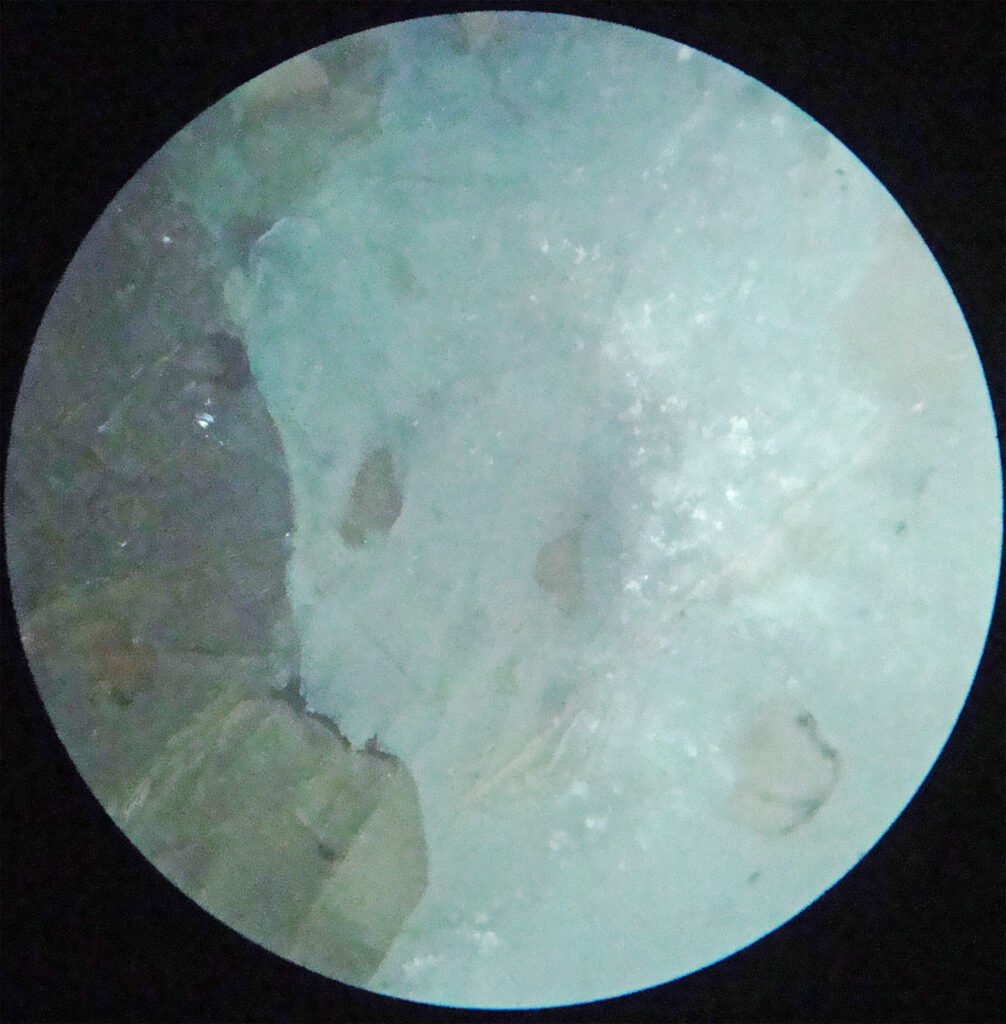
Crystal system: Monoclinic prismatic.
Color: White, yellow to brown as the Ti content increases. Orange, pink.
Habit: Rounded crystals with complex shapes, with many faces. It can be massive and tabular.
Cleavage: {100} poor.
Tenacity: Brittle.
Twinning: Common on {100}, simple or lamellar.
Fracture: Irregular to subconchoidal.
Mohs Hardness: 6
Parting: No.
Streak: White.
Lustre: Vitreous.
Diaphaneity: Transparent.
Density (g/cm³): 3.17 – 3.35
2. Geology and Deposits
Clinohumite typically occurs in contact metamorphism and metasomatism rocks such as limestones and metasomatic dolomites (skarnites), necessarily magnesian: calcitic marbles and dolomitic marbles, in contact with felsic plutonic rocks (granites).
It also occurs in metamorphosed ultramafic rocks (peridotites, talc-schists, serpentinites) and in basic-ultrabasic complexes.
It can occur in volcanic ejecta, carbonatites and kimberlites.
3. Mineral Associations
It occurs with rock-forming minerals such as carbonates (calcite, dolomite) and silicates such as quartz, sanidine, nepheline, biotite, talc, cordierite and clinochlor.
With sulfides like pyrite and to oxides like magnetite and spinel.
Associates with minerals typical of contact metasomatism rocks: vesuvianite, wollastonite, garnets (grossular), olivine (forsterite), tremolite and meionite (a very rare tectosilicate from the Escapolite Group).
It is also associated with rare to extremely rare borates (szaibélyite, ludwigite and fluoborite), monticellite (a rare nesosilicate) and cuspidine (a very rare sorosilicate).
4. Transmitted Light Microscopy
Refraction indices: nα: 1.628 – 1.632 nβ: 1.641 – 1.654 nγ: 1.662 – 1.674 (Indices vary in the literature)
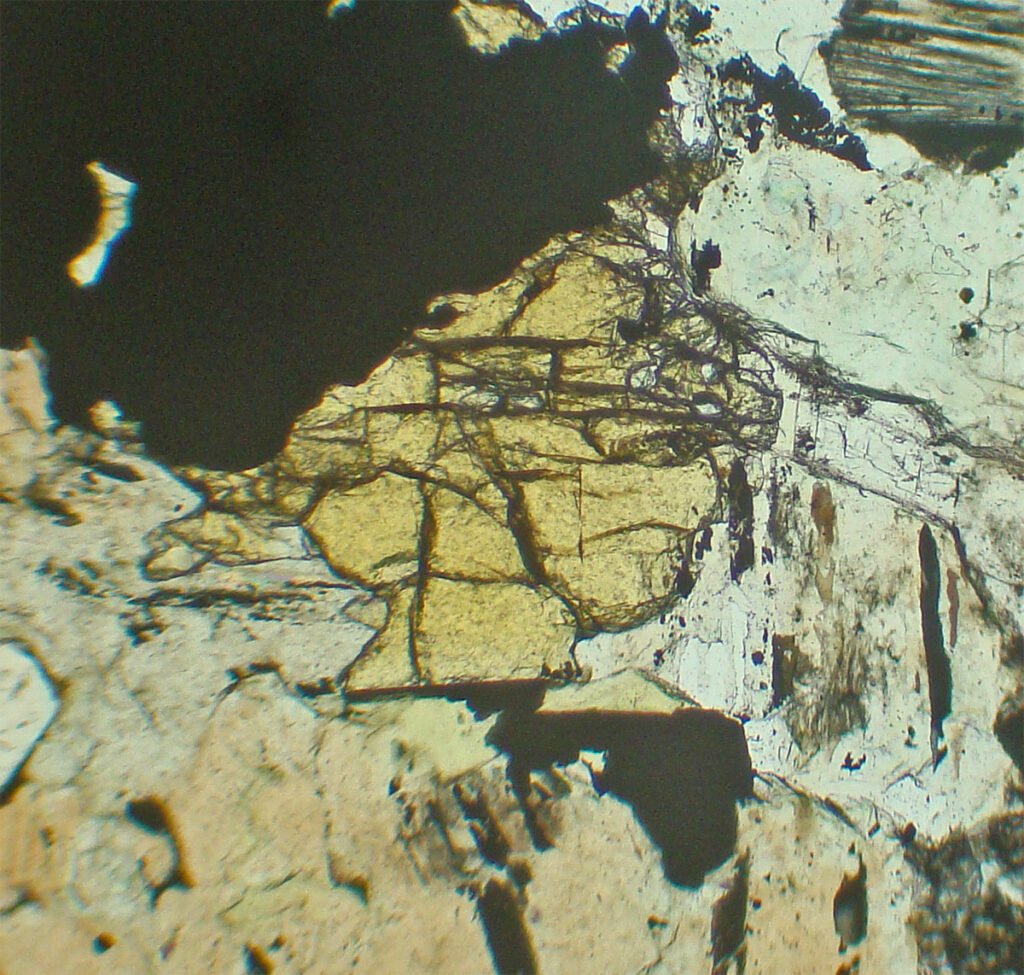
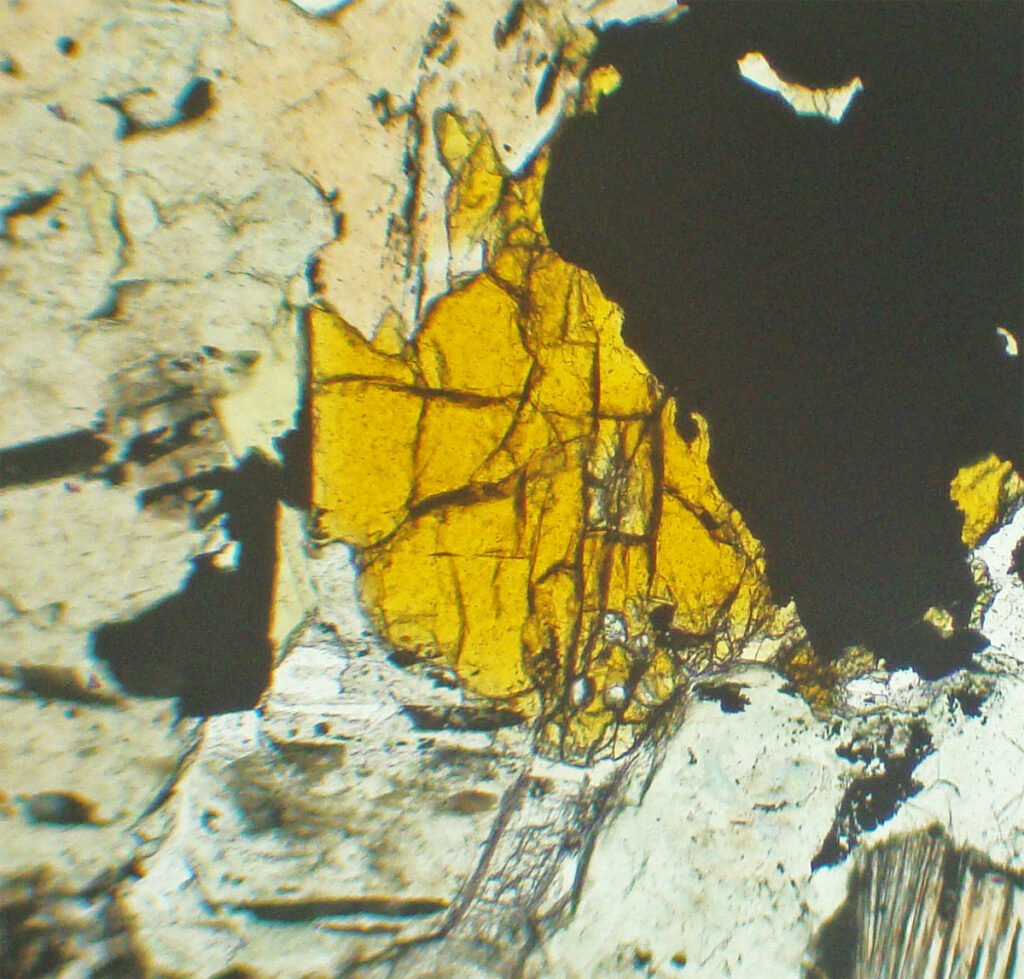
PLANE POLARIZED LIGHT – PPL
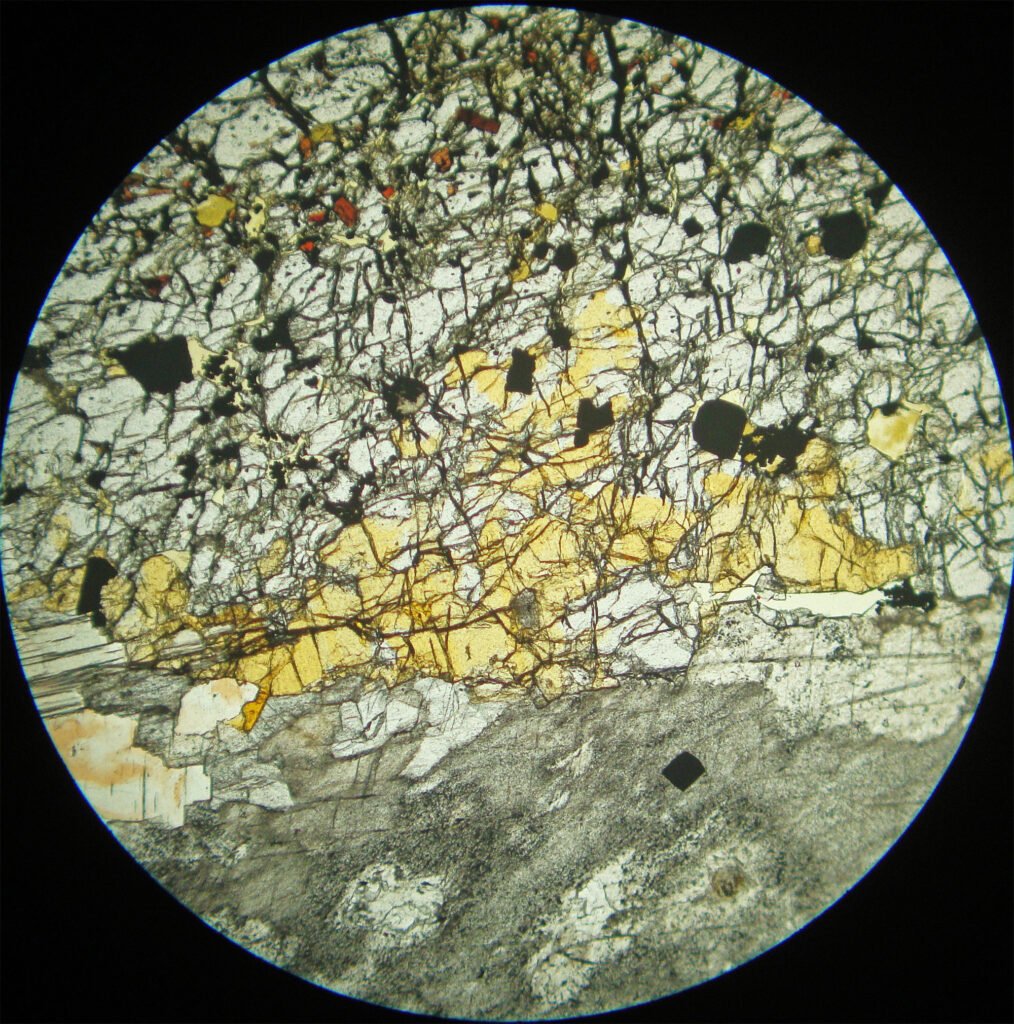
Color / Pleochroism: Colorless, pale yellow to golden yellow. The color becomes more intense with increasing Fe and/or Ti content.
Weak pleochroism between:
X = golden yellow, brown yellow, deep reddish yellow.
Y = pale yellow, orange yellow, light yellow.
Z = pale yellow, yellow orange, colorless.
Relief: Moderate to high.
Cleavage: {100} poor, usually not visible.
Habits: Granular, rounded, polygonal shapes possible, but generally tends to rounded with subhedral to anhedral shapes. It can be presented in a tabular form.
Lamellar intergrowths with olivine and monticellite are frequent.
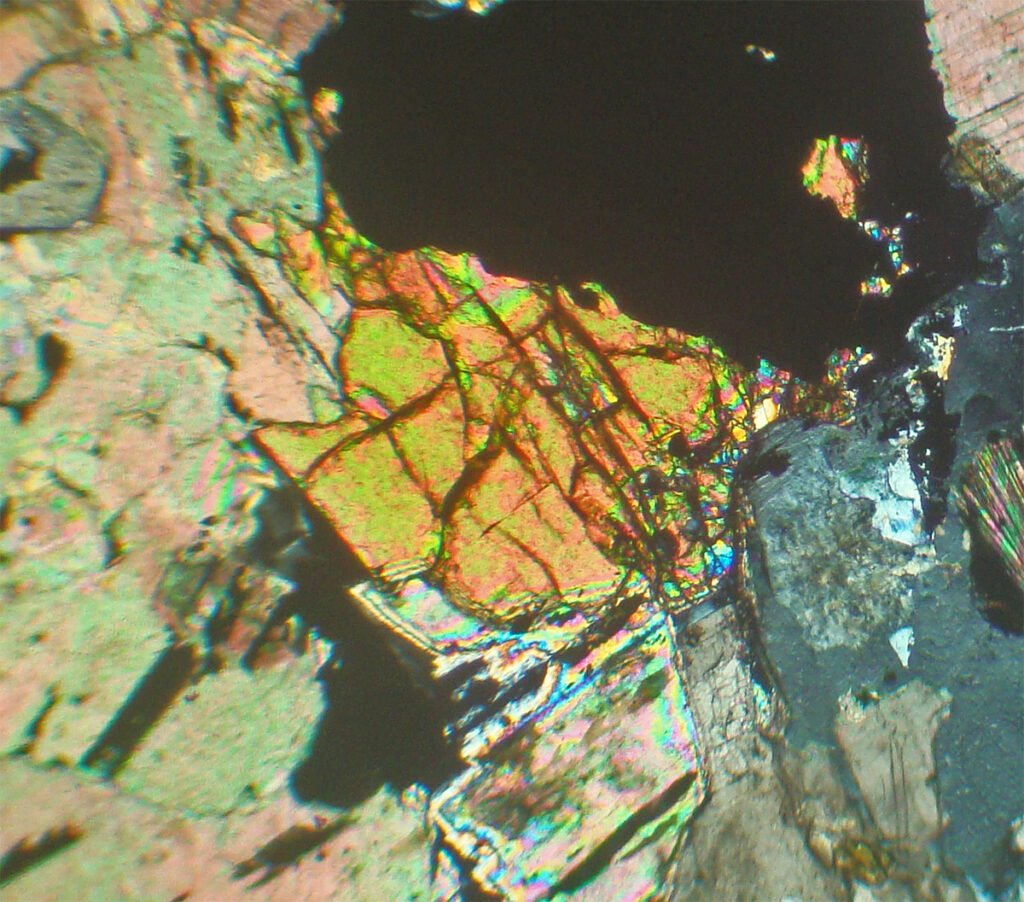
CROSSED POLARIZED LIGHT – XPL
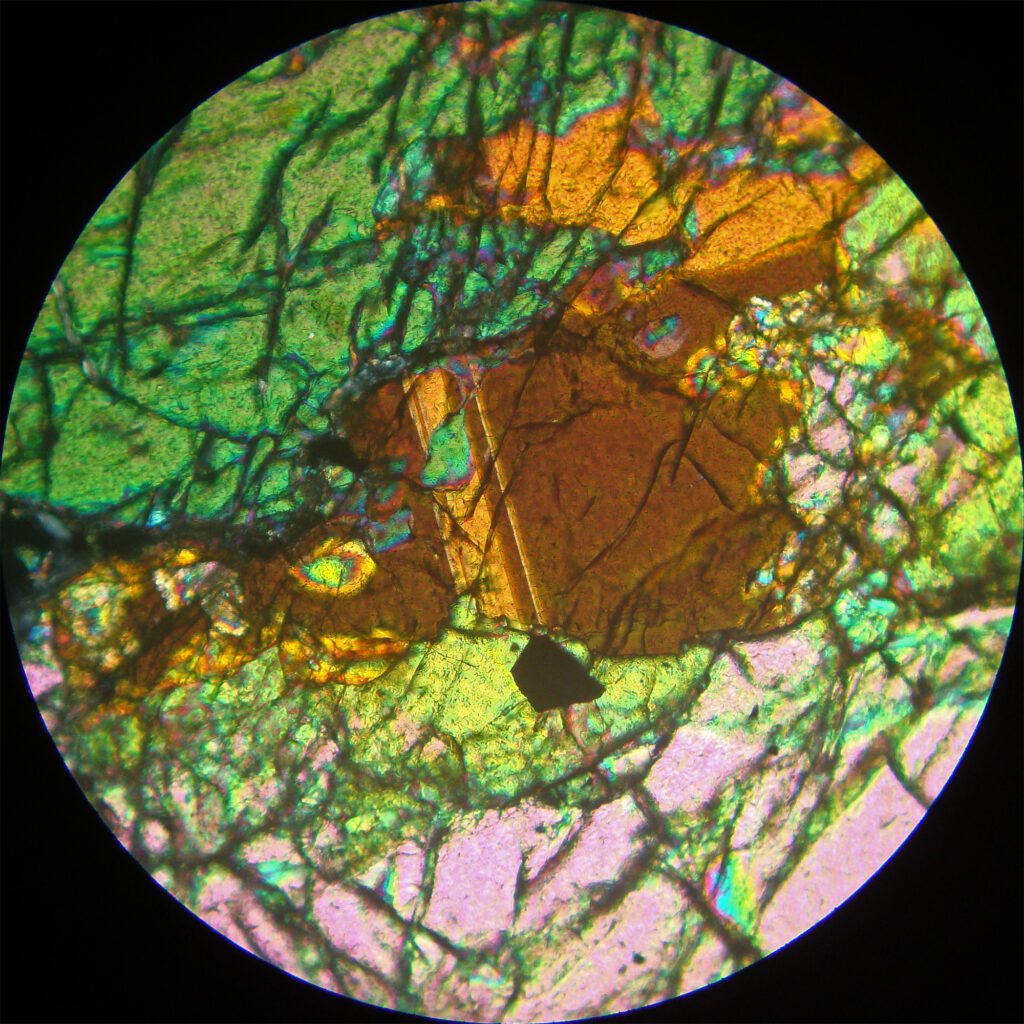
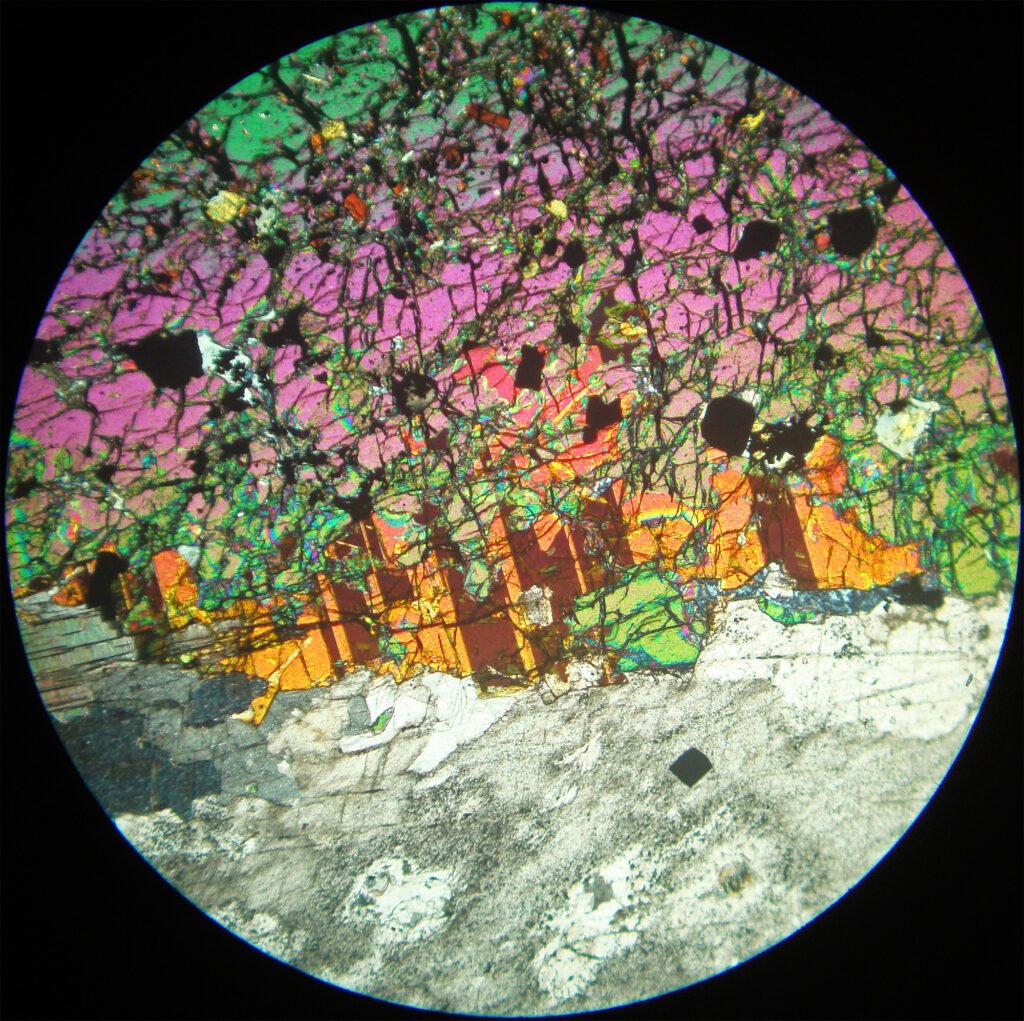
Birefringence and Interference Colors: Maximum birefringence of 0.028, corresponding to colors up to the end of the second order: gray, yellow, red, purple, violet, blue and greenish. They are strong and diverse colors. The stronger the color of the mineral in PPL, the less evident will be the interference colors in CPL, as with titanite, for example.
If the clinohumite has strong own colors, the interference colors are masked and the appearance of the mineral is almost the same in PPL and in XPL
Extinction: Oblique with angles between 9 and 15º.
Elongation sign: ES(+) or ES(-), can rarely be determined as a function of the rounded shapes that the grains usually have. When the grains are tabular, determination is possible, but not diagnostic.
Twins: May occur, simple or lamellar.
Zoning: No.
CONVERGENT LIGHT
Character: B(+)
2V angle: 52-90º or 73-76º; literature with conflicting data.
Alterations: clinohumite alters to serpentine or chlorite.
May be confused with: several other minerals, including several from the same paragenesis.
Olivine is very similar, especially similar to colorless clinohumites. But olivine has an angle of 2V close to 90º and is B(-).
Staurolite shows similar pleochroism, but it occurs in another paragenesis (medium grade pelitic metamorphic rocks such as schists) and its interference colors are much lower.
Altered apatites may appear red, but they are well-defined red colors, do not have the yellow and orange tones typical of clinohumite, nor do they show pleochroism.
The other members of the Humite Group – chondrodite, humite and norbergite – are very similar and careful analysis is necessary. Probably it will be necessary to use another analytical technique for accurate identification.