1. Characteristics
Crystal system: Monoclinic prismatic.
Color: Colorless, it can be green, greenish, gray, yellowish-gray, or pink.
Habit: Short prismatic, granular, rarely fibrous.
Cleavage: {001} perfect. Striations // {010}.
Tenacity: Brittle.
Twinning: Lamellar in {100}, rare.
Fracture: Irregular.
Mohs Hardness: 7
Parting: No.
Streak: Grayish white.
Lustre: Vitreous.
Diaphaneity: Transparent.
Density (g/cm³): 3.3 – 3.4
2. Geology and Deposits
Clinozoisite is a typical mineral of igneous and sedimentary rocks that have undergone low- to medium-grade regional metamorphism: quartzites, slates, phyllites, chlorite schists, mica schists, and others.
It can also occur in gneisses, amphibolites, and, mainly, in contact and regional metamorphic rocks of calcic composition or associated with calcic rocks: hornfels, skarns, marbles, and calc-silicate rocks.
Clinozoisite is present in subduction zones and in contacts between Ca-rich and Al-rich rocks. If Fe is present, epidote is formed.
Clinozoisite can form as an alteration product of plagioclase, in the alteration known as saussuritization.
3. Mineral Associations
It occurs with quartz, anorthite, orthoclase, amphiboles (green hornblende and brown hornblende, actinolite), garnets (grossular), clinopyroxenes (diopside), epidote, prehnite, calcite, chrysocolla, and hessonite.
4. Transmitted Light Microscopy
Refraction indices: nα: 1.706 – 1.724 nβ: 1.708 – 1.729 nγ: 1.712 – 1.735
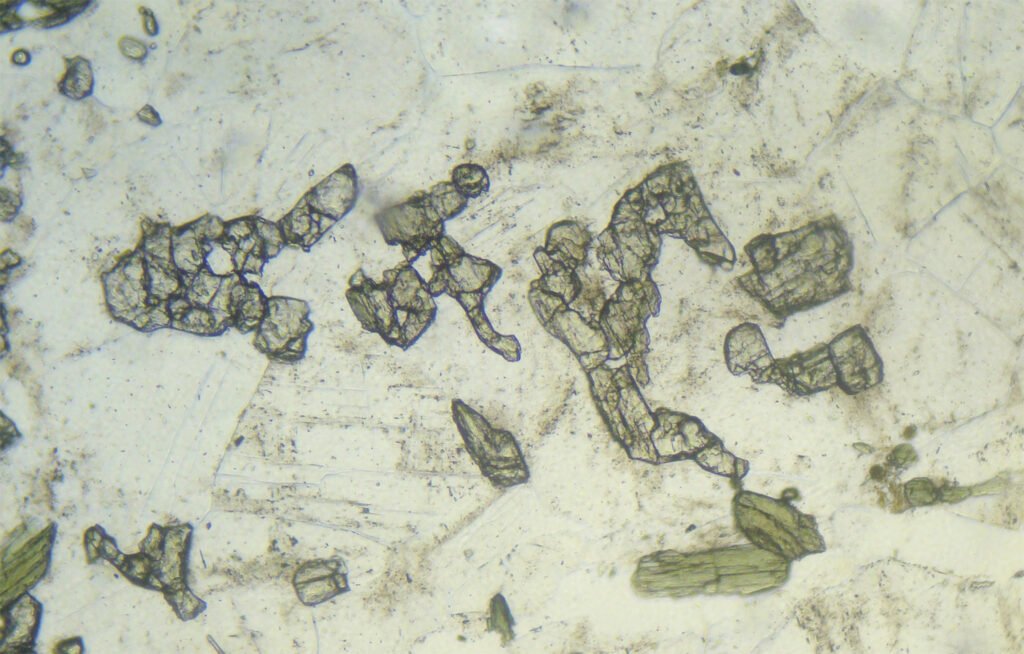
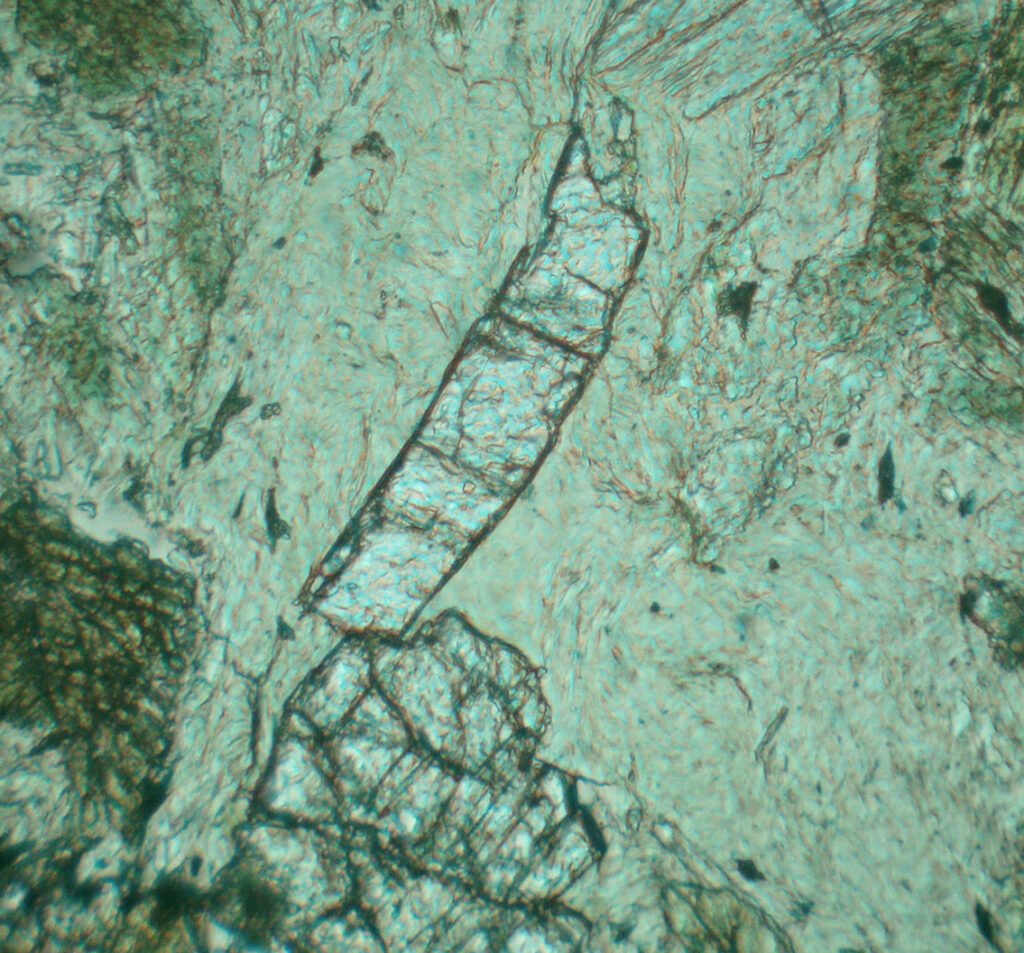
PLANE POLARIZED LIGHT – PPL
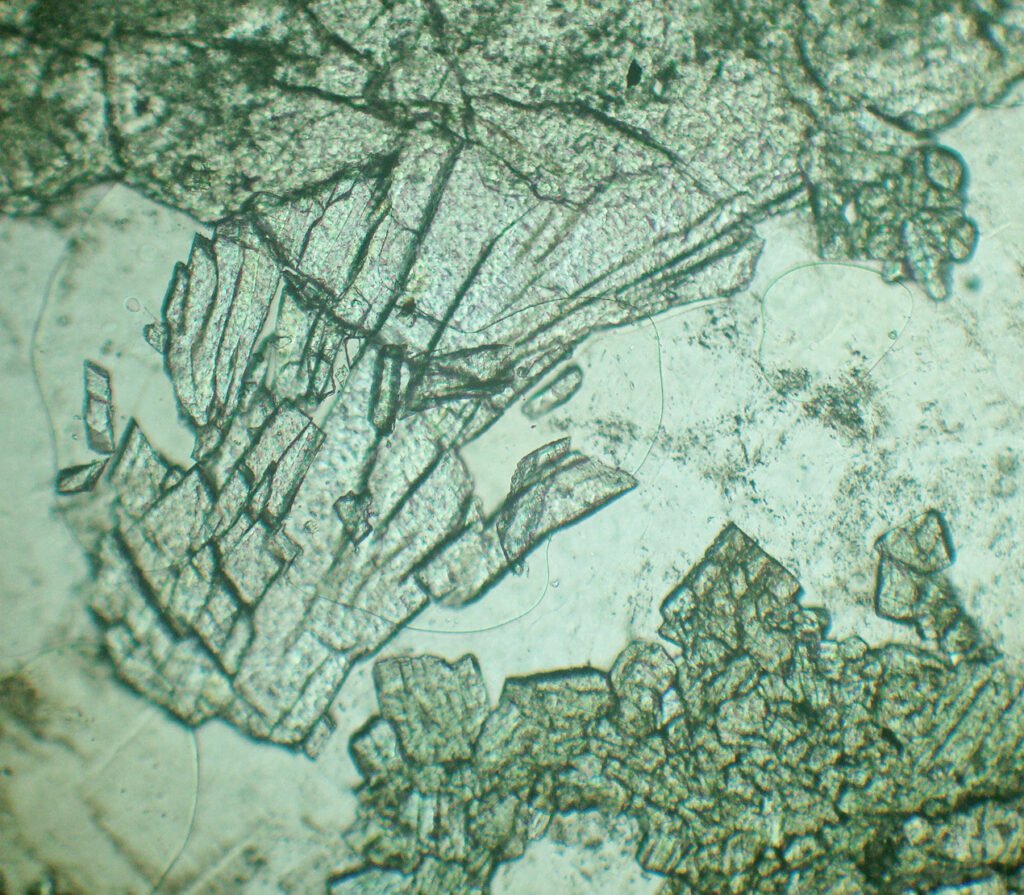
Color / Pleochroism: Colorless.
Relief: Medium to high positive.
Cleavage: {001} perfect, perpendicular to the elongation of the crystals, but may be difficult to observe due to the small size of the grains.
Habits: Prismatic along the b-axis. Anhedral granular with pseudohexagonal basal sections and blade-shaped longitudinal sections. May be acicular, forming radial aggregates.
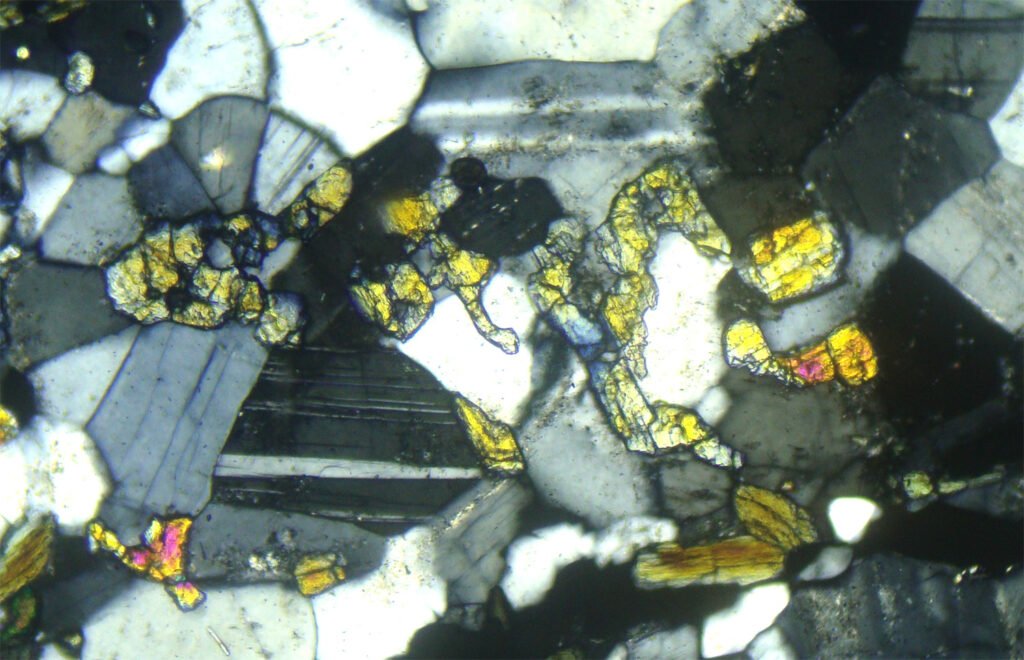
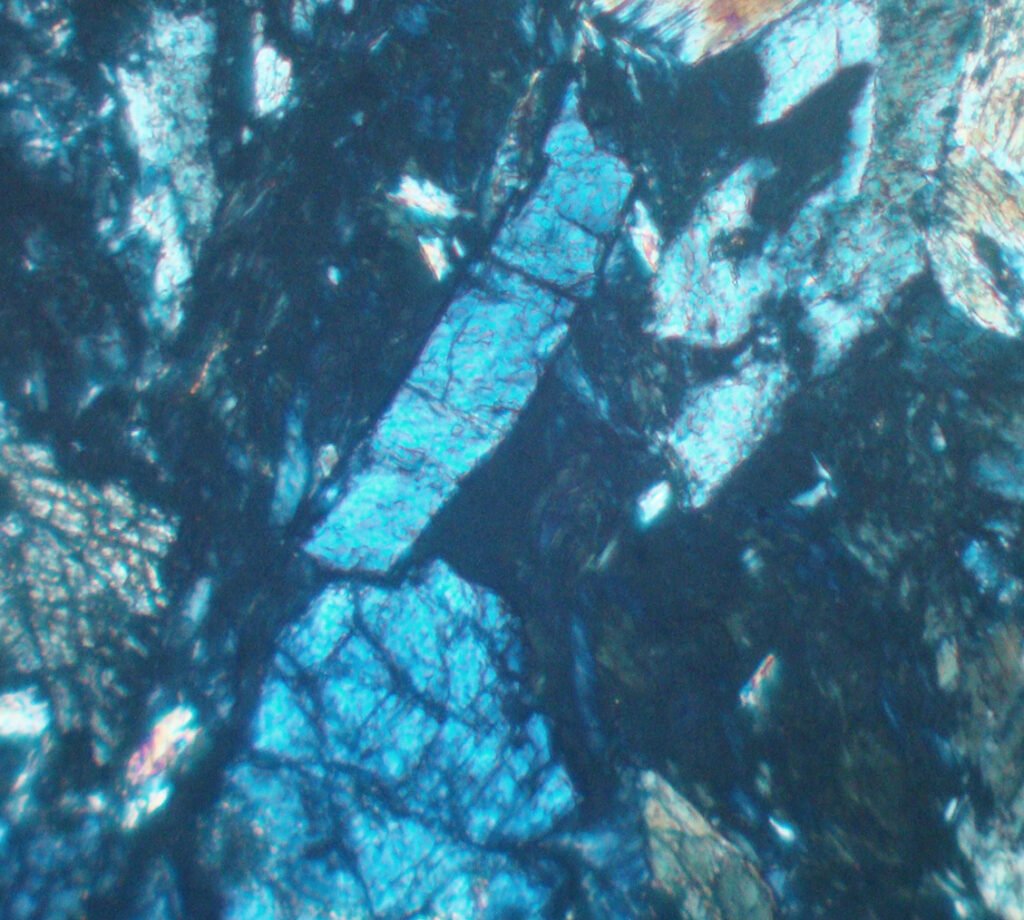
CROSSED POLARIZED LIGHT – XPL
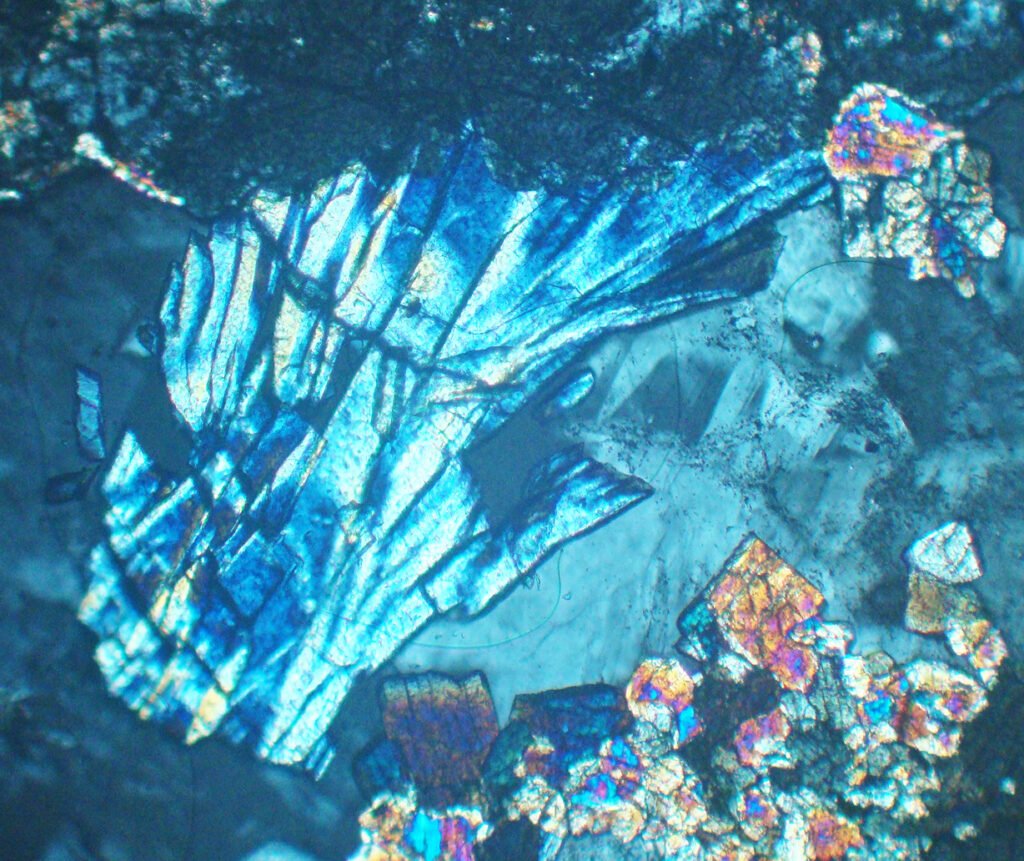
Birefringence and Interference Colors: Birefringence of 0.004 to 0.011: paler colors between gray, white, and yellow; may exhibit anomalous interference colors of blue (“Prussian blue” or “Berlin blue”) or yellow-green.
Extinction: always parallel in longitudinal sections parallel to axis b (also parallel and perpendicular to the cleavage), in other sections oblique extinction of approximately 30º.
Elongation sign: SE(+) or SE(-), it is not diagnostic.
Twins: rare, tend to be lamellar according to (100).
Zoning: Frequently zoned. Zoned crystals with an epidote center and clinozoisite borders may occur.
CONVERGENT LIGHT
Character: B(+) (important, but often difficult to obtain because the crystals are very small.
2V angle: 40 – 90º
Alterations: No.
May be confused with: several other minerals.
Zoisite is similar.
Epidote is very similar, but it is B(-), its birefringence is higher and it may exhibit distinct pleochroism in green colors, which may tend towards citrus green.
Vesuvianite is U(-).
Kyanite shows normal interference colors and is B(-).
Lawsonite and pumpellyite have higher interference colors. When pumpellyite shows no bluish-green color in PPL, it cannot be distinguished from clinozoisite under a petrographic microscope.