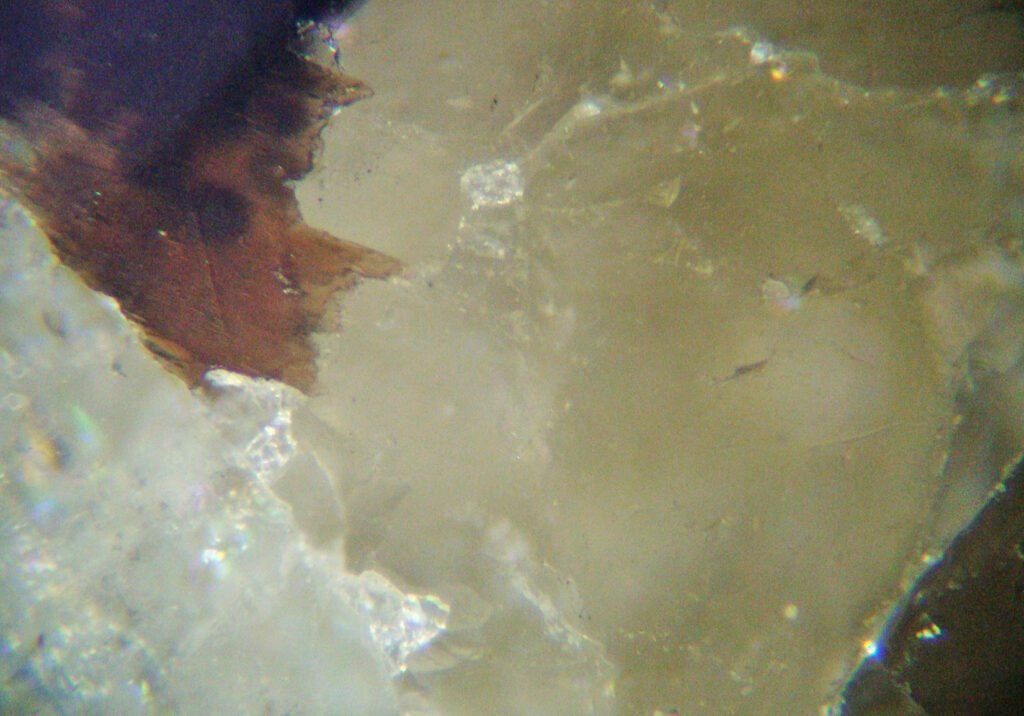
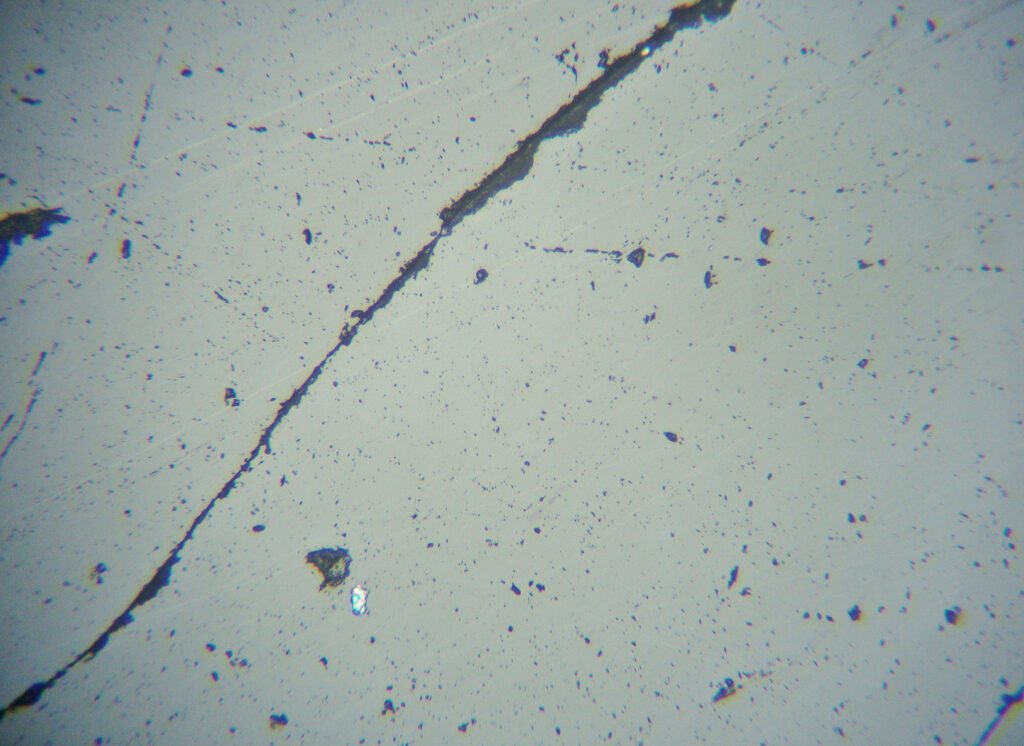
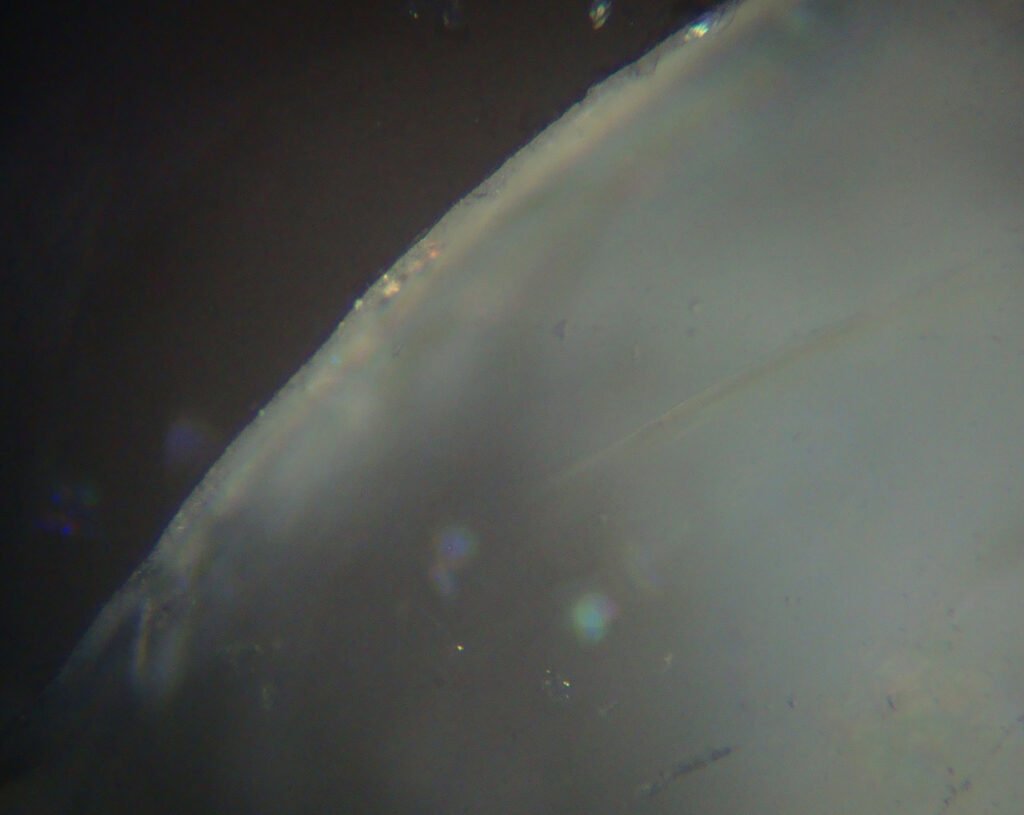
1. Characteristics
Crystal system: Orthorhombic bipiramidal.
Color: Blue, bluish, bluish violet, greenish, yellowish brown, gray.
Habit: Usually granular, massive. Pseudo-hexagonal prismatic twins.
Cleavage: {100} distinct, {001} and {010} poor. Striations // to [001].
Tenacity: Brittle.
Twinning: Common, simple, lamellar, cyclic, by {110} and {130}.
Fracture: Subconchoidal.
Mohs Hardness: 7 – 7.5
Parting: No.
Streak: White.
Lustre: Resinous, vitreous.
Diaphaneity: Transparent.
Density (g/cm³): 2.57 – 2.66
2. Geology and Deposits
In small amounts it occurs in magmatic rocks such as granites, gabbros, rhyolites and andesites. Cordierite is an index mineral for the anatectic origin of the rock or contamination by Al-rich host rocks (such as clay-mineral-rich sediments).
Cordierite is very common in contact metamorphism rocks. At the outer contact aureloas, cordierite prophyroblasts form schists; cornubianites with cordierite are also formed.
Cordierite also occurs in metapelites that have undergone high-grade regional metamorphism, such as gneisses to cordierite. It is also common in granulites and charnochites, as well as pegmatitic metatexites.
3. Mineral Associations
In igneous rocks and metatexites, it occurs with quartz, K-feldspar, plagioclase, andalusite, sillimanite, kyanite, biotite, garnet, rutile, ilmenite, pyrrhotite, chalcopyrite, pyrite and orthopyroxene (enstatite).
In schists it forms as neoformed blasts in a matrix of quartz, biotite, sericite, chlorite, mullite, talc, hematite, anthophyllite and graphite.
In cornubianites it occurs with biotite, muscovite, quartz, plagioclase, andalusite, enstatite and garnet.
In silica undersaturated rocks, cordierite coexists with corundum and spinel.
In rocks formed by contact metamorphism, it typically occurs with sillimanite (which forms fibrous inclusions known as fibrolite), garnet, biotite, ilmenite, and hercynite. May occur detrital.
4. Transmitted Light Microscopy
Refraction indices: nα: 1.527 – 1.560 nβ: 1.532 – 1.574 nγ: 1.538 – 1.578
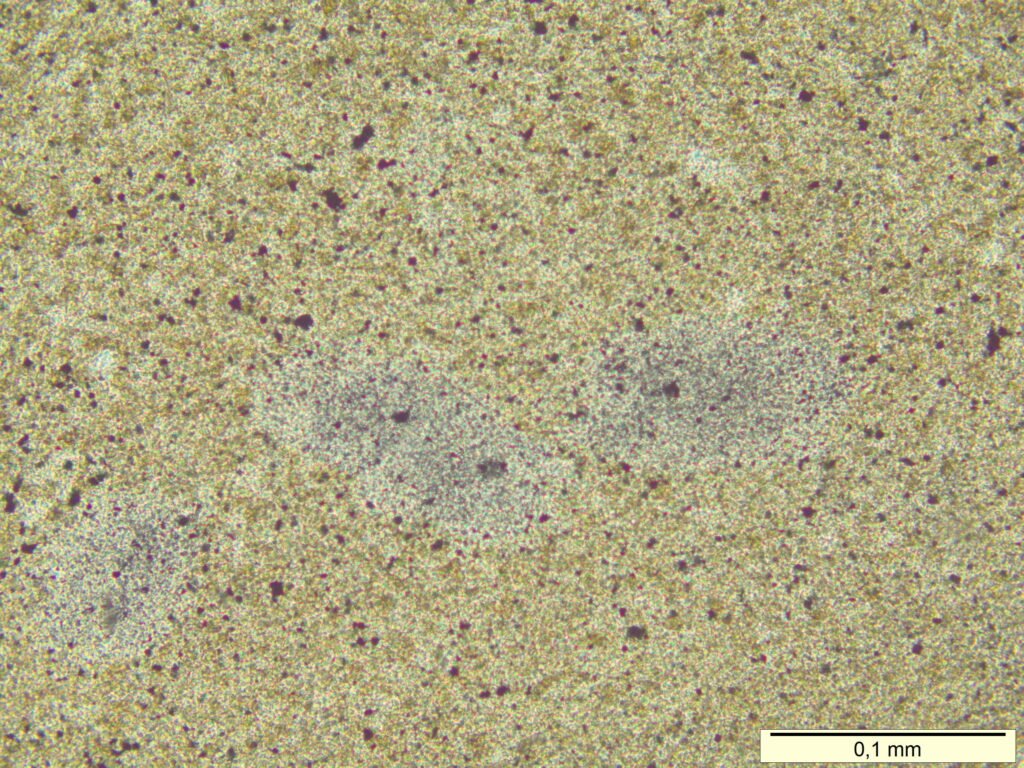
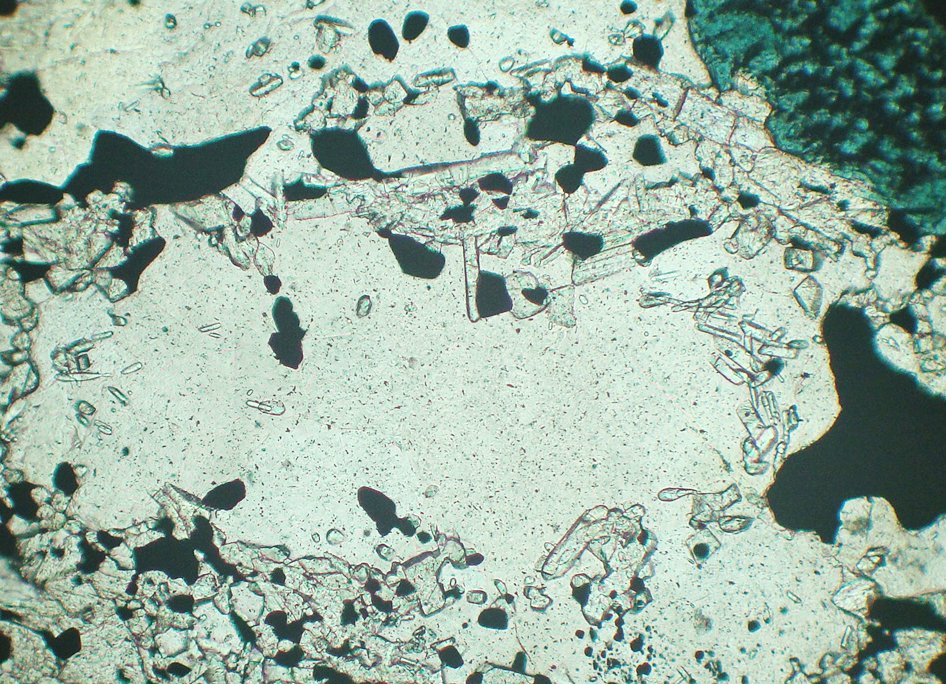
PLANE POLARIZED LIGHT – PPL
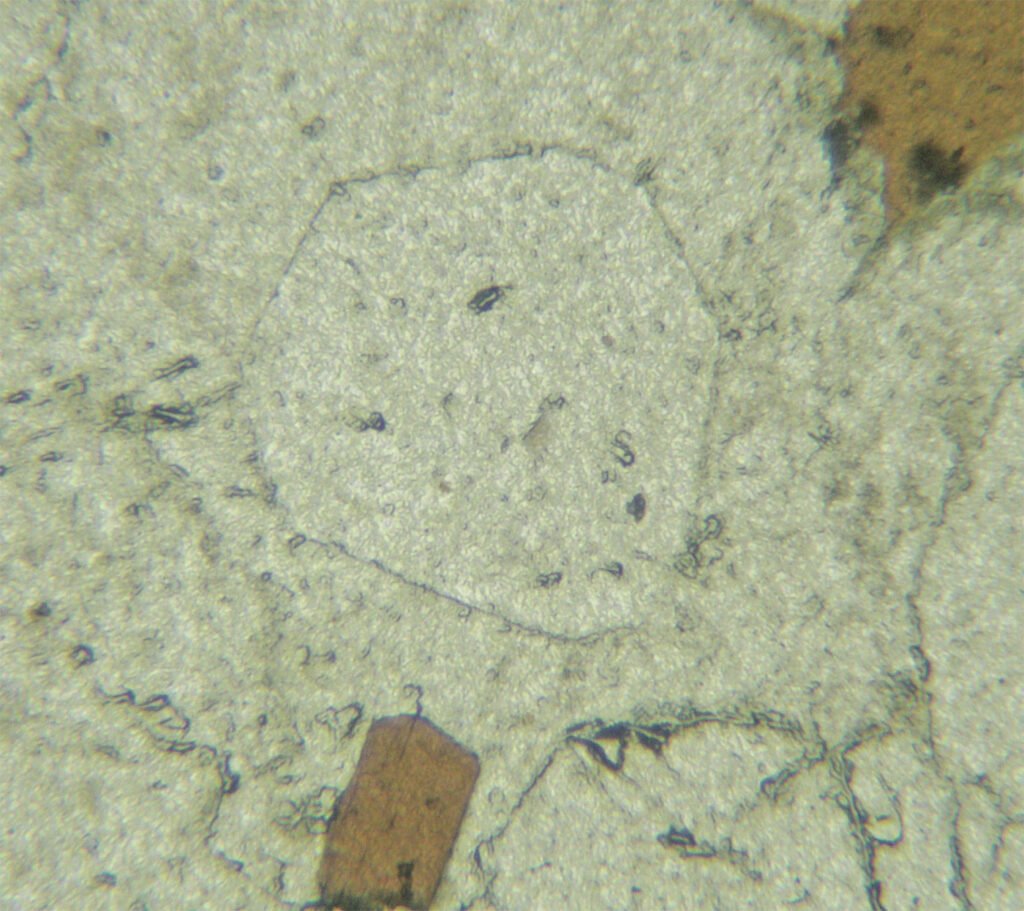
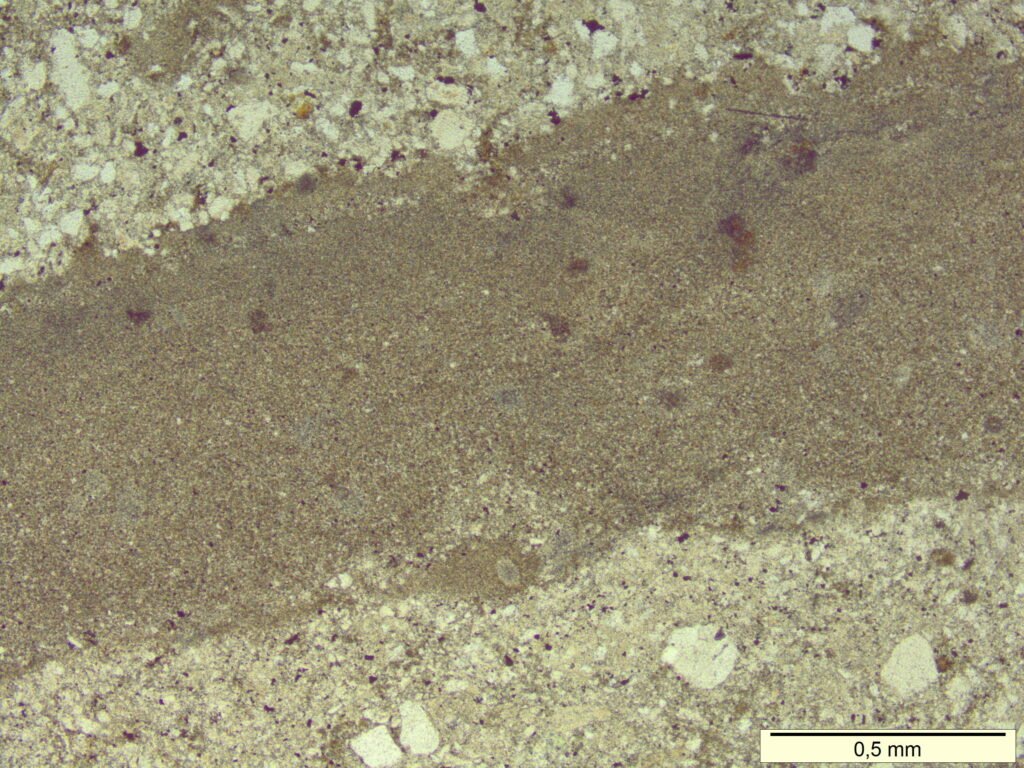
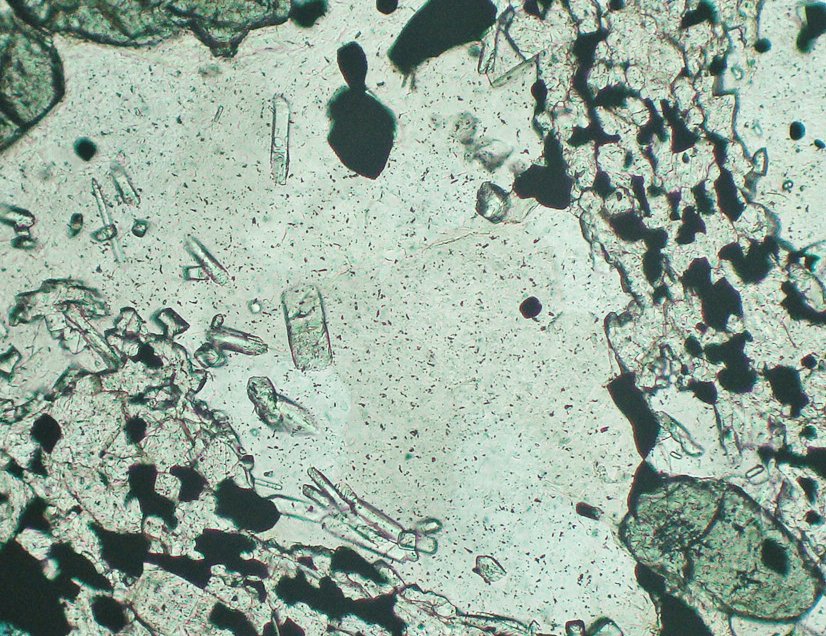
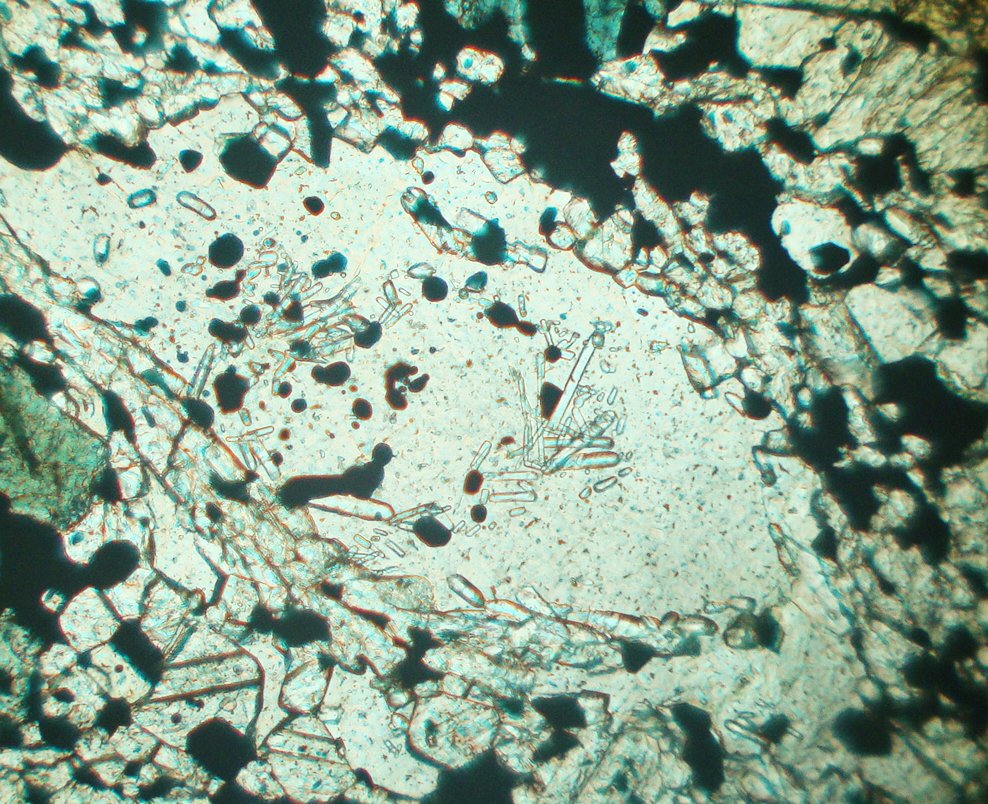
Color / Pleochroism: Colorless if the thin section is of standard 30 microns thickness.
In thick thin-section it is pleochroic between yellowish and pale blue or pale purple, in volcanic rocks sometimes pleochroic between pale blue and pale purple.
Relief: Low negative to low positive.
Cleavage: {100} poor, which is not visible under a microscope. It often has very irregular fractures.
Habits: Usually as anhedral crystals. Very rarely it occurs as euhedral crystals in volcanic rocks, forming short pseudo-hexagonal prisms elongated according to z.
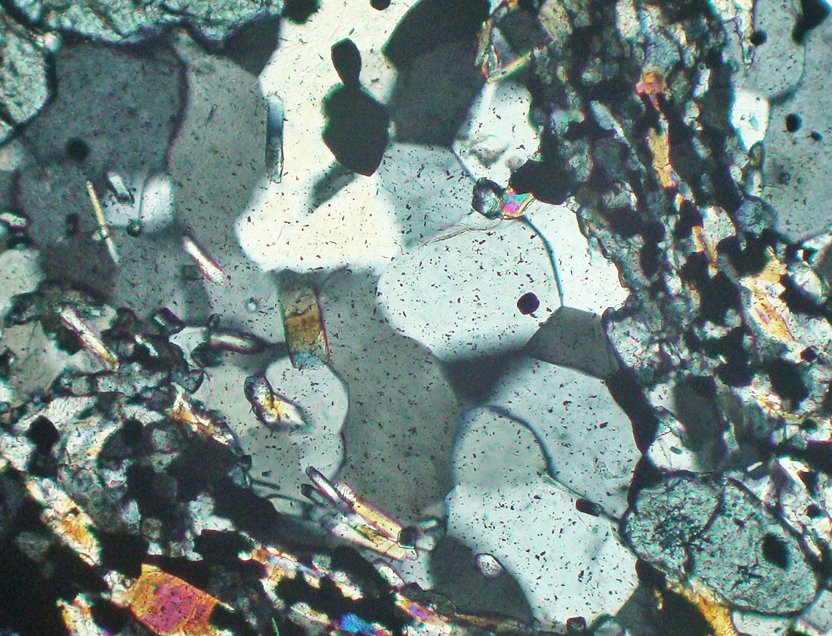
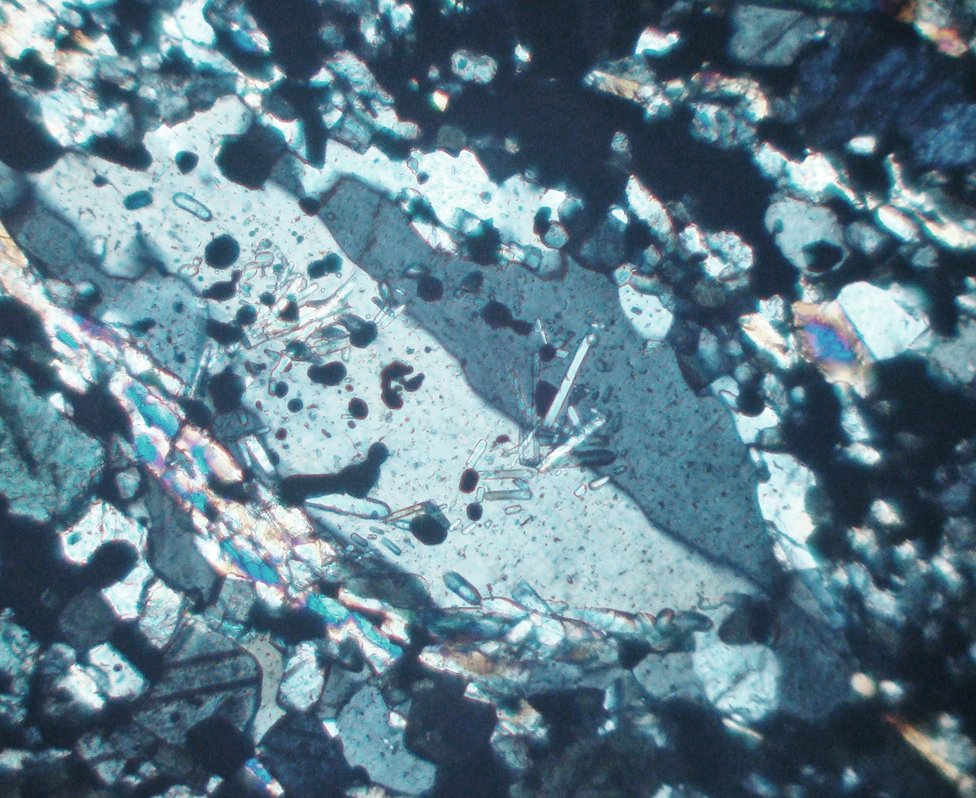
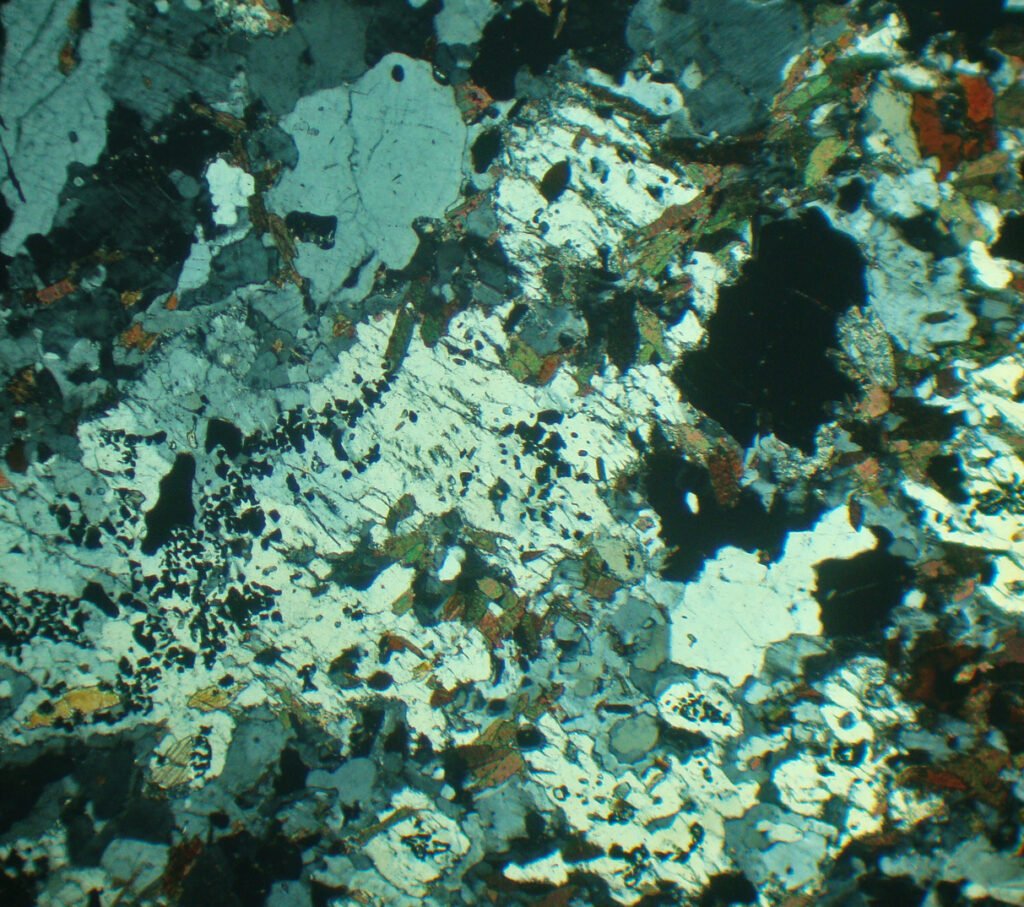
In metamorphic rocks such as cornubianites, it forms anhedral grains (porphyroblasts) with very irregular contours; Poikiloblastic textures with intergrowths with quartz, biotite and/or graphite are typical. In volcanic rocks, quartz inclusions are common; in paragneisses there are fibrolytic inclusions of sillimanite. May be “dusty”, pinitized, with yellow pleochroic halos around zircon and apatite inclusions.
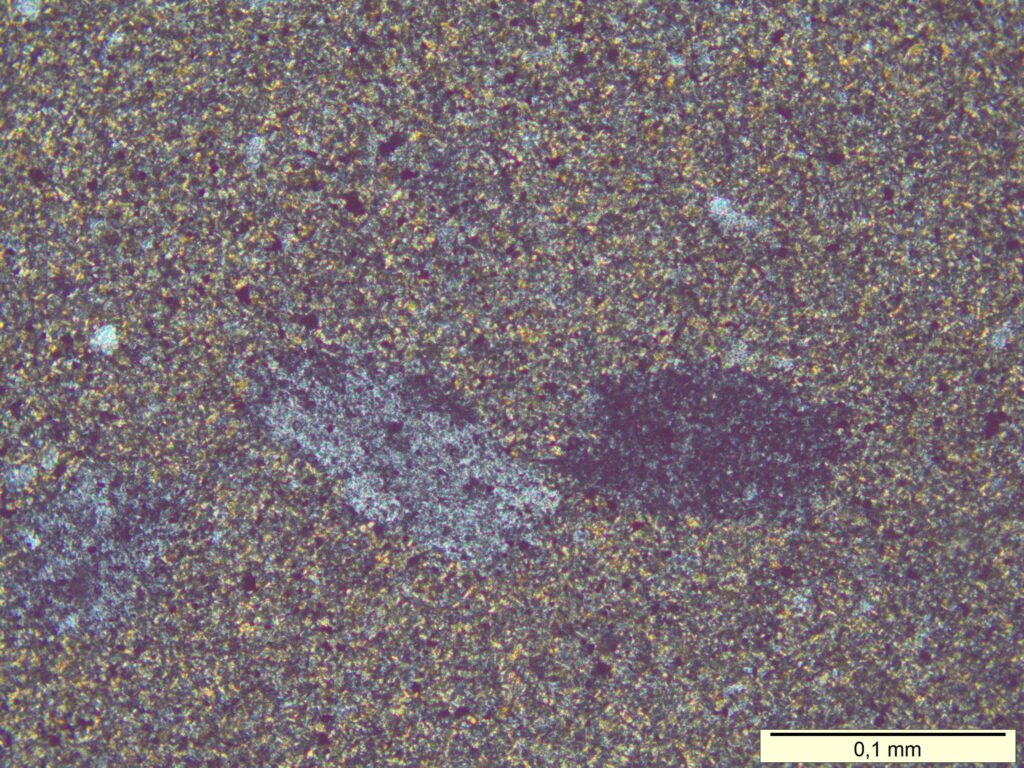
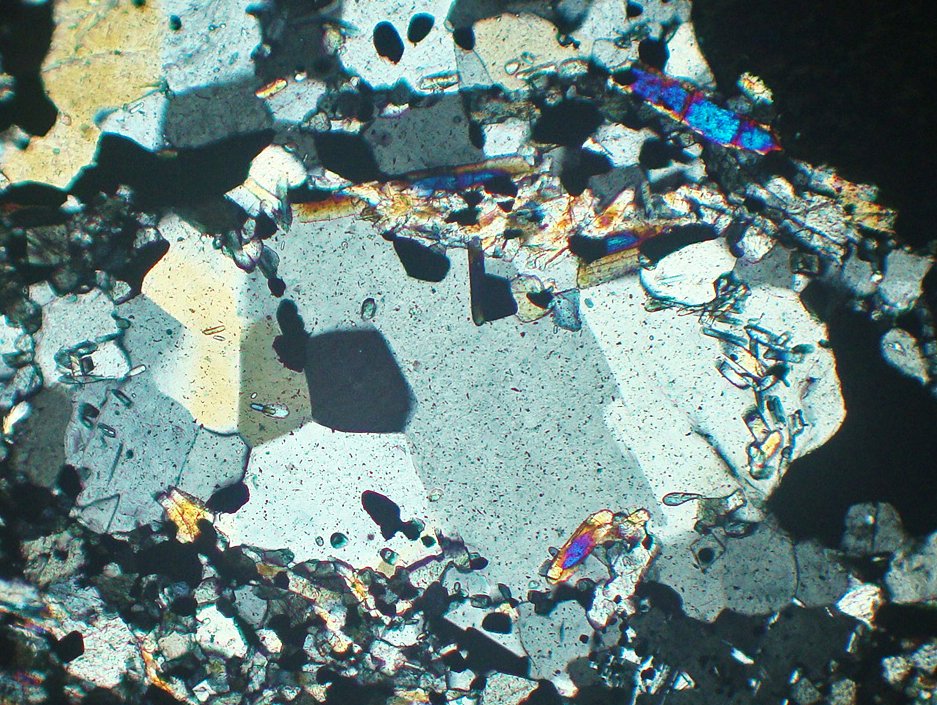
CROSSED POLARIZED LIGHT – XPL
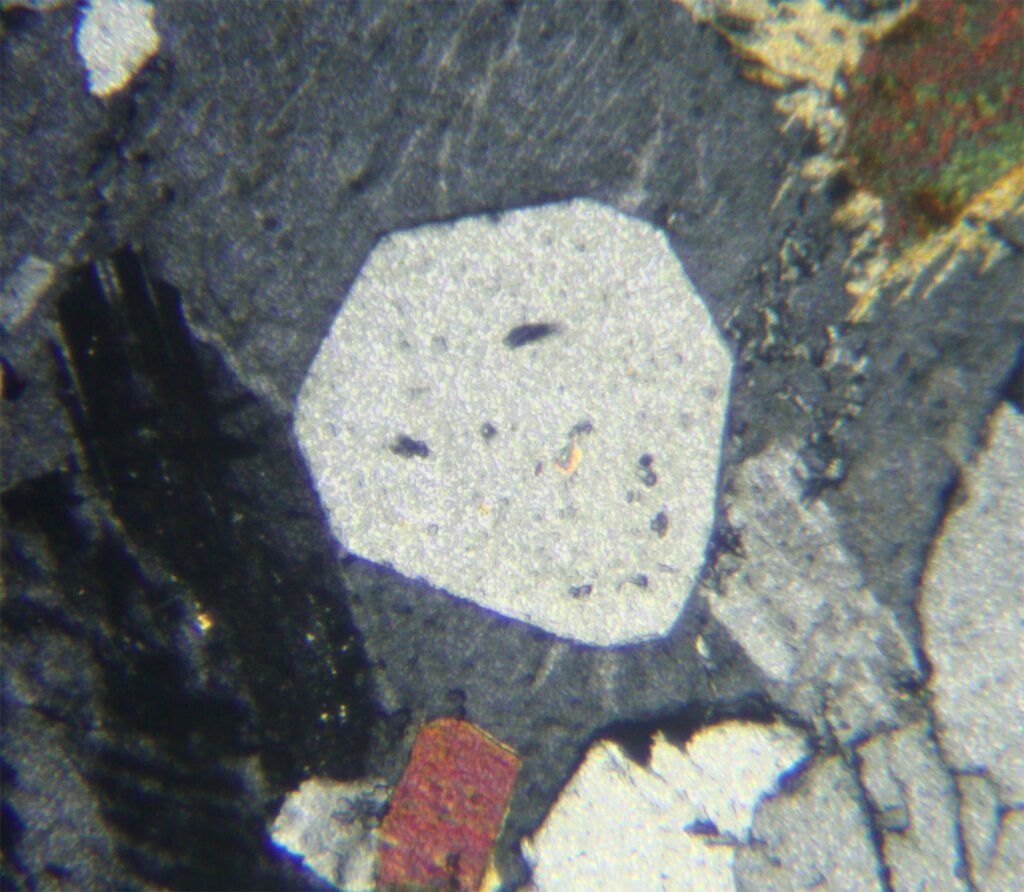
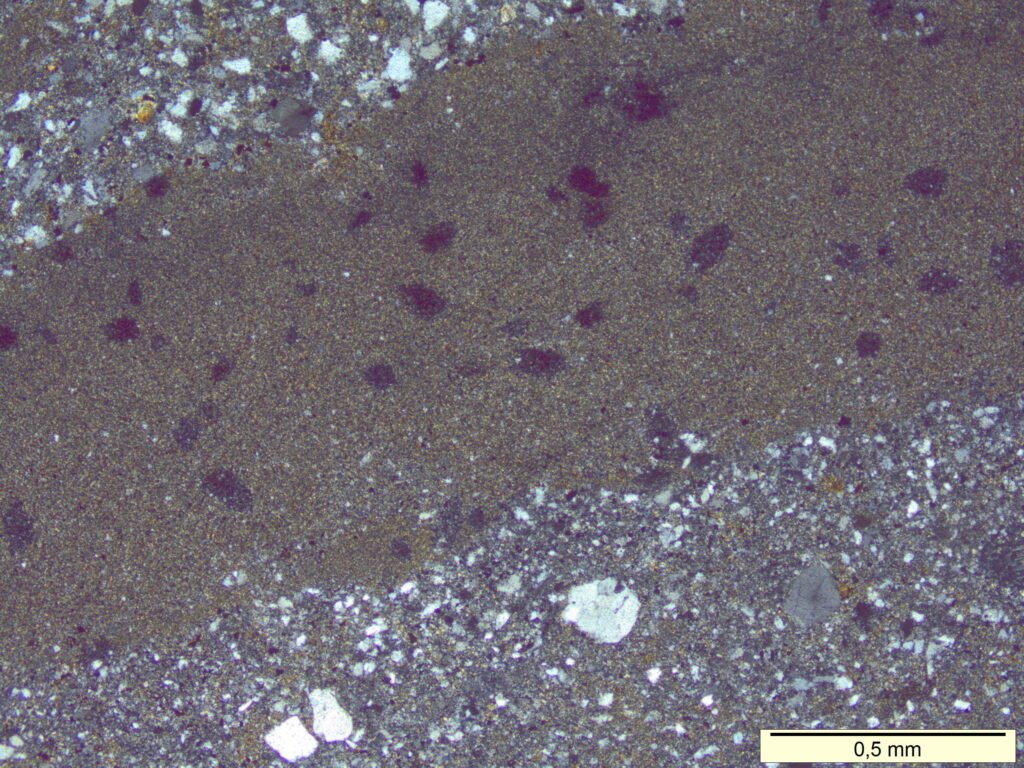
Birefringence and Interference Colors: Birefringence between 0.008 and 0.018: 1st order and upper 1st order colors, from gray to straw yellow.
Extinction: Tends to be parallel, which is generally not possible because the grains are xenomorphic (anhedral).
Elongation sign: ES(-) by cleavage, normally cannot be determined.
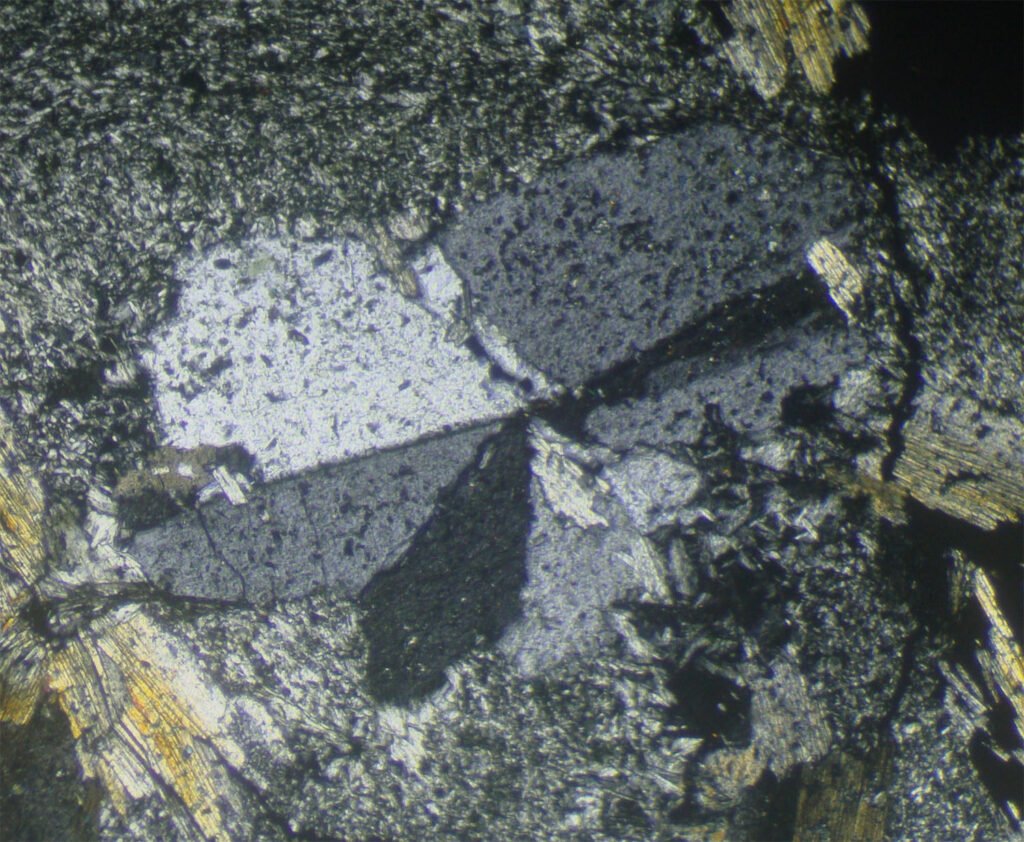
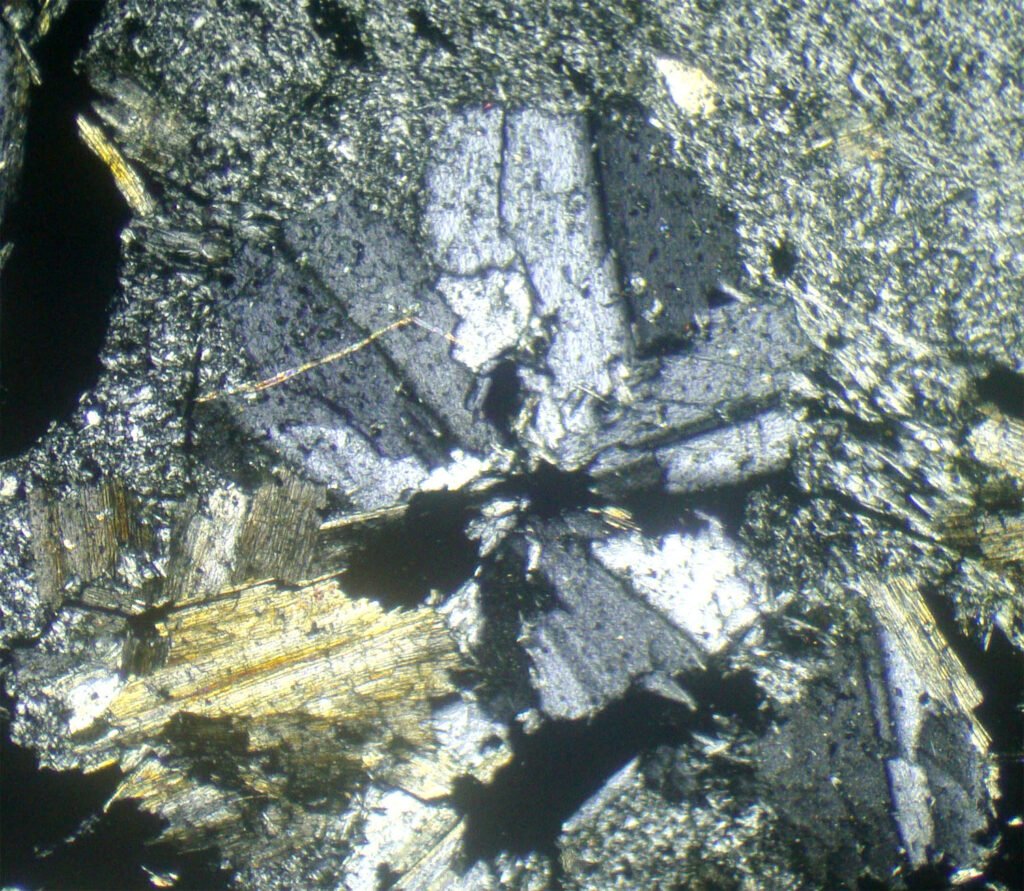
Twins: Common by {110} and {310}, can be simple, lamellar or polysynthetic.
Polysynthetic and pseudo-hexagon trillings are common, easily recognizable under NC. Of the 6 sectors of the twin, 2 tend to be extinct or with the same interference colors, as they belong to the same crystal. Interpenetration trillings are common in cornubianite shales.
Zoning: No.
CONVERGENT LIGHT
Character: Usually B(-), may be B(+).
2V angle: 35 – 106º
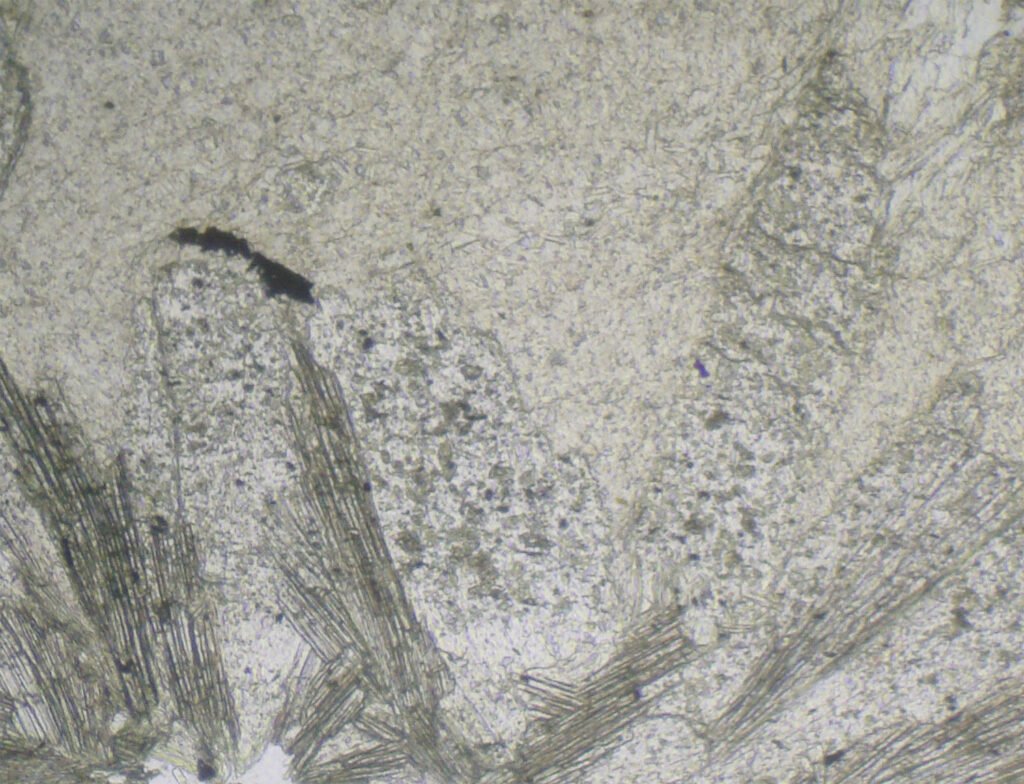
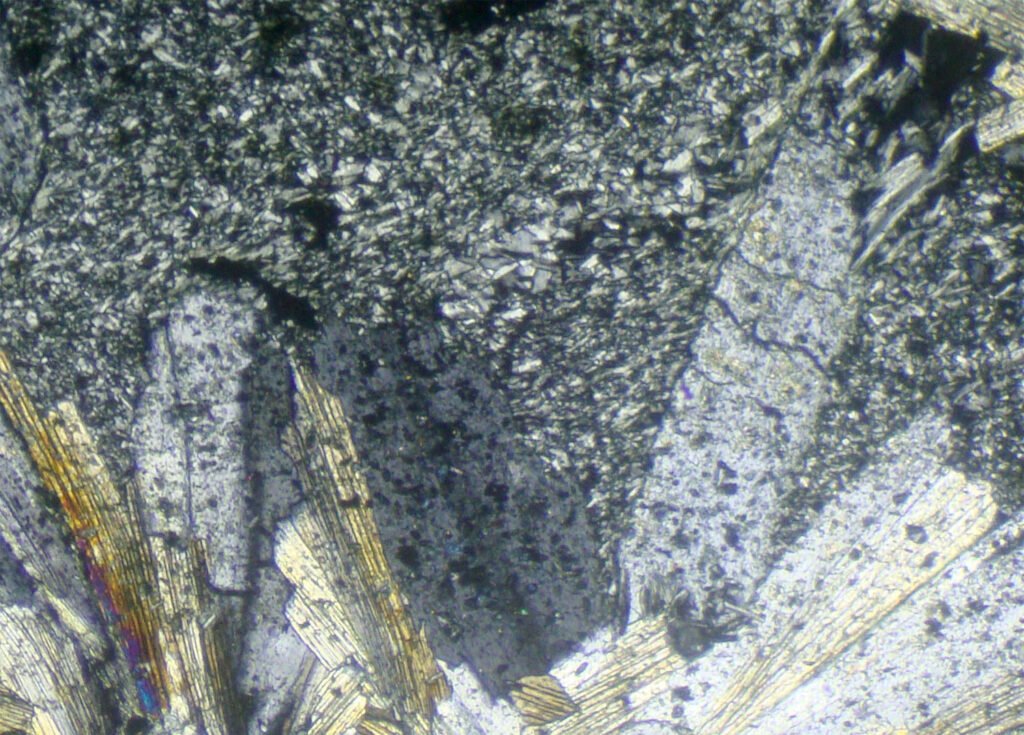
Alterations: during alteration, it is progressively replaced, from the limits and along the fractures, by a dense aggregate of sericite and/or chlorite and biotite. Pseudomorphs of cordierite composed of sericite (muscovite) and other phyllosilicates (e.g., chlorite) are called “pinite”, the process is called pinitization. This transformation consumes water and is an indicator of hydrothermal interactions.
May be confused with: quartz and potassic feldspars, when the crystals do not show any typical cordierite habits.
Quartz is very similar, but quartz is never altered and is U(+).
Orthoclase without twins is very similar to cordierite; it is necessary to consider paragenesis.
Plagioclase presents polysynthetic twins, tends to be zoned and is usually altered to sericite and saussurite.
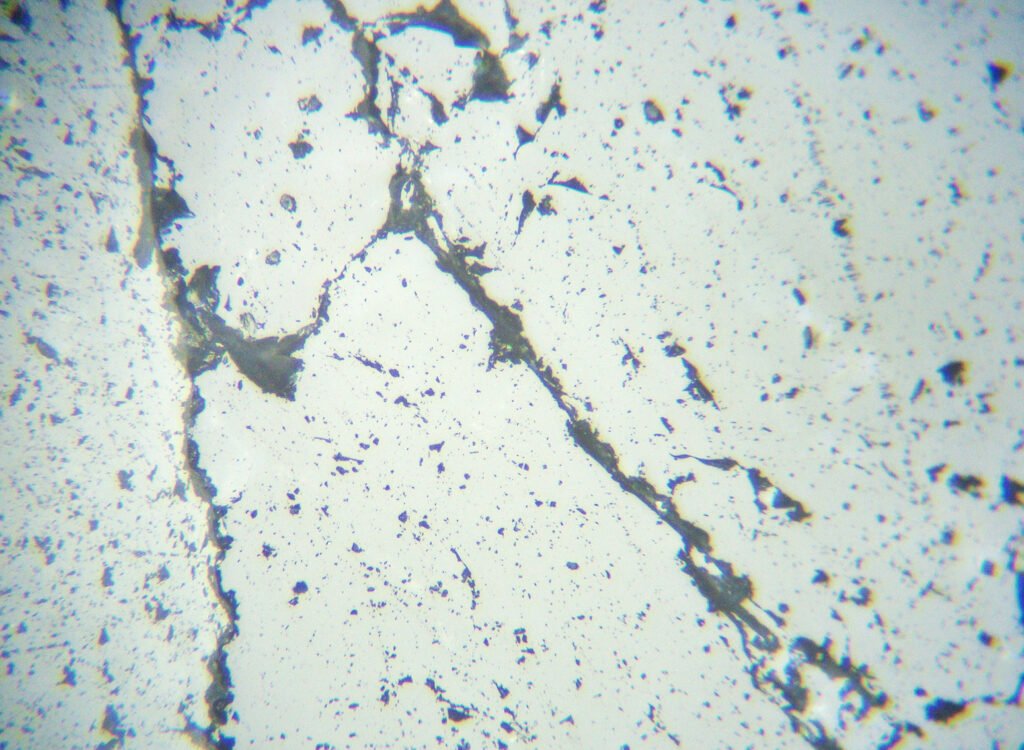
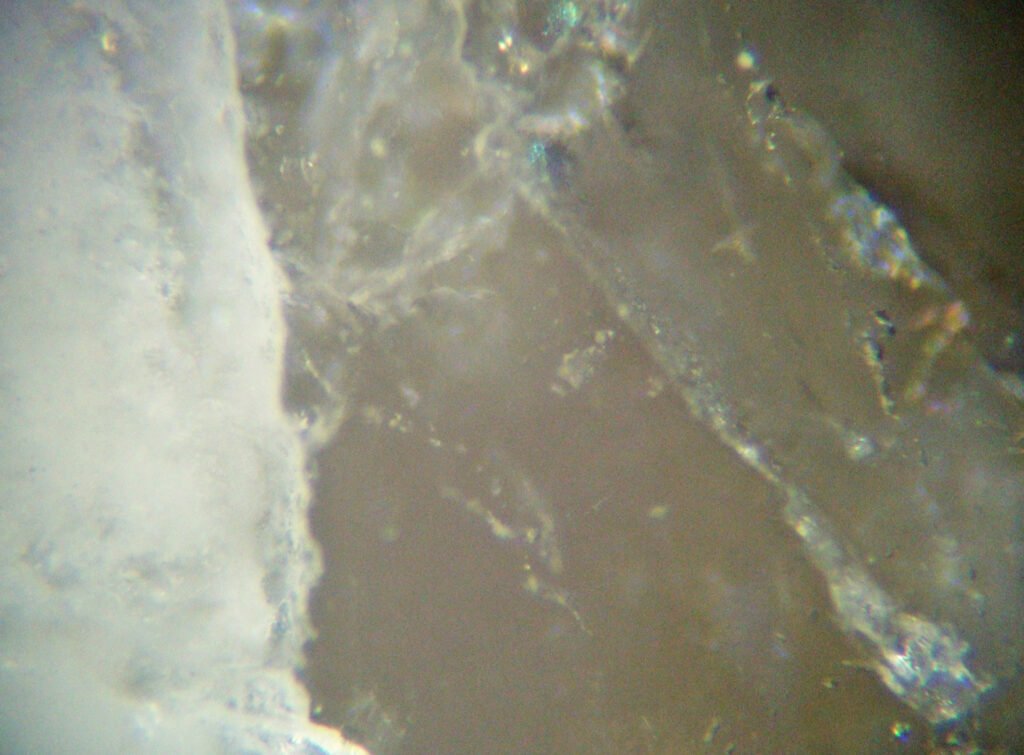
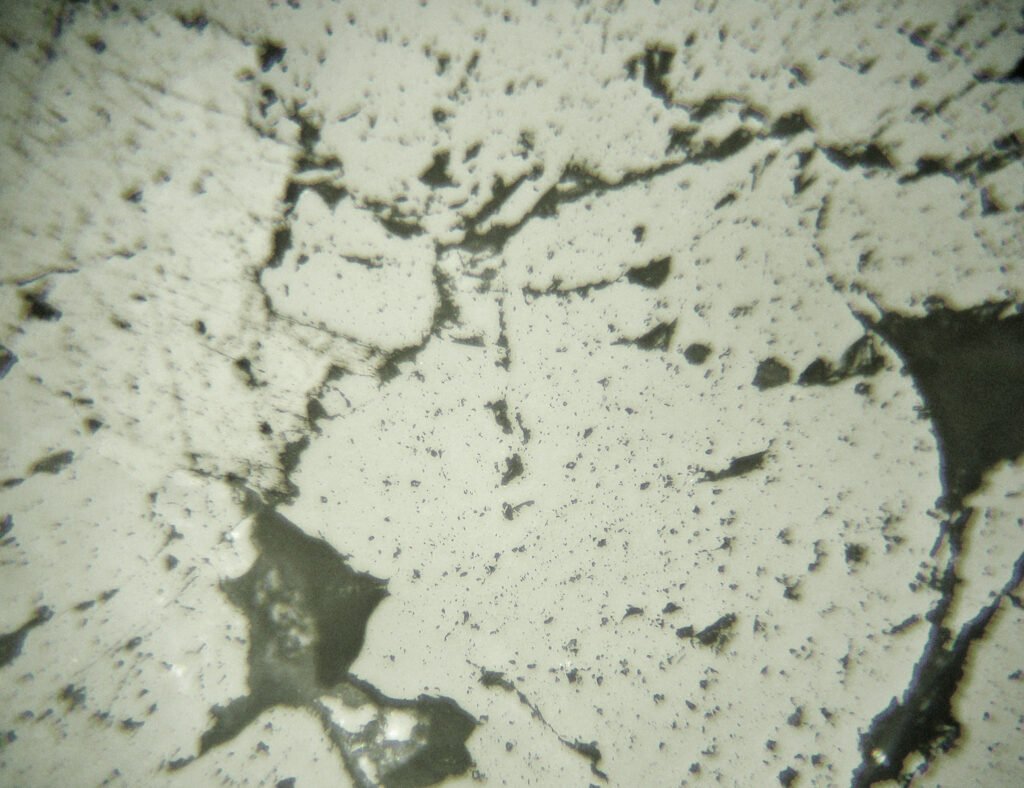
It is much easier to identify cordierite using polished sections under Reflected Light (see section below).