Cryptomelane – K(Mn4+,Mn2+)8O16 – is a common oxide, the most common mineral in those very fine-grained Mn oxide masses formerly generically called “psilomelane.”
It is difficult to recognize, so much so that its name means “the hidden dark one” (Greek: kryptos = hidden, melano = dark). It was proposed only in 1942 and approved in 1982, so great was the difficulty of separating the various minerals from these black Mn ores. It occurs as a discreet, inconspicuous material. At best, as mammillated or botryoidal masses that, however, also characterize several other Mn and Fe minerals. Macroscopically, it is indistinguishable from hollandite and several other Mn oxides.
A generic mining term for these compact, banded, earthy black masses, formed basically by a mixture of several cryptocrystalline Mn minerals, is “wad.” If the masses are fibrous, it is probably psilomelane or cryptomelane. Coarser grains can be confused with hollandite and coronadite. “Foamy” or “spongy” structures are psilomelane and pyrolusite. Brown iron ore may be extremely similar macroscopically, but under a reflected light microscope, the internal red to brown reflections identify the material as hematite.
Cryptomelane is classified in the Coronadite Group, in the Hollandite Supergroup. It rarely presents well-formed crystals. At most, subhedral crystals of no more than 2 mm in height. To identify the mineral, it is necessary to employ X-ray Diffraction, Infrared Spectroscopy and chemical methods.
In the field, the hydrogen peroxide test (observing the effervescence with a magnifying glass and waiting a few minutes to confirm the effervescence!) identifies these dark materials as Mn oxides/hydroxides.
5. Reflected Light Microscopy
Sample preparation: Hardness on polishing is highly variable, depending on grain size, texture, and the minerals accompanying cryptomelane. Hard varieties are easier to polish, but require significant grinding.
Polishing hardness differs for the various components of these mixtures and varies considerably between different occurrences. Porous and/or spongy aggregates require impregnation. Typically, goethite and limonite, which are always present, are harder than the manganese components and determine the hardness of the “hard manganese ore”.
Furthermore, the hardness of these Mn aggregates is determined by grain size and porosity, which influence hardness antagonistically (small grains = high hardness, but high porosity = low hardness).
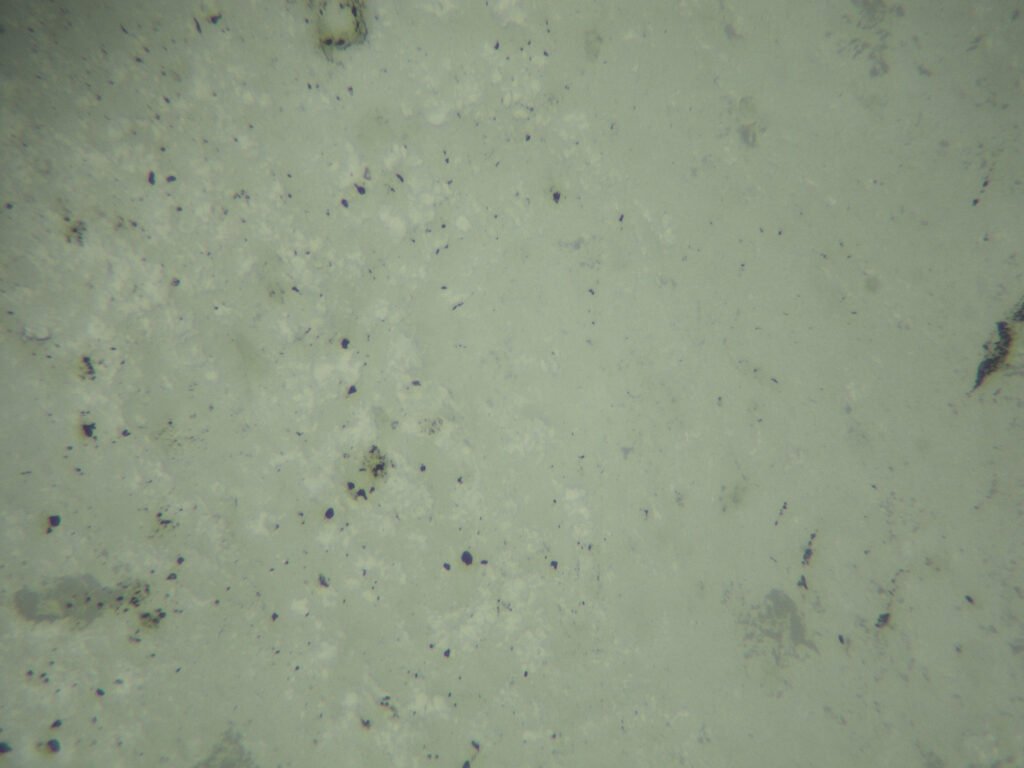
PLANE POLARIZED LIGHT – PPL
Reflection color: Medium gray.
Pleochroism: No.
Reflectivity: ~25%
Bireflectance: No.
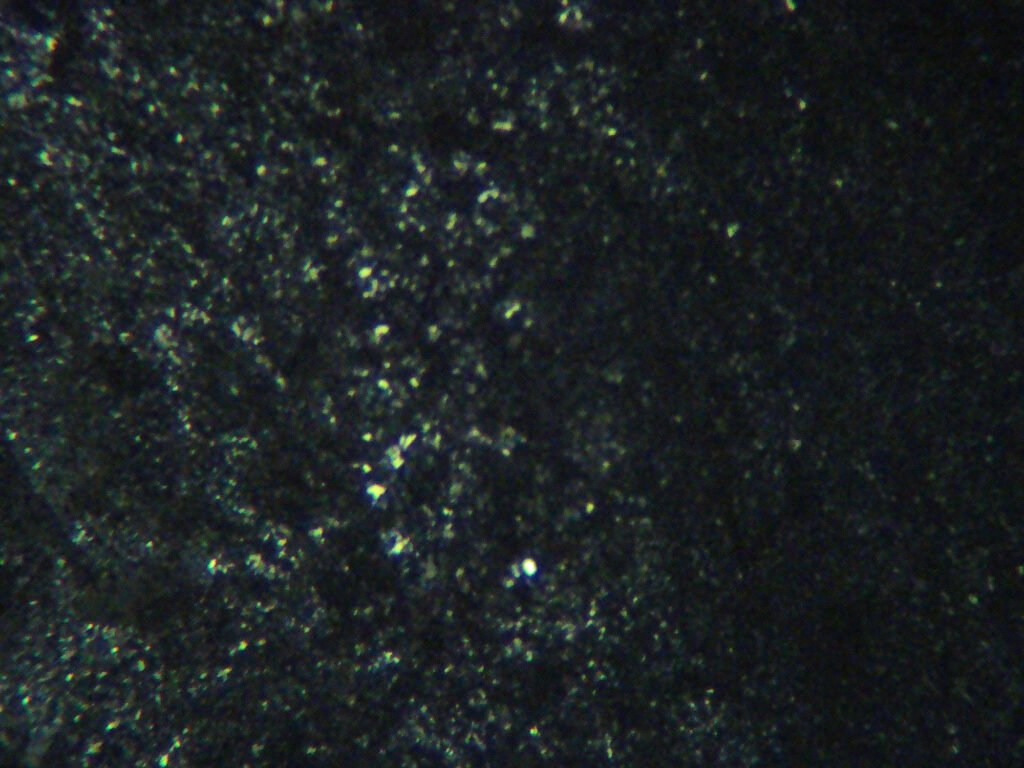
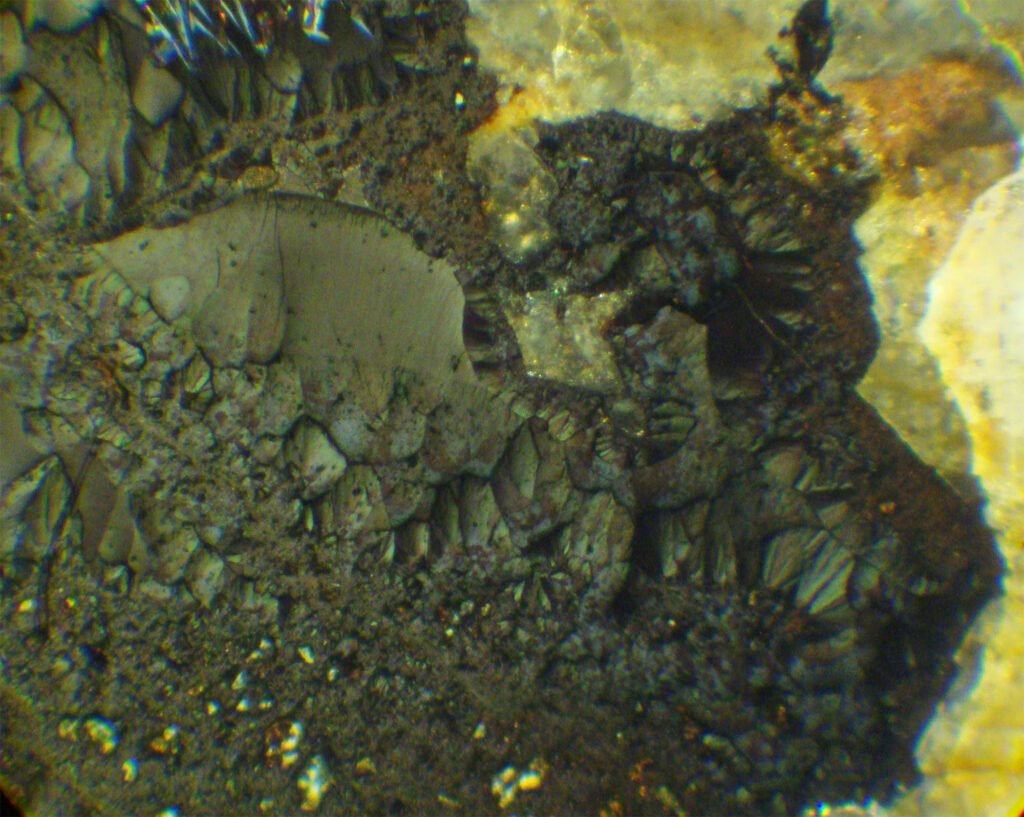
CROSSED POLARIZED LIGHT – XPL
Isotropy / Anisotropy: Anisotropy of gray with brown tones, from light to dark.
Internal reflections: It exhibits internal brown reflections only when in small grains.
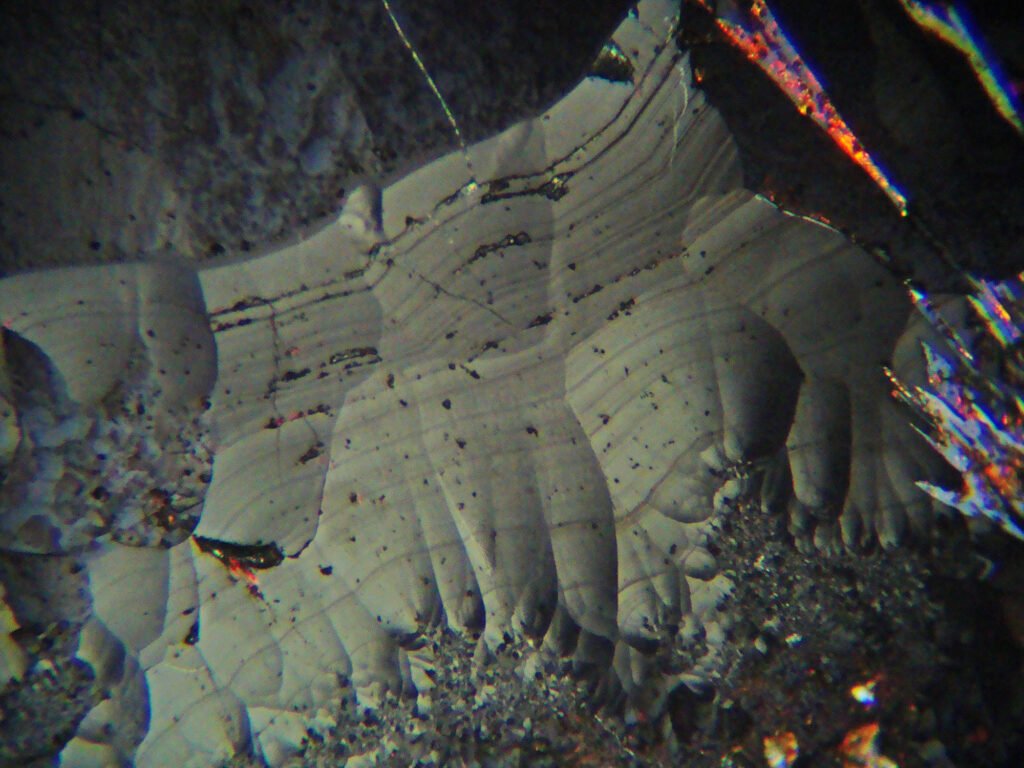
May be confused with: Several other Mn mineral. Diagnostic is the colloform or cryptocrystalline texture, average reflectivity, absence of internal reflections. Absence of sulfides, and Mn paragenesis are also diagnostic.
Several other Mn minerals are very similar; the use of additional identification methods is imperative.
General Characteristics:
Grain shape: masses formed by submicroscopic grains exhibiting various mixed habits.