CUPRITE

Cuprite – Cu2O – is a very common oxide, typical of oxidation zones of Cu ores. It integrates Cu ores, but it is rarely the main ore mineral in the deposit.

Cuprite crystals, quite rare, are cubic, octahedral, rhombododecahedral and of combined forms. The largest crystals reached 14 cm. There is a variety of cuprite called chalcotrichite in which the crystals are very elongated according to [001], therefore of capillary/fibrous habit. Another variety is “tile ore”, massive and brick-red in color. Cuprite may contain V.

The deep red color and luster (higher than diamond) of cuprite would make it one of the most valuable gemstones, but this is not due to its low hardness.

Pseudomorphoses of malachite on cuprite are known.

1. Characteristics

Crystal system: Cubic hexaoctahedral.

Color: Deep red, purple, sometimes almost black. Can tarnish to gray colors.

Habit: Massive, granular, earthy, skeletal, capillary, rare crystals

Cleavage: {111} imperfect, {001} rare.

Tenacity: Brittle.

Twinning: Penetration twins, common.

Fracture: Conchoidal, irregular.

Mohs Hardness: 3.5 – 4

Parting: No.

Streak: Bright metallic brown red.

Lustre: Adamantine, submetallic, earthy.

Diaphaneity: Transparent.

Density (g/cm³): 6.14


2. Geology and Deposits

Cuprite occurs as a secondary mineral in the upper (oxidation) zones of hydrothermal veins containing copper sulfides, forming under high pH conditions.

Normally, cuprite forms when ores in the cementation zone are altered. Large masses of cuprite occur only when there are abundant carbonates in the vicinity.


3. Mineral Associations

Cuprite occur associated with primary Cu minerals such as native copper, chalcopyrite, bornite and chalcocite.

It occurs with secondary Cu minerals such as malachite, azurite, covellite, connellite, tenorite, brochantite, paramelaconite, antlerite, atacamite, chrysocolla and delafossite, among many others.

It is also associated with quartz, calcite, pyrite, marcasite, native silver, cerussite, Fe oxides (goethite) and clay minerals.


4. Transmitted Light Microscopy

Refraction indices:  n = 2.849

PLANE POLARIZED LIGHT – PPL

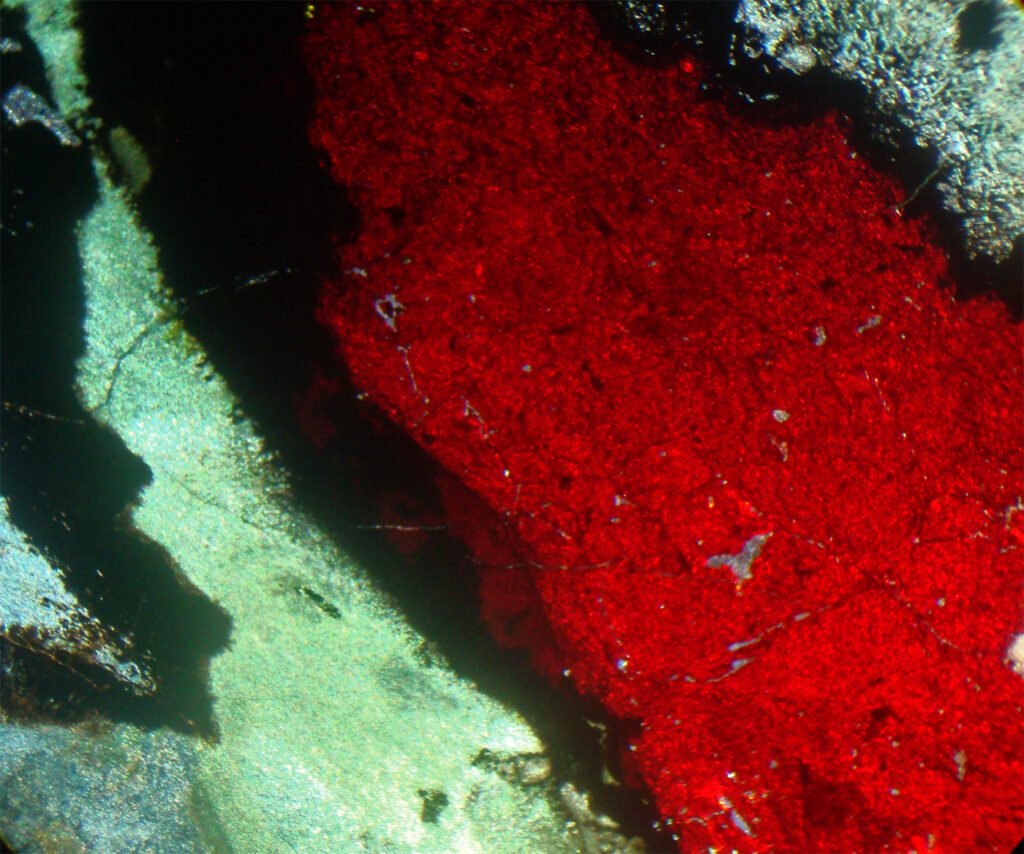
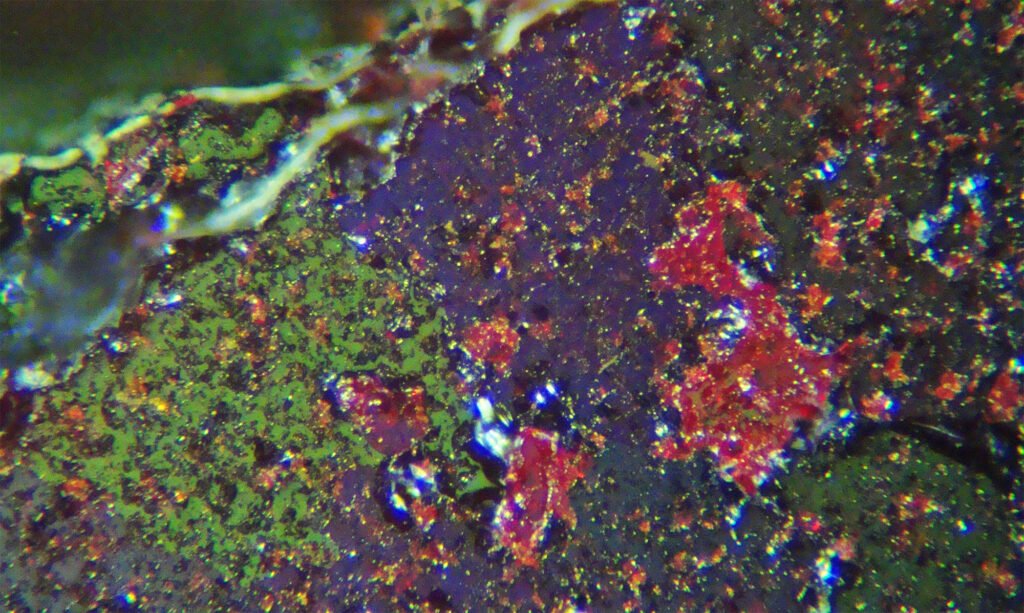
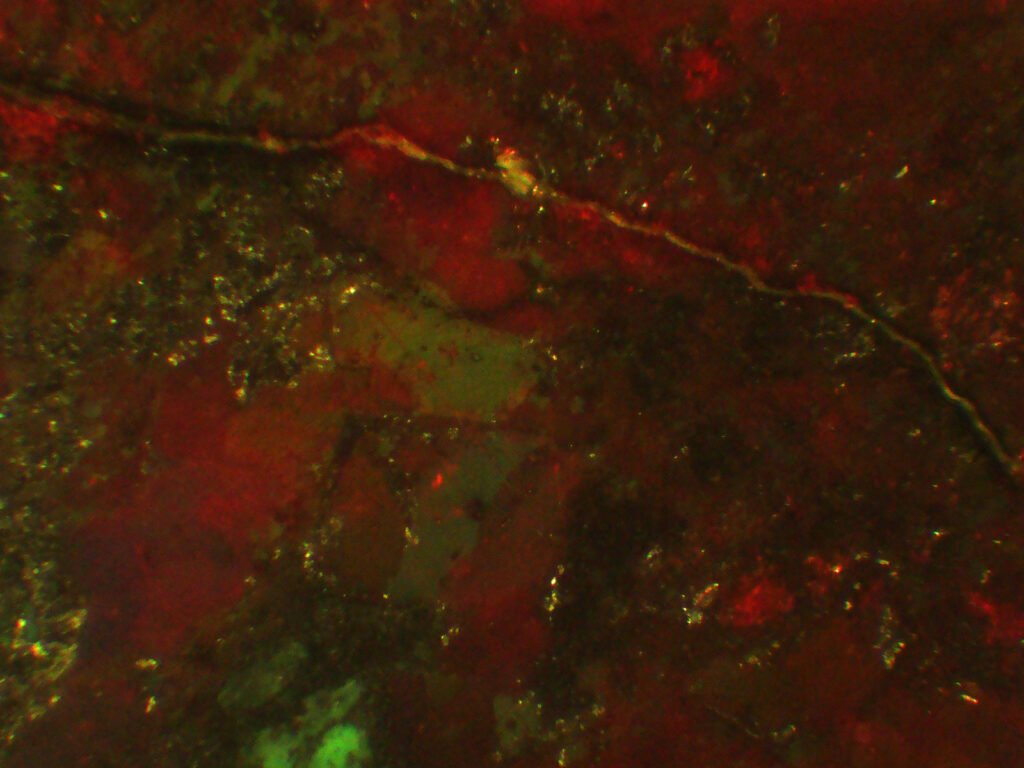
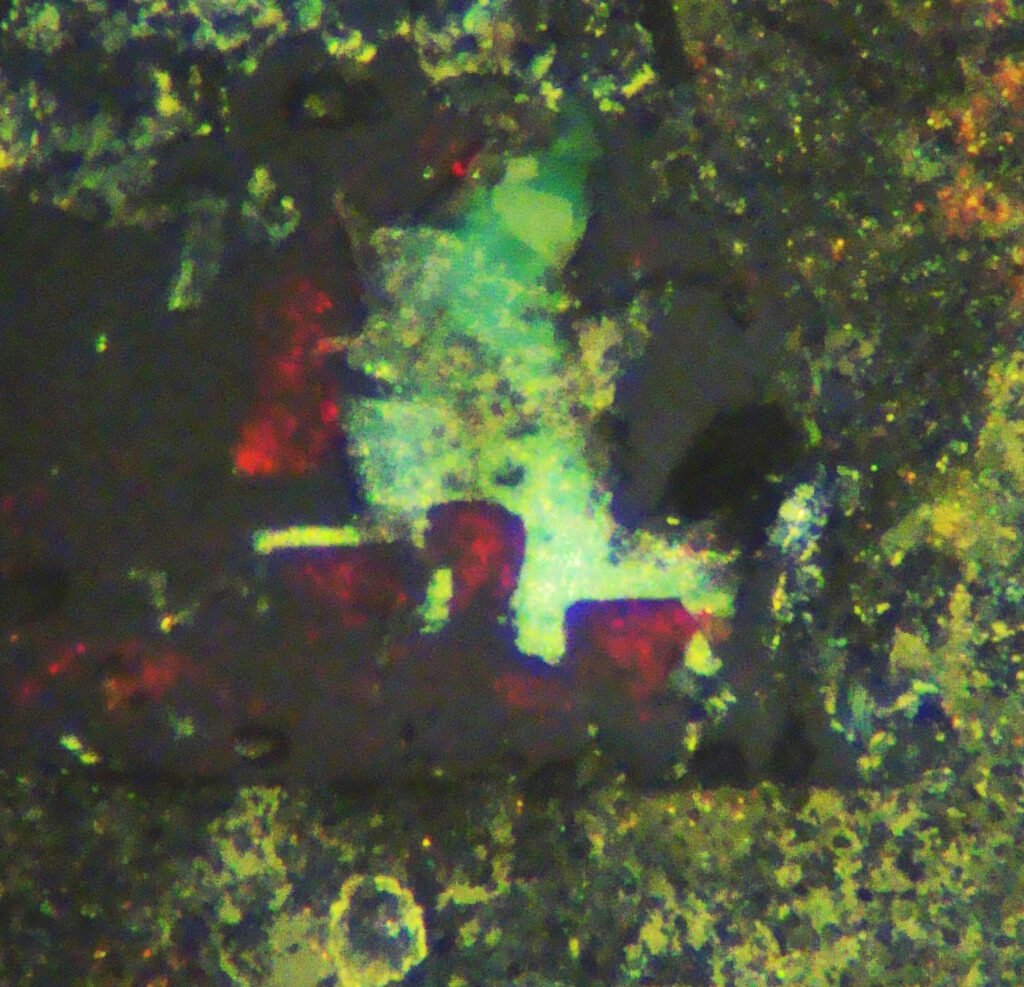
Color / Pleochroism: Anomalous pleochroism is common. Colors are red in thick passing sections and yellow-orange, yellow and lemon yellow in progressively thinner sections.

Relief: Very high.

Cleavage: Rarely visible.

Habits: Massive, octahedral or cubic crystals, rarely dodecahedral.

CROSSED POLARIZED LIGHT – XPL

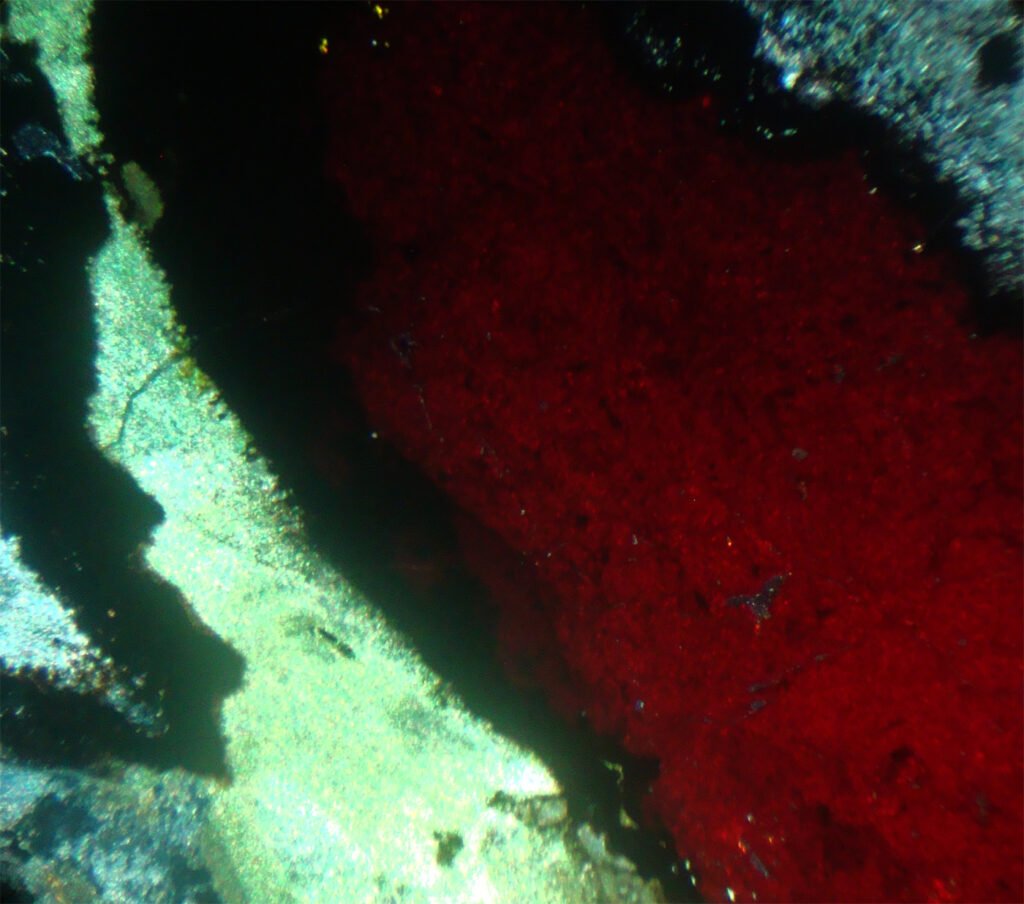
Birefringence and Interference Colors: Isotropic, but may have anomalous anisotropy. In addition, the very strong color itself masks other optical effects.

Extinction: Isotropic.

Elongation sign: Isotropic.

Twins: Isotropic.

Zoning: Isotropic.

CONVERGENT LIGHT

Character: Isotropic.

2V angle: Isotropic.

Alterations: cuprite is unstable in wet, oxidizing surface environments and readily alters to more stable copper minerals like tenorite, malachite, azurite, native copper and chrysocolla.

May be confused with: goethite may have similar colors. The association of cuprite with native copper and other secondary copper minerals such as malachite, azurite and chrysocolla is very typical.


5. Reflected Light Microscopy

Sample preparation: cuprite polishing is a bit difficult and needs to be done carefully. Sometimes porosity makes polishing more difficult. The polishing hardness is greater than the hardness of native copper, tenorite, chalcocite and chalcopyrite, but slightly less than the hardness of goethite. Isolated or aggregated crystals can be quite porous, cemented by limonite, more rarely cemented by tenorite.

PLANE POLARIZED LIGHT – PPL

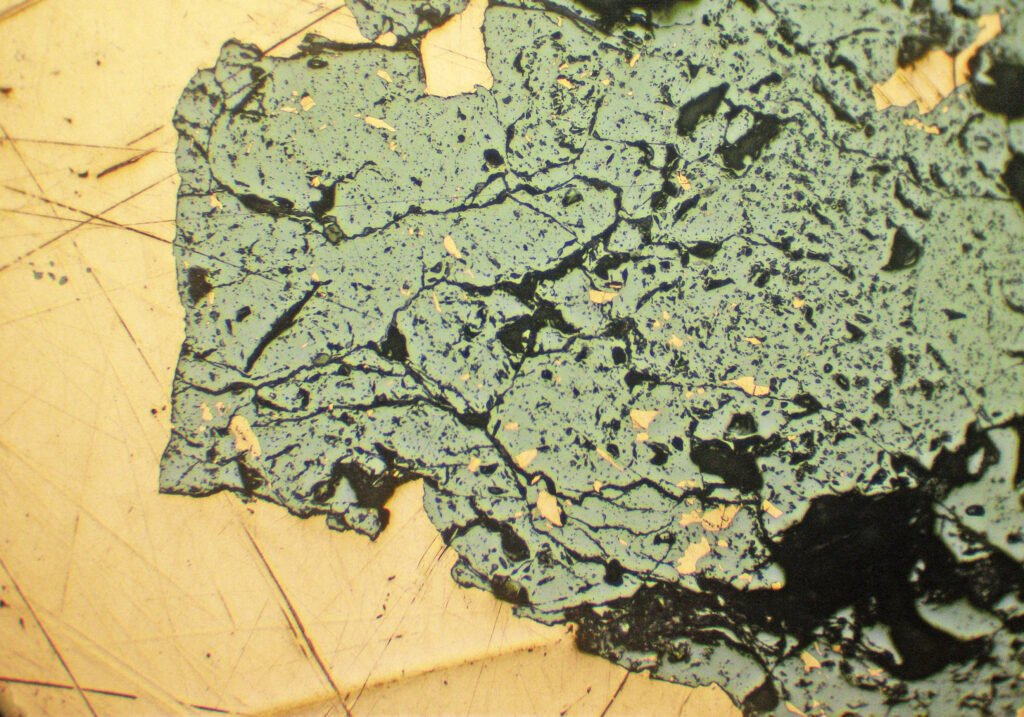
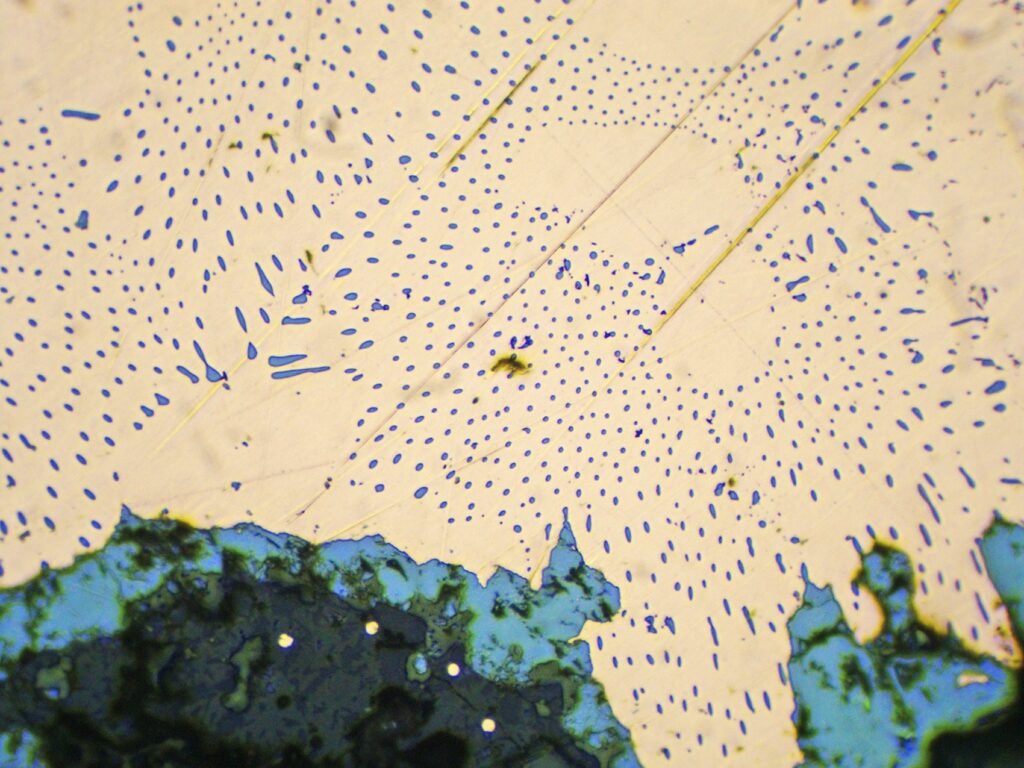
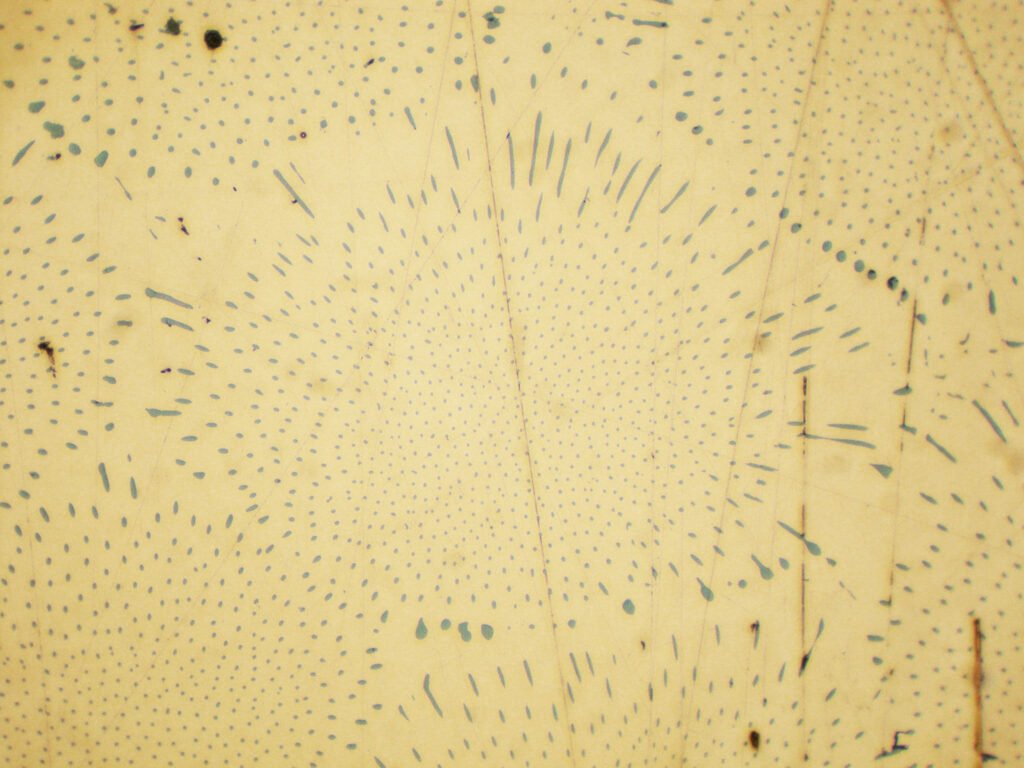
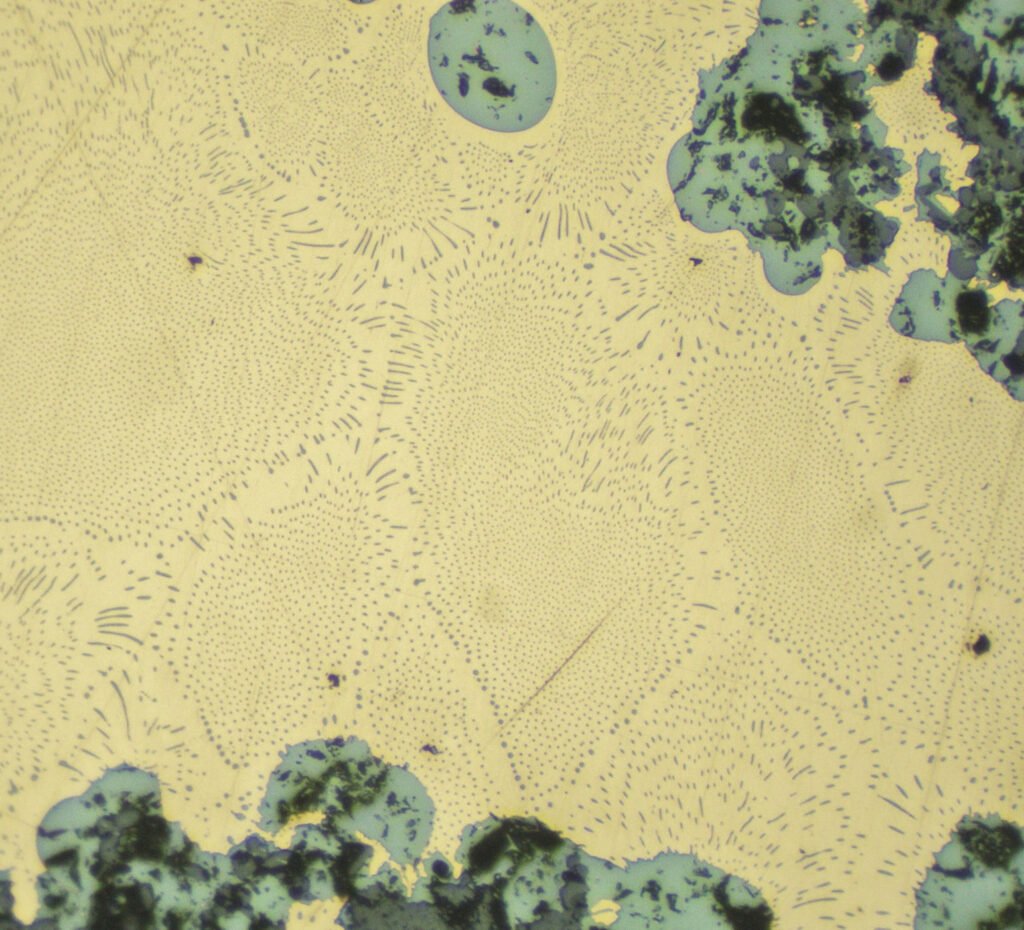
Reflection color: Blue-gray or gray-white with a blue tint.

Compared to the color of native copper, the color of cuprite is much darker and blue-gray.

Compared with the color of chalcocite, the color of cuprite is darker and greenish and dirty blue.

Compared to the color of hematite, the color of cuprite is somewhat darker, with a grayish blue tone.

Pleochroism: Very faint in bluish-gray to green tones.

Close observation of intergranular boundaries is required to recognize pleochroism

Reflectivity: 24.62 – 25.5%

Bireflectance: No.

CROSSED POLARIZED LIGHT – XPL

Isotropy / Anisotropy:  It should be isotropic, as it is a cubic mineral.

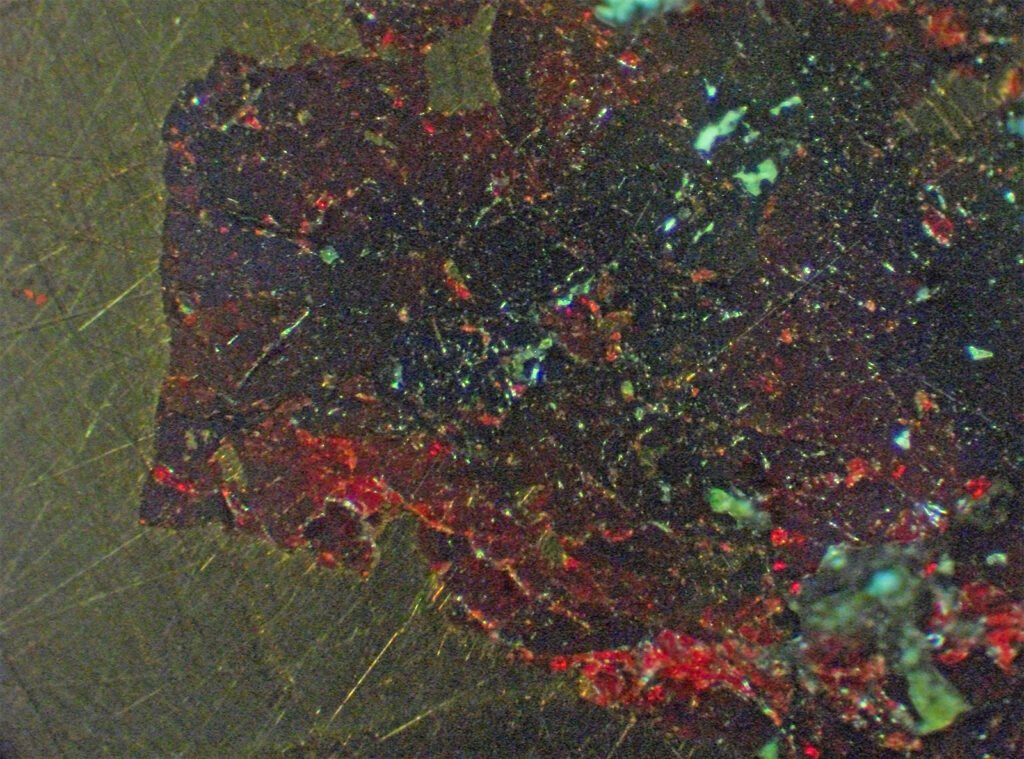
But it always shows, when coarse granular, distinct anomalous anisotropy in greenish (olive) to bluish (deep blue-grey, deep blue), sometimes violet and emerald green colors.

This anisotropy can be better observed at intergranular boundaries.

For this observation, the polarizers must be uncrossed a little (2o).

Internal reflections: Abundant blood-red to deep-red internal reflections, always visible and highly diagnostic.

May be confused with: other minerals with red reflections.

Proustite and pyrargyrite are much less harder.

Cinnabar and realgar occur in other paragenesis.

Zincite is very rare and shows another reflection color.

Goethite also has red internal reflections and may occur in association.

General Characteristics: 

Grain shape: Well-formed crystals can occasionally be found, for example in cavity walls. Usually massive or earthy, both habits occur together. When granular, it may be pan-idiomorphic granular, with intensely intergrown grains. Skeletal forms or porous or cemented by posterior goethite occur, rarely by tenorite.

Cleavage parallel to (111) can be observed only very rarely.

Twins does not show.

Deformations does not show.

Zonation is quite rare, but in these cases very typical, marked by inclusions or thin crusts of tenorite or copper carbonates.

Mirmekites of galena in cuprite may occur.

Inclusions, thin lamellar, of native copper, are almost always present, it is not a replacement. Cuprite inclusions in goethite may occur.

Substitutions: depending on the geological environment, substitutions are quite common. Cuprite can replace native copper and chalcocite (in the form of nets, dendrites and associated with goethite). It can also replace malachite acicular crystals.

<