Crystal system: Orthorhombic bipyramidal.
Color: Blue, can be greenish or pale violet. Brown, pink, red.
Habit: Long, columnar, fibrous, granular, massive prismatic structure.
Cleavage: {100} distinct, {110} bad.
Tenacity: Brittle.
Twinning: On {110}, “trillings” are possible.
Fracture: No information available.
Mohs Hardness: 7 – 8
Parting: On {001}
Streak: No information available.
Lustre: Vitreous.
Diaphaneity: Transparent.
Density (g/cm³): 3.21 – 3.41
2. Geology and Deposits
Dumortierite is a rare mineral, restricted to aluminum-rich rocks that have undergone regional metamorphism.
In this context, it occurs both disseminated in rocks (for example, quartzite with dumortierite) and in pegmatitic veins of granitic composition that cross schists or gneisses.
It can occur in B-rich pegmatites and in some contact metamorphic rocks (skarns).
3. Mineral Associations
It occurs associated with the normal minerals of pelitic metamorphic rocks, such as quartz, calcic feldspars (albite), potassium feldspars (orthoclase), micas (biotite, muscovite), epidote, and apatite.
At the metamorphic grade in which it occurs, it is associated with minerals of the Al2SiO5 Group (kyanite, sillimanite, andalusite), cordierite, tourmaline, topaz, pyrophyllite, hematite, and rutile.
It can be closely associated with tourmaline; it also replaces sillimanite and biotite.
4. Transmitted Light Microscopy
Refraction indices: nα: 1,659 – 1,678 nβ: 1,684 – 1,691 nγ: 1,686 – 1,692
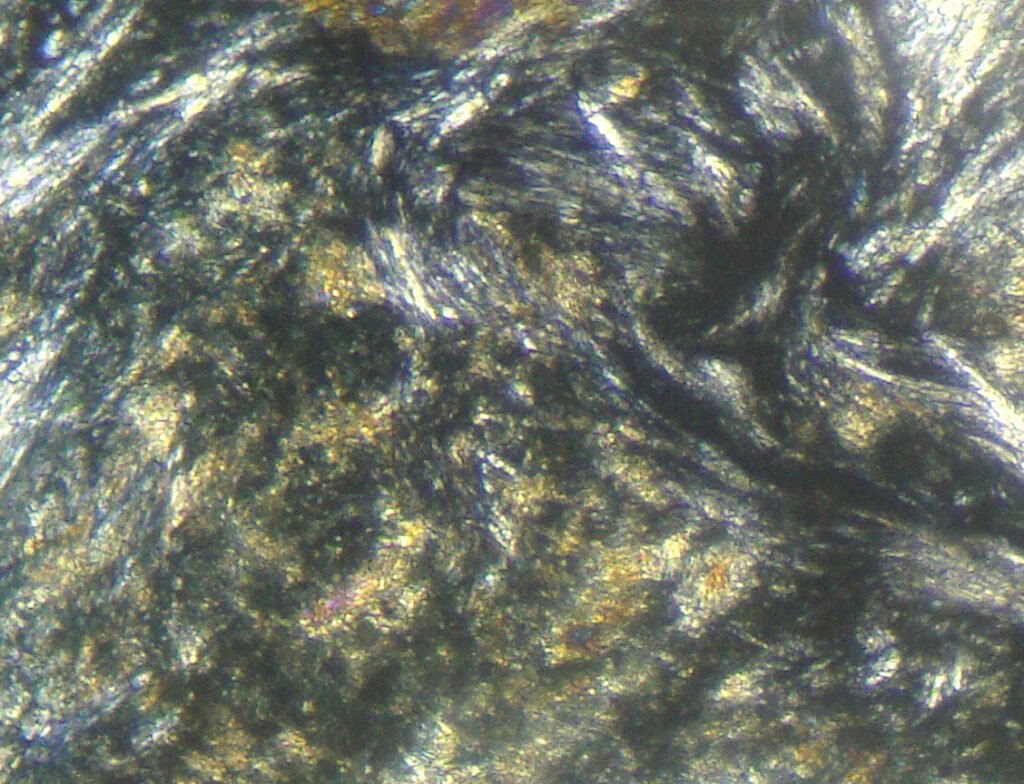
PLANE POLARIZED LIGHT – PPL
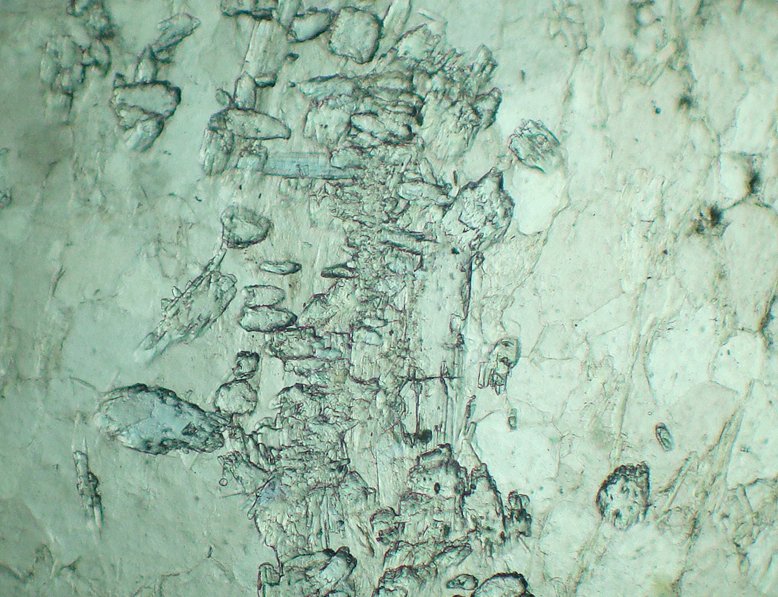
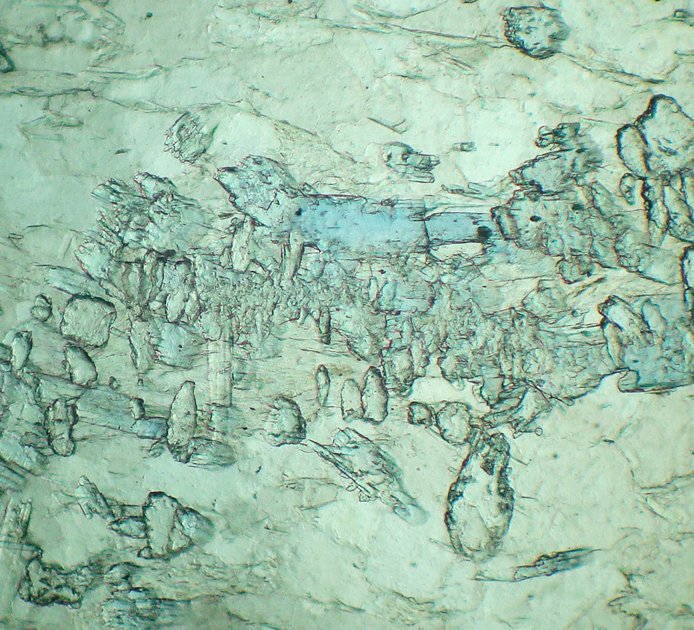
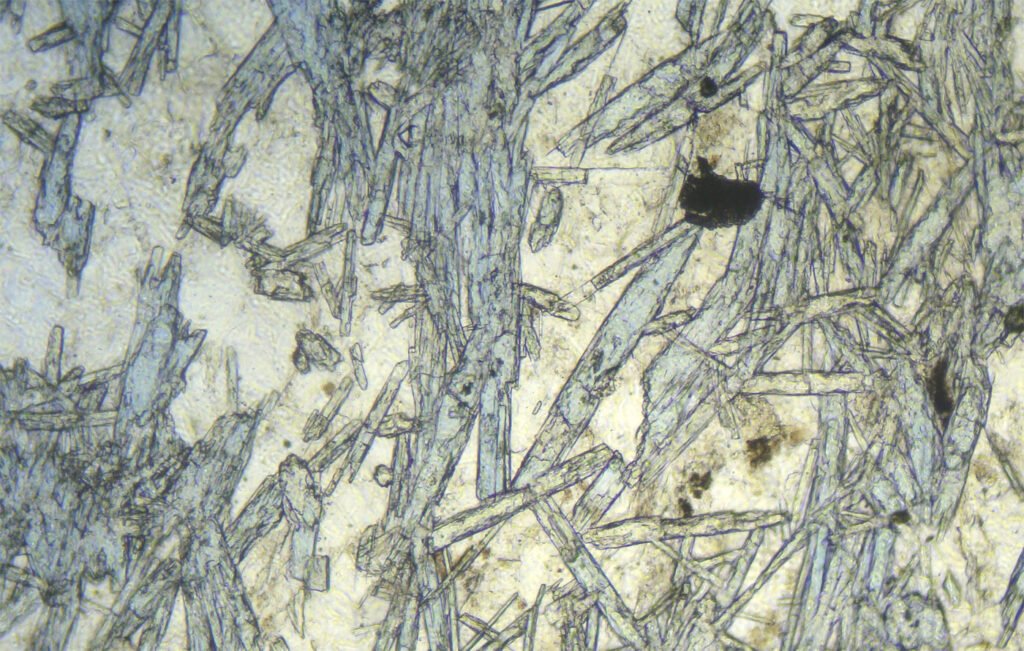
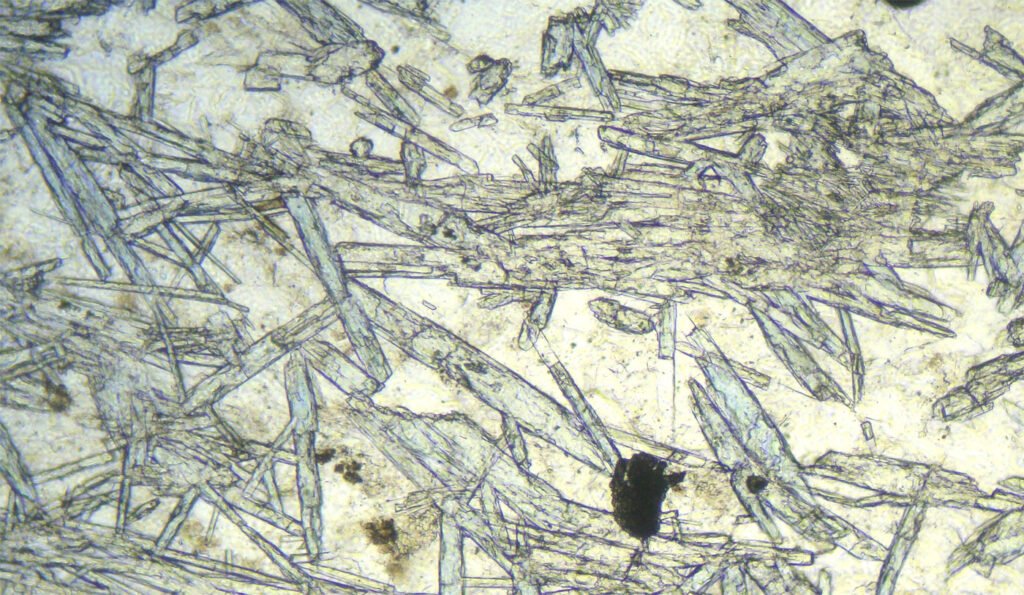
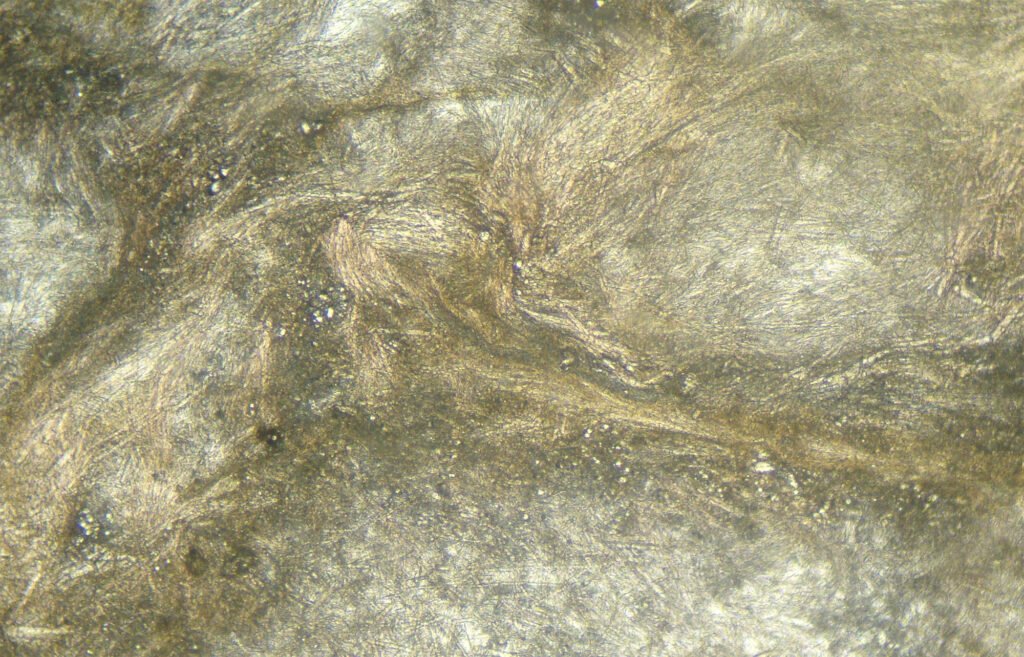
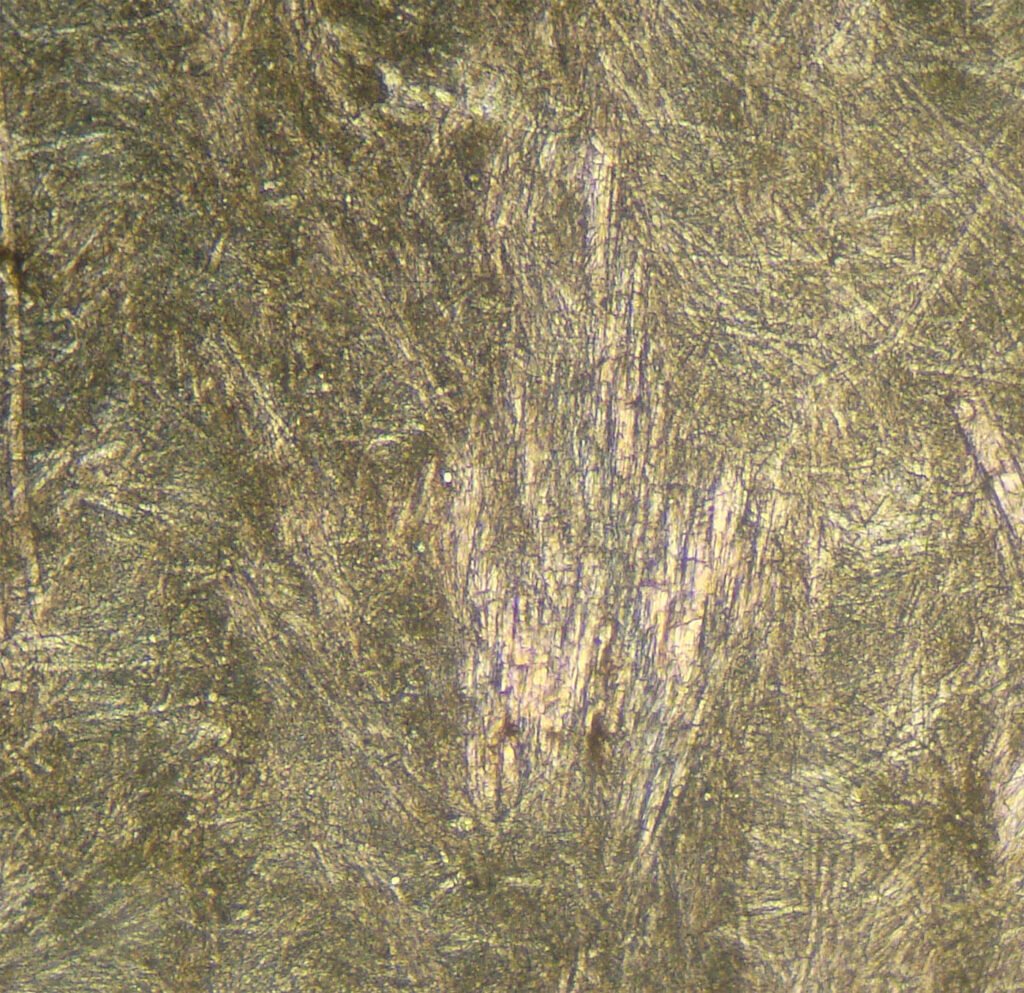
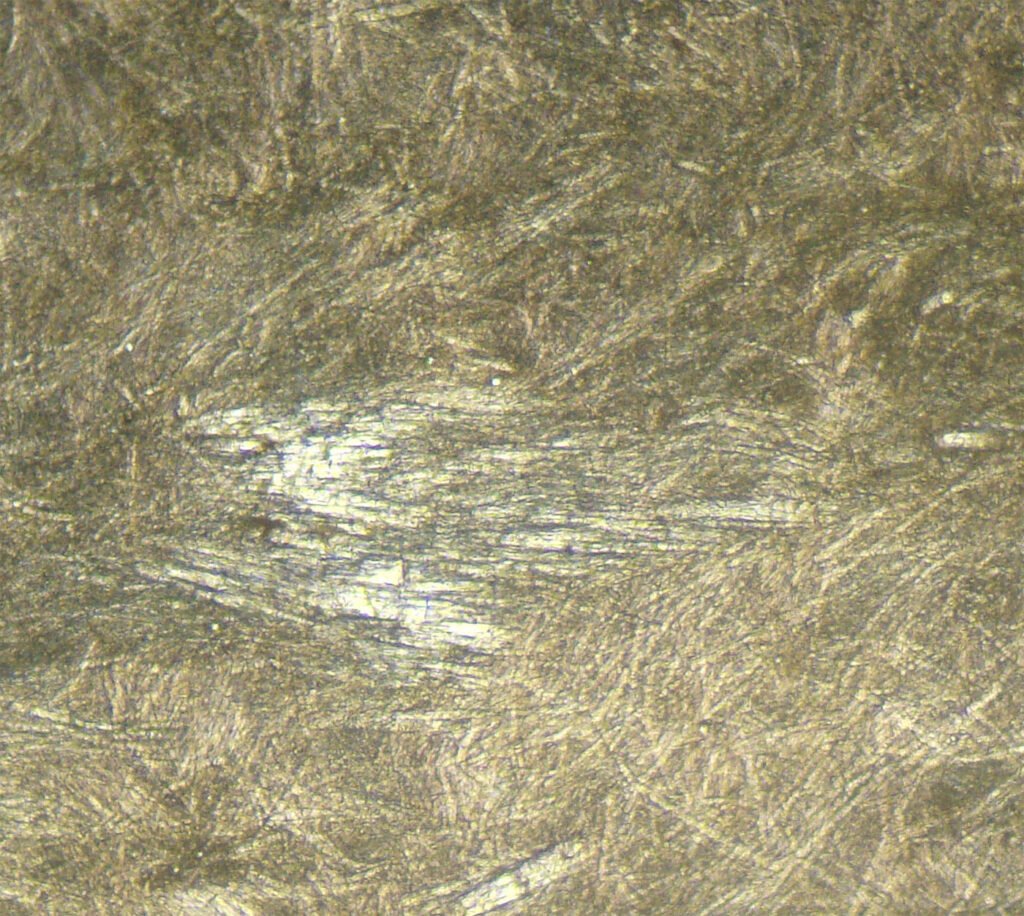
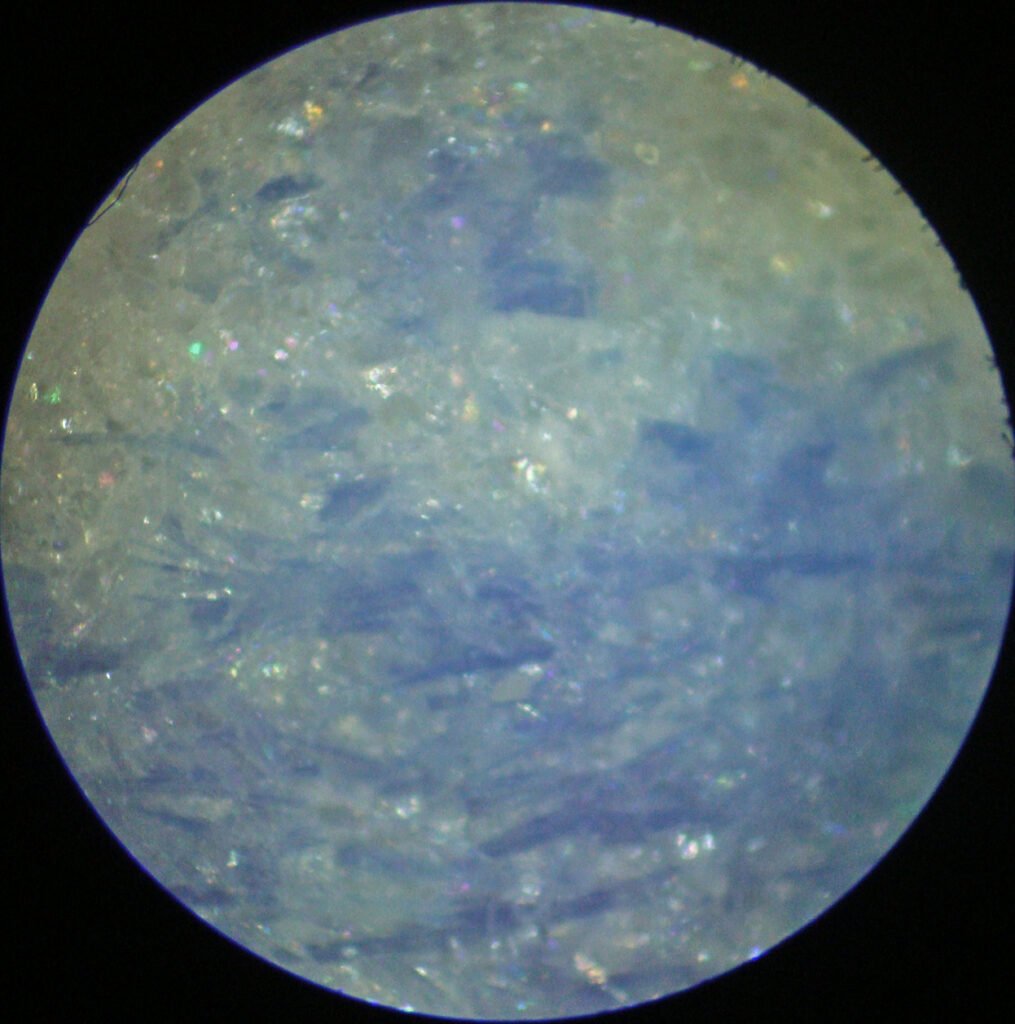
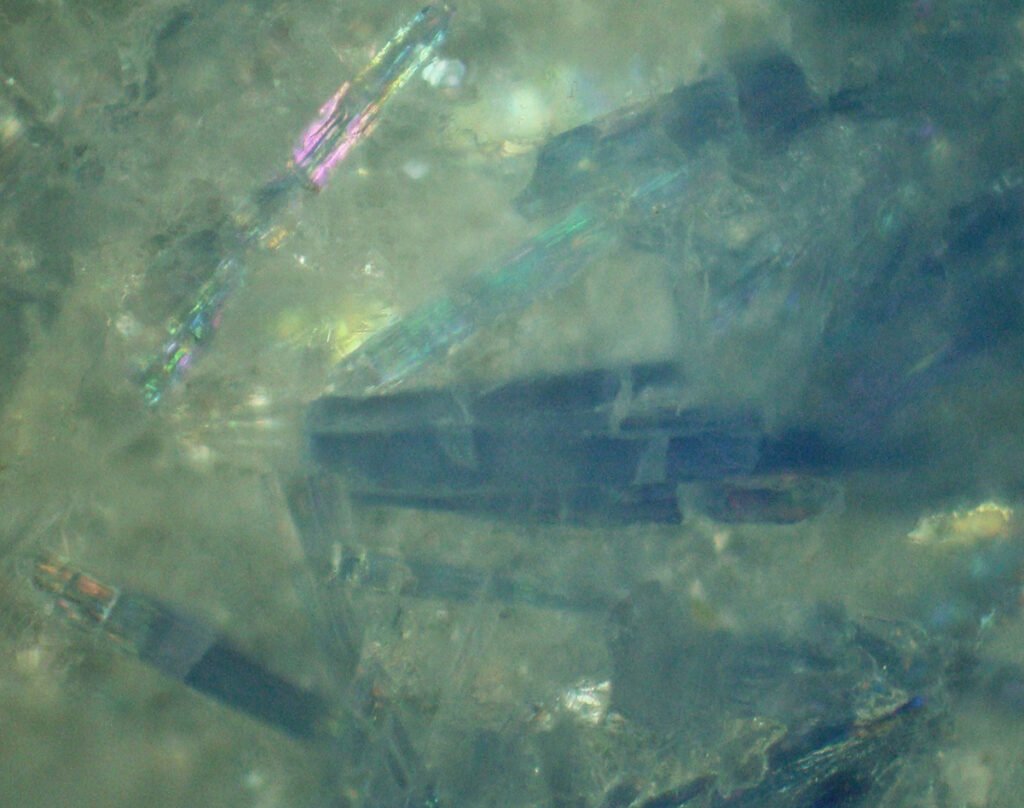
Color / Pleochroism: Strong pleochroism: the darkest color occurs when the prismatic crystals are oriented E-W in the field of view.
X = dark blue to violet; green or brown are rarer.
Y = colorless to yellow, pink, green to reddish-violet.
Z = colorless to pale colors: blue or yellow or green.
Pleochroism can range from colorless to pink.
Relief: High.
Cleavage: {100} distinct, {110} bad, parting at {001}. Cleavage is not very sharp; grains without visible cleavage are common. Fractures are common.
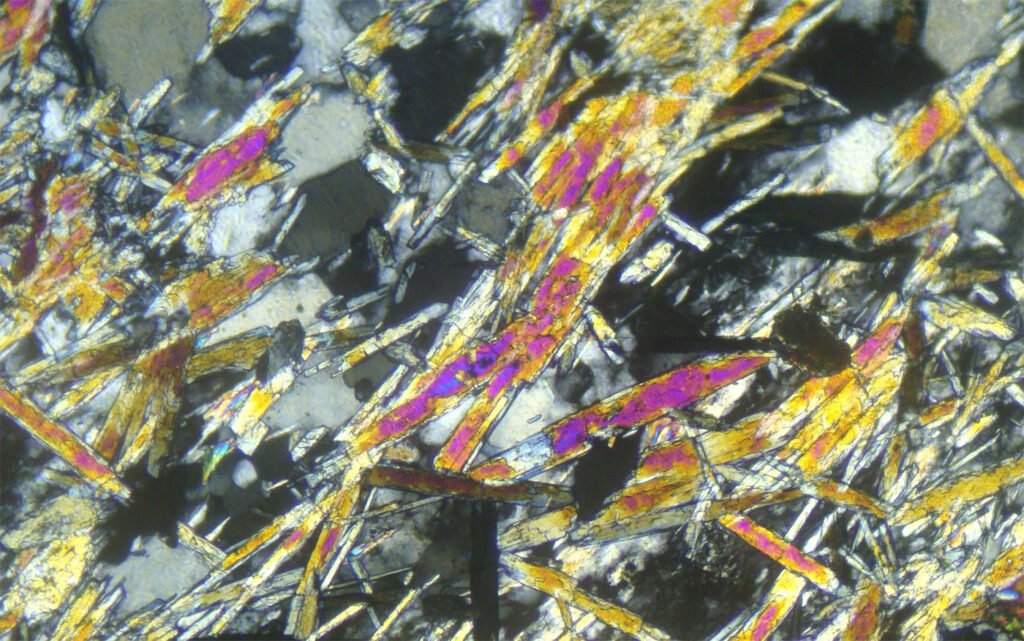
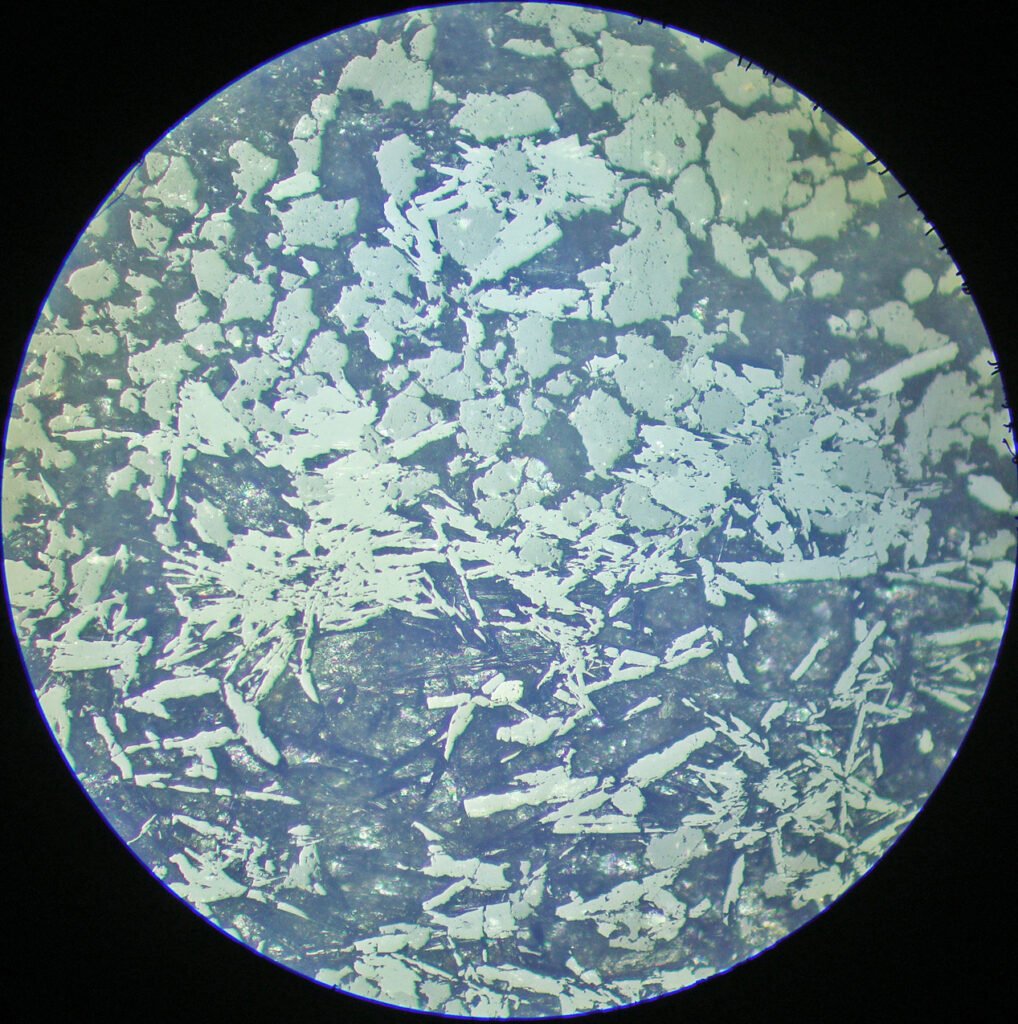
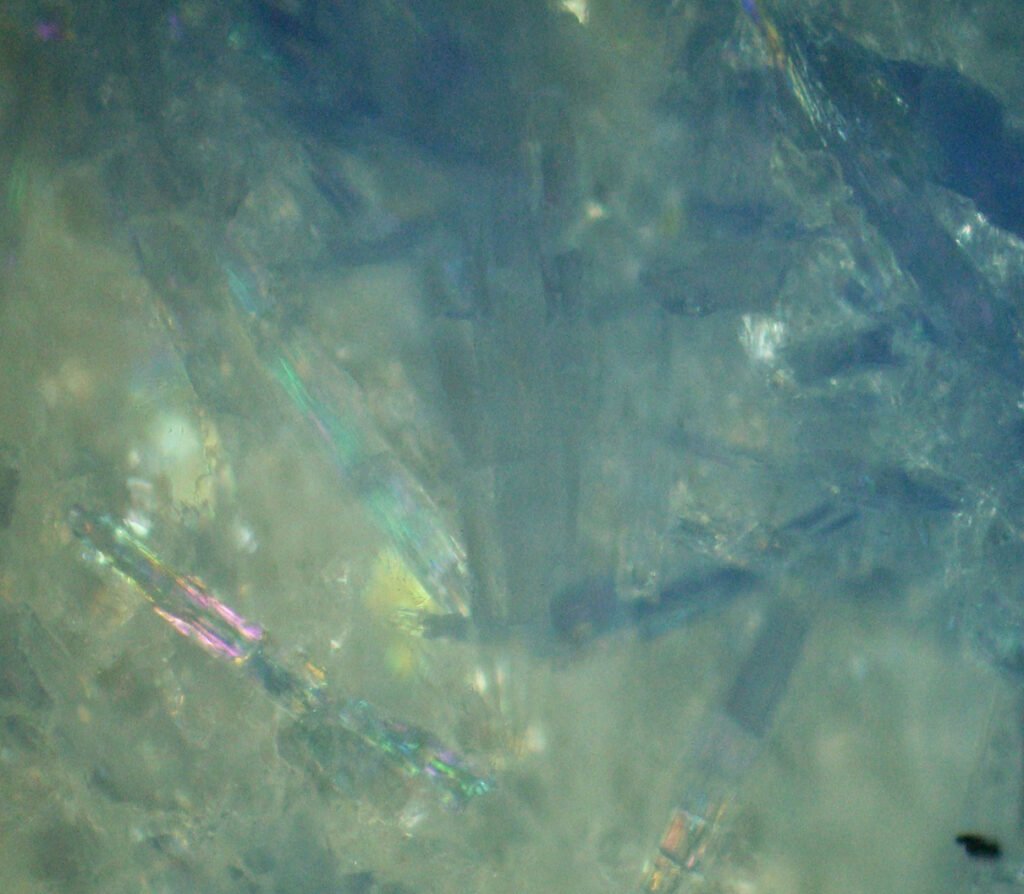
Habits: Columnar, fibrous to acicular crystals, can form aggregates of parallel fibers, also xenomorphic (anhedral) and massive.
CROSSED POLARIZED LIGHT – XPL
Birefringence and Interference Colors: Maximum birefringence of 0.027, corresponding to colors from the 1st order to the beginning of the 2nd order (gray, orange, red, blue, green). Generally, the colors are of the higher 1st order and increase with increasing Fe content.
Extinction: Parallel (to length and cleavage), as expected of an orthorhombic mineral.
Elongation sign: ES(-)
Twins: Common in {110}, it can form cyclic twins of 3 individuals (“trillings”). Twinned crystals may show pseudo-hexagonal basal sections.
Zoning: No.
CONVERGENT LIGHT
Character: B(-). The figure is difficult to obtain in small grains and fibers.
2V angle: 20 – 52º
Alterations: May alter to sericite (white mica).
May be confused with: Some minerals that exhibit blue colors and pleochroism.
Glaucophane shows stronger blue colors. In addition, it has oblique extinction and SE(+).
Riebeckite also exhibits blue pleochroism, but it shows the typical cleavage of amphibole minerals, and the extinction can be oblique.
Tourmaline can exhibit blue colors, but these colors are usually zoned (in patches). In addition, it does not have cleavage, and the basal sections are triangular or hexagonal.
Sapphrine also shows pleochroism between blue and colorless, but the interference colors are much lower; at most, it goes to light gray, not reaching yellow.
When dumortierite exhibits a pink color with pleochroism, it is very similar to fibrous andalusite and fibrous sillimanite (= fibrolite). But sillimanite has SE(+). Fibrous andalusite, on the other hand, is difficult to differentiate from dumortierite with pink pleochroism.