1. Characteristics
Crystal system: Monoclinic prismatic.
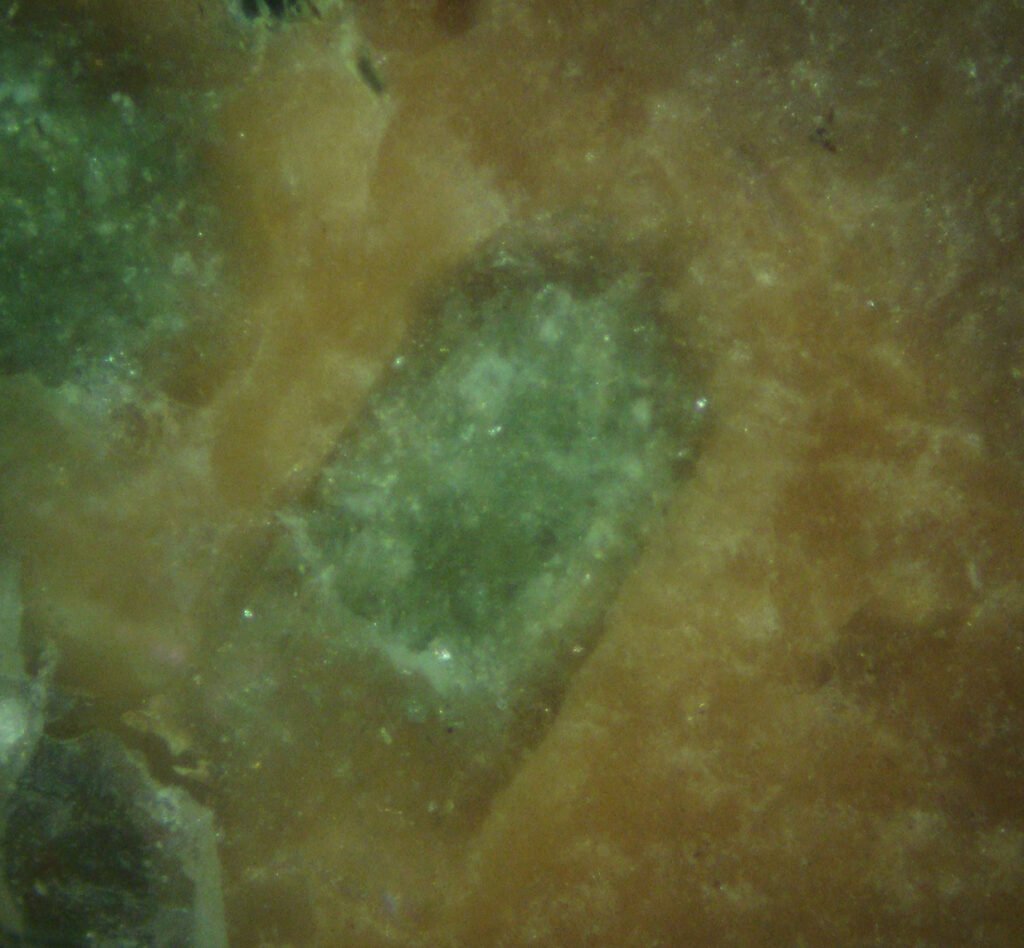
Color: Citrus green to pale green. Yellowish green, yellow, greenish yellow, greenish black.
Habit: Usually long prismatic. Granular coarse to fine, fibrous, massive.
Cleavage: {001} perfect, {100} imperfect. Striations paralell to [010].
Tenacity: Brittle.
Twinning: Common on {100}, lamellar or contact.
Fracture: Irregular.
Mohs Hardness: 6
Parting: No
Streak: White.
Lustre: Vitreous to pearly.
Diaphaneity: Transparent.
Density (g/cm³): 3.38 – 3.49
2. Geology and Deposits
Epidote and clinozoisite are very common and well-distributed minerals. They are common in low-grade regional metamorphic rocks, greenschists, marbles, phyllites and blueschists. In medium-grade metamorphic rocks it occurs in rocks such as mica-schists and gneisses. By retrograde metamorphism, epidote and zoisite are formed by saussuritization.
Epidote is common in metamorphic contact rocks such as cornubianites with biotite, calcosilicate rocks, skarn and others.
Epidote may have magmatic origin, occurring in fractures and cavities of magmatites rich in pyroxene and amphibole, replacing the anorthite component of plagioclase. In igneous rocks it is secondary and late. It is common in cataclastic zones of granitoid rocks and may occur in albitized granites and gneisses.
3. Mineral Associations
In low-grade metamorphic rocks (greenschists, spilites), epidote and clinozoisite are associated with amphiboles (actinolite and others), zeolites, prehnite, byssolite, titanite, magnetite, microcline, albite, plagioclase, calcite and quartz, or chlorite, albite, vesuvianite and tremolite. With increasing metamorphic grade it occurs with albite, oligoclase, hornblende and garnet (almandine). It can occur in amphibolites and in gneisses. In the blueschist facies it is associated with glaucophane, lawsonite, pumpellyite, clinozoisite, chlorite, muscovite, quartz, albite, calcite and titanite.
In contact metamorphic rocks it occurs with vesuvianite, augite (fassaite), garnets (andradite, grossularia), actinolite, hornblende, biotite and albite. It is common in marbles, associated with garnet, diopside, vesuvianite and calcite.
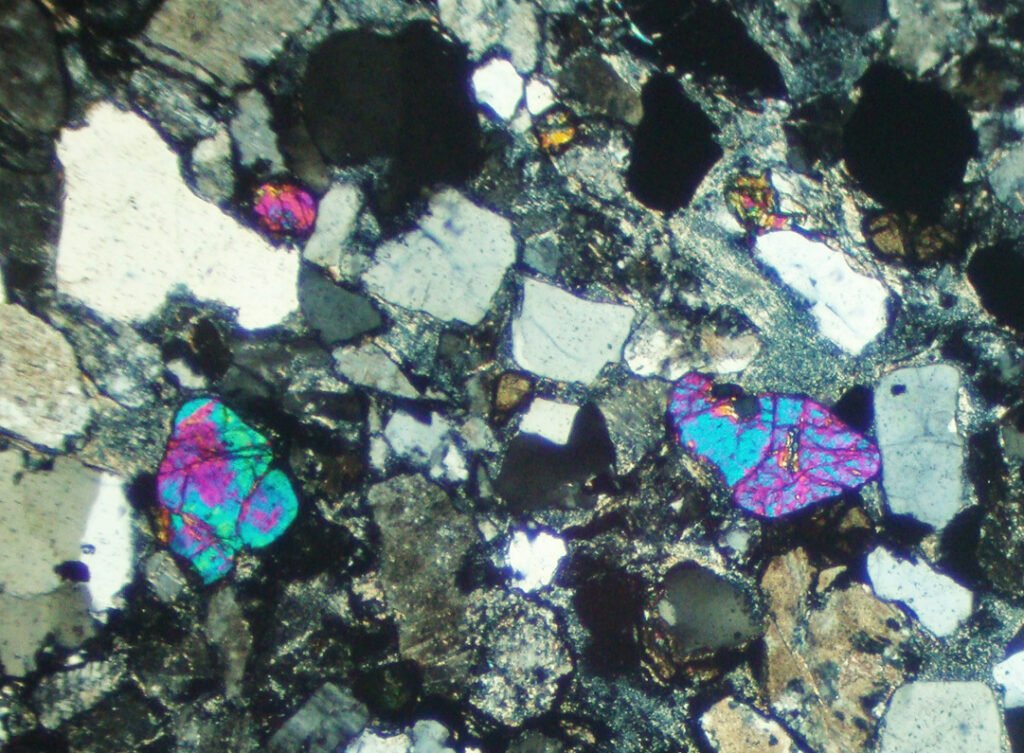
In igneous rocks it occurs in granitoids. May occur detrital, both in placers and in sedimentary rocks (immature sandstones).
4. Transmitted Light Microscopy
Refraction indices: nα: 1.715 – 1.751 nβ: 1.725 – 1.784 nγ: 1.734 – 1.797
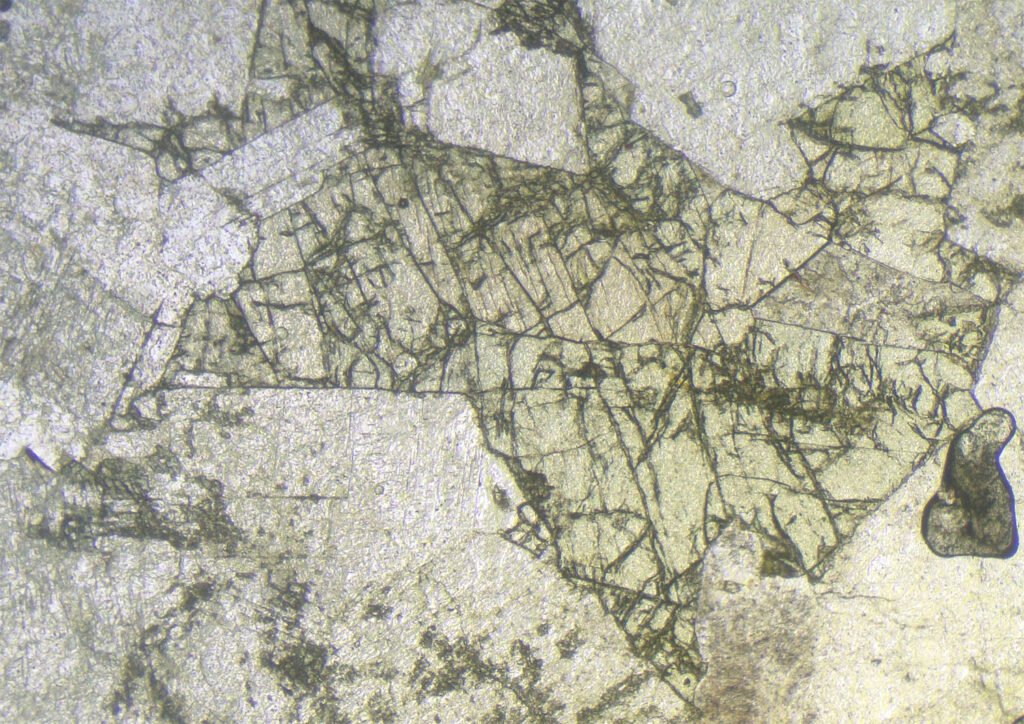
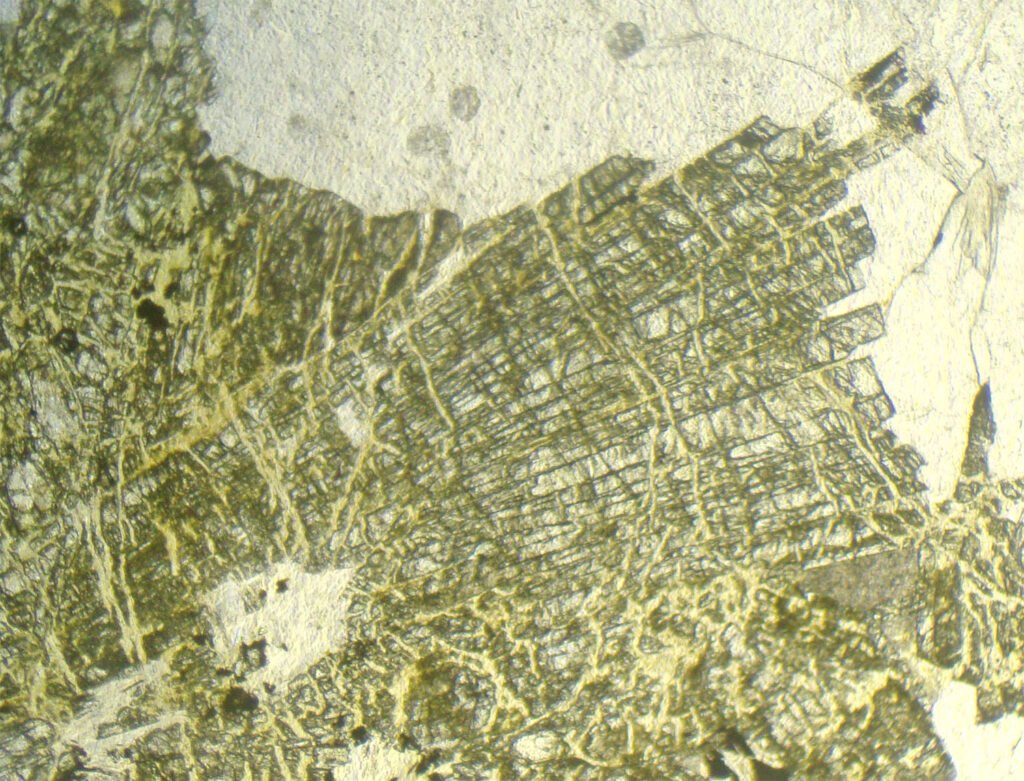
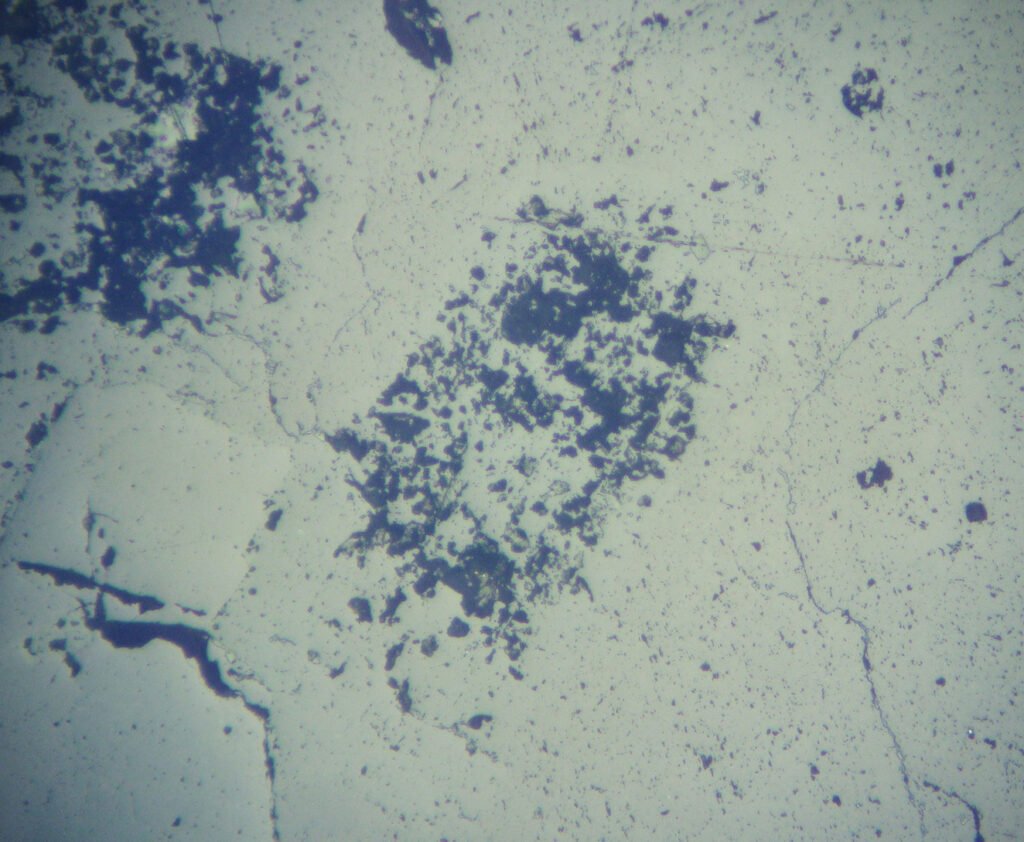
PLANE POLARIZED LIGHT – PPL
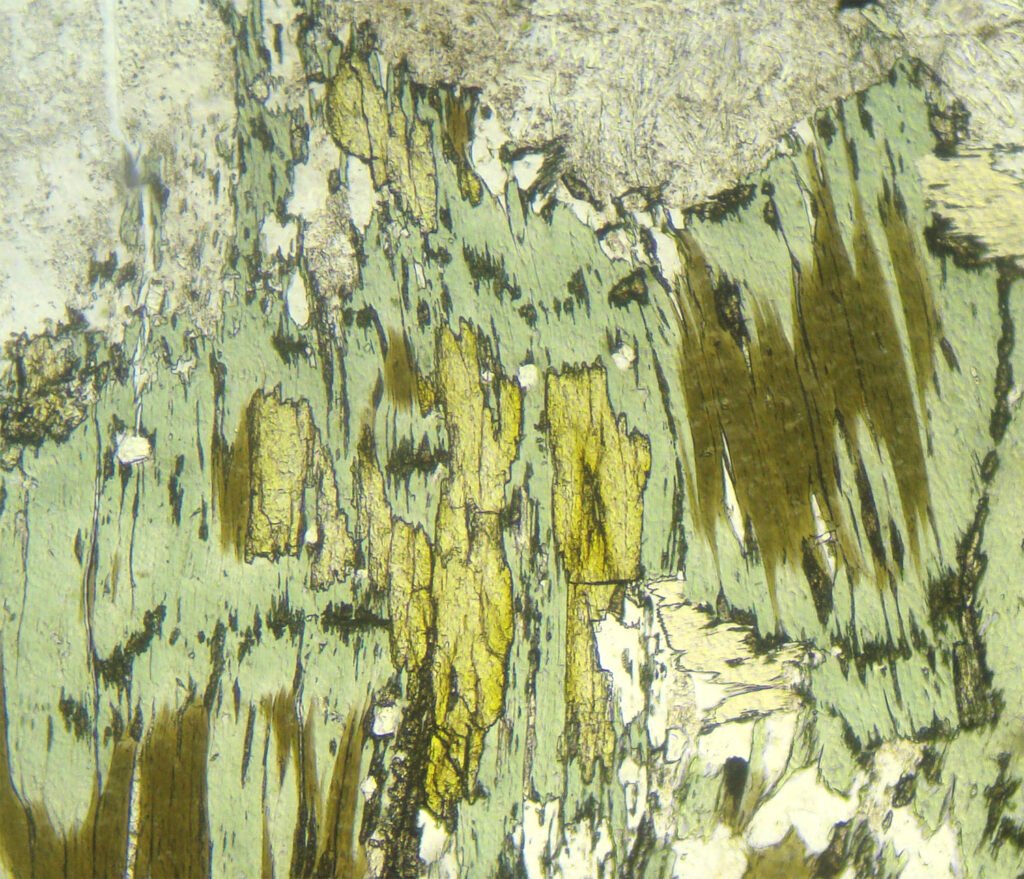
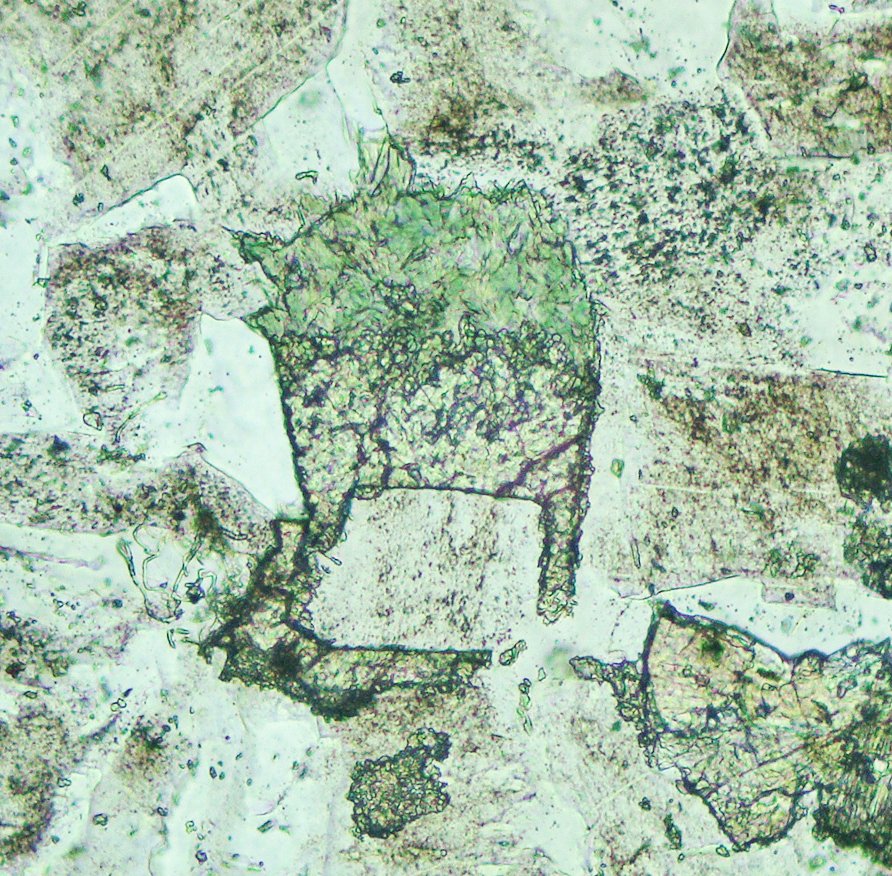
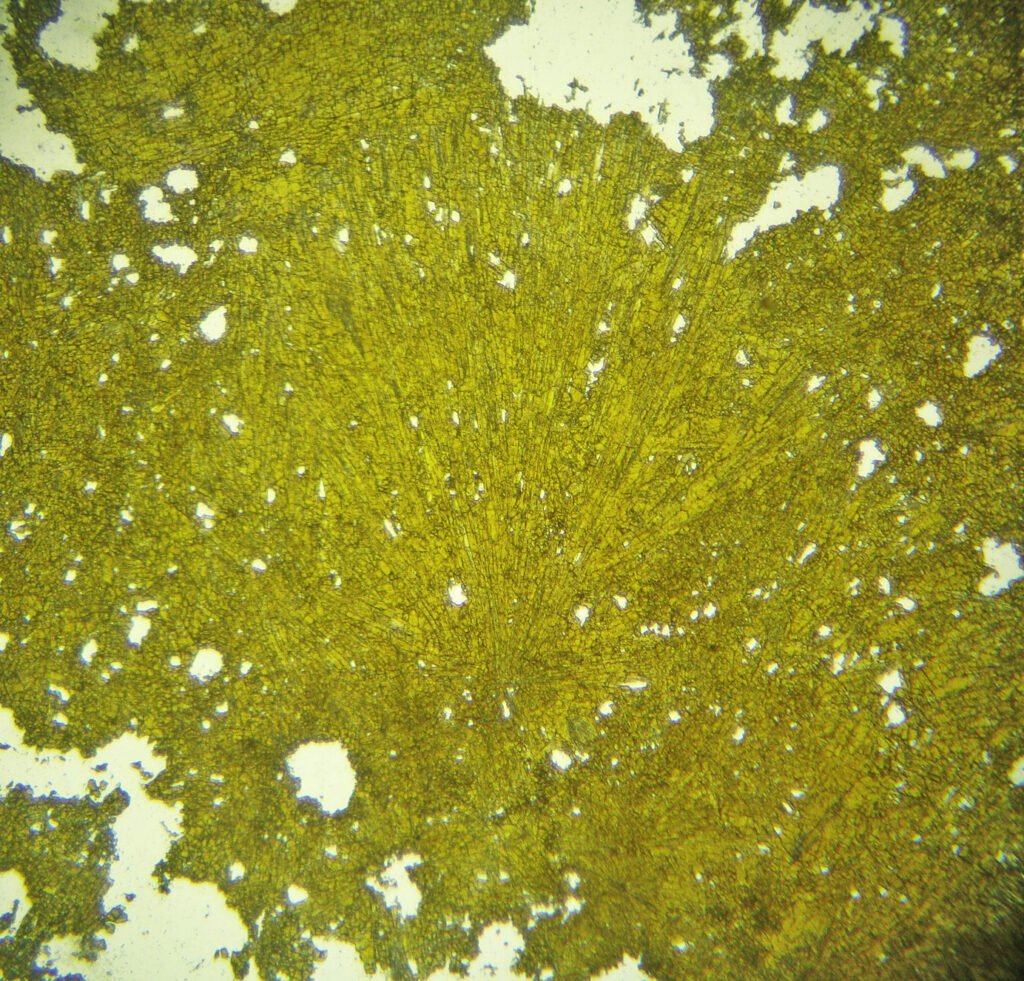
Color / Pleochroism: Pale greenish-yellow with pleochroism:
X = colorless, pale green, pale yellow;
Y = greenish yellow, greenish brown;
Z = pale green, yellow-green.
Pleochroism can be only barely noticeable.
Relief: High, increases with increasing Fe content.
Cleavage: {001} perfect, {100} imperfect. Perfect cleavage in one direction.
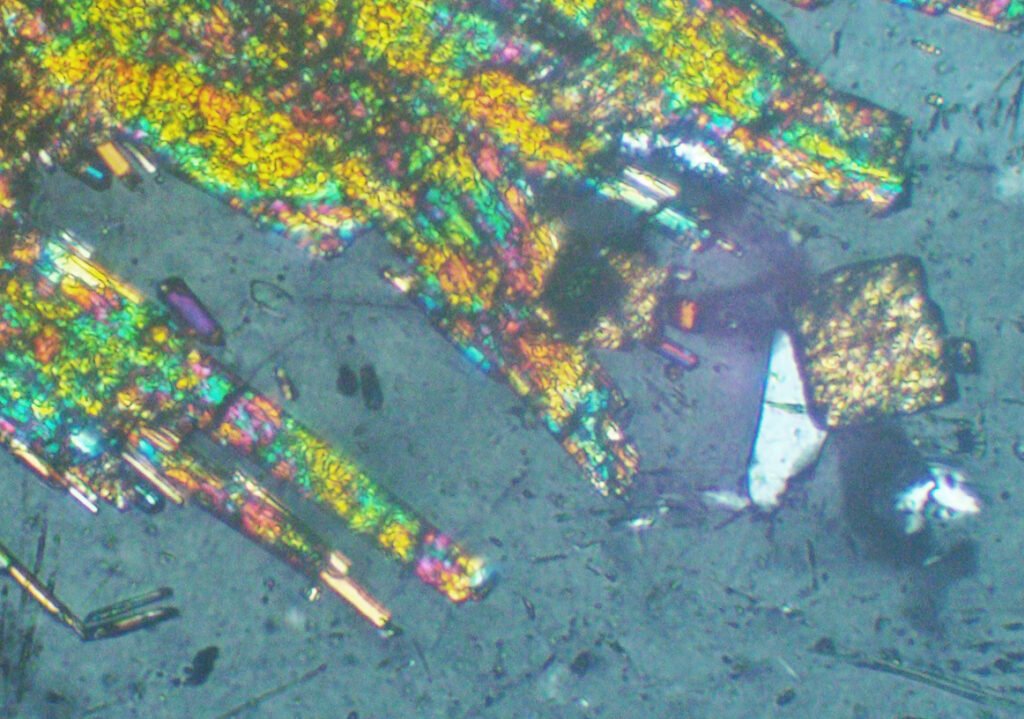
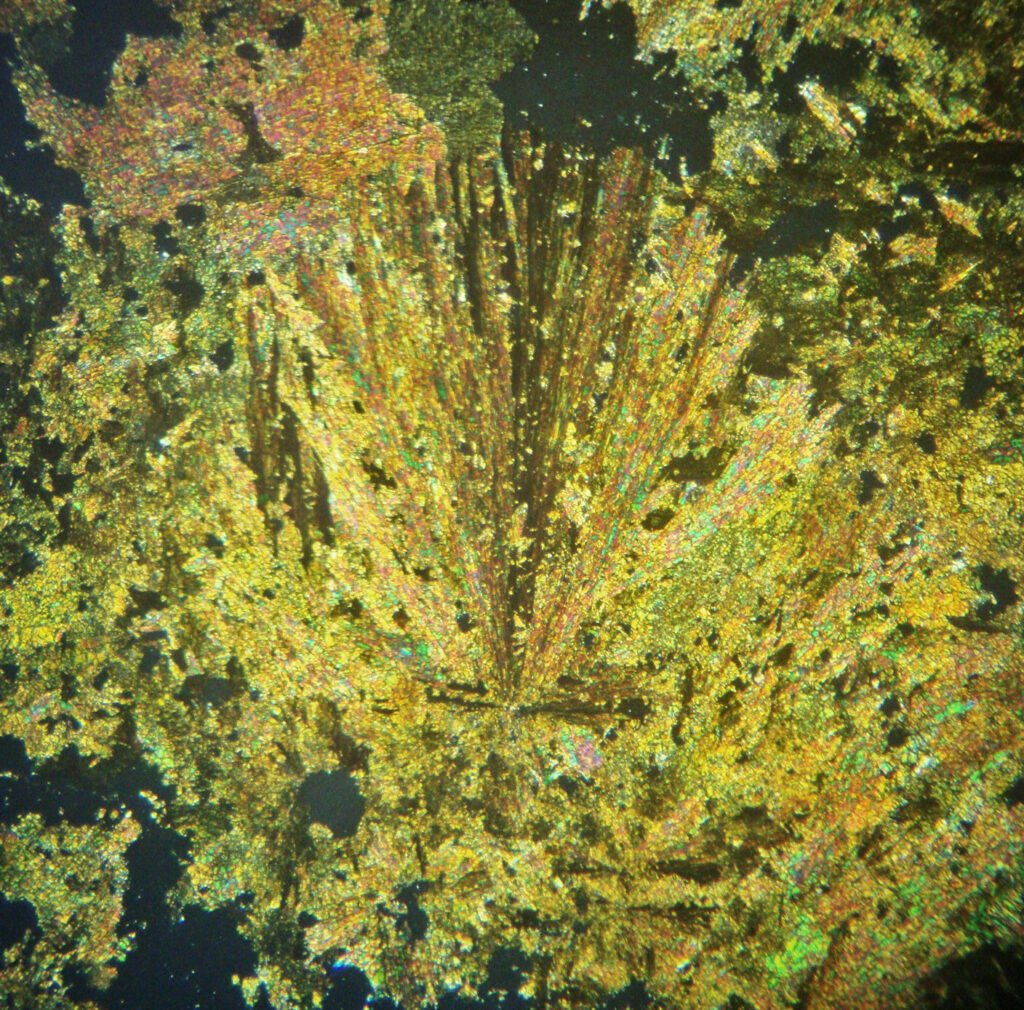
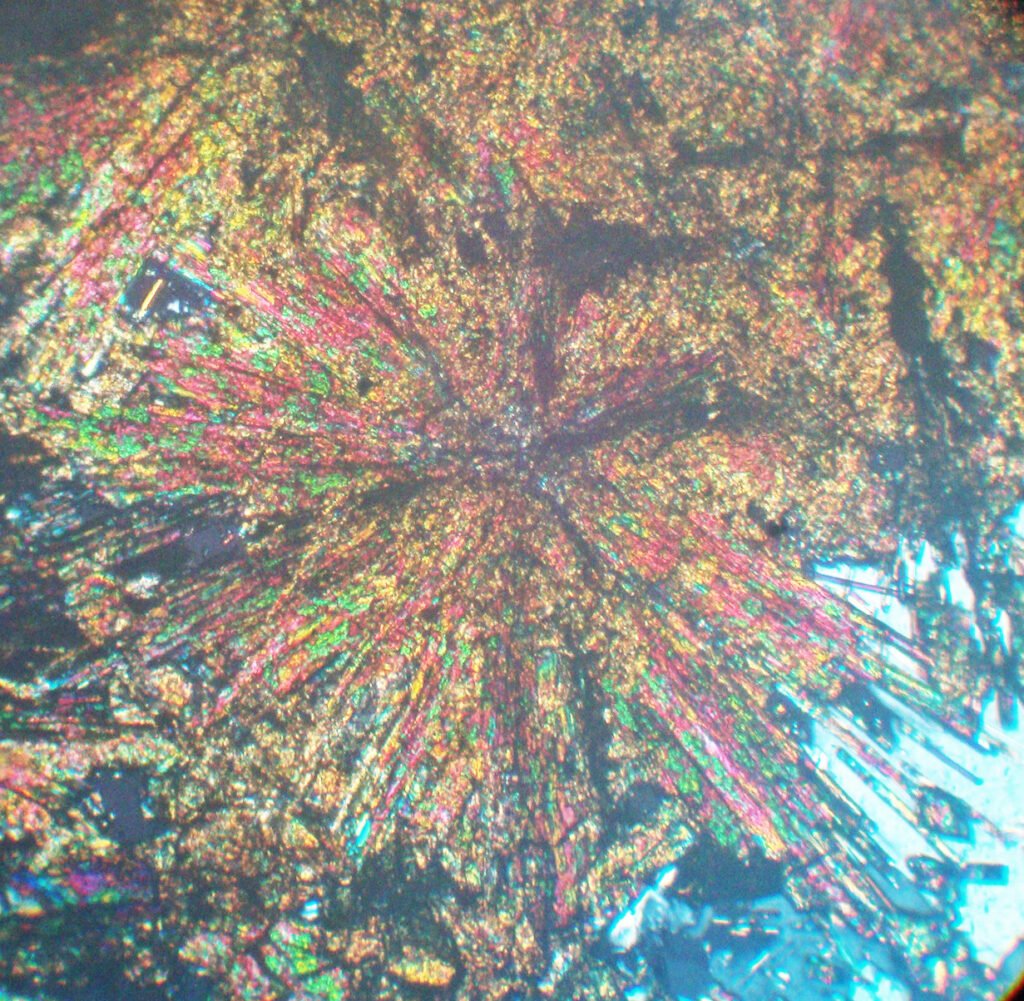
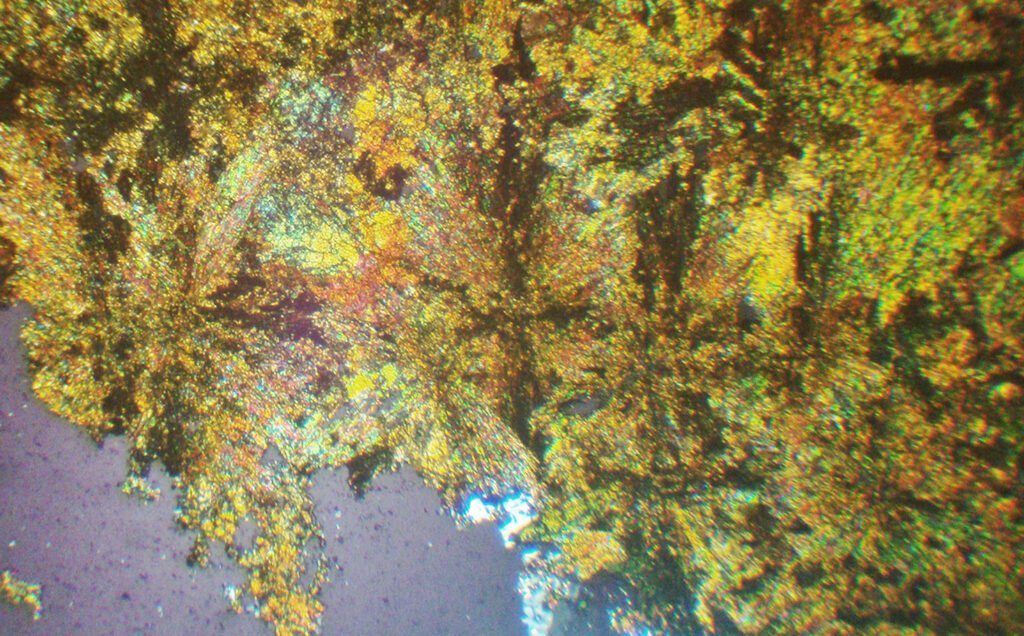
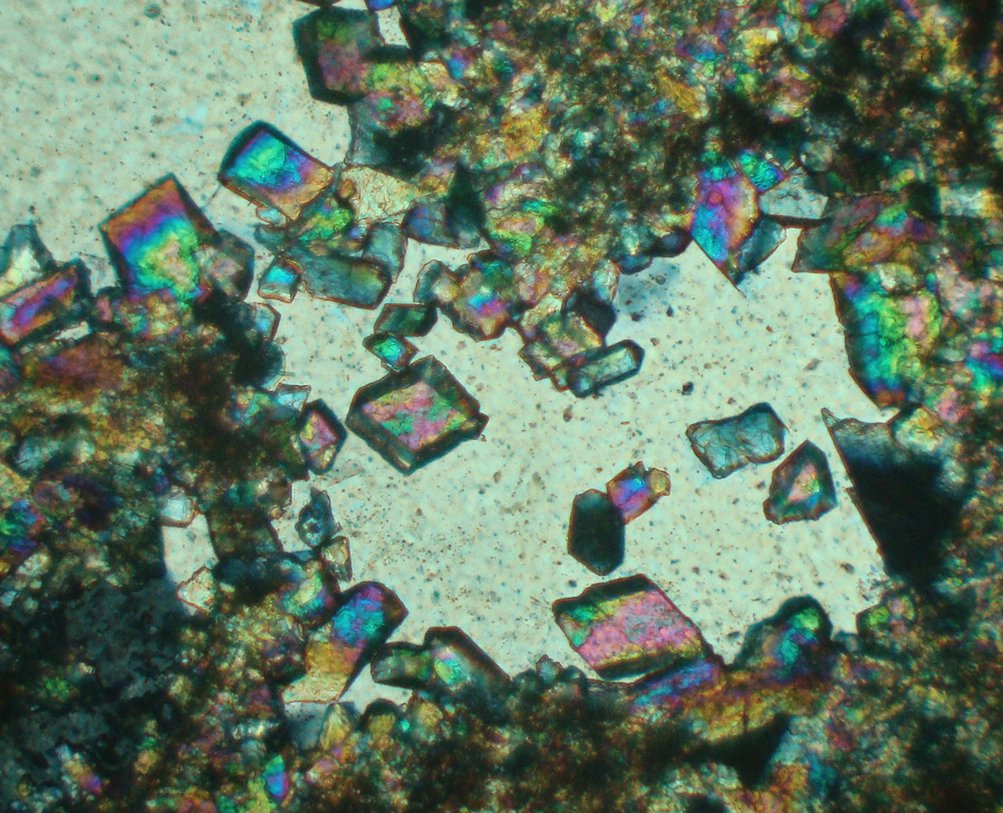
Habits: Aggregates of elongated to acicular crystals, parallel to the b axis, prismatic of pseudohexagonal or rhombic sections. May form divergent radial or anhedral granular aggregates. Also fibrous.
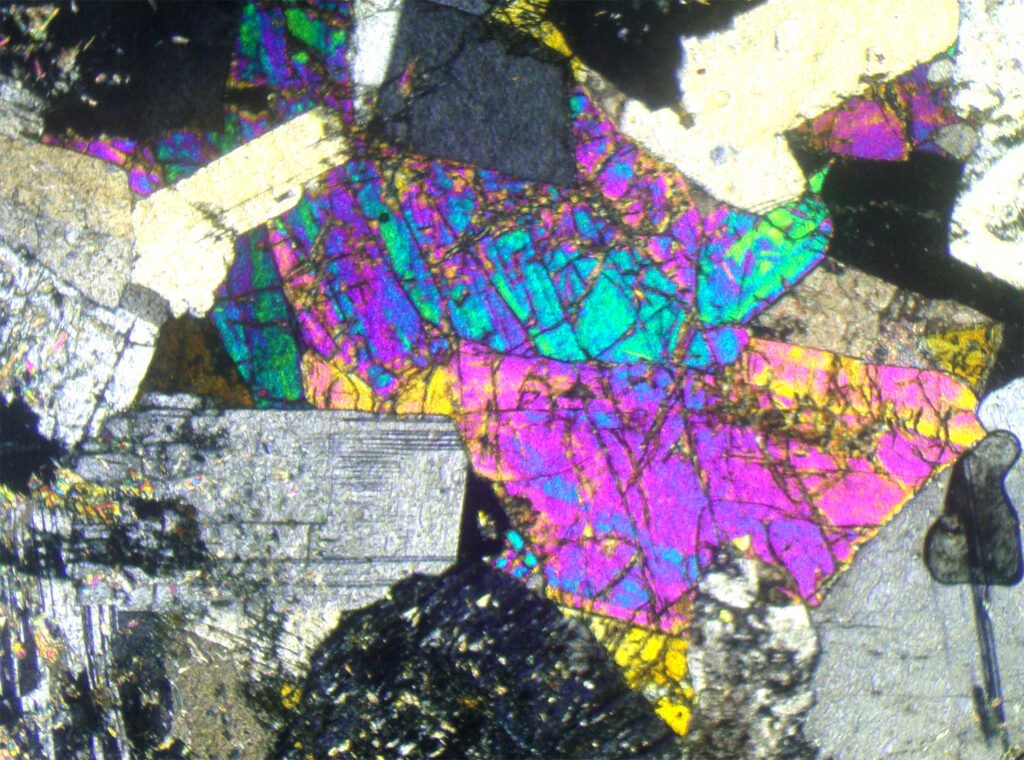
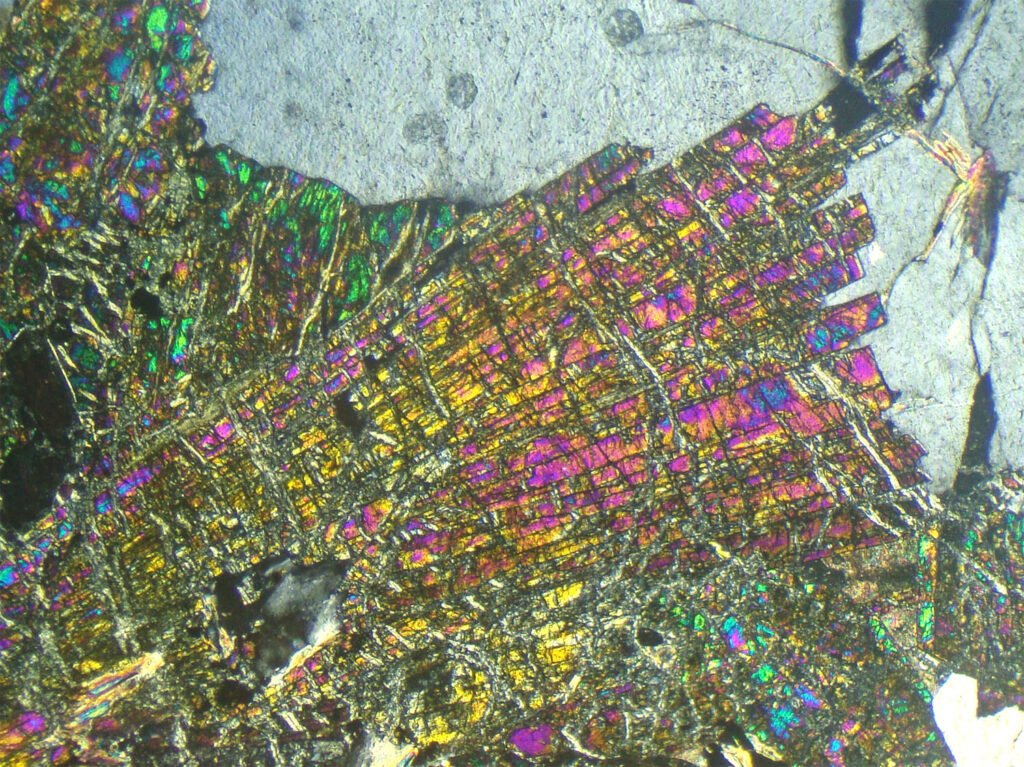
CROSSED POLARIZED LIGHT – XPL
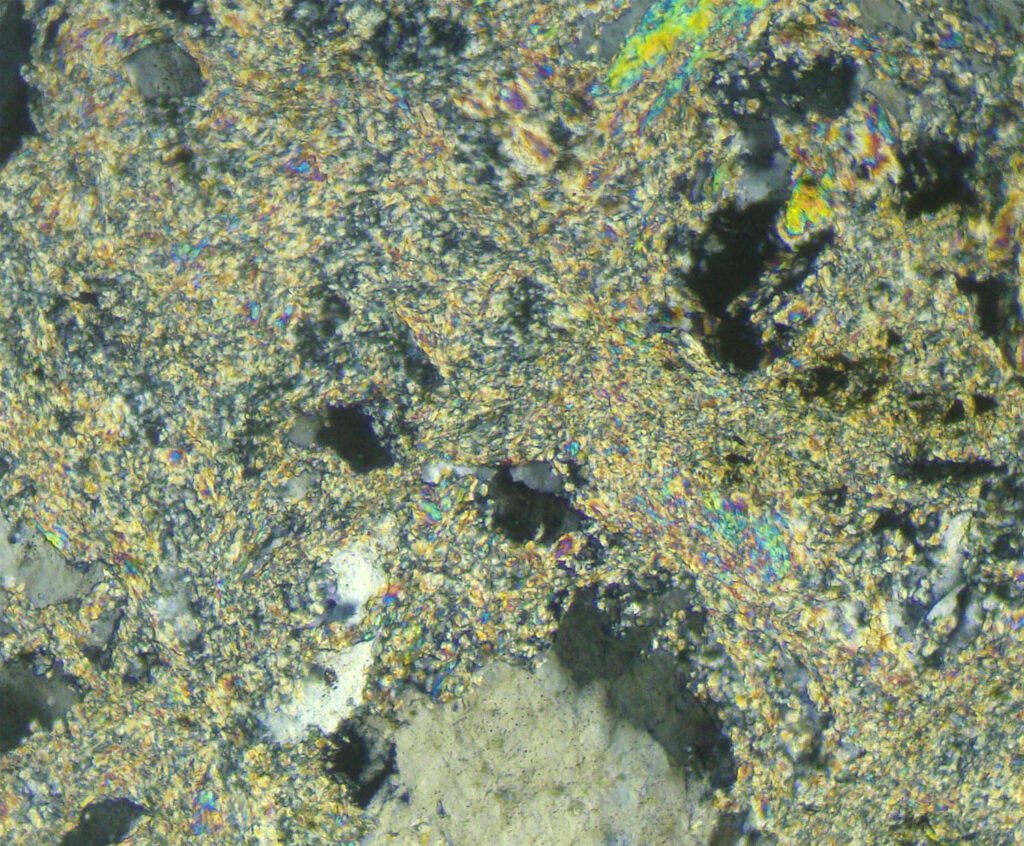
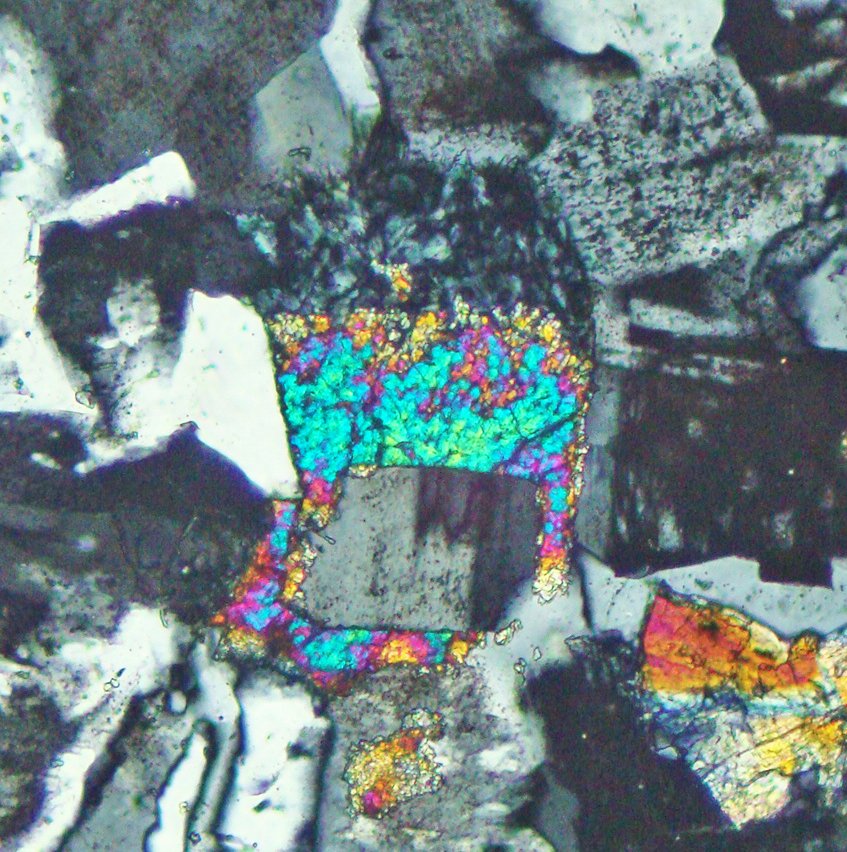
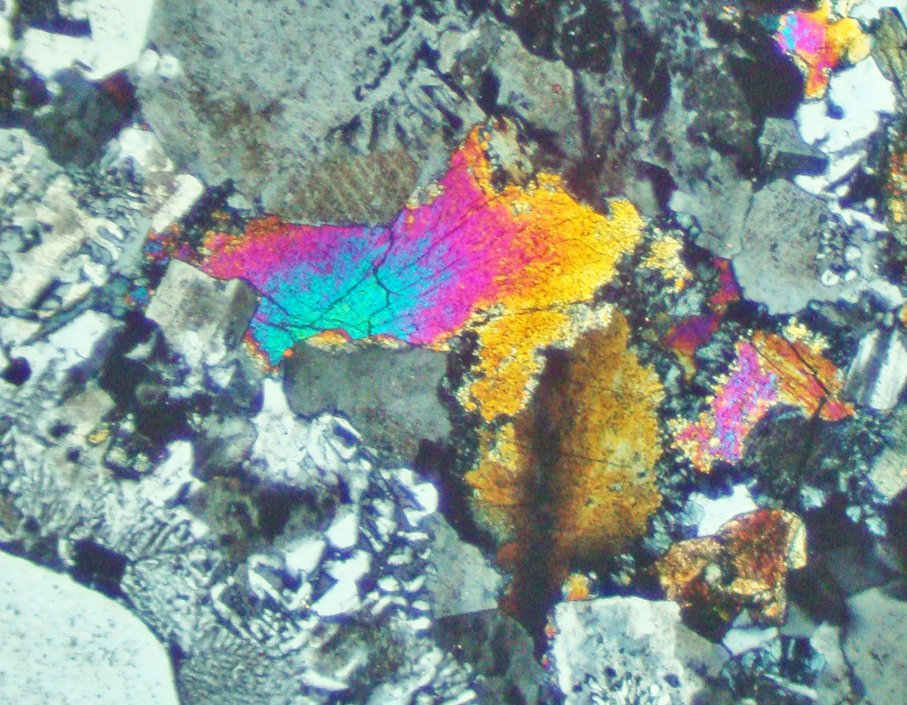
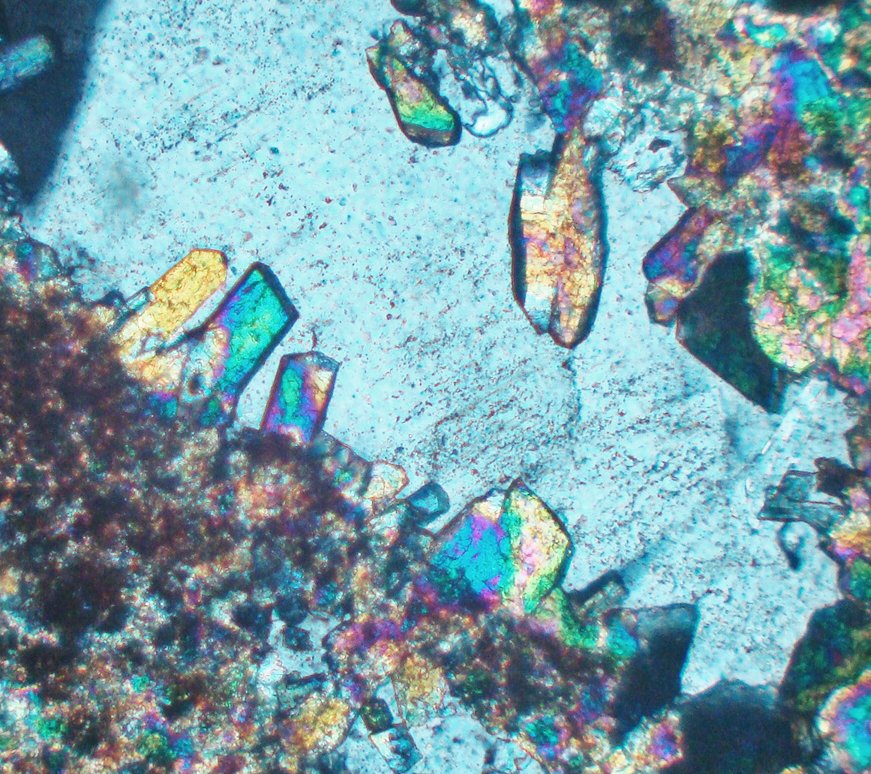
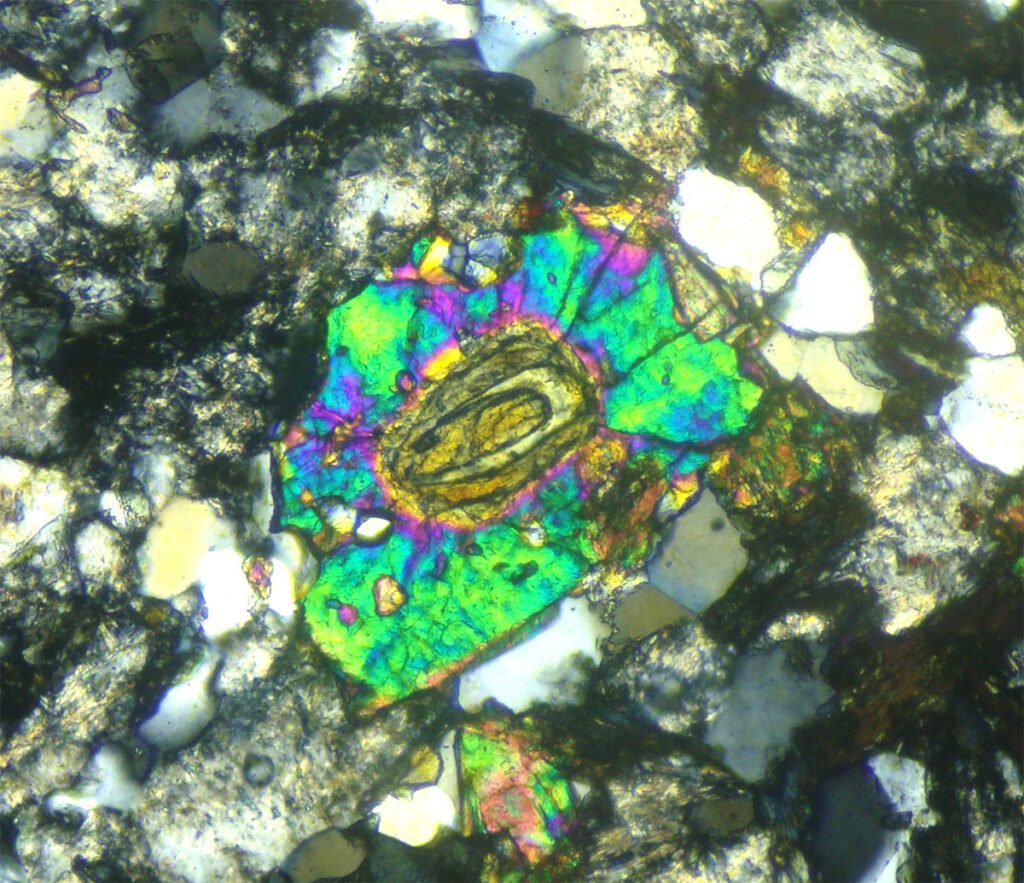
Birefringence and Interference Colors: High birefringence, 2nd – 3rd order (0.014 – 0.045), increases with increasing Fe content. Light, intense and varied anomalous colors: yellow, green, red, blue.
Individual grains may show various colors in concentric rings (Fe-poor nuclei and Fe-rich edges) or in irregular bands and patches.
Extinction: Parallel to cleavage in prismatic sections (anomalous up to 14º).
Oblique to cleavage in pseudohexagonal sections.
Elongation sign: ES(+) or ES(-), depends on section and chemical composition. Zoned crystals may show zones with different elongation signs.
Twins: Polysynthetic, rare, with heart-shaped sections.
Zoning: Frequently zoned.
CONVERGENT LIGHT
Character: B(-)
2V angle: 64-84º
Alterations: epidote is very resistant, but can alter to chlorite. It is a product of plagioclase alteration through the saussuritization process.
May be confused with: diagnostic are the intense (anomalous) irregularly distributed interference colors.
Clinozoisite show parallel extinction and is B(+).
Olivine is similar but shows no cleavage.
Diopside and augite have more oblique extinction.
Zoisite has parallel extinction in any orientation and lower birefringence (gray colors).
Piemontite is pleochroic in orange.
Monazite is B(+).