1. Characteristics
Crystal system: Monoclinic, can occur in various classes.
Color: Colorless to white, more rarely pinkish or yellowish.
Habit: Prismatic, typically in radial aggregates (“open accordion” pattern). Spherulitic, acicular, tabular.
Cleavage: {010} perfect.
Tenacity: Brittle.
Twinning: It always forms simple twins on {110} and {102}, resulting in pseudo-orthorhombic shapes. It also forms cross-shaped interpenetration twins on {100} and {110}.
Fracture: Irregular.
Mohs Hardness: 4
Parting: No.
Streak: White.
Lustre: Vitreous.
Diaphaneity: Transparent.
Density (g/cm³): 2.22 – 2.28
2. Geology and Deposits
Epistilbite typically occurs in cavities (vesicles – former gas bubbles) within basaltic and andesitic volcanic rocks. It may also be found in cavities within gneisses.
It is not a common zeolite; its abundance is significantly lower than that of other zeolites, such as stilbite, heulandite, and laumontite. However, in some regions it can be found easily.
3. Mineral Associations
It occurs with secondary minerals common in cavities within basaltic rocks, such as quartz (including the amethyst variety), chalcedony, calcite, fluorapophyllite, and others.
Various different zeolites may occur in these cavities: laumontite, chabazite-(Ca), mordenite, okenite, stilbite, scolecite, heulandite-Ca, and gyrolite.
4. Transmitted Light Microscopy
Refraction indices: nα: 1.502-1.505 nβ: 1.510-1.515 nγ: 1.512-1.519
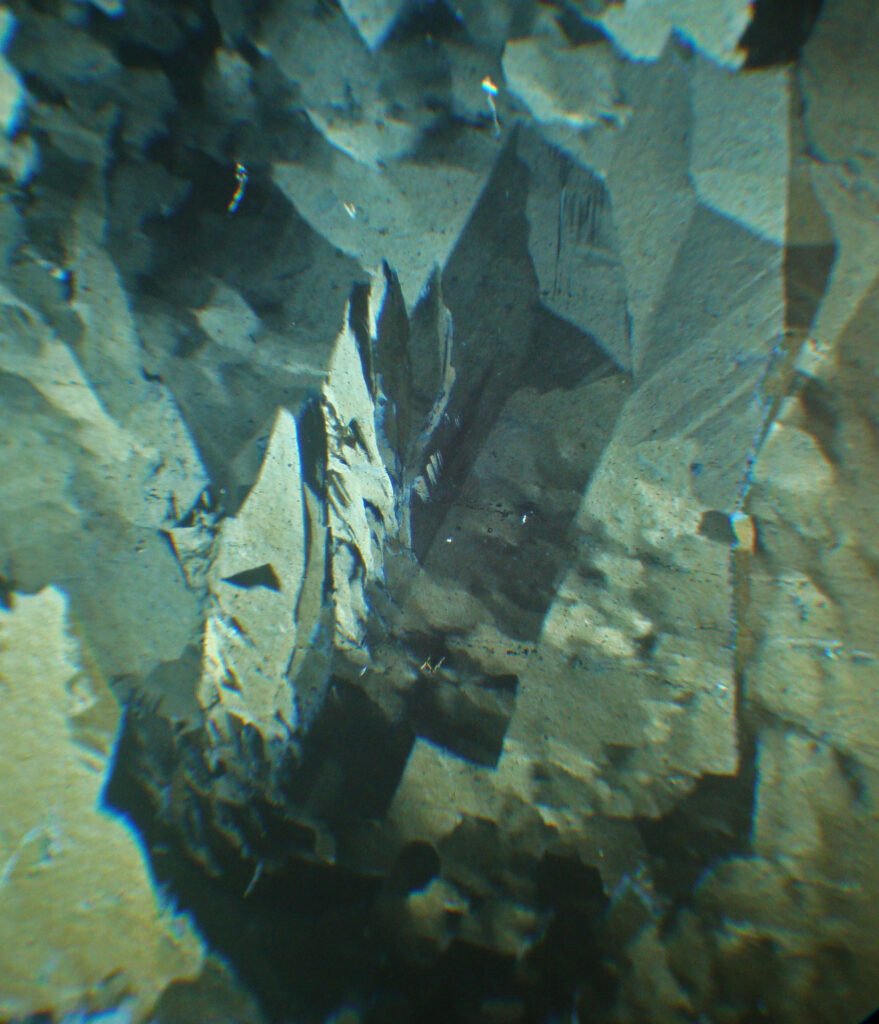
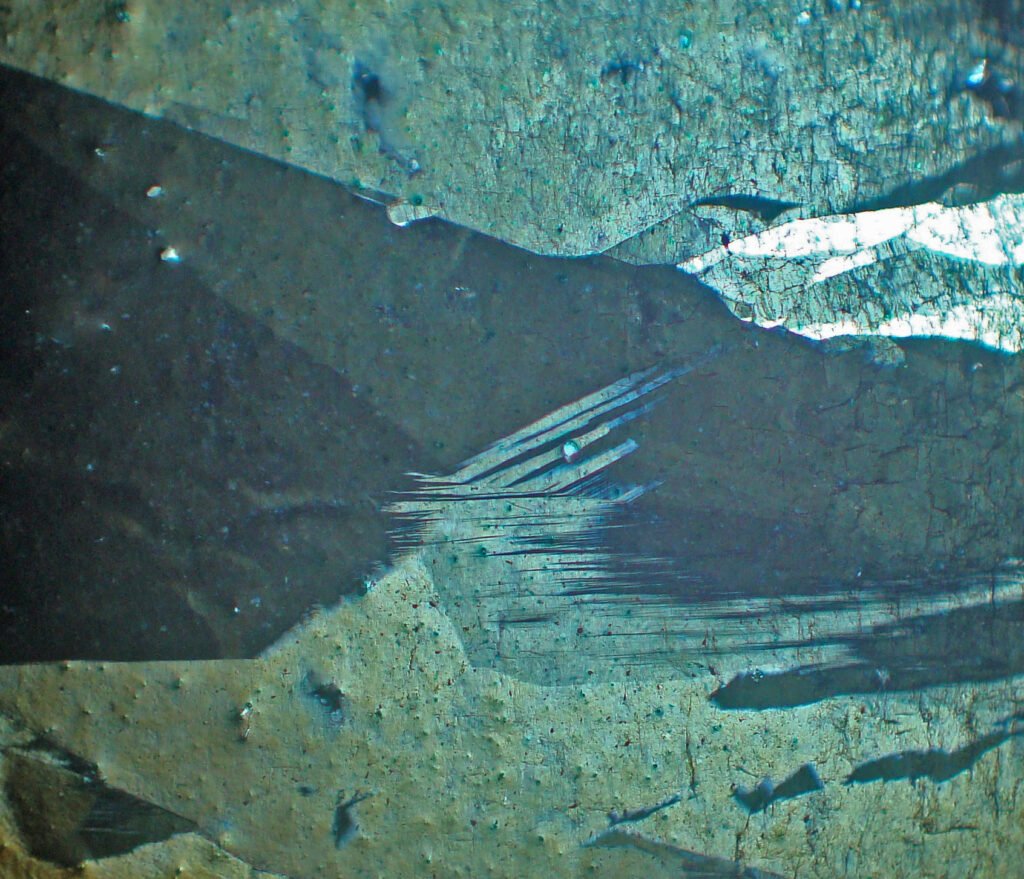
PLANE POLARIZED LIGHT – PPL
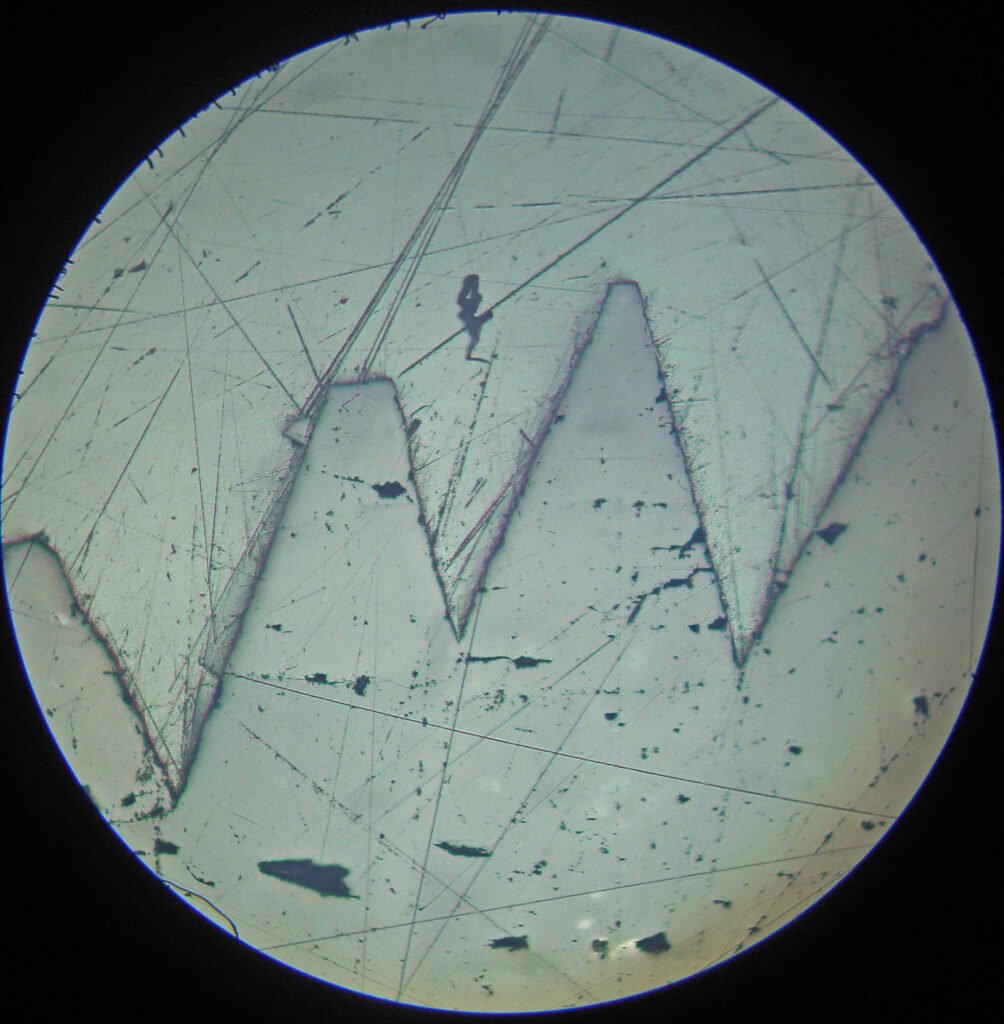
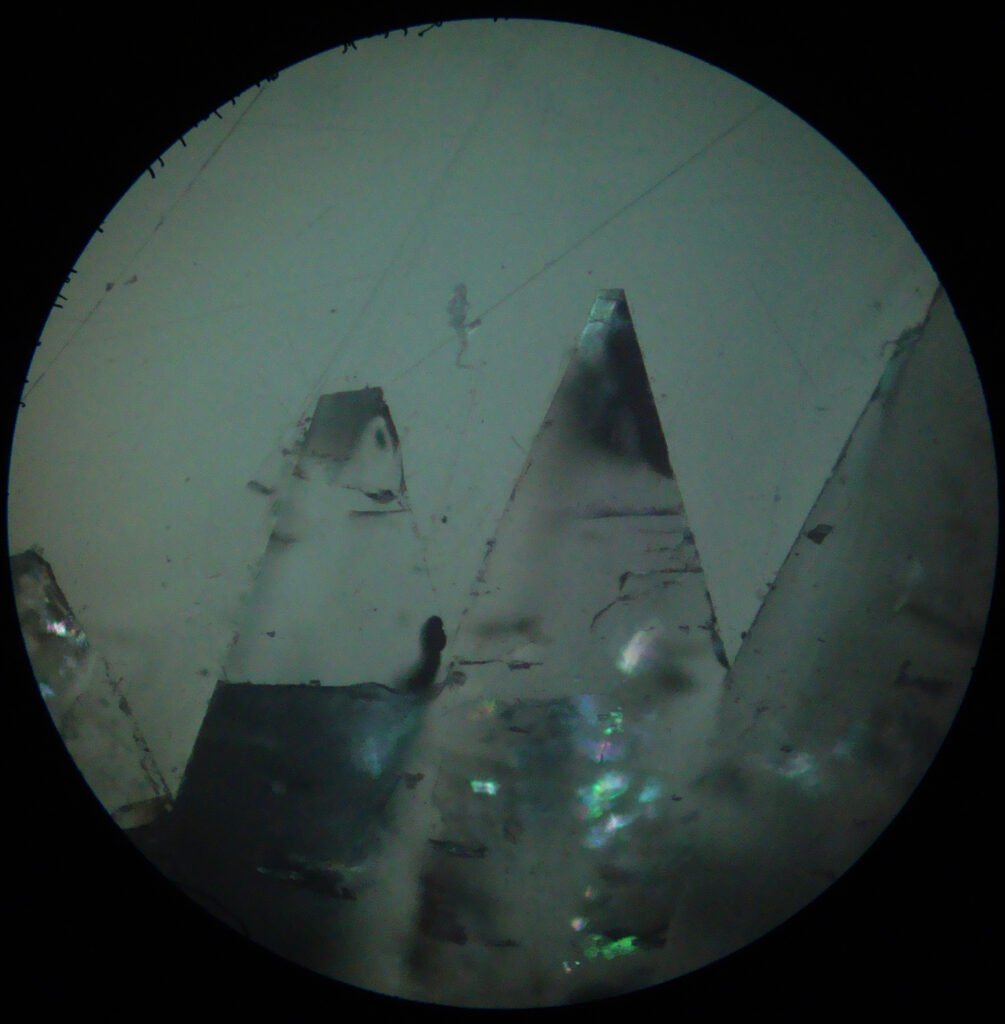
Color / Pleochroism: Colorless.
Relief: Low.
Cleavage: Usually not visible.
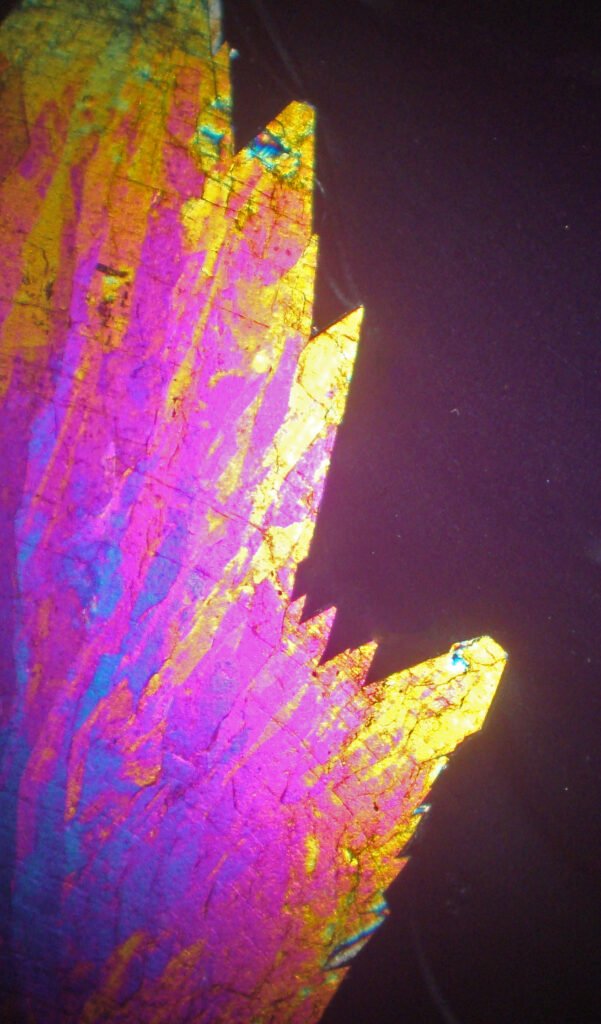
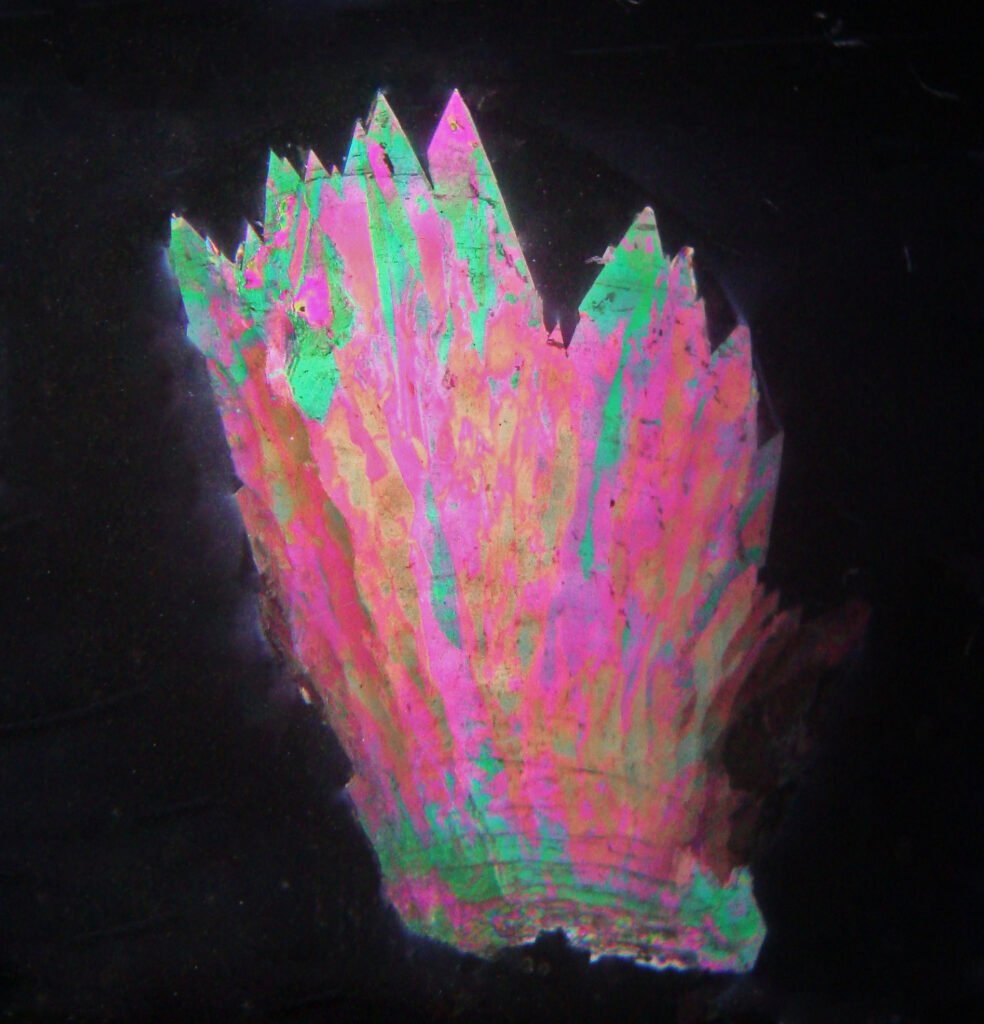
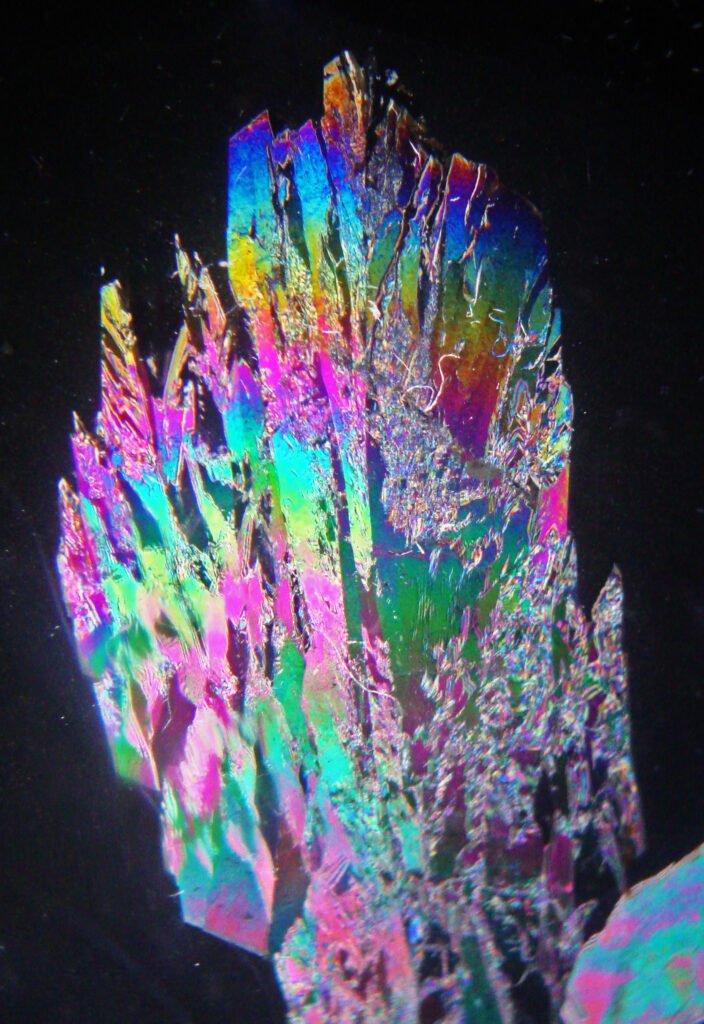
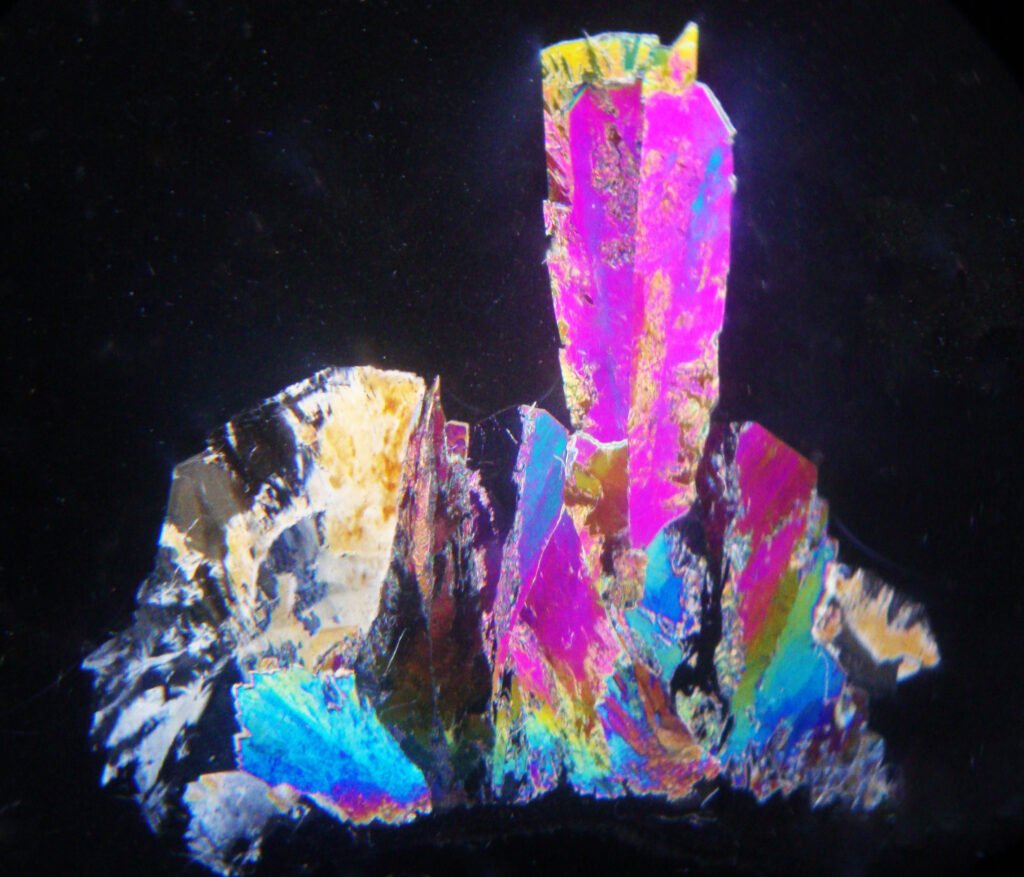
Habits: It occurs as pointed crystals, intergrown with various others to form radial clusters.
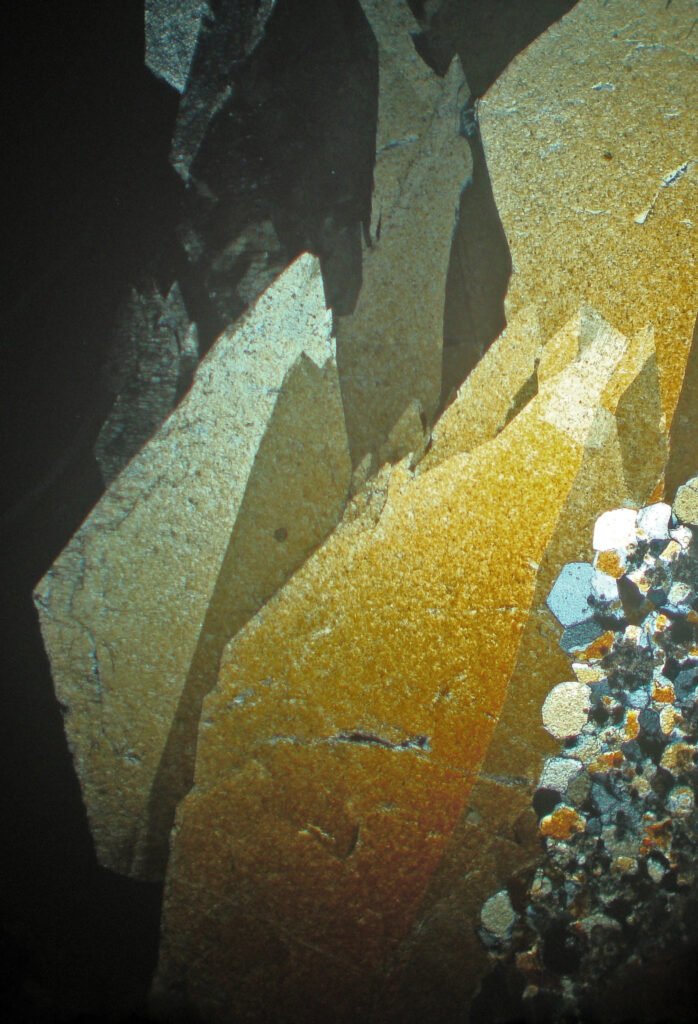
CROSSED POLARIZED LIGHT – XPL
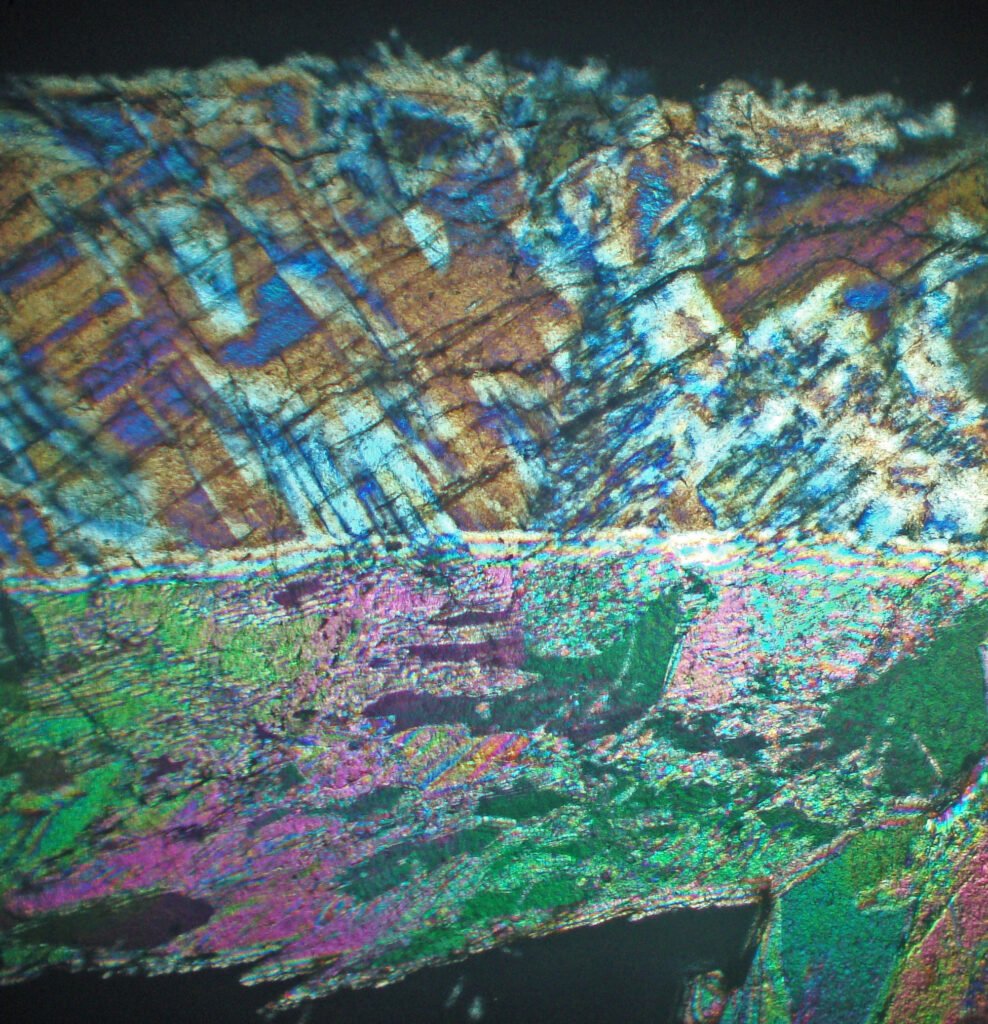
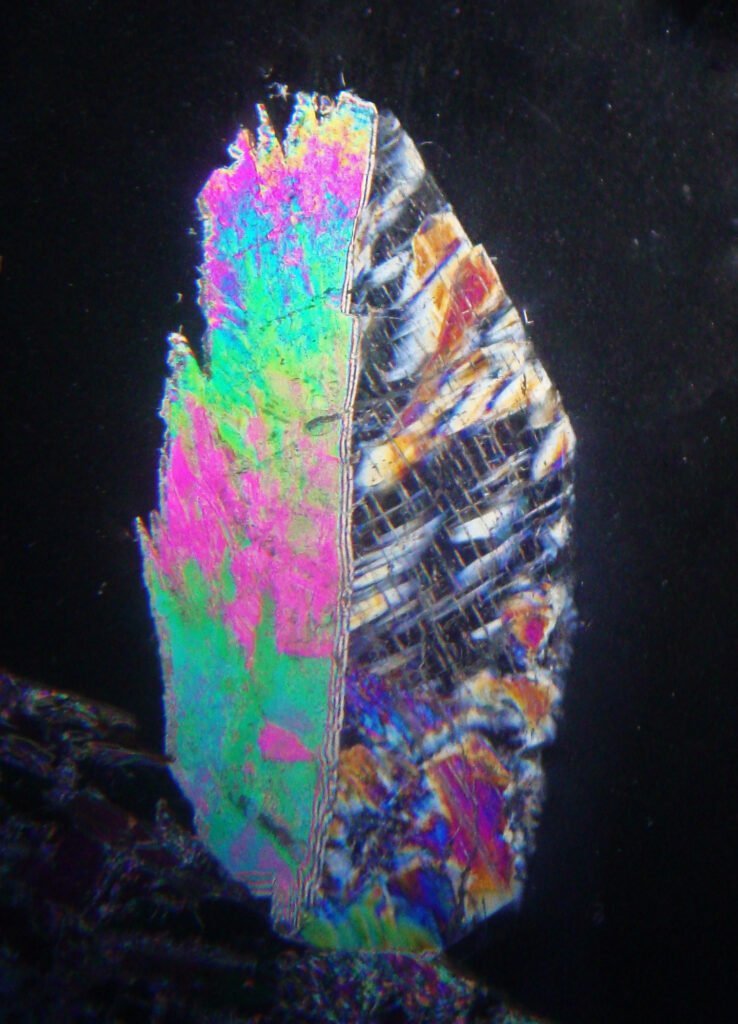
Birefringence and Interference Colors: Maximum birefringence of 0.010, corresponding to interference colors ranging from dark gray to light gray, white, and up to straw yellow. These colors are slightly higher than those of other zeolites, which typically exhibit colors between gray and white.
Extinction: Oblique in 10º.
Elongation sign: ES(+).
Twins: Abundant, always present.
Zoning: No.
CONVERGENT LIGHT
Character: B(-).
2V angle: 44º
Alterations: No information available.
May be confused with: other zeolites, which generally have lower interference colors.
Phillipsite is B(+) and exhibits parallel extinction.
Thomsonite shows parallel extinction.
Stilbite has lower refractive indices and two cleavage directions.