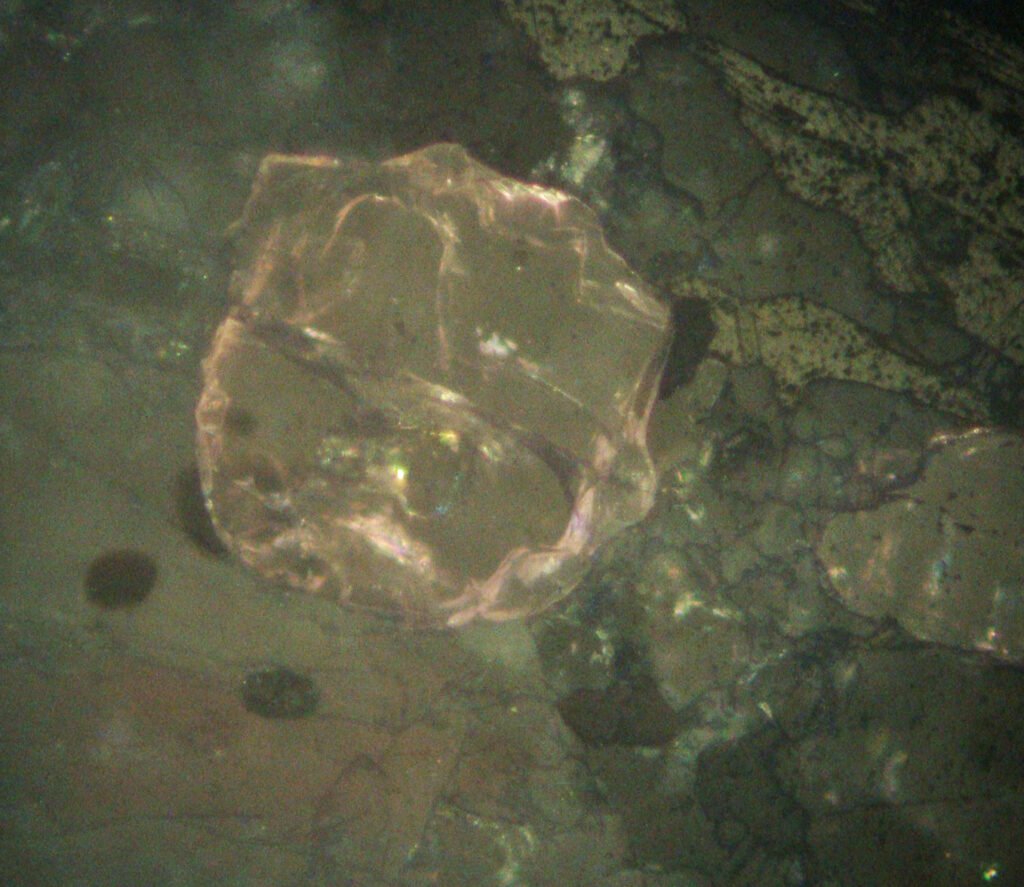
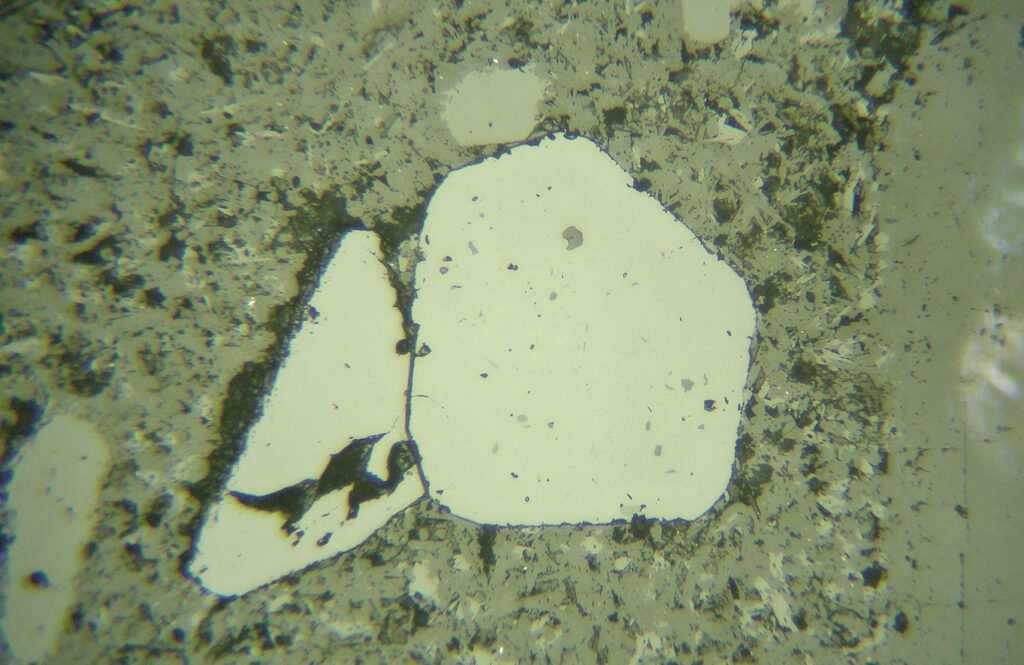
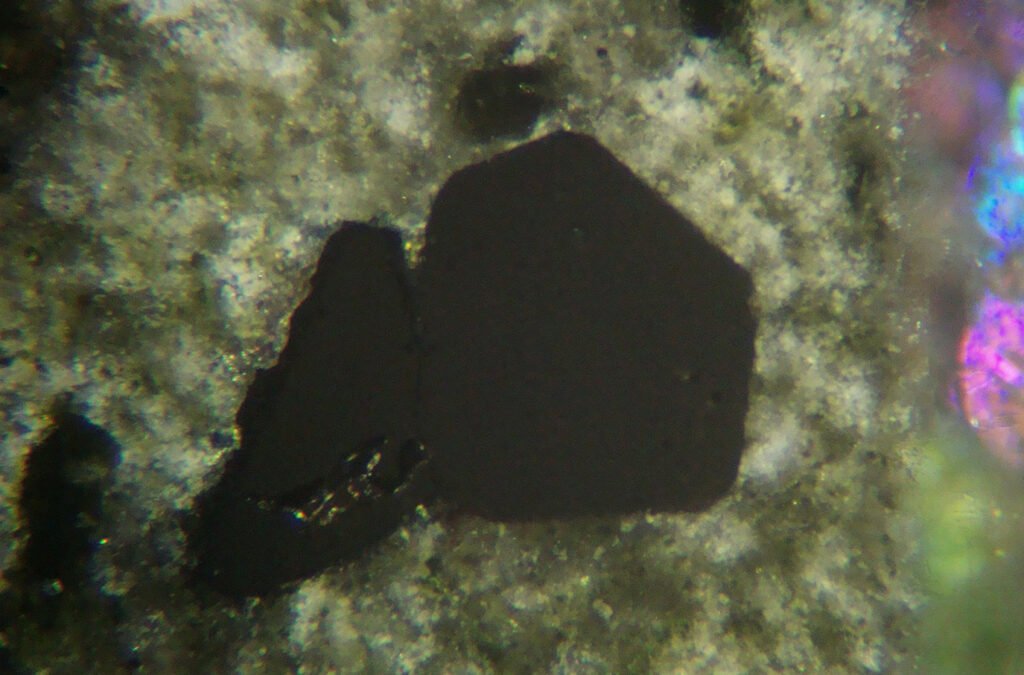
Crystal system: Cubic hexaoctaedrical.
Color: Red, red-brown, violet, black.
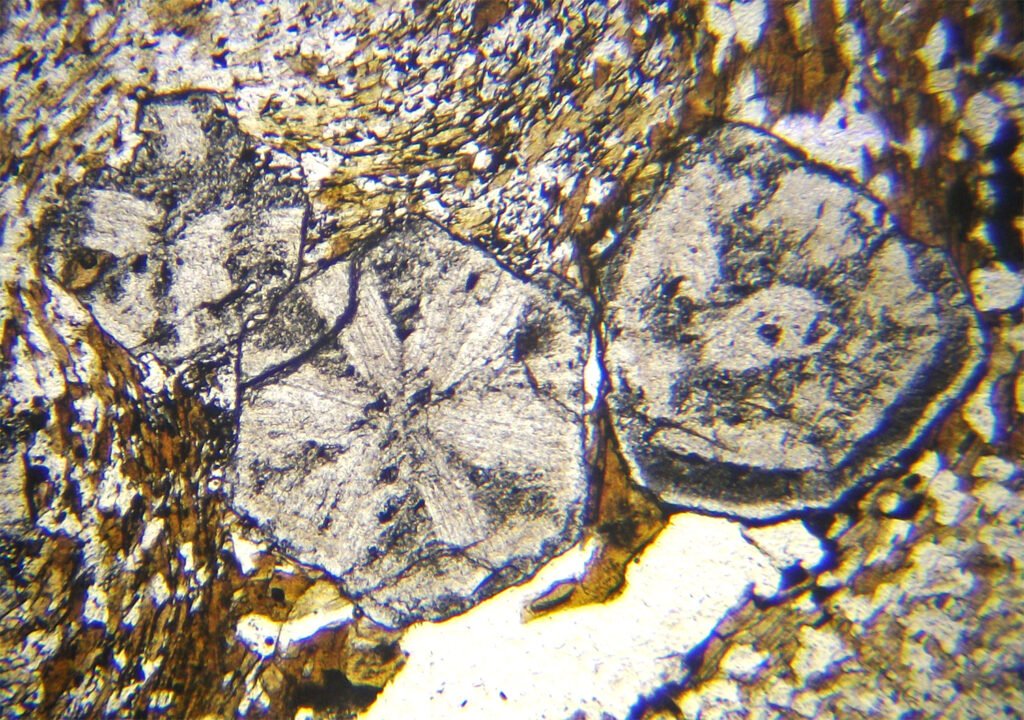
Habit: Rounded grains are typical. Dodecahedrons, trapezohedrons, combined shapes. Massive. Poikiloblastic.
Cleavage: No.
Tenacity: Brittle.
Twinning: Rare
Fracture: Sub conchoidal.
Mohs Hardness: 7 – 7.5
Parting: On {110}.
Streak: White.
Lustre: Vitreous, greasy.
Diaphaneity: Transparent.
Density (g/cm³): 4.3
2. Geology and Deposits
Garnets are very common and occur in igneous, metamorphic and sedimentary rocks. They are very resistant and therefore ocurr in sediments derived from the weathering on these rocks.
Almandine is typical, porphyroblastic, in schists, gneisses, granites and pegmatites.
Pyrope occurs in ultramafic igneous rocks (pyroxenites, peridotites). Also in kimberlites and in contact metamorphic rocks.
Spessartite is typical of metamorphic rocks such as gneisses, schists, etc. Also in skarns.
Andradite is rare, from skarns, schists, serpentinites and titaniferous alkaline igneous rocks such as syenites and pyroxenites. A macroscopically black variety, titaniferous (up to 11.5% Ti), typical of alkaline volcanic rocks, is known as “melanite”.
Grossular is a characteristic garnet of gneiss.
Uvarovite is the rarest, found as a secondary mineral in metamorphic contact zones.
3. Mineral Associations
Garnets are associated with a very high number of other minerals, whose listing will never cover all situations. It is very commonly associated with quartz, micas (biotite, muscovite, chlorite), staurolite, tourmaline, feldspar (plagioclase, microcline), fluorapatite, beryl and many others.
4. Transmitted Light Microscopy
Refraction indices: n: 1.83 (almandine)
PLANE POLARIZED LIGHT – PPL
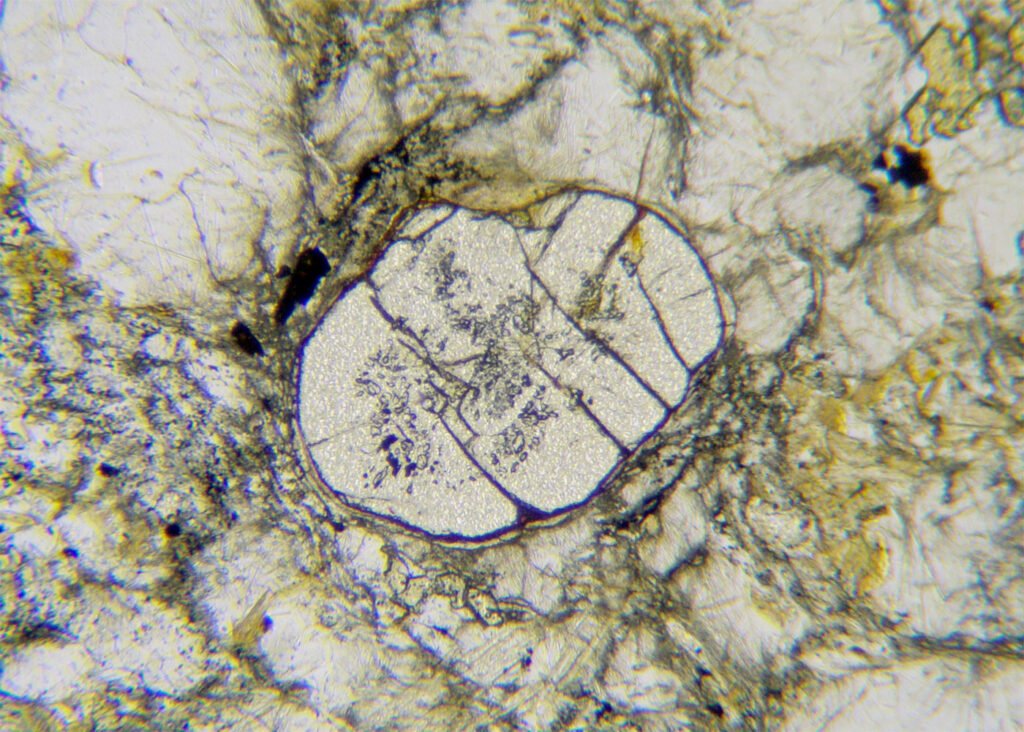
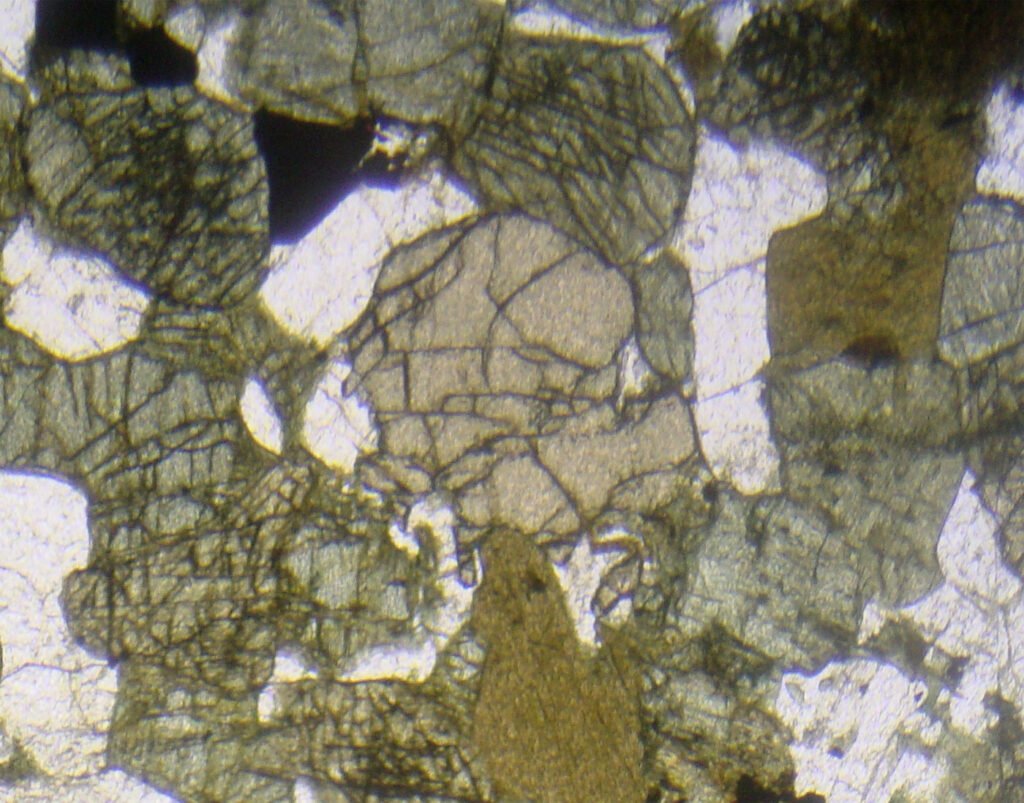
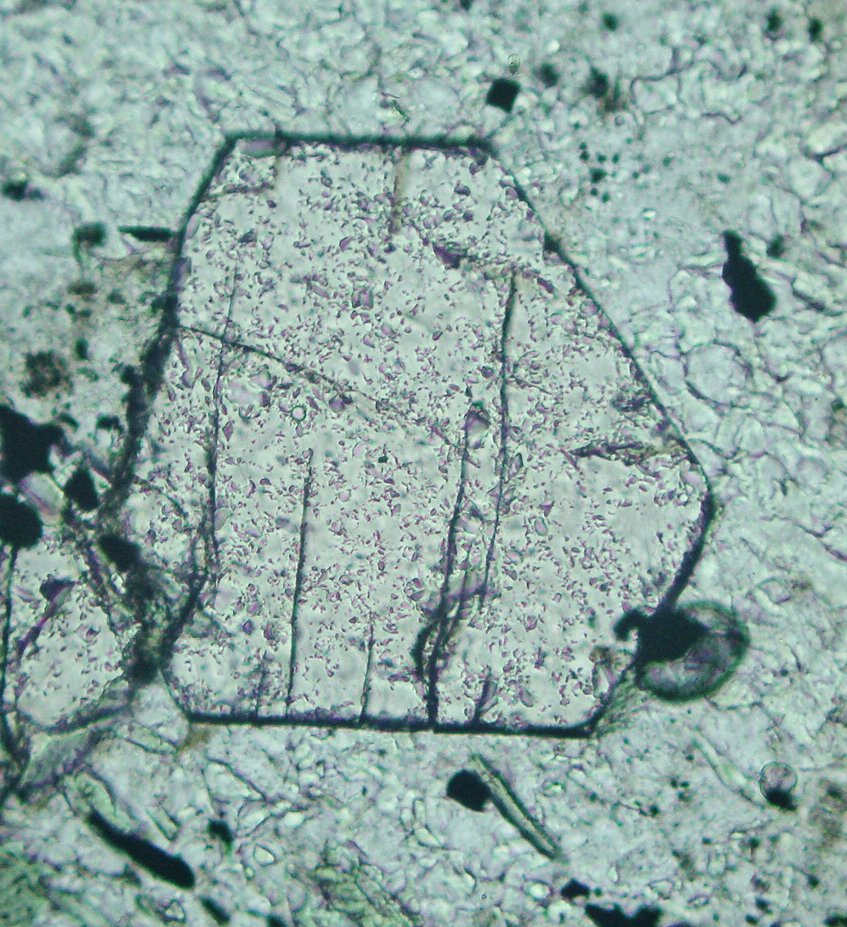
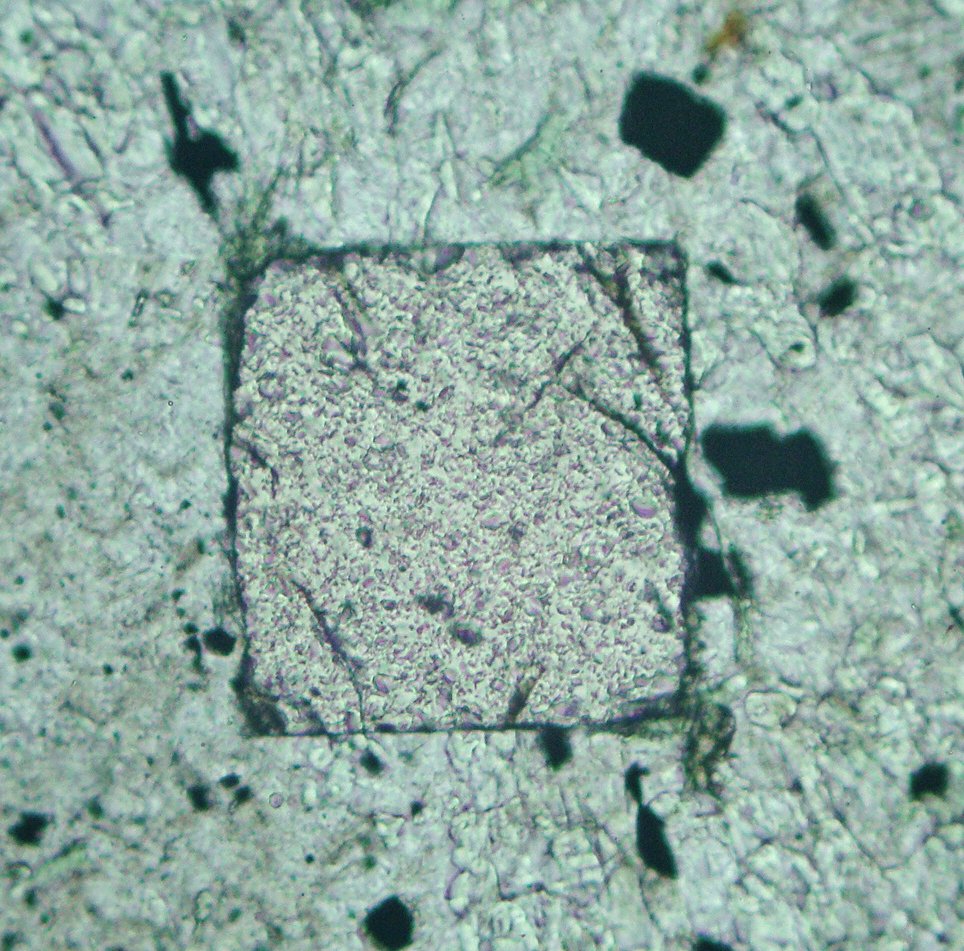
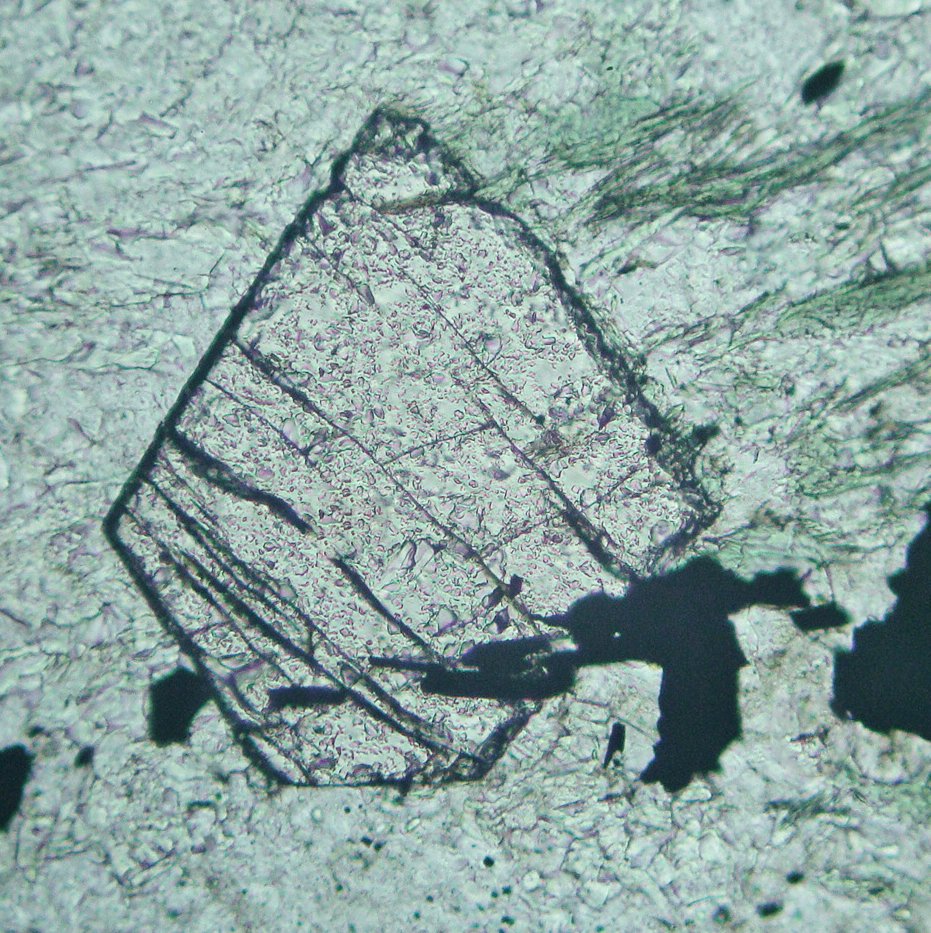
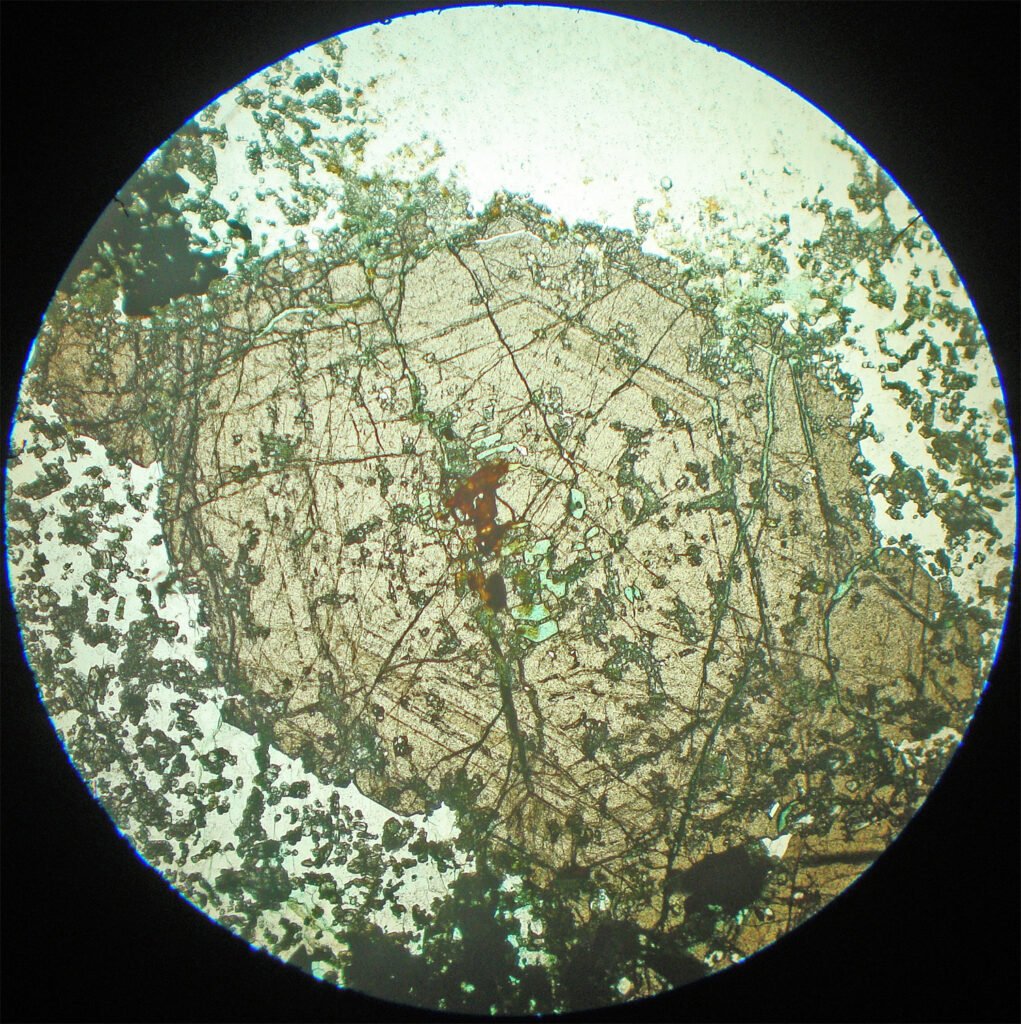
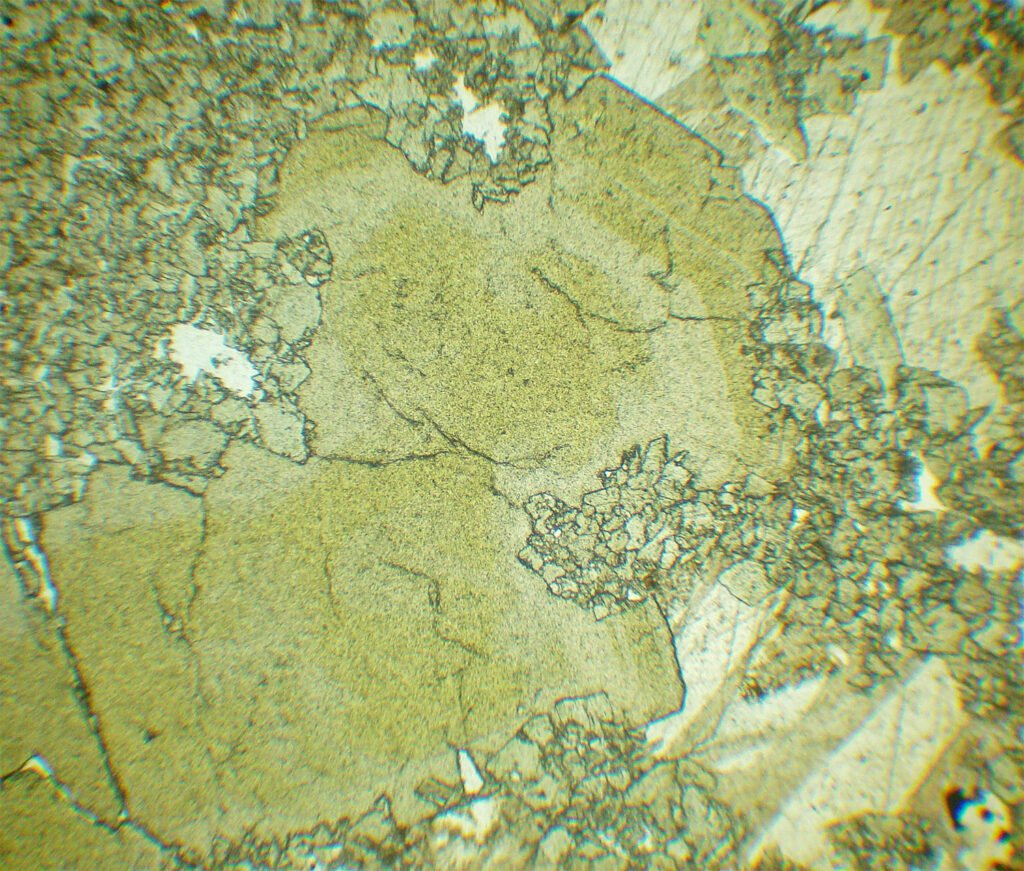
Color / Pleochroism: Usually colorless, more rarely pale pink, pale gray. Due to the very high relief, they simulate brown to cream colors. Never show pleochroism!
Colors are rare: light brown, yellow, reddish, greenish.
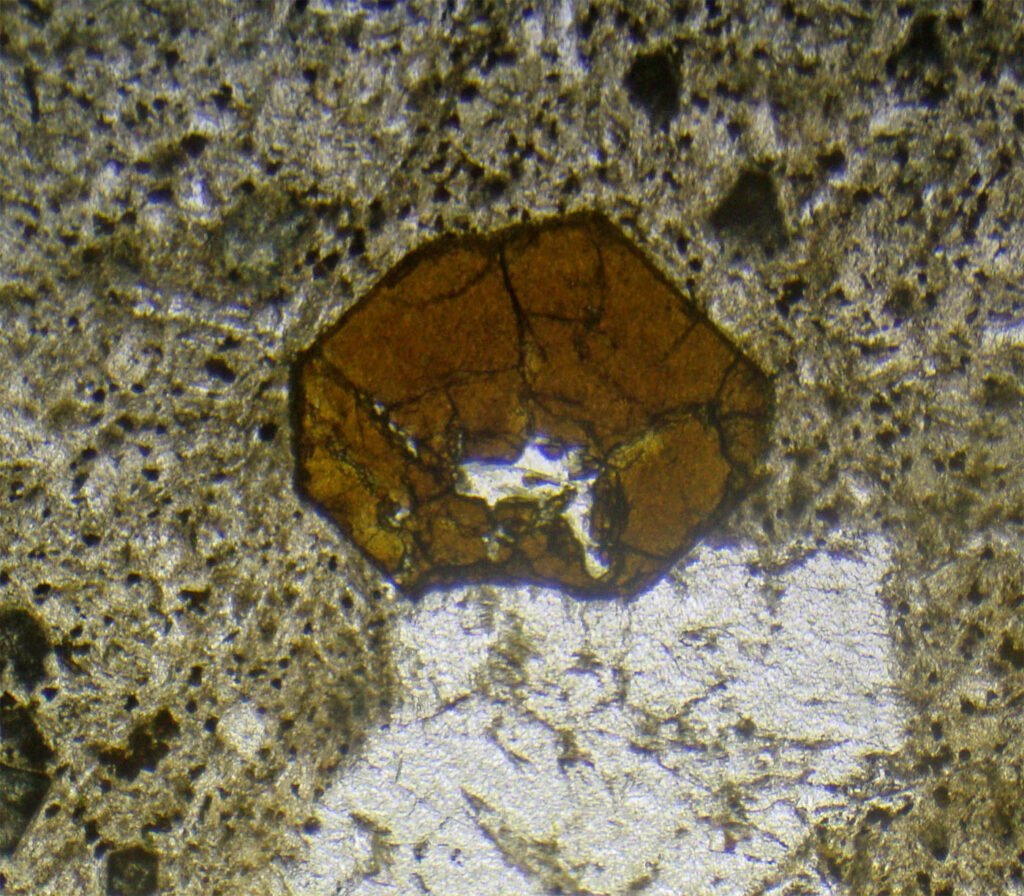
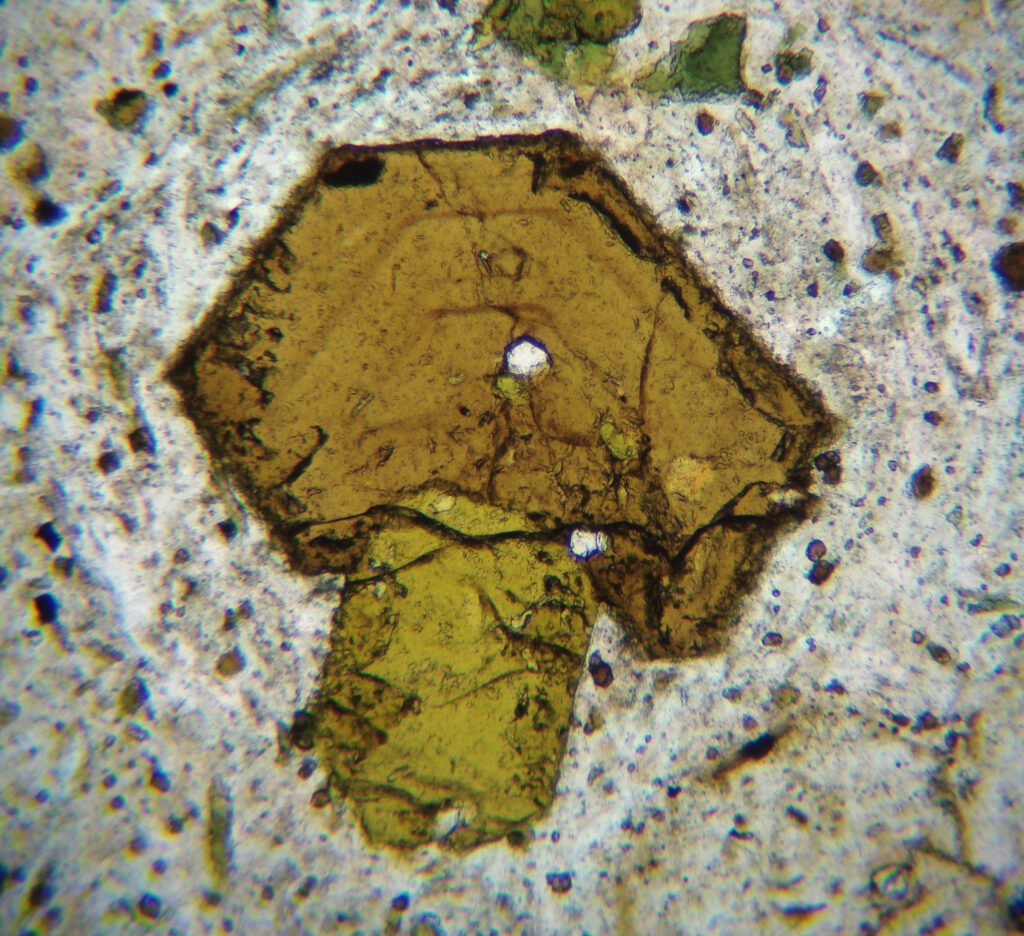
In volcanic rocks, melanite garnet has a strong reddish brown color, like the color of dark biotites and brown hornblende.
Relief: Very high (almandine), high (grossular).
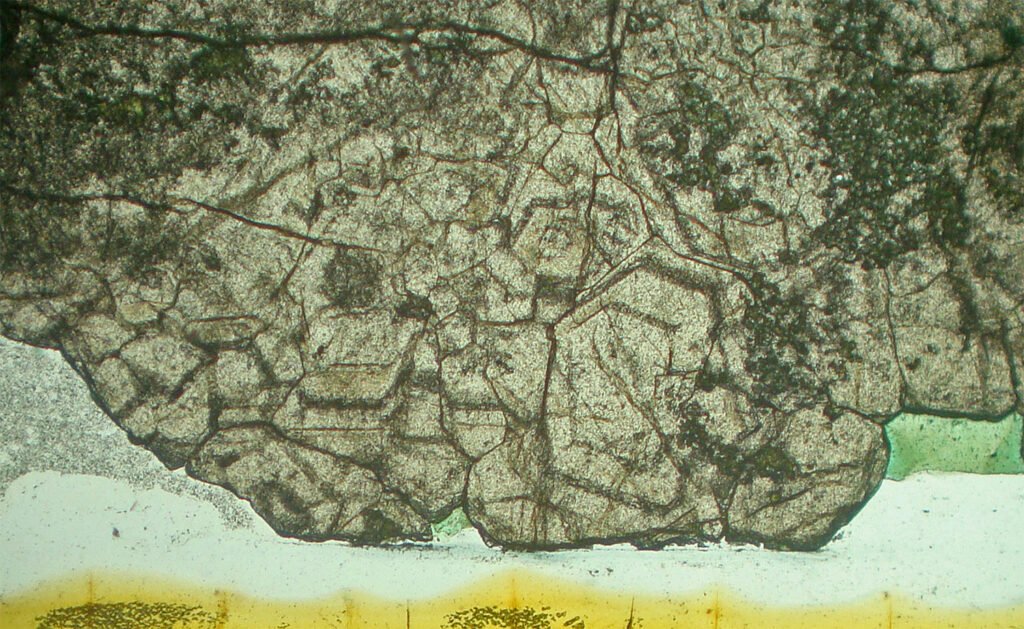
Cleavage: None, but there are almost always many fractures.
Habits:
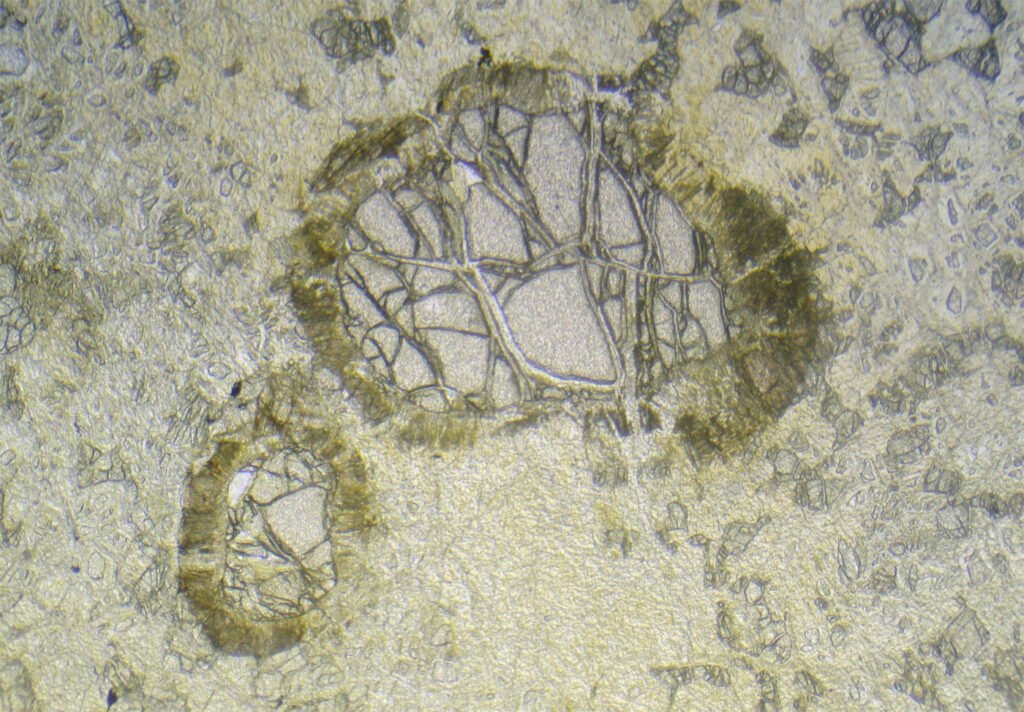
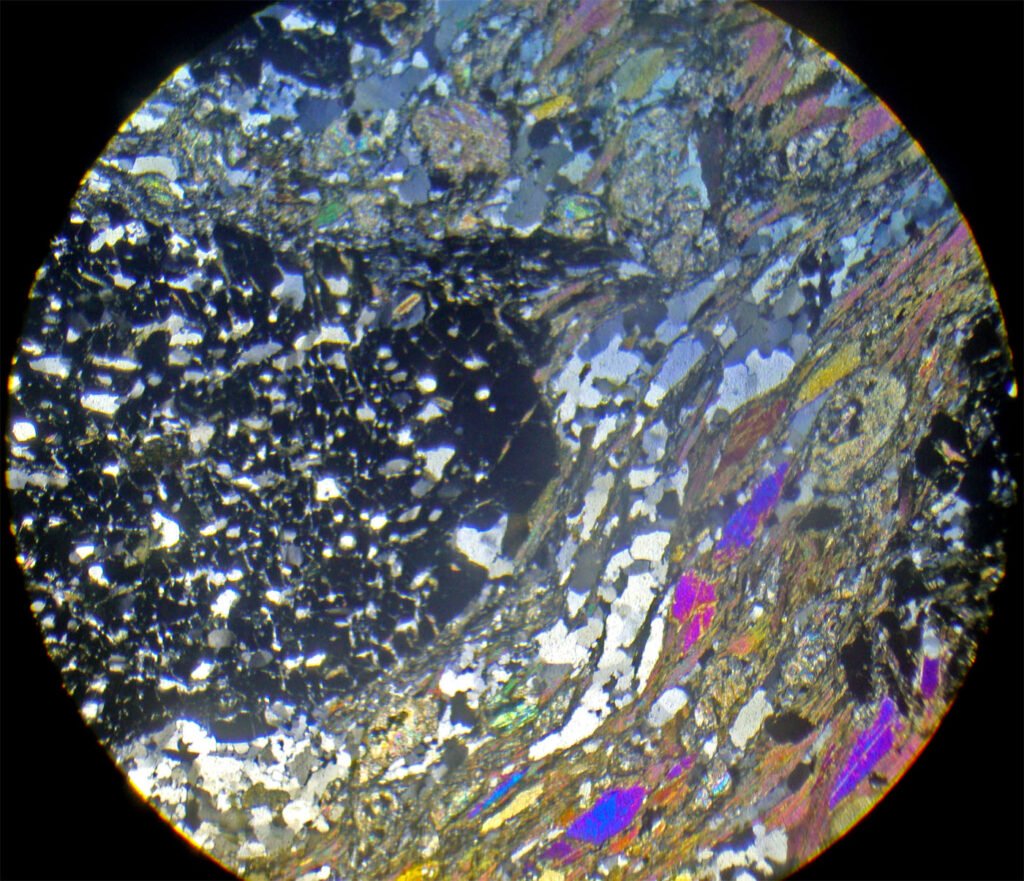
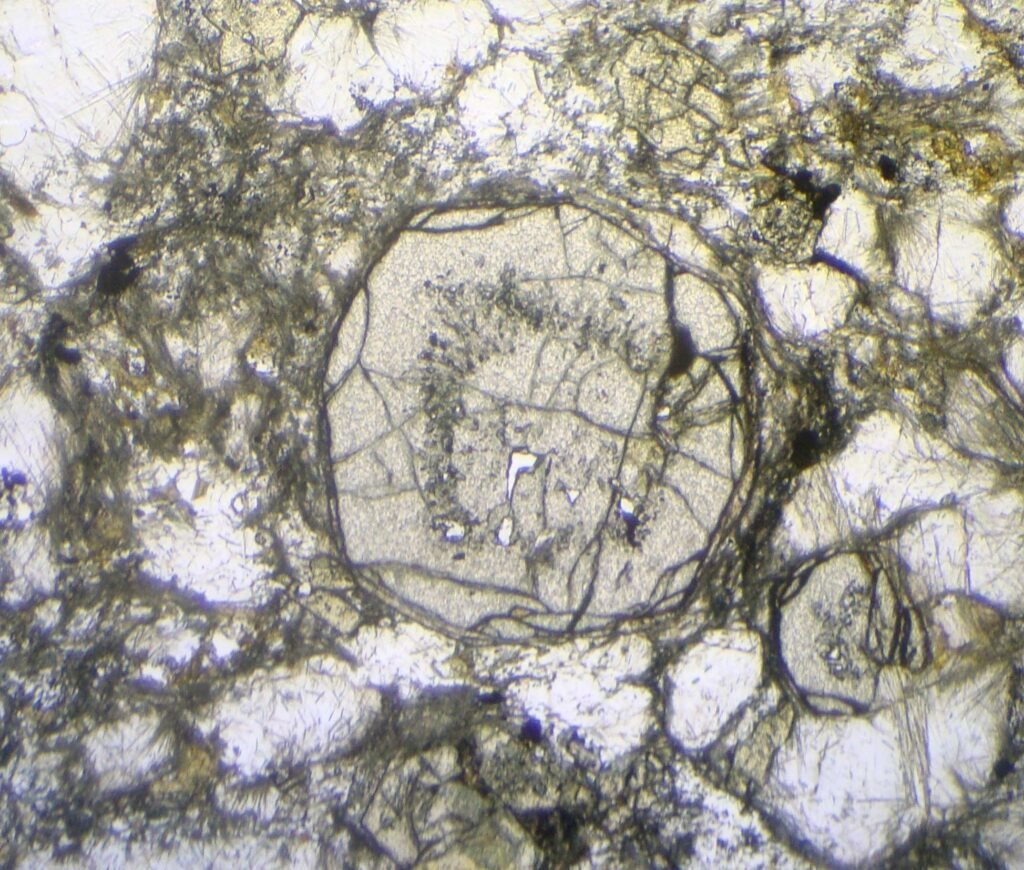
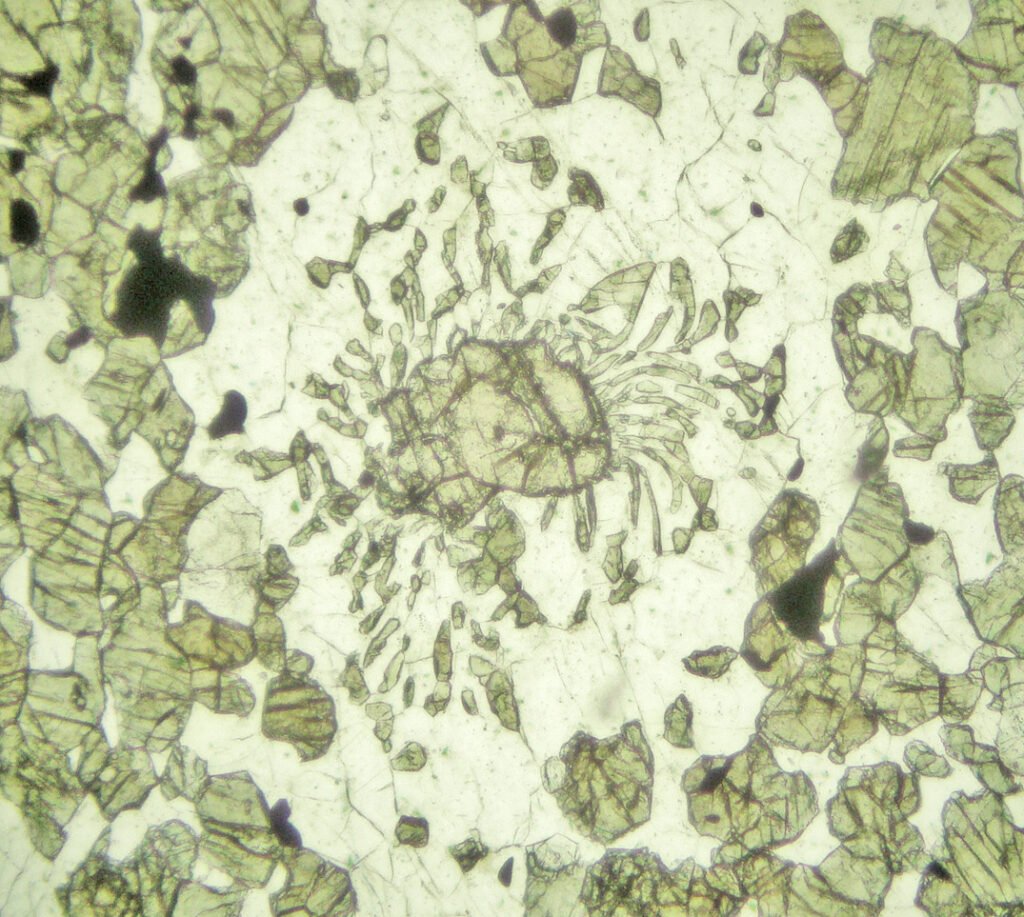
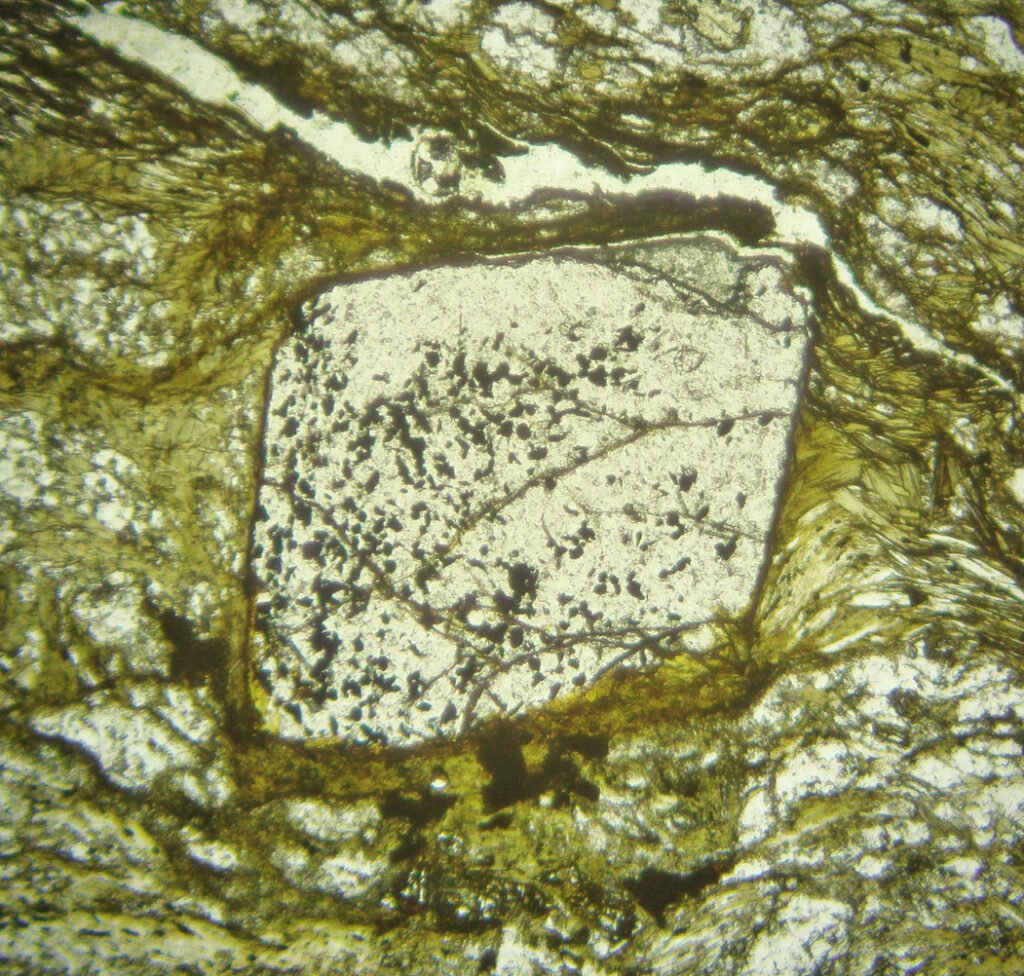
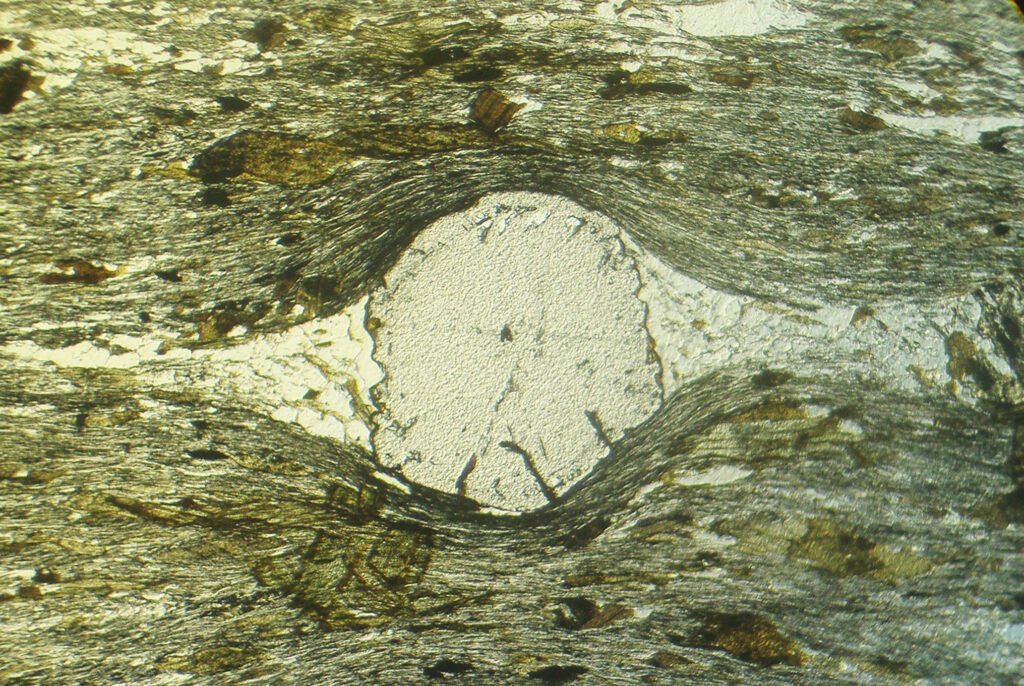
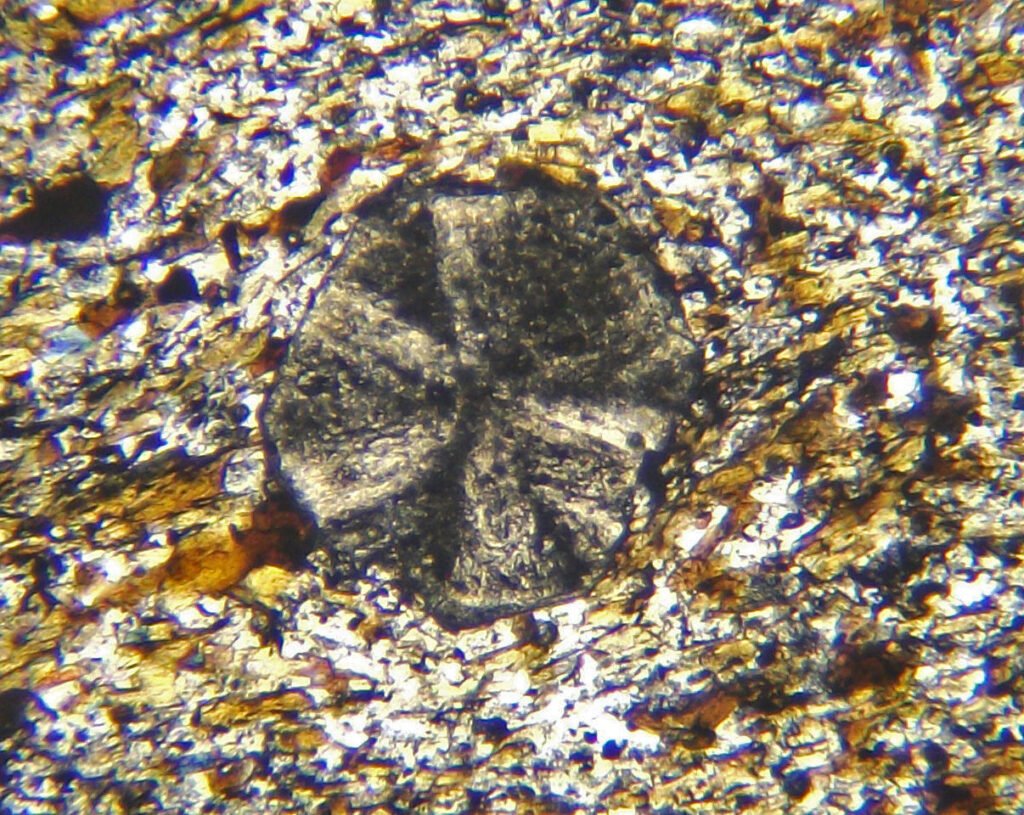
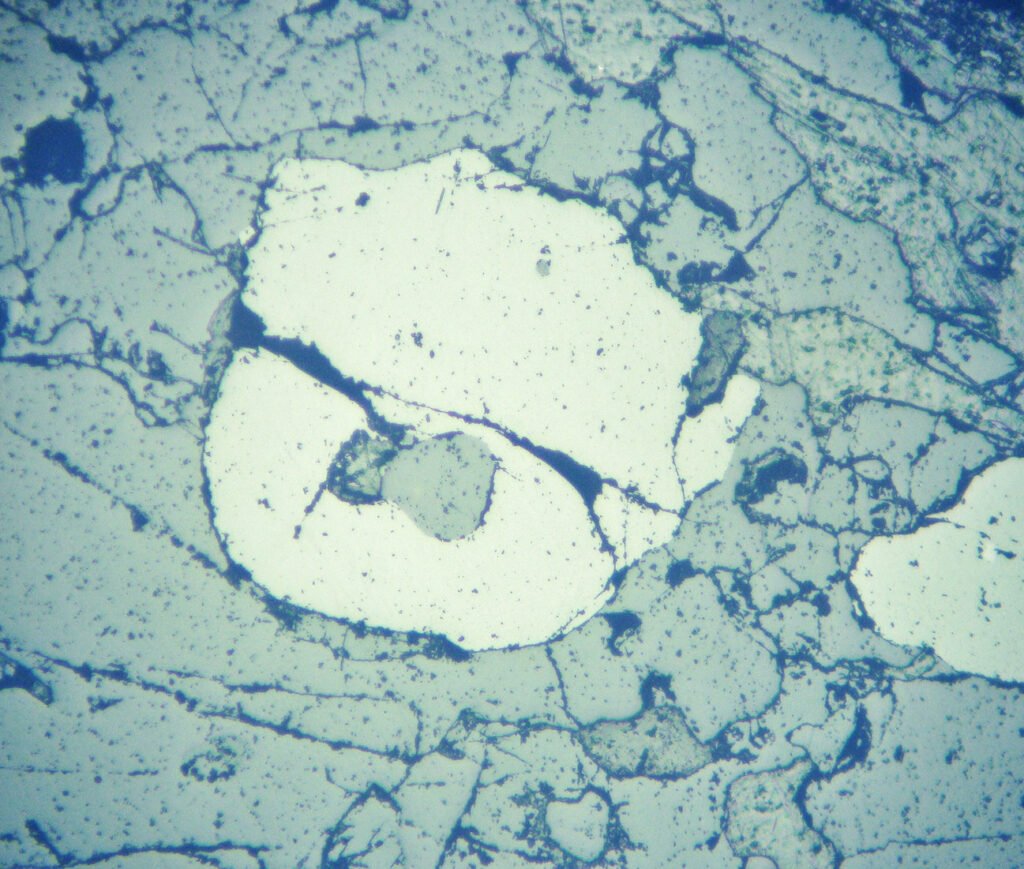
Usually as rounded grains, heavily fractured. Inclusions are very common and can be distributed over the entire grain (sieve texture) or form alignments (spirals) within the garnet grains.
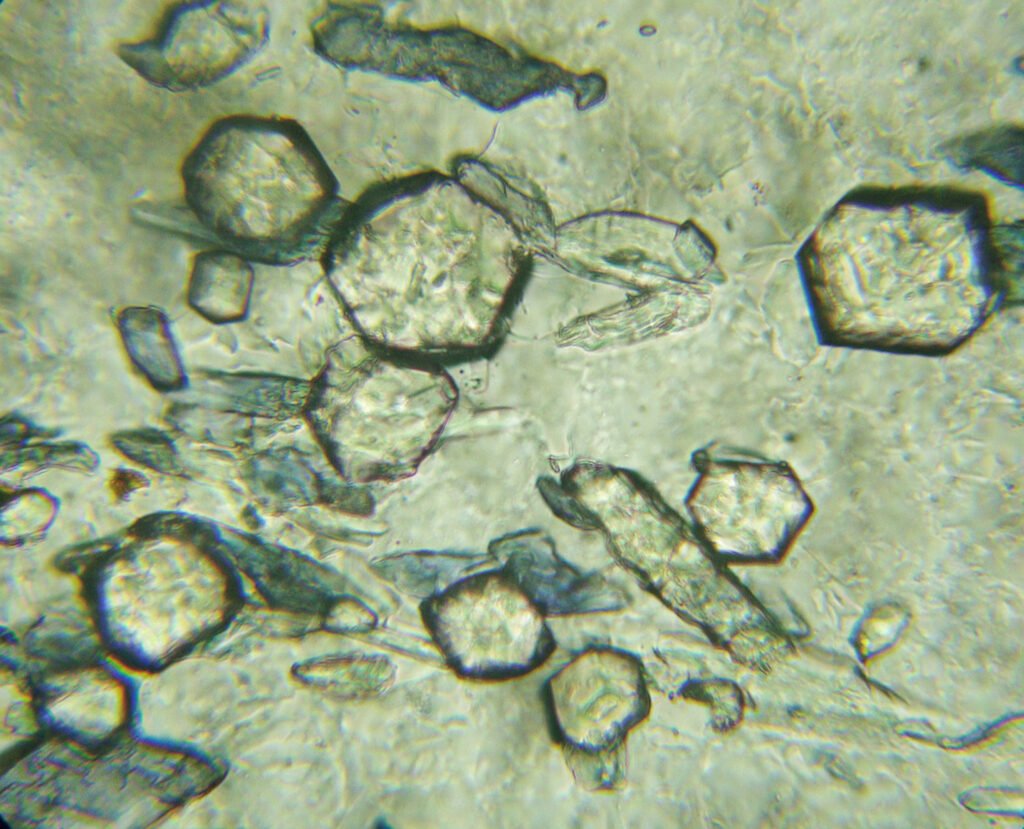
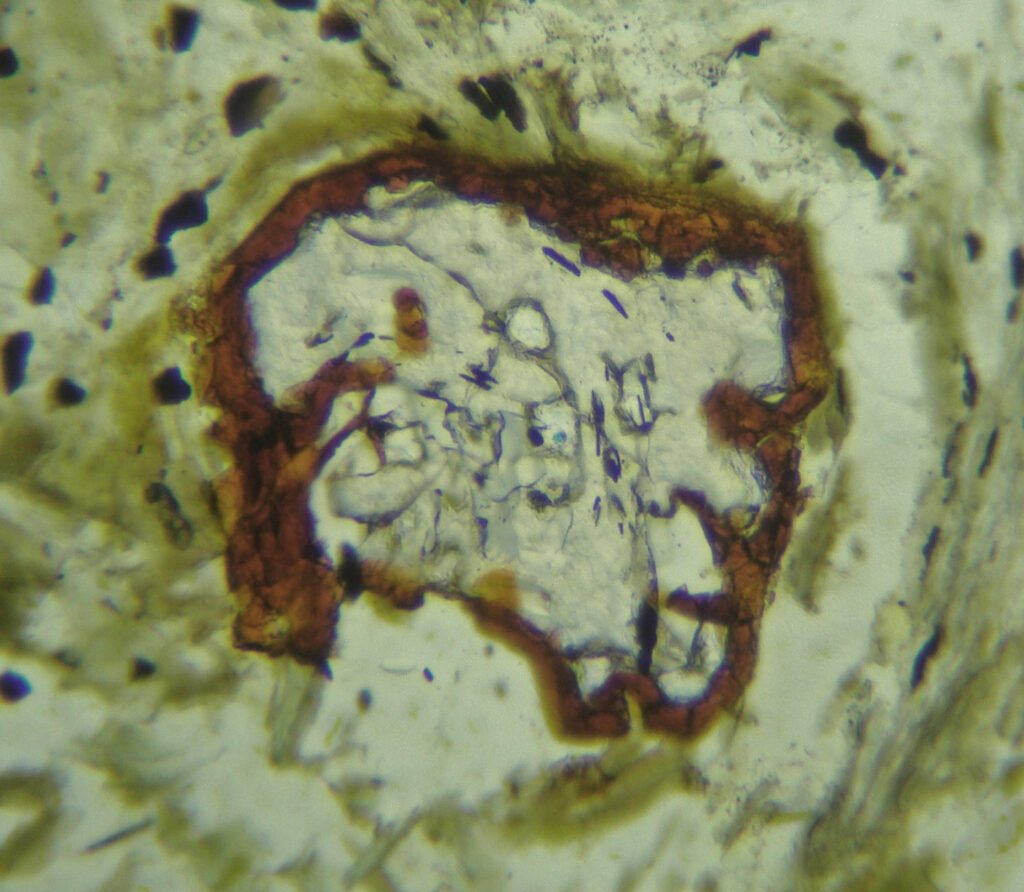
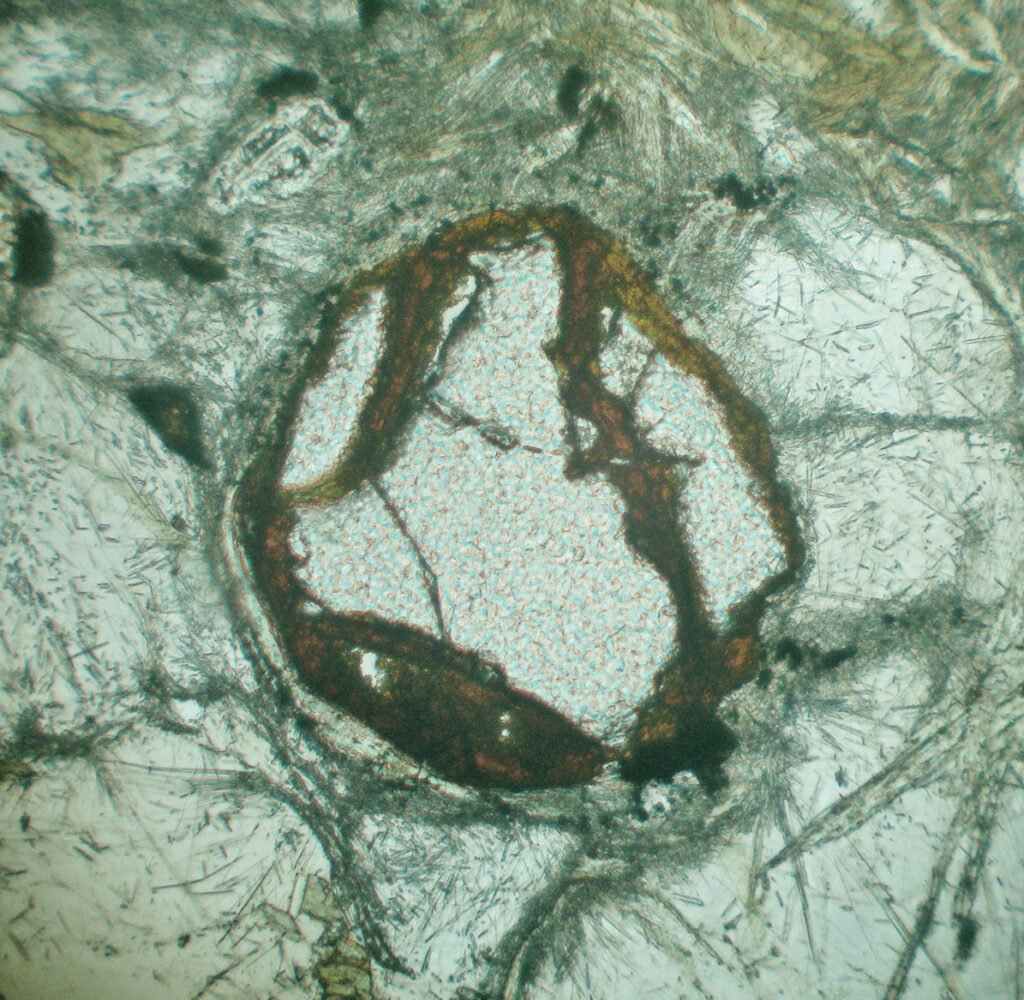
In volcanic rocks, in melanite garnet, are more common cubic euhedral forms, sections with 4, 6 or 8 sides and polygonal sections.
CROSSED POLARIZED LIGHT – XPL
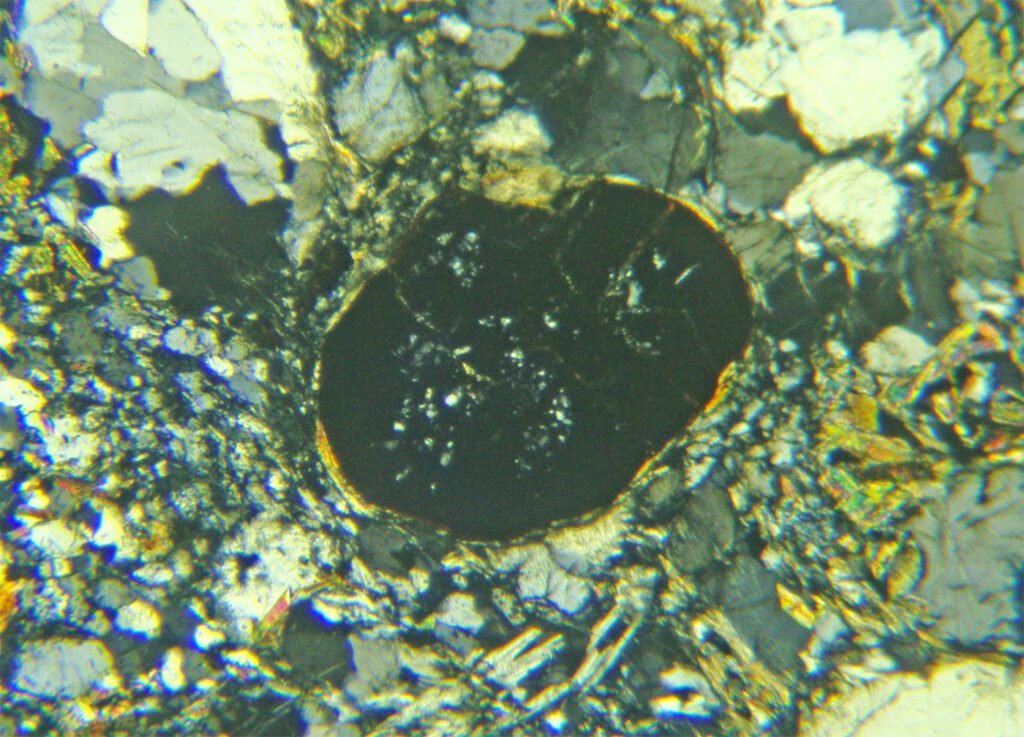
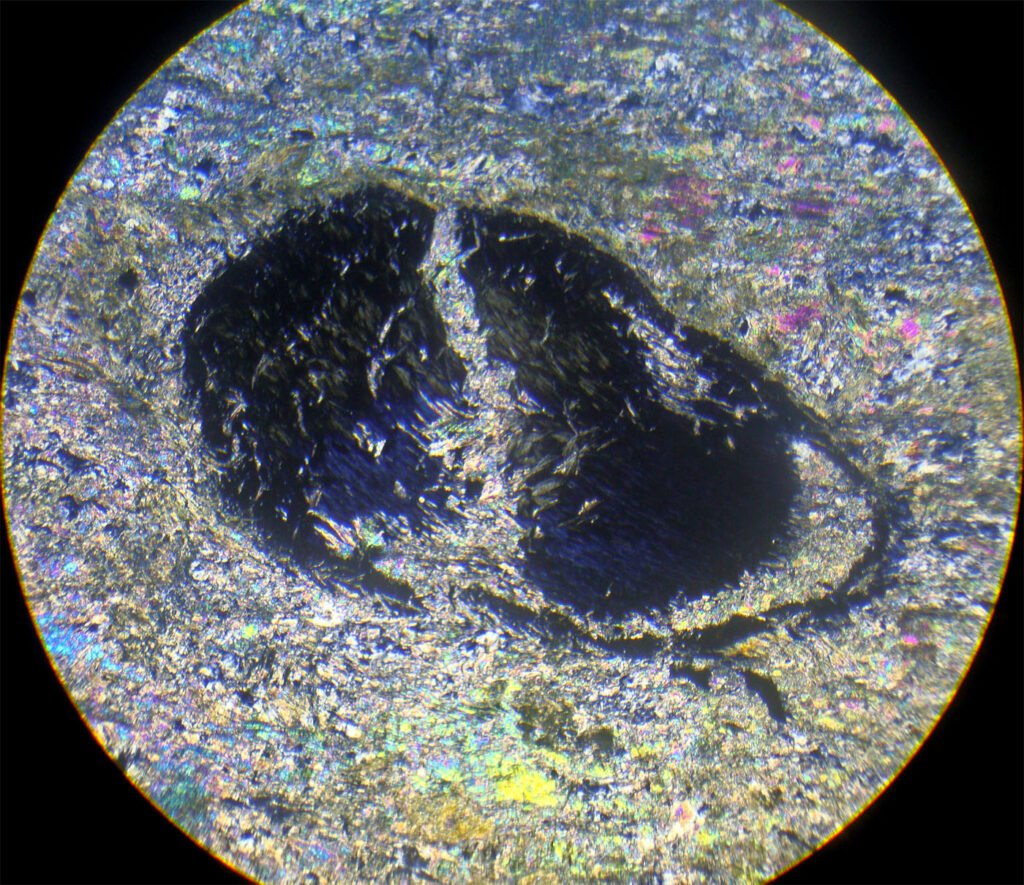
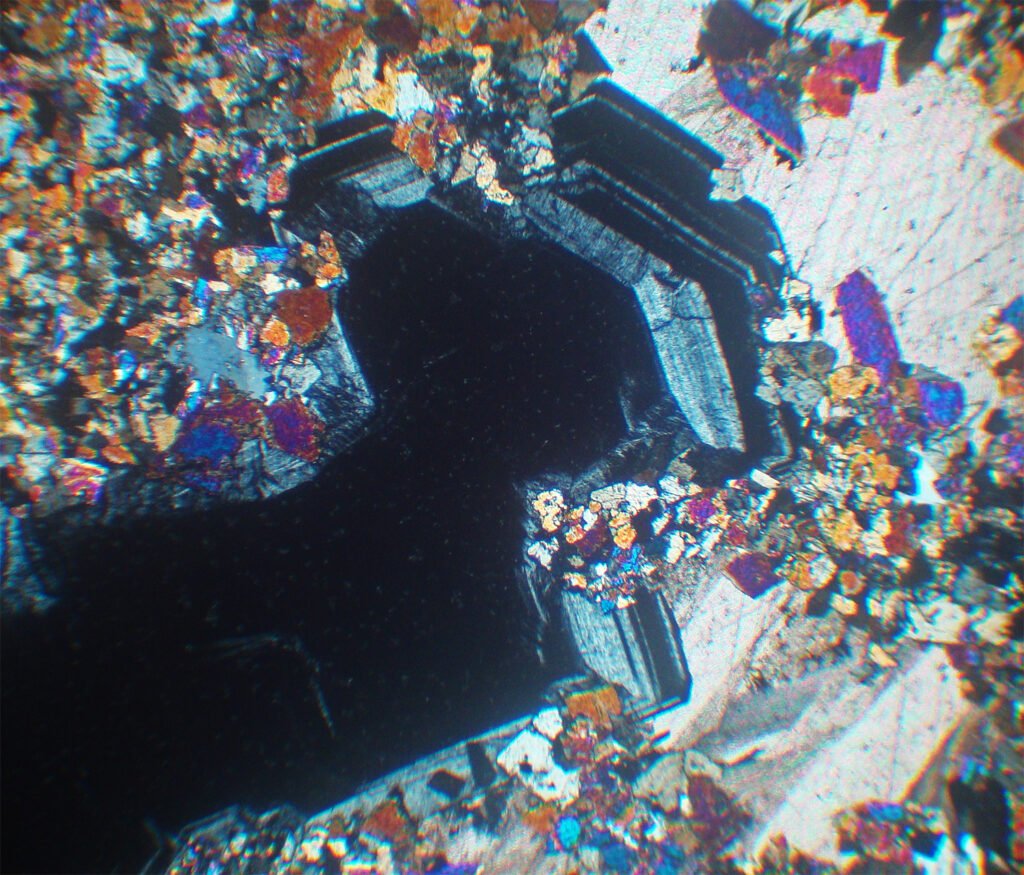
Birefringence and Interference Colors: Isotropic in most cases.
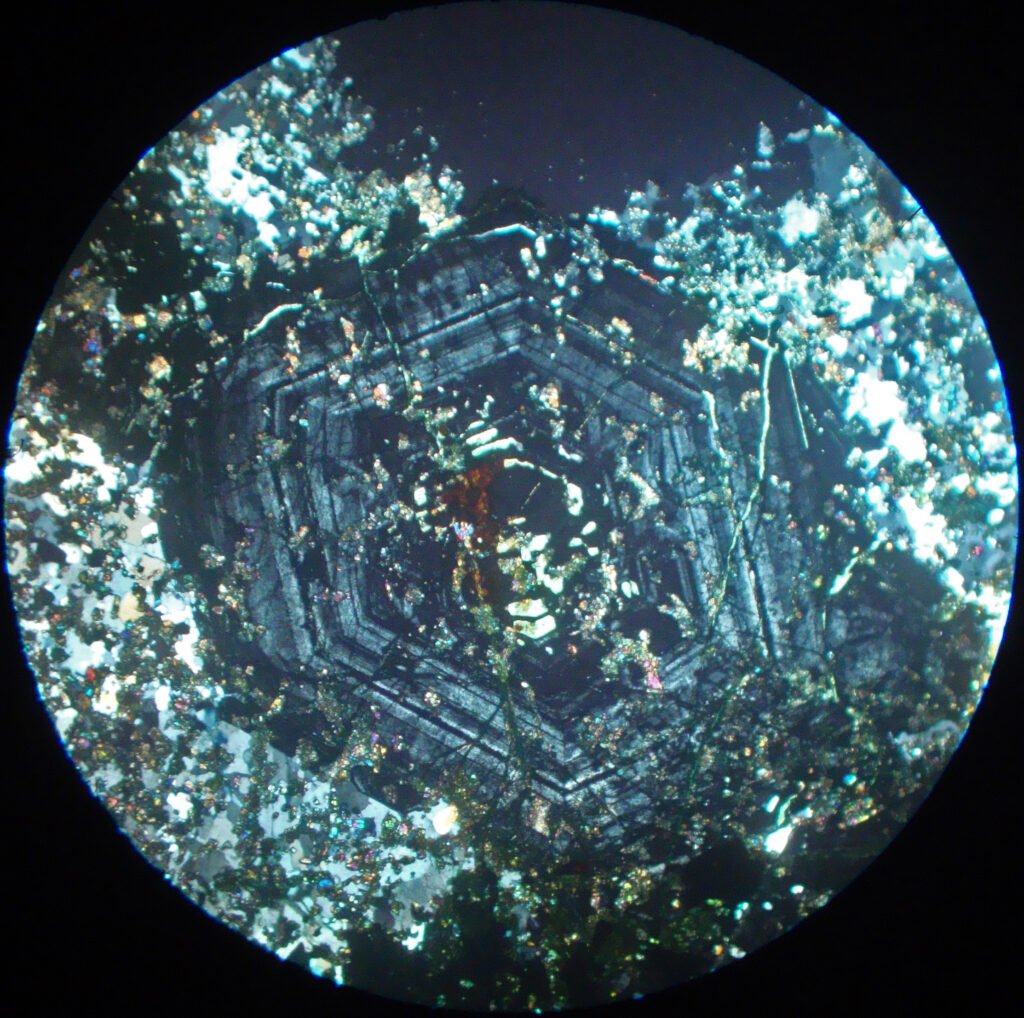
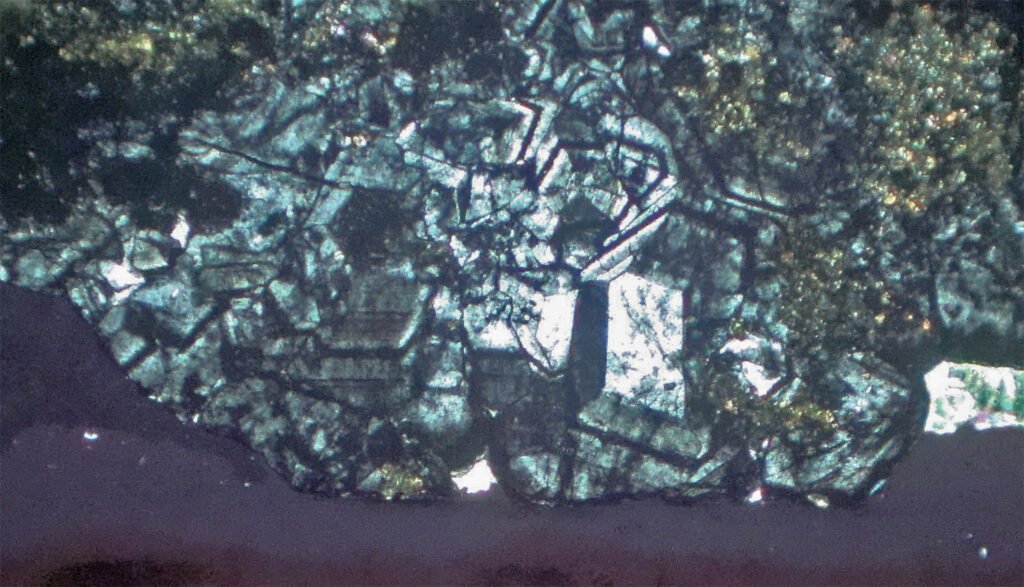
There are some situations where garnets are anisotropic (see reference cited in the introduction). Situations may occur in which the garnet’s nucleus is isotropic and the edges are anisotropic, usually concentrically zoned.
Extinction: Isotropic.
Elongation sign: No.
Twins: Almandine does not have twins. Other garnets occasionally may be twinned. Anisotropic garnets may show zoning by sectors. This zoning, when well developed, is very similar to a pseudohexagonal twin.
Zoning: Grossular is often zoned. Zonation in anisotropic garnets showing divisions into sectors is common.
CONVERGENT LIGHT
Character: Isotropic, but may be anomalously anisotropic.
2V angle: No.
Alterations: very resistant, it is a common detrital mineral, concentrated in sands.
By hydrothermal processes or low-grade metamorphism it can alter to chlorite, serpentine, hornblende, talc, epidote and iron oxides.
Edges altered to green chlorites, epidote and other minerals are called “keliphytic rims”.
May be confused with: other cubic minerals when isotropic. When anisotropic (which is rare!) it can be confused, in PPL, with other colorless minerals without cleavage and with high relief.
Spinel is similar, but occurs in octahedra and has a strong color.
Perovskite is similar but has even higher relief.
Periclase is very rare and has cleavage.
Vesuvianite is similar to anisotropic garnets with sector zoning.