1. Characteristics
Crystal system: Monoclinic prismatic.
Color: Colorless to white, it can also be yellow, blue, pink, brown, reddish-brown, gray, and others.
Habit: Massive, tabular, usually long prismatic crystals, acicular, earthy, massive, granular, etc. Many possible habits.
Cleavage: {010} perfect, {100} distinct.
Tenacity: Flexible, not elastic.
Twinning: On {110}, very common, there are several others.
Fracture: Conchoidal in {100}, splintery // at {001}
Mohs Hardness: 1.5 – 2
Parting: No.
Streak: White.
Lustre: Vitreous, silky, pearly, greasy.
Diaphaneity: Transparent.
Density (g/cm³): 2.31 – 2.33
2. Geology and Deposits
Gypsum is the most common sulfate, generally found in evaporites formed by the evaporation of seawater. It can form by hydration of anhydrite, a process that implies an increase in volume. The transition from gypsum to anhydrite implies a reduction in volume; it can form caves.
It occurs in volcanic fumaroles, hot springs, and in soils from anhydrite.
It is found in cavities in general, from caves (Naica Mine in Mexico), in mine walls (efflorescence), in caves where the air is dry enough (speleothems), and associated with other secondary minerals in vesicles in volcanic rocks (Ametista do Sul Mining District, Rio Grande do Sul state, Brazil).
Other forms of gypsum include “desert roses,” which are aggregates of gypsum crystals formed subsurface, slightly above the water table, the gypsum sand dunes at White Sands National Monument (New Mexico, USA), and the gypsum dunes in the northern polar region of Mars.
Its association with sulfide or oxidized ores is rare. It can be hydrothermal, but it is more common in oxidation zones (gossans), formed by the oxidation of sulfides such as pyrite.
3. Mineral Associations
In evaporites, it is associated with halite, anhydrite, and carbonates (calcite, aragonite, dolomite).
In oxidation zones (gossans), it occurs with native sulfur, native copper, celestine, pyrite, azurite, siderite, clay minerals, and many others. It is also associated with quartz and fluorite.
4. Transmitted Light Microscopy
Refraction indices: nα: 1.519 – 1.521 nβ: 1.522 – 1.523 nγ: 1.529 – 1.530
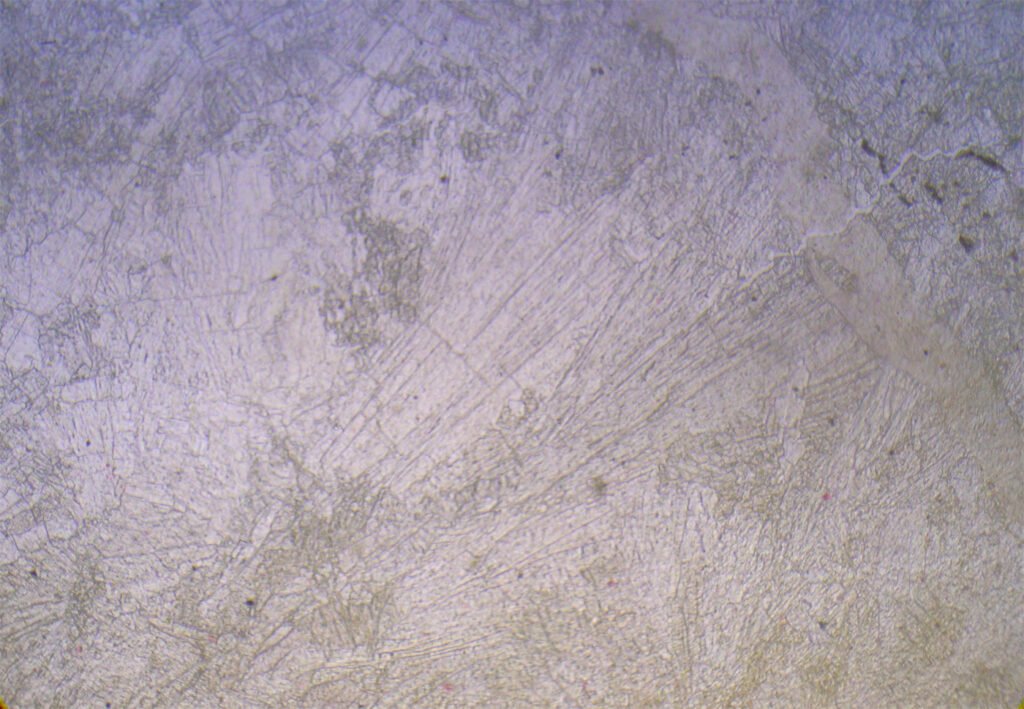
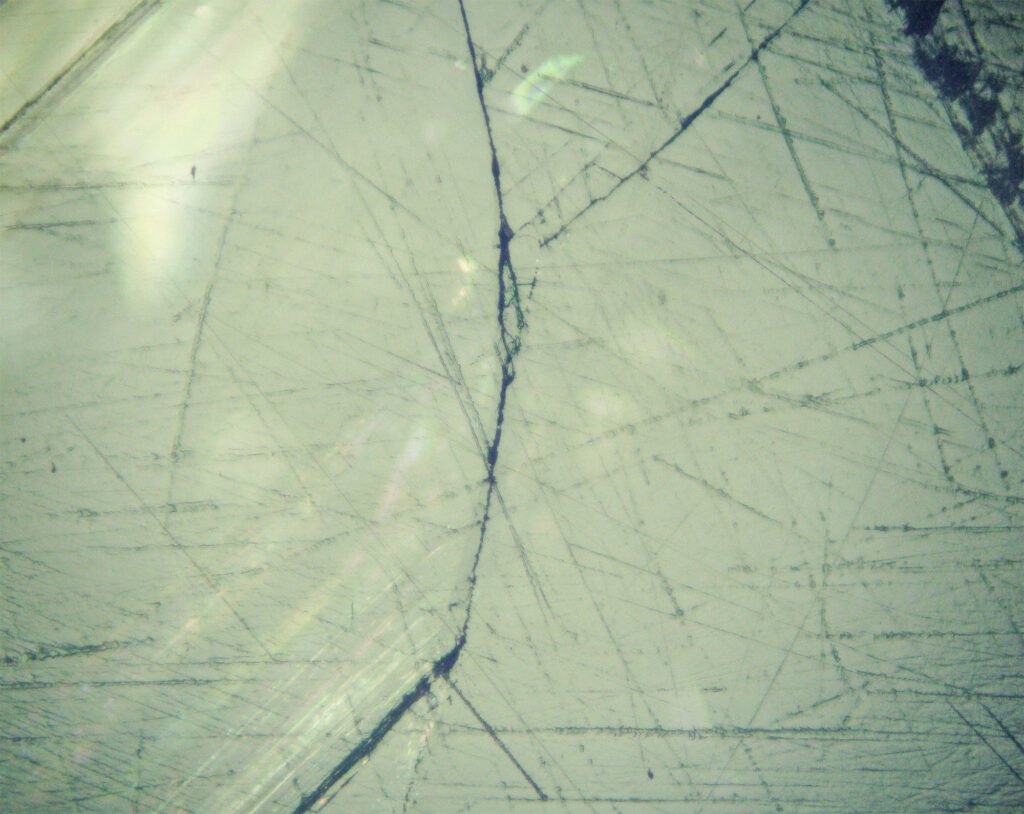
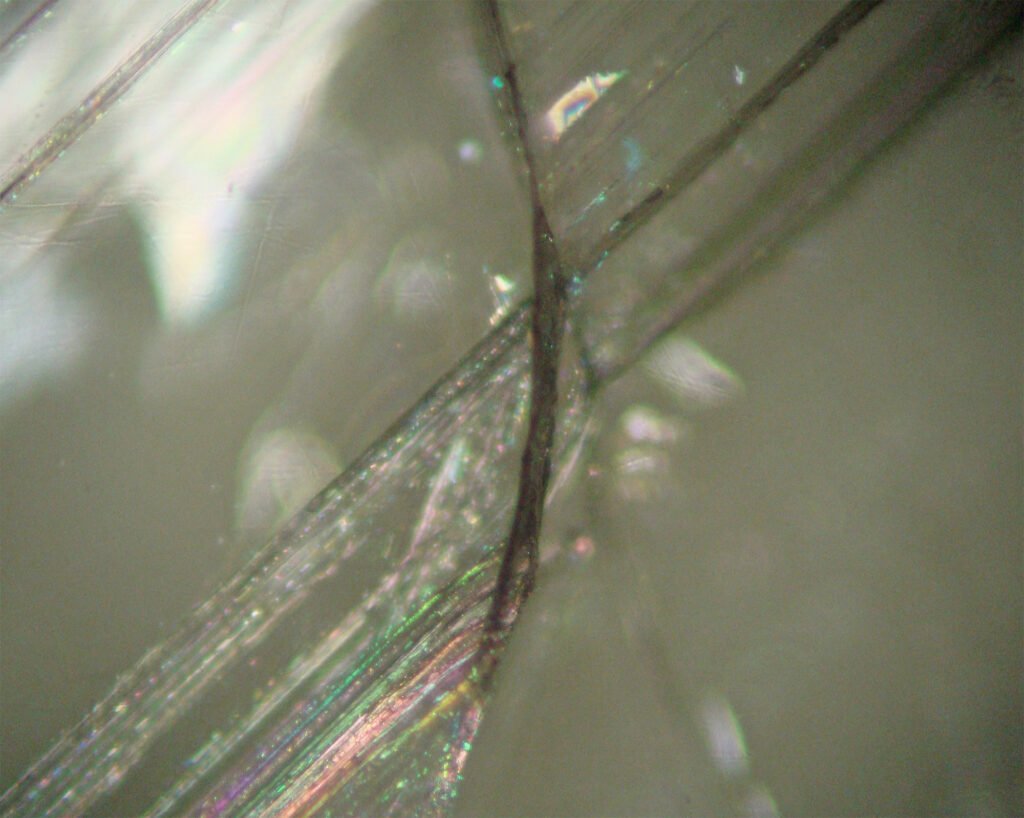
PLANE POLARIZED LIGHT – PPL
Color / Pleochroism: Colorless, it has no color, much less pleochroism.
Relief: Low.
Cleavage: Perfect cleavage {010}, two distinct cleavages in {100} and {011}.
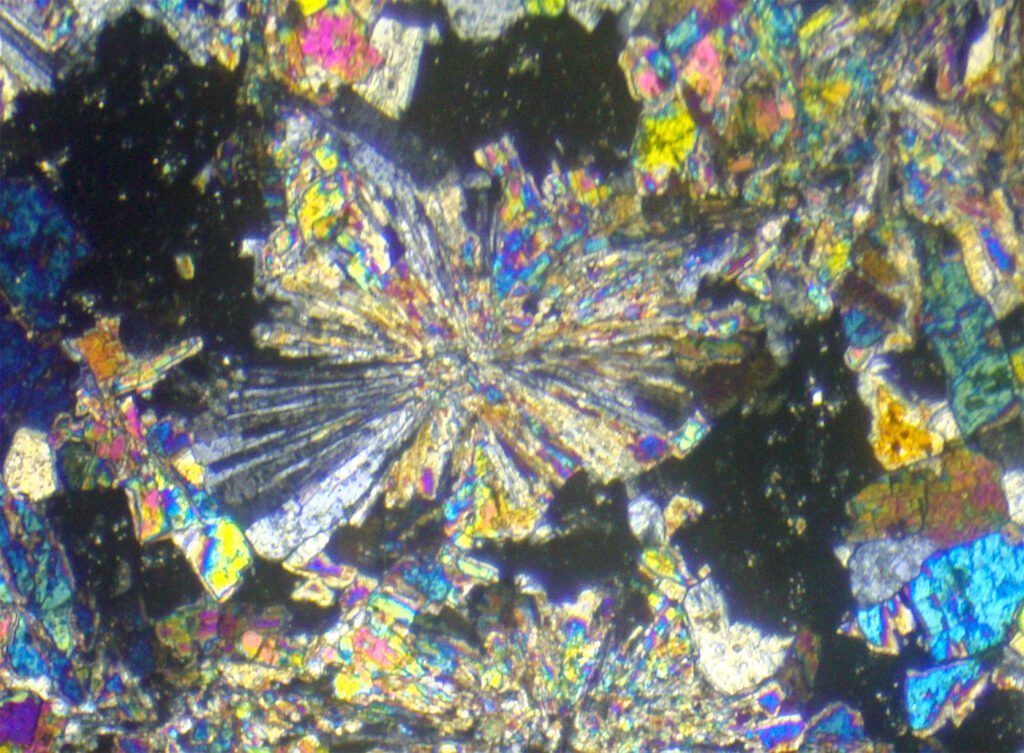
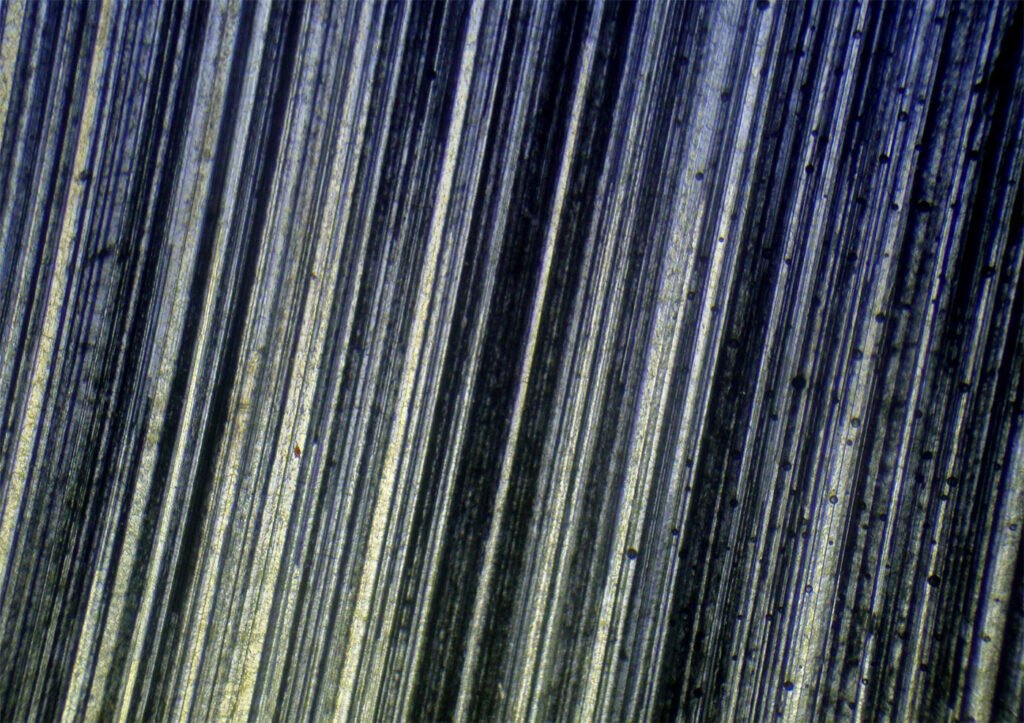
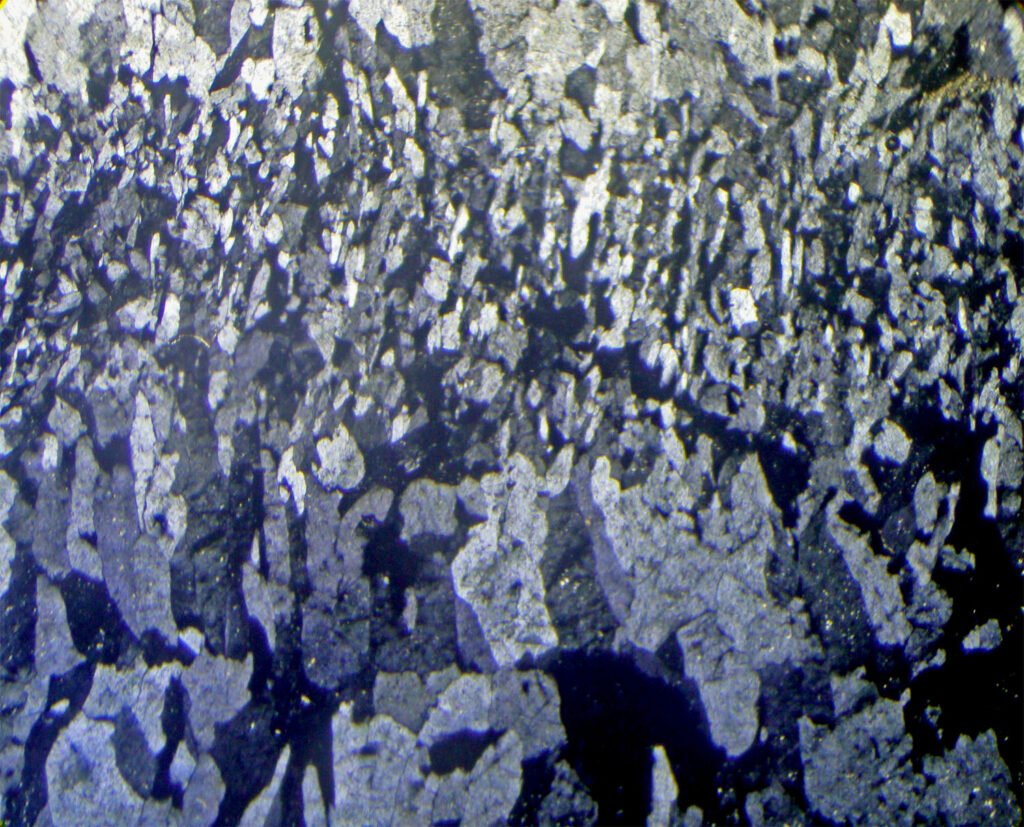
Habits: Typically anhedral to subhedral crystals. Short to acicular prisms, thin or thick tabular, lenticular in rosettes, may be curved, deformed, fibrous, earthy, concretionary, granular or massive.
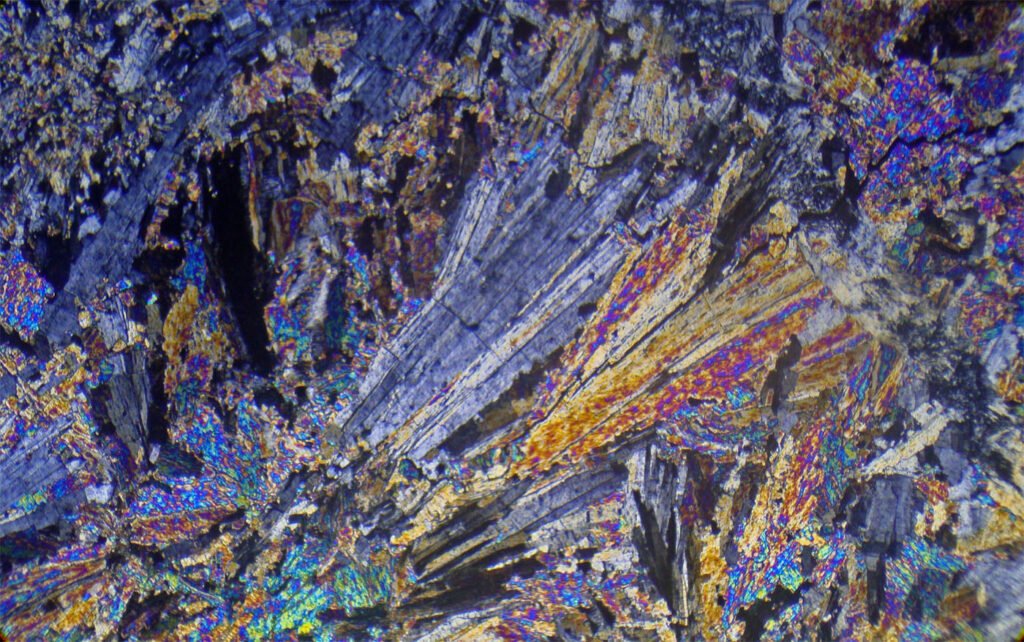
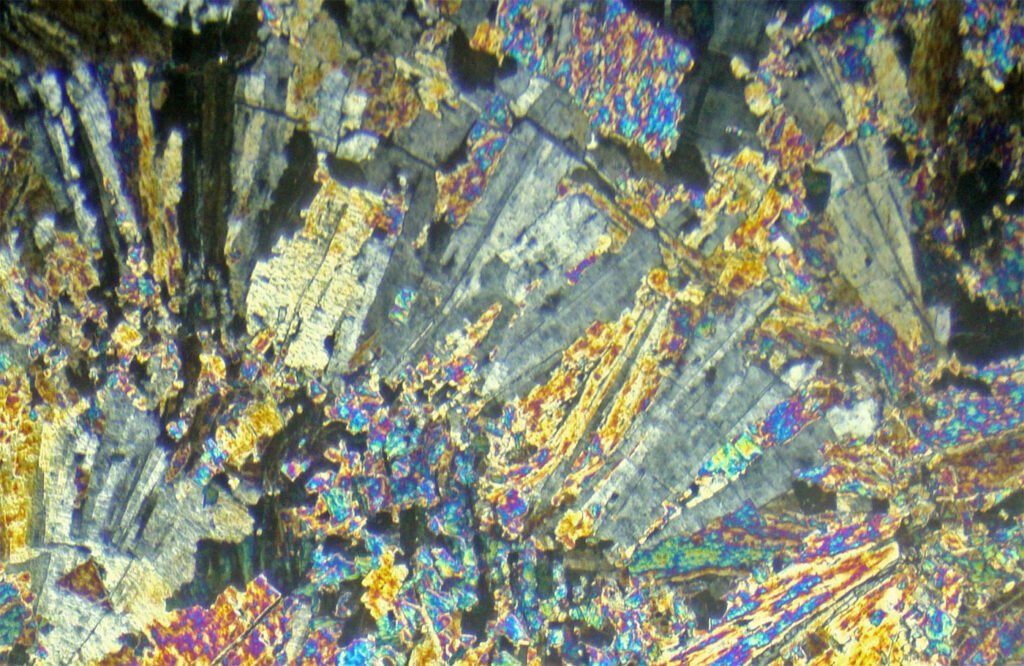
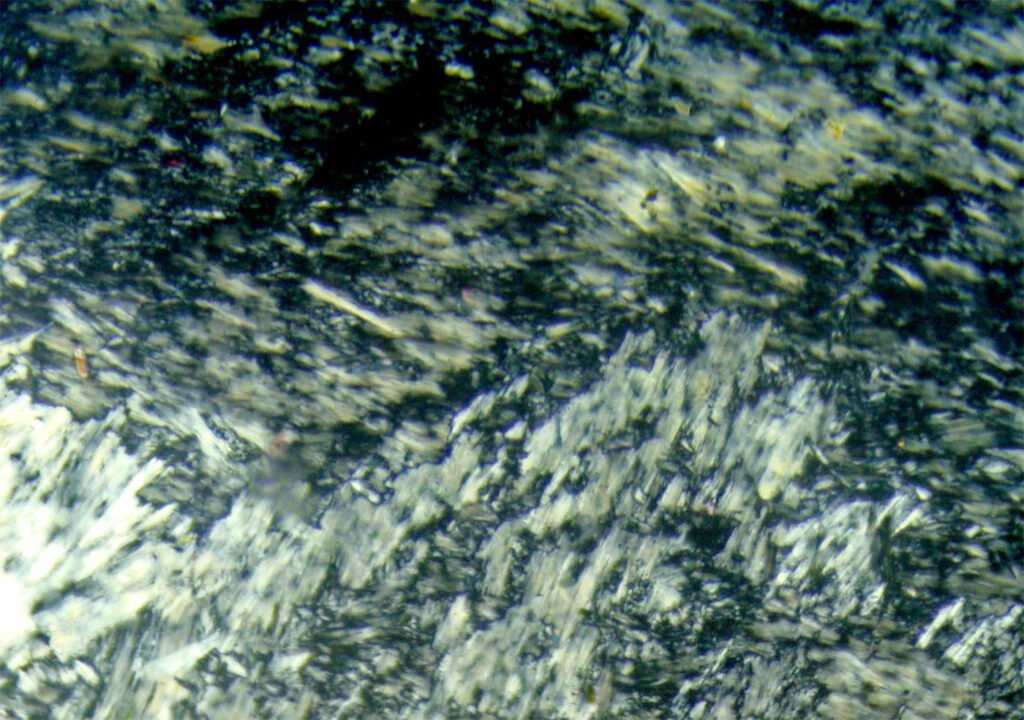
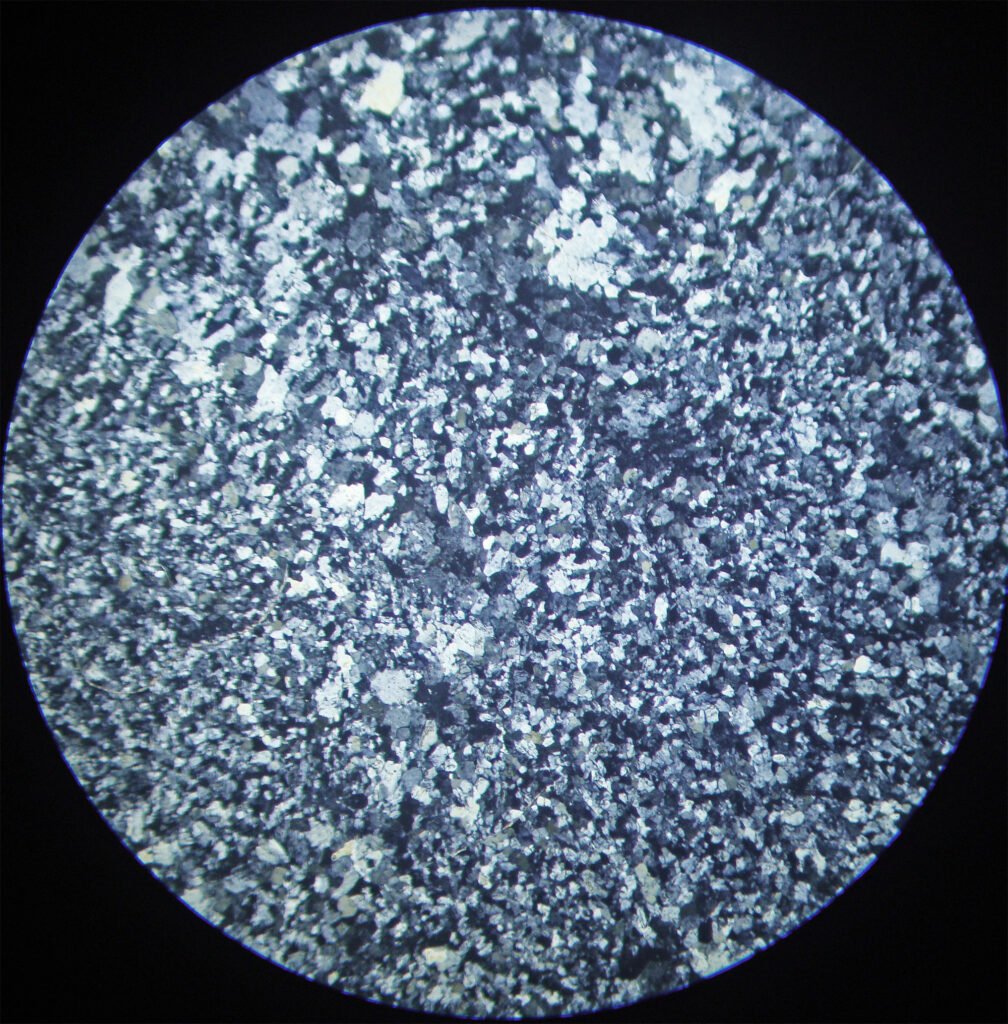
CROSSED POLARIZED LIGHT – XPL
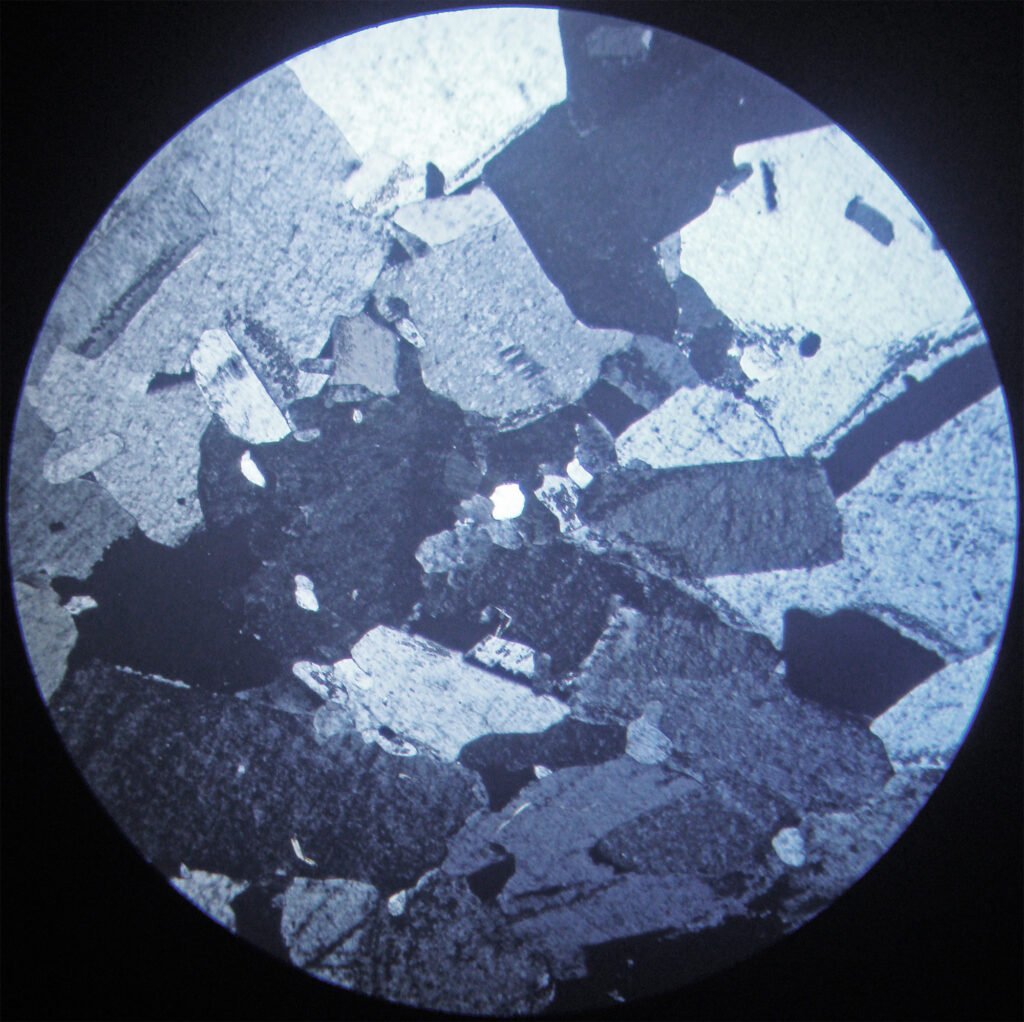
Birefringence and Interference Colors: Low birefringence, of 0.01: gray to white interference colors, similar to feldspars and quartz.
Extinction: It tends to be oblique, up to 15º. In sections parallel to the b-axis, it is parallel.
Elongation sign: ES(+) or ES(-) by cleavage, it is not diagnostic.
Twins: Simple twins are very common macroscopically: contact twins in {011} forming crosses and “V”s, contact twins in {-101} forming butterfly or heart-shaped twins. During thin section preparation, heating can form polysynthetic twins in (100), which can be curved.
Zoning: No information available, probably not or very rare.
CONVERGENT LIGHT
Character: B(+)
2V angle: 58º to 19º, decreases with increasing temperature.
Alterations: It can dehydrate to anhydrite. Upon heating, during the preparation of the thin section, it can transform into bassanite.
May be confused with: Several other colorless minerals with low relief.
Anhydrite occurs in association, but has pseudocubic cleavage, straight extinction, and much higher birefringence; its interference colors are very colorful, while gypsum is gray.
Chalcedony can be confused with gypsum if in fine aggregates, but chalcedony is U(+), a data point almost impossible to obtain due to the minute size of the crystals.
Barite occurs in the same paragenesis and may have similar forms, but has moderate relief.
Several zeolites are very similar to gypsum, almost indistinguishable: stilbite, scolecite, laumontite, and others. It is necessary to consider the paragenesis to exclude or not the possibility of the presence of zeolites.