Crystal system: Monoclinic prismatic.
Color: Red brown, black.
Habit: Short prismatic, columnar, acicular, granular, lamellar, massive.
Cleavage: {110} good, like all pyroxenes.
Tenacity: Brittle.
Twinning: It can have simple and polysynthetic twins according to {100} and {100}
Fracture: Irregular, conchoidal.
Mohs Hardness: 5.5 – 6.5
Parting: On {100} e {010}
Streak: White, gray.
Lustre: Vitreous, dull.
Diaphaneity: Transparent.
Density (g/cm³): 3.56
2. Geology and Deposits
Hedenbergite is a clinopyroxene typical of syenites and alkaline granites.
It also occurs in metamorphosed iron formations and in skarns (Fe-rich siliceous carbonates) of amphibolite facies.
It was found in xenoliths in kimberlites.
3. Mineral Associations
Hedenbergite occurs, in magmatic rocks, with augite and pigeonite (usually in the matrix), plagioclase, olivine and feldspathoids (nepheline and leucite).
In contact metamorphic rocks, it is associated with calcite, diopside, garnets (andradite, grossular), vesuvianite, olivine (forsterite), wollastonite and clinozoisite.
It is also associated with ilvaite, prasium, hematite, arsenopyrite, titanite and fluorite.
4. Transmitted Light Microscopy
Refraction indices: nα: 1.699 – 1.739 nβ: 1.705 – 1.745 nγ: 1.728 – 1.757
PLANE POLARIZED LIGHT – PPL
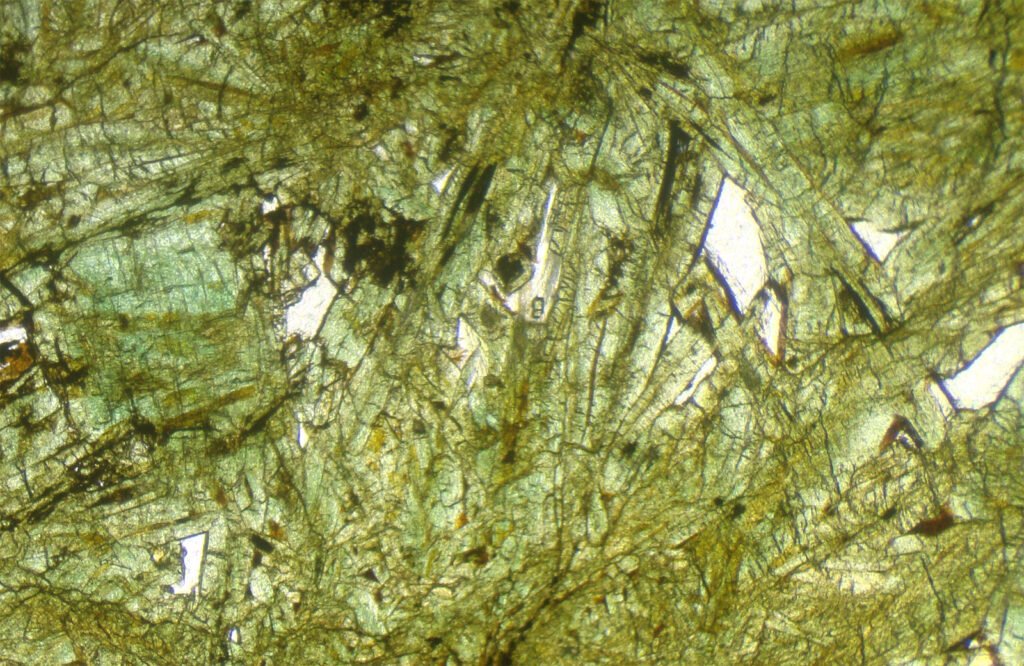
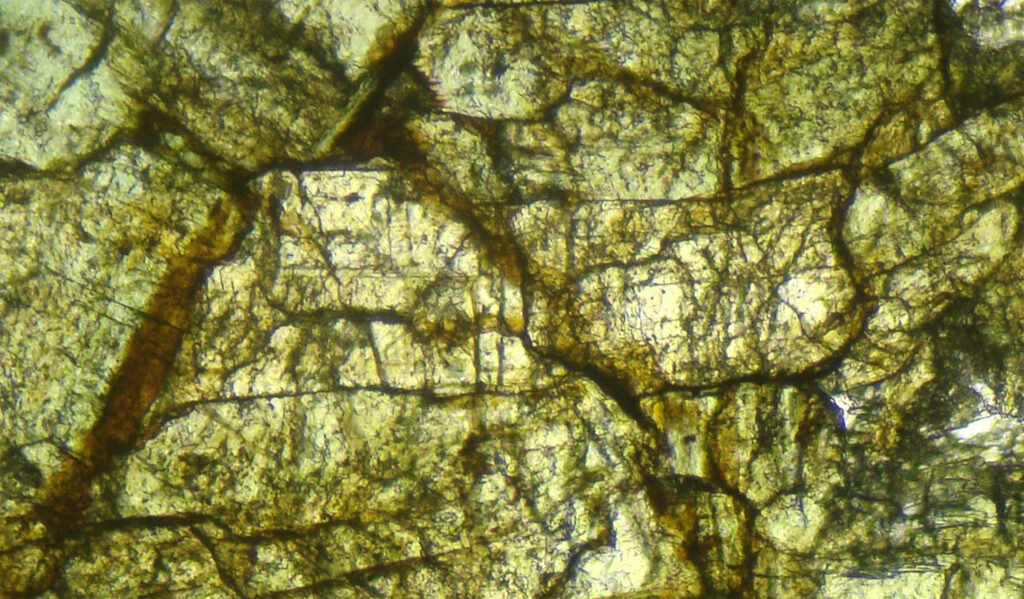
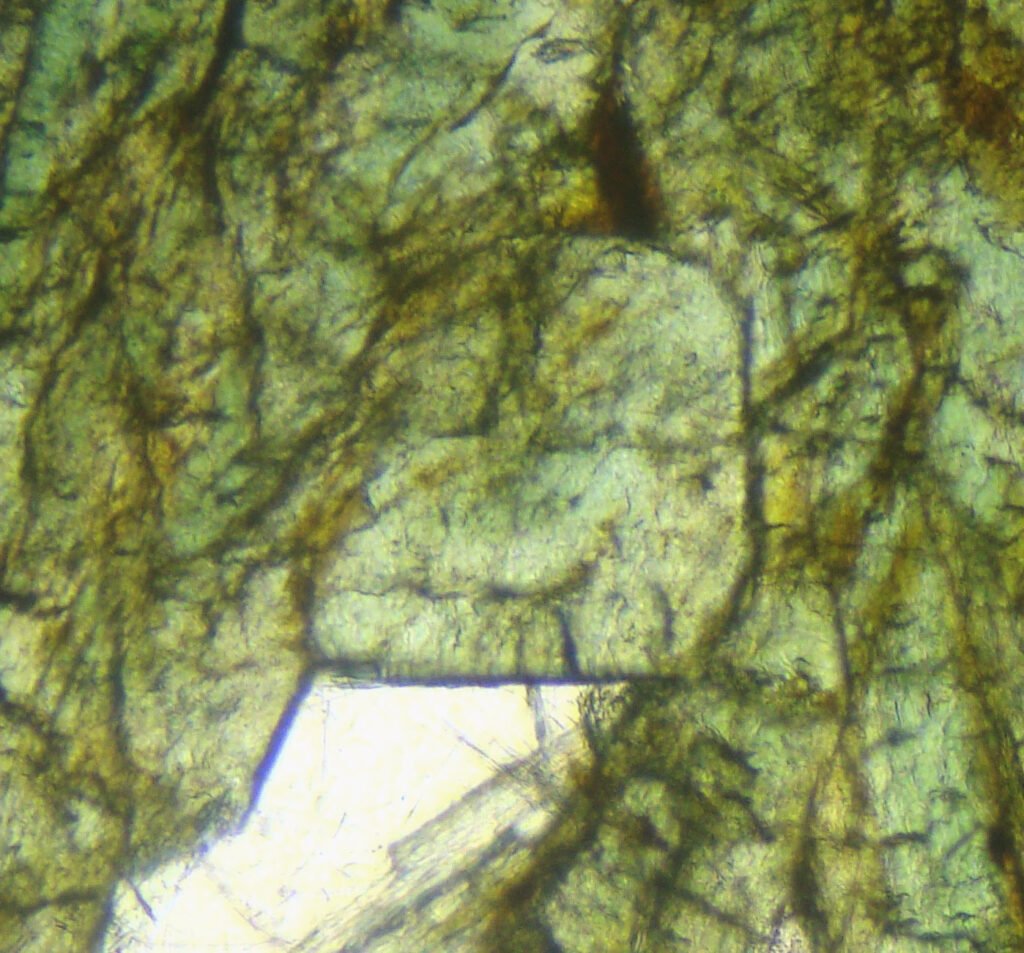
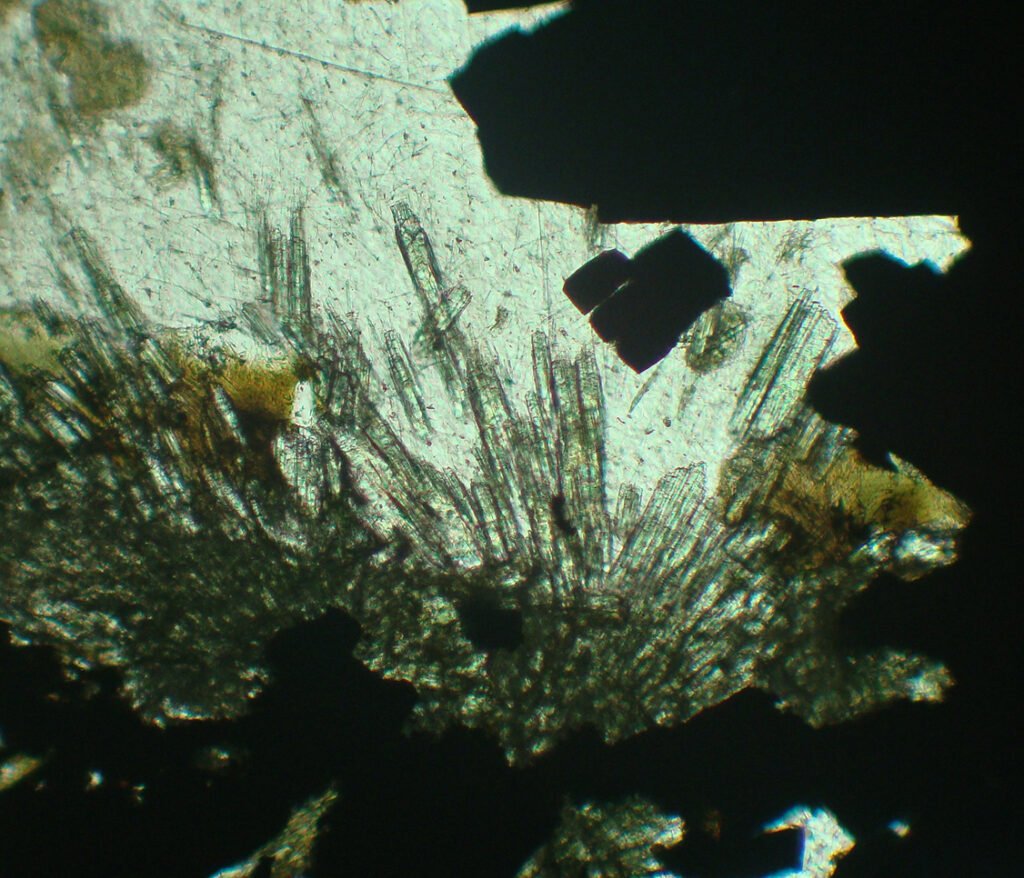
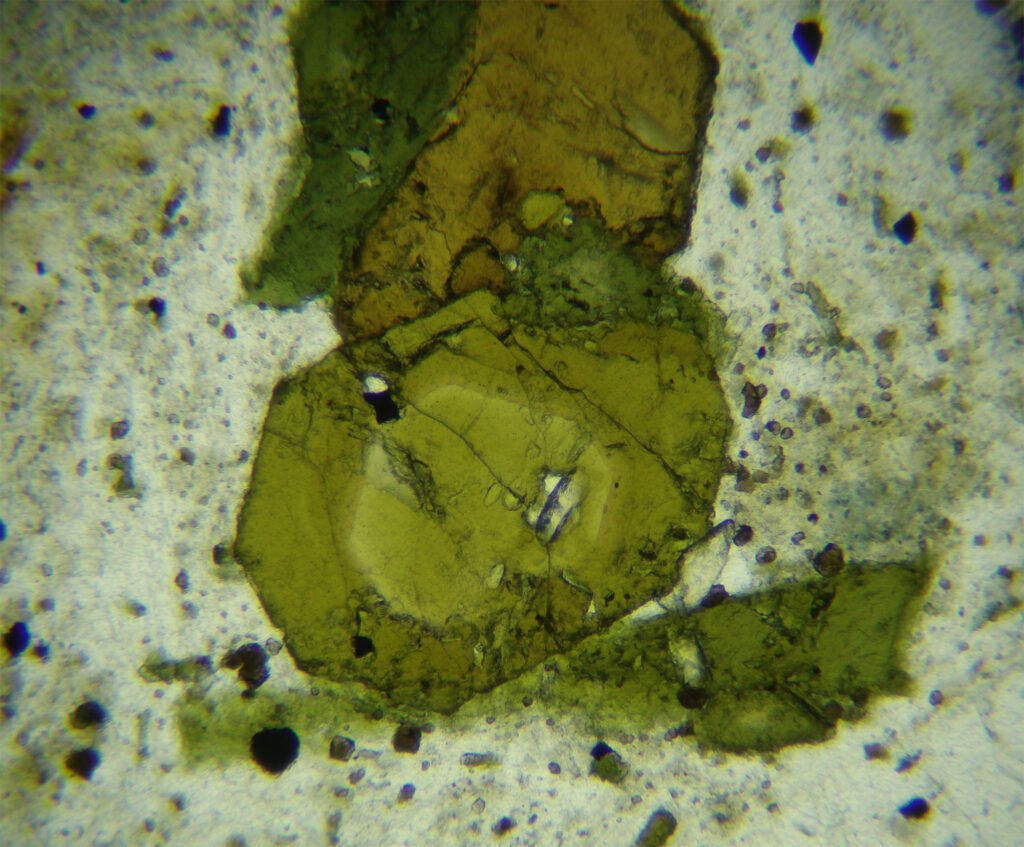
Color / Pleochroism: Weakly pleochroic in green-brown:
X = pale green or bluish green;
Y = green, bluish green;
Z = green, yellowish green.
Relief: High.
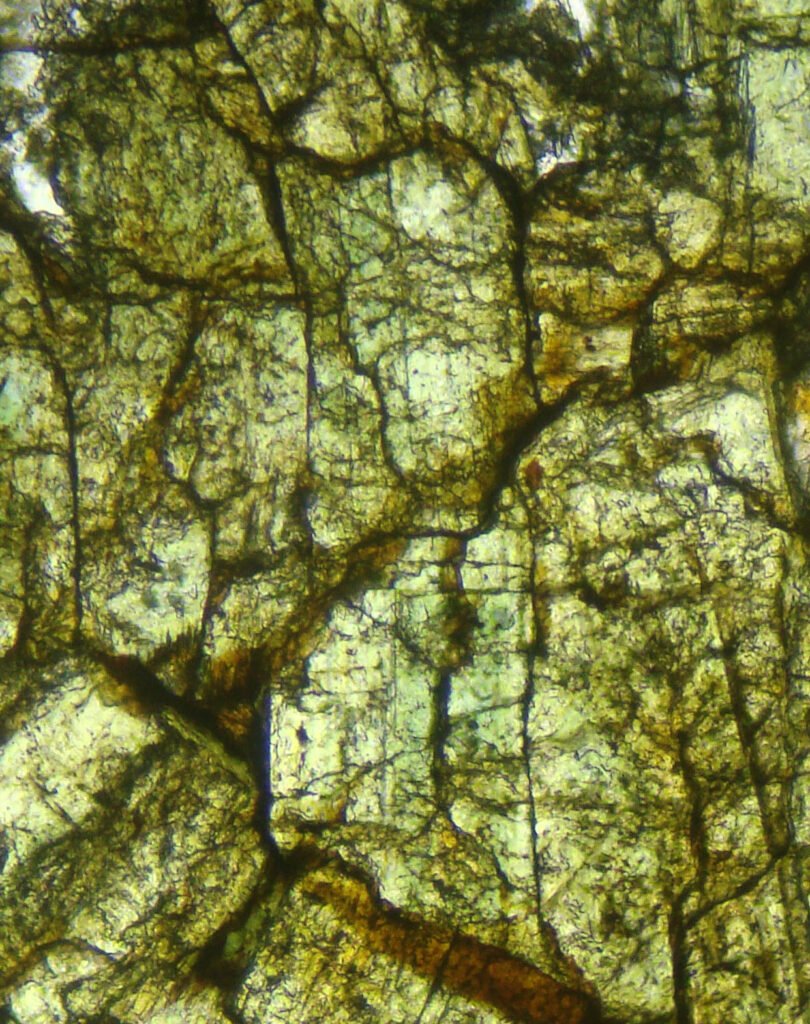
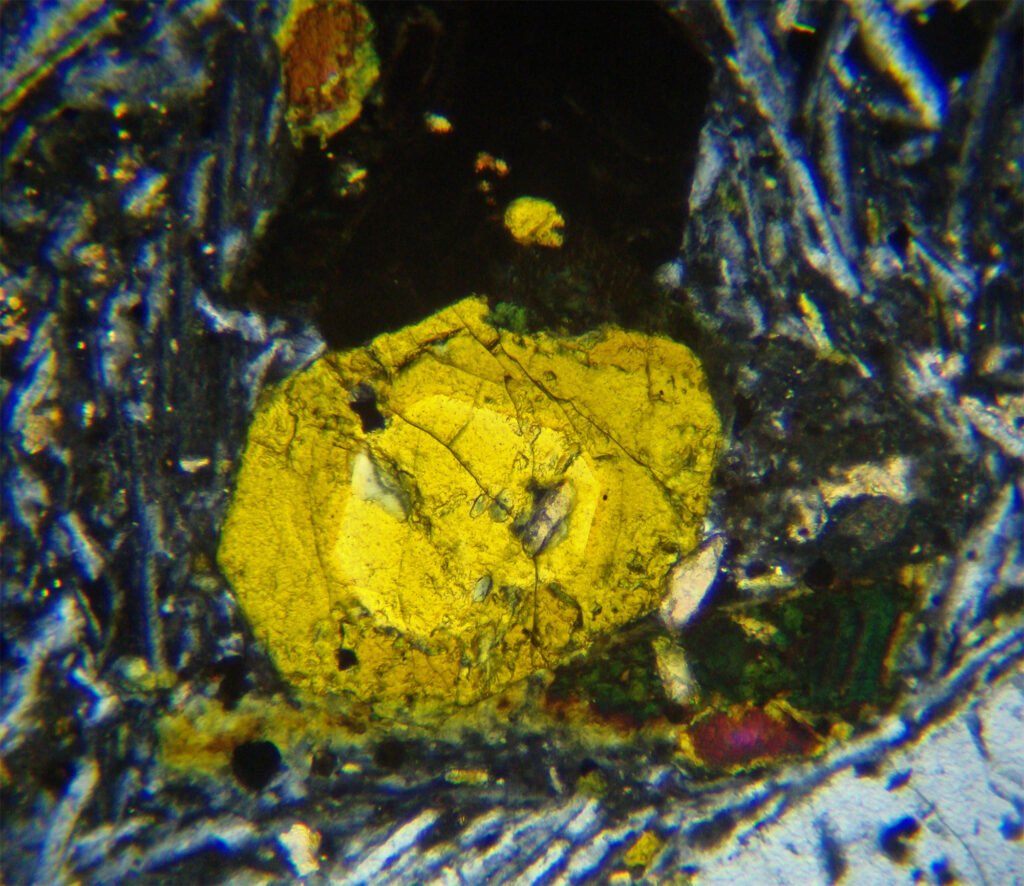
Cleavage: Cleavage {110} perfect, like all pyroxenes:
– in the longitudinal sections only one cleavage direction,
– in the basal sections two cleavages that intersect at angles of 87 and 93º.
Habits: Short prismatic (typical of pyroxenes), long columnar, granular to acicular. Also massive. Base sections with 8 sides.
May show folding and lamellar exsolutions of orthopyroxenes.
CROSSED POLARIZED LIGHT – XPL
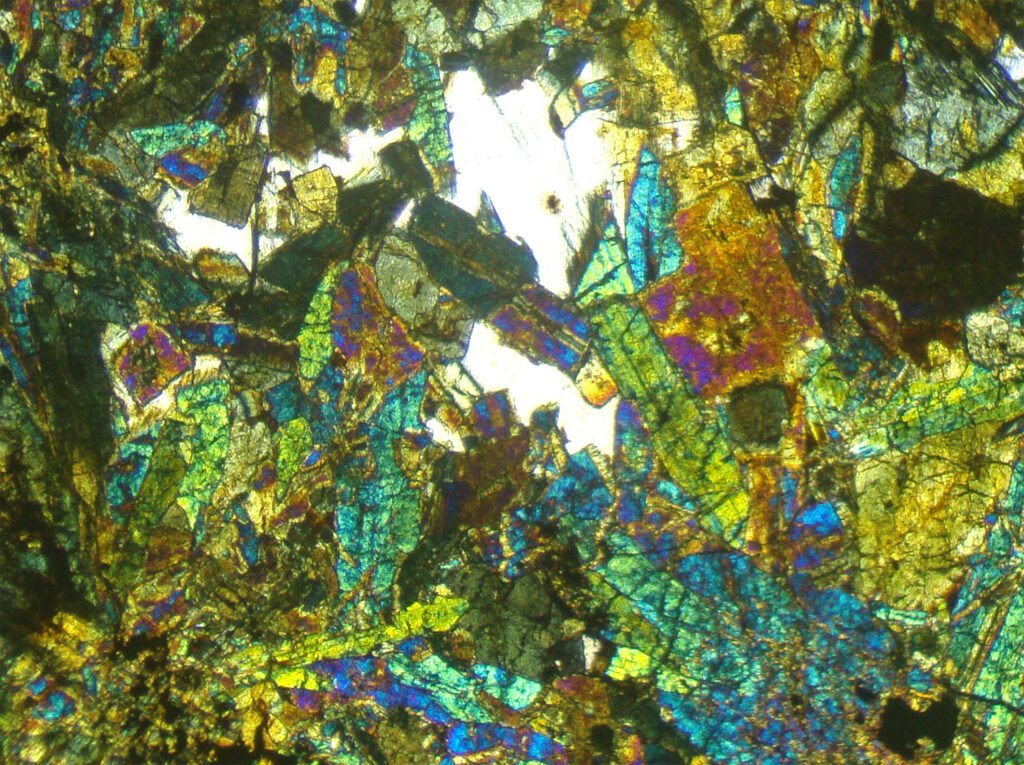
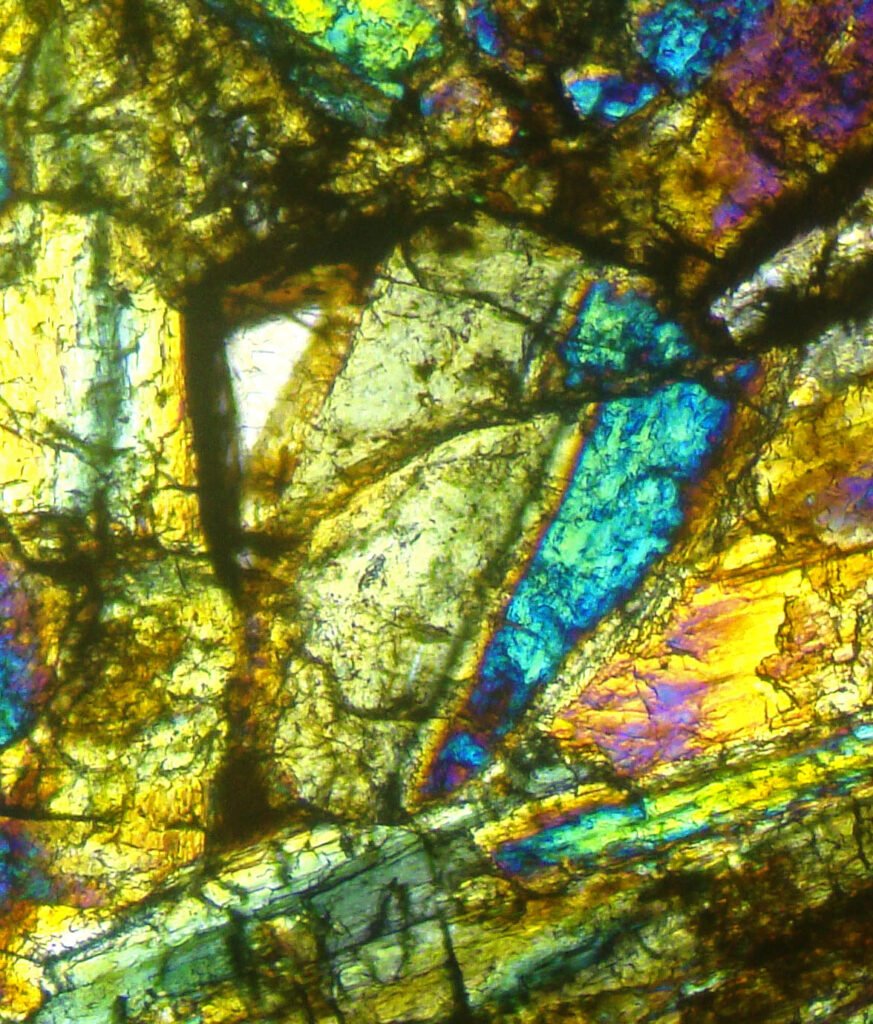
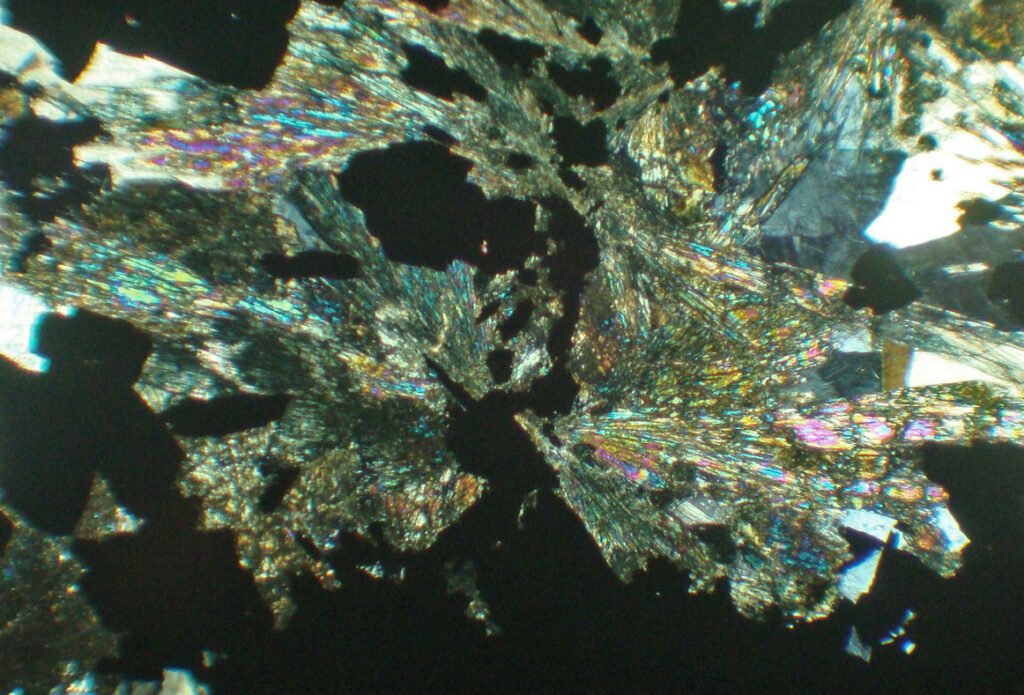
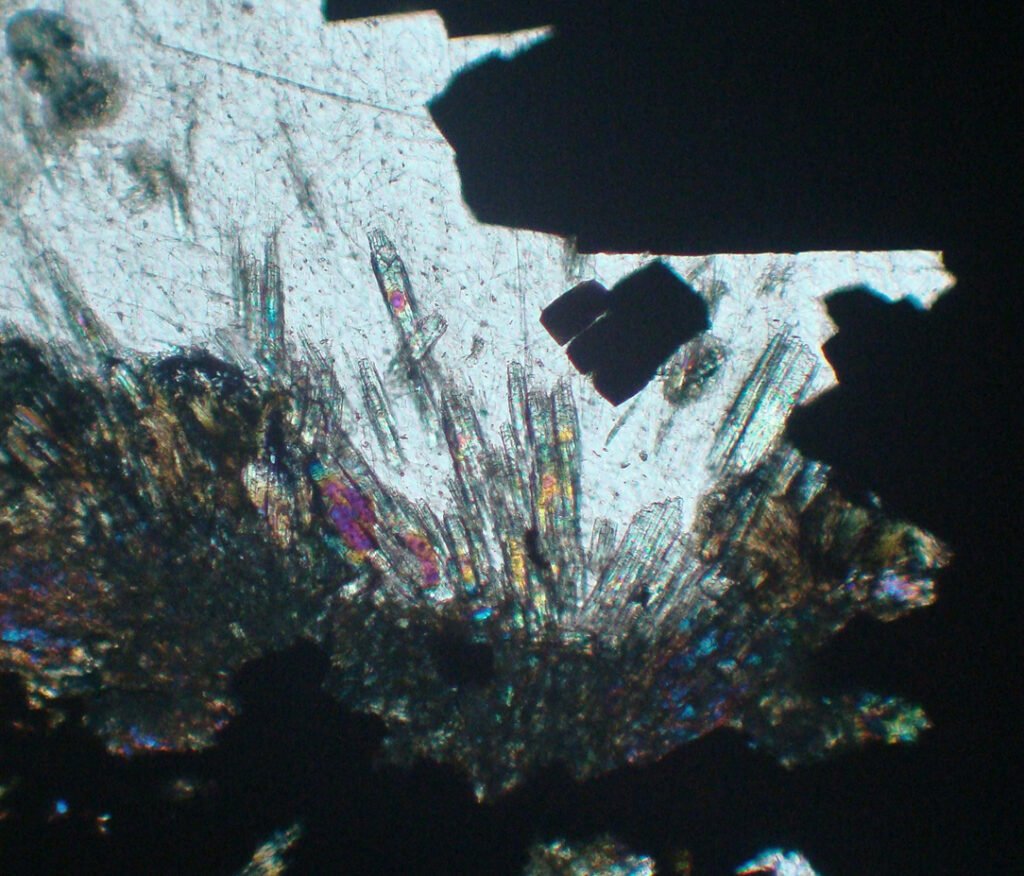
Birefringence and Interference Colors: Birefringence from 0.005 to 0.029: intense colors up to 2nd order green.
Extinction: Oblique, with increasing obliquity with increasing Fe content.
Elongation sign: No information available.
Twins: Simple and polysynthetic on {100} and {010}, forming pyroxene lamellae that are oriented obliquely to the cleavages.
Zoning: Frequently zoned.
CONVERGENT LIGHT
Character: B(+)
2V angle: 58 – 63o
Alterations: can alter in three ways.
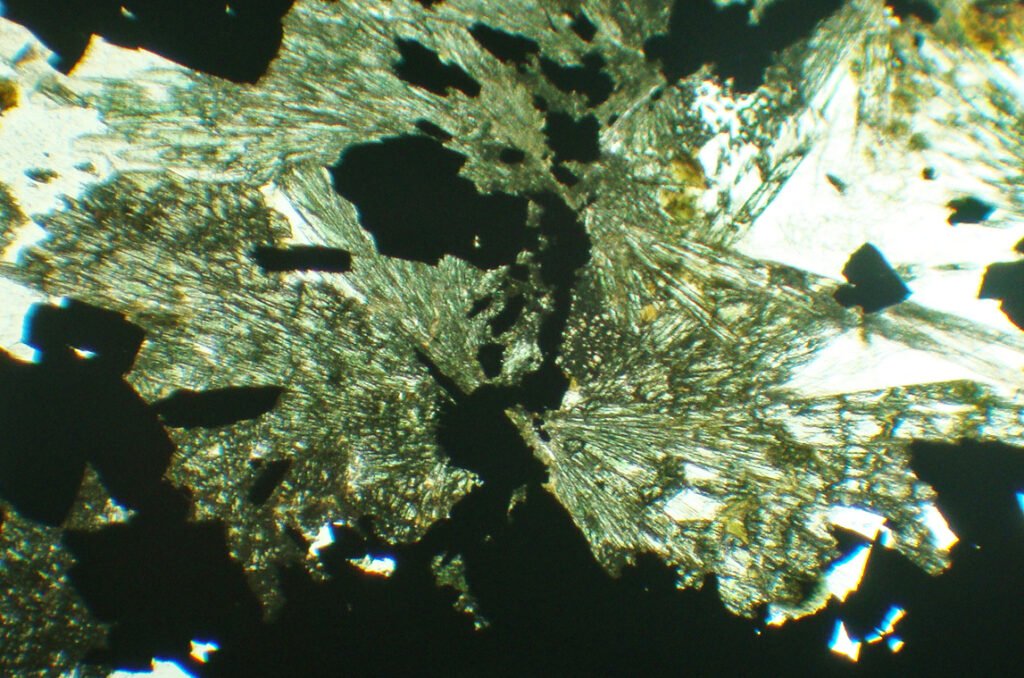
High temperature pneumatolytic to hydrothermal alteration leads to uralitization: fibrous aggregates (brush texture) of amphiboles (tremolite or actinolite).
Low temperature hydrothermal alteration leads to serpentinization.
Weathering produces carbonates, hematite and quartz.
May be confused with: several other minerals.
Augite has no colors in PPL with blue tones, and its interference colors are higher.
Olivine has higher birefringence, parallel extinction and shows no cleavage.
Omphacite and jadeite occur in different paragenesis.
Amphiboles such as green hornblende are more strongly pleochroic, have a different cleavage pattern, and tend to be B(-).
Orthopyroxenes have parallel extinction and are not green in PPL.
Fe-rich members of the Epidote Group have anomalous interference colors and different cleavages.
Arfvedsonite has much darker colors, amphibole cleavage (in the basal sections two cleavage directions intersect at angles of 56 and 124º) and lower interference colors.