1. Characteristics
Crystal system: Monoclinic prismatic.
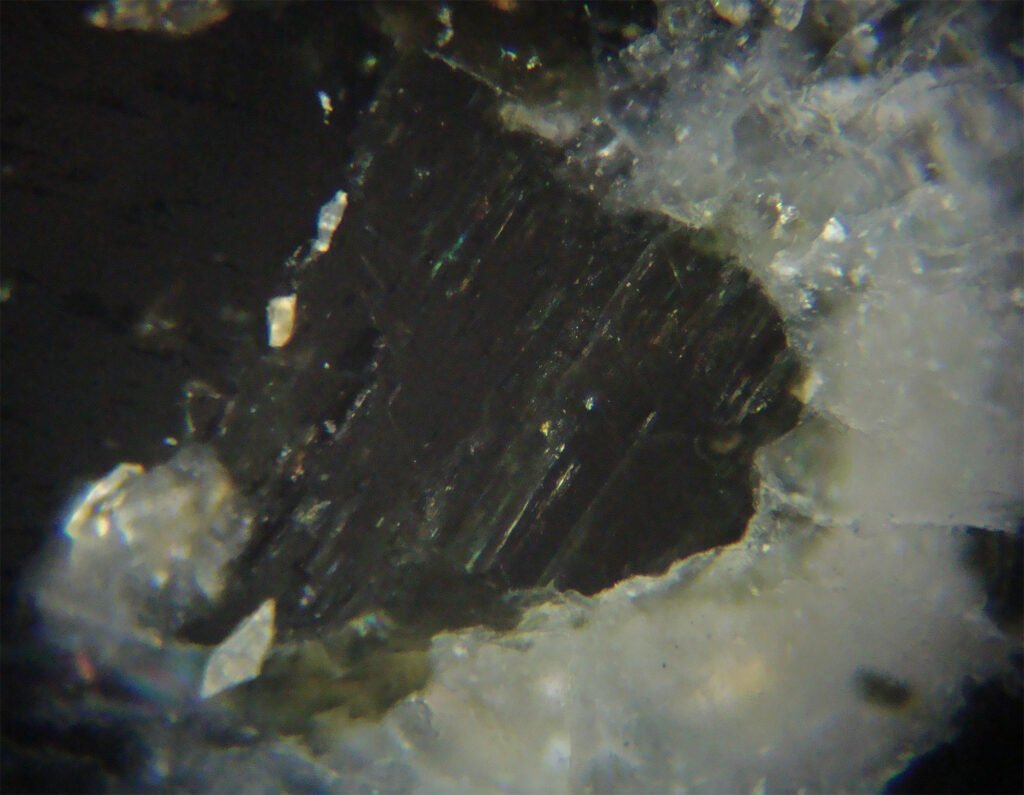
Color: Dark green to black.
Habit: Prismatic, granular, massive, fibrous.
Cleavage: {110} perfect, with angles of 56º and 124º in the basal sections.
Tenacity: Brittle.
Twinning: Simple and lamellar parallel to {100}.
Fracture: Irregular.
Mohs Hardness: 5 – 6
Parting: On {100} e {010}.
Streak: Pale green to gray and colorless.
Lustre: Vitreous.
Diaphaneity: Transparent.
Density (g/cm³): 3.0 – 3.4
2. Geology and Deposits
Green hornblende is the most common amphibole in intrusive igneous rocks and the most abundant in acidic and intermediate rocks, occurring in granites, granodiorites, tonalites, monzonites, quartz-diorites and diorites. Also in syenites, diorites, anorthosites and others. In volcanic rocks it occurs in dacites, rhyodacites, andesites, phonolites, dolerites and others.
It is less common in basic and ultrabasic rocks, but occurs in some gabbros, norites, peridotites and pyroxenites where other amphiboles can also be found.
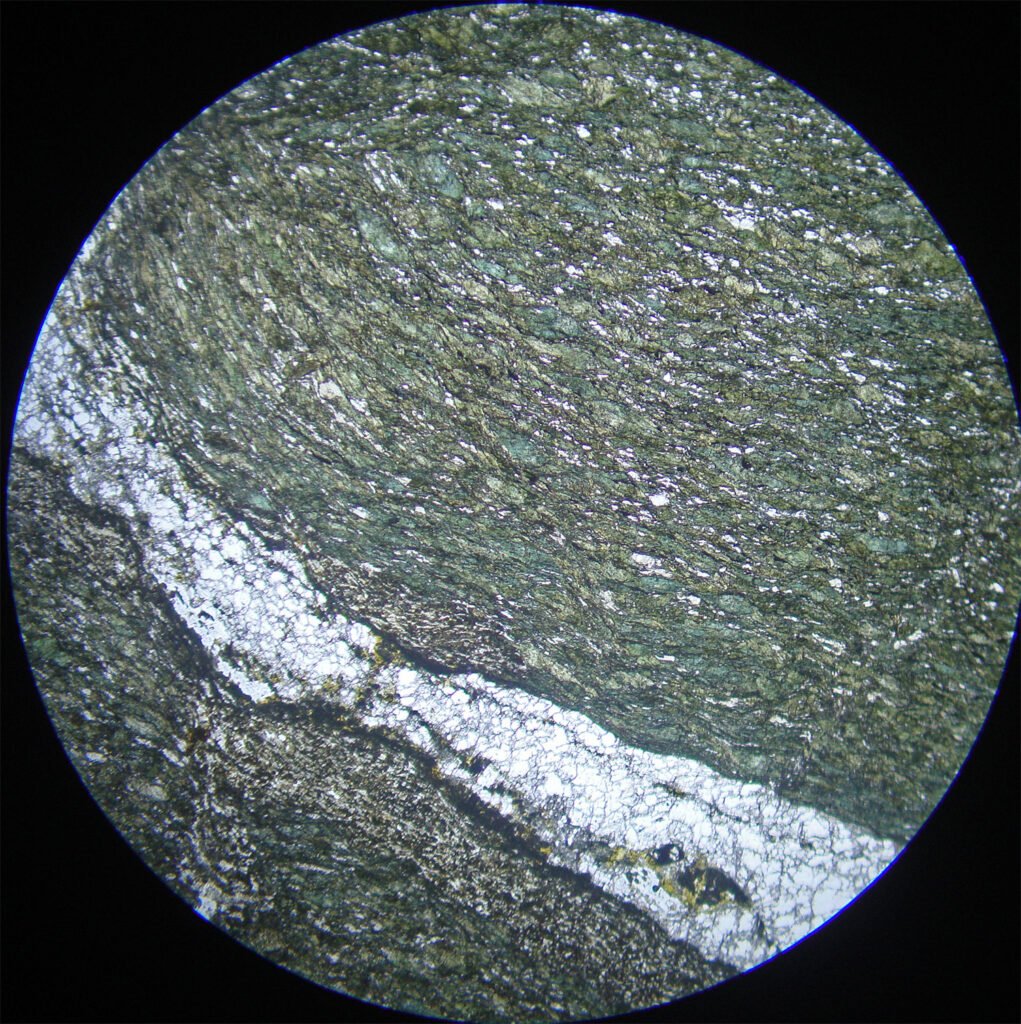
In metamorphic rocks it is more abundant in high-grade regional metamorphic rocks, such as schists, gneisses, granulites and amphibolites. It can occur in cornubianites.
It can be found in some immature sediments such as graywacke in the form of clastic grains.
3. Mineral Associations
Green hornblende occur with many other rock-forming minerals: quartz, potassic feldspar (orthoclase, microcline, sanidine), plagioclase, mica (biotite, muscovite), titanite, apatite, epidote, garnets (grossular and melanite), rutile, other amphiboles ( actinolite), magnetite, chamosite and many others.
It also occurs in rocks with feldspathoids, associated with leucite, cancrinite, analcime, haüyna, sodalite and nepheline.
4. Transmitted Light Microscopy
Refraction indices: nα: 1.687-1.694 nβ: 1.700 – 1.707 nγ: 1.701 – 1.712 (Fe-hornblende)
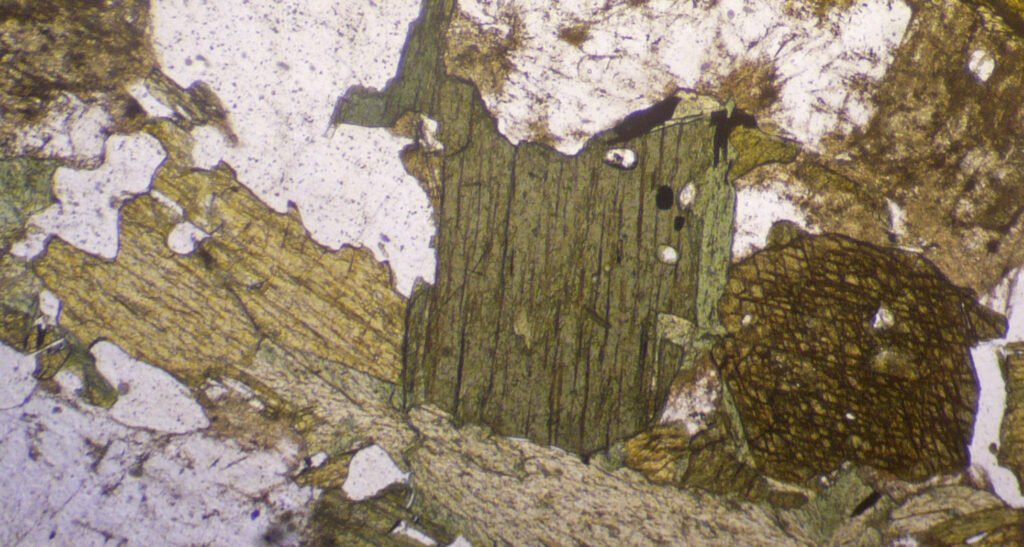
PLANE POLARIZED LIGHT – PPL
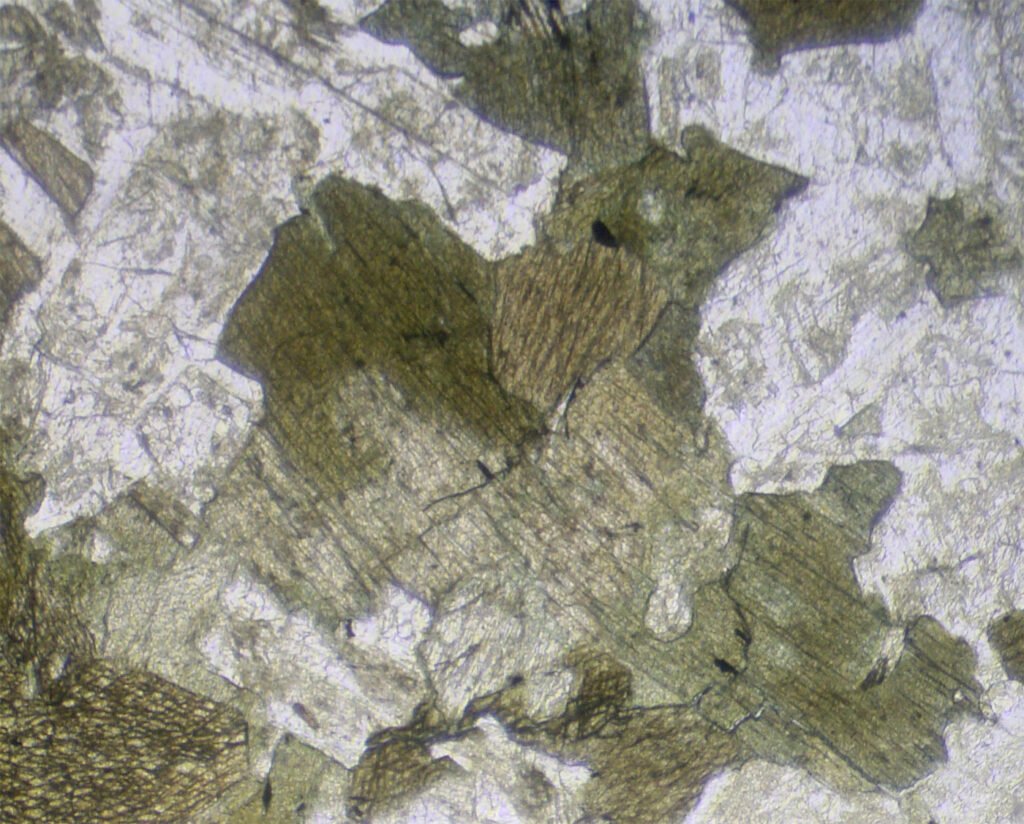
Color / Pleochroism: Usually strongly colored in green, yellow-green, blue-green and brown. Strong pleochroism in these colors, mainly in various shades of green and brown. Green varieties are typically
X = light yellow-green,
Y = green or gray-green,
Z = dark green.
Brown varieties have X = greenish yellow-brown, Y = yellowish to reddish brown, and Z = gray to dark brown.
Relief: Moderate to high.
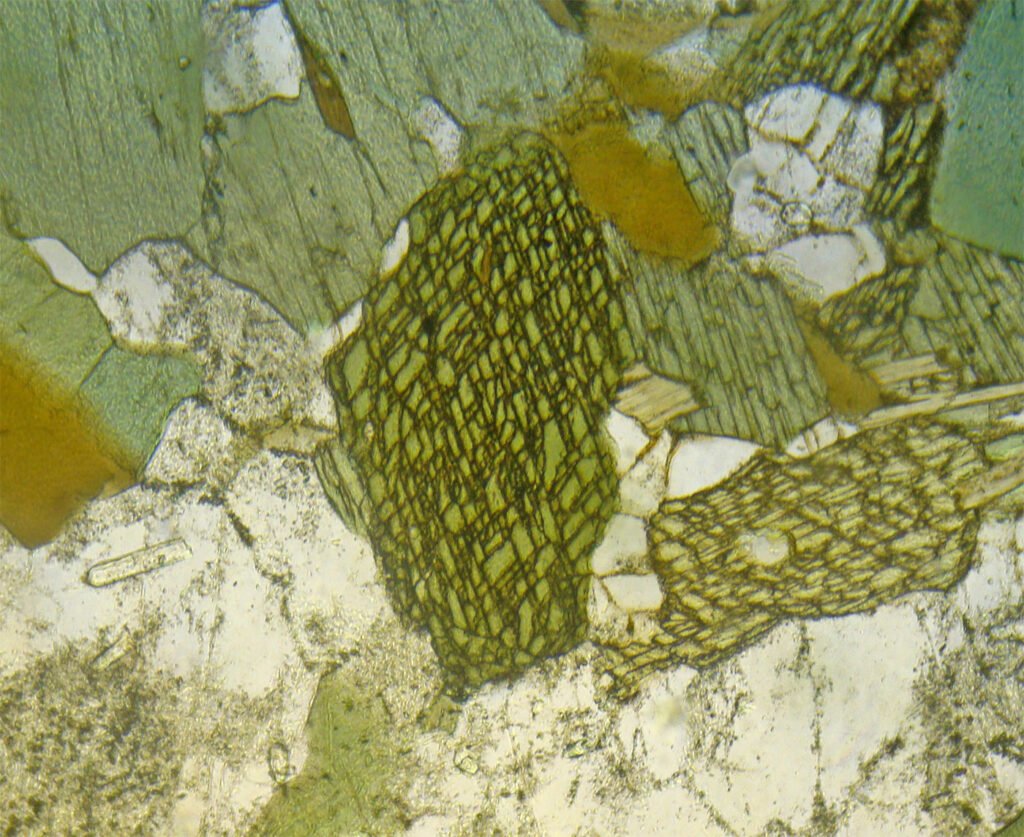
Cleavage: {110} perfect, resulting in two cleavages that intersect at 56º and 124º angles (diamond shape) in the basal sections. In the prismatic sections, there is only one cleavage. In addition, there are {100} and {001} partitions, which are difficult to see under a microscope.
Habits: Columnar, fibrous, fine to coarse granular, euhedral to anhedral. Short to long prismatic crystals. In the basal sections they are often pseudohexagonal or rhombic (diamonds). Longitudinal sections are prismatic.
Pleochroic (dark) halos around radioactive inclusions such as zircon and monazite are common, as in biotite.
Large numbers of inclusions can generate sieve texture. Alteration of pyroxenes generate very fine-grained masses of green hornblende.
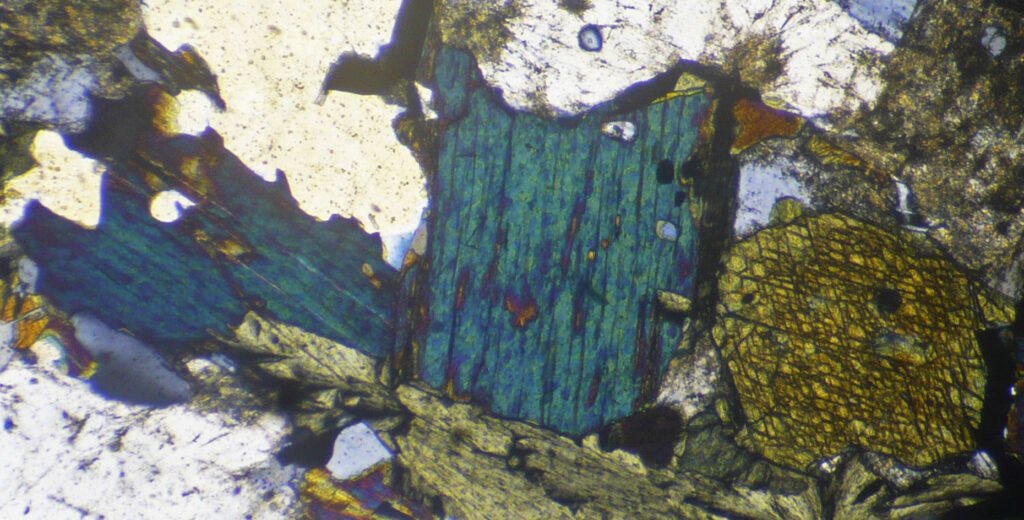
CROSSED POLARIZED LIGHT – XPL
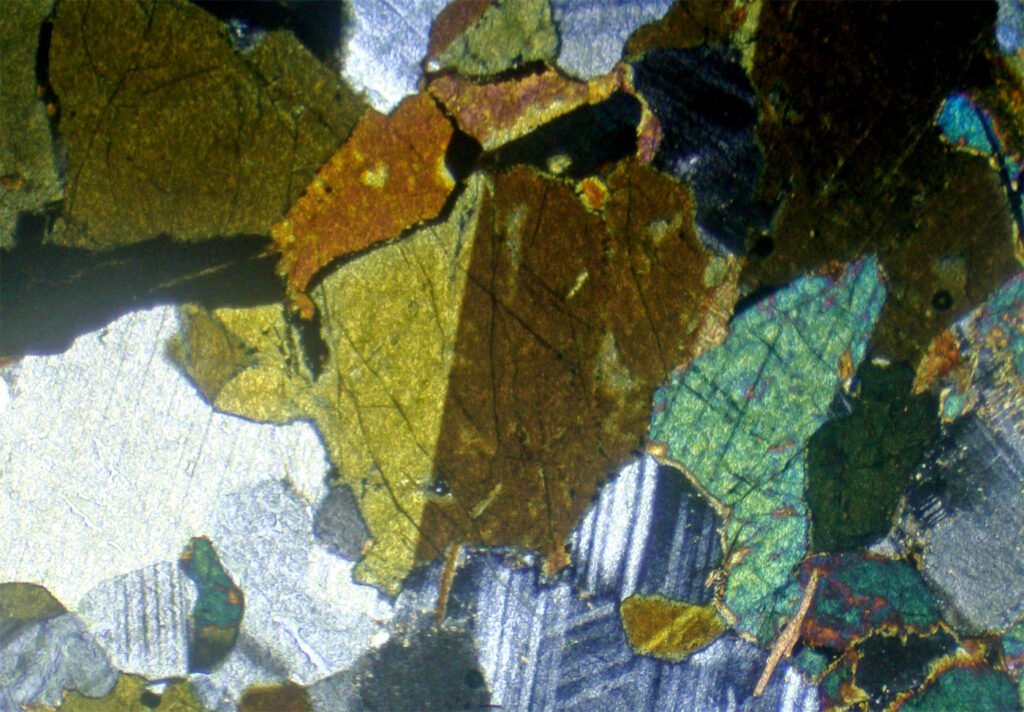
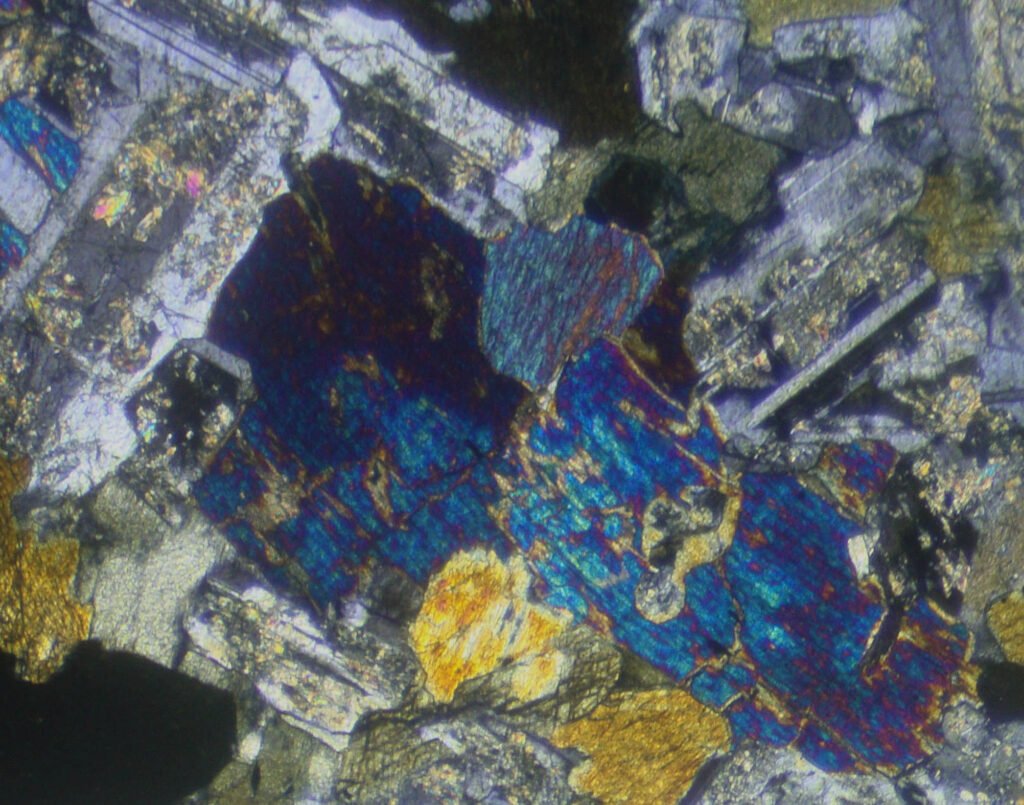
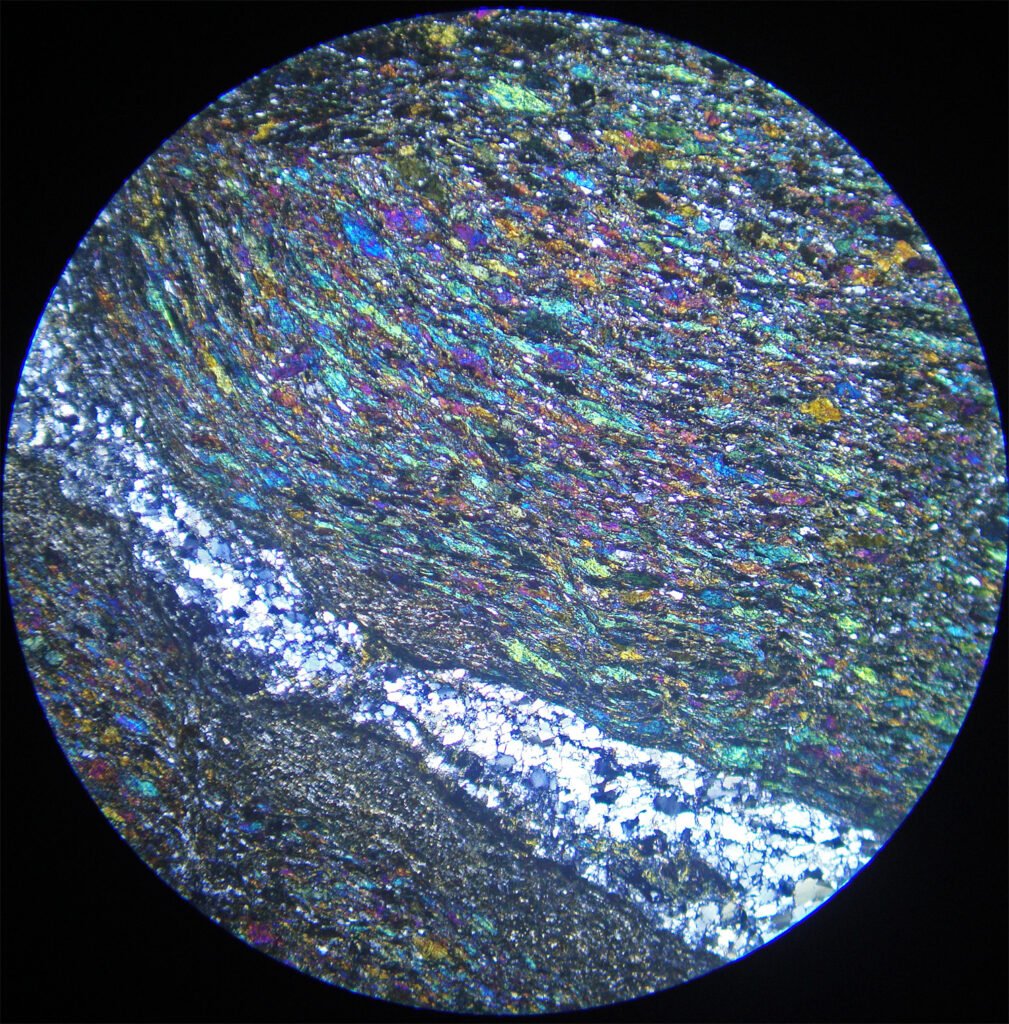
Birefringence and Interference Colors: Birefringence from 0.014 to 0.023 – interference colors normally between the end of the 1st order end and the beginning of the 2nd order: orange, red, blue, green, various shades of pink and violet.
Extinction: Oblique with angles from 14º to 22º (most common between 14º and 25º) in the longitudinal sections. Symmetrical extinction in the basal sections.
Elongation sign: ES(+). Important diagnostic feature!
Twins: Single or lamellar twins at {100} are common.
Zoning: Common.
CONVERGENT LIGHT
Character: B(-), more rarely B(+).
2V angle: 35 – 90o, common between 65 and 85o.
Alterations: often alters (uralitization) to a mixture of tremolite and actinolite, sometimes with epidote. It also alters to biotite (as a border around the grain), chlorite, epidote and calcite.
In volcanic rocks, green hornblende may be replaced by brown hornblende due to oxidation of Fe2+ to Fe3+; the process may be accompanied by partial or total opacification; this process starts along cleavages and fractures.
Retrograde metamorphism leads to the formation of actinolite and then chlorite or antigorite.
Weathering transforms hornblende into carbonate, limonite and quartz.
May be confused with: few other minerals. The colors, the pleochroism and the cleavages are very characteristic.
Biotite has parallel and mottled extinction.
Sodic amphibole tend to be bluish.
Actinolite has pleochroism in much weaker green colors and lower interference colors.
Pyroxenes are generally colorless and have 2 cleavages that cross at ~90° in the basal sections.
Tourmaline has parallel extinction and no cleavage.