ILVAITE

Ilvaite – CaFe3+Fe2+2(Si2O7)O(OH) – is a very rare sorosilicate. Macroscopically, it forms black, opaque prisms and has no economic importance.

It belongs to the Lawsonite Group, is the iron analogue of manganilvaite, may contain Mg and Mn, and a monoclinic form is known.

1. Characteristics

Crystal system: Orthorhombic bipyramidal.

Color: Iron black, dark greenish black.

Habit: Prismatic, columnar, radial, massive.

Cleavage: {001} distinct, {010} distinct. Striations // to (001).

Tenacity: Brittle.

Twinning: Interpenetrating, rare, at 90º.

Fracture: Irregular.

Mohs Hardness: 5.5 – 6

Parting: No.

Streak: Black, shades of green or brown.

Lustre: Submetallic.

Diaphaneity: Transparent.

Density (g/cm³): 3,99 – 4,05


2. Geology and Deposits

Ilvaite is characteristic of metamorphic and/or metasomatic contact limestones and dolomites, such as marbles and skarns, mainly, where it is associated with other calc-silicate minerals.

It also occurs in magnetite-based iron ores and in zinc and copper ores.


3. Mineral Associations

It is associated with quartz, carbonates (calcite, siderite, rhodochrosite), sulfides (arsenopyrite, galena, pyrrhotite, sphalerite, pentlandite, pyrite), fluorite, hedenbergite, magnetite, and natanite (Fe2+(Sn(OH)6)).

It may be associated with zeolites.

Less common associates are ulvöspinel and graphite.


4. Transmitted Light Microscopy

Refraction indices:  nα: 1,727    nβ:  1,870      nγ: 1,883

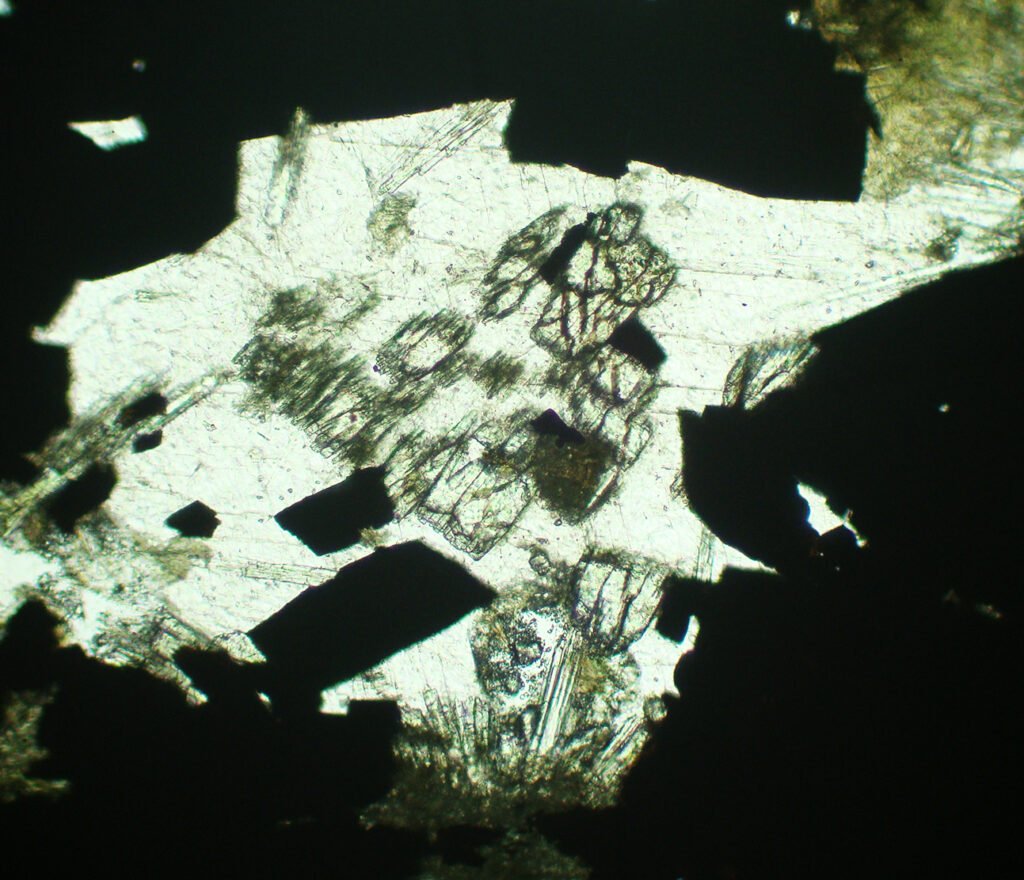
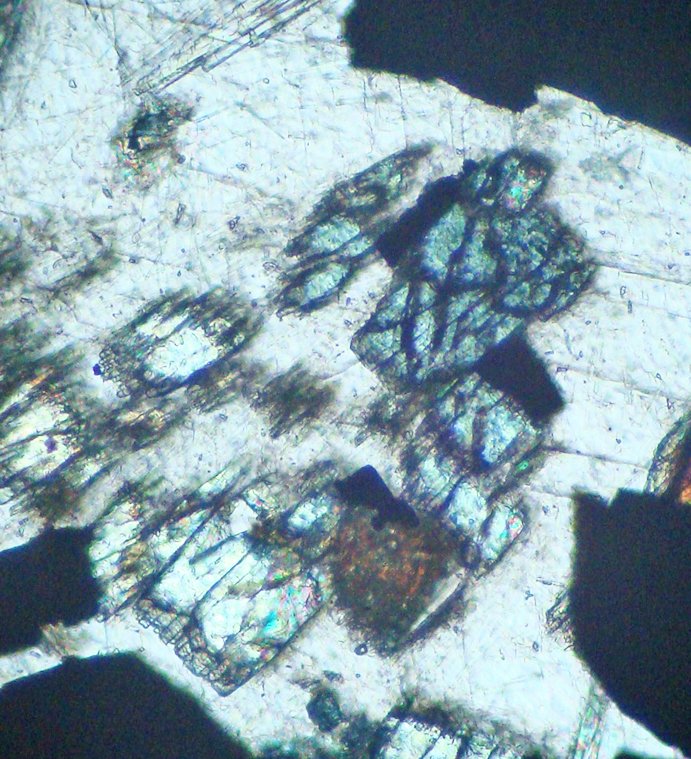
PLANE POLARIZED LIGHT – PPL

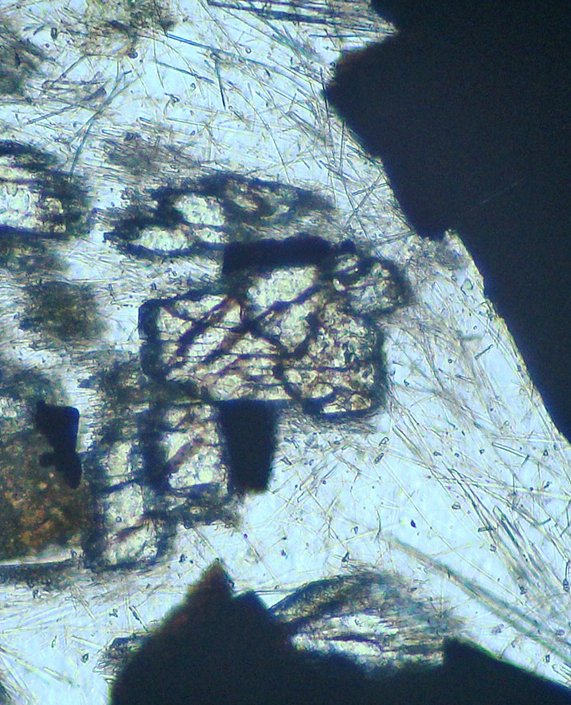
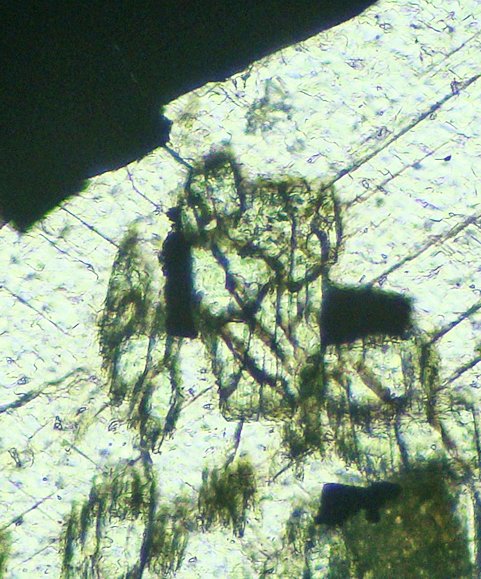
Color / Pleochroism: Pleochroism between

X = dark green,

Y = yellowish-brown to dark brown, and

Z = dark brown.

The intensity of the pleochroism is variable, ranging from weak to strong.

Relief: Very high.

Cleavage: It typically shows only evidence of cleavage.

Habits: Short to long prismatic aggregates, can be massive, and very irregular forms also occur. Short prismatic aggregates can be radial.

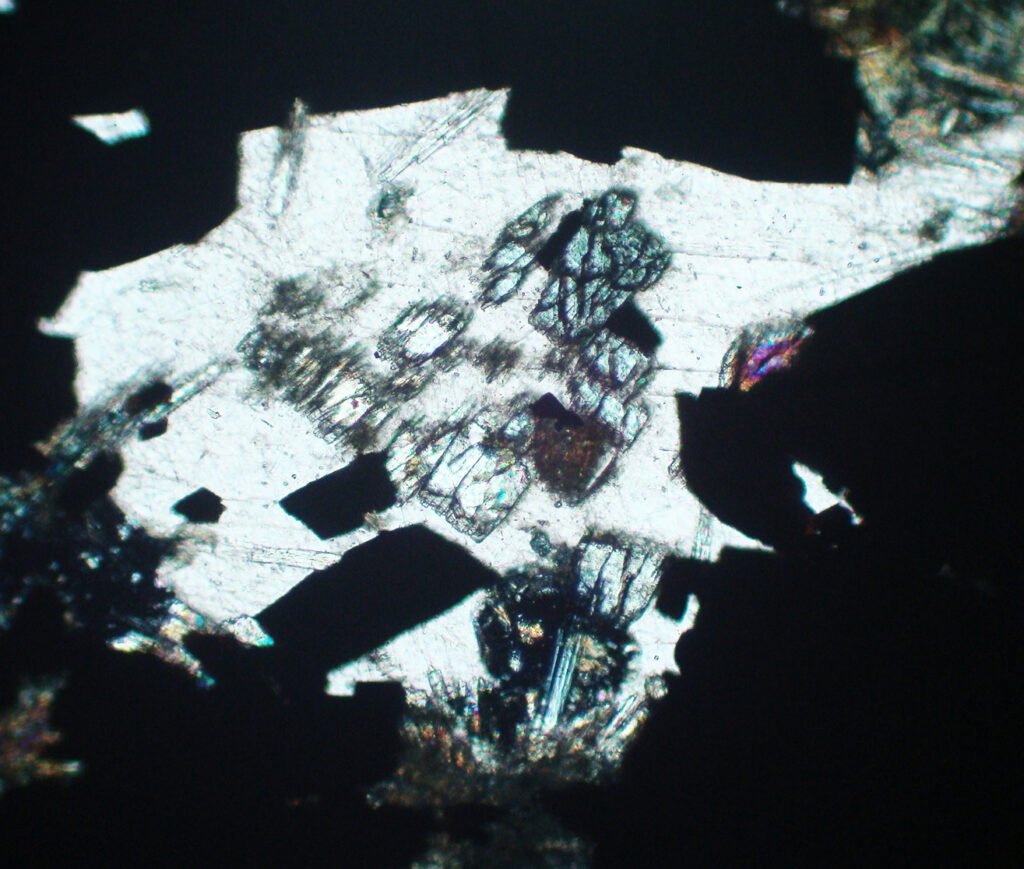
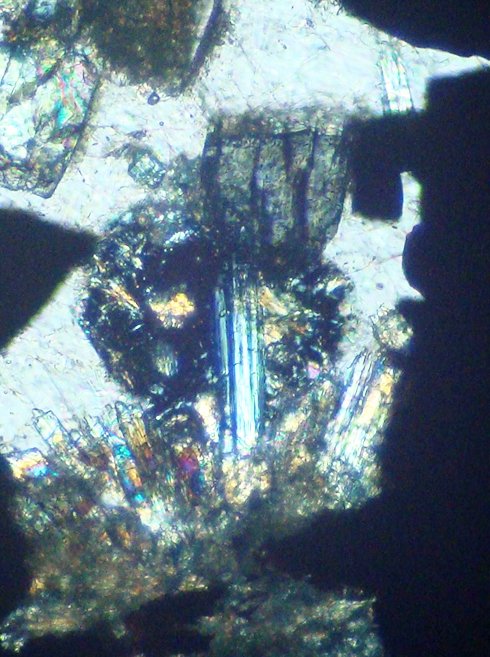
CROSSED POLARIZED LIGHT – XPL

Birefringence and Interference Colors: Maximum birefringence of 0.156: high-order colors, difficult to recognize, somewhat reminiscent of carbonates.

Extinction: Paralell.

Elongation sign: Literature does not provide information. SE(-) in the samples available here.

Twins: Rare, may be of interpenetration, cross-shaped (90º) or as lamellae.

Zoning: It can be very clearly present.

CONVERGENT LIGHT

Character: B(+)

2V angle: 20 – 30º

Alterations: It may show incipient formation of limonite (goethite) at the edges or along the cleavages.

May be confused with: The high relief, distinct pleochroism, parallel extinction, and paragenesis are diagnostic features. It can be confused with some other rare minerals.


5. Reflected Light Microscopy

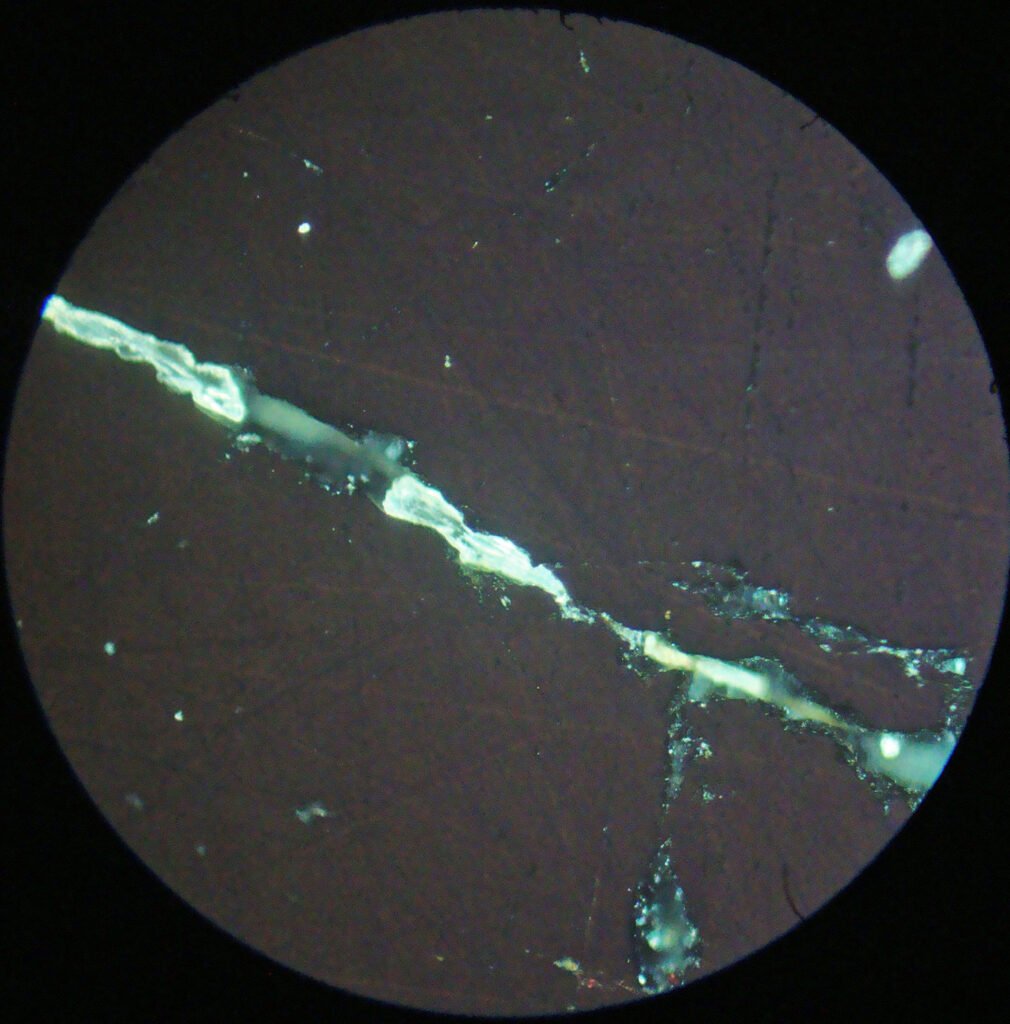
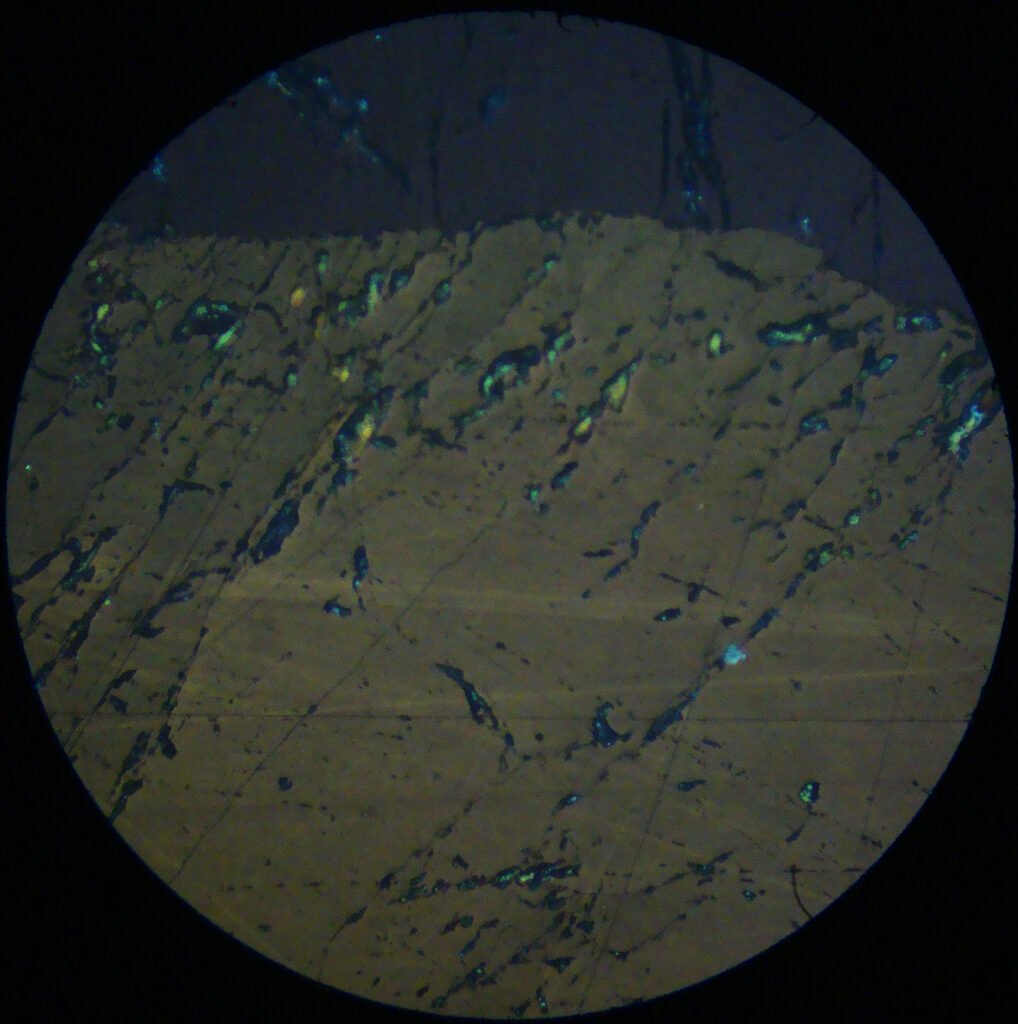
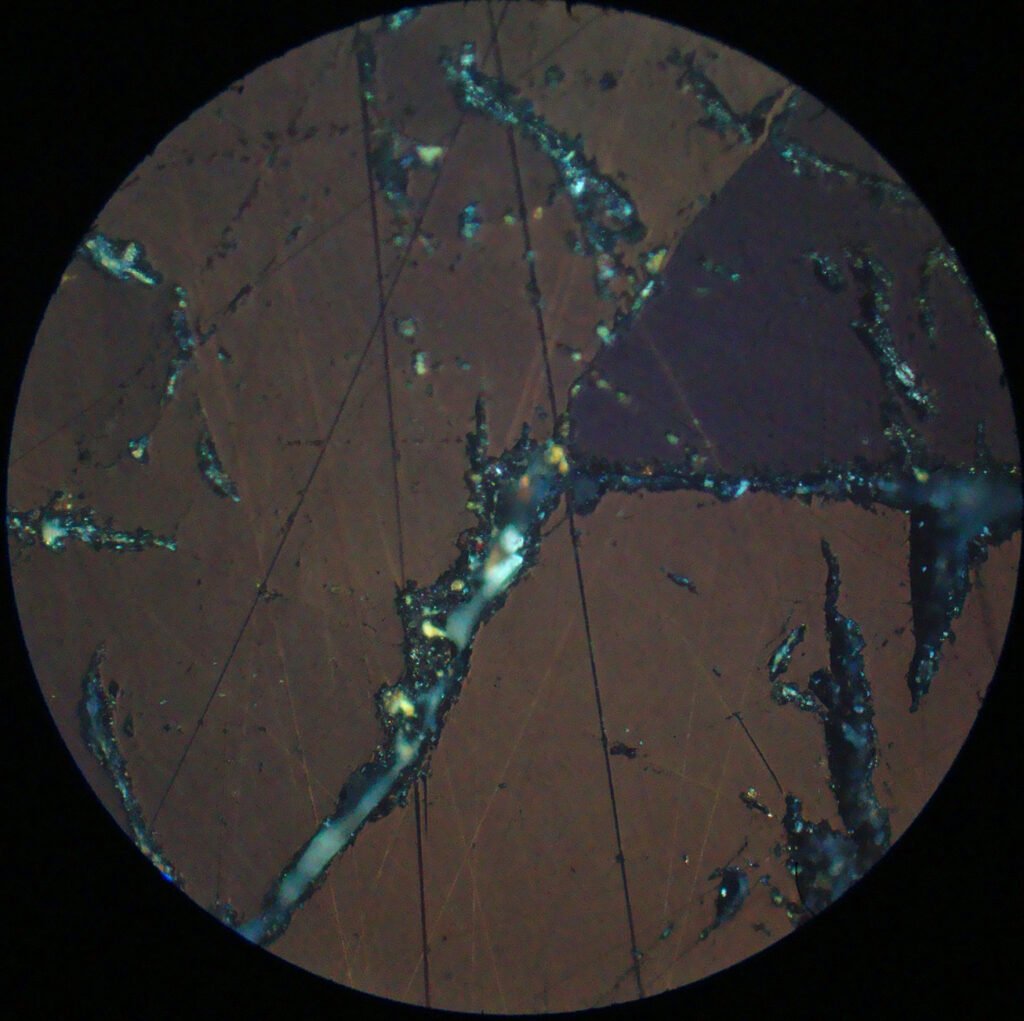
Reflected light microscopy is clearly not the recommended analytical method for identifying ilvaite. However, the mineral is easily recognizable due to its very evident anisotropic colors. Furthermore, it is important to prepare a polished slide or section to identify opaque minerals that occur associated with ilvaite, such as arsenopyrite, magnetite, galena, and pyrrhotite.

Sample preparation: Ilvaite is not easy to polish because its hardness when polished is higher than that of magnetite, but lower than that of pyrite and hematite.

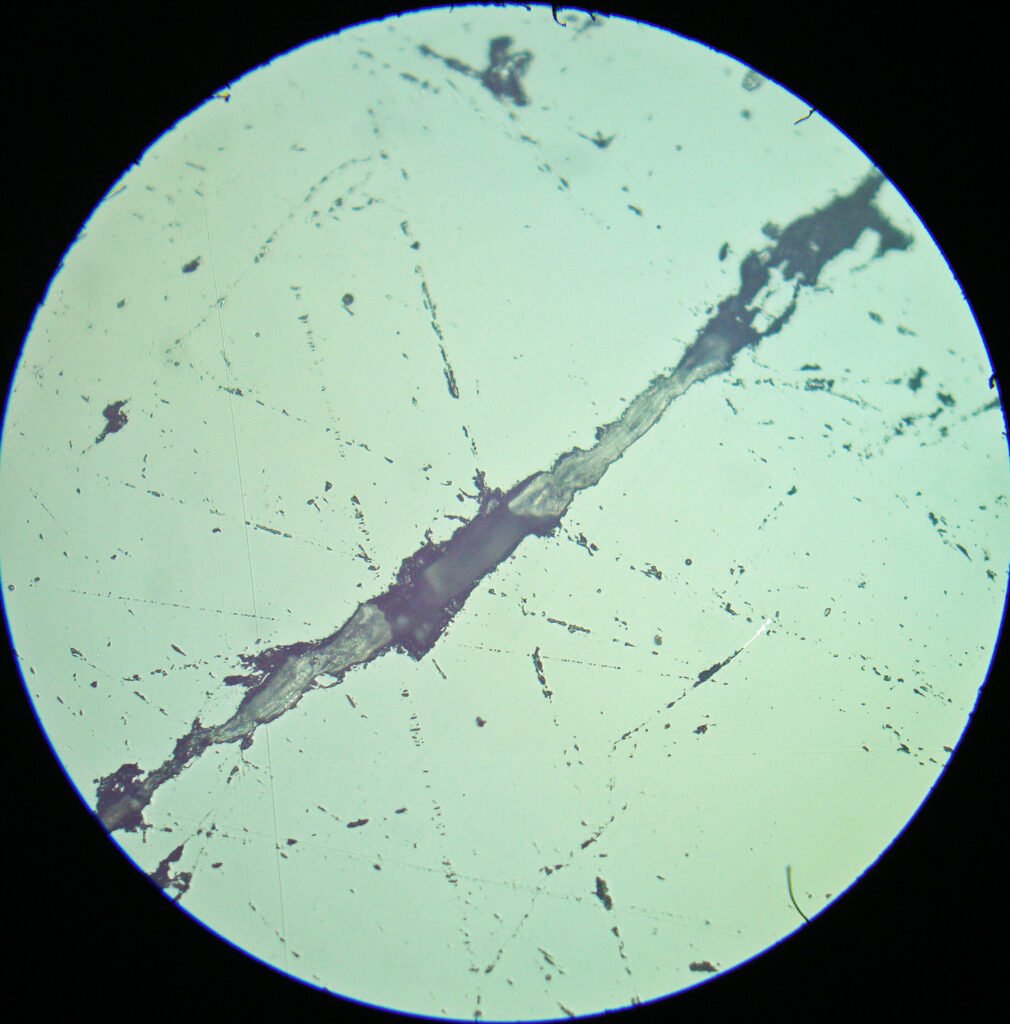
PLANE POLARIZED LIGHT – PPL

Reflection color: Light gray to bluish gray, can be pink to violet.

Pleochroism: Very strong, ranging from gray to pinkish-gray and blue-gray.

Reflectivity: Very low (5 – 9.5%)

Bireflectance: Distinct.

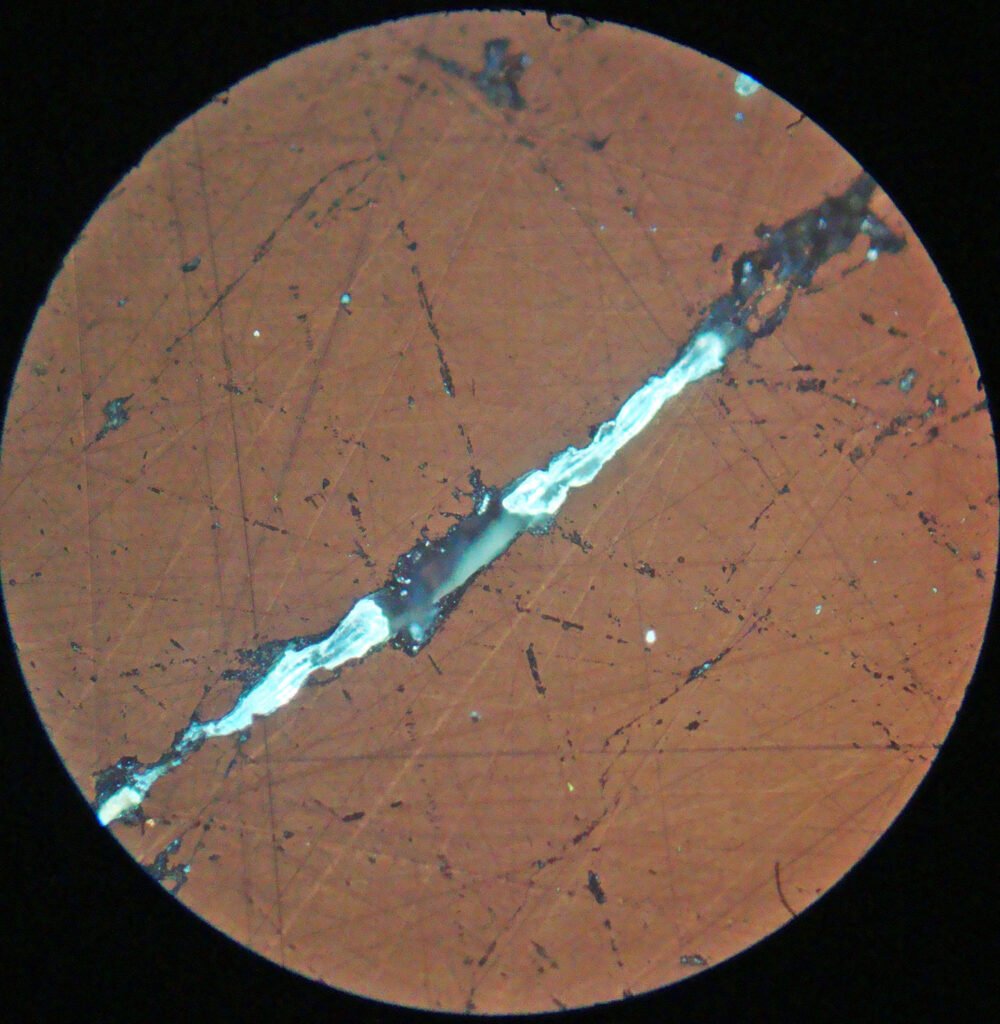
CROSSED POLARIZED LIGHT – XPL

Isotropy / Anisotropy:  Very strong, very conspicuous anisotropy between blue, pink, dark brown, and orange. One of the colors, in the sections parallel to (010), is exactly the first-order orange-pink, very luminous. By slightly uncrossing the nicols (1-2º), the color variation is abrupt and very impressive.

Internal reflections: Very rare, ranging from orange, brown, and red.

May be confused with: Ludwigite (a Mg and Fe borate) is quite similar, has the same physical and optical properties, and occurs in the same parageneses. However, the pleochroism and anisotropy of ilvaite occur in such conspicuous colors that the mineral is easily recognizable. The paragenesis also helps.

General Characteristics: 

Grain shape is generally short columnar, but can be radial. Massive, hypidiomorphic, irregular.

Cleavage may be visible.

Very evident zoning is visible in some occurrences.

Twinning is rare, but lamellar twinning may occur, including according to two systems.

Alteration to goethite (limonite) may be present in cleavages and crystal edges.

Intergrowths occur with ilmenite, hematite, and goethite.

Replacement of magnetite by ilvaite occurs.

Inclusions of ilvaite in magnetite and chalcopyrite occur.

<