5. Reflected Light Microscopy
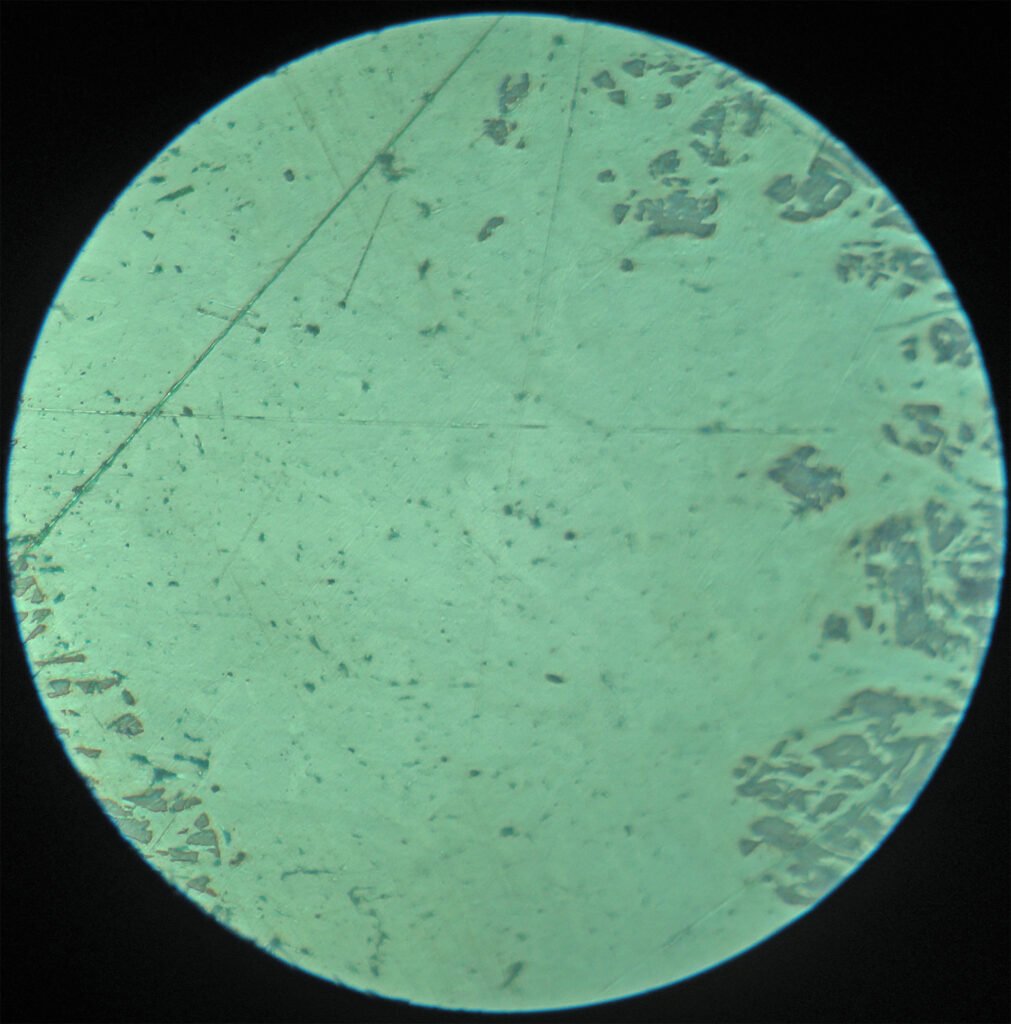
Sample preparation: Jamesonite takes a good polish easily, without polishing scratches, despite its low hardness. Its polishing hardness is similar to that of boulangerite and lower than that of galena and stannite.
PLANE POLARIZED LIGHT – PPL
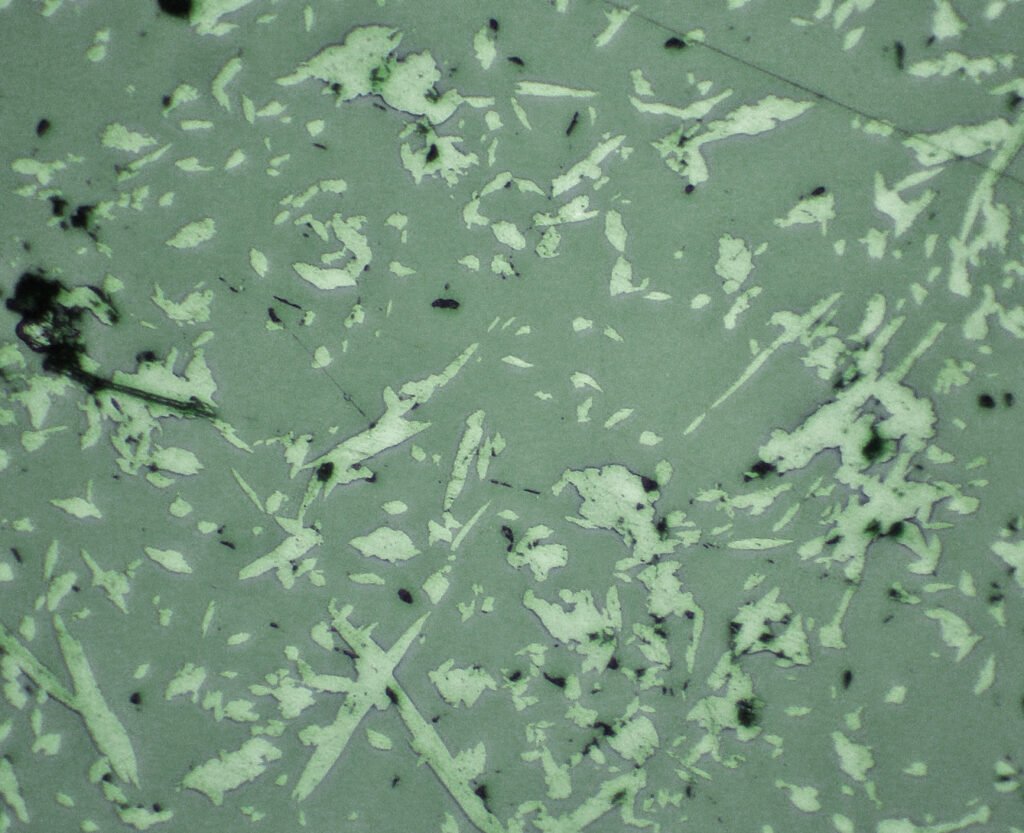
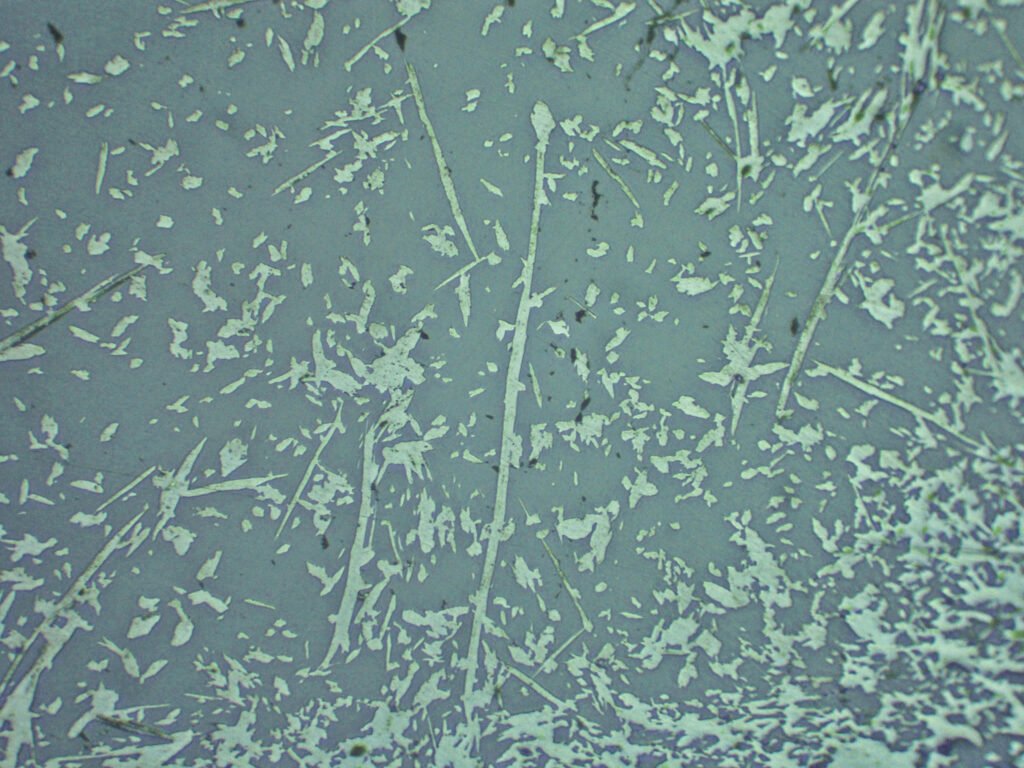
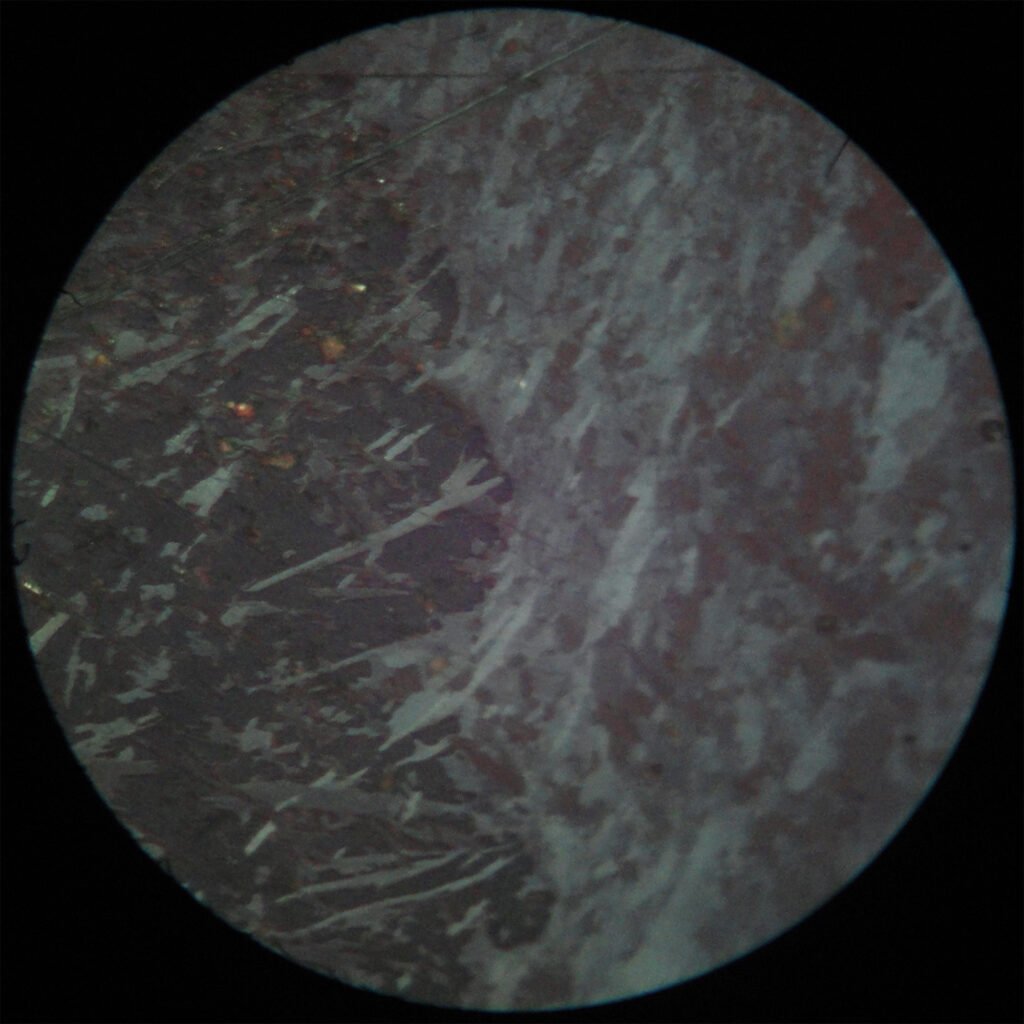
Reflection color: White to medium gray with a greenish tint. Also ranges between white and yellow-green.
Slight variations in hue are sometimes perceptible depending on the orientation of the sections.
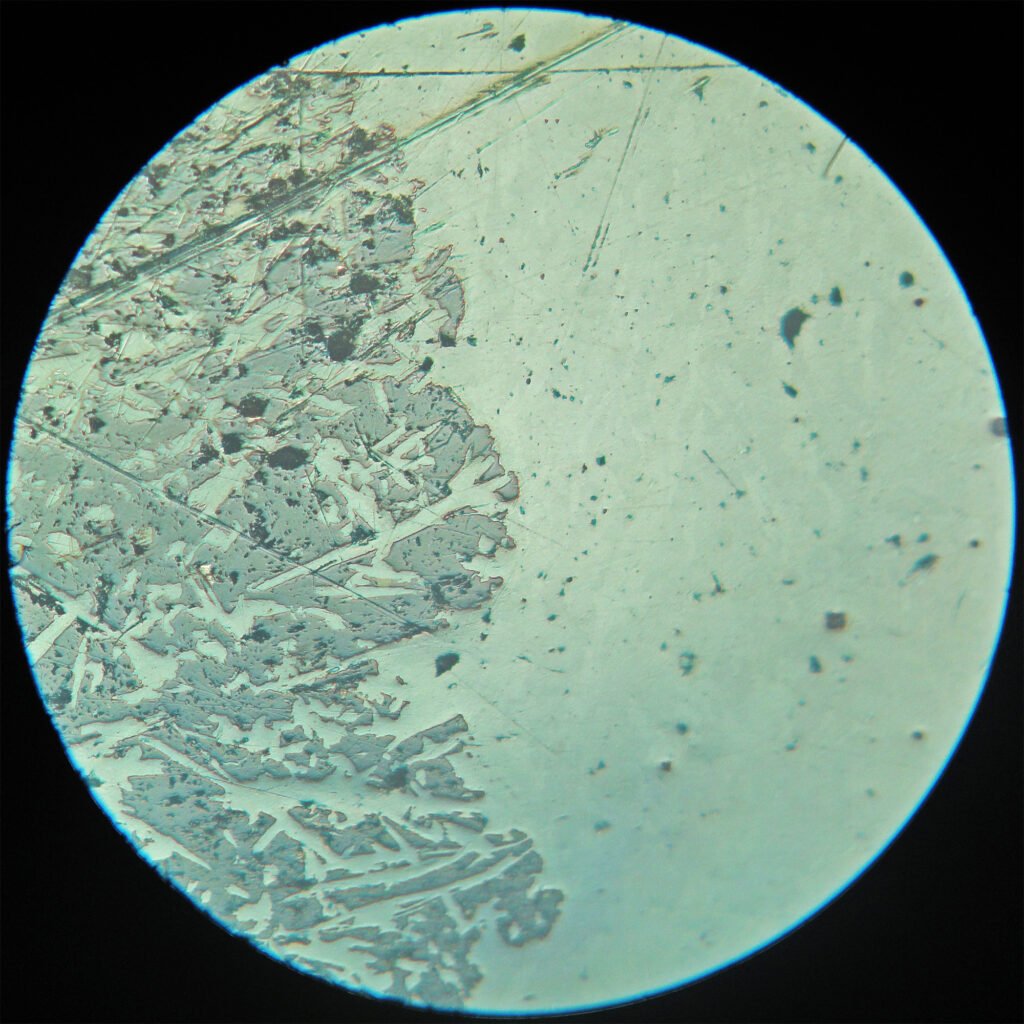
Compared to the color of galena, the color of jamesonite—depending on section orientation—is either the same or more greenish and darker.
Compared to the color of stibnite, the color of jamesonite is distinctly lighter, and in some sections, more greenish.
Pleochroism: Distinct between white and greenish-gray or brownish-gray; weaker than that of stibnite.
Reflectivity: 32.92 – 38.53%
Bireflectance: Very weak.
CROSSED POLARIZED LIGHT – XPL
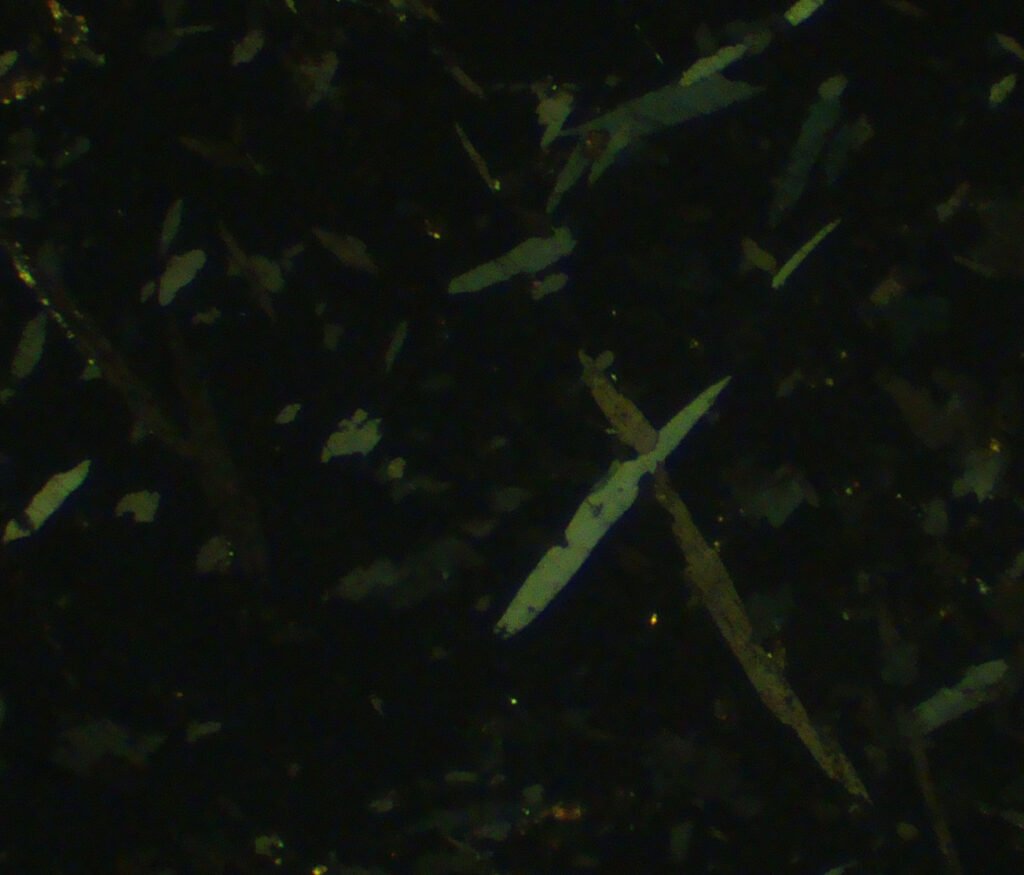
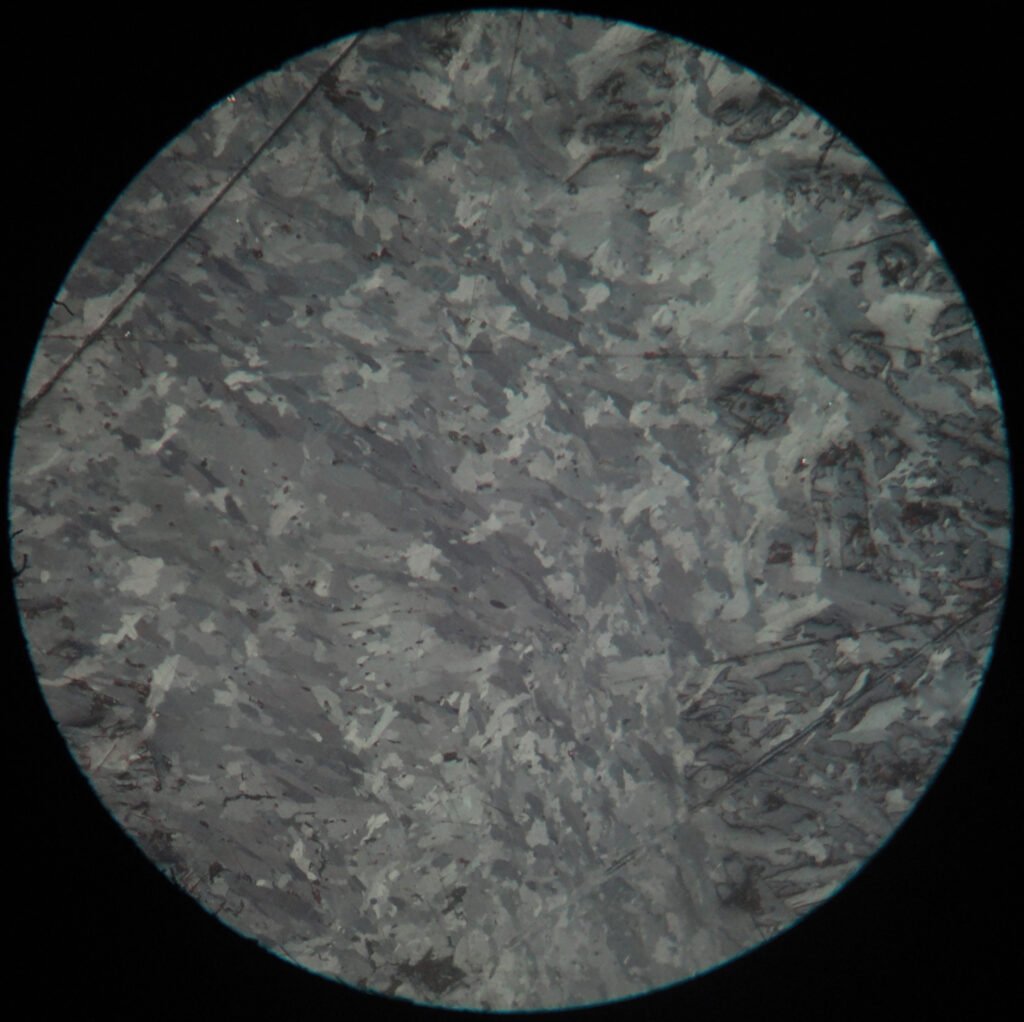
Isotropy / Anisotropy: Strong anisotropy, ranging from dark greenish-gray to lighter shades; colors vary significantly depending on the orientation of the sections. Gray, brown, and light to dark blue colors may occur. Basal sections are nearly isotropic.
Internal reflections: No. Reddish reflections appear only in Bi-rich jamesonite.
May be confused with: Various other minerals, even those with a similar habit.
Zinkenite exhibits the same habits and nearly identical optical characteristics.
Boulangerite and millerite also form capillary or acicular crystals, but boulangerite is flexible and millerite is yellow; neither exhibits twinning, which is an important diagnostic feature. Boulangerite shows weaker pleochroism in different colors, as well as different cleavage characteristics.
Stibnite is very similar to jamesonite when the latter occurs as broad prismatic crystals, but their pleochroism and anisotropy differ. Furthermore, stibnite’s twin lamellae—which are corrugation lamellae—are quite distinct from jamesonite’s twin lamellae, which run parallel to the length of the crystals.
Geocronite, bournonite, tetrahedrite-tennantite, falkmanite, and other sulfosalts may appear similar.
General Characteristics:
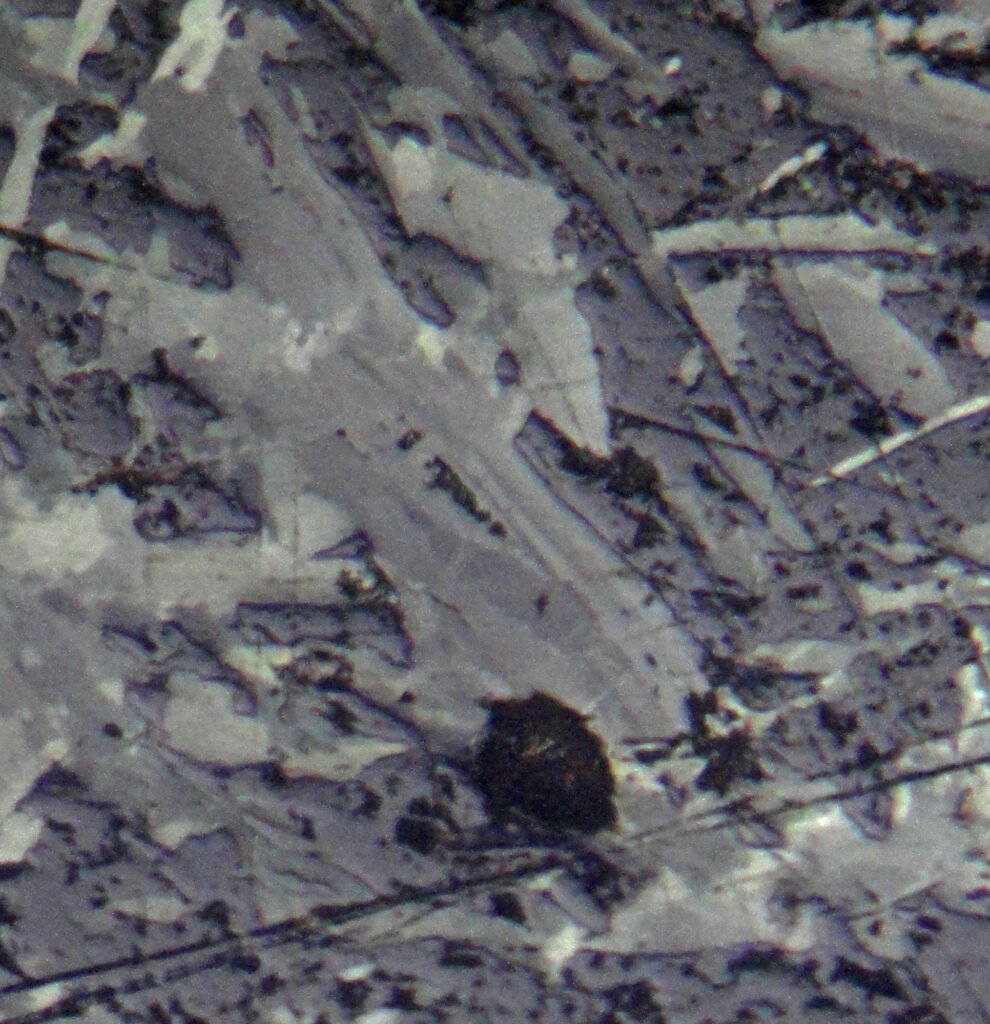
Grain shape: crystals are acicular to fibrous and lack well-defined terminations. They may form aggregates. Cross-sections are short-rhombic. Lengths reach several centimeters, while thicknesses can be on the scale of microlites. Compact aggregates are rarely observed; they are frequently poikilitic and intensely intergrown with one another.
Cleavage parallel to (001) is often visible; this cleavage is perpendicular to the elongation of the grains.
Twinning is very frequent and characteristic, with twin lamellae parallel (polysynthetic) to the grain elongation, provided the grain exceeds a certain minimum thickness. Twinning occurs in samples from virtually all localities; it is imperceptible only in very fine, capillary crystals.
Zoning was not observed.
Replacements 1: replacement of jamesonite is very rare, but jamesonite can be replaced by galena and chalcopyrite.
Replacements 2: replacement of pyrite zones by jamesonite may occur. Additionally, jamesonite has replaced sphalerite, freibergite, arsenopyrite, and semseyite.
Intergrowths occur with galena, pyrargyrite, and boulangerite.
Decomposition of geocronite yields jamesonite.
Alteration of jamesonite produces oxidized Pb and Sb minerals, especially bindheimite. Bindheimite formation is accompanied by distinct replacement textures.
Myrmekitic textures with galena are rare. Jamesonite typically occurs alone; at most, some spaces between the needles are occupied by other ore minerals.
Deformations are frequently observed: the acicular individuals are intensely twisted, either singly or within aggregates. Rings and spirals may form.
Inclusions 1: Jamesonite occurs as inclusions in tetrahedrite, chalcopyrite, arsenopyrite, and sphalerite.
Inclusions 2: Jamesonite may contain inclusions of native antimony.