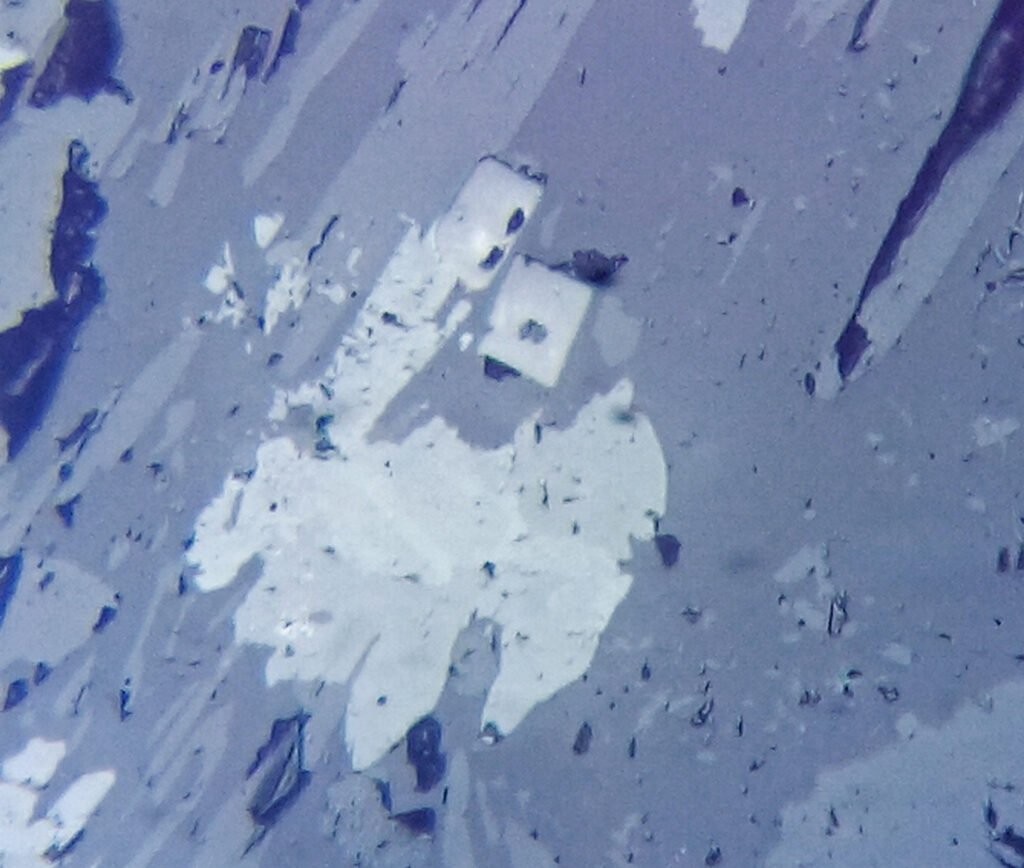
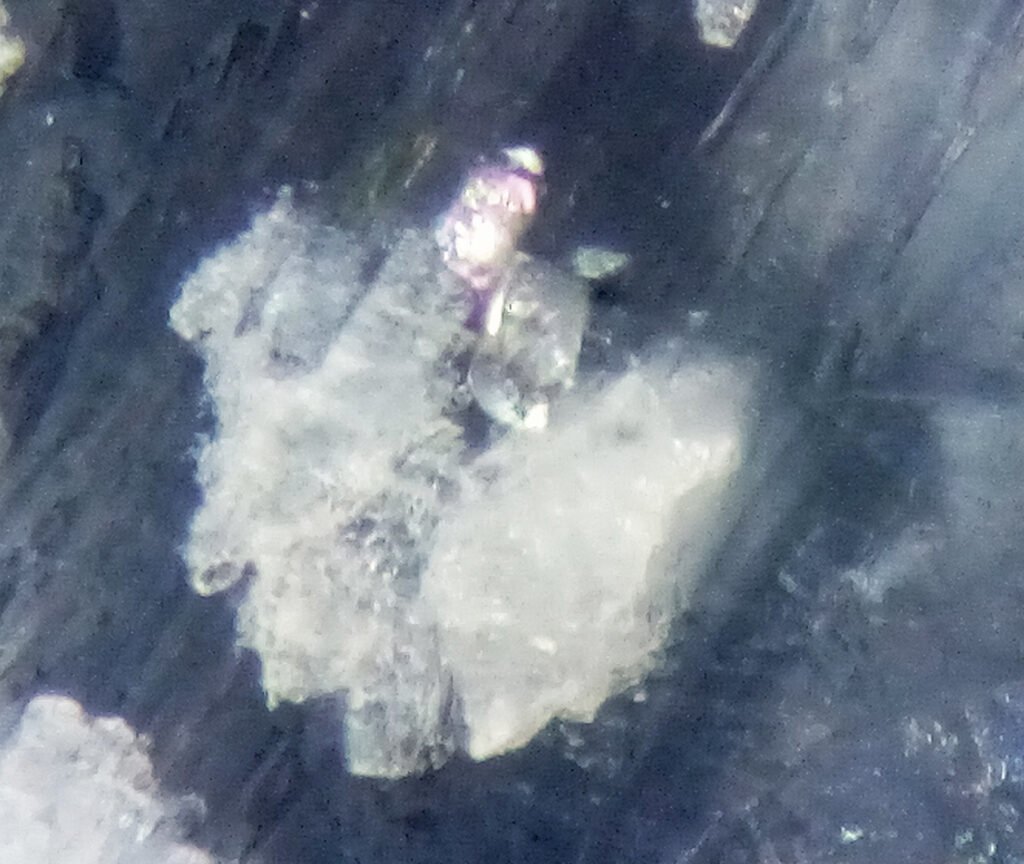
Crystal system: Orthorhombic bipiramidal.
Color: Colorless, white, greyish blue, pale blue.
Habit: Prismatic to tabular, usually in small crystals. It can be massive or granular.
Cleavage: {001} perfect, {110} poor.
Tenacity: Brittle.
Twinning: Common on {101}, lamellar and polysynthetic.
Fracture: Irregular.
Mohs Hardness: 7.5
Parting: No.
Streak: White.
Lustre: Vitreous, resinous.
Diaphaneity: Transparent.
Density (g/cm³): 3.1
2. Geology and Deposits
Lawsonite is a mineral that occurs in high-pressure and low-temperature metamorphic rocks such as blueschists, being an index mineral for the blueschist facies.
It is common in low-grade mafic metamorphic rocks such as metagabbros, metabasalts and metadiorites, where it forms by saussuritization of plagioclases.
Sometimes it occurs in greenschists (with chlorite), in marbles and in amphibolites.
3. Mineral Associations
Lawsonite occurs with quartz, feldspars (albite), amphiboles (glaucophane, riebeckite), micas (muscovite, chlorite, sericite), titanite, epidote, clinozoisite, pumpellyite, jadeite and chalcopyrite.
In marbles with calcite and garnet.
4. Transmitted Light Microscopy
Refraction indices: nα: 1.663 – 1.665 nβ: 1.672 – 1.676 nγ: 1.684 – 1.686
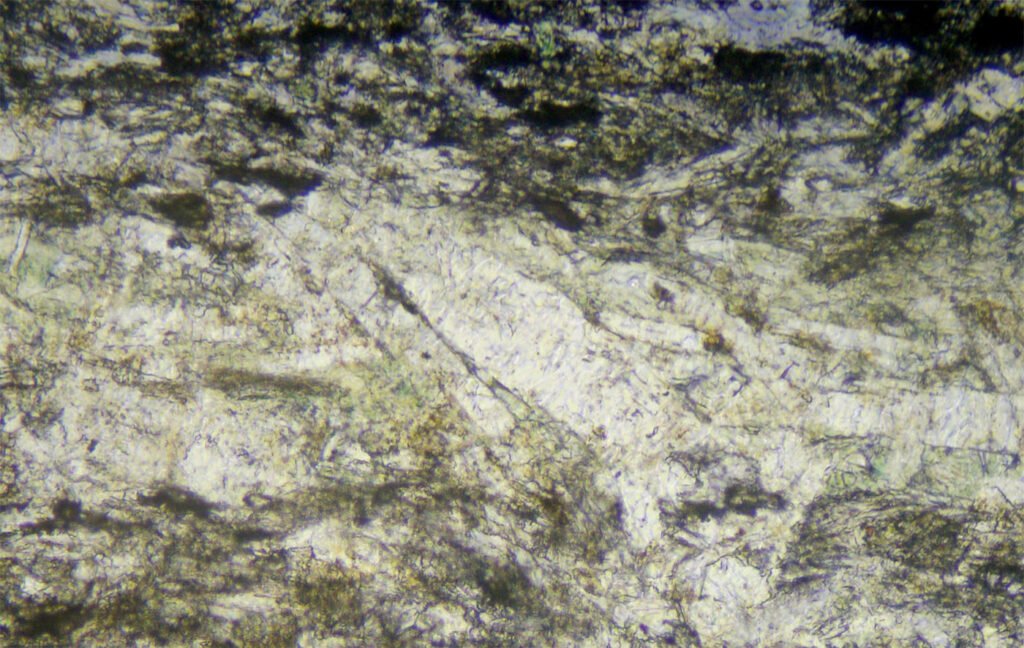
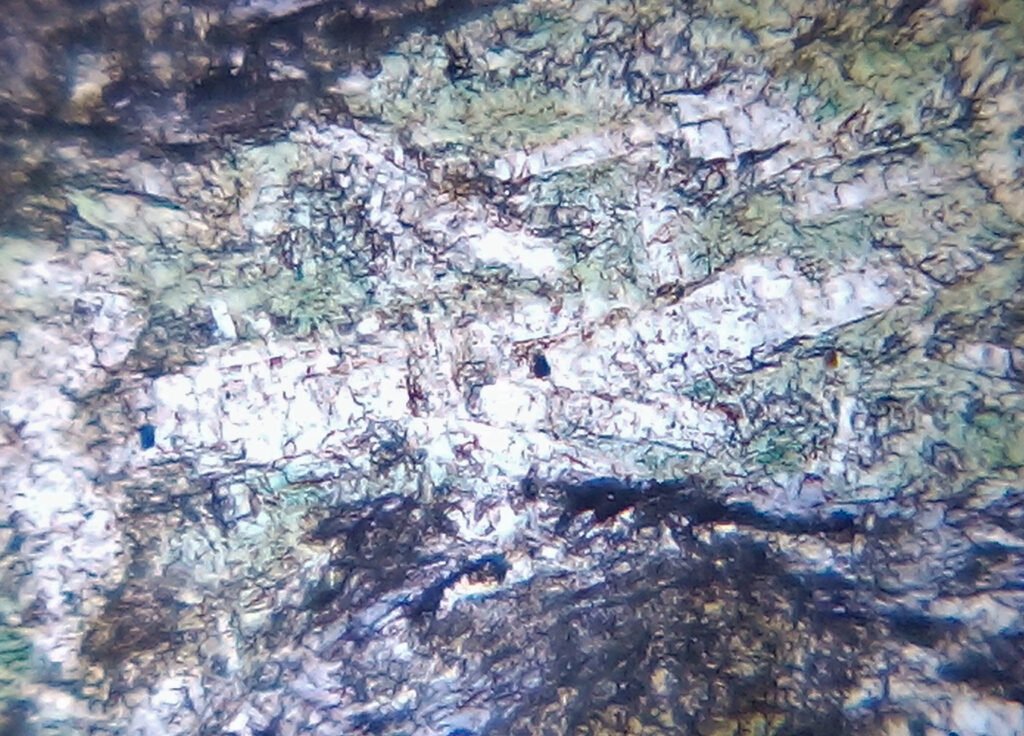
PLANE POLARIZED LIGHT – PPL
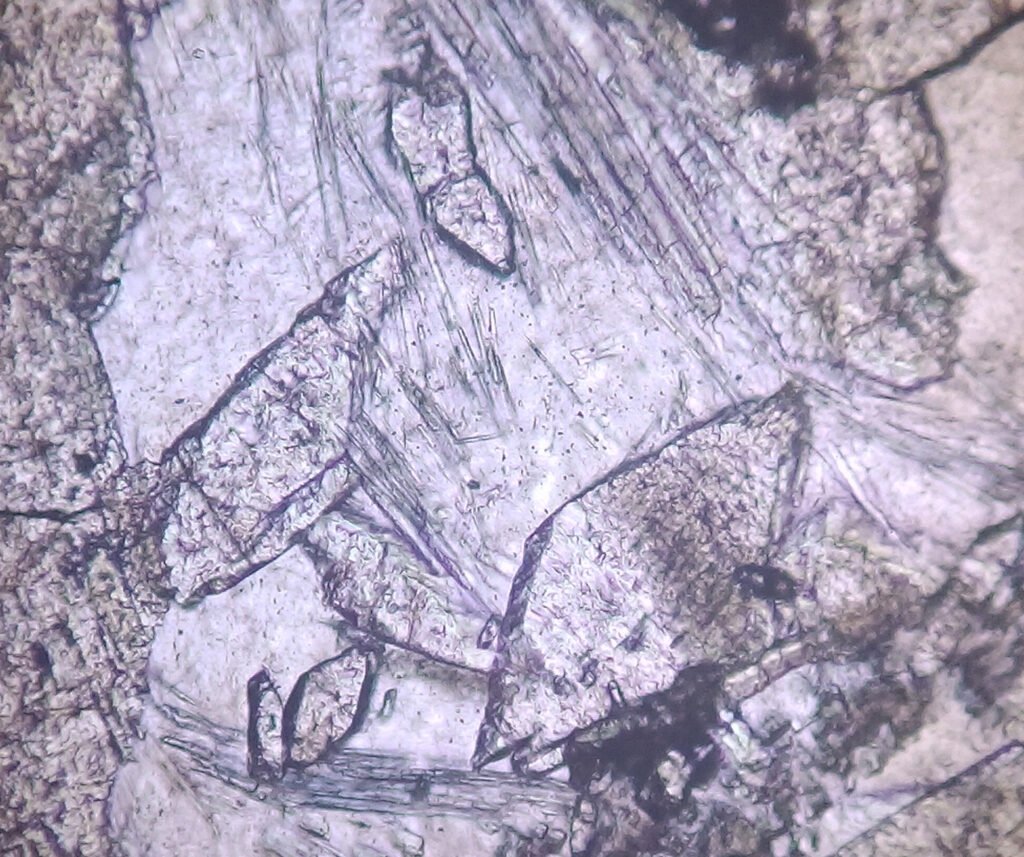
Color / Pleochroism: Usually colorless. May be pleochroic in:
X = pale brownish yellow blue,
Y = deep bluish green, yellowish green and
Z = colorless, yellowish.
In thick thin sections (>30mμ) it presents pale blue, bluish-gray, blue-yellow and green-yellow colors. In these cases, it presents pleochroism between X = blue, Y = yellow and Z = colorless.
Relief: Moderate to high.
Cleavage: Perfect at {100} and {010}, which intersect at 90º.
In addition, there is imperfect cleavage according to {101}, which intersect at 67º from each other. Therefore, depending on the section, there will be cleavages with one angle or another.
Habits: Usually euhedral, tabular and prismatic crystals according to z. Rhombohedral, rarely acicular. Basal sections are rhombic or square.
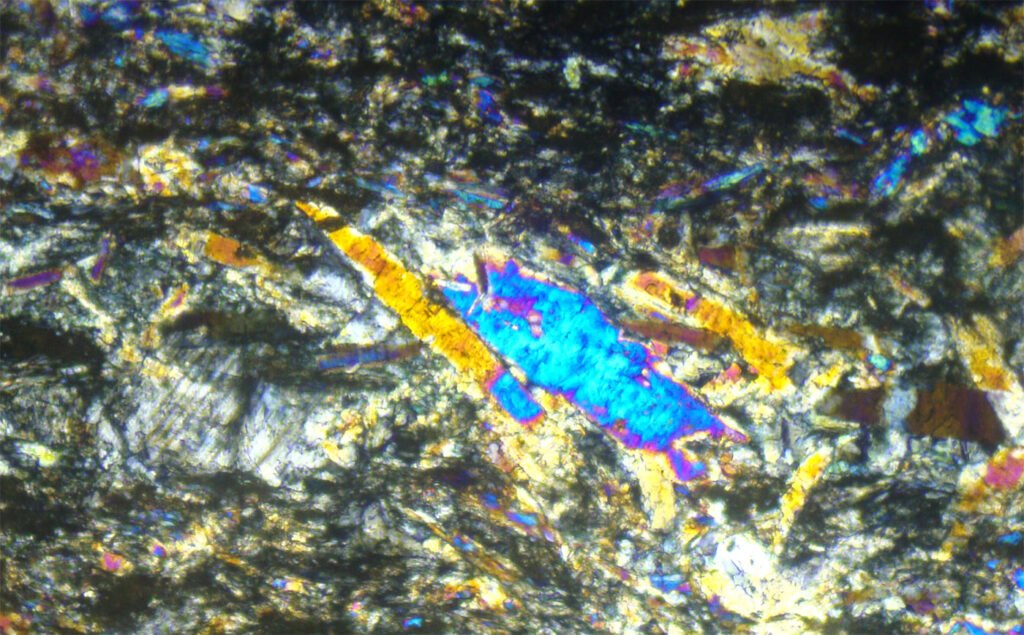
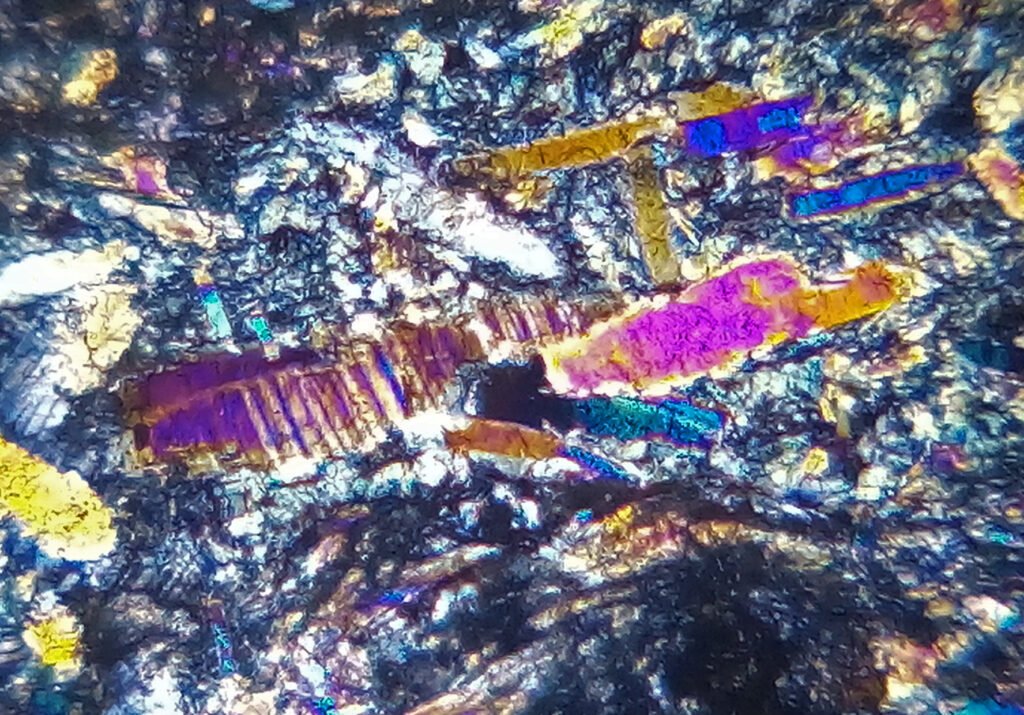
CROSSED POLARIZED LIGHT – XPL
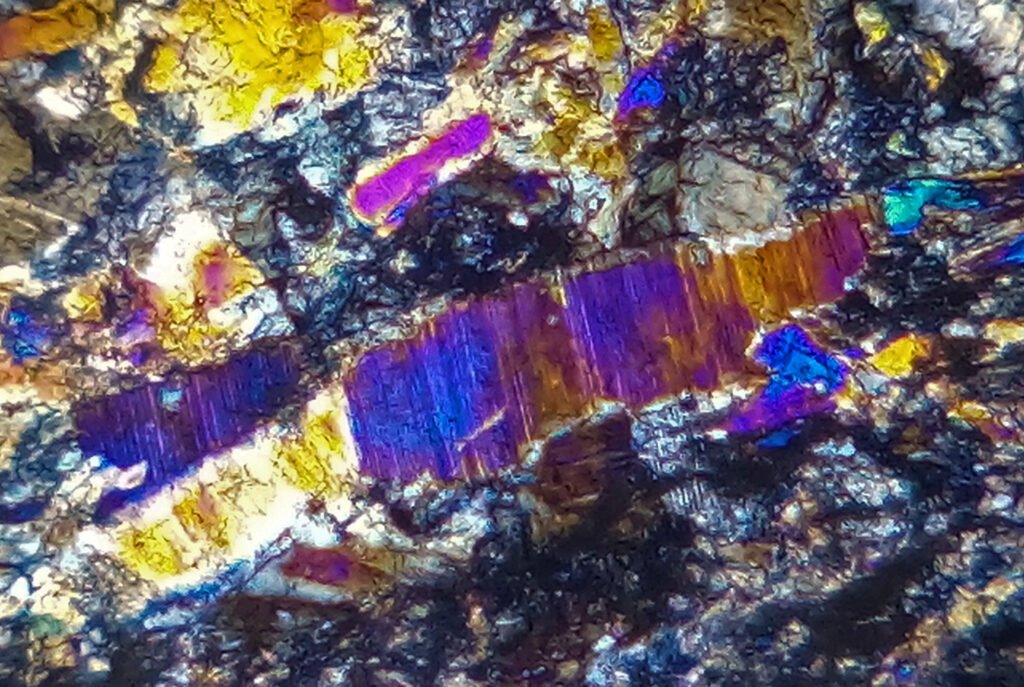
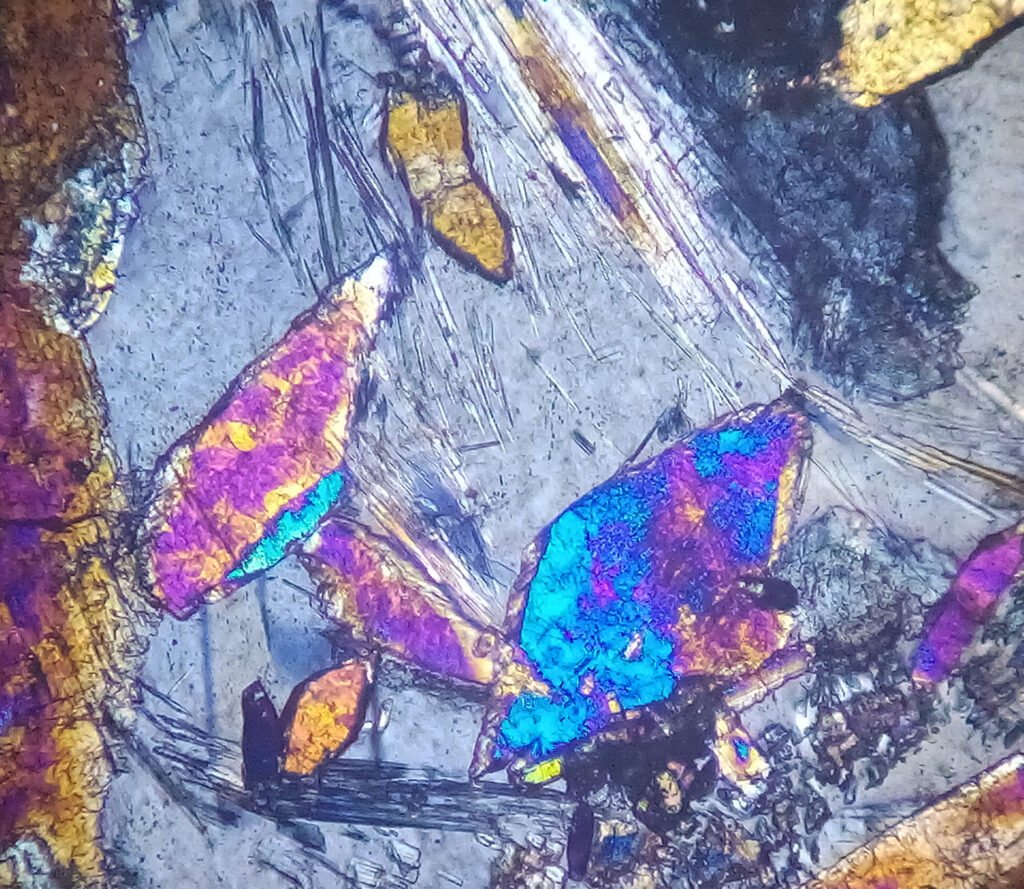
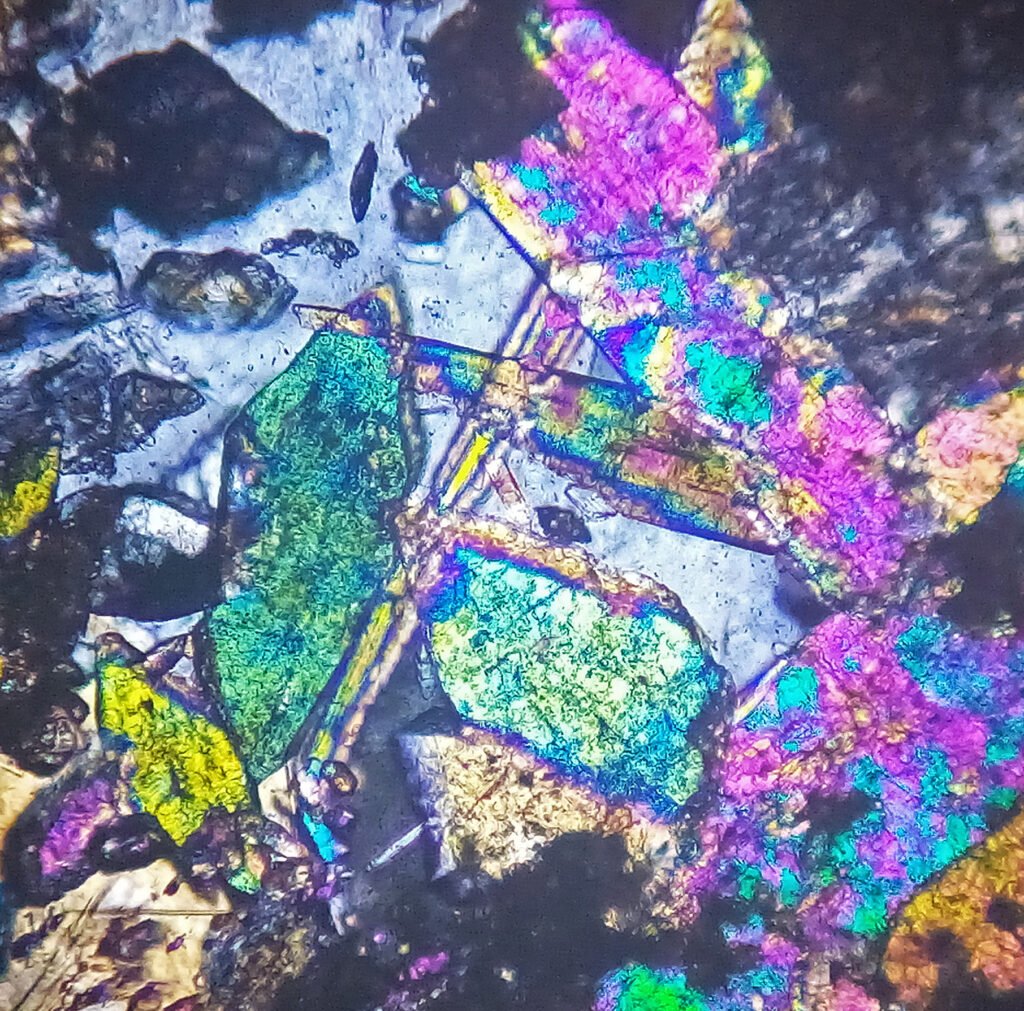
Birefringence and Interference Colors: Birefringence from 0.019 to 0.021: upper 1st order orange colors to maximum 2nd order blue, in standard thickness thin sections (30 mμ).
Extinction: Parallel in longitudinal sections, symmetrical in basal sections. May show undulating extinction.
Elongation sign: ES(-) in the longitudinal sections, the major diagonal of the rhombic basal section is ES(+). It’s not diagnostic.
Twins: Commonly simple (010) and lamellar. Often polysynthetic twins on {101}. Parquet patterns with undulating extinction are possible.
Zoning: No.
CONVERGENT LIGHT
Character: B(+)
2V angle: 76 – 87º, tends to 84º
Alterations: sericitization and chloritization may occur. There is a substitution of lawsonite for epidote or pumpellyite in the transition to greenschist facies.
May be confused with: several other metamorphic minerals.
Clinozoisite and zoisite tend to have lower and/or anomalous interference colors.
Andalusite is similar, but has lower birefringence and occurs in other paragenesis.
Pumpellyite is very similar but has oblique extinction. Lawsonite is usually intercropped or occurs with pumpellyite.
Prehnite has other habits, lower relief, higher birefringence and sometimes anomalous colors.
Scapolite is uniaxial and usually shows only gray interference colors.
Tremolite has amphibole cleavage intersection angles (124º or 56º), better cleavage and oblique extinction.
Cancrinite has other habits, is U(-) and occurs in other paragenesis.