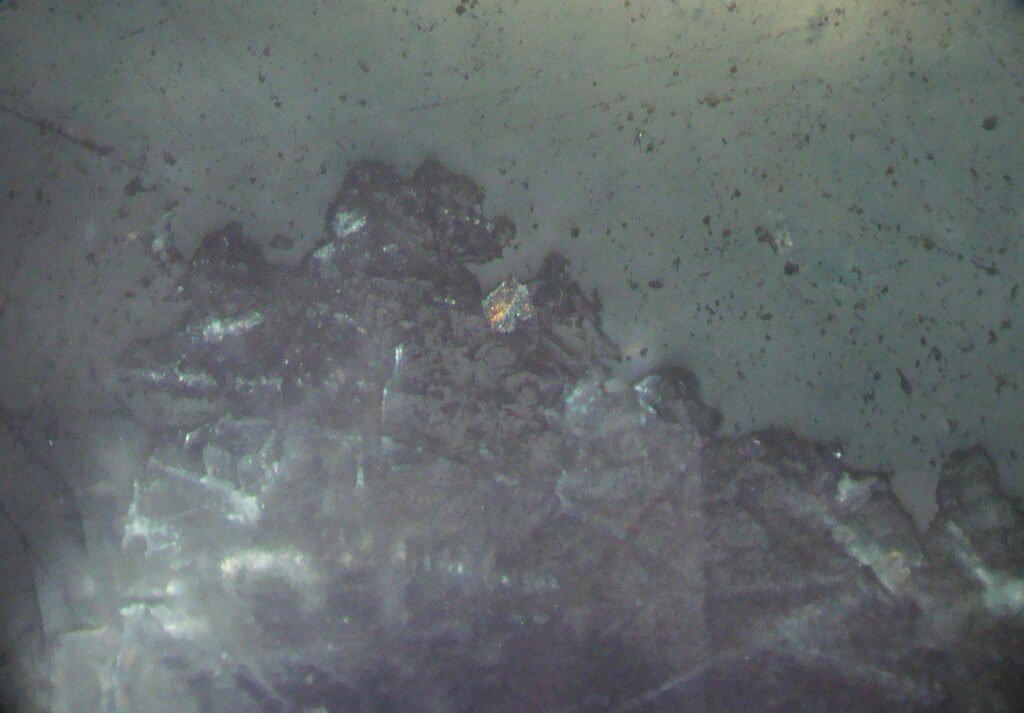
The data below refer to “lepidolites” in general.
1. Characteristics
Crystal system: Monoclinic.
Color: Pink, light purple, light pink-red. Rarely other colors.
May be colorless if there is no Mn
Habit: Micaceous. Tabular to prismatic, can be pseudohexagonal. Massive or in scaly aggregates.
Cleavage: {001} perfect, like all micas.
Tenacity: Elastic.
Twinning: No.
Fracture: Micaceous.
Mohs Hardness: 2.5 – 3.5
Parting: No.
Streak: White.
Lustre: Subvitreous, pearly, resinous.
Diaphaneity: Transparent.
Density (g/cm³): 2.8 – 2.9
2. Geology and Deposits
Lepidolite is a very rare mica that usually occurs in aplites associated with Li-rich granitic pegmatites. It also occurs in gresens.
It rarely occurs in hydrothermal veins and in very isolated cases in granite contact zones.
3. Mineral Associations
Lepidolites are generally associated with quartz, muscovite, feldspar (albite, cleavelandite, microcline), tourmalines (rubellite, elbaite), beryl (morganite), spodumene, cassiterite, amblygonite and topaz.
Polylithionite is associated with quartz, feldspar (albite, microcline), aegirin, rhodochrosite, leucophanite, analcime, tugtupite and serandite.
Trilithionite is associated with quartz, lithiophilite, feldspar (albite, microcline), fluorite, beryl (aquamarine), topaz, tourmaline (elbaite) and montebrasite.
4. Transmitted Light Microscopy
Refraction indices: nα: 1.530 nβ: 1.551 – 1.556 nγ: 1.555 – 1.559 (polylithionite)
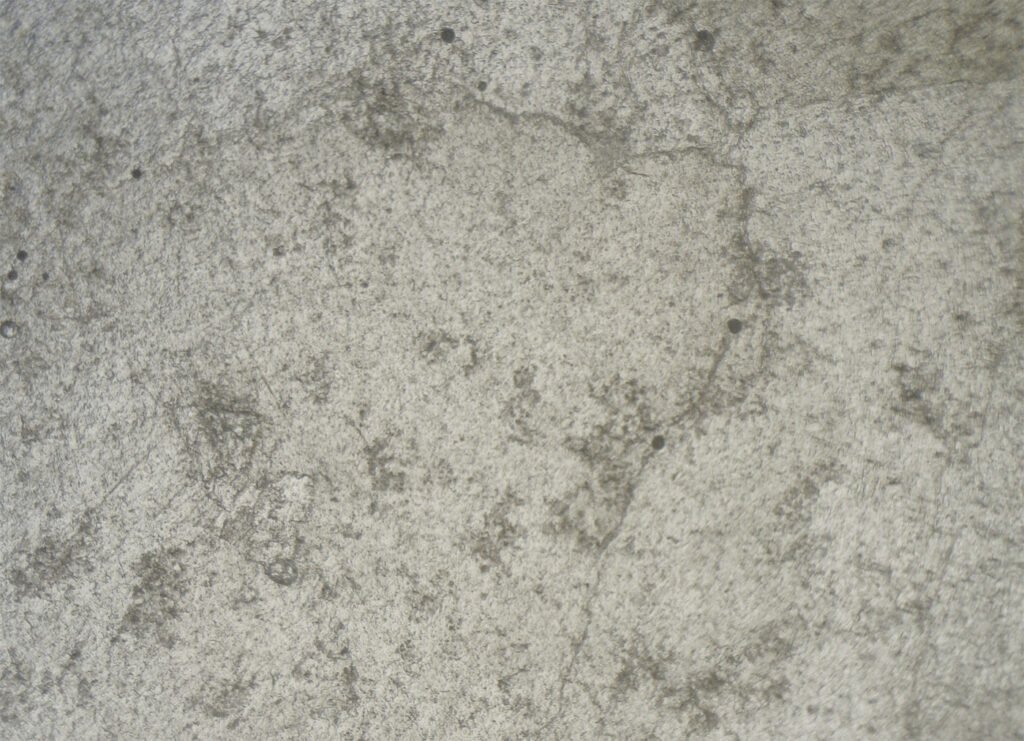
PLANE POLARIZED LIGHT – PPL
Color / Pleochroism: Colorless. In “thick” thin sections it is pale pink with discreet pleochroism.
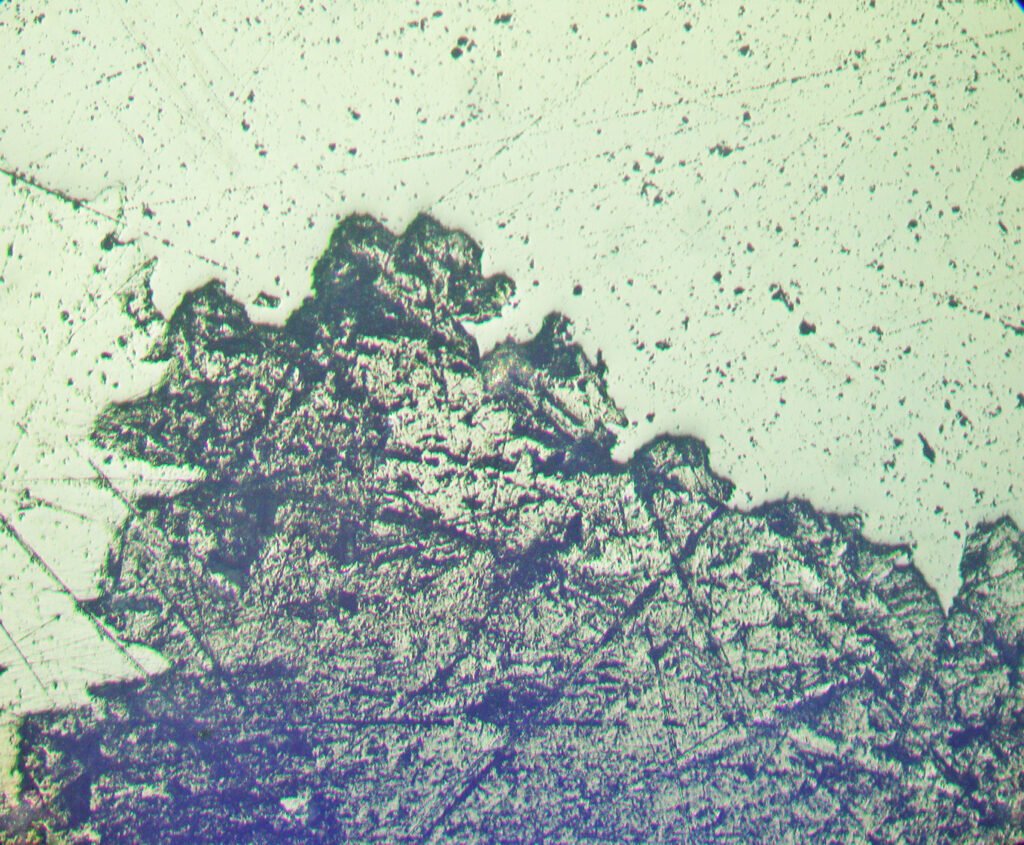
Relief: Low. Diagnostic!
Cleavage: {001} perfect, typical of the micas.
Habits: Lamellar, pseudohexagonal, like micas in general. Also in flaky or massive masses. May be interspersed with muscovite.
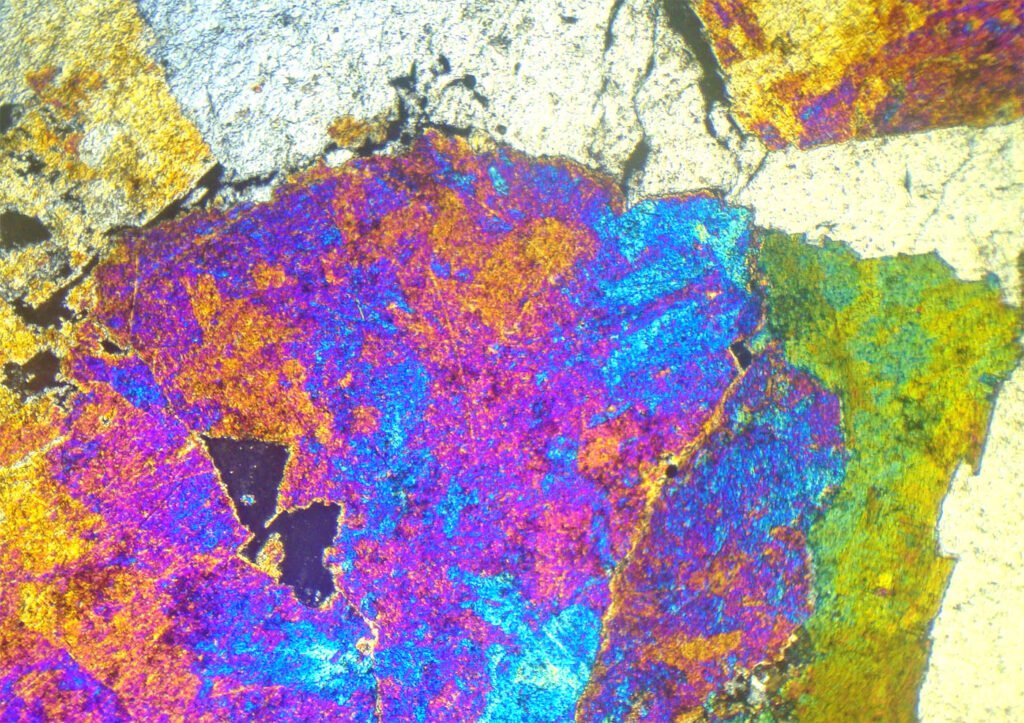
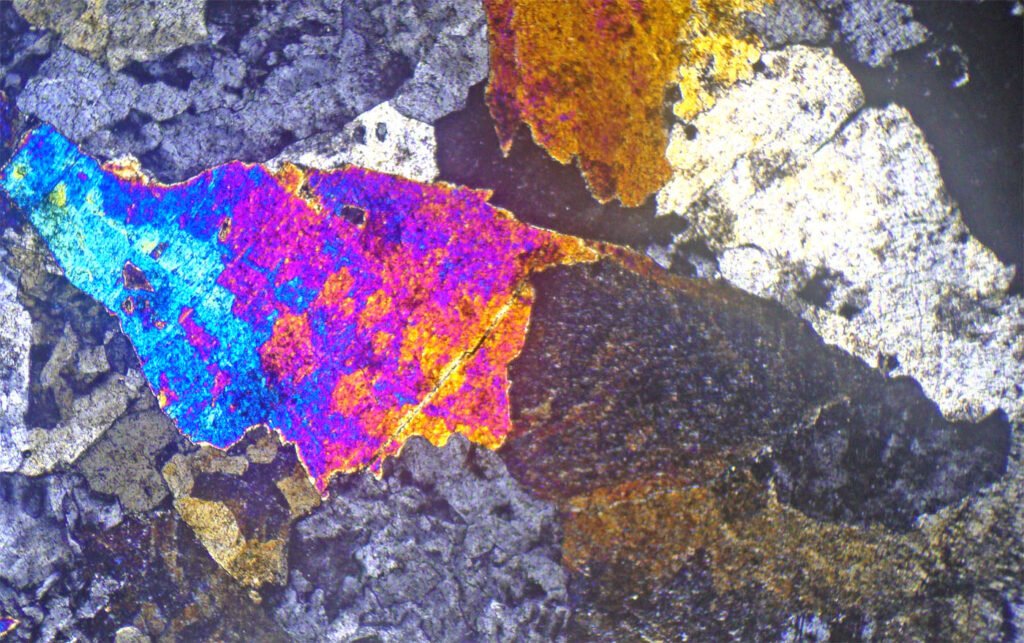
CROSSED POLARIZED LIGHT – XPL
Birefringence and Interference Colors: Birefringence between 0.018 and 0.038, corresponding to intense interference colors of up to 2nd order.
Extinction: Parallel to the cleavage and mottled (“birds-eye” extinction).
Elongation sign: ES(+), as all micas.
Twins: Rare.
Zoning: No.
CONVERGENT LIGHT
Character: B(-).Can simulate being uniaxial!
2V angle: 0 – 43º.
Alterations: alters under hydrothermal conditions or weathering into other phyllosilicates and secondary lithium-bearing minerals, like cookeite, muscovite/lithian muscovite, kaolinite, montmorilonite/smectite and jarosite.
May be confused with: muscovite and pyrophyllite are very similar, but have higher relief (moderate) and more intense colors (higher birefringence) in CPL. Pyrophyllite occurs in other paragenesis.