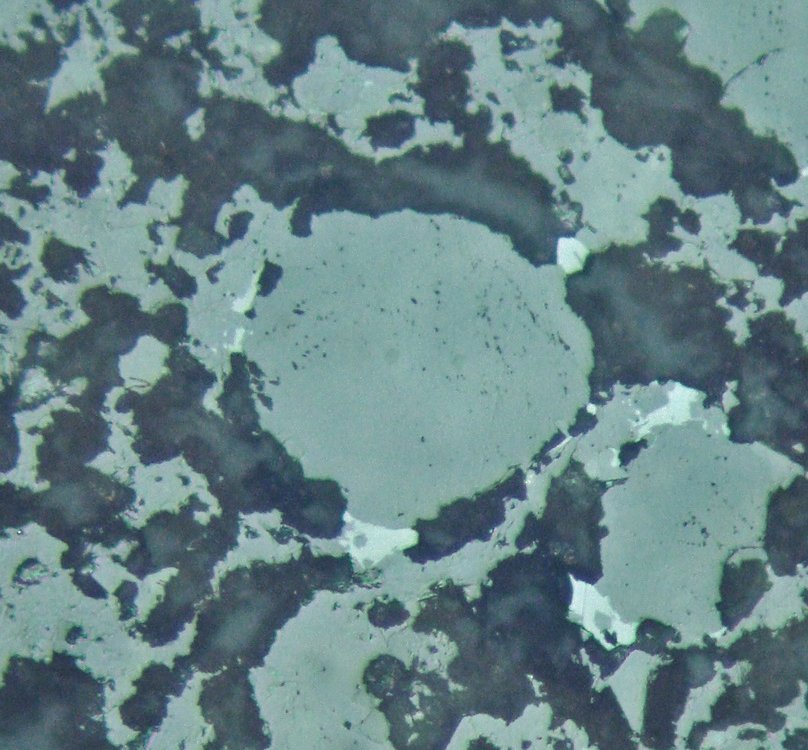
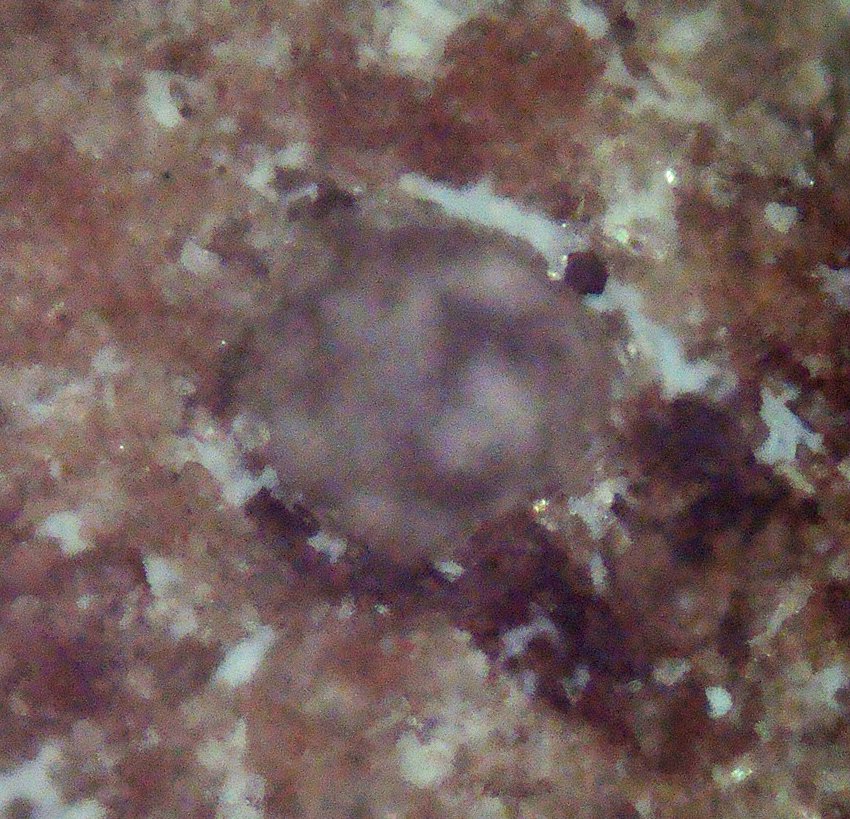
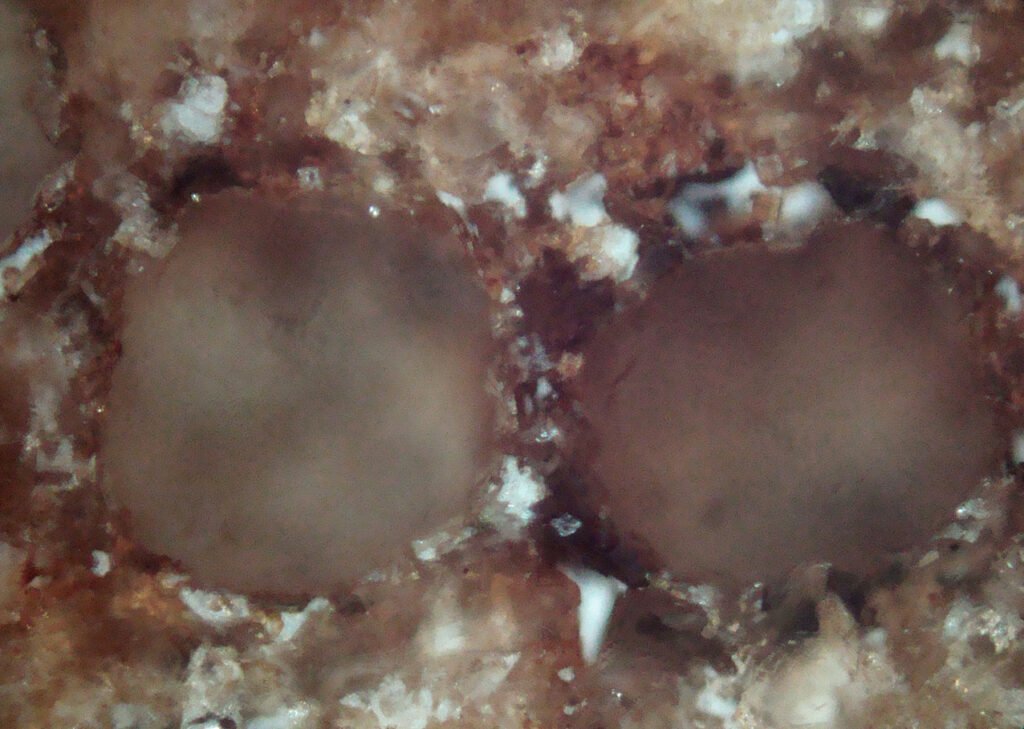
Crystal system: Tetragonal, bipiramidal, pseudo-cubic.
Color: White to gray, never shows colors.
Habit: Idiomorphic pseudo-cubic crystals. Usually rounded.
Cleavage: {110} very poor.
Tenacity: Brittle.
Twinning: Polysynthetic, common.
Fracture: Conchoidal.
Mohs Hardness: 5.5 – 6
Parting: No.
Streak: White.
Lustre: Vitreous.
Diaphaneity: Transparent.
Density (g/cm³): 2.45 – 2.5
2. Geology and Deposits
Leucite is the most common and most characteristic feldspathoid of K-rich and silica-deficient volcanic rocks. It occurs almost exclusively as a phenocryst in undersaturated volcanic and hypabyssal rocks (mafic and alkaline), such as monzosyenites, trachytes, trachyandesites, phonolites, basanites, leucittites, melilitites, lamproites and lamprophyres.
It can occur in plutonic alkaline rocks.
3. Mineral Associations
Leucite occurs with other feldspathoids (nepheline, nosean) sanidine, natrolite, analcime, olivine, fluorapatite, melilite, phlogopite, carbonates (calcite, aragonite), clinopyroxenes (augite), sodic and calc-sodic amphiboles (arfvedsonite), magnetite and perovskite.
4. Transmitted Light Microscopy
Refraction indices: nε: 1.509 no: 1.508
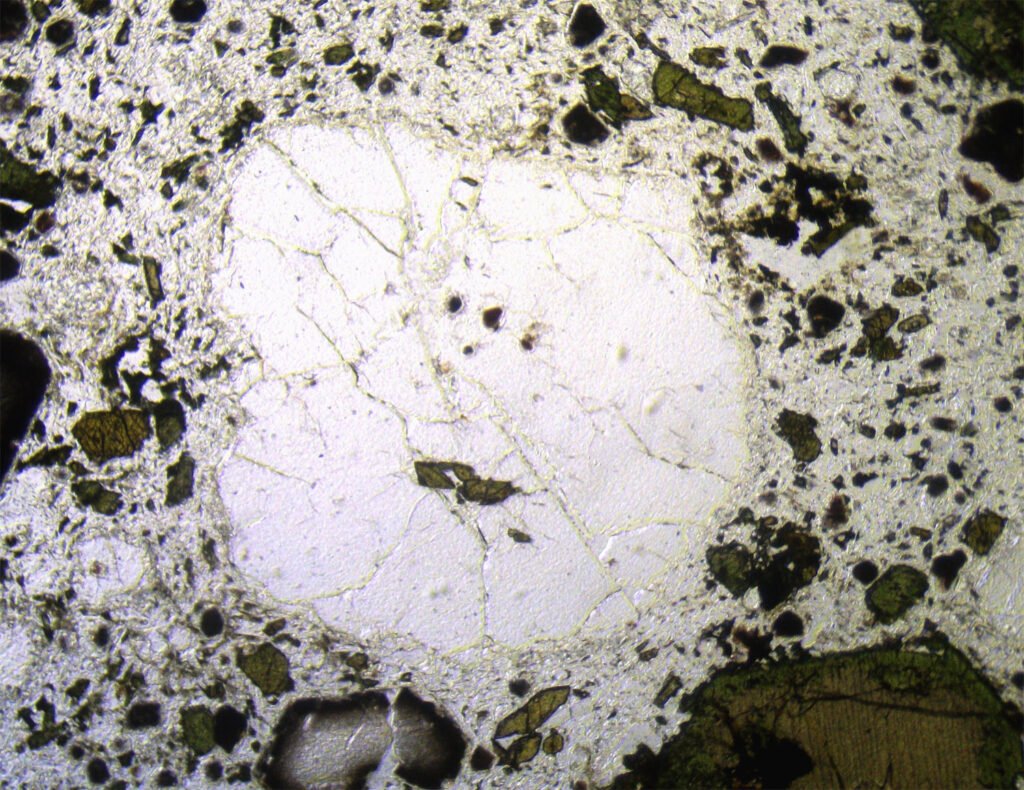
PLANE POLARIZED LIGHT – PPL
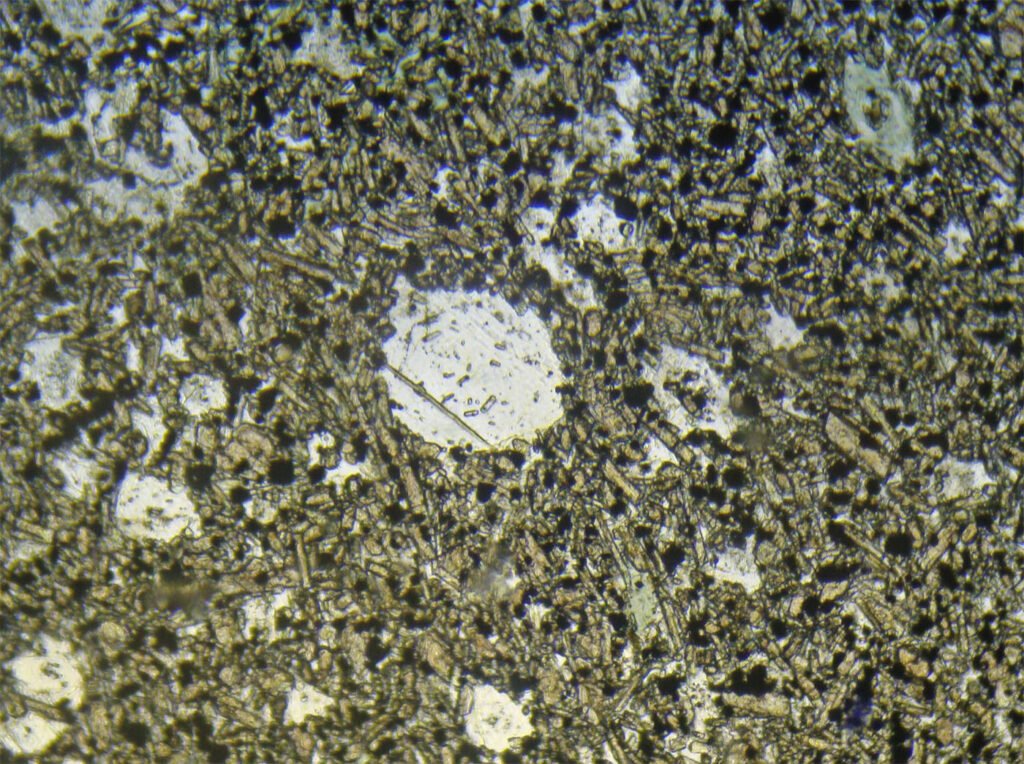
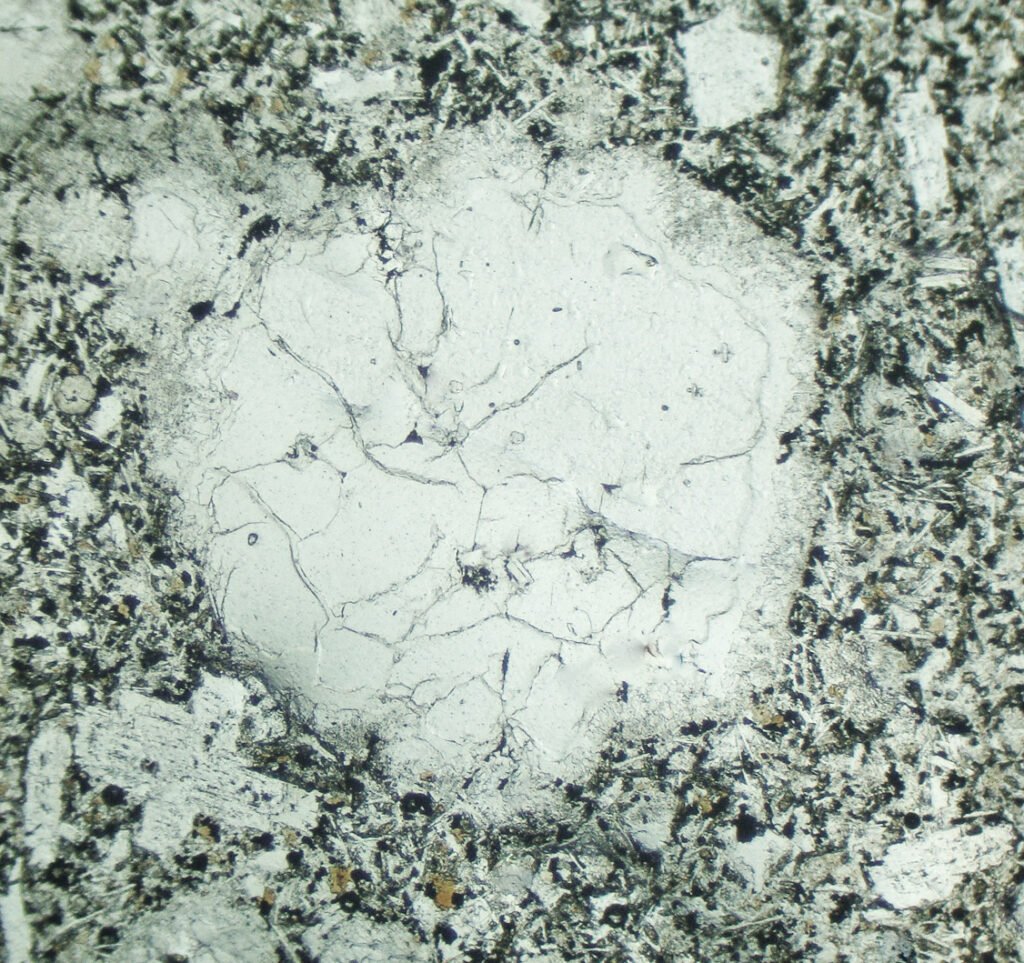
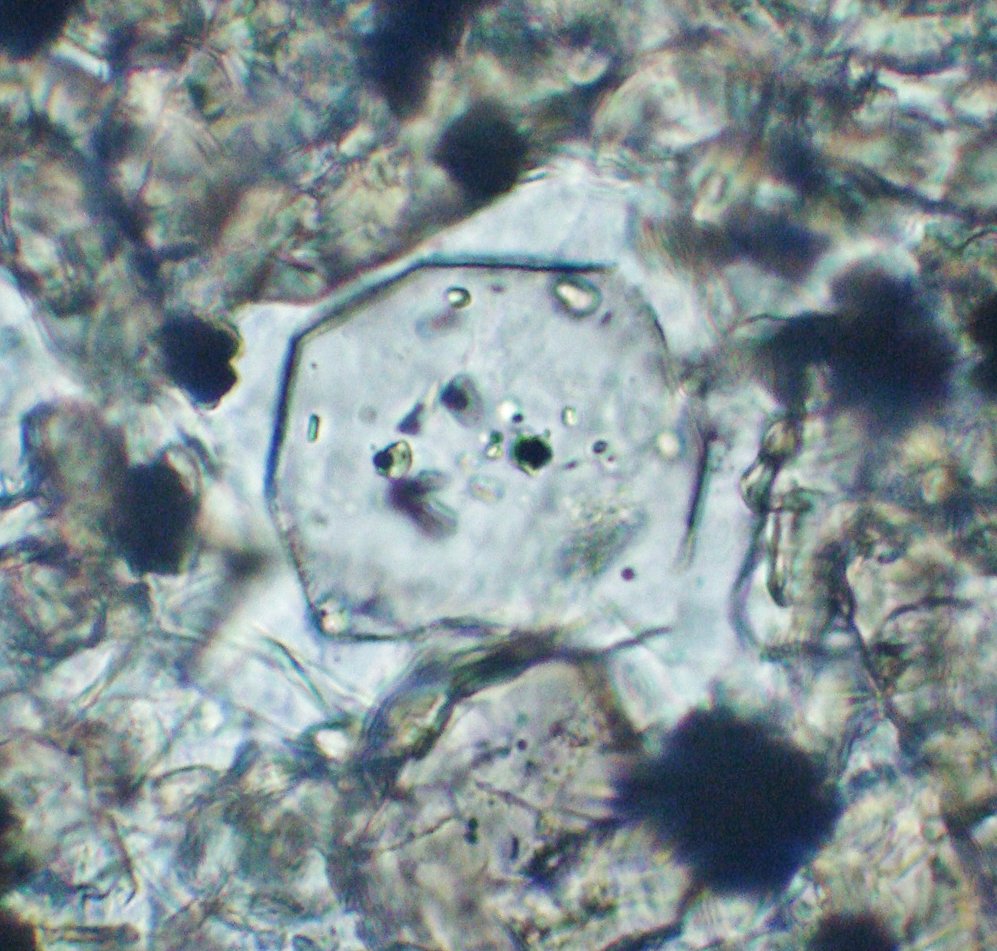
Color / Pleochroism: Colorless, never has pleochroism.
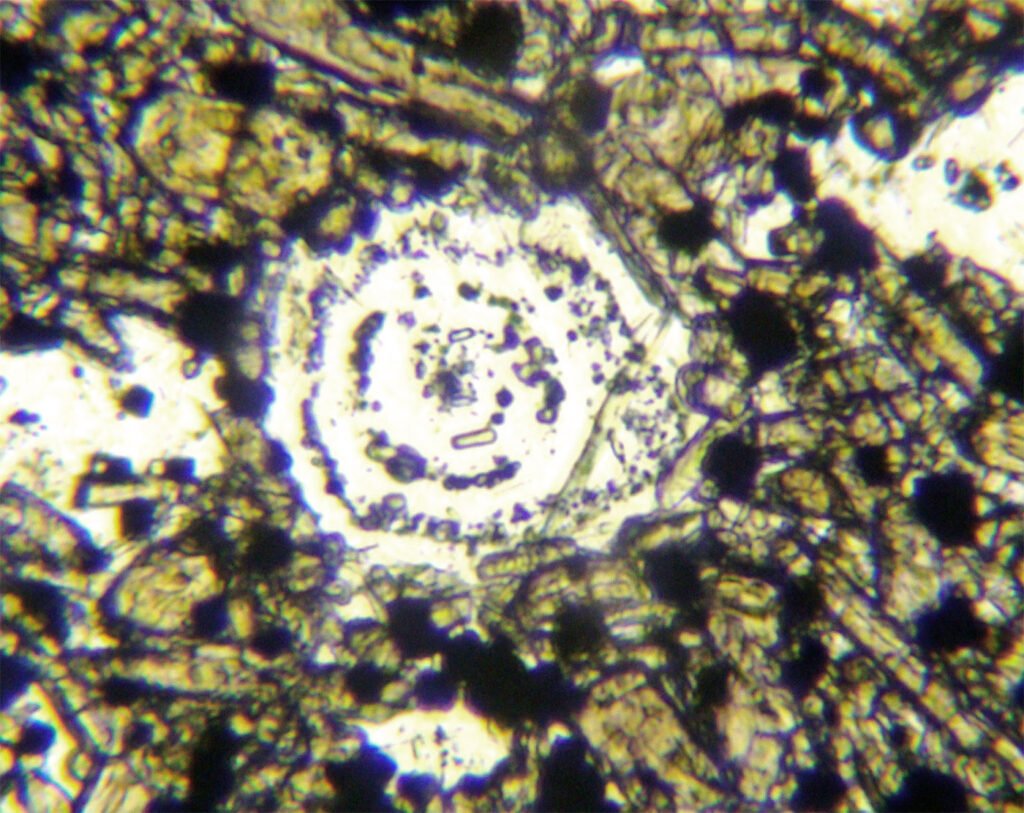
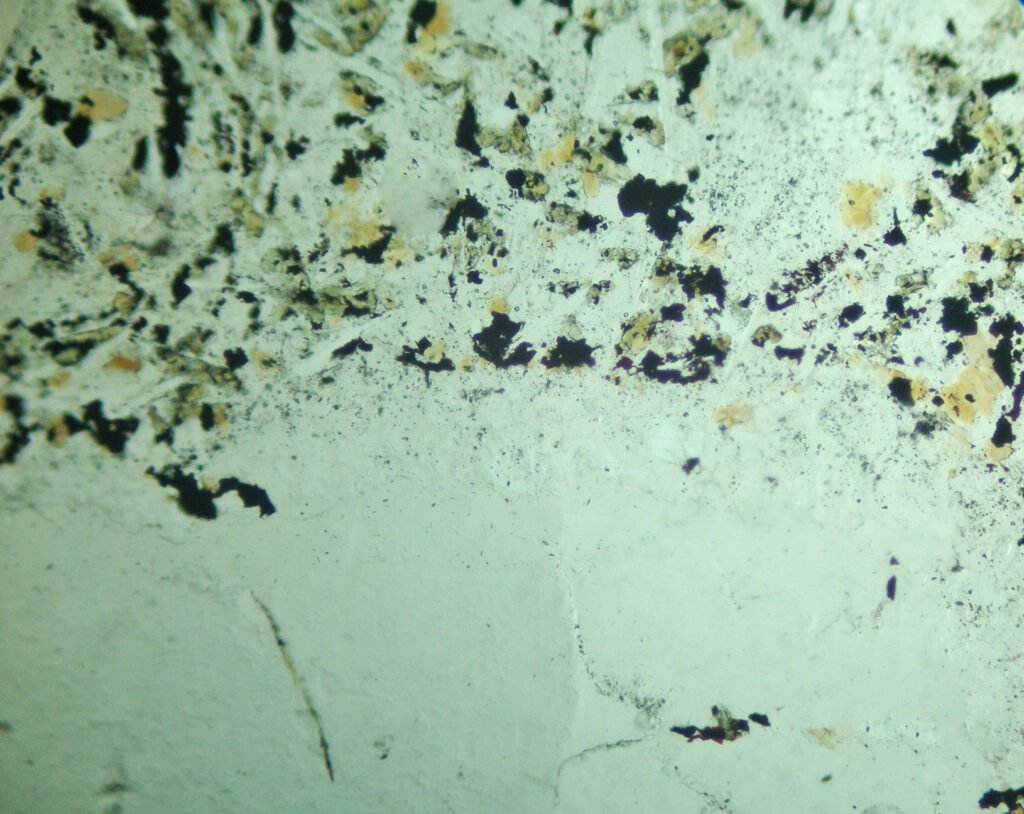
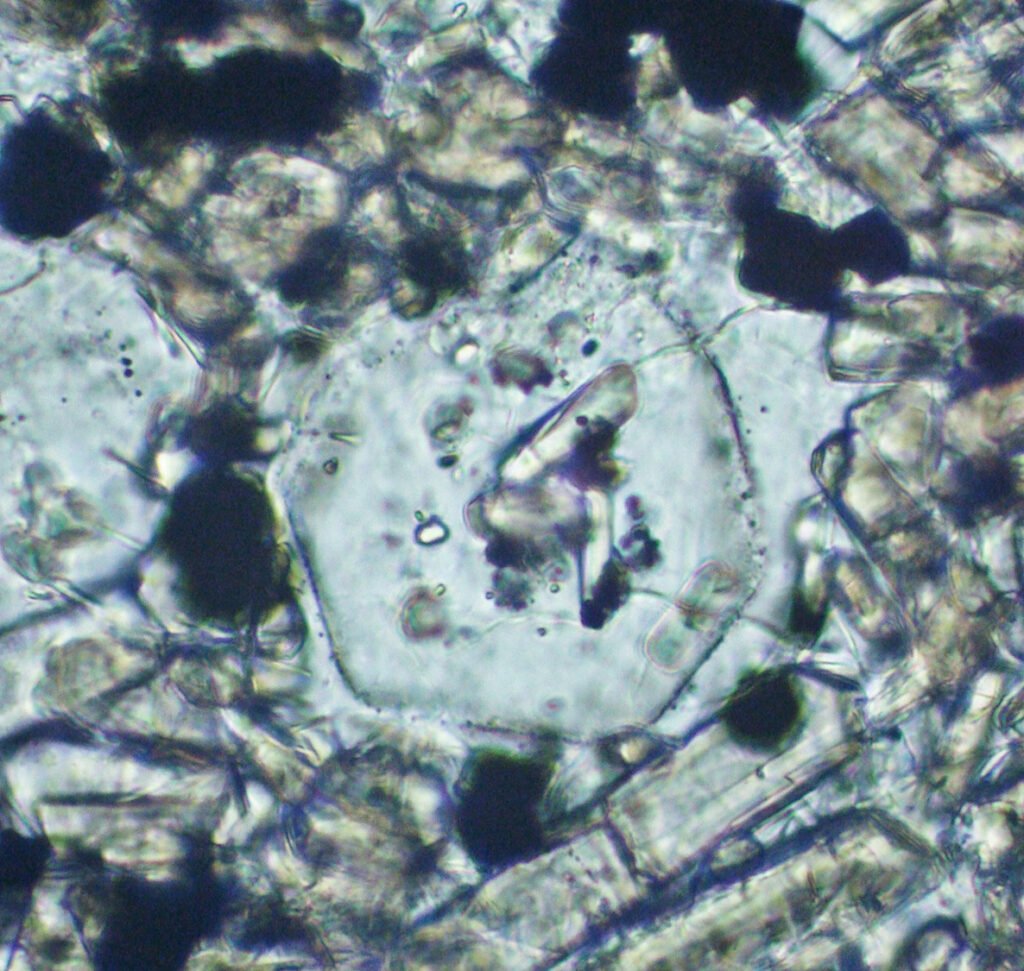
Relief: Low negative (very low), no crystal limits are seen.
Cleavage: {110} poor, cannot be seen under a microscope.
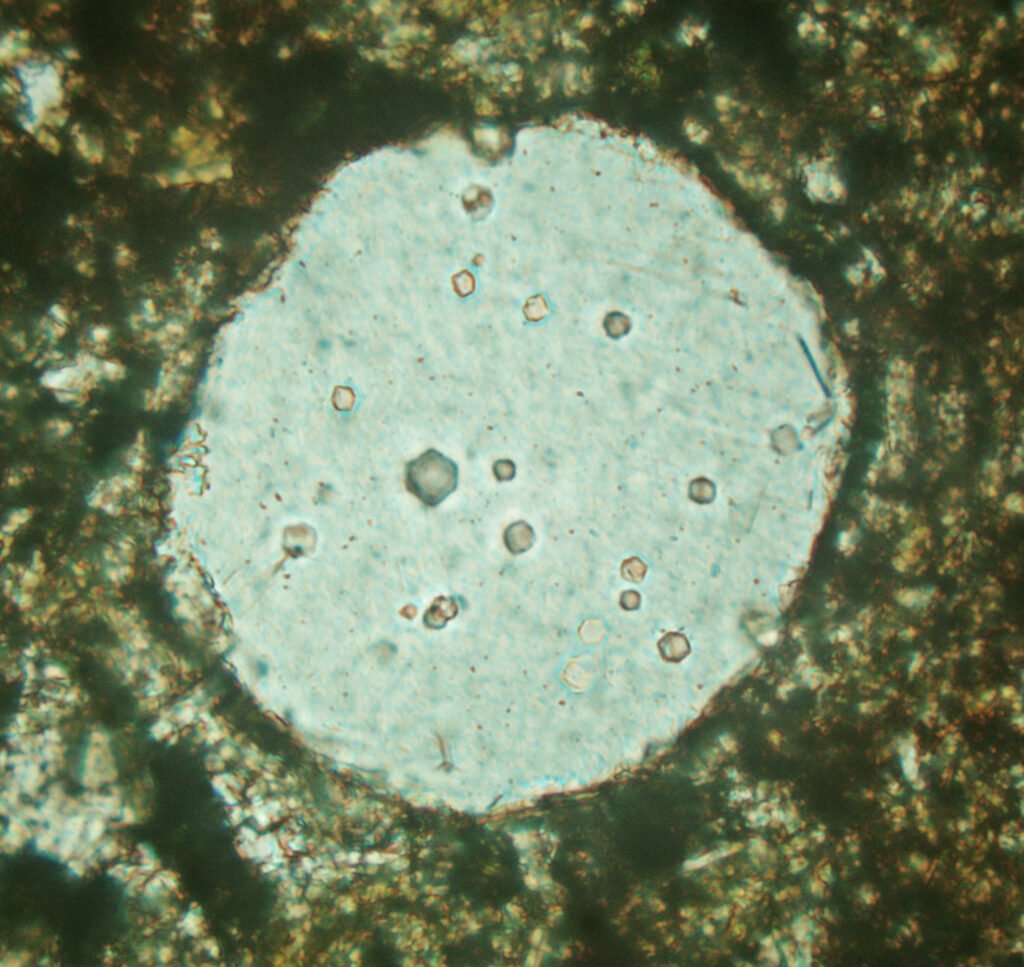
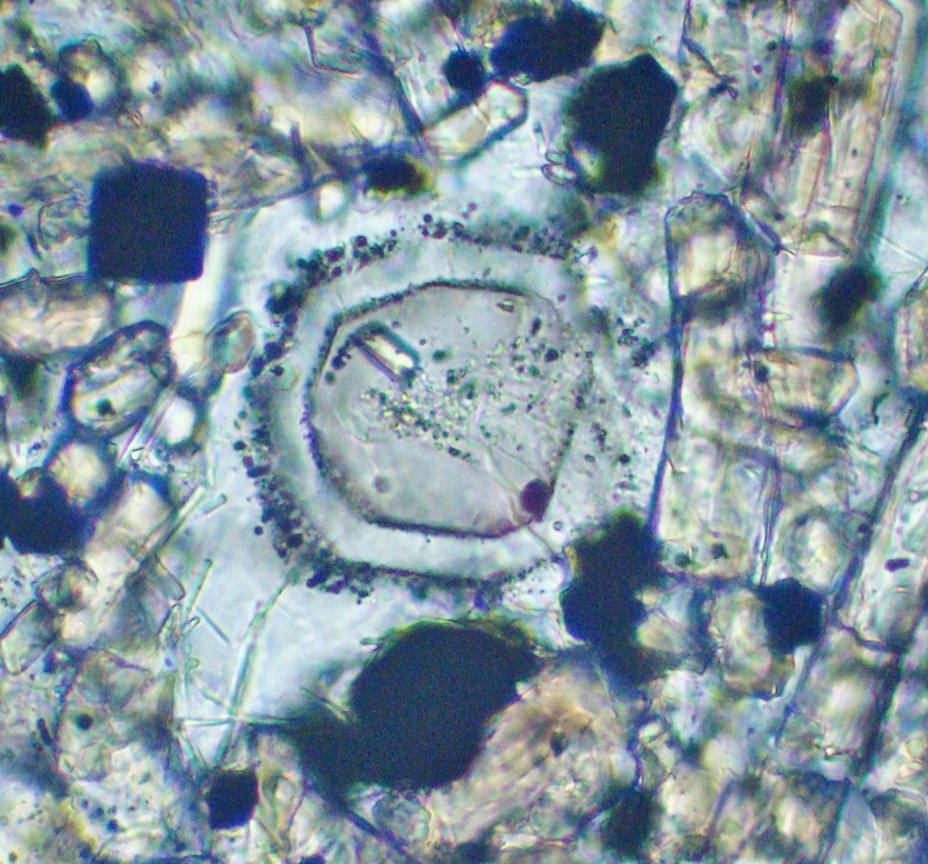
Habits: form rounded grains. Leucite almost always forms trapezoidal icositetrahedrons of the holohedral class of the Cubic System. These trapezoidal icositetrahedrons, under the microscope, are visualized as rounded shapes and may show 8-sided sections. They usually do not form polygons, they are just rounded. They are known as “leucitohedrons”.
Inclusions in radial alignments, usually glass, are very common.
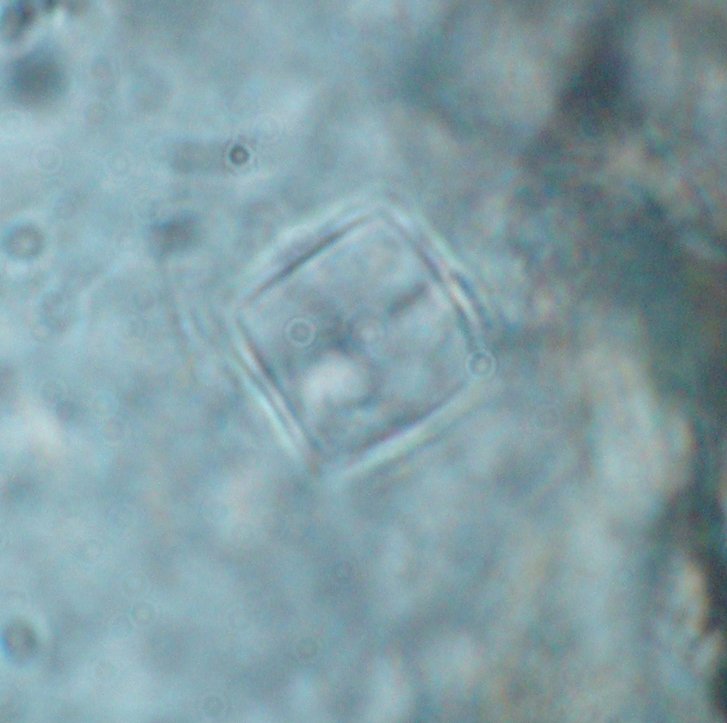
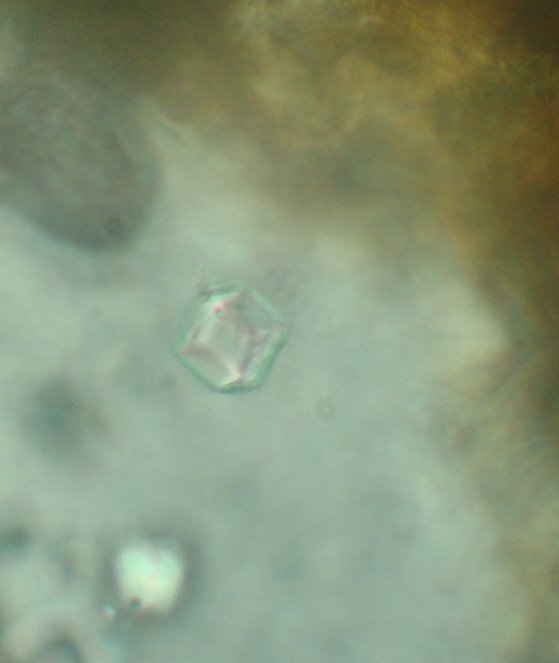
Colorless idiomorphic inclusions of hauyna and nosean with rhombododecahedral forms, hexagonal forms etc., with a few microns in diameter, may occur.
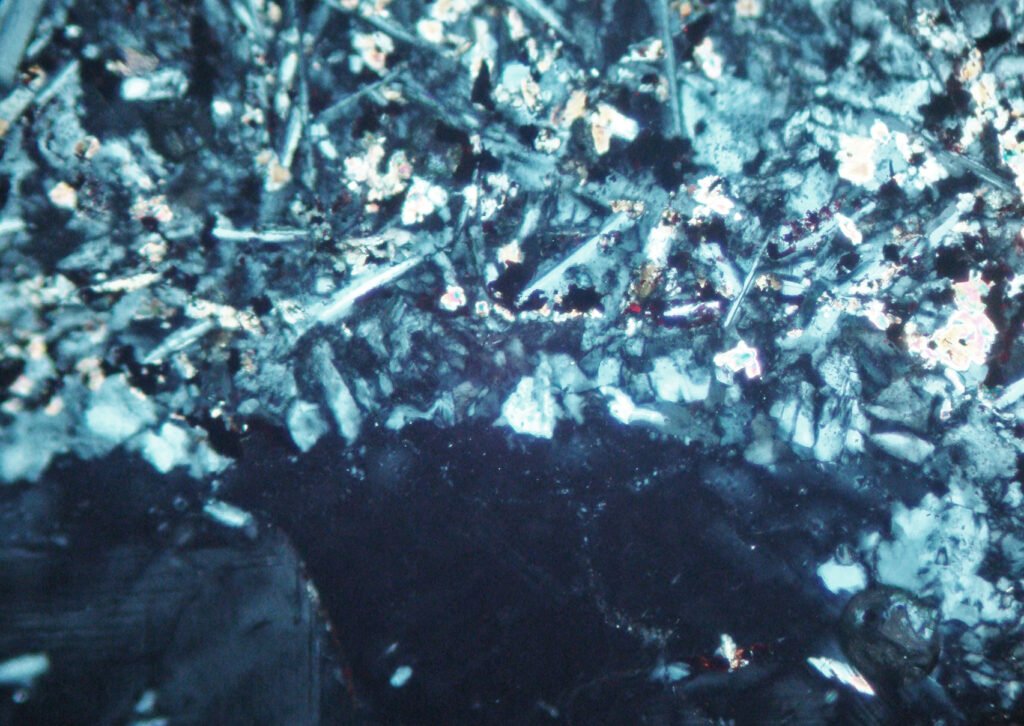
A pseudo-leucite crust can form around the leucite grains, consisting of nepheline and K-feldspar.
CROSSED POLARIZED LIGHT – XPL
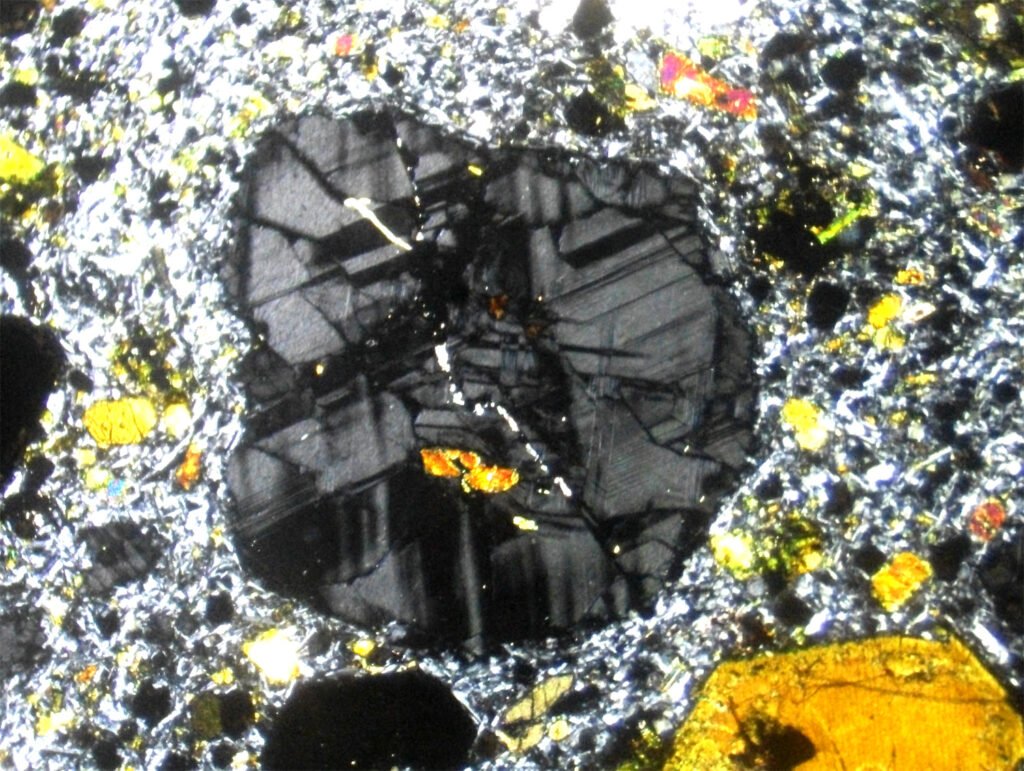
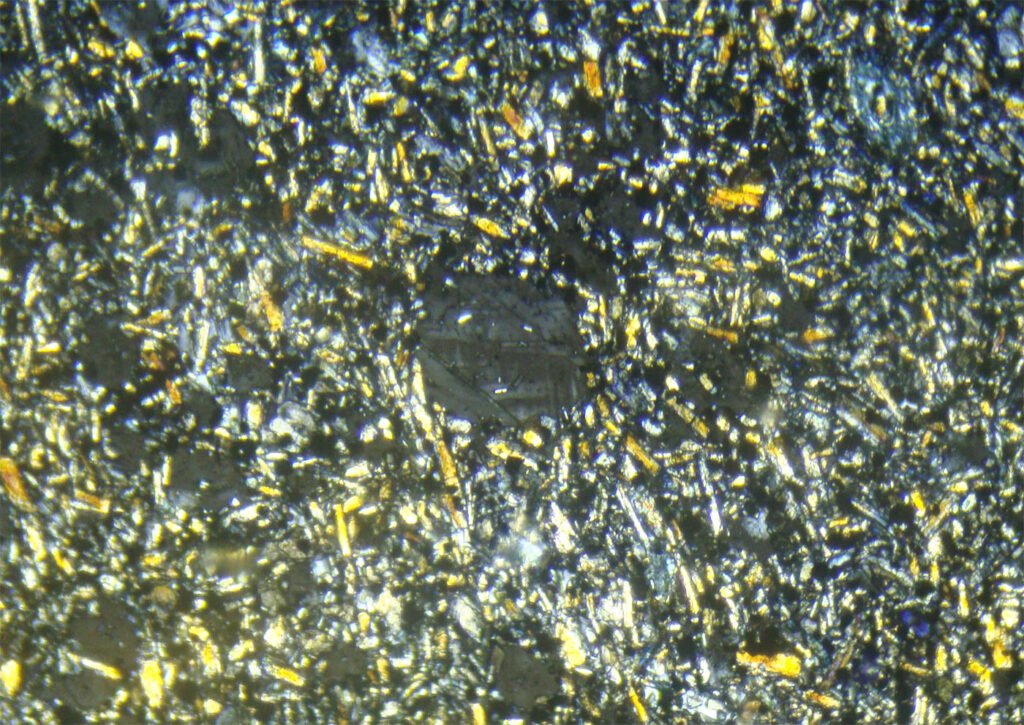
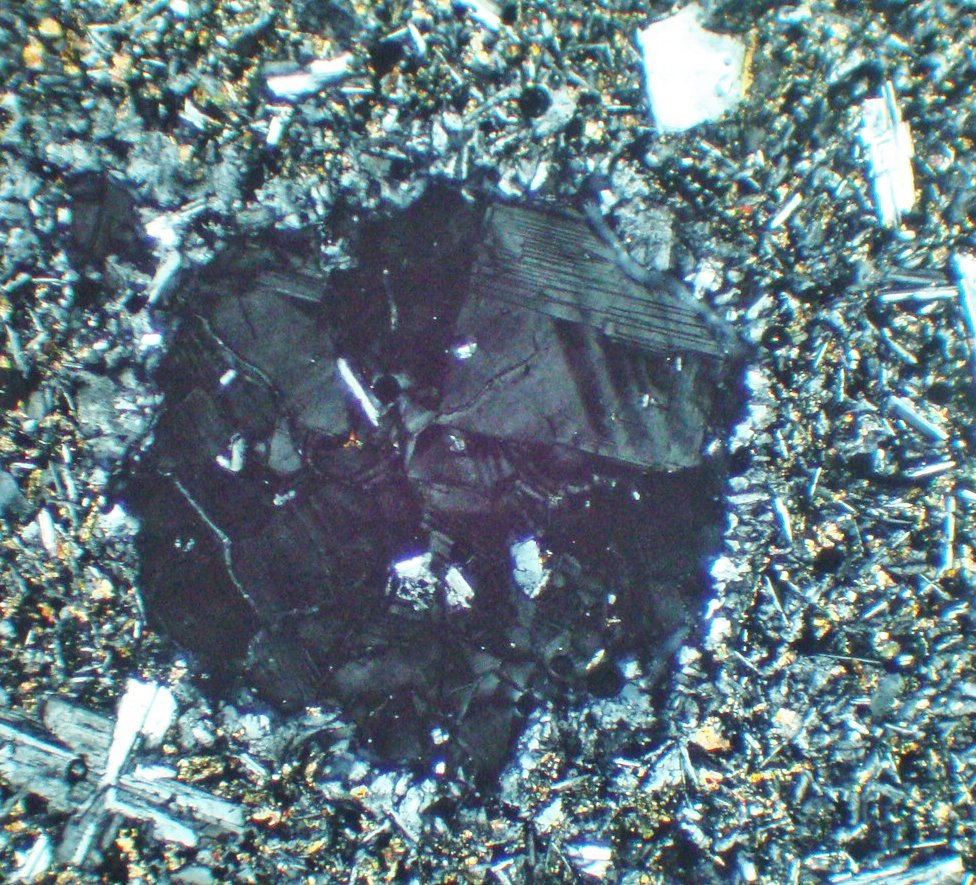
Birefringence and Interference Colors: Isotropic. Its maximum birefringence is 0.001: dark to medium gray colors. It is not completely black, it doesn’t look like an isotropic mineral, there’s always a definite luminosity.
Extinction: Oblique (incomplete) to undulating extinction. Due to the rounded shape, the extinction cannot be classified as parallel or oblique, only as undulating.
Elongation sign: Does not apply because the grains are rounded (pseudo-cubic).
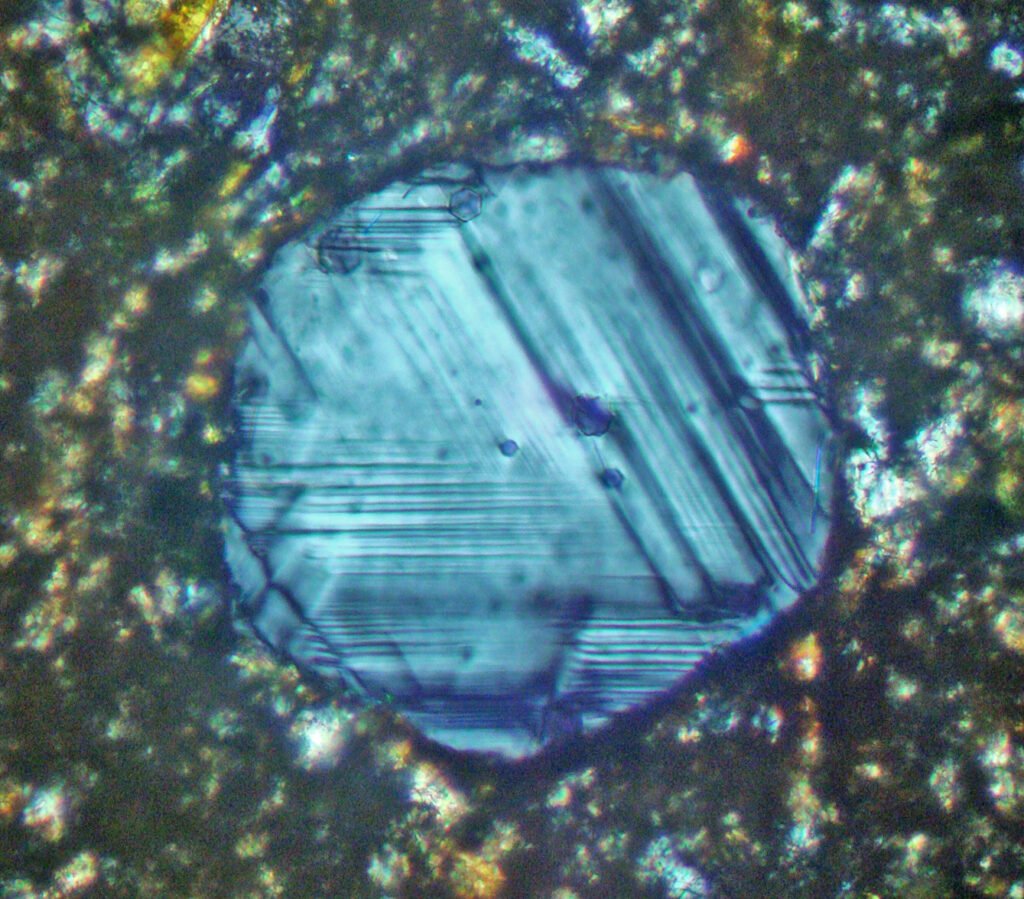
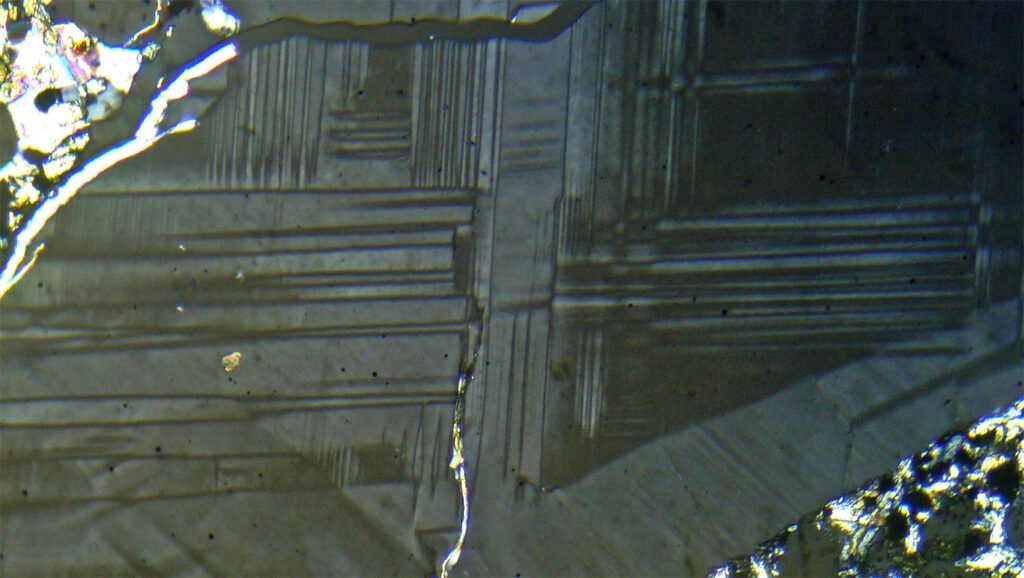
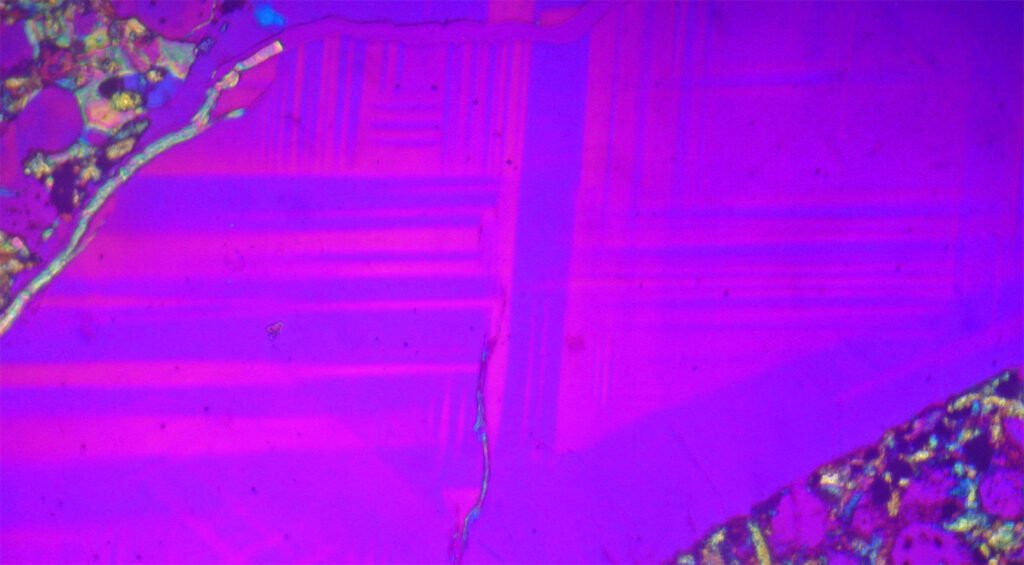
Twins: Usually presents complex polysynthetic twins in many directions, very typical, often with a concentric arrangement or at angles of approximately 60º. The twin pattern changes from grain to grain. Due to leucite’s low birefringence, twins are difficult to recognize.
The recognition of the twins is easier introducing the compensator, so that the lamellae of the twins turn pink and blue (see on one of the images below).
Zoning: Frequently zoned.
CONVERGENT LIGHT
Character: U(+), may be anomalous biaxial (2V low). Twins make it difficult or impossible to obtain good figures.
2V angle: No, but it may have an anomalous low 2V angle.
Alterations: easily alters to pseudo-leucite, a mixture of nepheline and K-feldspar. It can undergo the process of analcimization, when it changes initially to other zeolites and finally to analcime.
May be confused with: few other minerals due to paragenesis. Typical are generally rounded shapes and the polysynthetic twins.
Nosean occurs in the same paragenesis and can also be rounded, but is isotropic.
Analcime has a higher refractive index, does not have the characteristic inclusions of leucite, is generally anhedral and has no twins, only subgrains, which have a different appearance.
Microcline never occurs in volcanic or hypabyssal rocks.
Chabazite presents anomalous subgrains, better cleavage and rhombohedral, pseudo-cubic habit.
Colorless volcanic glass also has a very low relief, but it never presents polysynthetic twins and is completely isotropic, it has no luminosity in CPL.