1. Characteristics
Crystal system: Orthorhombic piramidal, pseudo-tetragonal.
Color: Usually colorless to white. Rarely red, yellow, brown, bluish or green.
Habit: Long prismatic, acicular to fibrous, forming radiated aggregates.
Cleavage: {110} perfect.
Tenacity: Brittle.
Twinning: On {110}, {011}, {031}, rare.
Fracture: Irregular.
Mohs Hardness: 5 – 5.5
Parting: On {010}.
Streak: White.
Lustre: Vitreous.
Diaphaneity: Transparent.
Density (g/cm³): 2.2 – 2.26
2. Geology and Deposits
Natrolite typically occurs as a secondary mineral filling cavities (vesicles) and fractures in intermediate and basic rocks (basalts, gabbros), especially in volcanic rocks. More rarely occurs in veins in granites, gneisses and nepheline-syenites. It can form by deuteric alteration in alkaline plutonic rocks such as nepheline-syenites, in this case commonly forming pseudomorphoses on plagioclase, nepheline and minerals of the Sodalite Group. It ocurrs autigenic in lake sediments and marine sediments, in this case cryptocrystalline.
A detailed account of the occurrence, forms and other aspects of natrolite can be found in Rudy Tschernich’s book “Zeolites of the World”, available for download on the internet. Detailed information on the various ways that natrolite occurs can be found on the website of the Commission on Natural Zeolites: http://www.iza-online.org/.
3. Mineral Associations
Natrolite occurs associated with the minerals that form the host rocks, generally mafic and ultramafic igneous rocks: olivine, pyroxene (aegirine), plagioclase, nepheline, sanidine, magnetite, ilmenite, chalcopyrite, pyrite, native copper and others.
It composes the secondary mineral assemblage, with calcite, macrocrystalline quartz, chalcedony, nepheline, sodalite, analcime, benitoite, neptunite, prehnite, fluoroapophyllite-(K), rhodochrosite, joaquinite-(Ce) and zeolites such as thomsonite-Ca, scolecite, mesolite, heulandite, stilbite and laumontite.
4. Transmitted Light Microscopy
Refraction indices: nα: 1.473 – 1.483 nβ: 1.476 – 1.486 nγ: 1.485 – 1.496
PLANE POLARIZED LIGHT – PPL
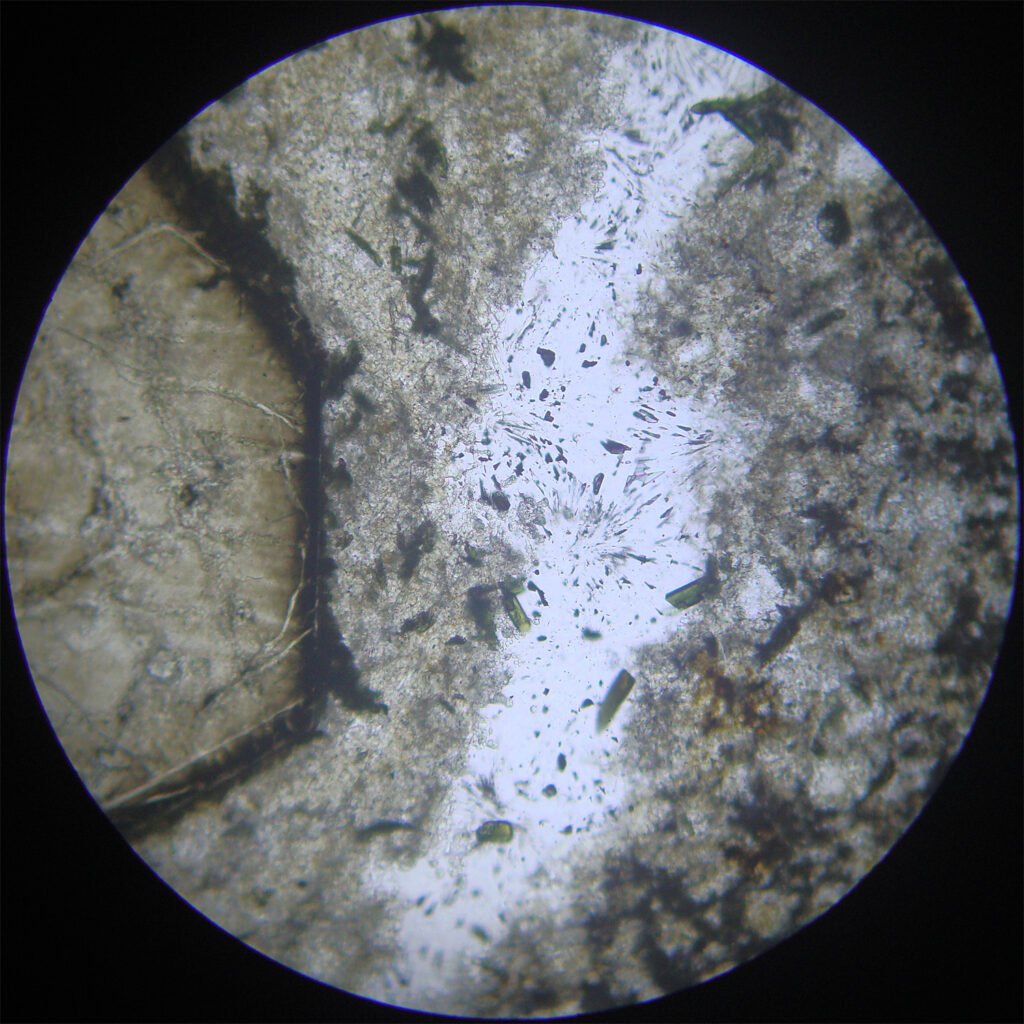
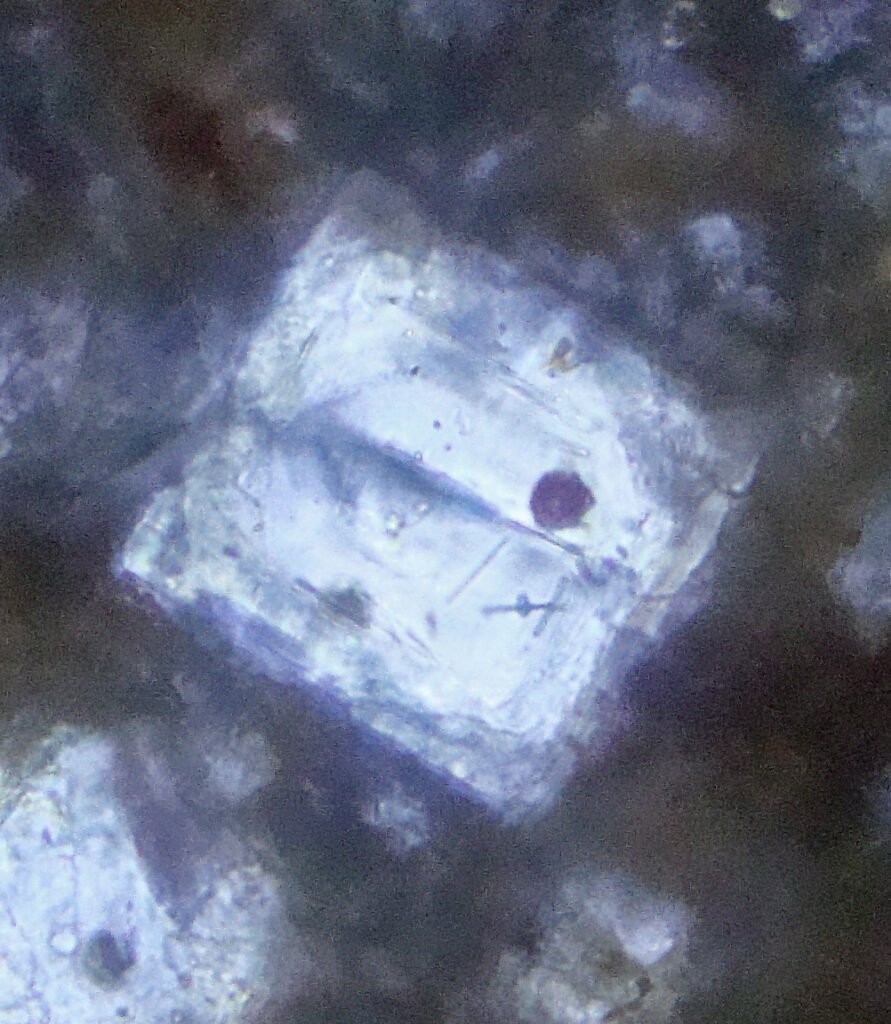
Color / Pleochroism: Colorless, never shows color much less pleochroism.
Relief: Moderate.
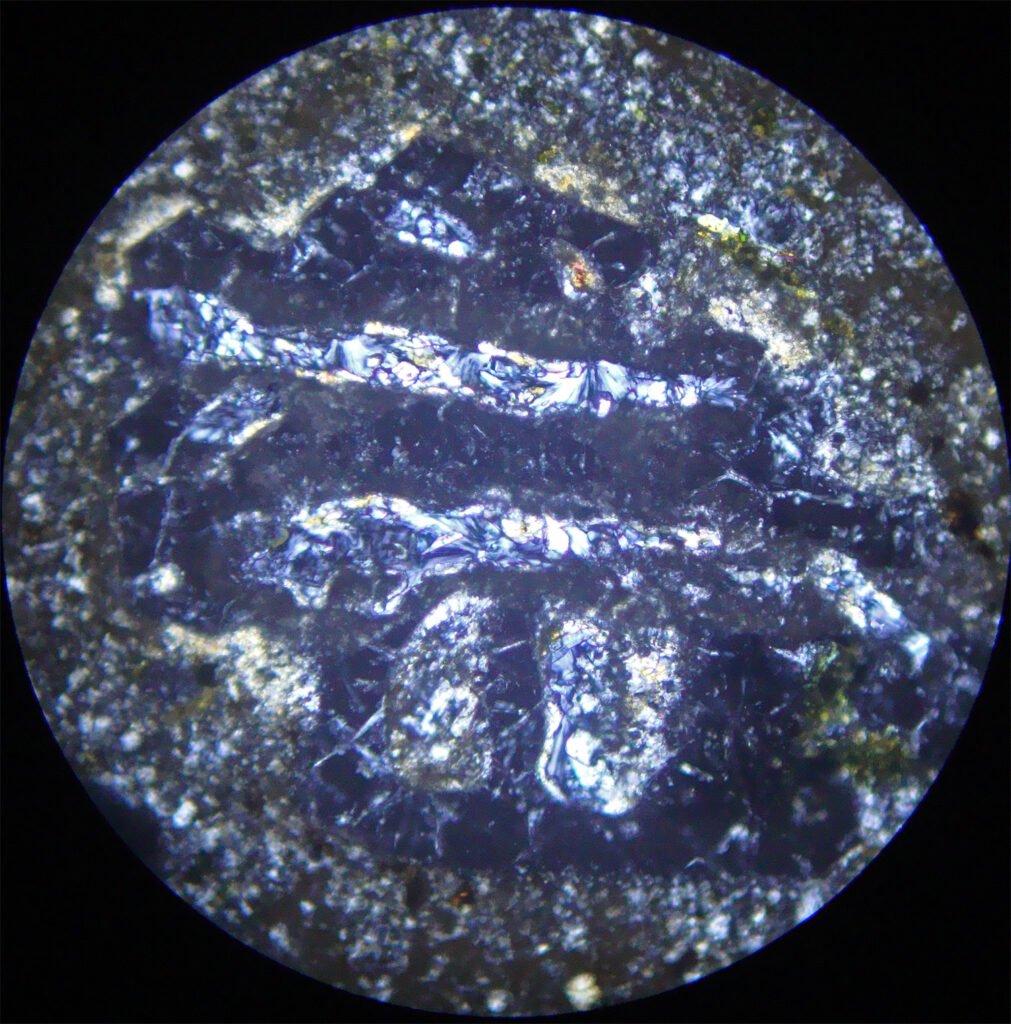
Cleavage: {110} perfect, parallel to the length of the prisms.
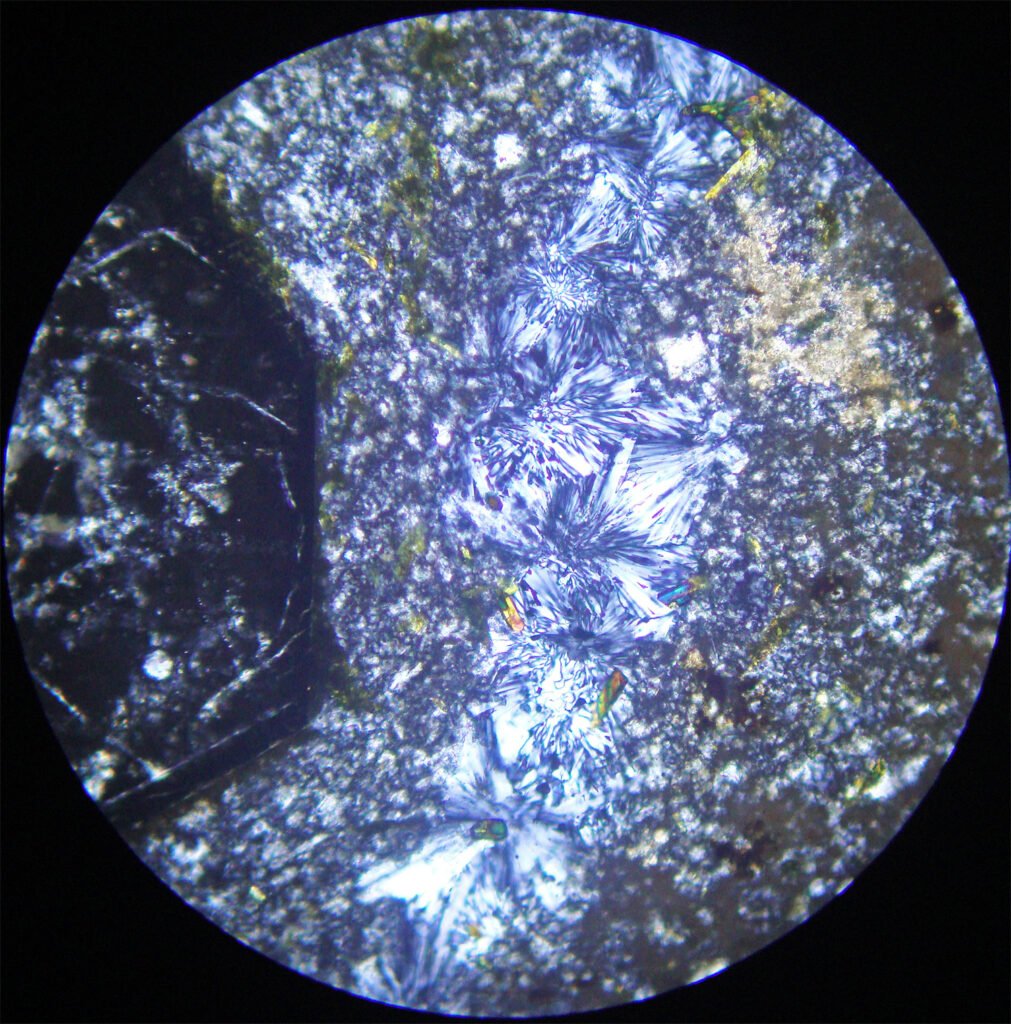
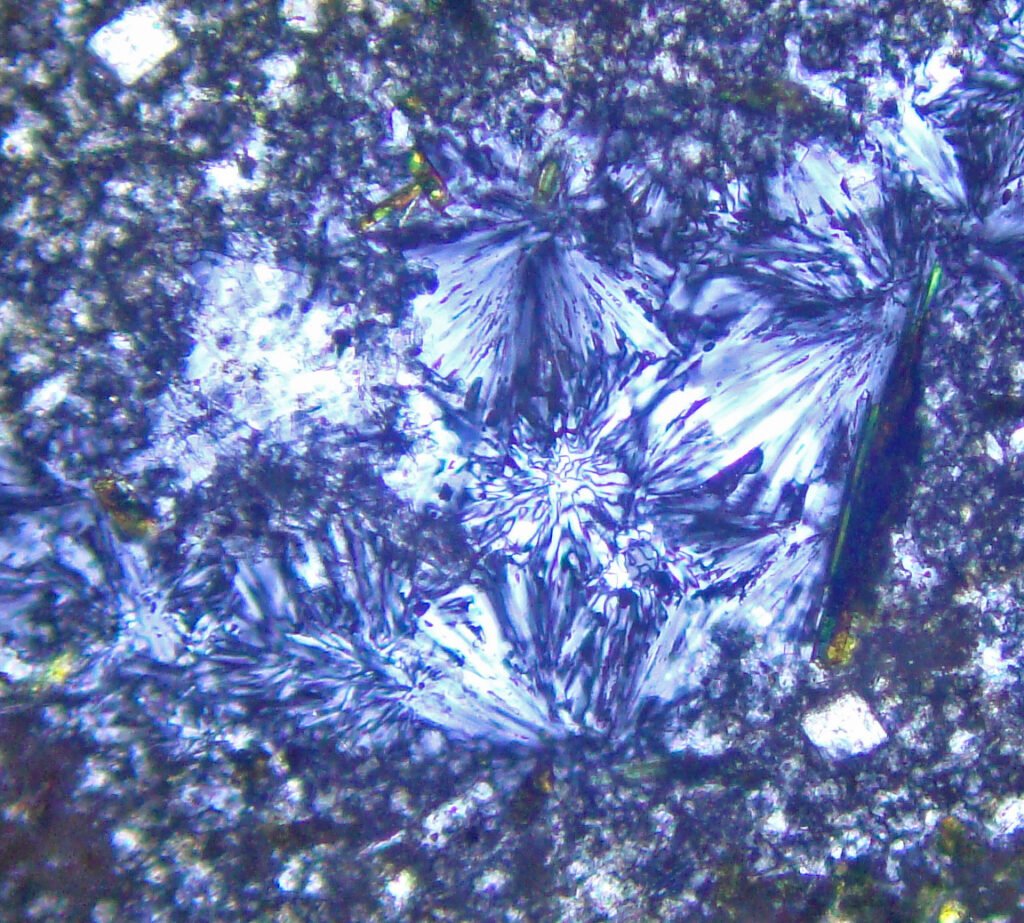
Habits: Long prismatic to acicular, may be fibrous. Typically forms radial aggregates.
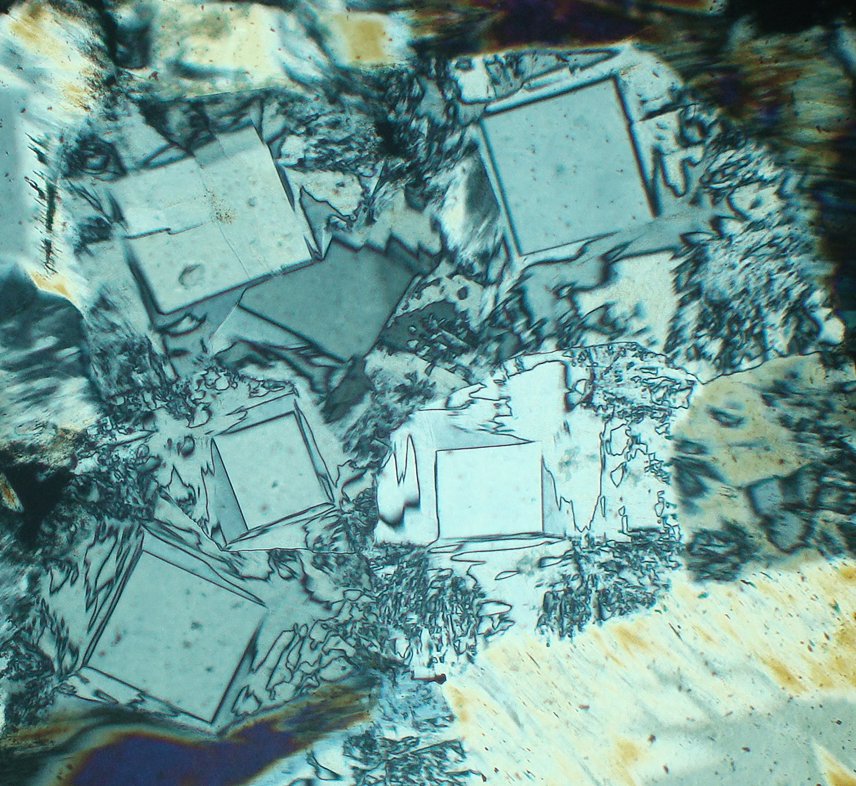
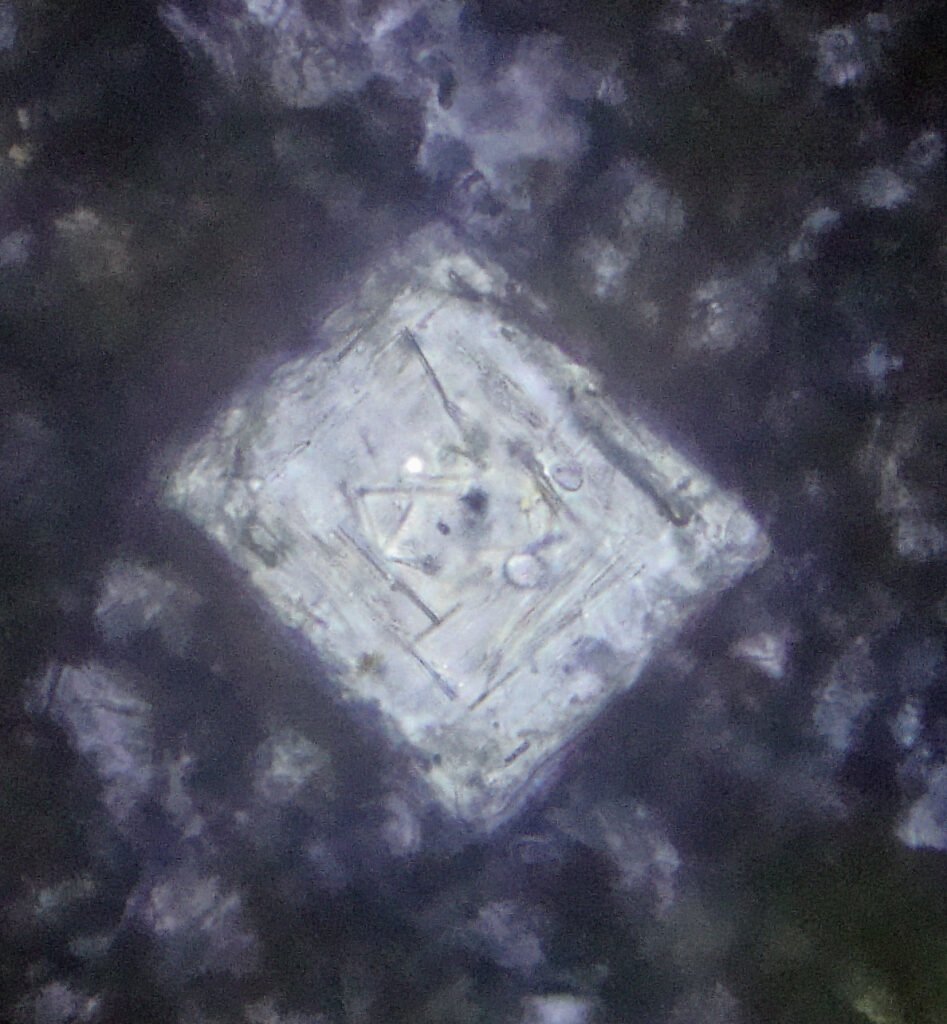
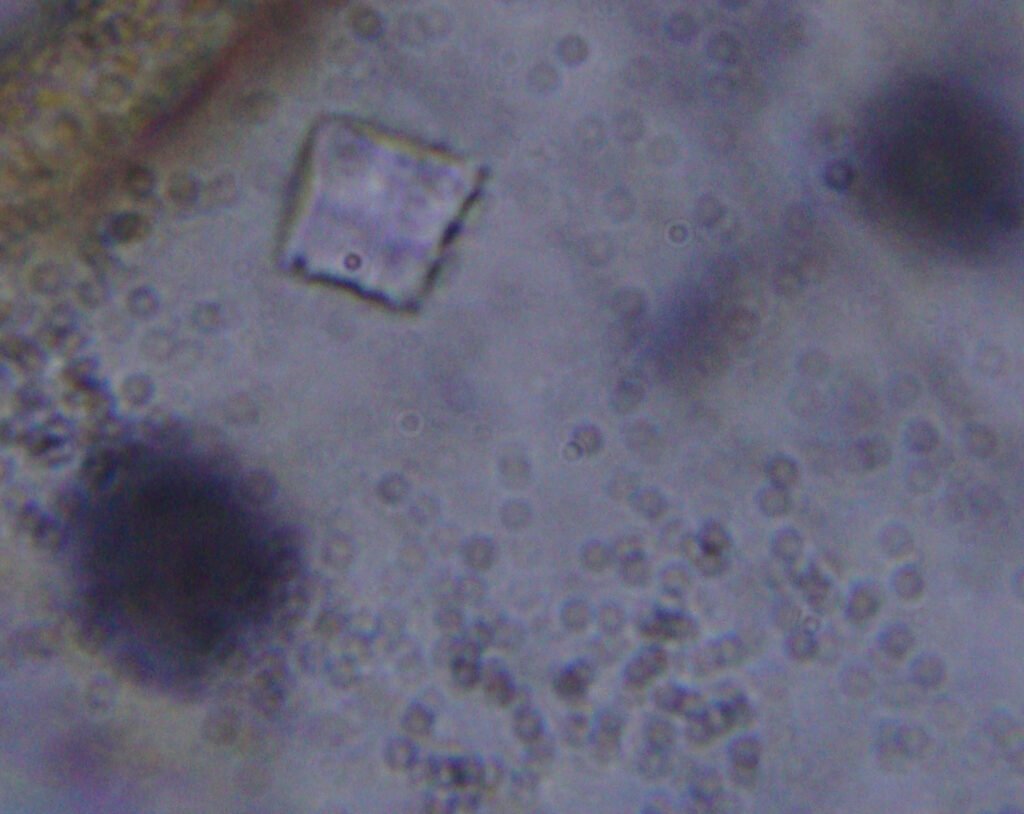
The basal sections are square (diagnostic!).
CROSSED POLARIZED LIGHT – XPL
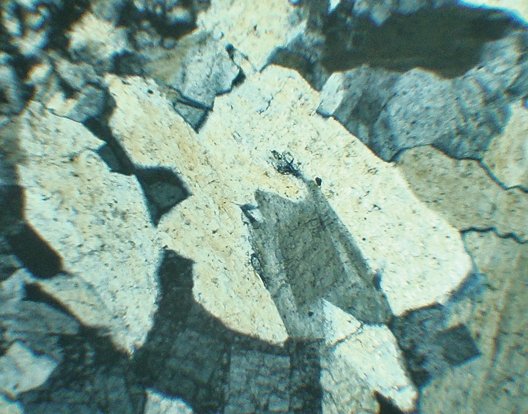
Birefringence and Interference Colors: Maximum birefringence of 0.013, corresponding to colors between dark gray, light gray, white and yellow. It is usually light gray.
Extinction: Parallel to the cleavage in the longitudinal sections.
Symmetrical in the basal sections. (diagnostic!)
Elongation sign: SE(+)
Twins: On {110}, {011}, {031}, rare.
Zoning: No.
CONVERGENT LIGHT
Character: B(+)
2V angle: 58 – 64º
Alterations: may alter to other zeolites or clay minerals.
May be confused with: other zeolites and associated minerals.
Nepheline occur in the same paragenesis and also displays square or rectangular basal sections.