1. Characteristics
Crystal system: Hexagonal piramidal.
Color: White, gray, yellowish.
Habit: Short hexagonal prisms with 6 or 12 sides, granular, massive, compact.
Cleavage: {10-10} poor, {0001} poor.
Tenacity: Brittle.
Twinning: No.
Fracture: Sub-conchoidal.
Mohs Hardness: 5.5 – 6
Parting: No.
Streak: White.
Lustre: Vitreous, resinous.
Diaphaneity: Transparent.
Density (g/cm³): 2.55 – 2.66
2. Geology and Deposits
Nepheline is an important feldspathoid that occurs mainly in silica-subsaturated, alkali- and Na-rich rocks, in which it replaces the albite component. It is found in some metamorphic and metasomatic contact rocks, such as phenites.
Nepheline occurs in aplitic granites and in a series of rocks with feldspathoids: syenites, monzonites, monzodiorites, diorites, dioritoids, monzogabbros, gabbros, gabbroic rocks, anorthosites (with sodalite), syenites, nephelinolites, clinopyroxenites, alkaline basalts, phonolites, tephrite phonolites , leucite-tephrites, basanitic nephelinites, leucitites, analcimites, nephelinites, nepheline phodrites, tephrite phodrites, porphyries with nepheline, rocks with melilite, lamprophyres and apatitolites.
It also occurs in pegmatites and tuffs.
3. Mineral Associations
Nepheline occur with feldspathoids of the Sodalite Group (sodalite, leucite, nosean), alkali feldspars (microcline), micas (biotite, Ti-biotite, phlogopite), sodic plagioclase, olivine, amphiboles and sodic and calcosodic pyroxenes, cancrinite, melilite, fluorapatite, melanite garnet, clinohumite, magnetite, pyrrhotite and ilmenite.
Also with aegirine, eudyalite, schorlomite and zircon.
It almost never occurs associated with quartz. Some texts state that it never occurs with quartz.
4. Transmitted Light Microscopy
Refraction indices: ne: 1.529 – 1.542 no: 1.534 – 1.547
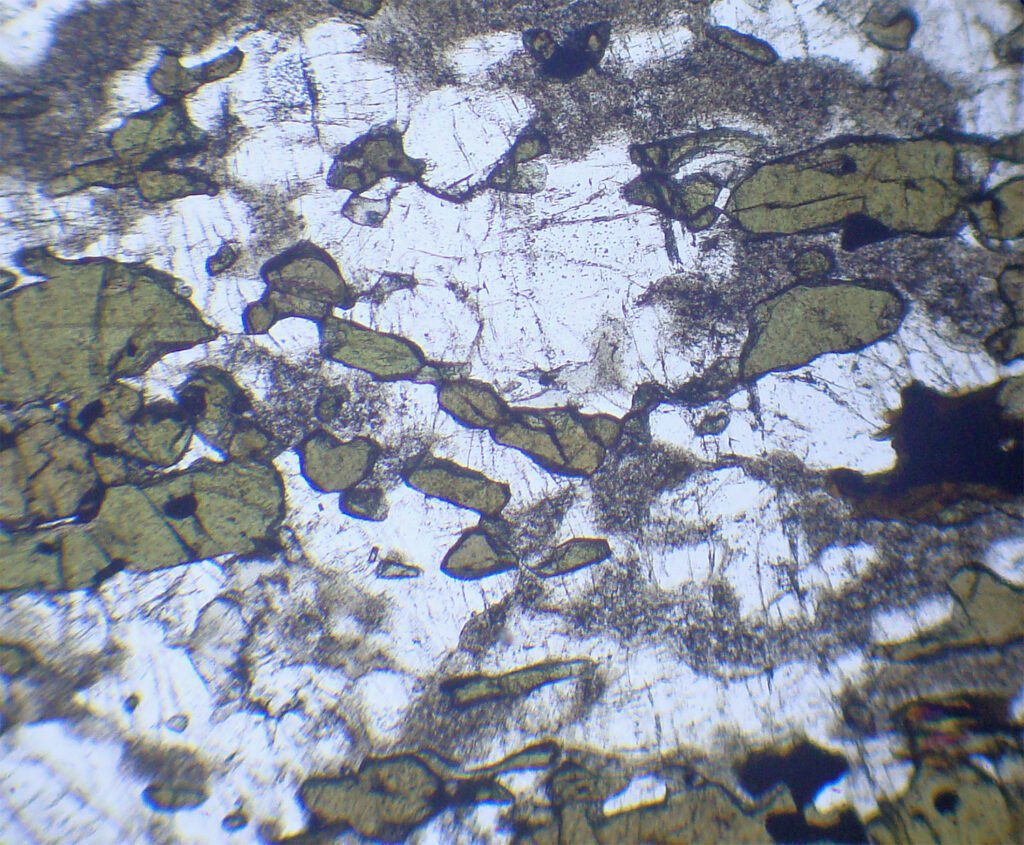
PLANE POLARIZED LIGHT – PPL
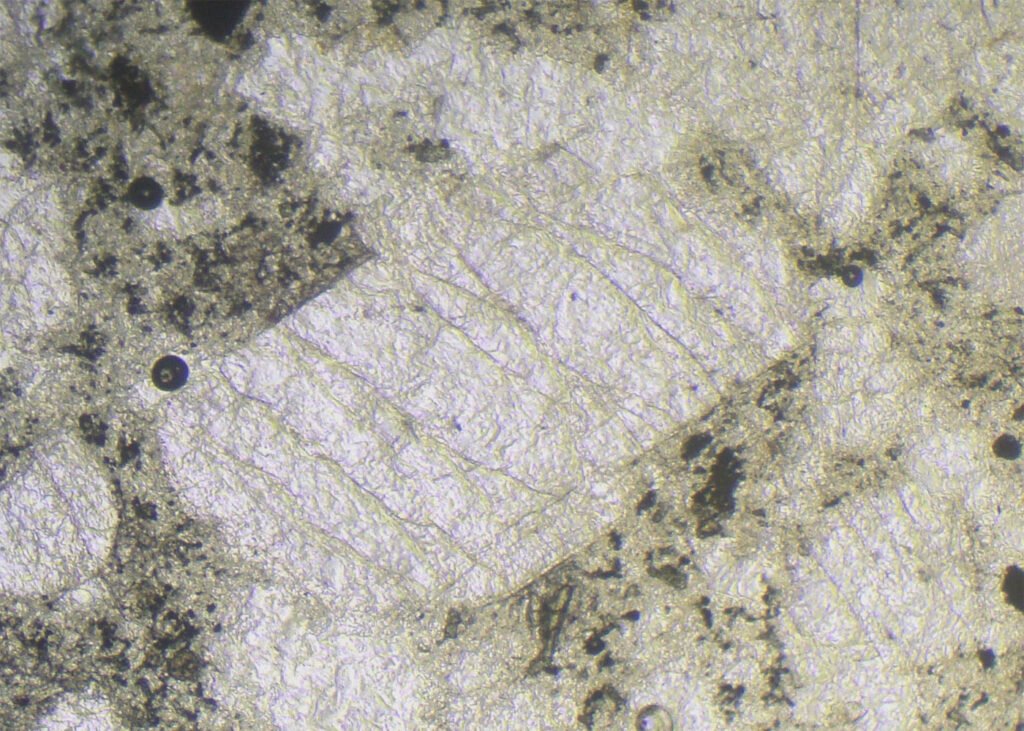
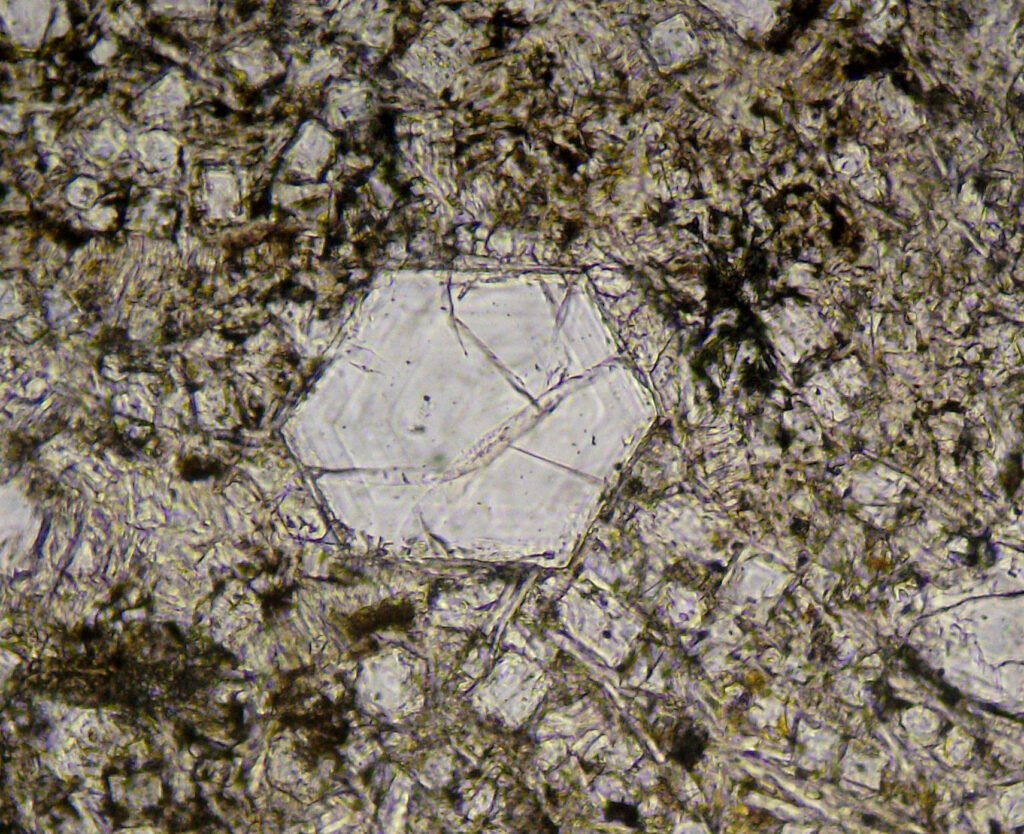
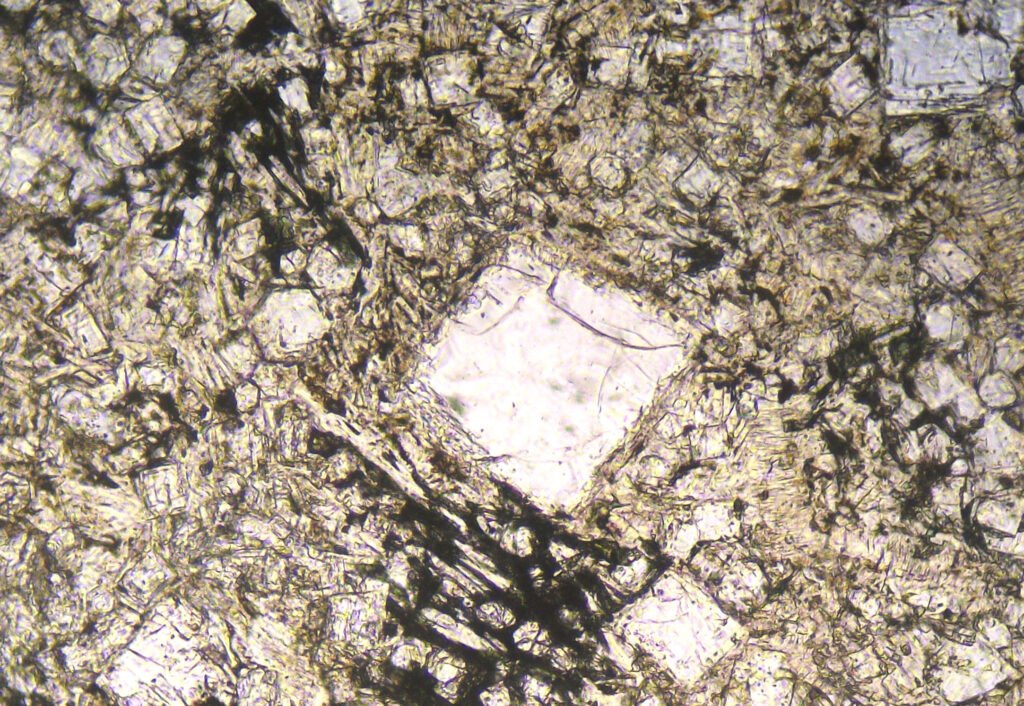
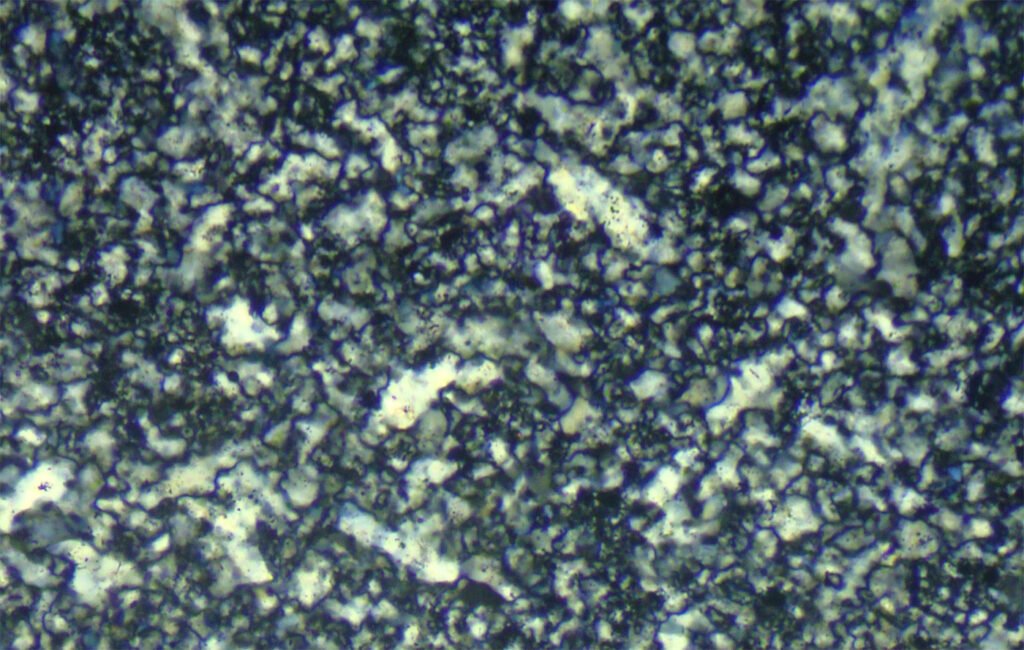
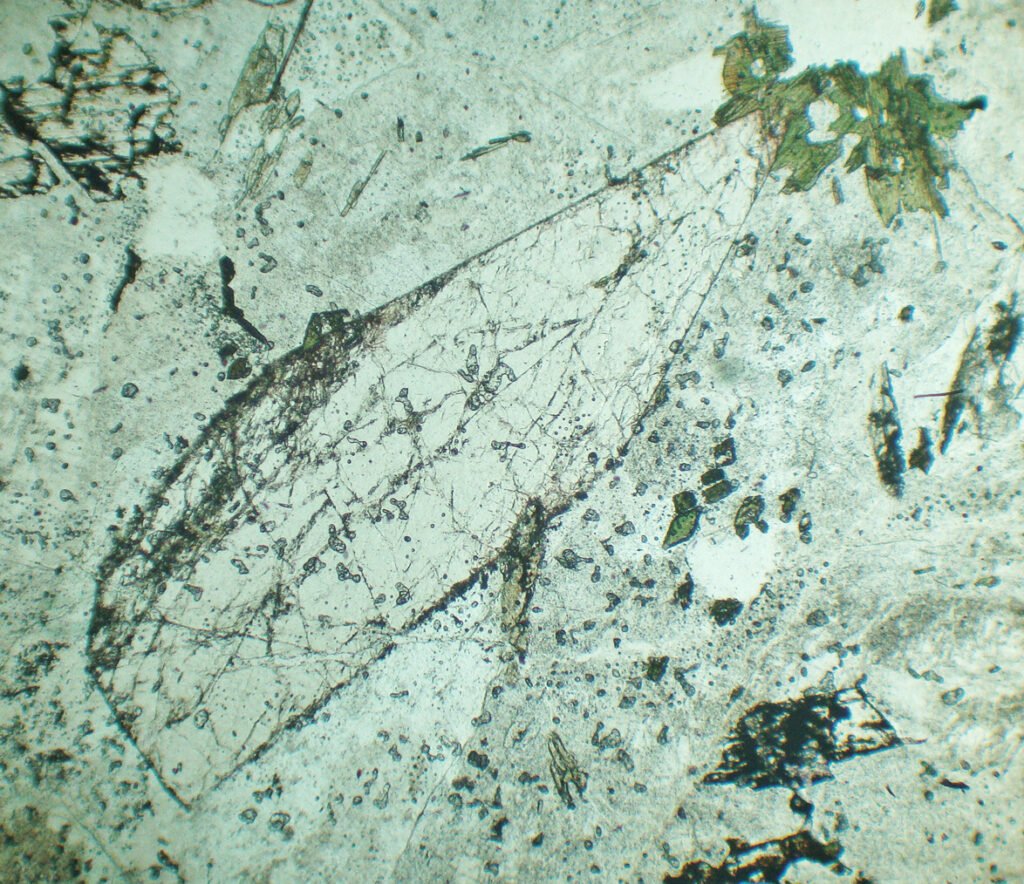
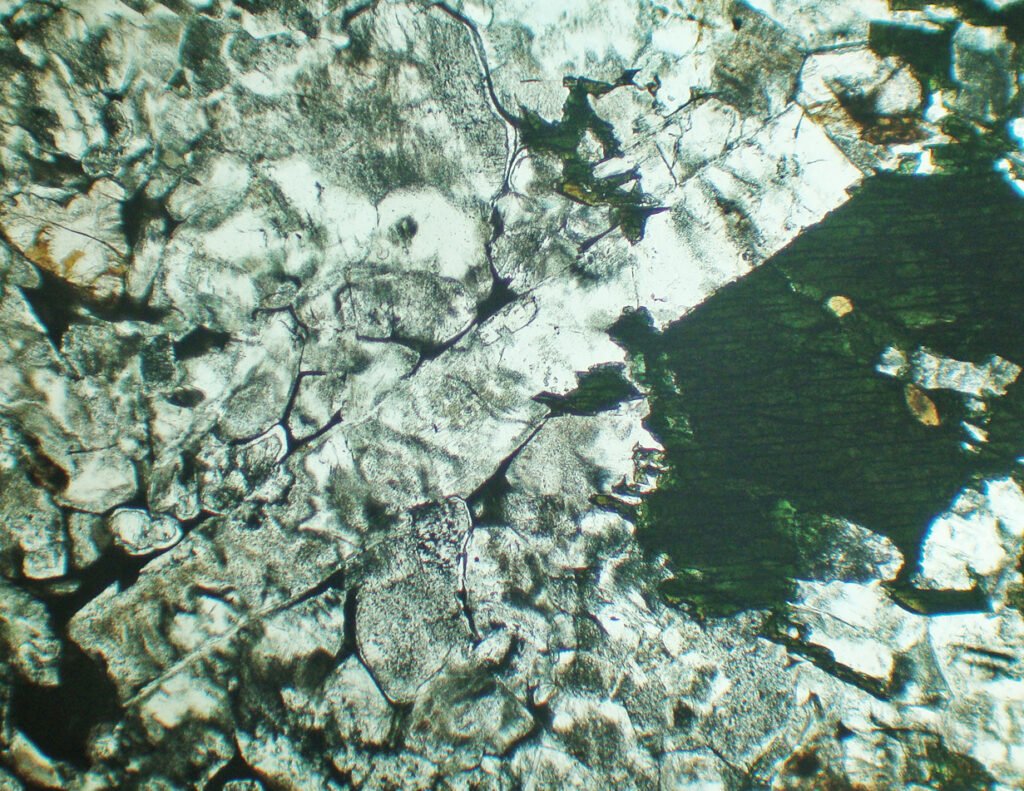
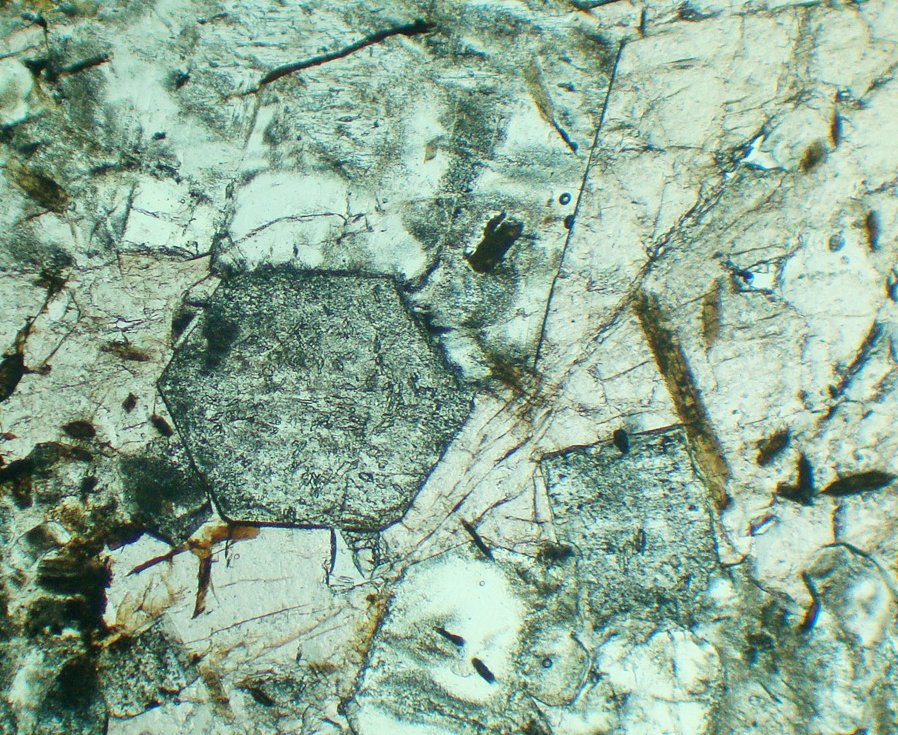
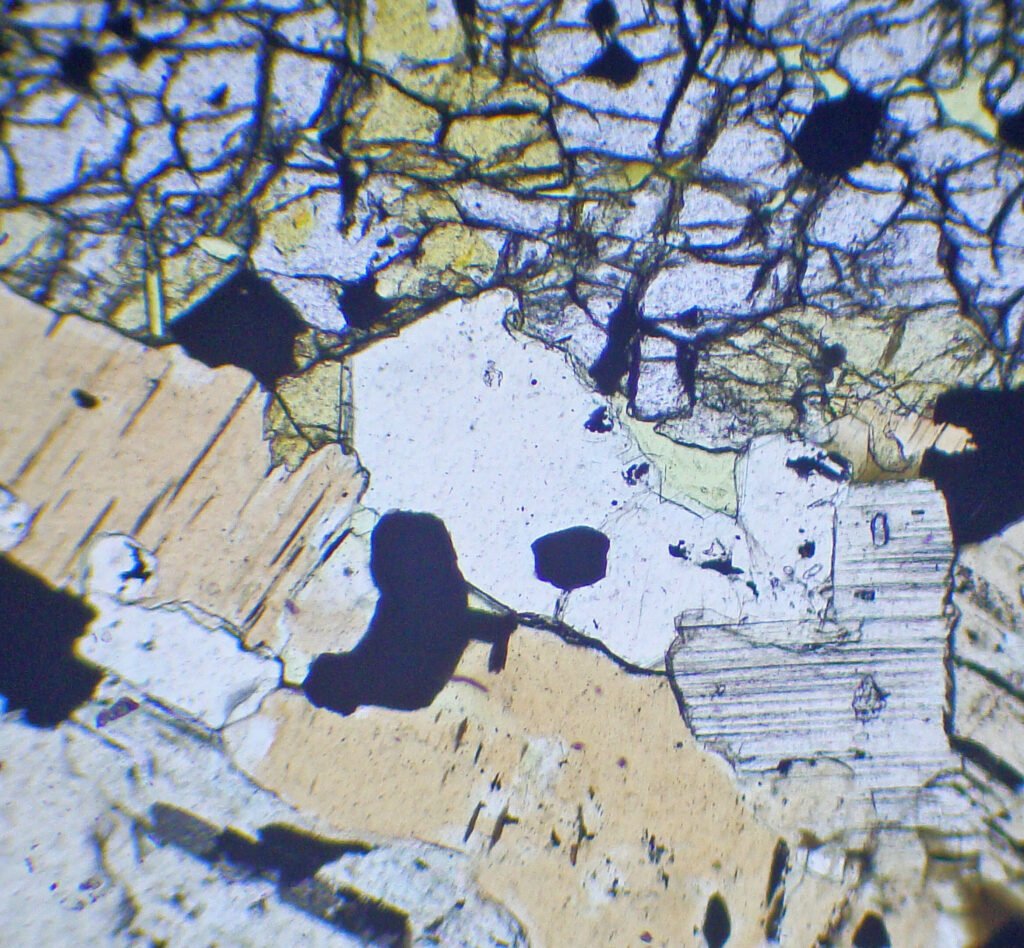
Color / Pleochroism: Colorless. In plutonic rocks it can be milky (“elaeolite”).
It may appear “foggy” at the edges of the crystals.
Relief: Low.
Cleavage: {10-10} and {0001} imperfect. They are not visible in thin section.
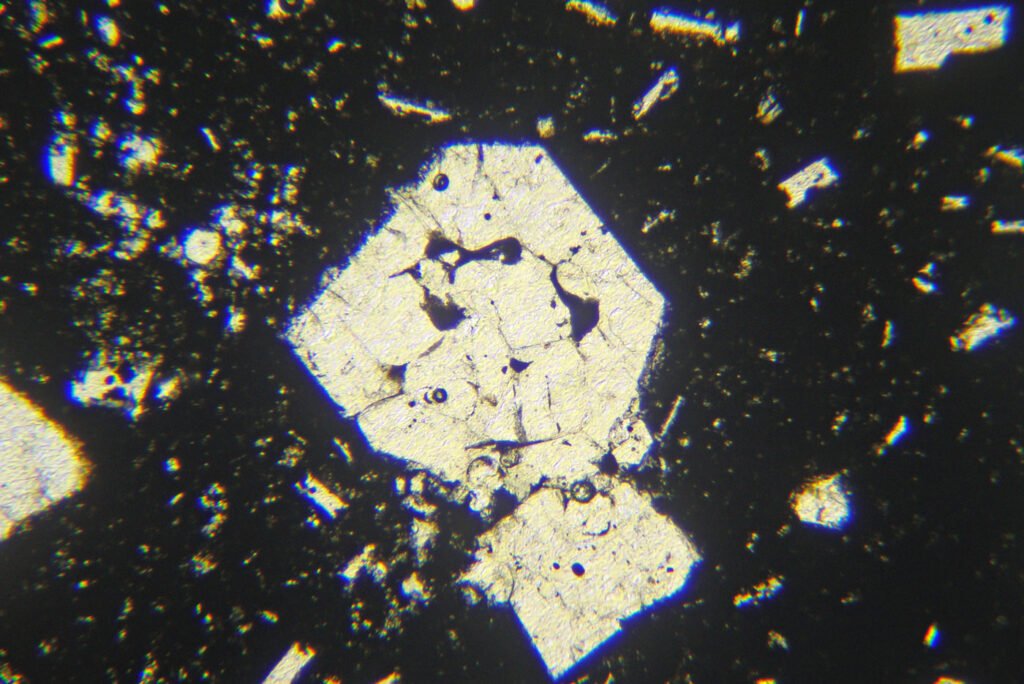
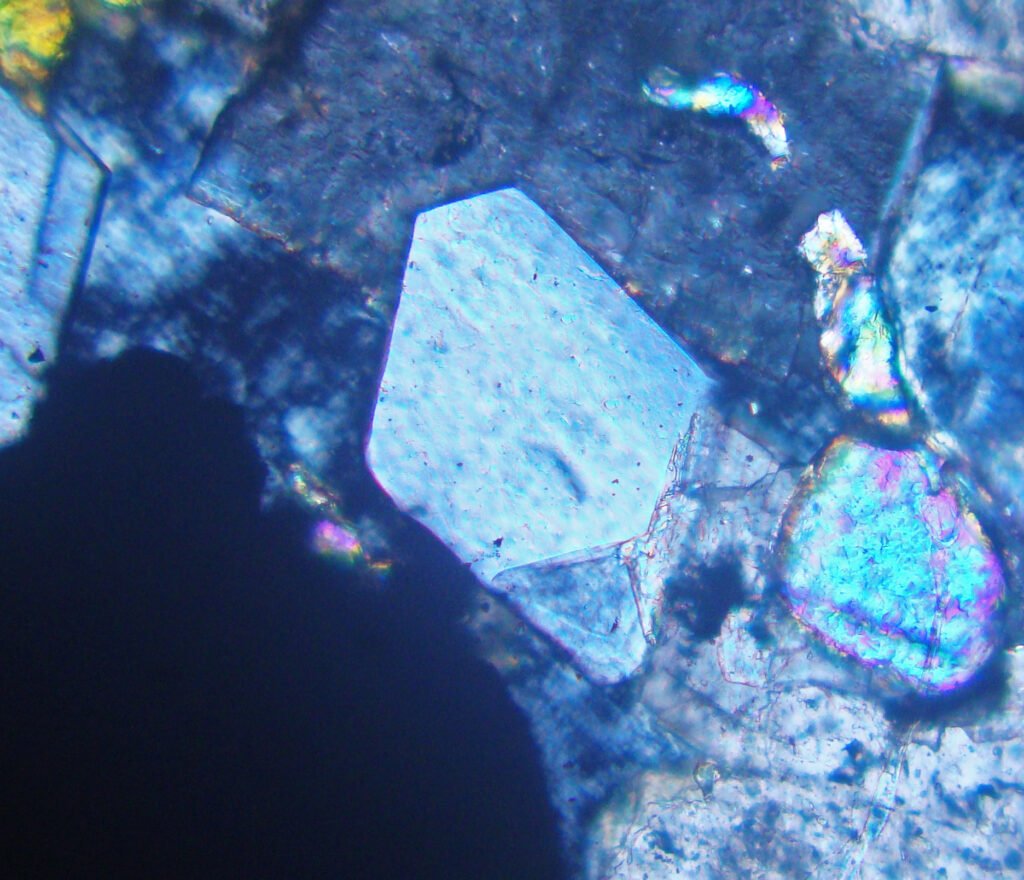
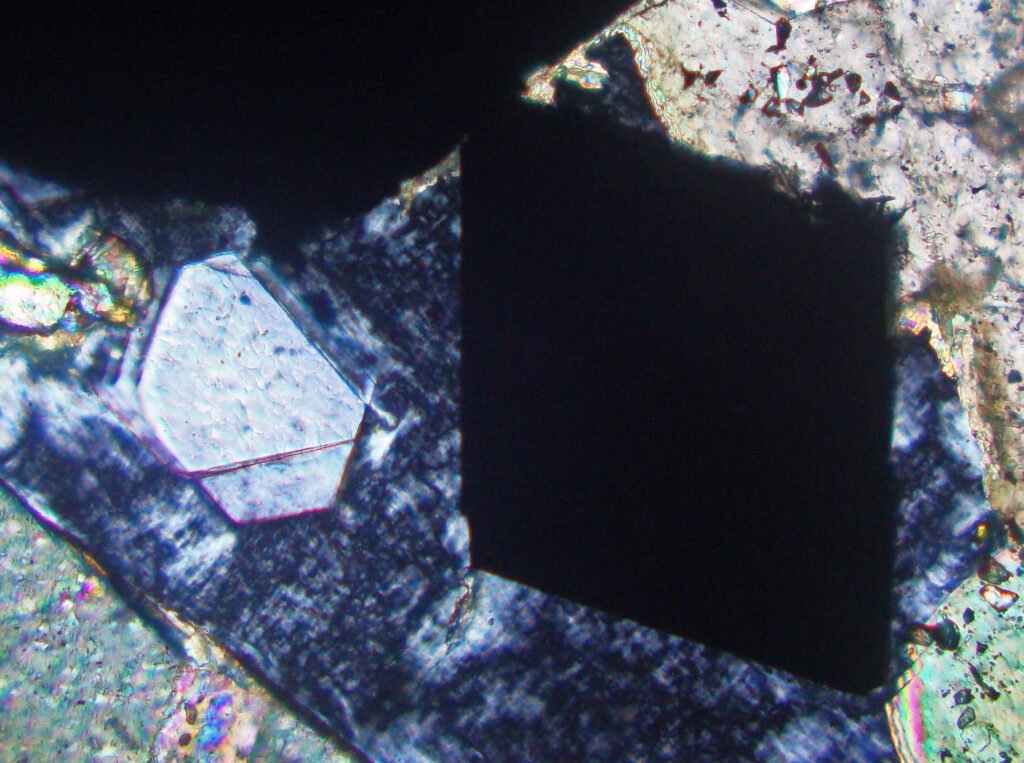
Habits: Usually in anhedral, interstitial masses. In volcanic rocks, it can form short hexagonal prisms, with square or hexagonal basal sections. It also occurs in equidimensional or columnar grains. May have inclusions and sub-grains.
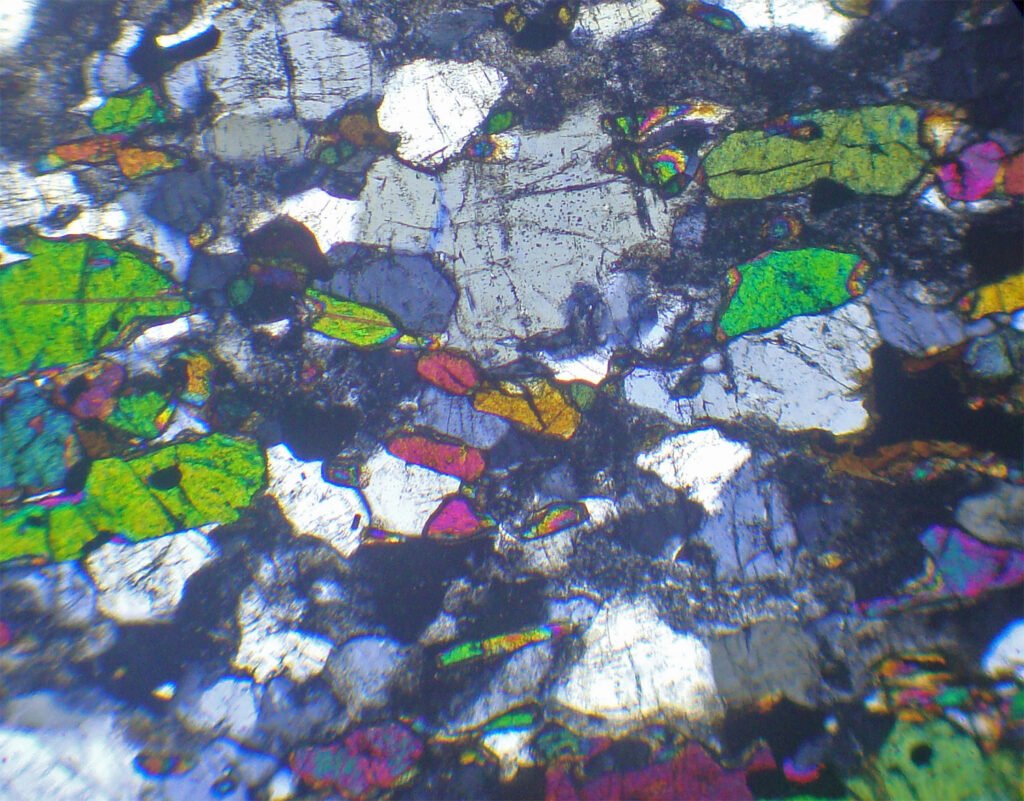
CROSSED POLARIZED LIGHT – XPL
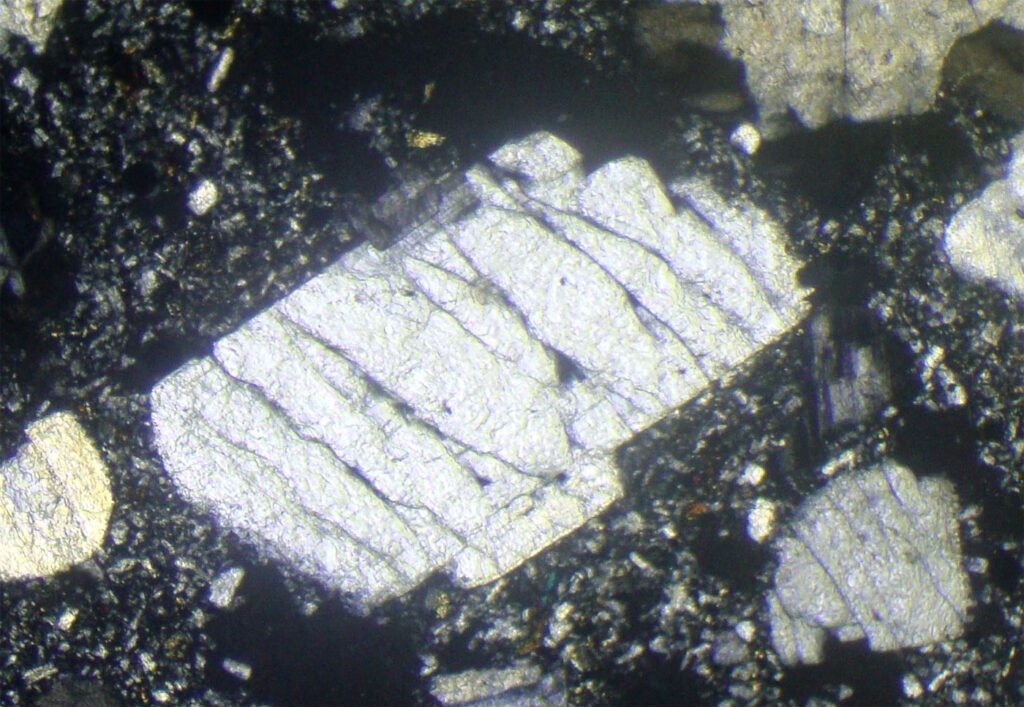
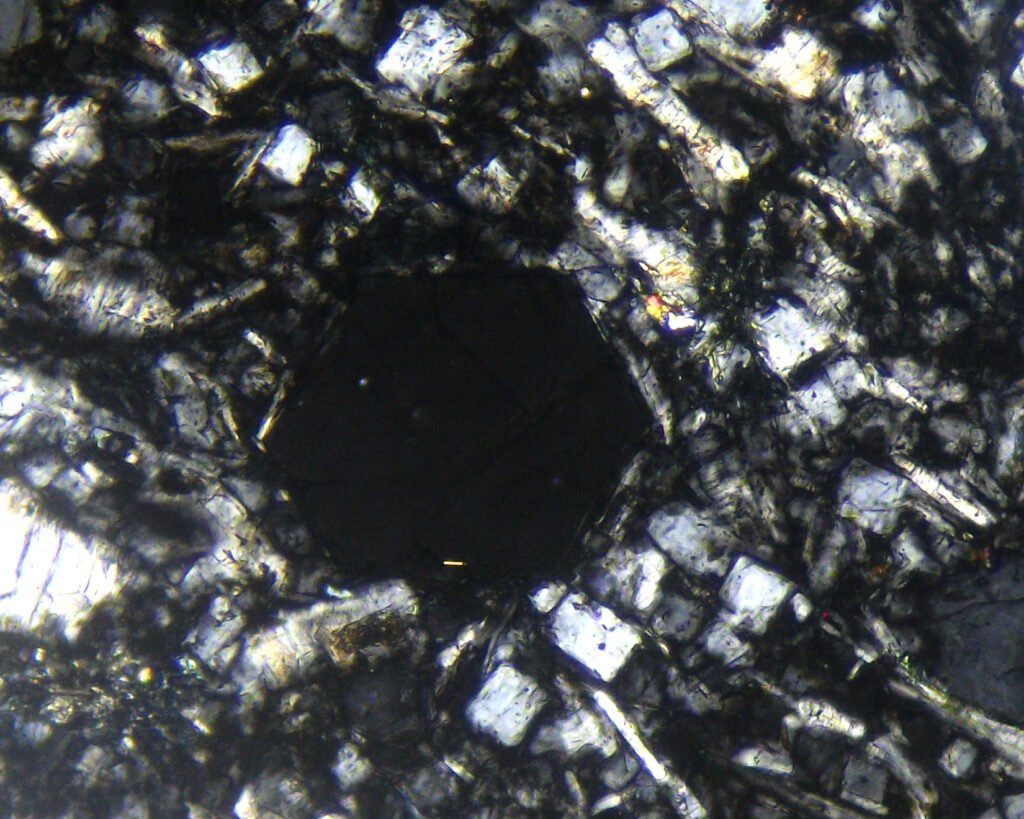
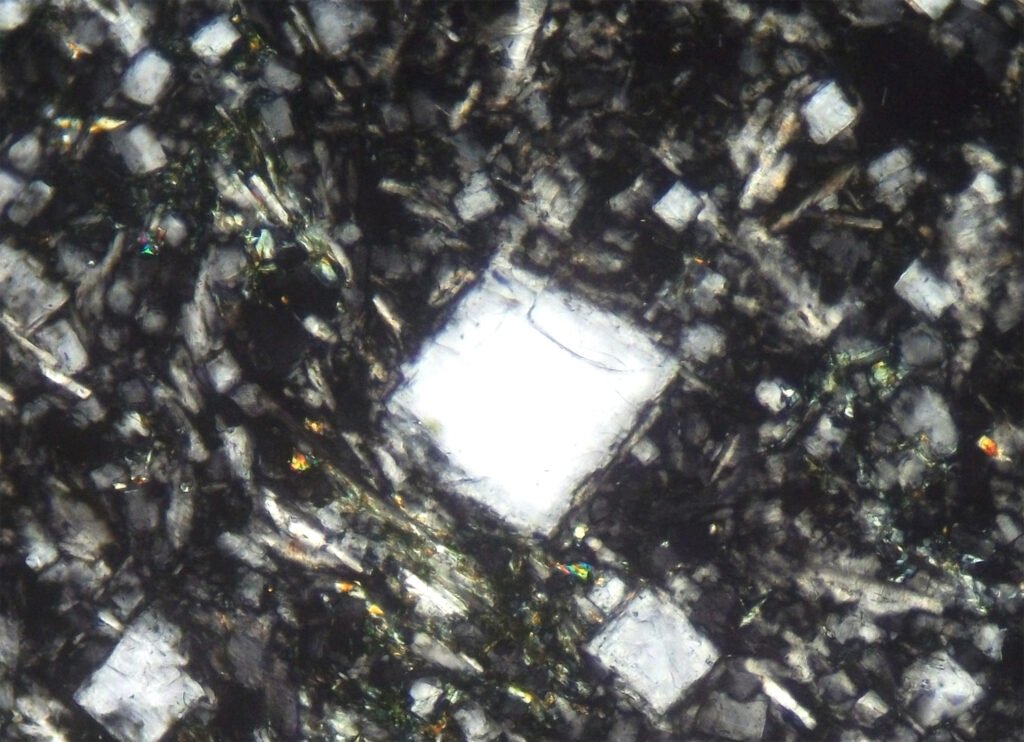
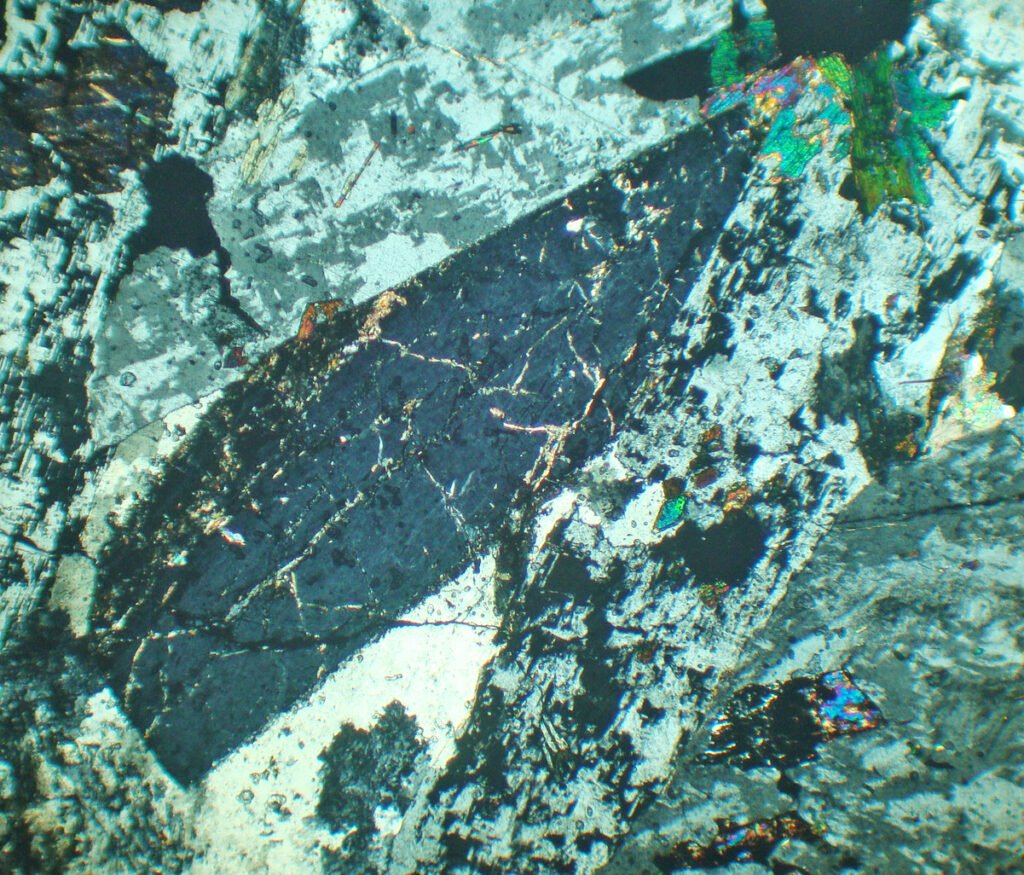
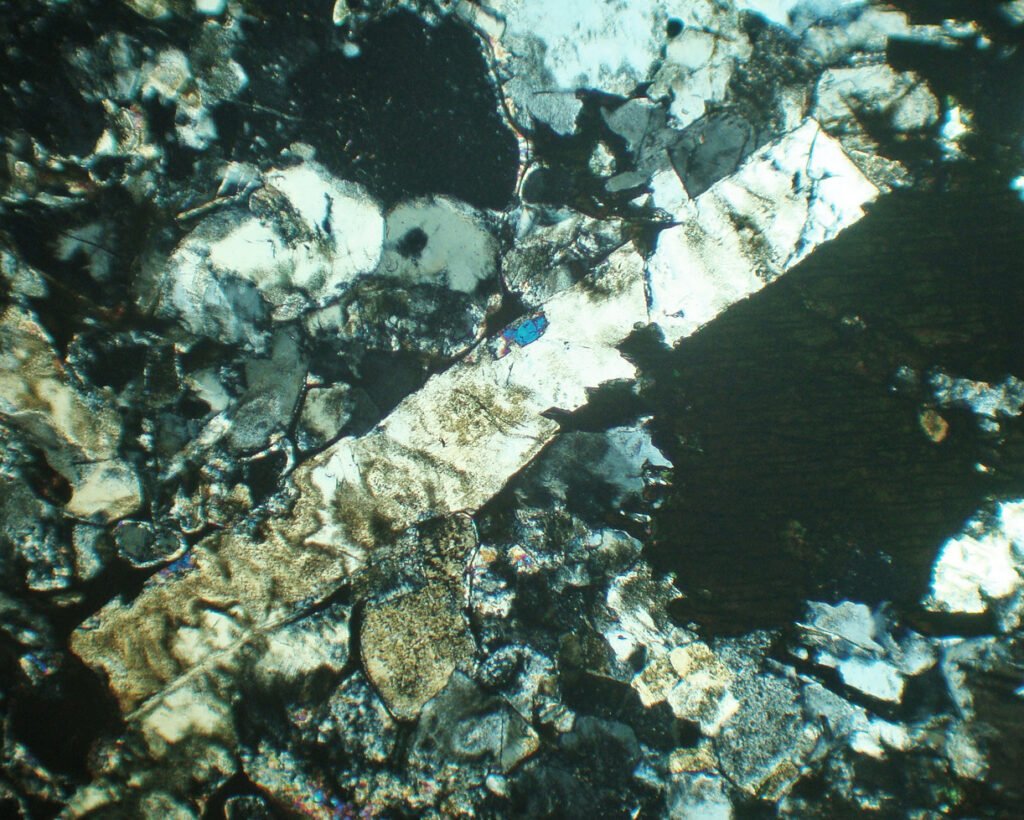
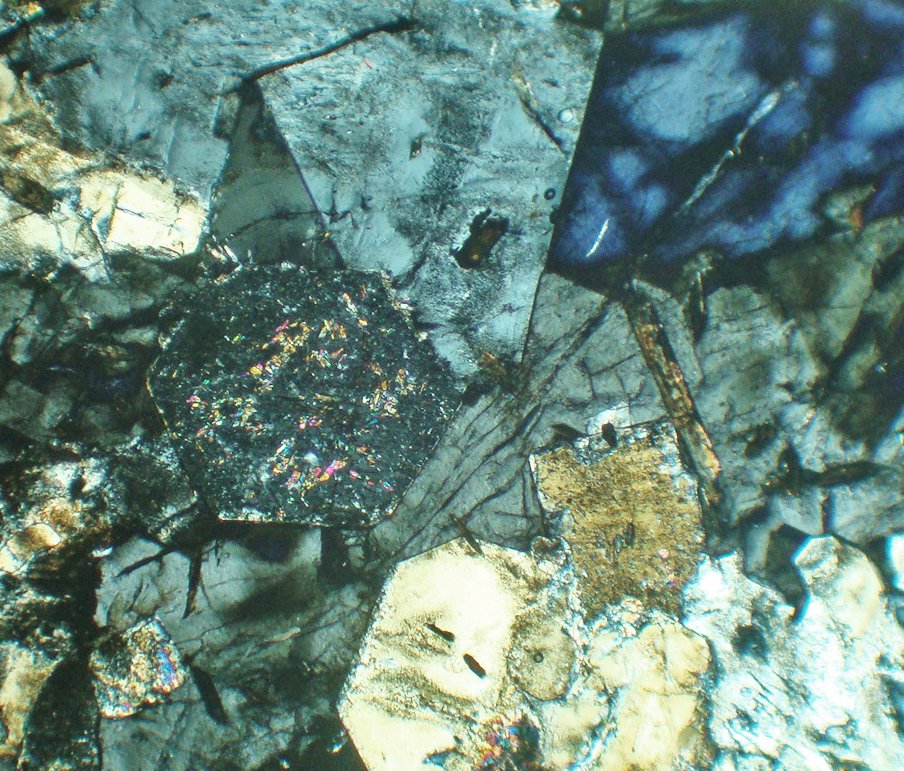
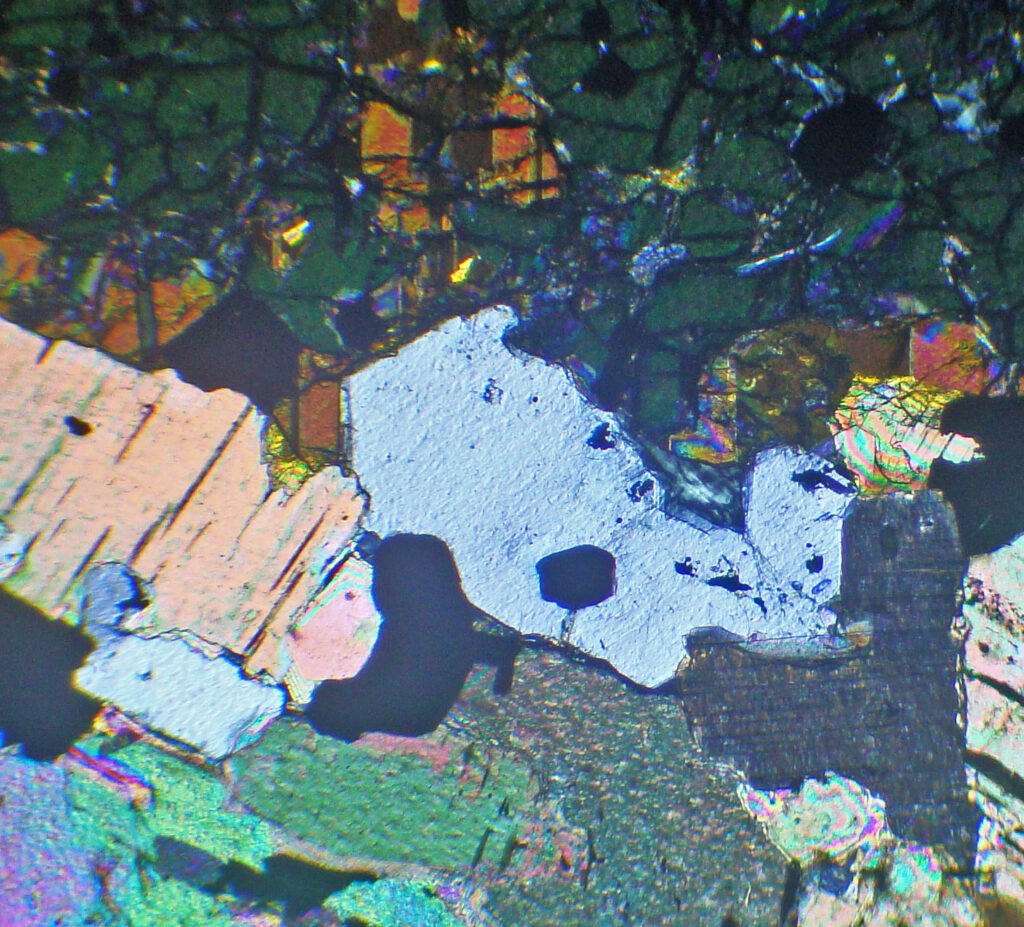
Birefringence and Interference Colors: Birefringence is very low, from 0.003 to 0.005, which results in 1st-order medium colors: various shades of gray to white, can be grayish-blue.
Extinction: Tends to be parallel.
Elongation sign: ES(-) in the longitudinal sections.
Twins: Rare, according to {10-10}, {33-65} and {11-22}, but generally not present, which is a very diagnostic feature in relation to other feldspars (plagioclase, anorthoclase, orthoclase, sanidine) and feldspathoids (leucite).
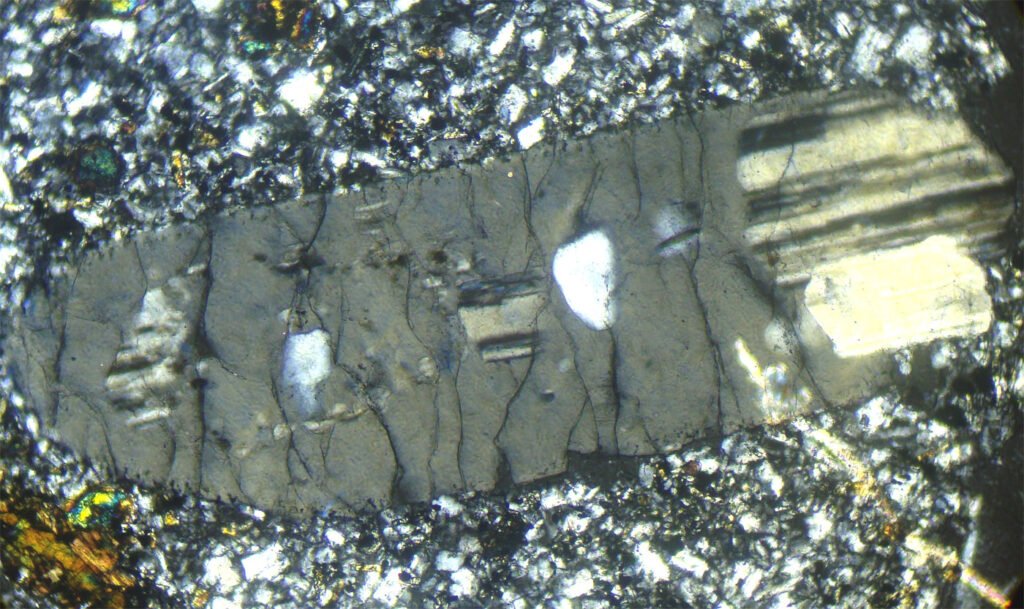
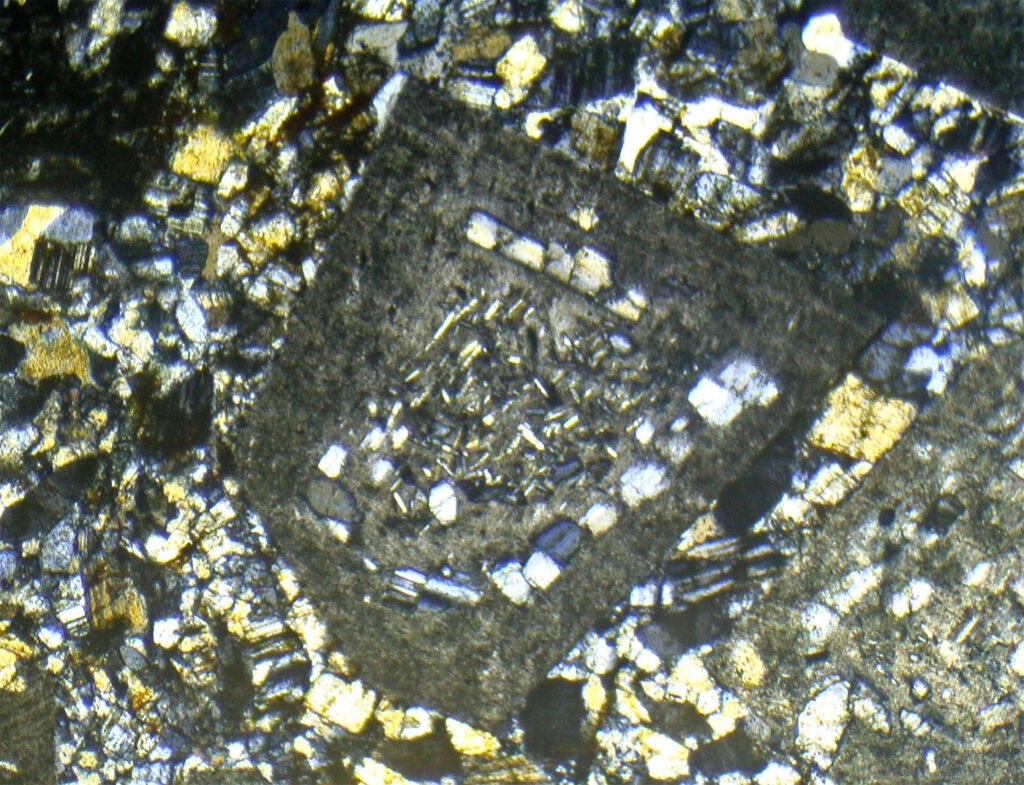
Zoning: Frequently zoned, mainly in volcanic rocks.
CONVERGENT LIGHT
Character: U(-). Isogyres may be slightly separated in some samples; isogyres can be very wide or diffuse. Samples with Ca are U(+).
2V angle: When nepheline is anomalous B(-), it has an angle of 0 – 6º.
Alterations: Nepheline is commonly altered.
Nepheline can alter to clay minerals, analcime, sodalite, calcite and cancrinite.
It also alters to fibrous zeolites (natrolite) and sericite, even forming pseudomorphs of sericite on nepheline.
It can undergo albitization, with the development of areas composed of albite (plagioclase) in the nepheline crystals; these areas have the typical polysynthetic twins of the plagioclases.
May be confused with: several other minerals. Diagnostic for nepheline is the absence of twins, its uniaxial character and the fact that it is almost always cloudy to a greater or lesser degree due to the alteration. When it occurs as anhedral, interstitial material, it is difficult to identify, but the negative uniaxial (or anomalous biaxial!) interference figure is diagnostic.
Sanidine in volcanic rocks can be very difficult or even impossible to distinguish from nepheline, if sanidine displays a very low 2V angle, near to zero, and do not shows the typical Carlsbad twin.
Natrolite occur in the same paragenesis and also displays square or rectangular basal sections.
Quartz is U(+), orthoclase and other feldspars are biaxial.
Apatite and beryl are also U(-), but have much higher reliefs.
Melilite has higher relief and anomalous (bluish) interference colors.
Scapolite has higher birefringence.