1. Characteristics
Crystal system: Cubic hexaoctahedral.
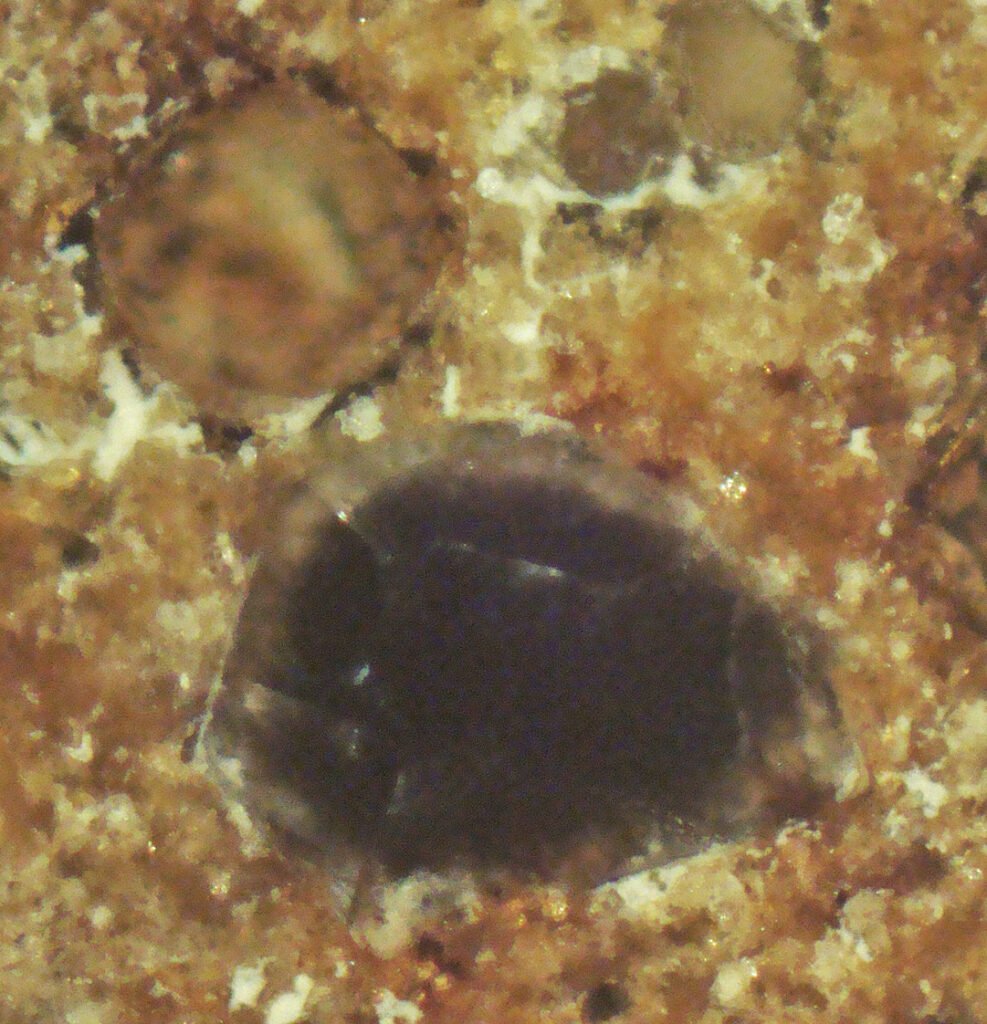
Color: Colorless, white, grey, brown-gray, blue to black.
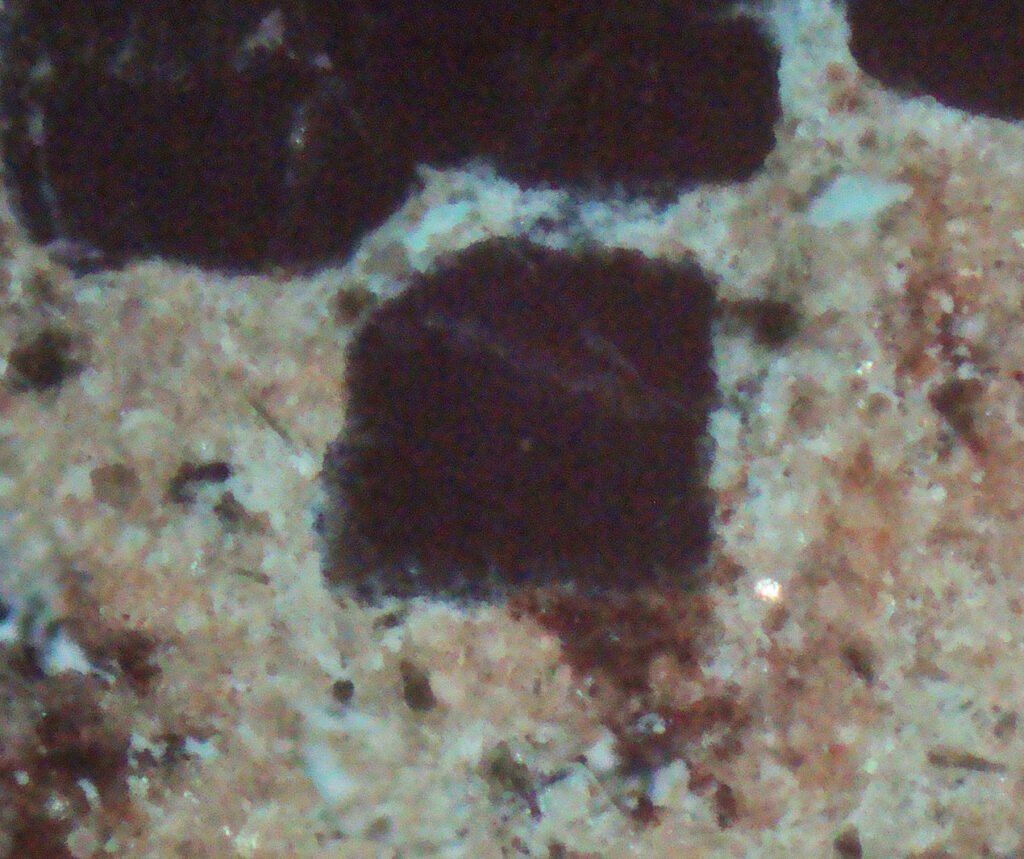
Habit: Dodecahedral crystals, may occur granular or massive.
Cleavage: {110} poor.
Tenacity: Brittle.
Twinning: On {111}.
Fracture: Irregular.
Mohs Hardness: 5.5
Parting: No.
Streak: White.
Lustre: Vitreous.
Diaphaneity: Transparent.
Density (g/cm³): 2.3 – 2.4
2. Geology and Deposits
Nosean is restricted to alkaline volcanic rocks, mainly phonolites, leucitites and nephelinites. The Sodalite Group occurs in rocks such as phonolites, alkali-basalts, trachytes and feldspathoid basalts.
3. Mineral Associations
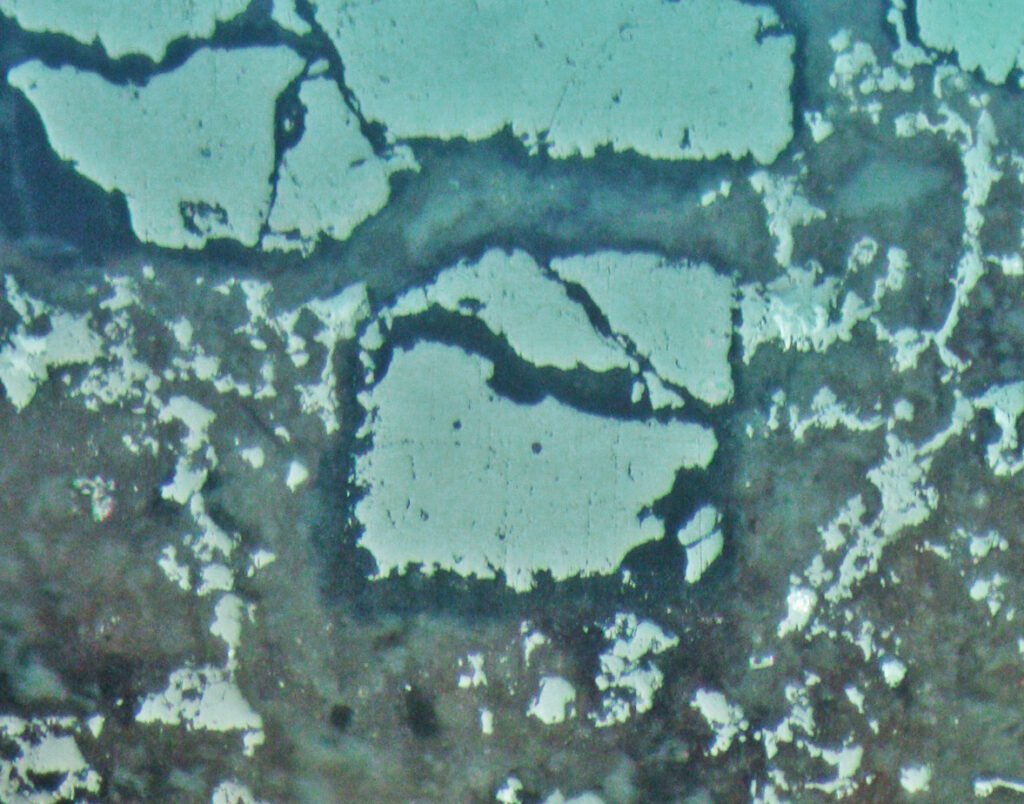
Nosean occur associated with potassic feldspars (sanidine), other feldspathoids (nepheline, leucite, sodalite), micas (biotite, phlogopite), clinopyroxenes (augite, aegirine-augite), zeolites (natrolite), sulfides (pyrite), oxides (magnetite, ilmenite), garnet, zircon, titanite and calcite.
More rarely with schäferite, liebenbergite, colusite and minerals from the Whitlockite Group.
4. Transmitted Light Microscopy
Refraction indices: nε: 1,488 no: 1,495
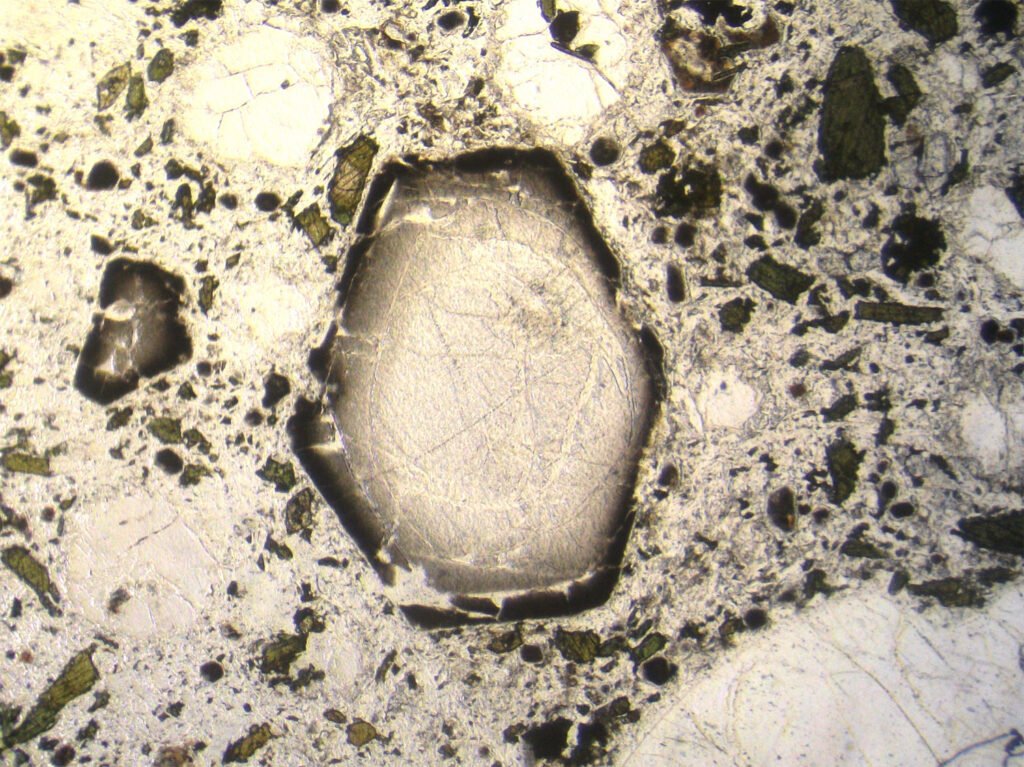
PLANE POLARIZED LIGHT – PPL
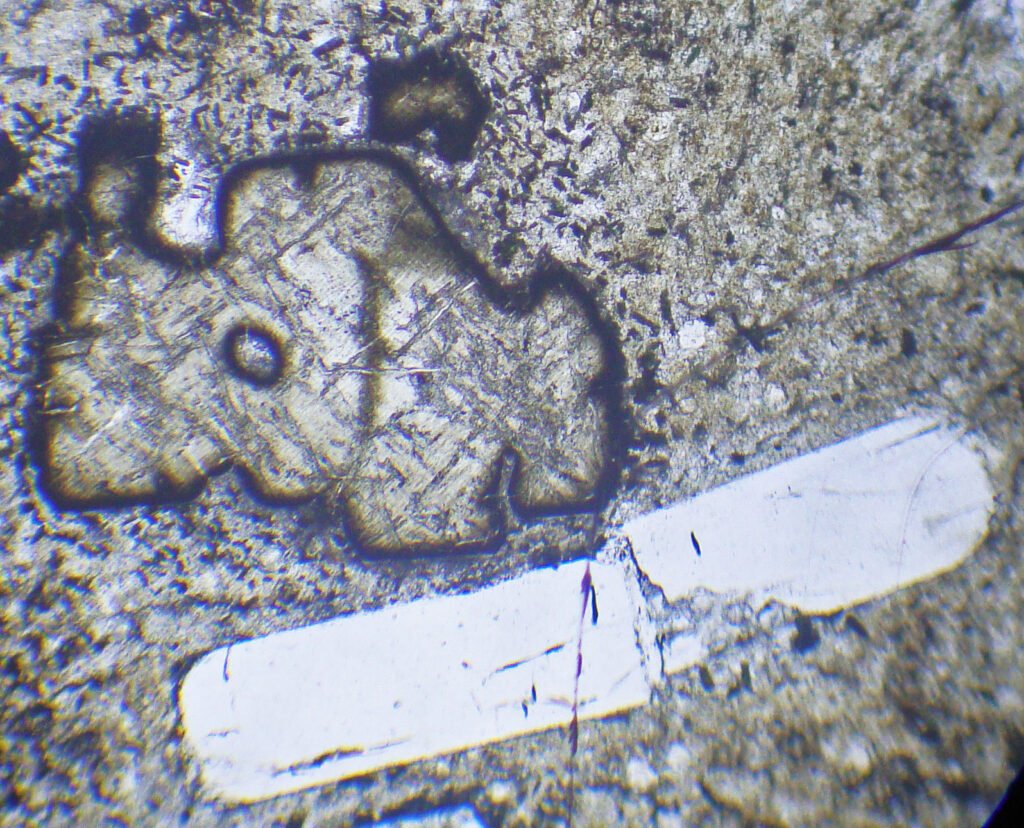
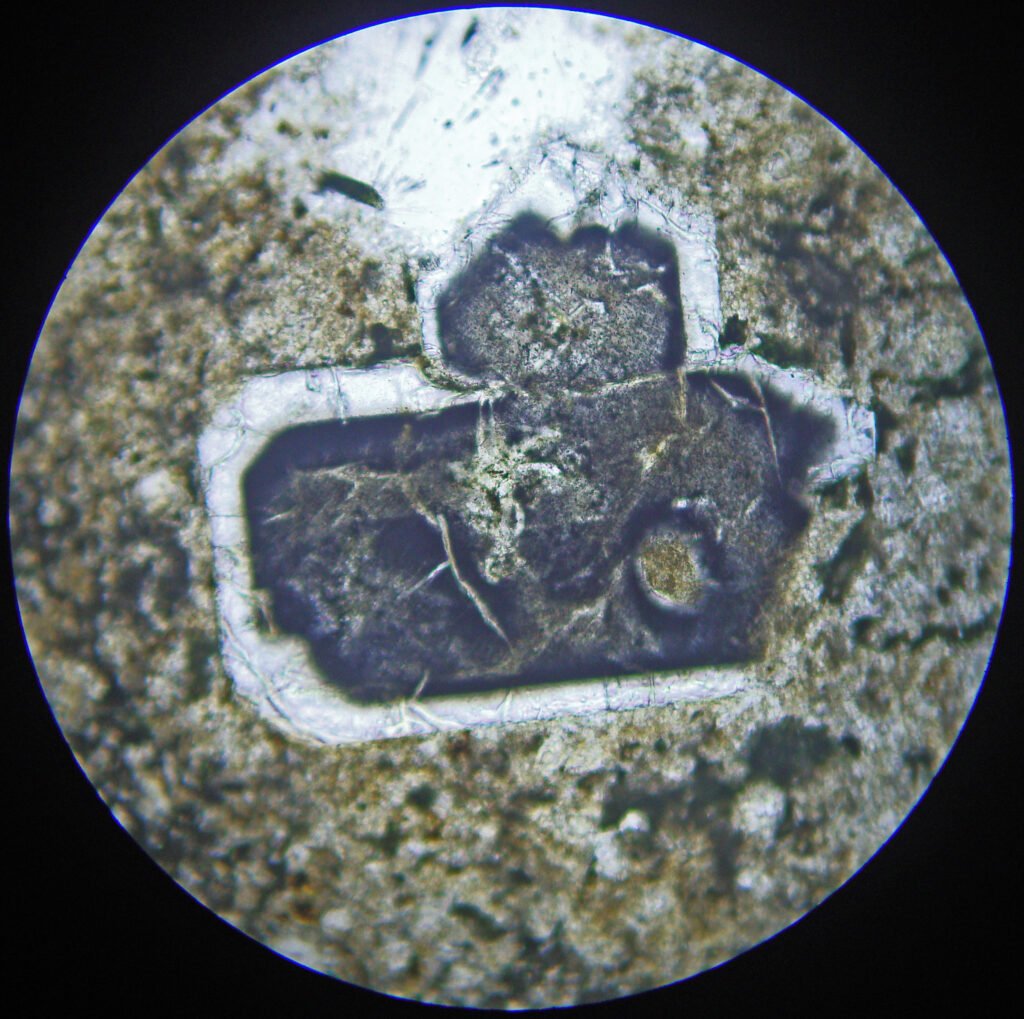
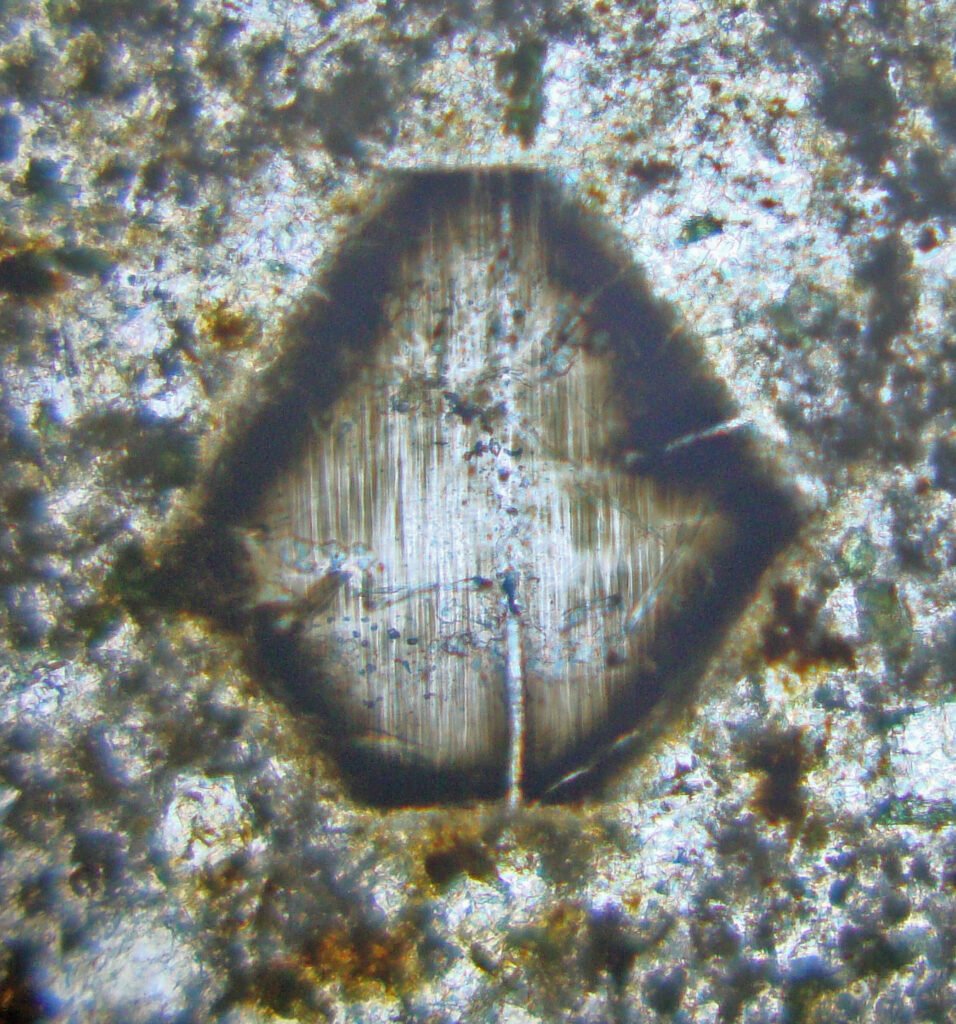
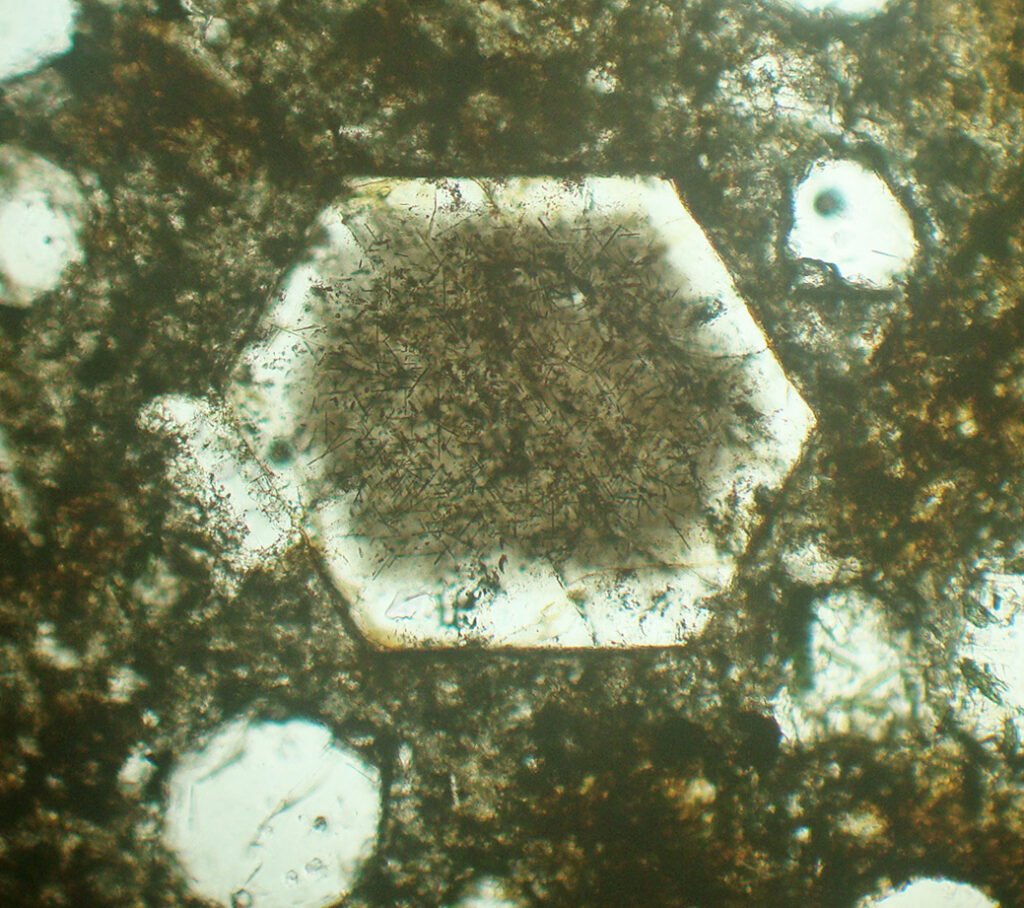
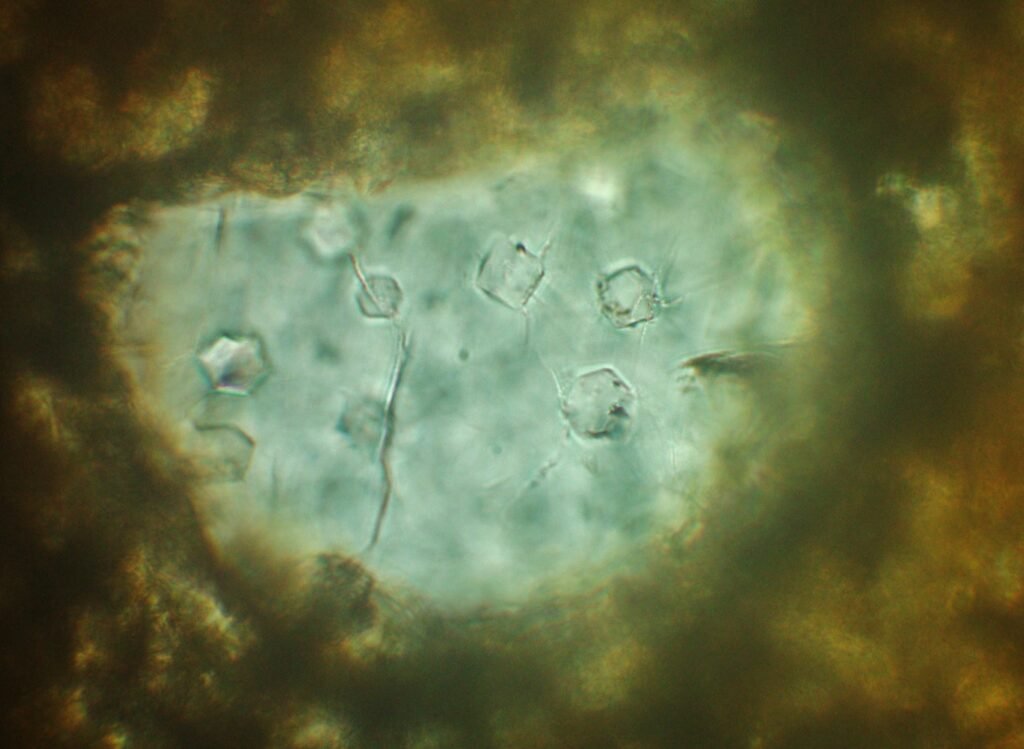
Color / Pleochroism: Usually colorless to gray. It may be pale blue, but it is not pleochroic.
Relief: Very low (negative).
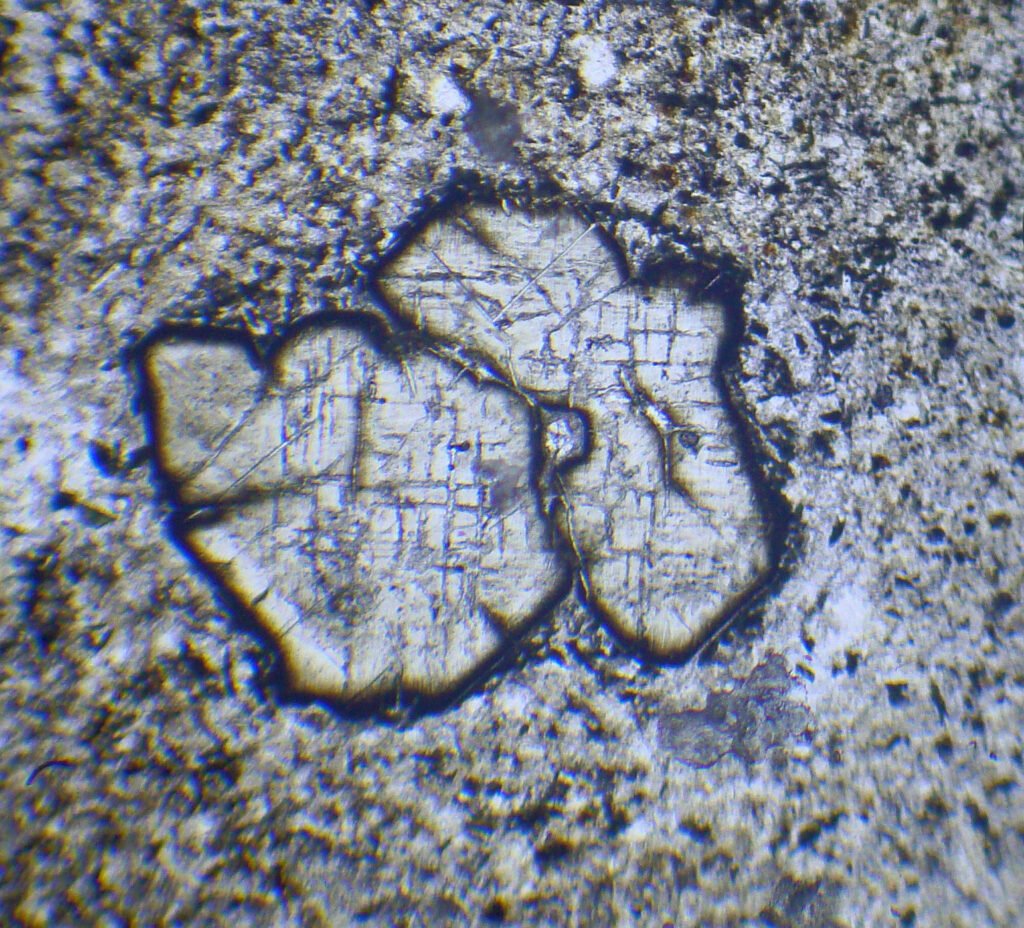
Cleavage: {110} poor, usually not visible under a microscope.
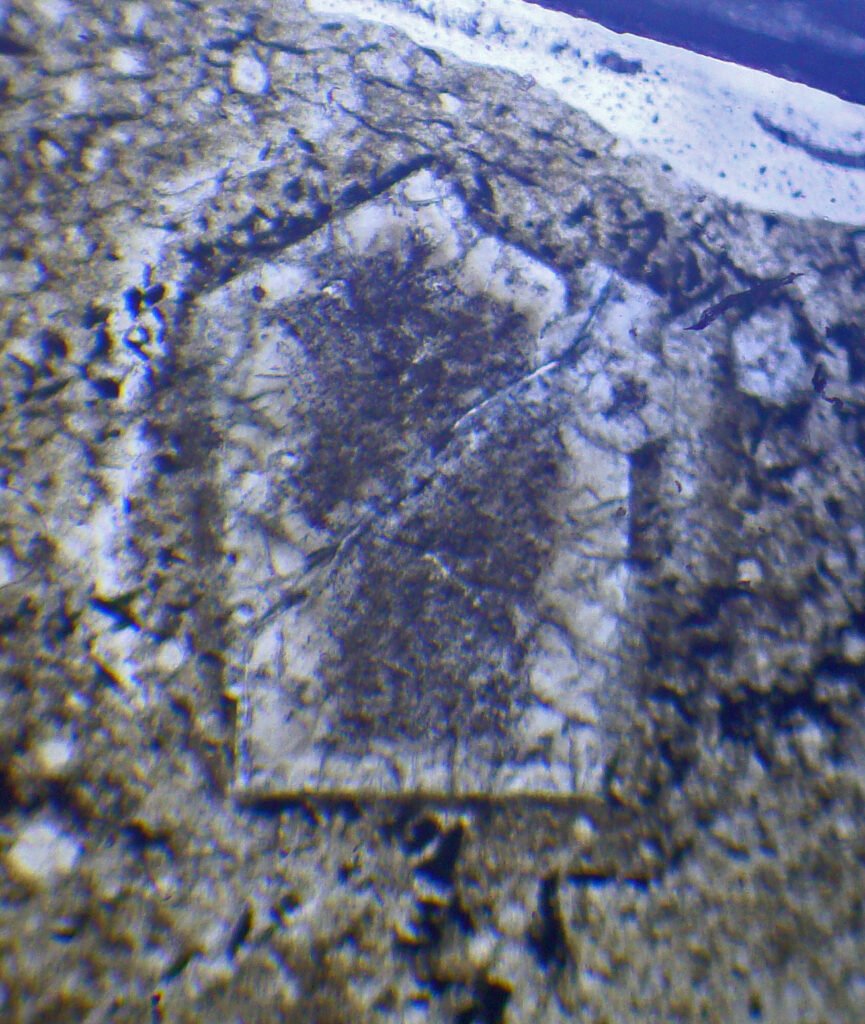
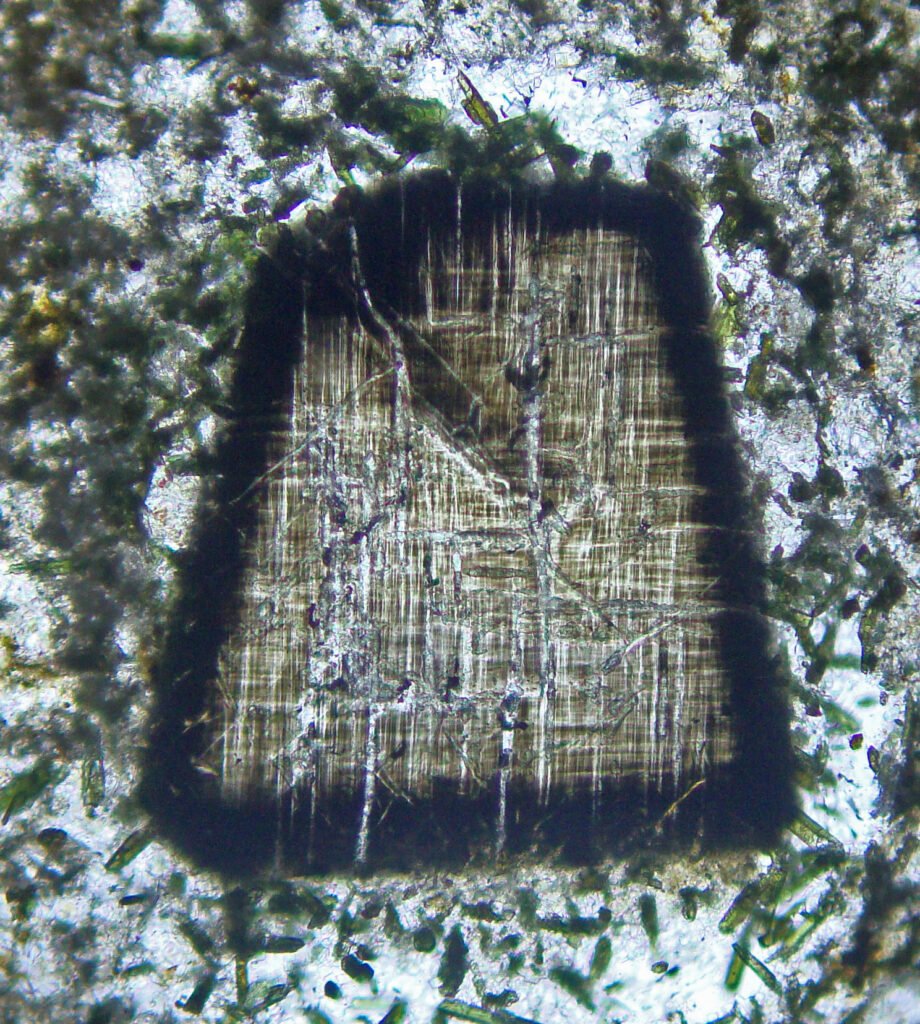
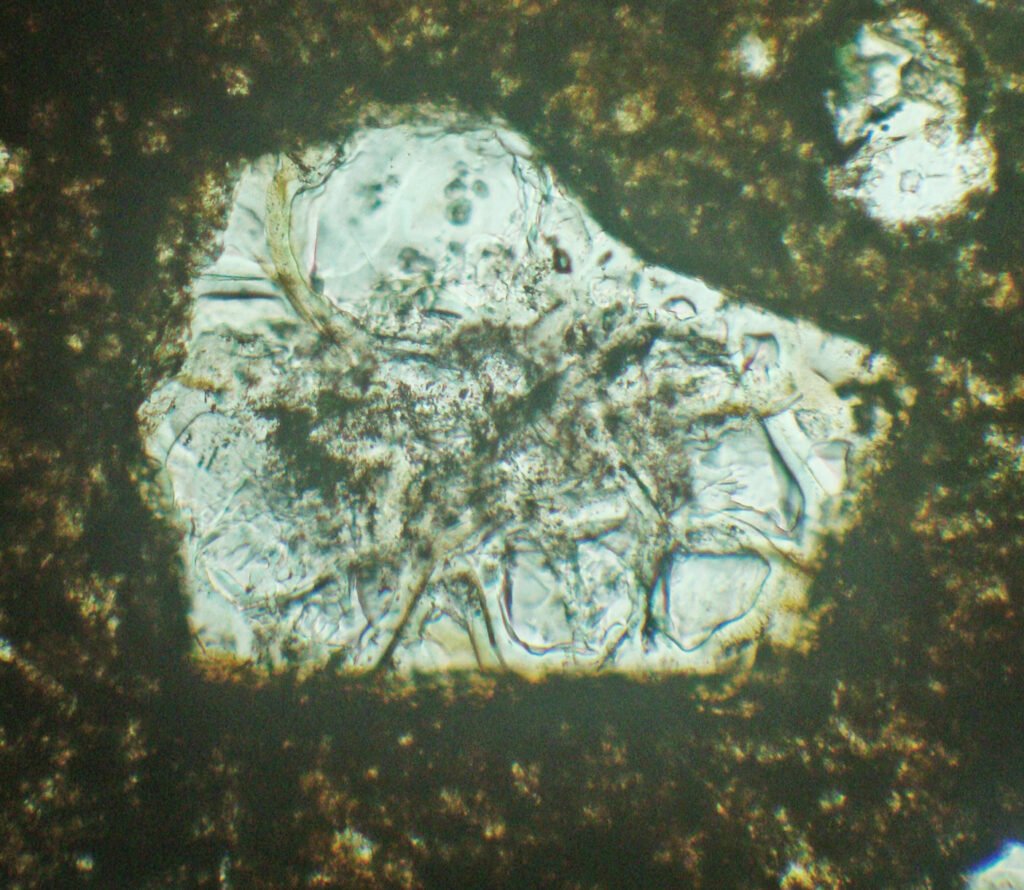
Habits: Dodecahedral, elongated pseudohexagonal prisms (sections with 6 sides), anhedral grains, clouded by inclusions.
Edges may be black. There may be inclusions in concentric zones.
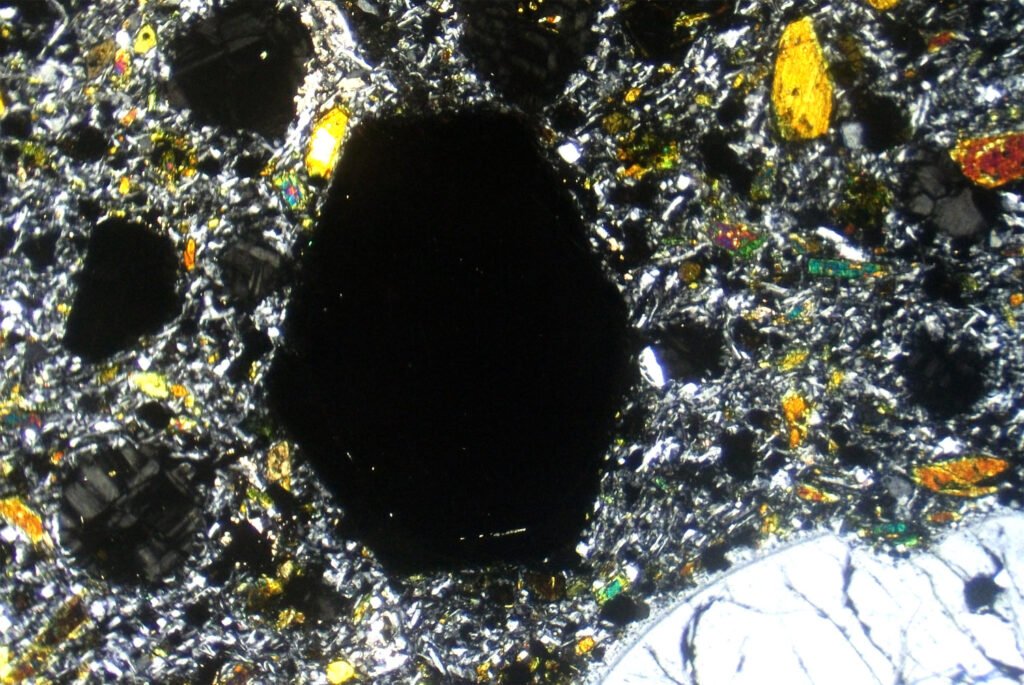
CROSSED POLARIZED LIGHT – XPL
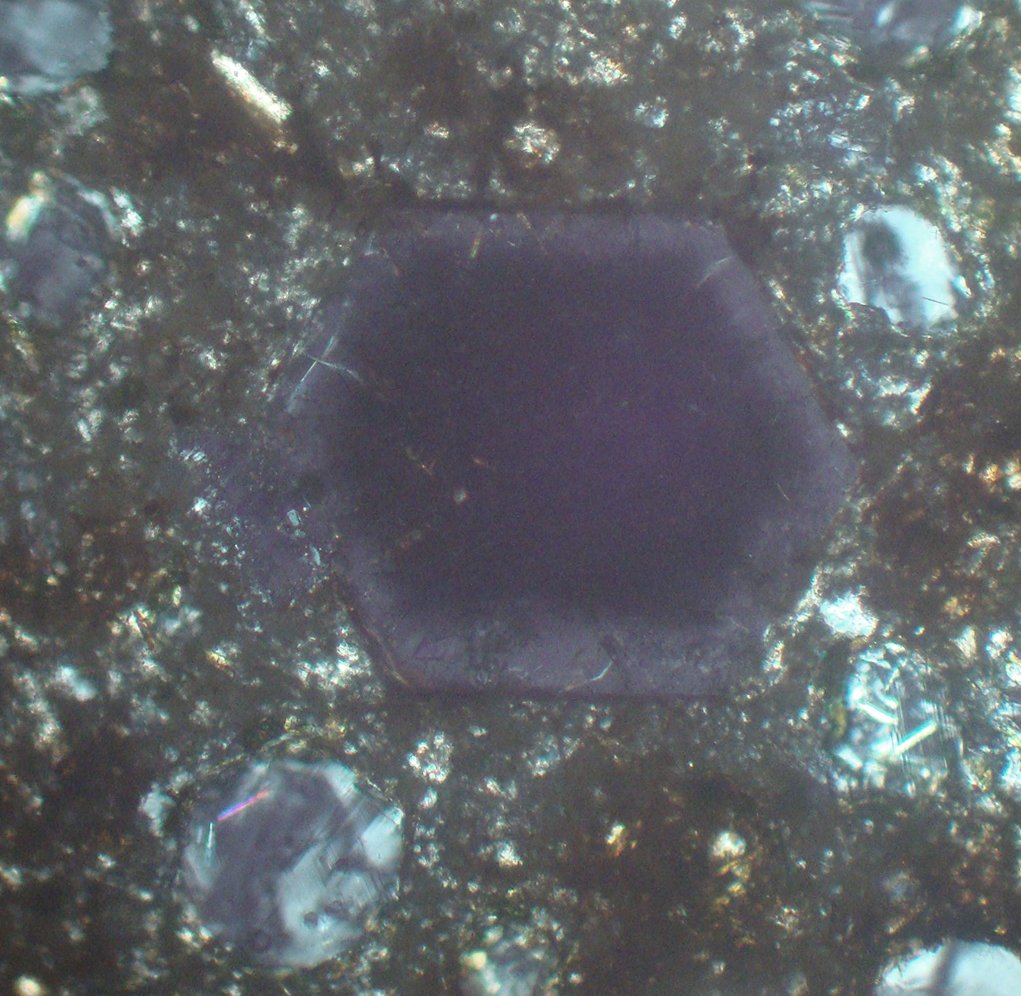
Birefringence and Interference Colors: Isotropic, but can simulate weak birefringence if it contains inclusions.
Extinction: Isotropic.
Elongation sign: Isotropic.
Twins: Simple twins.
Zoning: Frequently zoned.
CONVERGENT LIGHT
Character: Isotropic.
2V angle: Isotropic.
Alterations: alters to fibrous zeolites, usually natrolite, which develop and propagate from fractures. It also alters, by weathering, to clay minerals, calcite and cancrinite.
May be confused with: the Sodalite Group also includes sodalite and haüyne. It may be impossible to differentiate members of the Sodalite Group solely by their optical characteristics.
Sodalite is normally colorless, does not have abundant inclusions, and is the only one that occurs in plutonic rocks.
Haüyne is normally blue (pale or strong) on a thin section and usually contains dark inclusions that may be concentrated in sectors, planes, cores or edges.
Fluorite has excellent cleavage, much higher relief and occurs in other paragenesis.