1. Characteristics
The data below refer to forsterite; fayalite is very similar.
Crystal system: Orthorrombic, bipiramidal.
Color: Green, pale yellow, brown or white. Darker with higher Fe content.
Habit: Usually rounded crystals, can be biterminated prismatic. Massive, granular.
Cleavage: {010} imperfect, {100} imperfect. Striations paralell to elongation.
Tenacity: Brittle.
Twinning: Twins are very rare, they can occur after {100}, {011} and {012}.
Fracture: Conchoidal.
Mohs Hardness: 7
Parting: No.
Streak: White.
Lustre: Vitreous.
Diaphaneity: Transparent.
Density (g/cm³): 3.275
2. Geology and Deposits
Olivine is typical of mafic to ultramafic intrusive and extrusive igneous rocks, as well as their metamorphic counterparts. Thus, it occurs in gabbros, in syenites with feldspathoids (shonquinites), in gabbros with feldspathoids (theralites) and in peridotites and pyroxenites (sagvandites and websterites). Dunite is a rock formed predominantly by olivine.
Olivine also occurs in trachytoids (shoshonites), alkali and subalkaline basalts (tholeiitics), and foidites (e.g., sodalitites). It is found in rocks with melilite, such as thurjaites and melilitites. Also in lamproites, kimberlites and some platinum ores. Fayalite can occur in granitic pegmatites, in felsic plutonic rocks and in metamorphosed Fe-rich sediments.
Olivine also occurs in chalcosilicate rocks formed by contact metamorphism (skarns) on dolomitic limestones. Some types of meteorites have olivines. Accumulates in the sands of beaches on oceanic islands.
3. Mineral Associations
In gabbros, basalts, picrites and basanites it is associated with plagioclases, clinopyroxenes, magnetite, ilmenite and analcime. It also occurs with feldspathoids (leucite, nosean, sodalite, nepheline, etc.).
Other minerals that can occur in association are chromite, spinel, orthopyroxenes (enstatite-ferrosilite), clinopyroxenes (augite, pigeonite, diopside), dolomite, calcite and phlogopite (in marble), ludwigite, kamacite, quartz, taenite, serpentine (antigorite), brucite, corundum, amphibole (arfvedsonite, hedenbergite), etc.
4. Transmitted Light Microscopy
Refraction indices: nα: 1.636 – 1.730 nβ: 1.650 – 1.739 nγ: 1.669 – 1.772
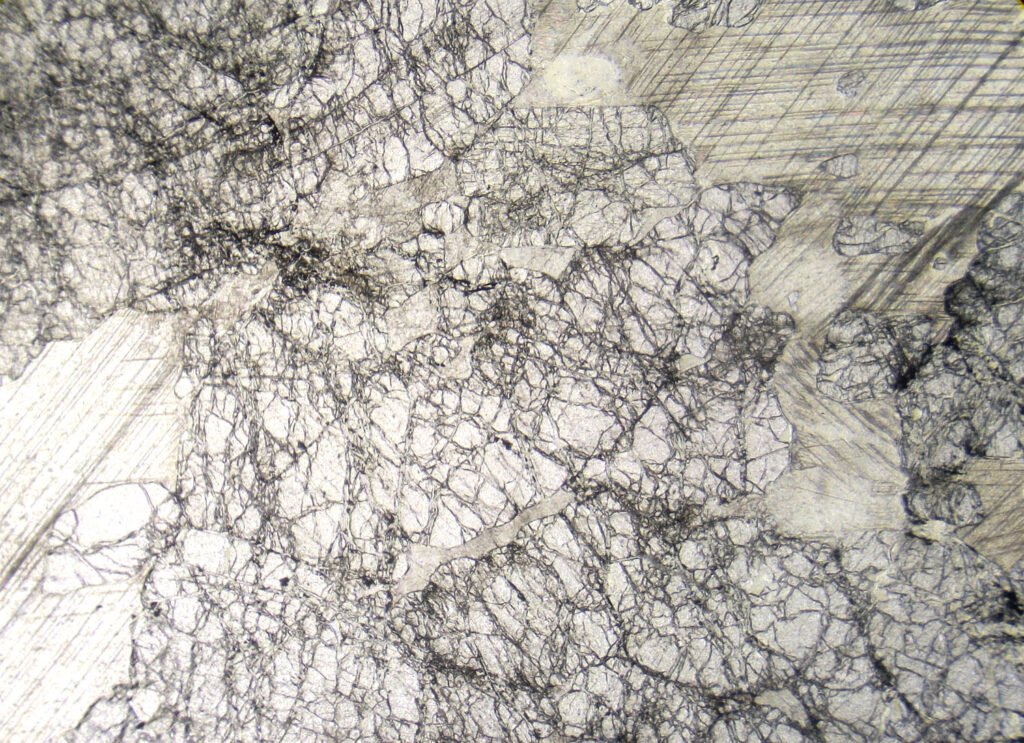
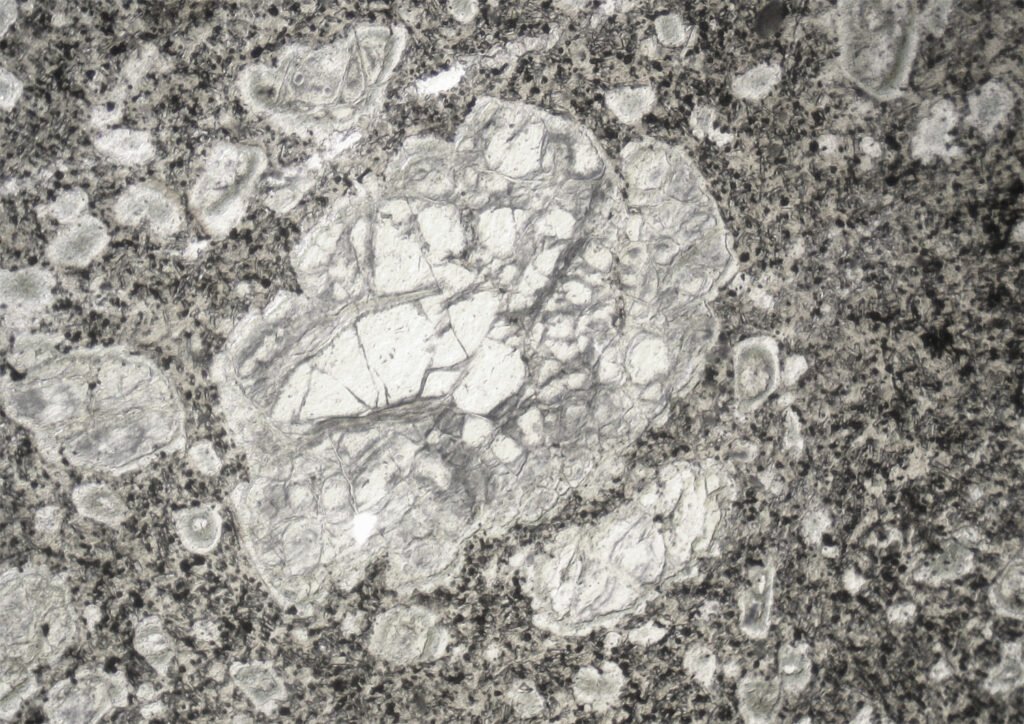
PLANE POLARIZED LIGHT – PPL
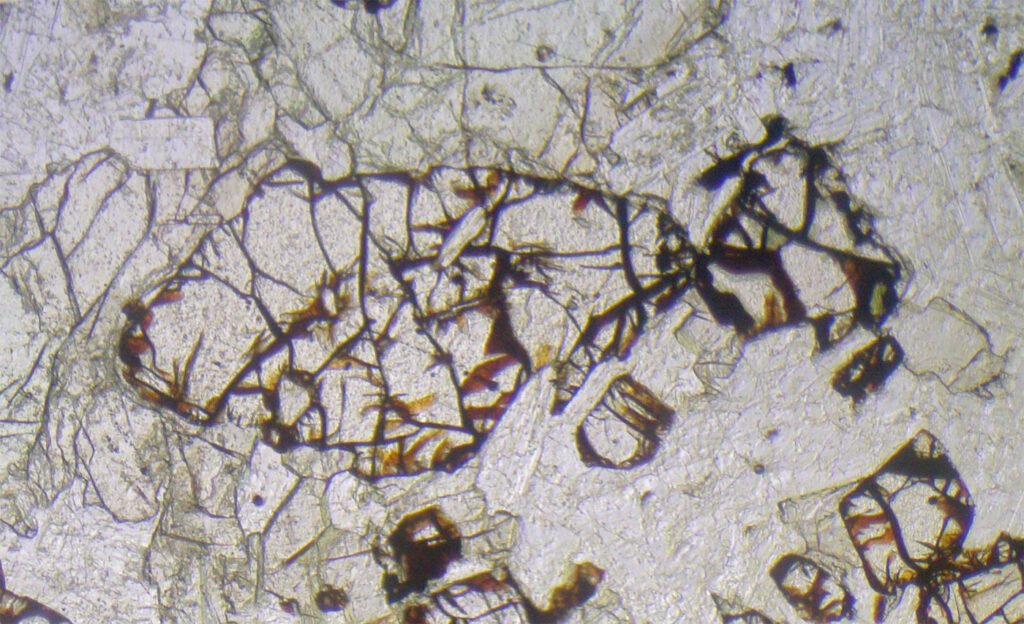
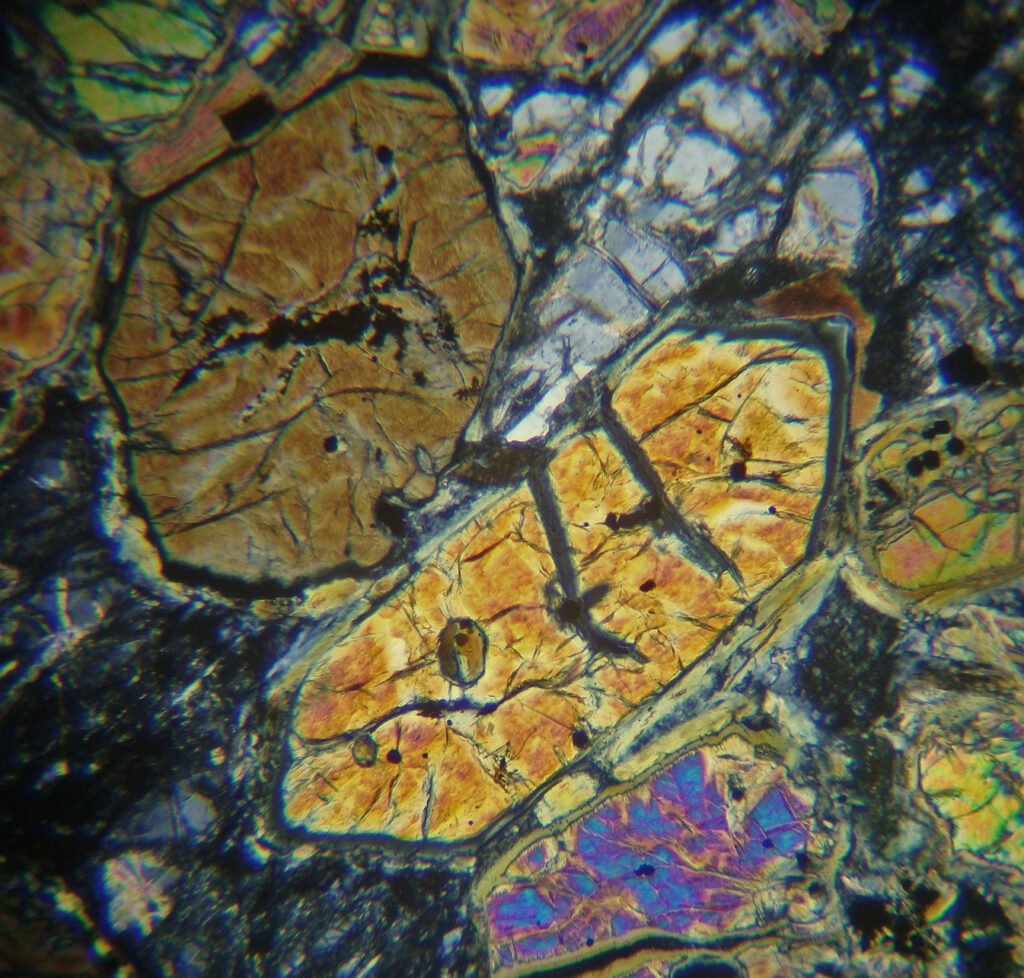
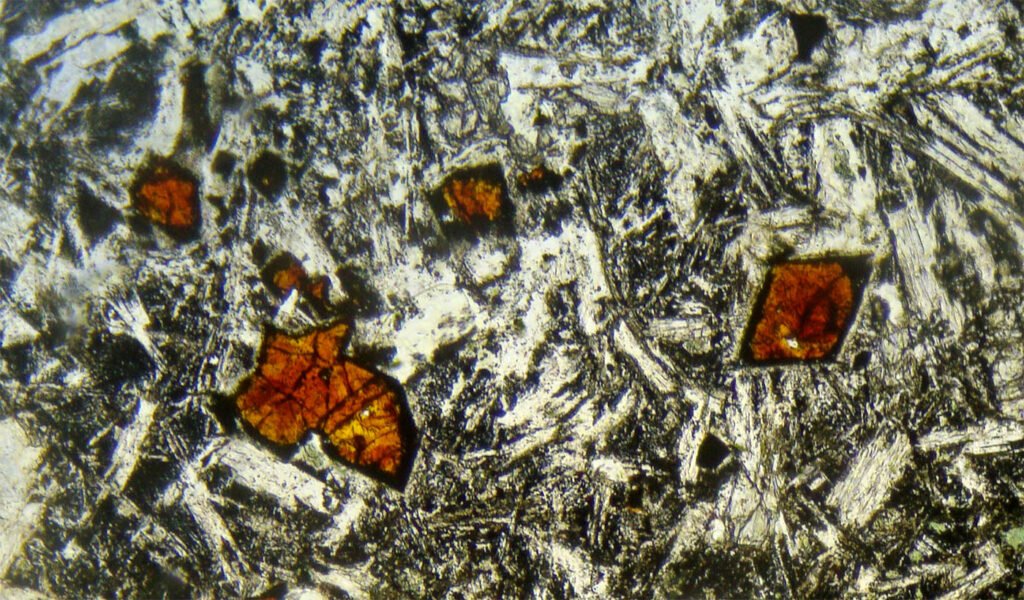
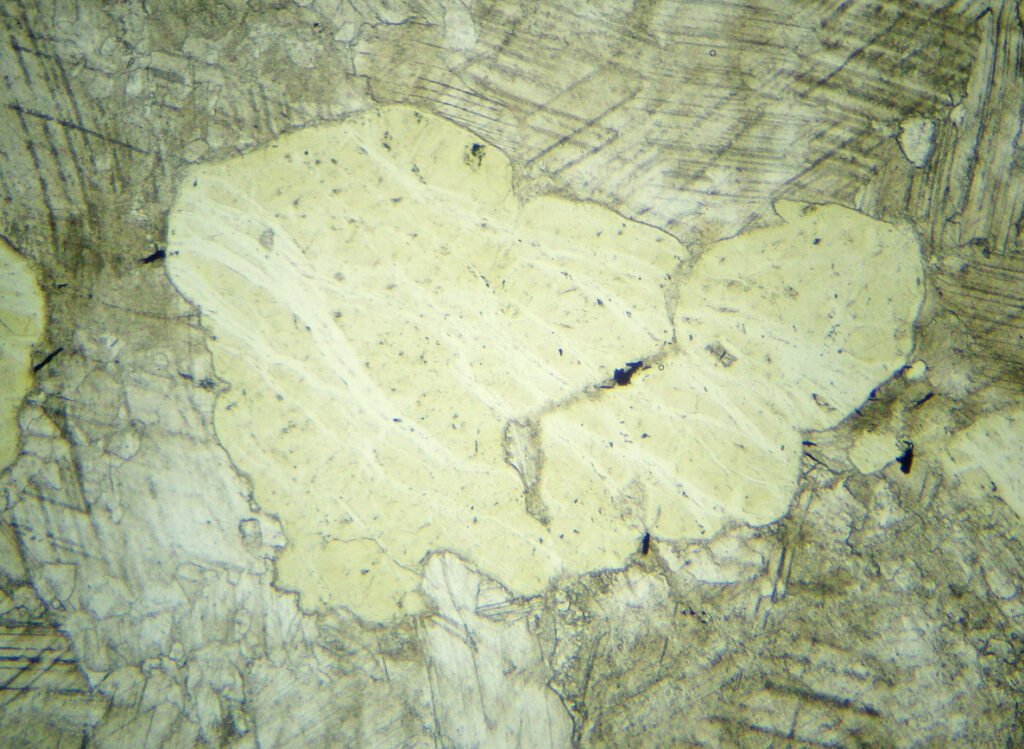
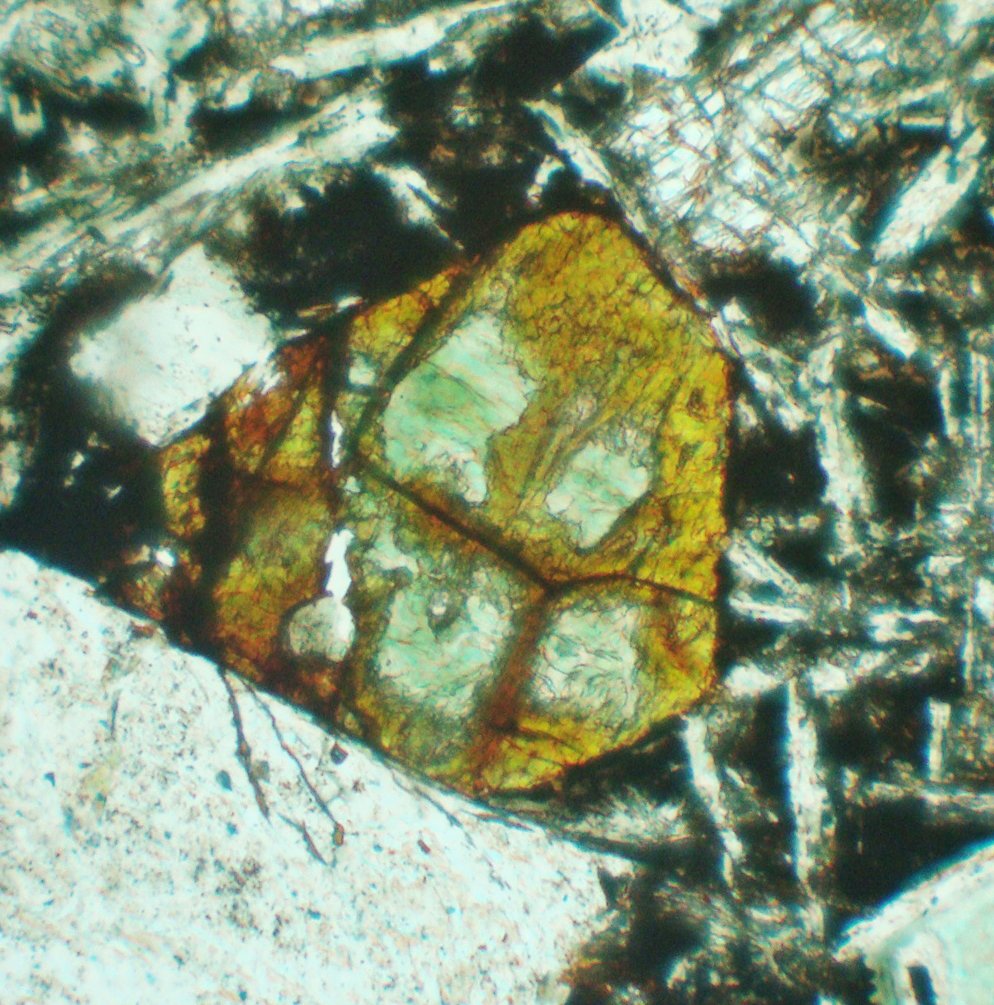
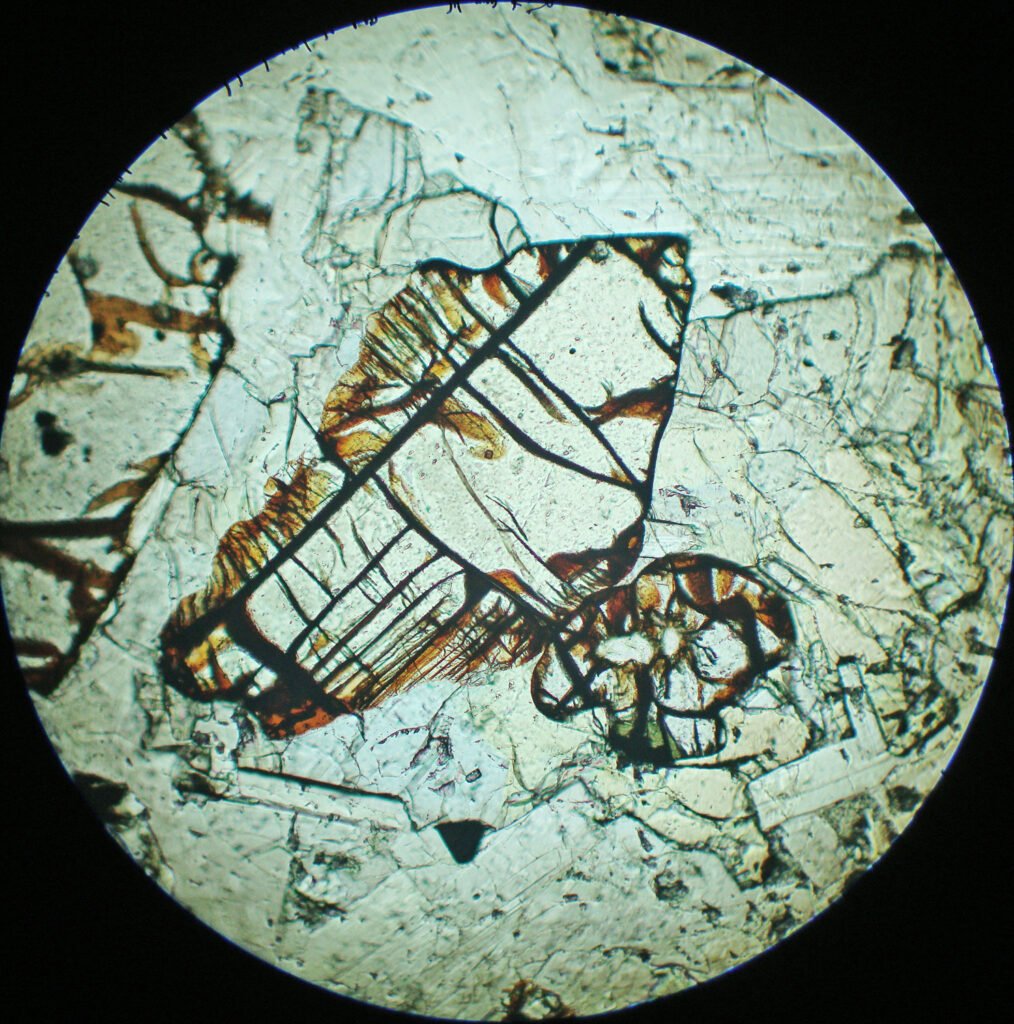
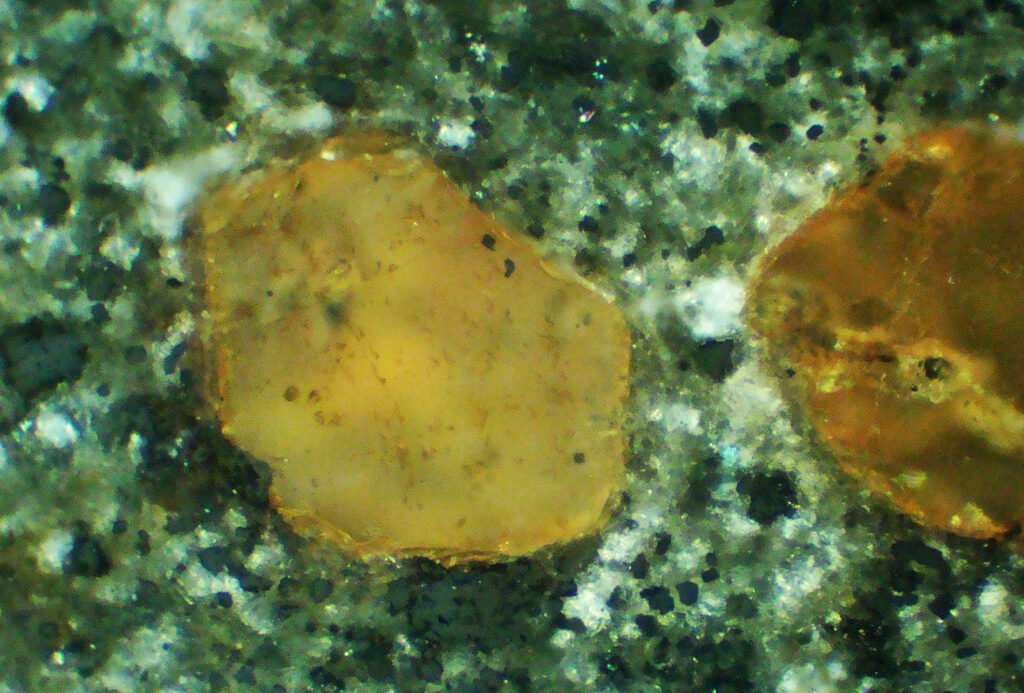
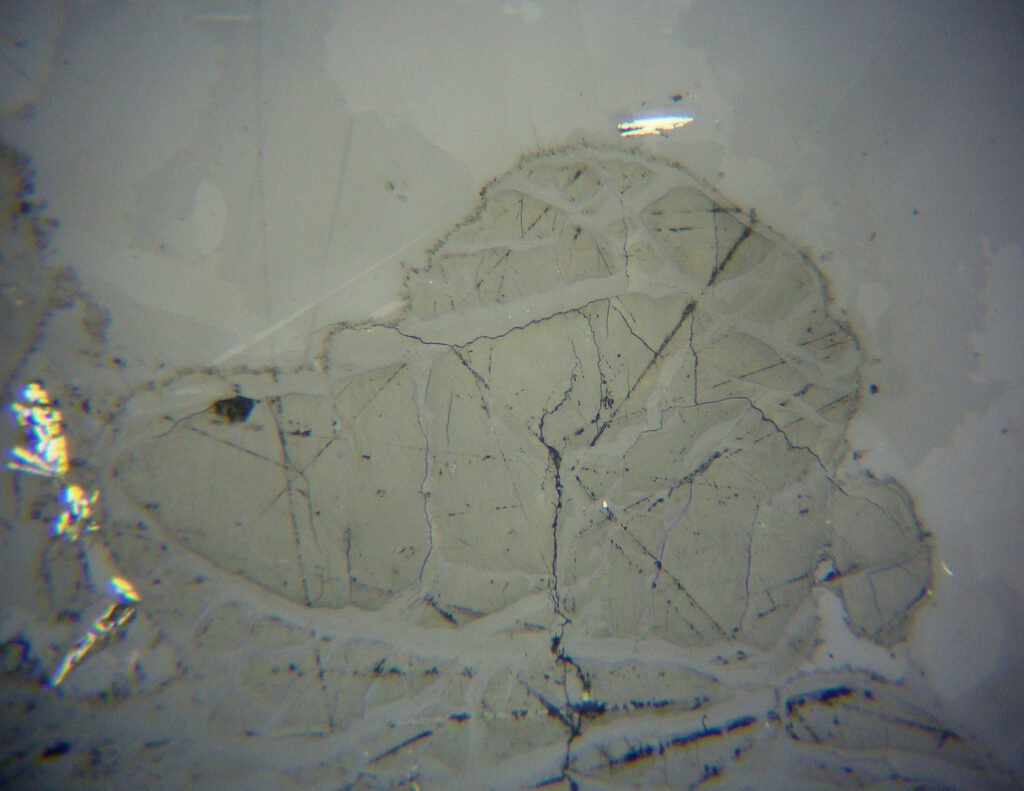
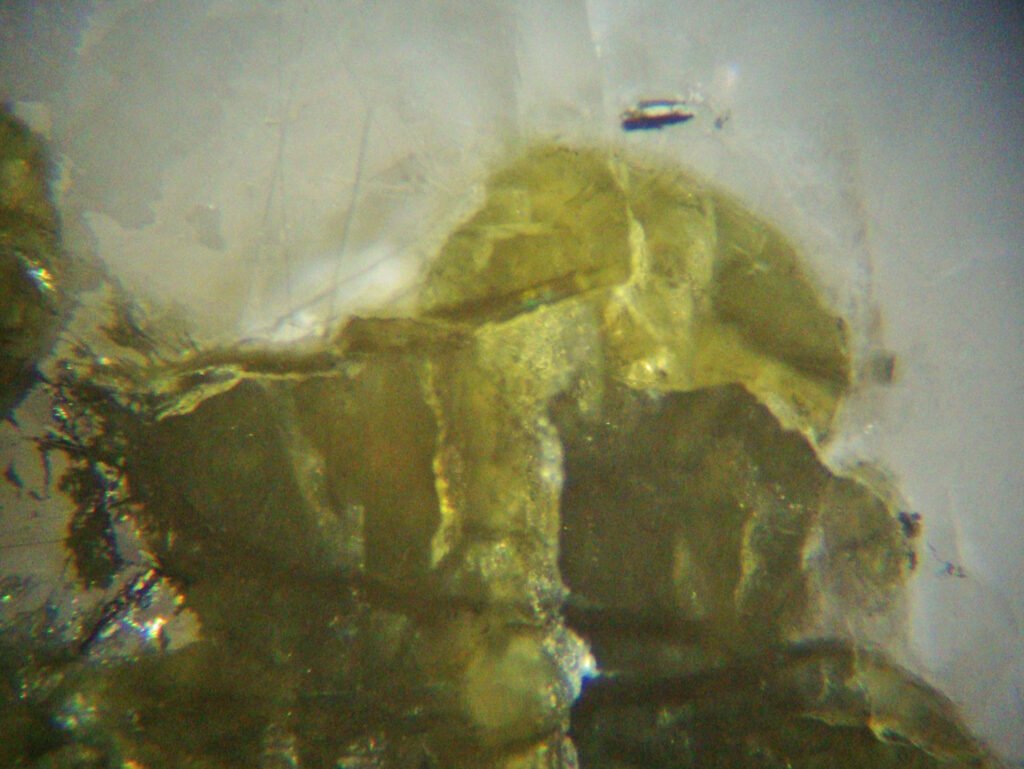
Color / Pleochroism: Colorless. It is rarely pale greenish-yellow with very diagnostic pale yellow pleochroism, due to higher Fe contents.
Relief: Moderate to extremely high.
Cleavage: {010} and {001} poor cleavages, normally not visible under a microscope. Fe-rich members (tending to fayalite) may show moderate {010} cleavage.
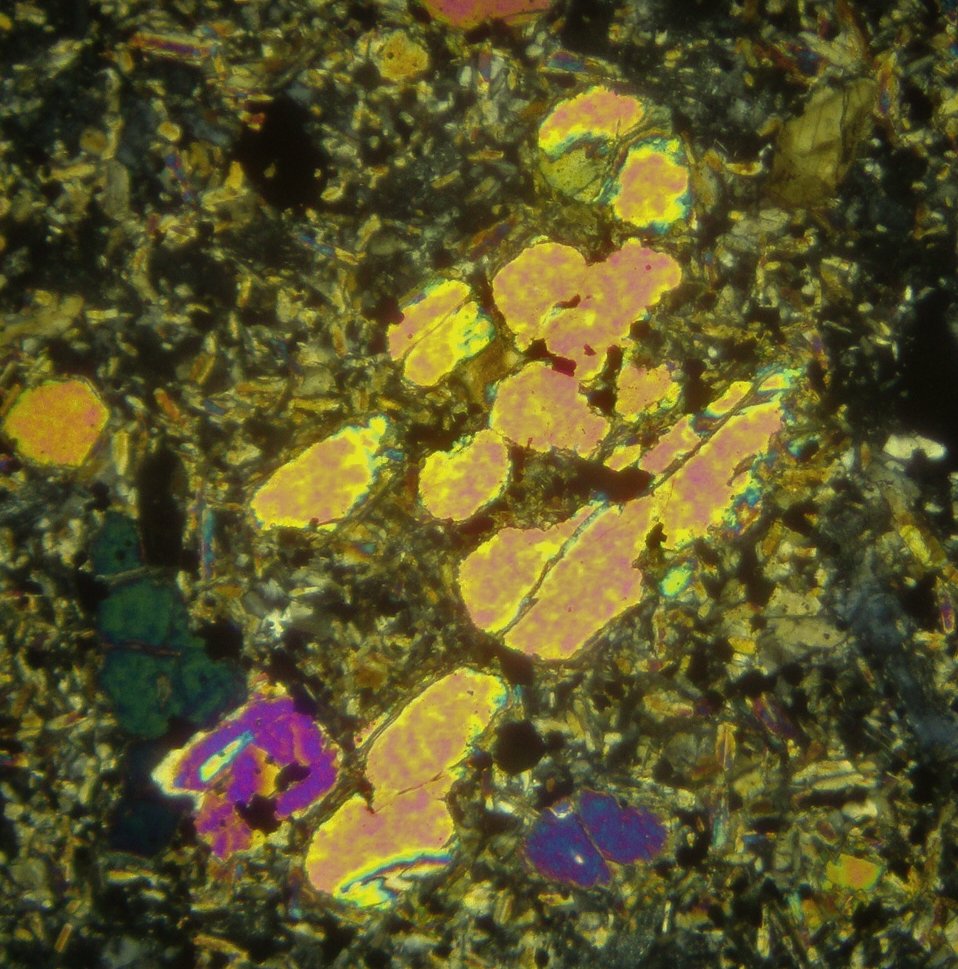
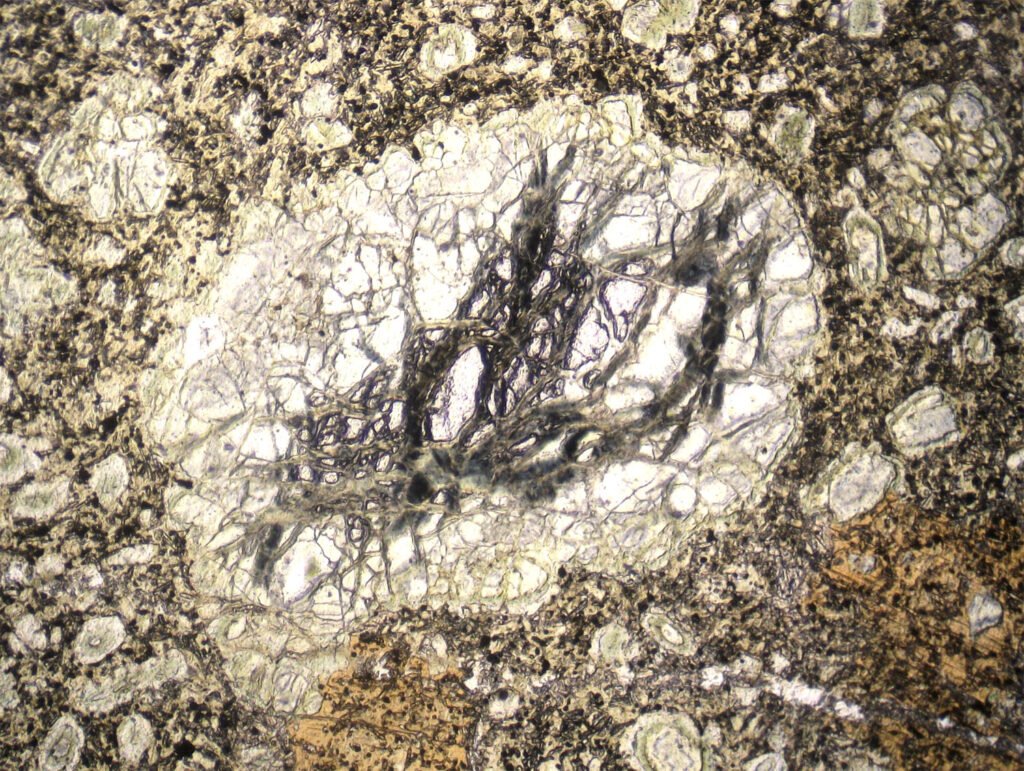
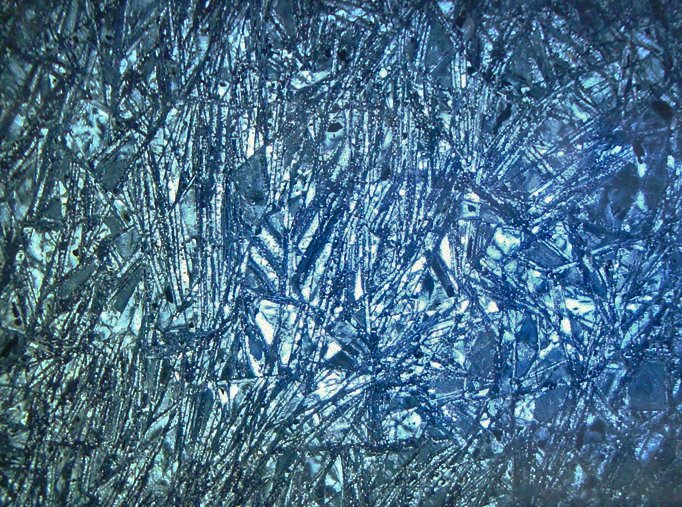
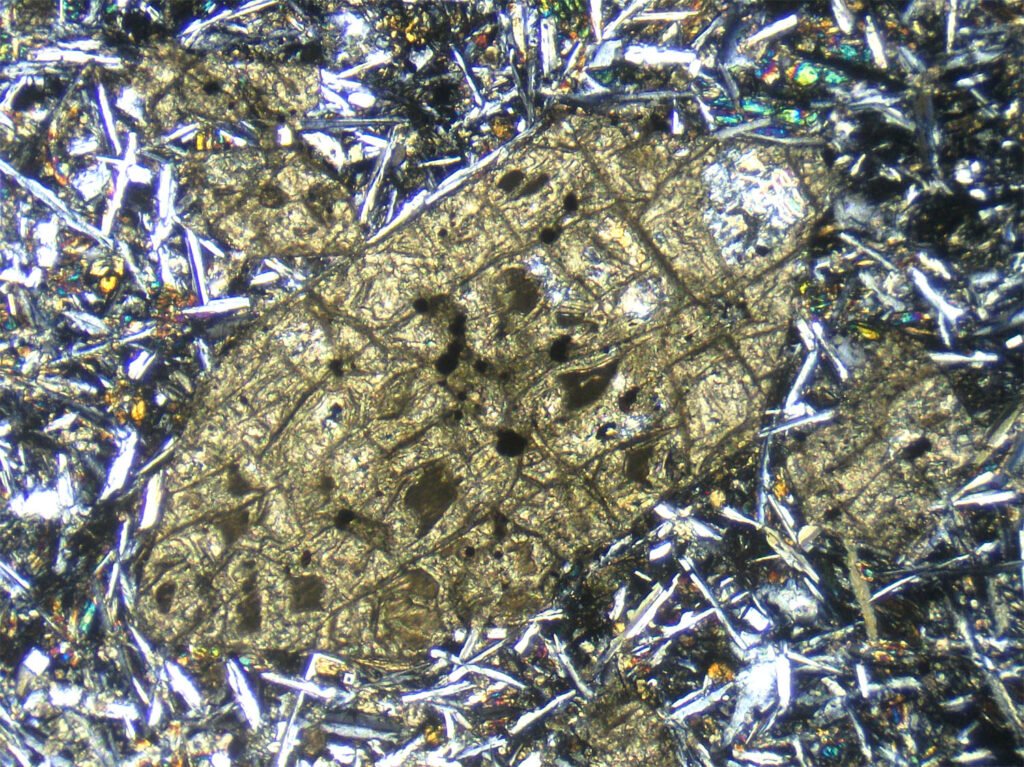
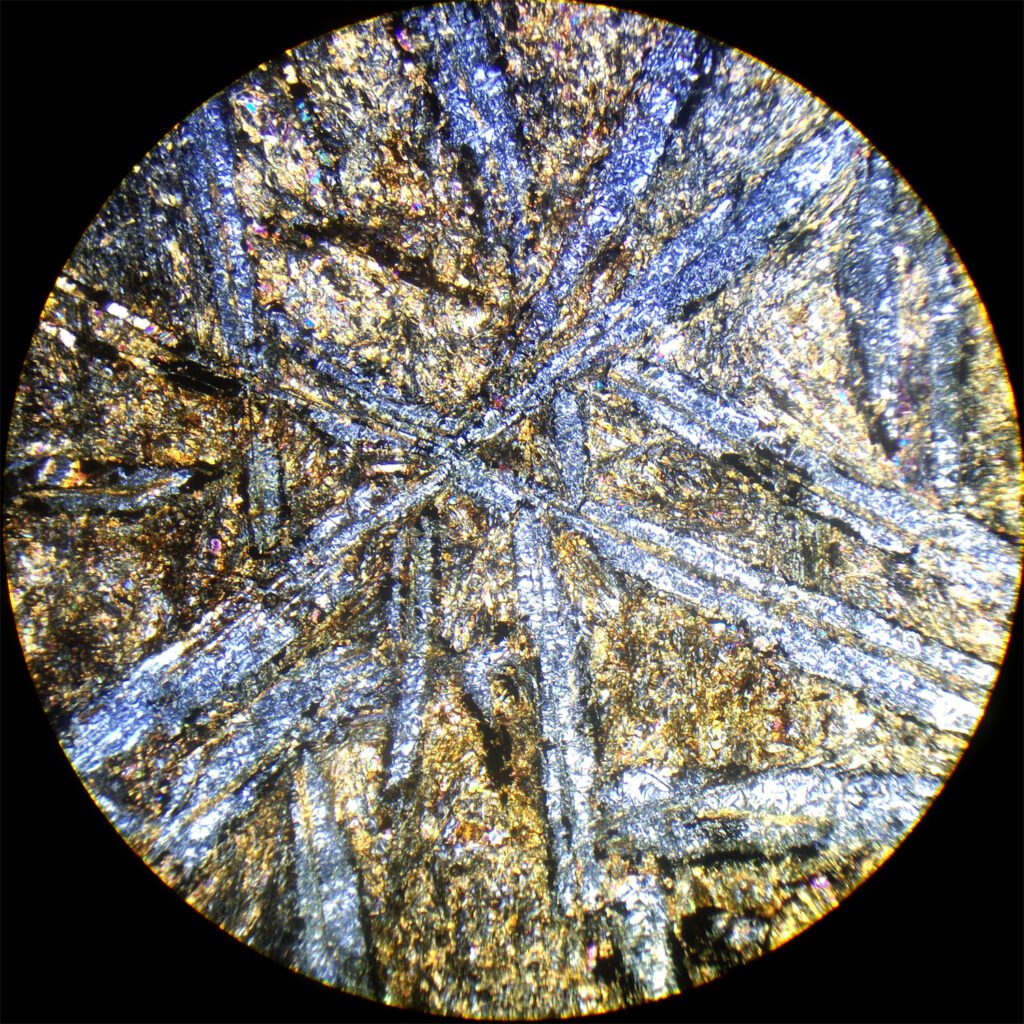
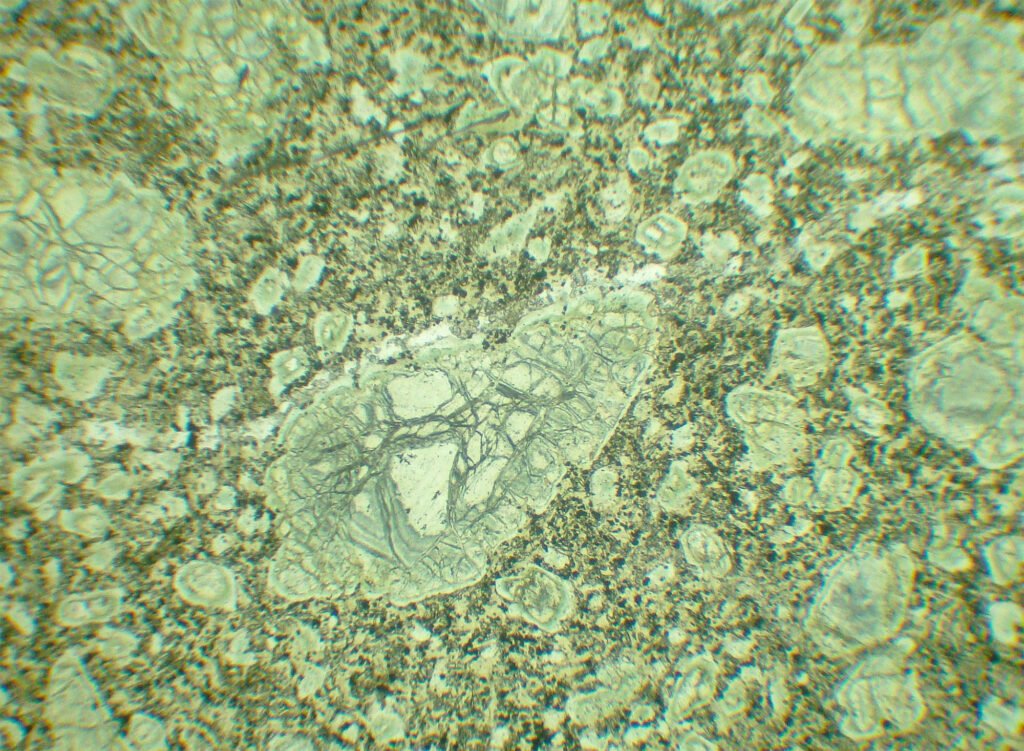
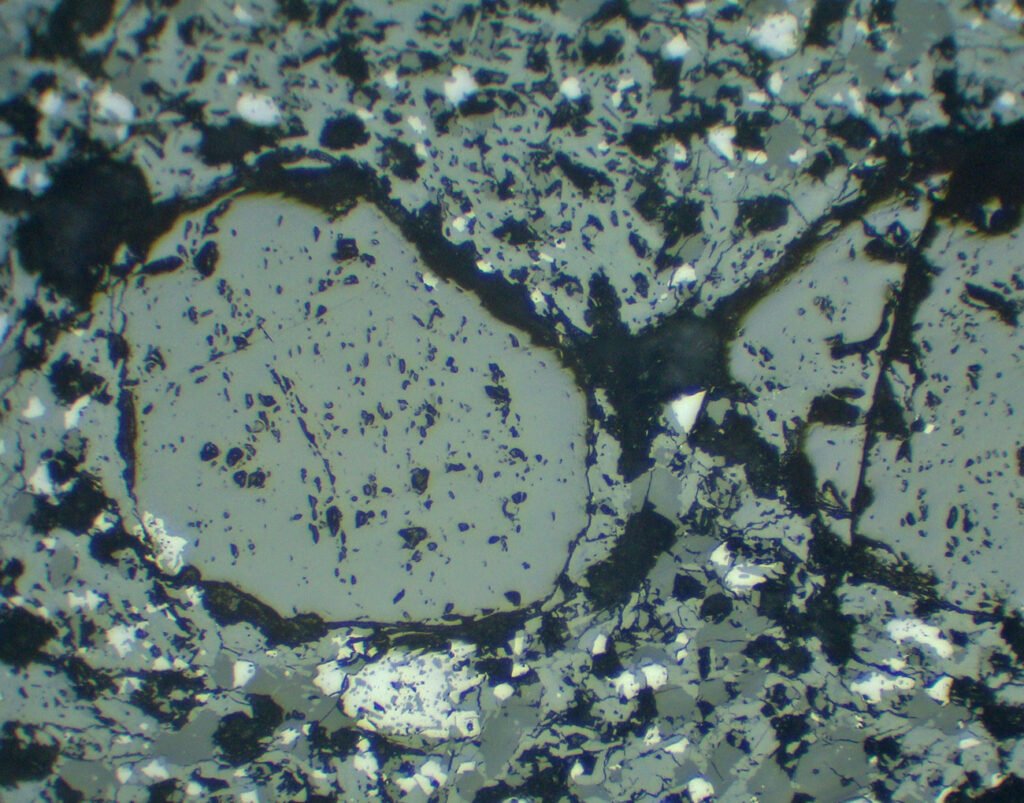
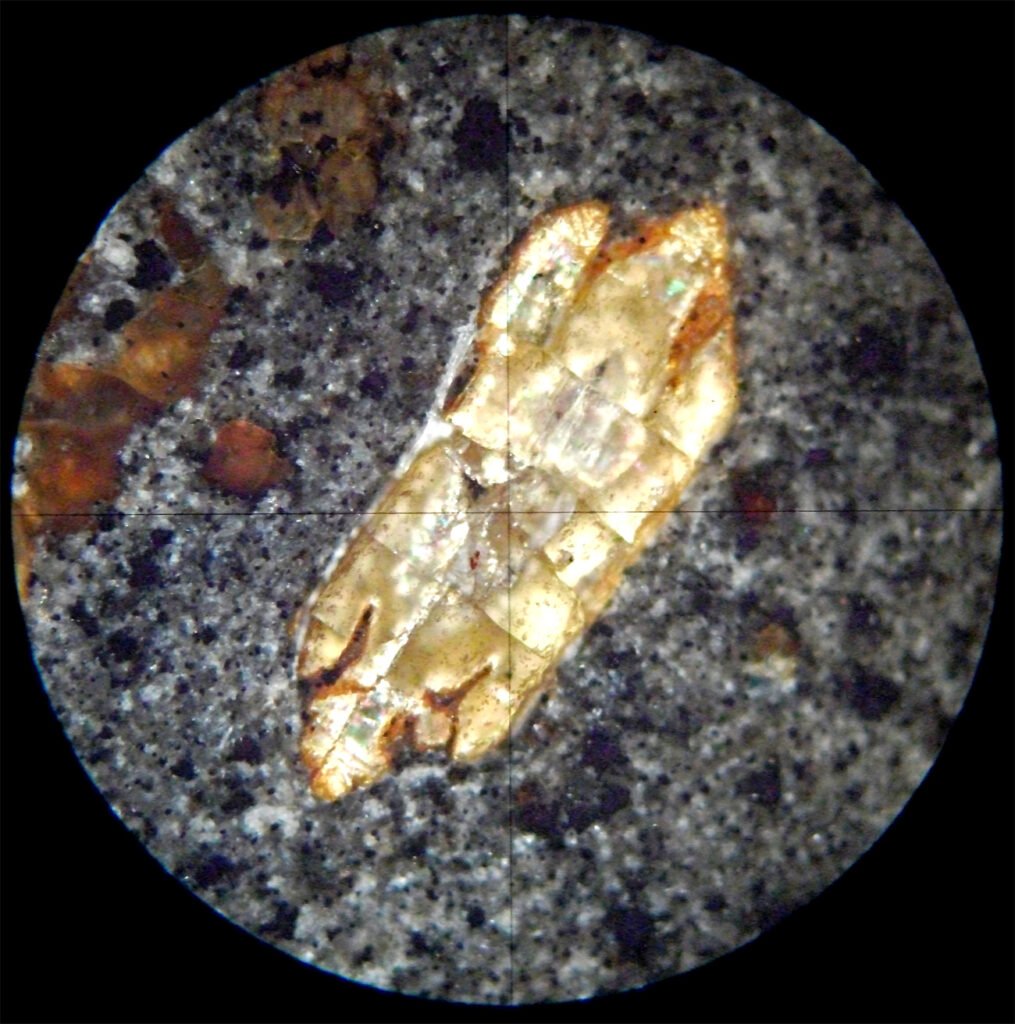
Habits: Anhedral crystals, more rarely subhedral, always tending to roundish. In volcanic rocks it can form euhedral prismatic phenocrysts, with hexagonal or octagonal sections. In glassy volcanic rocks it can be skeletal. In komatiites it can be acicular (“spinifex” texture). Fractures are usually abundant, very irregular, containing alteration materials (“iddingsite” and/or various others).
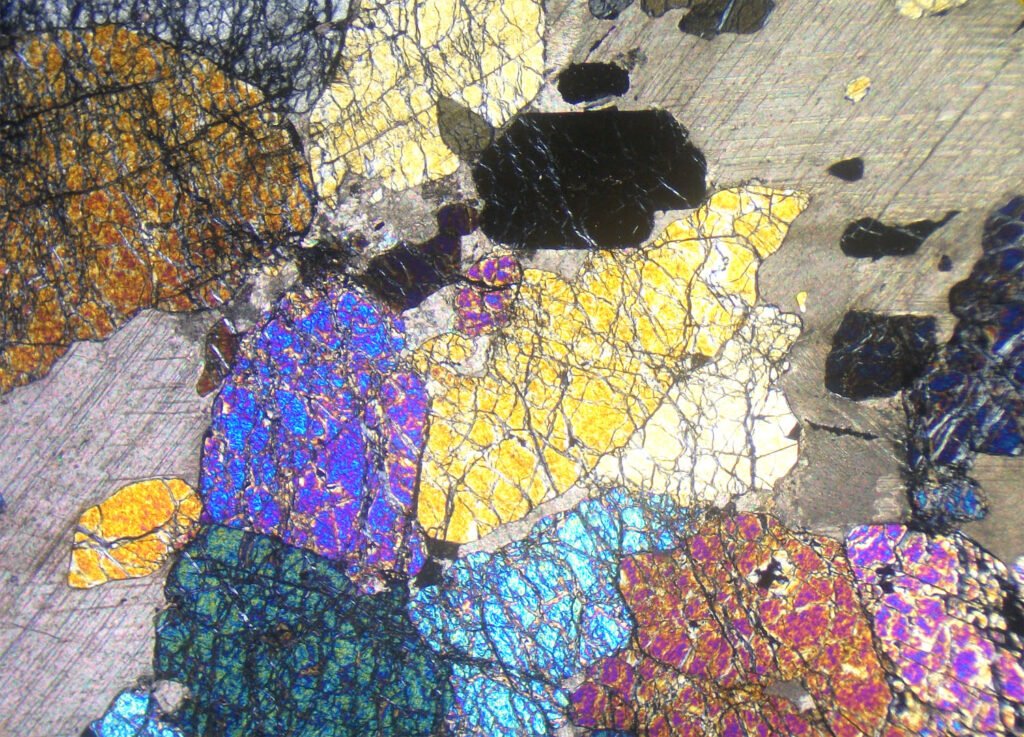
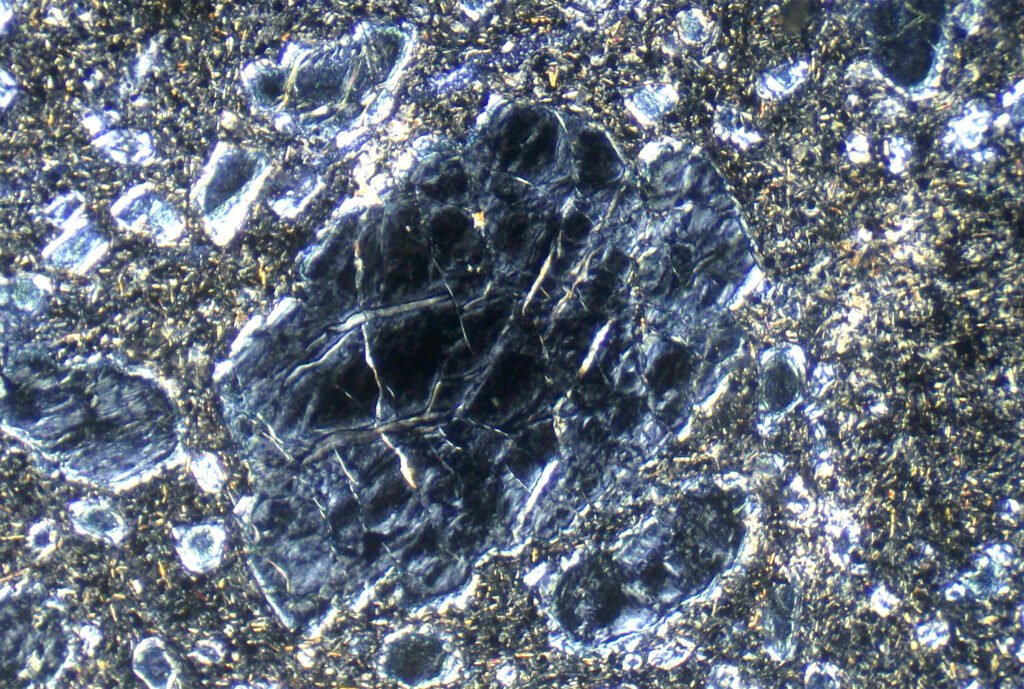
CROSSED POLARIZED LIGHT – XPL
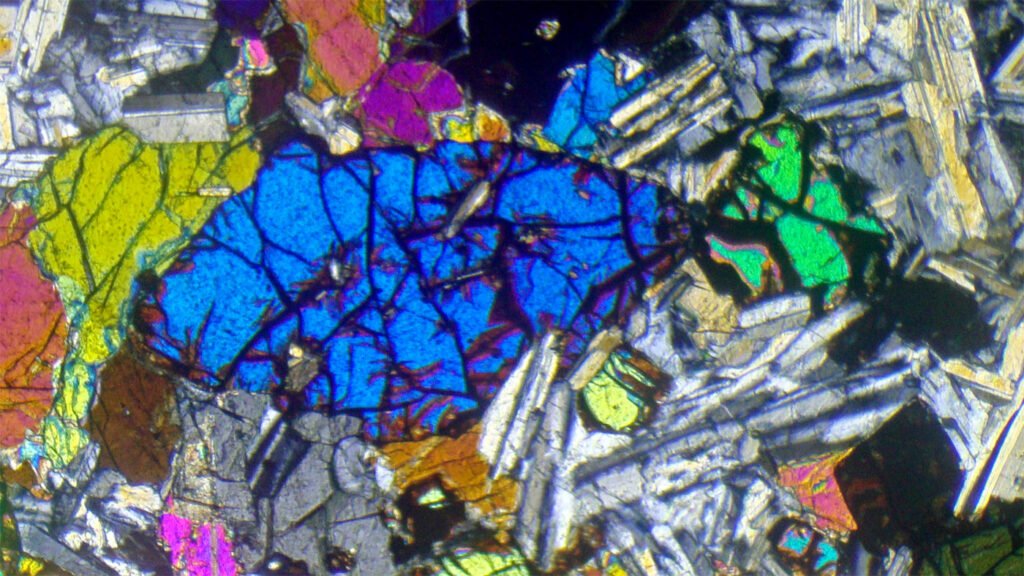
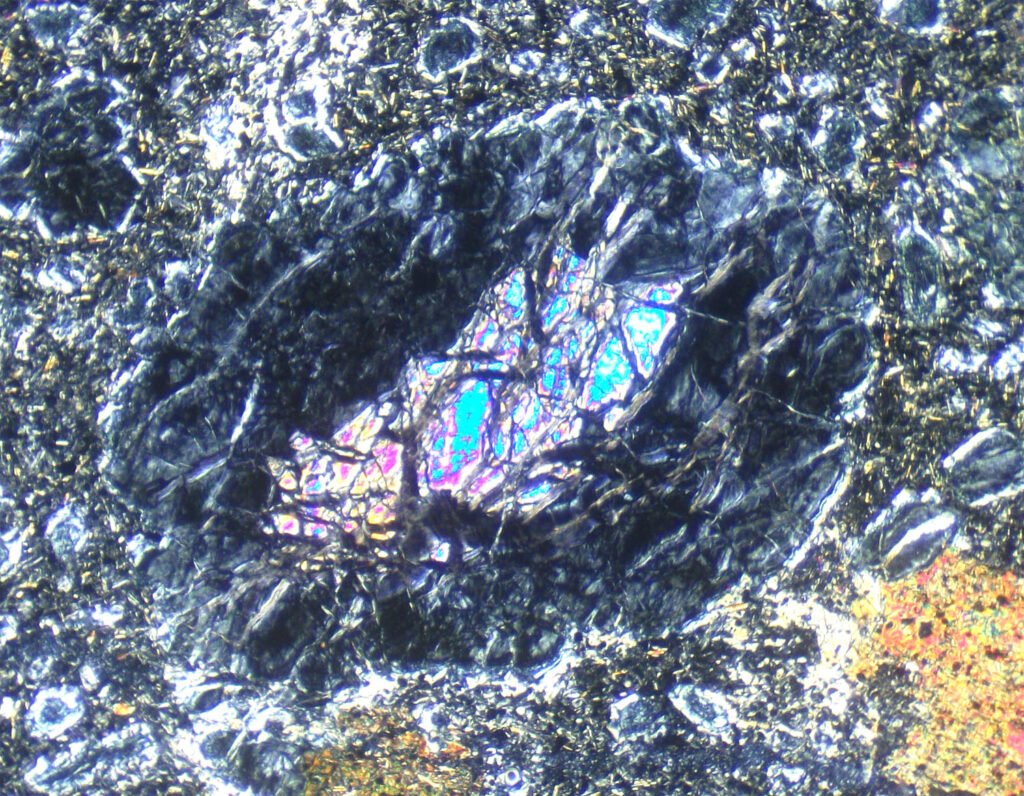
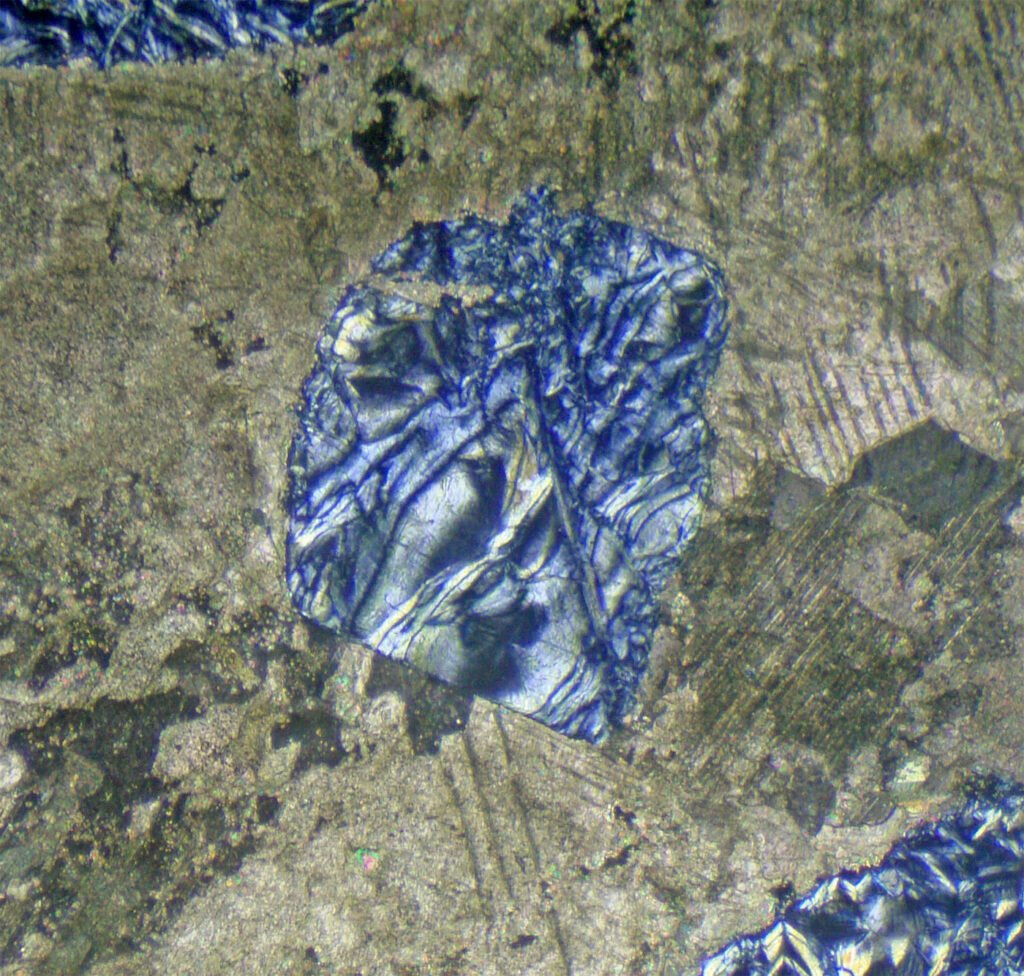
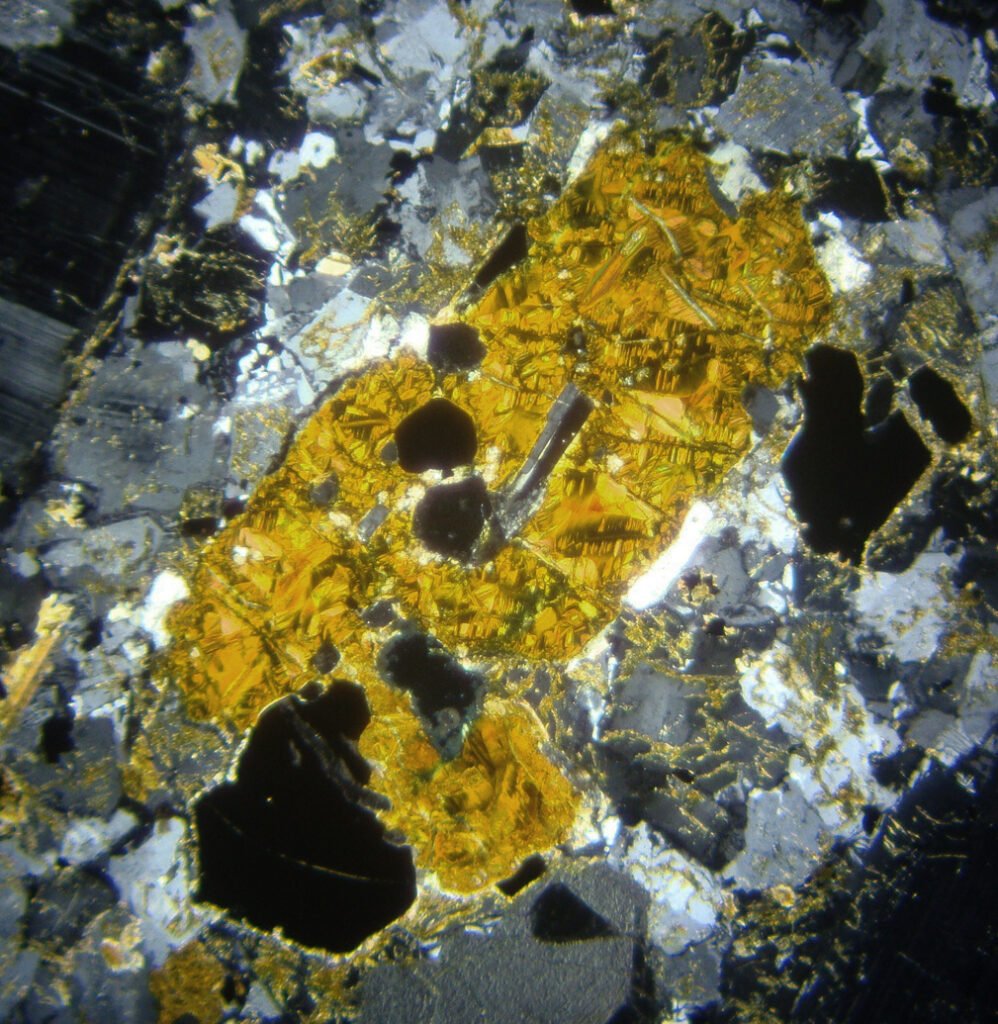
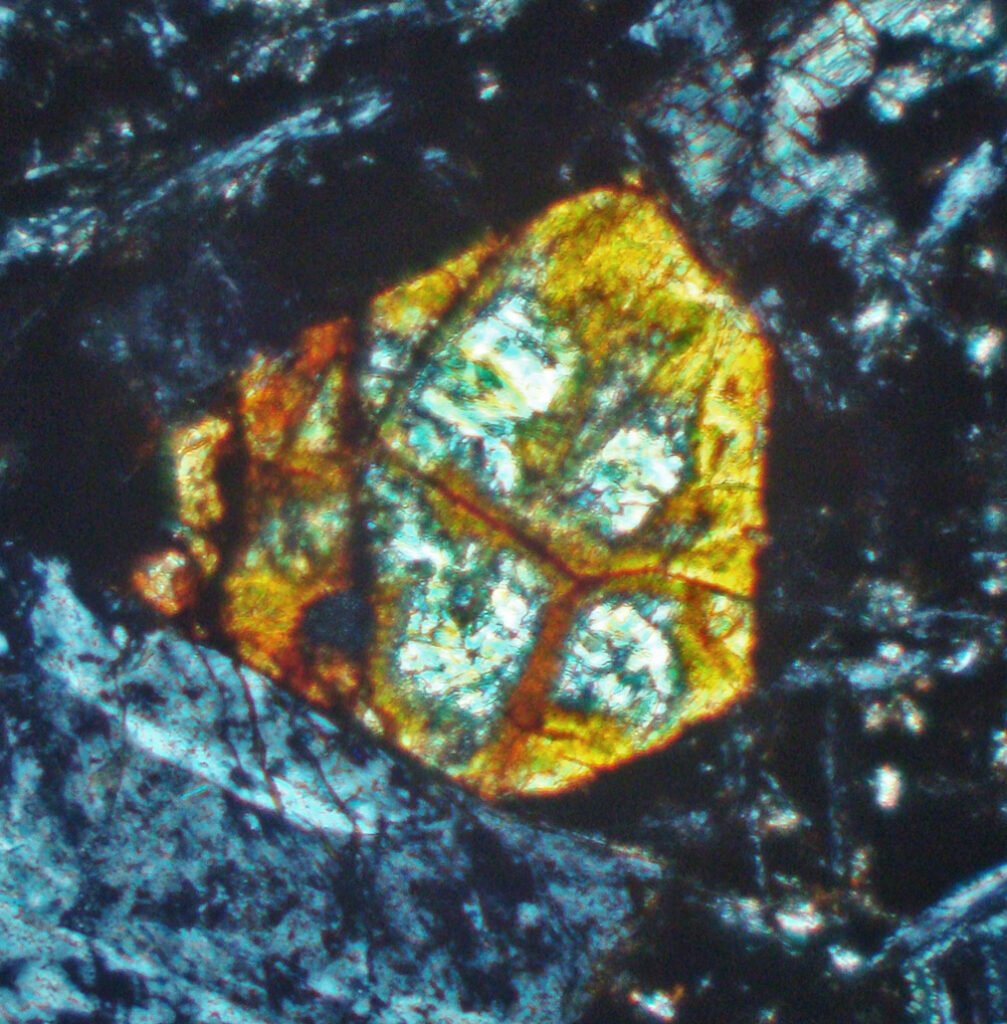
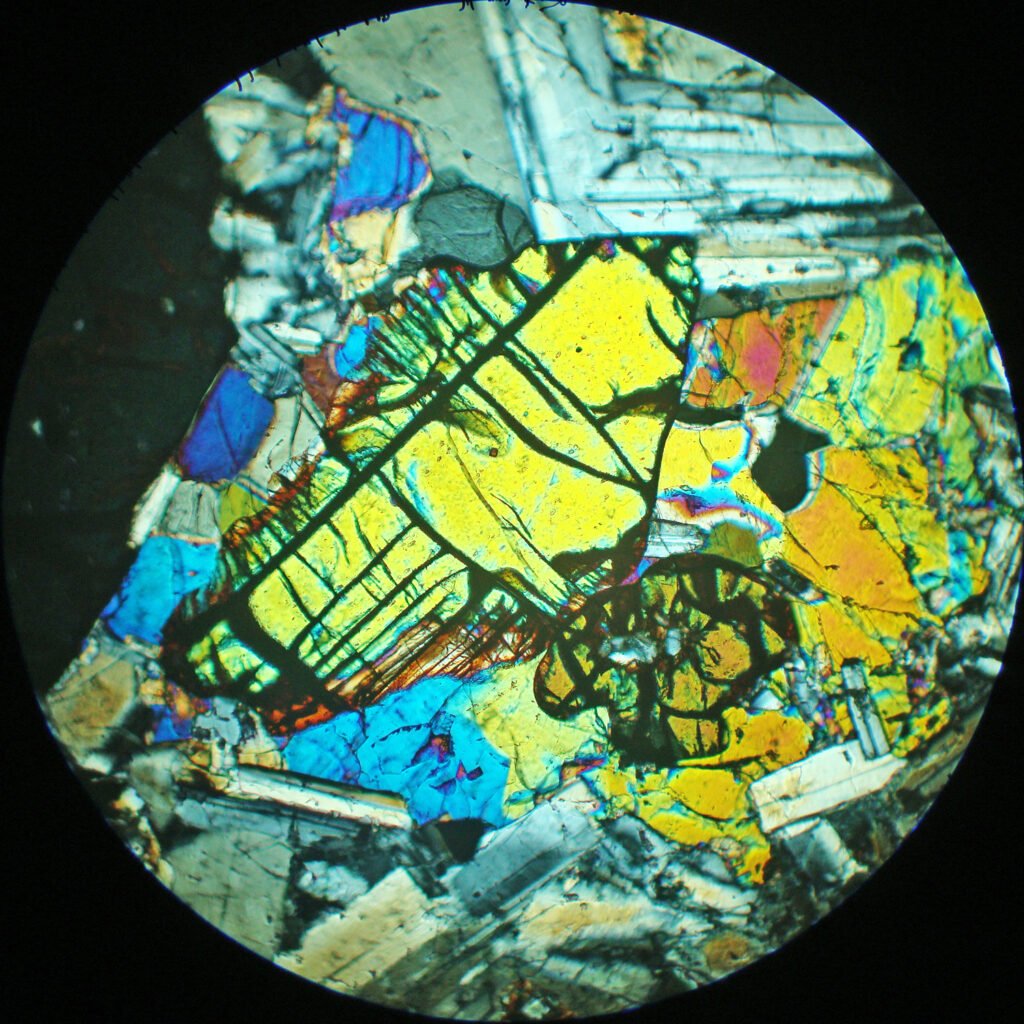
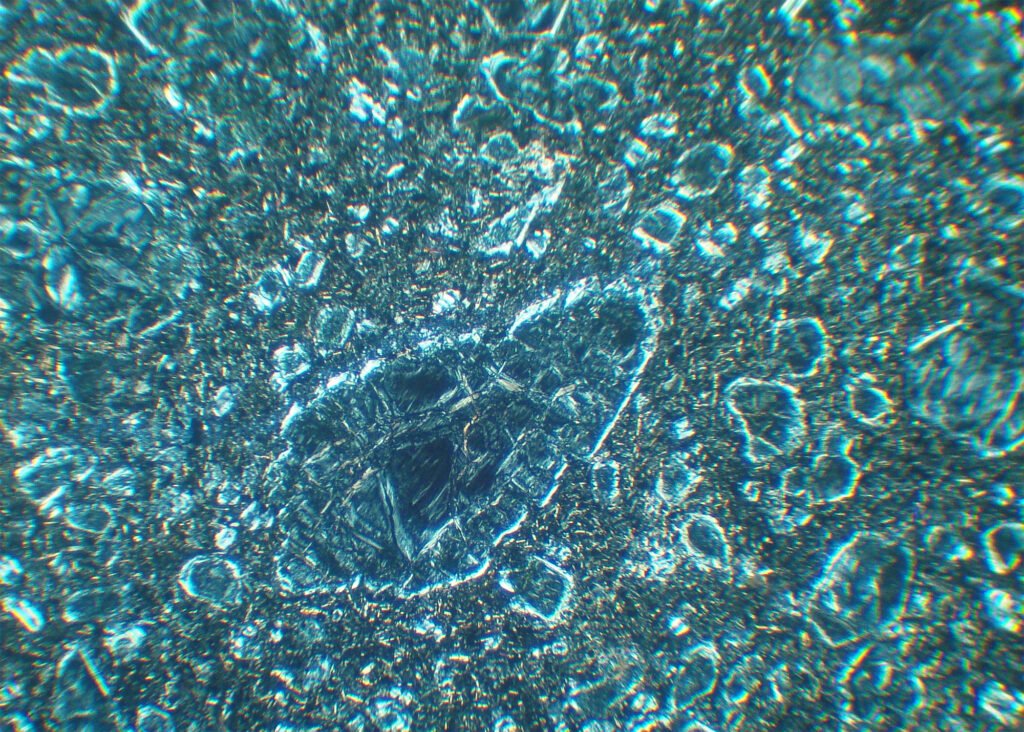
Birefringence and Interference Colors: Maximum birefringences of 0.035 (forsterite) and 0.052 (fayalite): strong, intense and variable colors of up to 3rd order. Sections parallel to (001) have 2x higher birefringence than sections parallel to (100).
Extinction: Parallel to the form, which is rarely possible due to the tendency of olivine to occur anhedral. In metamorphic rocks the extinction can be undulating.
Elongation sign: SE (-) or SE (+), depending on the orientation, it is not diagnostic.
Twins: Rare and simple, according to various plans. They are not diagnostic.
Zoning: Frequently zoned, with Mg-rich cores and Fe-rich rims.
CONVERGENT LIGHT
Character: B(+) or B(-), depending on the composition.
2V angle: 46 – 98º. Rich in Mg: >72º
Alterations: olivine can undergo at least six alteration processes.
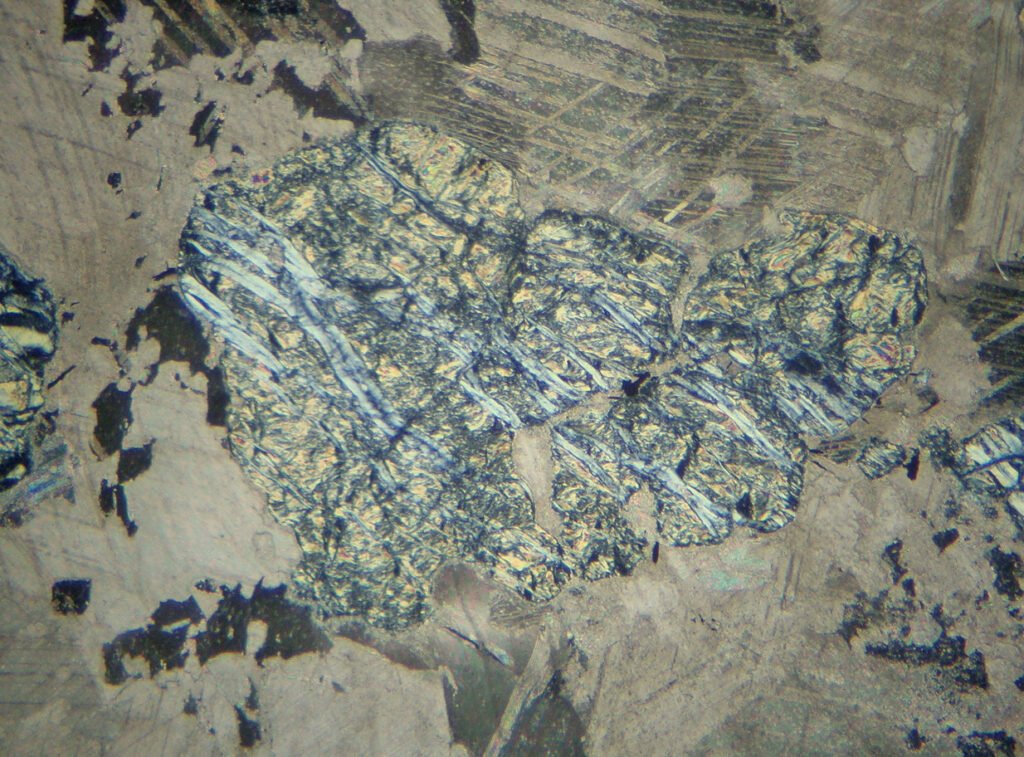
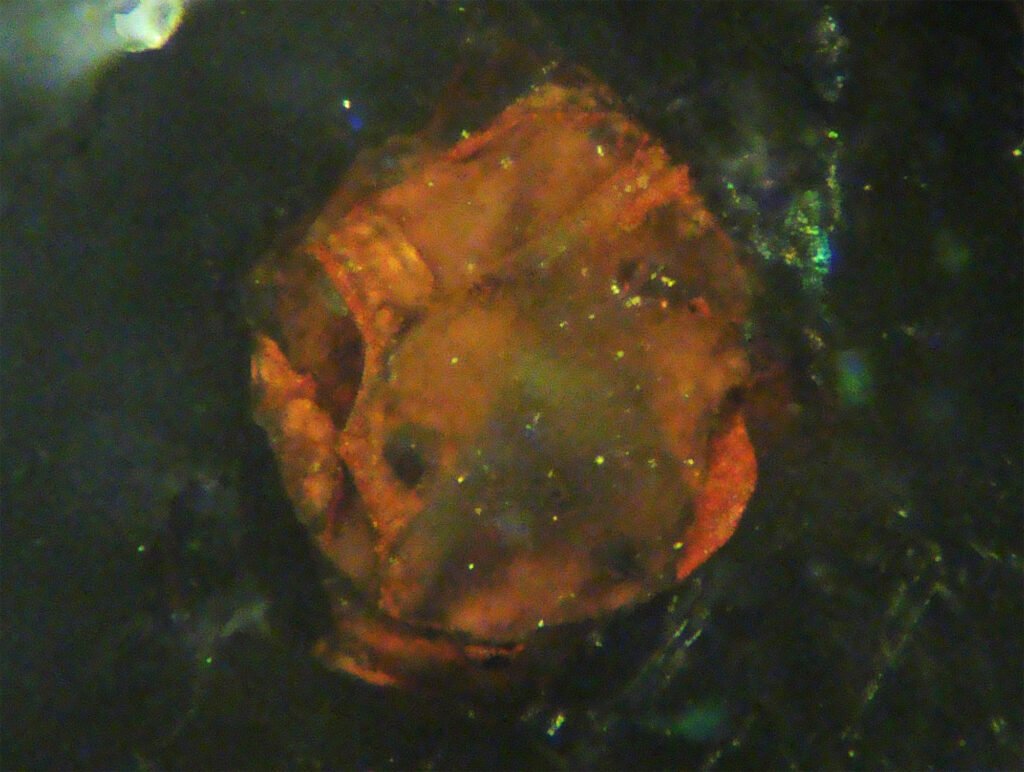
1) Iddingsite: olivine can alter to iddingsite, which is not a mineral, but a yellow-brown to red-brown mixture, composed of clay minerals from the Chlorite Group and the Smectite Group, also iron oxides (goethite and hematite), ferrohybrids and others. Iddingsite is weakly pleochroic and can form pseudomorphs on olivine.
2) Bowlingite: alteration composed of green minerals such as smectite, chlorite, serpentine, talc and mica.
3) Serpentine: olivine is progressively replaced by antigorite (green schist facies), chrysotile and lizardite from the fractures and intergranular limits, with the fibers oriented perpendicularly to the fracture walls. In this way, perfect pseudomorphs of serpentine on olivine are common.
4) Reaction rims occur when olivines are in contact with anorthite-rich plagioclases in gabbroic rocks. These reaction rims (queliphytic textures) are composed of fibrous, radiated green hornblende, also pyroxenes, spinels, and garnets. On the other hand, when olivines are in contact with silica-rich fluids, reaction rims composed of orthopyroxenes are generated.
5) Calcite: complete replacement of olivine by calcite (pseudomorphosis) may occur.
6) Iron oxides and hydroxides can develop along fractures and in grains.
May be confused with: other minerals of high relief and strong colors in CPL.
Clinopyroxenes always show their typical cleavage and have oblique extinction.
Andalusite may be similar, but does not occur in the same rocks.
Minerals of the Humite Group, such as chondrodite, have lower relief and lower birefringence.