1. Characteristics
Crystal system: None.
Color: Colorless, white, yellow, red, orange, green, brown, black, blue.
Habit: Massive, mamelonate, botryoidal, reniform
Cleavage: No.
Tenacity: Brittle.
Twinning: No
Fracture: Irregular, conchoidal.
Mohs Hardness: 5.5 – 6.5
Parting: No
Streak: White.
Lustre: Vitreous, resinous, waxy.
Diaphaneity: Transparent.
Density (g/cm³): 1.9 – 2.3
2. Geology and Deposits
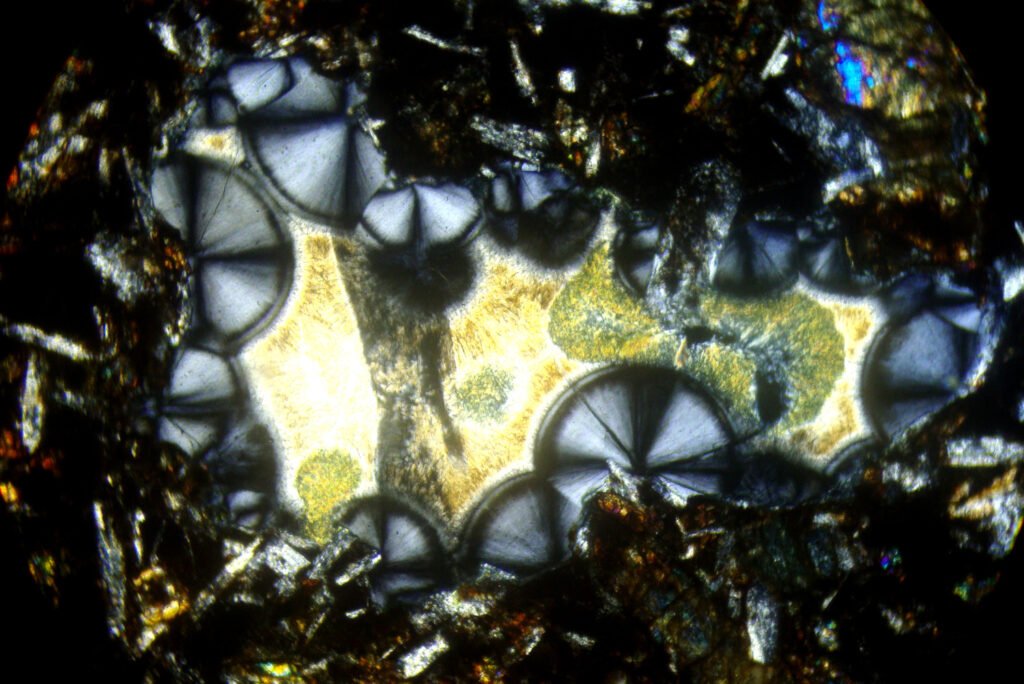
Common opal is relatively frequent and is most likely formed at room temperature and under lithostatic pressures. Having this origin, opal does not occur in metamorphic and plutonic rocks, but can be found in fractures associated with these rocks. In volcanic rocks it occurs as hyalite, a transparent and colorless opal that forms botryoidal aggregates in cavities and fractures of pyroclastic rocks, acidic and basic lavas.
In sedimentary rocks and other deposits (paleosols) opal is occasionally present. Opal is common as a speleothem in caves located in siliceous rocks (sedimentary, metamorphic or magmatic), forming various types of speleothems, including crusts on the ceiling, on the side walls and on fallen blocks on the floors. During the alteration of silicates, silica gel can be formed which crystallizes as opal, impregnating the rock.
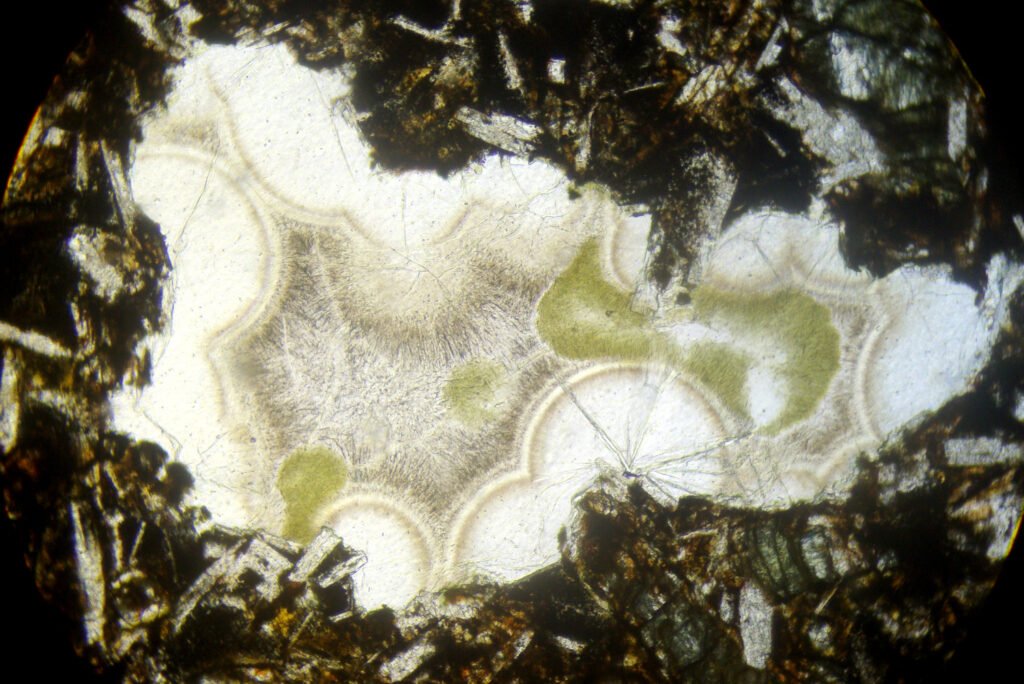
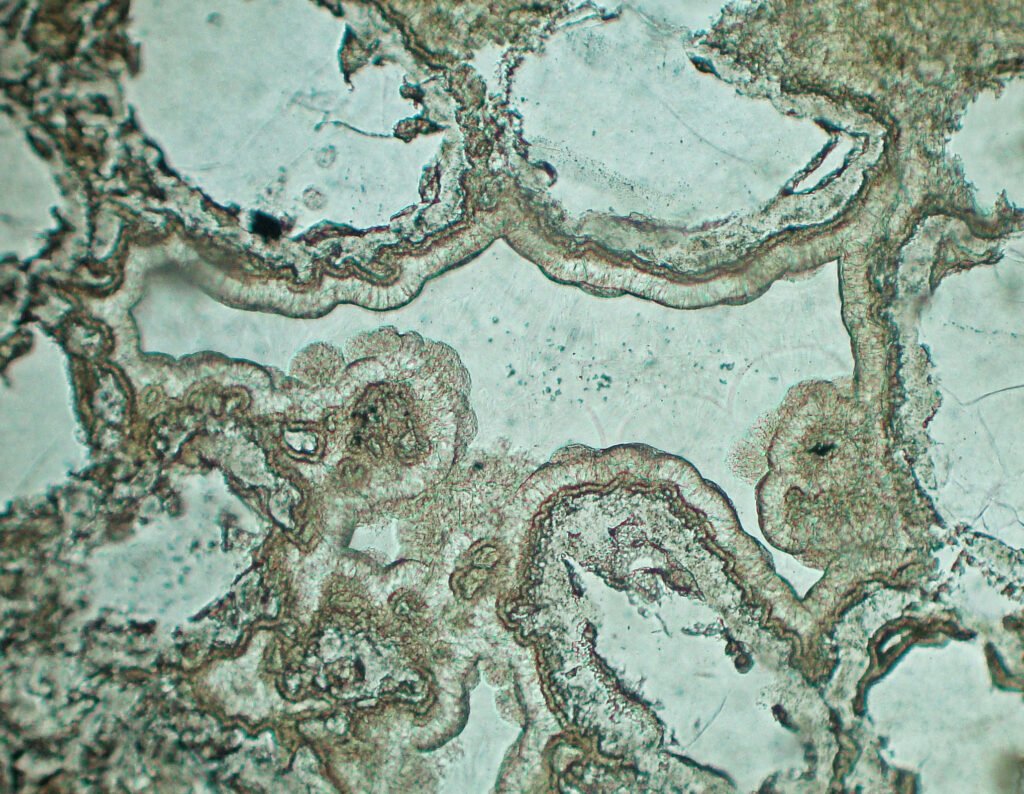
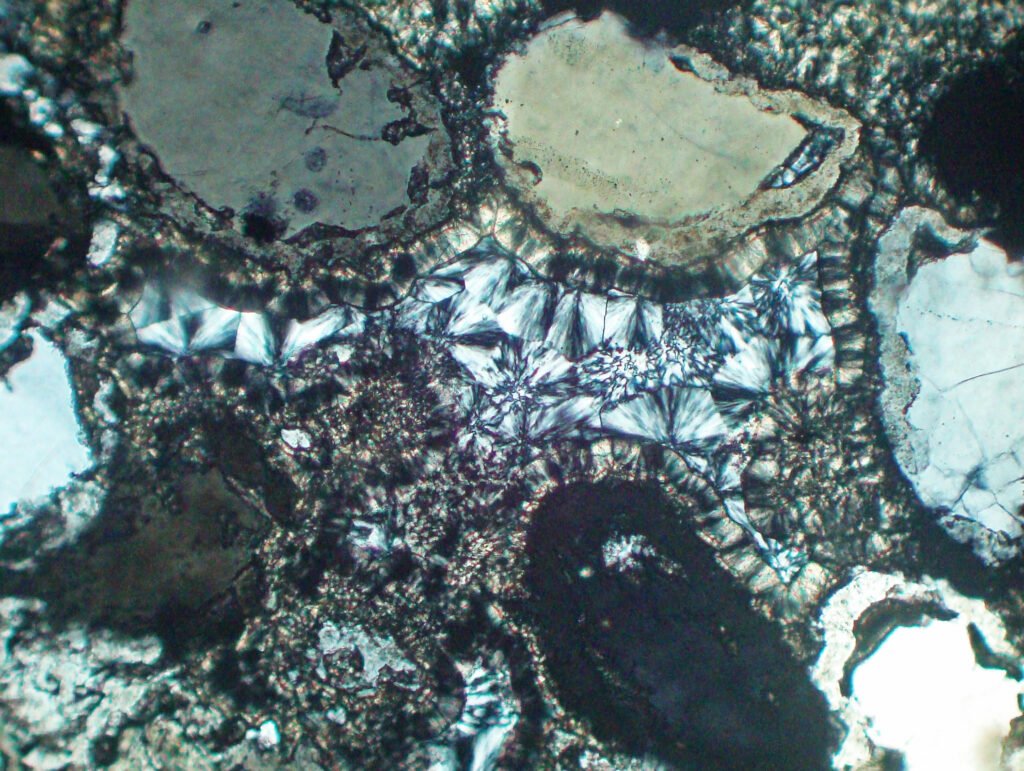
Opal is a rock-forming mineral in diatomites and radiolarites as an organogenic product. It also occurs in siliceous sinter depositions, in geysers and geothermal sources. Siliceous sinter is often banded and finely granular, composed of amorphous opal, cryptocrystalline opal and quartz, along with detrital clasts. Silica sinters often have botryoidal textures and microspheres, silica laminated coatings and dissolution features. Geyserite is an opal-rich banded siliceous sinter. Fiorite is a term applied to geyserite of botryoidal forms. The analysis of these forms of silica under the petrographic microscope is difficult and in X-Ray Diffractometry they provide inconclusive diffractograms due to the low crystallinity.
3. Mineral Associations
Occurring in igneous, metamorphic and sedimentary rocks, opal is associated with a multitude of different minerals. There is no typical, characteristic and diagnostic paragenesis for opal.
4. Transmitted Light Microscopy
Refraction indices: nα: 1.400 – 1.460
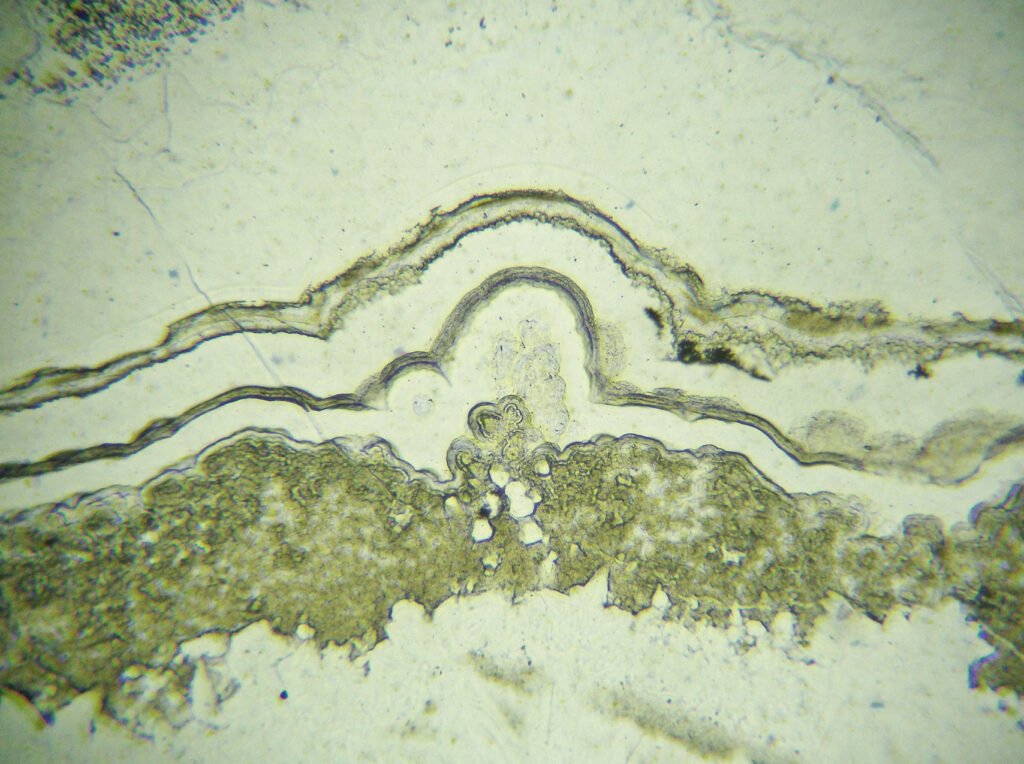
PLANE POLARIZED LIGHT – PPL
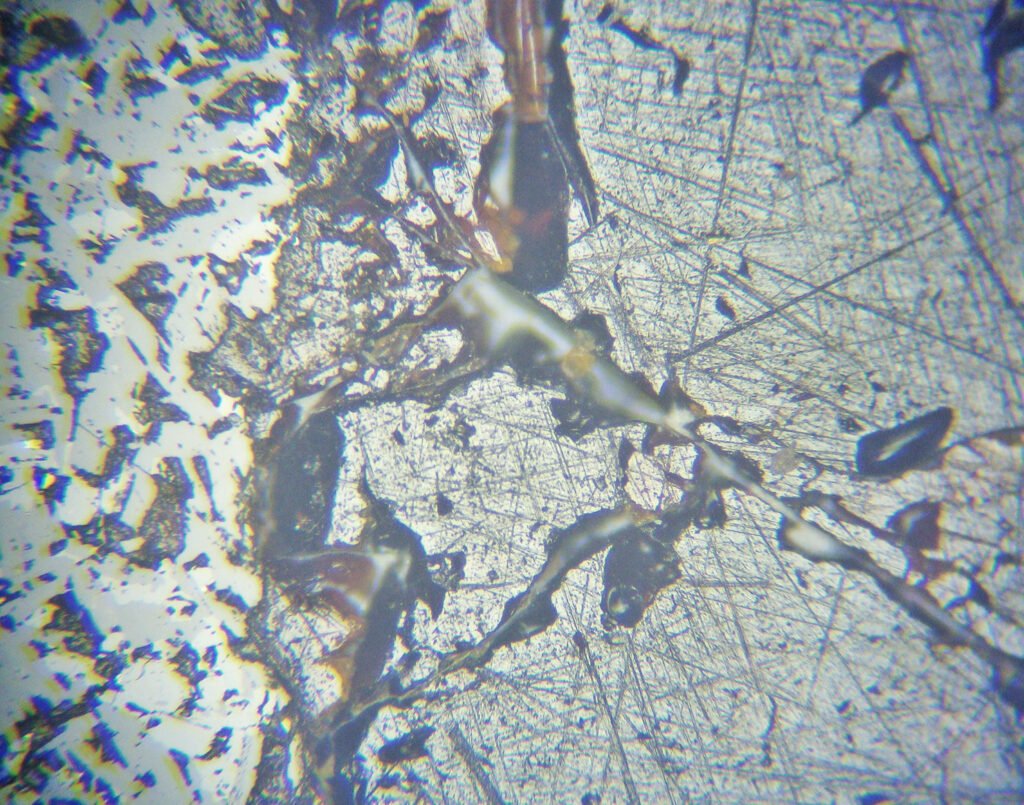
Color / Pleochroism: Colorless, yellow or red (due to Fe hydrates).
Relief: Exceptionally low.
Cleavage: There is none. Sometimes it has irregular contraction fractures due to water loss (dehydration).
Habits: Amorphous and colloidal masses filling interstitial spaces, cavities (vesicles) and fractures; botryoidal and reniform aggregates, can form spheres, banded levels and others.
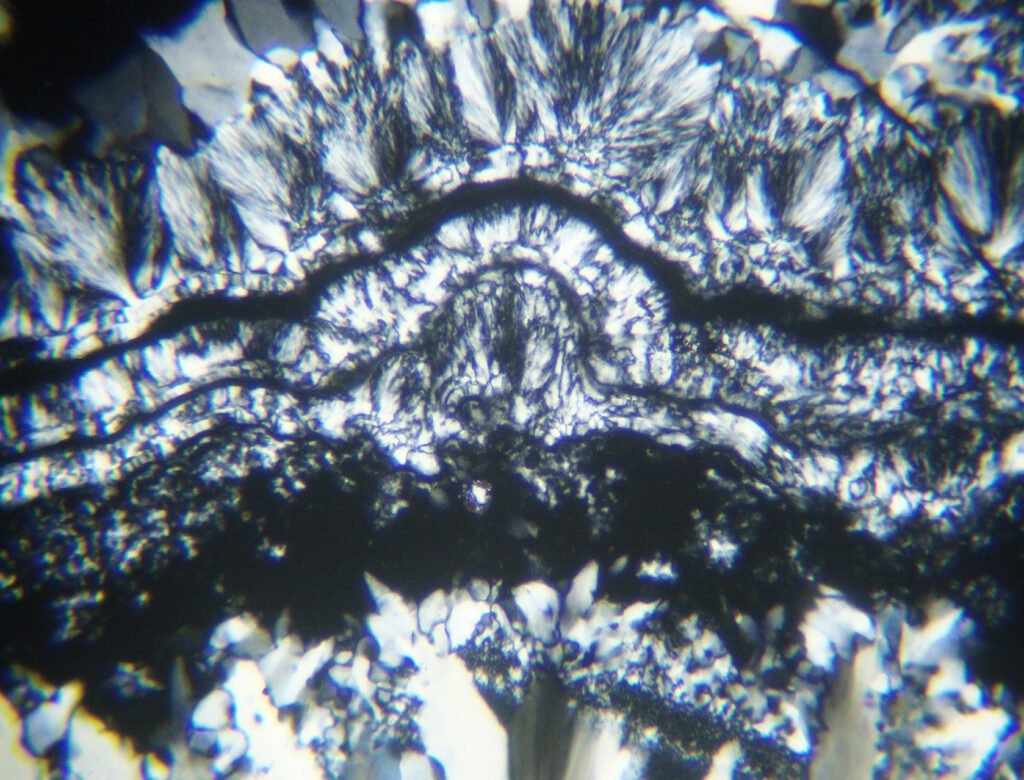
CROSSED POLARIZED LIGHT – XPL
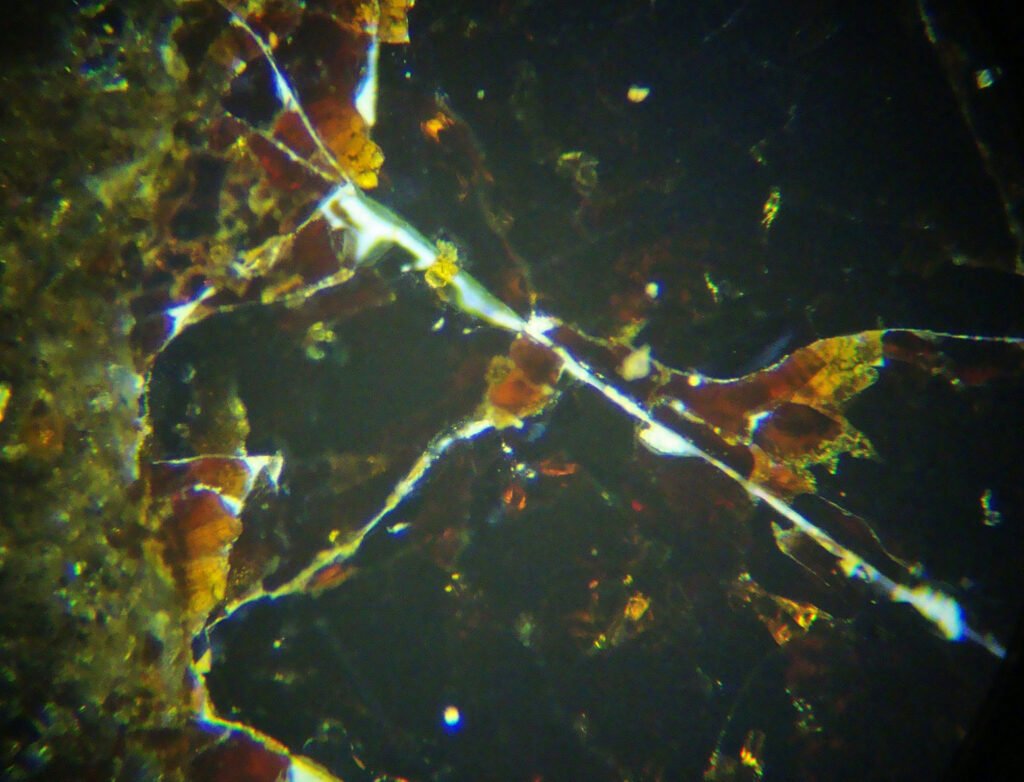
Birefringence and Interference Colors: Isotropic, exceptionally anomalous birefringence may be present, due to stress-induced water loss.
Extinction: Isotropic.
Elongation sign: Isotropic.
Twins: Isotropic.
Zoning: Isotropic.
CONVERGENT LIGHT
Character: Isotropic.
2V angle: Isotropic.
Alterations: during the alteration process the opal is progressively replaced by chalcedony.
May be confused with: other isotropic materials.
Volcanic glass, analcime and the minerals of the Sodalite Group have higher refractive indices.
Fluorite has higher relief and excellent cleavage.
Chabazite (a zeolite) is not isotropic, but has low birefringence and zoning by sectors, something similar occurs with analcime.