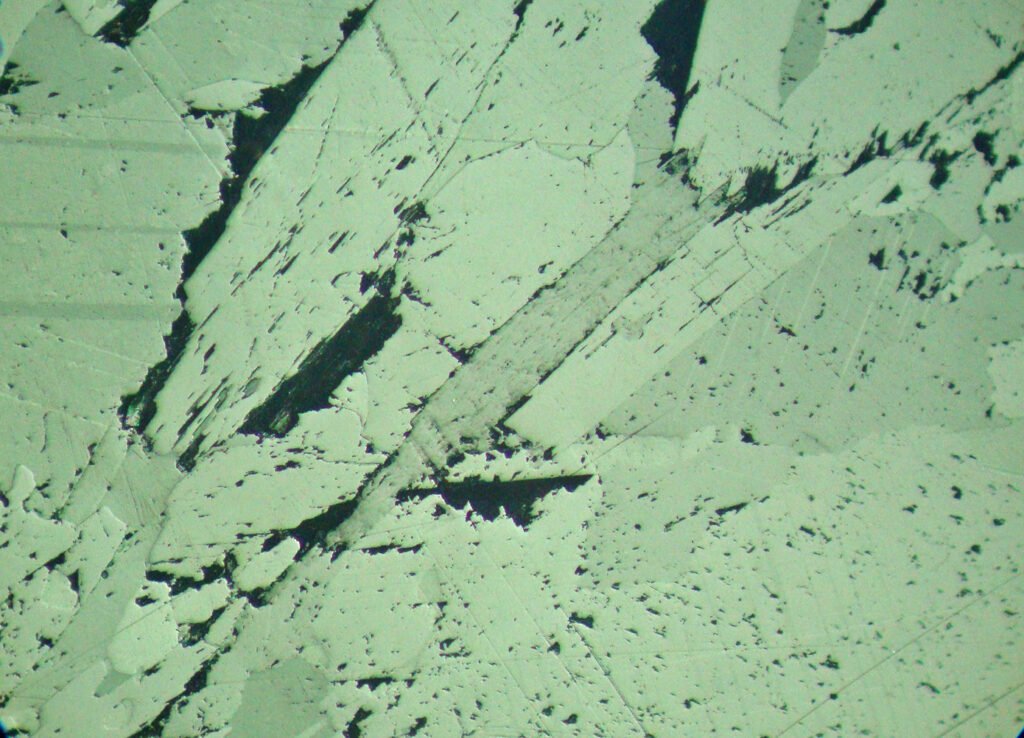
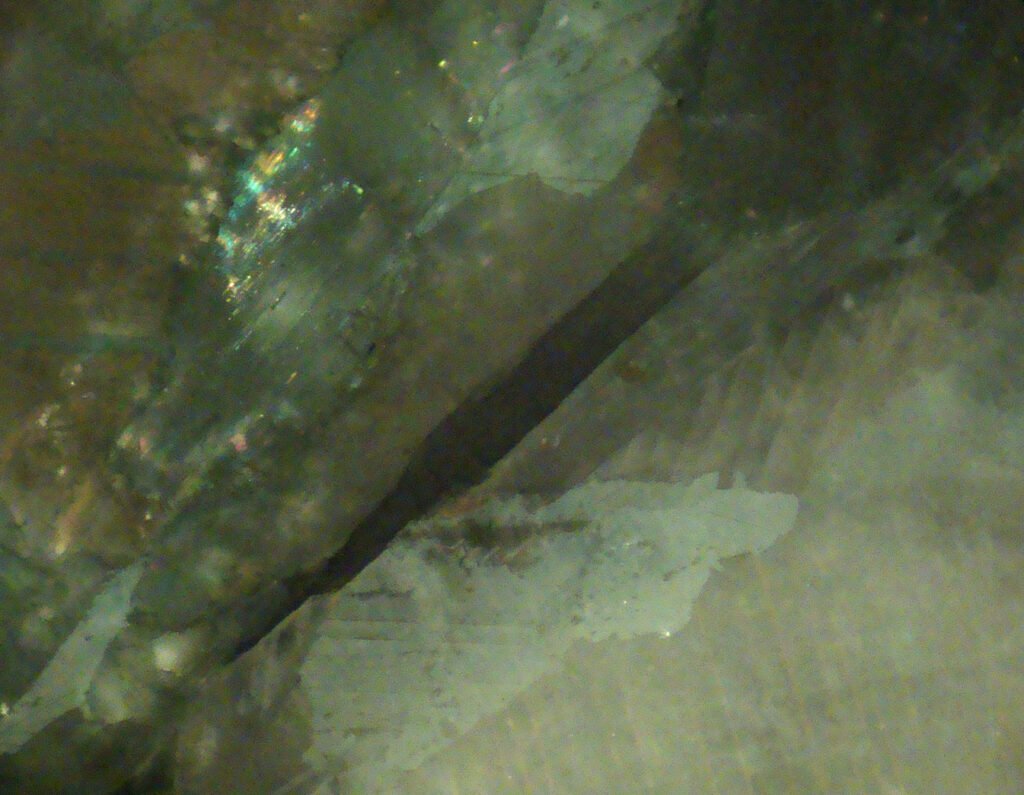
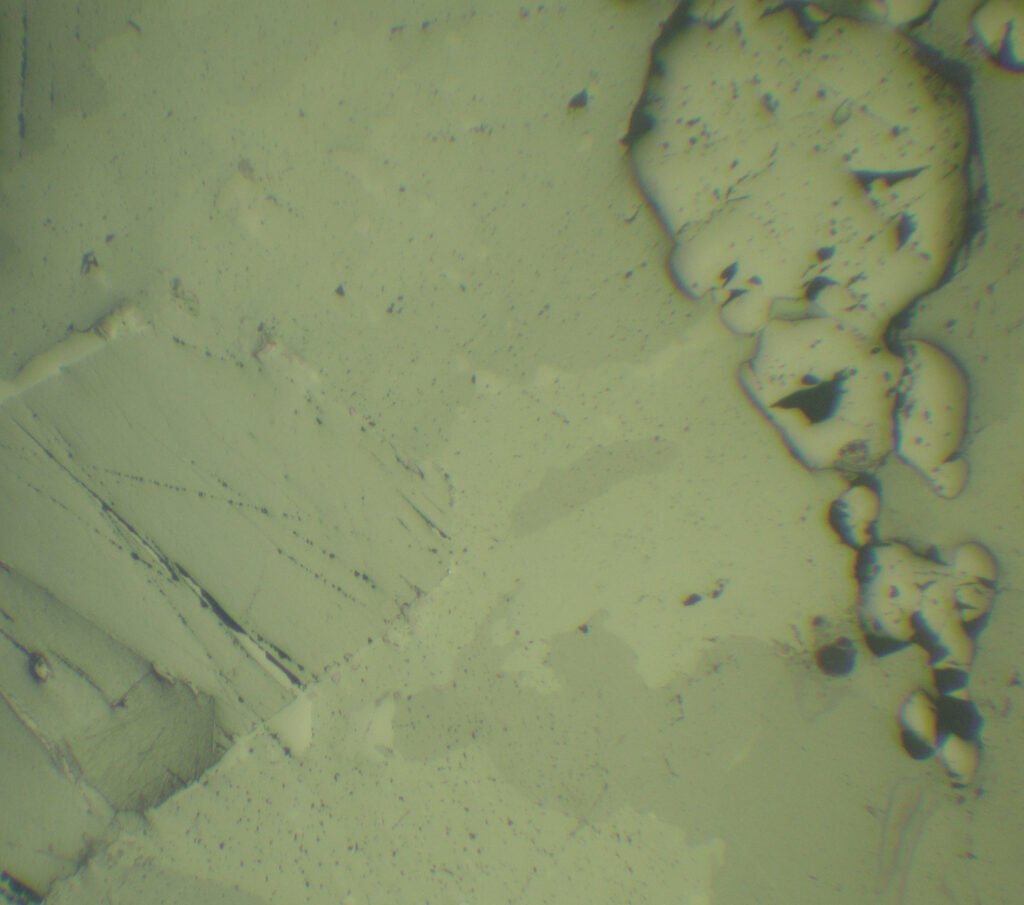
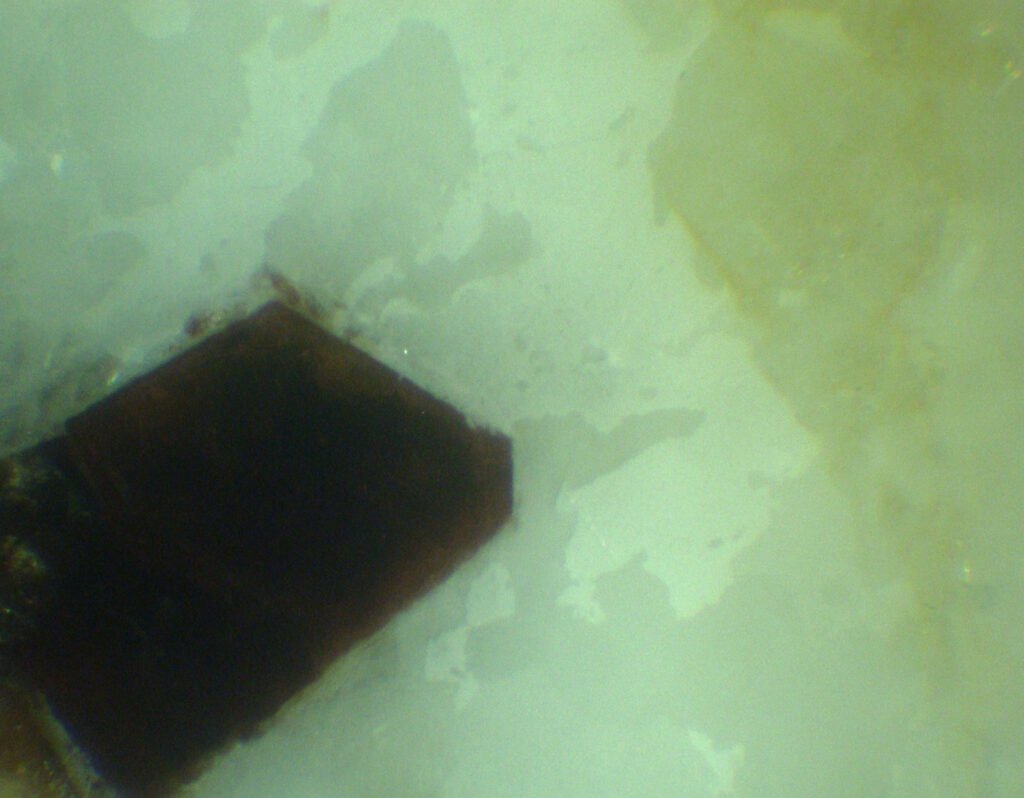
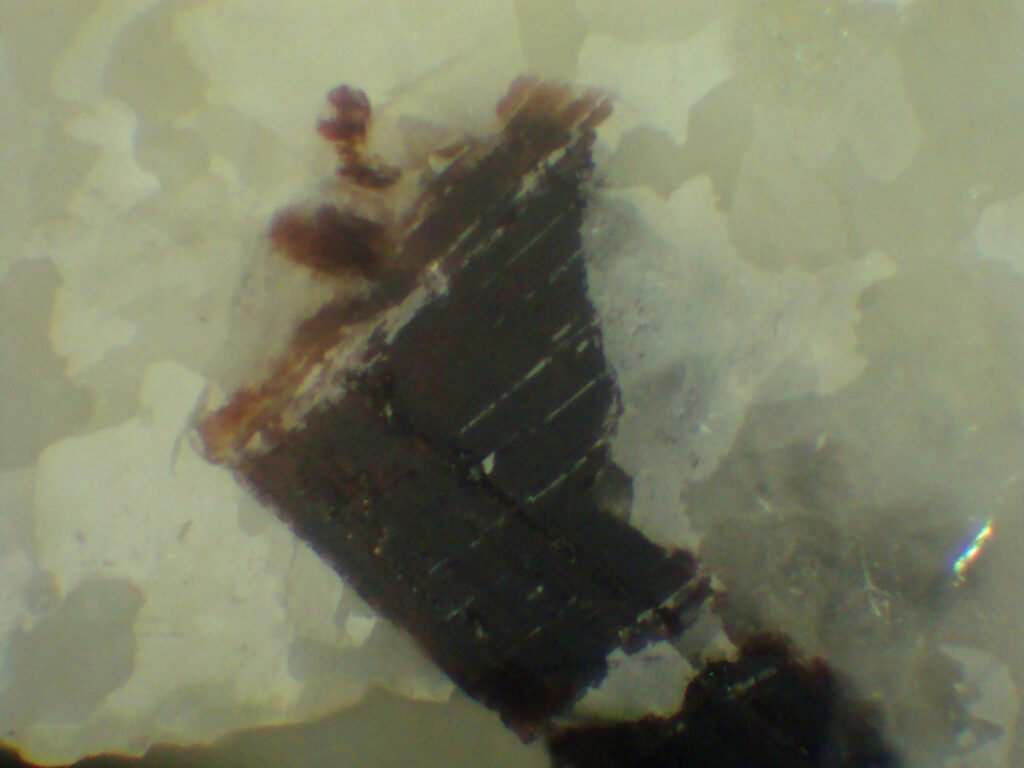
1. Characteristics
Crystal system: Monoclinic.
Color: Brown to reddish-brown. It can also be gray, green, or yellowish.
Habit: Micaceous, tabular.
Cleavage: {0001} perfect, like all micas.
Tenacity: Flexible.
Twinning: No.
Fracture: Micaceous.
Mohs Hardness: 2 – 3
Parting: No.
Streak: White.
Lustre: Vitreous, pearly.
Diaphaneity: Transparent.
Density (g/cm³): 2.78 – 2.85
2. Geology and Deposits
Phlogopite is common in basic and ultrabasic igneous rocks (mafic and ultramafic) such as peridotites, mellilites, lamproites, and lamprophyres.
It occurs in metamorphic rocks that have undergone regional or contact metamorphism, such as dolomitic marbles, fenites, skarns, and schists (phlogopite-schists).
It also occurs in carbonatites and kimberlites.
3. Mineral Associations
It is associated with the following minerals:
– in kimberlites, olivine, diopside, calcite, and pyrope;
– in silica-undersaturated volcanic rocks, olivine, melilite, leucite, and nepheline;
– in siliceous marbles, calcite, quartz, tremolite, diopside, forsterite, spinel, members of the Chondrodite Group, pyrite, and lazurite;
– in carbonatites, calcite, fluorapatite, magnetite, ilmenite, pyrite, chalcopyrite, tremolite, actinolite, allanite, spinel, corundum (ruby), coppita, and other less common minerals. Carbonatites can contain more than 80 different minerals, including 16 types of carbonates.
Also erythrite and anthophyllite.
4. Transmitted Light Microscopy
Refraction indices: nα: 1.530 – 1.573 nβ: 1.557 – 1.617 nγ: 1.558 – 1.618
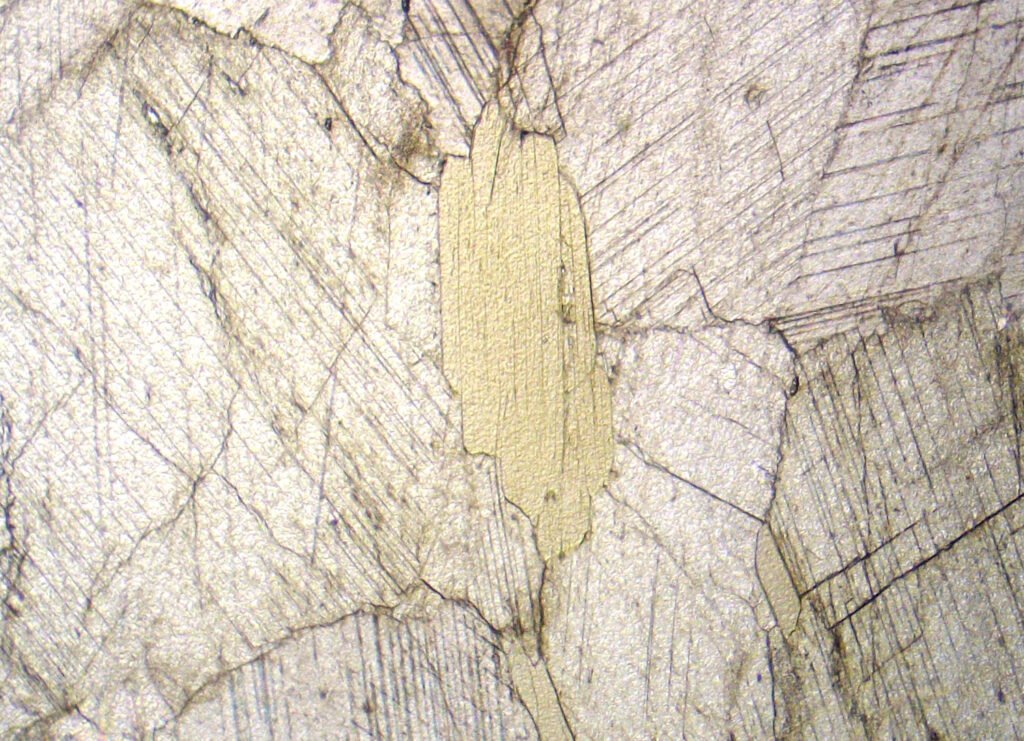
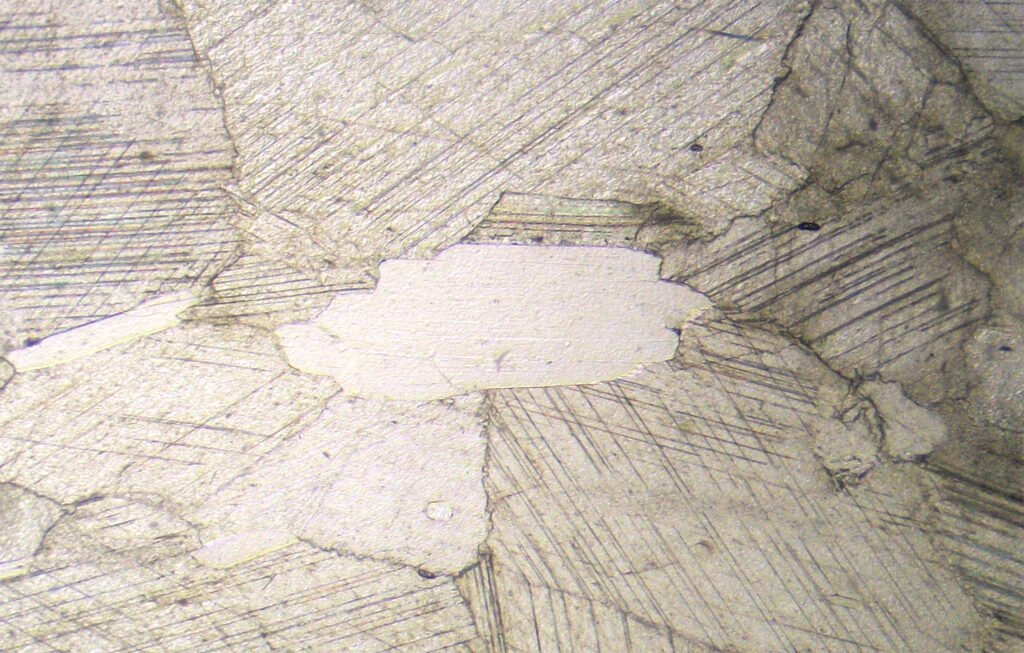
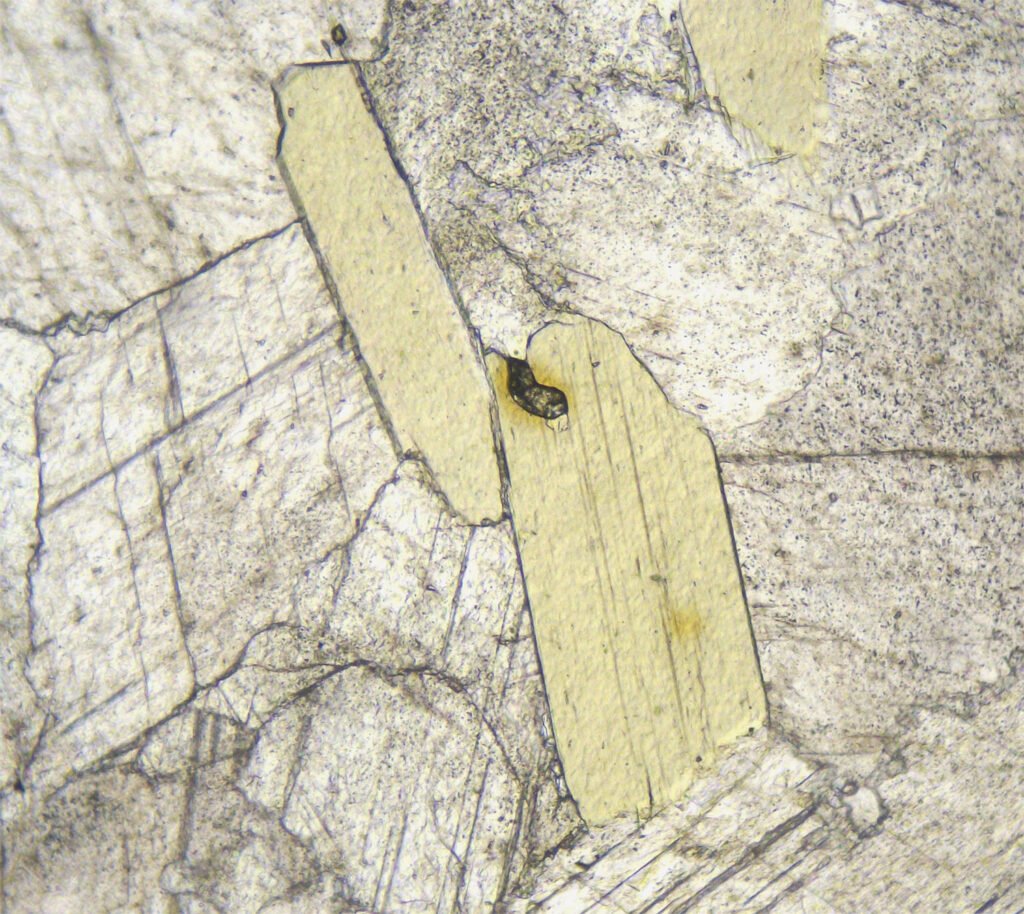
PLANE POLARIZED LIGHT – PPL
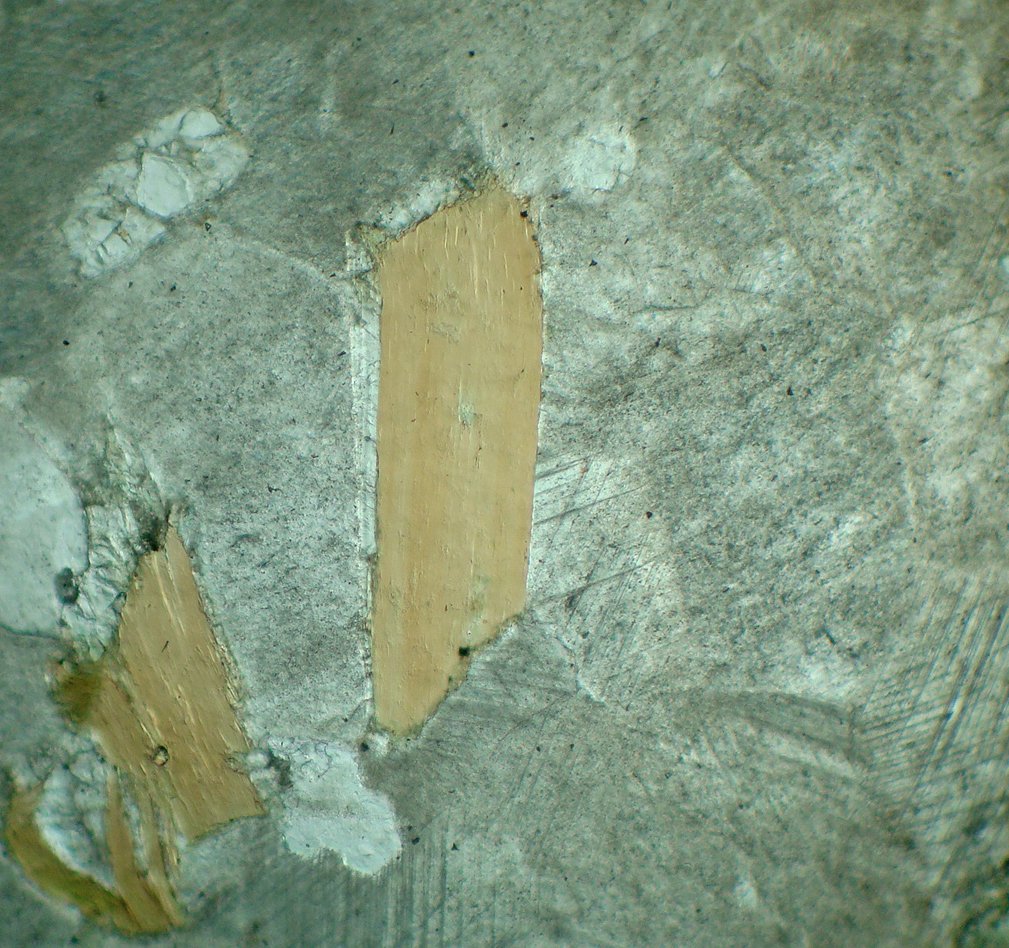
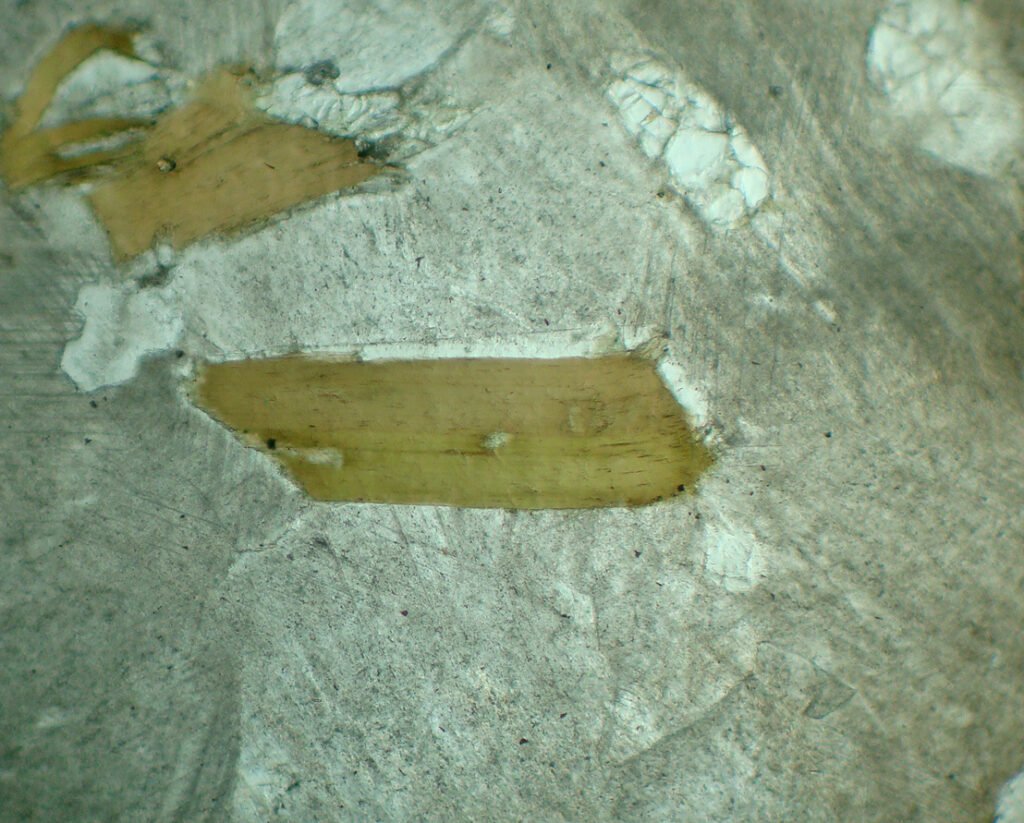
Color / Pleochroism: Depending on the Fe content, colorless to yellowish, greenish to pale brown, rarely pink.
Sections // to (001) almost without pleochroism.
Oblique or perpendicular sections to (001) with strong pleochroism:
X = colorless, pale yellow, pale orange, pale pink;
Y = Z = brownish yellow, leather brown, reddish orange, reddish brown, pale reddish brown.
Relief: Moderate.
Cleavage: {001} perfect. Typical basal cleavage of micas, easily seen in thin section as a perfect cleavage direction in longitudinal sections.
Habits: Lamellar and tabular, prismatic to pseudo-hexagonal.
May contain radioactive inclusions with dark (black) halos around them (zircon, monazite, apatite, etc.).
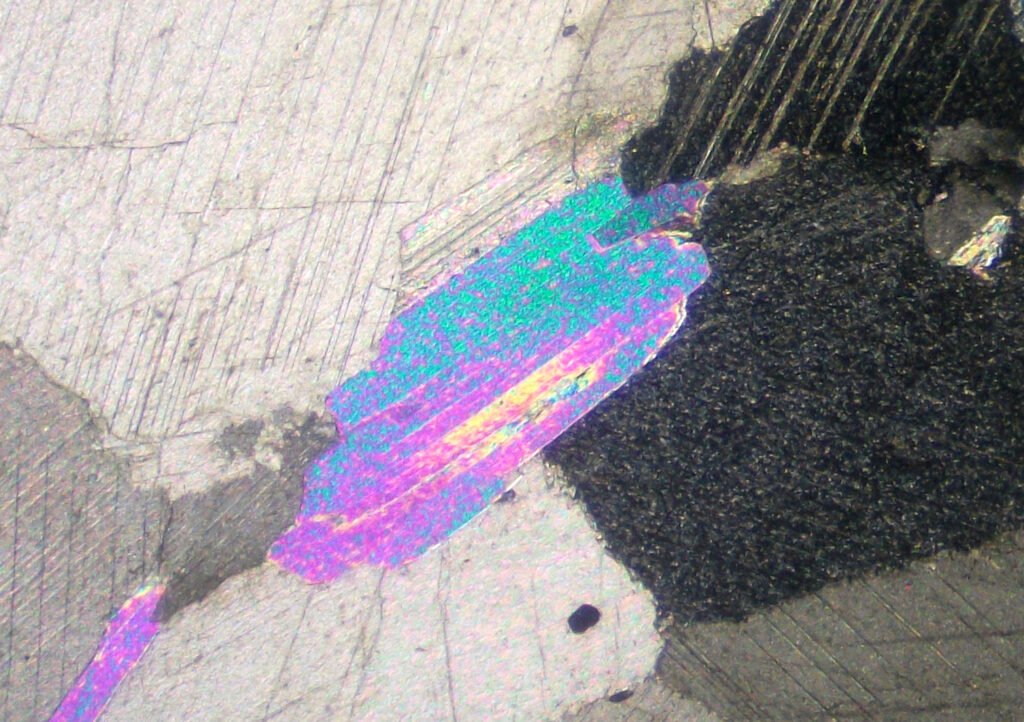
CROSSED POLARIZED LIGHT – XPL
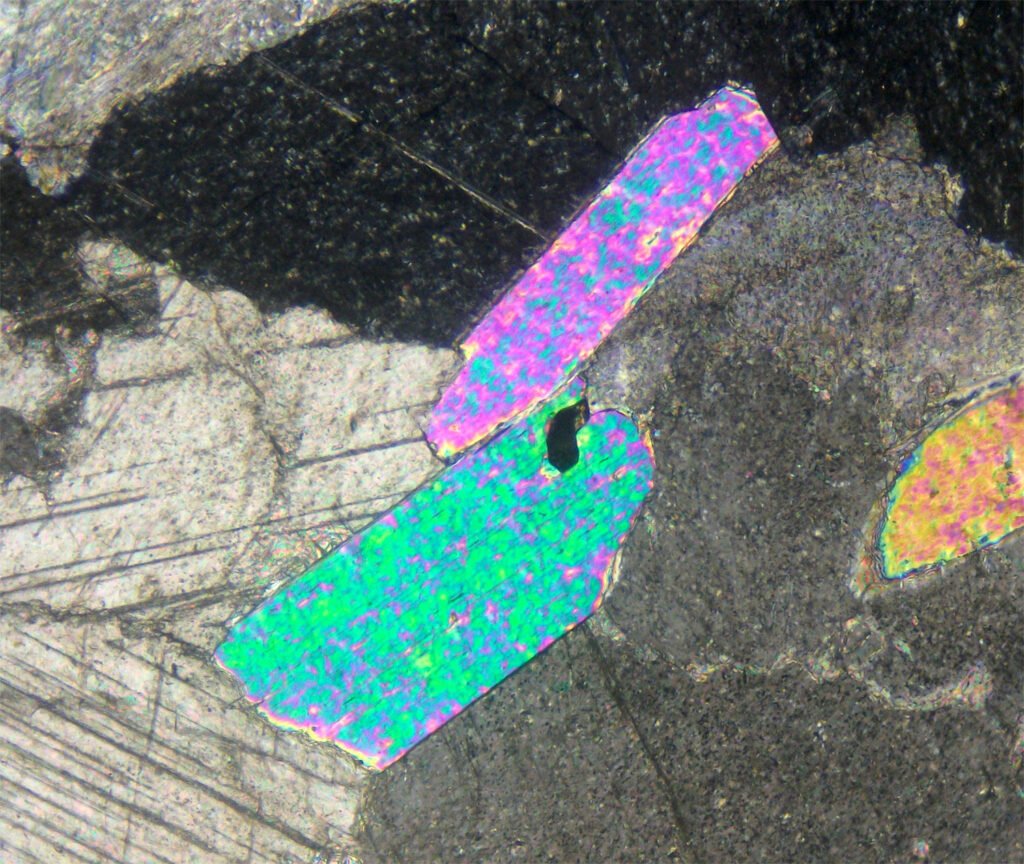
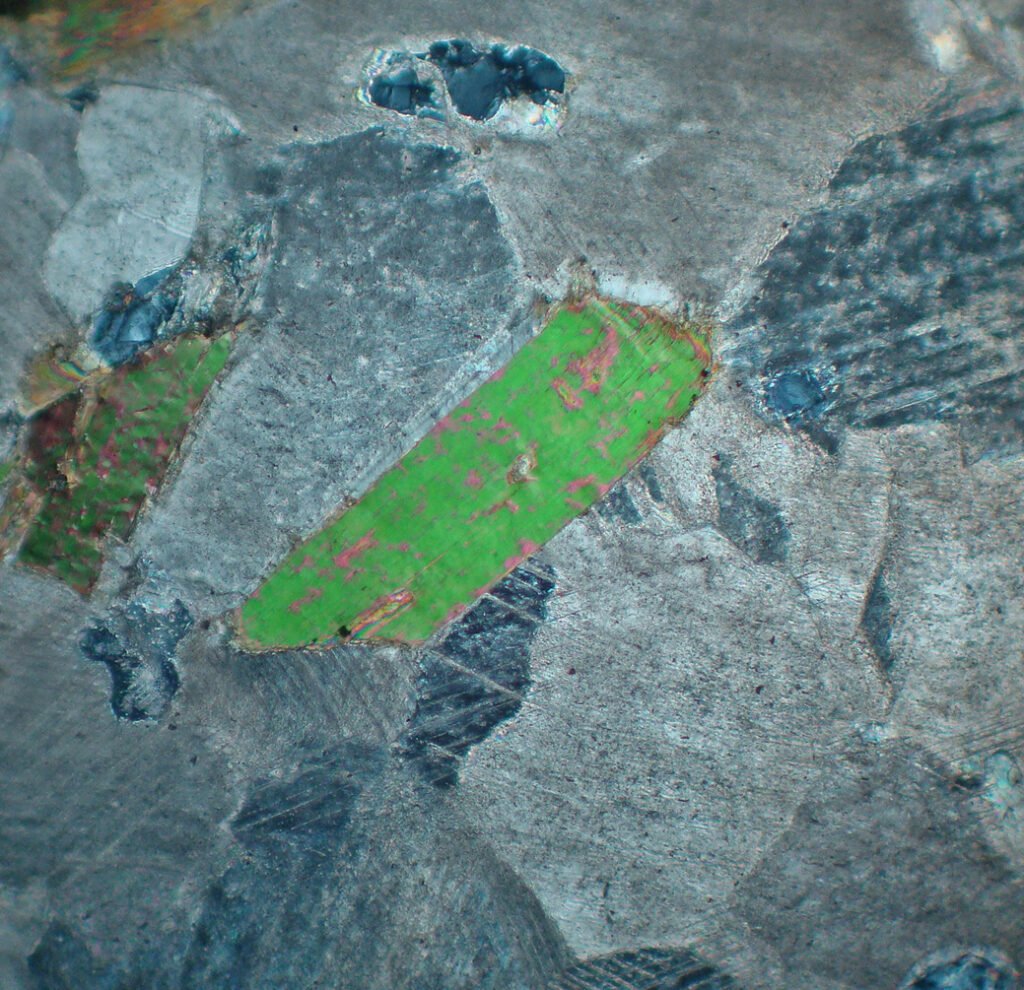
Birefringence and Interference Colors: Birefringence from 0.027 to 0.045: intense and colorful colors of the 2nd and 3rd order.
Basal sections with black to gray colors.
Extinction: Parallel and mottled.
Rarely oblique with an angle of 0 to 5º.
Elongation sign: ES(+), as all micas.
Twins: Can occur, according to (001).
Zoning: Rare, with a greenish core and lighter or darker edges.
CONVERGENT LIGHT
Character: B(-), simulates being uniaxial.
2V angle: 2-8º, rarely up to 15º
Alterations: May alter to vermiculite.
May be confused with: Diagnostic features include lamellar habit, perfect cleavage, and parallel and mottled extinction.
Biotite has higher relief, stronger colors and pleochroism, and a smaller 2V angle.
Colorless varieties of phlogopite can be distinguished from muscovite by their smaller 2V angle and paragenesis.