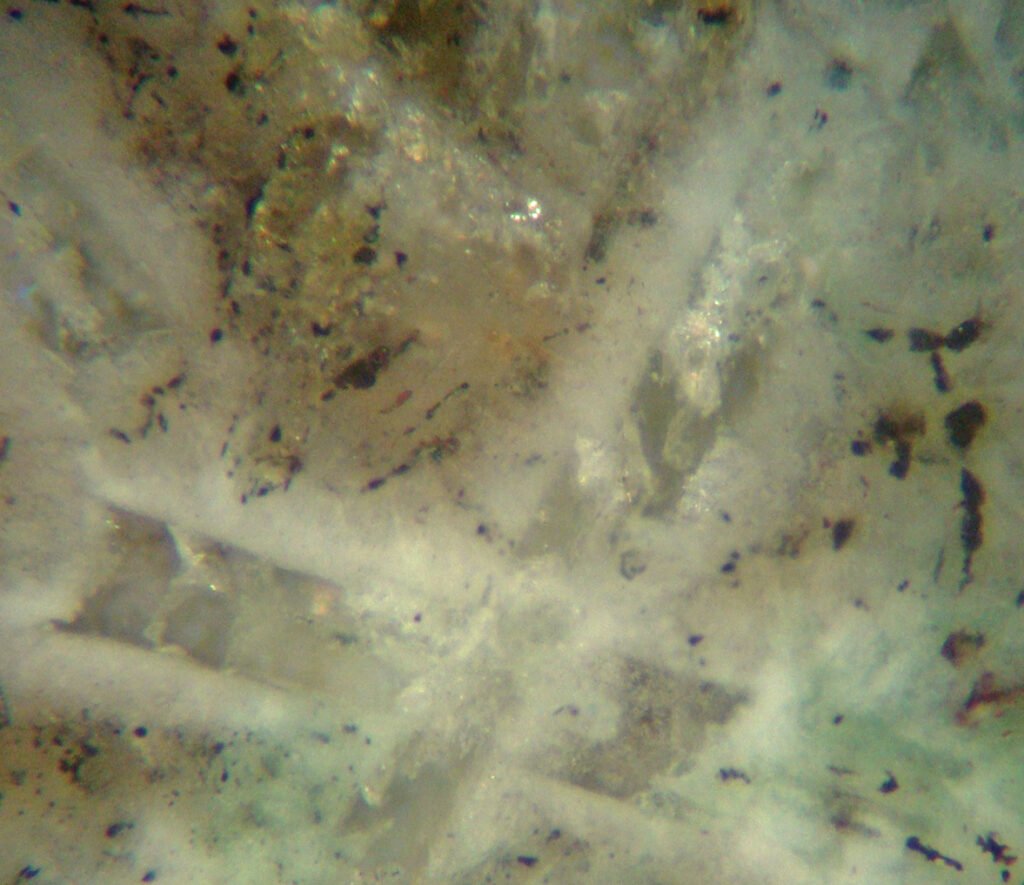
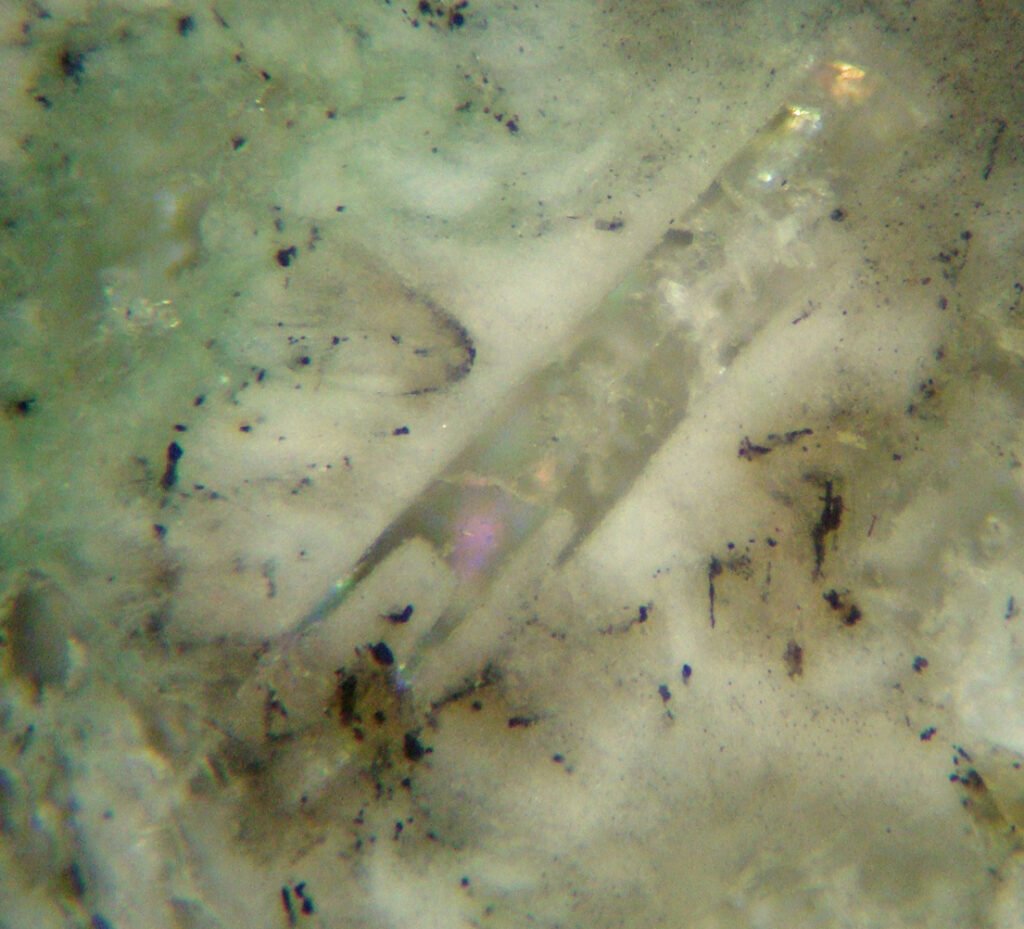
1. Characteristics
Crystal system: Triclinic pinacoidal.
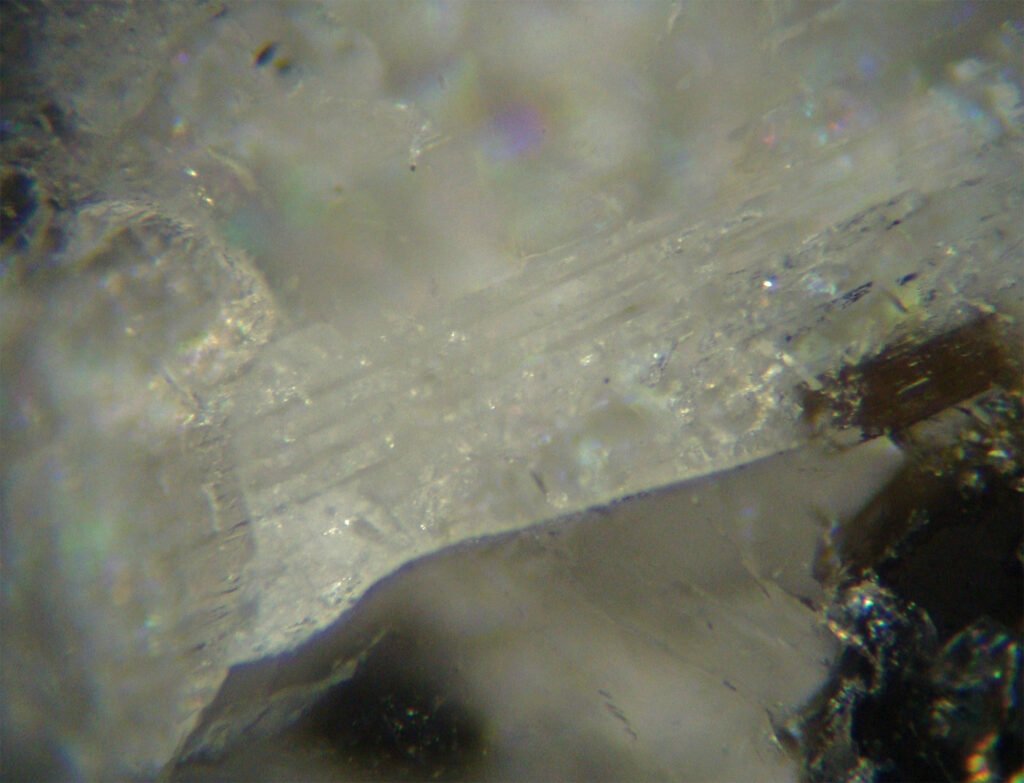
Color: White to gray, may be bluish, greenish or reddish.
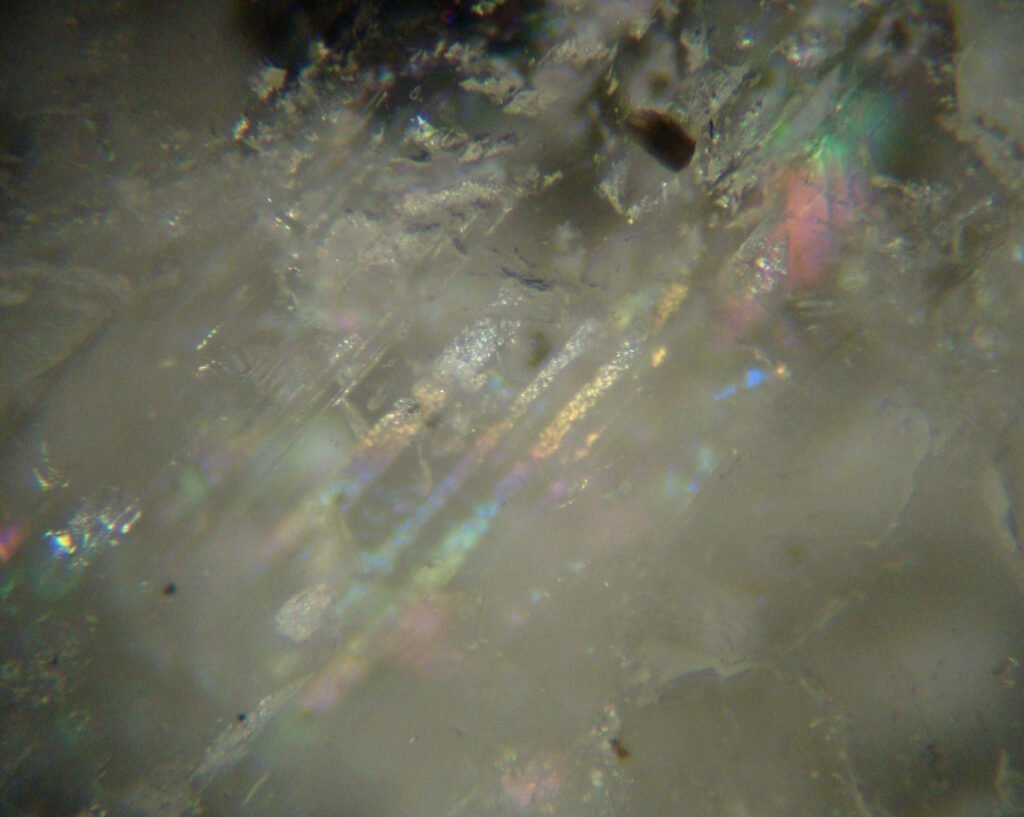
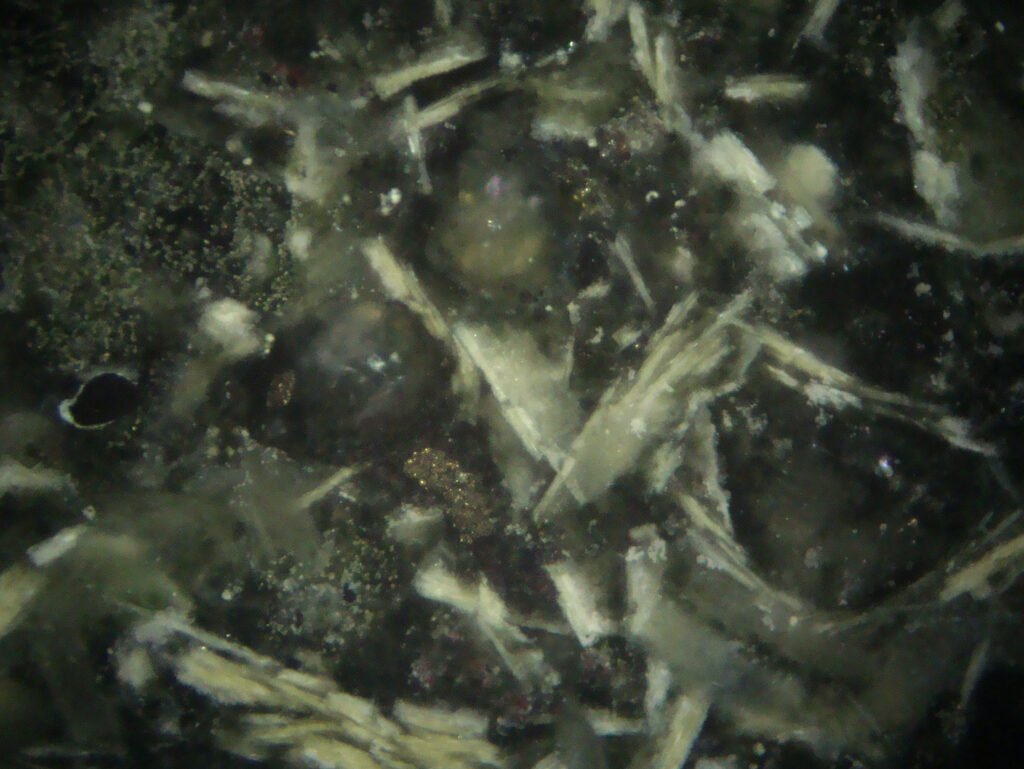
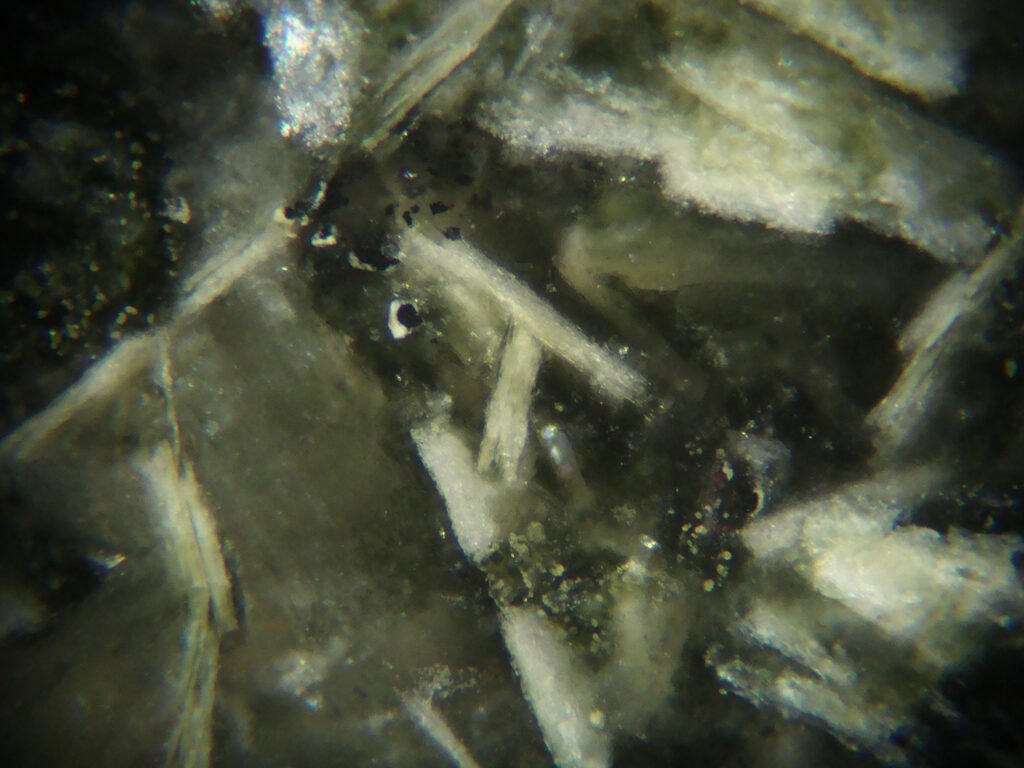
Habit: Tabular paralell to {010}. Granular, cleavable masses.
Cleavage: {001} perfect, {010} good, {110} fair.
Tenacity: Brittle.
Twinning: See above.
Fracture: Irregular, conchoidal.
Mohs Hardness: 6 – 6.5
Parting: No.
Streak: White.
Lustre: Vitreous, pearly.
Diaphaneity: Transparent.
Density (g/cm³): 2.6 – 2.65 (albite)
2. Geology and Deposits
Except in some ultramafic, alkaline and very acidic rocks, plagioclases are essential constituents in igneous rocks, in many metamorphic rocks and also in immature clastic sediments.
Albite is typical of granites and granitic pegmatites, granodiorites, rhyolites, alkaline rocks (syenites, diorites and basalts), low-grade pelitic metamorphic rocks and hydrothermal veins. It can be autogenic.
Oligoclase is common in granites, granodiorites, rhyolites, andesite, dacites, syenites (nephelines), medium to high-grade metamorphic rocks (serpentinites, gneisses, etc.). Also detrital in sedimentary rocks.
Andesine is typical of intermediate igneous rocks such as andesites and diorites, but it also occurs in some alkaline rocks. Occur in high-grade metamorphic rocks of amphibolite facies. May be detrital.
Labradorite is the most common plagioclase of basic igneous rocks like gabbros, basalts and anorthosites, but also occurs in alkaline rocks like syenites. It is relatively rare in metamorphic rocks, but can occur in high-grade rocks such as amphibolites. Also detrital in sedimentary rocks.
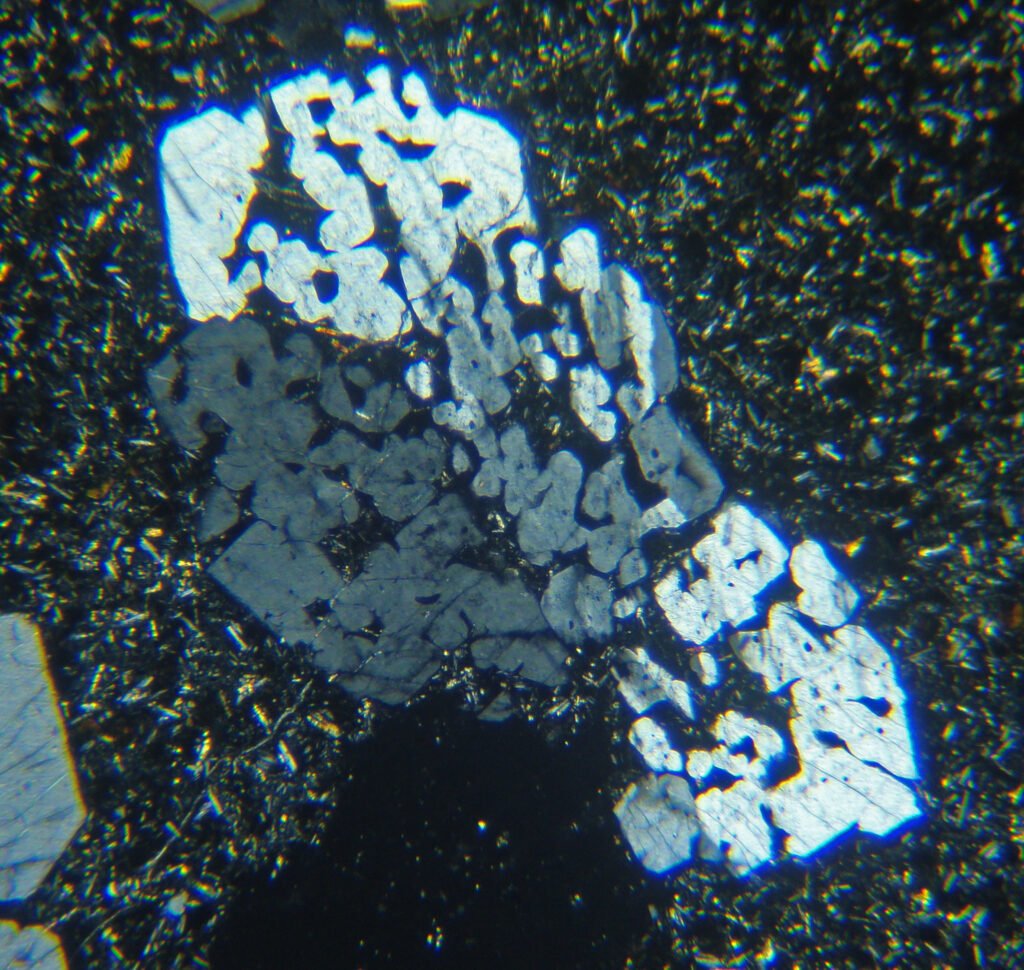
Bitownite is typical of intrusive mafic igneous rocks (gabbros, anorthosites). In basalts it occurs as phenocrysts. In metamorphic rocks it is rare.
Anorthite is relatively rare; it occurs in basic and ultrabasic, intrusive and extrusive rocks. In high-grade metamorphic rocks (granite facies). In marbles and some meteorites.
3. Mineral Associations
Plagioclase occur with quartz, potassic feldspar (orthoclase, microcline, sanidine), micas (biotite, muscovite, chlorite), pyroxenes (augite, pigeonite, diopside), amphiboles (hornblendes, etc.), garnets, tourmaline, fluorapatite, zircon , rutile, corundum and many other minerals.
4. Transmitted Light Microscopy
Refraction indices: nα: 1.528 – 1.533 nβ: 1.532 – 1.537 nγ: 1.538 – 1.542 (albite)
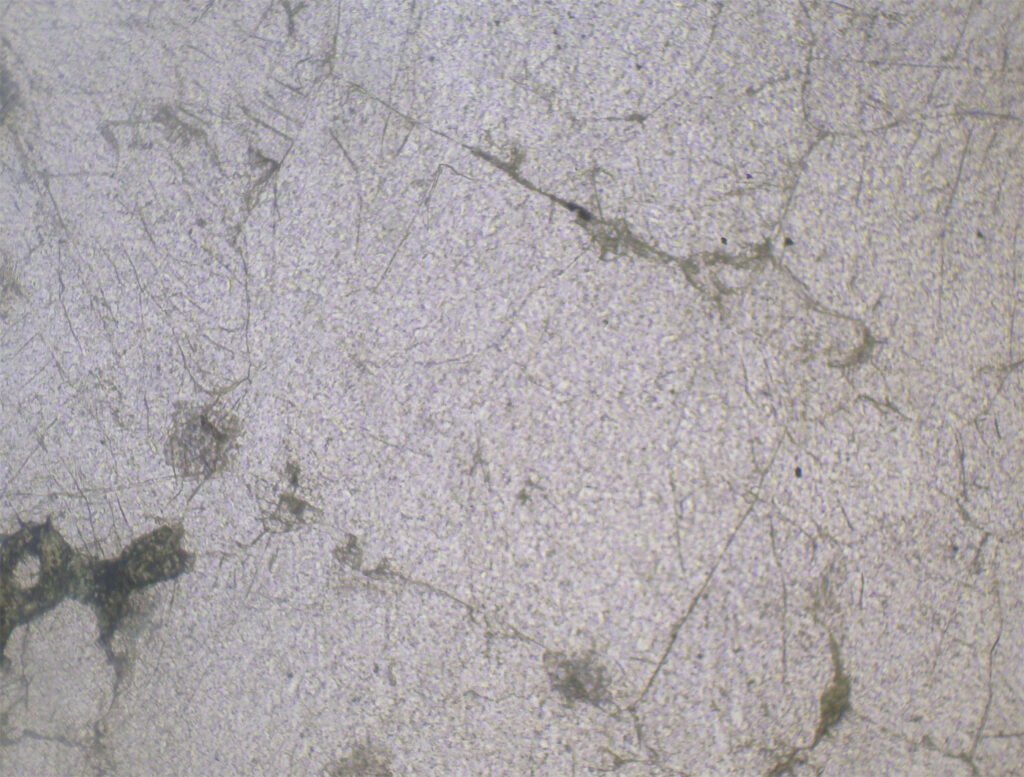
PLANE POLARIZED LIGHT – PPL
Color / Pleochroism: Colorless. If altered to clay minerals, which is very common, it can be gray or brown.
Relief: Low to very low.
Cleavage: {001} perfect, {010} good, {110} imperfect, {1-10} imperfect. The two main cleavages intersect at 86° angles, but are generally not visible in thin section.
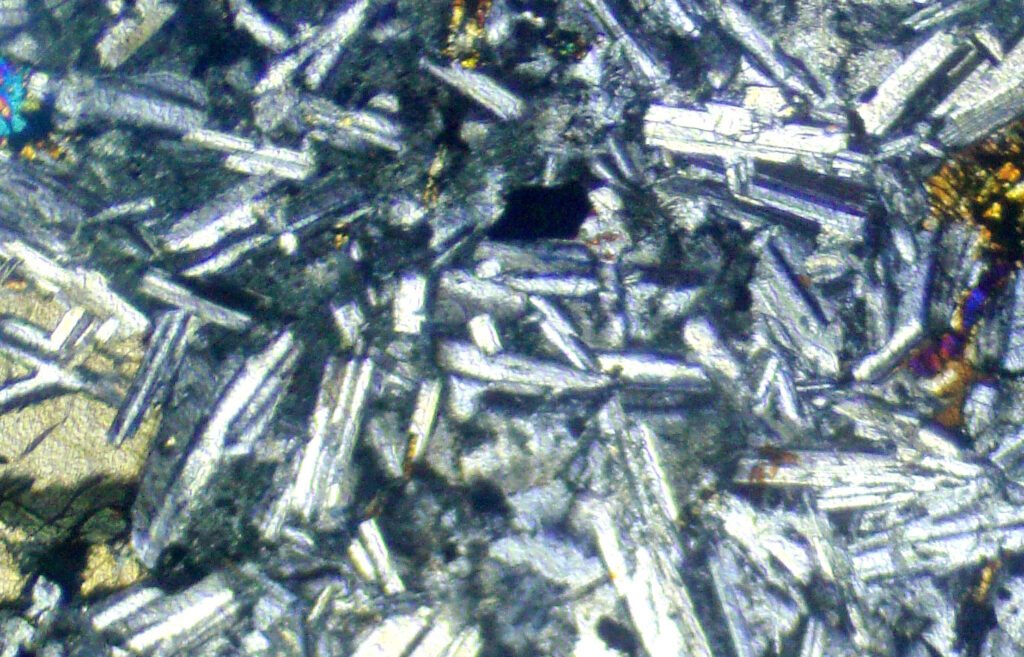
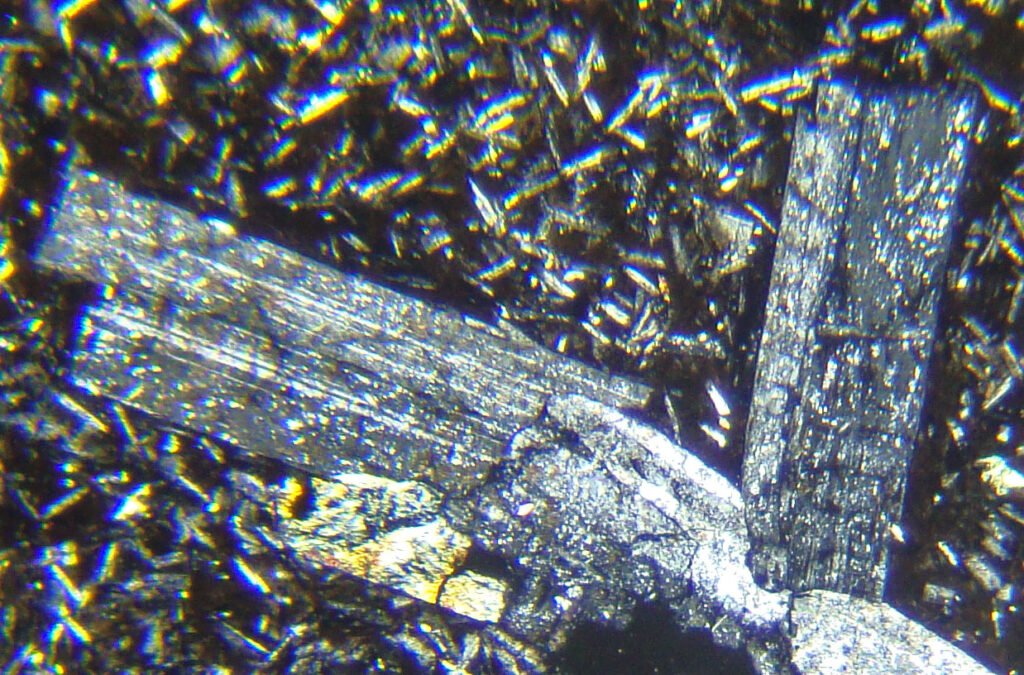
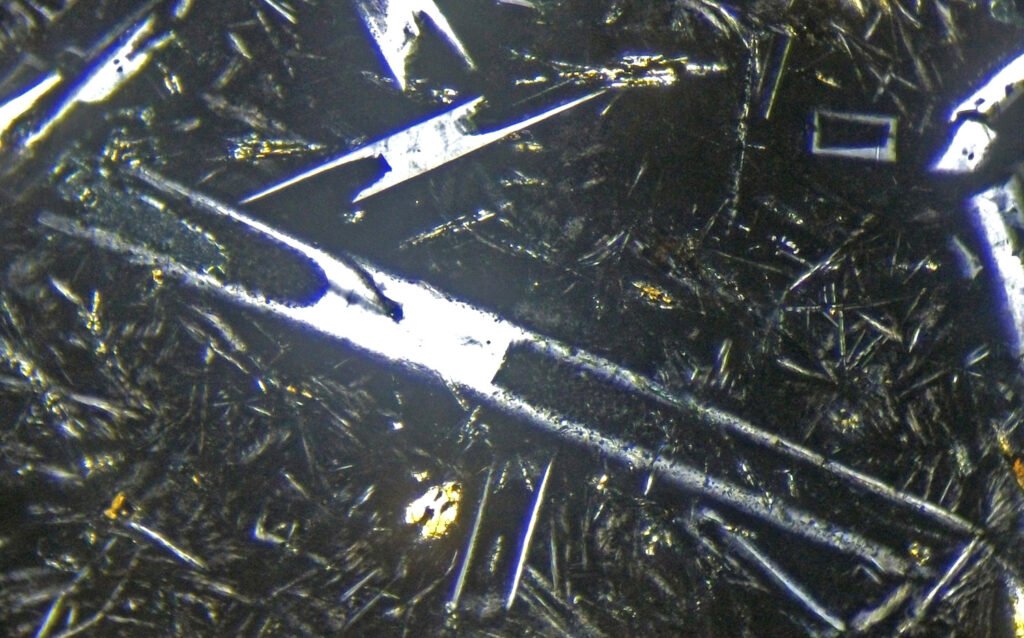
Habits: Typically long tabular (lamellar) crystals, sometimes very fine, may be skeletal (“swallow-tail”).
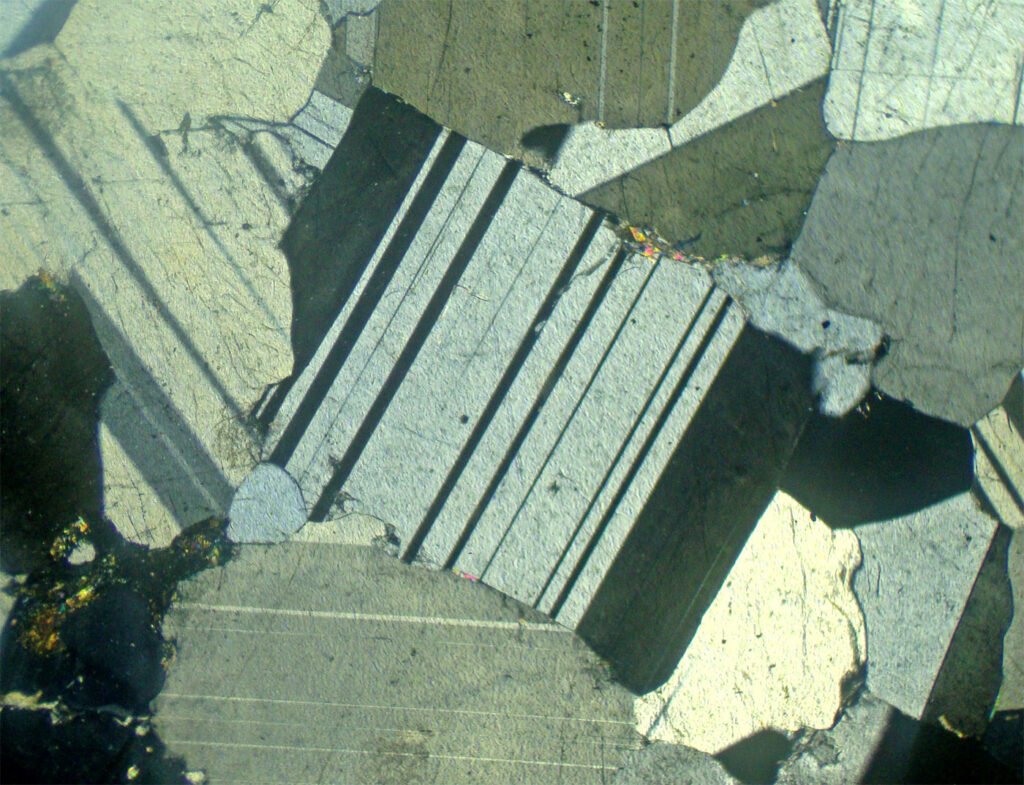
CROSSED POLARIZED LIGHT – XPL
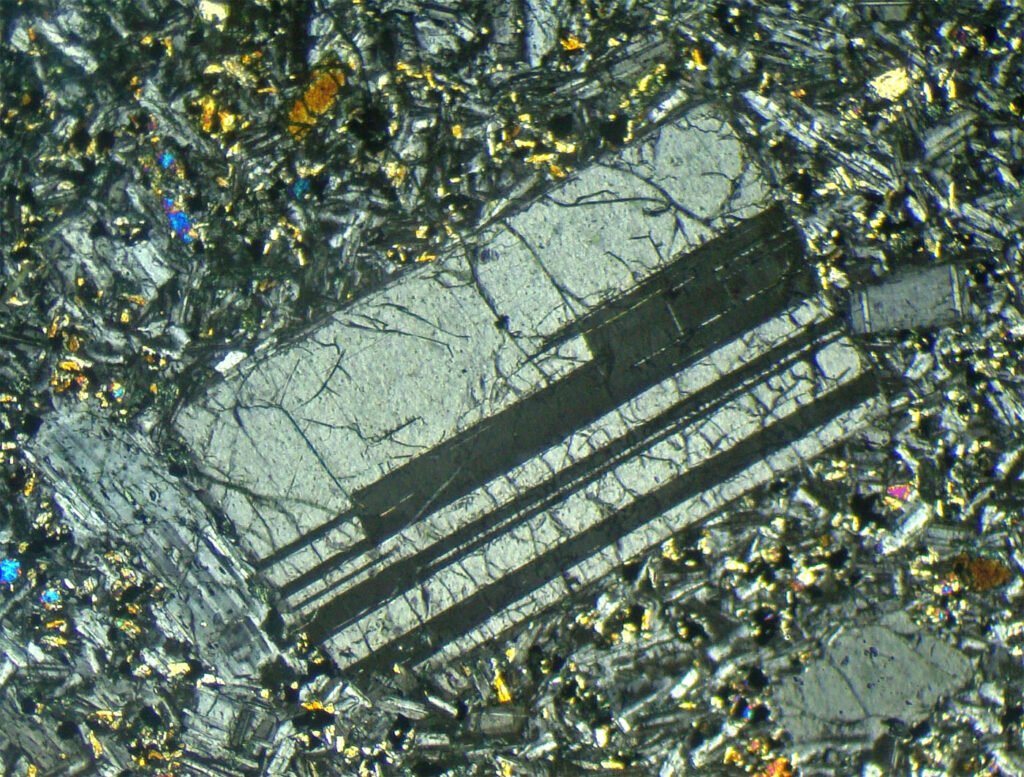
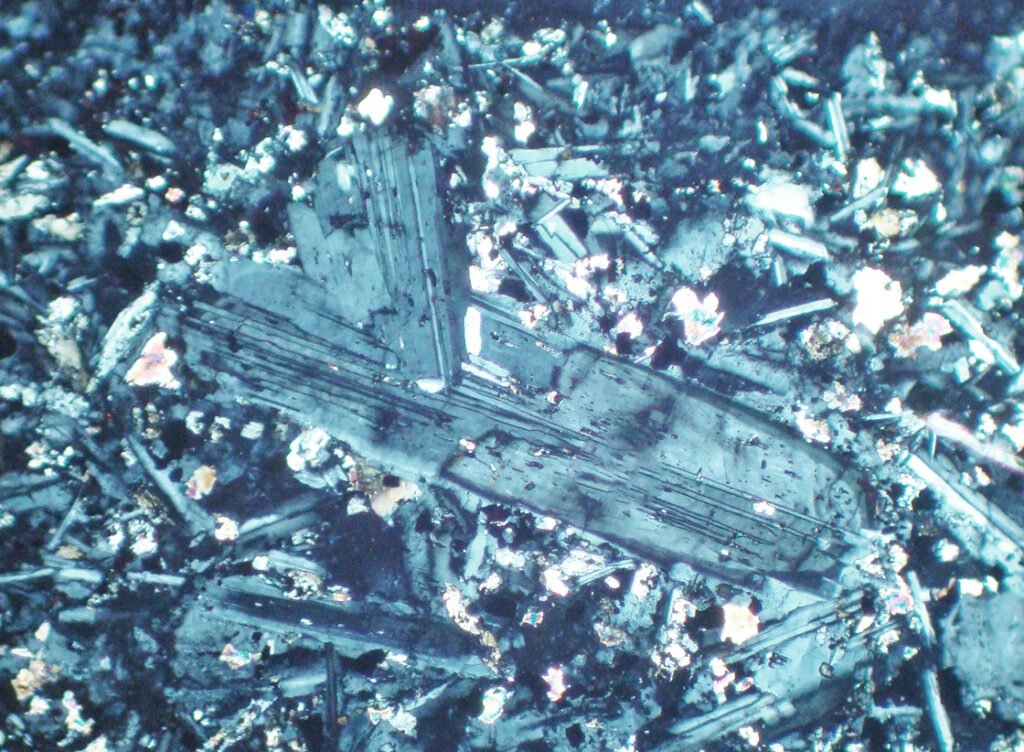
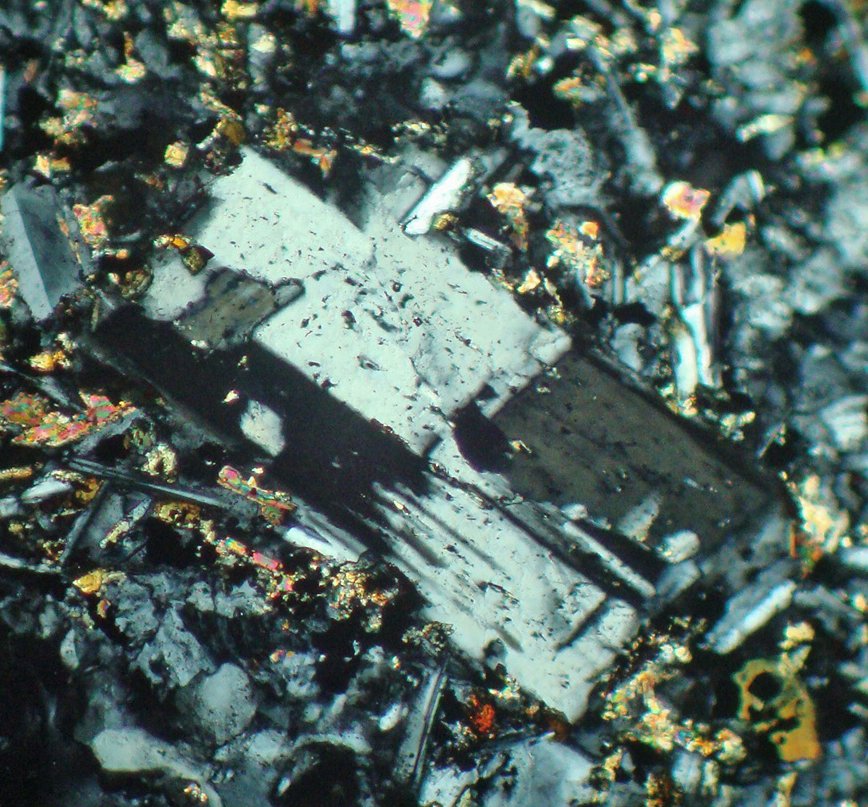
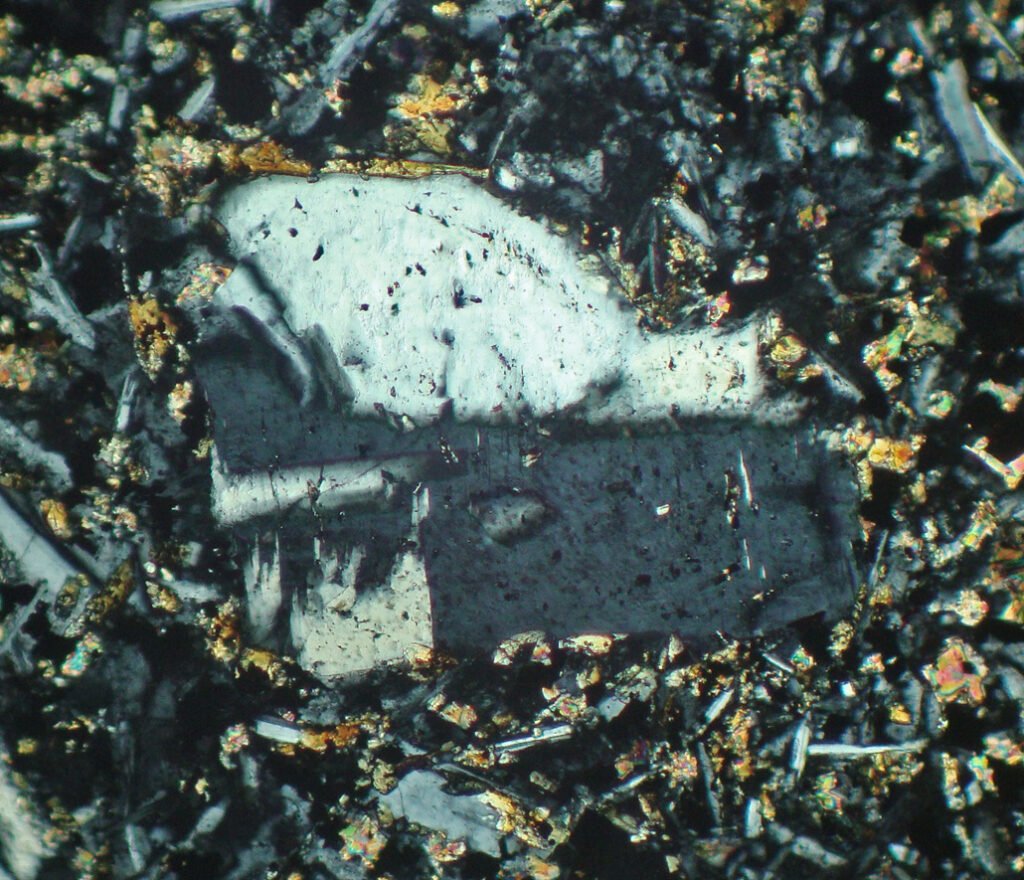
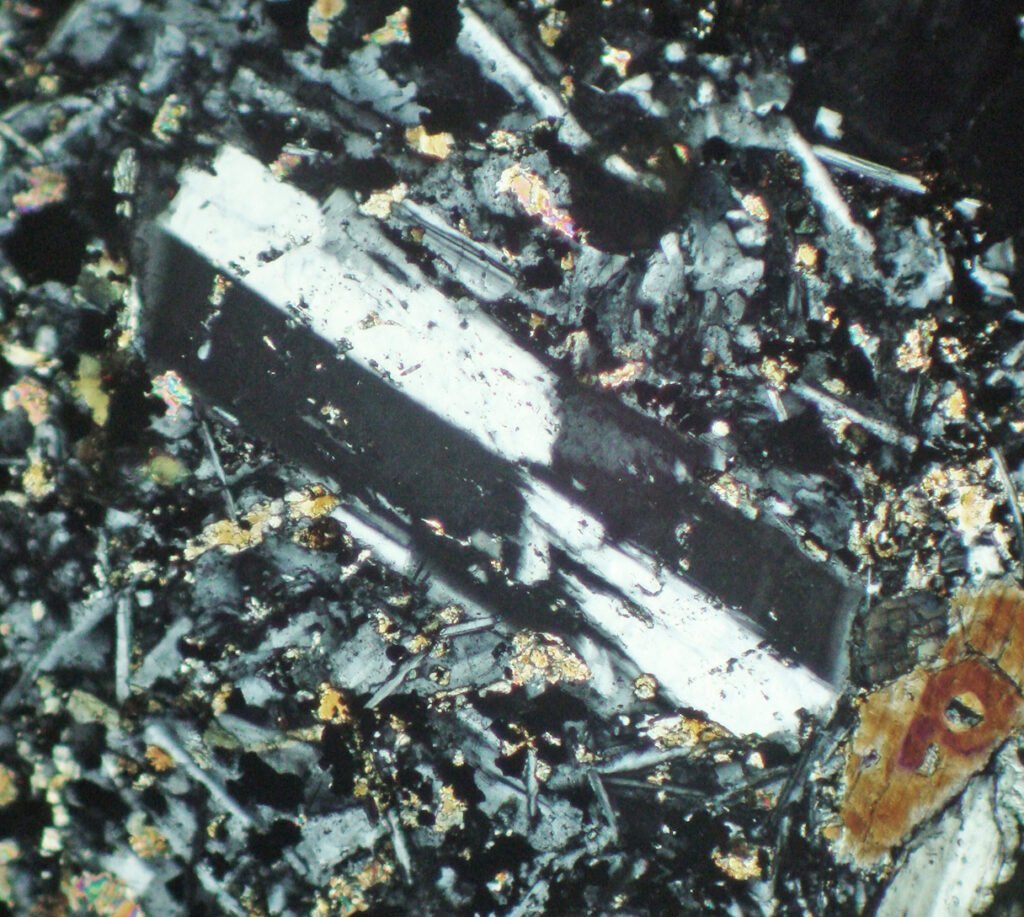
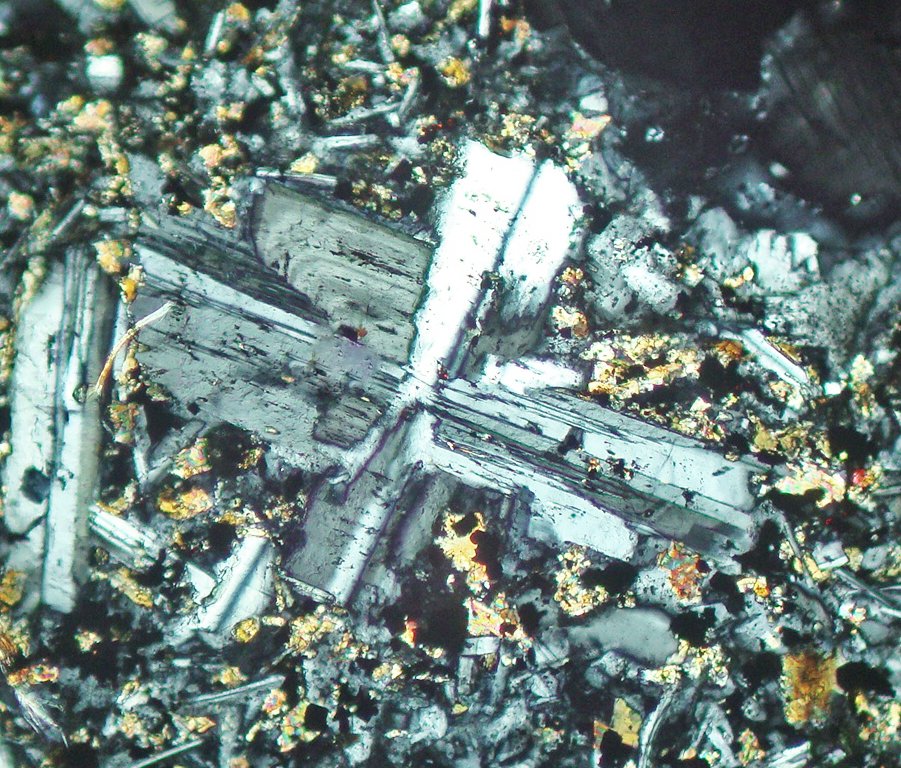
Birefringence and Interference Colors: Birefringence from 0.003 to 0.013, resulting in 1st order medium interference colors: dark gray to light gray, white.
Extinction: Oblique, from 3o to 39o, depends on the chemical composition, the section, whether it is by cleavage or by twin.
Elongation sign: Does not apply as plagioclase may be elongated in several directions.
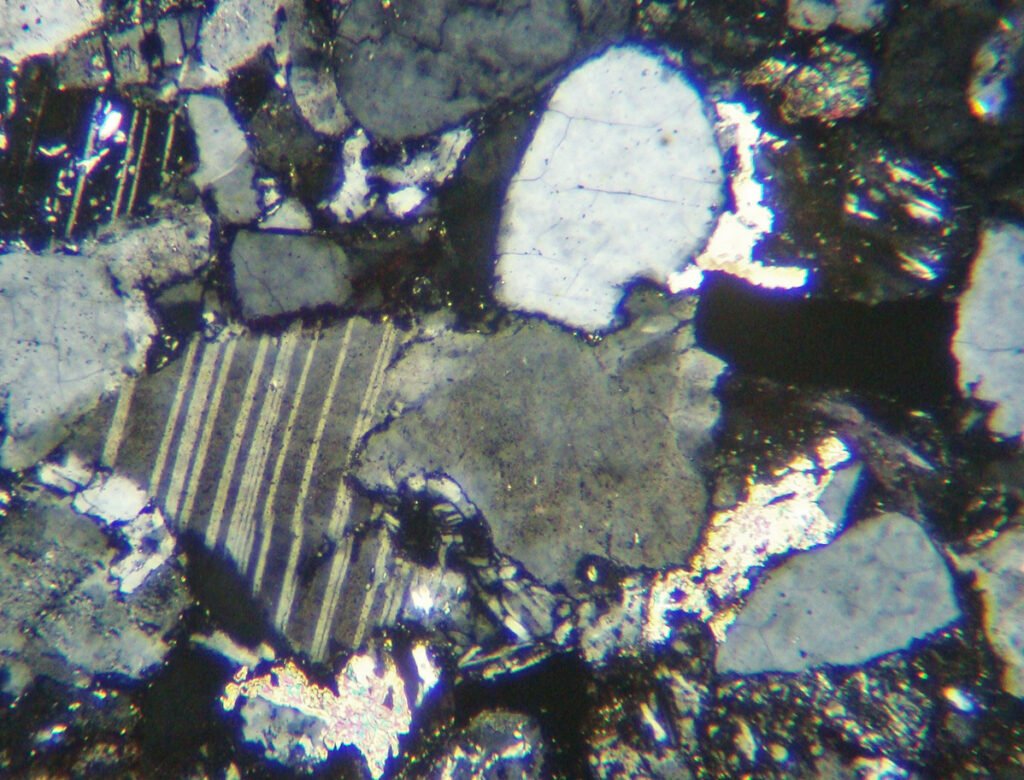
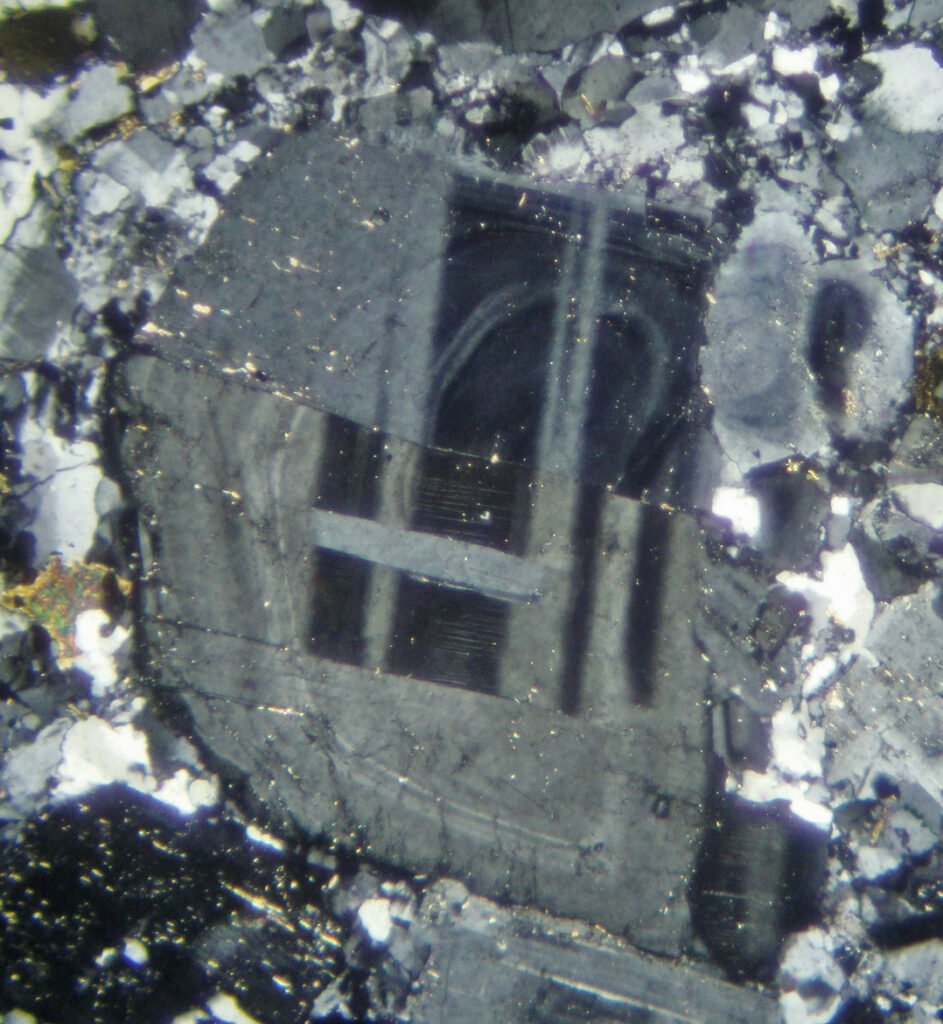
Twins: Common: Albite twin (polysynthetic), also Carlsbad and Pericline twin. Albite and Pericline together form a texture that resembles microcline, but the mesh is coarser and the lamellae better defined. Untwinned granoblastic albite is common in shales. Albite and anorthite tend to have single twins. Oligoclase has Albite twins with very thin lamellae; with increasing Ca content the twins become thicker.
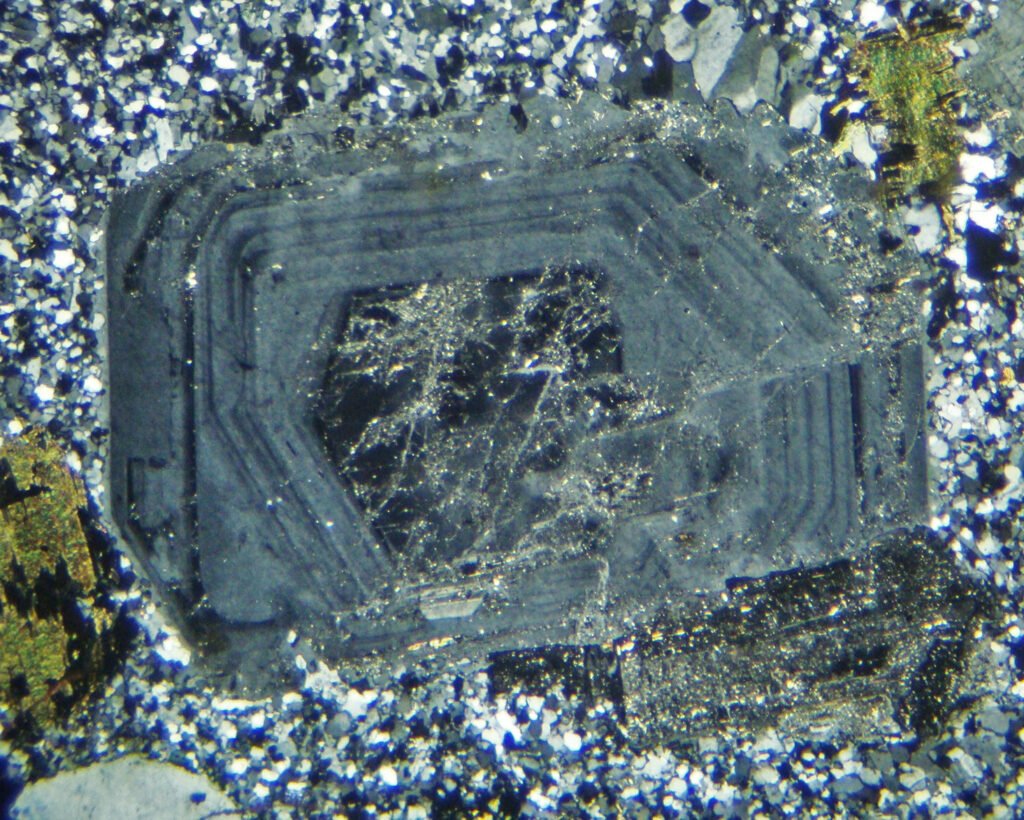
Zoning: Often shows zonation. It can be normal (Anorthite content decreases from the center to the edges), inverse (the opposite) or oscillatory (tending to normal, but with variations). The zonation crosses the polysynthetic twins.
CONVERGENT LIGHT
Character: Albite, oligoclase, andesine and bitownite: B(+) or B(-).
Labradorite B(+), anortite B(-).
2V angle: it is not diagnostic. Exsolution boards and strips can make the determination difficult.
albite: 76 – 82°, oligoclase: 82 – 90°, andesine: 76 – 83o , labradorite: 78 – 8 o, bitownite: 80 – 88o, anorthite: 78 – 83o
Alterations: depends on the composition. Alters to sericite (mica), epidote, calcite, clay minerals (montmorillonite), scapolite, prehnite, zeolites and others. The most common processes, therefore, are sericitization, saussuritization, spilitization, calcitization and propylitization.
May be confused with: the polysynthetic twins are extremely characteristic. The members of the isomorphic series of plagioclases are differentiated by the Methods of Michel-Levy (Rittmann) and Carlsbad-Albite. When plagioclase is very fine, granular, unaltered or without twins, it can be confused with other minerals.
Quartz does not alters and is U(+).
Nepheline alters, has no polysynthetic twins and is U(-).
Leucite and microcline have different twins, in which the dark bars taper towards both ends (“oleander-leaf”), which does not occur with the polysynthetic twins of plagioclases.
Cordierite is very similar but alters to pinnite and shows dark halos around radioactive inclusions (zircon), which do not occur in plagioclase.