PLAGIONITE

Plagionite – Pb5Sb8S17 – is a very rare sulfosalt that occurs in hydrothermal vein deposits, especially in Pb-Zn veins. It is part of Pb-Sb-Ag-Zn ores.

It is classified in the Plagionite Group and may contain Ag as an impurity.

1. Characteristics

Crystal system: Monoclinic prismatic.          

Color: Dark lead gray (“blackish”)     

Habit: Generally thick tabular by {001}. Sometimes short prismatic. Massive, rarely granular to compact. 

Cleavage: {112} very good. Striations // at (110).

Tenacity: Brittle.  

Twinning: No.  

Fracture: Conchoidal to irregular  

Mohs Hardness: 2.5

Parting: No. 

Streak: Dark lead gray to deep reddish-brown. 

Lustre: Metallic. 

Diaphaneity: Opaque. 

Density (g/cm³): 5.54


2. Geology and Deposits

Plagionite occurs in hydrothermal vein deposits, especially in Pb-Zn veins. It makes up the last mineralization of these intrusive veins, generally occurring in druses.

The difficulty of identifying it means it generally goes unnoticed, but it should not be uncommon in small quantities.


3. Mineral Associations

It is associated with common gangue minerals such as quartz and carbonates (calcite, dolomite, siderite).

It also occurs with common sulfides such as pyrite, chalcopyrite, sphalerite, and galena.

In the specific paragenesis, there are other Pb-Sb(+-Sn+-Ag) sulfosalts such as franckeite, andorite, semseyite, zinkenite, twinnite, robinsonite, geocronite, and boulangerite.
Also with Sn minerals (cassiterite, stannite) and realgar.


4. Transmitted Light Microscopy

This does not apply, as plagionite is completely opaque.

5. Reflected Light Microscopy

Sample preparation: Despite its low hardness, plagionite acquires a good polish.       

PLANE POLARIZED LIGHT – PPL

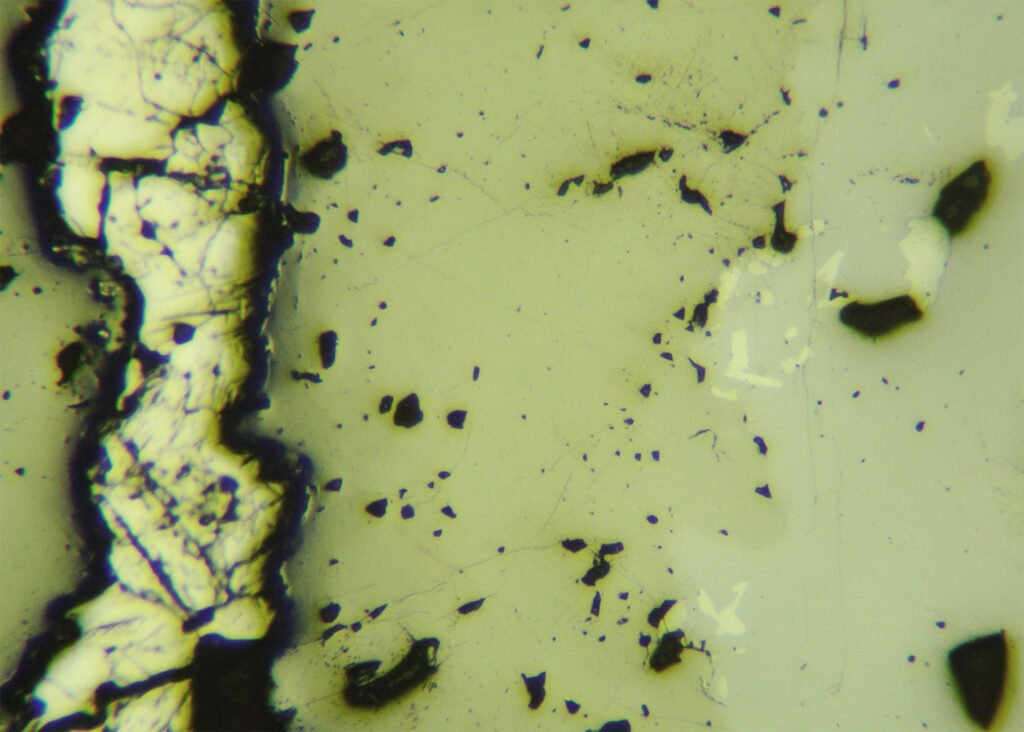
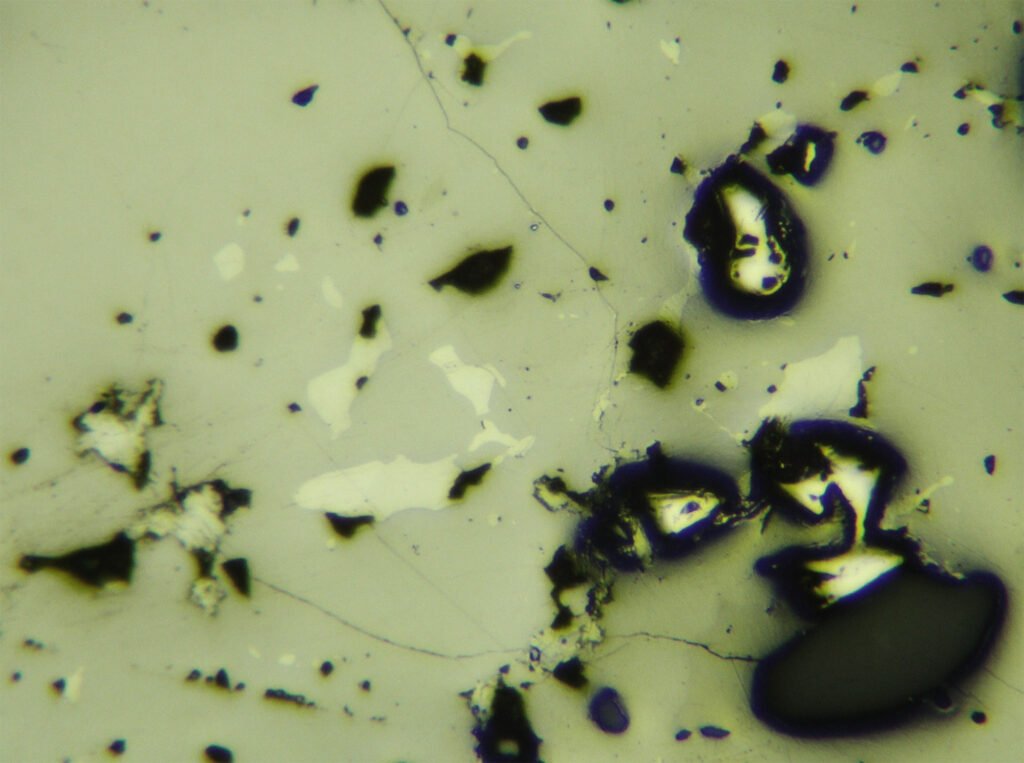
Reflection color: White to grayish-white.

Compared to the color of galena, the color of plagionite is darker. 

Pleochroism: Distinct, between bluish gray and brownish gray (or between white and gray). Sections parallel to (001) do not show pleochroism.
If the grains are very small, it is difficult to perceive pleochroism and bireflectance.      

Reflectivity: 32.98 – 40.64%        

Bireflectance: Distinct.       

CROSSED POLARIZED LIGHT – XPL

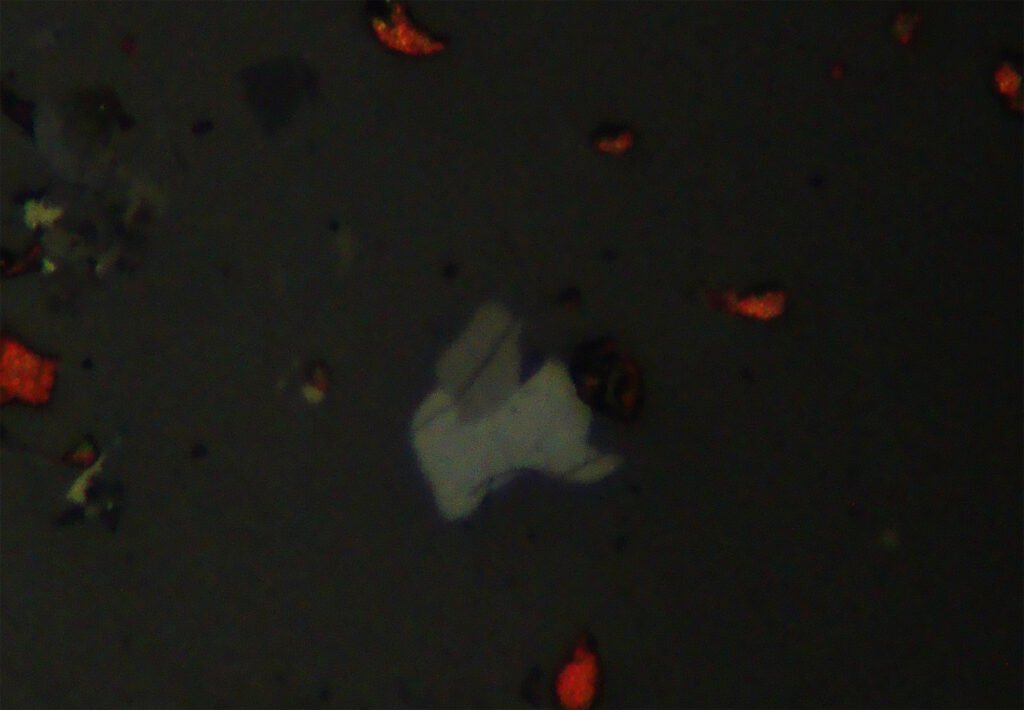
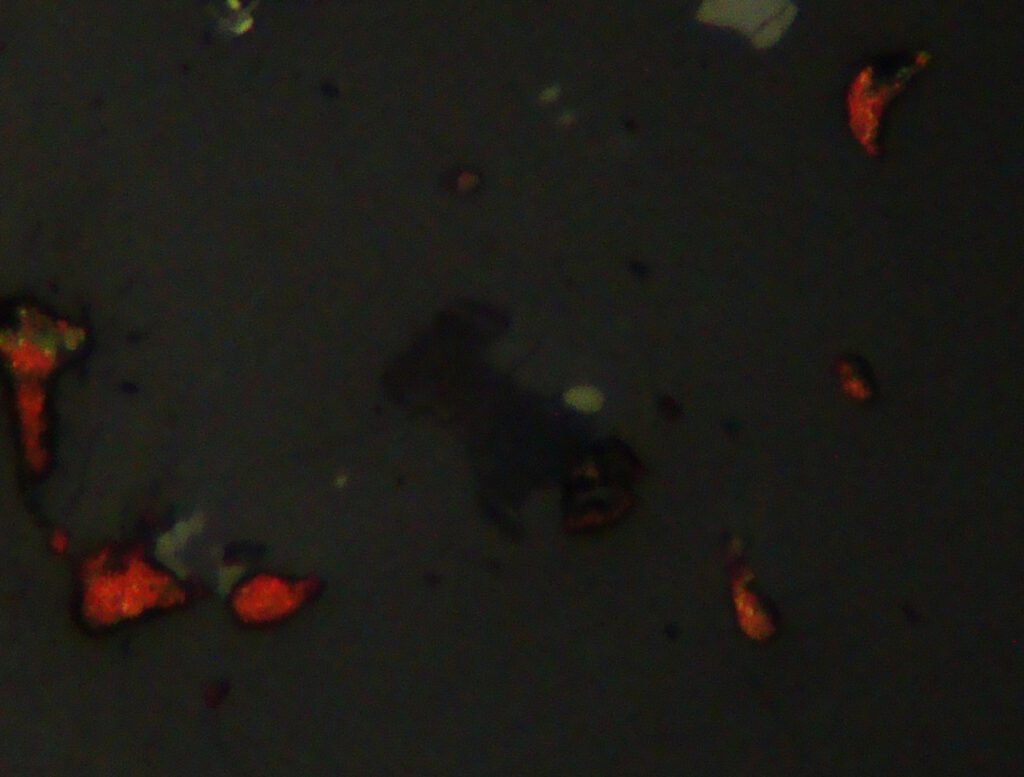
Isotropy / Anisotropy: Weak anisotropy in greenish gray, pale pink, leather brown, and slate blue.
Extinction is oblique.
Sections parallel to (001) are isotropic.        

Internal reflections: Rare dark red spots, occasionally visible, but difficult to spot.      

May be confused with: Optical and chemical attack properties are not characteristic enough to identify plagionite. Additional analytical methods are required. When the ore is of the corresponding paragenesis, the typical crystal habit and its oblique extinction, as well as its dispersion, can identify it.       

General Characteristics: 

Grain shape: the texture of the aggregates is of parallel tabular crystals with basal sections of oval polygons. It can form crusts. Aggregates of acicular or prismatic grains also occur.

Cleavage that is observed macroscopically is generally visible in the polished section in the case of coarse-grained samples.

Twinning does not occur.

Translational structures similar to those of stibnite may occur.

Extinction is oblique in sections approaching (010).

Incipient oxidation forms thin crusts of another sulfosalt.