1. Characteristics
Crystal system: Cubic hexaoctahedral.
Color: Almost always colorless or white. Also light colors in grey, pink, blue and violet.
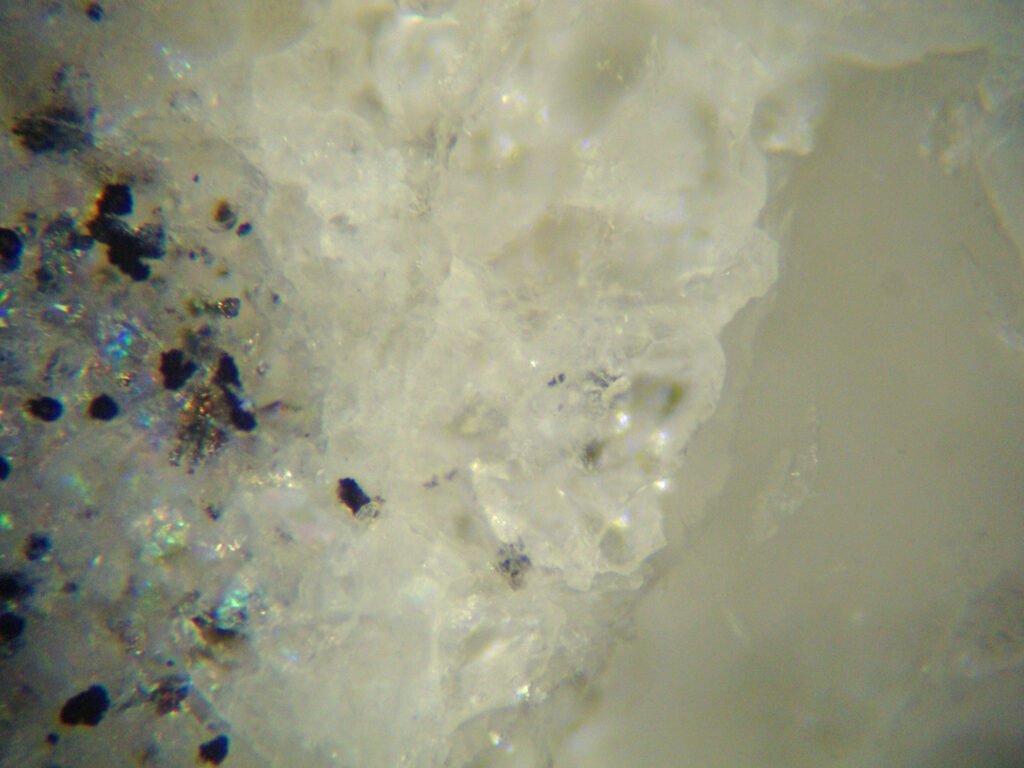
Habit: Crystals are rare. Usually massive, rounded grains, fine granular.
Cleavage: In traces.
Tenacity: Very brittle.
Twinning: No.
Fracture: Sub conchoidal.
Mohs Hardness: 6.5 – 7
Parting: No.
Streak: White.
Lustre: Vitreous, sub-vitreous, resinous. Shines less than quartz.
Diaphaneity: Transparent.
Density (g/cm³): 2.9
2. Geology and Deposits
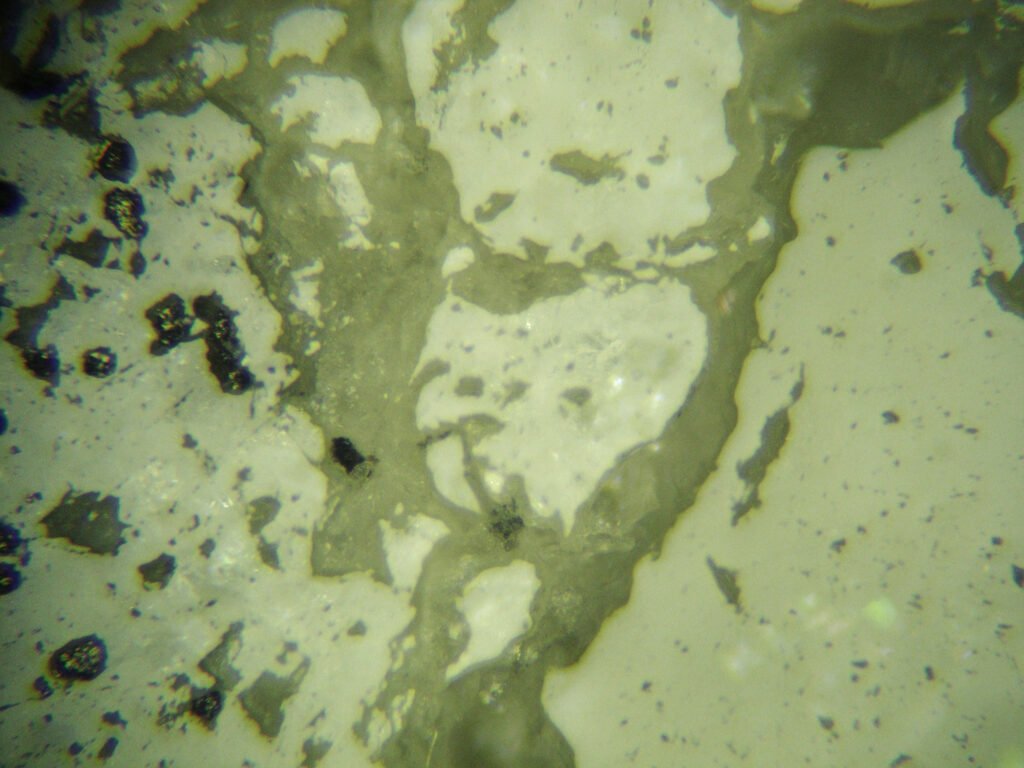
Pollucite is a characteristic and typical mineral of lithium-rich granitic pegmatites. About 82% (350,000 t) of the world’s pollucite reserves are in the Tanco Mine (Manitoba, Canada).
3. Mineral Associations
Pollucite occurs associated with the common minerals of granitic pegmatites, such as quartz (including chalcedony variety), feldspar (orthoclase, microcline (including amazonite variety), albite (including cleavelandite variety)), micas (muscovite, biotite), beryl (including aquamarine variety) ), tourmaline (including elbaite and rubellite varieties), cassiterite, columbite, fluor-apatite and others.
Its specific paragenesis includes several Li minerals such as petalite, amblygonite, montebrasite, eucryptite, lepidolite and spodumene (including kunzite variety).Also with rare minerals like hambergite and nanpingite.
4. Transmitted Light Microscopy
Refraction indices: n: 1,508 – 1,528
PLANE POLARIZED LIGHT – PPL
Color / Pleochroism: Colorless.
Relief: No information.
Cleavage: In traces, it is not visible under the microscope.
Habits: Massive, granular, idiomorphic crystals tending to round sections.
Pollucite occur in pegmatites and, therefore, the crystals are usually much larger than the size of the thin section, so it is difficult to see crystal forms.
CROSSED POLARIZED LIGHT – XPL
Birefringence and Interference Colors: Isotropic. Sometimes show faint anomalous anisotropy.
Extinction: Isotropic.
Elongation sign: Isotropic.
Twins: Isotropic.
Zoning: Isotropic.
CONVERGENT LIGHT
Character: Isotropic.
2V angle: Isotropic.
Alterations: no information available.
May be confused with: other isotropic minerals, colorless and with high relief in PPL, like garnet. A careful investigation considering paragenesis is necessary to recognize pollucite under the microscope without any other analytical methods.