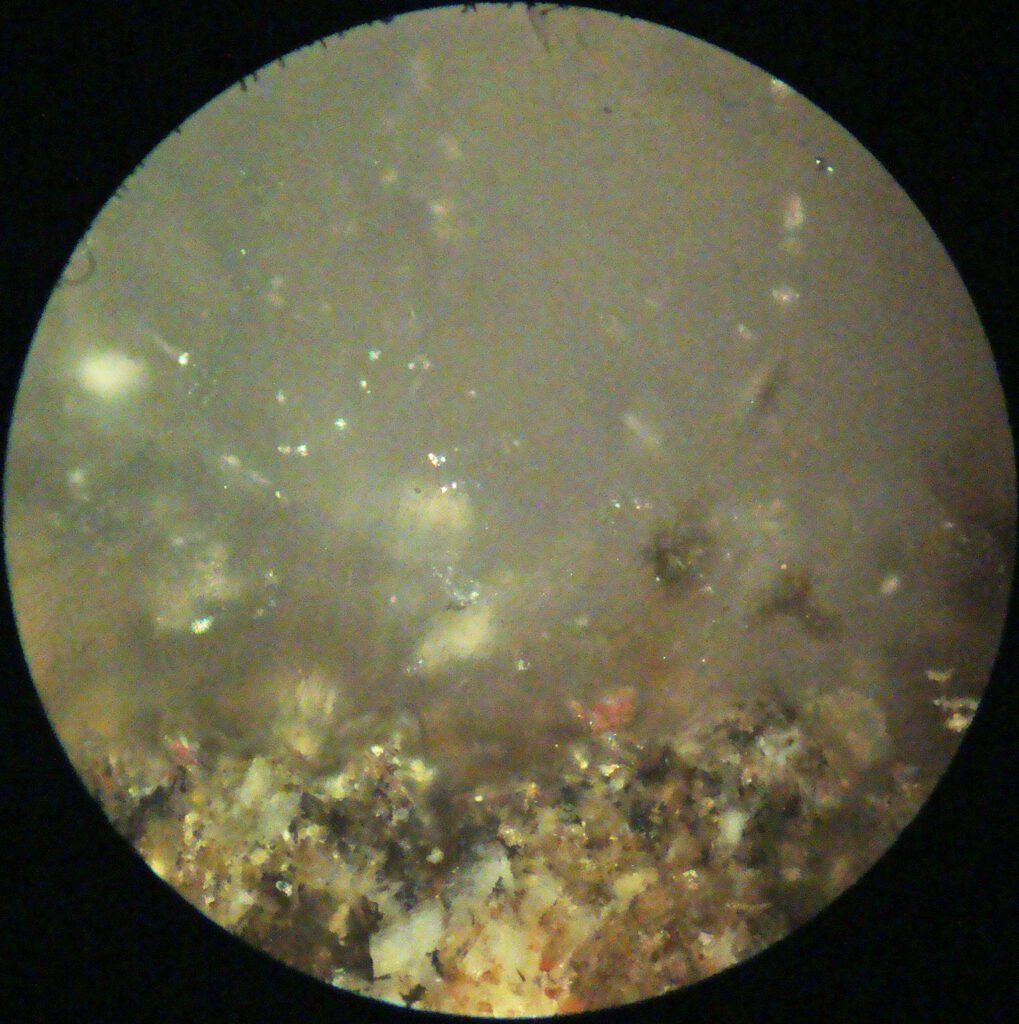
1. Characteristics
Crystal system: Orthorhombic pyramidal.
Color: Colorless, gray, yellow, yellowish-green, or white.
Habit: Crystals are rare, usually aggregated in fan-shaped, reniform, globular, granular, stalagmite-like, etc.
Cleavage: {001} good, {110} poor.
Tenacity: Brittle.
Twinning: thin lamellae.
Fracture: Irregular.
Mohs Hardness: 6 – 6.5
Parting: No.
Streak: White.
Lustre: Vitreous, pearly.
Diaphaneity: Transparent.
Density (g/cm³): 2.8 – 2.95
2. Geology and Deposits
Prehnite, an alteration product of the anorthite component of plagioclase, is typically found filling tension cracks, fractures, and cavities (vesicles) in mafic and intermediate igneous rocks such as basalts, diabases, their pyroclastic derivatives, and gabbroic rocks. More rarely in granodiorites.
It most commonly occurs in graywackes and basalts that have undergone low-grade regional metamorphism.
It can be found in marls that have undergone contact metamorphism.
3. Mineral Associations
It is associated with the primary minerals that make up the ultrabasic, basic, and intermediate igneous host rocks, such as plagioclase, clinopyroxenes, olivine, magnetite, ilmenite, pyrite, and chalcopyrite, etc.
Among the metamorphic mineralogy that developed on these mafic protoliths are albite, epidote, zoisite, quartz, calcite, zeolites (laumontite and others), actinolite, chlorite, apophyllite, gyrolite, babingtonite, native copper, and pectolite.
In calcic rocks of contact metamorphism with albite, epidote/zoisite, garnet (grossular), and babingtonite.
4. Transmitted Light Microscopy
Refraction indices: nα: 1,611 – 1,632 nβ: 1,615 – 1,642 nγ: 1,632 – 1,665
PLANE POLARIZED LIGHT – PPL
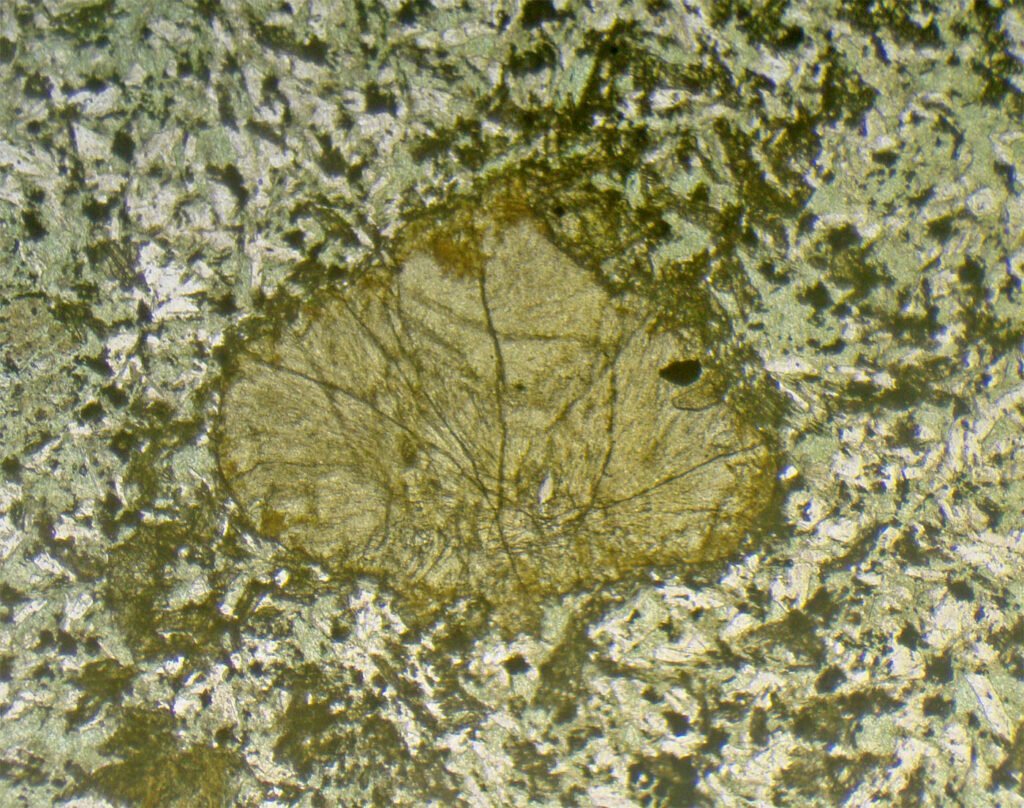
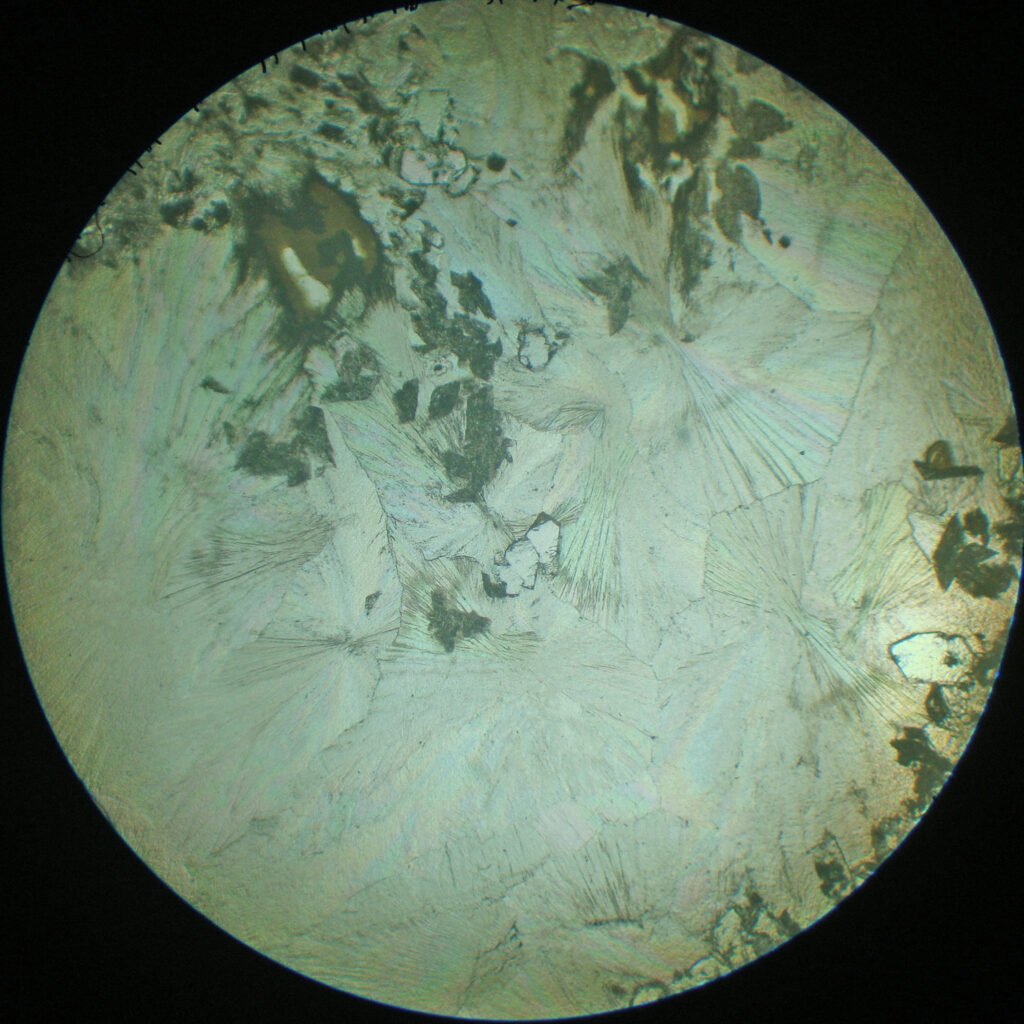
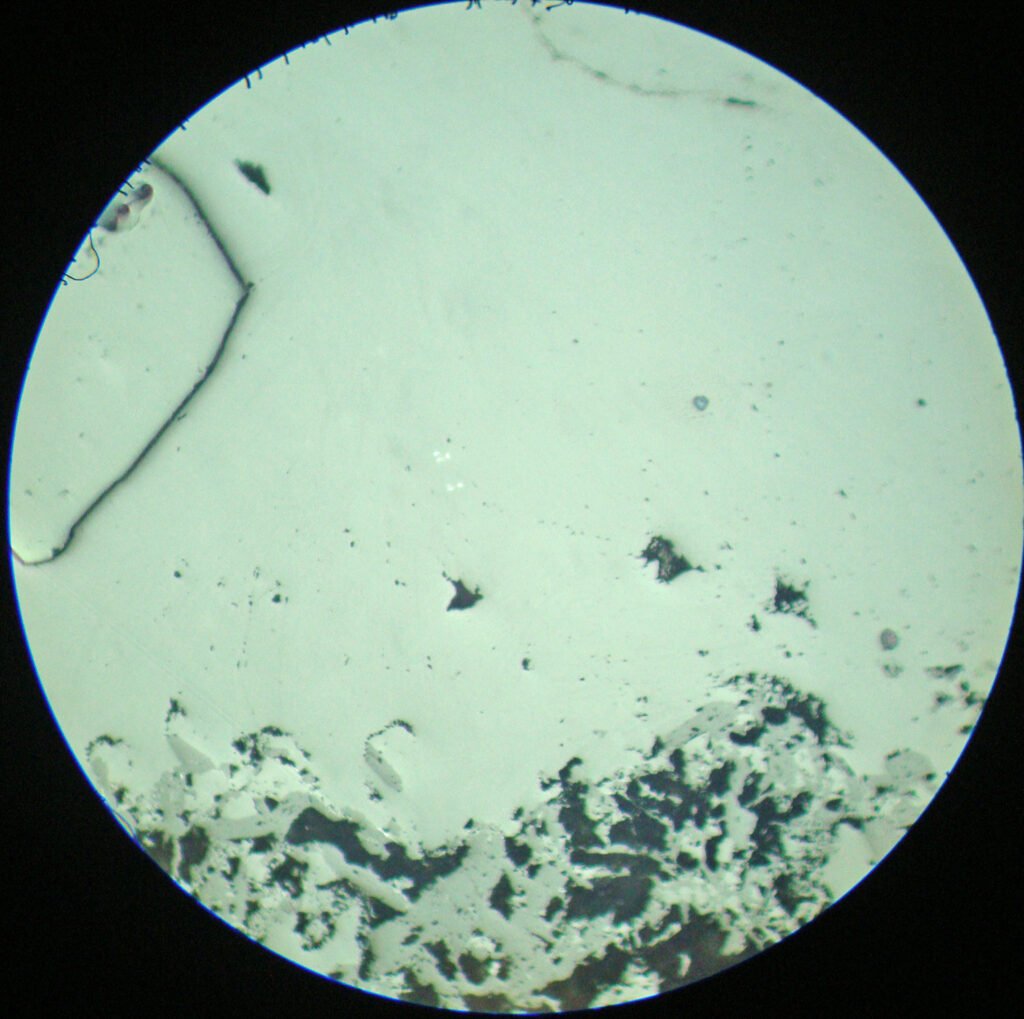
Color / Pleochroism: Colorless, it never has color, much less pleochroism.
Relief: Moderate.
Cleavage: {001} good, {110} poor.
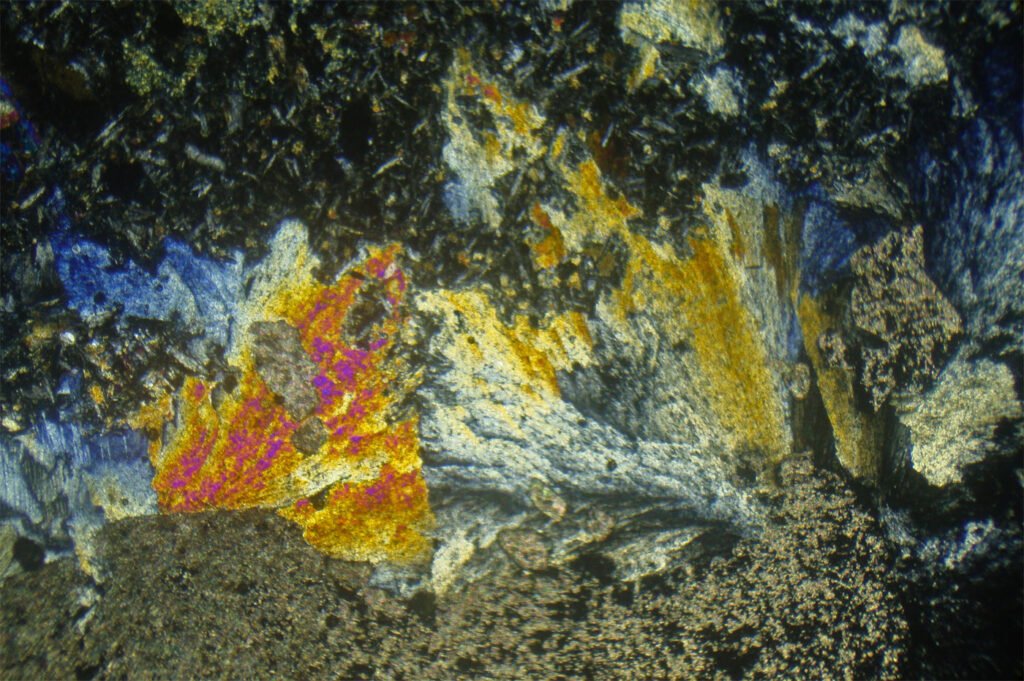
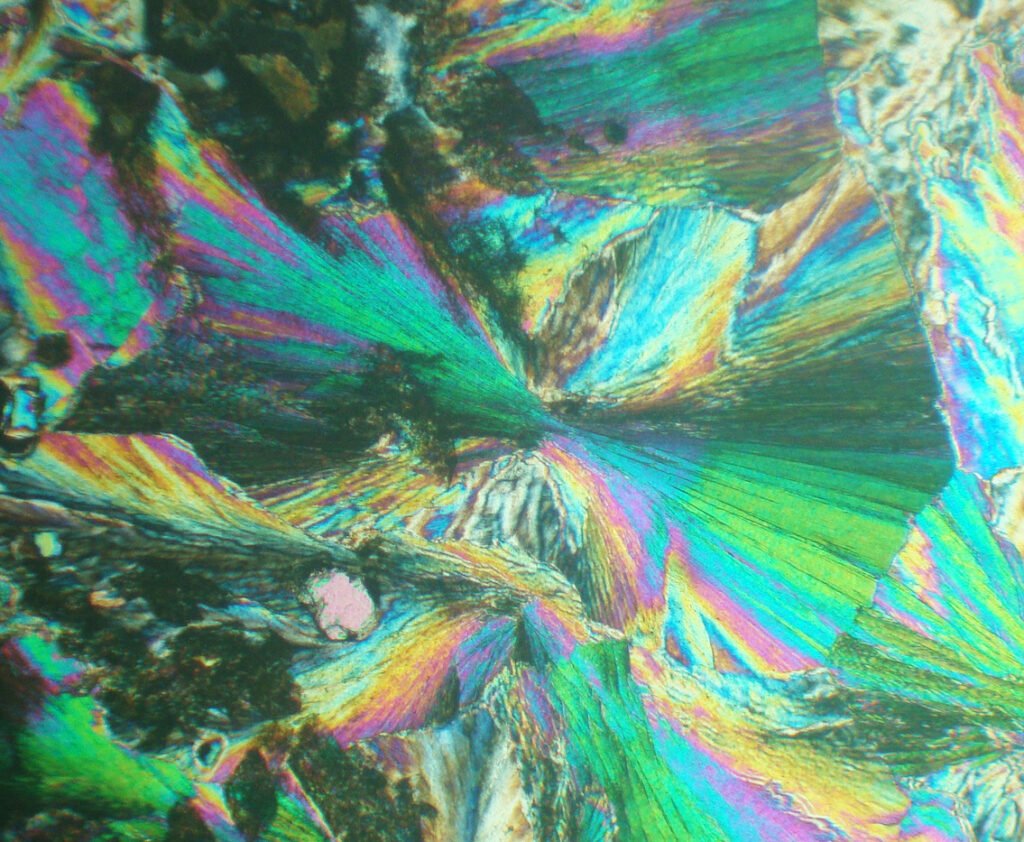
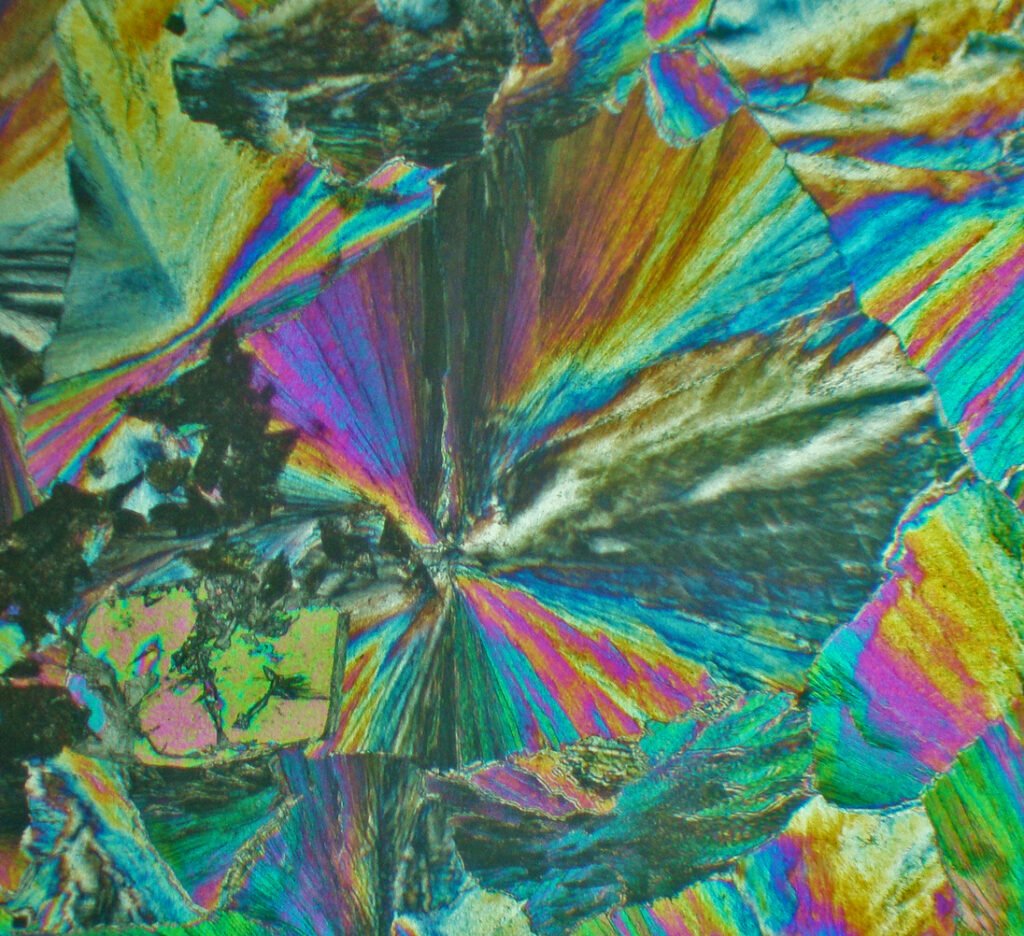
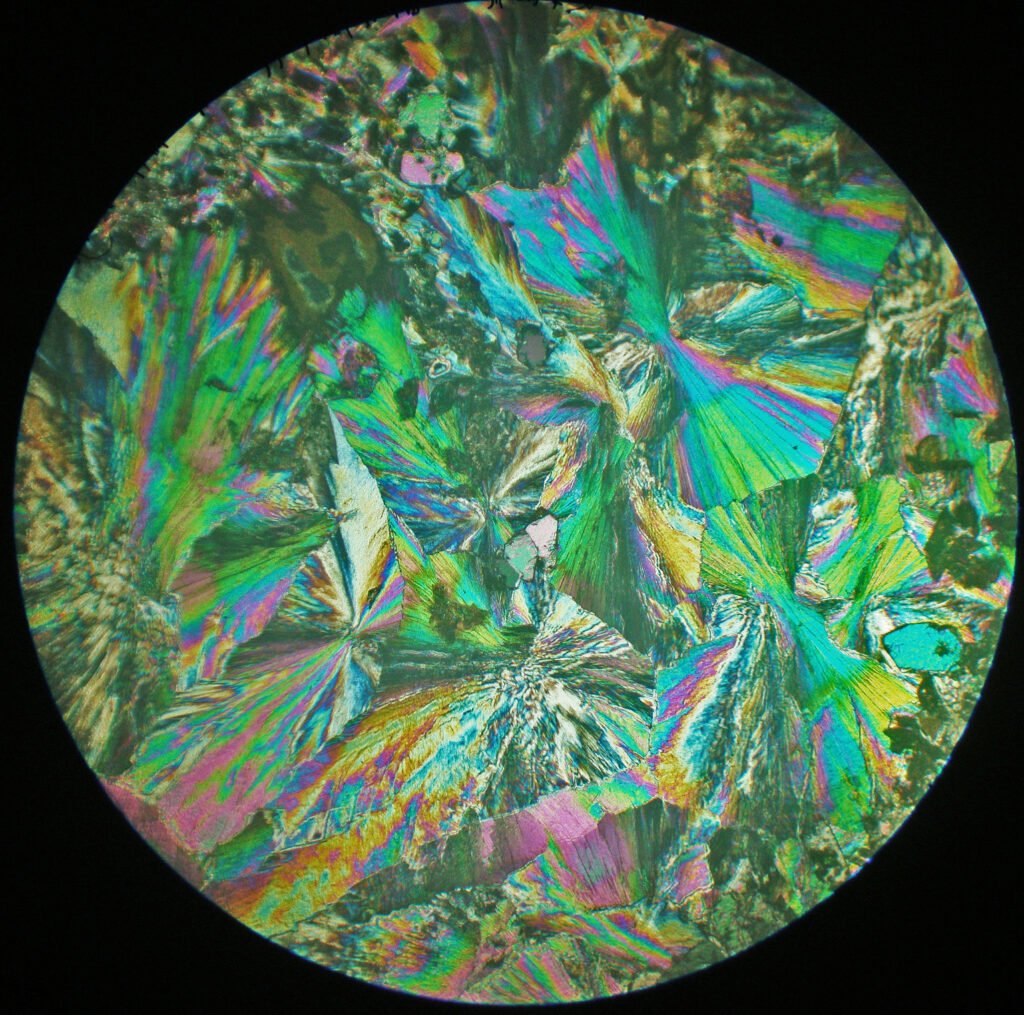
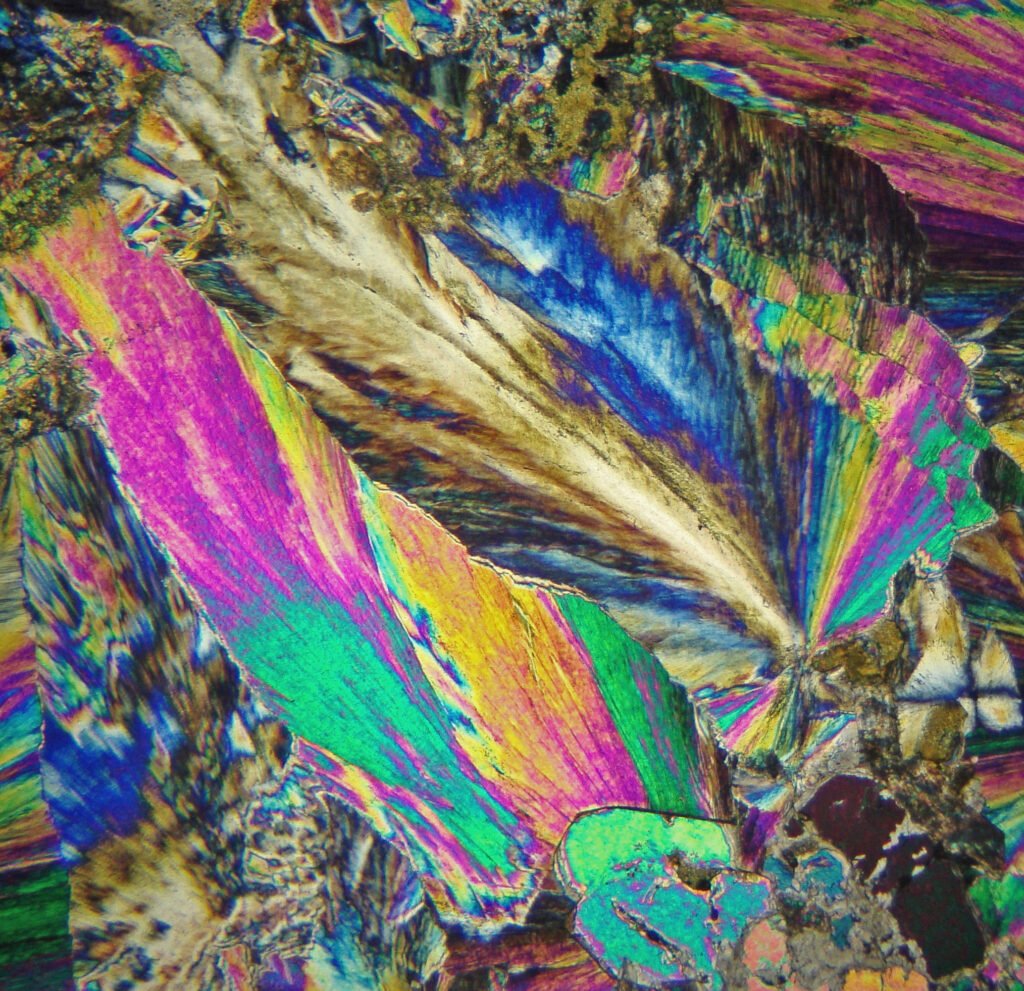
Habits: Tabular in [001], prismatic, radiating, forming bundles and intergrowths in a checkerboard pattern. Crystal arrangements can be in a bowtie pattern, fan-shaped, radial, dendritic, reniform, globular, stalactitic, granular, or massive.
CROSSED POLARIZED LIGHT – XPL
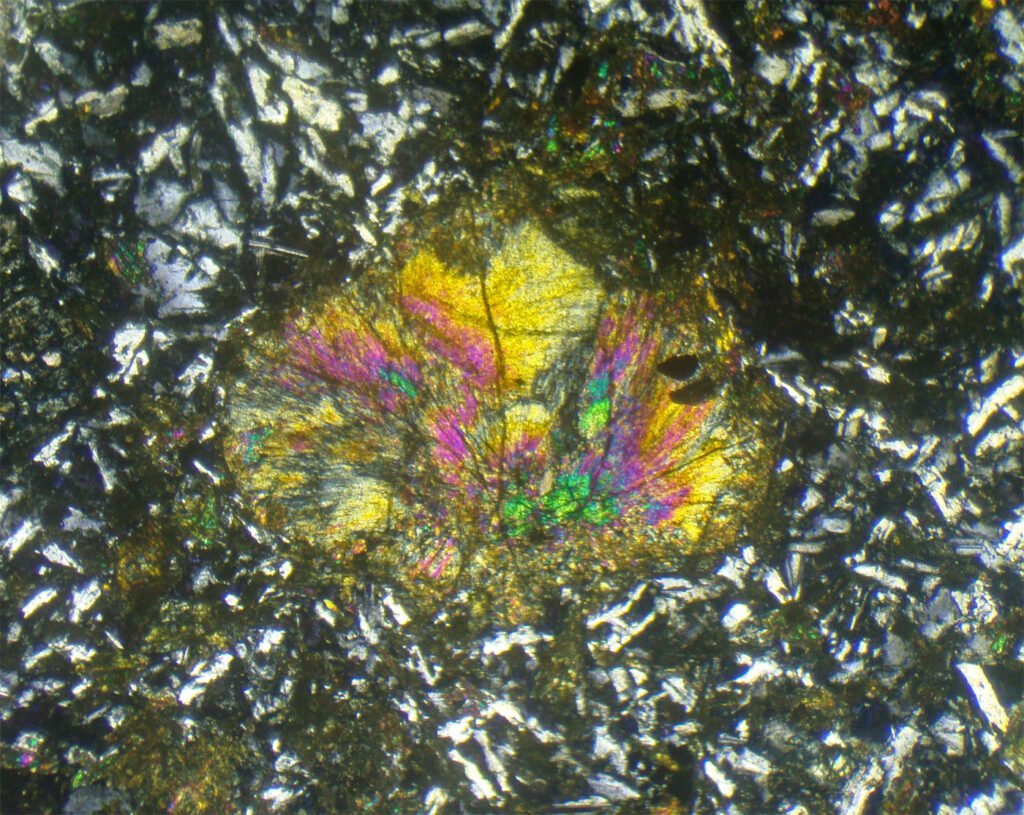
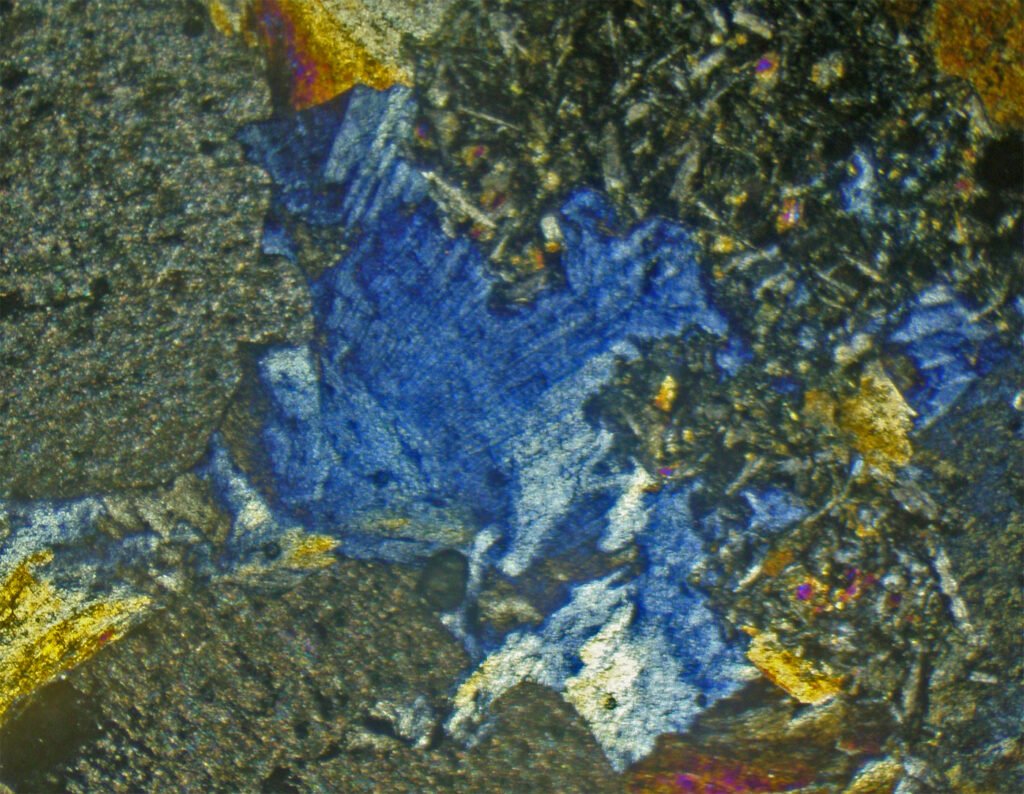
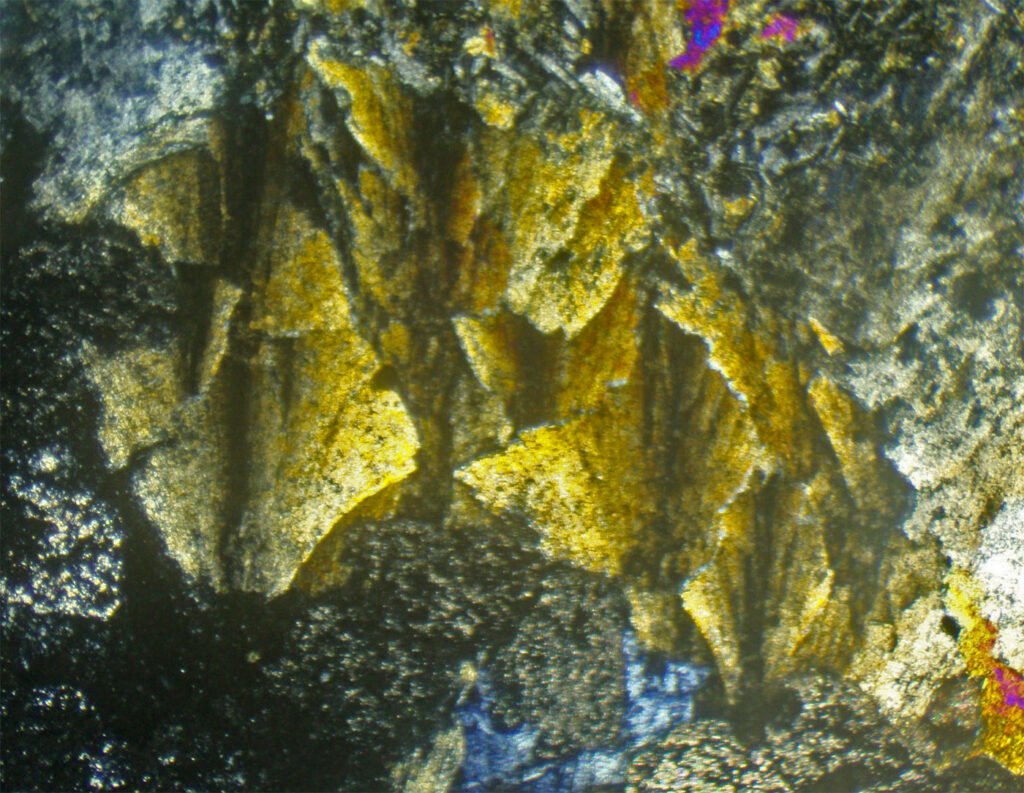
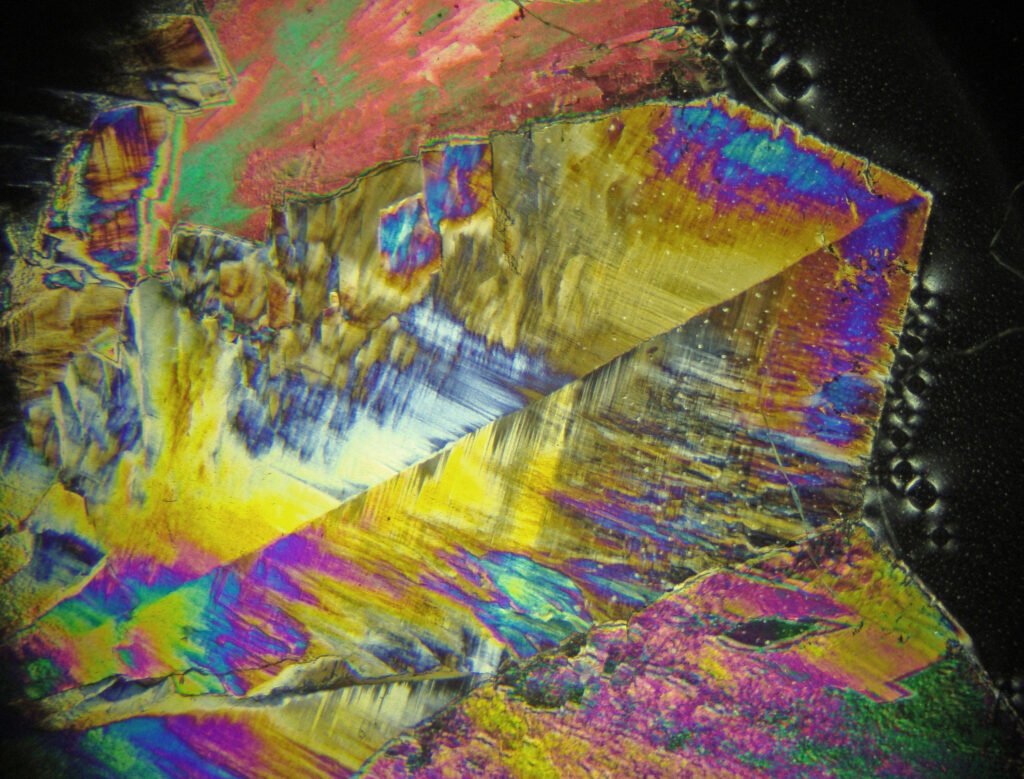
Birefringence and Interference Colors: Birefringence of 0.021 to 0.035, corresponding to intense second-order colors: blue, orange, red.
They are frequently anomalous, appearing blue, bluish-gray, or leather-brown. Birefringence increases with increasing Fe content.
Extinction: Parallel, it closely resembles the habit and colors of muscovite, but the extinction is not mottled as in micas. Checkerboard patterns may occur, resembling microcline, but with anomalous interference colors and incomplete extinction.
Elongation sign: ES(+) or ES(-), it is not a diagnostic.
Twins: Thin lamellar, rare, can occur in two sets, per (110) and (001).
Zoning: sometimes zoned, with hourglass-shaped zonation.
CONVERGENT LIGHT
Character: B(+)
2V angle: 64 – 71º
Alterations: It does not alters, it is a product of alteration.
May be confused with: Cleavage and birefringence are diagnostic.
Lawsonite, pumpellyite, and epidote, also found in low-grade metamorphic rocks, show pleochroism (weak) and/or have either lower or higher birefringence.
Datolite occurs in vesicles but has higher birefringence and poor cleavage.
Chondrodite shows weak golden pleochroism and lamellar twinning.
Zeolites have lower birefringence (are gray) and lower relief.