5. Reflected Light Microscopy
Sample preparation: the hardness of pyrargyrite is very low, similar to that of proustite, but even so pyrargyrite acquires a good polish easily, and it is possible to almost completely avoid polishing grooves. The polishing hardness of pyrargyrite is lower than the hardness of stephanite and galena, similar or slightly higher than the hardness of miargyrite and pearceite-polybasite and much higher than the hardness of acanthite.
Dye the polishing cloth red. There are subtle hardness differences according to different orientations in the mineral. Light etching (corrosion) can be perceived discreetly in polished sections after 10 minutes of exposure: etching causes old polishing grooves to appear and its intensity varies greatly according to grain orientation.
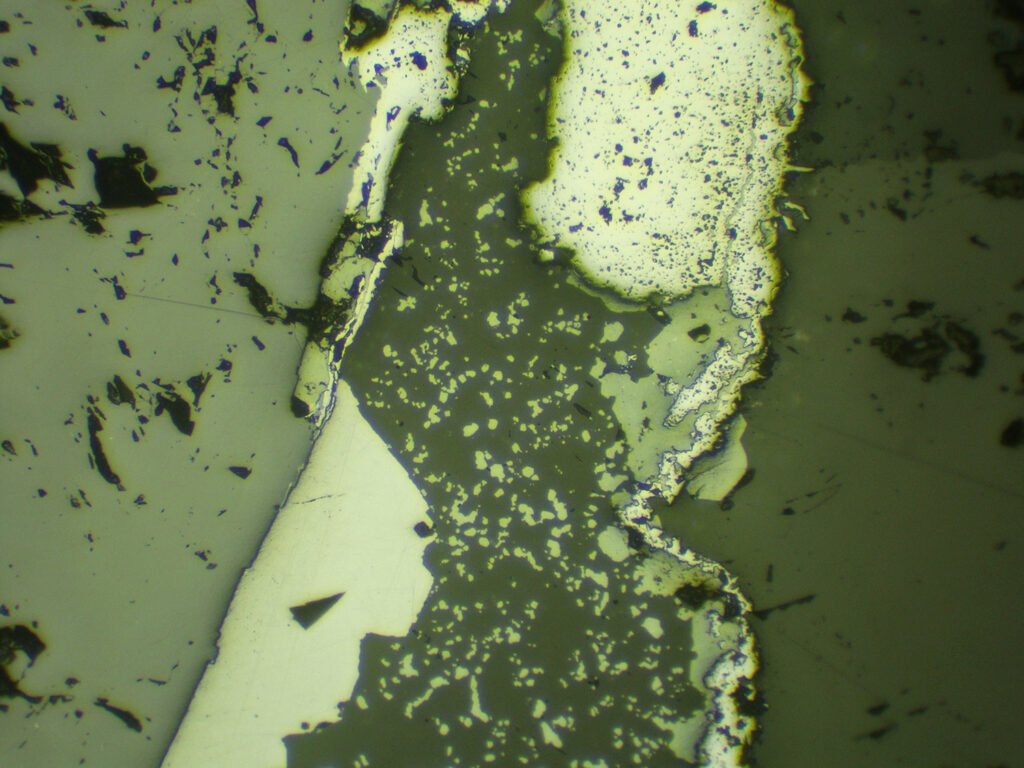
PLANE POLARIZED LIGHT – PPL
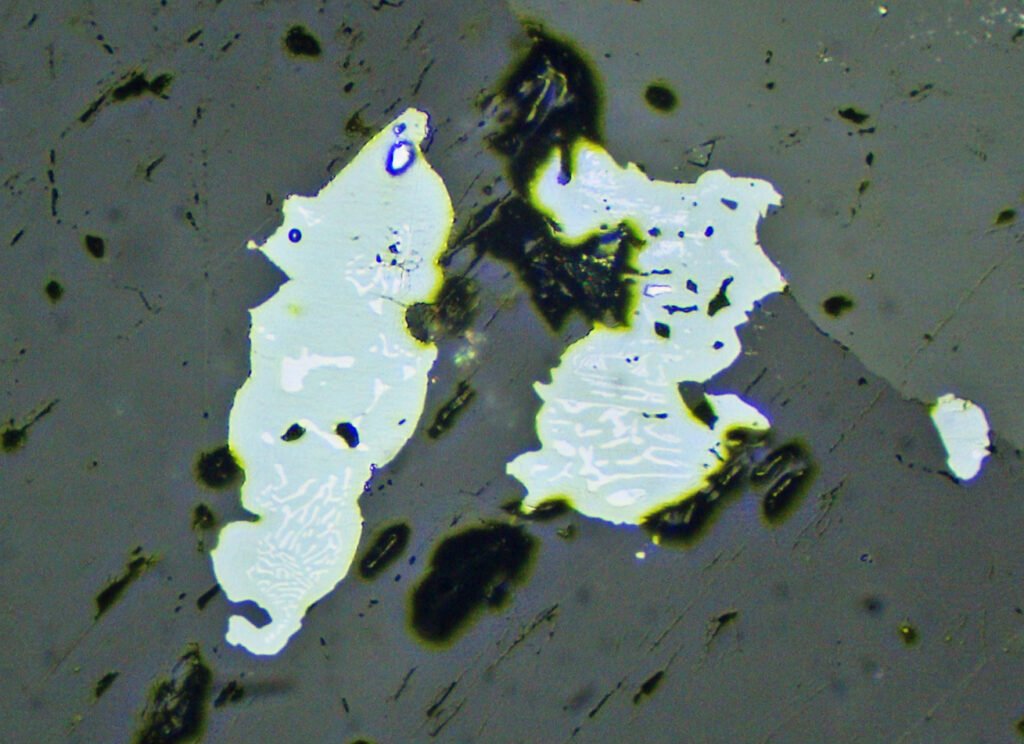
Reflection color: Light blue to gray white, gray-blue in various shades. Also classified as “white with a blue-gray tinge”.
Compared with the color of proustite, the color of pyrargyrite is less blue and lighter.
Compared to the color of galena, the color of pyrargyrite is more gray-blue.
Compared to the color of miargyrite, the color of pyrargyrite is distinctly bluish.
Compared to the colors of bournonite and boulangerite, the color of pyrargyrite is gray with a blue to violet tint.
Color indications in the bibliography are contradictory and difficult to assess. It is not possible to differentiate pyrargyrite from proustite by reflection color.
Pleochroism: Quite sharp, in blue-grey or yellow-white to blue-grey colors, with more shades of gray than proustite.
Reflectivity: 26.04 – 31.34%, there are clear variations according to grain orientation.
Bireflectance: Relatively strong.
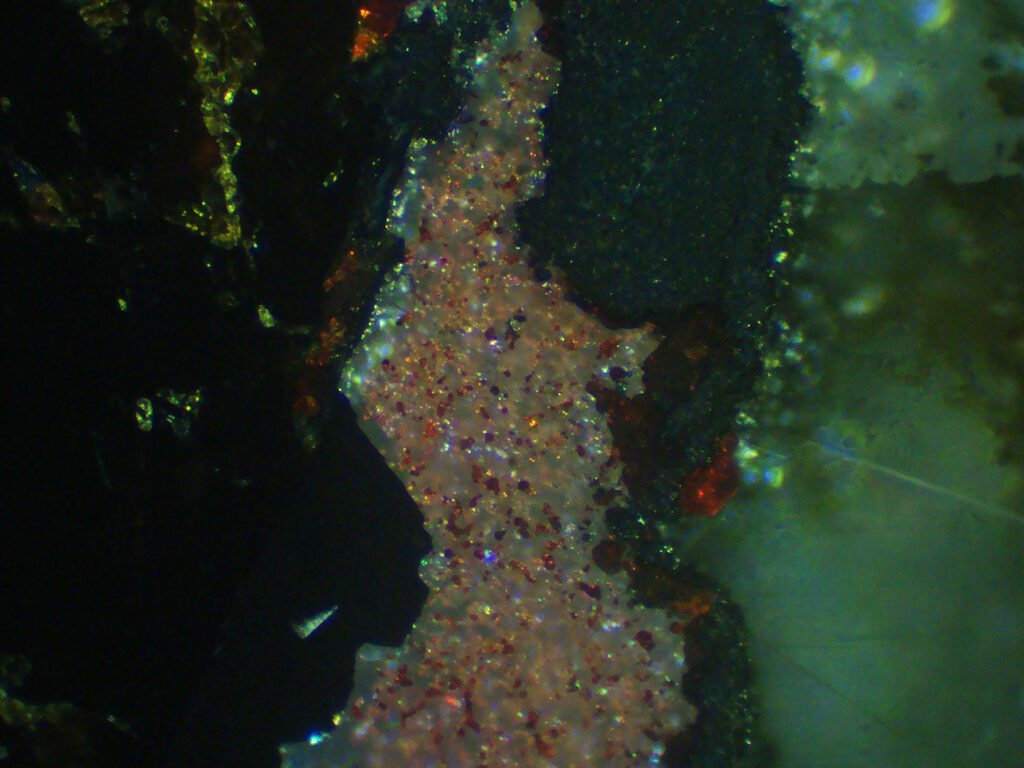
CROSSED POLARIZED LIGHT – XPL
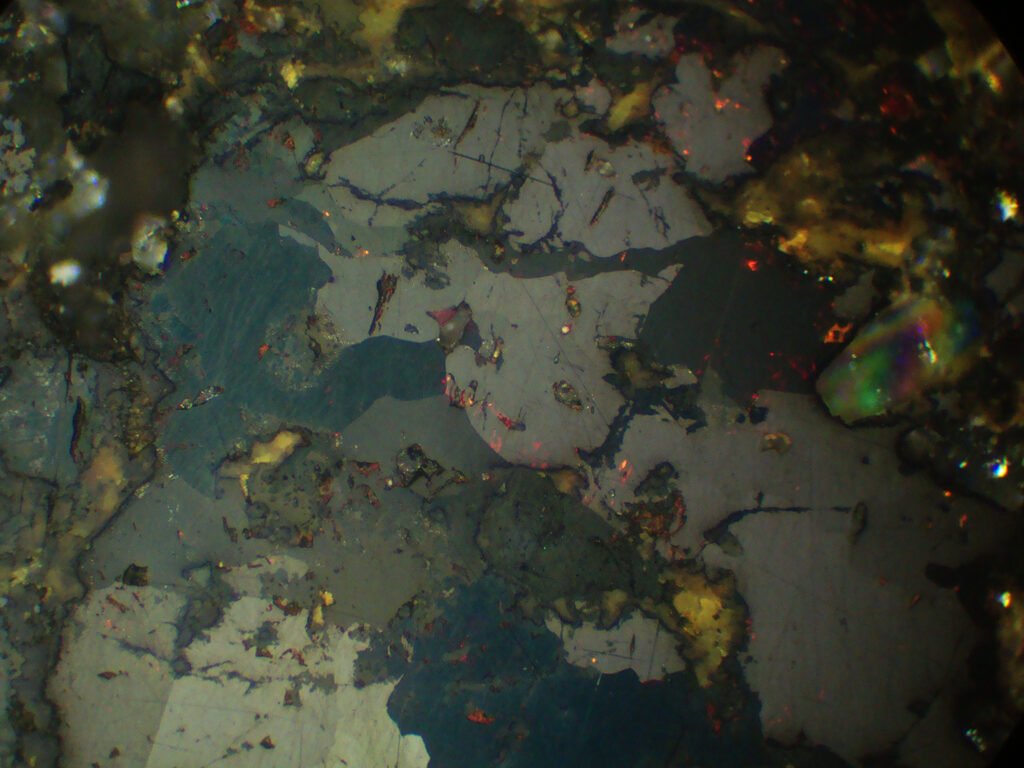
Isotropy / Anisotropy: Strong anisotropy between grays and browns, something like pale gray to dark gray, but this anisotropy is masked by the strong and numerous internal reflections.
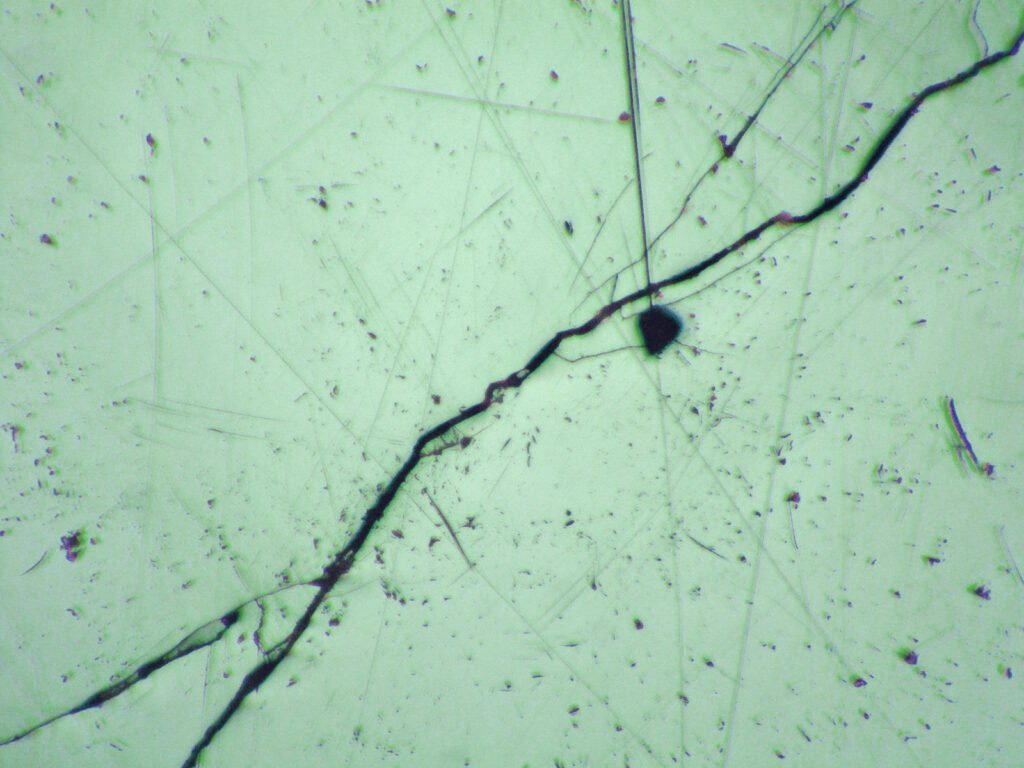
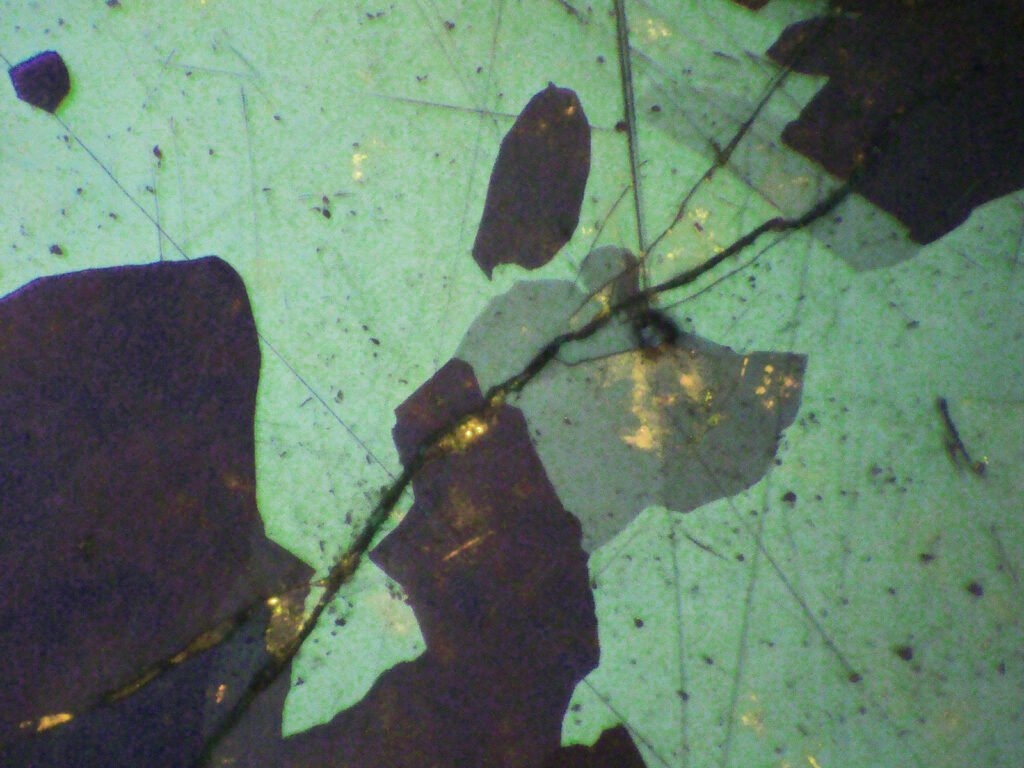
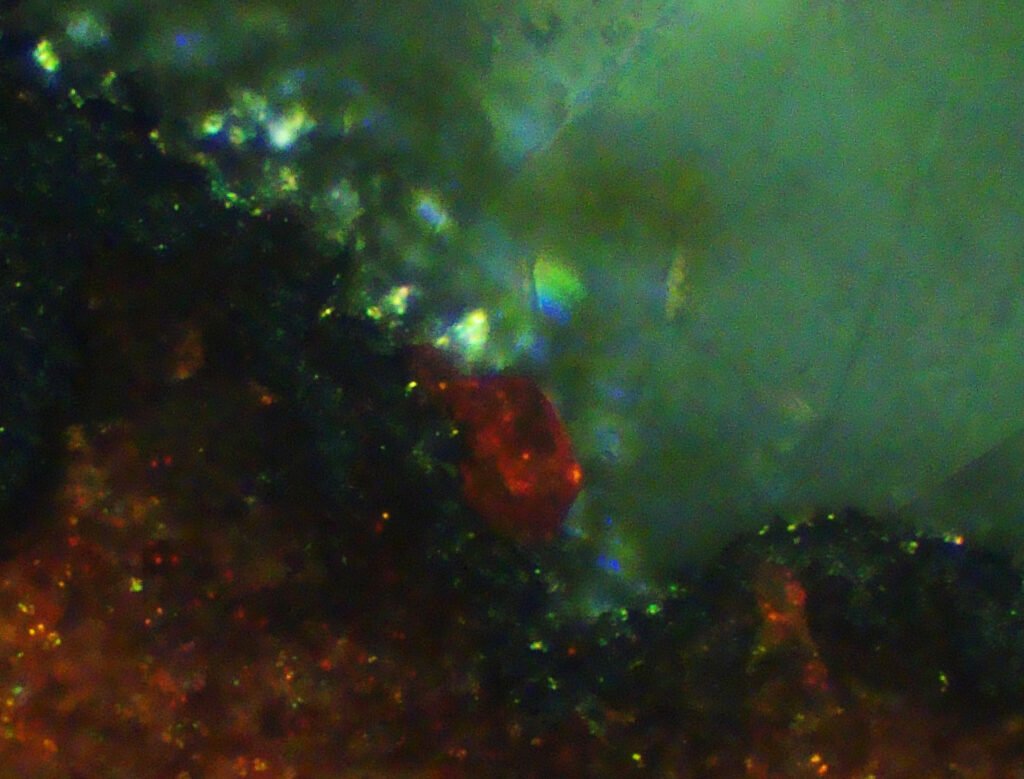
Internal reflections: Abundant, numerous and always visible, in crimson red, from light to dark, yellow and orange, often double.
Comparing pyrargyrite grains with proustite grains, provided that they are in the same sections, same sizes and with the same quality of polishing, it can be seen that the red internal reflections of proustite are a little clearer, less pronounced and more frequent than the reflections of pyrargyrite. – but this observation does not lend itself to differentiating the two minerals from each other.
May be confused with: several other minerals that mostly occur in the same deposits.
Proustite has a much lighter streak if smeared on the paper with a fingernail. This test constitutes the safest differentiation between pyrargyrite and proustite
Miargyrite is lighter and has internal reflections more rarely.
Samsonite is rare and has much weaker anisotropy.
Polybasite normally shows oxidation in air.
Cinnabar and cuprite are also similar, but they occur in other paragenesis.
Stephanite is similar in basal sections to proustite and pyrargirite.
Xanthoconite can also be similar.
General Characteristics:
Grain shape: well-formed isolated crystals are often observed, alongside chaotic aggregates with very irregular, intensely intergrown crystals (toothed contacts). Pyrargyrite often occurs as a filler of very fine fractures in both the ore and the host rocks, forming thin films that have the same orientation over long distances. The grain size is very variable, even in the crystals of an individual polished section.
Cleavage is not observed in good quality polished sections.
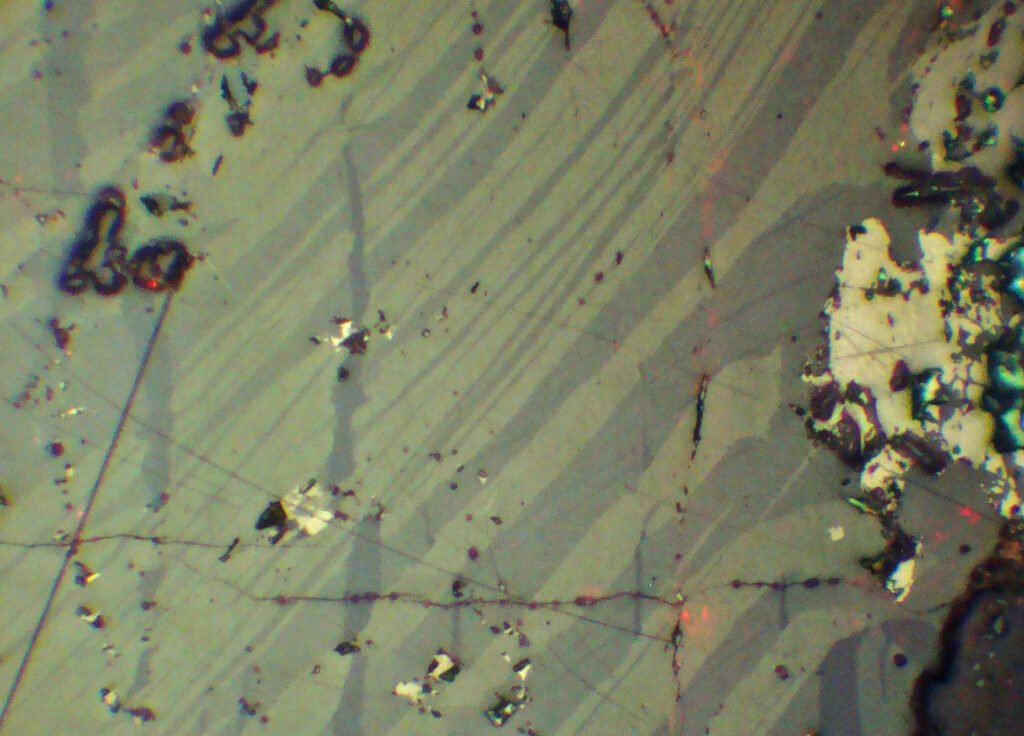
Twins are very often present according to many laws, simple or lamellar. They occur from growth twins to lamellar pressure twins, especially according to {10-14}. The lamellar twins originated from pressures that the crystals suffered and can be generated artificially.
Zonation, very well developed, can be seen after chemical attack especially in isolated crystals; it is somewhat rarer in aggregates.
Deformations are rare.
Cataclasis very well developed to be seen in some cases.
Inclusions 1: inclusions in Pyrargyrite can be from acanthite, native bismuth, arsenopyrite, pyrite, tetrahedrite, chalcopyrite, sternbergite and canfieldite.
Inclusions 2: pyrargyrite inclusions occur in pyrite, galena, “freibergite”, sphalerite and meneghinite.
Substitutions 1: Substitutions are extremely frequent; almost always pyrargyrite is the mineral that replaces the others. Substituted and penetrated by fractures are especially “freibergite” and other minerals of the tennantite-tetrahedrite series, miargyrite, stephanite and very often galena, in some cases also pyrite and some of the skutterudite zones.
Substitutions 2: pyrargyrite can be substituted for polybasite, owyheeite, native silver, stephanite, dyscrasite and acanthite.
Intergrowths, some of them myrmekitic, occur with several other ores, they can be with proustite, polybasite, tetrahedrite, chalcopyrite, native silver, galena, bournonite, boulangerite, stibnite, acanthite and stephanite.