1. Characteristics
Crystal system: Trigonal trapezohedral.
Color: Colorless to black with many colors in between these two extremes.
Habit: Massive, drusiform, microcrystalline, fine granular, hexagonal prisms with 2 rhombohedra, etc.
Cleavage: Rarely observable. {01-10} poor, {01-11} poor, {10-10} poor.
Tenacity: Brittle.
Twinning: Very common: Japan, Delfinado and Brazil laws, etc.
Fracture: Conchoidal.
Mohs Hardness: 7, but variable according to direction and shape.
Parting: May show rhombohedral partition.
Streak: White.
Lustre: Vitreous to dull.
Diaphaneity: Transparent.
Density (g/cm³): 2.59 – 2.63
2. Geology and Deposits
Quartz is extremely common in igneous, metamorphic and sedimentary rocks. Even in basic rocks, it is occasionally present. It is a common mineral in hydrothermal veins of any temperature (epithermal to alpine), characteristic of granitic granites and pegmatites. It is a rock forming mineral in sandstone and quartzite and less abundant in other rock types. It also occurs in hydrothermal metal deposits. It is common in carbonate rocks and is an important constituent in soils and sediments as a residual mineral.
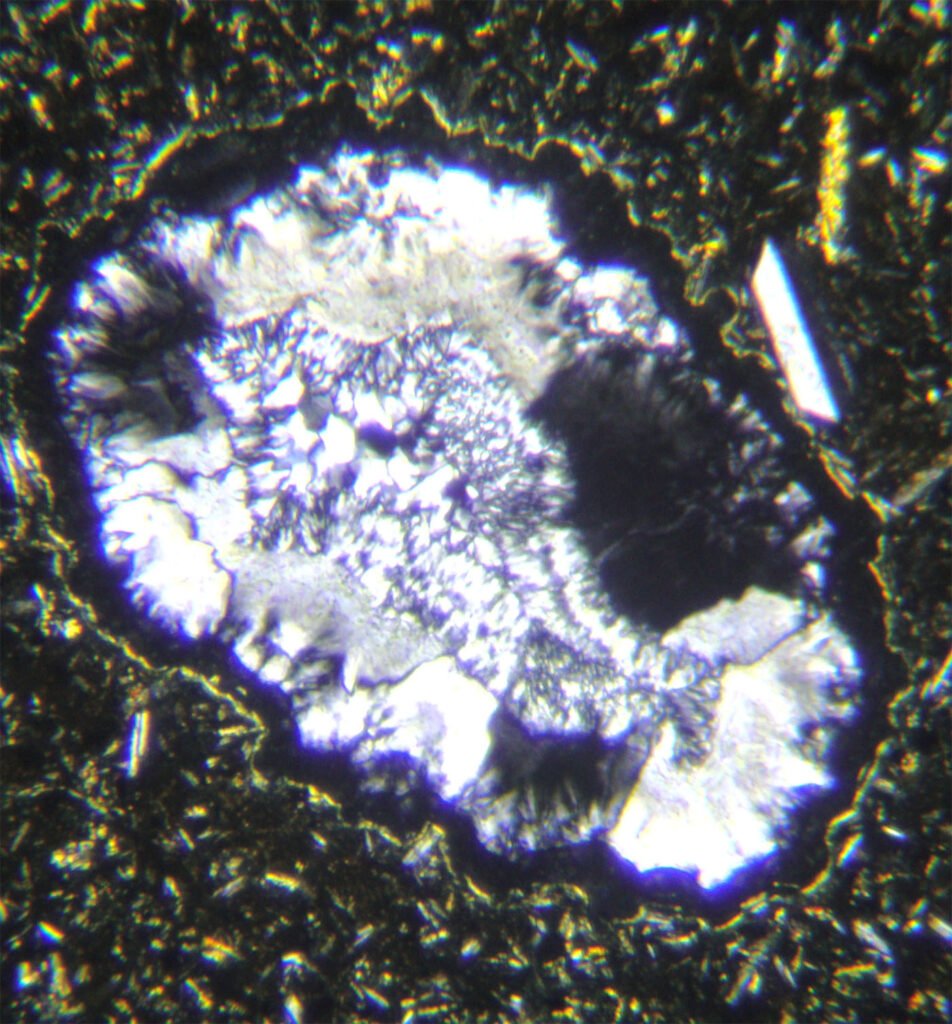
In hydrothermal deposits of all types, quartz is one of the main gangue minerals and is usually older than sulfides. However, situations in which it occurs over several generations are not rare. Quartz is common filling cavities like vesicles in volcanic rocks and grows in clefts of the Alpine Type.
3. Mineral Associations
Quartz is so abundant that it is impossible to present a list of minerals that are associated with it. Very common is the association with feldspars (potassic feldspars and plagioclases), amphiboles (hornblende), micas (biotite, muscovite, chlorite, etc.), calcite, zeolites, epidote and other minerals. In ores, it is associated with gold and the many different sulfides (pyrite, chalcopyrite, arsenopyrite, etc.).
Quartz is less common or absent in silica-subsaturated igneous rocks and their metamorphic counterparts. It never occurs with feldspatoids such as nepheline, leucite, sodalite, cancrinite and others. In evaporitic sequences, its presence is accidental. Therefore, its association with halite, gypsum, anhydrite, ulexite, kernite and other soluble salts is not expected.
4. Transmitted Light Microscopy
Refraction indices: ne: 1.553 no: 1.544
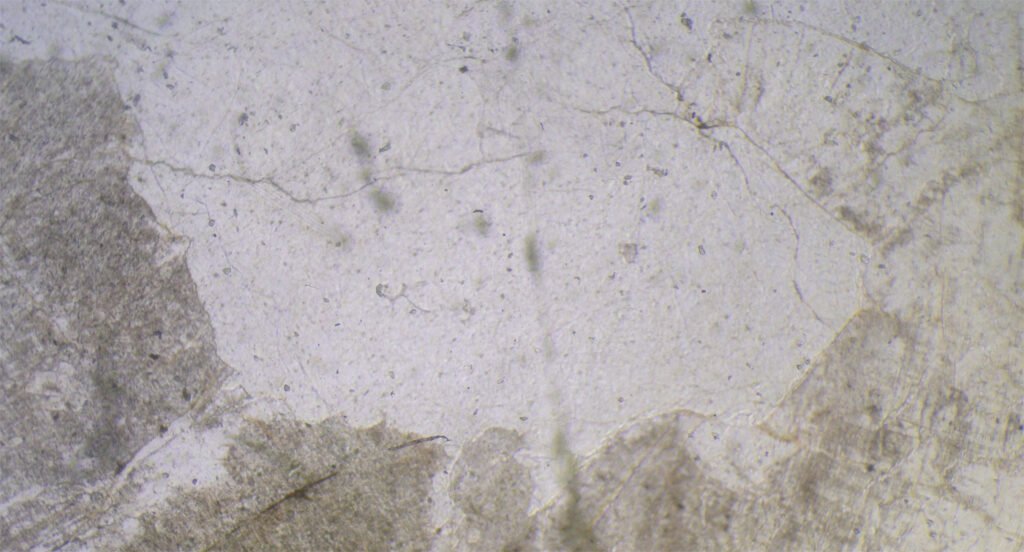
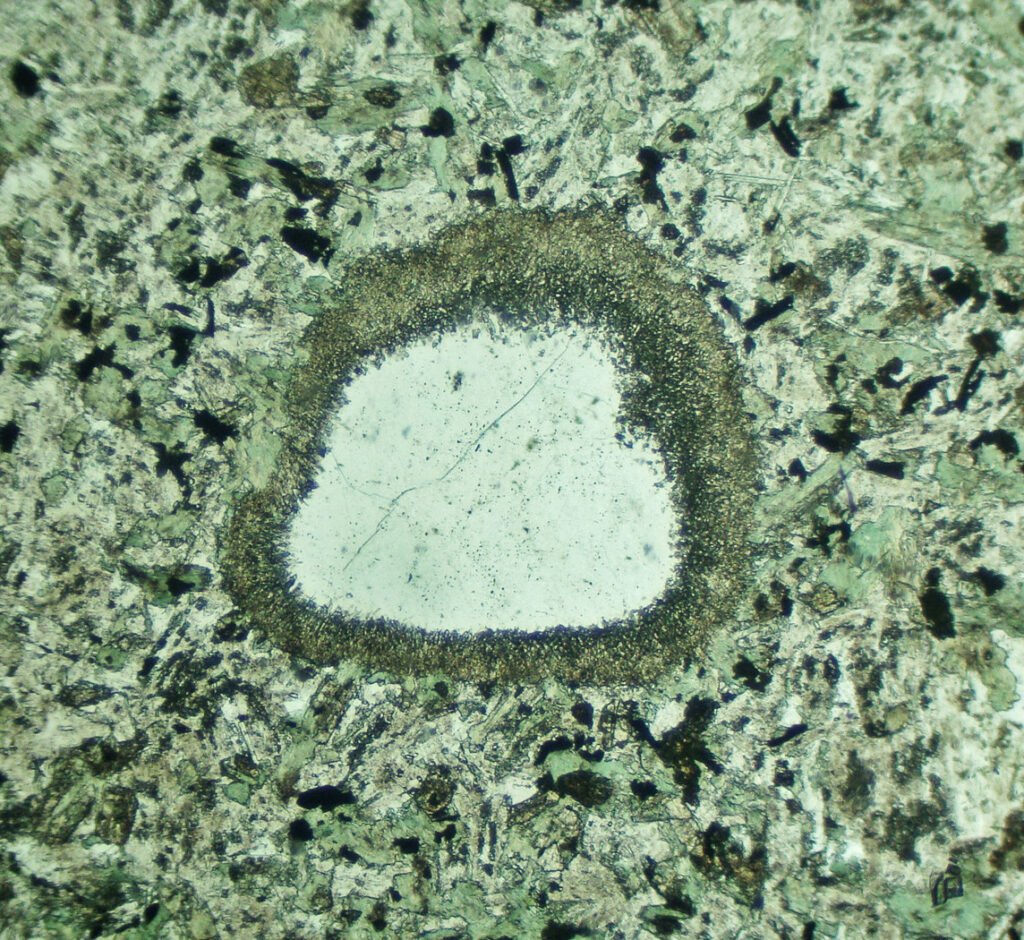
PLANE POLARIZED LIGHT – PPL
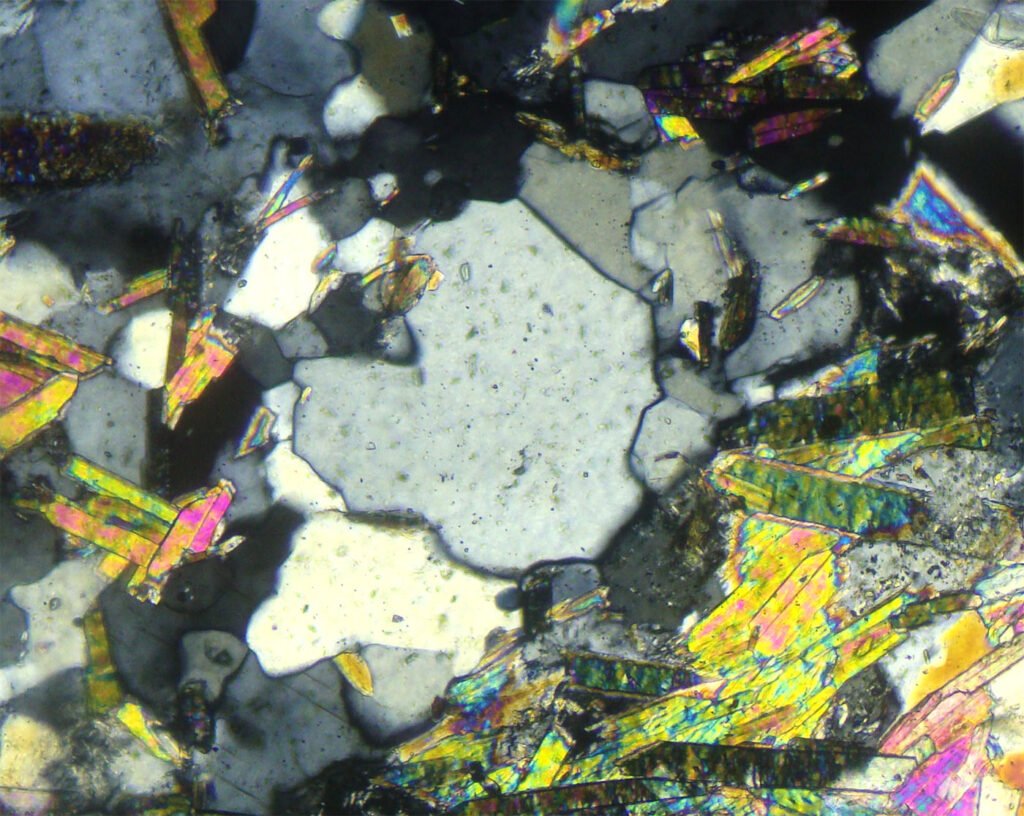
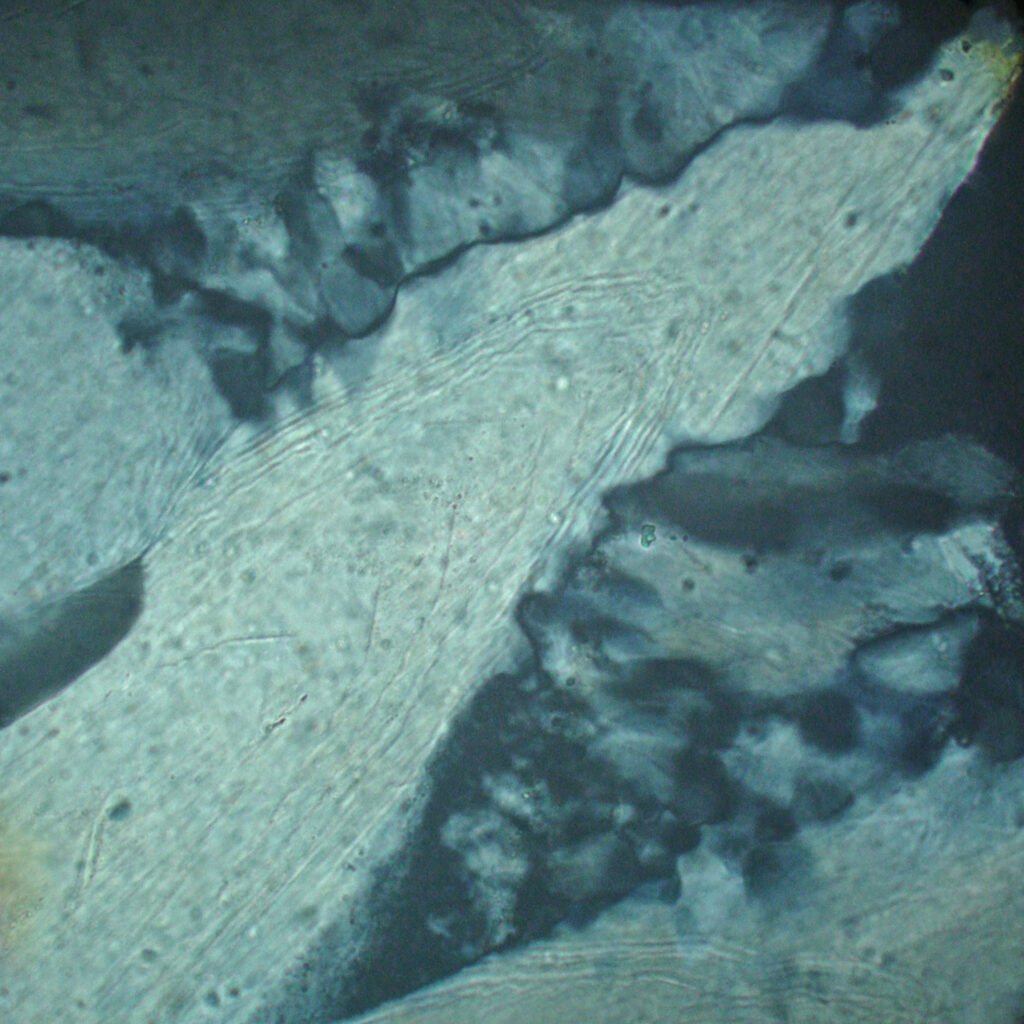
Color / Pleochroism: Colourless. It never has color or pleochroism. Even the colorful varieties are colorless under a microscope.
Relief: Low, like feldspars.
Cleavage: Poor cleavages in {10-11}, {01-11} and {10-10}, which are not visible under the microscope. In addition, it has a rhombohedral partition, which is also not visible under the microscope.
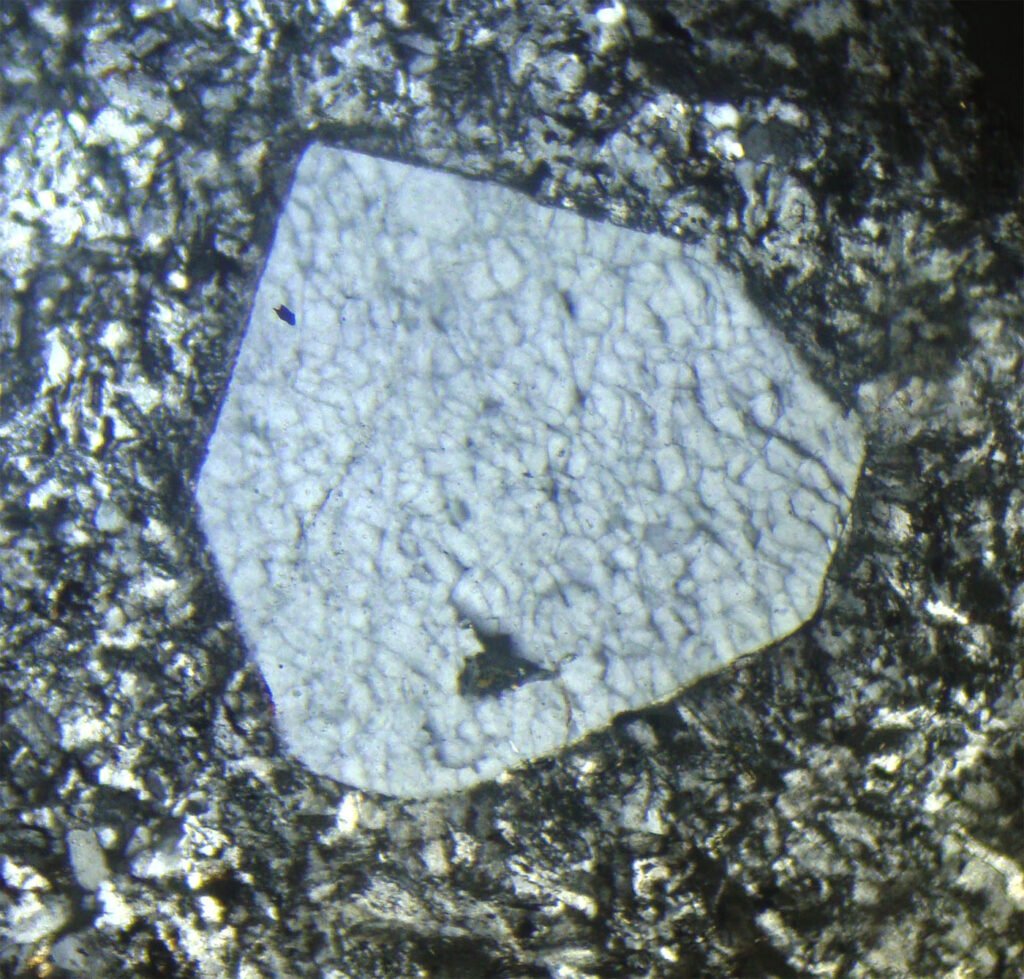
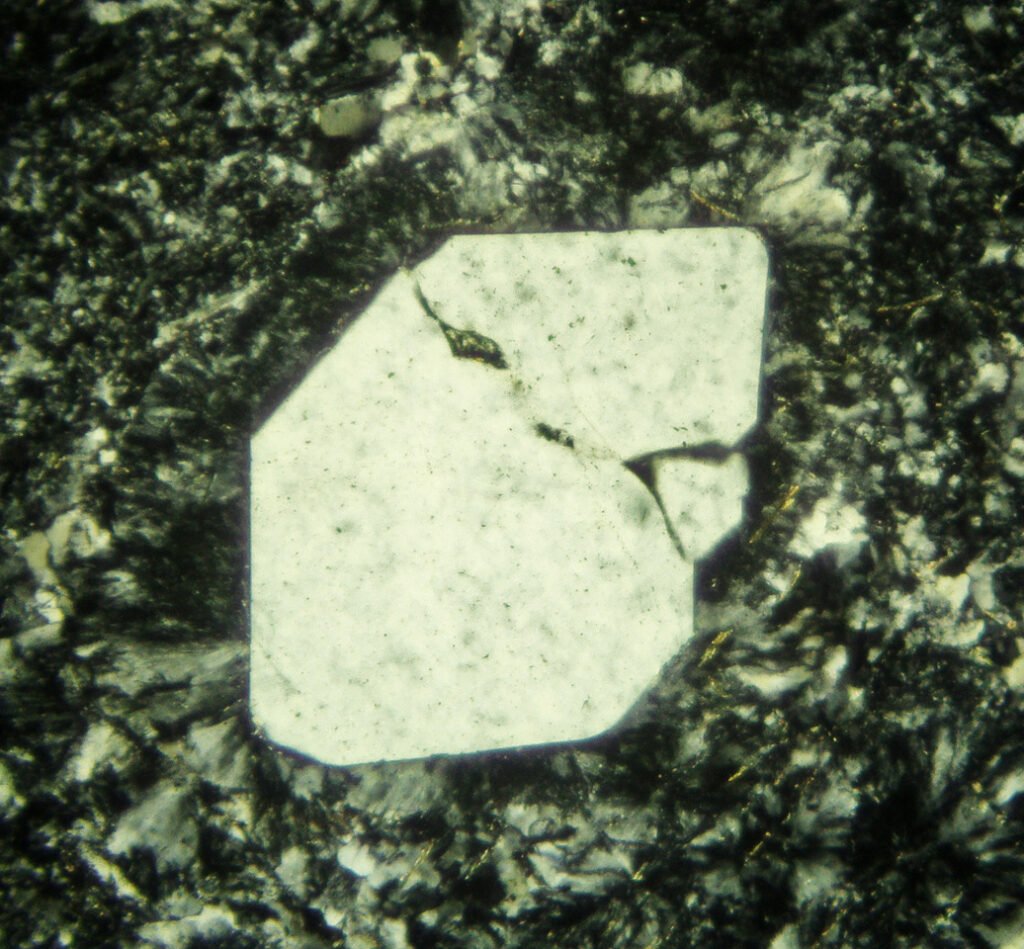
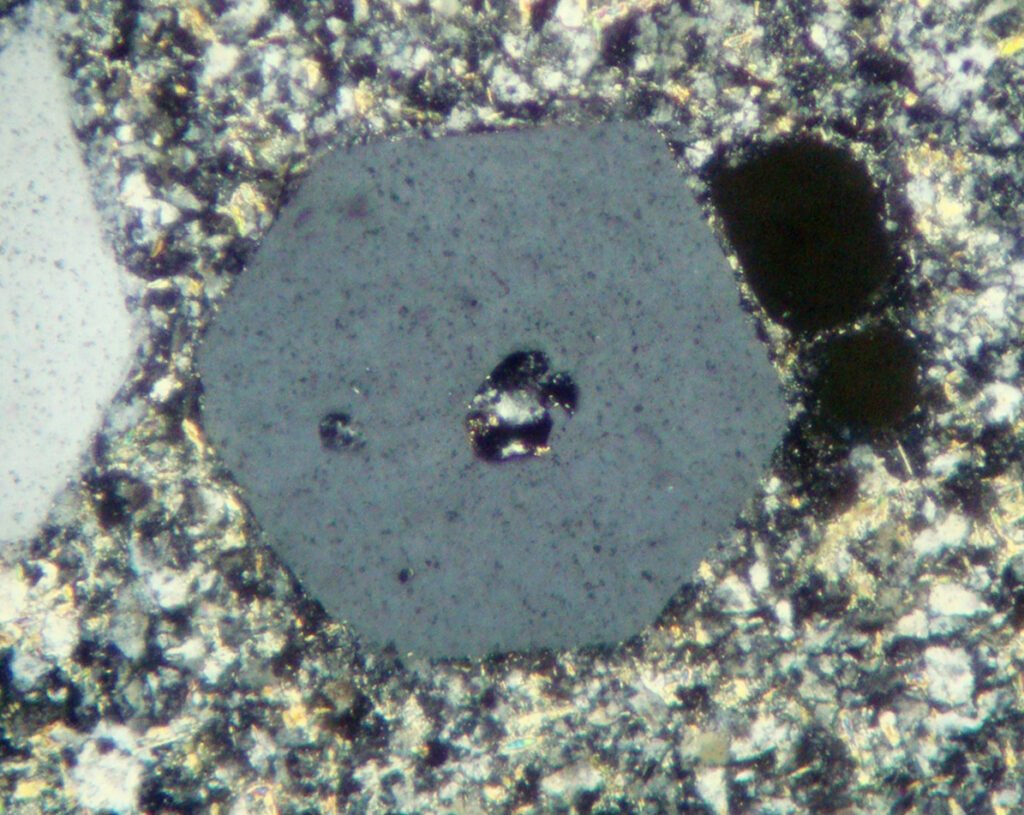
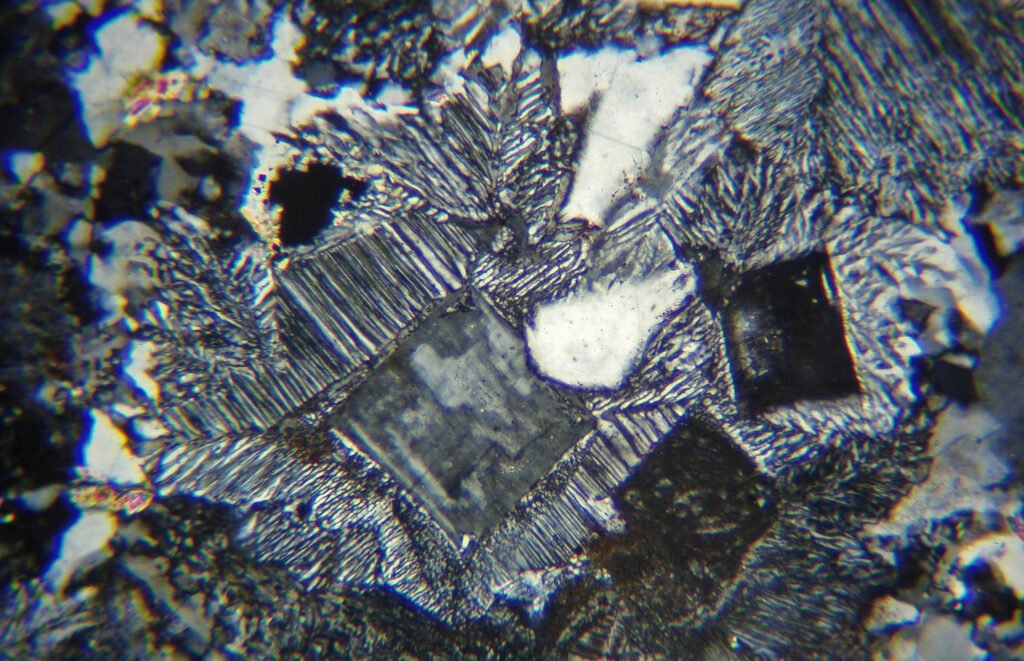
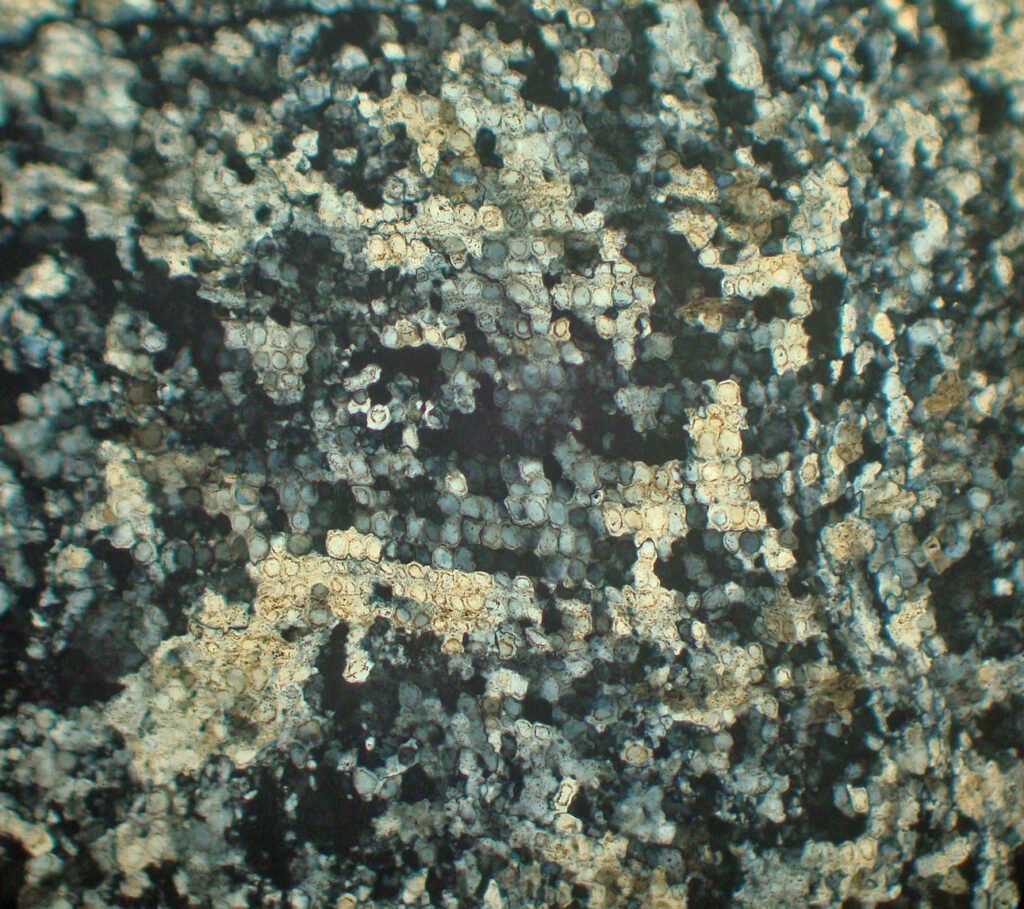
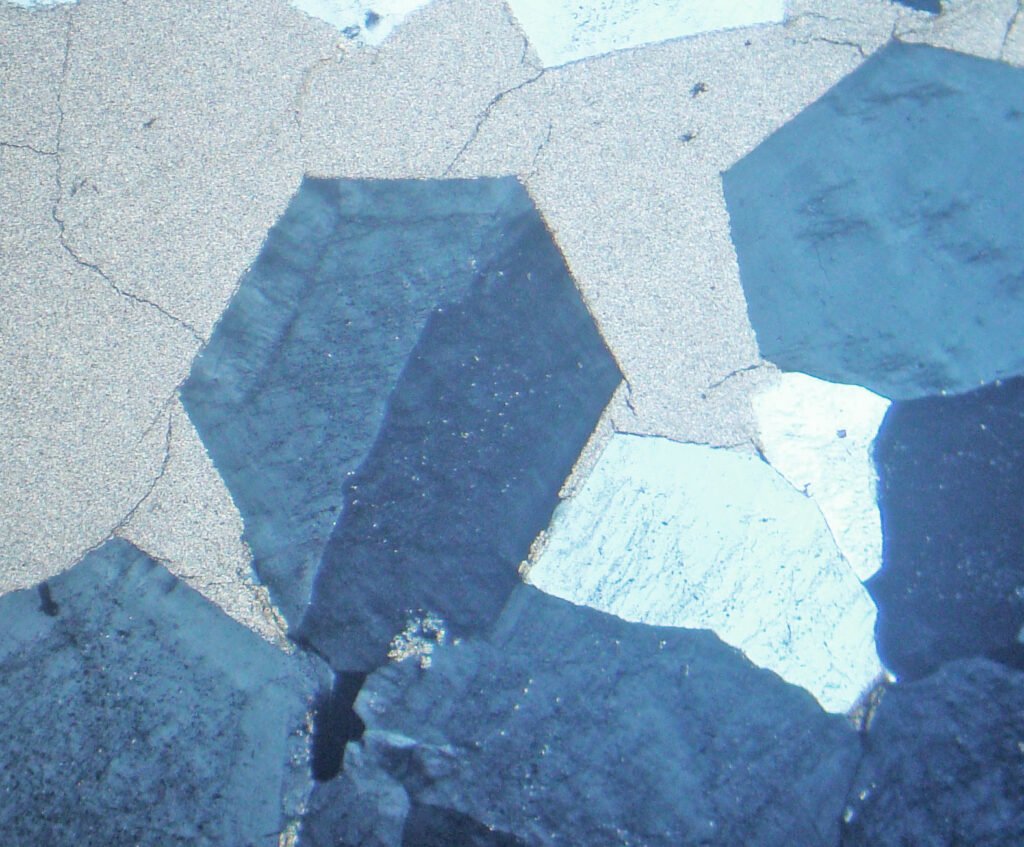
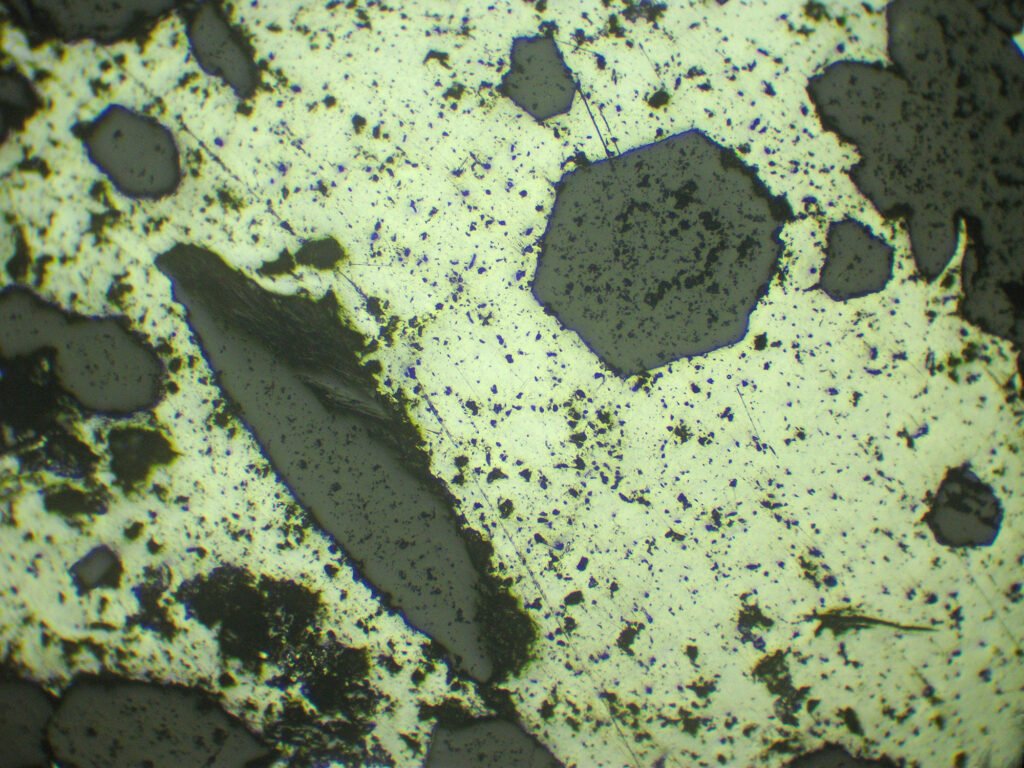
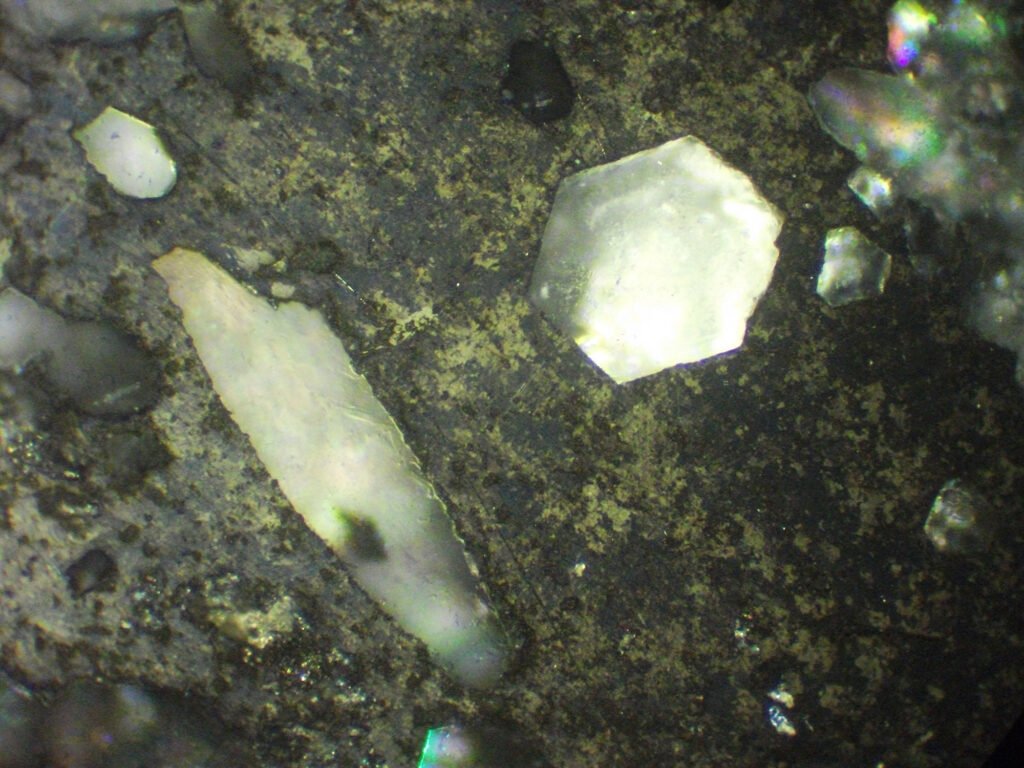
Habits: Usually anhedral grains. In certain volcanic rocks, such as rhyolites, it can present euhedral (idiomorphic) grains with hexagonal sections, which are paramorphic from beta quartz. In hydrothermal veins it is often idiomorphic.
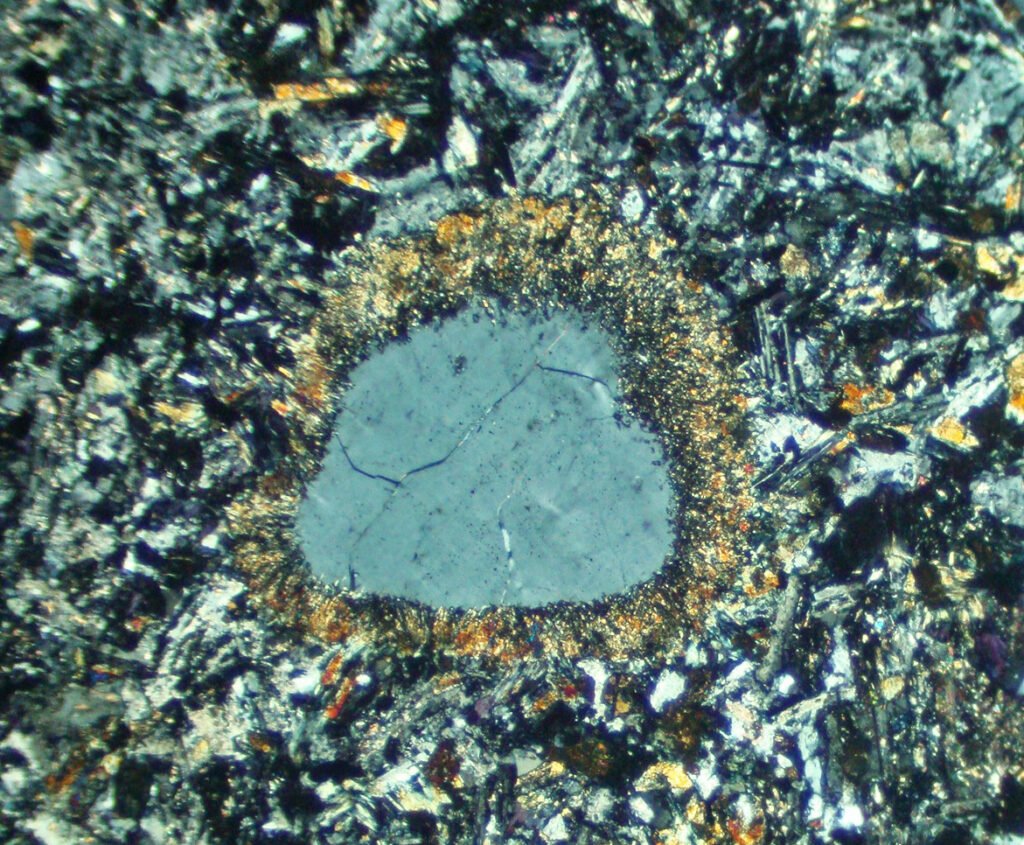
CROSSED POLARIZED LIGHT – XPL
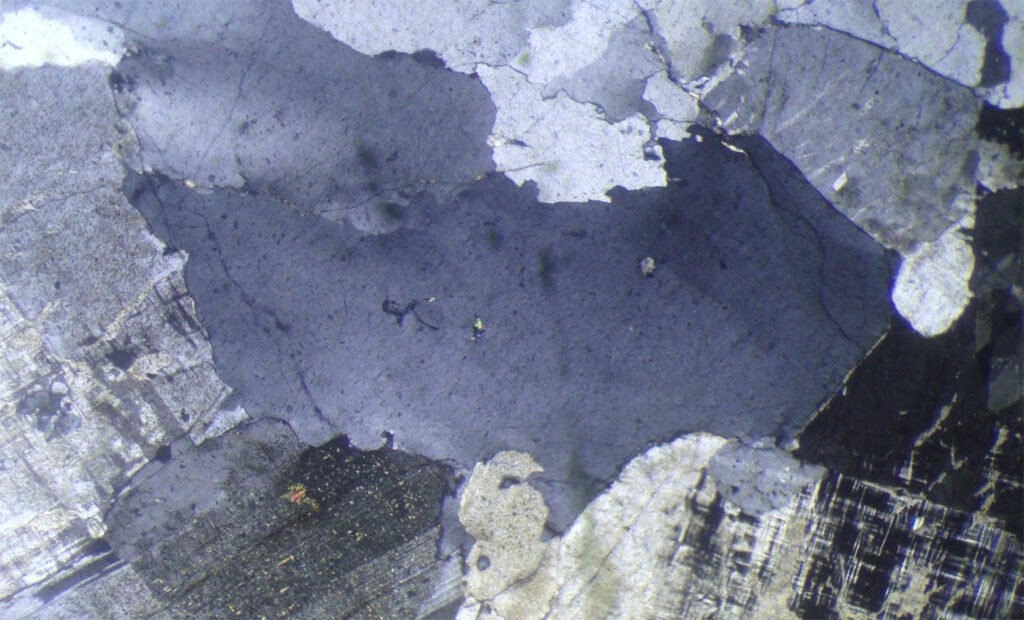
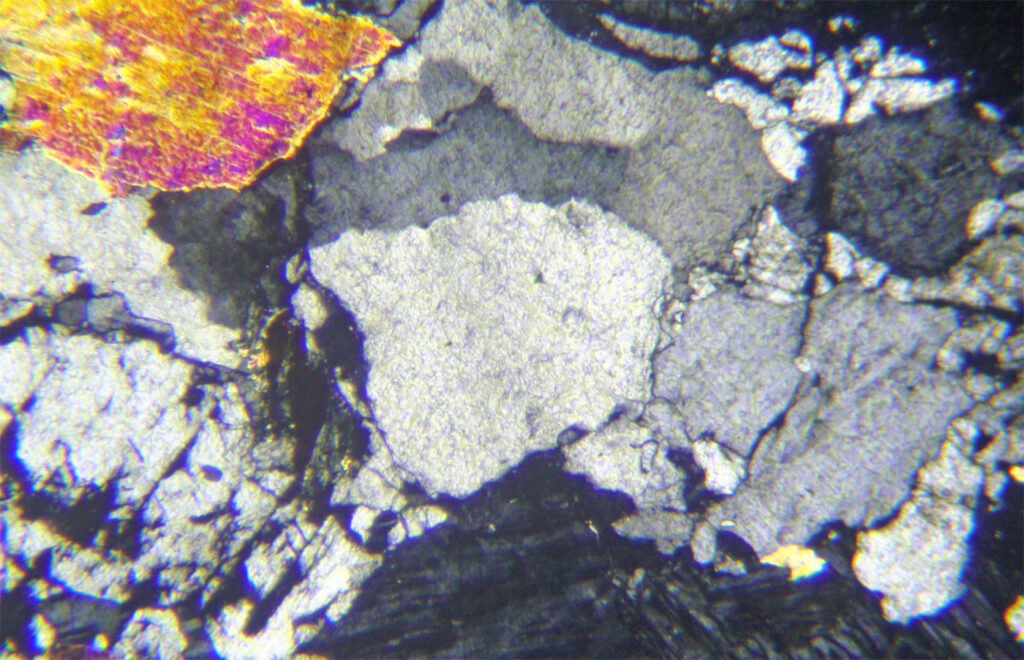
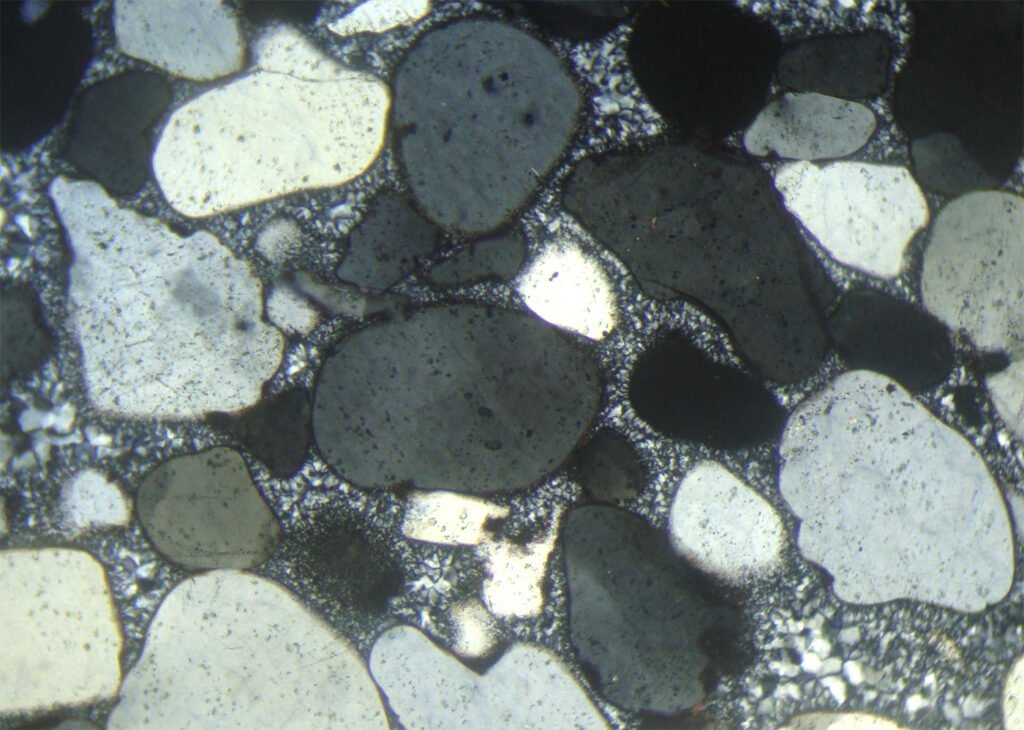
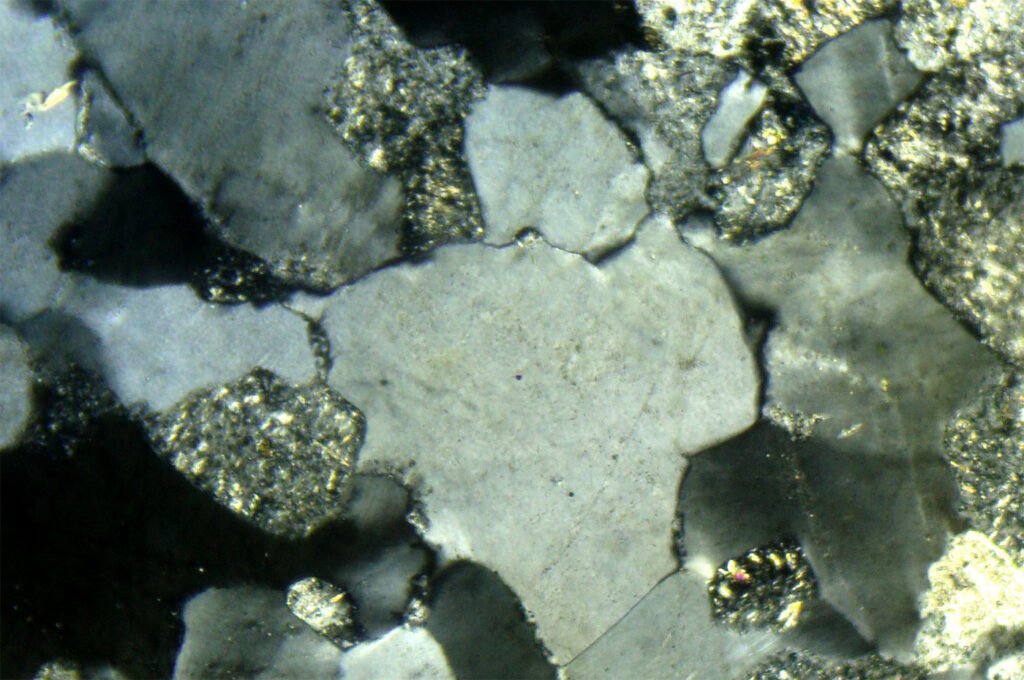
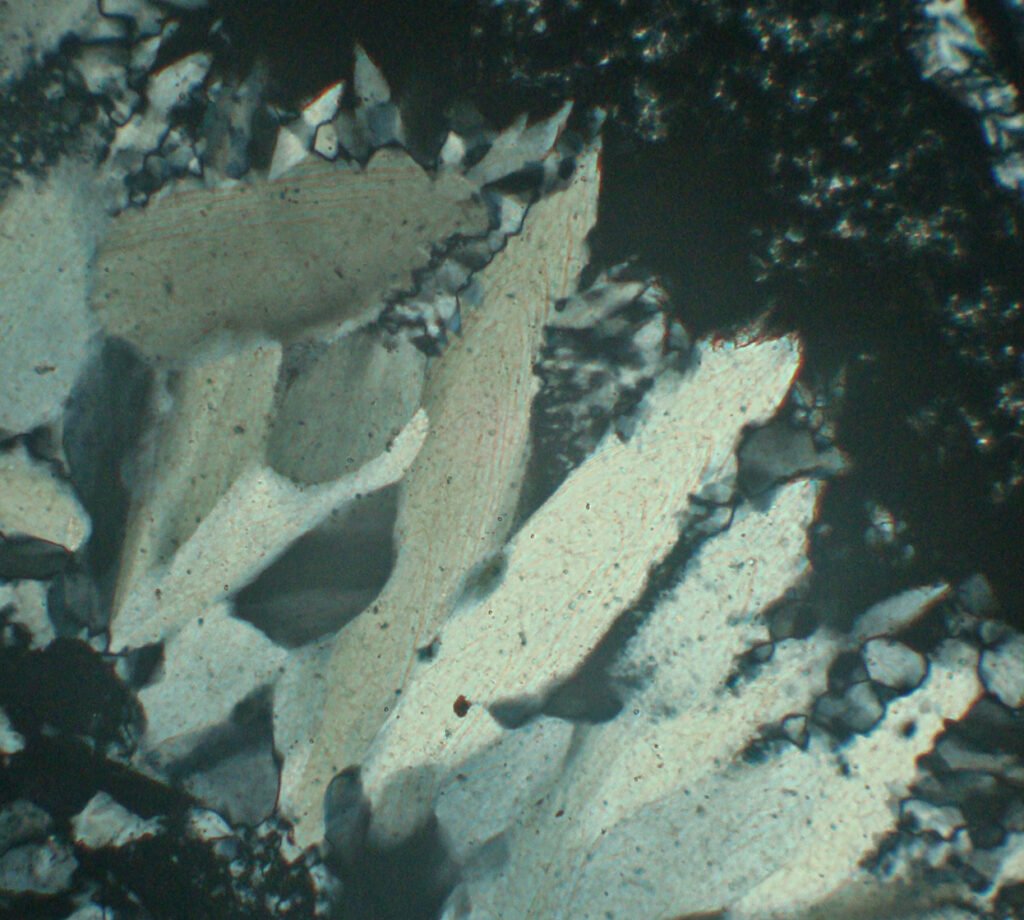
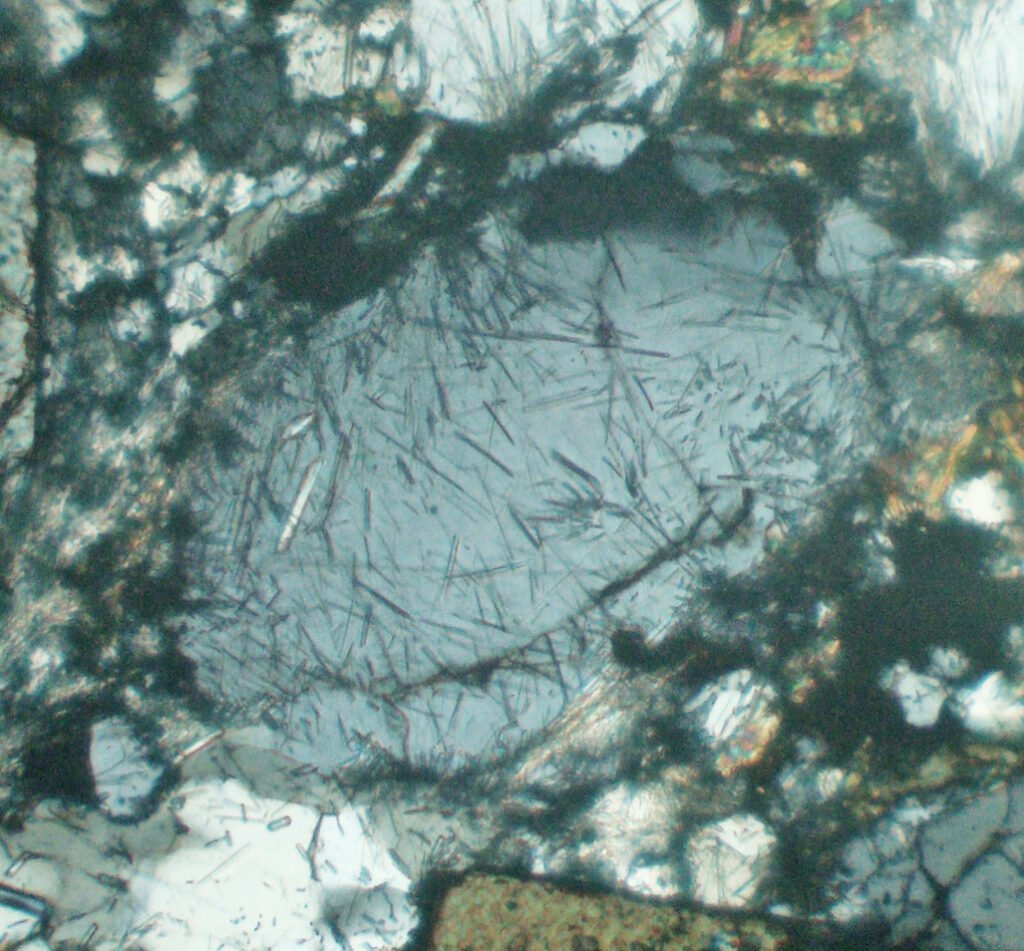
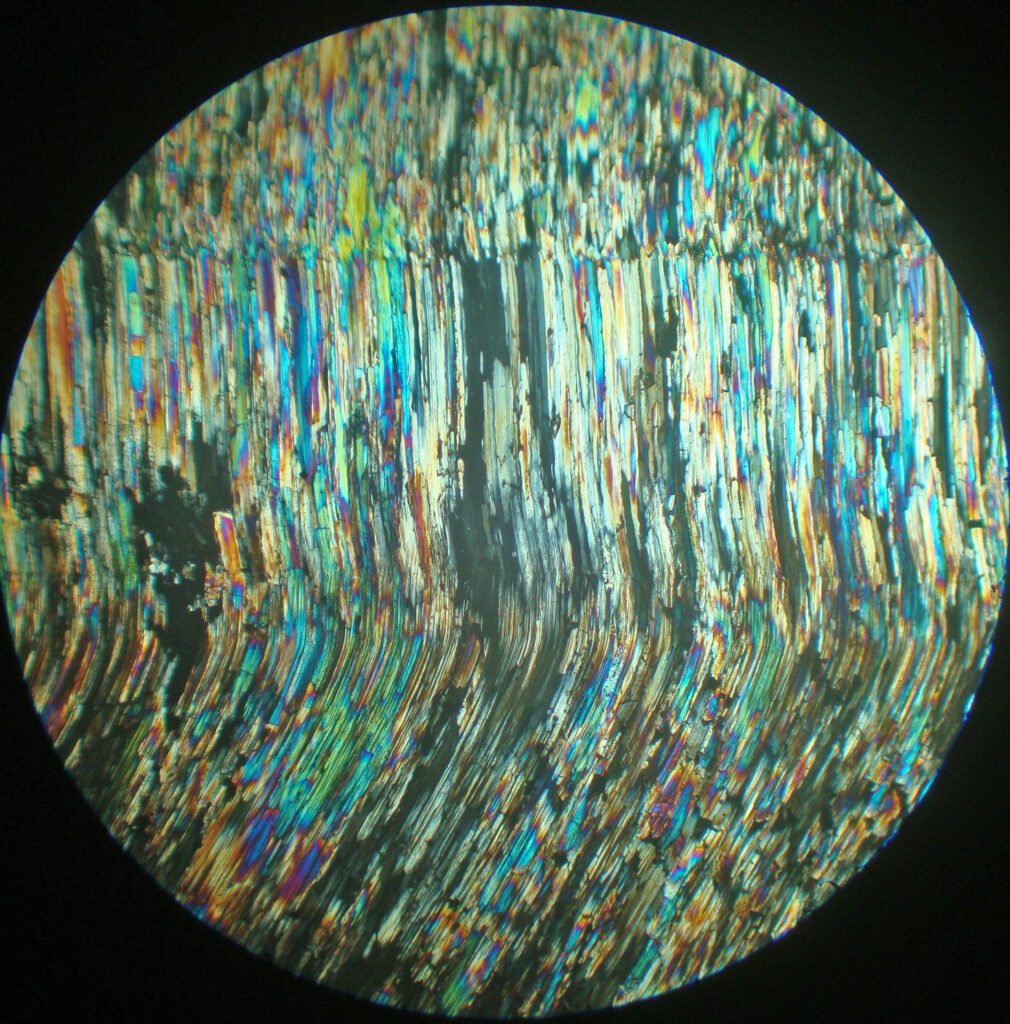
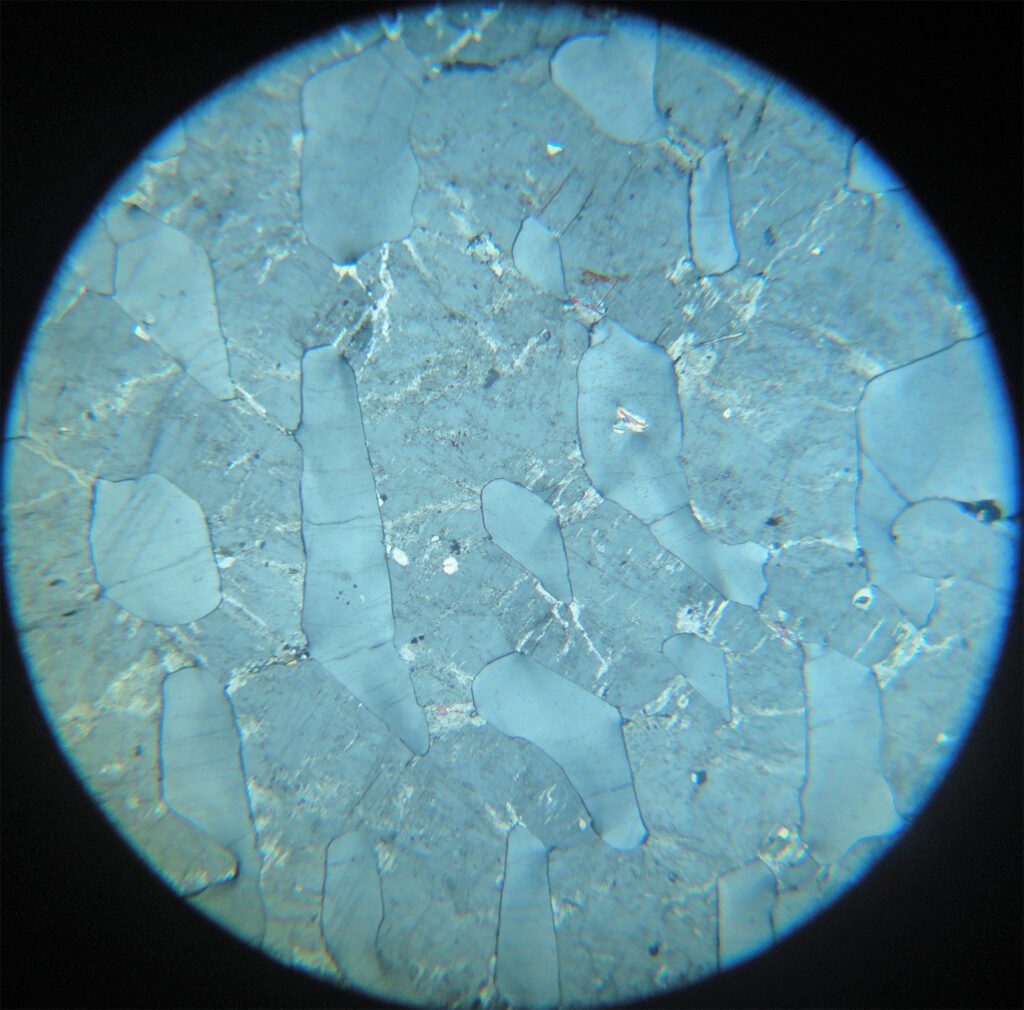
Birefringence and Interference Colors: Maximum birefringence of 0.009, resulting in middle 1st order colors: various shades of dark to light gray, white, at most straw-yellow.
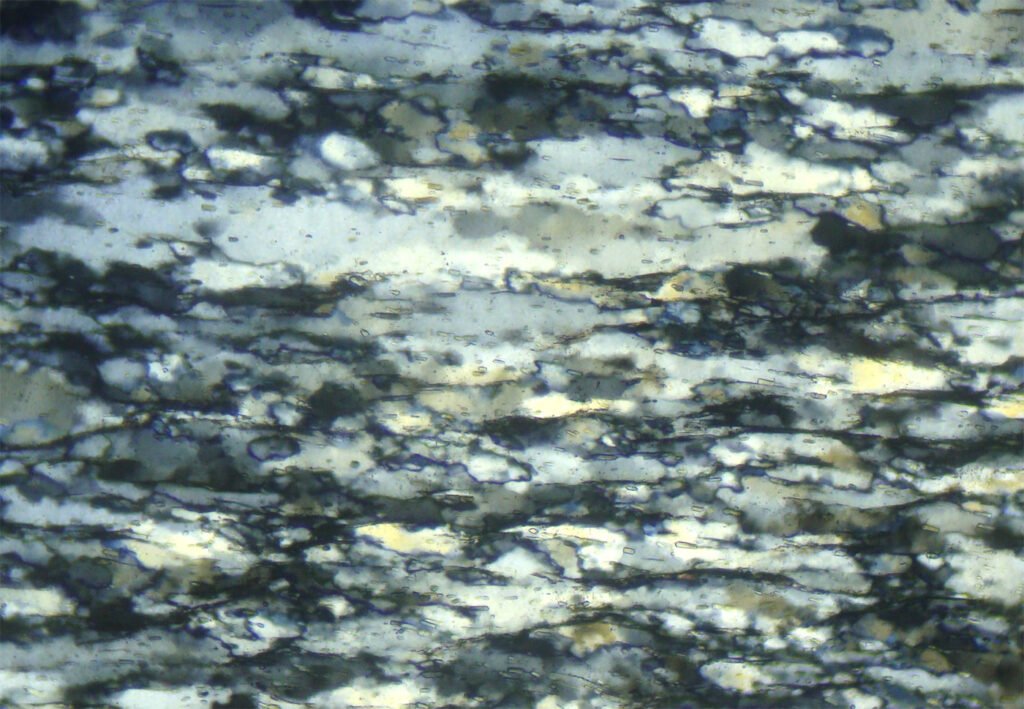
Extinction: Parallel to the prism. As the quartz grains are usually anhedral, this determination is rarely possible. Quartz very often presents undulating extinction because it is subdivided into subgrains.
Elongation sign: ES(+) in relation to elongation, rarely observable because grains are almost always anhedral.
Twins: Very rare, usually does not present in a thin section.
Zoning: Very rare in thin sections.
CONVERGENT LIGHT
Character: U(+), but it is often anomalously biaxial; this is very common in igneous and metamorphic rocks.
2V angle: May have an anomalous 2V angle of up to 20º
Alterations: never alters. Among the common rock-forming minerals, quartz, tourmaline and zircon are the most stable minerals with respect to alteration.
May be confused with: several other minerals.
Feldspars have twins, cleavage, are biaxial and are usually somewhat altered to clay minerals, with a cloudy appearance, while quartz is clear. From feldspar without twins it can be distinguished by its U(+) character.
Scapolite, apatite, cordierite, tridymite, nepheline and beryl are very similar, but none of them is U(+).