1. Characteristics
Crystal system: Triclinic pinacoidal.
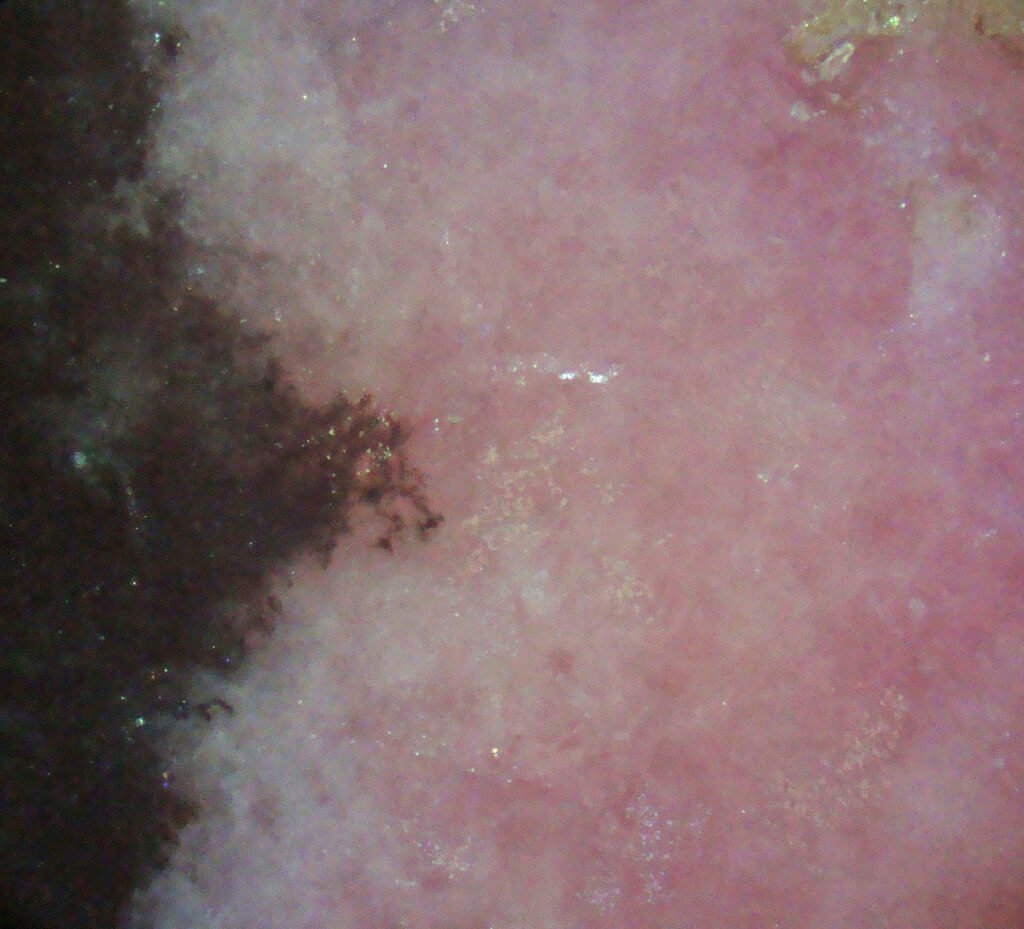
Color: Red, pink, reddish-brown to gray. Black crusts of Mn minerals are possible.
Habit: Coarse crystals, tabular to elongated, with rounded edges. It can be micritic.
Cleavage: {110} perfect, {001} good.
Tenacity: Brittle.
Twinning: . Lamellar on {010}.
Fracture: Irregular.
Mohs Hardness: 5.5 – 6.5
Parting: No.
Streak: White.
Lustre: Vitreous, pearly.
Diaphaneity: Transparent.
Density (g/cm³): 3.57 – 3.76
2. Geology and Deposits
Rhodonite is a rare mineral, always associated with Mn deposits, whose origin can be through hydrothermal processes, contact metamorphism (scarns) or regional metamorphism (schists).
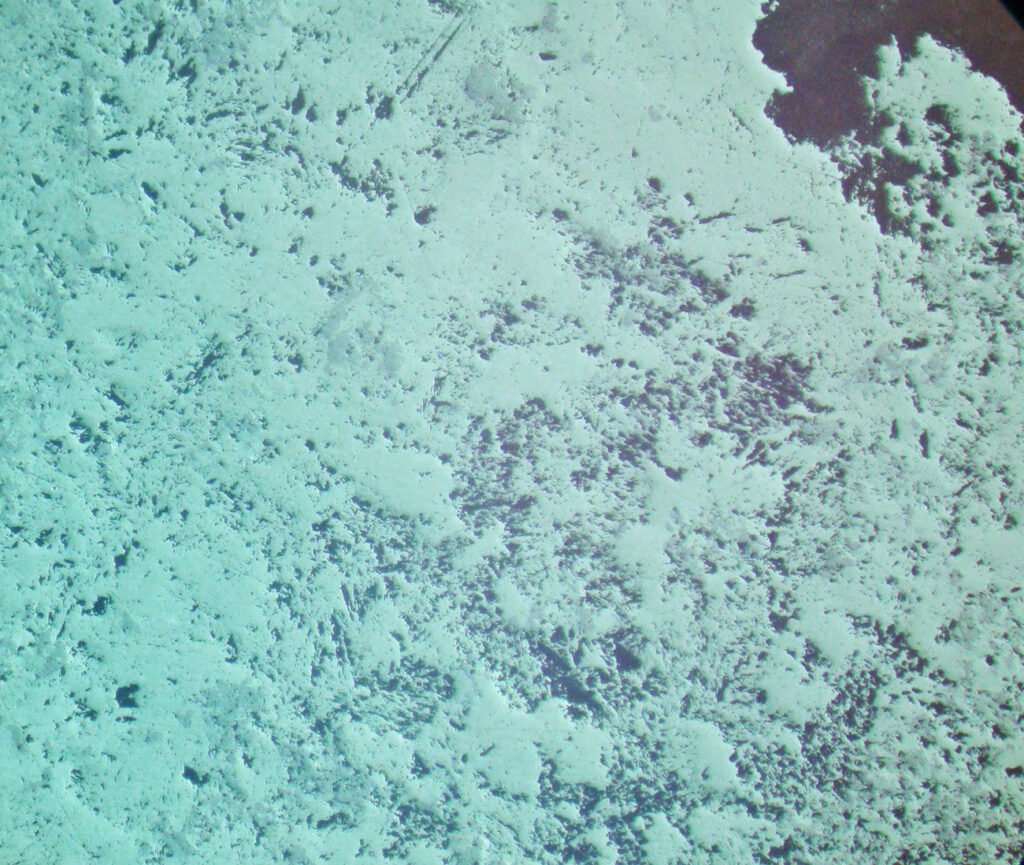
It also occurs in deposits with Mn originated by sedimentary processes. When rhodonite occurs in pelites, it is very fine-grained, difficult to recognize. As in the case of calcite, we have to distinguish rhodonite in microscopic crystals (easier to recognize) and micritic rhodonite in submicroscopic crystals, much more difficult or even impossible to recognize.
3. Mineral Associations
Occurs with quartz, garnet (andradite), pyrite, sphalerite, galena, axinite-Mn and cahnite.
In Mn ores of sedimentary origin, it associates with calcite, quartz, goethite, hematite, clay minerals (illite, kaolinite), chlorite, pyrite, anatase, gibbsite and Mn minerals: pyrolusite, cryptomelane, nsutite, todorokite, litiophorite, manganopyrosmaltite and ramsdellite.
There are some unique deposits where rhodonite occurs:
– in Franklin (New Jersey, USA) it is associated with calcite, franklinite and willemite.
– in Bald Knob (North Carolina, USA) it is associated with calcite, alleghanyite, tephroite, galaxite, grunerite and magnetite.
4. Transmitted Light Microscopy
Refraction indices: nα: 1.711 – 1.738 nβ: 1.714 – 1.741 nγ: 1.724 – 1.751
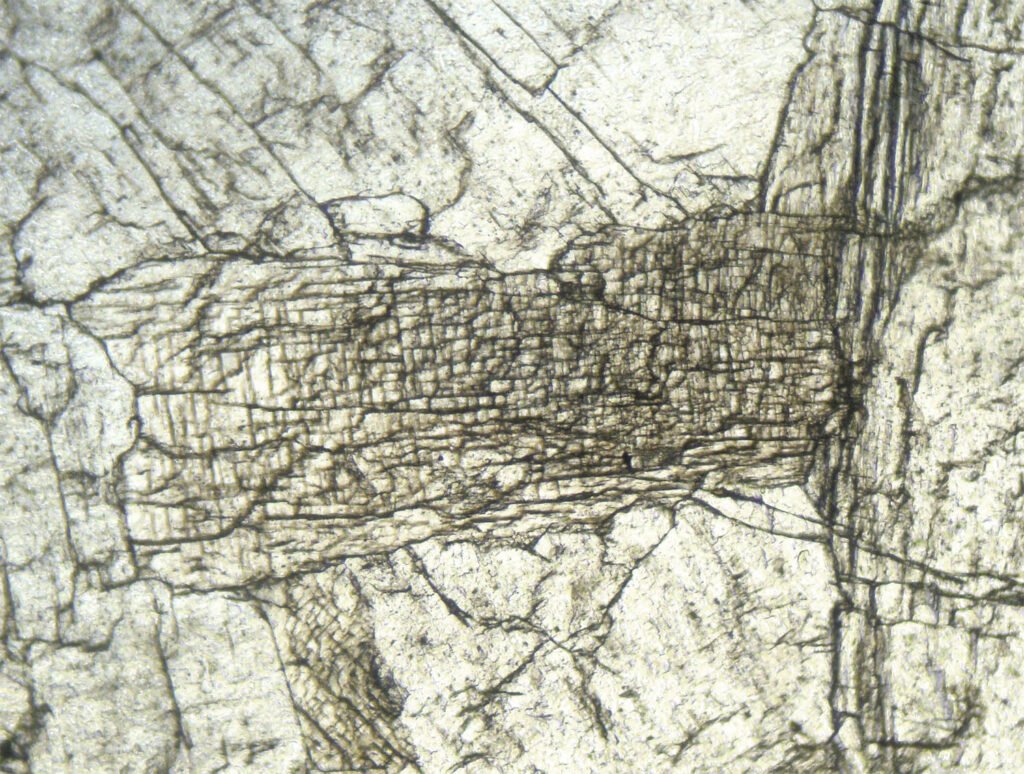
PLANE POLARIZED LIGHT – PPL
Color / Pleochroism: Colorless. May have a slight pink color. In this case, there may be weak pleochroism between:
X = yellowish red,
Y = pinkish red and
Z = pale yellowish red.
Relief: High.
Cleavage: {110} perfect. Longitudinal sections show only one cleavage.
Basal sections show two cleavage directions that intersect at 92.5° angles. Furthermore, rhodonite has good cleavage at {001}.
Habits: Usually massive or in cleavable masses. The rare crystals are thick tabular.
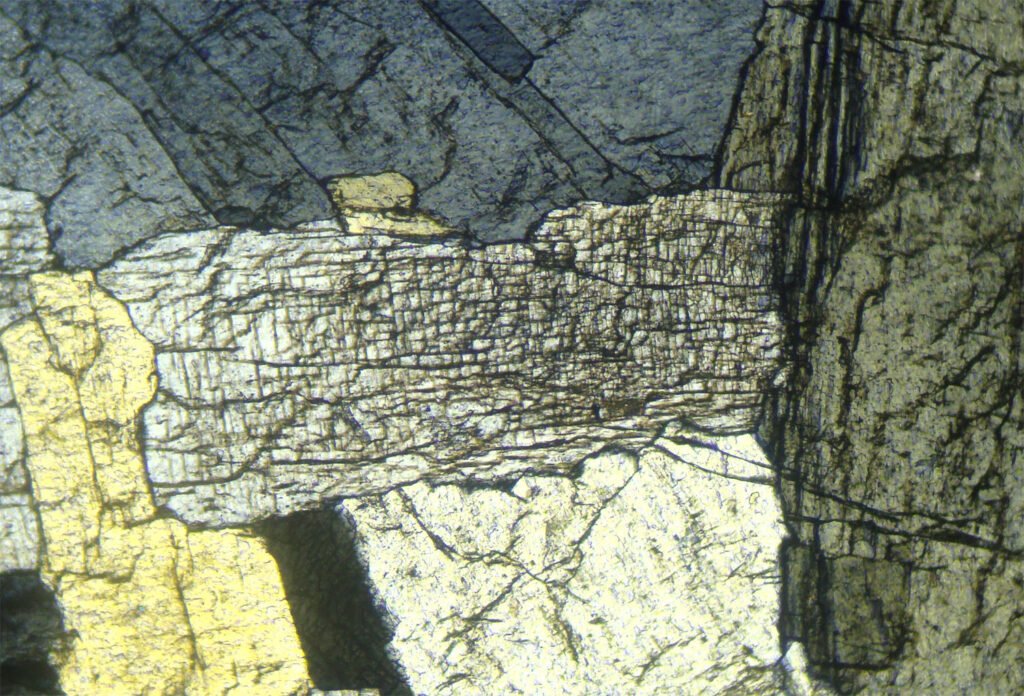
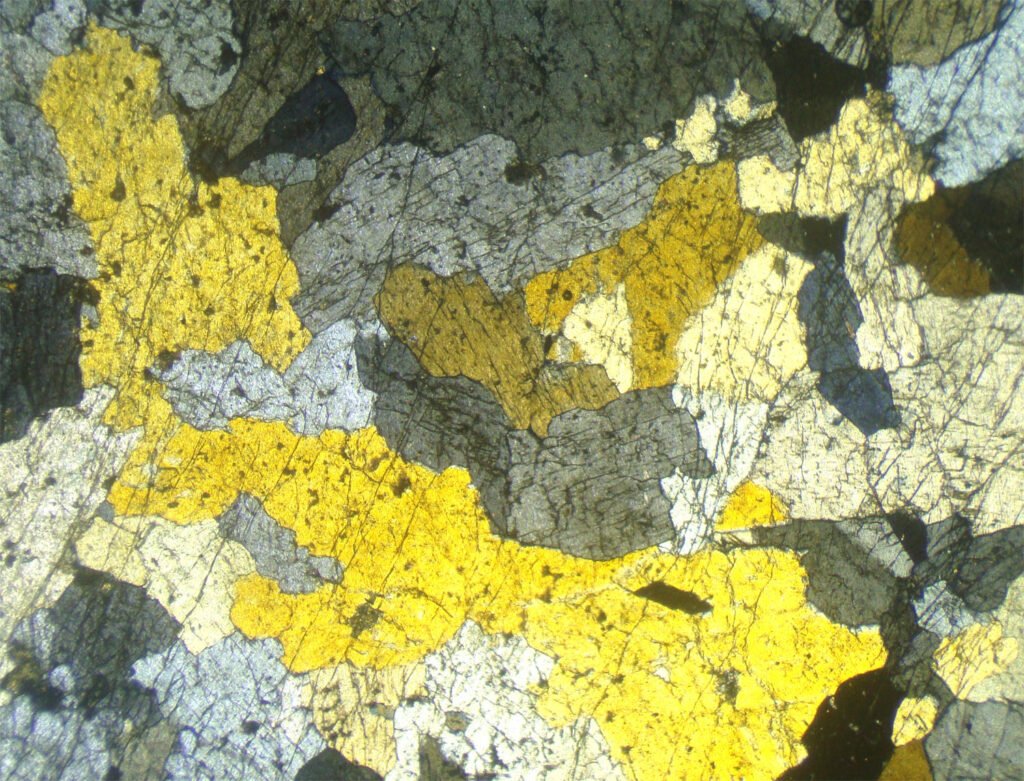
CROSSED POLARIZED LIGHT – XPL
Birefringence and Interference Colors: Maximum birefringence of 0.013, corresponding to colors from gray, white to 1st order yellow, does not reach orange.
Extinction: Oblique up to 25º.
Elongation sign: No information available. Being triclinic, it probably doesn’t apply.
Twins: May have lamellar twins.
Zoning: No.
CONVERGENT LIGHT
Character: B(+)
2V angle: 58 – 73º
Alterations: alters to Mn oxides which are opaque in thin section.
May be confused with: the two cleavages in the basal sections, which resemble a pyroxene, are very diagnostic. Macroscopically, it has a very diagnostic red-pink color, similar, a bit ligther, to that of rhodochrosite.