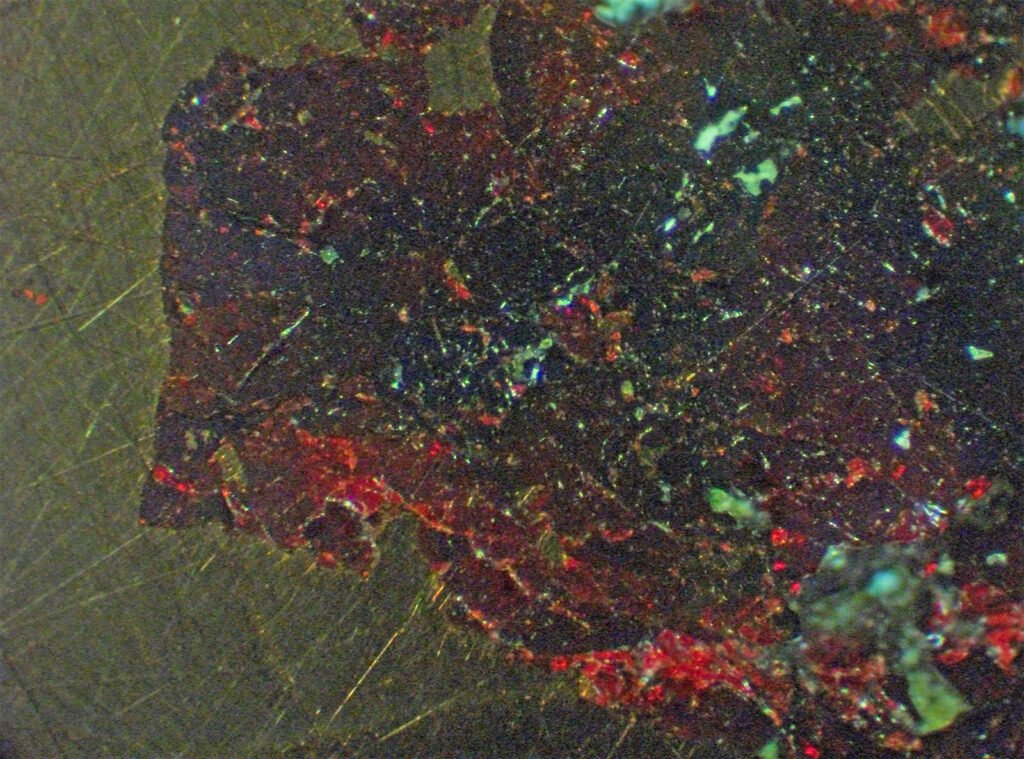
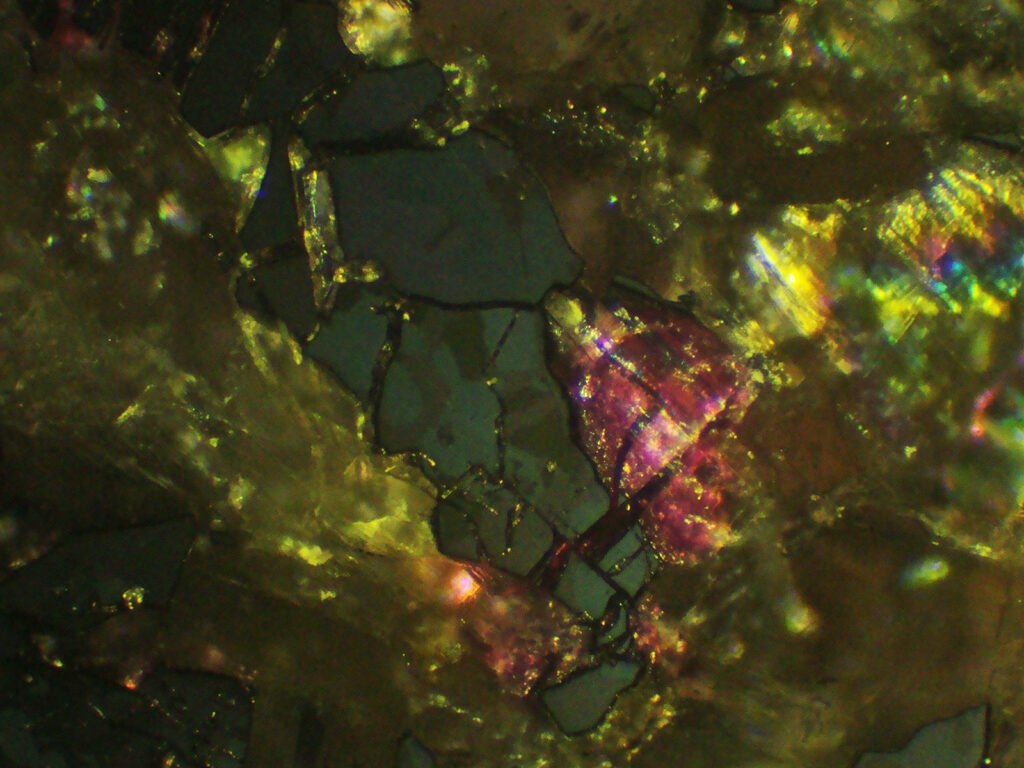
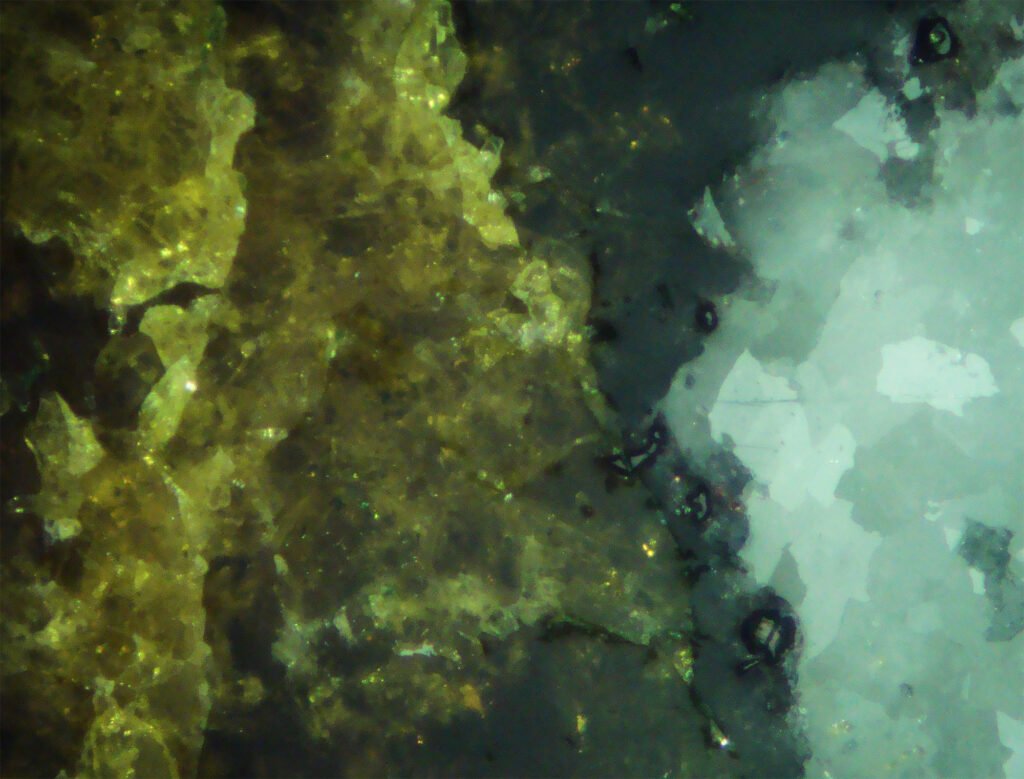
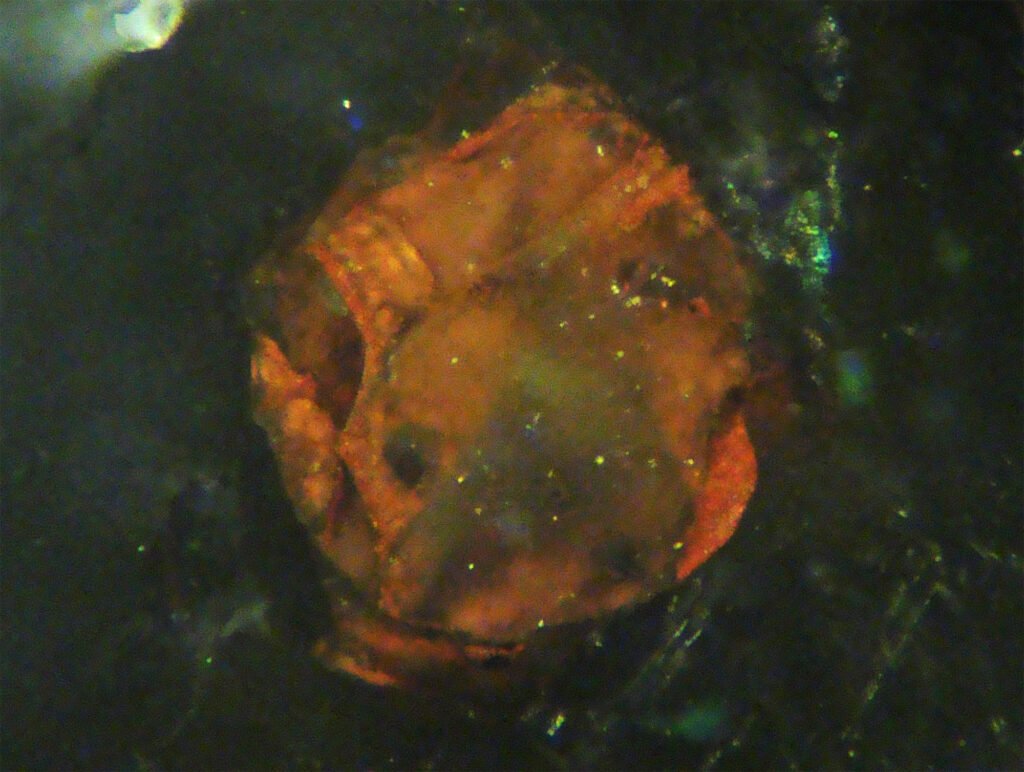
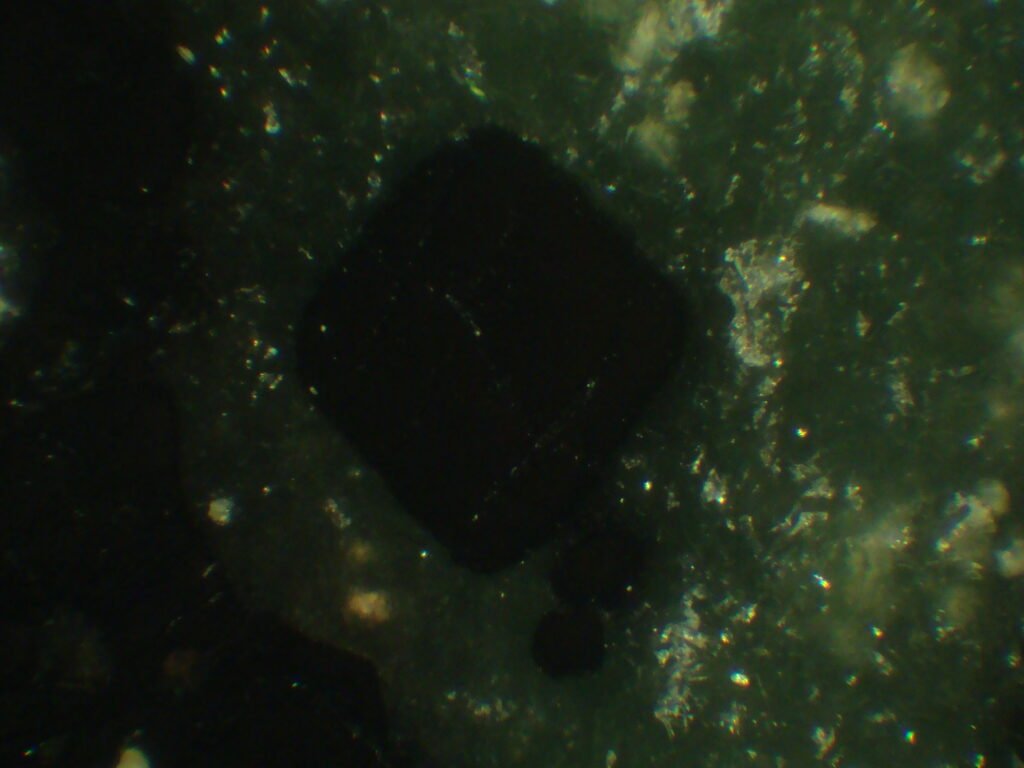
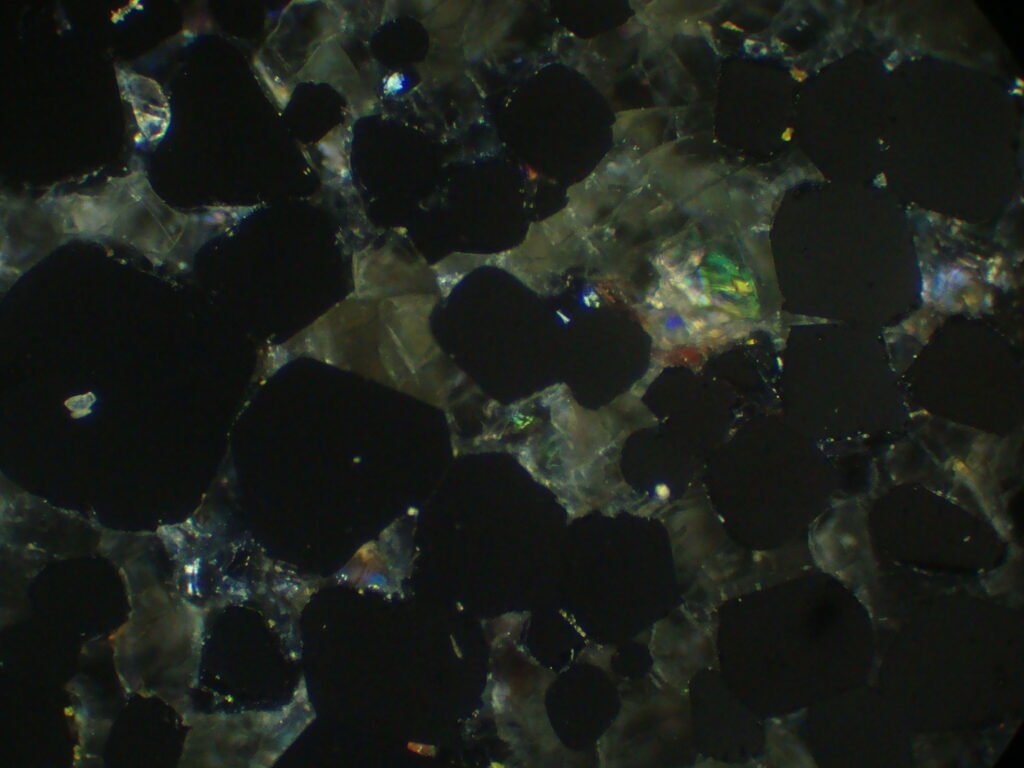
PPL: bluish gray color, with very weak pleochroism. Reflectivity 25%. It has no bireflectance. Associates with native copper and other secondary copper minerals.
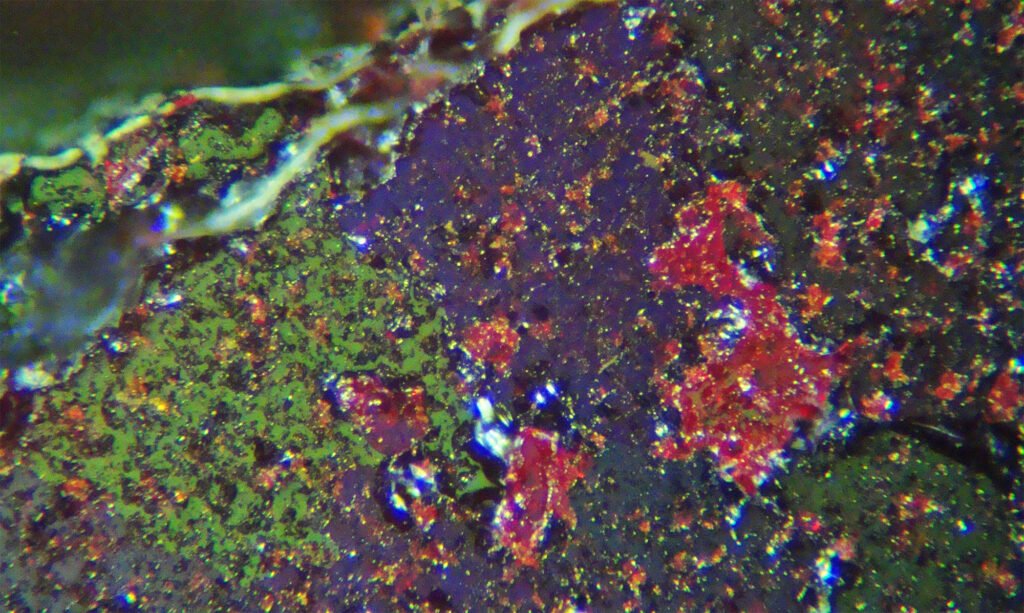
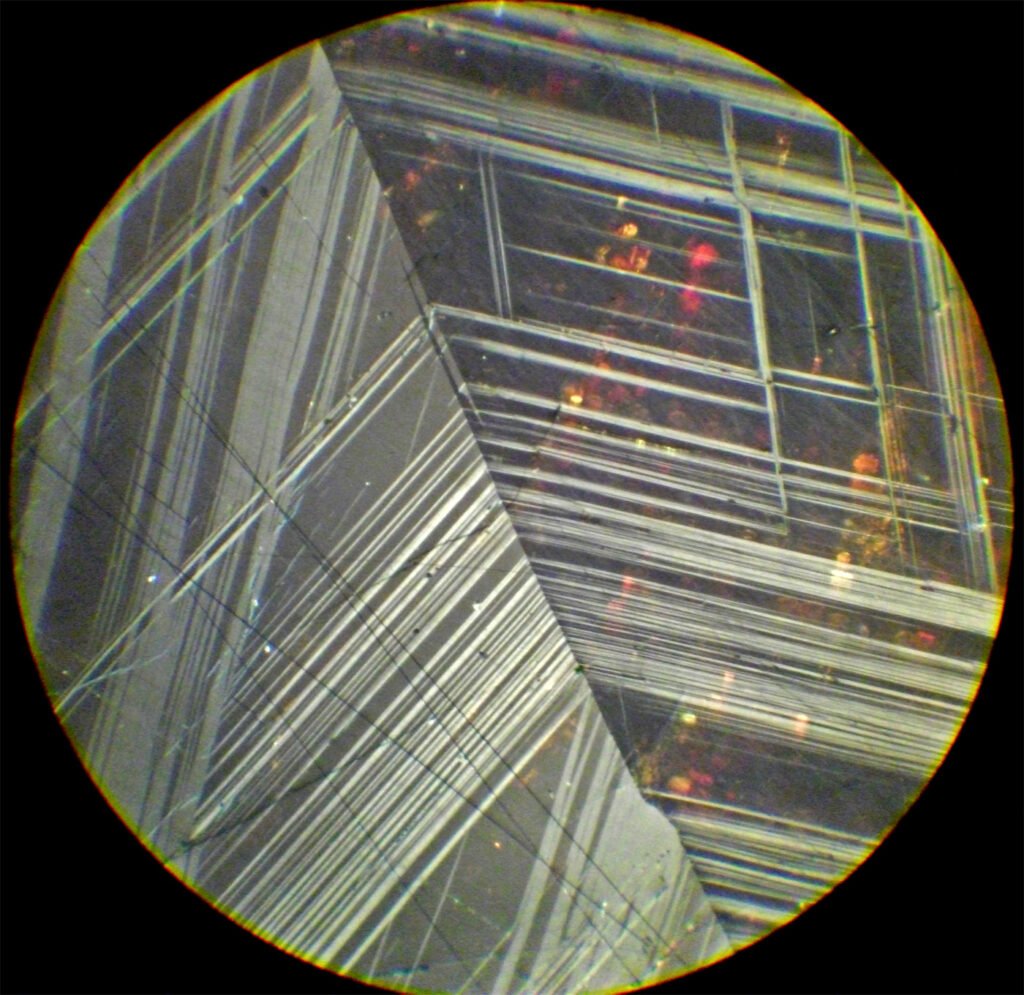
XPL: anomalous anisotropy in green, blue and violet colors (observe with XPL+2º), mixed with abundant blood-red reflections.
Images: in XPL+2º, cuprite with typical colors and reflections.
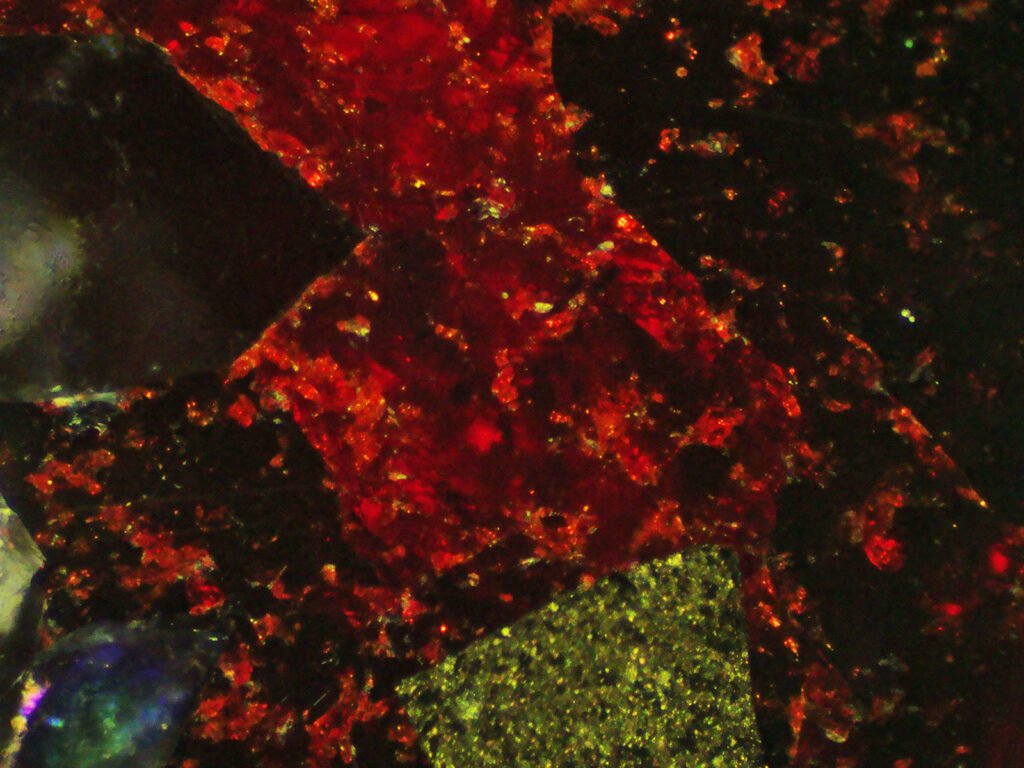
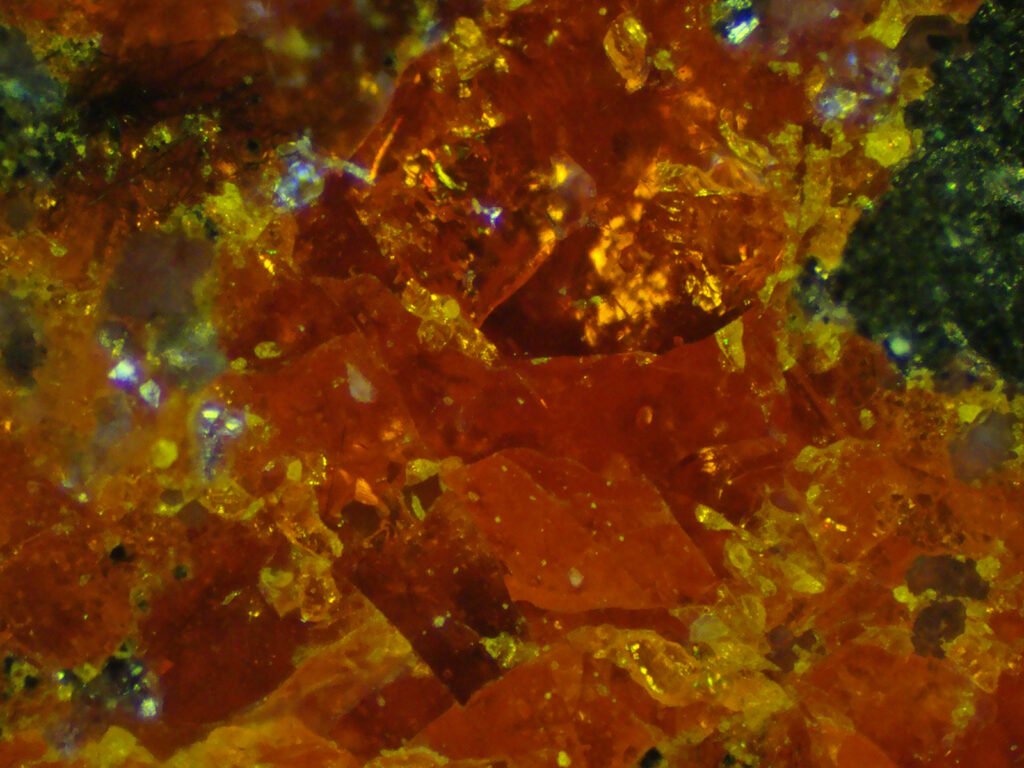
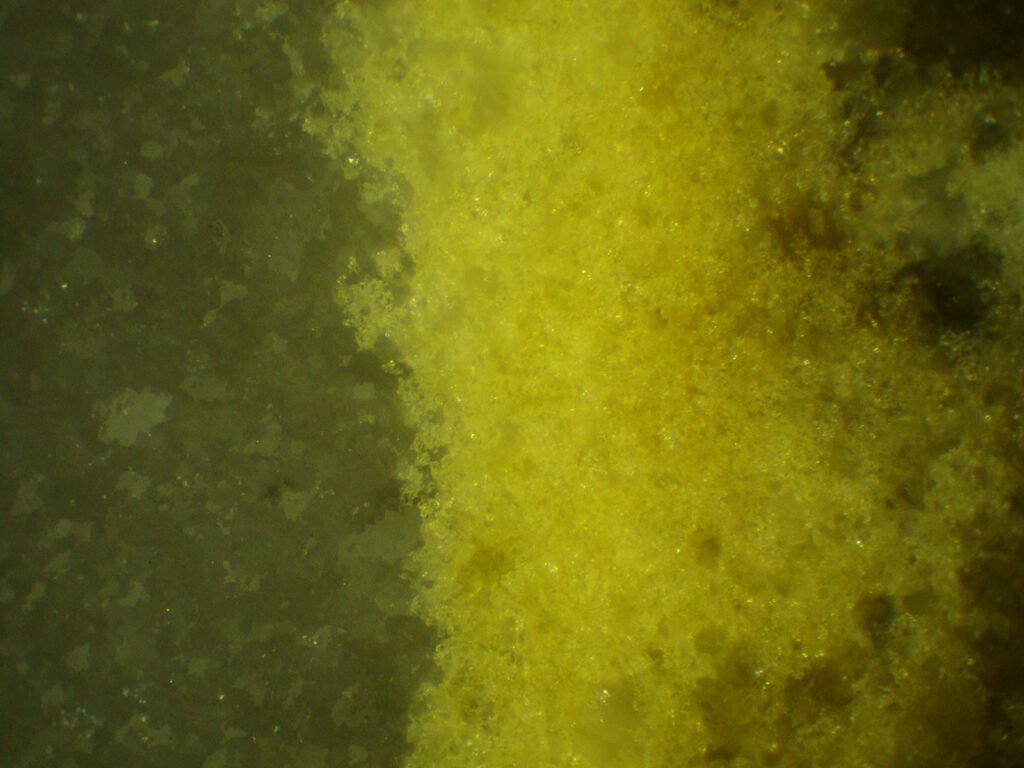
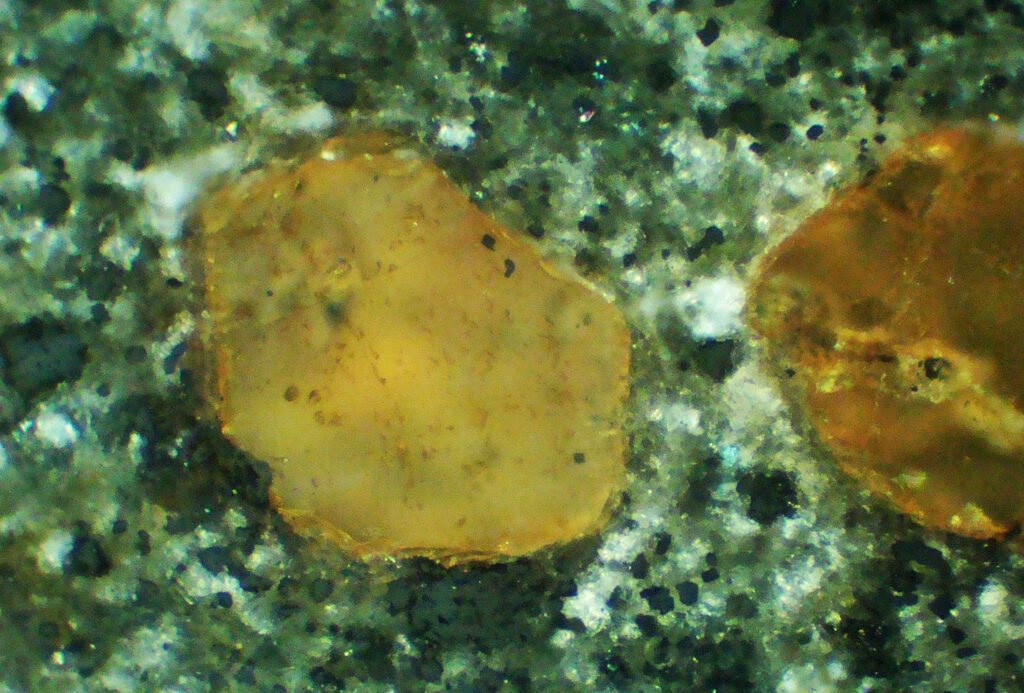
PPL: Gray-white to gray-brown with a violet tint, without pleochroism. Reflectivity of 19%, without bireflectance.
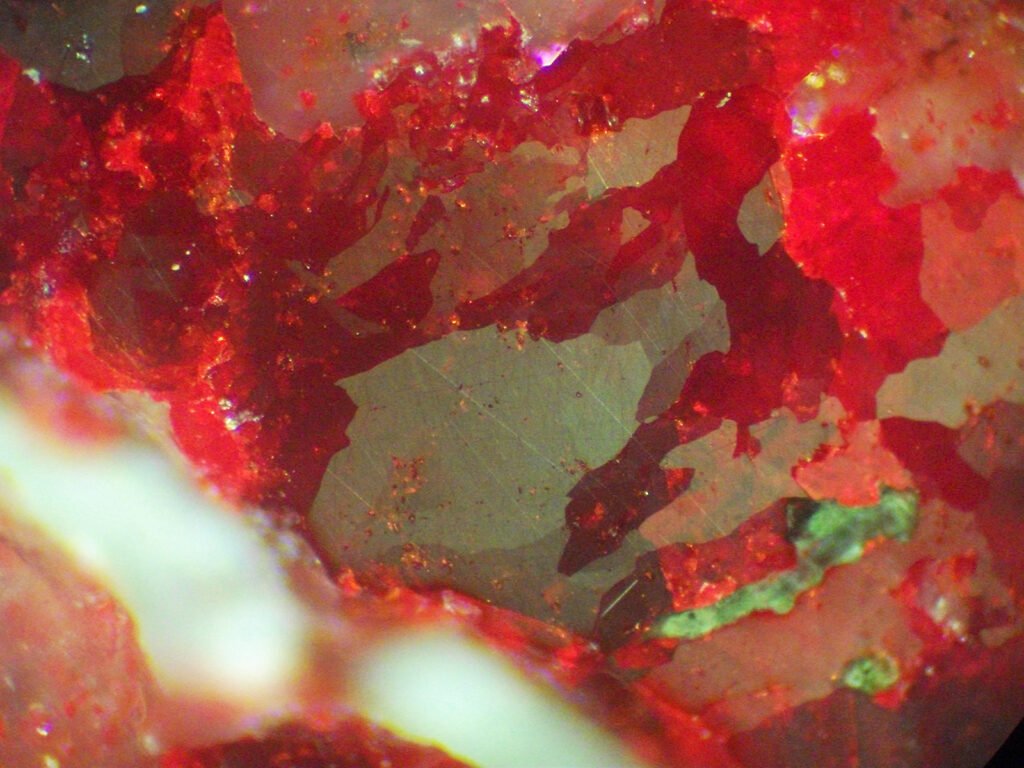
XPL: strong anisotropy, masked by yellow-red to orange-red reflections. The yellow colors are well highlighted. Alteration to yellow pararealgar possible.
Images: in XPL, realgar with red-orange reflections.
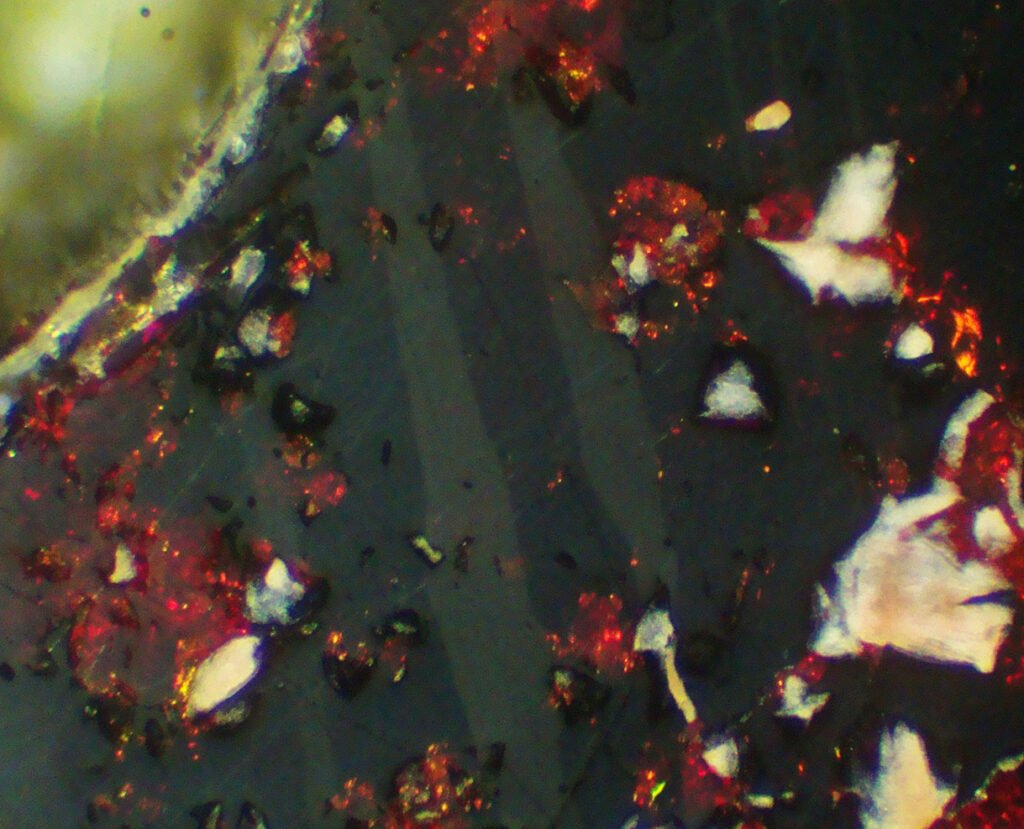
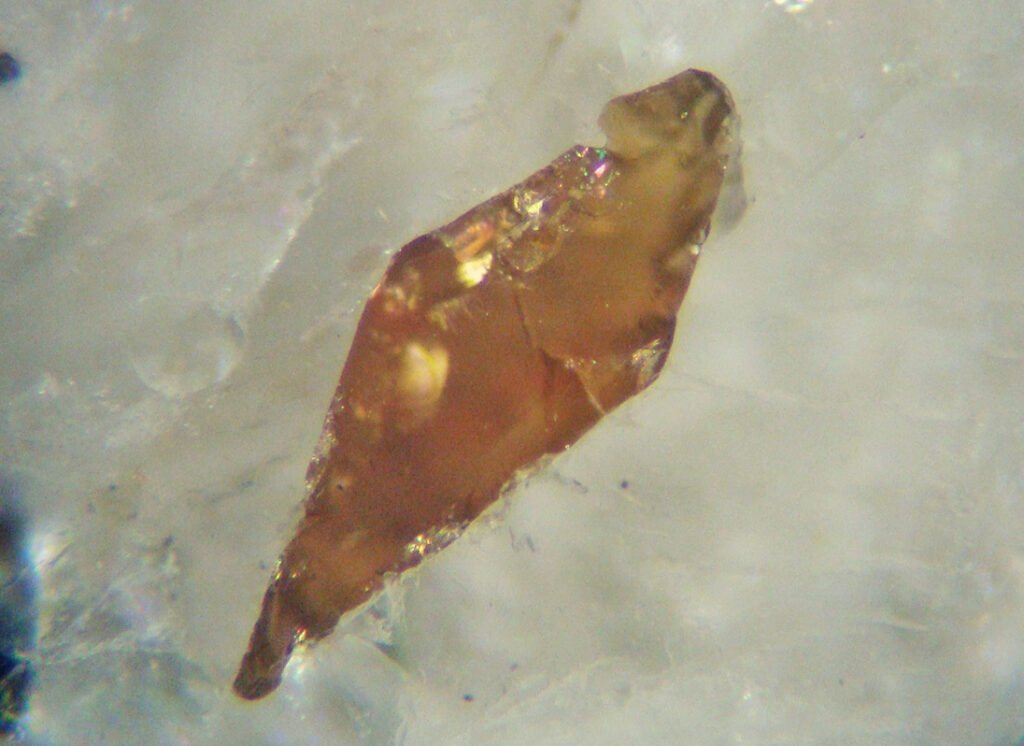
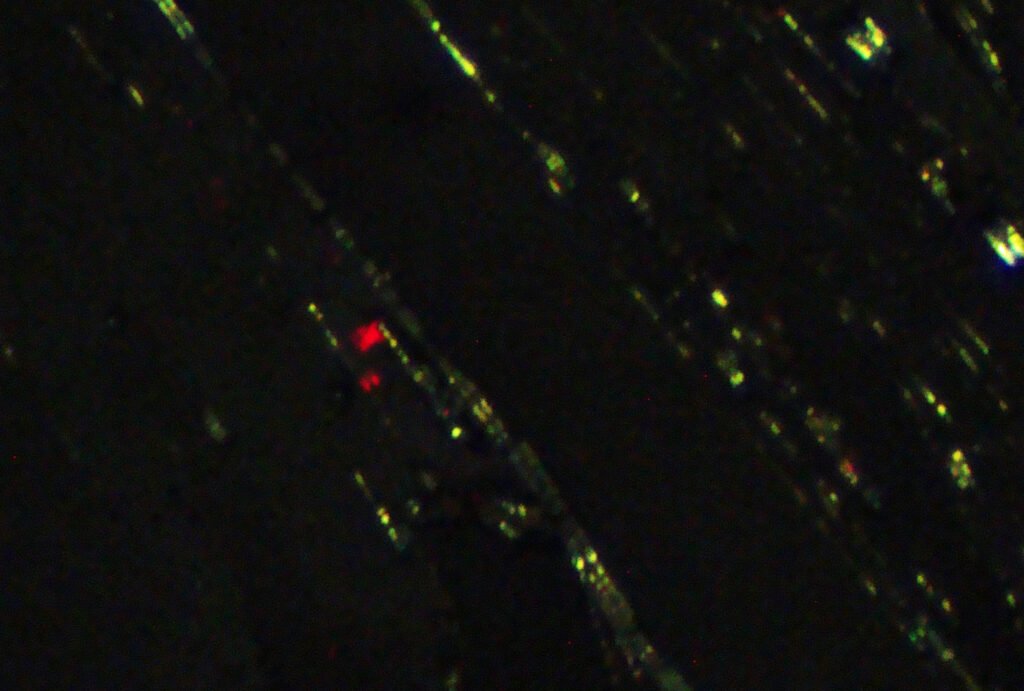
PPL: medium gray color with a blue tint, with very weak pleochroism. ~20% reflectivity, no bireflectance.
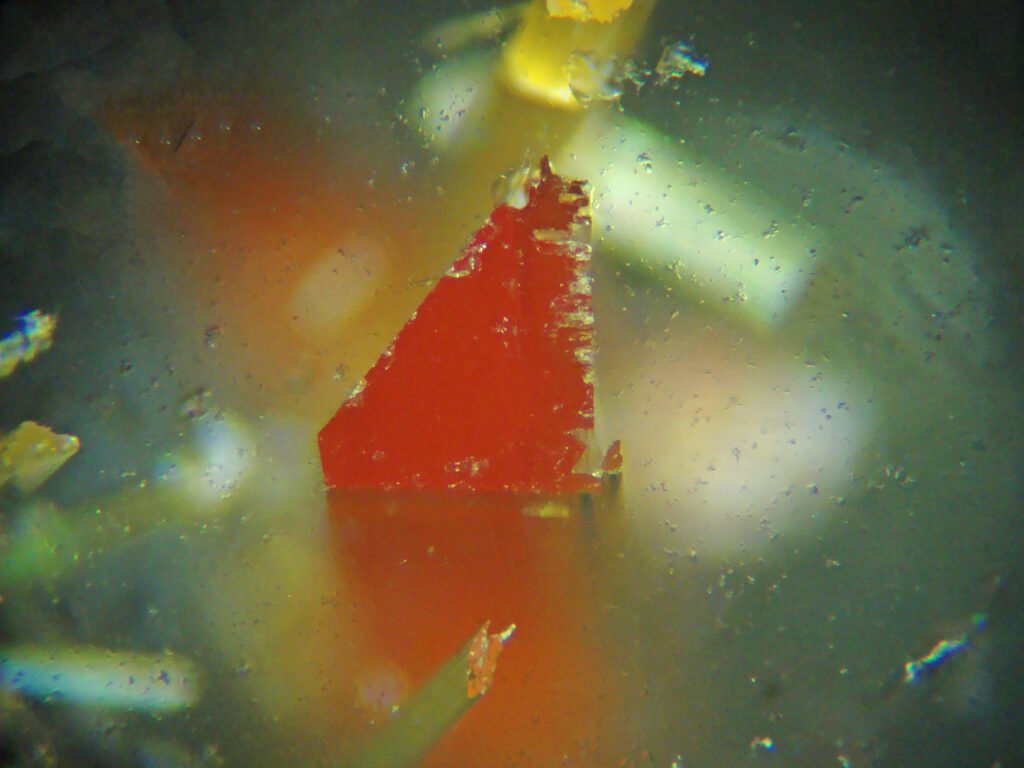
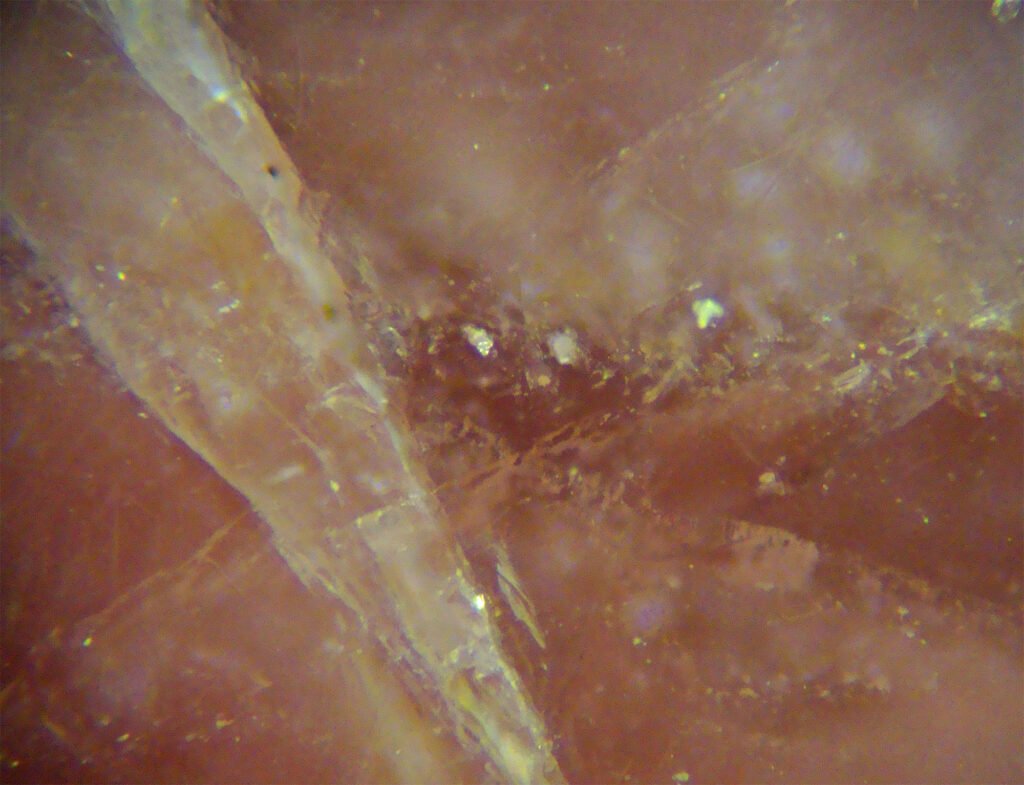
XPL: distinct anisotropy between gray and dark, with widespread, sometimes sparse, colorless, yellow, red to red-brown reflections. In the same section, yellow and red colors may occur. Red colors can be sparse.
Images: in XPL, rutile needles (red) in quartz (milky) and twinned rutile.
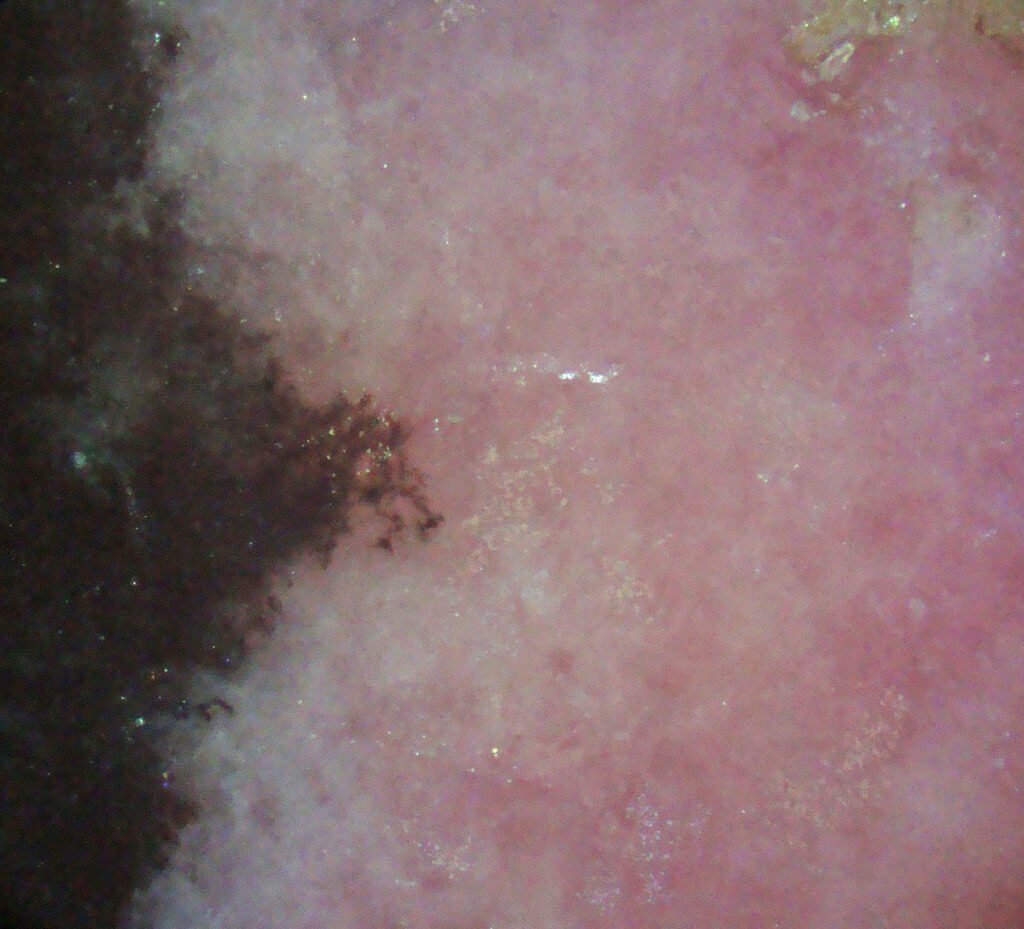
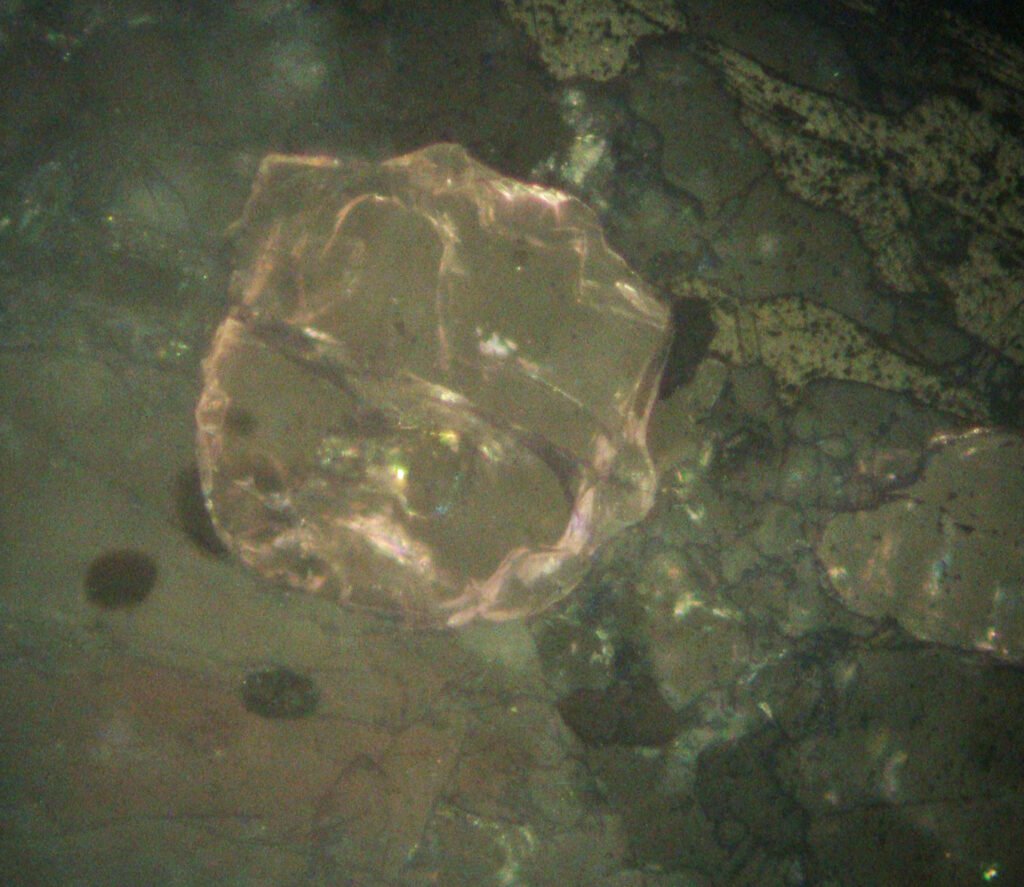
PPL: dark gray reflection color, without pleochroism. Low reflectivity, of approximately 4%. Cleavage may be visible, Carlsbad twins too, perthites not.
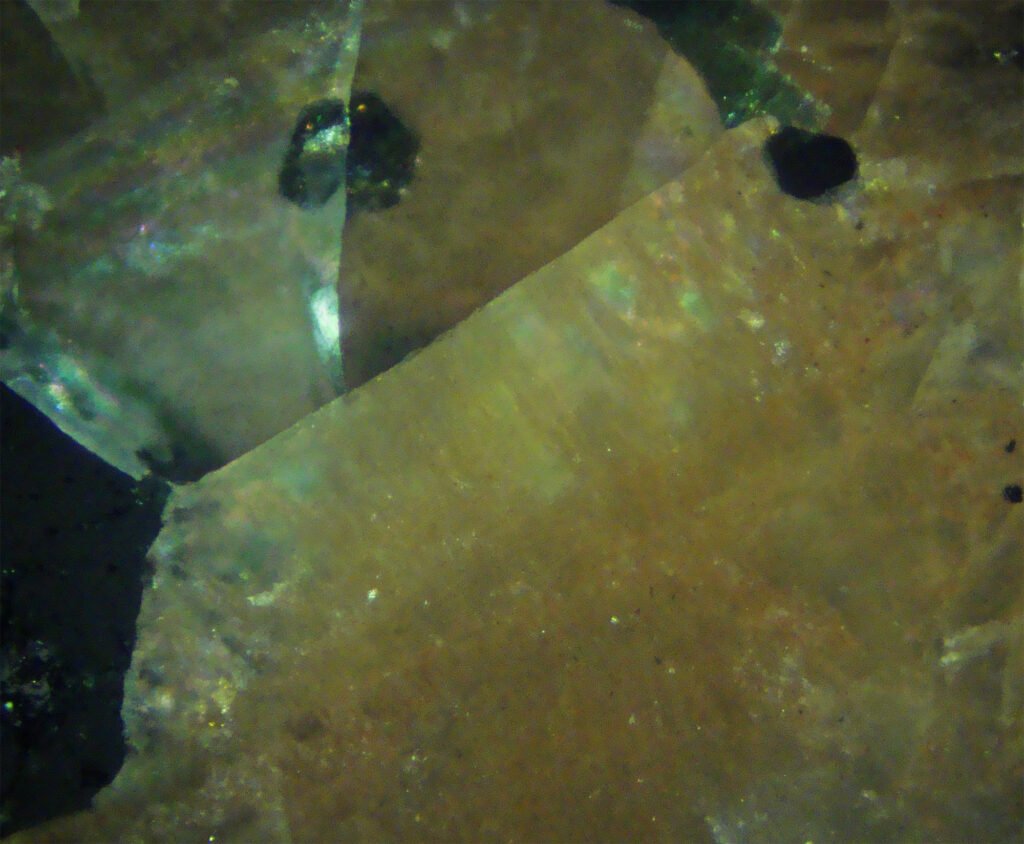
XPL: without anisotropy. Widespread reflections in various shades of pale orange-pink, may be yellowish, white, or colorless.
Images: in XPL, orthoclase (yellowish, may be pink), biotite (black).
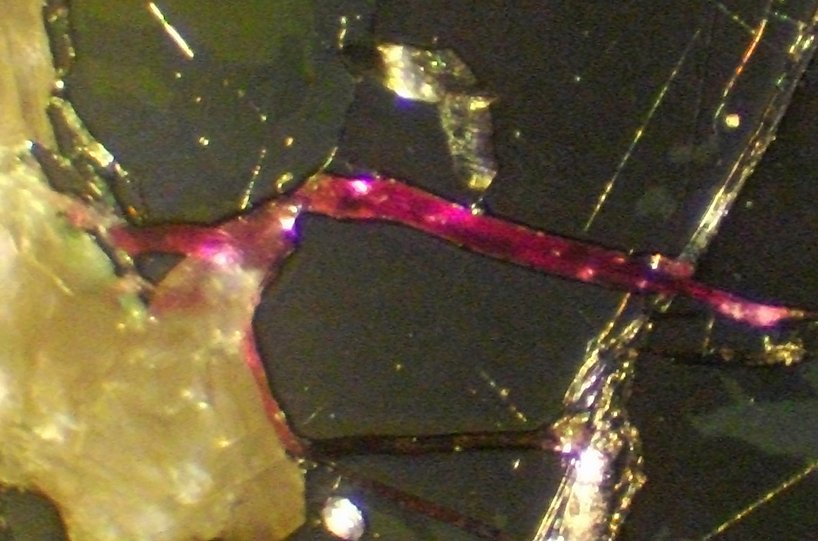
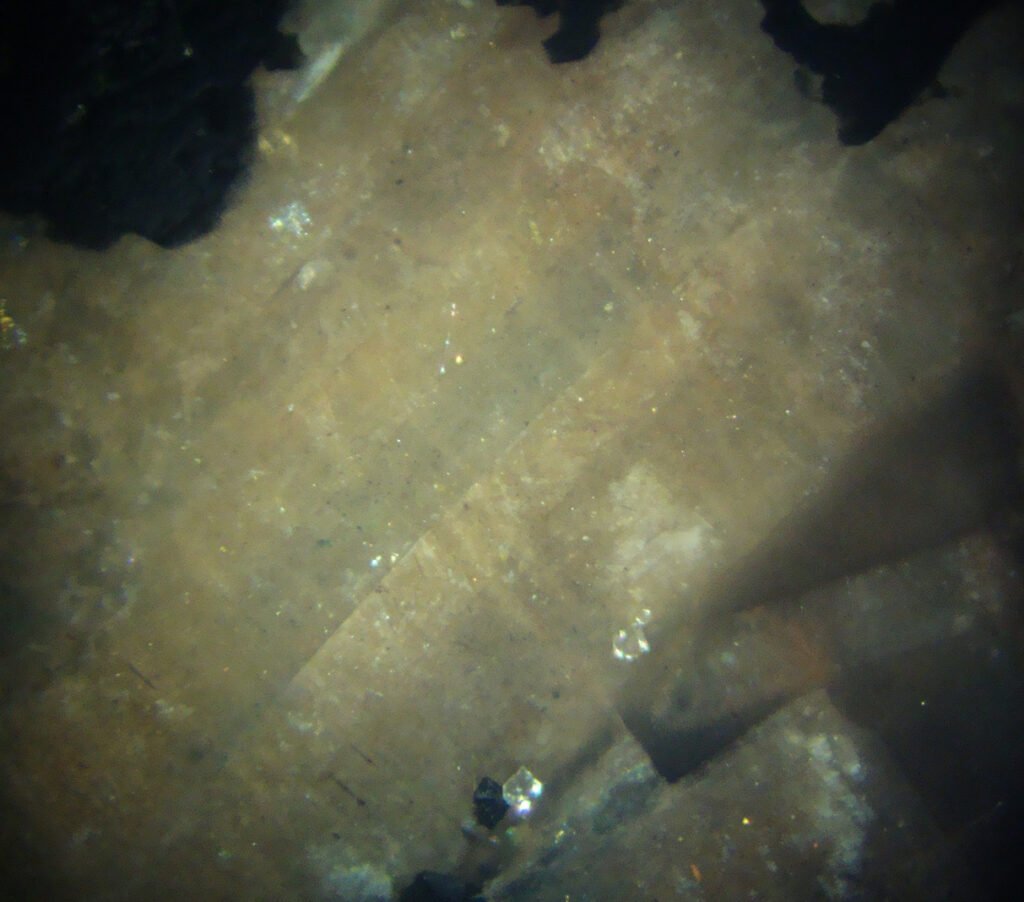
PPL: dark gray color, without pleochroism. Very low reflectivity (~7%), no bireflectance. Rhombohedral carbonate cleavage possible, level banding may occur.
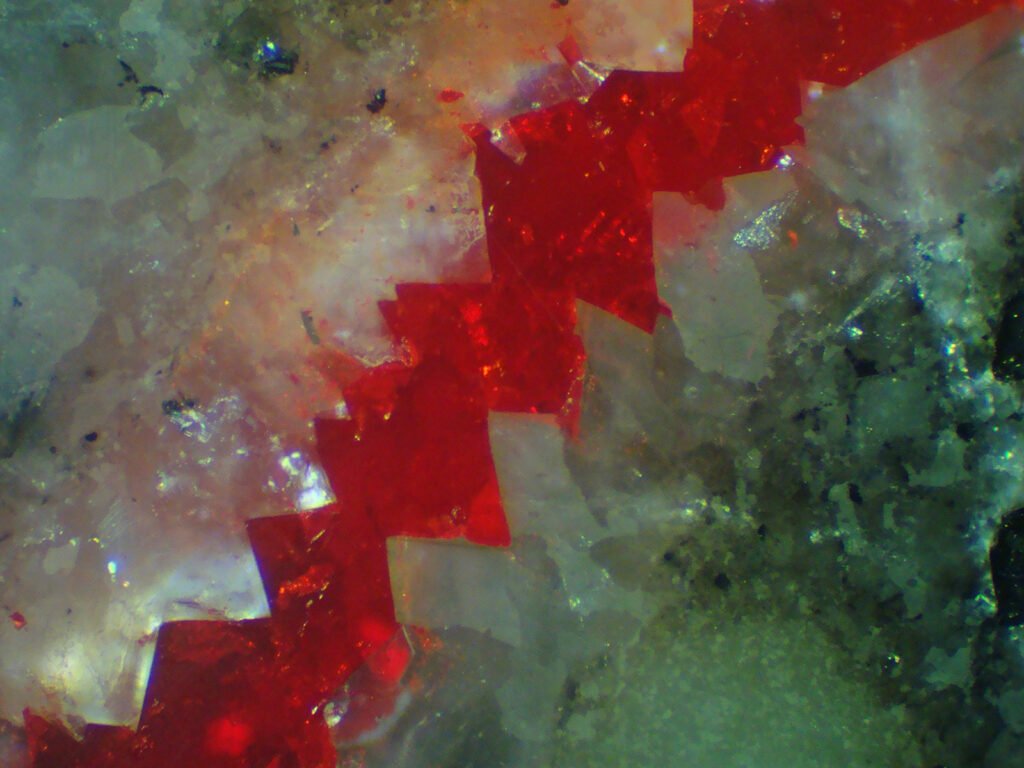
XPL: without anisotropy. Internal reflections between colorless, medium pink and multicolored. The color is a well-defined pink, not so red.
Images: in XPL, rhodochrosite with reflections in various shades of pink.
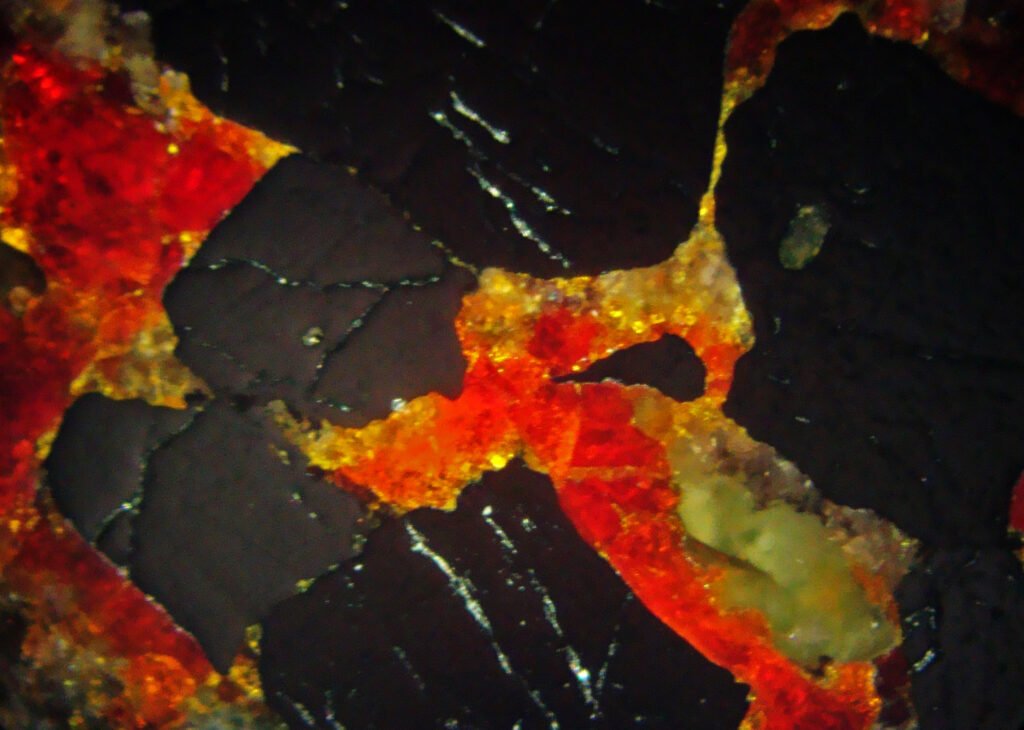
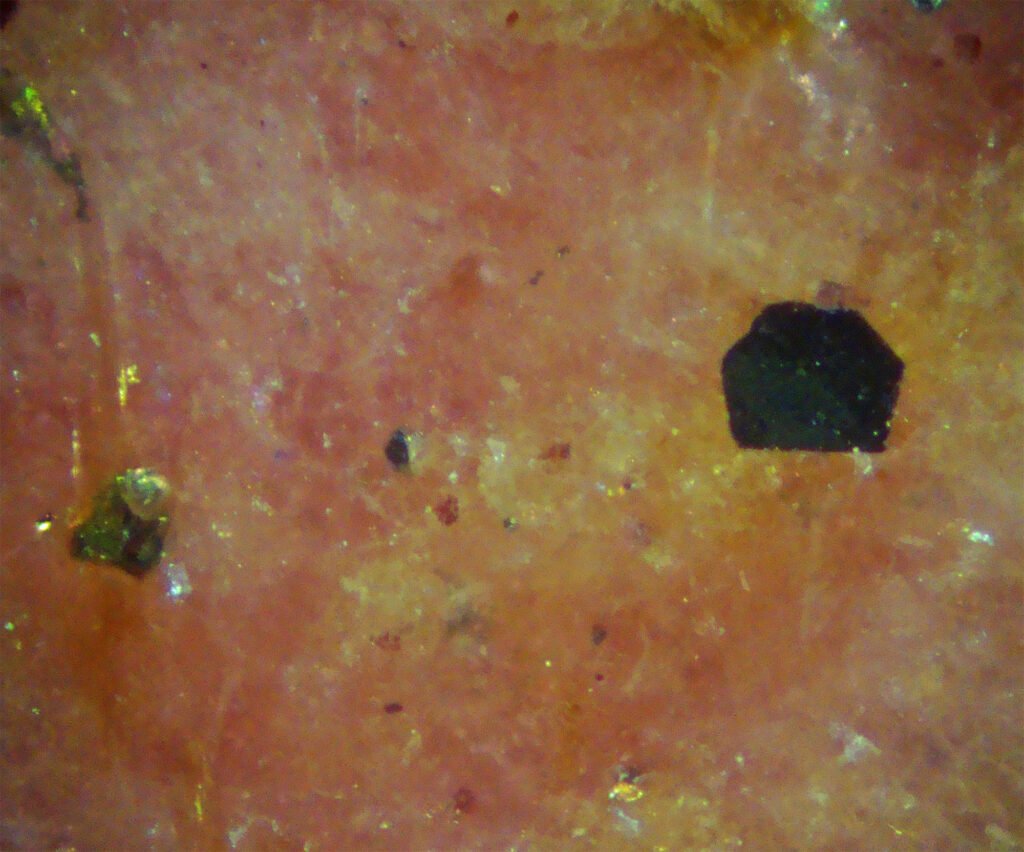
PPL: dark gray color, without pleochroism. 5% reflectivity, no bireflectance. Rare mineral, associated with manganese ores.
XPL: without anisotropy. Widespread internal reflections in pink to red in various shades with shades of orange. Compared with rhodocrosite, the colors are weaker and more pinkish.
Images: in XPL, rhodonite (pink), pyrite (isotropic idiomorphic grain).
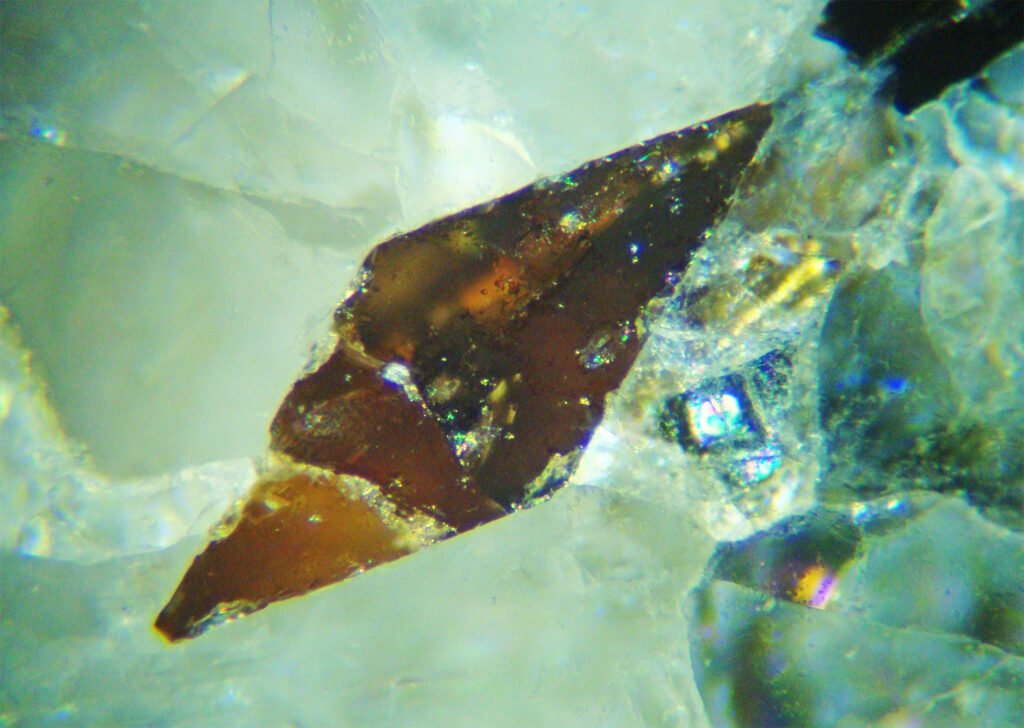
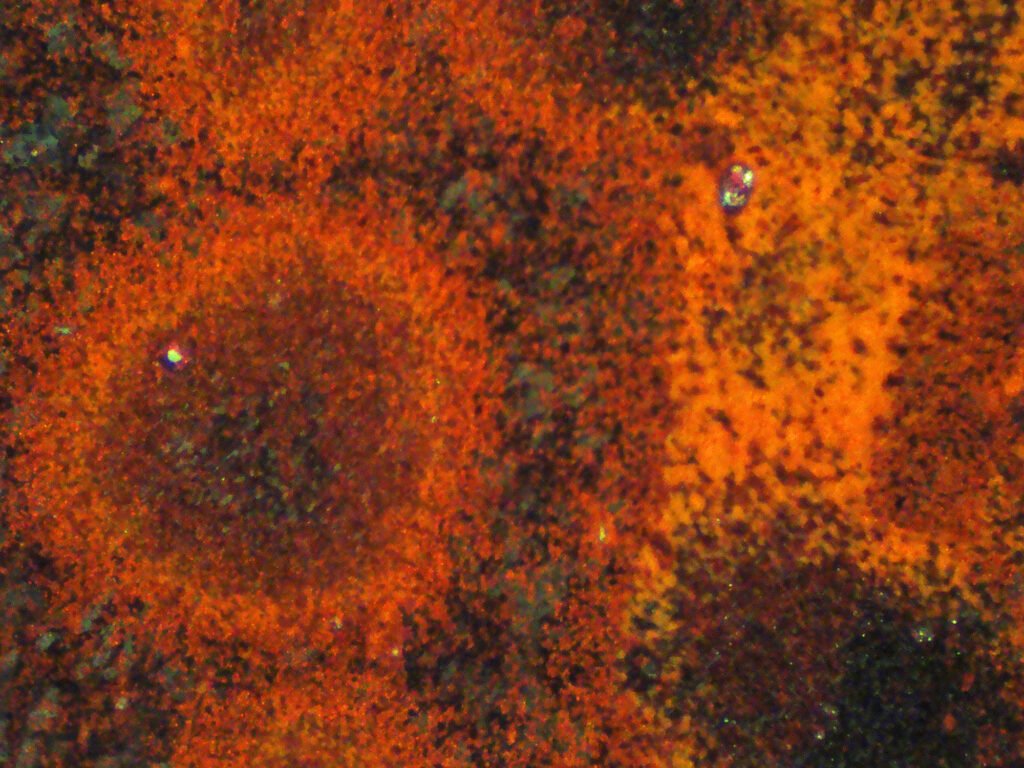
PPL: Medium gray color, without pleochroism. Reflectivity of 11%, far above common silicates. No bireflectance. Very common mineral.
XPL: very strong anisotropy, somewhat less in the basal (rhombic) sections. Generalized internal reflections in red-brown, may be yellow or green. Very reminiscent of sphalerite reflections.
Images: in XPL, basal sections of titanite (orange), quartz (white).
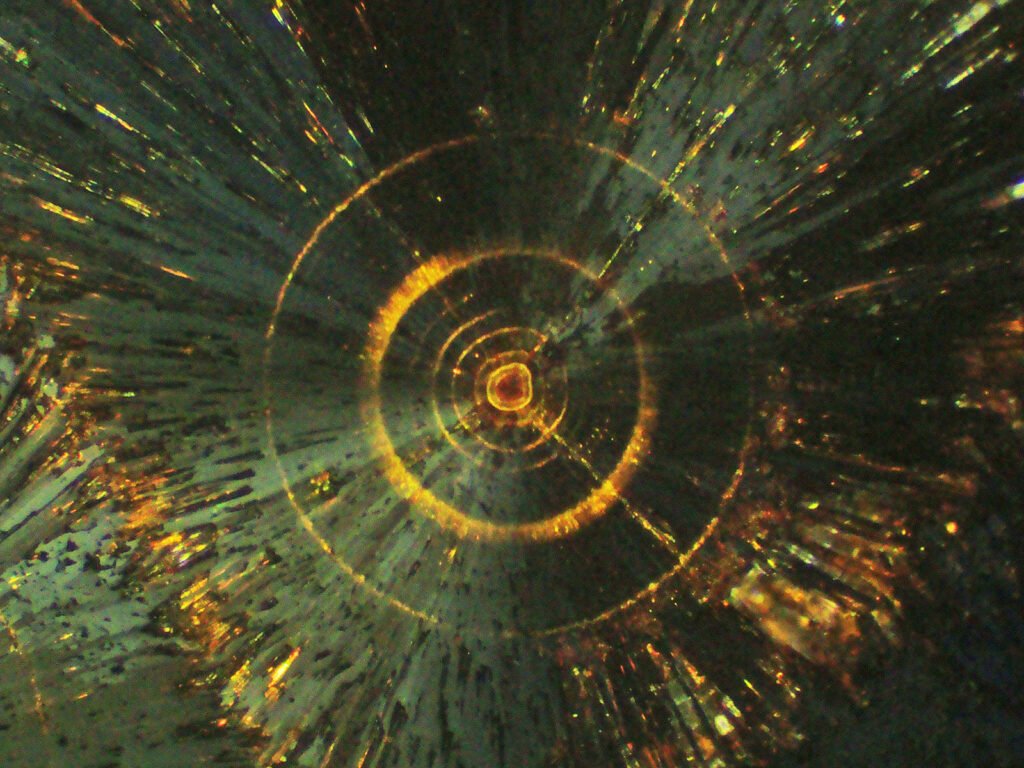
PPL: gray color with a blue tint and 12% reflectivity. Weak pleochroism, lacks bireflectance.
XPL: strong to weak anisotropy and reflections ranging from yellow, orange to red-brown, predominantly orange. It forms radiated or banded fibrous aggregates, resembling chalcedony.
Images: in XPL, radial aggregates of goethite fibers (anisotropy+orange).
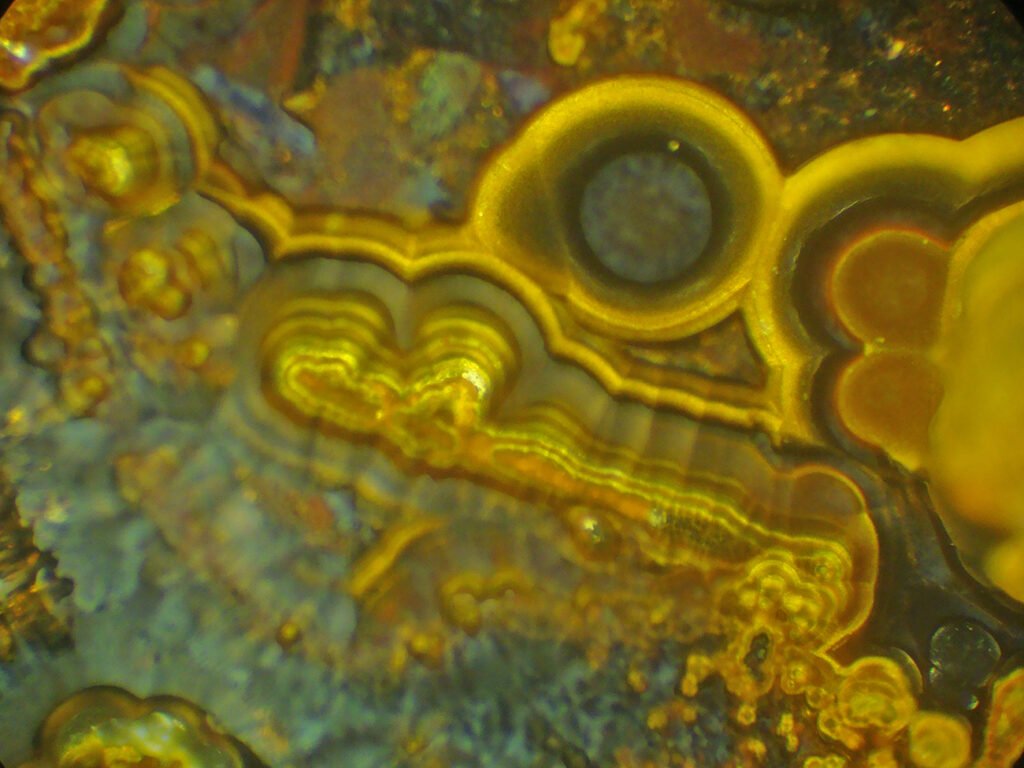
PPL: light medium gray with a slight shade of blue, without pleochroism. Low reflectivity (16%), no bireflectance.
XPL: isotropic. Generalized internal reflections, which vary with iron content: colorless (no iron), bright yellow, orange, caramel, red, brown to black (too much iron).
Images: In XPL, sphalerite with darker and yellow internal reflections.
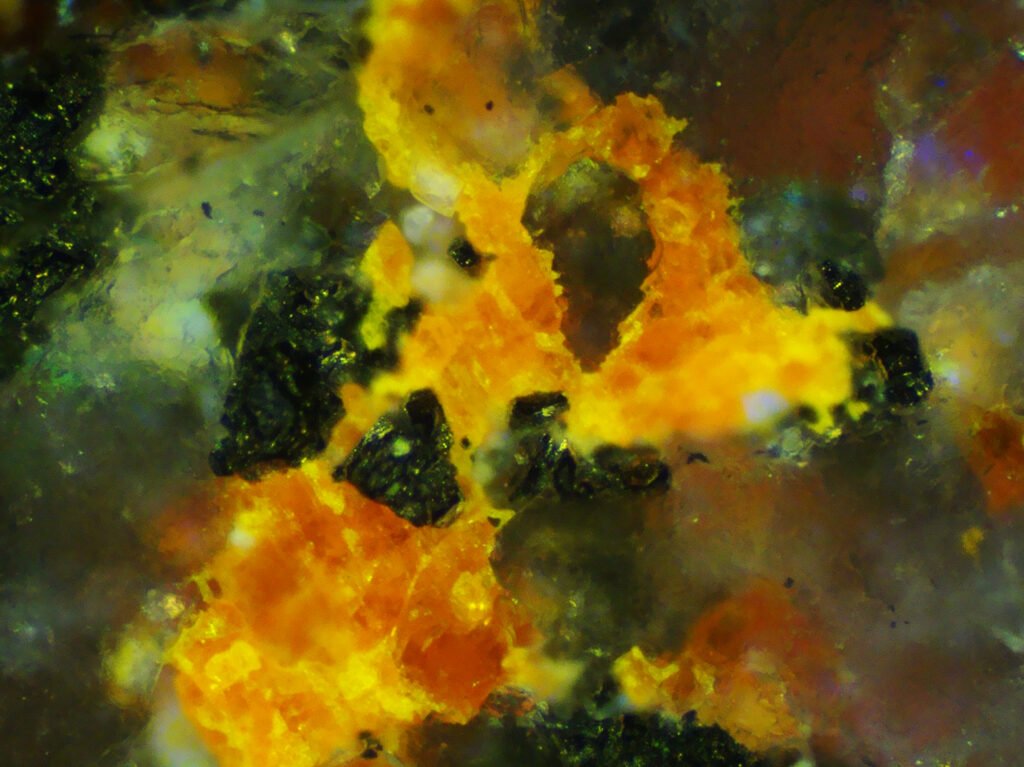
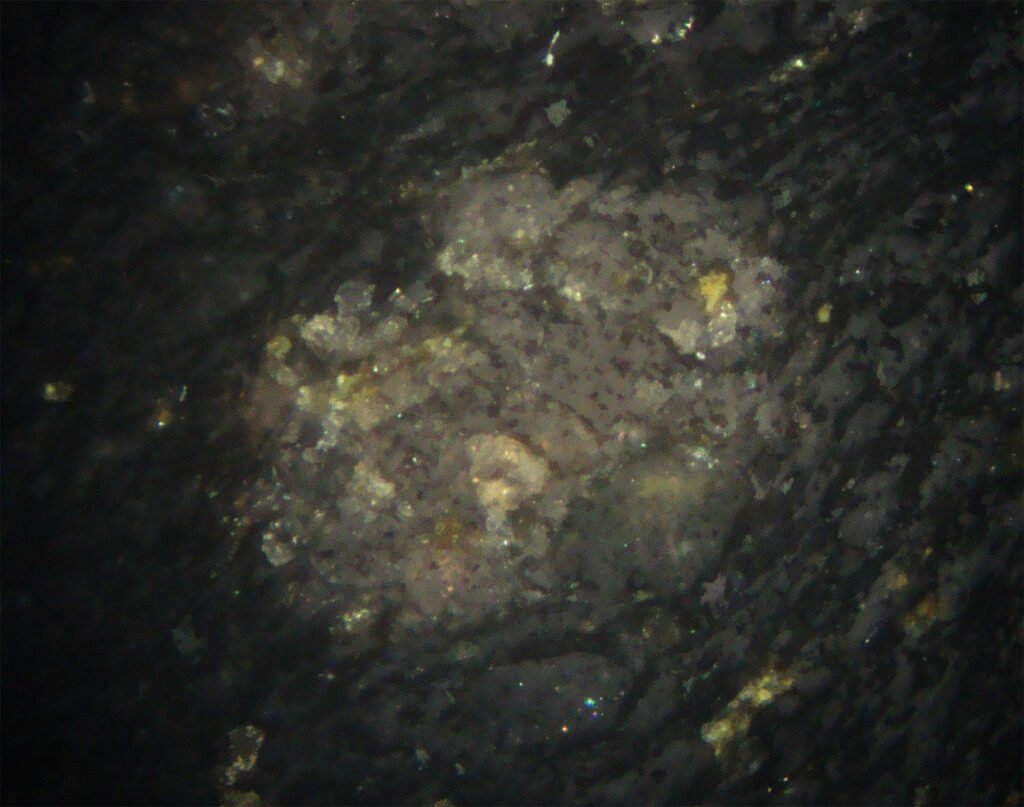
PPL: dark gray color, slightly lighter than feldspars. No pleochroism. Low reflectivity (4%?), no bireflectance. Typically rounded shape, often many fractures, always high relief relative to other rock-forming silicates.
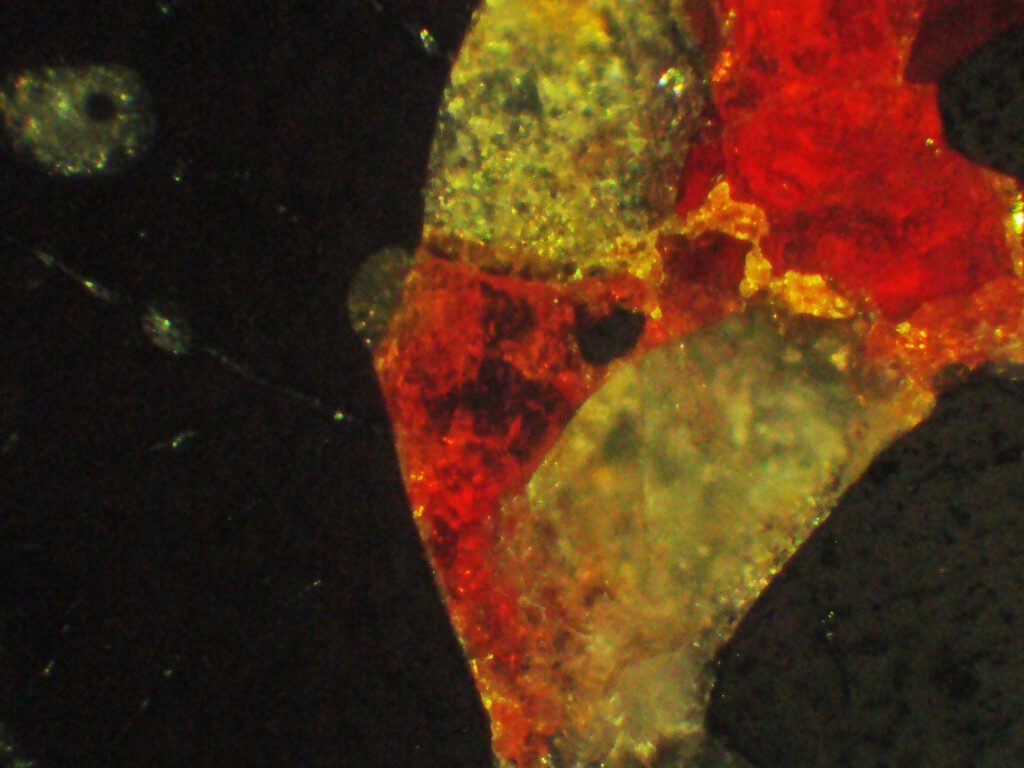
XPL: strong anisotropy in gray with generalized internal reflections in yellow to orange, may vary to reddish colors.
Images: in XPL, olivine (reddish), plagioclase (dark).
PPL: dark gray color, a little lighter than quartz and feldspars. No pleochroism. Low reflectivity (4%?), no bireflectance. Typical rounded shape, possible high relief.
XPL: isotropic, difficult to observe due to the generalized internal reflections, which are dark, but more luminous than other minerals. Reflections, if the grain is large, tend to be reddish.The variety melanite is completely isotropic, without internal reflections.