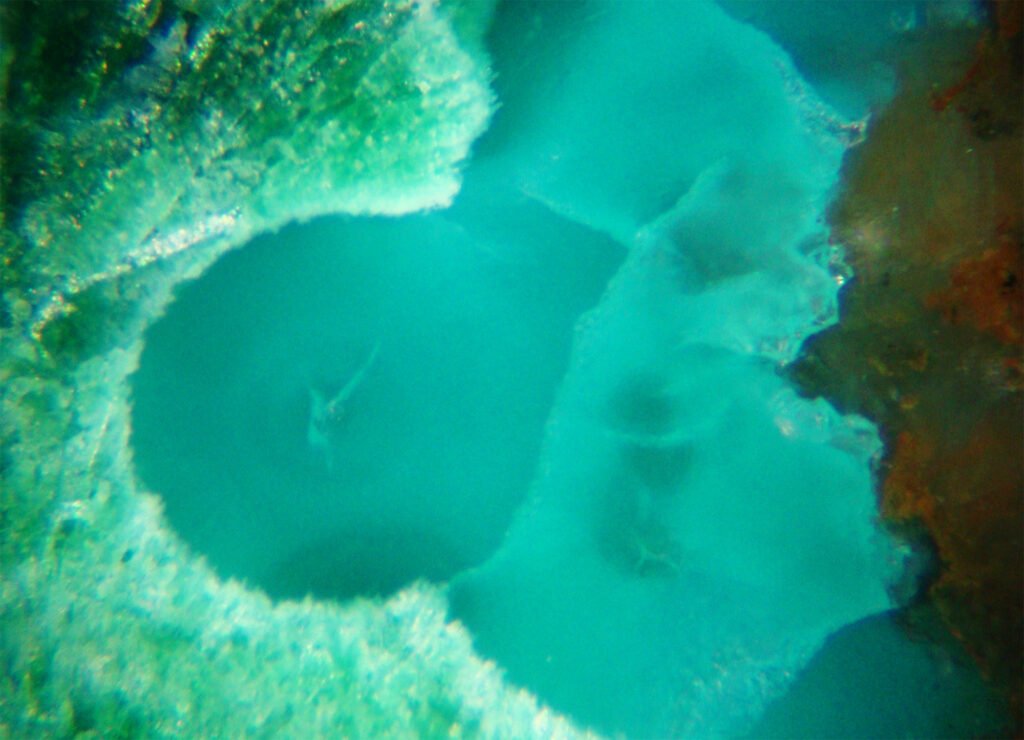
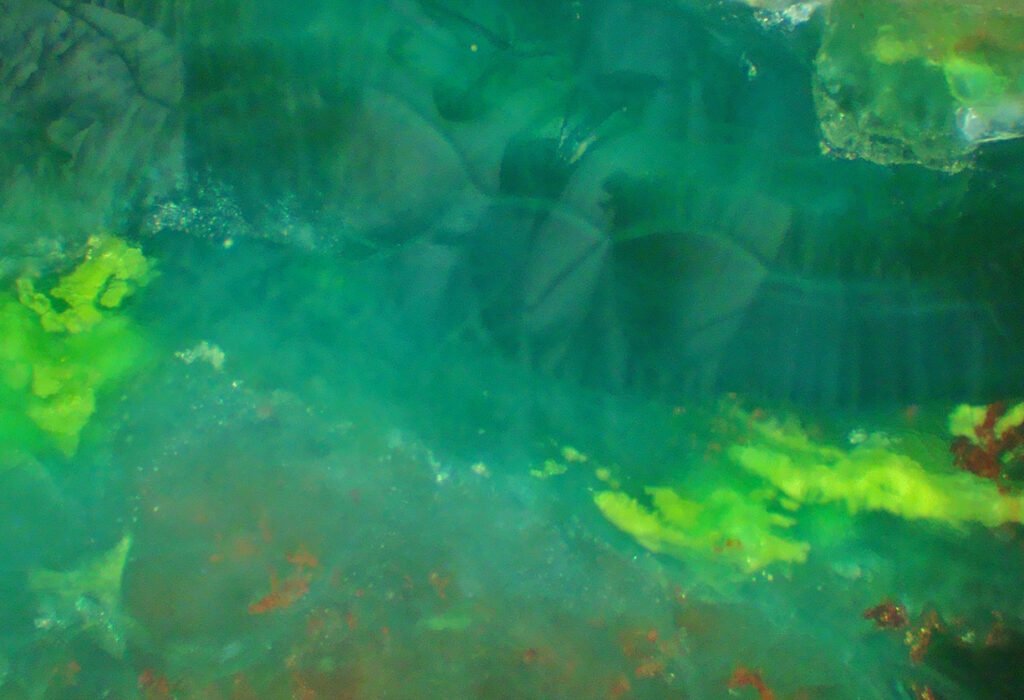
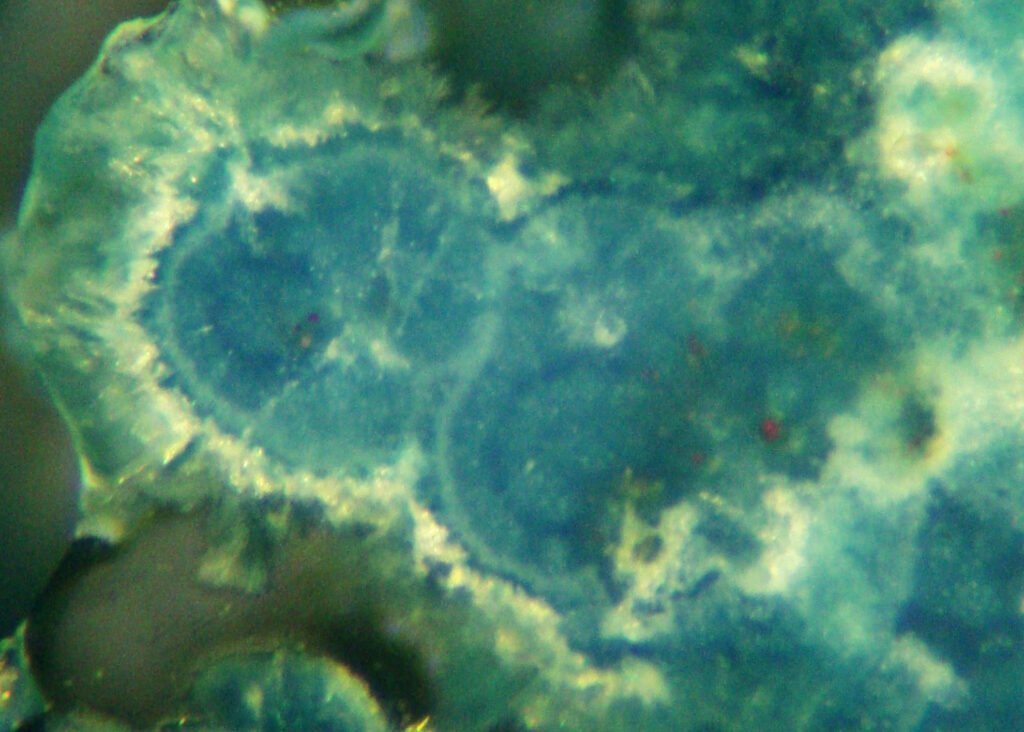
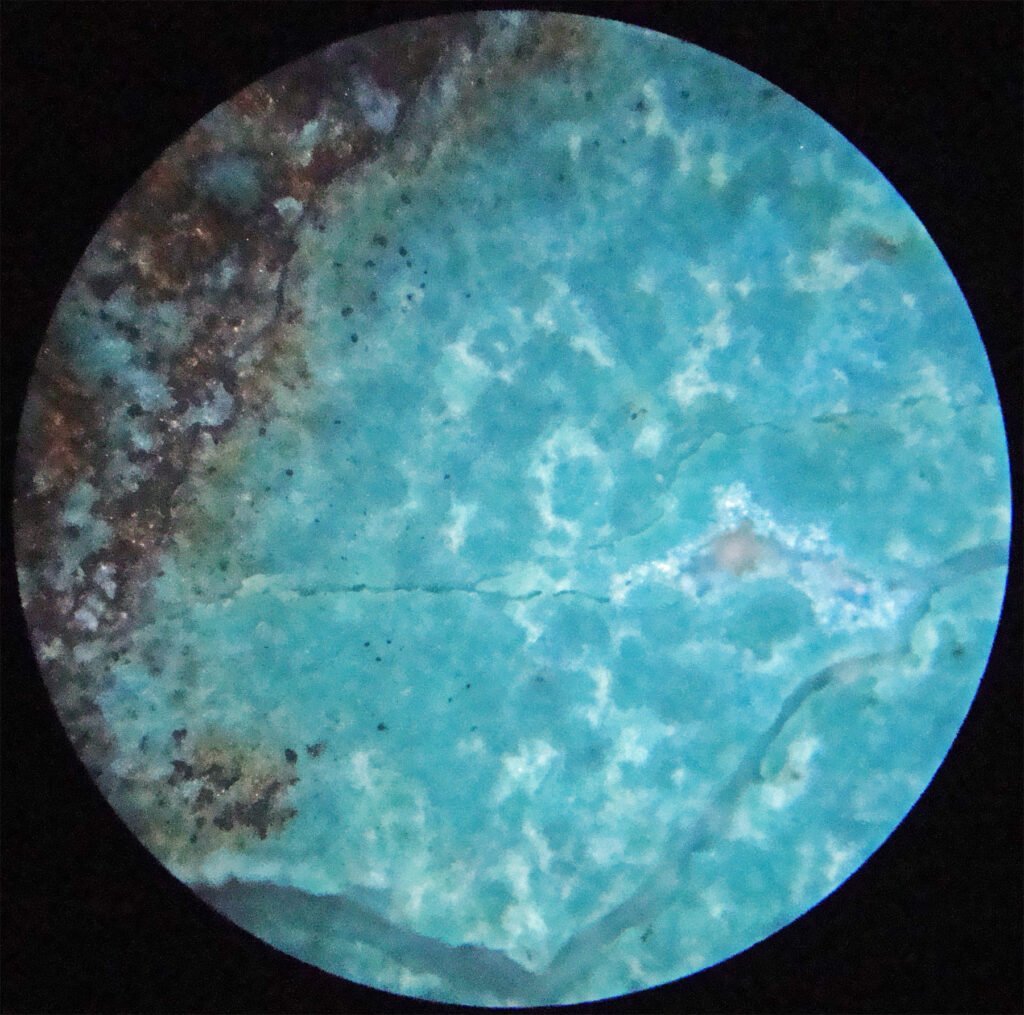
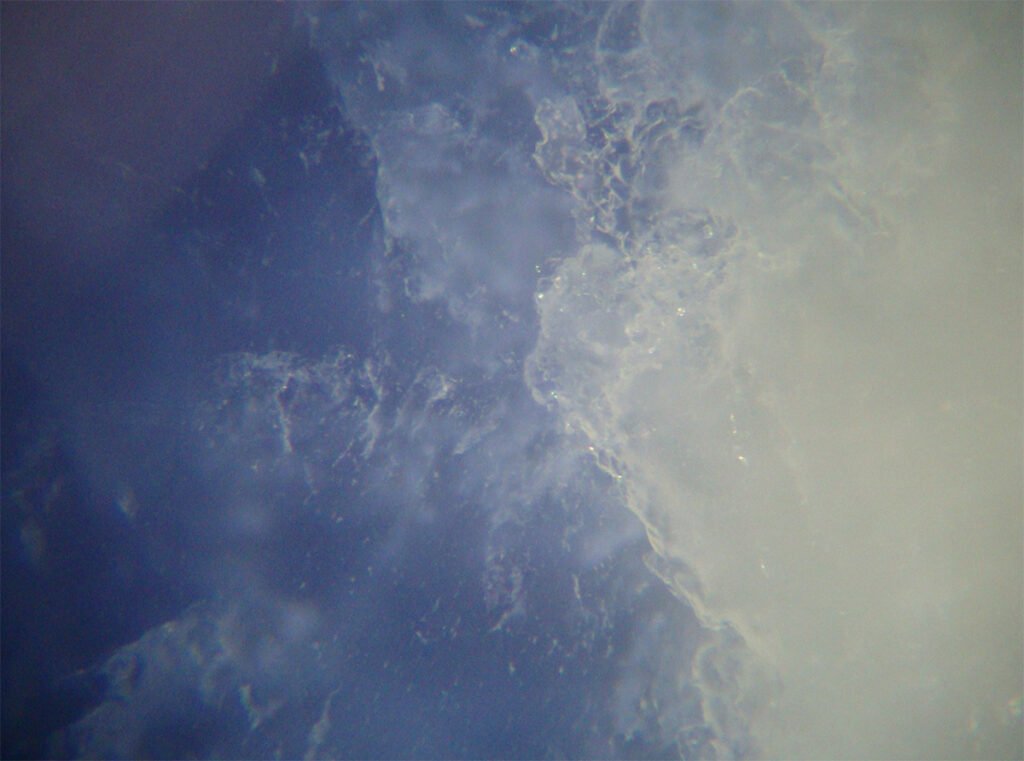
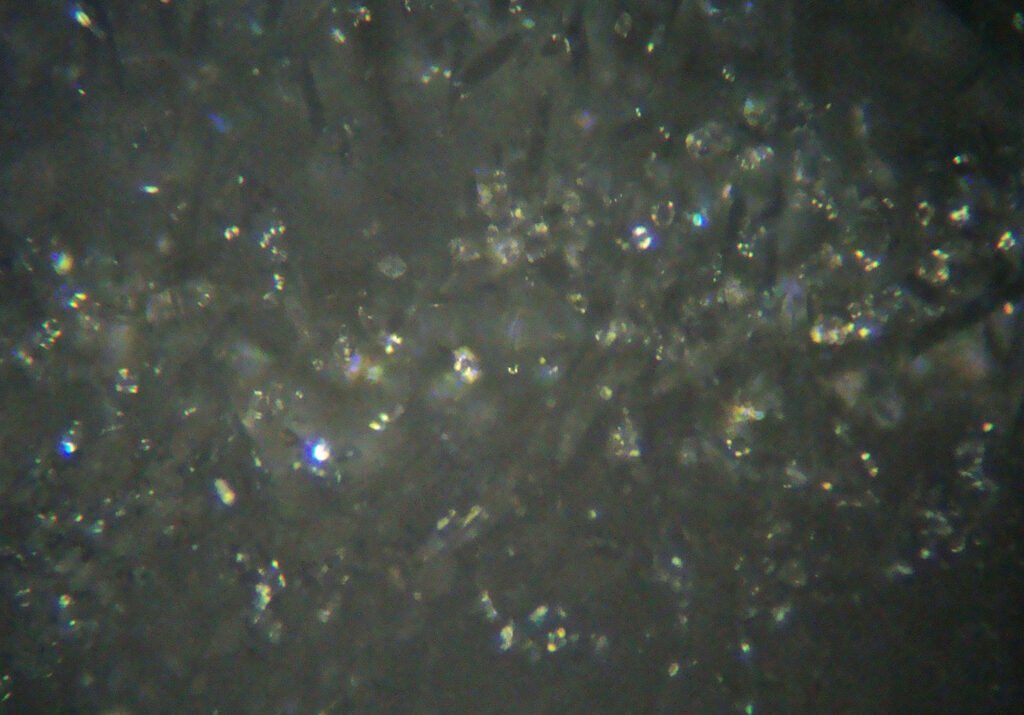
All of these minerals display their blue colors very well in hand specimen. Therefore, it is always useful to inspect the polished section or polished thin section with a stereomicroscope before viewing it under the microscope.
Blue colors are generally associated with secondary copper minerals. As with green secondary copper minerals, identifying blue secondary copper minerals can be difficult or impossible, both in Transmitted Light and in Reflected Light.
Other analytical methods should be used to correctly identify minerals that are very similar under the microscope.
PPL: dark gray color and weak pleochroism. 8% reflectivity with very weak bireflectance. Strong effervescence with cold diluted HCl.
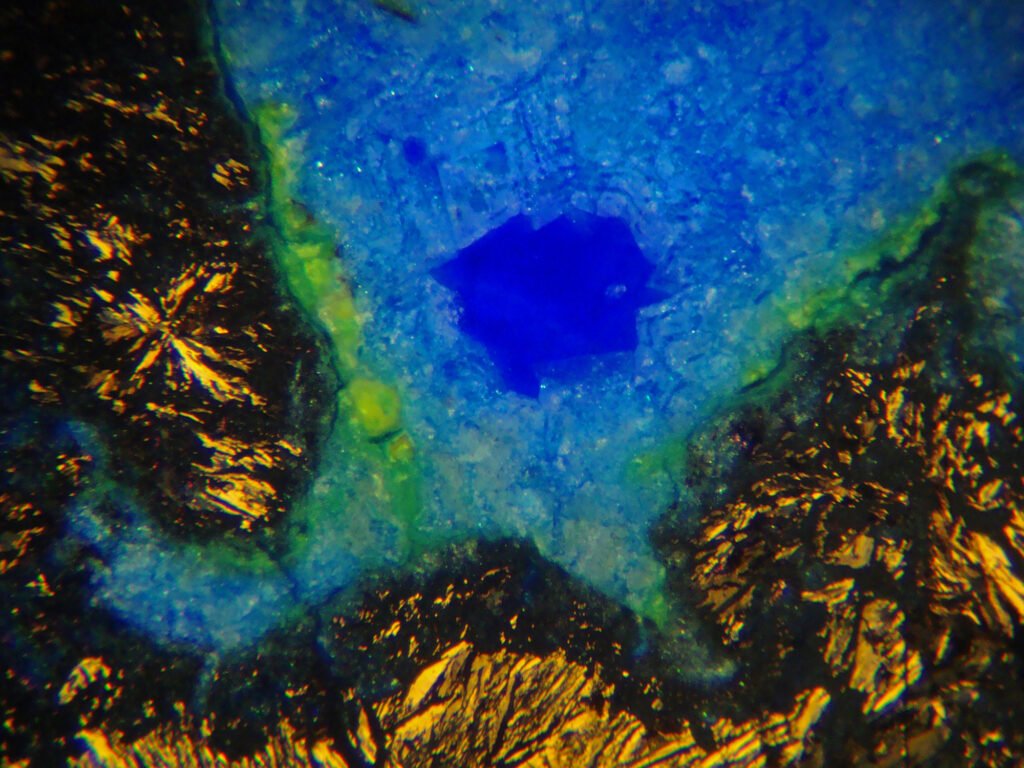
XPL: strong anisotropy, often masked by deep blue internal reflections. Crystals exhibit oblique extinction.
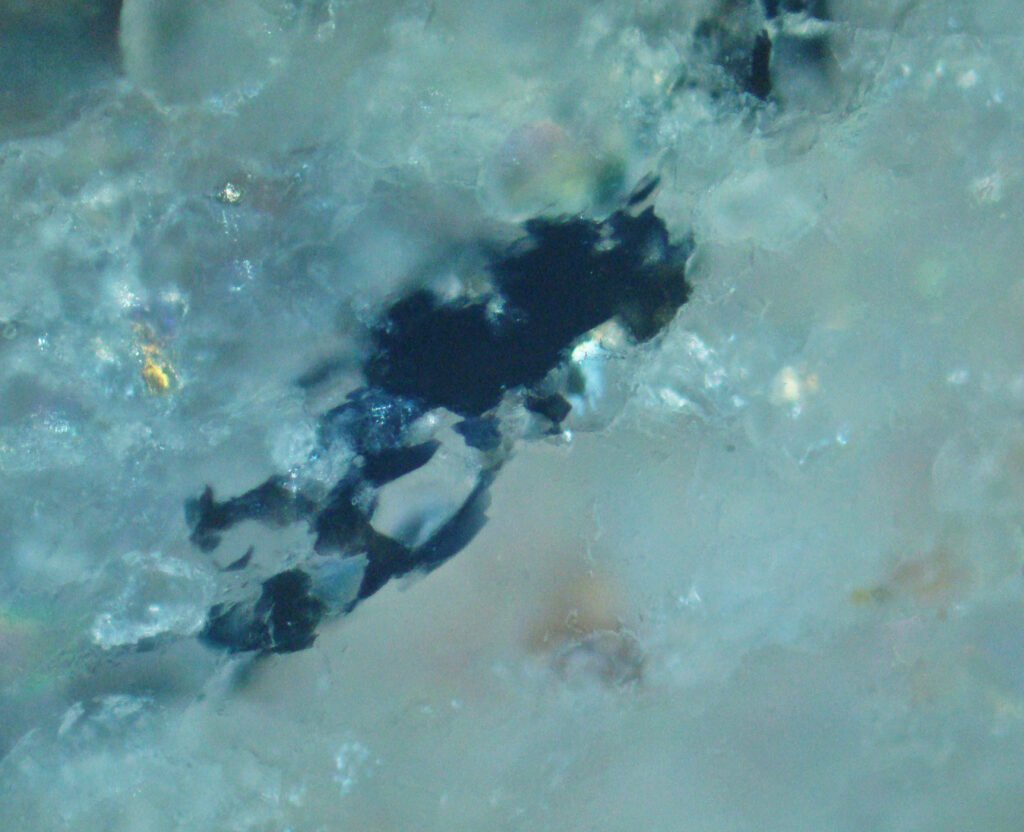
Images: in XPL, azurite with blue reflections and very strong anisotropy. Orange reflections are covellite, greenish reflections unidentified copper mineral.
PPL: dark gray color, without pleochroism. Low reflectivity (5%?) with distinct bireflectance.
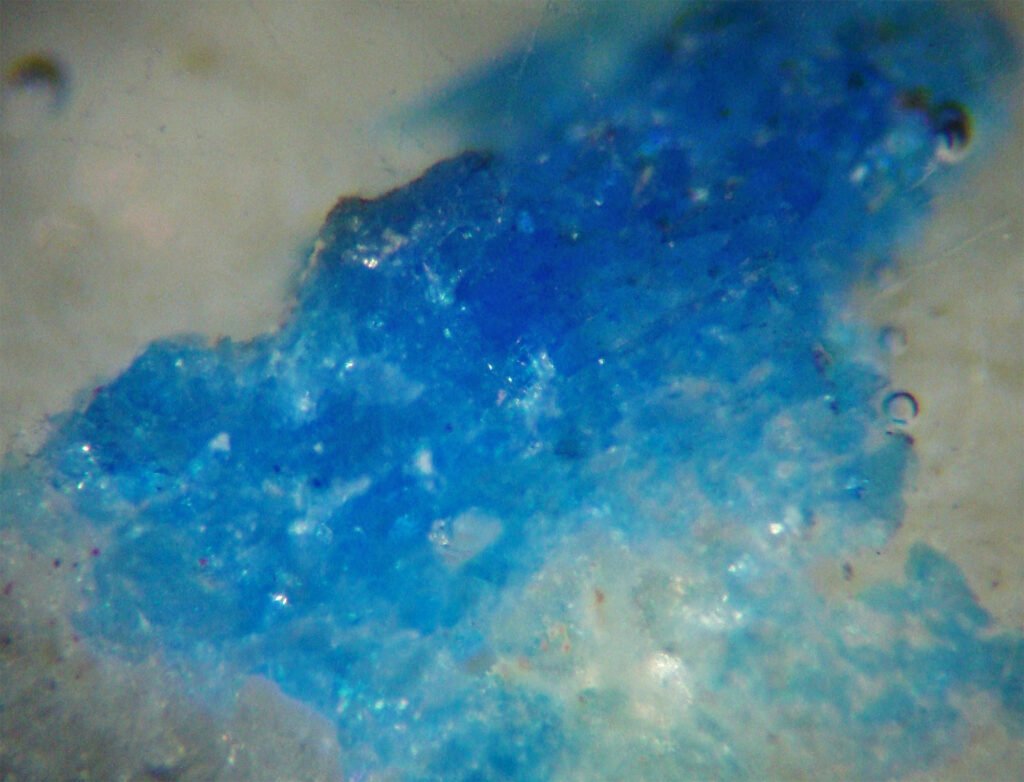
XPL: distinctive anisotropy between various shades of blue. Generalized internal reflections in shades of blue, intermediate between azurite and chrysocolla.
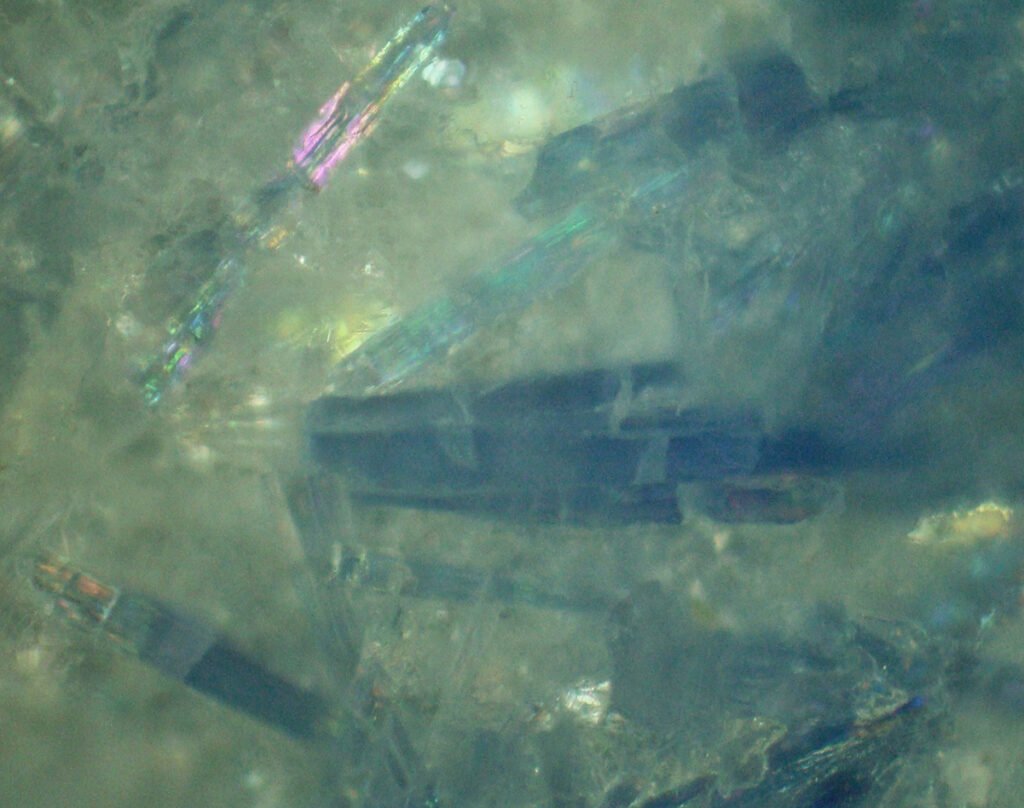
Images: in XPL, linarite (blue reflections), gangue (milky).
PPL: very dark gray color and extremely low reflectivity. No pleochroism and no bireflectance. It associates with other Cu minerals. It does not show effervescence with dilute HCl.
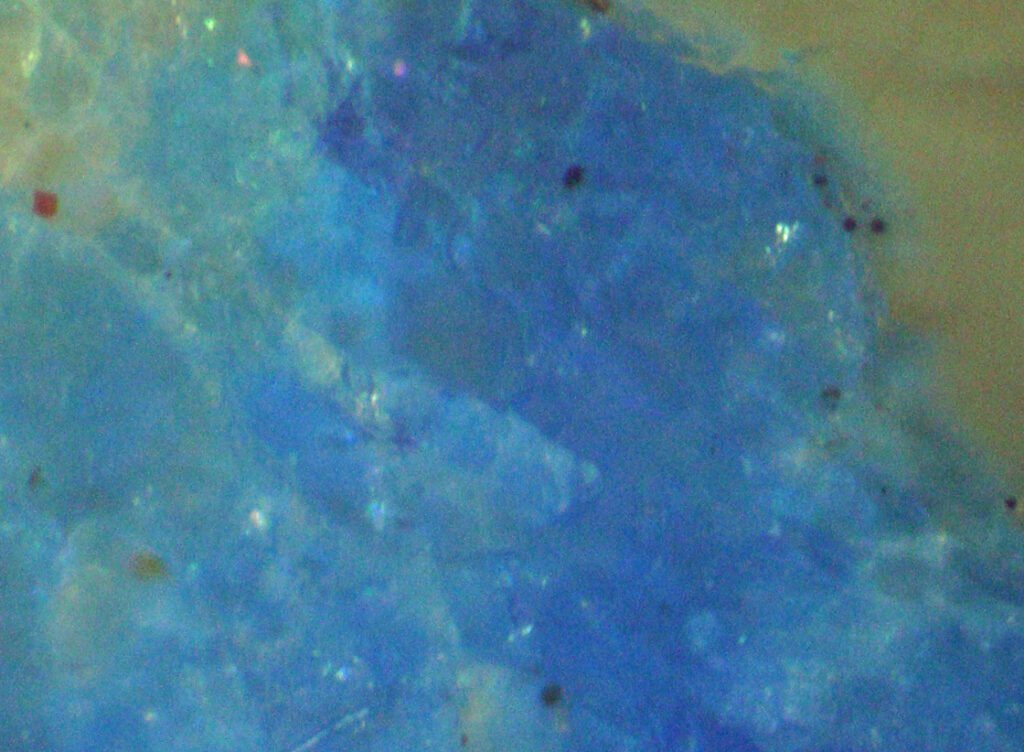
XPL: green, blue, or dark internal reflections, but it does not reach the dark blue of azurite. It never forms crystals visible under a microscope.
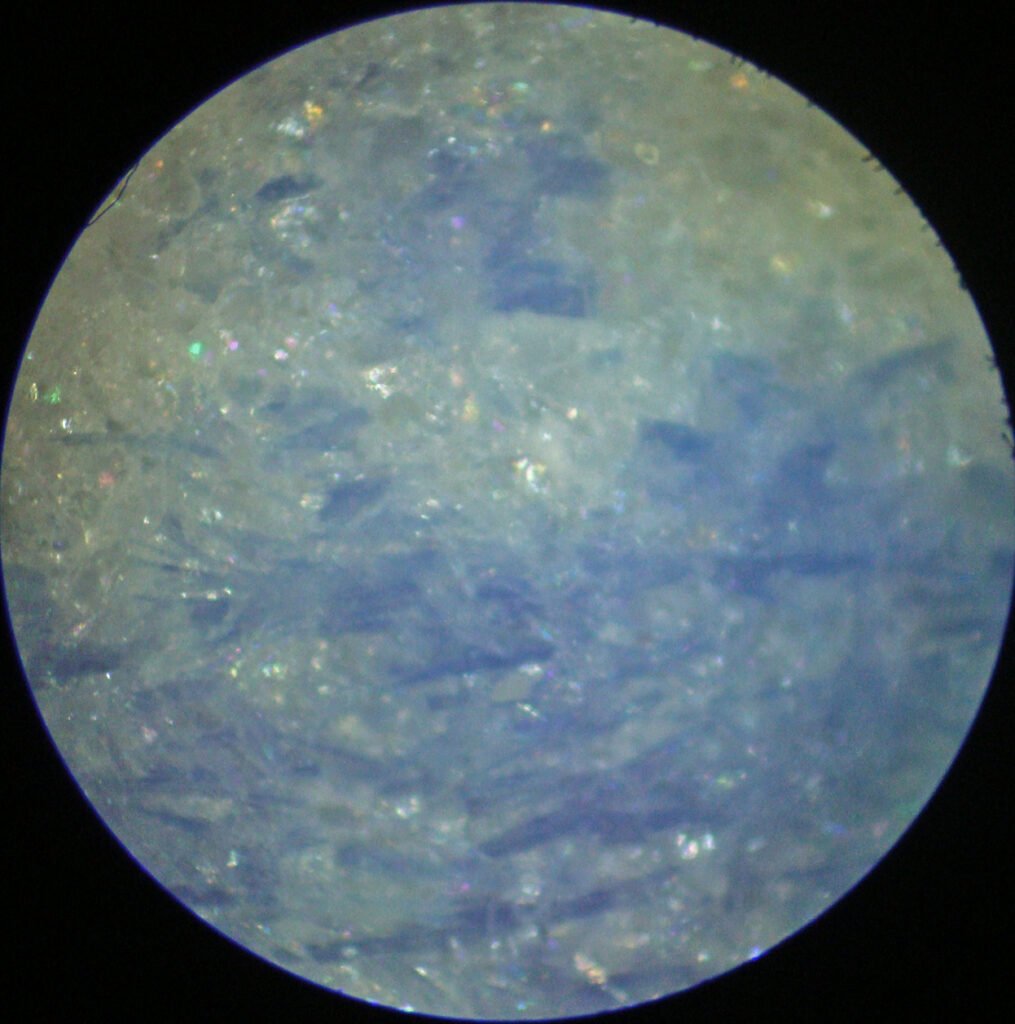
Images: in XPL, chrysocolla (blue), malachite (green), cuprite (red), gangue (dark) and unidentified secondary copper minerals.
PPL: very dark gray color, without pleochroism. Very low reflectivity, no bireflectance. Many polishing grooves are typical.
XPL: intense internal reflections in sky blue in various shades. No anisotropy. Typical habit is of spherical aggregates with a radial structure of capillary crystals. Very similar to shattuckite!
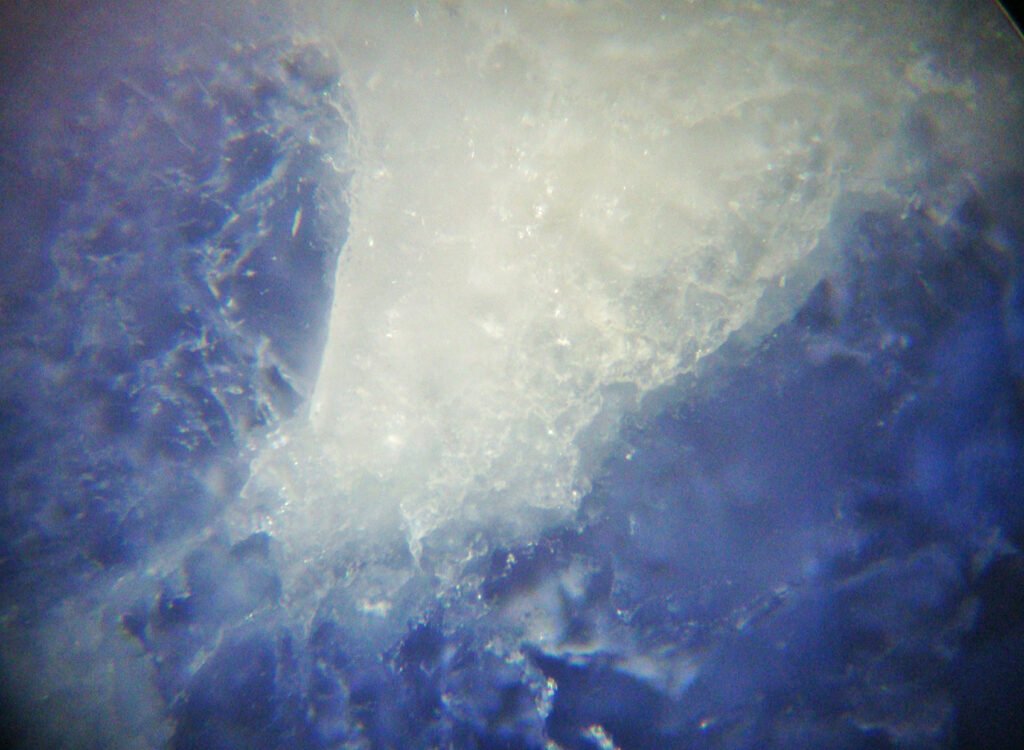
Images: in XPL, plancheite in spherical aggregates with blue reflections.
PPL: dark gray color, as dark as the gangue minerals. No pleochroism. Very low reflectivity, no bireflectance. A slight shade of the same color as the internal reflections in CPL is visible.
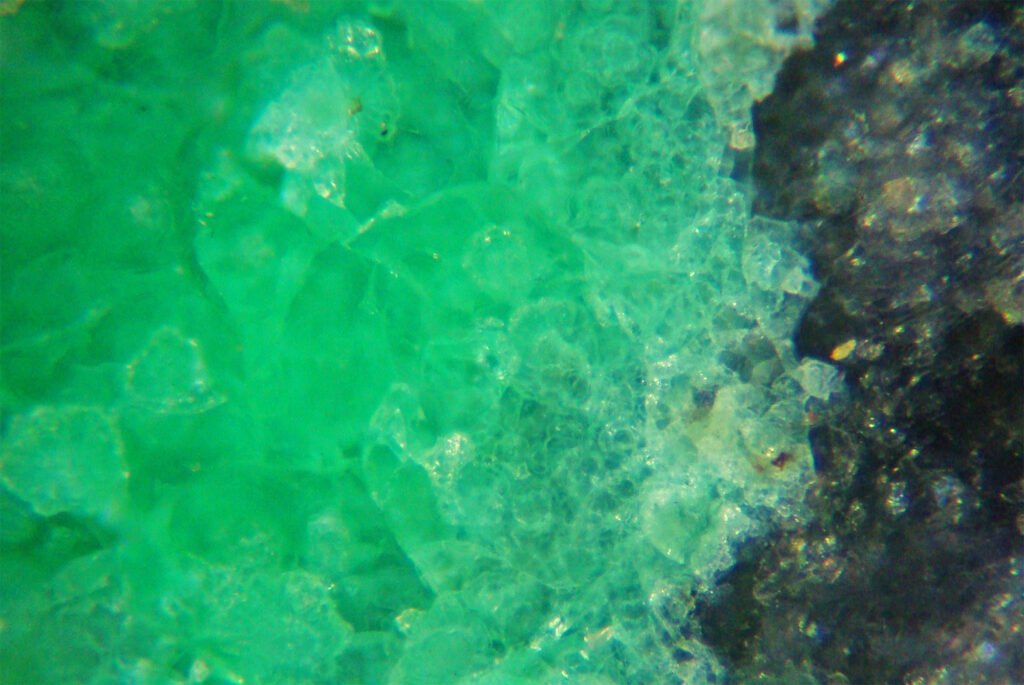
XPL: no anisotropy. Intense internal reflections in light green or bluish green or light blue (like chrysocolla) or dark blue.
Images: in XPL, chalcantite (light green), gangue (dark reflections).
PPL: dark gray color and very low reflectivity (4%), without pleochroism or bireflectance. It is the darkest mineral in PPL in the ore sections.
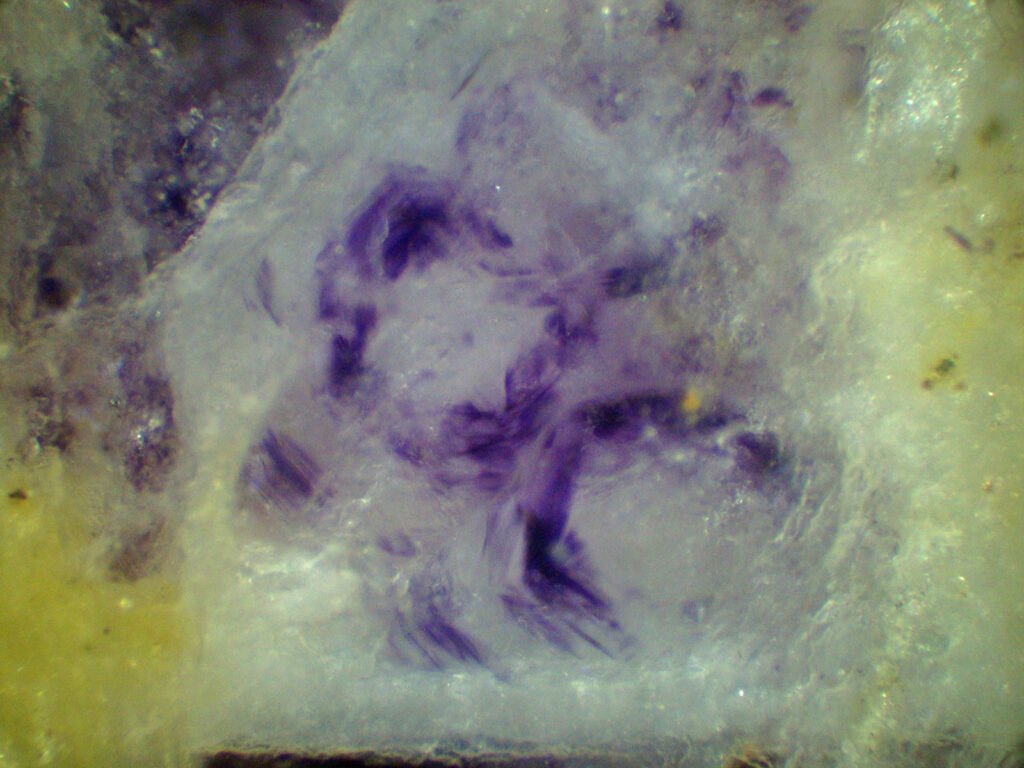
XPL: isotropic, with abundant internal reflections. Various colors are possible. Violet in various shades, even almost black, is common, zoning is very common, rounded or square shapes too.
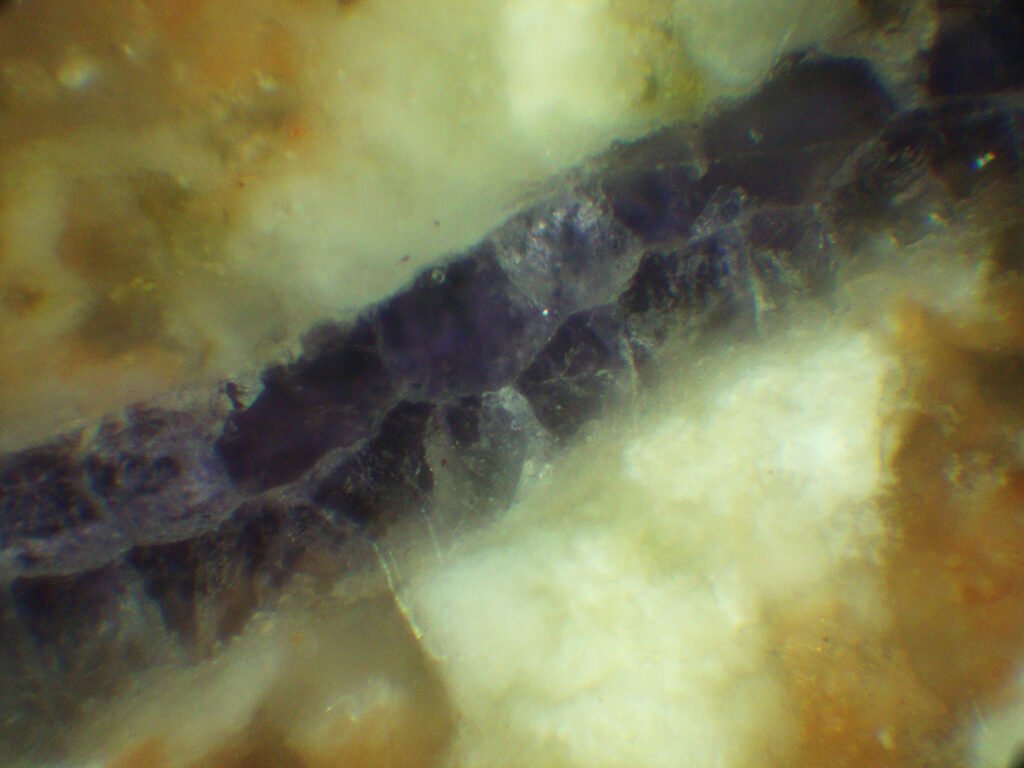
Images: in XPL, cubic fluorite crystals with violet zonation and a fluorite-filled vein in granite.
PPL: dark gray color and low reflectivity, without pleochroism or bireflectance. Amphibole with long prismatic habit, may be well developed. It can form the gangue in metallic ores.
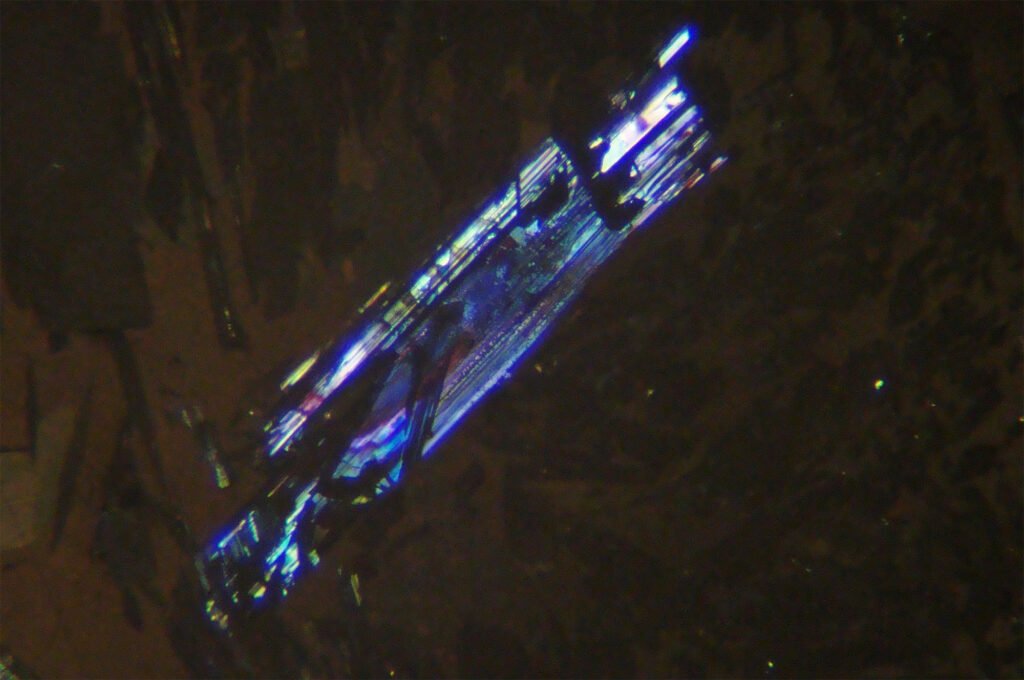
XPL: no anisotropy, may show some internal reflections, in some crystals, very luminous in intense blue.
Images: in XPL, riebeckite with well-developed blue reflections.
PPL: dark gray color, like quartz and feldspars, but with distinct pleochroism in grays. No bireflectance and very low reflectivity. Occurs in metamorphic Al-rich rocks, also in skarns and pegmatites.
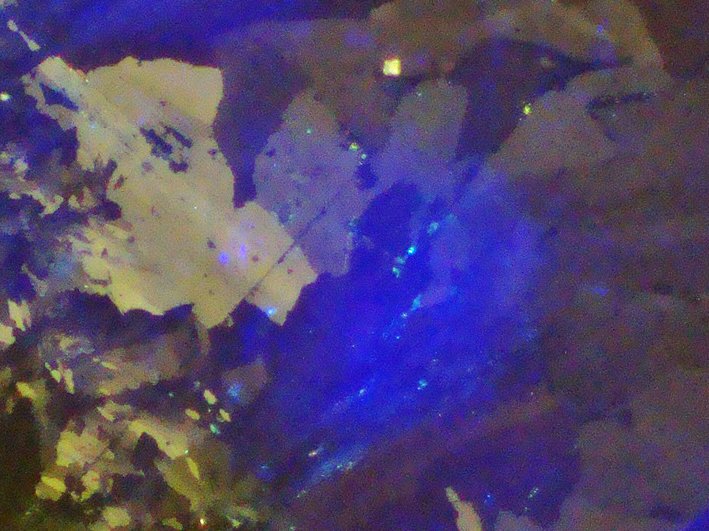
XPL: strong anisotropy between colorless and blue, very typical and diagnostic. Widespread colorless or milky internal reflections, often multicolored when the cleavage is positioned in a favorable angle.
Images: in XPL, dumortierite with blue reflections.
PPL: very low reflectivity, showing a very dark gray color, much darker than common silicatesd. Resembles the reflection color of fluorite. No pleochroism or bireflectance.
XPL: No anisotropy, but widespread internal reflections inthe same color of the hand specimen, between very dark, intense blue and greenish to colorless.
Images: in XPL, sodalite (blue) with feldspars (milky) in syenite.
Despite showing a deep blue color in hand specimen and, under the Transmitted Light microscope, an intense pleochroism in blue, under Reflected Light, glaucophane is very dark and does not show internal reflections in blue.
Images: in XPL, diagonally across the image, dark prismatic crystal of glaucophane.
Minerals, in XPL with widespread blue internal reflections, may be greenish.