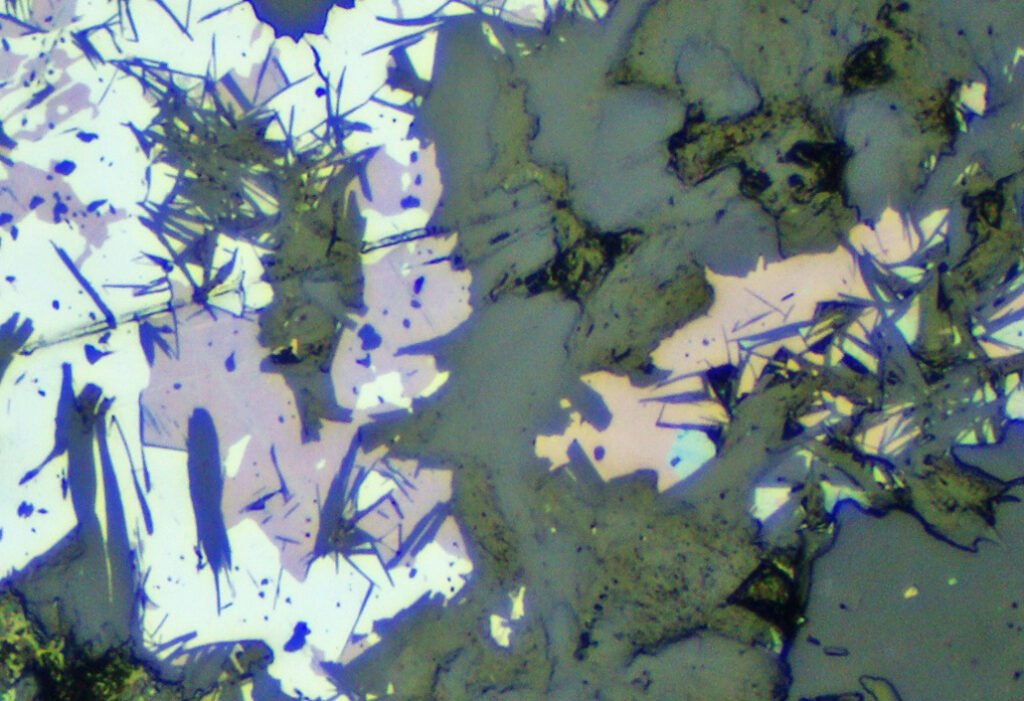
PPL: light pinkish-brown color (similar to pyrrhotite, but more pinkish), with very weak pleochroism. 25% reflectivity, no bireflectance. It tarnishes in 30 minutes to a very characteristic violet color.
XPL: very dark, with variable anisotropy in dark and greenish colors. No internal reflections. Associated with chalcocite (white).
Images: in PPL, tarnished bornite (pink-blue), non-tarnished bornite (brown-pink), chalcocite (white), and gangue (dark).
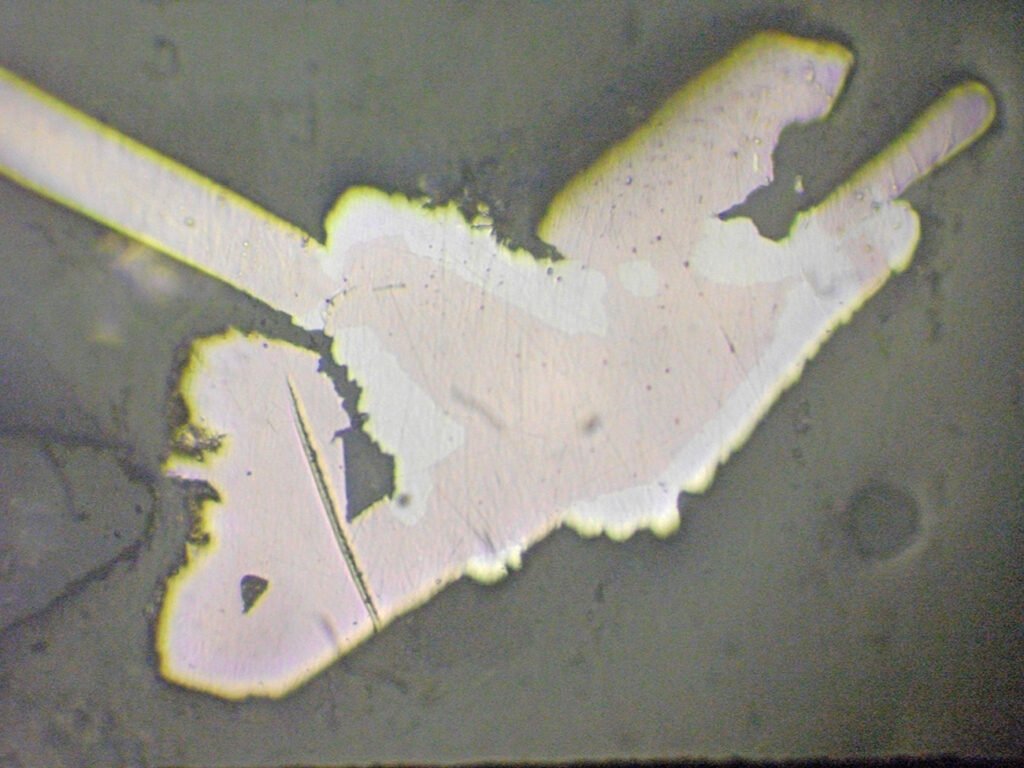
PPL: copper red to light grayish orange color, very similar to bornite color. No pleochroism. 31.5% reflectivity, no bireflectance. It always occurs as a fine lamellar alteration product in bornite. It does not tarnishes, unlike bornite.
XPL: very strong anisotropy between blue-green (turquoise) and reddish brown. No internal reflections.
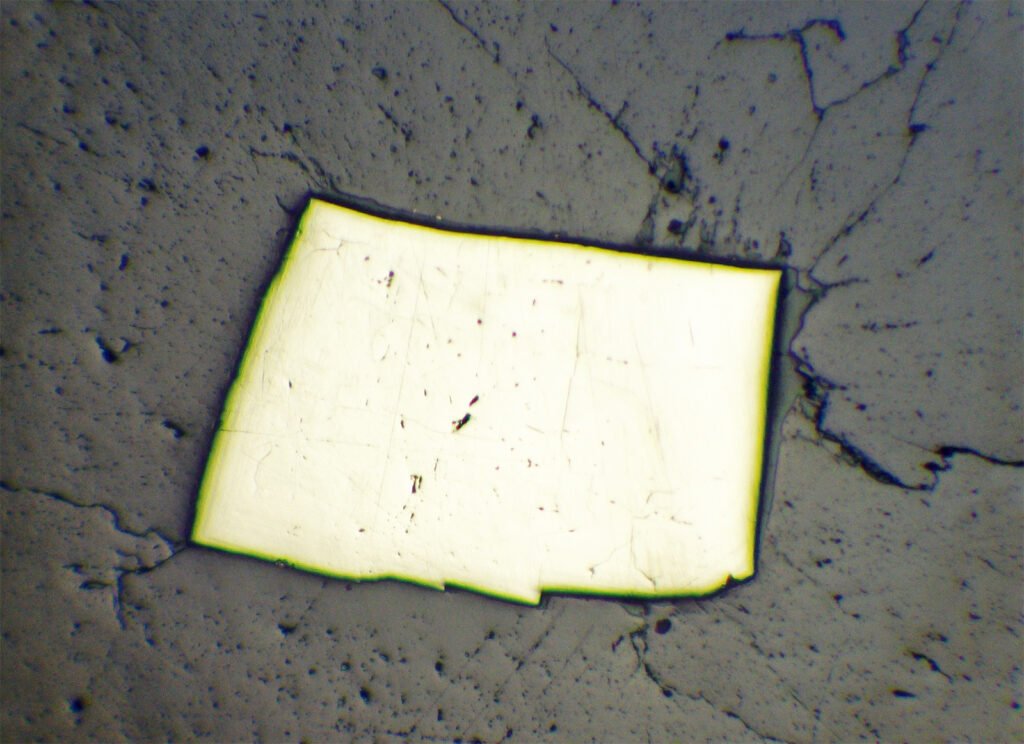
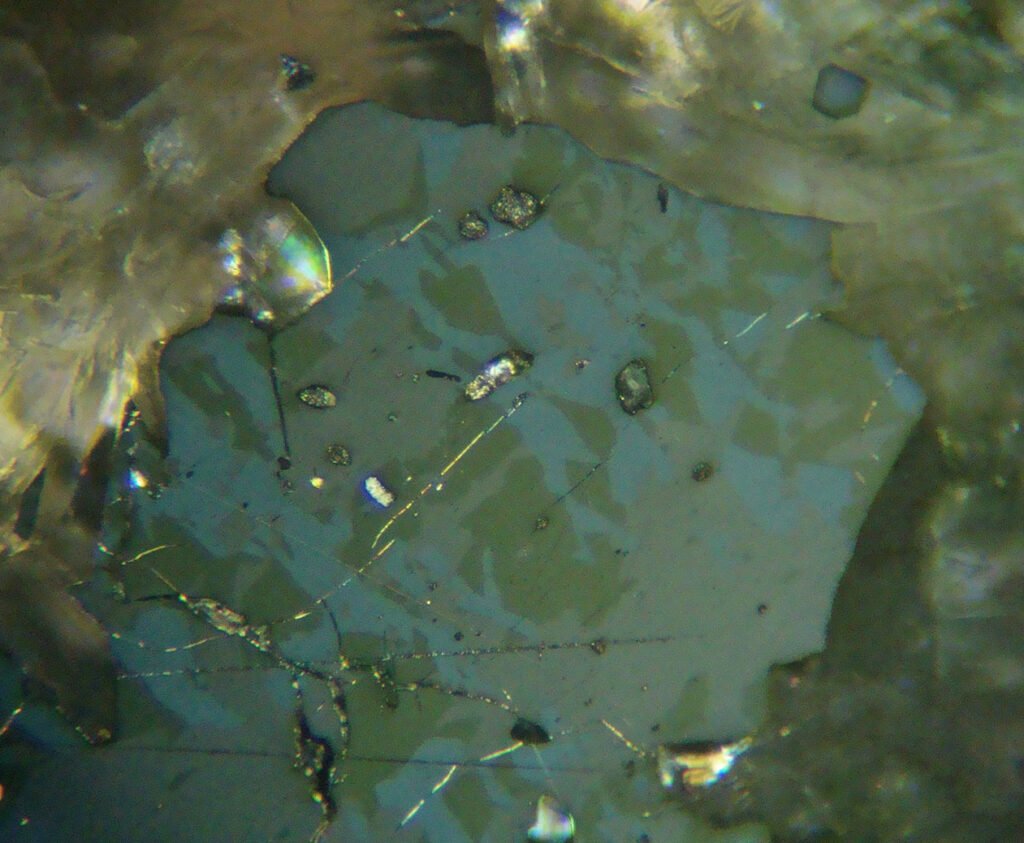
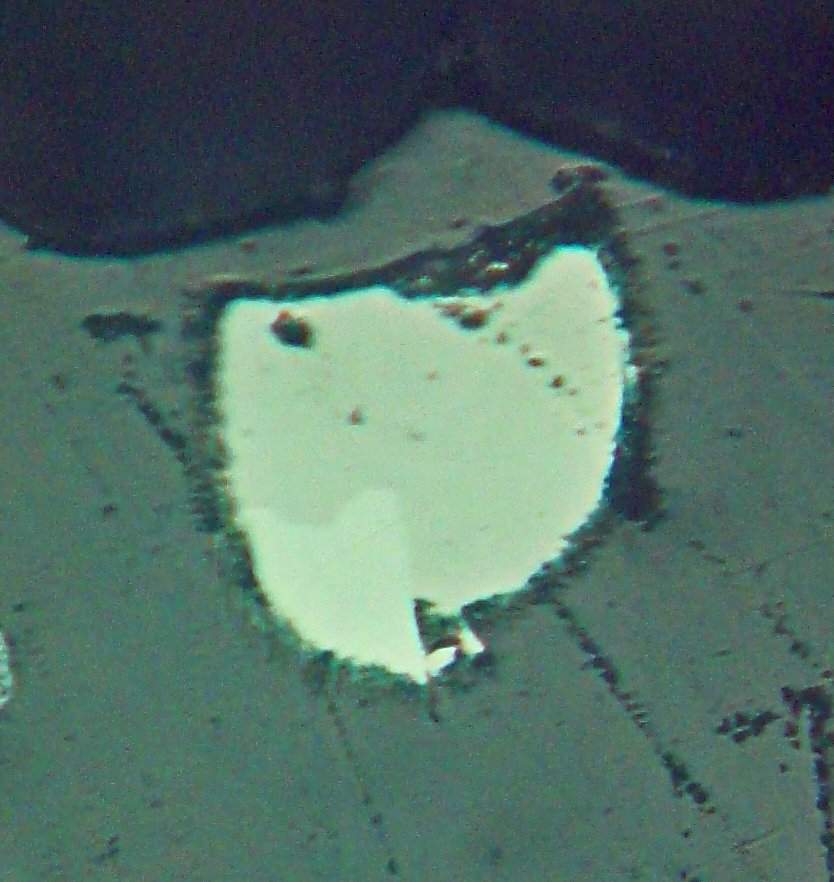
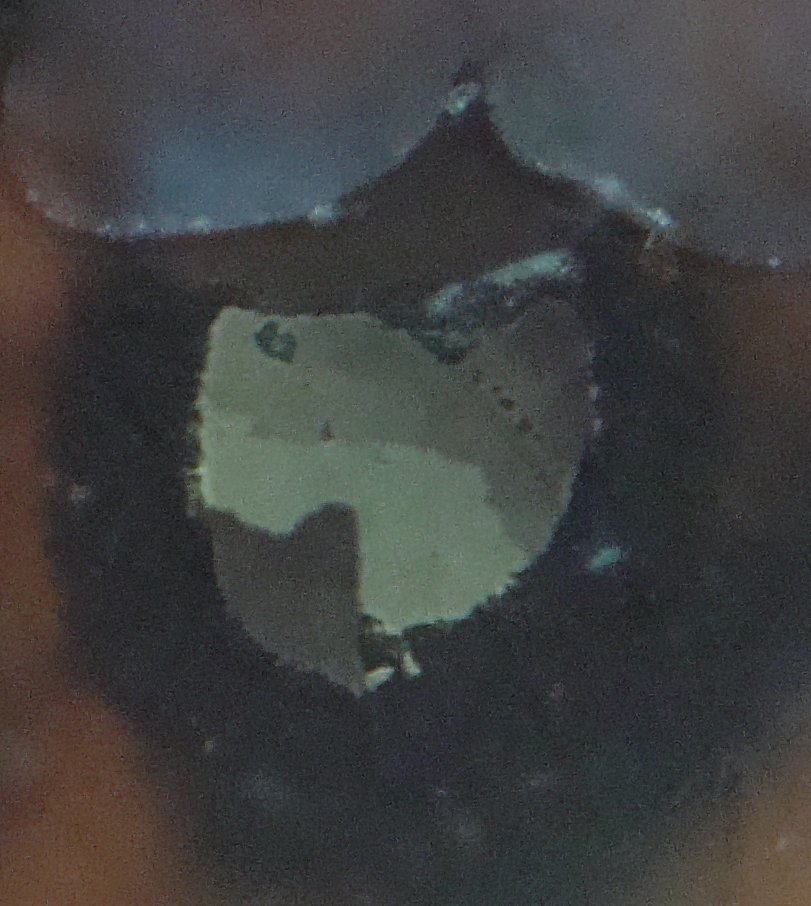
PPL: white to pinkish-brown, similar to tenorite and enargite. No pleochroism. Reflectivity 19 to 23%, with distinct bireflectance.
XPL: strong anisotropy between bluish and gray. No internal reflections. It is associated with native copper, tenorite, cuprite and goethite.
Images: in PPL and XPL, delafossite.
Minerals, in PPL with reddish or brownish or pink or orange colors, with pleochroism and/or weak to absent bireflectance. In XPL, weak to absent anisotropy.