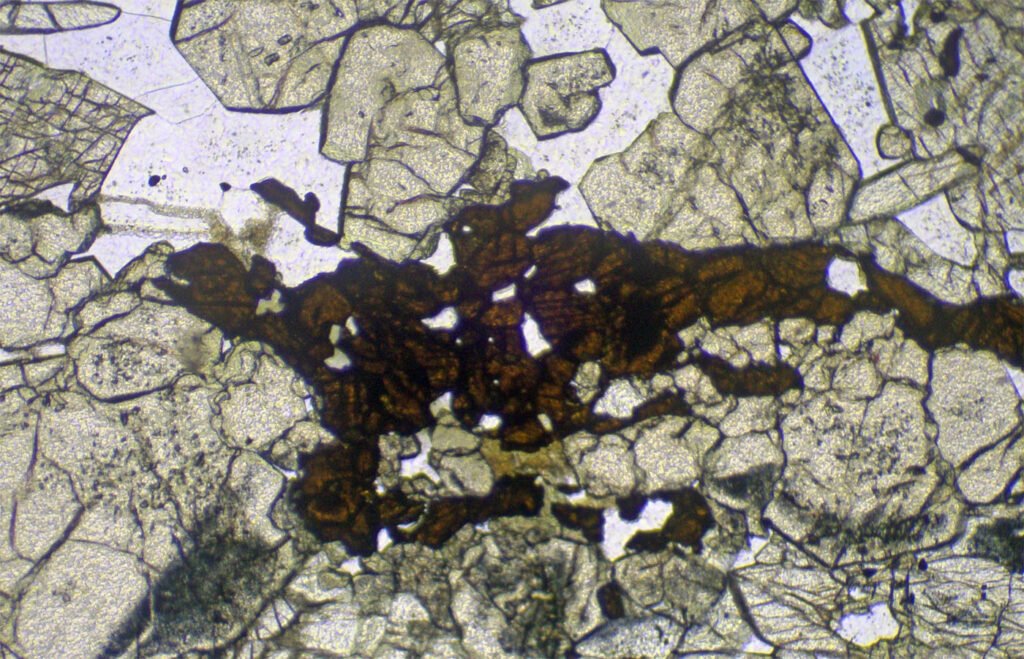
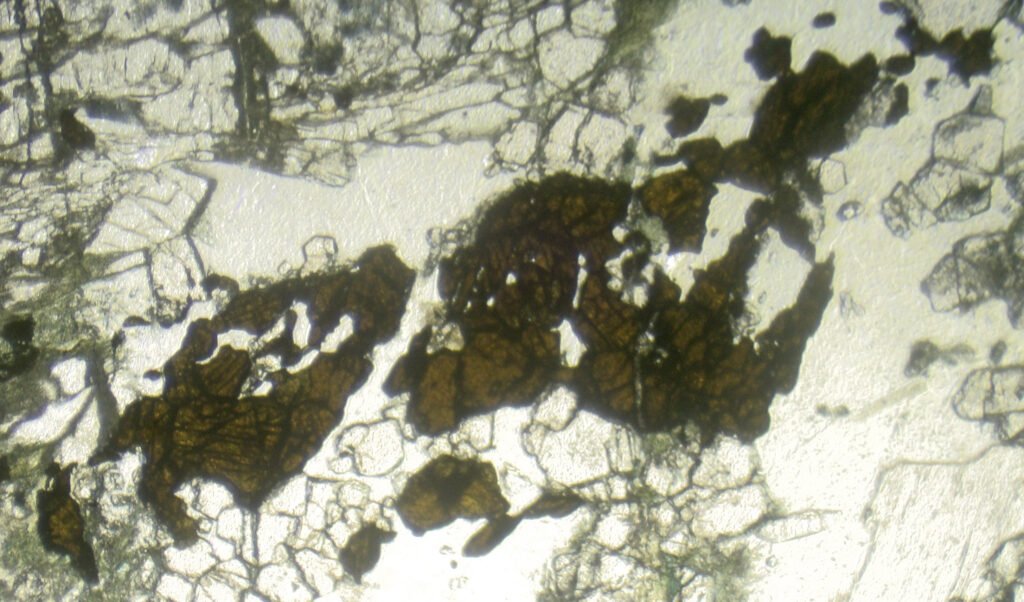
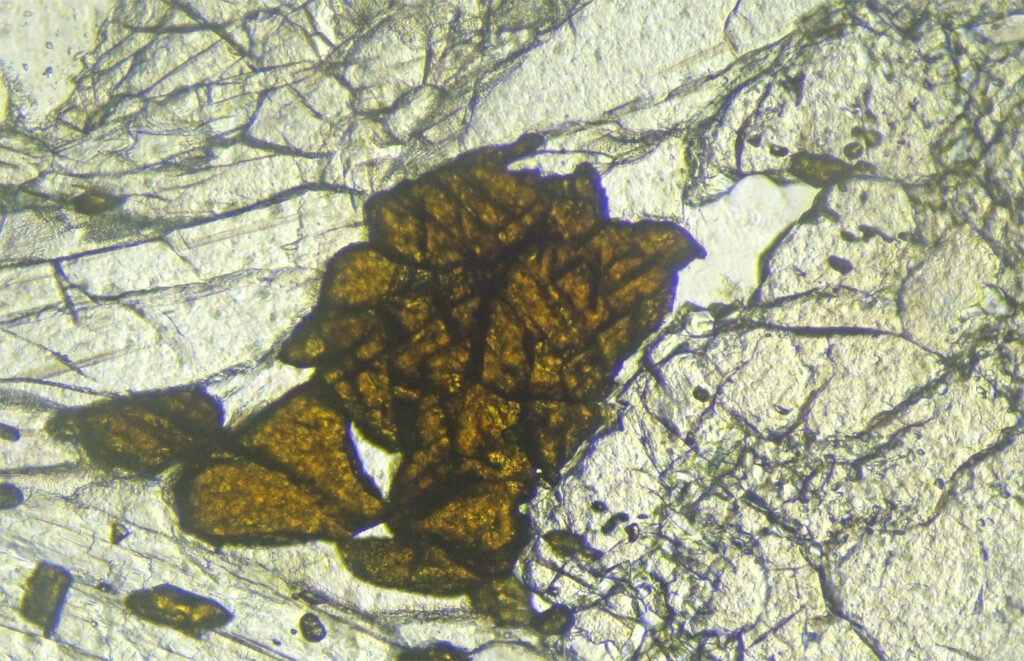
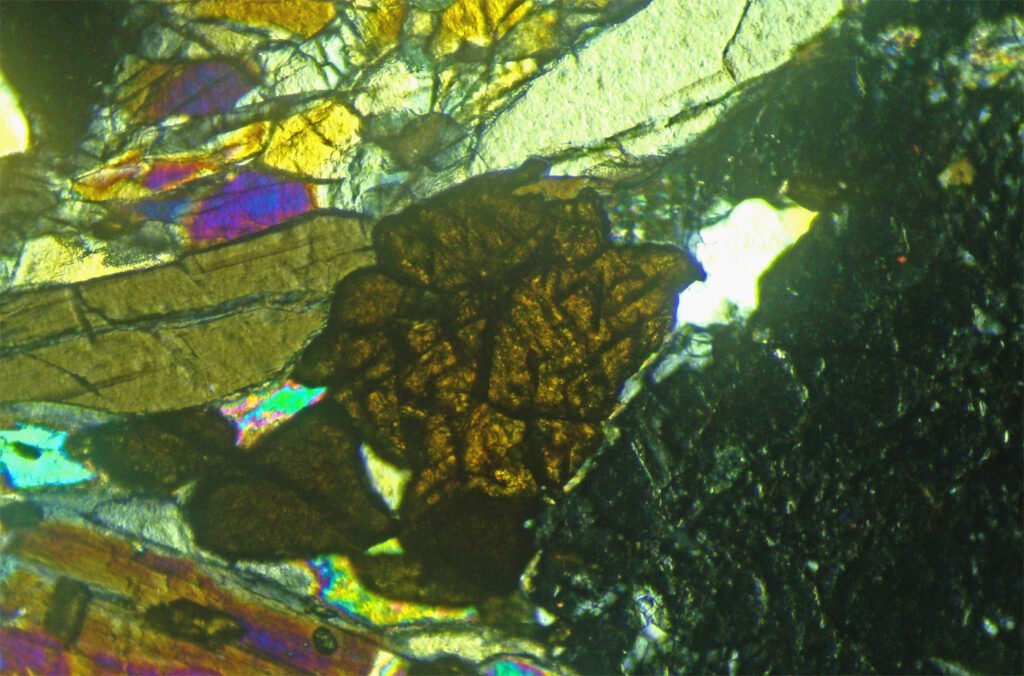
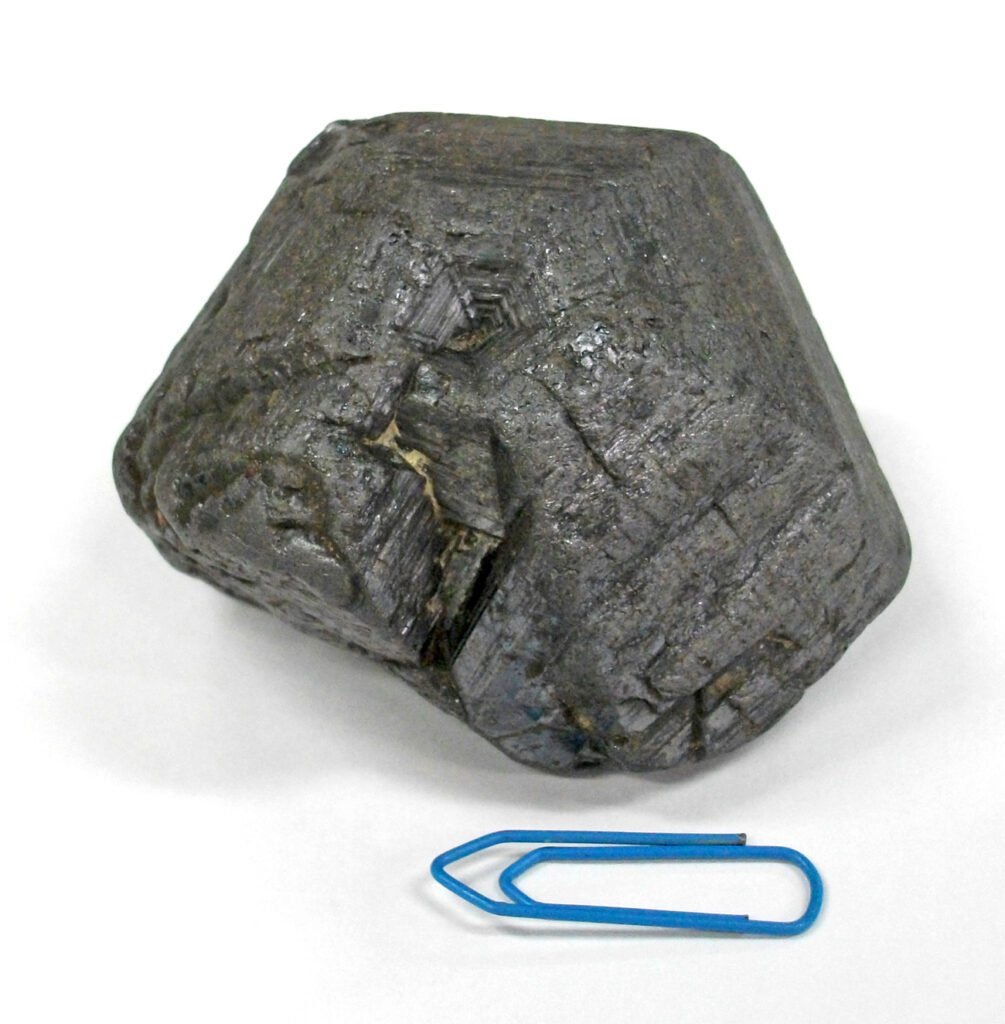
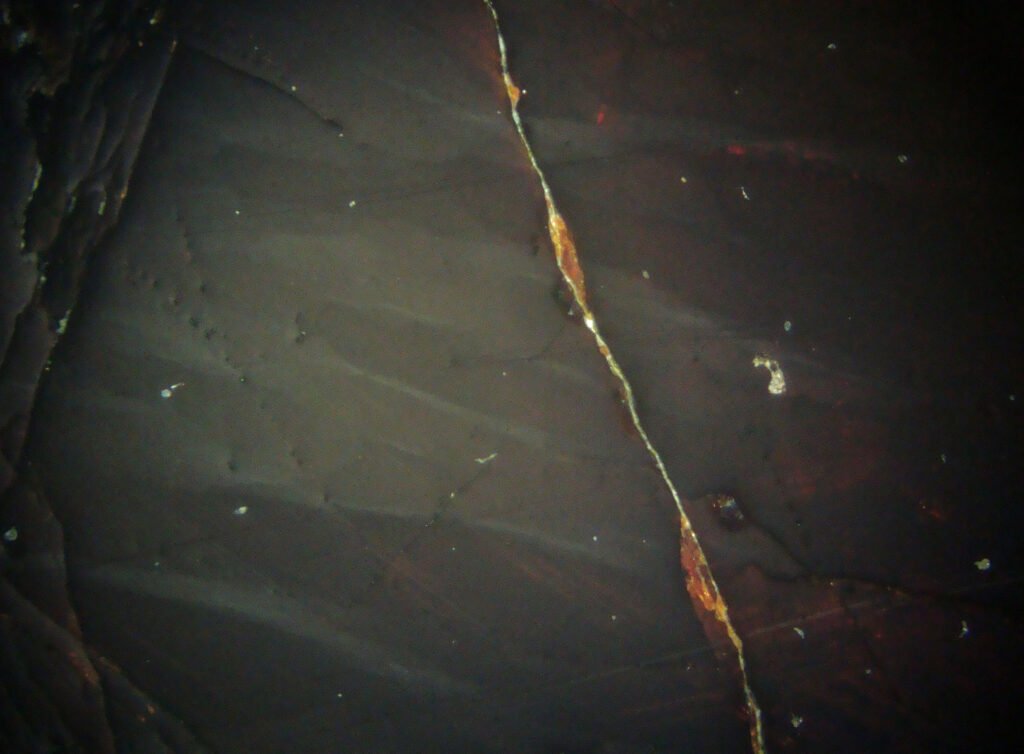
Rutile – TiO2 – is a common oxide, an accessory mineral in many igneous rocks. It constitutes an important ore of titanium oxide, which is a high quality white pigment, among other uses.
Rutile is one of the 5 polymorphs of TiO2, the others are anatase (tetragonal), brookite (orthorhombic), akaogiite and TiO2 II. Thermodynamically it is the most stable of the five. It is one of the minerals with the highest known refractive indexes, in addition to having high dispersion. May contain up to 10% Fe, Nb, Ta, V, Sn and Sb. The endings of the crystals, which reach up to 25 cm, can be very complex.
It forms epitaxies with hematite, ilmenite, magnetite, anatase and brookite. The best known epitaxies are those where tabular hematite (specularite) forms pseudo-hexagonal aggregates with epitaxic golden rutile crystals, found in Minas Gerais (Brazil).
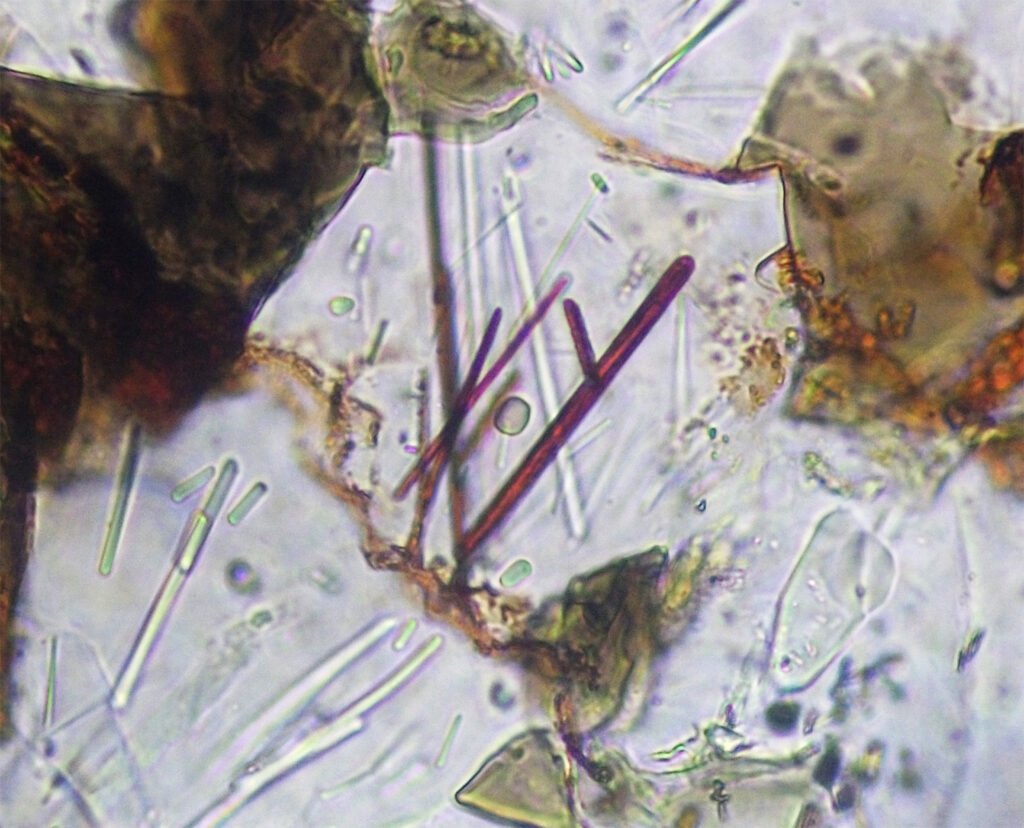
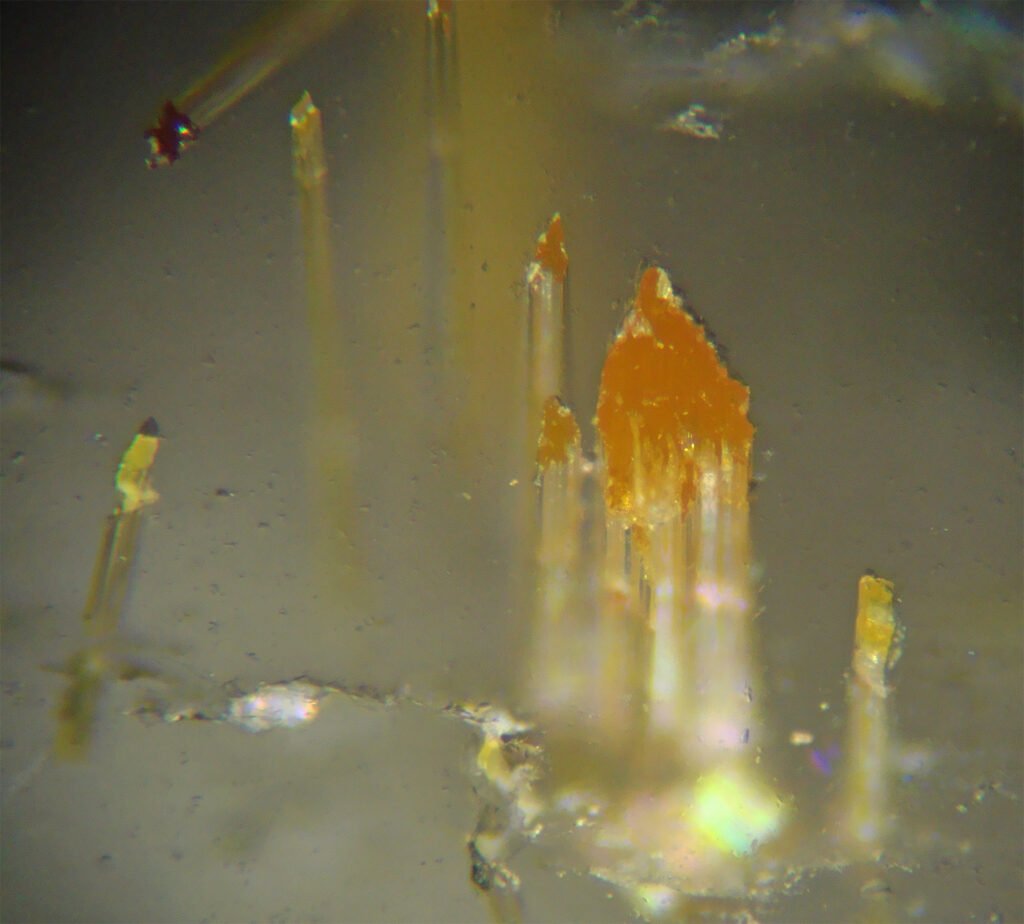
There are 11 varieties of rutile, based mainly on additional levels of Nb (“ilmenorutile”), Ta+Fe (“strüverite”), V, Cr, Sn and Sb. Acicular rutile crystals in quartz crystals are called “Venus Hair” or “rutilated quartz”. When in parallel needles, rutile is responsible for asterism in various types of gemstones such as corundum (rubies and sapphires), tourmaline and quartz.
5. Reflected Light Microscopy
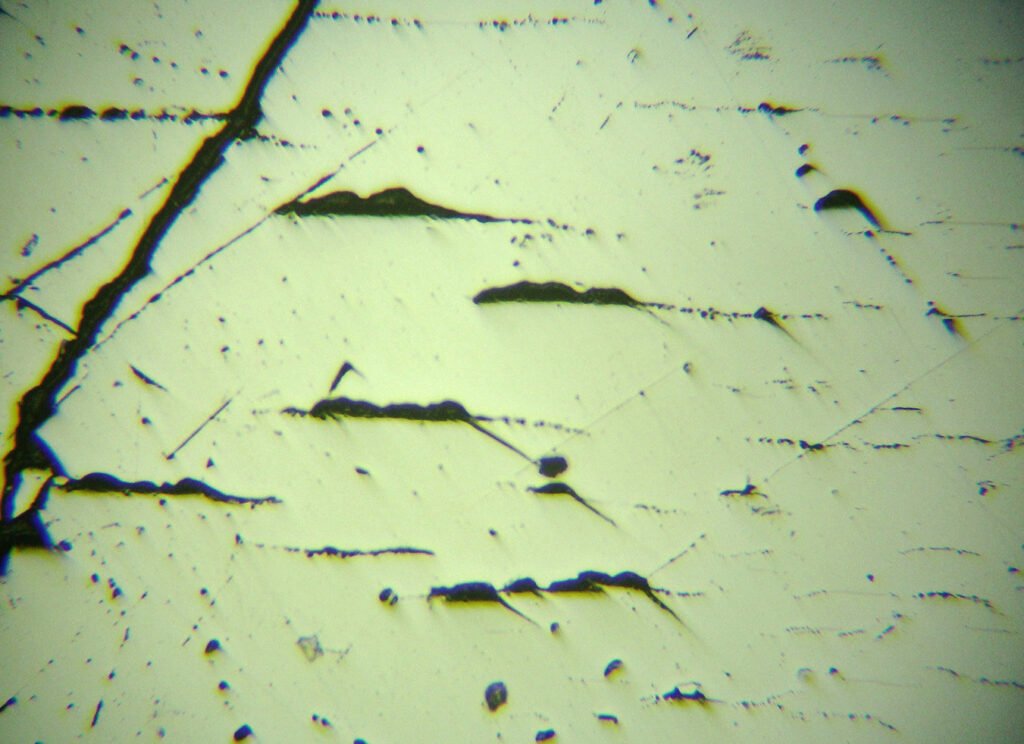
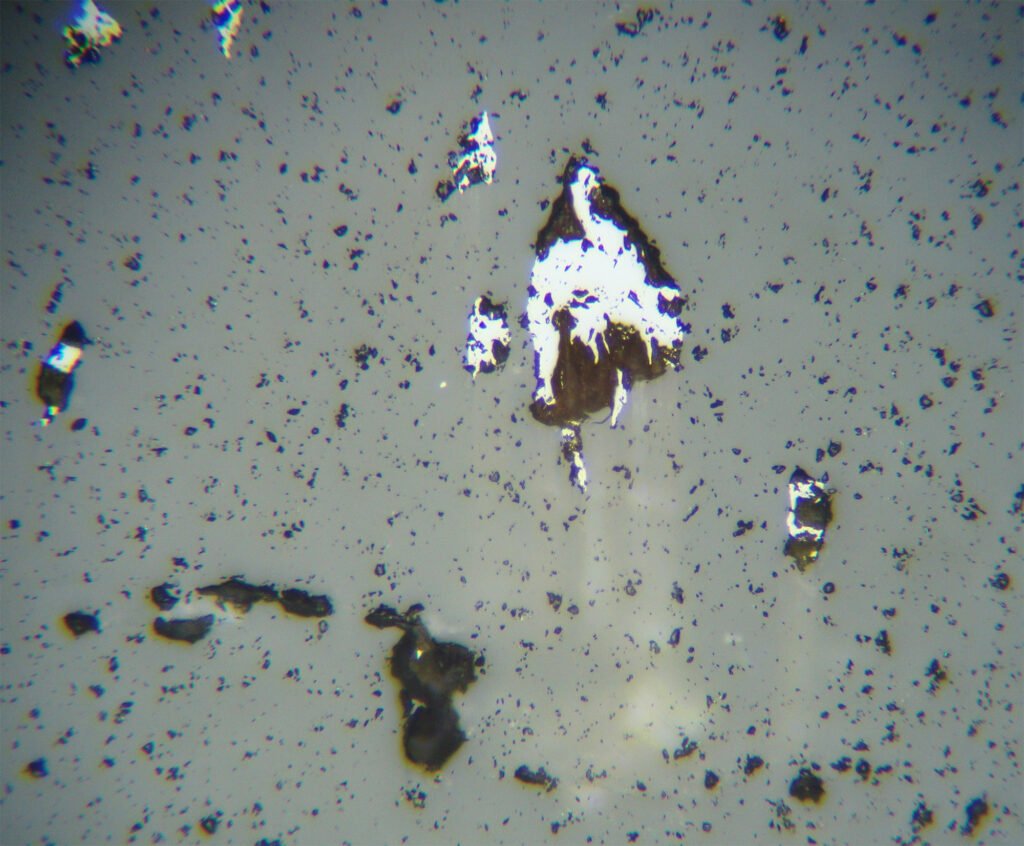
Sample preparation: the rutile polish is of good quality, but requires persistence. It is equivalent to polishing hematite and pyrite, consuming at least twice the time of other minerals.
PLANE POLARIZED LIGHT – PPL
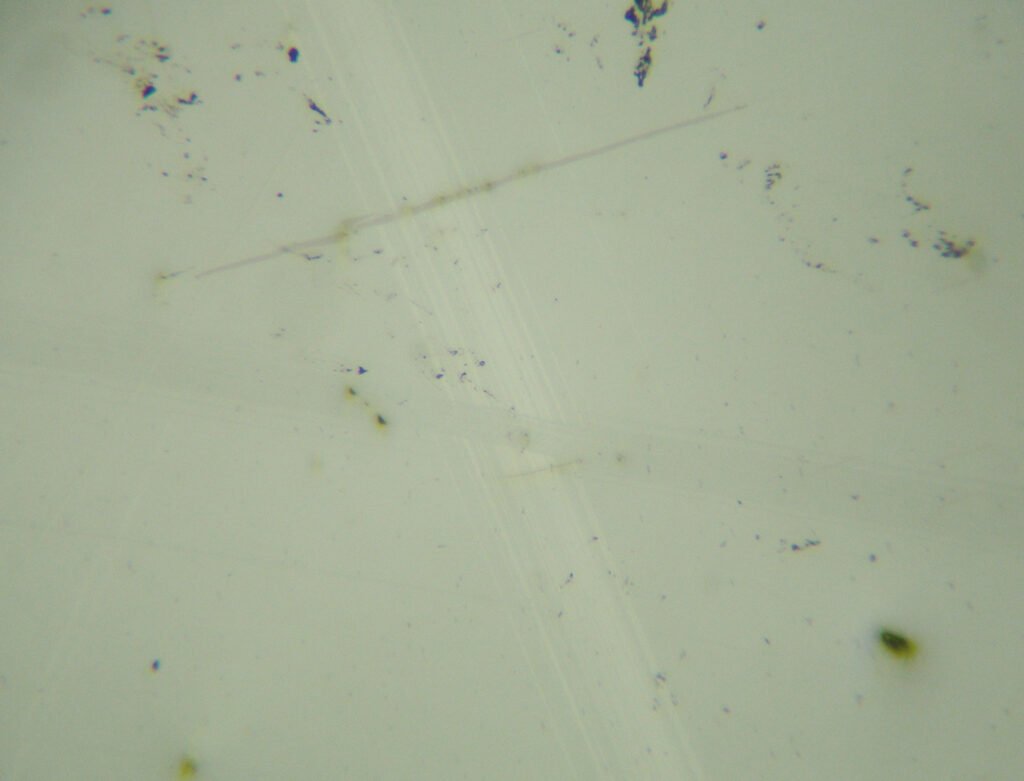
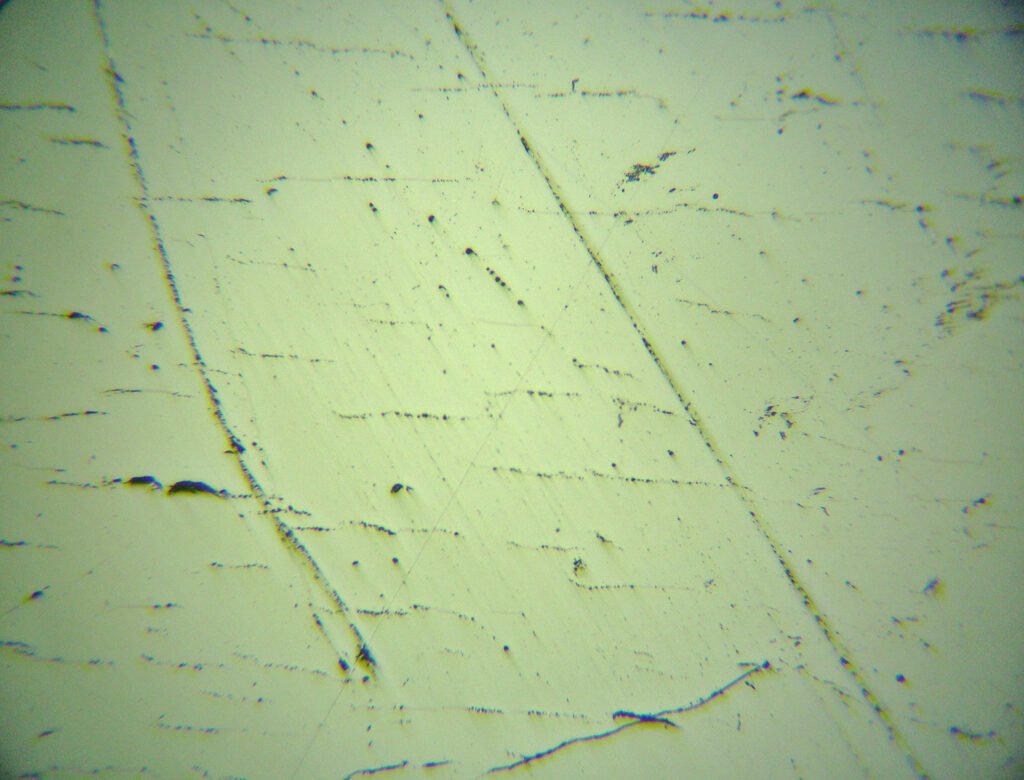
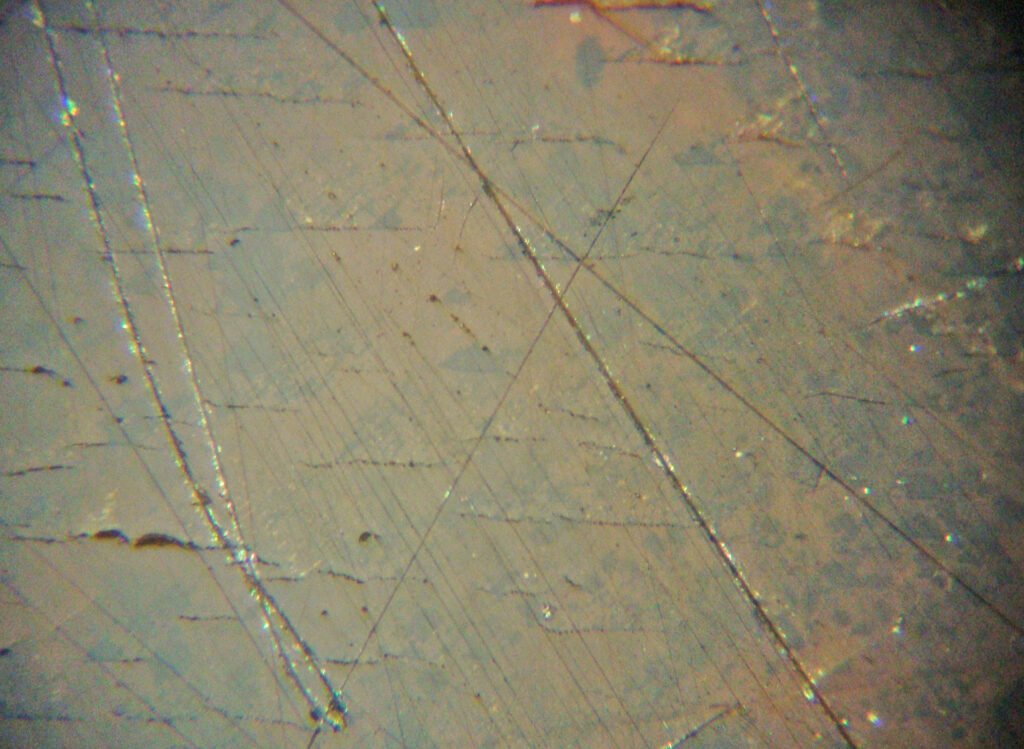
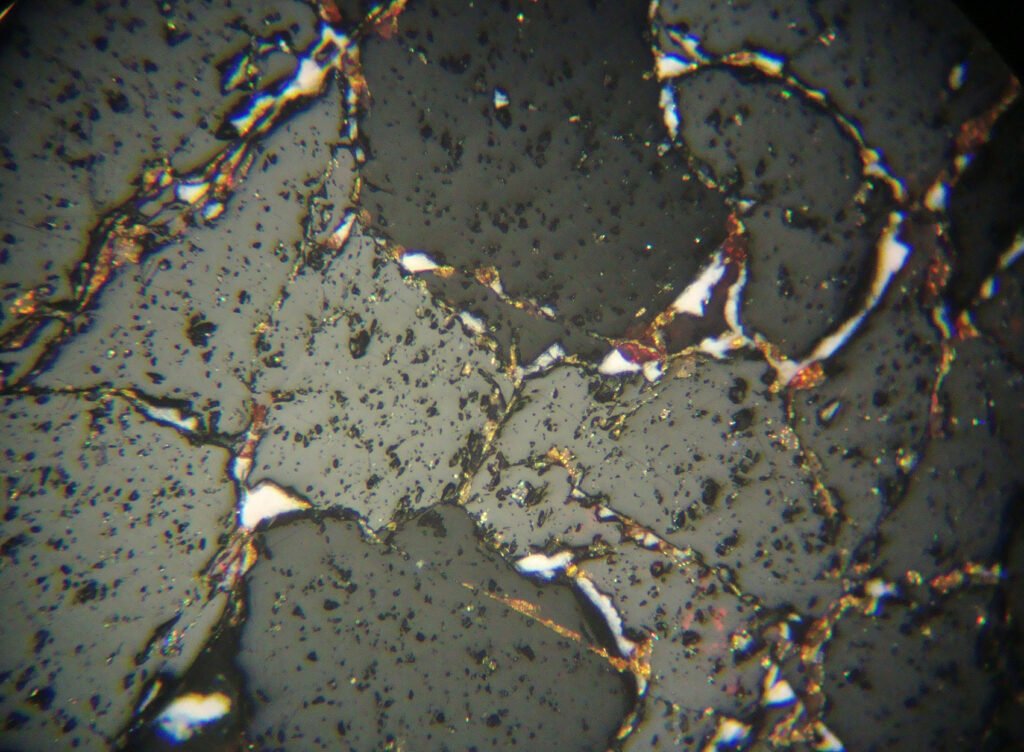
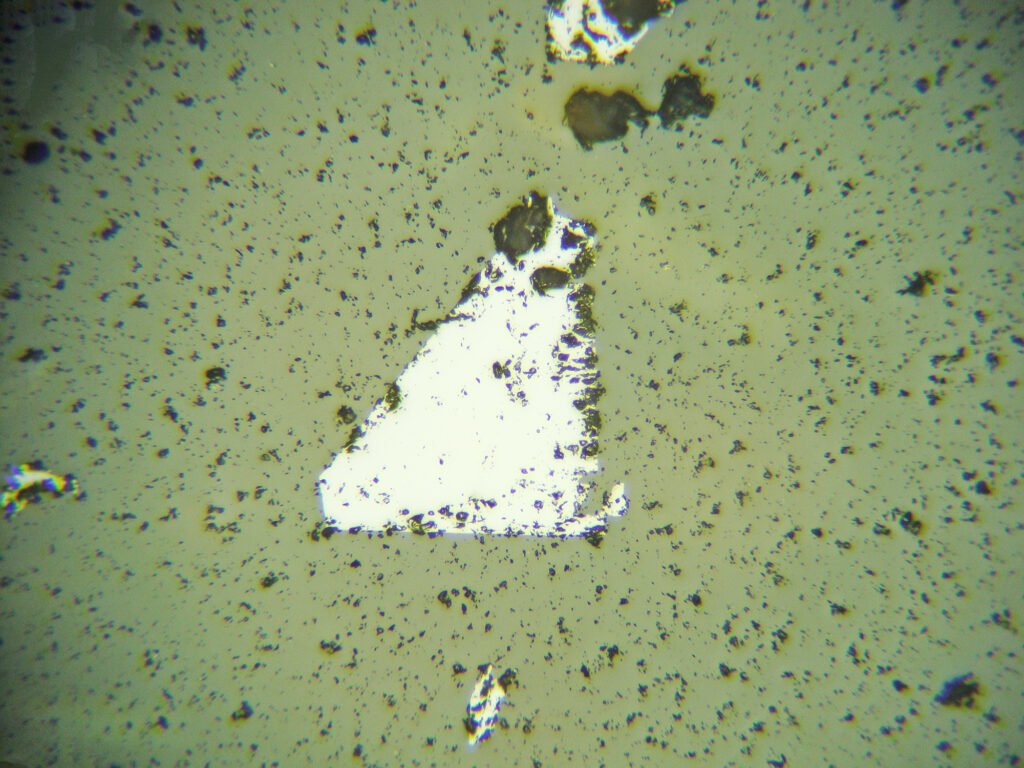
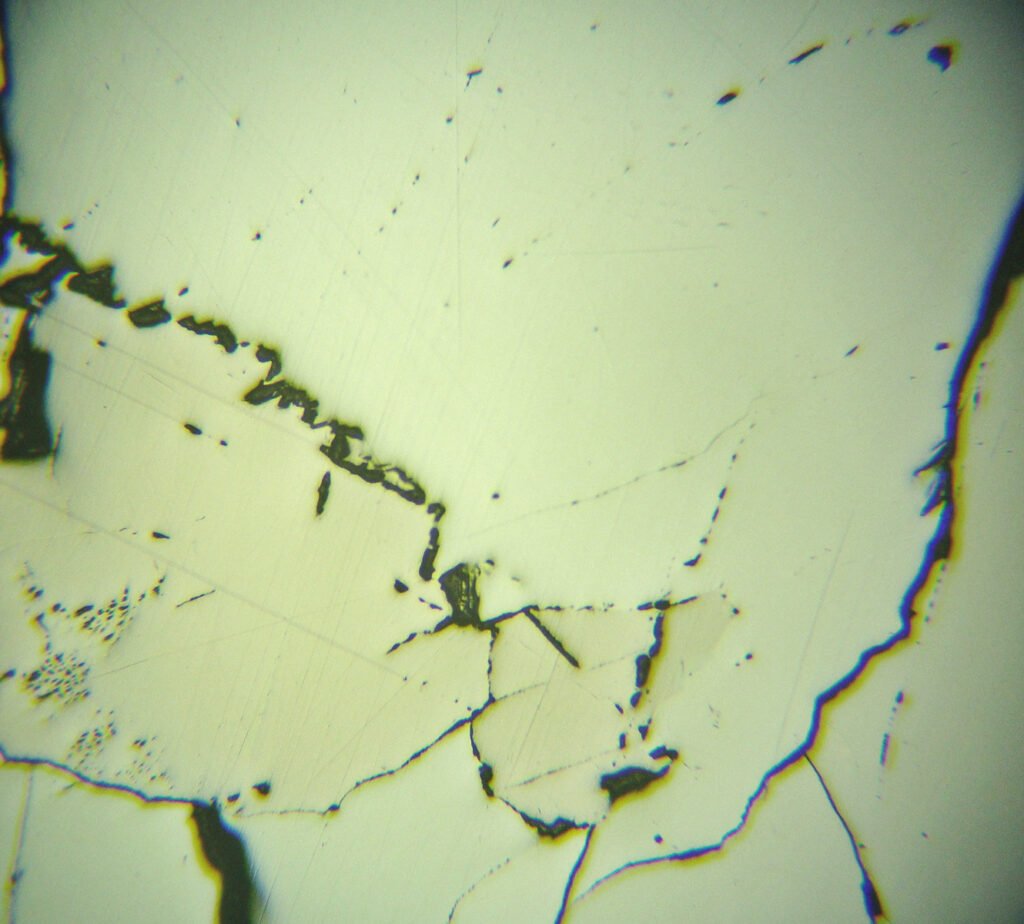
Reflection color: Medium gray with a blue tint.
Pleochroism: Weak in shades of gray with blue, perceptible only in intergranular boundaries and in twin lamellae.
Reflectivity: 19.87 – 23.27%
Bireflectance: No.
CROSSED POLARIZED LIGHT – XPL
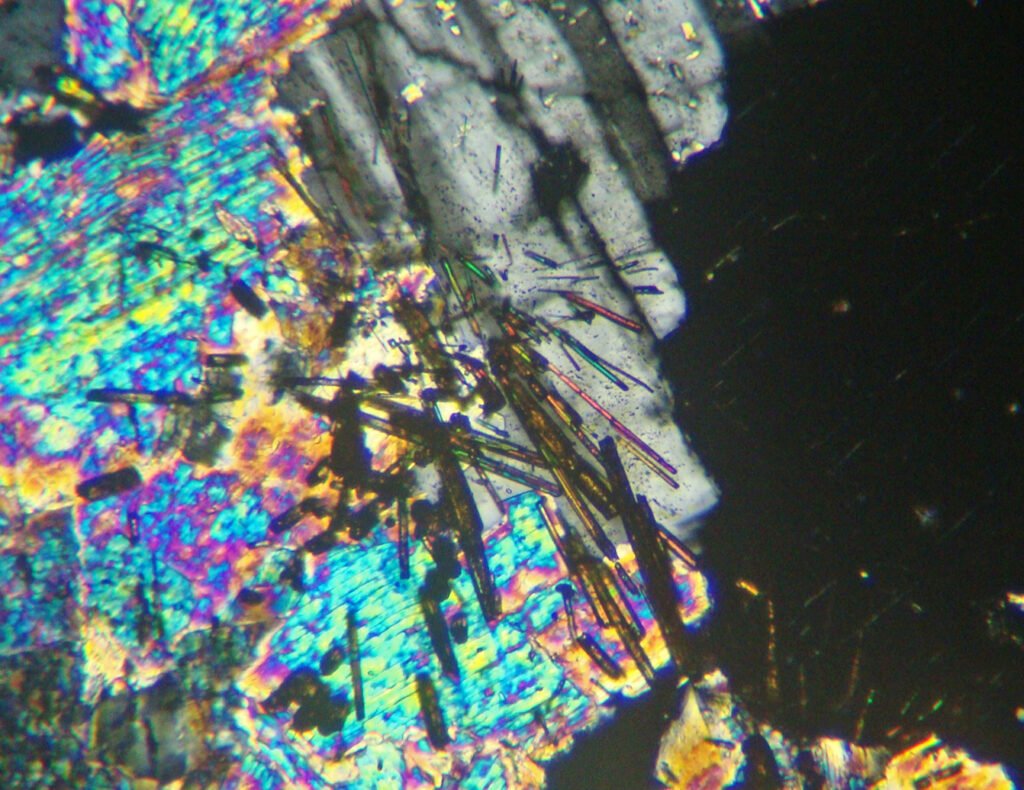
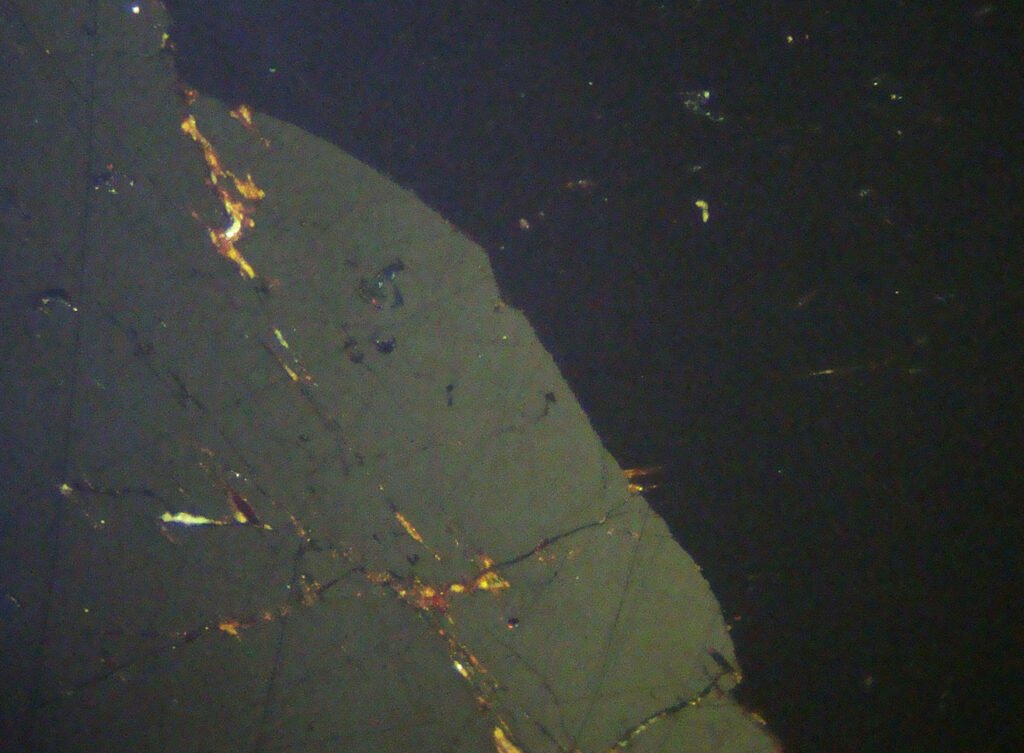
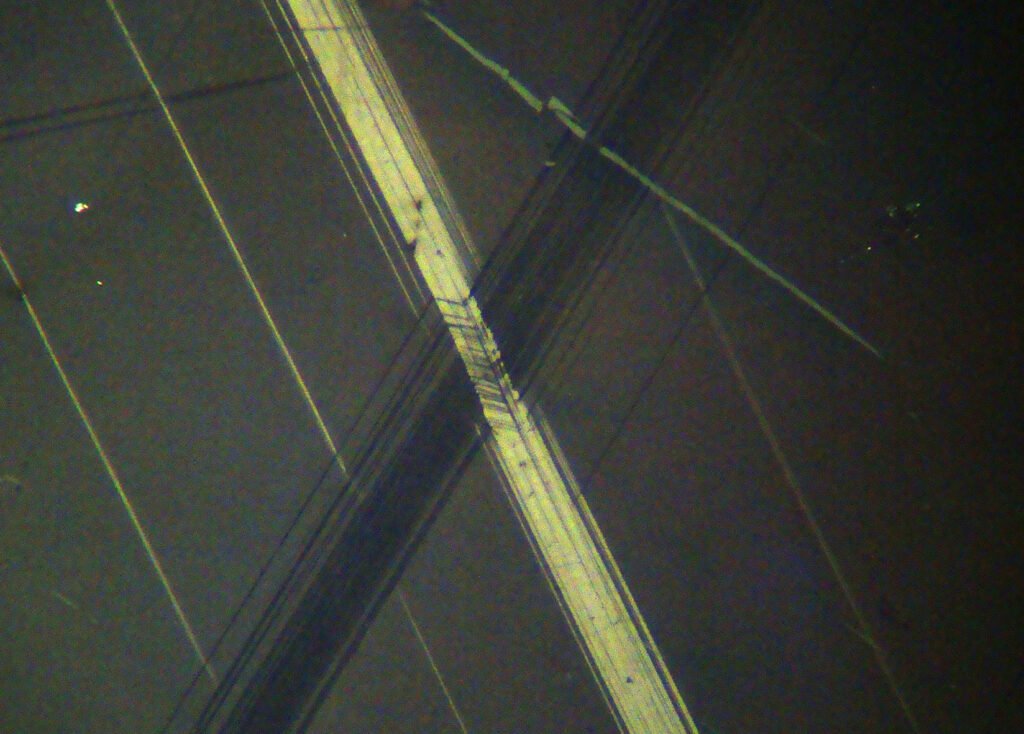
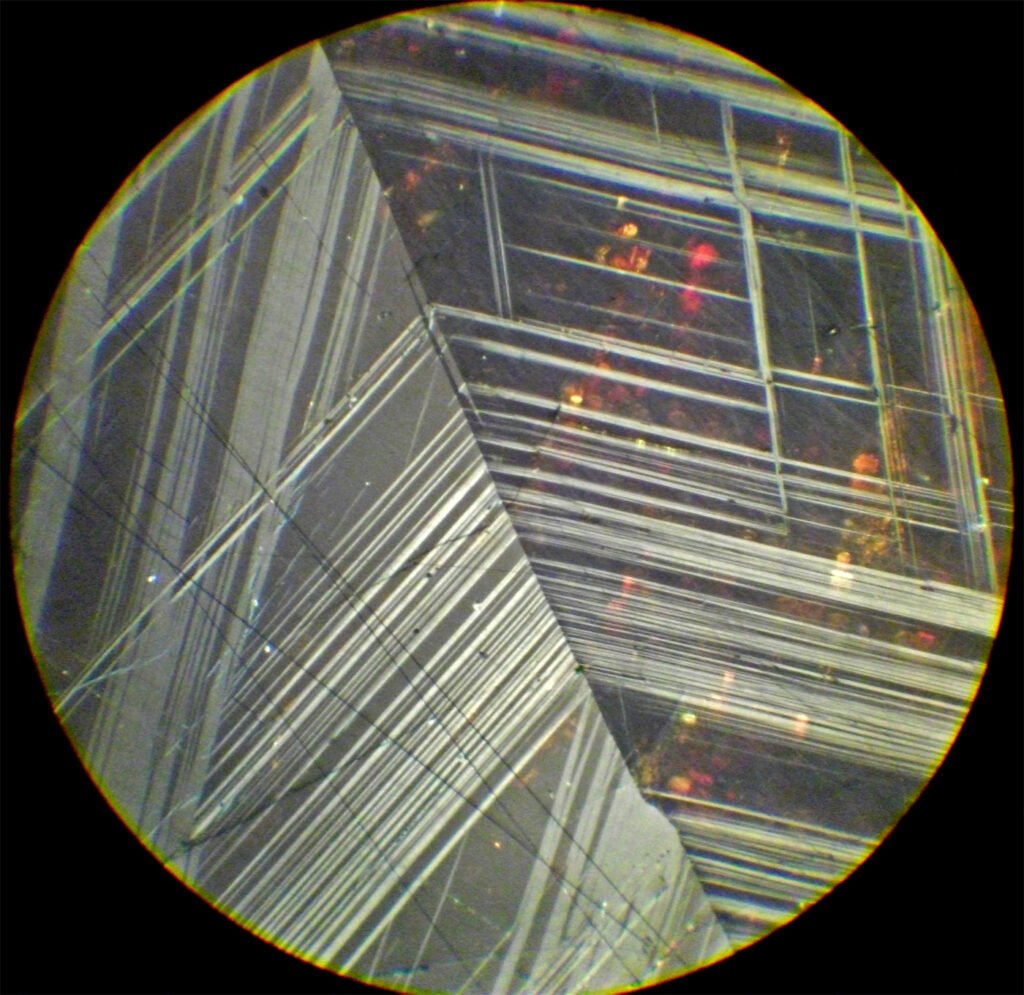
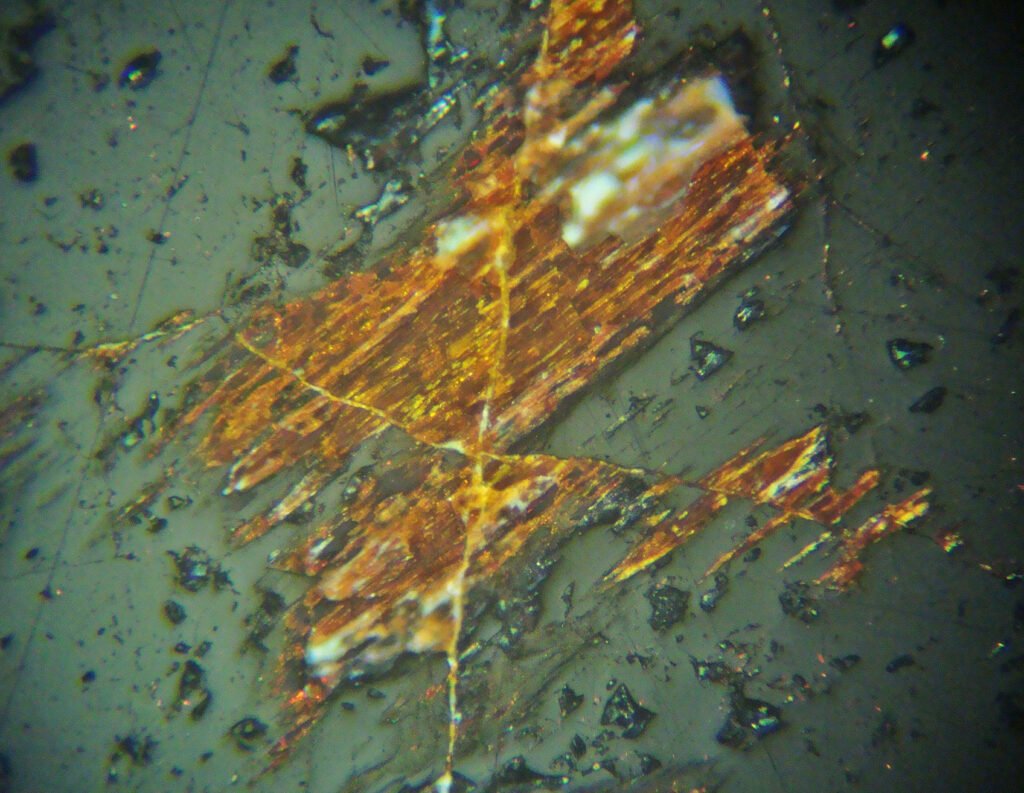
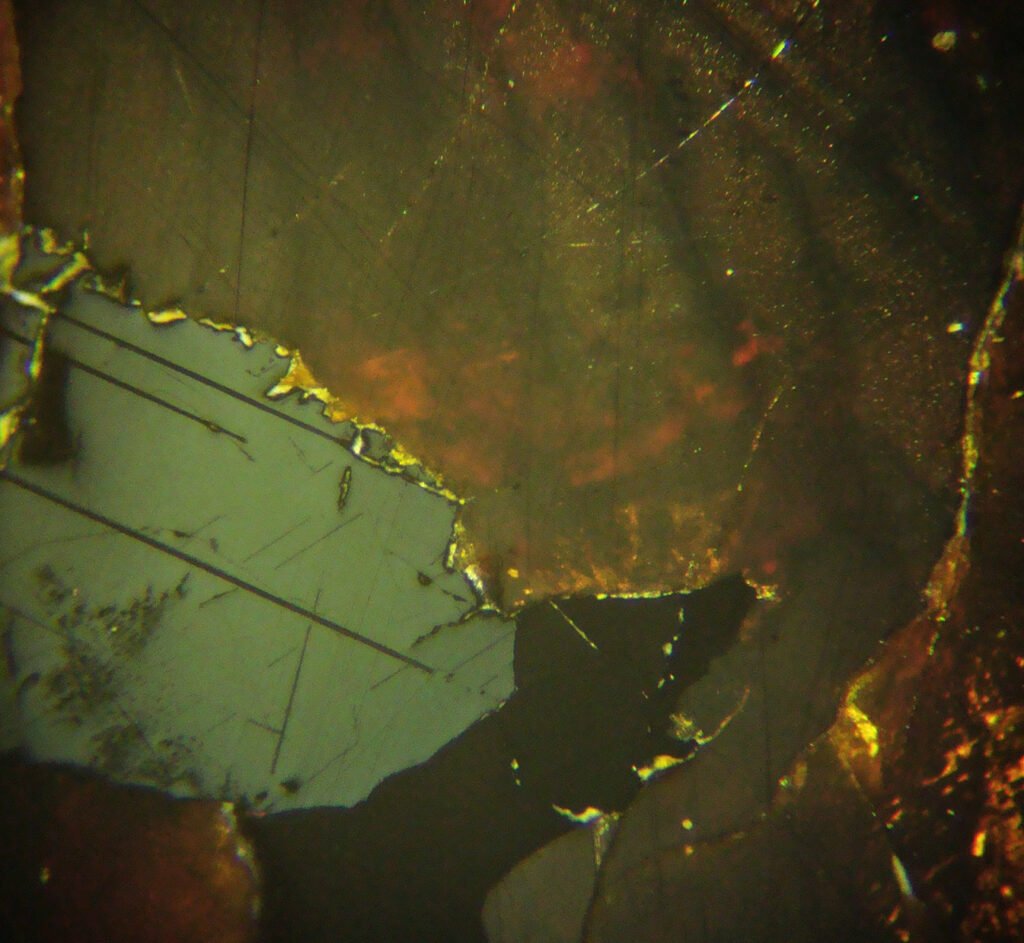
Isotropy / Anisotropy: Strong anisotropy from gray-blue to dark, but heavily masked by internal reflections. In twin lamellae, anisotropy is more evident.
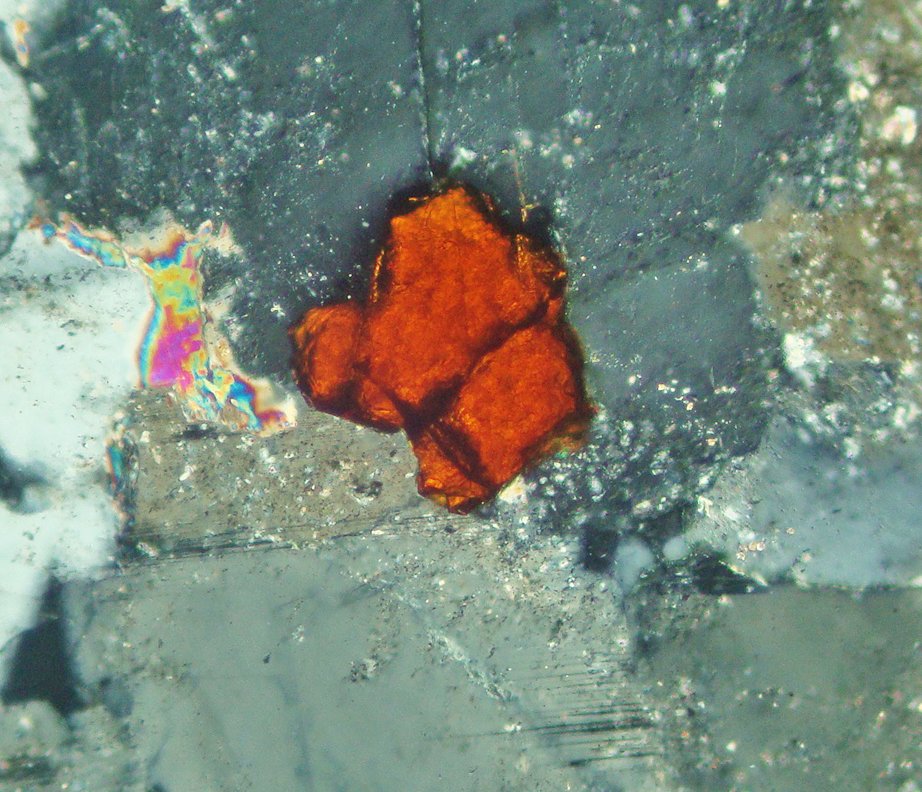
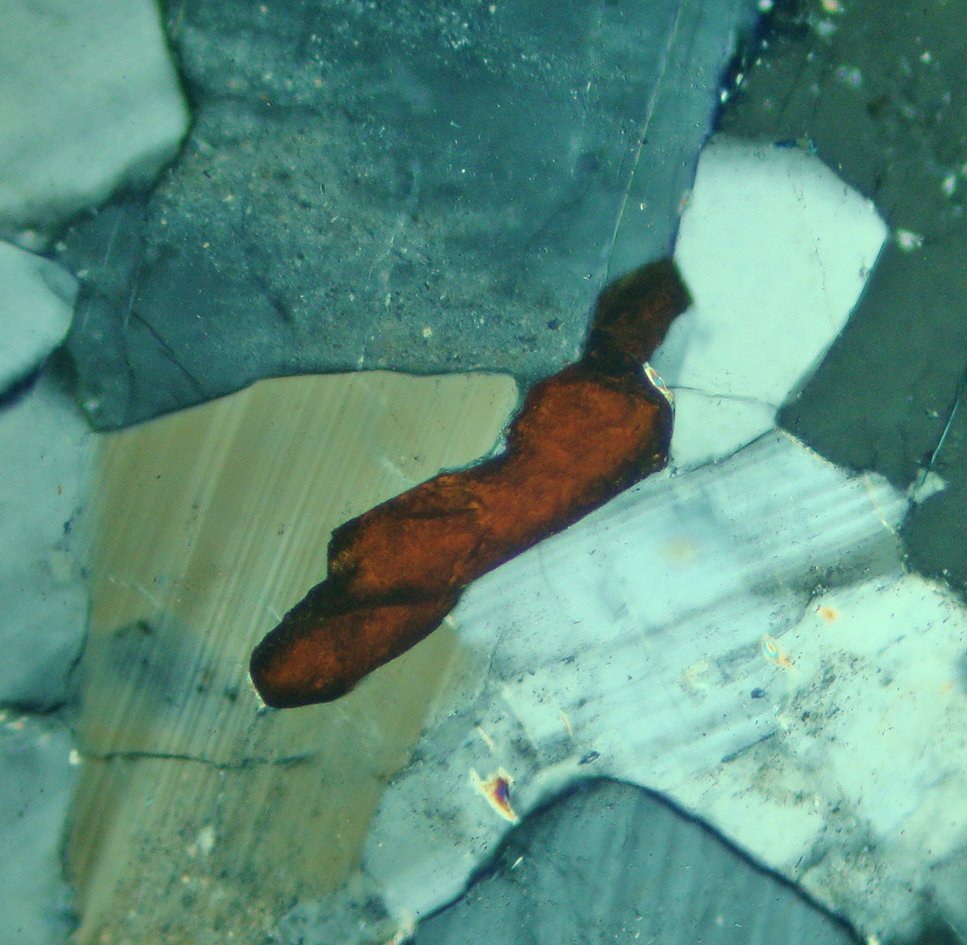
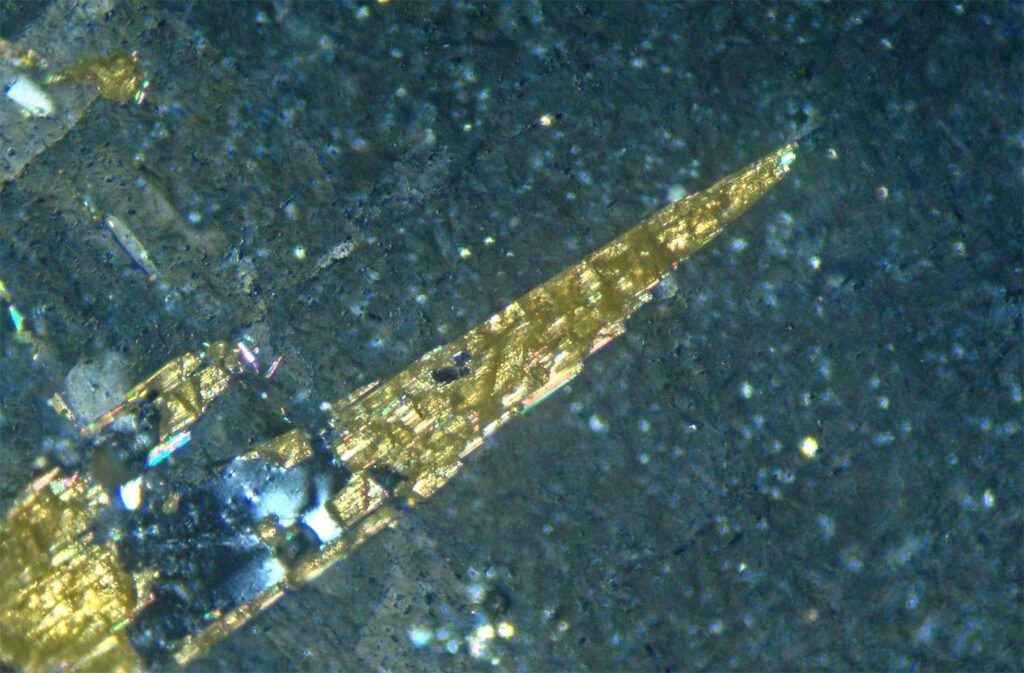
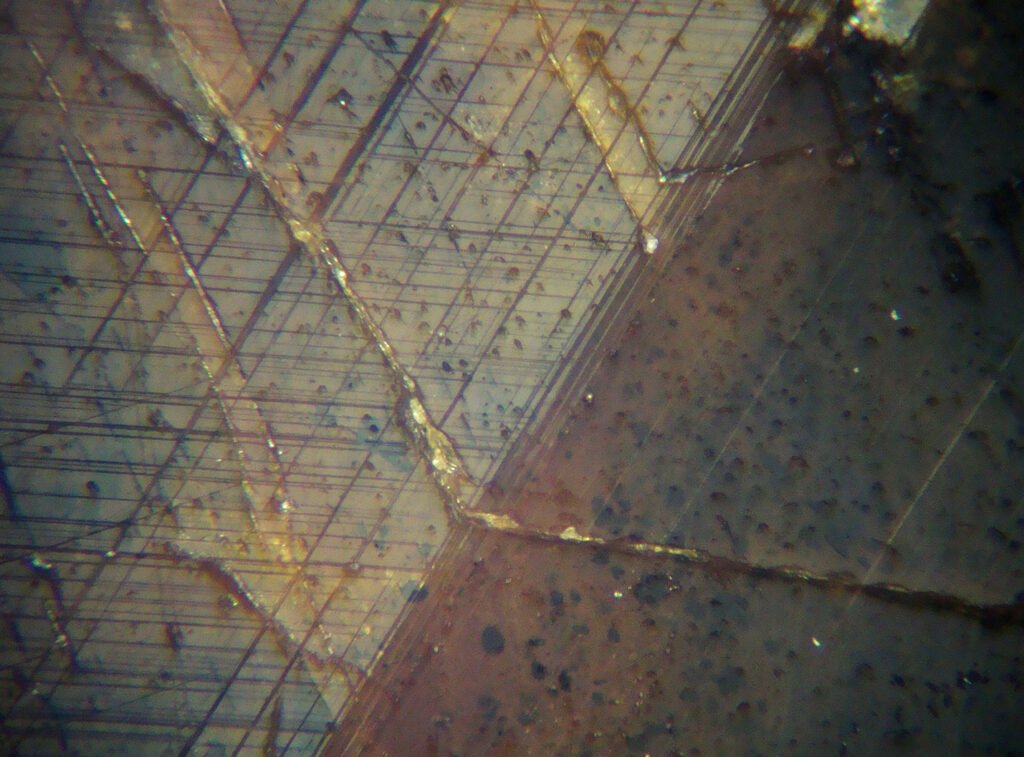
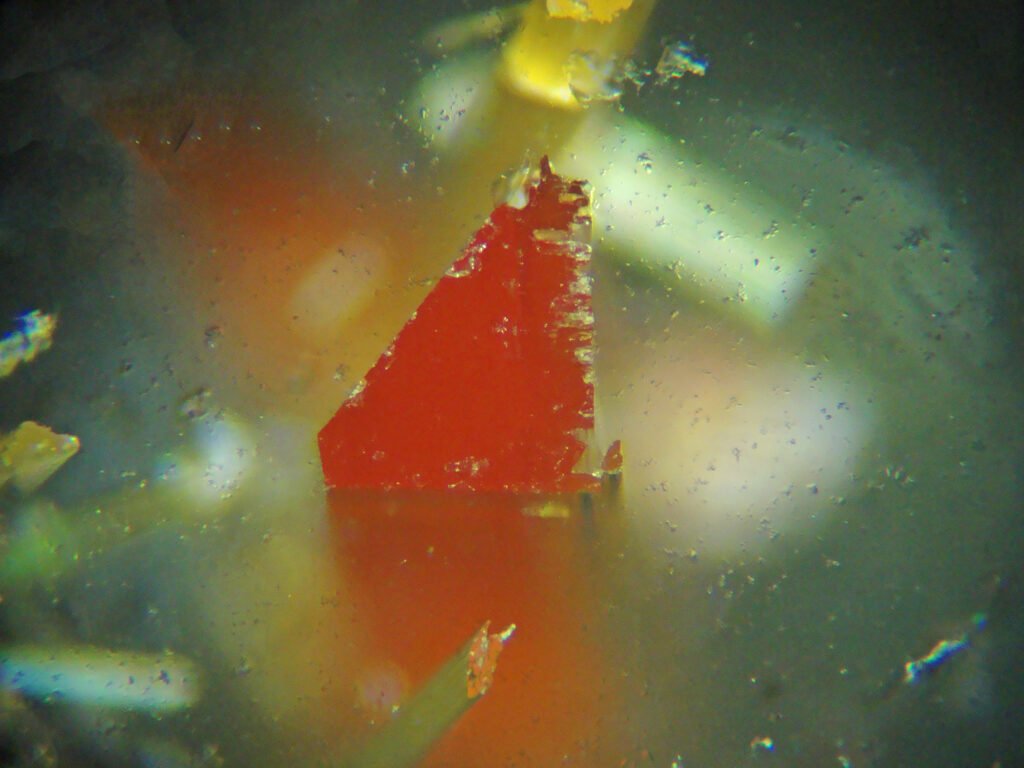
Internal reflections: Colorless, white, light yellow, orange and caramel, can evolve to dark brown red, blood red, brown, green and gray, vary with chemical composition.
May be confused with: diagnostic are hardness, twins and frequent and very clear internal reflections despite of the high reflective power.
Stannite and titanite can be quite similar.
General Characteristics:
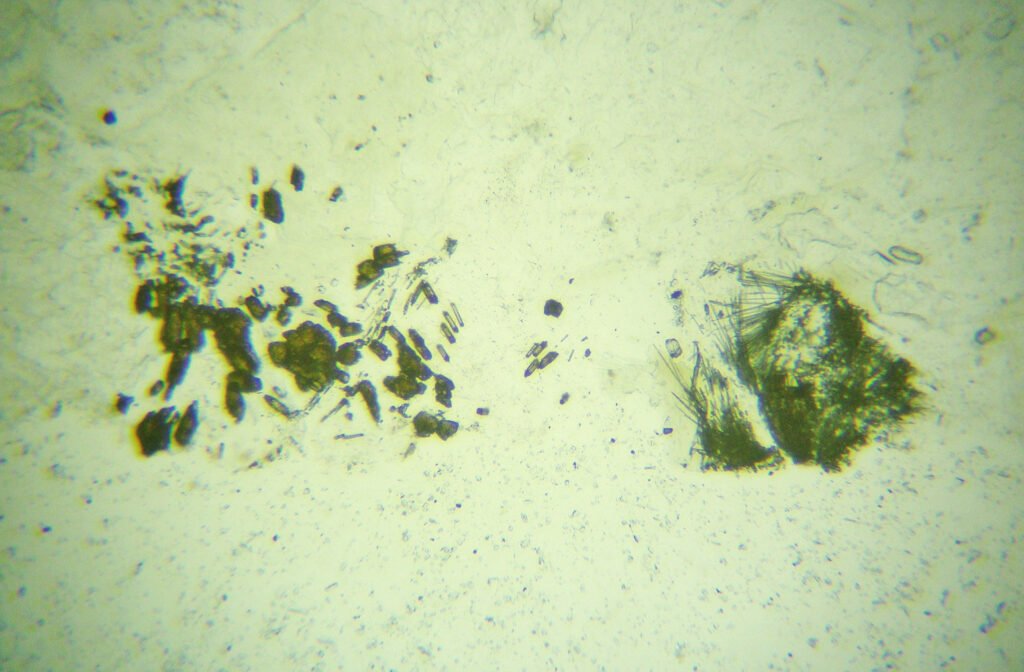
Grain shape: rutile has several characteristic habits, depending on the origin:
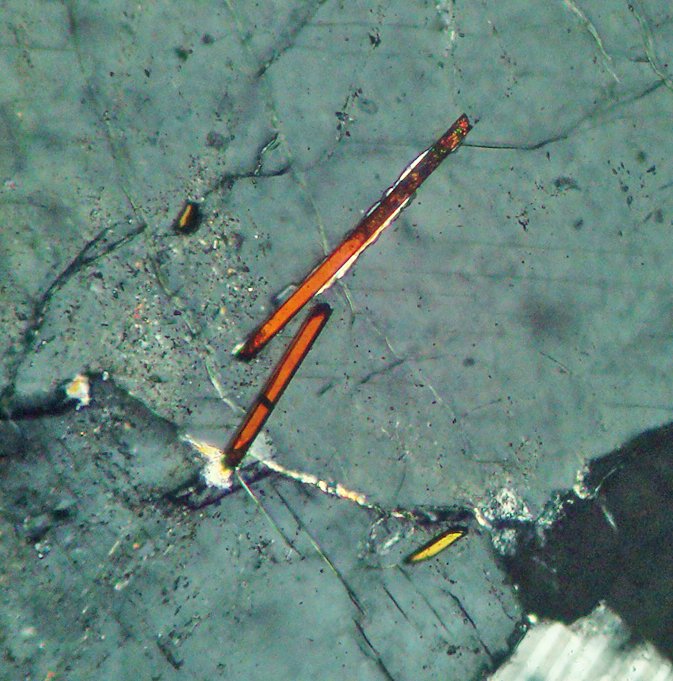
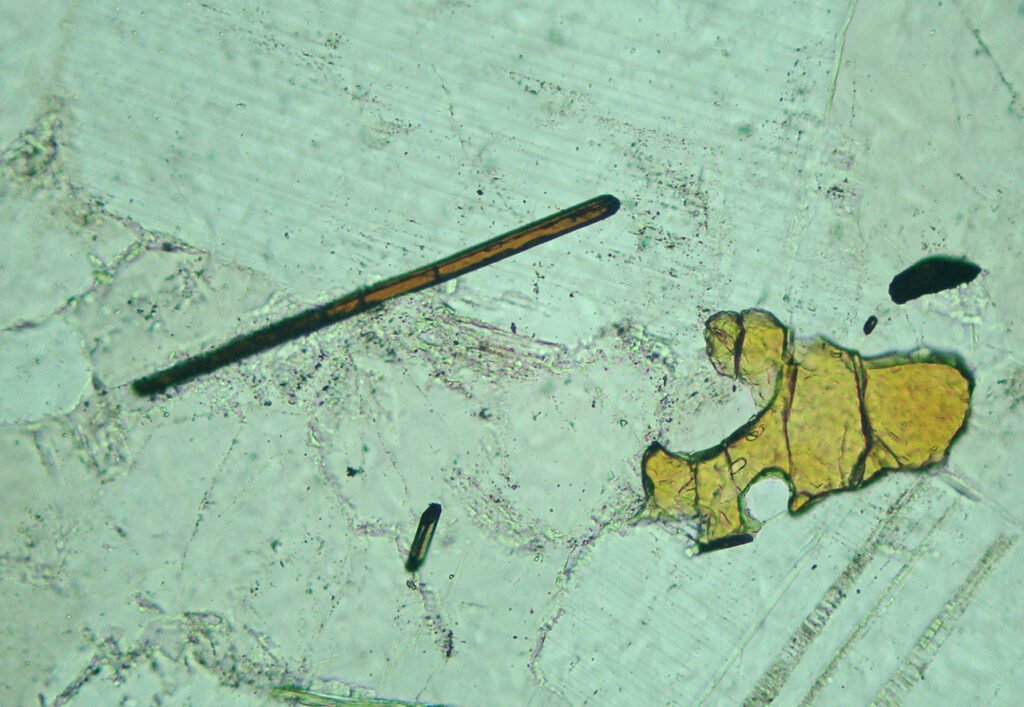
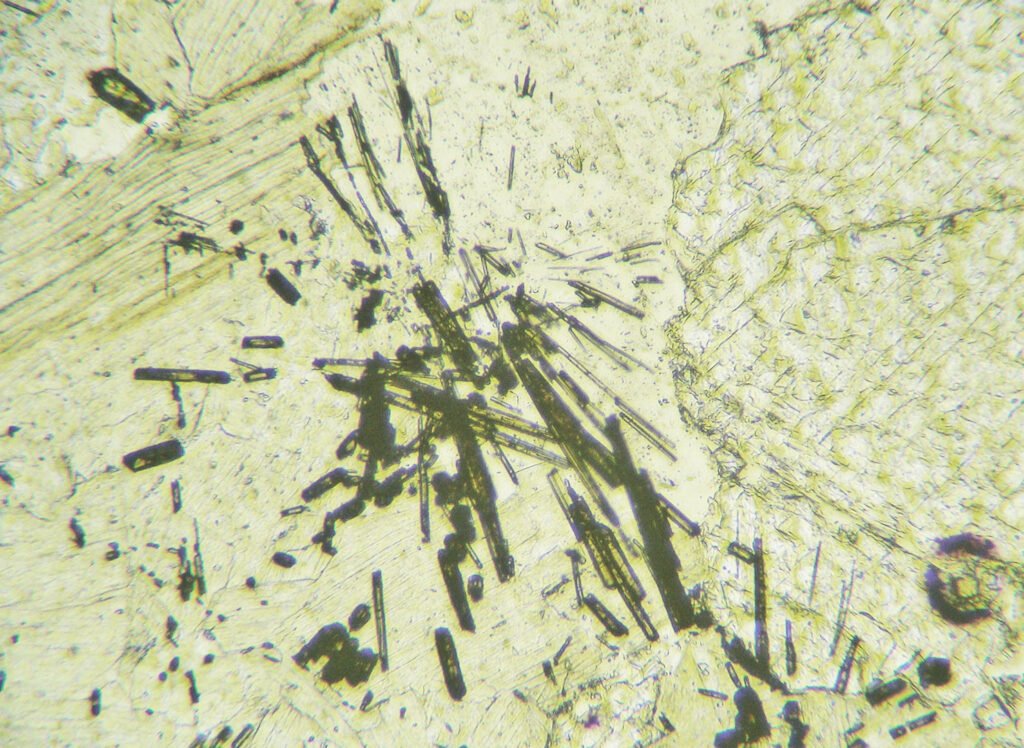
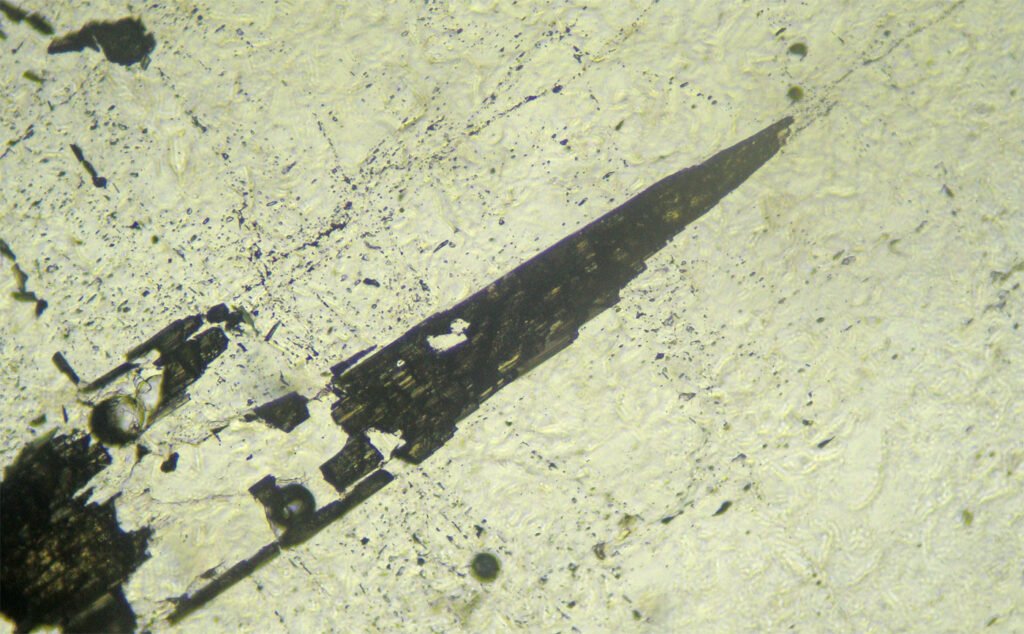
a) Crystals tend to be euhedral, prismatic along the z axis as in rutilated quartz.
b) When it occurs as pseudomorphosis, it takes on the shape of the mineral it replaced..
c) Another form of occurrence is in very fine-grained, extremely intergrown aggregates of rutile and hematite. Rutile crystals can form a very fine web with hematite filling the gaps in the lattice; it is a structure derived from the decomposition of an original ilmenite. If this ilmenite contained exsolved discs of hematite, these may still be preserved in the original position, revealing the origin of the aggregate.
d) Likewise, the original lattice of ilmenite unmixed into titanomagnetites can be transformed into rutile in this way, with or without the concomitant removal of the magnetite. Under special conditions, the transformation of ilmenite can generate, instead of rutile, anatase.
e) In some intrusive basic rocks (diabases), a part of the leucoxene is rutile, instead of or alongside sphene and anatase.
f) Rutile can also form by pyritizing the host rocks of hydrothermal veins with metals from minerals with titanium; the iron content forms pyrite, the titanium content forms rutile; there may be rutile networks in pyrites formed from titanomagnetites.
g) Rarely, is rutile substituted and surrounded by ilmenite. Alternatively, the rutile is replaced by a darker brown rutile with lamellar twins.
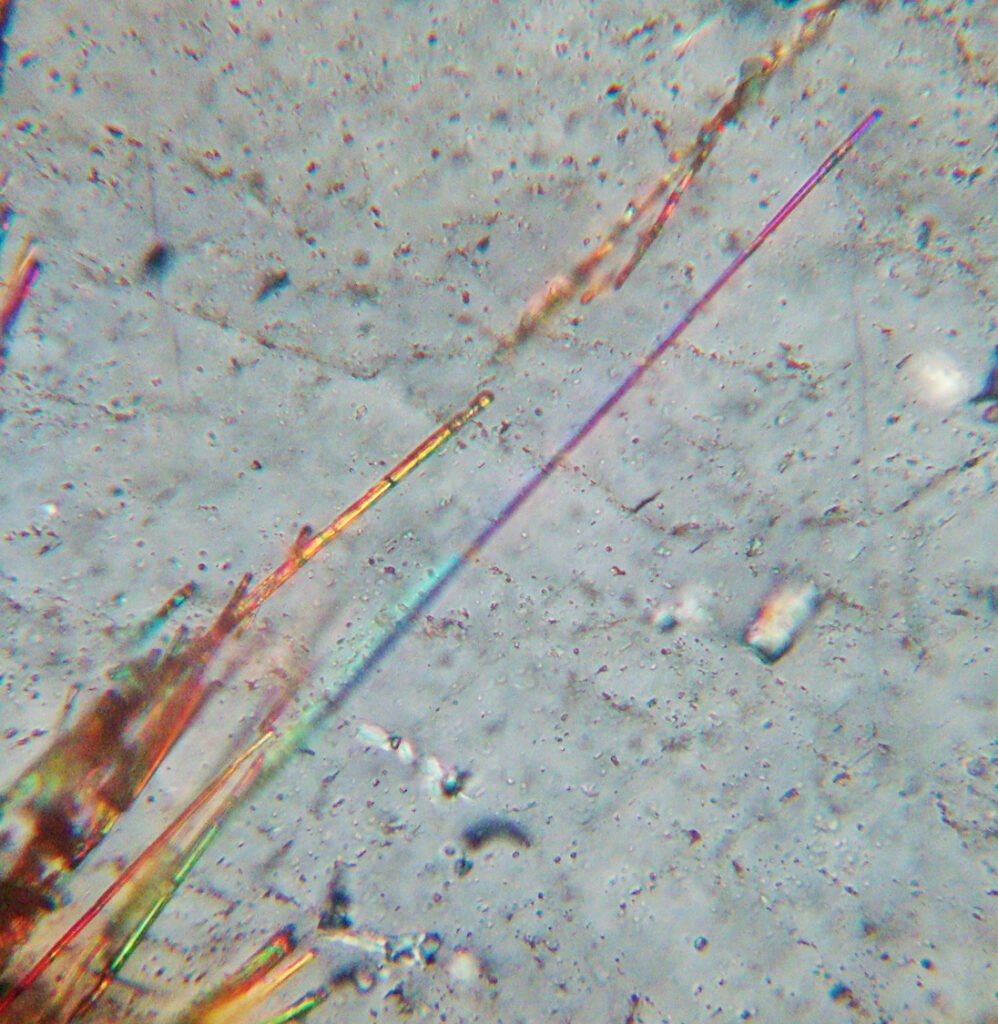
h) A special case is acicular rutile crystals in “blue quartz” of many granites. These needles have thicknesses of around 1 micron, but lengths of 100 and more microns.
Cleavage parallel to (110) may be visible, even with excellent polish, due to the formation of polishing pits.
Twins in parallel lamellae, usually thin, are almost always present in several directions, very well developed.
Zonation is not observed in polished sections.
Substitutions of ilmenite for rutile can occur. Sometimes it involves ilmenite or hematite grains.
Cataclase is visible with some frequency.
Unmixings are very rare. Sometimes there are small plates of unmixed ilmenite arranged parallel to (110) of the rutile. Hematite can also form these structures.
Oriented intergrowths of rutile with hematite are well known.