1. Characteristics
Crystal system: Monoclinic prismatic.
Color: Colorless, white, gray, yellowish-white or reddish-white.
Habit: Tabular, with square basal section. Massive, granular.
Cleavage: {001} perfect, {010} distinct.
Tenacity: Brittle.
Twinning: See above.
Fracture: Irregular, conchoidal.
Mohs Hardness: 6
Parting: On {100}
Streak: White.
Lustre: Vitreous.
Diaphaneity: Transparent.
Density (g/cm³): 2.56 – 2.62
2. Geology and Deposits
Sanidine is the highest temperature potassium feldspar, orthoclase is of medium temperature and microcline is of low temperature. Sanidine generally occurs as metastable crystals in rapidly cooling volcanic rocks (lava and hypabyssal rocks), in the form of idiomorphic phenocrysts.
It is the normal potassium feldspar of intermediate to acidic volcanic rocks such as rhyolites, rhyodacites, trachytes, andesites, phonolites and tephrites.
Sanidine occurs in some intrusive granites at low depths and syenites. Also in lamproites and naturally in sanidinites. It also occurs in high temperature contact metamorphism rocks. As detrital grains it can be found in sediments.
3. Mineral Associations
In acid vulcanites sanidine occur associated with quartz, plagioclase, biotite, hornblende, orthopyroxenes, clinopyroxenes and volcanic glass.
In trachytes it occurs with plagioclase, biotite and aegirine-augite.
In phonolites with nepheline, aegyrin-augite and minerals from the Sodalite Group (sodalite, hauyna, nosean).
In addition, it is associated with magnetite, hematite, ilmenite, garnet (melanite), zircon and apatite.
4. Transmitted Light Microscopy
Refraction indices: nα: 1.518 – 1.525 nβ: 1.523 – 1.530 nγ: 1.525 – 1.531
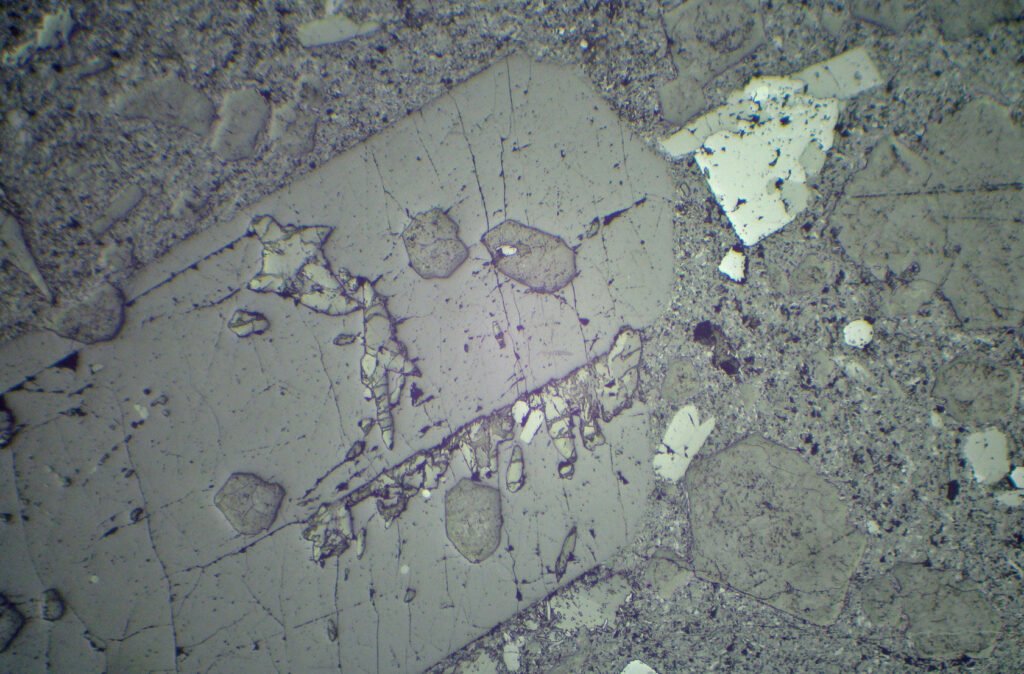
PLANE POLARIZED LIGHT – PPL
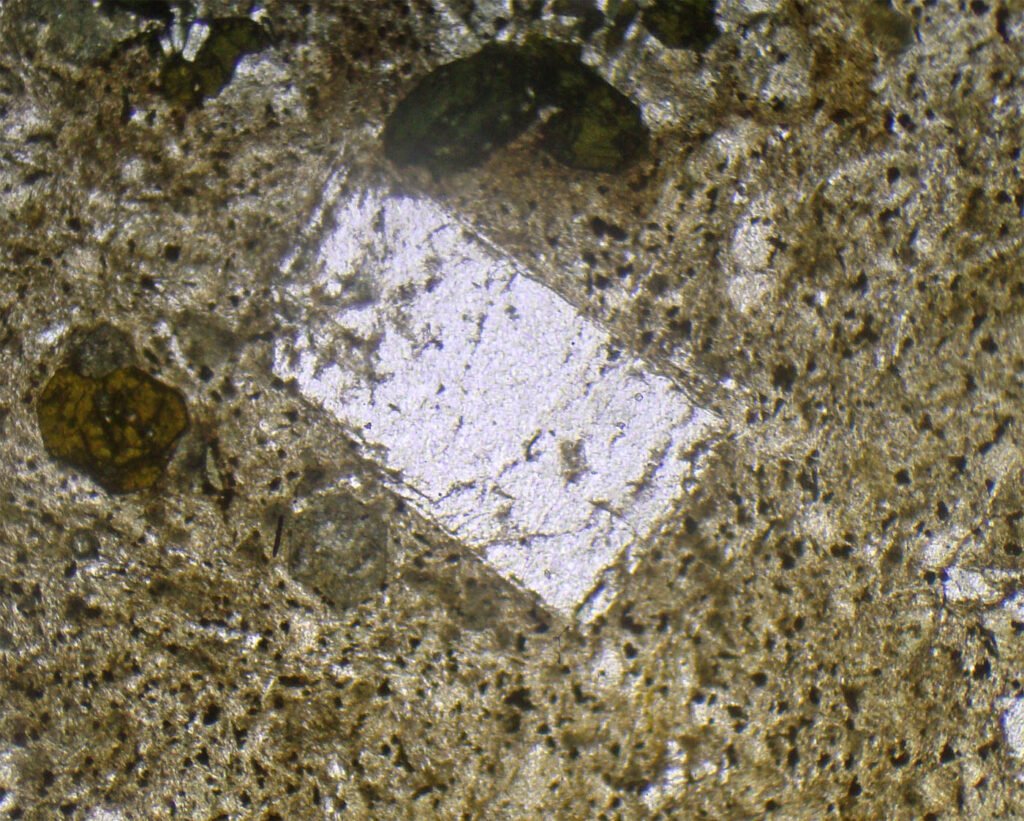
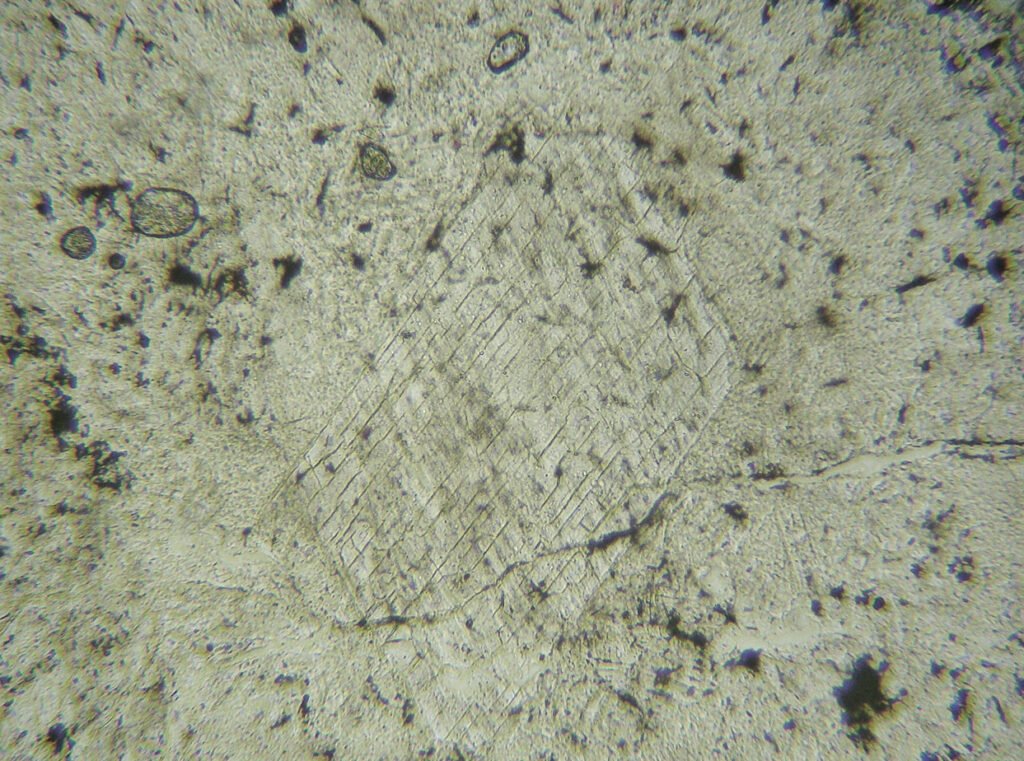
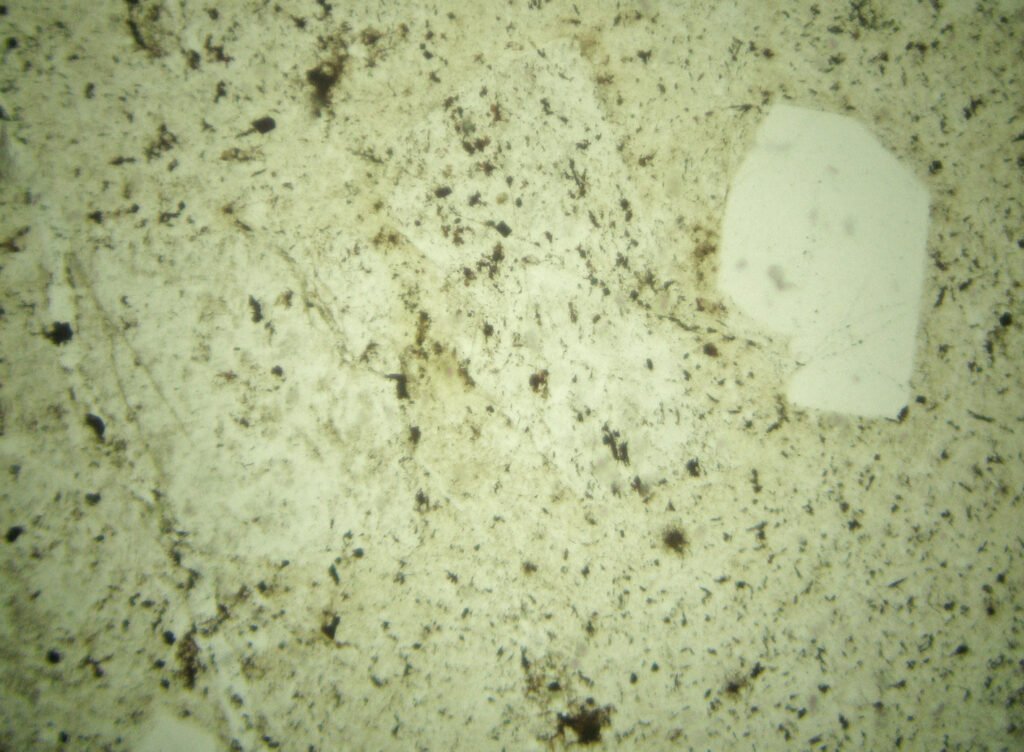
Color / Pleochroism: Colorless, never shows color much less pleochroism. May be cloudy (PPL: brown, brownish) due to weathering products (clay minerals and sericite).
Relief: Very low to low.
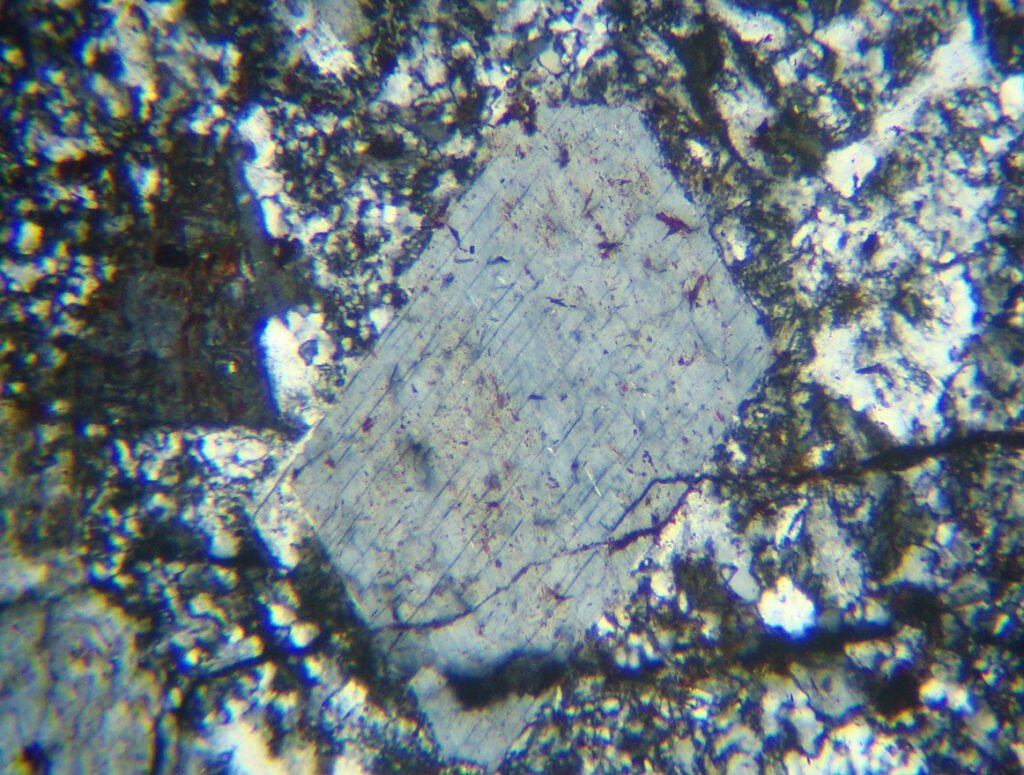
Cleavage: {001} perfect, {010} good, they intersect at 90º. Cleavages are usually not visible under a microscope, only if are problems with the glue of the thin section.
Very young and/or poorly altered sanidines show no cleavage or have poorer quality cleavages than older sanidines.
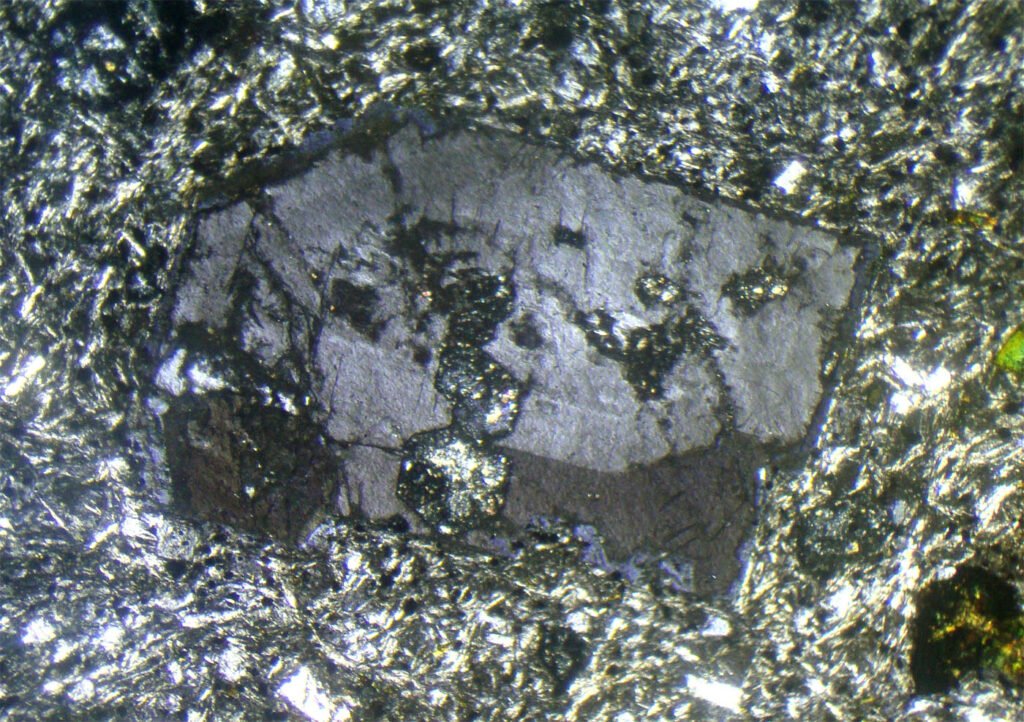
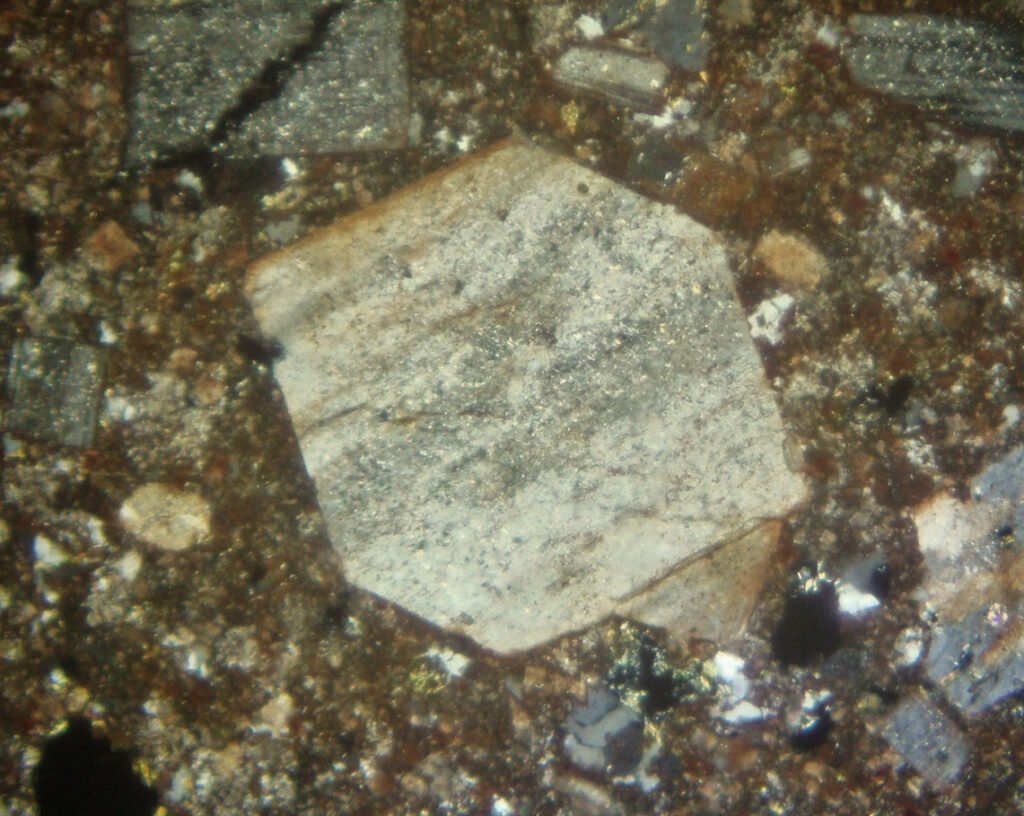
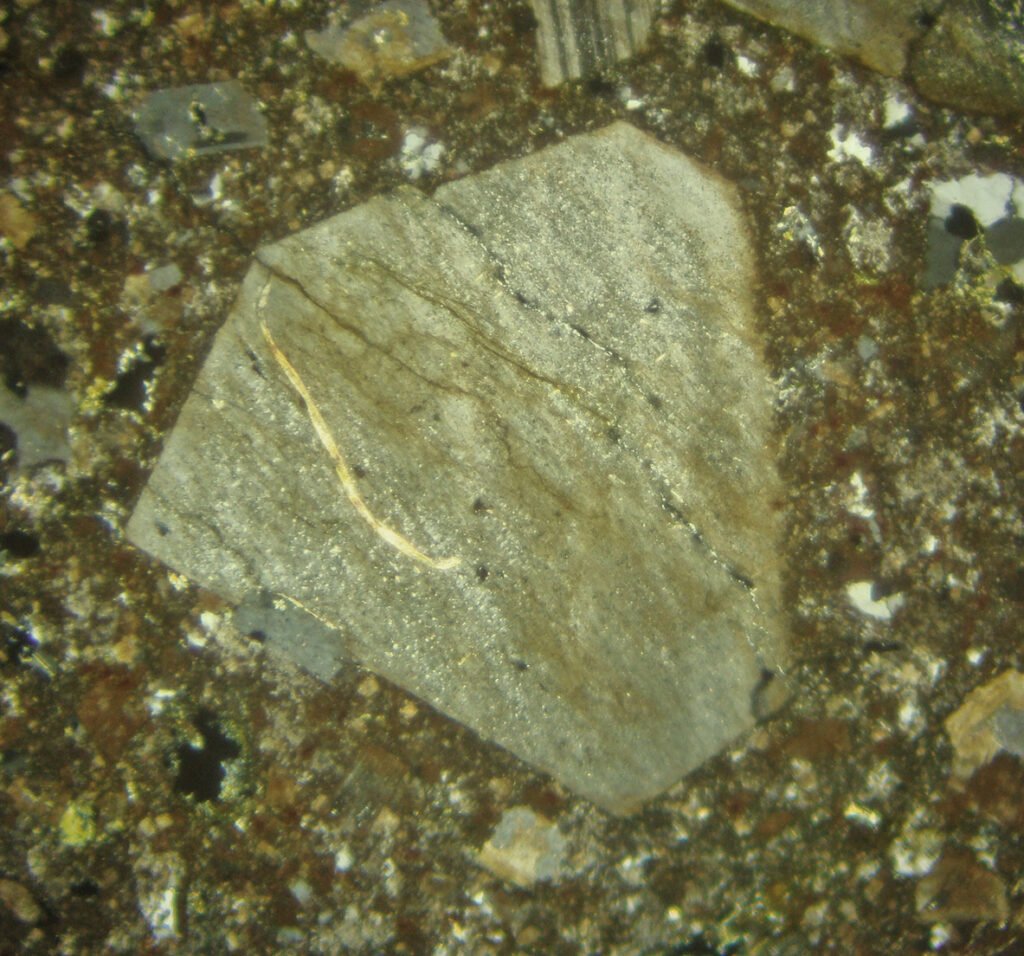
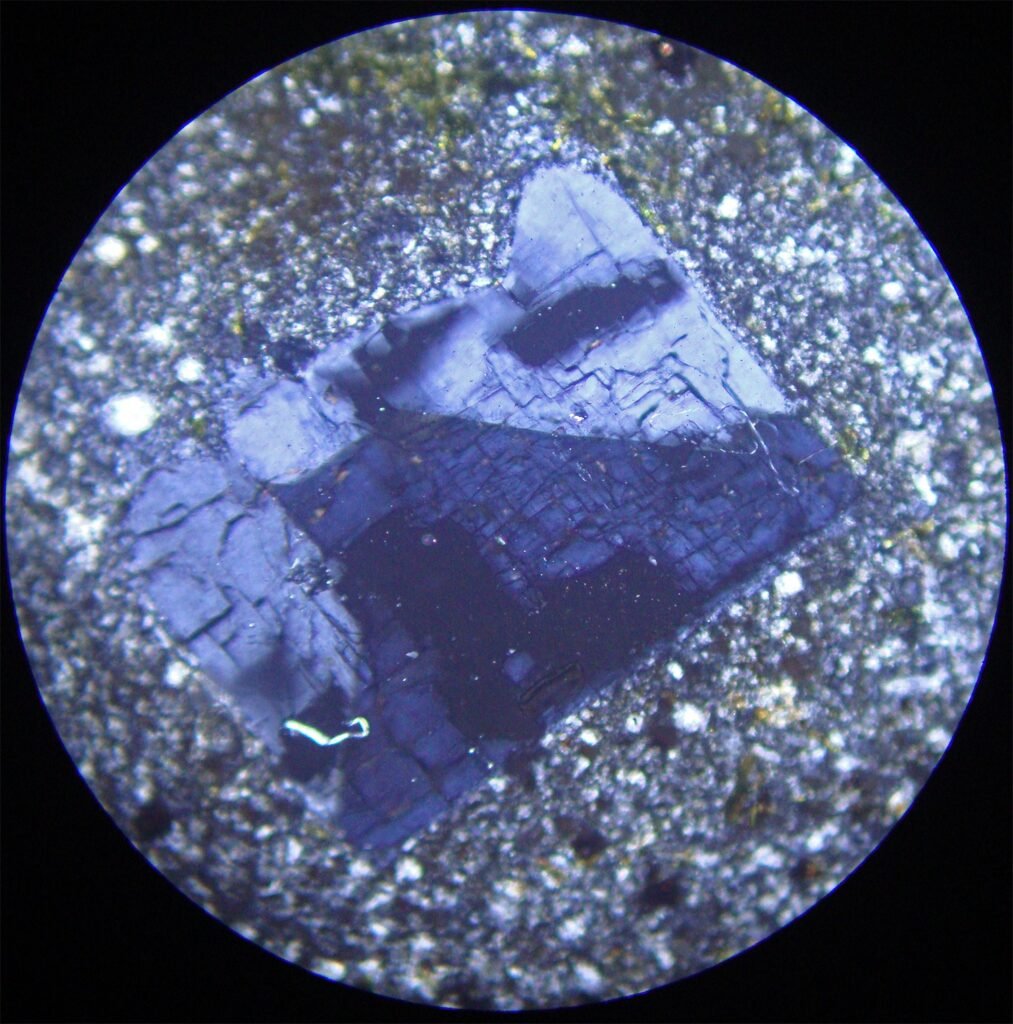
Habits: Typically tabular parallel to {010}, prismatic parallel to x-axis, with rectangular sections. The basal sections are square, rectangular, or have six sides. In volcanic rocks it is usually idiomorphic.
Through geologic time, sanidines develop exsolution compounds and transition to orthoclase.
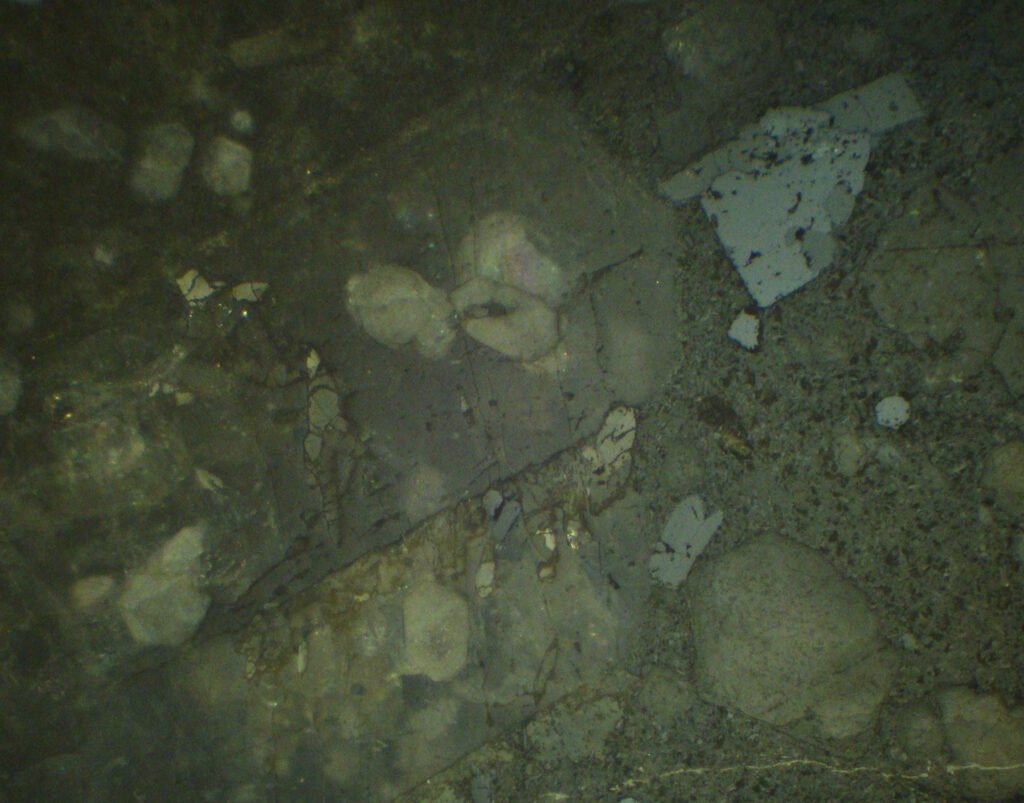
CROSSED POLARIZED LIGHT – XPL
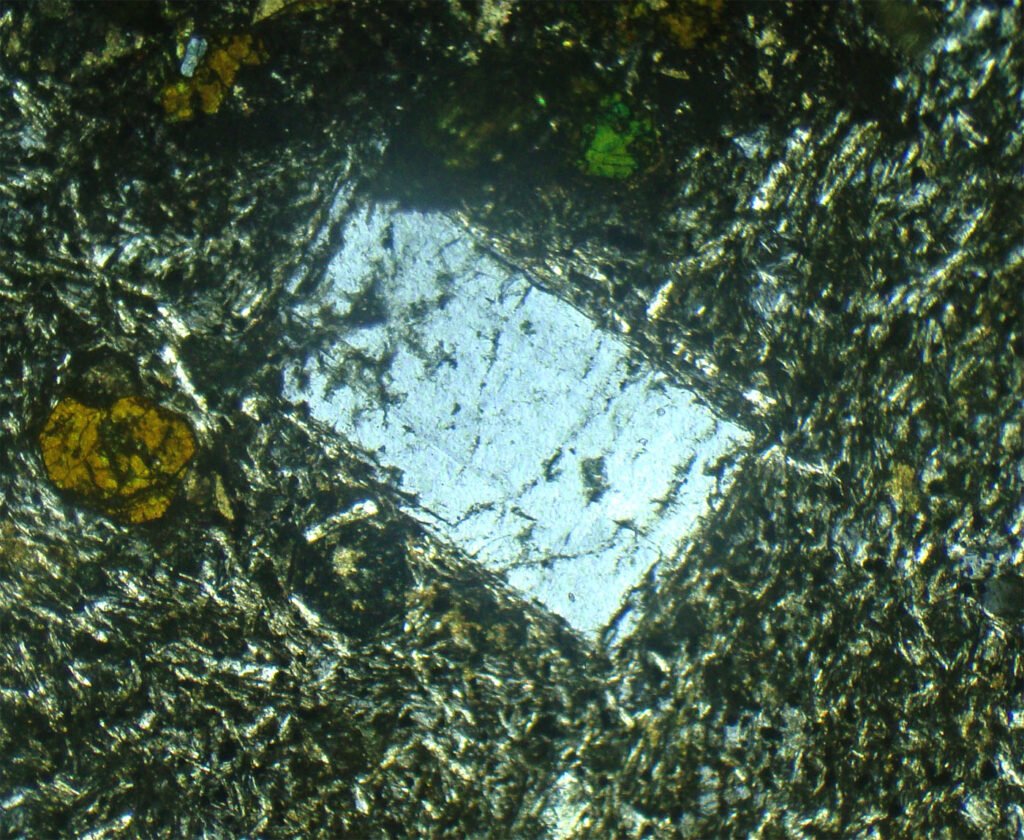
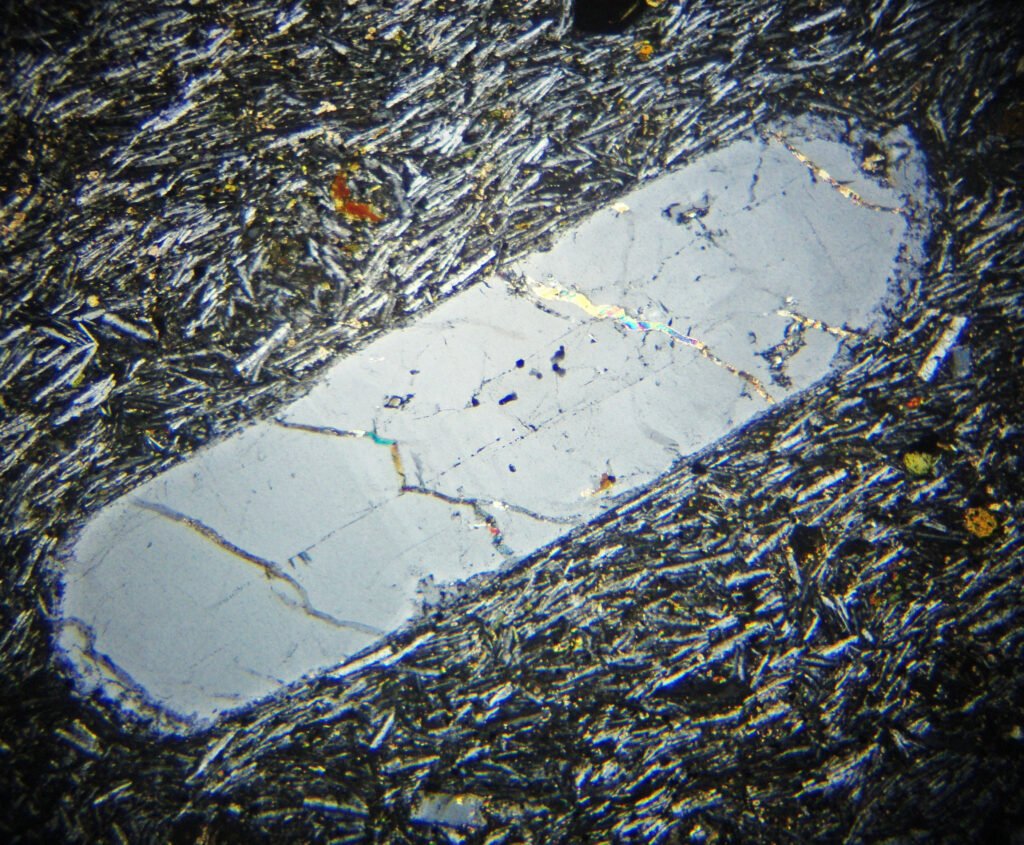
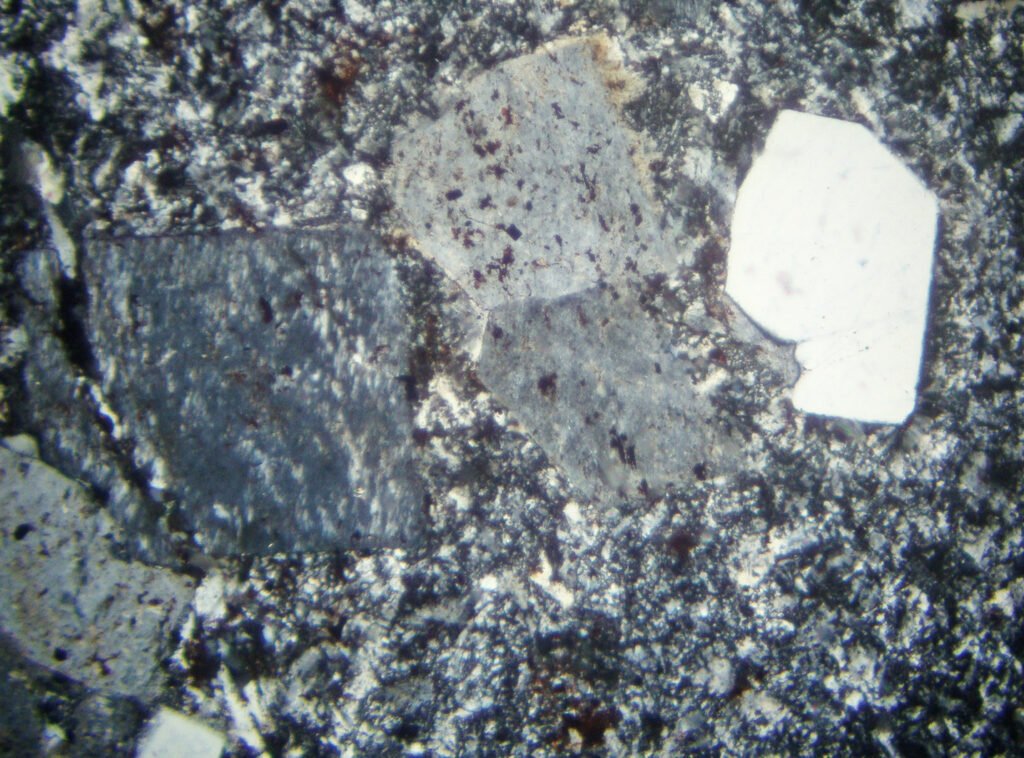
Birefringence and Interference Colors: Birefringence from 0.005 to 0.008, 1st order colors: black, various shades of gray to white. It never goes from white to 1st order yellow, unless the thin section is thicker than 30 microns.
Extinction: Oblique, with an angle of 5 – 9º, can be parallel.
Elongation sign: Not applicable as sanidine may be elongated along the x, y or z axis.
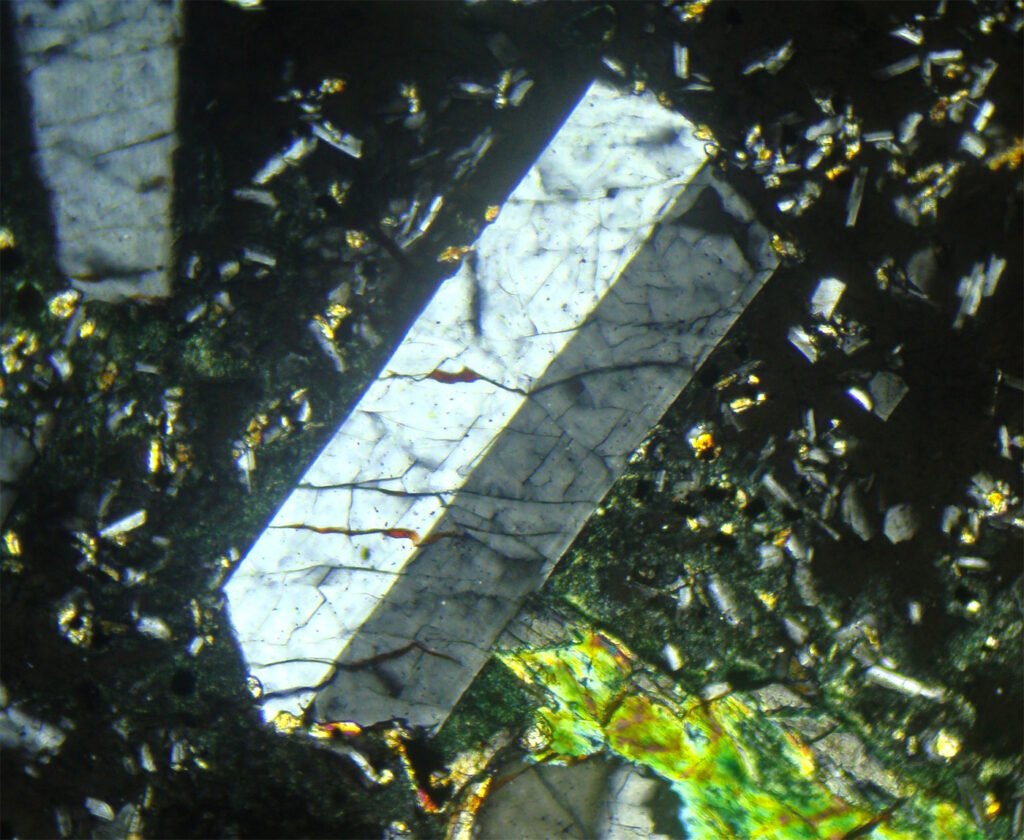
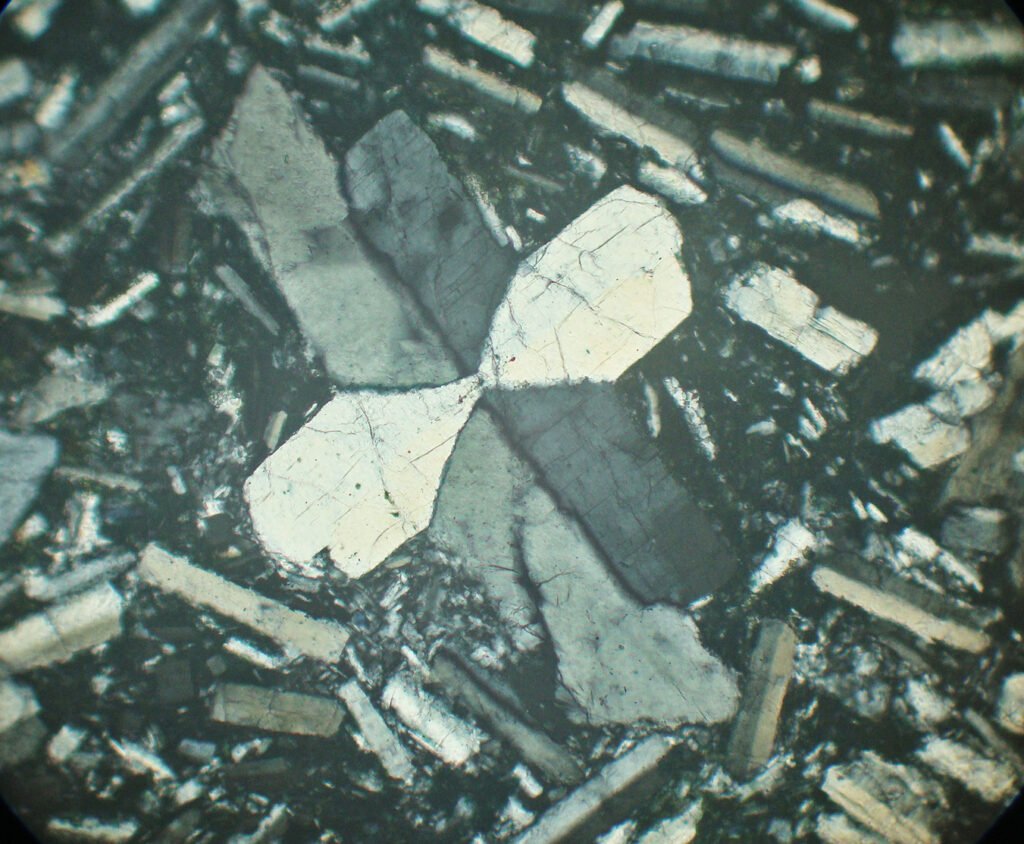
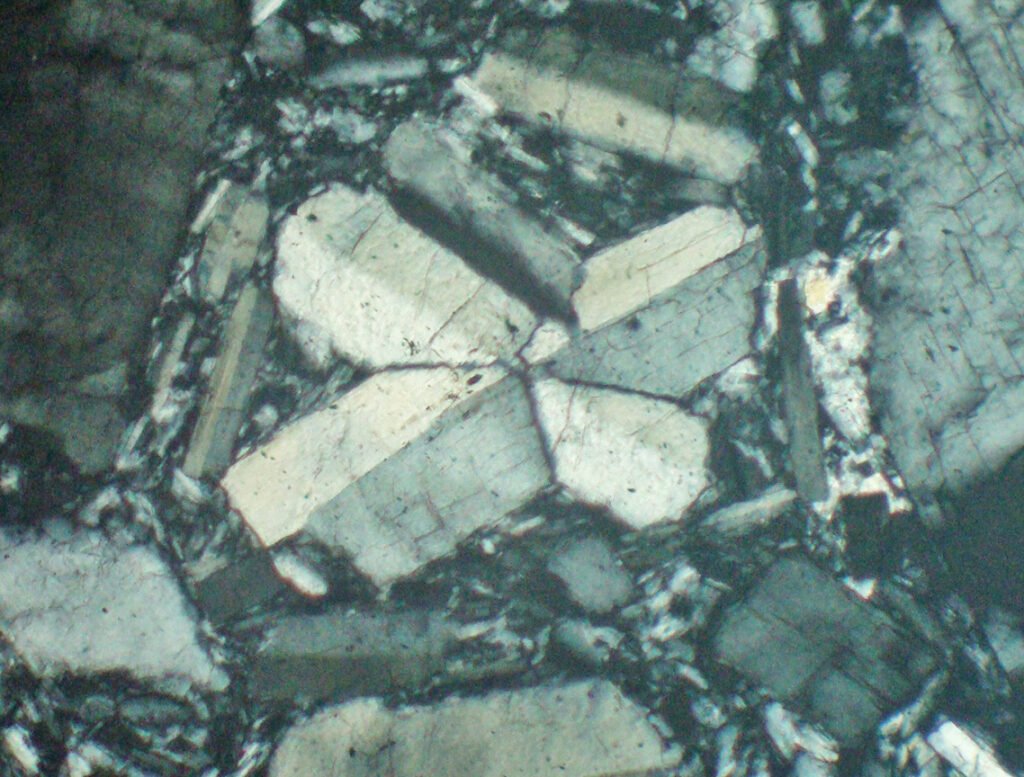
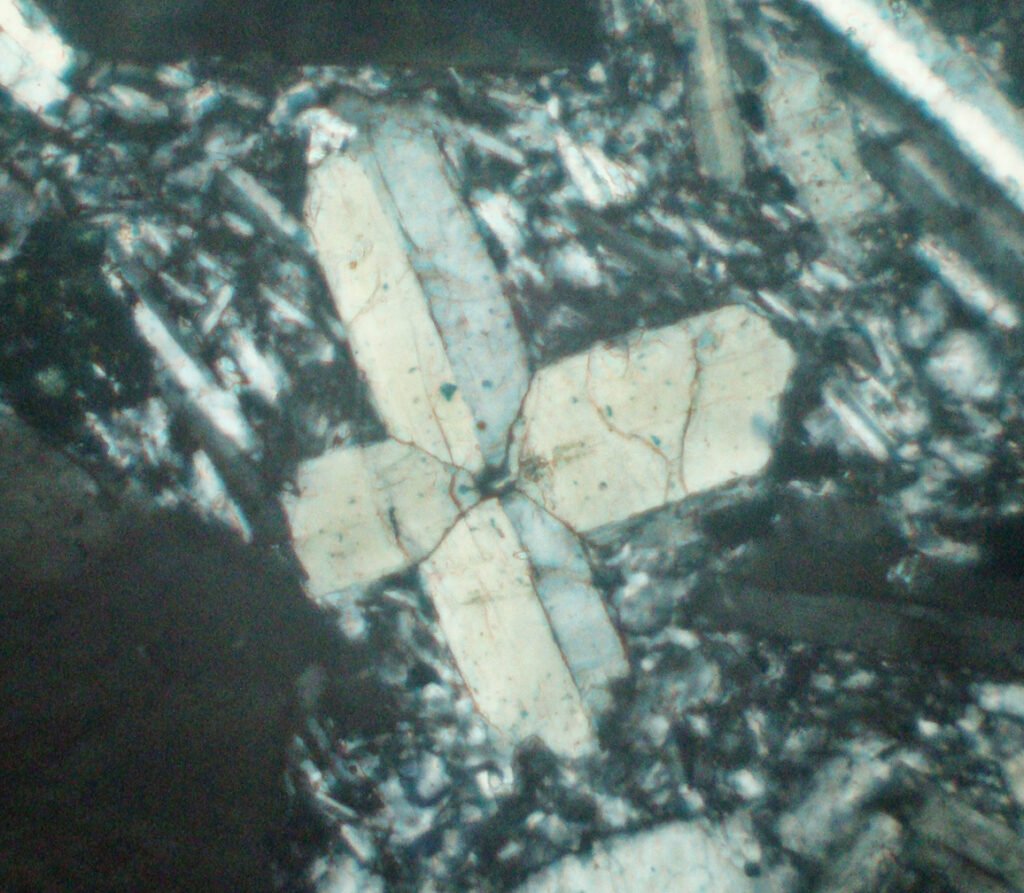
Twins: Commonly simple Carlsbad twins according to the plane of composition {010}, dividing the crystal into two segments. Plans {021} and {001} can also occur. Multiple planes of twins can make the crystal look like a plagioclase, but sanidine never has polysynthetic twins.
Zoning: Often zoned, which is expressed through variable birefringences and different extinction angles.
CONVERGENT LIGHT
Character: B(-)
2V angle: 0 – 47o
Alterations: alters to clay minerals and sericite. It is a very common and to some extent diagnostic alteration, as it easily differentiates sanidine from quartz. These changes make the sanidine cloudy in PPL rather than colorless. Sanidines in volcanic rocks from past geological times usually show partial or full transformation to orthoclase, which is the stable phase of potassium feldspar.
May be confused with: several minerals.
Quartz has no cleavage, is U(+) and never is altered.
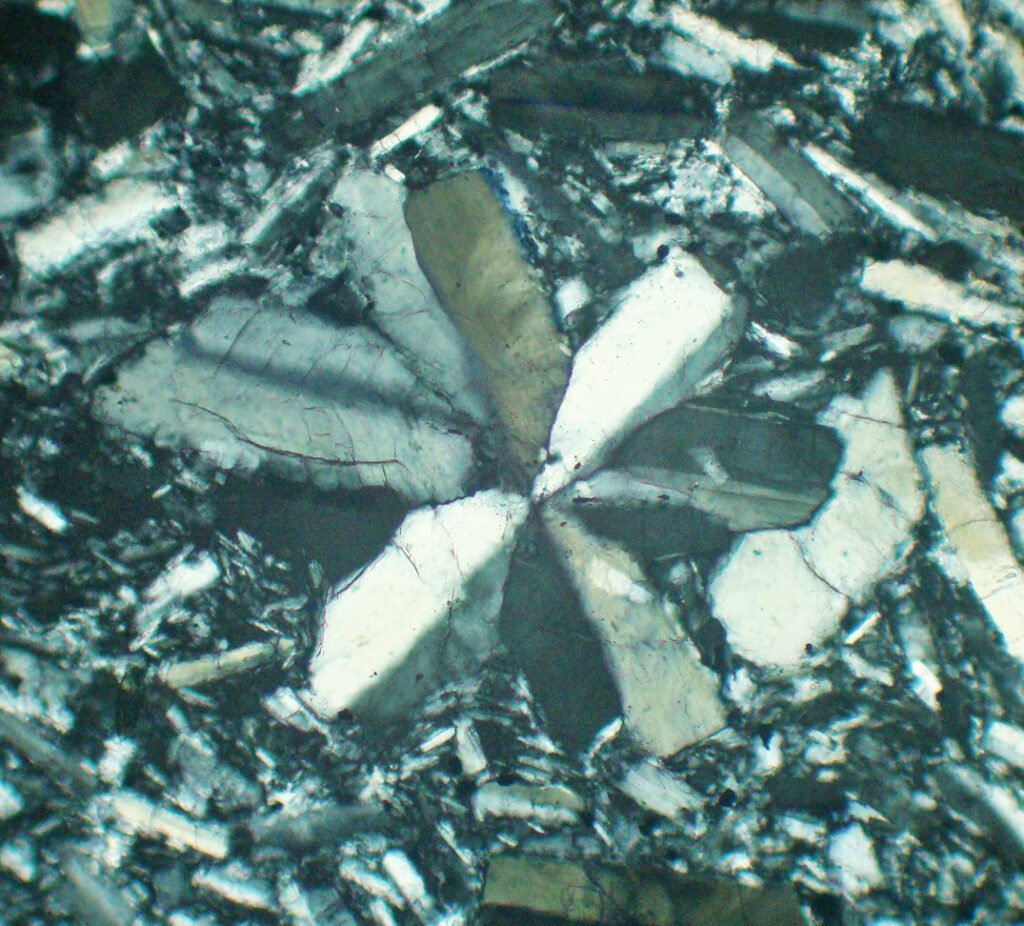
Nepheline in volcanic rocks can be very difficult or even impossible to distinguish from sanidine, if the sanidine show a very small 2V angle and displays no Carlsbad twin.
Other potassium feldspars have much larger 2V angles.
Typical for sanidine is:
(i) occurrence as idiomorphic phenocrysts in fine matrix of intermediate to acidic volcanic rocks,
(ii) Carlsbad twins only, never polysynthetic twins (beware of narrow crystals, which may be plagioclase phenocrysts) and
(iii) turbidity (“cloudyness”) from incipient alteration to clay minerals. Remember that sanidines from older vulcanites are usually already transformed into orthoclase.