1. Characteristics
Crystal system: Monoclinic.
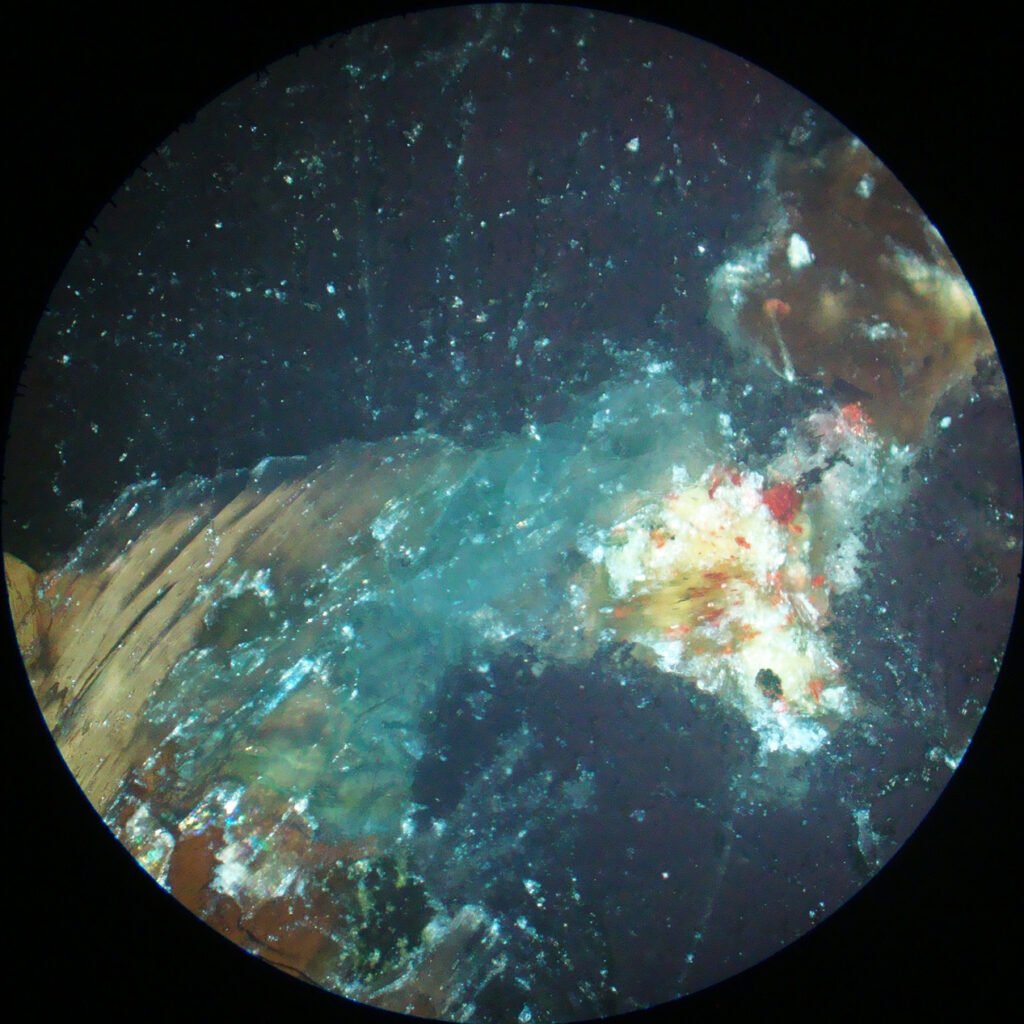
Color: Light blue, blue-gray, green, green-gray, rarely pink or yellow-brown.
Habit: Granular, massive, can be tabular.
Cleavage: {100} poor, {001} poor, {010} poor.
Tenacity: Brittle.
Twinning: Rare, according to {010}.
Fracture: Irregular, subconchoidal.
Mohs Hardness: 7.5
Parting: No.
Streak: Colorless.
Lustre: Vitreous.
Diaphaneity: Transparent.
Density (g/cm³): 3.4 – 3.5
2. Geology and Deposits
Sapphirine is a very rare mineral that occurs in high-temperature metamorphic rocks or xenoliths, provided they are rich in Al and Mg and poor in silica.
It can occur as a primary magmatic mineral in silica-undersaturated rocks.
It occurs in rocks of the granulite and amphibolite facies, calc-silicate skarns, and quartzites.
3. Mineral Associations
It associated with quartz, feldspars (plagioclase), micas (muscovite, phlogopite), pyroxenes, sillimanite, kyanite, kornerupine, corundum, garnet, chrysoberyl, spinel, scapolite, and surinamite.
In skarns, it is associated with calcite.
4. Transmitted Light Microscopy
Refraction indices: nα: 1.701 – 1.729 nβ: 1.703 – 1.732 nγ: 1.705 – 1.734
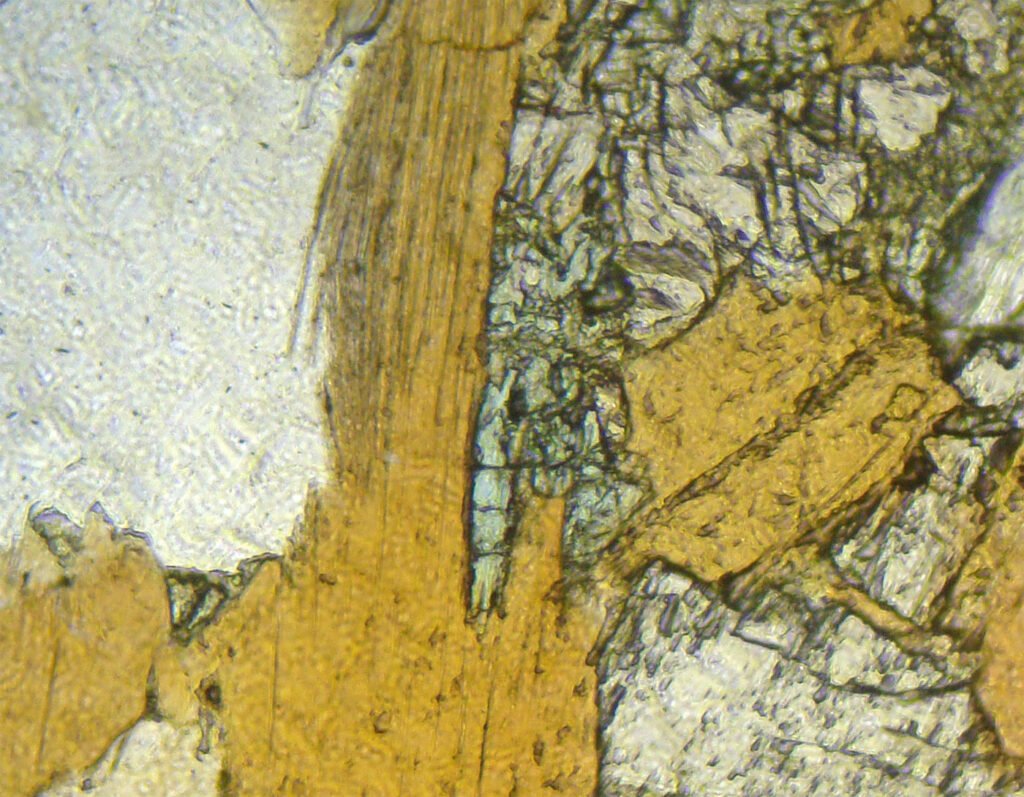
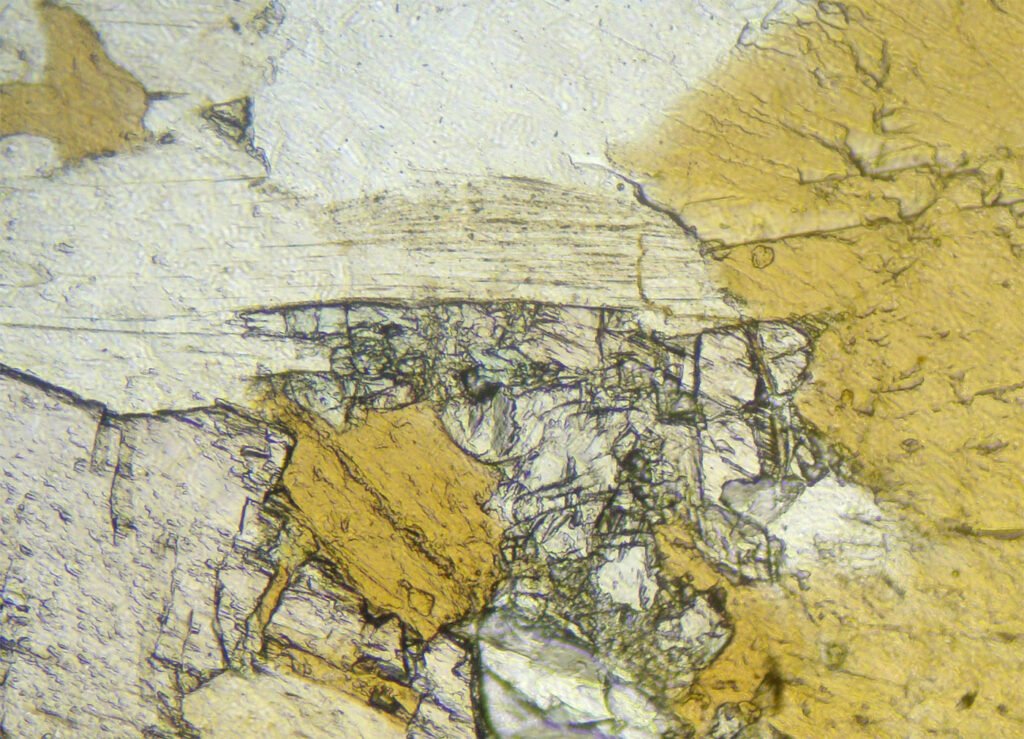
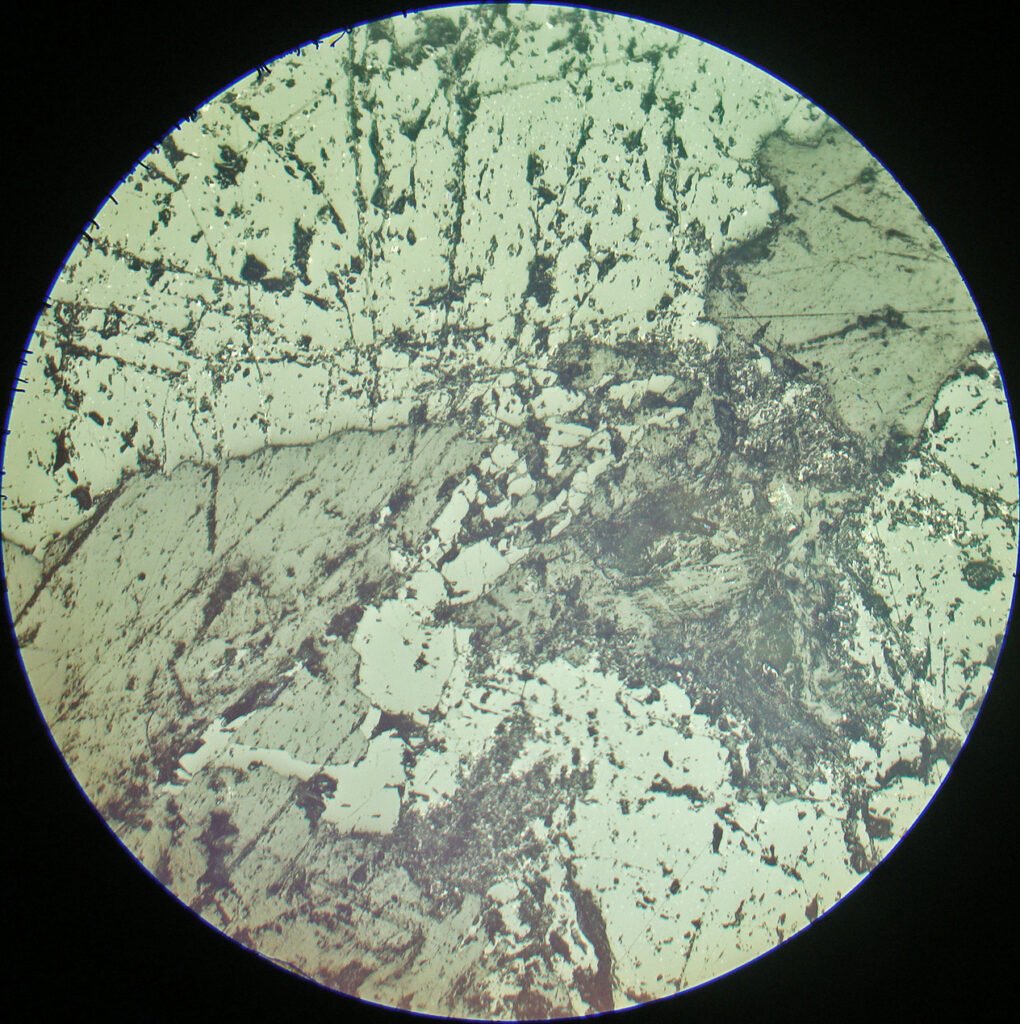
PLANE POLARIZED LIGHT – PPL
Color / Pleochroism: Colorless or blue or pink, with very evident pleochroism between:
X = pinkish, yellowish, discreet smoky brown, colorless,
Y = sky blue, sapphire blue, greenish blue and
Z = dark sky blue, dark sapphire blue.
Relief: High.
Cleavage: Distinct cleavage in {010} and poor in {100} and {001}.
Habits: It generally exhibits an anhedral granular habit, with grains dispersed throughout the rock. It can also be tabular or in aggregates.
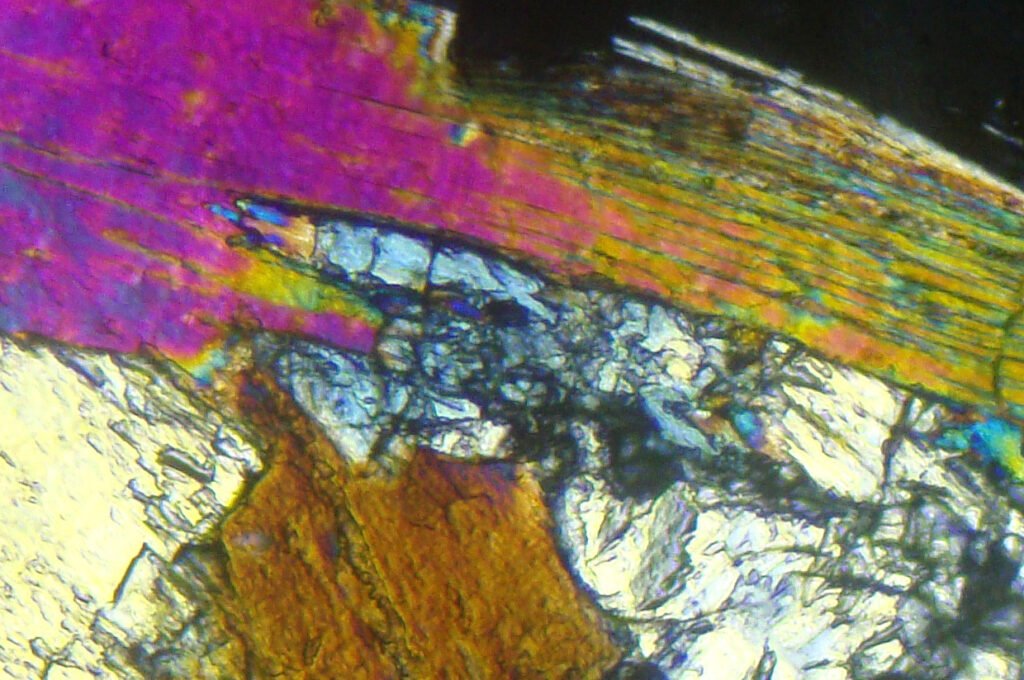
CROSSED POLARIZED LIGHT – XPL
Birefringence and Interference Colors: Maximum birefringence of 0.004 to 0.005, corresponding to dark colors of the 1st order, between black and dark gray, which may be masked by the intense colors inherent to the mineral.
Extinction: Oblique of 6 to 9 degrees; can simulate parallel extinction.
Elongation sign: No information available.
Twins: Rare, according to {010}.
Zoning: No.
CONVERGENT LIGHT
Character: B(-)
2V angle: 51 – 69º
Alterations: No information available.
May be confused with: The high relief, the blue colors with pleochroism, and the low birefringence are very characteristic. When the grains occur in small sizes and are dispersed in the rock, it easily goes unnoticed.