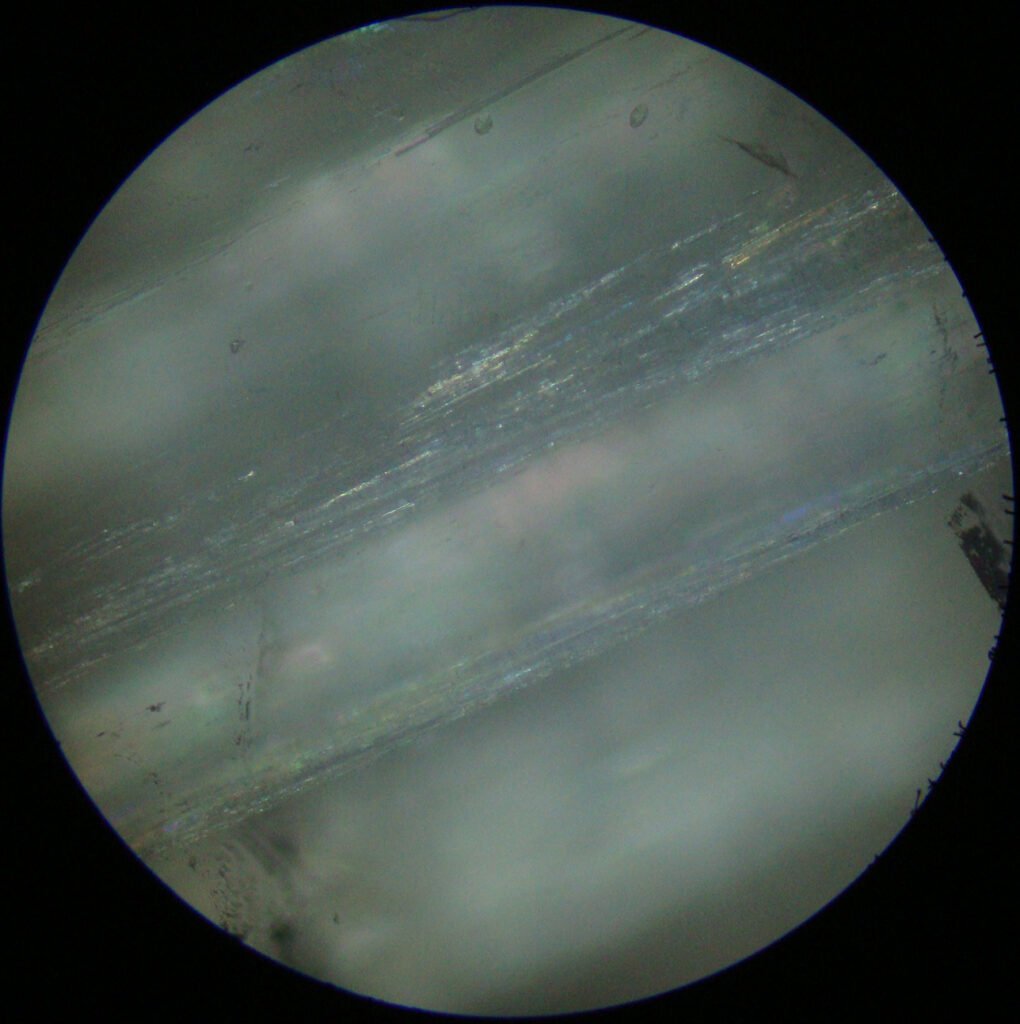
1. Characteristics
Crystal system: Monoclinic domatic.
Color: Colorless, white, more rarely pink, salmon, green or red.
Habit: Long prismatic, in radial aggregates may be pseudo-orthorhombic.
Cleavage: {110} perfect, {1-10} perfect. Striations // (001).
Tenacity: Brittle.
Twinning: Usually twinned according to {100}, with the twinning axis on [001], forming contact or interpenetration twinnings.
Fracture: Irregular.
Mohs Hardness: 5 – 5.5
Parting: No.
Streak: White.
Lustre: Vitreous, silky when fibrous.
Diaphaneity: Transparent.
Density (g/cm³): 2.25 – 2.29
2. Geology and Deposits
Scolecite is a mineral typically found in cavities and fractures in basaltic rocks. It also occurs associated with gneisses and amphibolites. It can occur in syenitic and gabbroic bodies.
A detailed account of the occurrence, forms and other aspects of scholecite can be found in the book “Zeolites of the World” by Rudy Tschernich, available for download on the internet. Detailed information on the various ways scolecite occurs can be found on the website of the Commission on Natural Zeolites: http://www.iza-online.org/
3. Mineral Associations
Scolecite occurs associated with the minerals that form the host rocks, generally mafic and ultramafic igneous rocks: olivine, clinopyroxene (augite, pigeonite), plagioclase (labradorite), magnetite, ilmenite, chalcopyrite, pyrite, native copper and others.
It composes the assembly of secondary minerals, with celadonite, calcite, macrocrystalline quartz, chalcedony, fluor-apophyllite, powellite, prehnite, datolite and other zeolites (heulandite, laumontite, stilbite, epistilbite, chabazite, etc.).
In tectonic cracks occurs with quartz, chlorite and adular.
4. Transmitted Light Microscopy
Refraction indices: nα: 1.507 – 1.513 nβ: 1.516 – 1.520 nγ: 1.517 – 1.521
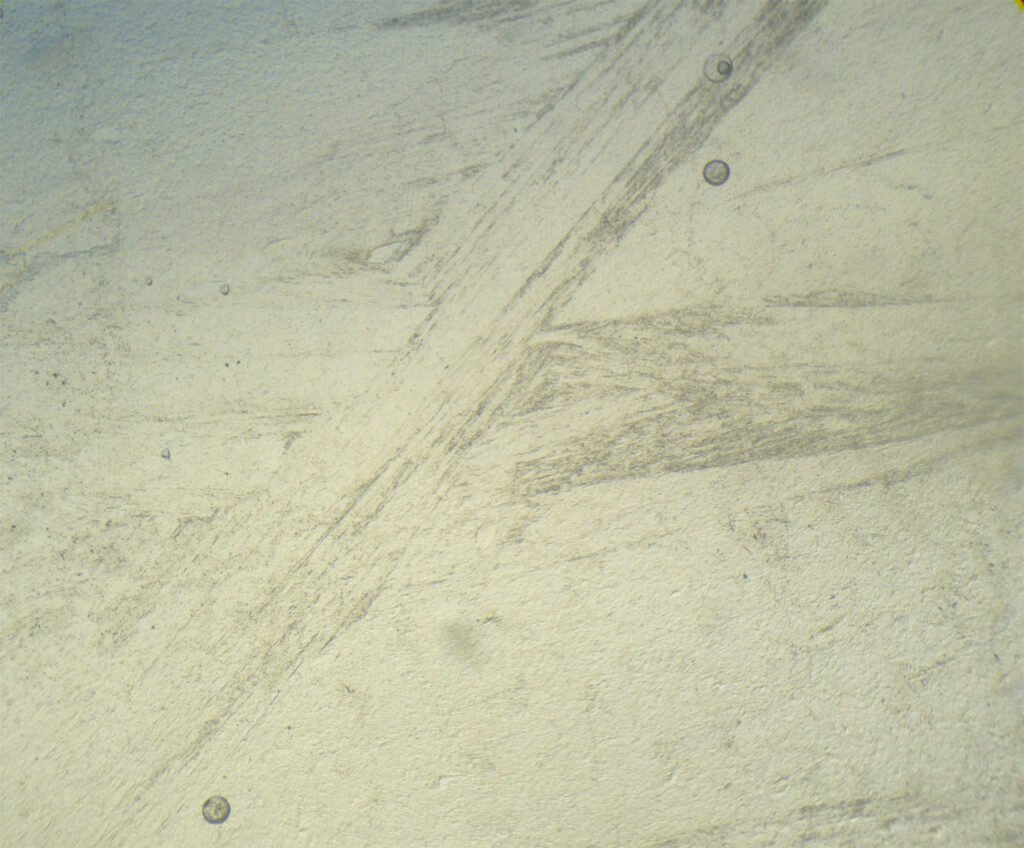
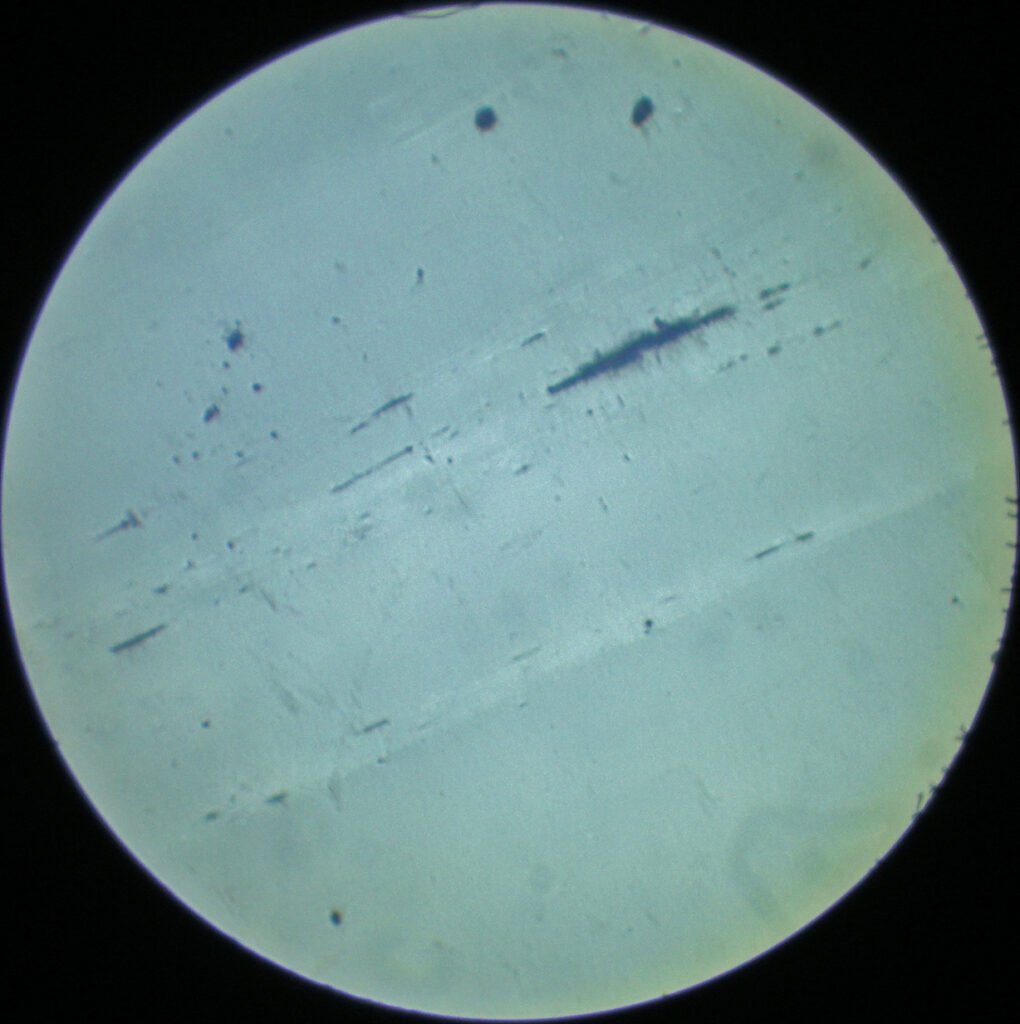
PLANE POLARIZED LIGHT – PPL
Color / Pleochroism:Colorless.
Relief: Low.
Cleavage: {110} perfect, usually not visible under a microscope.
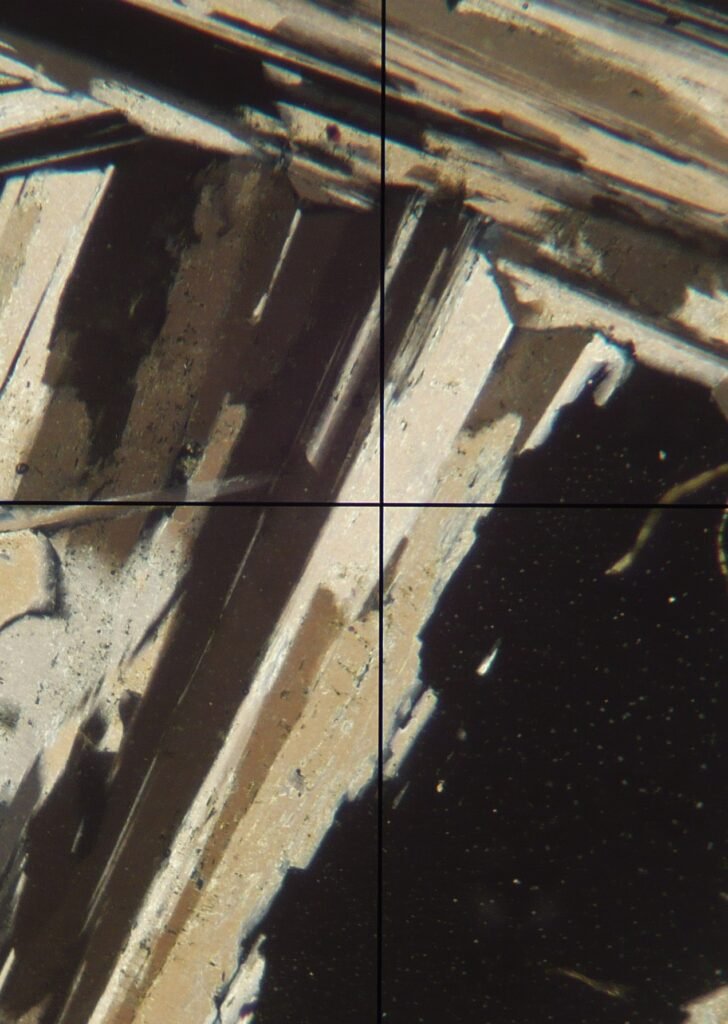
Habits: Long prismatic, very typical, forming radiated aggregates. More rarely fibrous, nodular or massive.
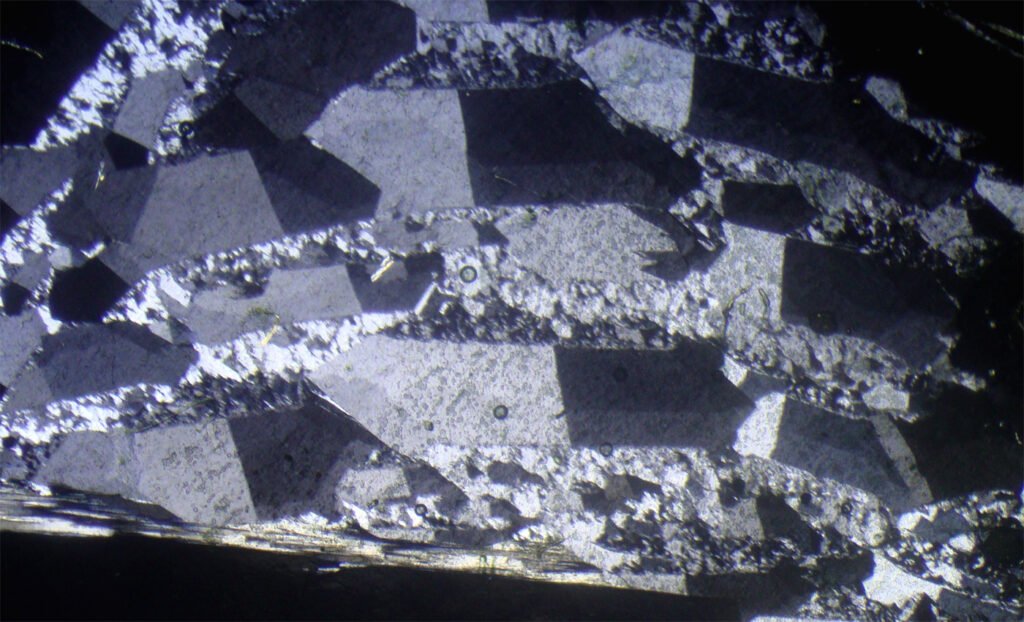
It can have V-shaped endings when it is twinned, which is very common.
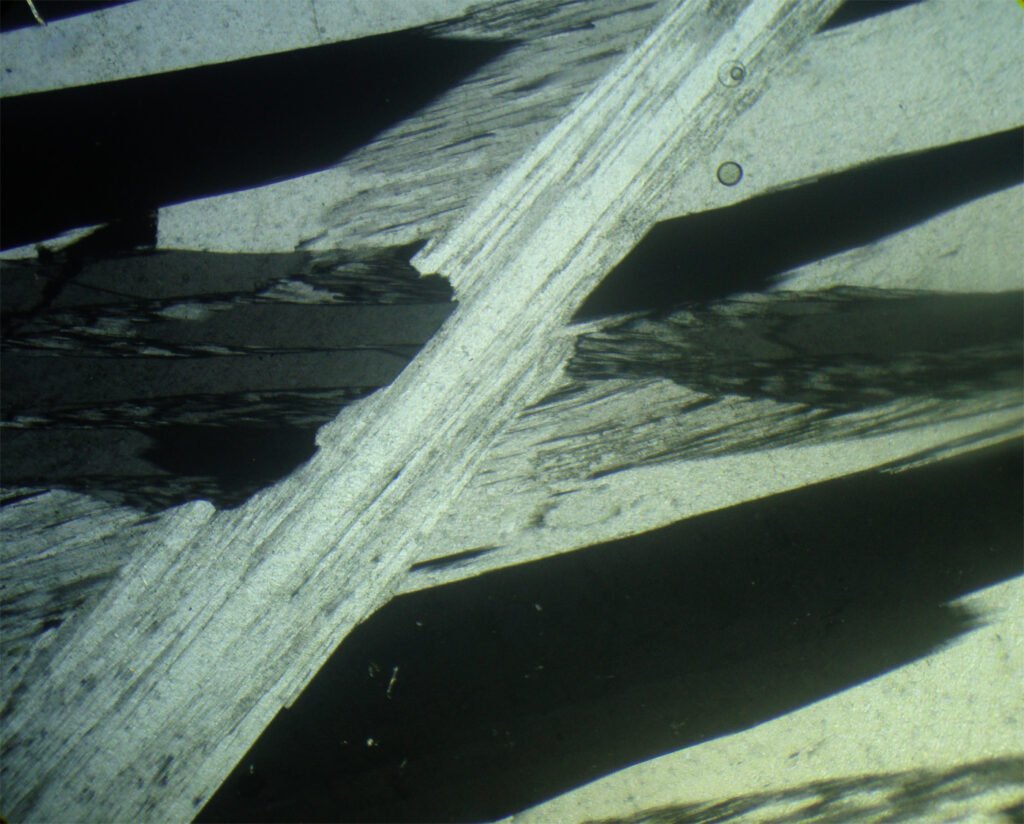
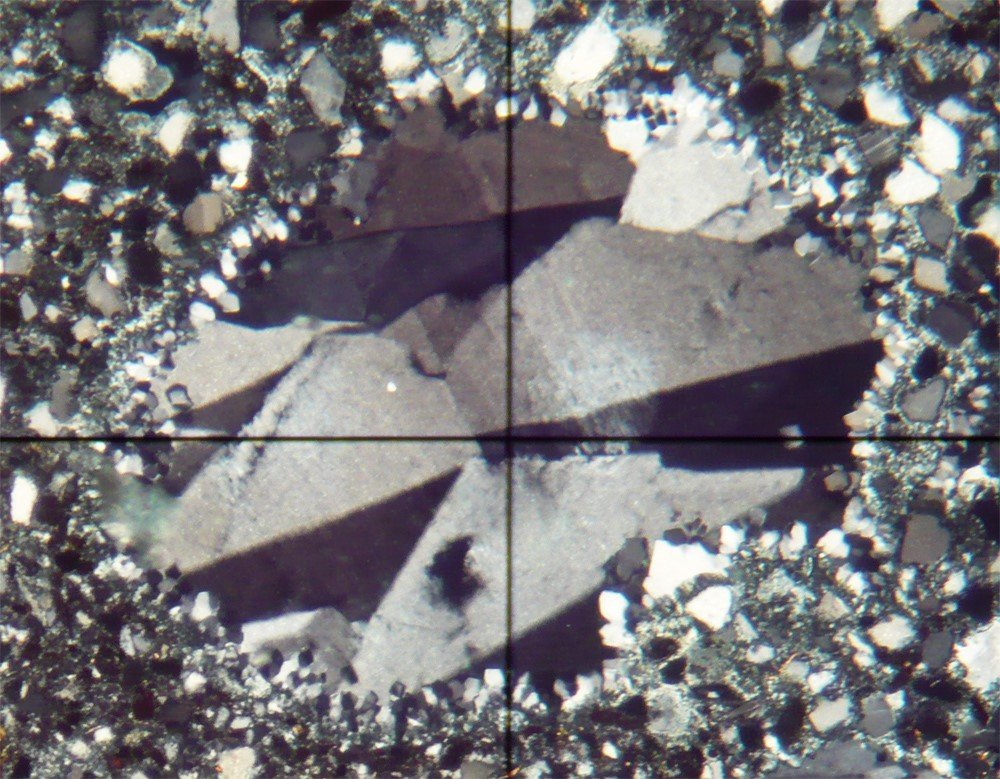
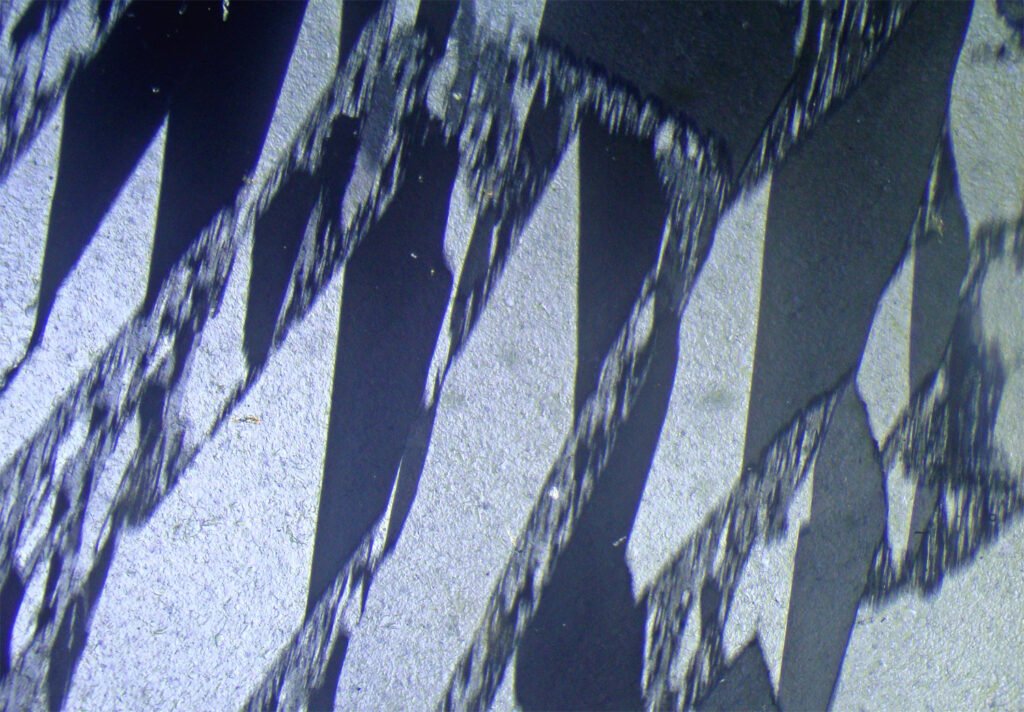
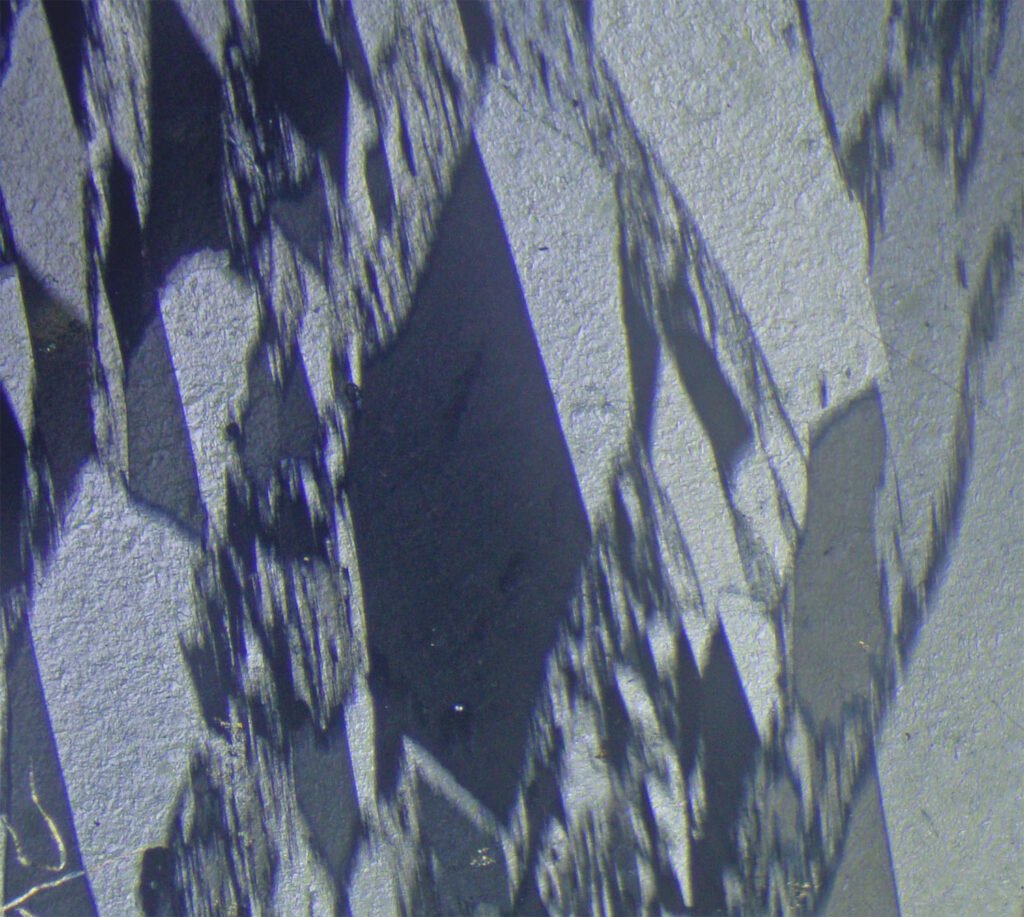
CROSSED POLARIZED LIGHT – XPL
Birefringence and Interference Colors: 0.011 to 0.012: 1st order medium colors – light gray to white, not reaching 1st order straw yellow (like all common zeolites).
Extinction: Oblique, of 15 – 18º.
Elongation sign: ES(-) (diagnostic!)
Twins: Very common on {100}, visible in both longitudinal and basal sections. They are interpenetration and contact twins.
Zoning: No.
CONVERGENT LIGHT
Character: B(-)
2V angle: 36 – 56º
Alterations: No information available.
May be confused with: very similar to other zeolites with a long prismatic habit.
Natrolite and mesolite, the other two members of the series are extremely similar, but natrolite shows ES(+).
Thomsonite shows much higher interference colors and is ES(+).