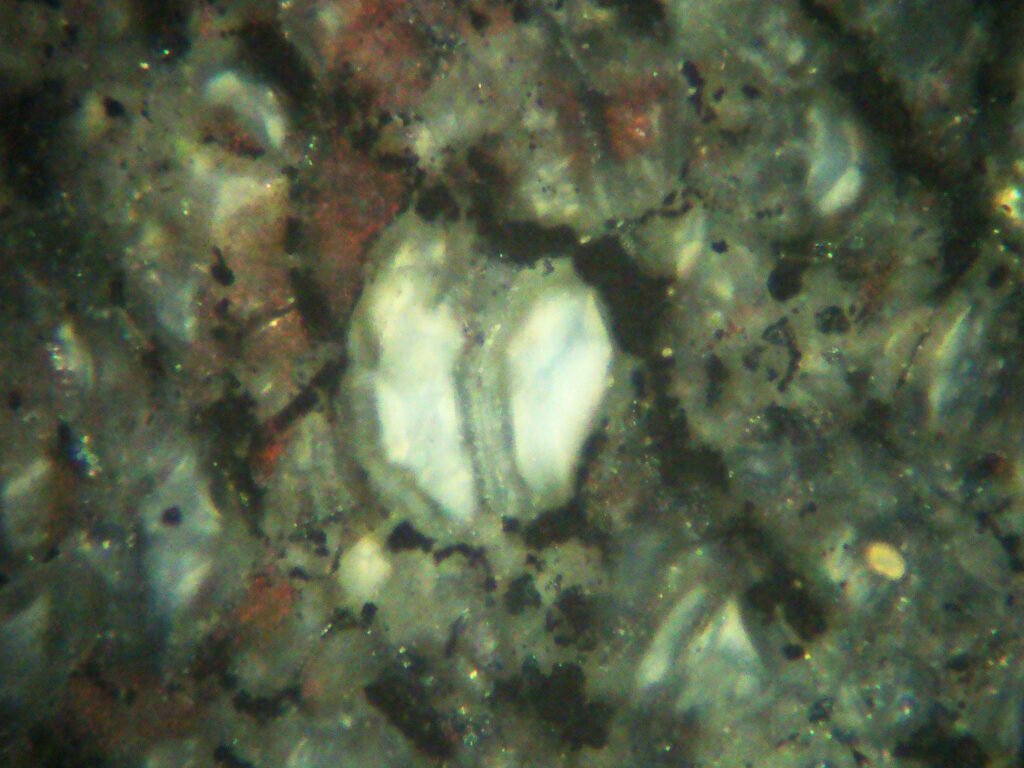
1. Characteristics
Crystal system: Hexagonal, pseudo-ortorhombic.
Color: Green, pale yellow, white.
Habit: Usually in extremely small flakes. Massive, tabular crystals up to 2 mm.
Cleavage: {0001} perfect.
Tenacity: Flexible.
Twinning: No.
Fracture: No information available.
Mohs Hardness: 2.5
Parting: No.
Streak: White.
Lustre: Waxy.
Diaphaneity: Transparent.
Density (g/cm³): 2.55
2. Geology and Deposits
Serpentine is a mineral that occurs in mafic to ultramafic rocks that have undergone hydrothermal metamorphism, with serpentine replacing olivine and pyroxene. In these rocks, olivine and pyroxene crystals partially substituted by serpentine may occur. Rocks composed of serpentine are known as serpentinites.
Lizardite is a product of retrometamorphism, typically from lower temperatures (<250º), replacing olivine, orthopyroxene and other minerals in ultramafic igneous rocks. It has three varieties and two polytypes.
Chrysotile also is from lower temperatures (<250º), has three varieties and three polytypes.
Antigorite is the high temperature serpentine (>250º) and has eight varieties.
3. Mineral Associations
Serpentine occur associated with common minerals such as quartz, feldspars (albite), pyroxenes (diopside), amphiboles (actinolite, hornblende-(Fe)), garnet (grossular, andradite), titanite, epidote and olivine.
With other phyllosilicates such as talc and chlorite (clinochlore), as well as with “asbestos” (acicular or fibrous minerals, these can be pyroxenes or, more commonly, amphiboles).
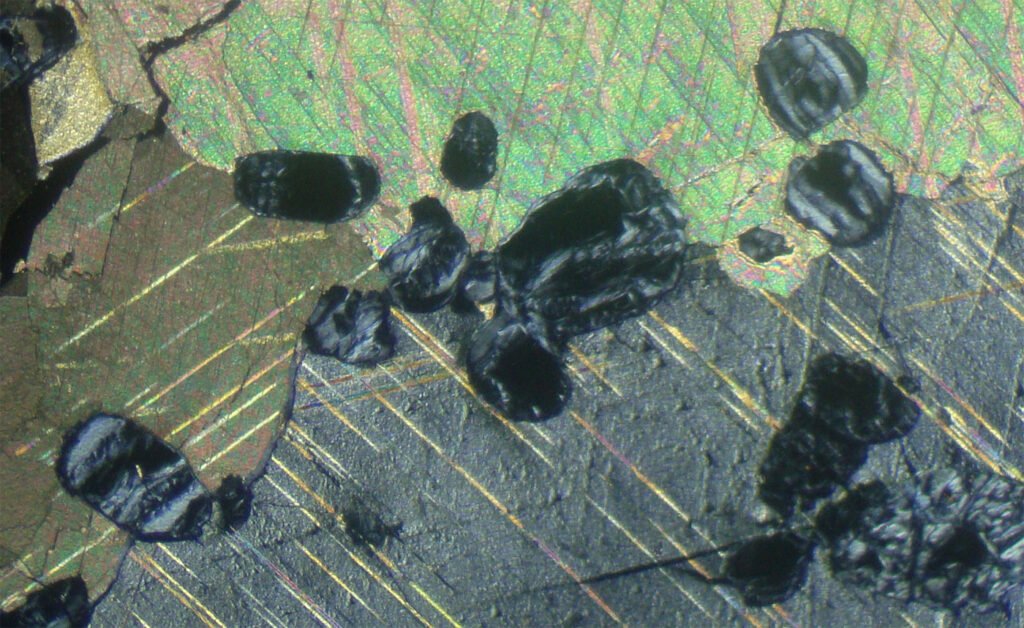
It occurs also with carbonates (calcite, dolomite, magnesite, hydromagnesite, hydrotalcite), oxides (hematite, magnetite, ilmenite, chromite, chromite-(Mg)) and hydroxides (brucite).
With rarer minerals such as chondrodite, deweylite, bultfonteinite and stichite.
4. Transmitted Light Microscopy
Refraction indices: nα: 1.583 – 1.554 nβ: 1.546 – 1.560 nγ: 1.546 – 1.560
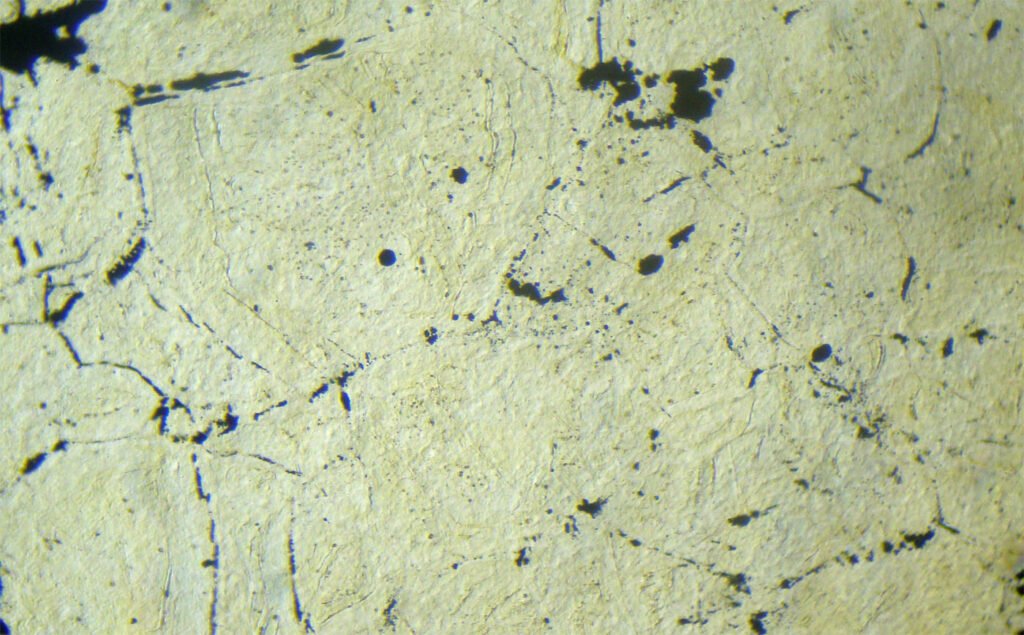
PLANE POLARIZED LIGHT – PPL
Color / Pleochroism: Colorless to faint green. Pleochroism absent or weak in pale green tones:
X,Y = yellow-green,
Z = pale green.
Relief: Low.
Cleavage: Antigorite: {001} perfect; lizardite: basal cleavage; chrysotile: fibrous, has no cleavage. Usually the cleavage of antigorite and lizardite is not visible under the microscope.
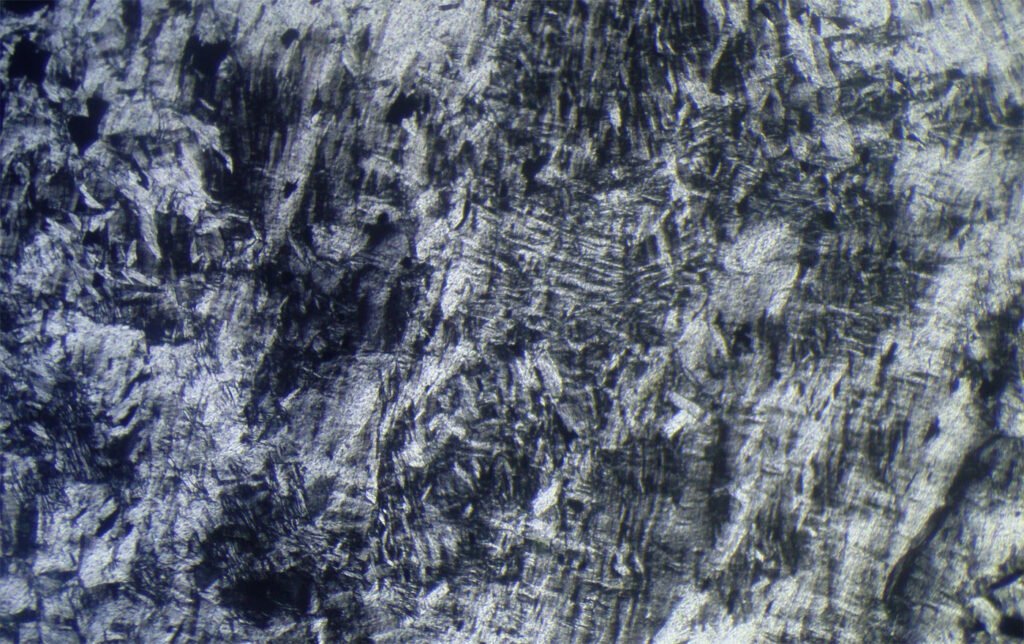
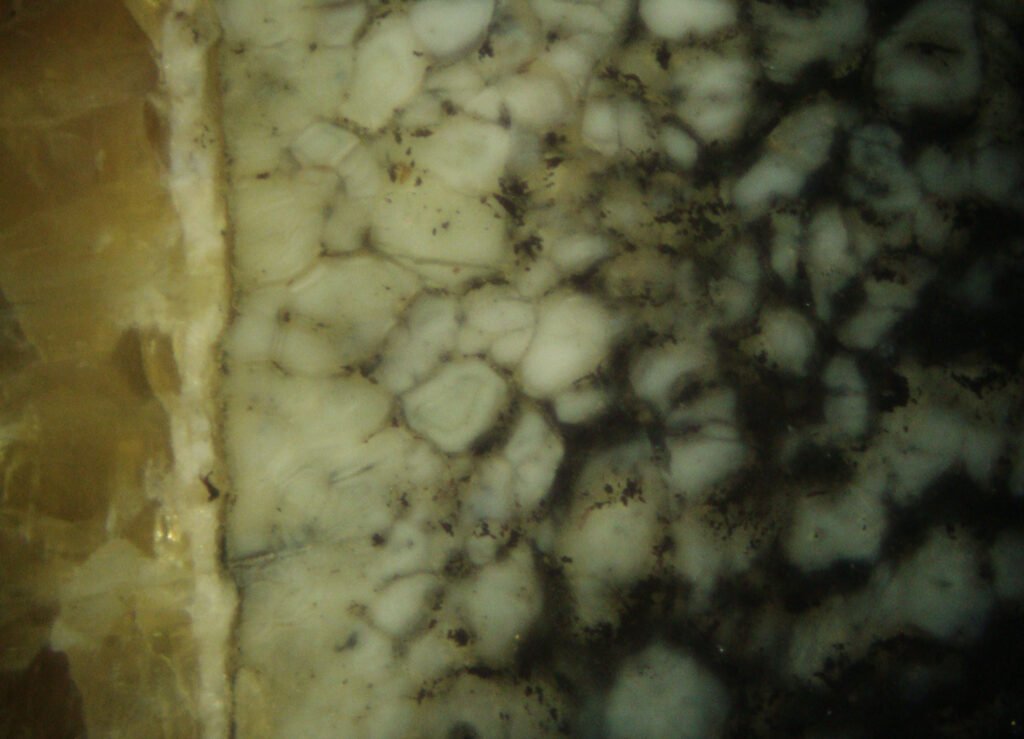
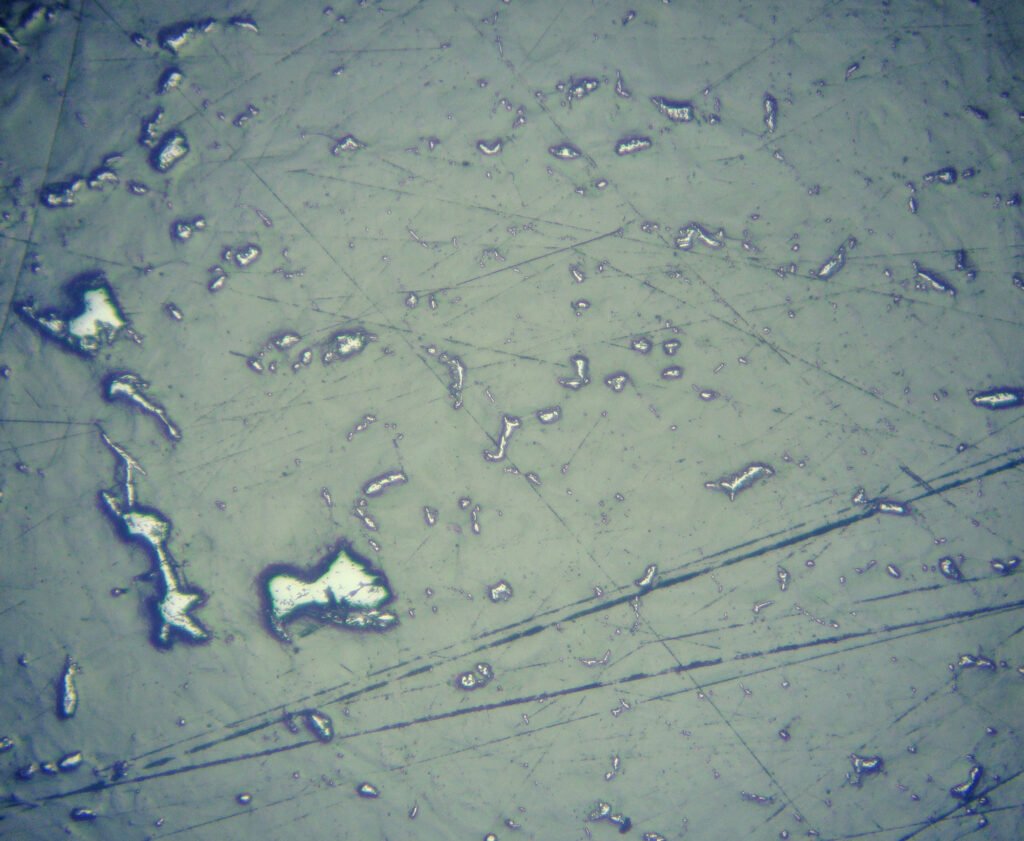
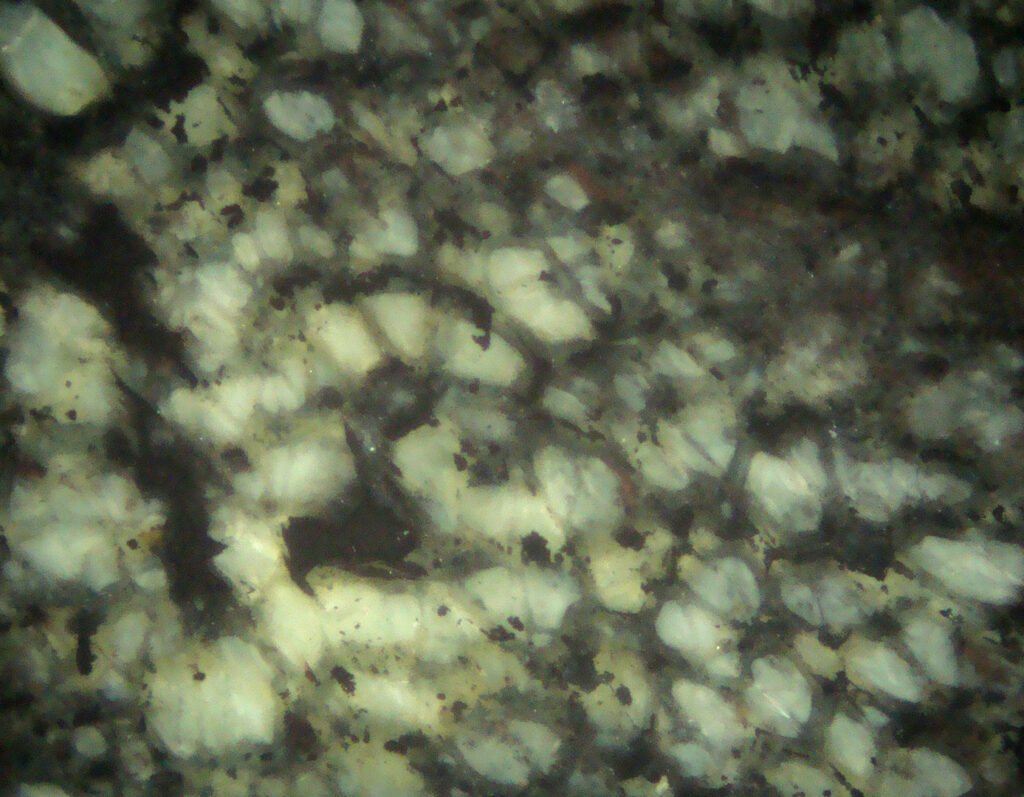
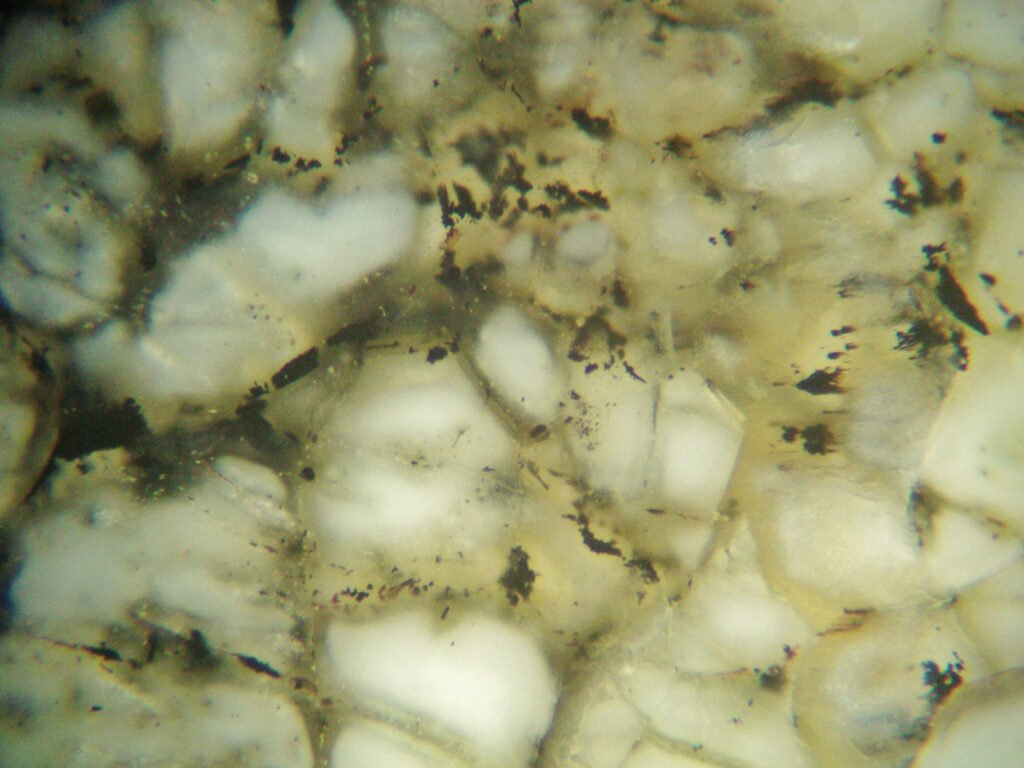
Habits: Anhedral, very small grains, asbestiform habit (fibers ± parallel), foliate, mesh texture (mesh texture in minerals altering serpentine), no pleochroic halos. Chrysotile is fibrous, lizardite and antigorite tend to be tabular, laminar crystals, but lizardite can also be fibrous.
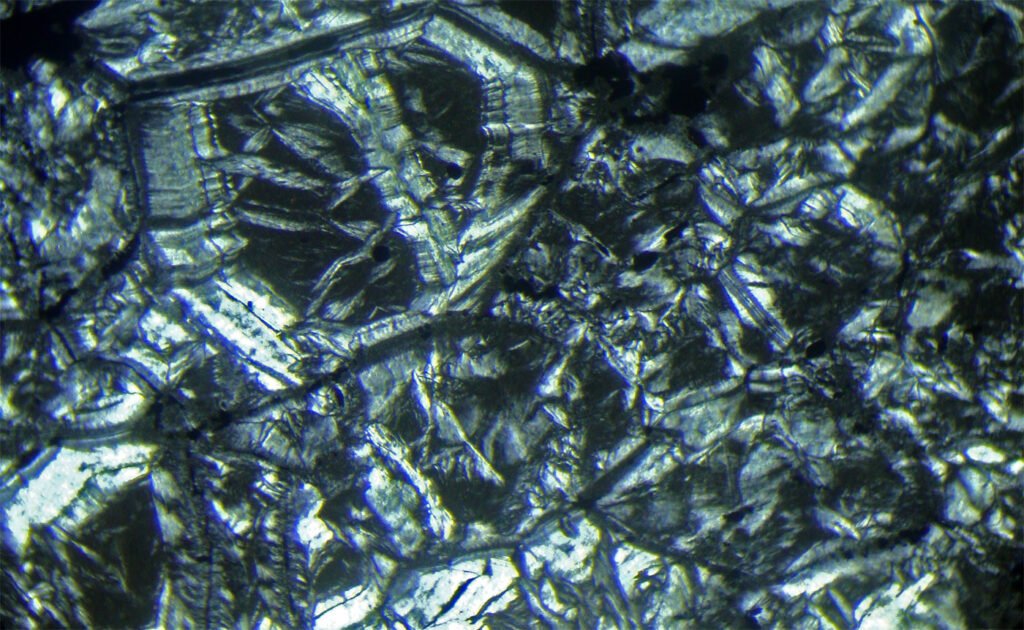
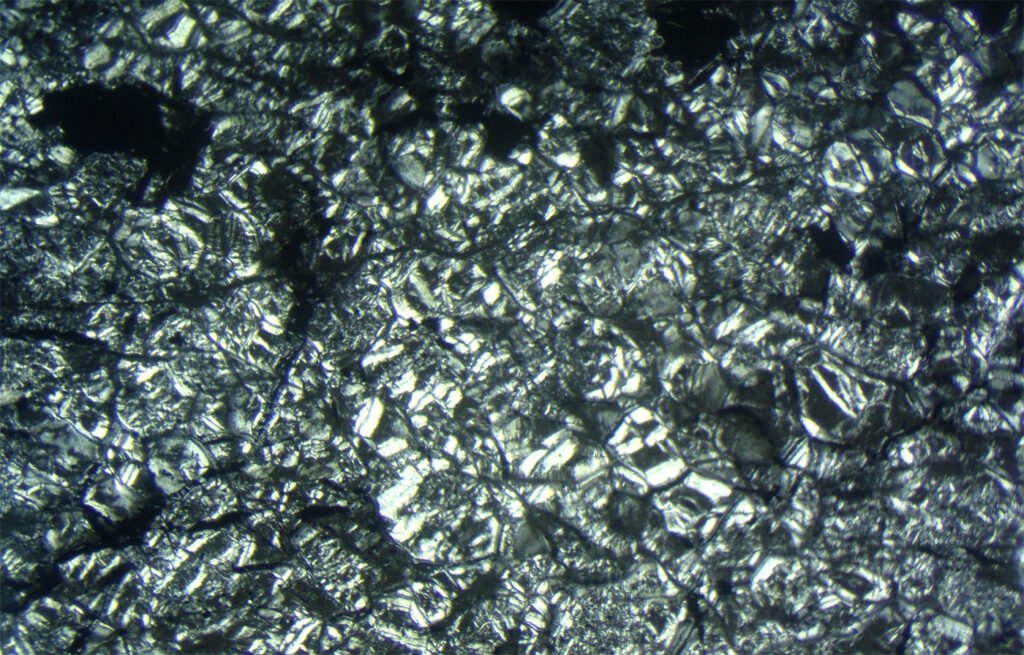
CROSSED POLARIZED LIGHT – XPL
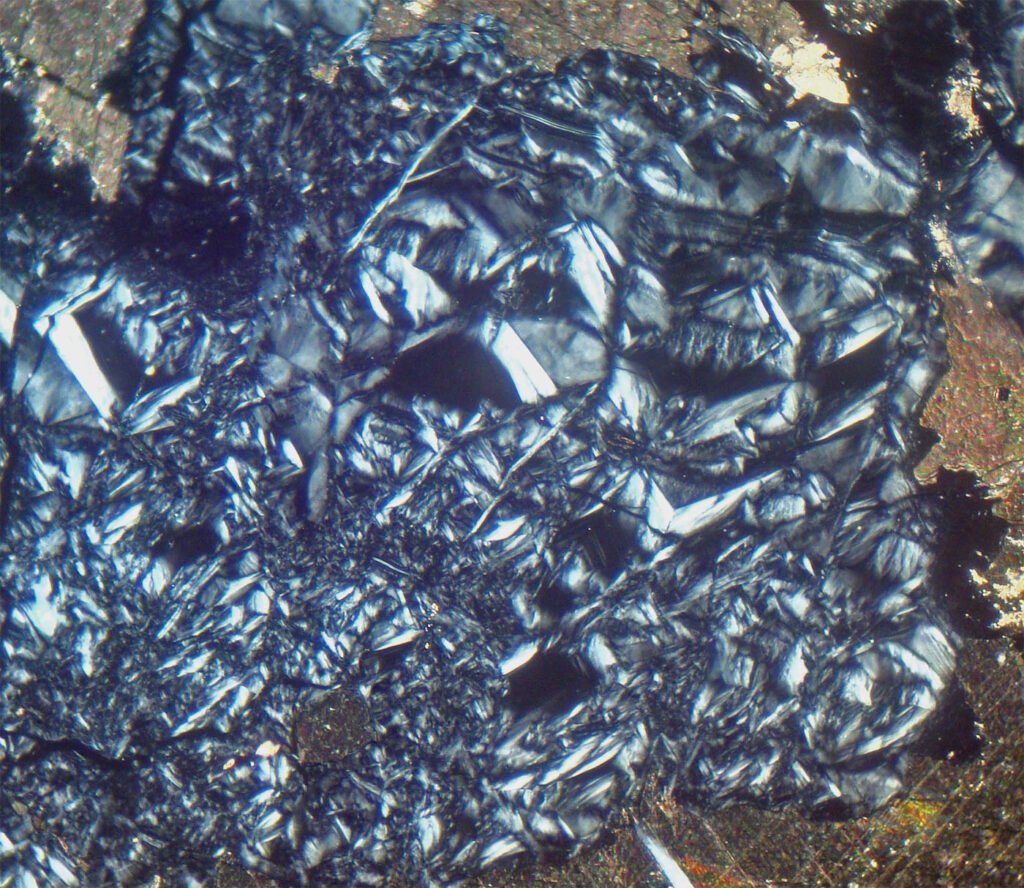
Birefringence and Interference Colors: Birefringence from 0.001 to 0.01: corresponds to 1st order medium colors, gray in various shades and white, at most pale yellow, does not reach orange.
Extinction: Parallel to fibers, cleavage or crystalline boundaries.
Elongation sign: ES(+) or ES(-), itis not diagnostic.
Twins: Rare.
Zoning: No.
CONVERGENT LIGHT
Character: B(-). Almost always the crystals are so small that it is impossible to obtain interference figures.
2V angle: 10 – 90º, it can be almost zero. Simulates being uniaxial!
Alterations: chrysotile alters to antigorite under low-grade metamorphism conditions. Antigorite alters to talc.
May be confused with: with the exception of chrysotile when it occurs as parallel fibers in veins (fibers perpendicular to the direction of the veins), the 3 members can only be differentiated by X-Ray Diffractometry. As serpentine is often a product of alteration, it occurs in bands or zones, mixed with other minerals, which makes their identification difficult.
Chlorite shows weaker plechroism and, in CPL, generally anomalous interference colors.
Low birefringence and low relief differentiate serpentine from fibrous amphiboles and micas.