Crystal system: Ortorhombic bipiramidal.
Color: Generally colorless, may be gray, white, yellow, blue, green or brown.
Habit: Almost always long prismatic to fibrous. Square basal sections.
Cleavage: {010} perfect.
Tenacity: Brittle.
Twinning: No.
Fracture: Irregular.
Mohs Hardness: 6.5 – 7.5
Parting: No.
Streak: White.
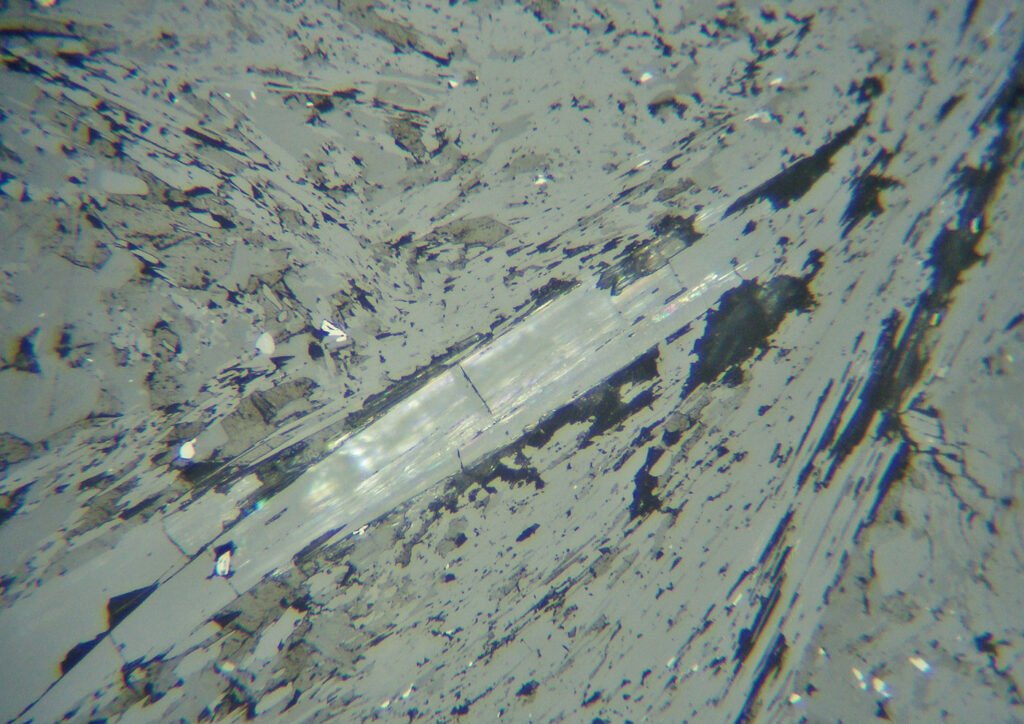
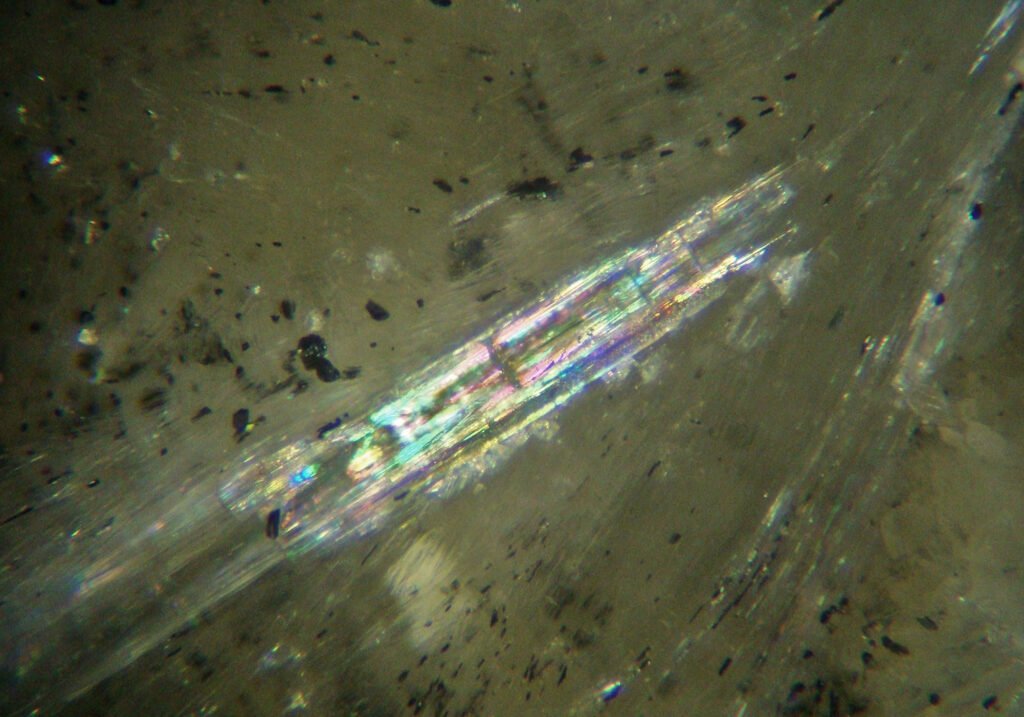
Lustre: Subvitreous, silky.
Diaphaneity: Transparent.
Density (g/cm³): 3.23 – 3.27
2. Geology and Deposits
Sillimanite is a high-pressure, high-temperature Al2SiO5 Group polymorph. It occurs in pelitic metamorphic rocks with high Al content, of medium to high grade, such as mica-schists, gneisses (sillimanite-cordierite-gneisses) and cornubianites (sillimanite-biotite-cornubianites).
It is also found in granitic rocks, where it is a common accessory mineral. Occurs in pegmatites. Due to its high hardness, sillimanite can be detrital, occurring in placers and sedimentary rocks.
3. Mineral Associations
Sillimanite occurs associated with quartz, K-feldspar, kyanite, andalusite, garnet (almandine), staurolite, prismatine, mica (muscovite and biotite), cordierite and pyrite.
In rocks with low silica content, it can be associated with corundum.
4. Transmitted Light Microscopy
Refraction indices: nα: 1.653 – 1.661 nβ: 1.657 – 1.662 nγ: 1.672 – 1.683
PLANE POLARIZED LIGHT – PPL
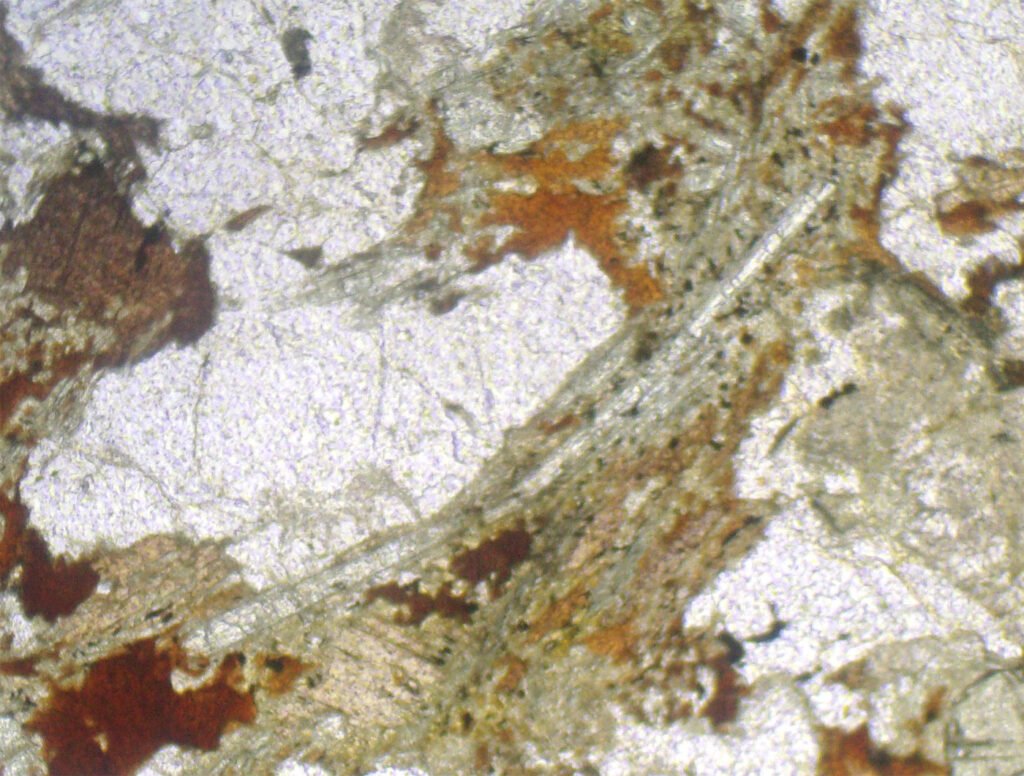
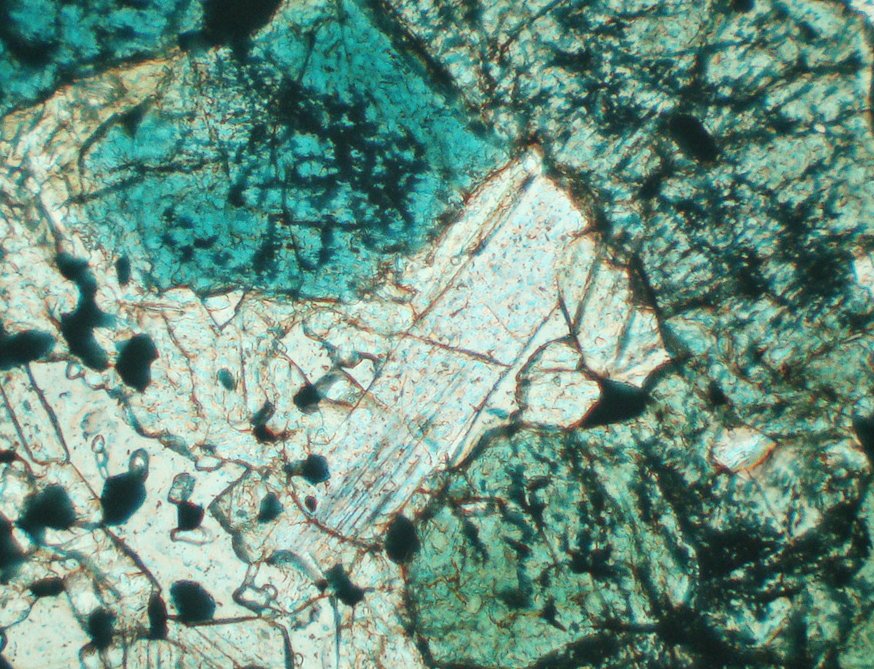
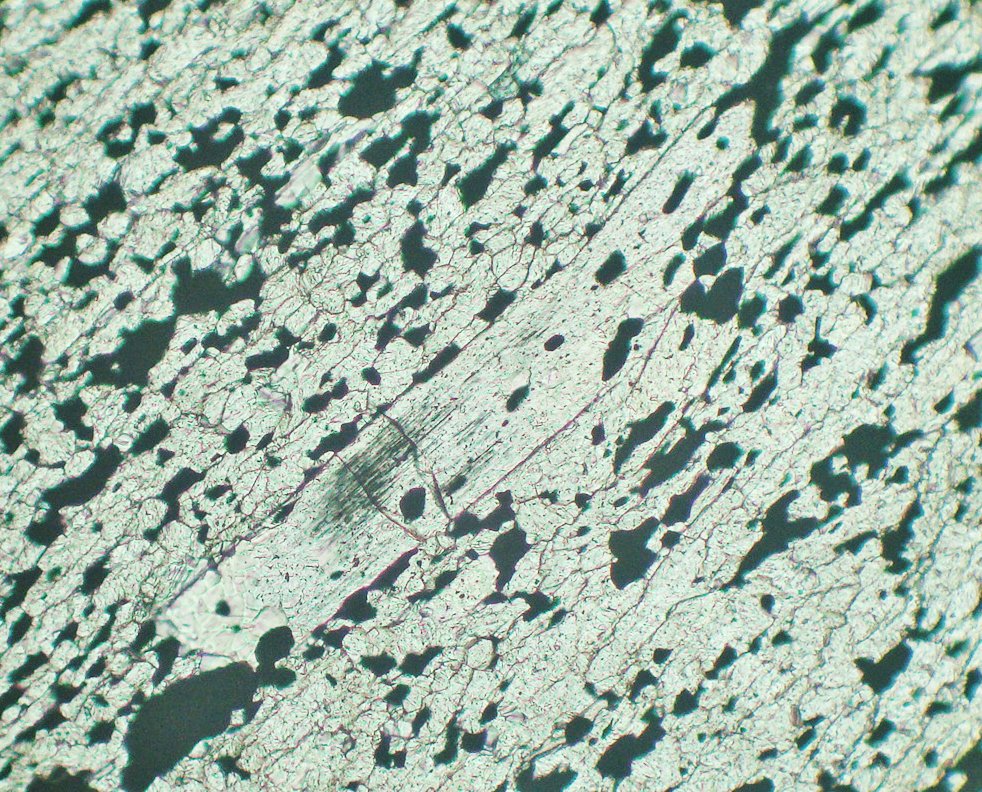
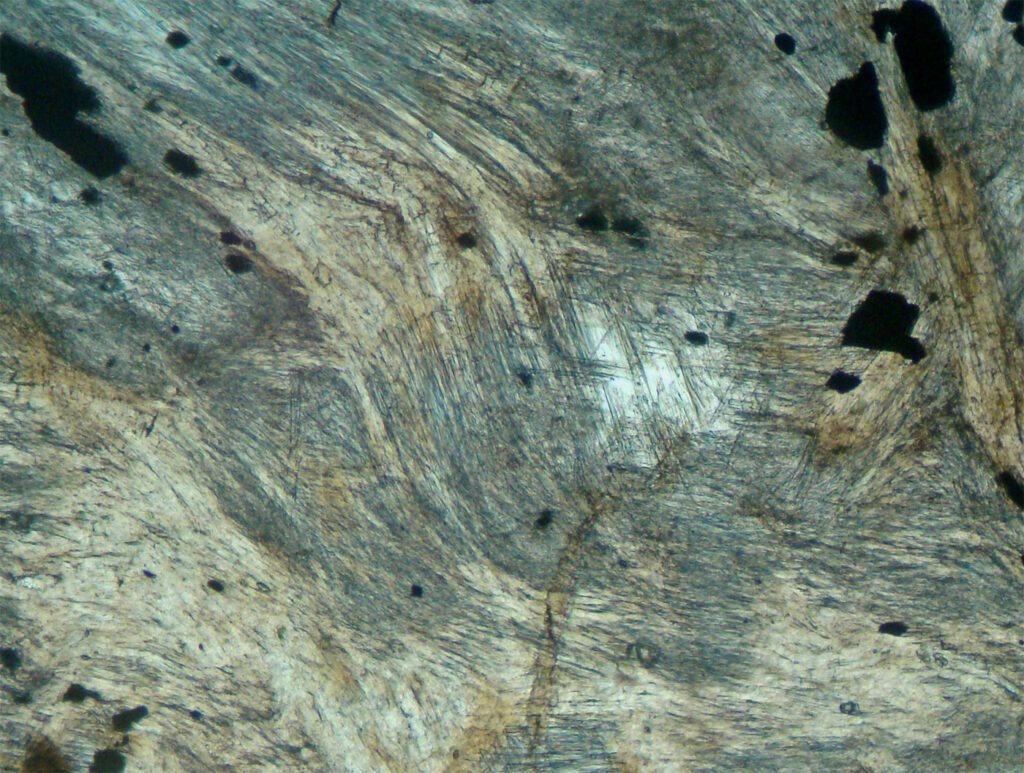
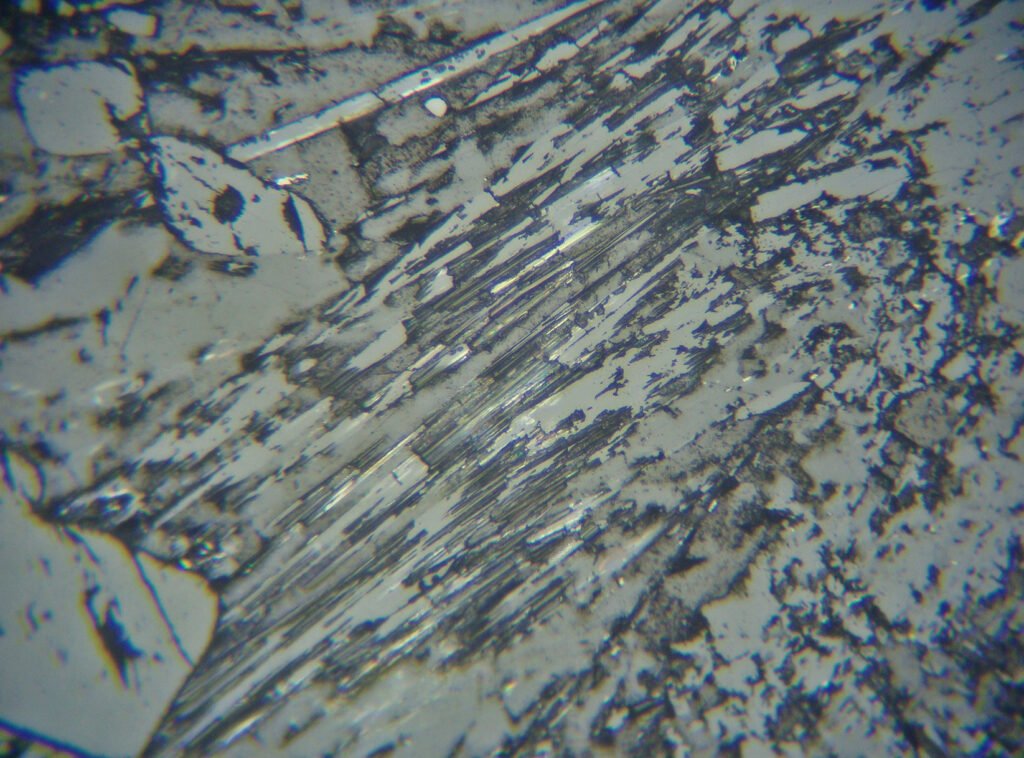
Color / Pleochroism: Colorless, usually without pleochroism. In thick (>30nm) thin sections it can be brownish, yellowish or bluish, in this case it presents weak to moderate pleochroism.
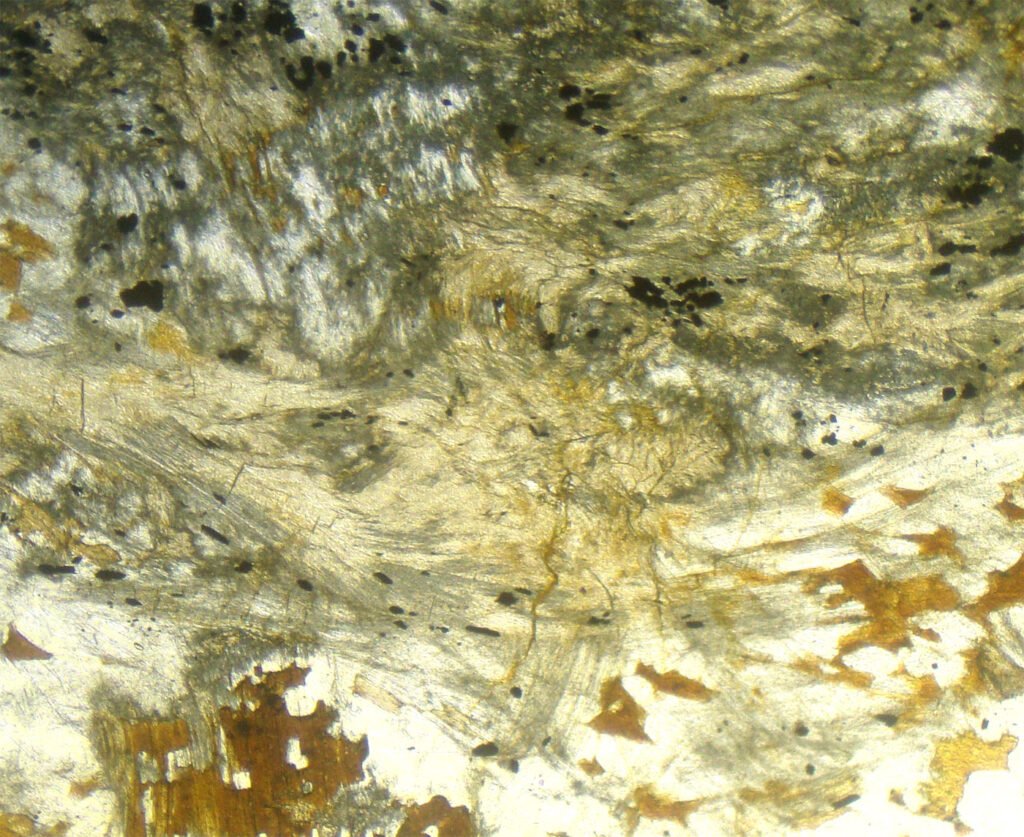
Fibrolite (acicular sillimanite) can be dirty yellowish-brown.
Relief: Moderate to high.
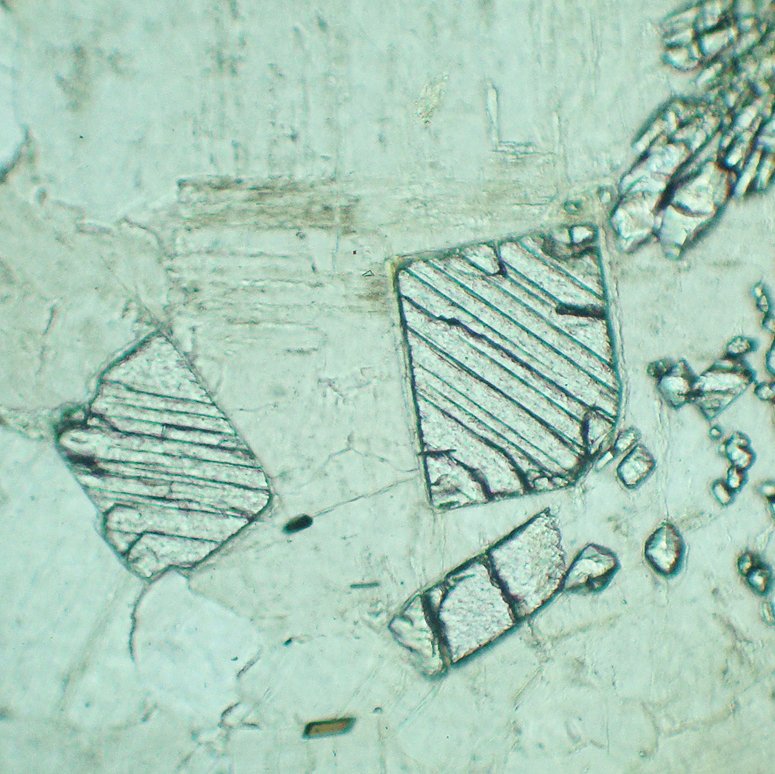
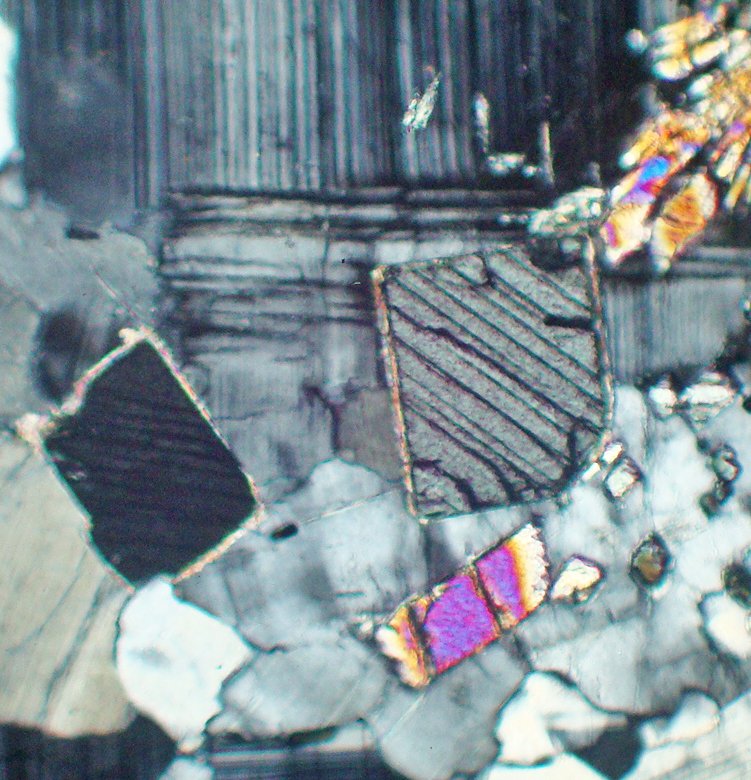
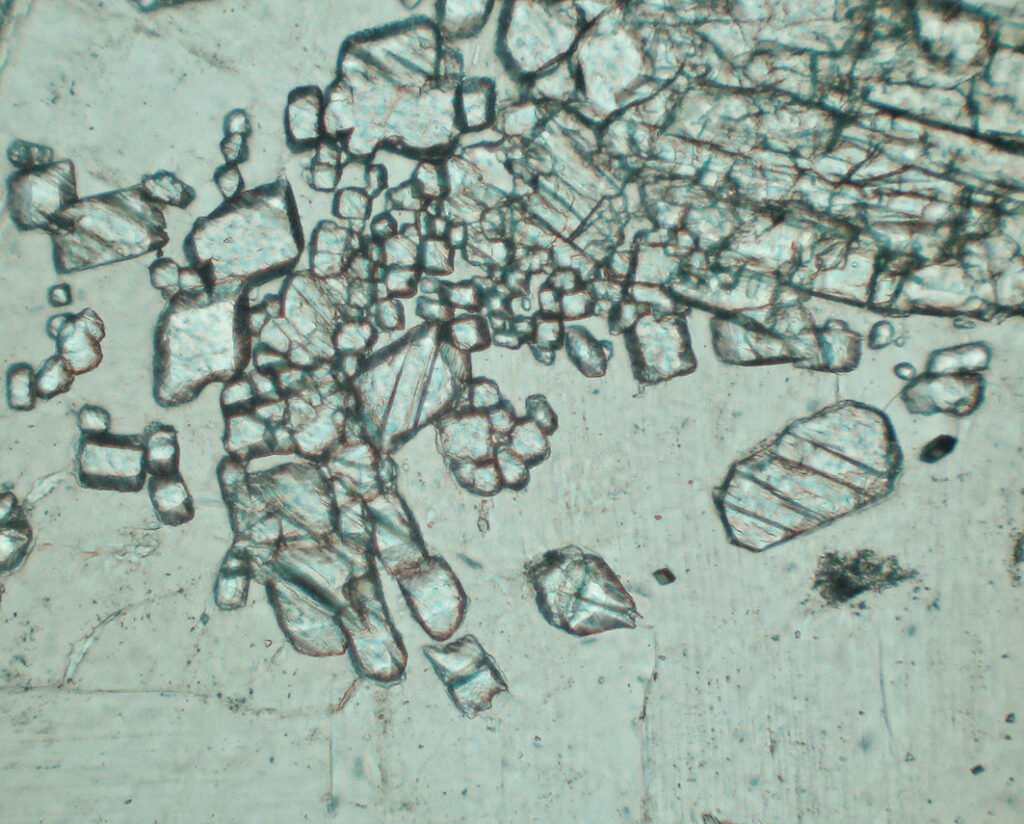
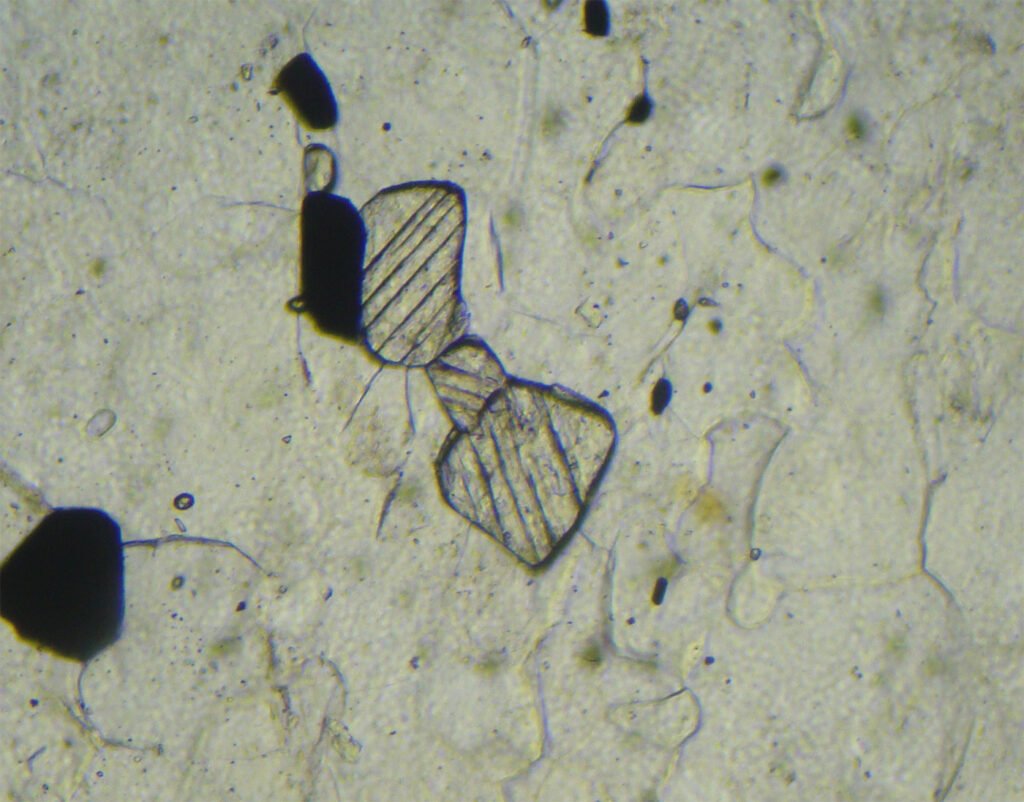
Cleavage: {010} perfect, only visible in larger (wider) crystals, where the cleavage runs parallel to the elongation. In the basal sections, which are pseudotetragonal (square to rectangular), the cleavage is arranged diagonally.
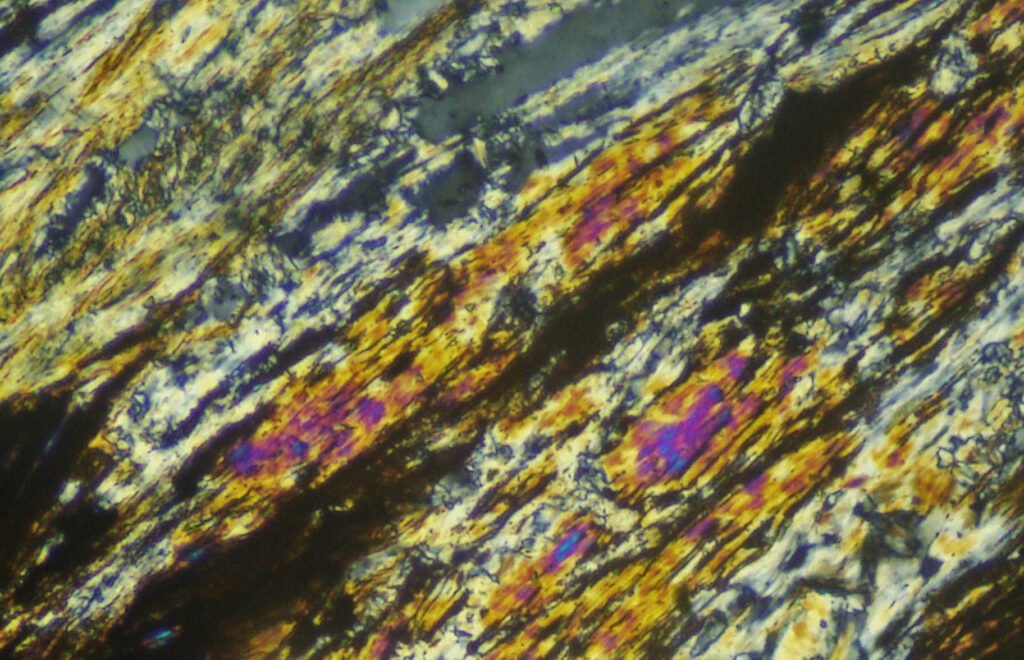
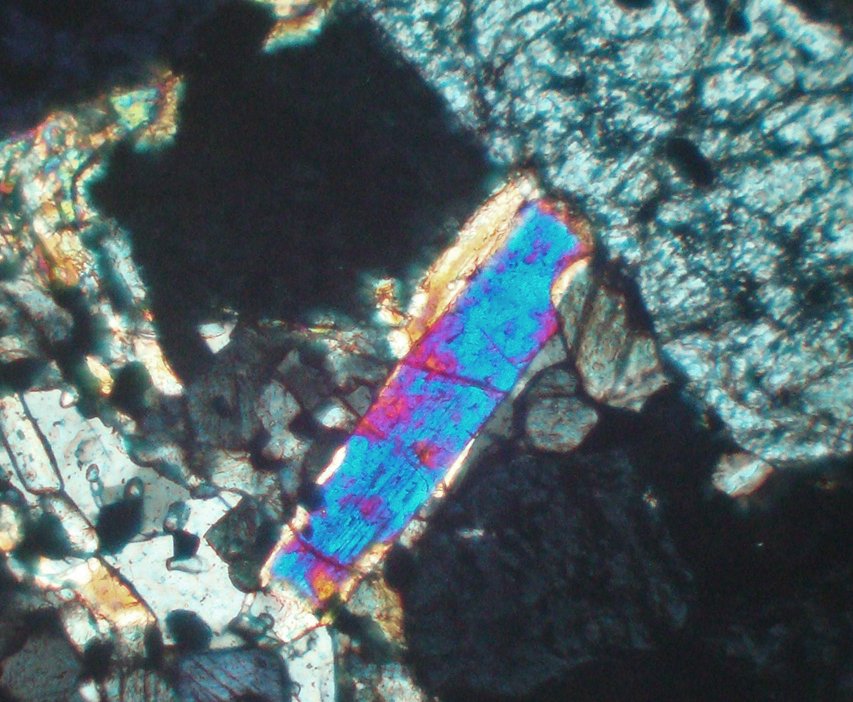
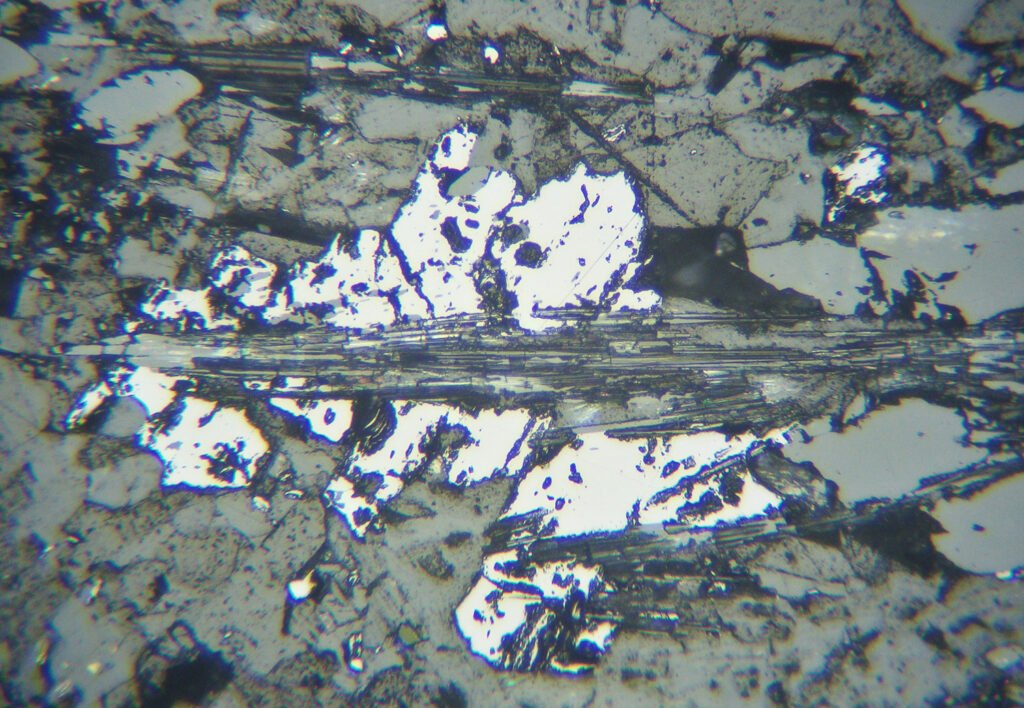
Habits: Typically long prismatic, almost acicular, with fractures perpendicular to the elongation, forming radiated aggregates. Wider prisms show cleavage parallel to the elongation. The sections of these prisms are square (pseudotetragonal), have 1st order gray to white colors, diagonal cleavage (diagnostic!) and an interference figure of excellent quality (perpendicular to the acute bisector). It can be fibrous (then called fibrolite), constituting coiled, twisted, mat-like aggregates.
CROSSED POLARIZED LIGHT – XPL
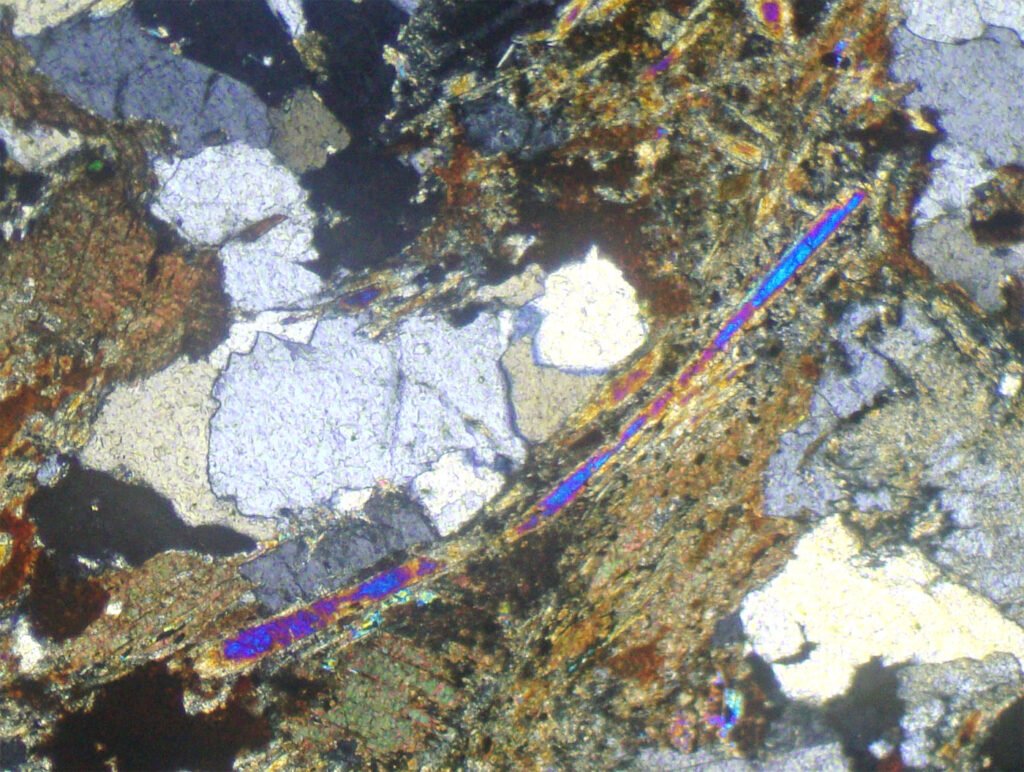
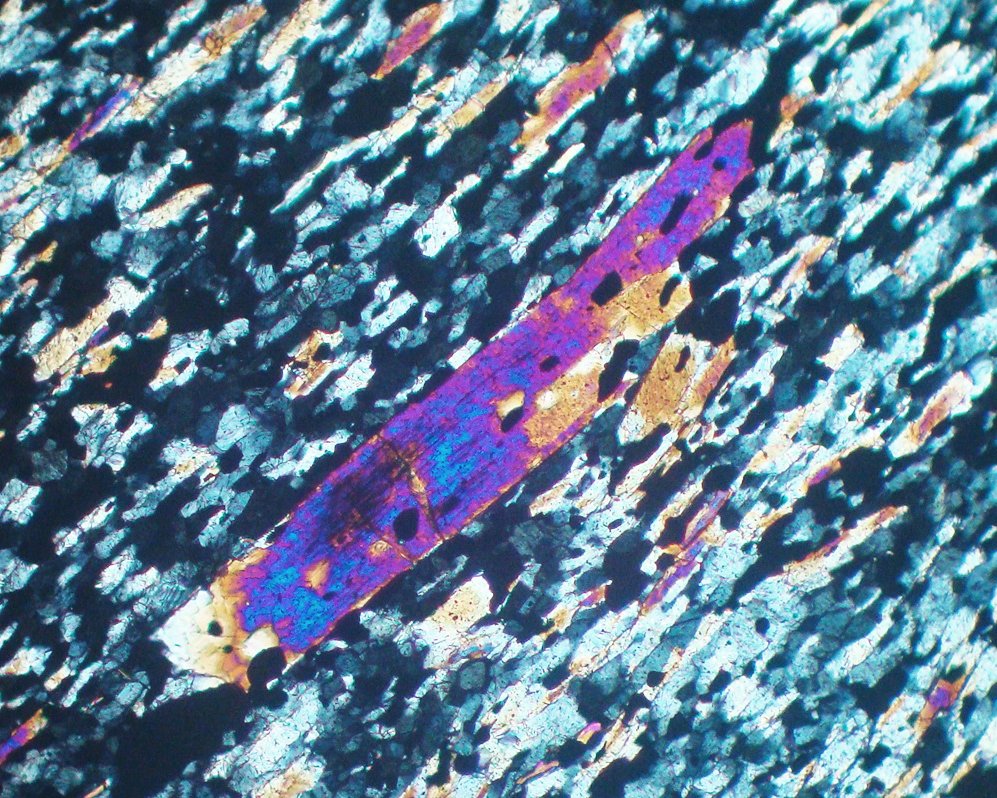
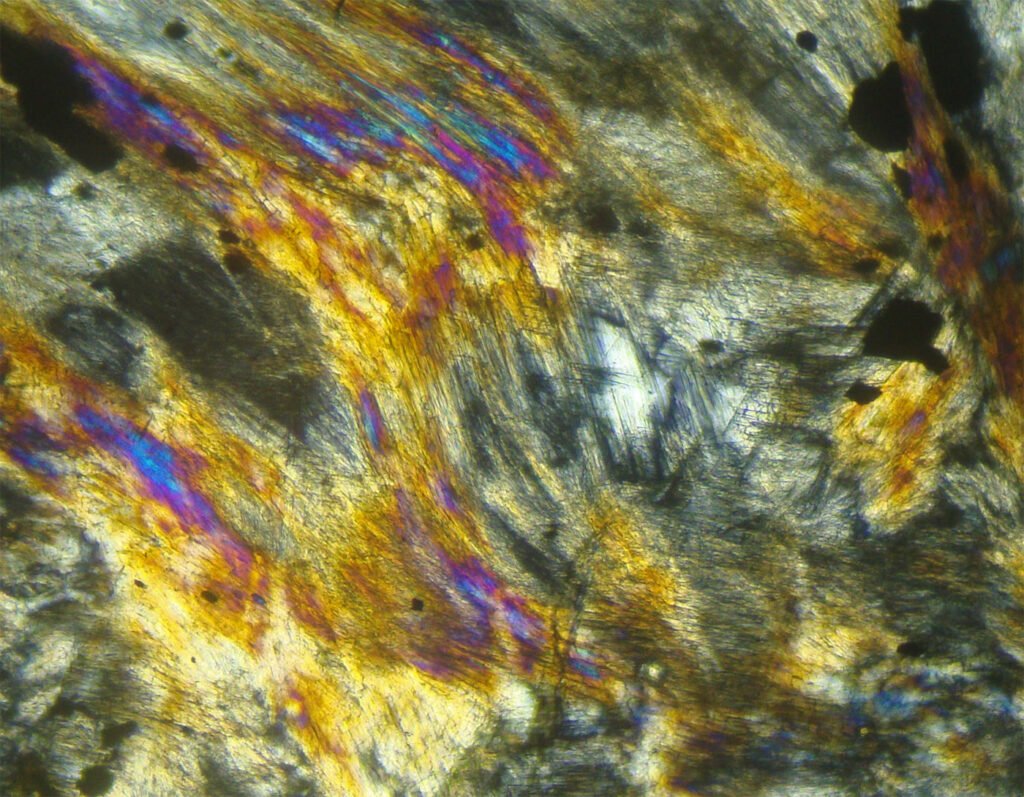
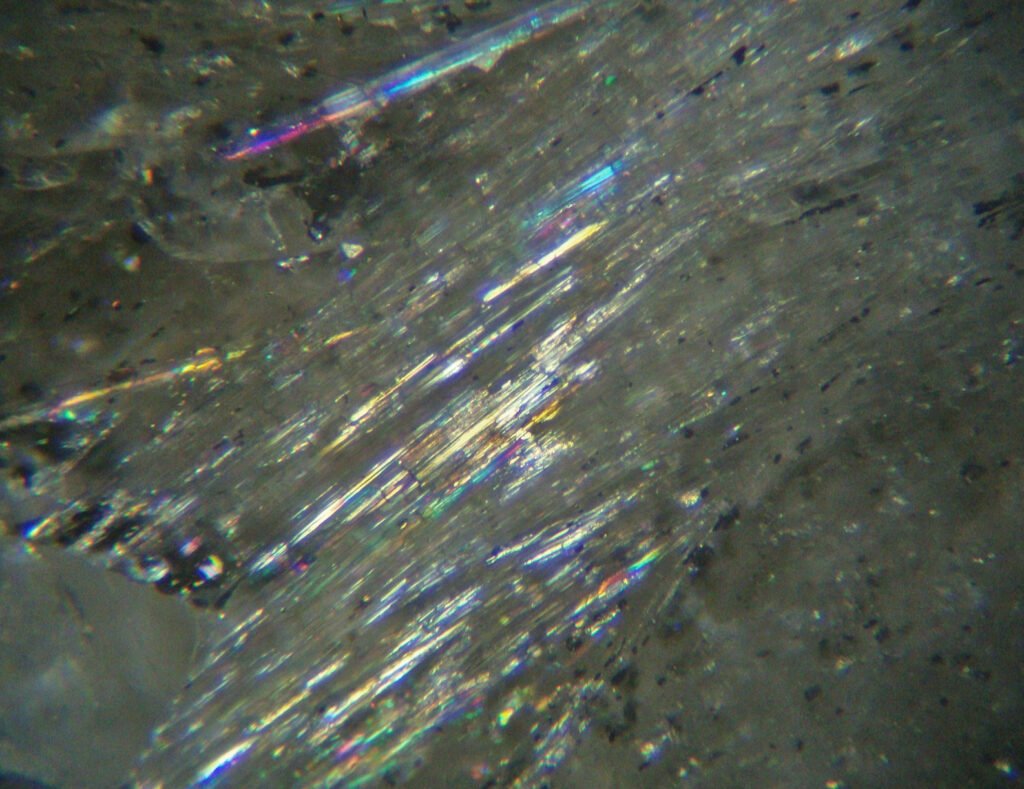
Birefringence and Interference Colors: Birefringence from 0.018 to 0.022, resulting in superior 1st order to 2nd order interference colors: yellow, red, blue, greenish.
Colors do not appear on needle-like crystals.
Fibrolite fibers have lower colors because they are thinner than the thickness of a thin section (30 nm).
Extinction: Parallel to the cleavage. In the basal sections it is symmetric.
Elongation sign: ES(+) (diagnostic!) Distinguishes, associated with the interference colors, the sillimanite from corundum and beryl, which have very similar optical properties and occur in the same paragenesis, but have lower interference colors (gray) and SE(-).
Twins: No.
Zoning: No.
CONVERGENT LIGHT
Character: B(+)
2V angle: 21-30º, normally cannot be measured.
Alterations: hydrating, it alters to micas such as muscovite (sericitization) and biotite. With P and T changes, several changes to other minerals are possible.
May be confused with: the long prismatic to fibrous habit, associated with high relief, parallel extinction, positive Elongation Sign and moderate birefringence are very diagnostic.
Apatite and andalusite have ES(-).
Kyanite has oblique extinction, is B(-), shows lower interference colors, and has 2 perfect cleavages.
Zoisite has lower birefringence.
Thicker prismatic crystals can be confused with tremolite, but tremolite has oblique extinction and occurs in other paragenesis.
The fibrolite variety bears some resemblance to fibrous amphibole and fibrous andalusite, but these usually have strong colors in PPL and/or distinct pleochroism.
Dumortierite in some cases is pink with pleochroism, resembles fibrolite, but has SE(-).