Crystal system: Cubic hexaoctahedral.
Color: Many possible colors: colorless, white, yellowish, greenish, various shades of blue, pink, violet, etc.
Habit: Usually massive, interstitial, granular. Rare crystals such as rhombododecahedrons.
Cleavage: {110} poor.
Tenacity: Brittle.
Twinning: On {111} common.
Fracture: Irregular, conchoidal.
Mohs Hardness: 5.5 – 6
Parting: No.
Streak: White.
Lustre: Vitreous, resinous.
Diaphaneity: Transparent.
Density (g/cm³): 2.31
2. Geology and Deposits
Sodalite occurs in undersaturated igneous rocks, both intrusive (nepheline-syenites, monzonites, monzodiorites, diorites, gabbros, anorthosites) and extrusive (phonolites, trachytes, porphyries, etc.). Also in cavities of ejected volcanic blocks.
In metamorphic rocks it can be found in limestones (marbles) that have undergone metasomatism.
3. Mineral Associations
Sodalite occur with other minerals typical of low silica paragenesis: nepheline, orthoclase, cancrinite, garnet (andradite), aegirine and pyrite.
In addition, with microcline, sanidine, albite, calcite, fluorite, ankerite, analcime, annite, phlogopite, baryte and ussingite.
4. Transmitted Light Microscopy
Refraction indices: n: 1.483 – 1.487
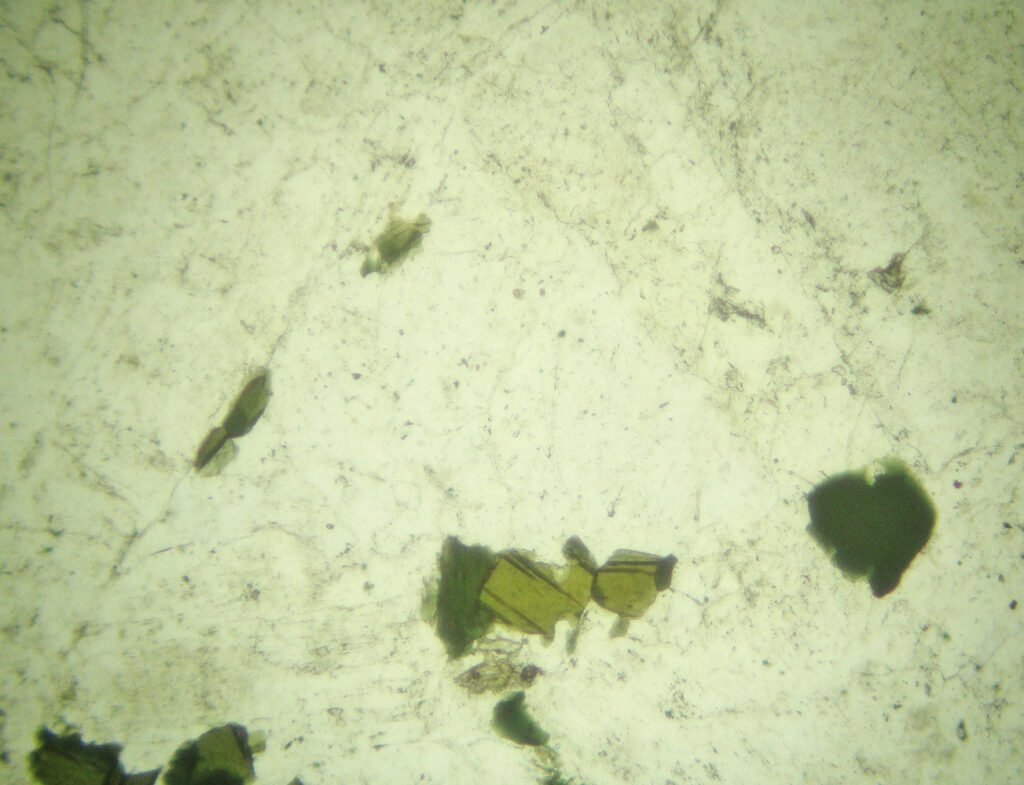
PLANE POLARIZED LIGHT – PPL
Color / Pleochroism: Colorless to gray; does not have pleochroism.
Relief: Low.
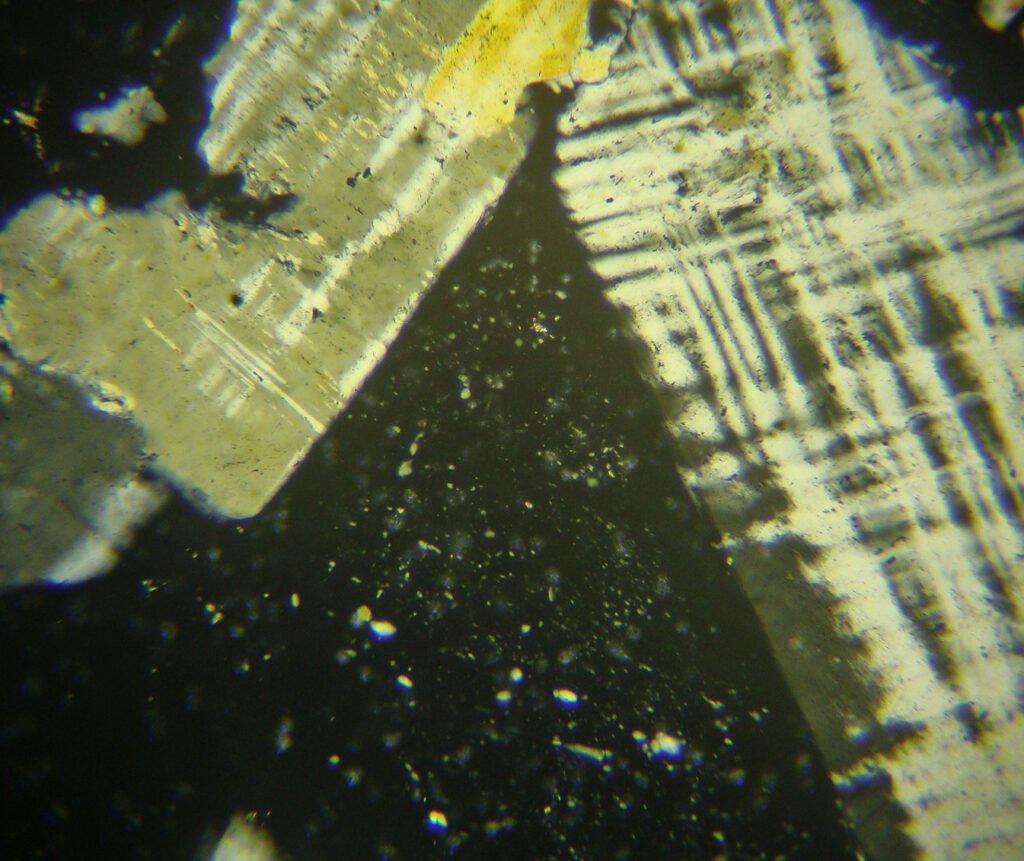
Cleavage: {110} poor, normally not observable in thin sections. Alteration along the cleavage planes sometimes occur, in which case the cleavage becomes visible. Depending on the section, one or two cleavage directions are observed.
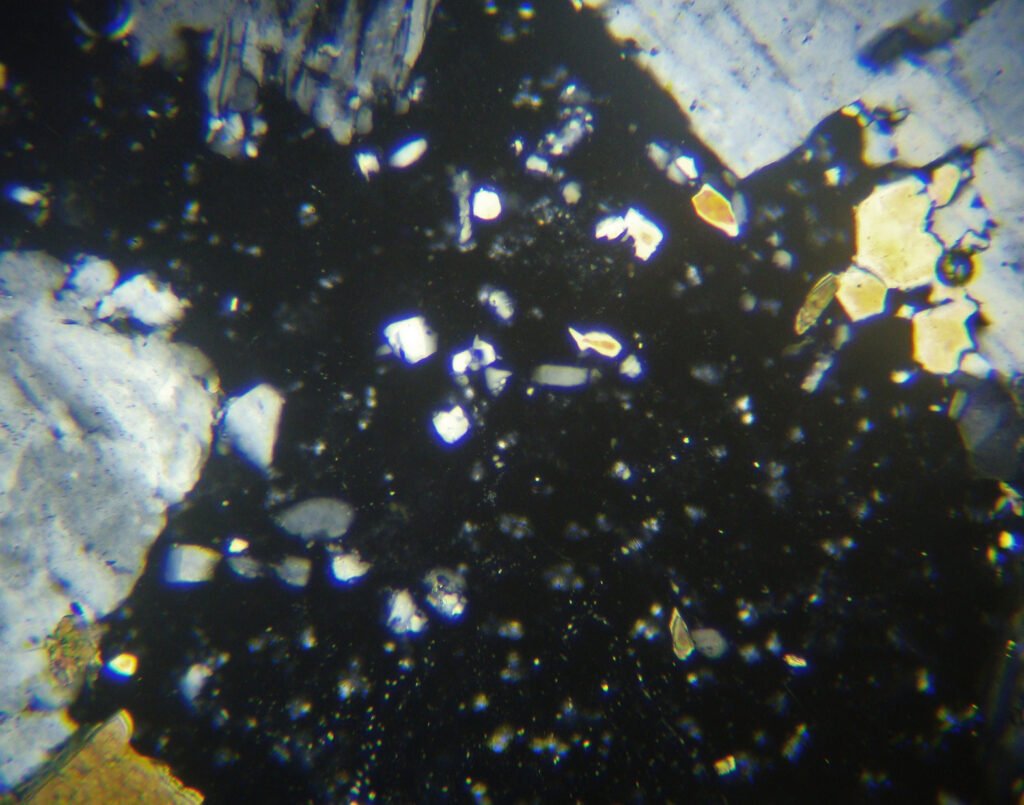
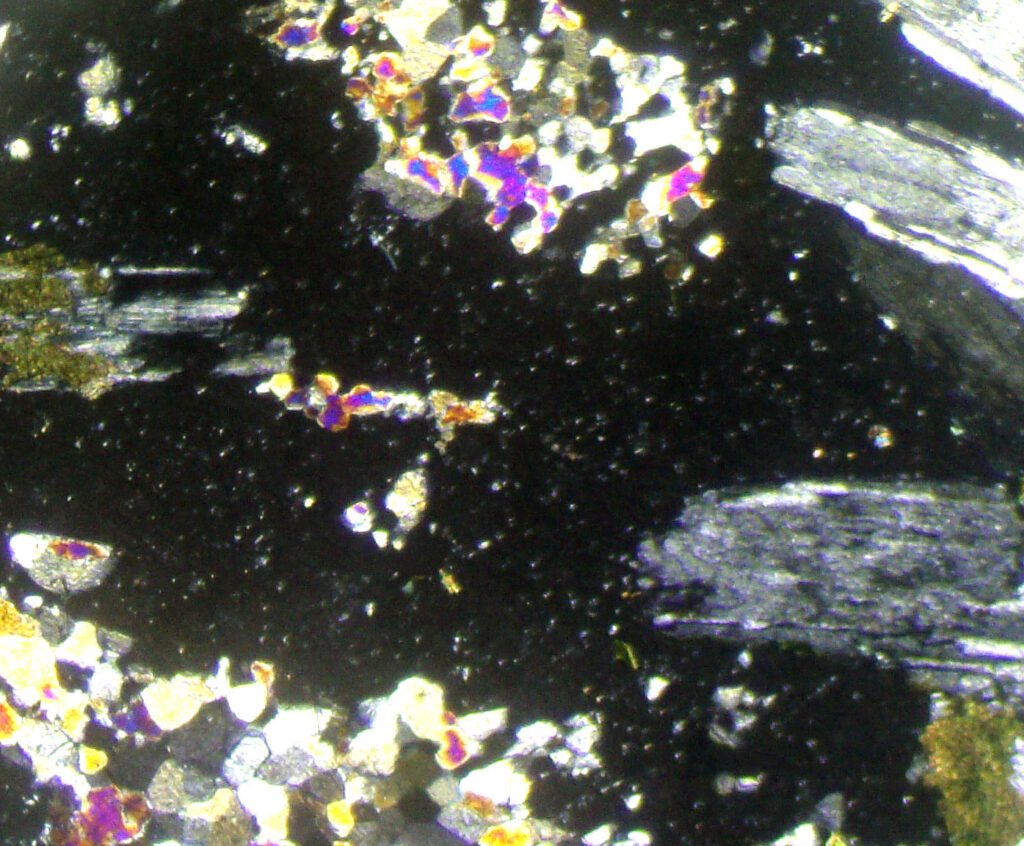
Habits: In intrusive rocks, sodalite occurs as interstitial grains, anhedral masses between larger grains.
In volcanic rocks, sodalite may show polygonal shapes with 4, 6 or 10 sides, may be distorted and/or have rounded corners.
CROSSED POLARIZED LIGHT – XPL
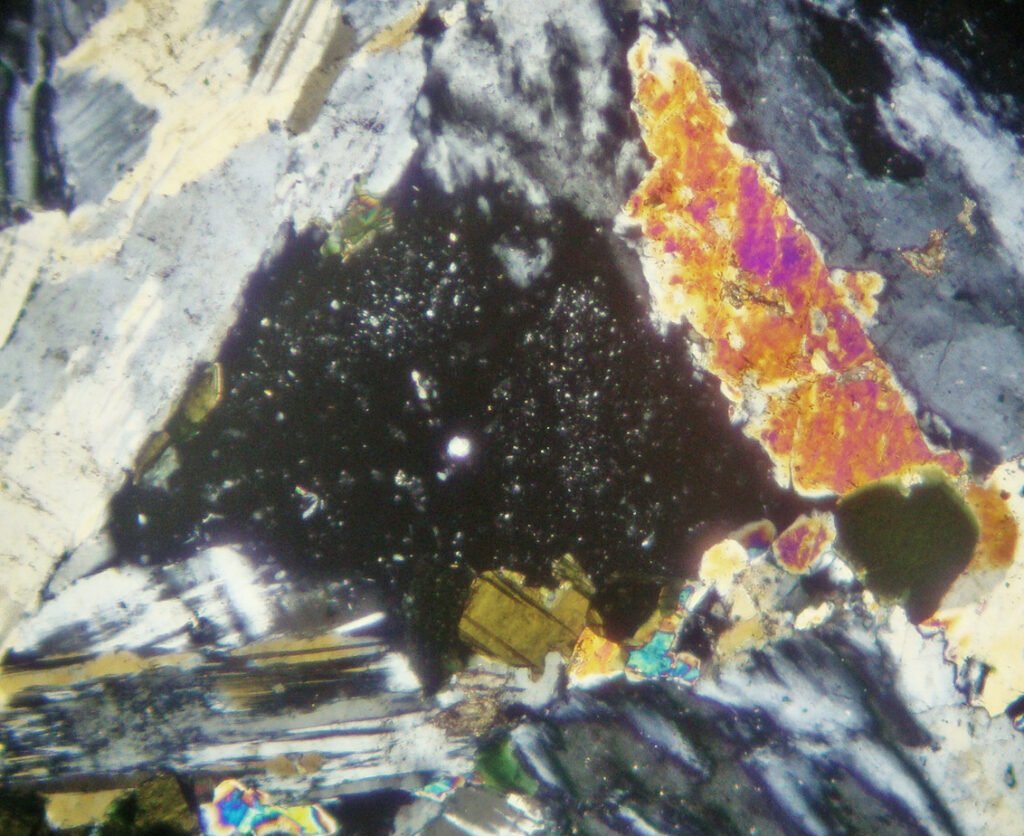
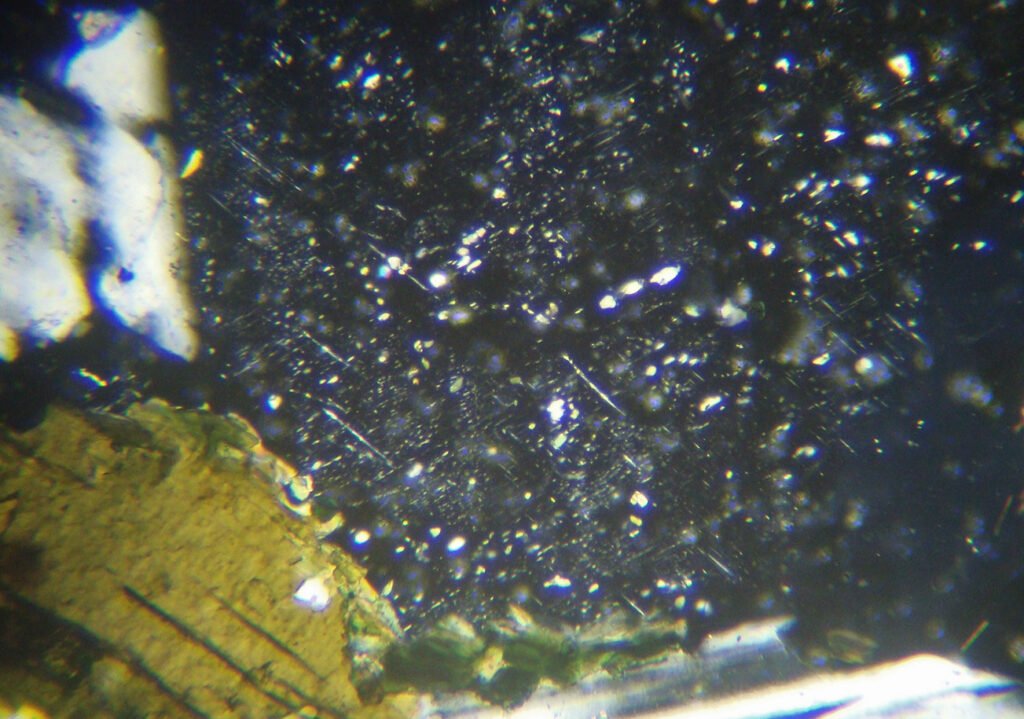
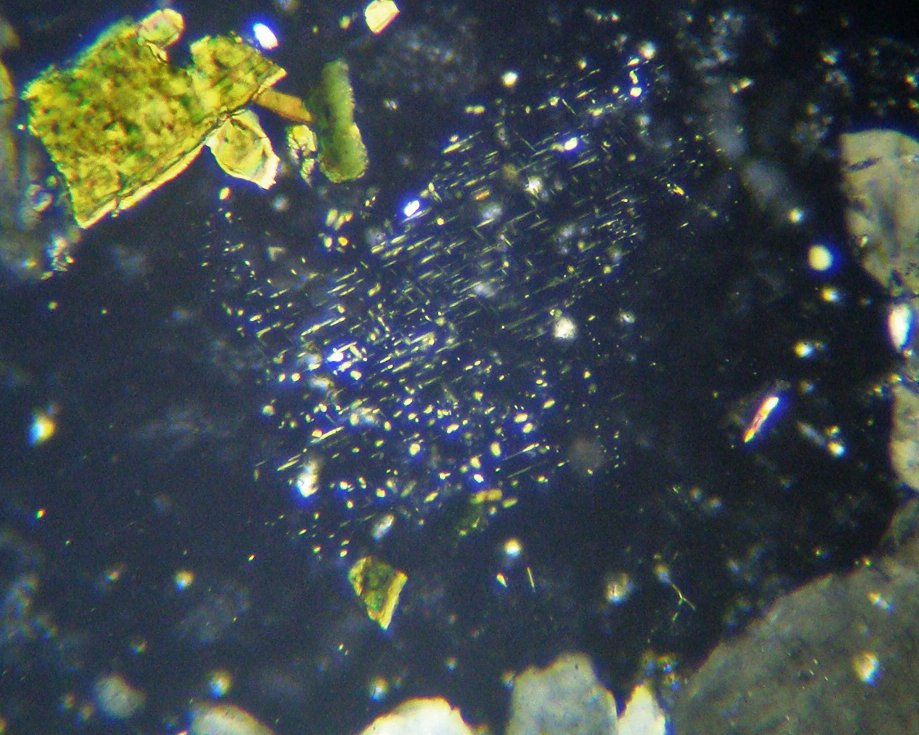
Birefringence and Interference Colors: Isotropic
Extinction: Isotropic
Elongation sign: Isotropic
Twins: Isotropic
Zoning: Isotropic
CONVERGENT LIGHT
Character: Isotropic
2V angle: Isotropic
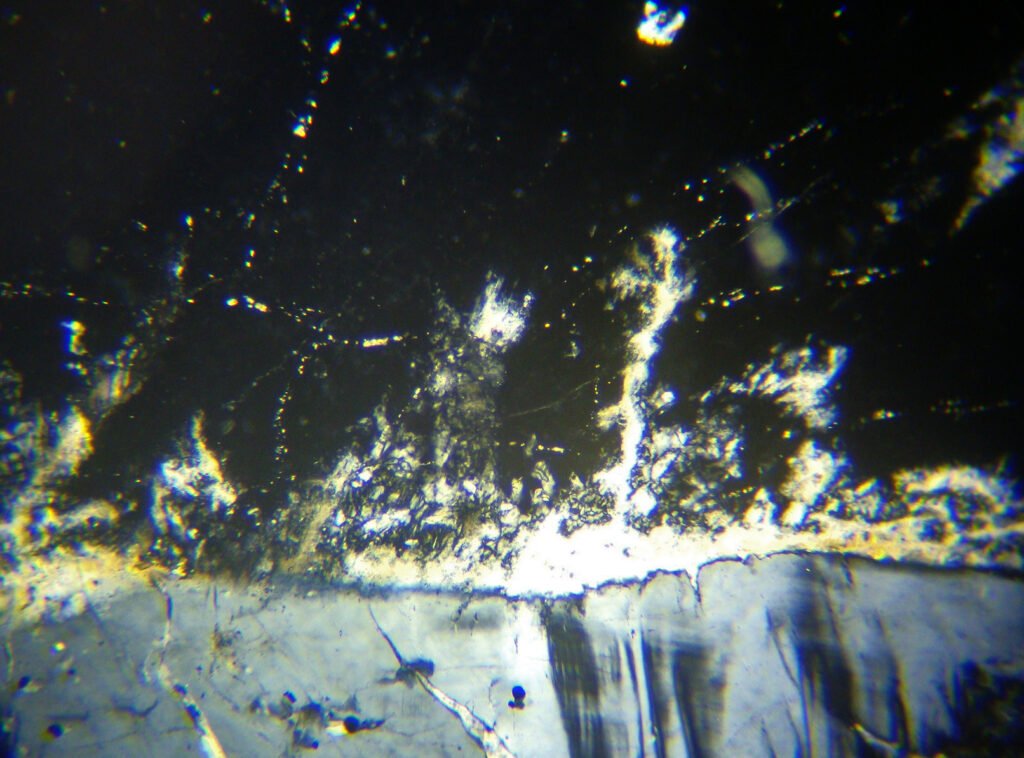
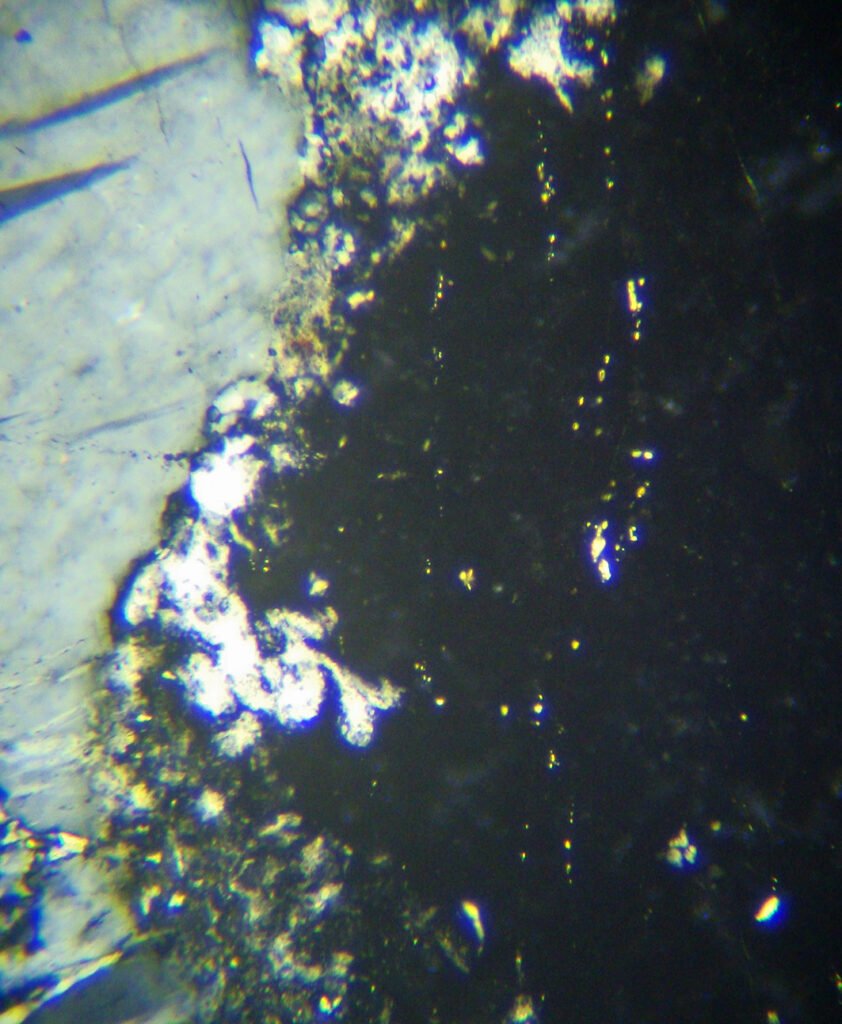
Alterations: the alteration coronas (altered margins) are quite characteristic.
May be confused with: Sodalite Group minerals are difficult to distinguish under a microscope.
Haüyne and nosean do not occur in plutonic rocks such as sodalite, generally exhibit black edges and contain inclusions more often.
Leucite almost always features sector polysynthetic twins, which are more easily visible using the compensator.
Nepheline is U(-) and sodalite will never show interference figure.
Analcime is similar, but has a bad cubic cleavage, extinction by sectors (subgrains, use compensator to see!), can show twins and very often occurs as cavity filling.
Fluorite has much higher relief, may show cubic shapes, may exhibit cubic cleavage (which can be excellent) and/or irregular zonation (spots, stripes, etc.) of colors (violet color is very common).
Unaltered interstitial sodalite can be mistaken for a hole in the thin section! To distinguish sodalite from a hole in the thin section it is possible to:
(1) observe the contacts along the perimeter between the dark area in CPL and neighboring grains. Intact contacts (well-defined boundaries of neighboring grains) indicate the presence of sodalite; broken contacts are indicative that this black portion is just a hole.
(2) verify if there are no tenuous signs of cleavage in the black area in CPL. If any, it is indicative of the presence of sodalite with incipient alteration along the cleavage planes.
(3) verify if there is no irregular network of small anisotropic grains in the dark area at NC. If any, these could be inclusions within the sodalite, which therefore indicate the presence of sodalite.
(4) observe the slide with the diaphragm completely closed: normally the texture of the glass (= hole in the thin section) is different from the texture of sodalite.
(5) It is also possible to turn off the microscope light and illuminate the slide obliquely from above with an intense LED light. You can usually detect what is a hole and what is sodalite.