1. Characteristics
Crystal system: Cubic hexaoctahedral.
Color: Red, blue, pink, dark green, brown, black, colorless, orange, yellow, indigo, violet.
Habit: It forms octahedrons, usually twinned. Massive, rounded, coarse granular, compact.
Cleavage: No.
Tenacity: Brittle.
Twinning: Spinel can be twinned by the “Spinel Law”, on {111}, in sixlings.
Fracture: Conchoidal, irregular.
Mohs Hardness: 7,5 – 8
Parting: On {111}.
Streak: Grayish white.
Lustre: Vitreous, dull.
Diaphaneity: Transparent.
Density (g/cm³): 3.6 – 4.1, increases with Fe and Zn content.
2. Geology and Deposits
Spinel is a common mineral, formed at high temperatures as an accessory mineral in ultramafic plutonic igneous rocks, such as peridotites, dunites, harzburgites, lherzolites and pyroxenites (websterites).
It occurs in kimberlites, xenoliths and in exotic rocks such as spinellites.
In metamorphic rocks, it occurs in cornubianites (hornfels) and carbonate rocks that have undergone contact metamorphism (marble and skarn). Also in buchites, which are glassy rocks produced by contact metamorphism.
It occurs in metapelites (schists) formed by regional metamorphism and can be found in pegmatites. Because it is very resistant, it is detrital, present in sediments and clastic sedimentary rocks.
3. Mineral Associations
In basic rocks (peridotites) it is associated with chromite, olivine (forsterite), clinopyroxenes, pargasite and scapolite.
In carbonate rocks (marble, skarn) it occurs with carbonates (calcite, dolomite), olivine (forsterite), clinohumite, chondrodite, graphite, serpentine, scapolite, pargasite and phlogopite.
In metamorphic rocks (schists) it is found with garnet (almandine), minerals from the Al2SiO5 Group (sillimanite, andalusite), cordierite, corundum, pargasite and quartz.
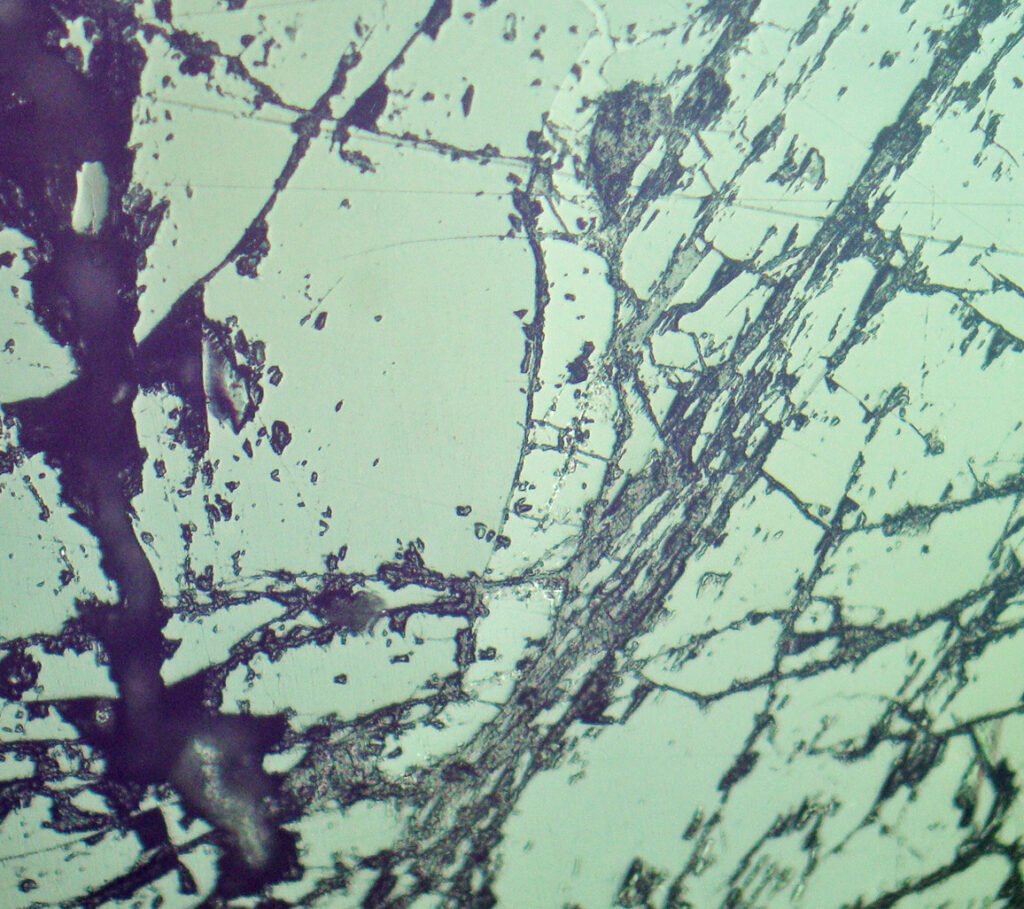
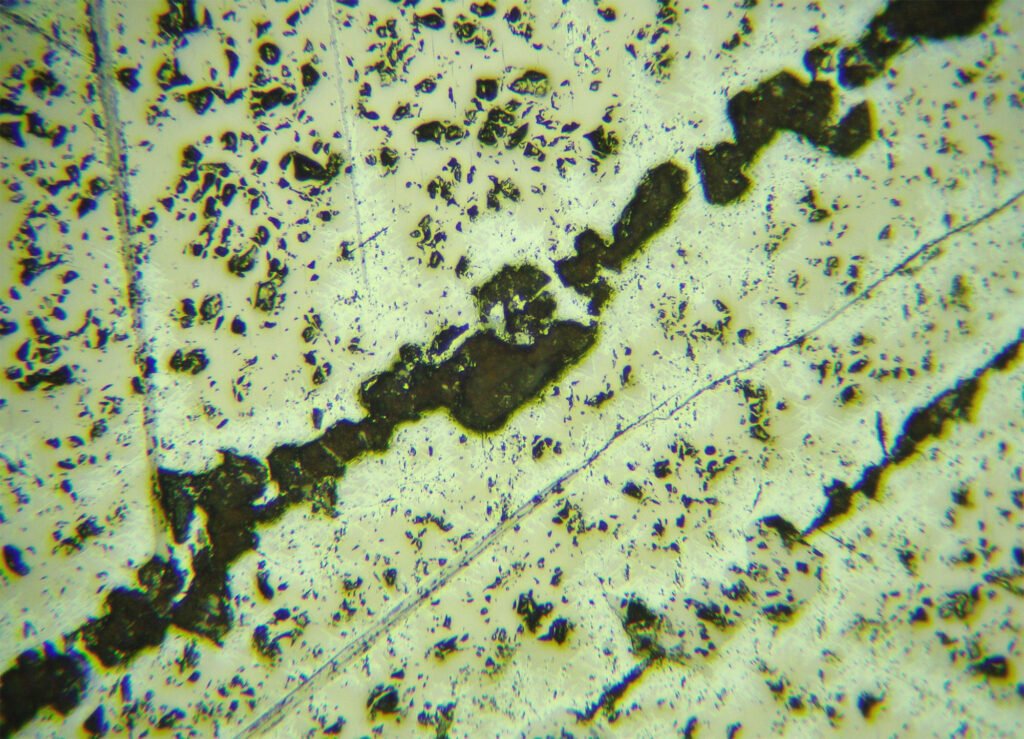
Also with galena, chalcopyrite, sphalerite, pyrite, graphite, rutile and hematite.
4. Transmitted Light Microscopy
Refraction indices: n: 1,719
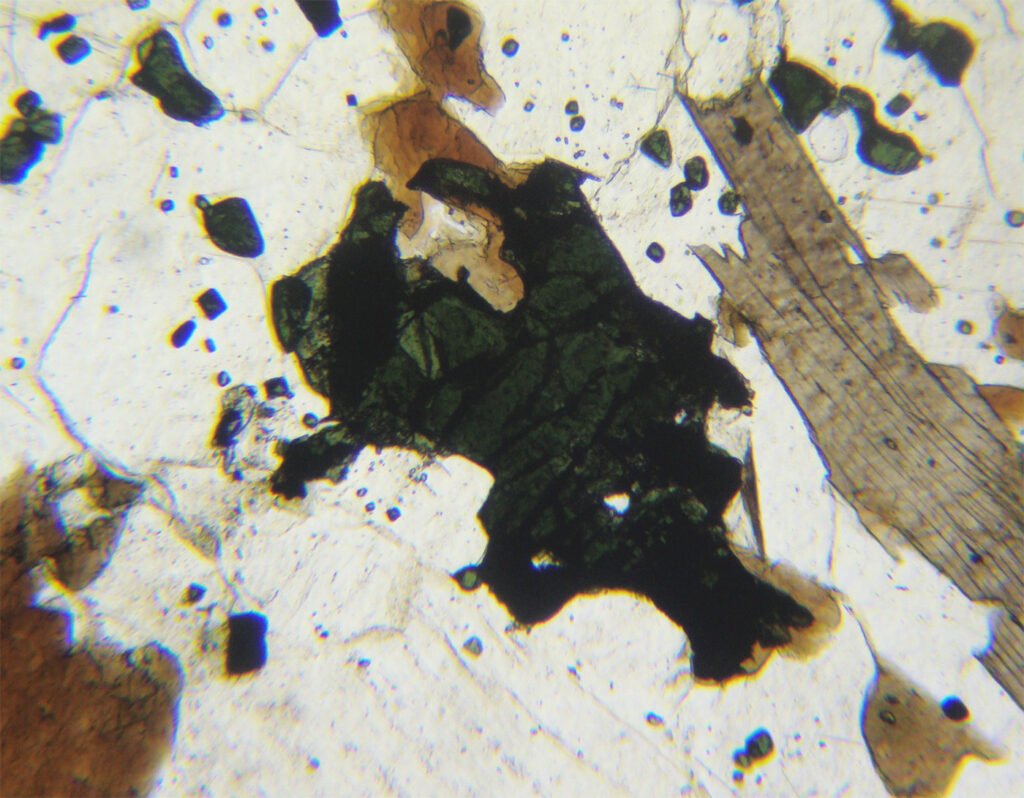
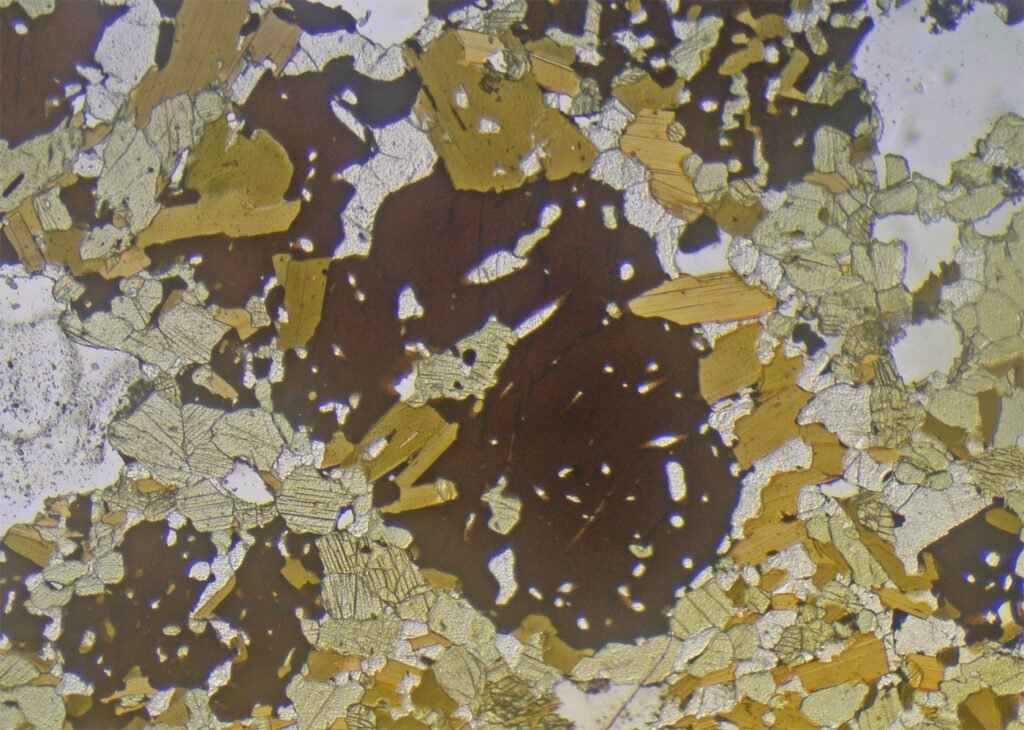
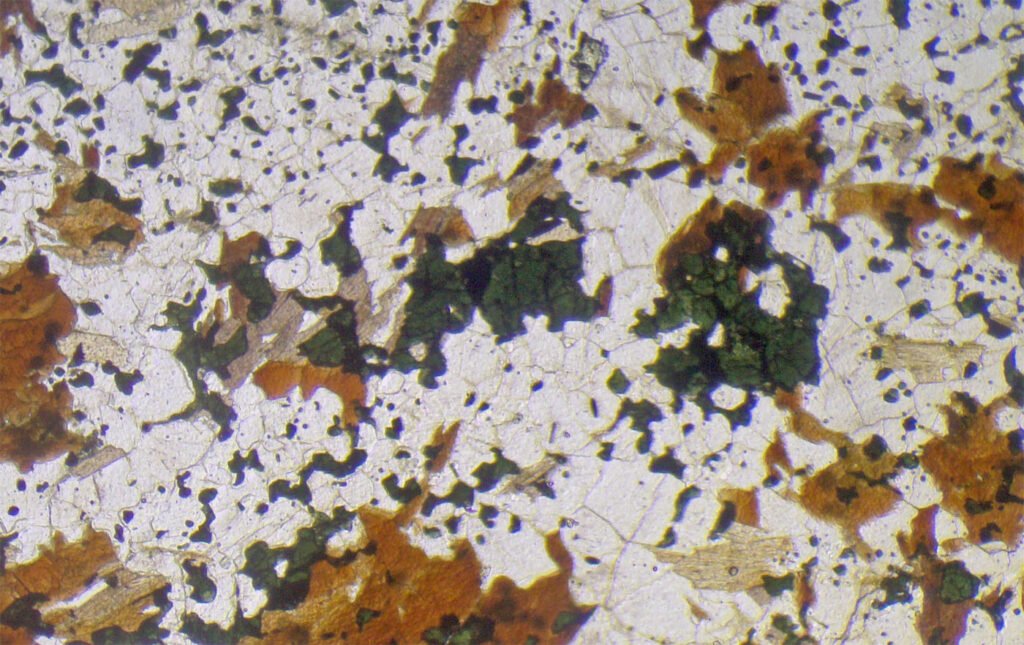
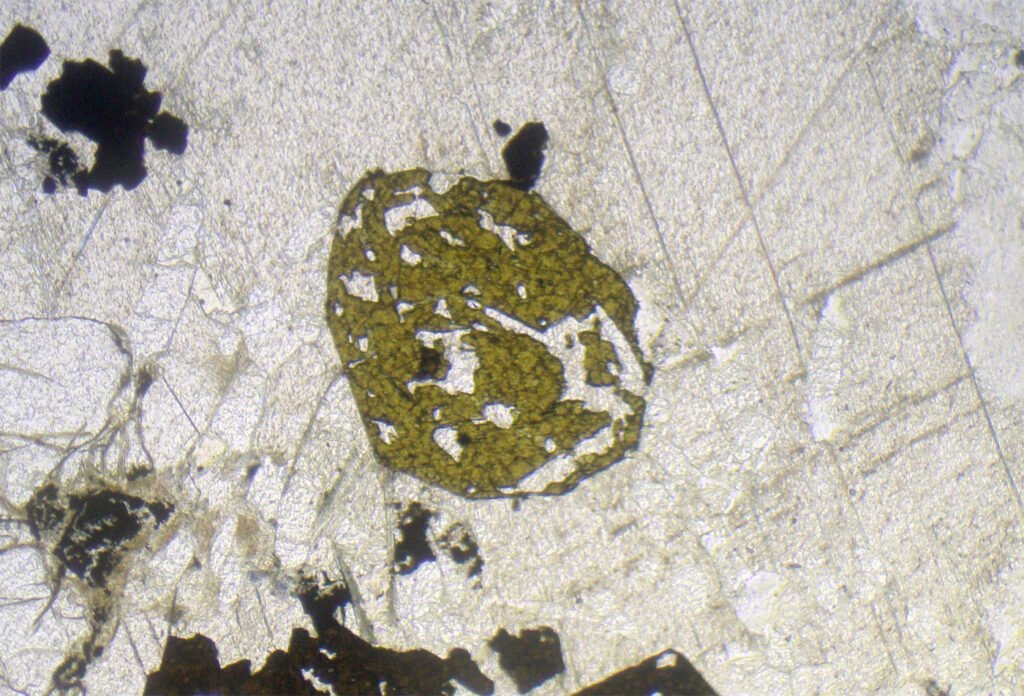
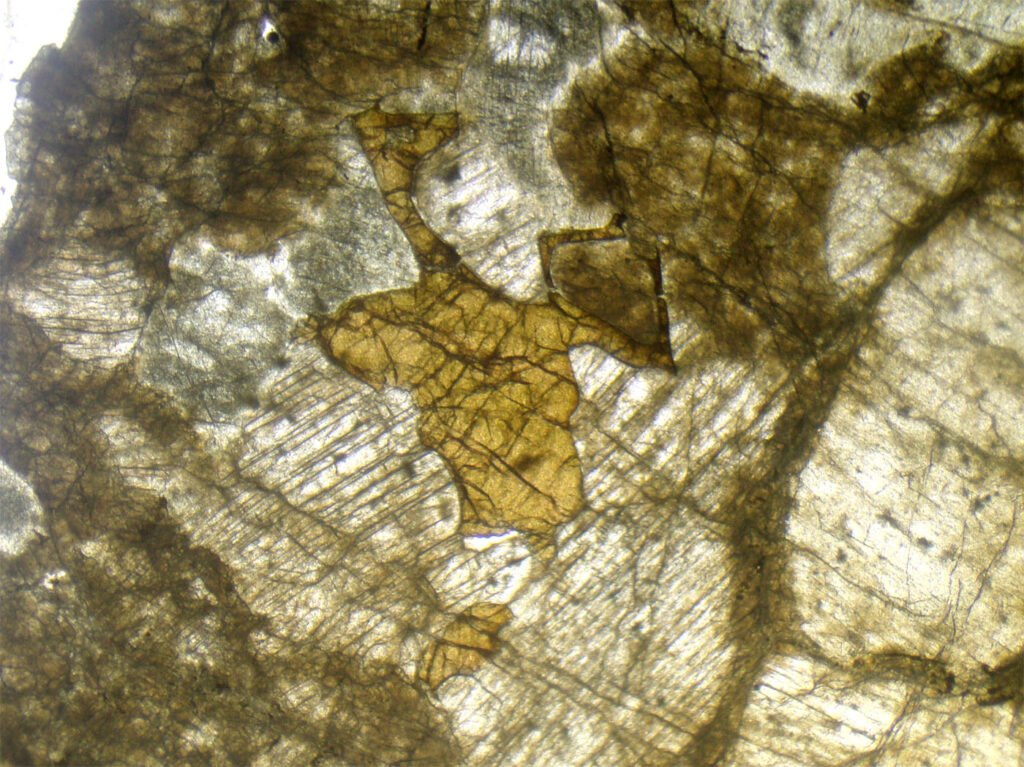
PLANE POLARIZED LIGHT – PPL
Color / Pleochroism: Highly variable: colorless, light green or dark green, red, blue, yellow, brown, black.
Anomalous pleochroism only in some blue zinc-containing varieties.
Relief: Extra high, very high.
Cleavage: Does not have, only a partition in (111) of poor quality (indistinct).
Exception: spinel in marbles to forsterite (olivine) shows good cleavage according to {100}.
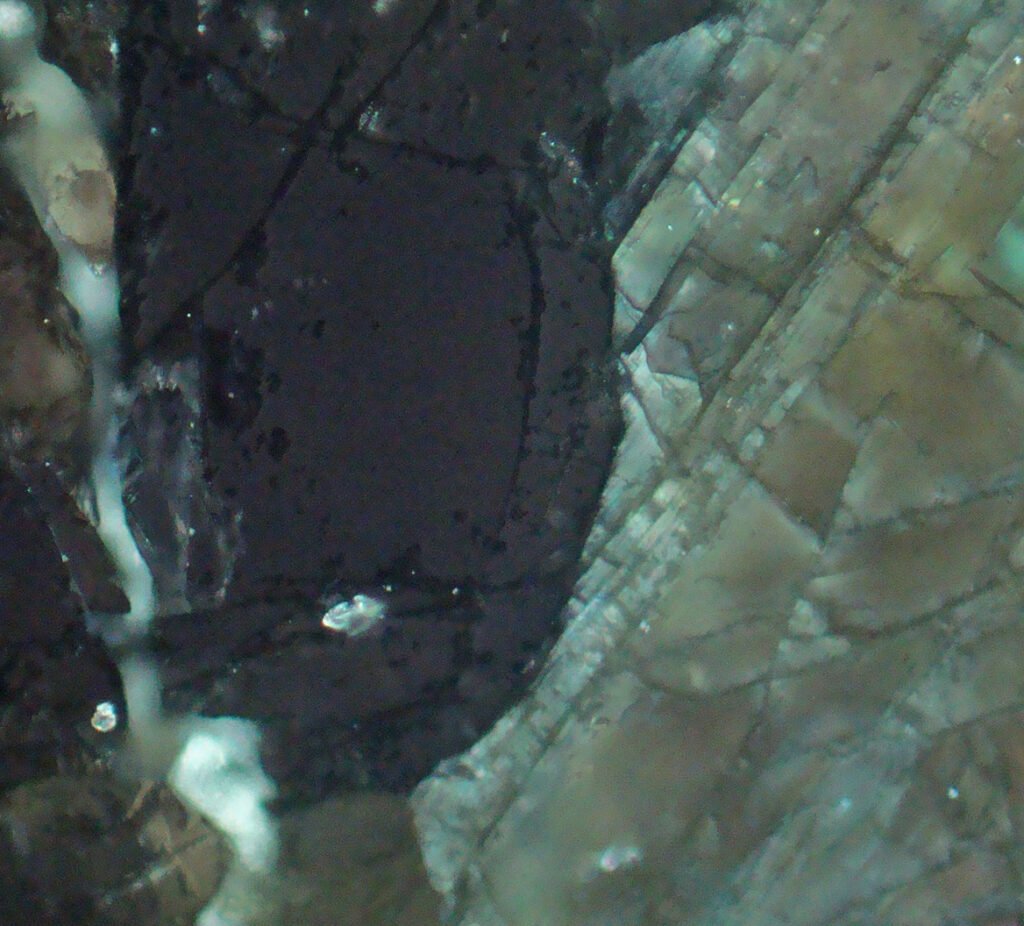
Habits: Normally anhedral grains, may form octahedra or show cube or dodecahedron faces. The sections are rhombic.
CROSSED POLARIZED LIGHT – XPL
Birefringence and Interference Colors: Isotropic.
Extinction: Isotropic.
Elongation sign: Isotropic.
Twins: Are not visible under the microscope, but are common according to {111} (Spinel Law), interpenetration or contact twins, can form radial groups of 6 individuals (sixlings).
Zoning: Frequently zoned.
CONVERGENT LIGHT
Character: Isotropic.
2V angle: Isotropic.
Alterations: does not alters, is detrital and may occur concentrated in sands.
May be confused with: spinel is the only common isotropic mineral with intense colors.
Garnet can show pink color, but much fainter than spinel colors.