1. Characteristics
Crystal system: Monoclinic prismatic
Color: Colorless, white, gray, yellow, light green, emerald green, pink to violet, purple.
Habit: Prismatic, typically flattened and striated // {100}, with {100} and {110}. Generally massive.
Cleavage: {110} good (forms the typical pyroxene angle of 87º). Striations // “c”.
Tenacity: Brittle, very splintery.
Twinning: Common in {100}.
Fracture: Irregular to subconchoidal.
Mohs Hardness: 6.5 – 7
Parting: According to {100} and {010}.
Streak: White.
Lustre: Vitreous, dull.
Diaphaneity: Transparent.
Density (g/cm³): 3.1 a 3.2
2. Geology and Deposits
Spodumene is a rare clinopyroxene, common only in lithium-rich complex pegmatites, where it occurs associated with other lithium-bearing minerals, generally forming large crystals. The largest recorded crystal of spodumene measured 12.5 m and weighed 54 tons.
It also occurs in some aplites and rarely in gneisses.
3. Mineral Associations
It ocurrs with minerals typical of granitic pegmatites such as quartz, calcic feldspars (albite, clevelandite variety), potassic feldspars (microcline), micas (muscovite), apatite, garnet (spessartine), beryl (including aquamarine variety), tourmaline (elbaite, schorlite) and columbite-tantalite.
Since spodumene occurs in lithium-bearing pegmatites, it occurs with the typical Li minerals of these occurrences: lepidolite, petalite, amblygonite, montebrasite and eucryptite.
4. Transmitted Light Microscopy
Refraction indices: nα: 1.648 – 1.661 nβ: 1.655 – 1.670 nγ: 1.662 – 1.679
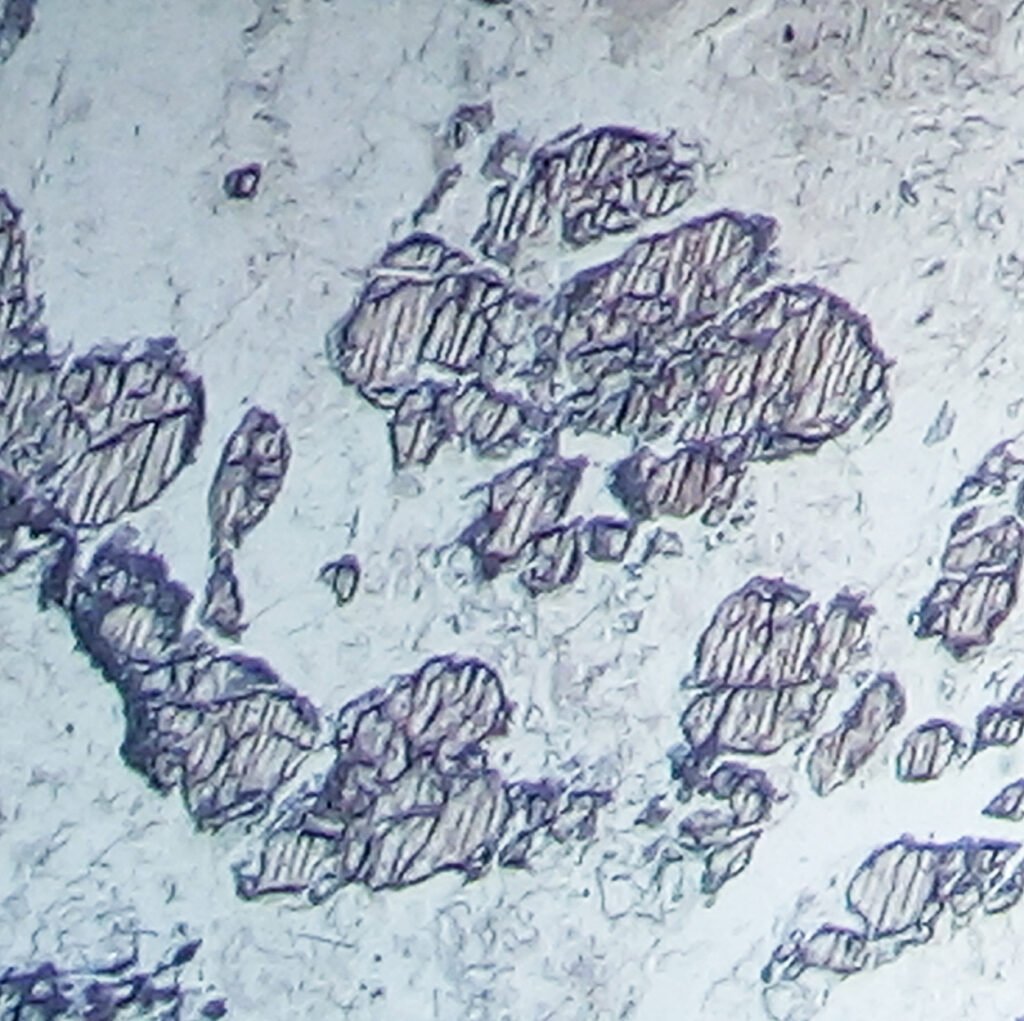
PLANE POLARIZED LIGHT – PPL
Color / Pleochroism: Colorless. The varieties are pleochroic: hiddenite exhibits moderate pleochroism ranging from colorless to green, and kunzite exhibits strong pleochroism ranging from colorless to pink or purple.
Relief: Moderate.
Cleavage: {110} good and distinct, exhibiting in the basal sections two cleavages that form angles of 87º and 93º between them. In the prismatic sections only one cleavage. This is the typical cleavage of pyroxenes.
There are also partings along {100} {010}.
Habits: Prismatic crystals, can be massive.
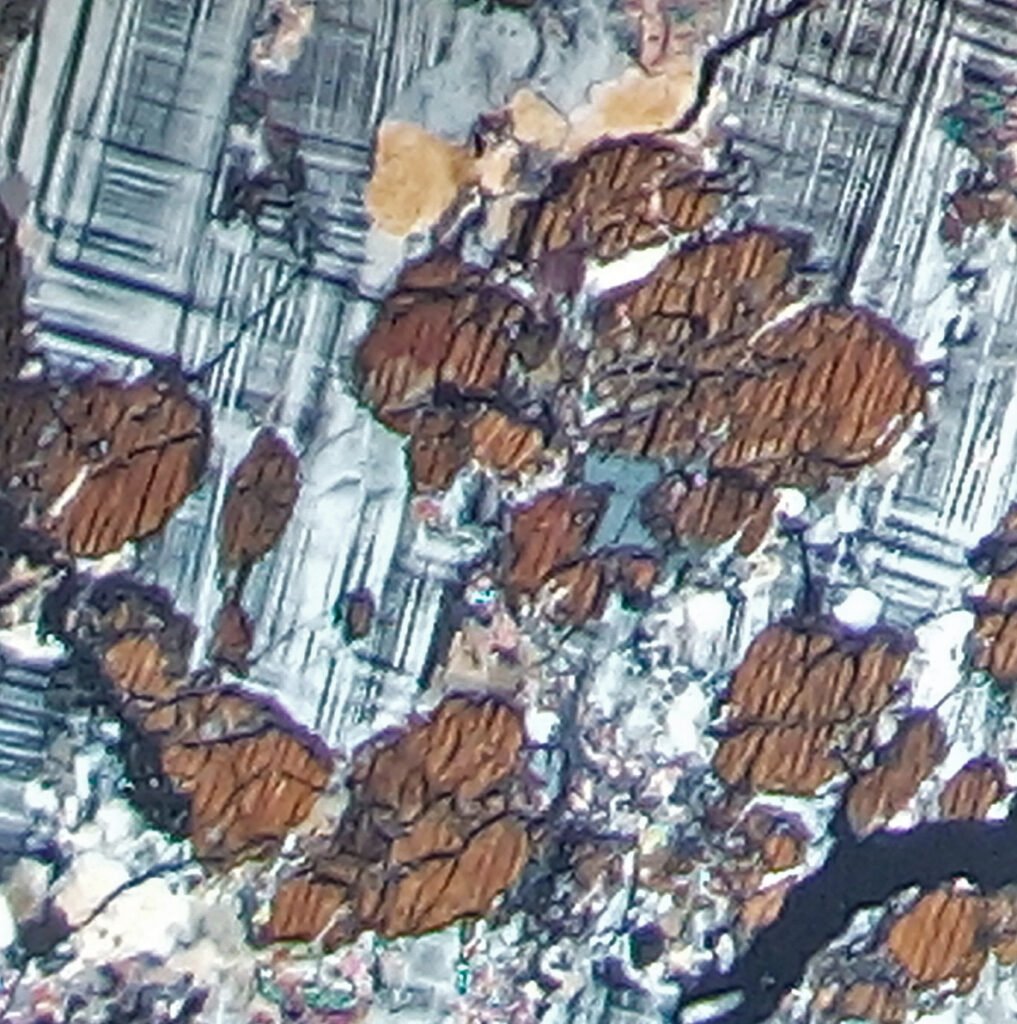
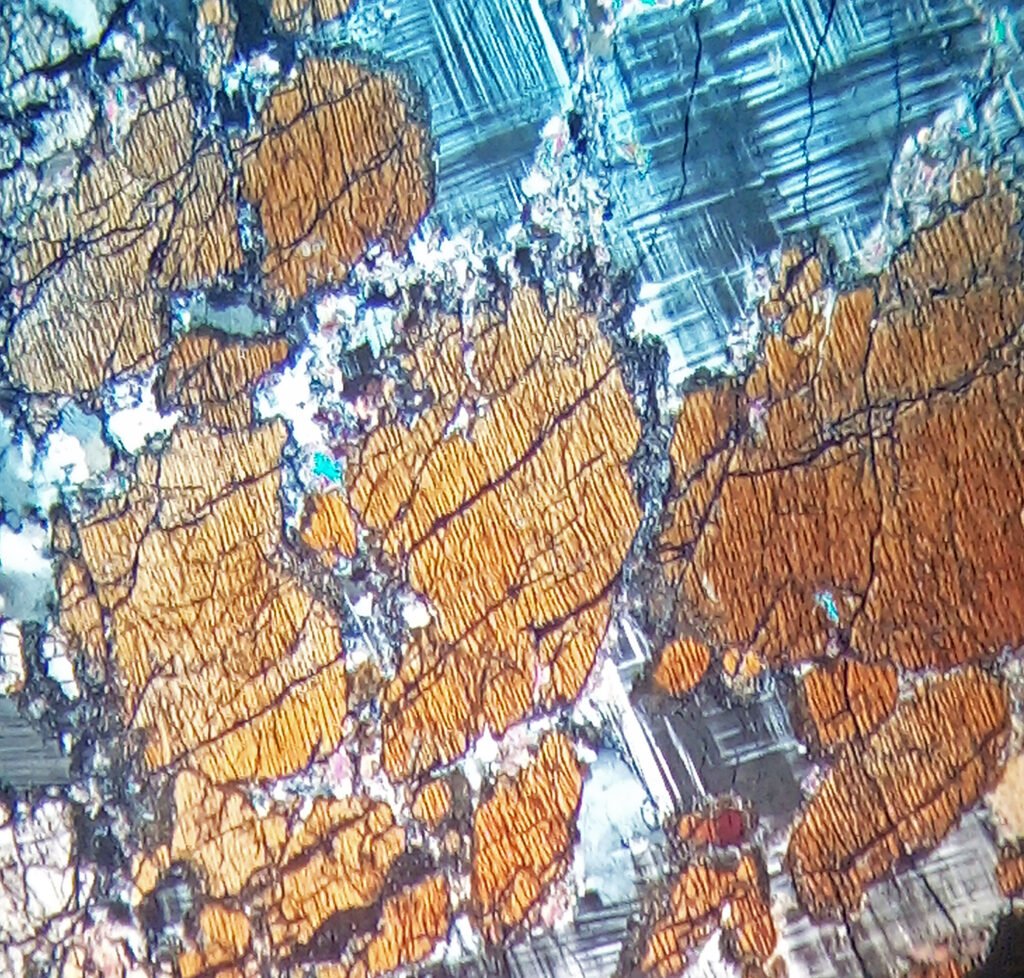
CROSSED POLARIZED LIGHT – XPL
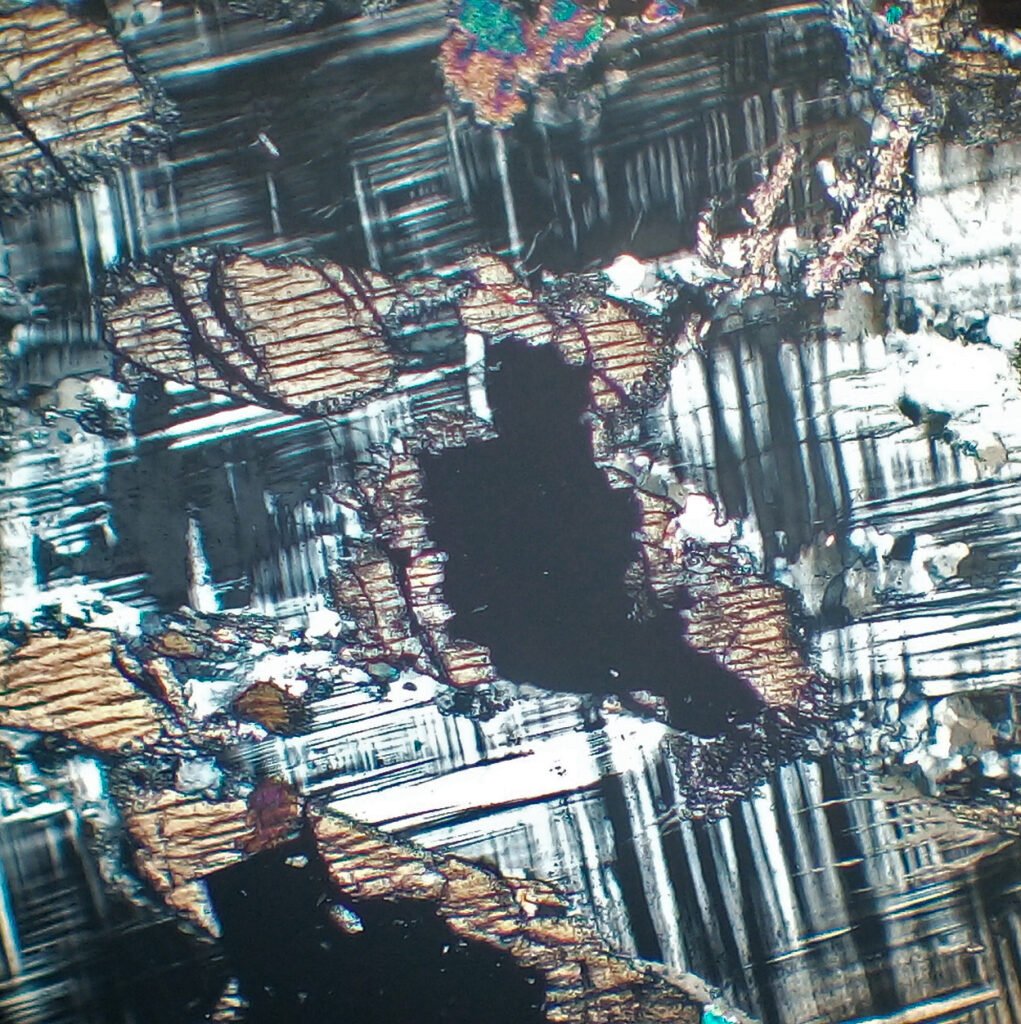
Birefringence and Interference Colors: Birefringence between 0.014 and 0.018, corresponding to colors between gray and first-order orange. It does not reach blue.
Extinction: Oblique, between 20 and 26º.
Elongation sign: ES(+).
Twins: Common on {100}.
Zoning: No information available.
CONVERGENT LIGHT
Character: B(+)
2V angle: 54 – 69º
Alterations: It can alter to cymatolite, a fibrous to lamellar mixture of muscovite and albite. Through late alkaline hydrothermal alteration, spodumene forms an intergrowth of eucryptite (LiAlSiO4) and albite.
May be confused with: Diopside is very similar, but spodumene has a lower extinction angle. A characteristic of spodumene is its paragenesis (lithium-bearing pegmatites).