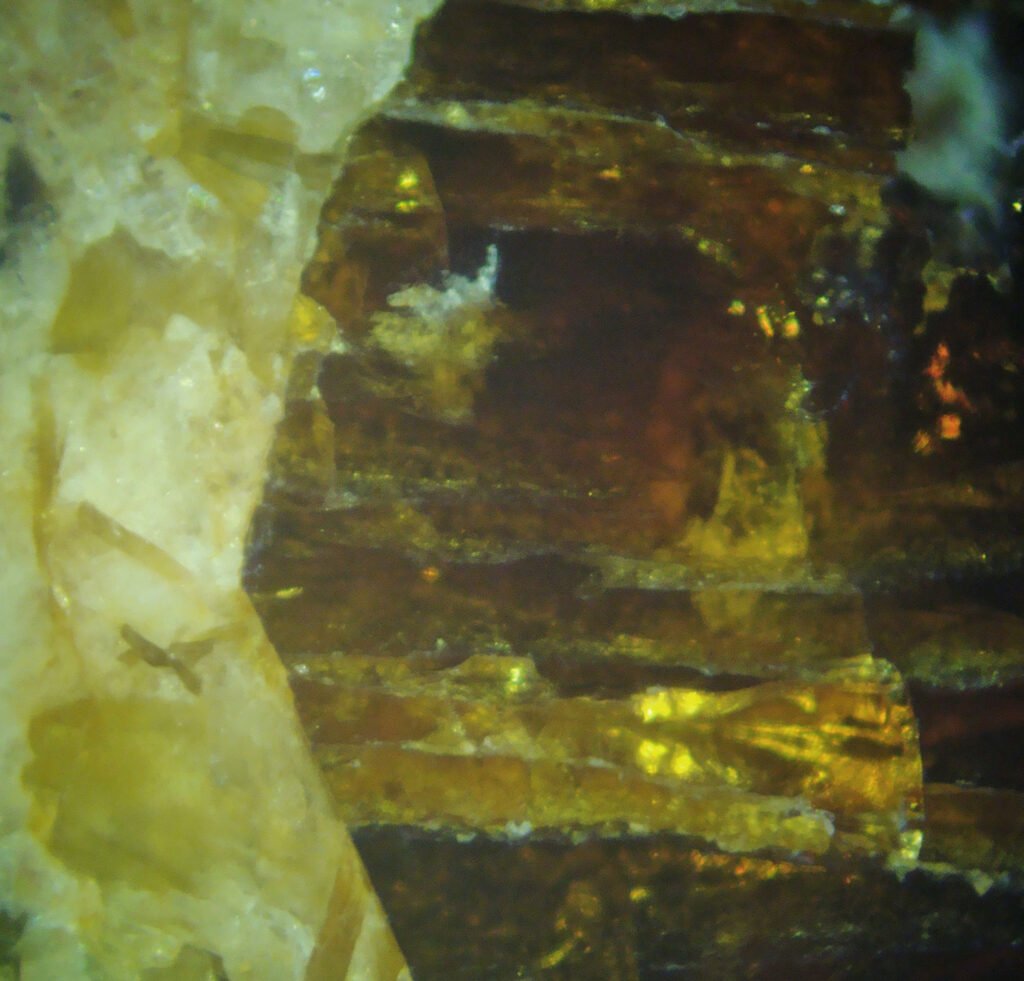
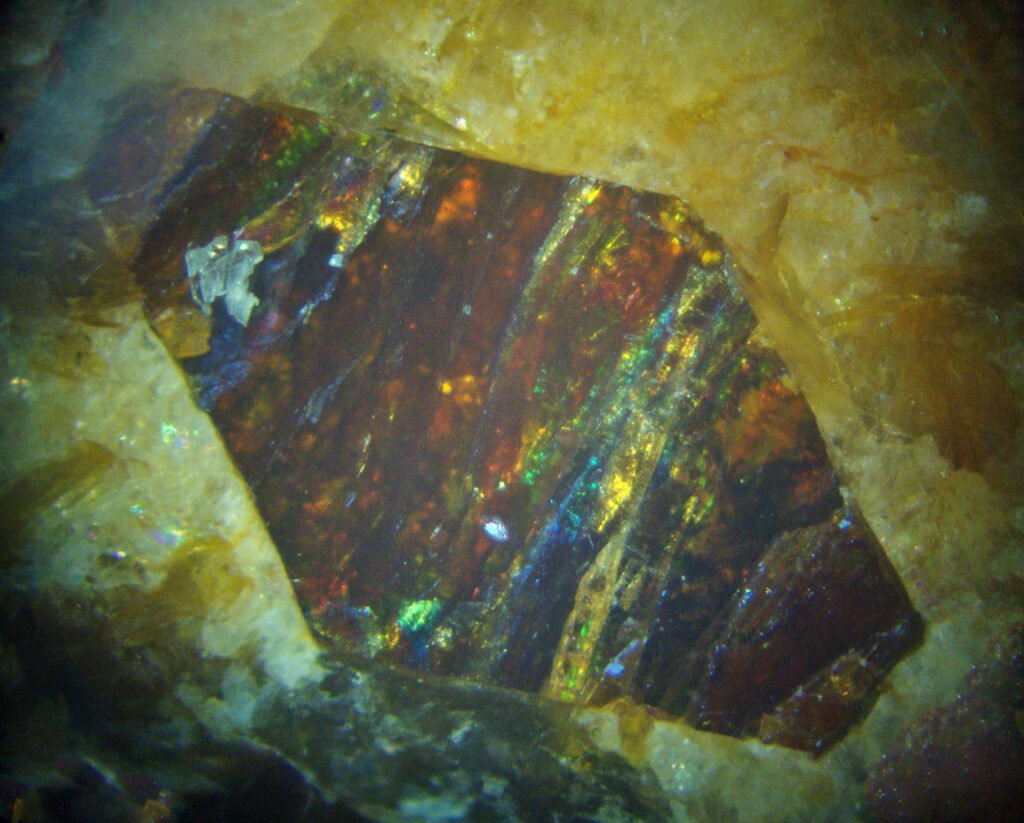
Crystal system: Monoclinic prismatic, pseudo-orthorhombic.
Color: Dark reddish brown to black brown or yellowish brown. Rarely blue.
Habit: Usually prismatic, can occur granular.
Cleavage: {010} distinct.
Tenacity: Brittle.
Twinning: See above.
Fracture: Subconchoidal.
Mohs Hardness: 7 – 7.5
Parting: No.
Streak: White to gray.
Lustre: Subvitreous to greasy.
Diaphaneity: Transparent.
Density (g/cm³): 3.74 – 3.83
2. Geology and Deposits
Staurolite typically occurs in metamorphic rocks of pelitic composition and medium metamorphic grade (low to medium amphibolite facies) formed by regional metamorphism, such as mica-schists, phyllites and gneisses. It is more rarely found in quartzites and metabauxites.
It is also found as a detrital mineral in sediments (placers), when it can then be mined as an industrial mineral for abrasives.
3. Mineral Associations
Staurolite is associated with common rock-forming minerals such as quartz, potassic feldspars, chalcosodic feldspars (oligoclase) and micas (muscovite, biotite, paragonite, chlorite).
In addition, it occurs with the typical minerals of metamorphic pelitic rocks, such as garnet (almandine), minerals from the Al2SiO5 Group (andalusite, sillimanite, kyanite), chloritoid and cordierite.
Also occurs with tourmaline, ilmenite and magnetite.
4. Transmitted Light Microscopy
Refraction indices: nα: 1.736 – 1.747 nβ: 1.742 – 1.753 nγ: 1.748 – 1.761
PLANE POLARIZED LIGHT – PPL
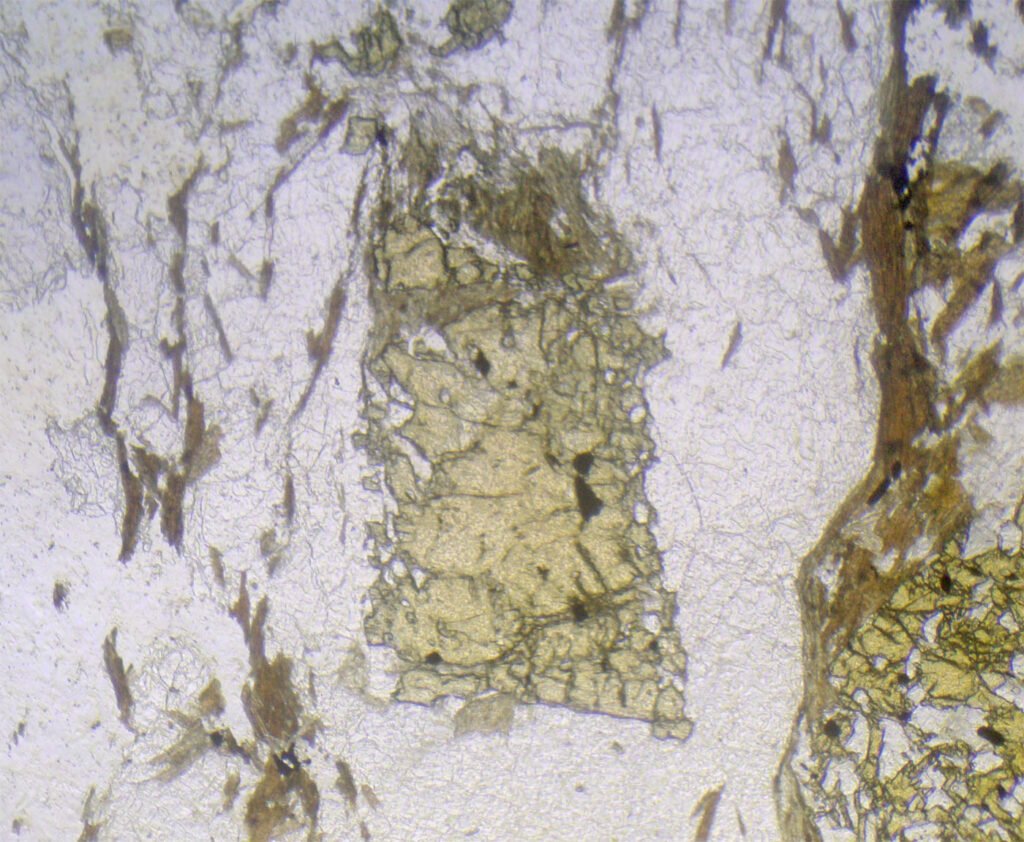
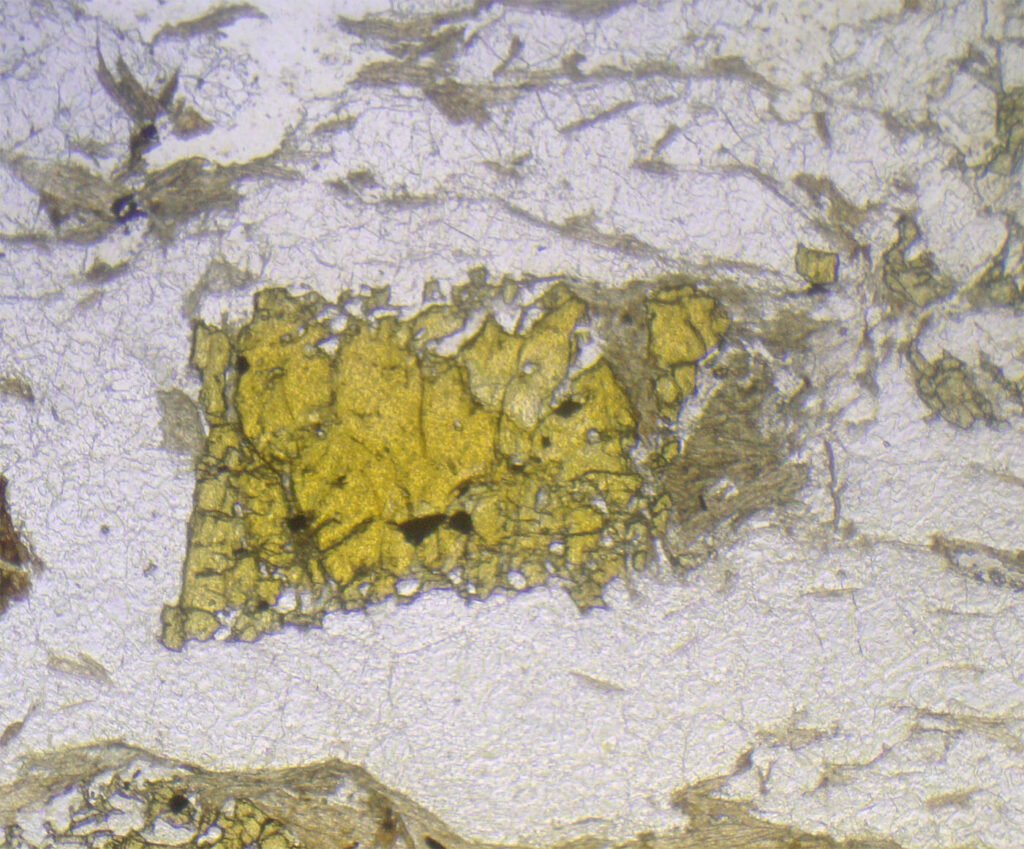
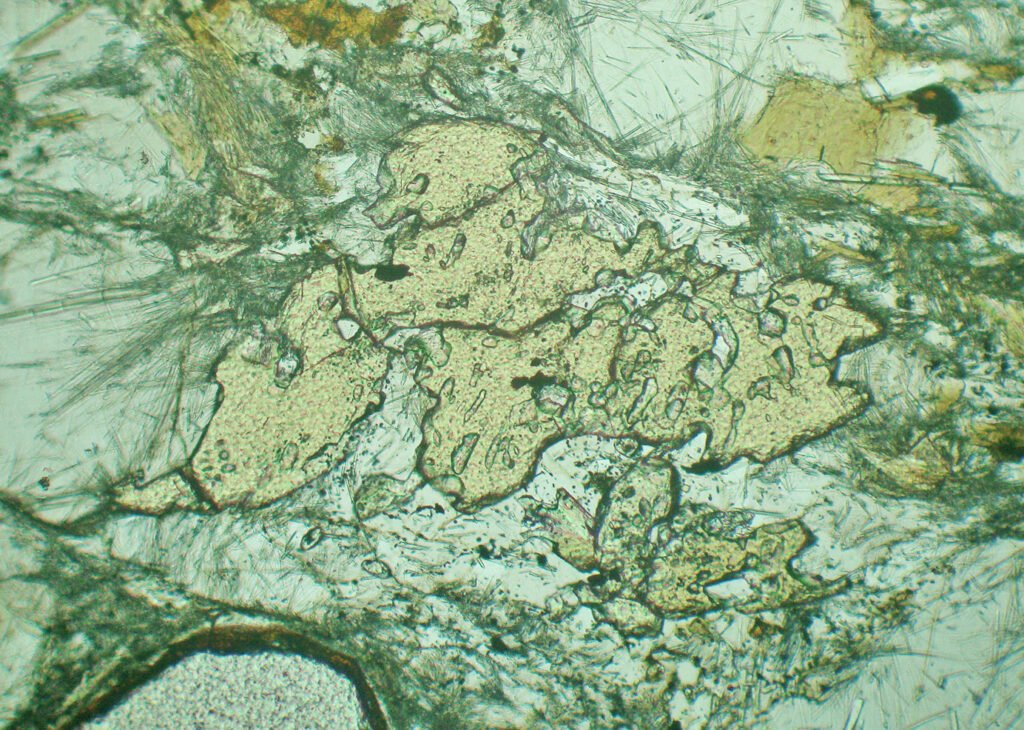
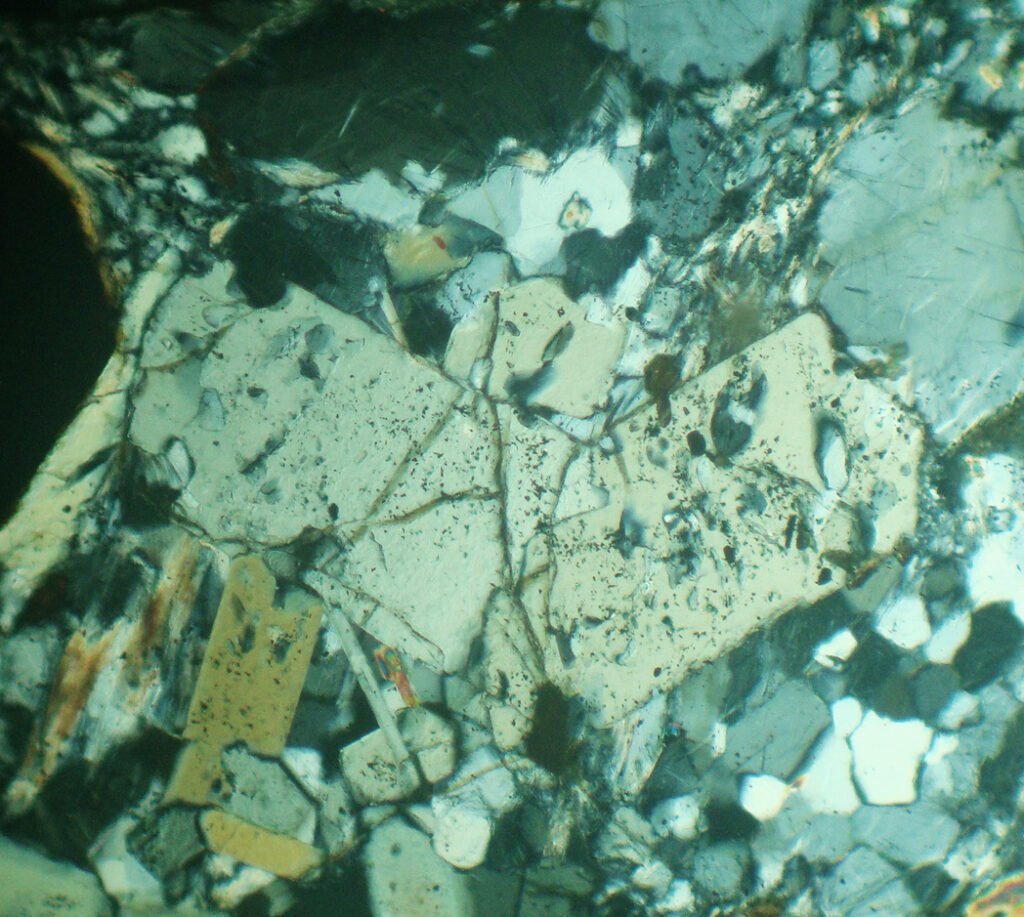
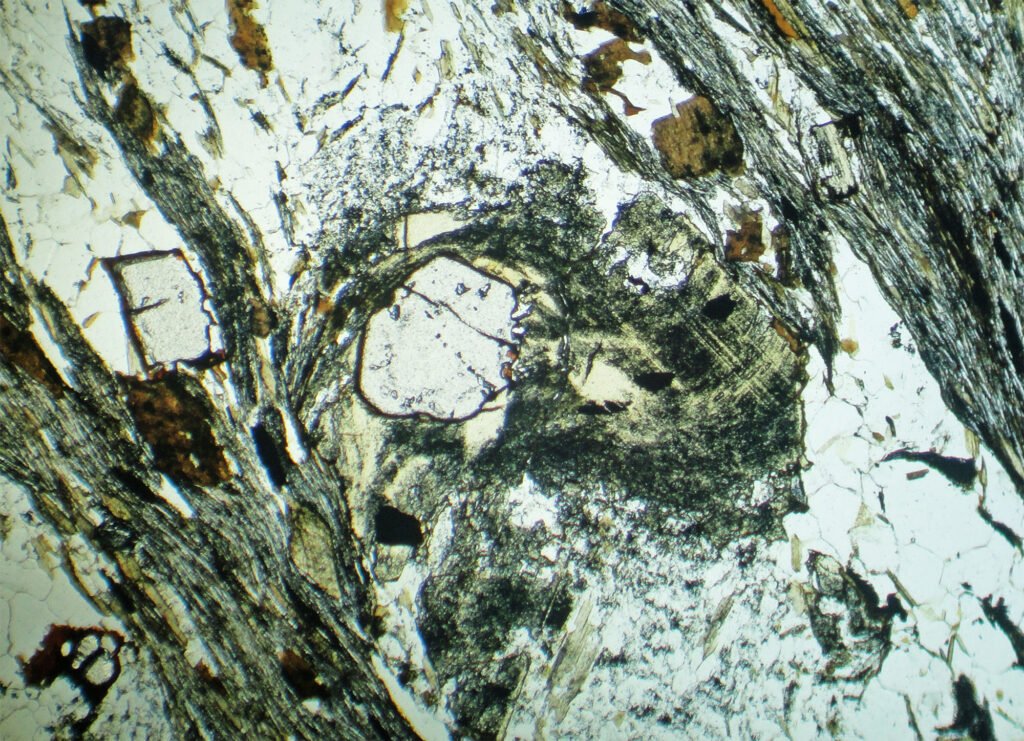
Color / Pleochroism: Colorless to yellow, typically with pleochroism.
Pleochroism is very clear in the longitudinal sections:
X = colorless;
Y = colorless, pale yellow, yellowish brown;
Z = light yellow, golden (honey color), reddish brown.
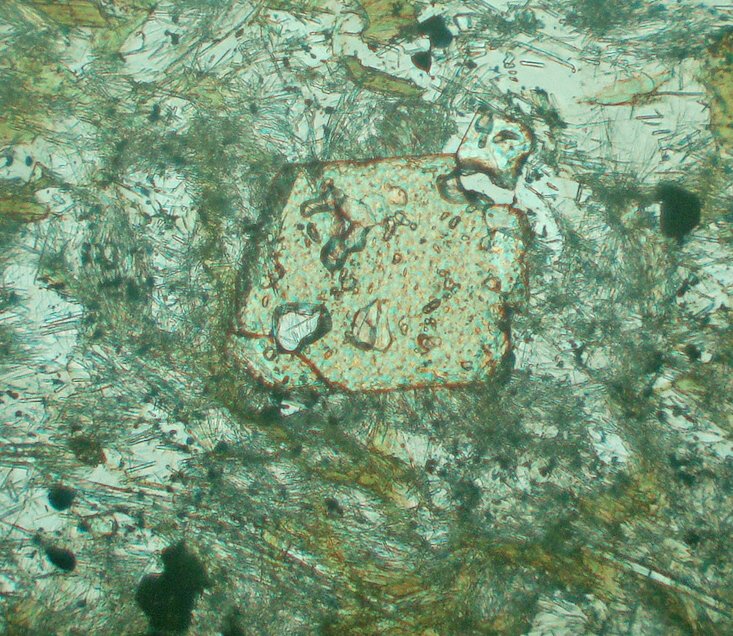
Basal sections show weak pleochroism or none!
Relief: High.
Cleavage: {010} distinct, usually not visible under the microscope.
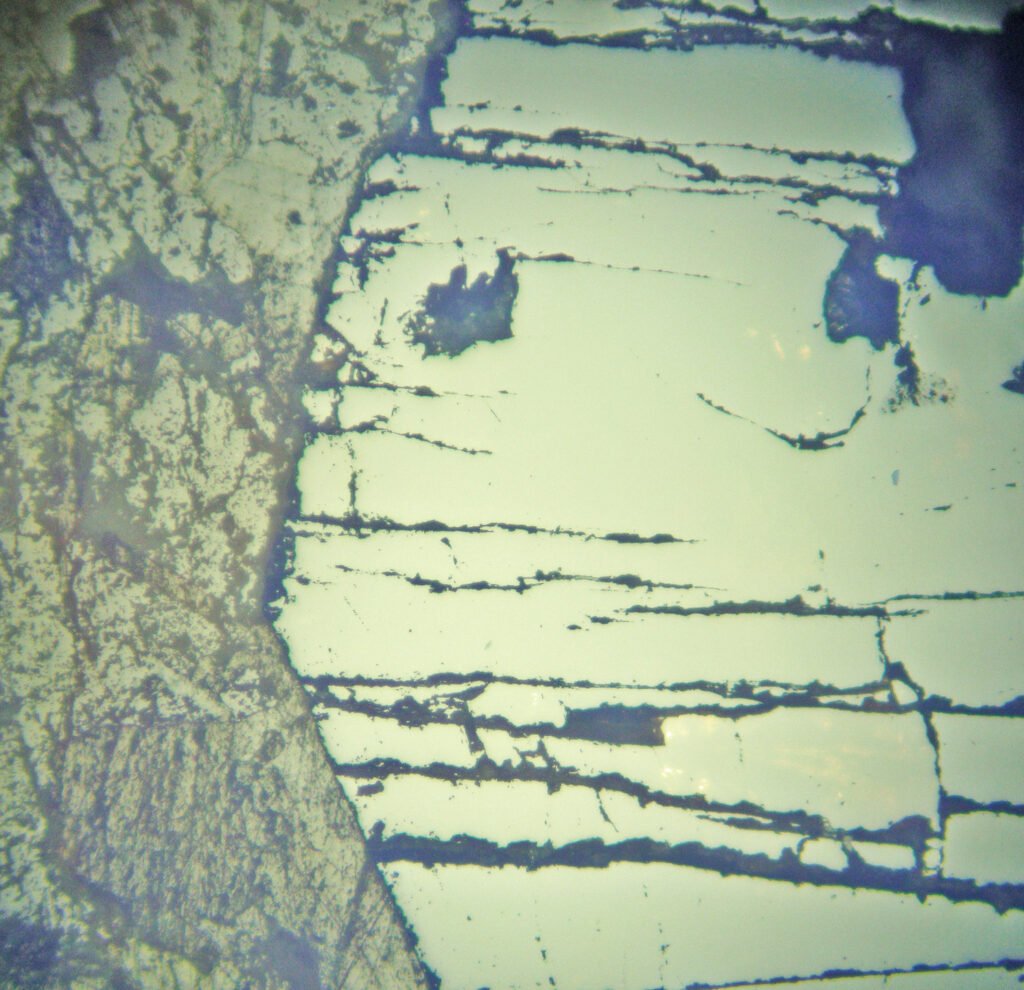
Usually, staurolite has a large number of fractures.
Habits: Longitudinal sections form short euhedral prisms, elongated along the Z axis.
Basal sections may appear pseudo-hexagonal (6 sides).
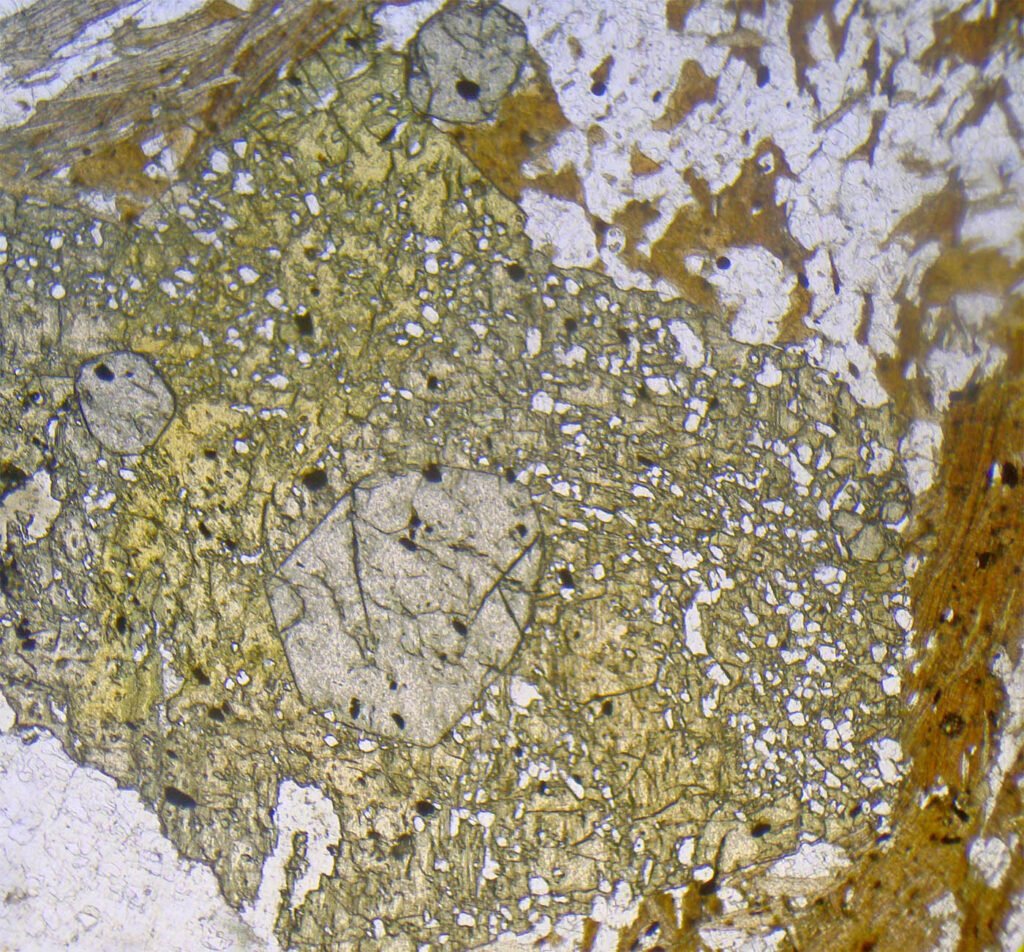
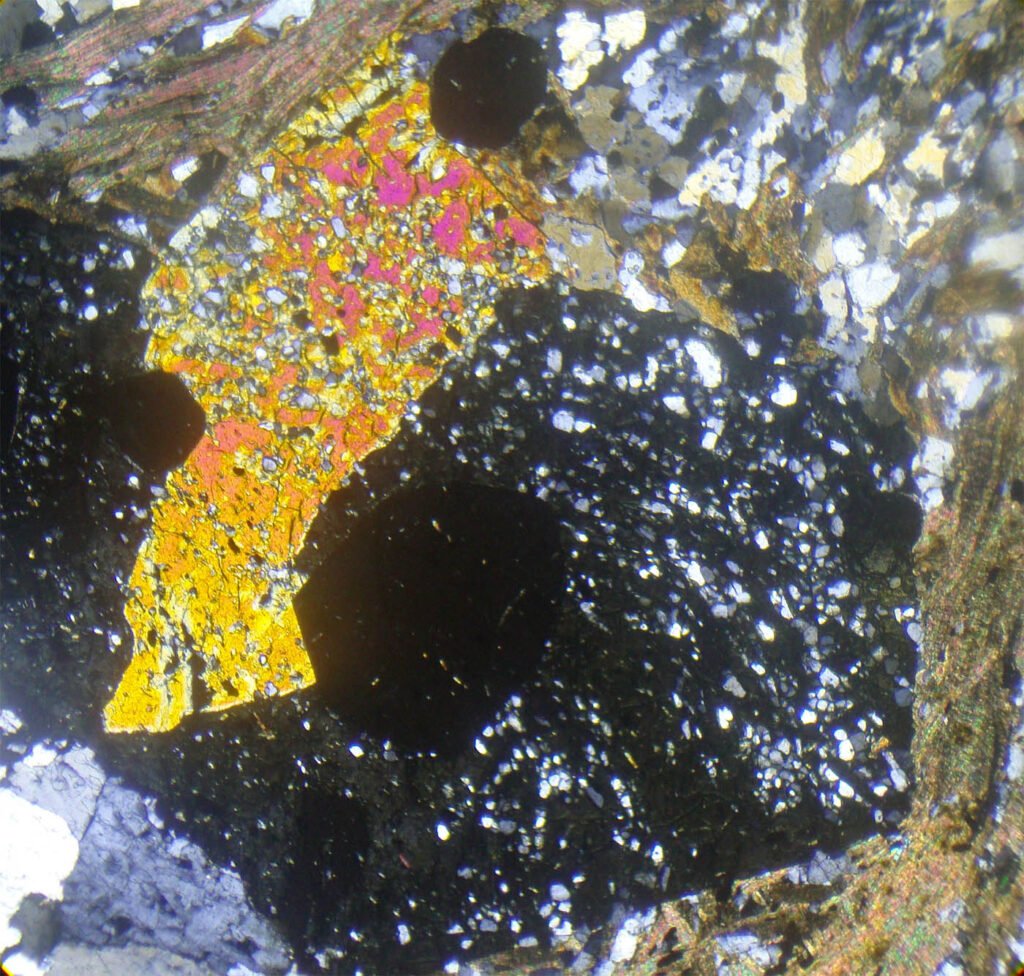
Sieve texture, also called “swiss cheese”, is very common, consisting of staurolite containing many rounded quartz inclusions. Staurolite can form anhedral grain masses and oriented intergrowths (epitaxies) with kyanite.
CROSSED POLARIZED LIGHT – XPL
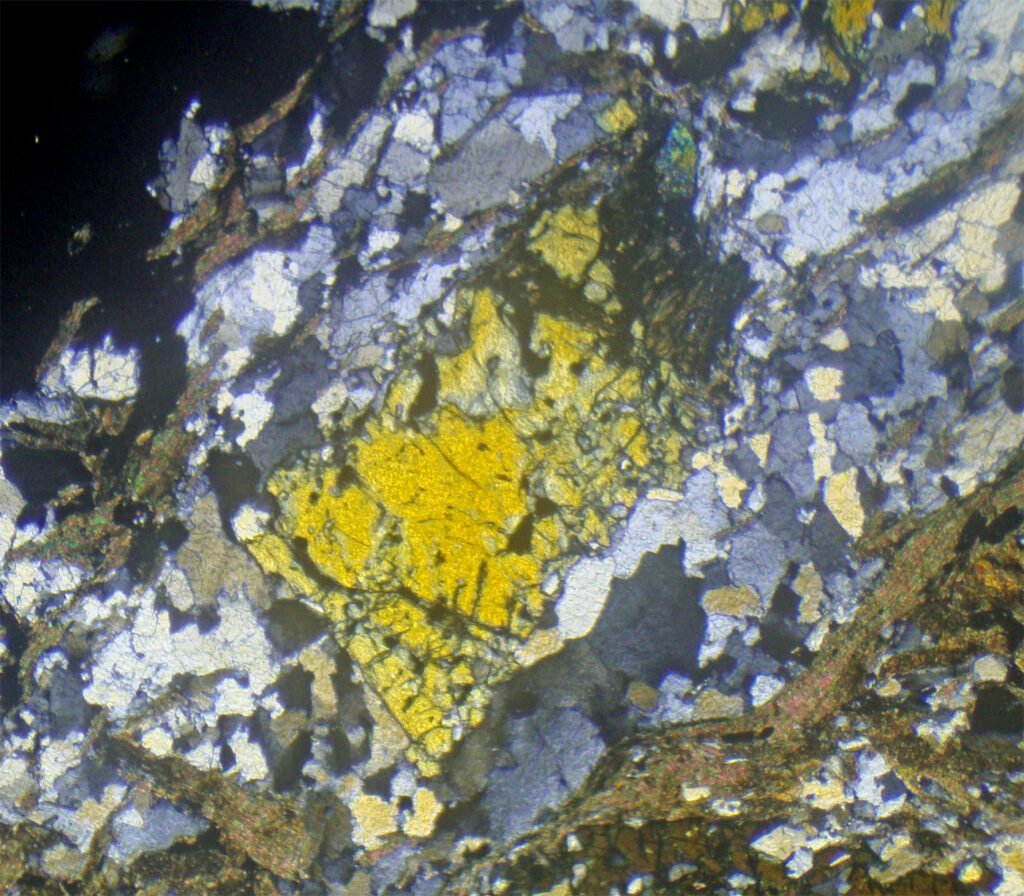
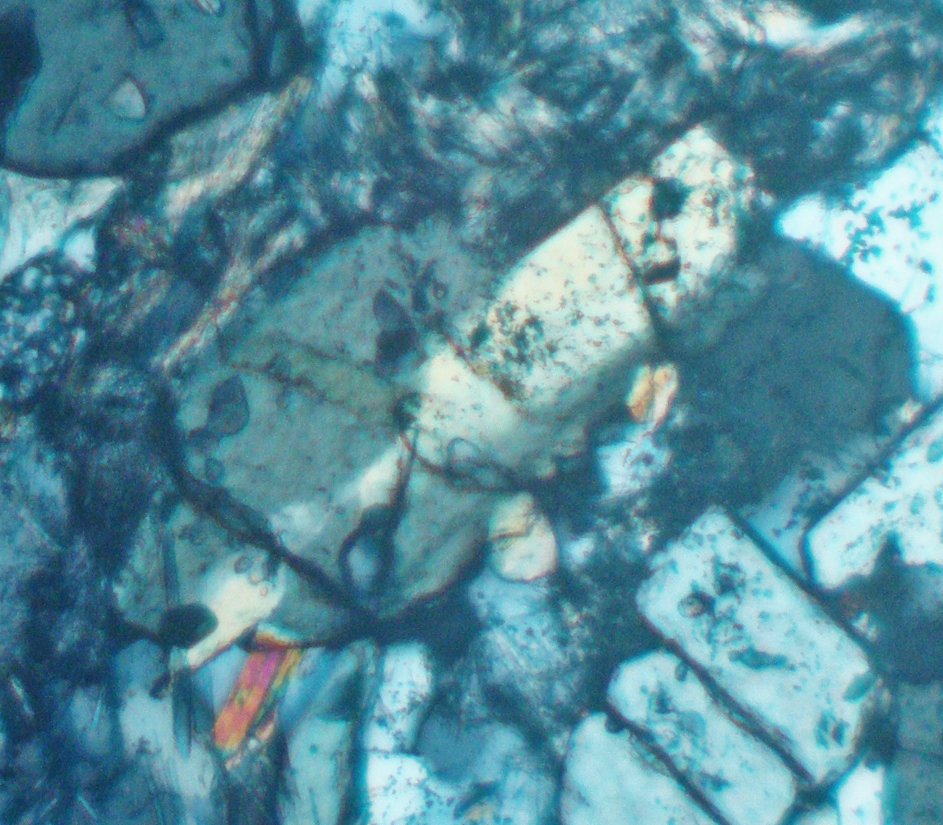
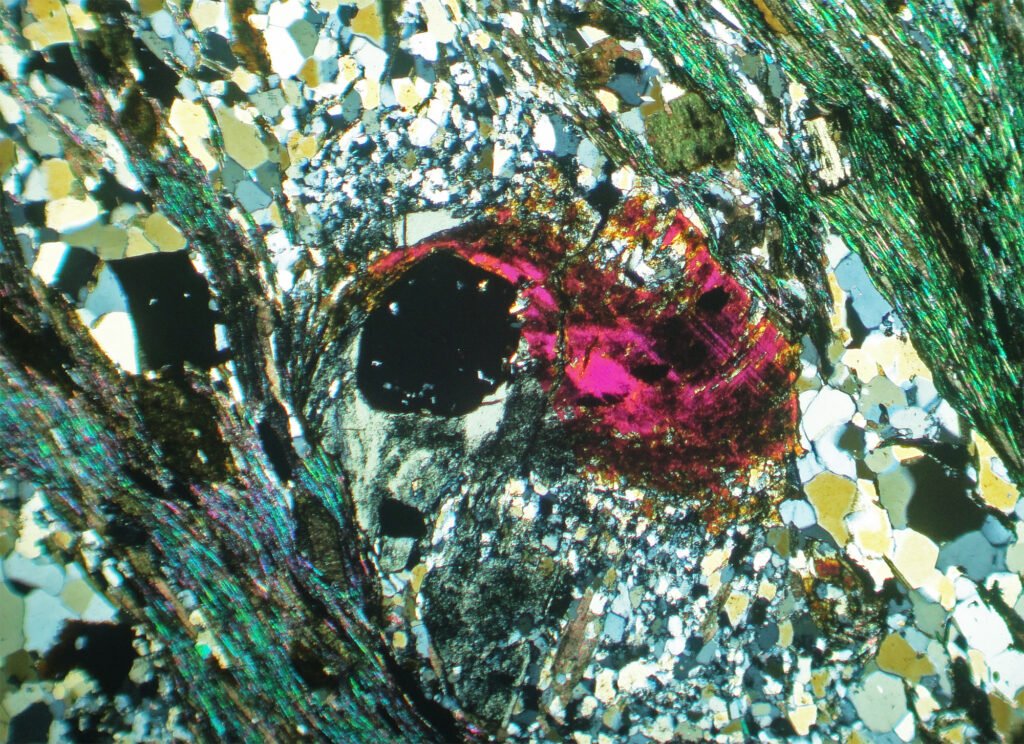
Birefringence and Interference Colors: Relatively low birefringence, between 0.009 and 0.014: higher 1st order interference colors, ranging from light gray to orange.
Extinction: Parallel in longitudinal sections, symmetric in basal sections.
Elongation sign: ES(+).
Twins: Cyclic twins with an angle of 60° are common. Cross or “X” shaped interpenetration twins also occur. Under a microscope these twins are usually unobservable.
Zoning: Rarely zoned.
CONVERGENT LIGHT
Character: B(+)
2V angle: 80 – 90º
Alterations: staurolite is relatively resistant to alteration. With the increase in metamorphism, staurolite is replaced by garnet (almandine) + kyanite or by garnet (almandine) + sillimanite. By retrograde alteration, staurolite is replaced by chlorite and sericite.
May be confused with: few other minerals, as yellow color, yellow/orange pleochroism, high relief and low interference colors are very typical; paragenesis also helps a lot (metamorphic rocks with micas, quartz, etc.).
Tourmaline may look similar (pleochroism sometimes in strong yellow tones) but has an elongated prismatic habit (long prisms), trigonal basal sections, and is U(-).
Chondrodite also show yellow colors and pleochroism, but the colors are weaker, the interference colors are stronger, extinction is oblique and ocurrs in other paragenesis.
Among the common minerals, titanite, barite, epidote and piemontite may occasionally show yellow pleochroism, but generally their characteristics in XPL are different from those of staurolite