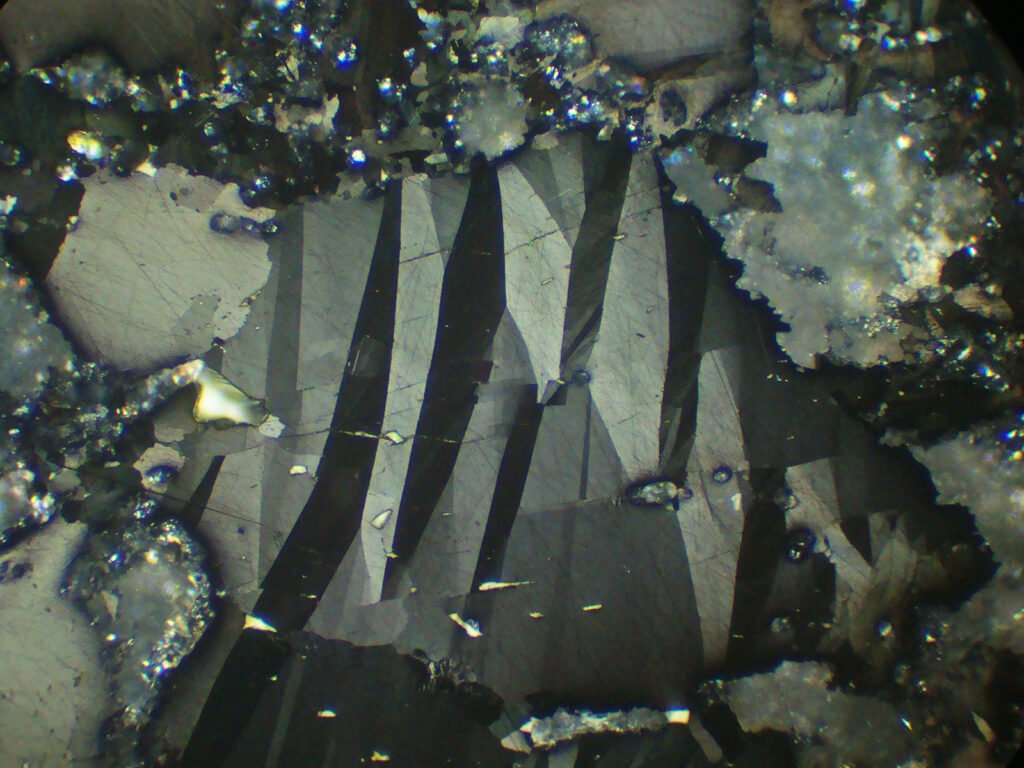
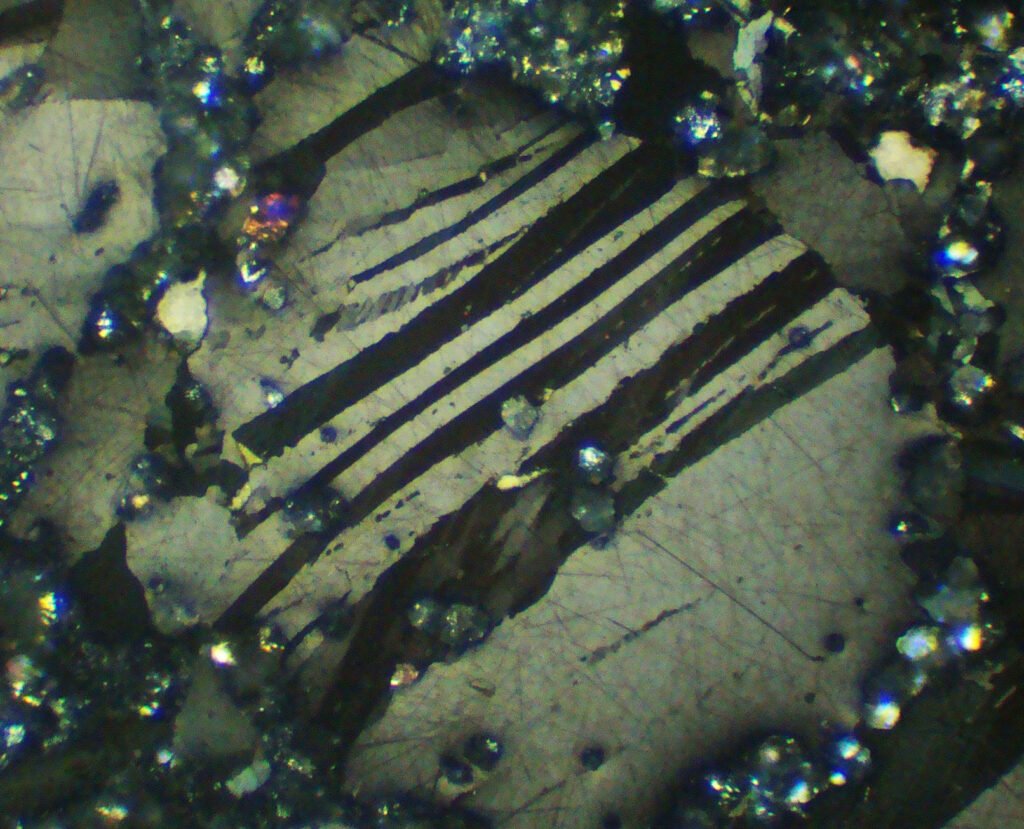
5. Reflected Light Microscopy
Sample preparation: Despite its low hardness, stibnite is very easy to polish. Excessive force or overly coarse abrasives should be avoided during the preparation of the polished section to prevent the formation of an excessively thick surface film with significant structural alterations—alterations which are, incidentally, highly characteristic of stibnite.
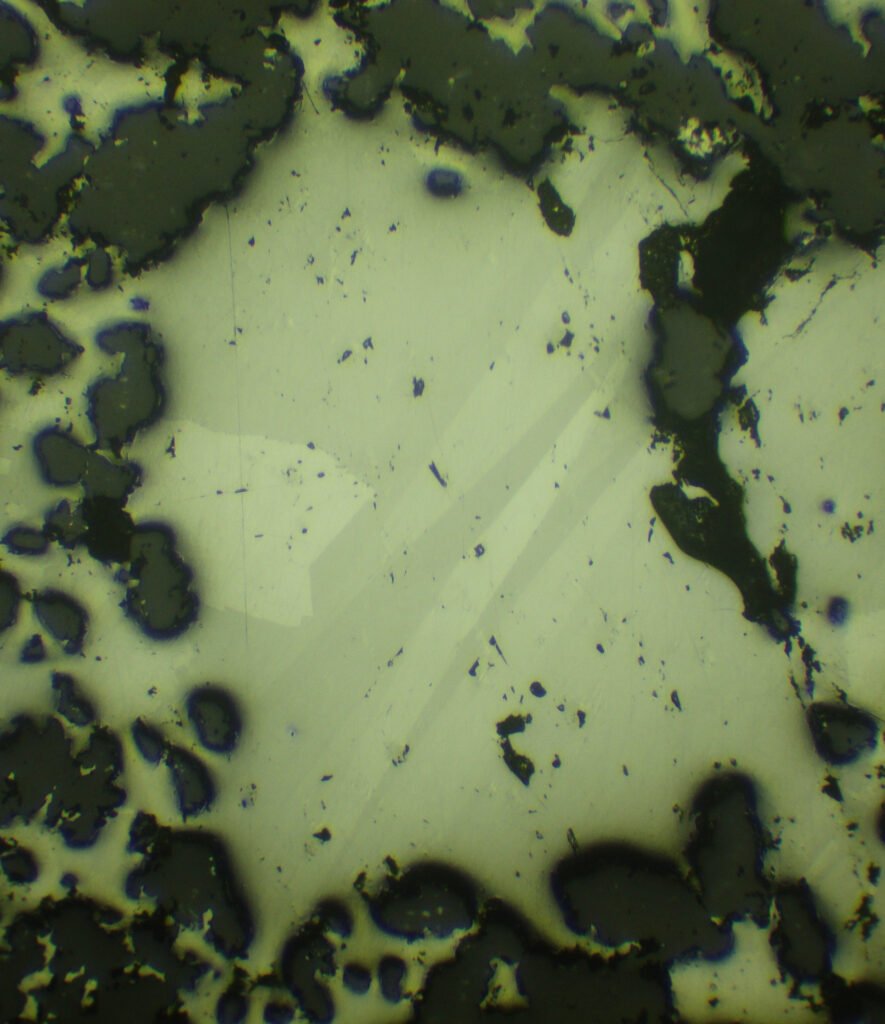
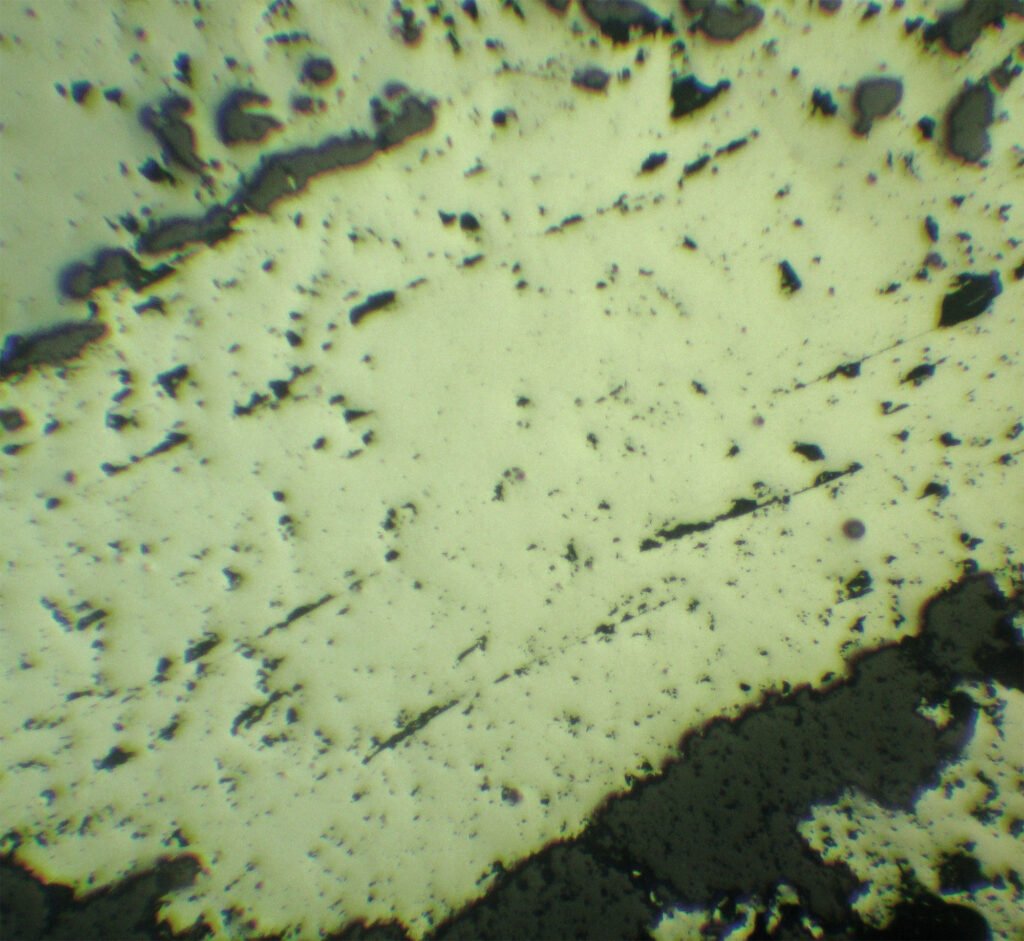
PLANE POLARIZED LIGHT – PPL
Reflection color: White to light gray and grayish-white with brown tones.
Pleochroism: Very strong: // a is pale gray-white, // b is pale gray with an olive tint (the darkest color of the three) and // c is pure white, very light. The frequent twins facilitate the observation of pleochroism.
Reflectivity: 30 – 45%
Bireflectance: Distinct.
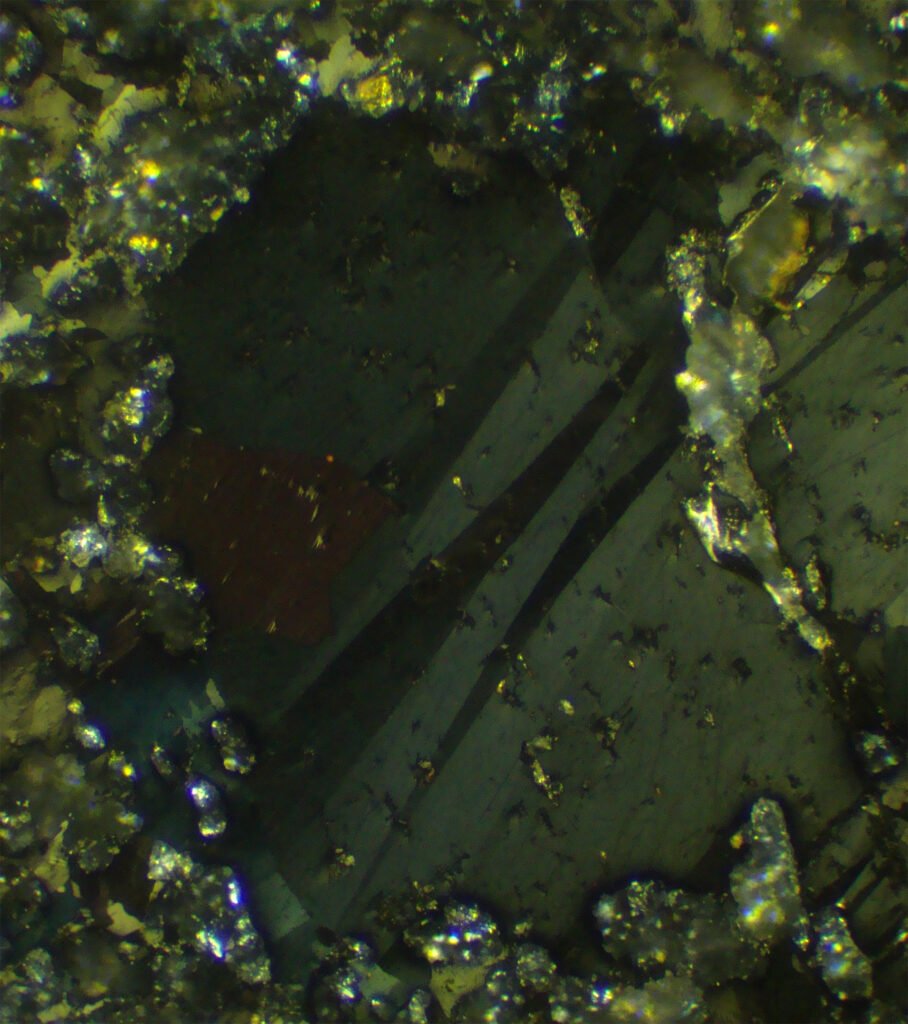
CROSSED POLARIZED LIGHT – XPL
Isotropy / Anisotropy: Very strong anisotropy, ranging from gray-brown, gray-white, and leather-brown to white-brown-pink and gray-blue (or from bluish-gray to pinkish-brown); the colors reported in the literature vary.
Internal reflections: No.
May be confused with: many other minerals. A careful examination is required for correct identification, especially if the crystals are not prismatic and lack the twinning typical of stibnite. The following minerals are very similar:
Chalcostibite (bluish to pinkish color, exhibits cleavage, weaker pleochroism).
Bournonite (weaker anisotropy)
Jamesonite (weaker pleochroism and anisotropy, no deformation twin lamellae)
Bismuthinite (more yellowish color, weaker anisotropy)
Berthierite (in pleochroism, one of the colors is brown, similar to magnetite).
General Characteristics:
Grain shape: the primary grain shape is characteristically elongated, acicular-radiate, or occurs as subhedral, cleavable masses. Subsequent recrystallization may transform the grains into very coarse-grained, anhedral granular aggregates. Fine-grained masses are rare. Grain contacts range from simple polygonal boundaries to “jagged” or somewhat myrmekitic interfaces.
Cleavage is rarely visible in high-quality polished sections due to the mineral paste that forms on the surface during polishing; cleavage becomes visible only upon incipient alteration.
Extinction is parallel.
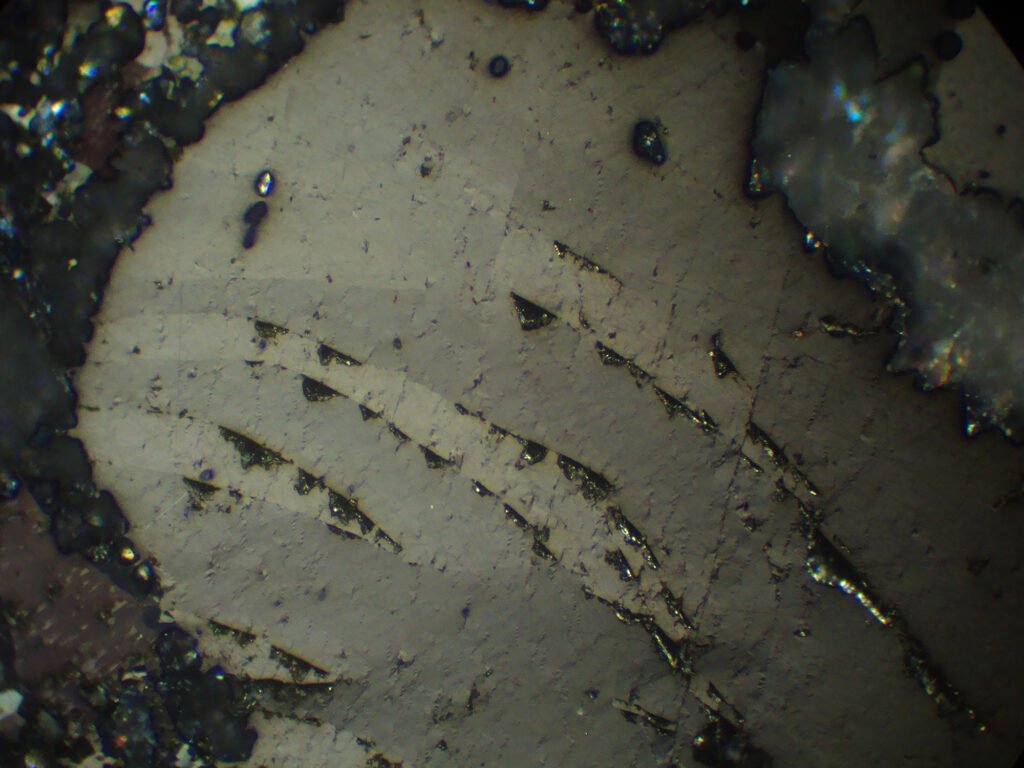
Polysynthetic twinning in the (010) to (001) zone is very common, though sometimes deformed. Deformation (pressure) lamellae with undulose extinction—which are easily observed—may also occur.
Deformation features are almost always present.
Translation gliding in elongated grains is possible and can be mistaken for polysynthetic twinning or deformation features.
Cataclasis is frequent.
Zoning is very common and frequently indicates that crystal morphology changed significantly during growth.
Exsolutions does not occur.
Intergrowths with berthierite, boulangerite, pyrargyrite, and kermesite are possible.
Replacement is uncommon in stibnite. In the oxidation zone, stibnite may be pseudomorphosed—preserving all morphological details—by antimony oxide or antimony ochre (a mixture of cervantite and stibiconite). It may also be replaced by realgar or orpiment.