1. Characteristics
The data below refer to stilbite-Ca:
Crystal system: Monoclinic prismatic.
Color: White, colorless, yellowish, cream, orange, light to dark brown, orange, pink.
Habit: Thin tabular, in bundles, radial, even in spheres. Bow-tie-shaped aggregates are typical.
Cleavage: {010} perfect.
Tenacity: Brittle.
Twinning: Twins are common in stilbite, on {001}, interpenetrating or cruciform. All the most common zeolites show twinning.
Fracture: Irregular.
Mohs Hardness: 3.5 – 4
Parting: No.
Streak: White.
Lustre: Vitreous to pearly.
Diaphaneity: Transparent.
Density (g/cm³): 2.19
2. Geology and Deposits
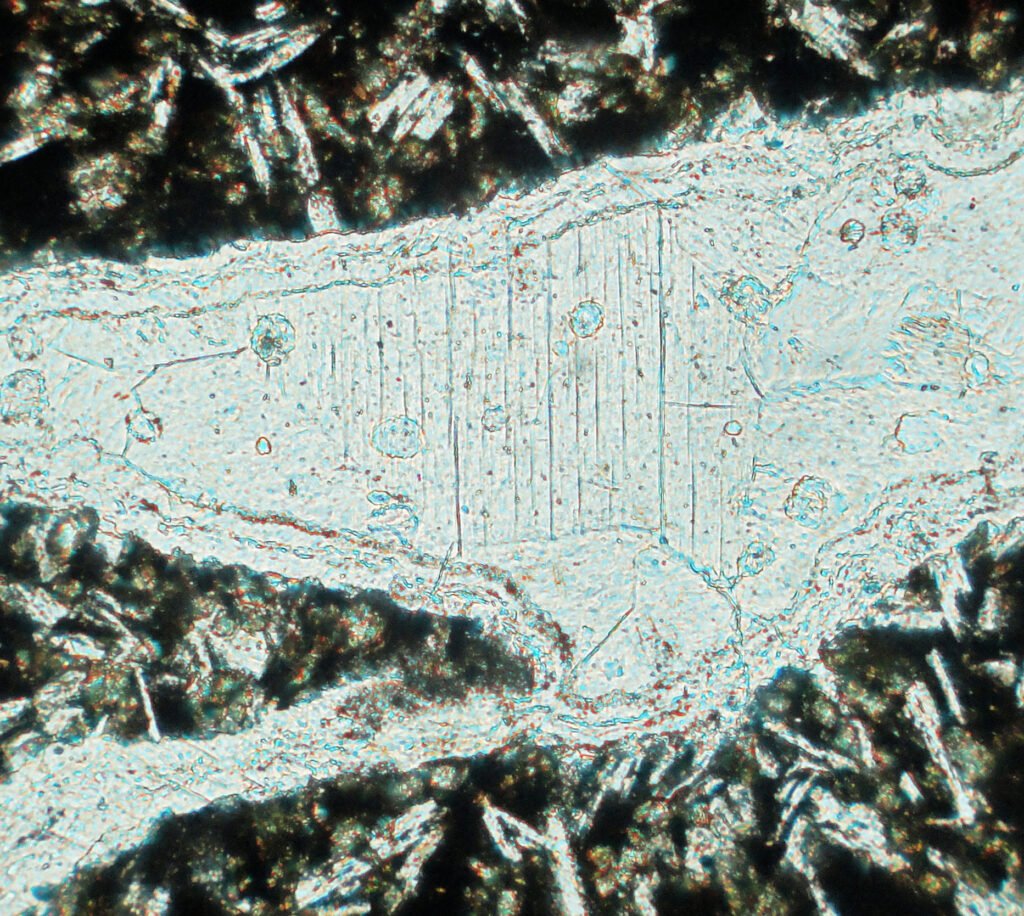
Stilbite is a low temperature hydrothermal mineral (~100°C) that typically crystallizes in cavities and fractures of basic and acidic volcanic rocks such as basalts, andesites and rhyolites.
It can also be found associated with metamorphic rocks.
It forms in hot springs and can cement sedimentary rocks such as sandstones and conglomerates.
Cryptocrystalline stilbite crystals form in lake and marine sediments.
A detailed account of the occurrence, forms and other details of the stilbite can be found in the book “Zeolites of the World” by Rudy Tschernich, available for download on the internet. Detailed information on the various ways in which stilbite occurs can be found on the website of the Commission on Natural Zeolites: http://www.iza-online.org/
3. Mineral Associations
Stilbite associates with secondary minerals common in volcanic rocks: quartz (rock crystal, amethyst), chalcedony, opal, calcite, apophyllite, prehnite, datolite, clay minerals and, more rarely, cavansite and pentagonite.
Also with a high number of other zeolites, such as heulandite, chabazite, thomsonite, laumontite, stellerite, mordenite, analcime and others.
In metamorphic rocks it occurs with chlorite.
4. Transmitted Light Microscopy
The data below refer to stilbite-Ca:
Refraction indices: nα: 1.484 – 1.500 nβ: 1.492 – 1.507 nγ: 1.494 – 1.513
PLANE POLARIZED LIGHT – PPL
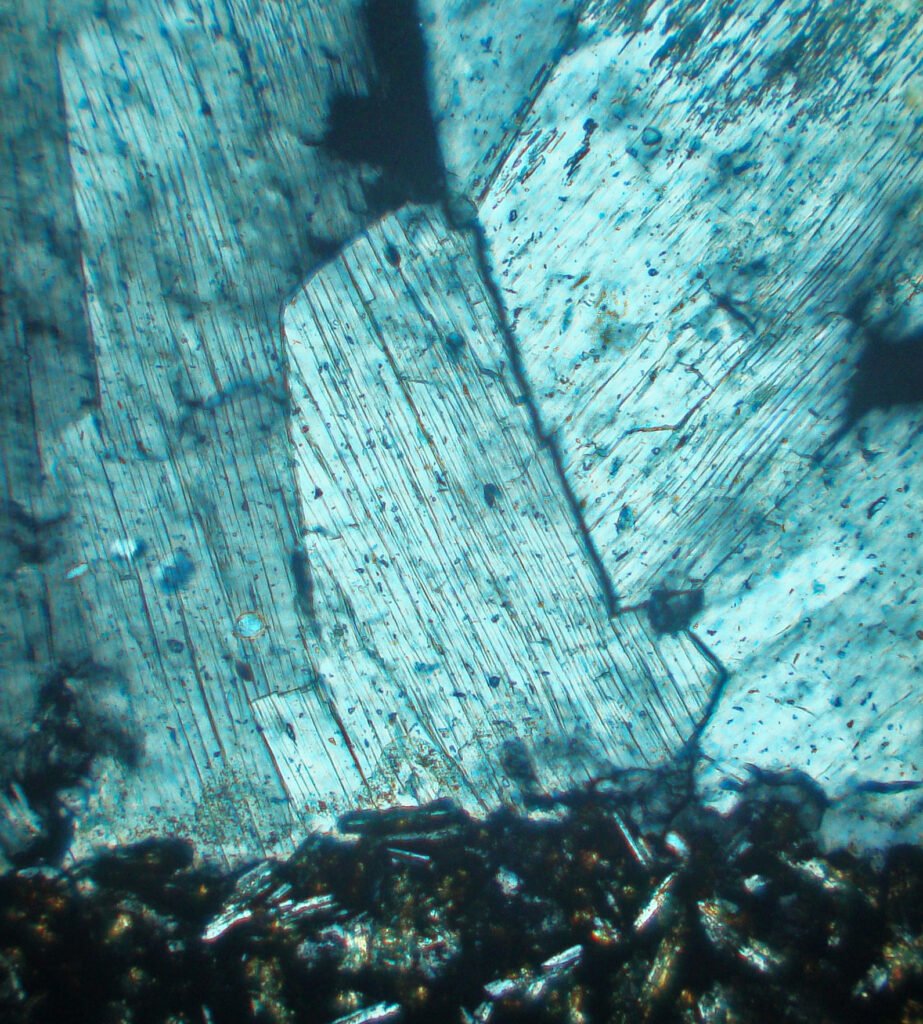
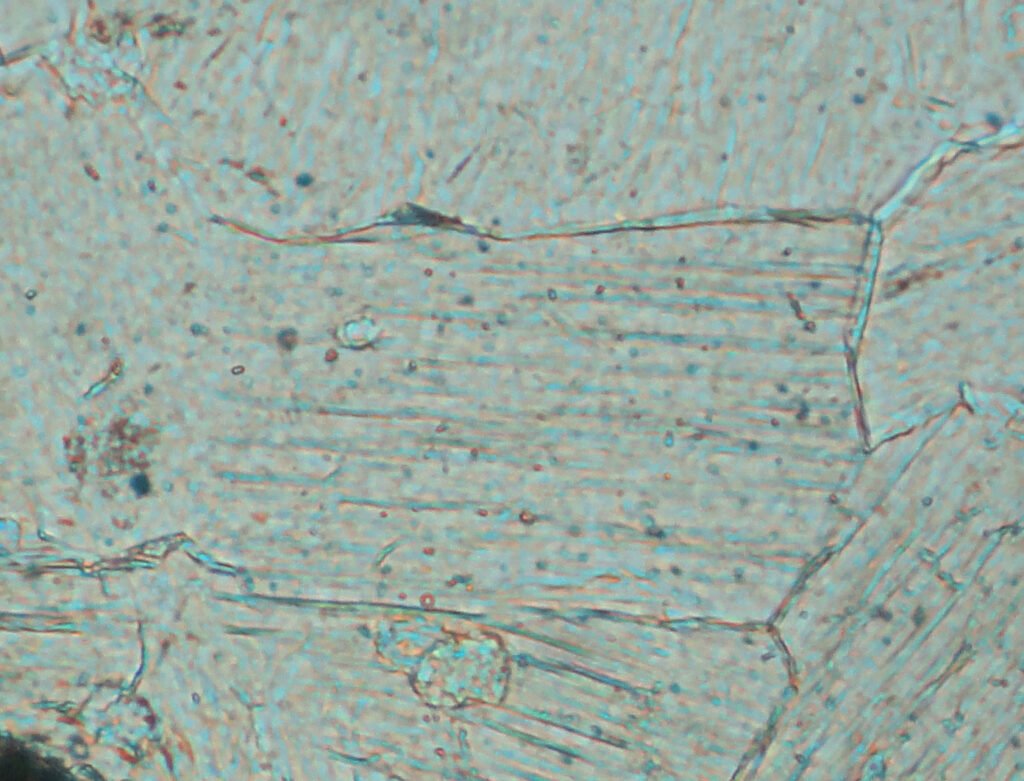
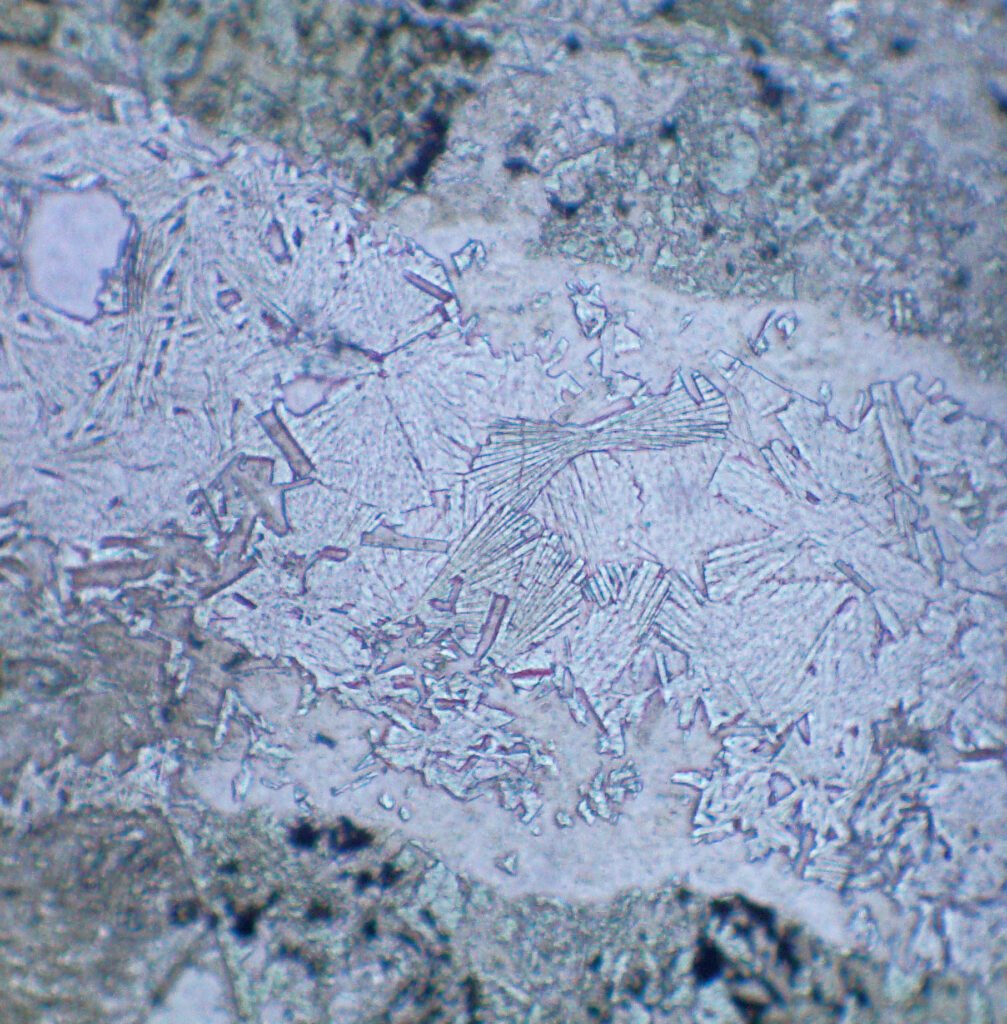
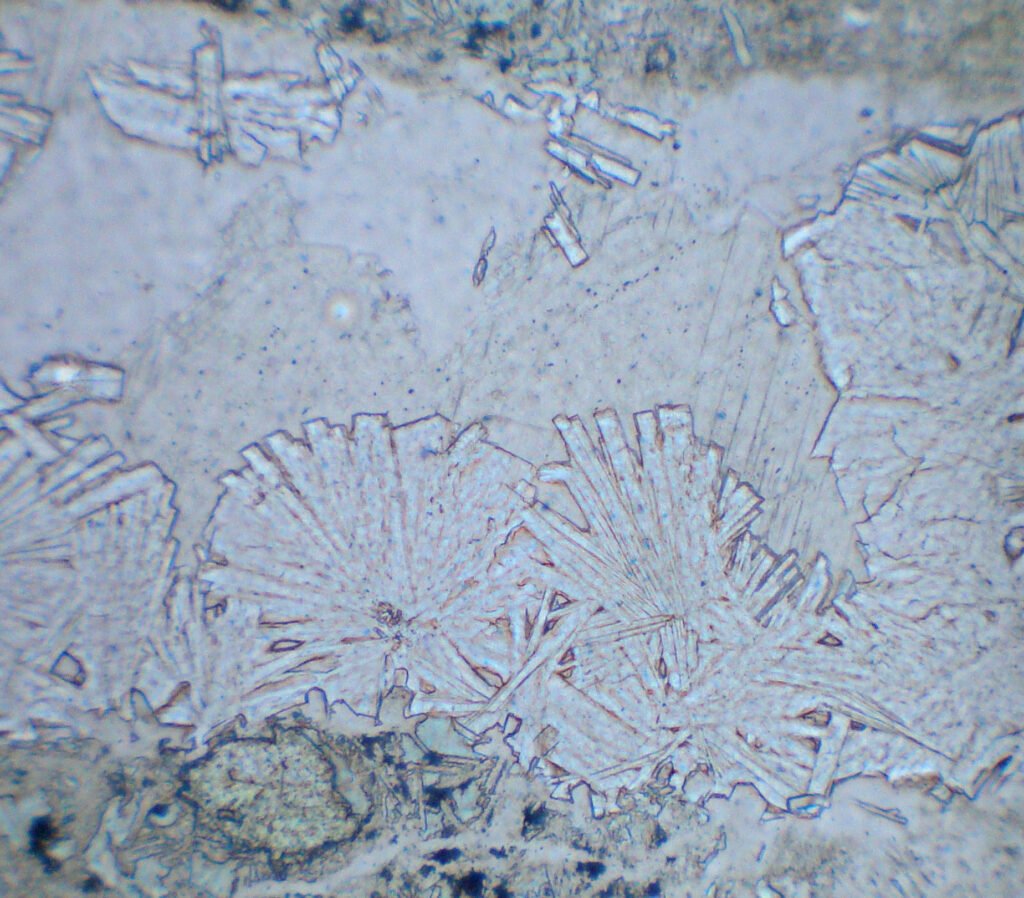
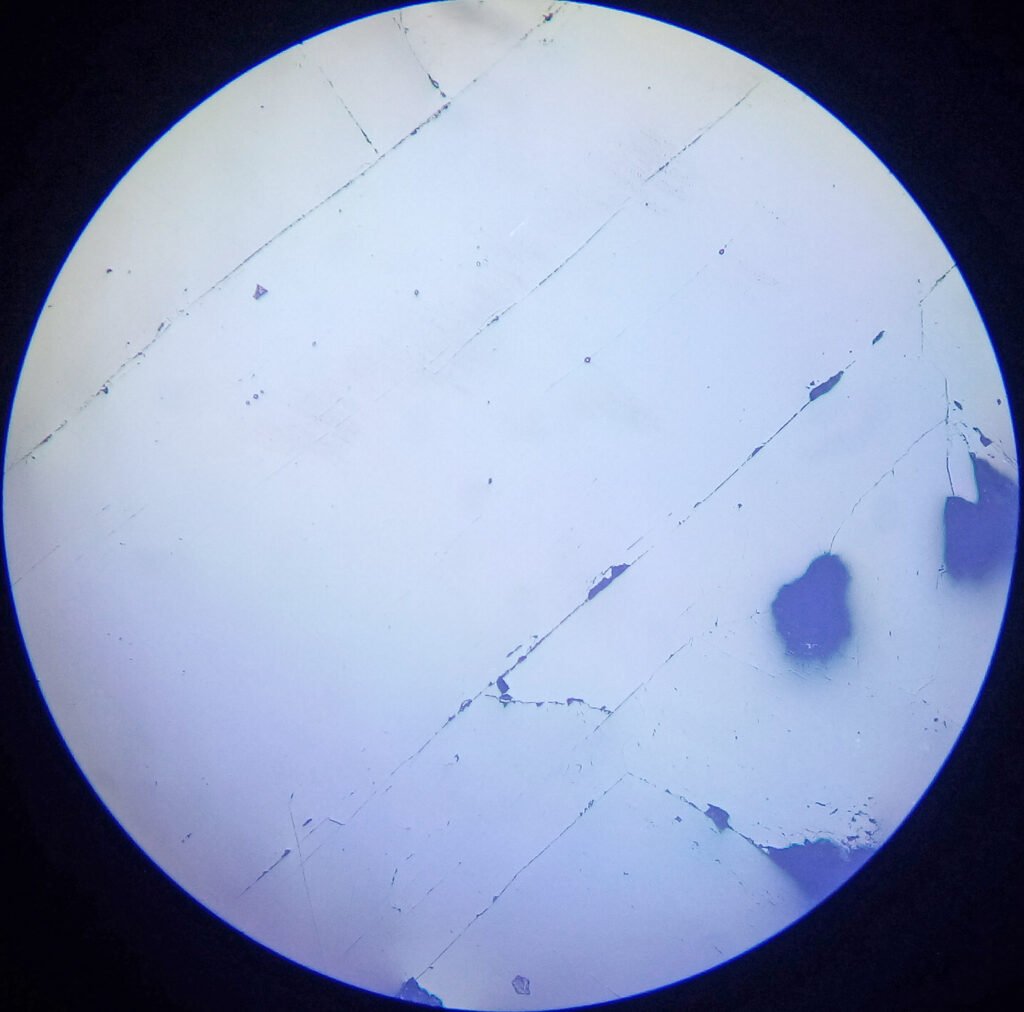
Color / Pleochroism: Colorless.
Relief: Low to moderate low.
Cleavage: {010} perfect.
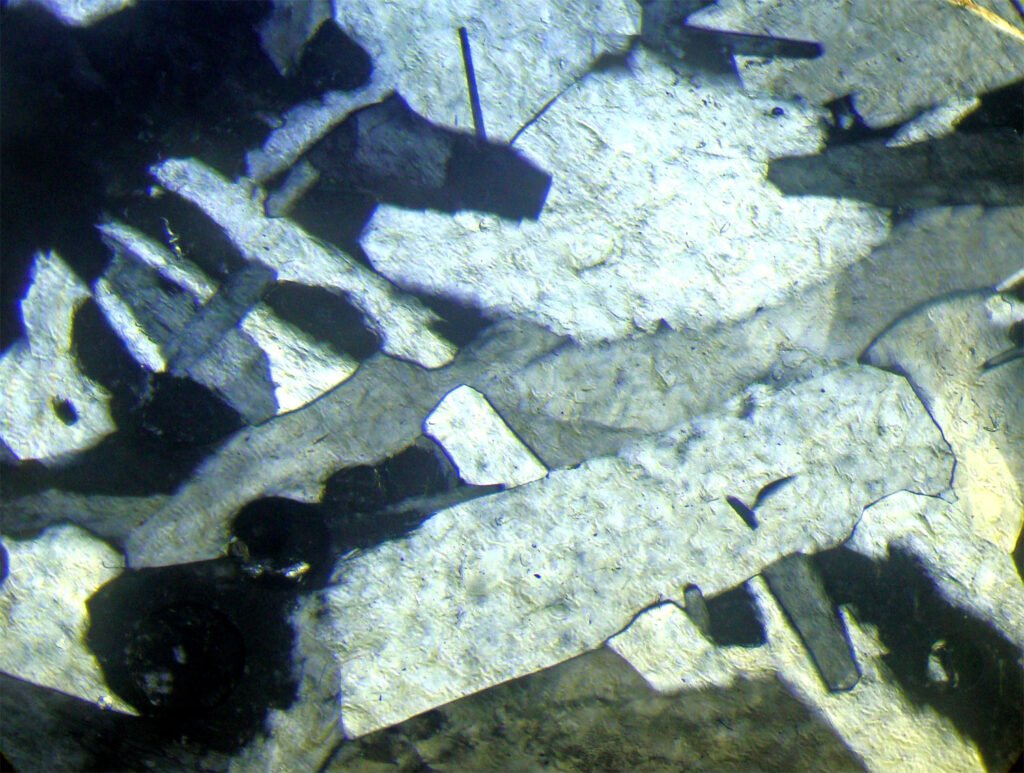
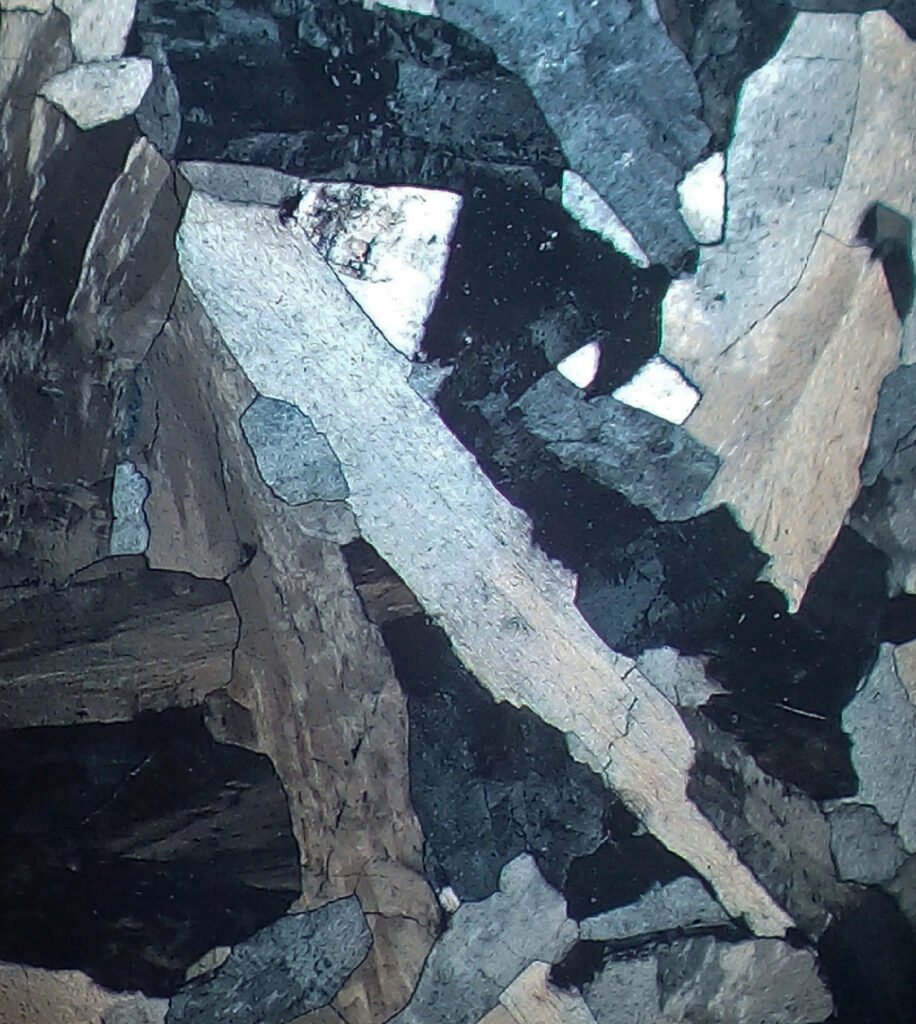
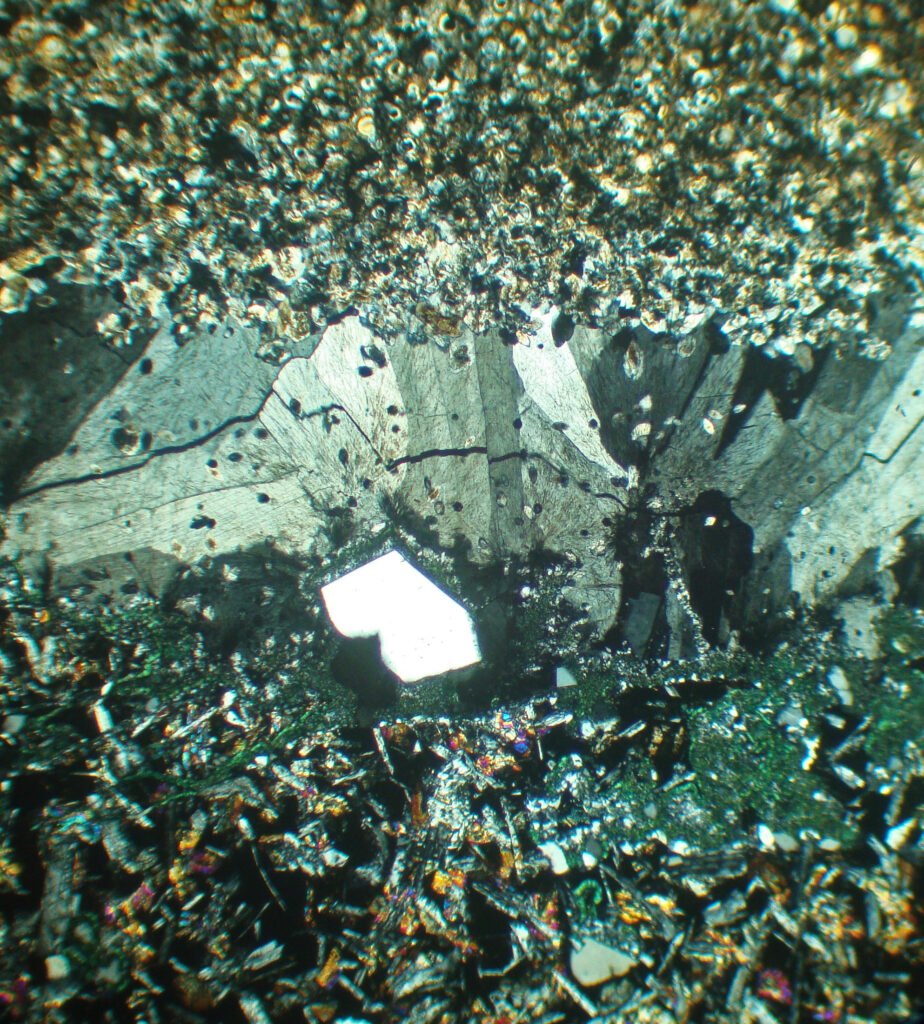
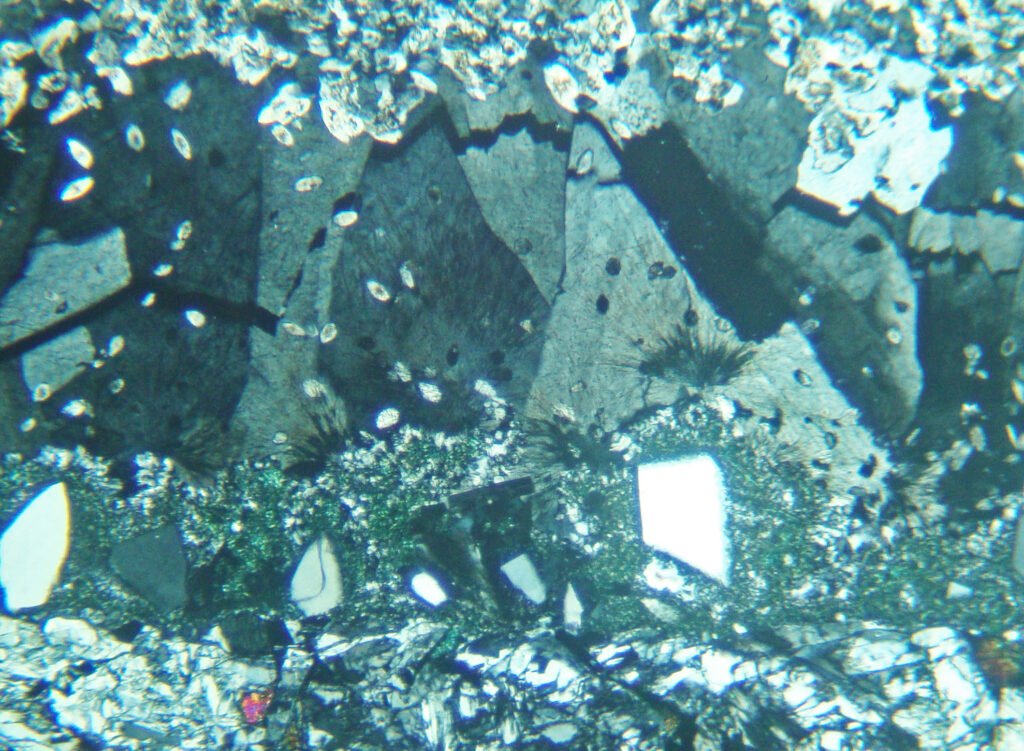
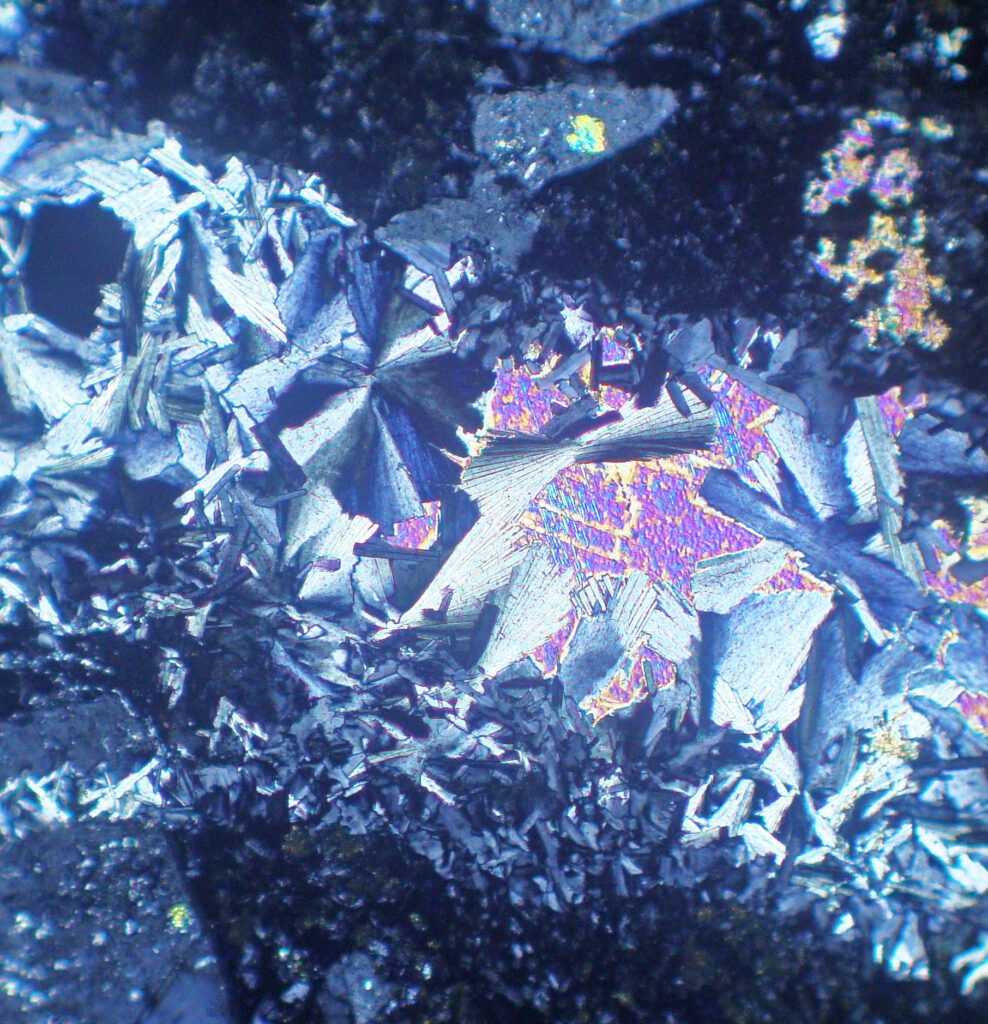
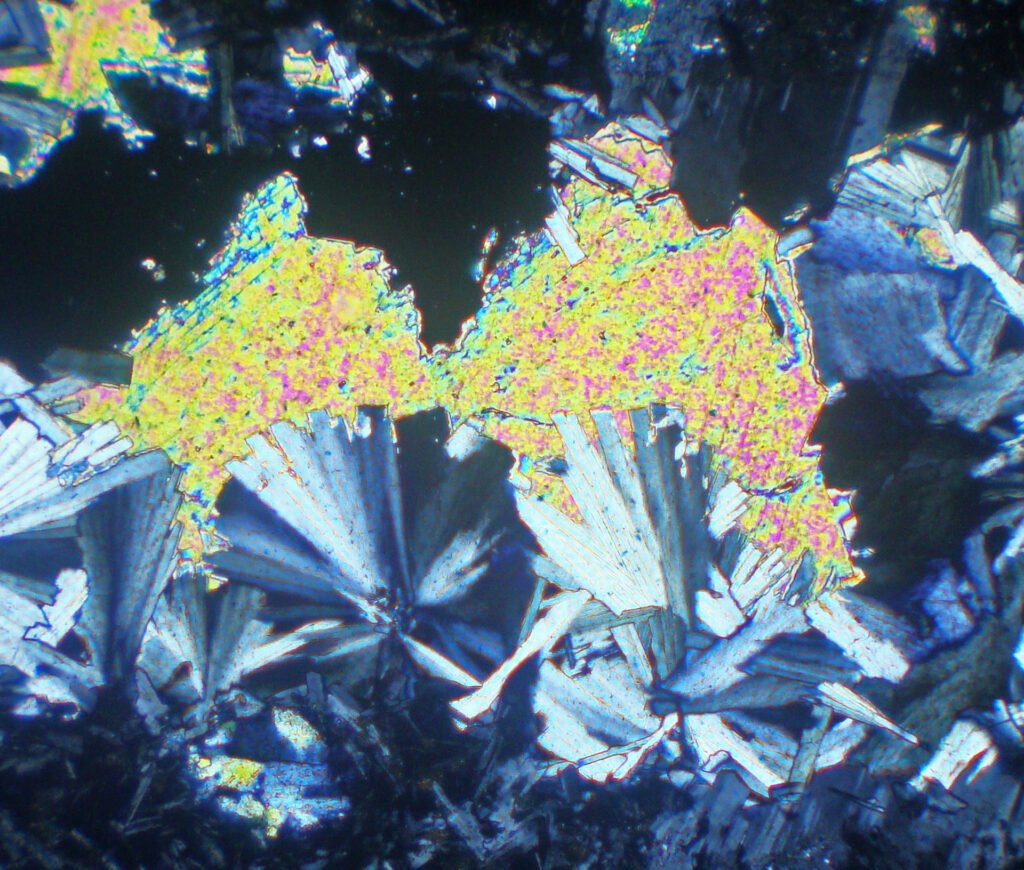
Habits: The crystals show typically thin tabular shapes, elongated along the “z” axis. These crystals constitute radiated clusters that can evolve into bow-tie-shaped aggregates. More rarely it can form spherical aggregates.
CROSSED POLARIZED LIGHT – XPL
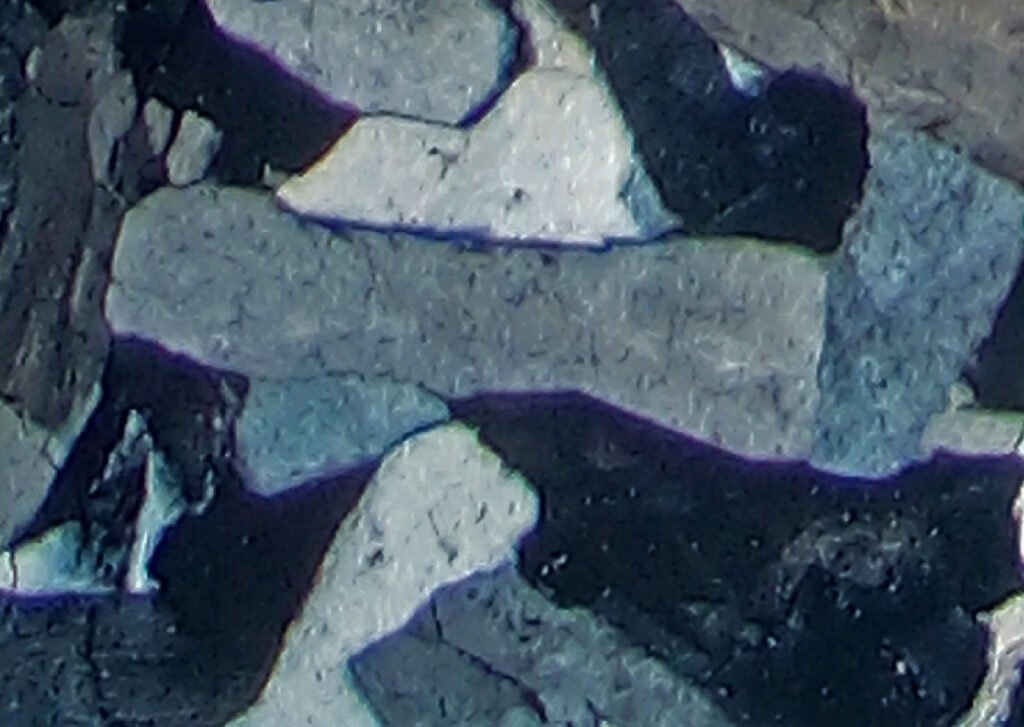
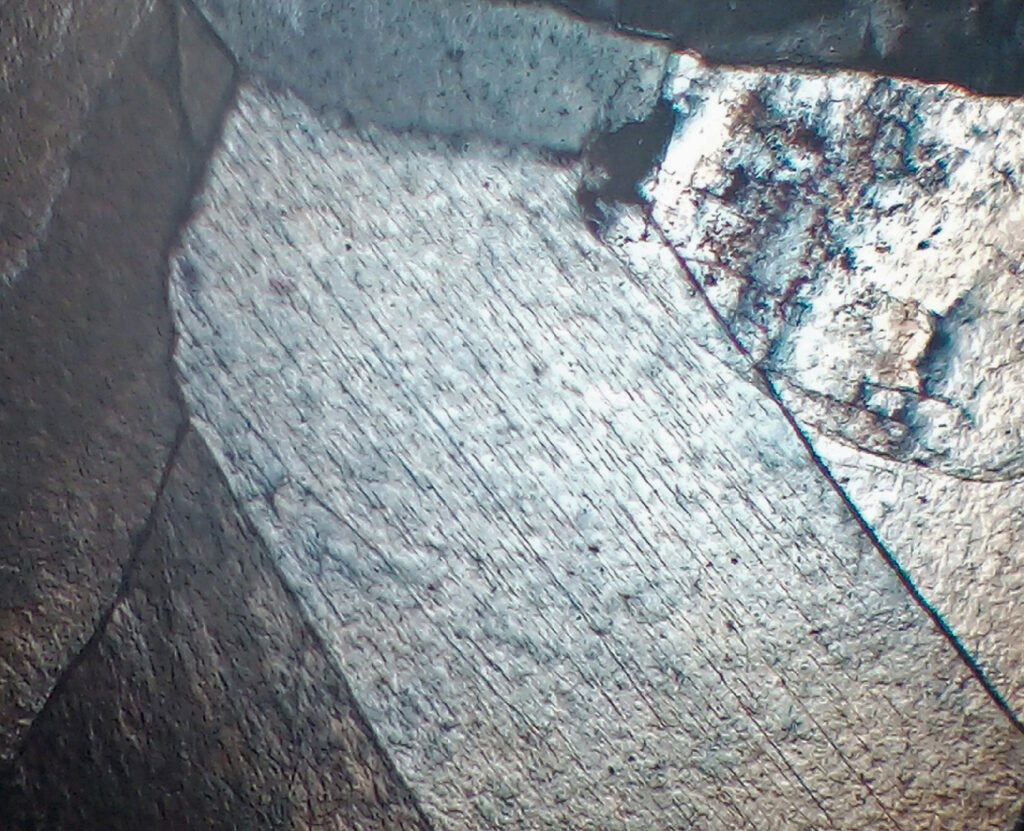
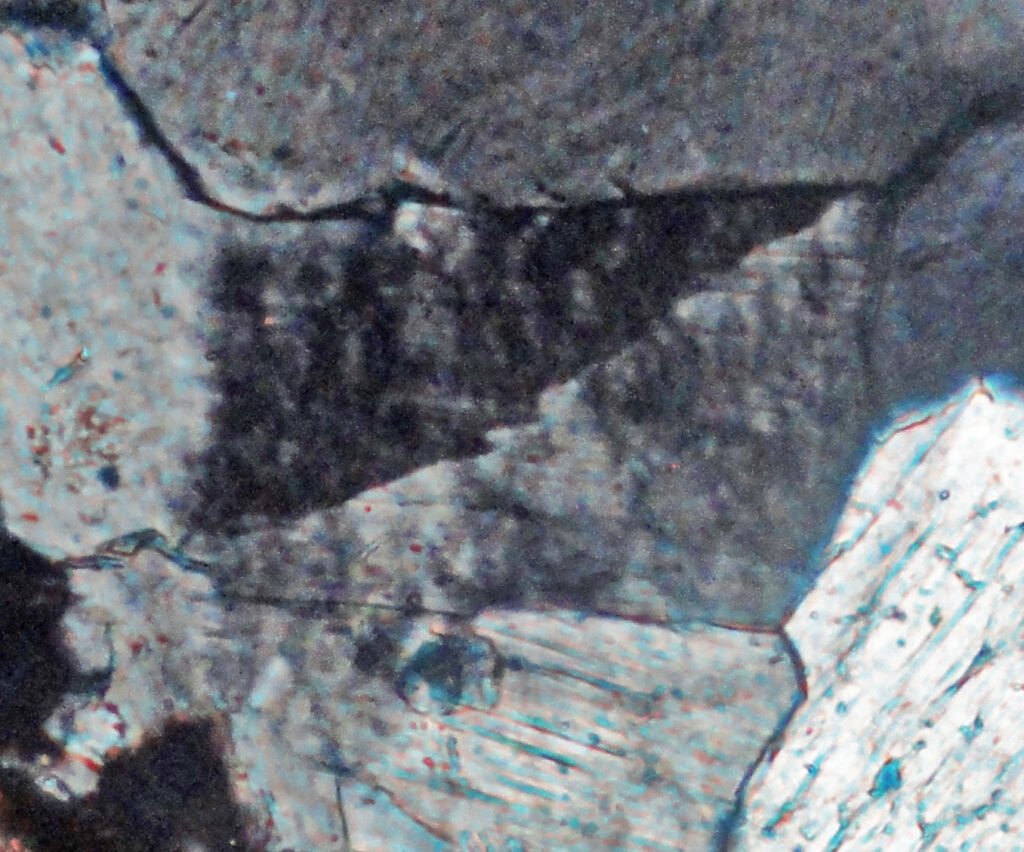
Birefringence and Interference Colors: 0.010 to 0.013, corresponding to medium 1st order colors: dark gray, light gray, white and straw yellow.
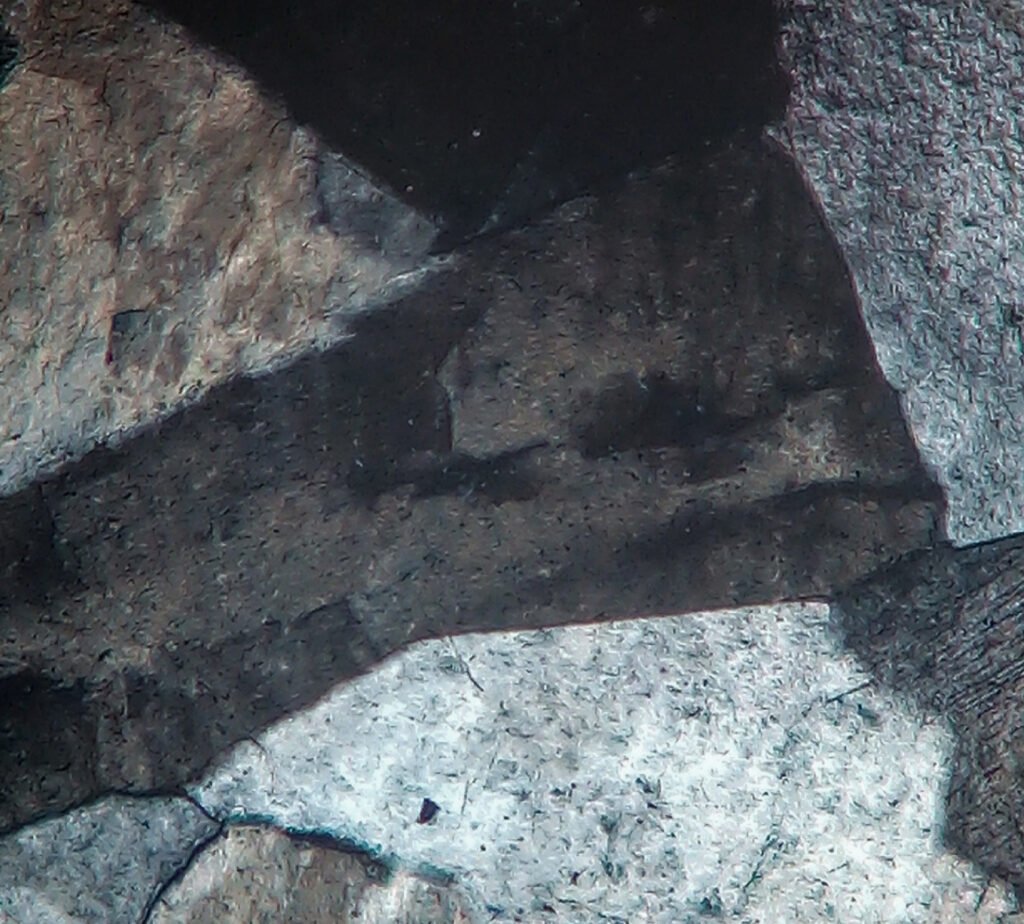
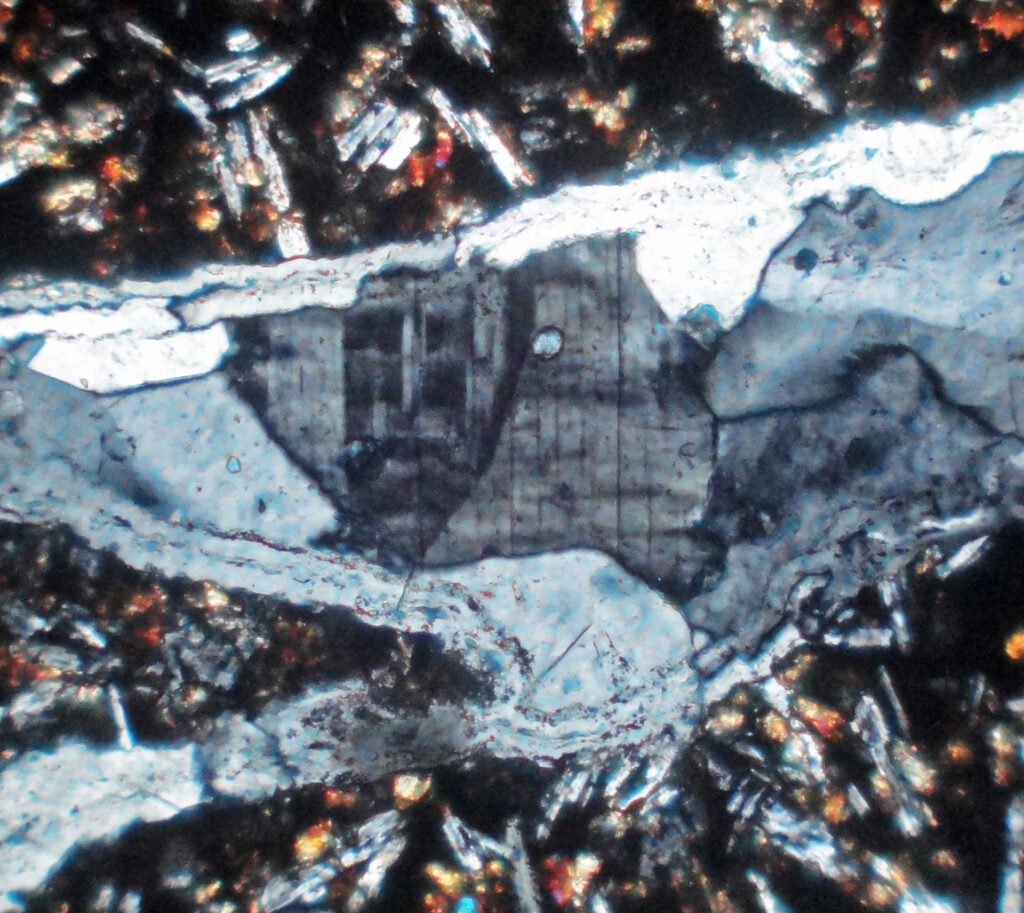
Extinction: Tends to oblique, with angles of 3 – 12º. It can simulate being parallel!
Extinction is usually not complete in the crystal, but occurs through irregular zones, which can be bands or larger and smaller areas of the grain (sectorizing).
Elongation sign: ES(+) or ES(-), it is not diagnostic.
Twins: It has interpenetration and cross-shaped twins.
Zoning: No, but sectorizing is common.
CONVERGENT LIGHT
Character: B(-)
2V angle: 30 – 49º
Alterations: may alter to clay minerals or other zeolites.
May be confused with: other zeolites, as there are several species very similar to each other. It is necessary to check the table below, including even gypsum and barite in the options, which are also similar with zeolites and can occur in the same paragenesis.