1. Characteristics
Crystal system: Triclinic pinacoidal.
Color: Red, brown, black, dark green, dark reddish brown, golden brown.
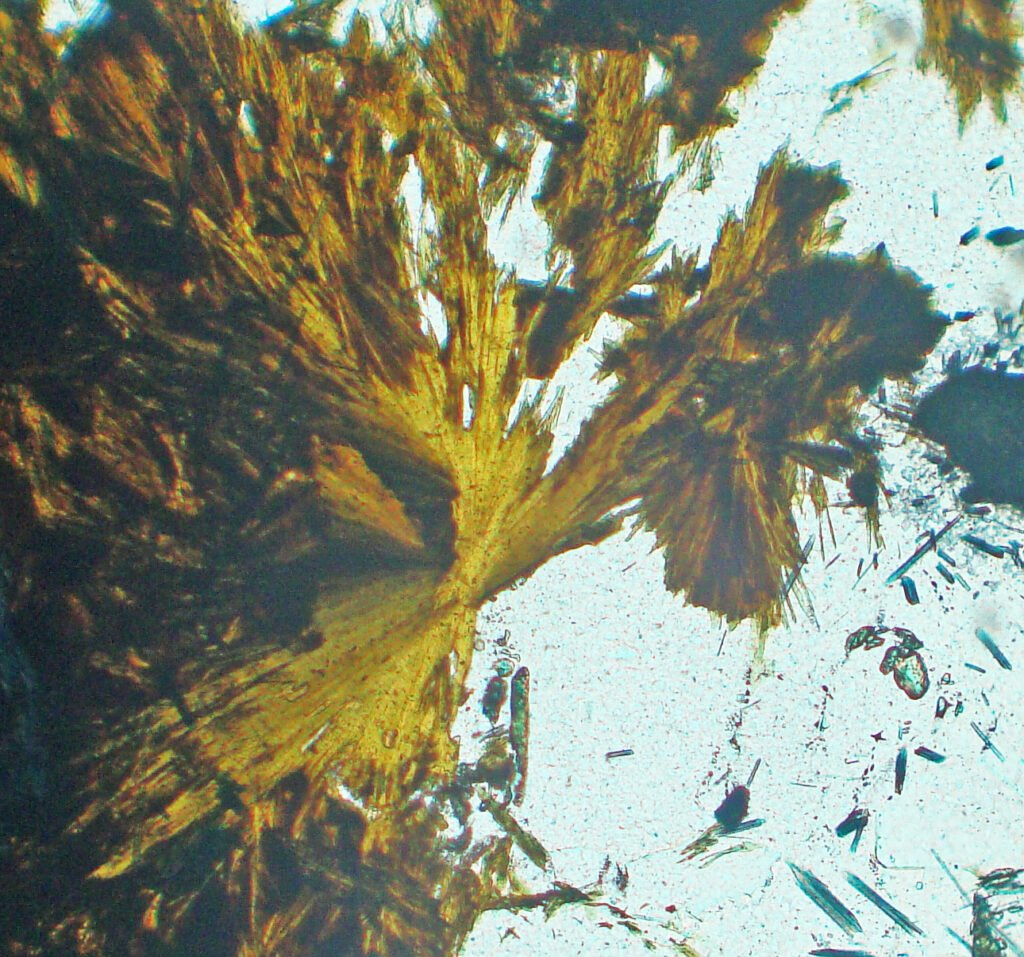
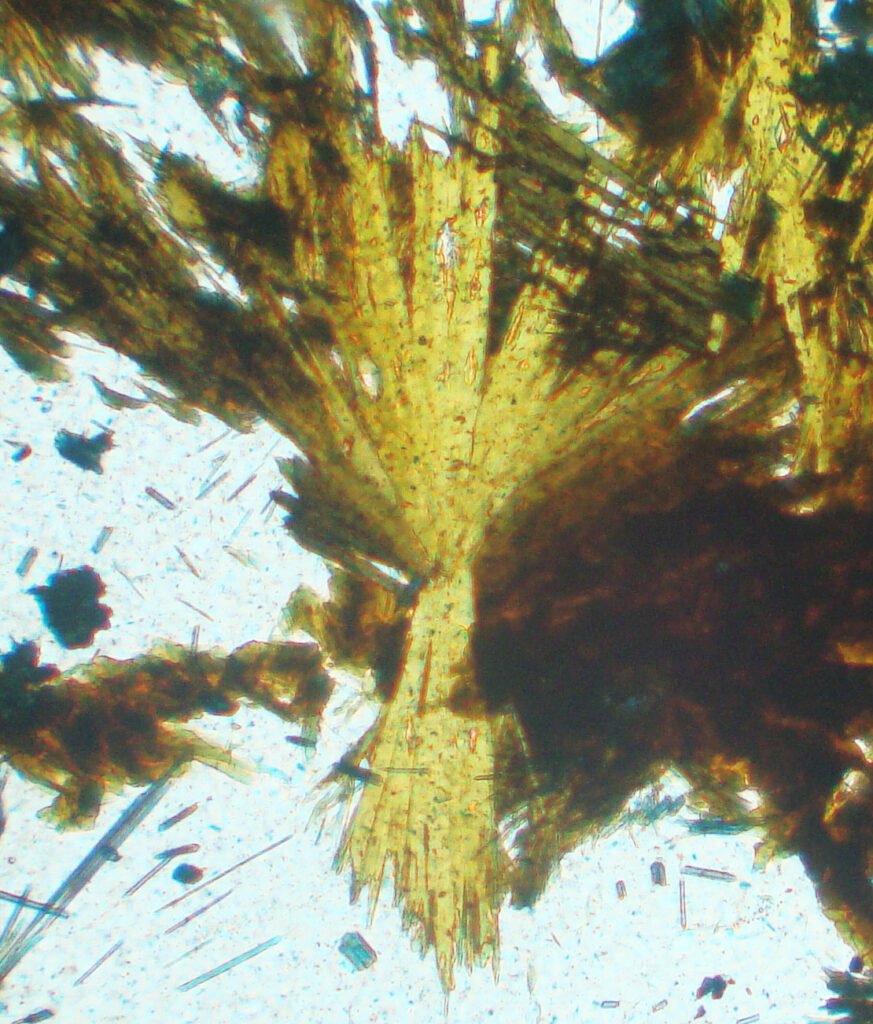
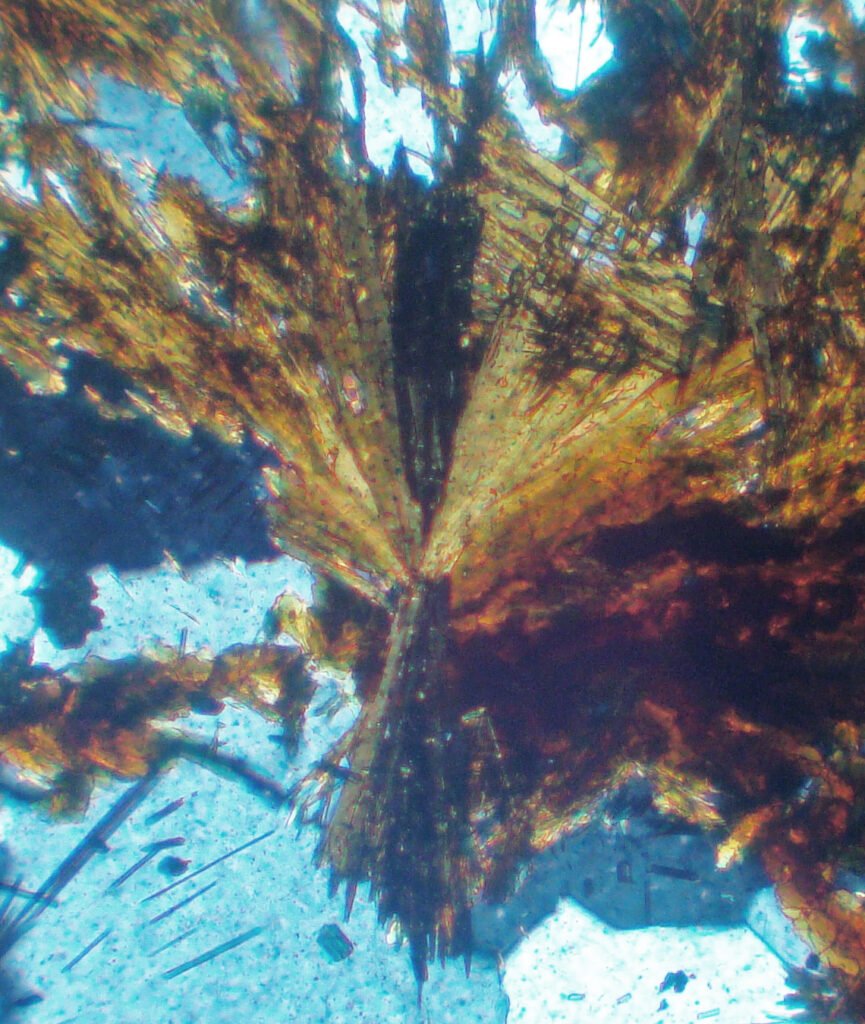
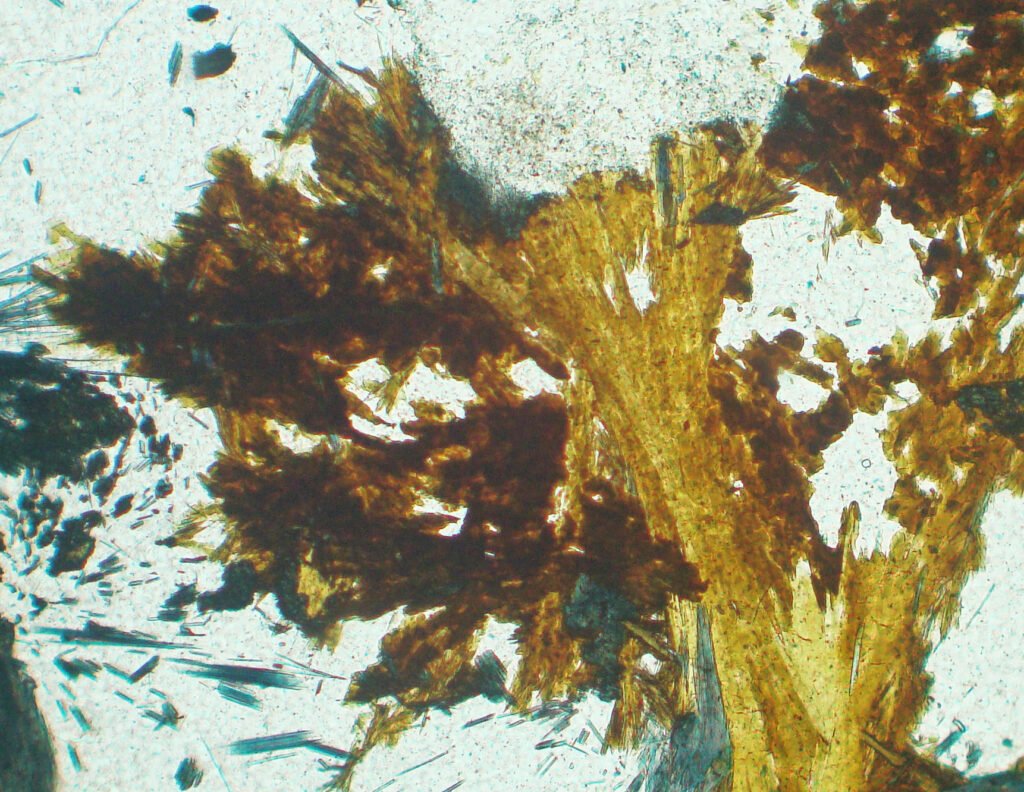
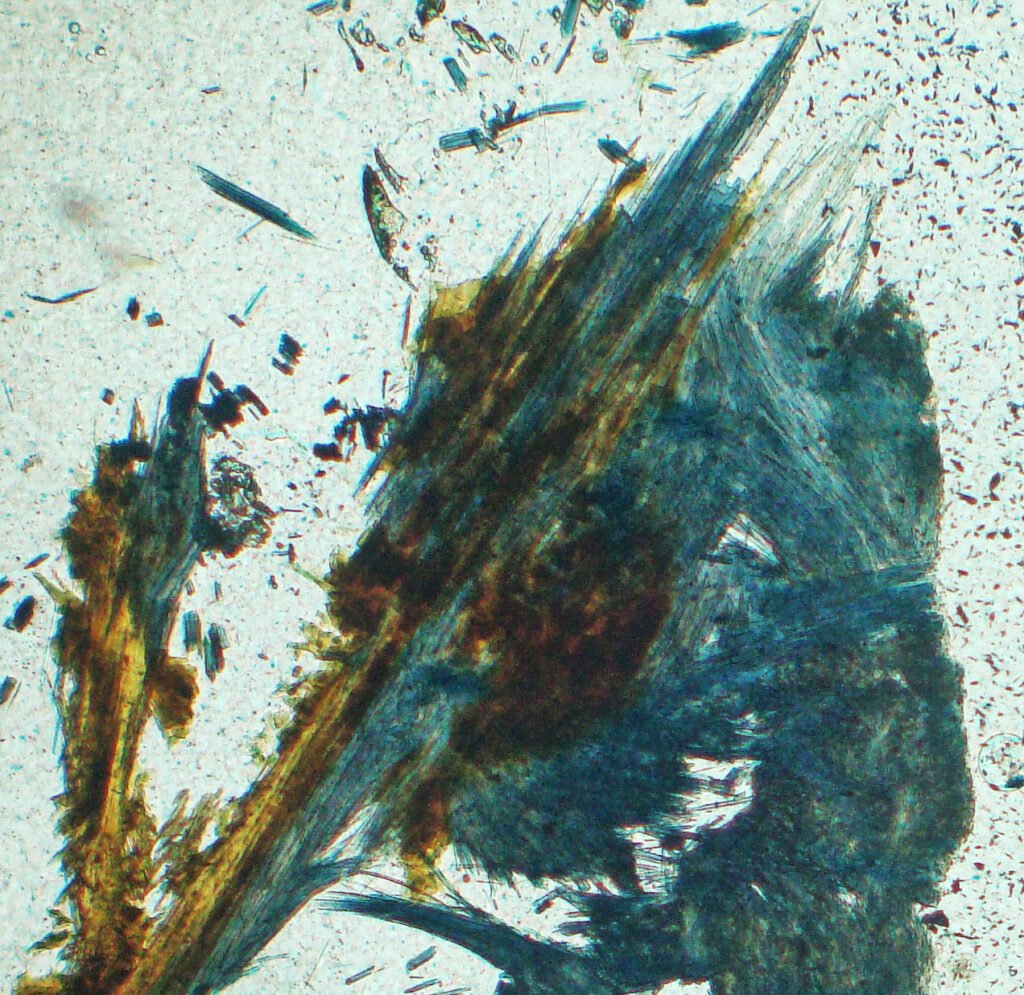
Habit: Plaques, scales or fibers with a comb structure. It forms feathery or radial groups. Crystals up to 1 cm.
Cleavage: Brittle.
Tenacity: Brittle.
Twinning: No.
Fracture: Micaceous.
Mohs Hardness: 3 – 4
Parting: Sometimes, on (010)
Streak: White, gray.
Lustre: Sub-vitreous, sub-metallic, pearly in the cleavages.
Diaphaneity: Transparent.
Density (g/cm³): 2.59 – 2.96
2. Geology and Deposits
Stlpnomelane occurs associated with banded iron formations (BIFs) and associated shales and slates. Also in layers with limonite.
It occurs in metamorphic rocks of the blueschist and greenschist facies.
It is also found in some metamorphosed deposits of massive sulfides, when it is a product of surface alteration.
It was found in acid gneiss xenoliths in gabbros and granophyrs (Skaergaard, Greenland).
3. Mineral Associations
In banded iron formations, stilpnomelane is frequent and is associated with quartz, Fe oxides (hematite, magnetite, goethite), siderite, apatite, grunerite, riebeckite and phyllosilicates (chlorite (chamosite), greenalite, berthierina, minnesotaite).
In metamorphic rocks of the blueschist facies, it occurs with glaucophane, lawsonite, garnet (andradite), clinochlore, tremolite, talc, phengite, zoisite, quartz, titanite, deerite, howieite and zussmanite.
In greenschist facies metamorphic rocks, in the pumpellyite-chlorite zone, stilpnomelane is common, occurring with chlorite, muscovite, epidote, albite, titanite, garnet, biotite, sericite, pumpellyite, actinolite, calcite and quartz.
In the paragenesis of metapelites formed under high pressure, it occurs with talc, fengite and chloritoid.
When associated with sulfides, it occurs with chalcopyrite, pyrite, pyrrhotite, quartz, chlorite and magnetite.
It never occurs alongside chloritoid.
4. Transmitted Light Microscopy
Refraction indices: nα: 1.543 – 1.634 nβ: 1.576 – 1.745 nγ: 1.576 – 1.745
PLANE POLARIZED LIGHT – PPL
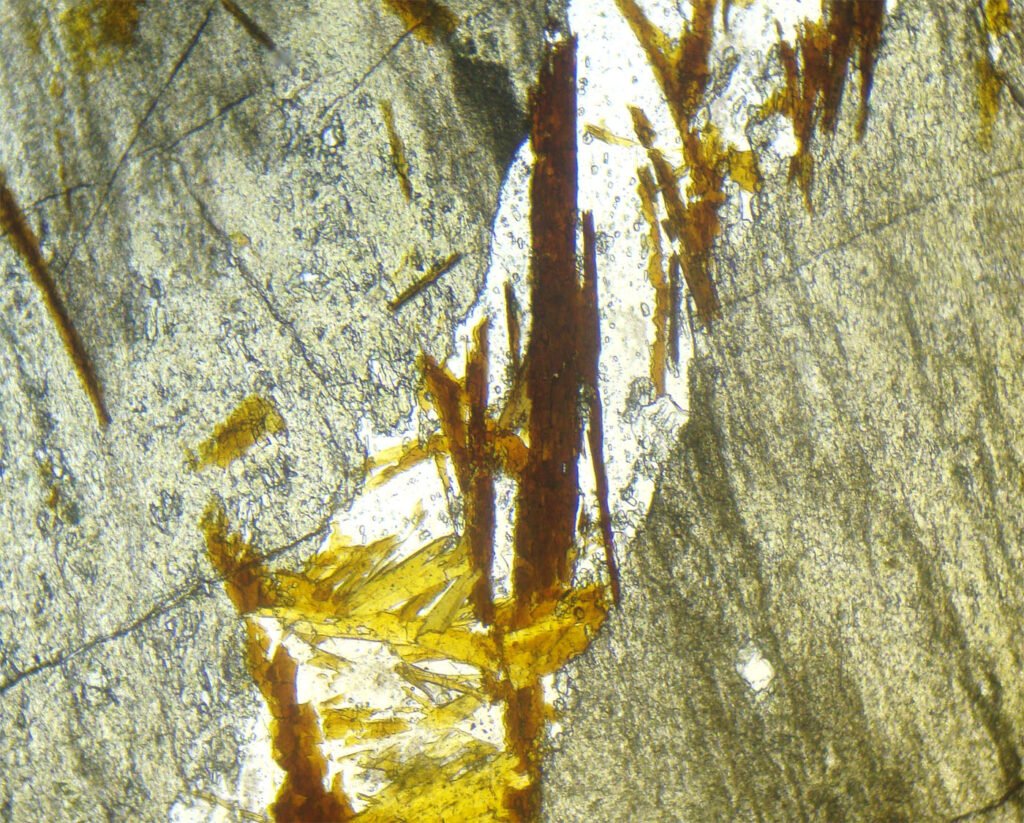
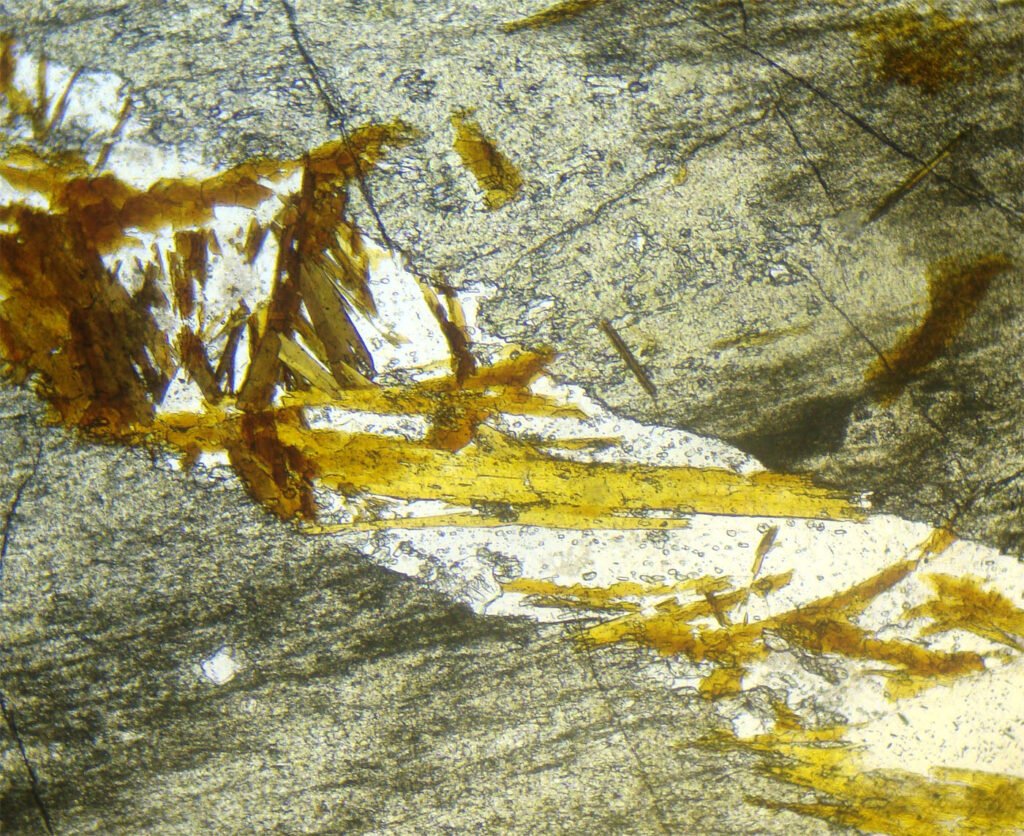
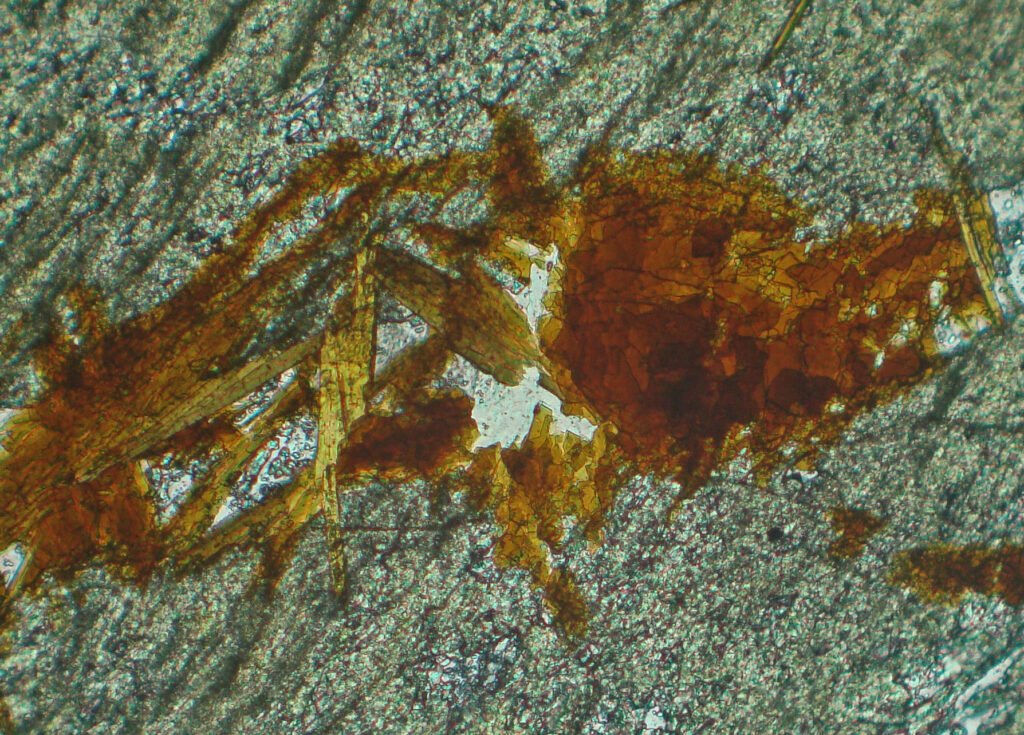
Color / Pleochroism: Strongly pleochroic in yellowish, greenish and brownish:
X: pale yellow, golden yellow, pale brown, colorless.
Y = Z: deep brown, almost black, tan, deep yellowish brown, weak greenish yellow.
It closely resembles biotite and can occur intergrown with biotite.
Basal sections show practically no pleochroism and are dark, as is the case with biotite as well.
Relief: Medium to high, may show “relief pleochroism”, when the relief changes from high to medium, for example, rotating the stage, as in carbonates.
Cleavage: {001} perfect, {010} imperfect, the two intersect at 90º.
Usually only one cleavage is visible under the microscope. This cleavage is of much lower quality than the biotite cleavage, with which stilpnomelan is easily confused, but biotite has mottled extinction, stilpnomelane does not.
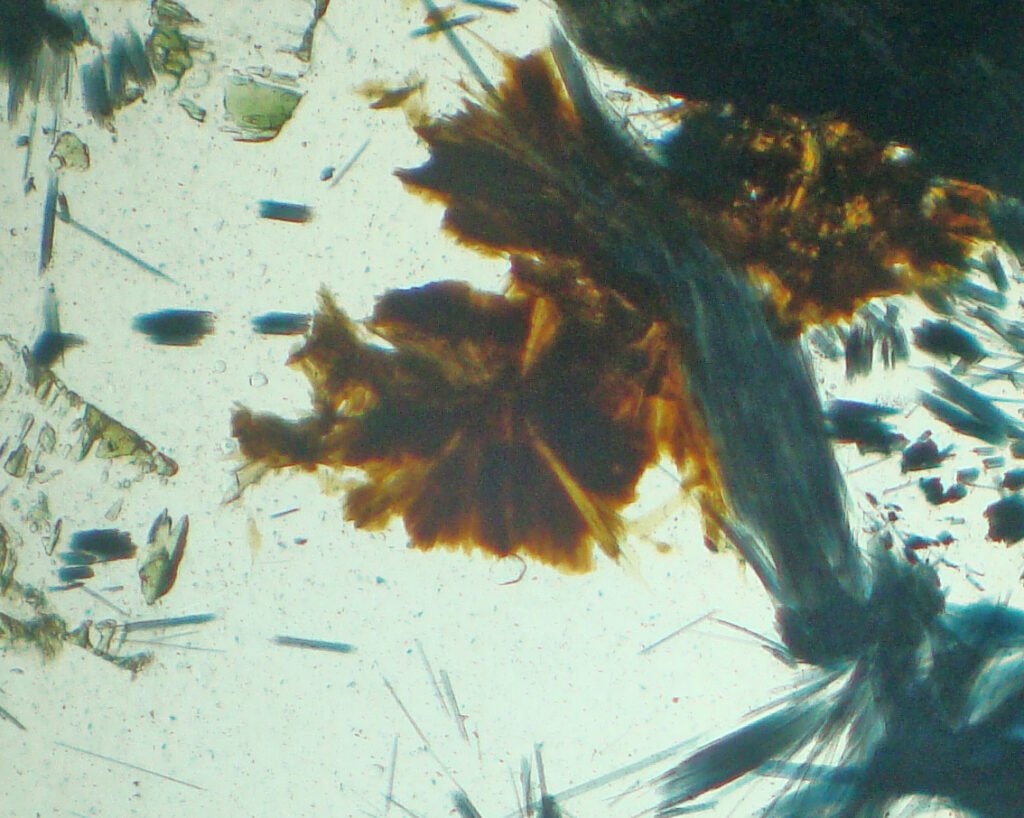
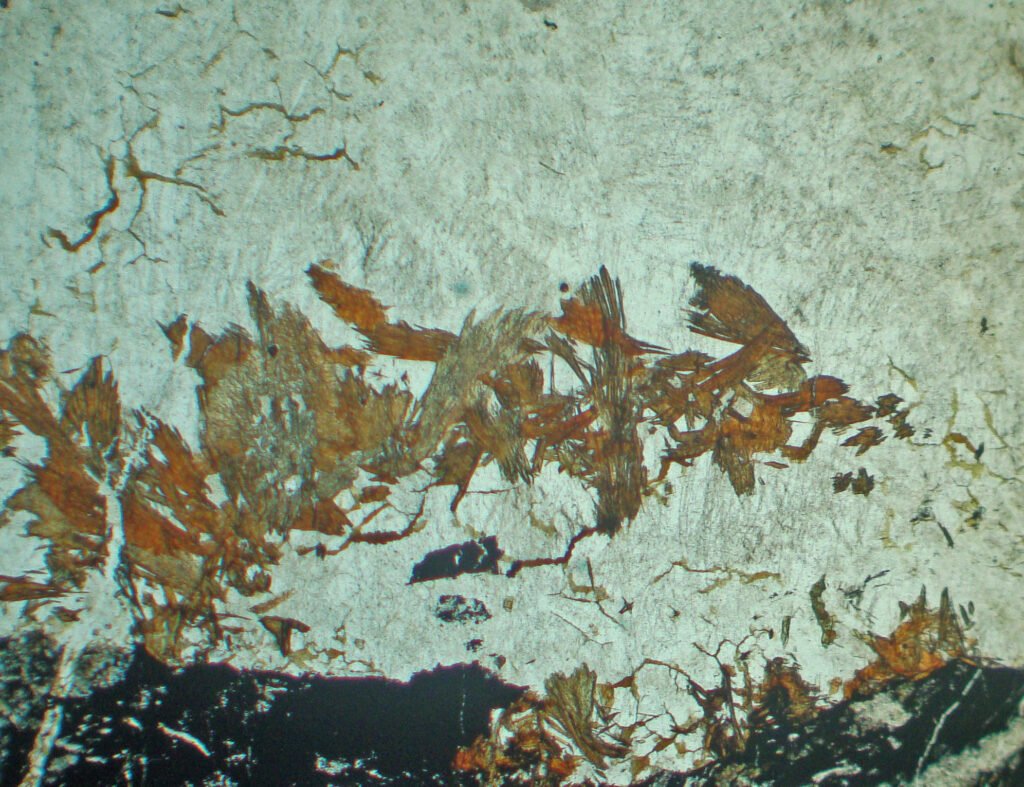
Habits: Plaques, lamellae, micaceous, fibrous, acicular, radiated or feathery aggregates. Very reminiscent of micas, especially biotite.
It can be shown to be intergrown with chlorite, paragonite and other micas.
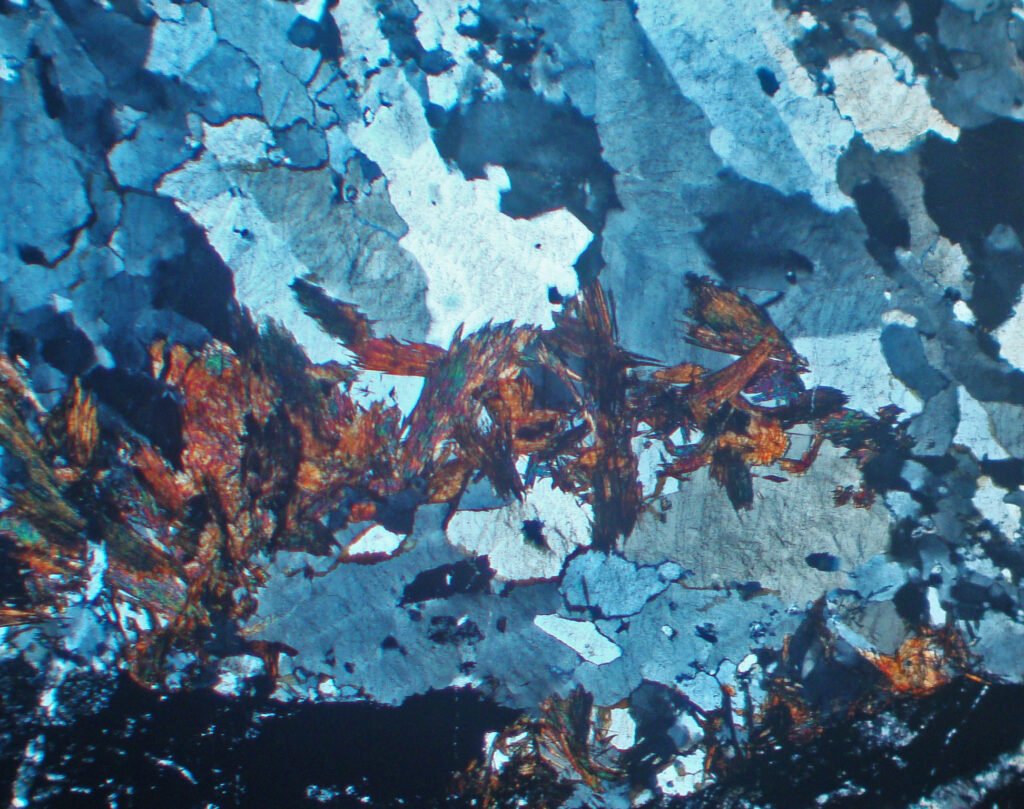
CROSSED POLARIZED LIGHT – XPL
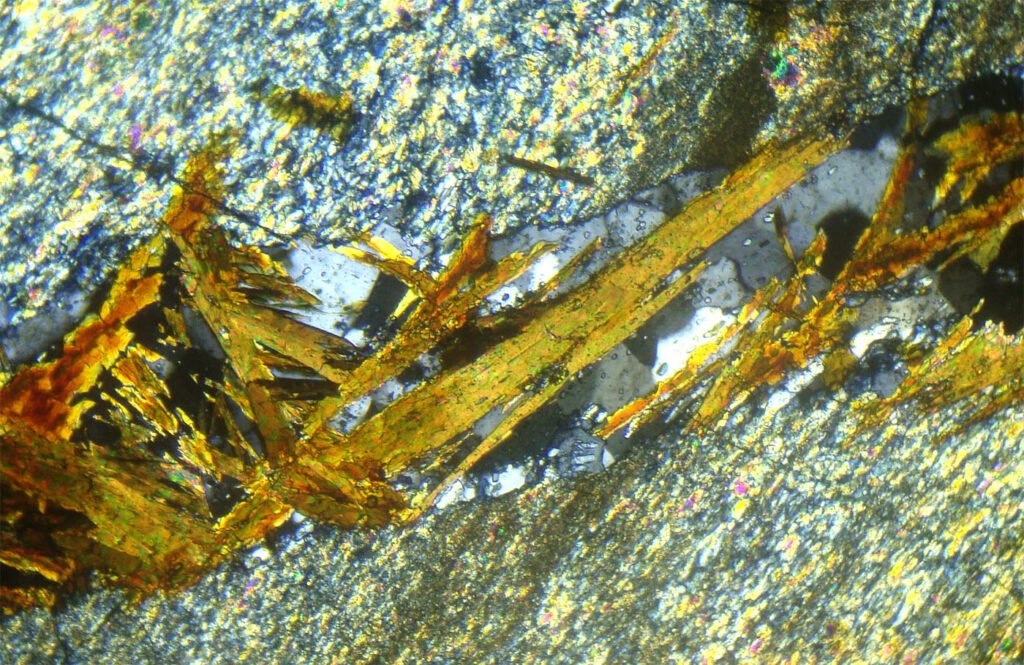
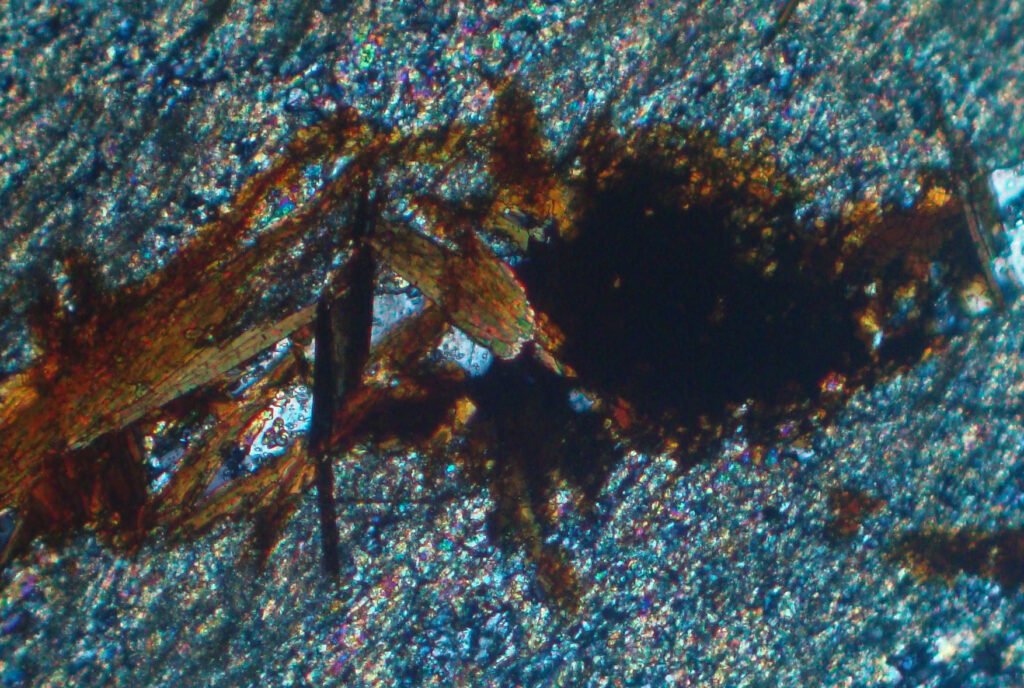
Birefringence and Interference Colors: Moderate to high birefringence, from 0.033 to 0.111, corresponding to colors between 2nd higher order (intense colors, with several mixed colors, very colorful) to 5th and 6th order, of white, cream and brown colors such as carbonates.
The strong colors inherent in the mineral mask the interference colors, as is usually the case with colored minerals.
Basal sections are isotropic!
Extinction: Parallel, but not mottled like that of the micas (important!)
Elongation sign: ES(+) (like all micas!)
Twins: No.
Zoning: Sometimes it is zoned.
CONVERGENT LIGHT
Character: B(-), but the figure is pseudo-uniaxial!
Strong colors make it difficult to obtain the interference figure.
2V angle: 0o, it can vary up to 20º – 30º. When at 0o, it simulates an uniaxial figure.
Alterations: to clay minerals, chlorites and Fe oxides.
May be confused with: biotite, which has similar habit and colors. However, biotite has stronger pleochroism, a much better quality cleavage and mottled extinction.
Chloritoid, chlorite and clintonite have much lower birefringences.
Tourmaline features higher relief and usually shows color zoning.