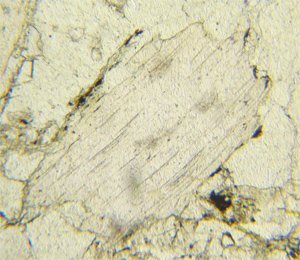
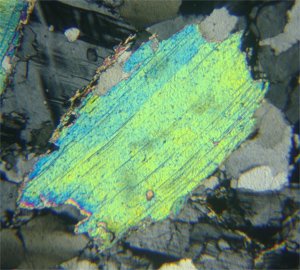
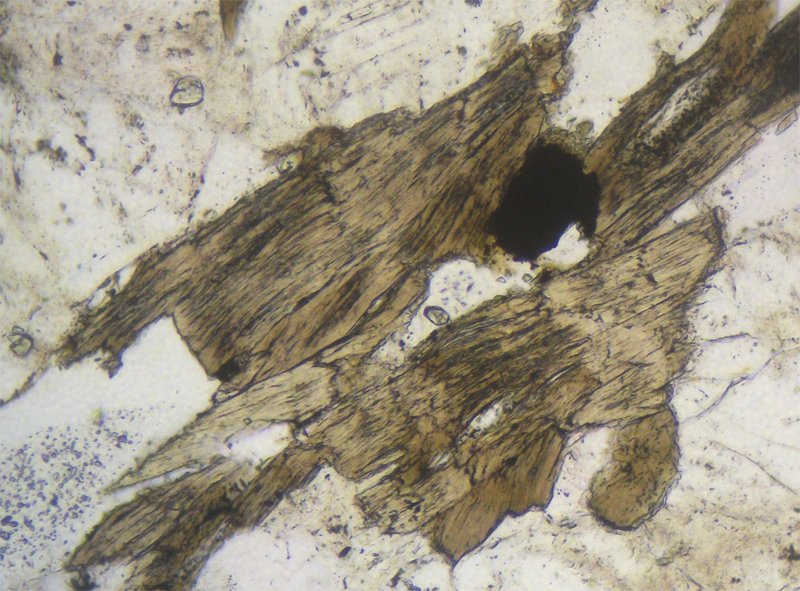
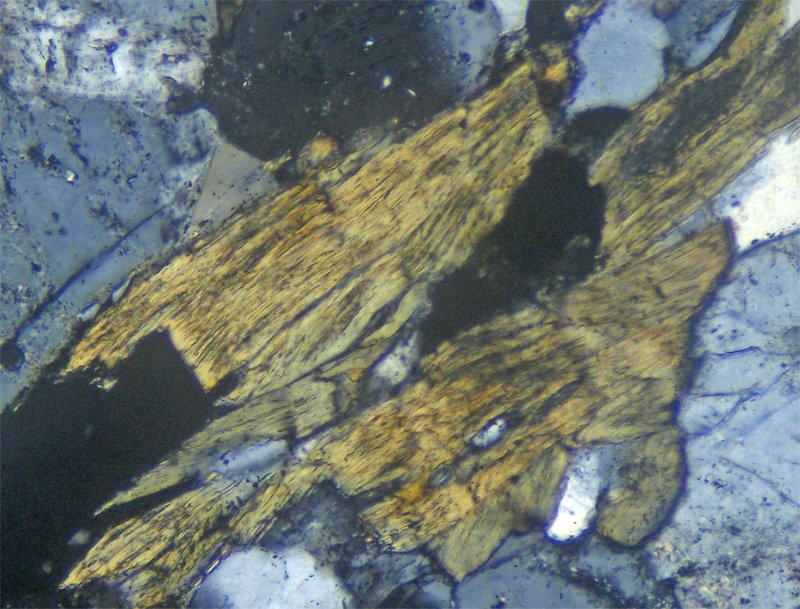
Most common mica, alters to chlorite, which is green in PPL.
PPL: trongly pleochroic in brown, yellow-brown, or red-brown colors (rarely yellow or red). Medium relief. Shows one perfect cleavage (not in basal sections!).
XPL: Strong and vivid 3rd and 4th order colors, masked by its own strong color. ES(+), B(-) (2V from 0 to 35°).
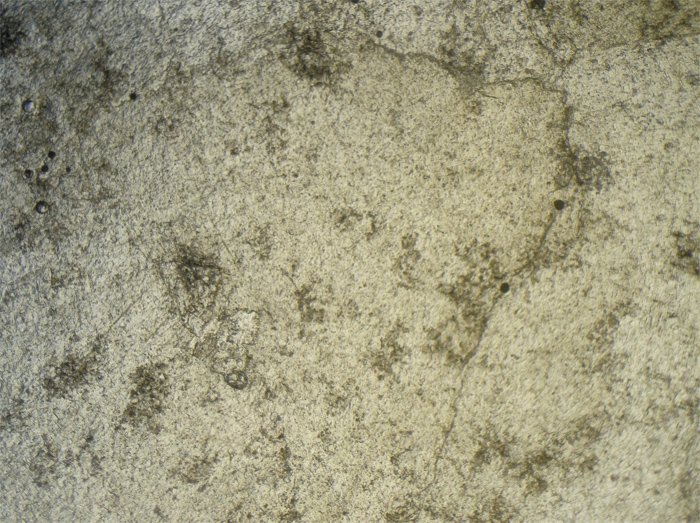
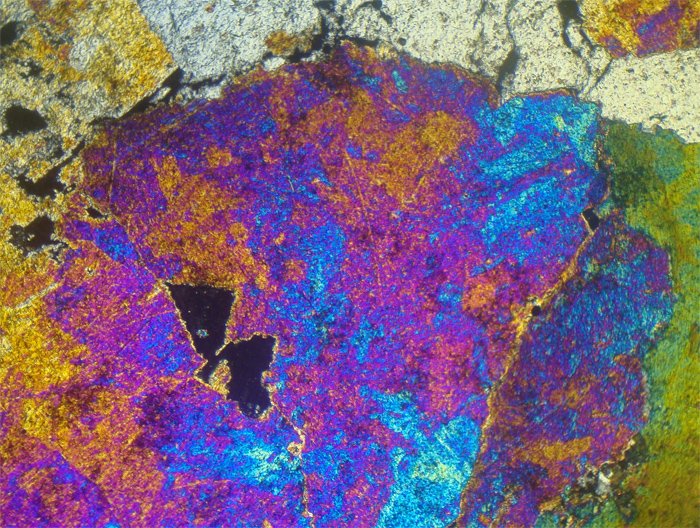
Images: Biotite in PPL and in XPL, showing one of its many colors.
Very rare monoclinic phyllosilicate, restricted to litiniferous granitic pegmatites.
PPL: Colorless. Low relief (diagnostic!). One perfect cleavage.
XPL: Intense colors up to 2nd order. ES(+), rare twins, no zonation. B(-), 2V from 0 to 43º, can simulate being uniaxial. Very similar to muscovite, whose relief is higher.
Rare triclinic/monoclinic phyllosilicate, occurs mainly in Al-rich metamorphic rocks.
PPL: Always colorless. Low to moderate relief, perfect (001) cleavage. Lamellar habit and others.
XPL: Intense colors up to 3rd and 4th order. ES(+/-), never show twins or zonation. B(-), with 2V from 53 to 62 degrees. Very similar to muscovite and talc.
Somewhat rarer monoclinic phyllosilicate, typical mineral of rocks undersaturated in silica and Ca-rich.
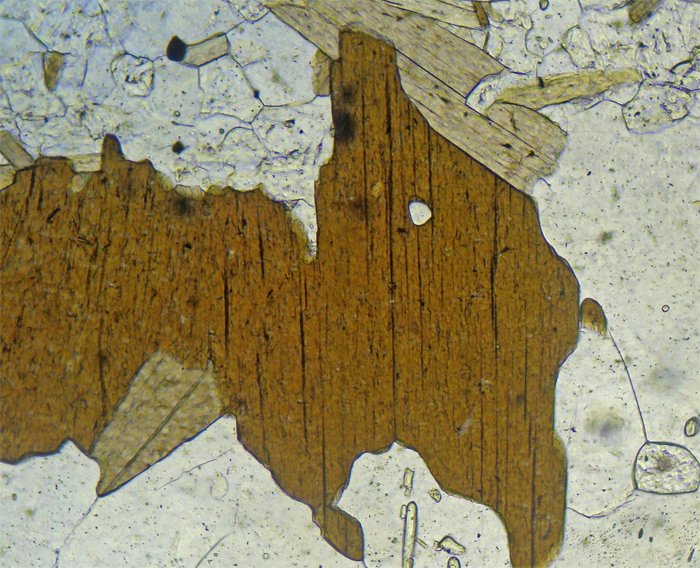
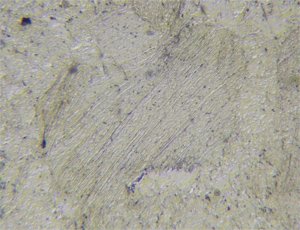
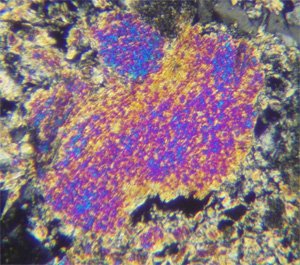
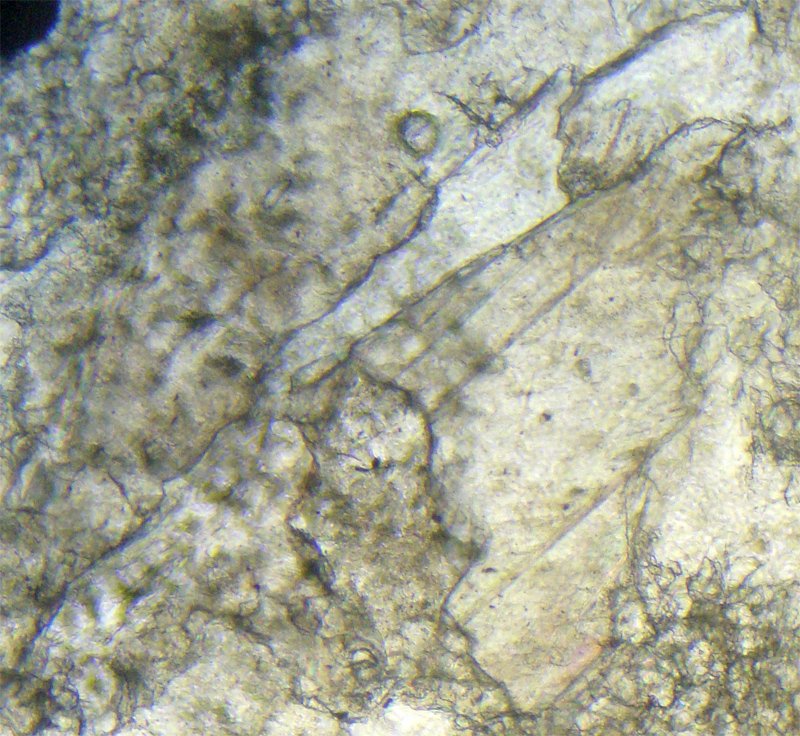
PPL: Colorless, but may have weak to strong pleochroism in pale colors (yellow, orange, pink) or reddish or brown. Moderate relief, perfect cleavage, lamellar habit.
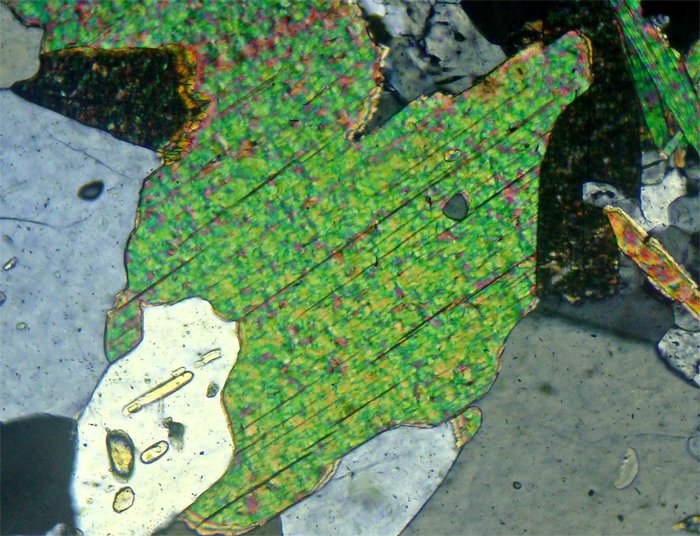
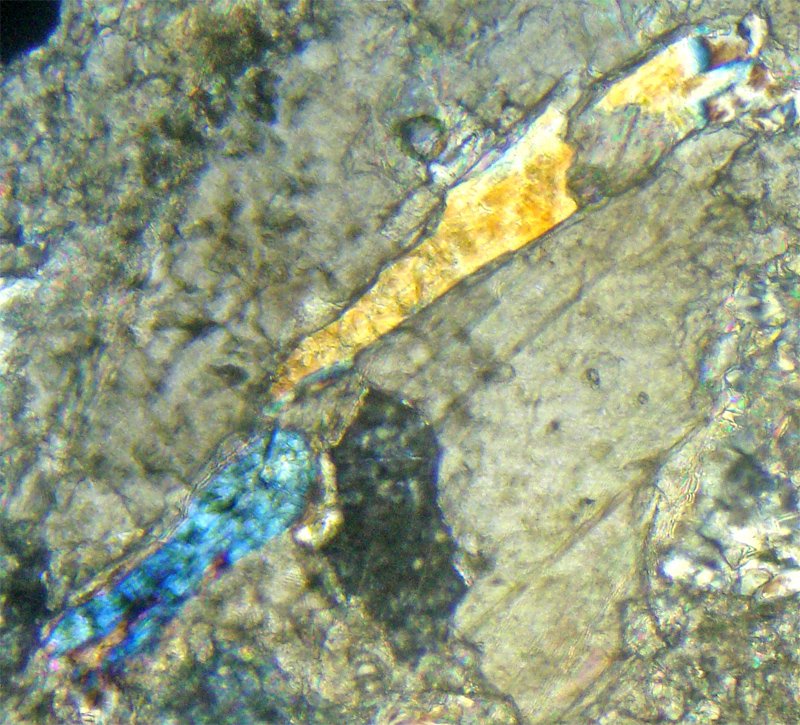
XPL: ES(+) and B(-) with small 2V, can simulate to be uniaxial.
Images: Phlogopite with calcite in PPL and in XPL.
Relatively rare alteration of biotite or phlogopite.
PPL: Colorless, but may show pleochroism in pale brown, inherited from the biotite that gave rise to it. Typical micaceous habit. Perfect (001) cleavage, also inherited from biotite.
XPL: Gray, white, yellow orange to bluish colors, until the end of the 1st order. Brown colors from the original biotite may dominate. Extinction can be a little bit mottled. B(-) with small 2V (0-15 degrees).
Rather rare trigonal Mg-hydroxide, typical of Mg-rich rocks.
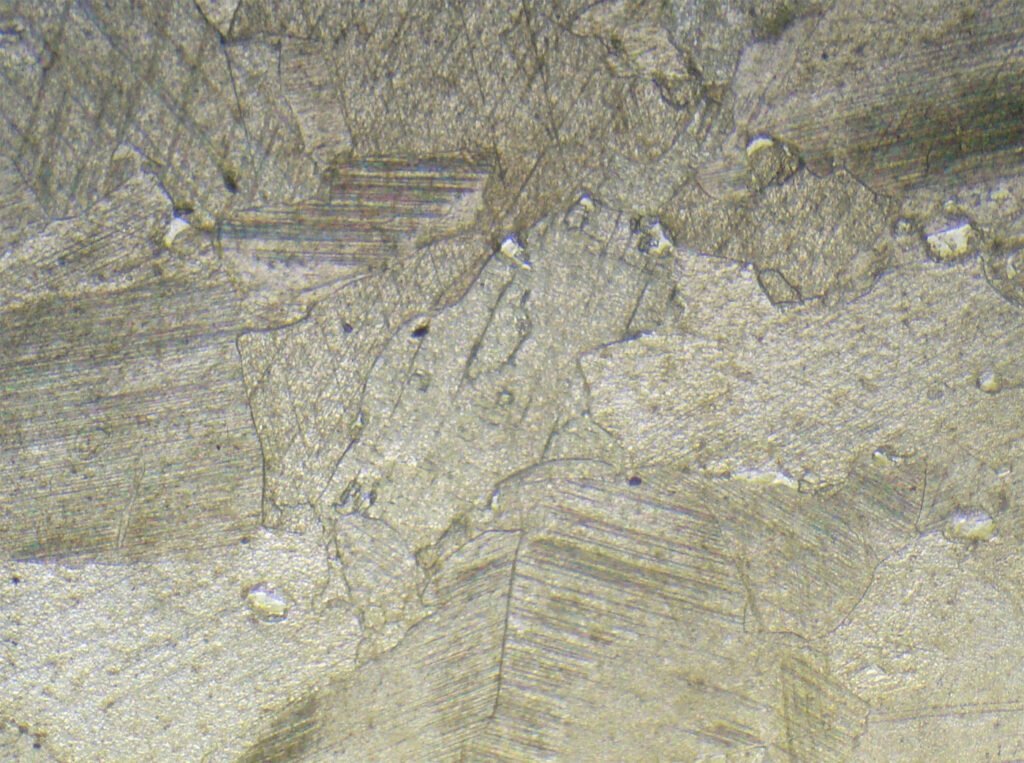
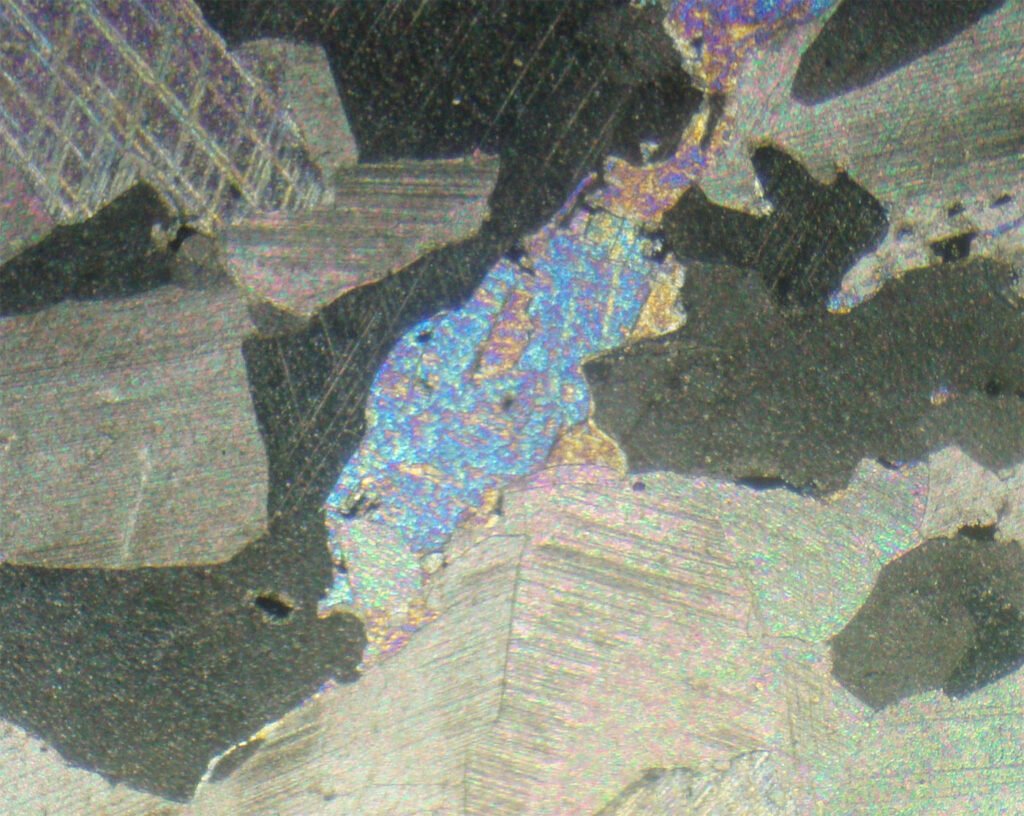
PPL: Always colorless. Lamellar habit, medium relief. Perfect {0001} cleavage.
XPL: Weak interference colors, only up to the end of the 1st order. ES(-) (very diagnostic!), U(+), may have anomalous 2V. Similar to muscovite, talc and pyrophyllite.
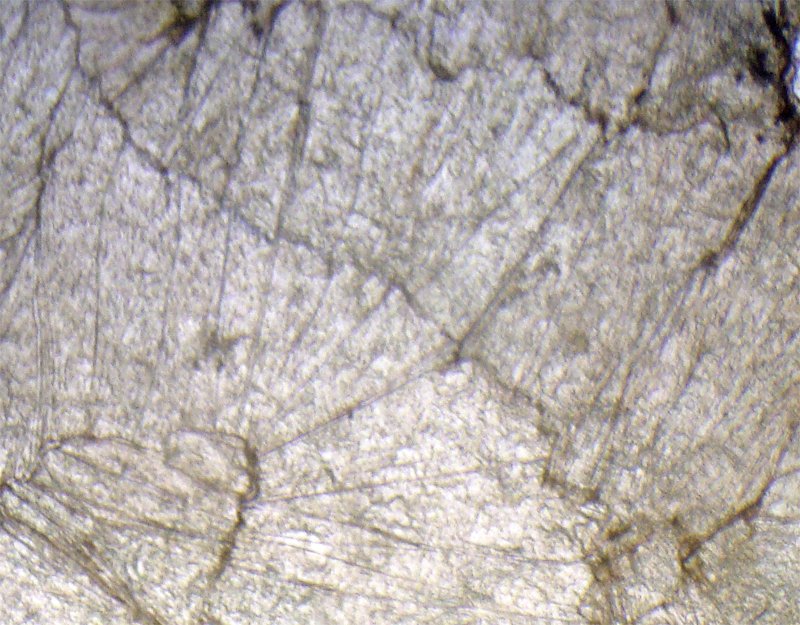
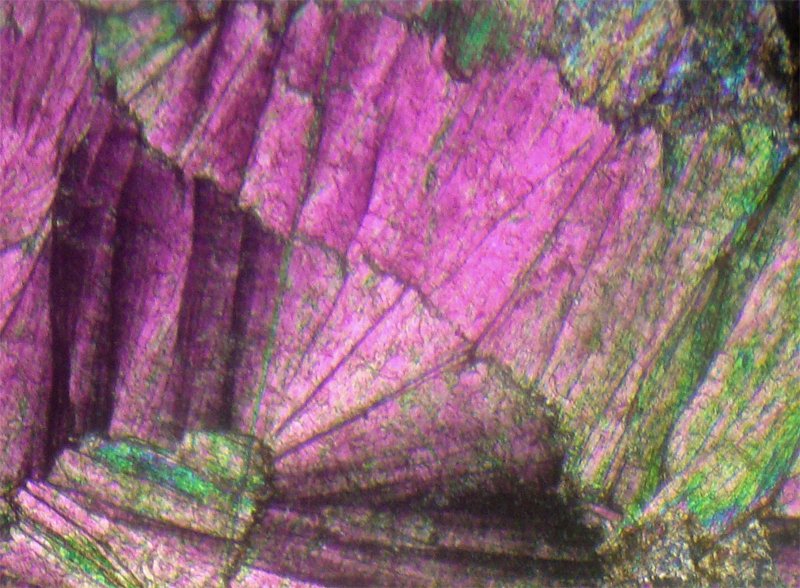
Images: Brucite in PPL and in XPL.
Anisotropic minerals with paralell and mottled ("birds-eye") extinction