is U(+) (very diagnostic!), but can have 2V of up to 20º. Trigonal.
Very common mineral, occurs in many types of rocks.
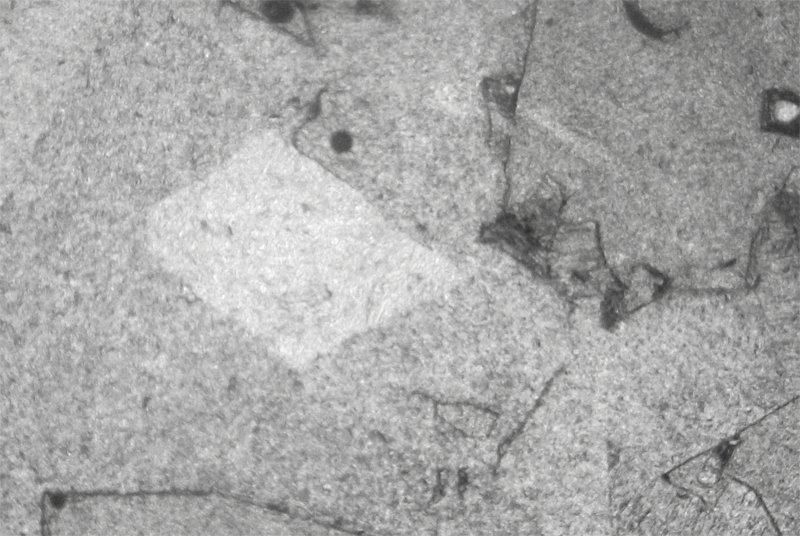
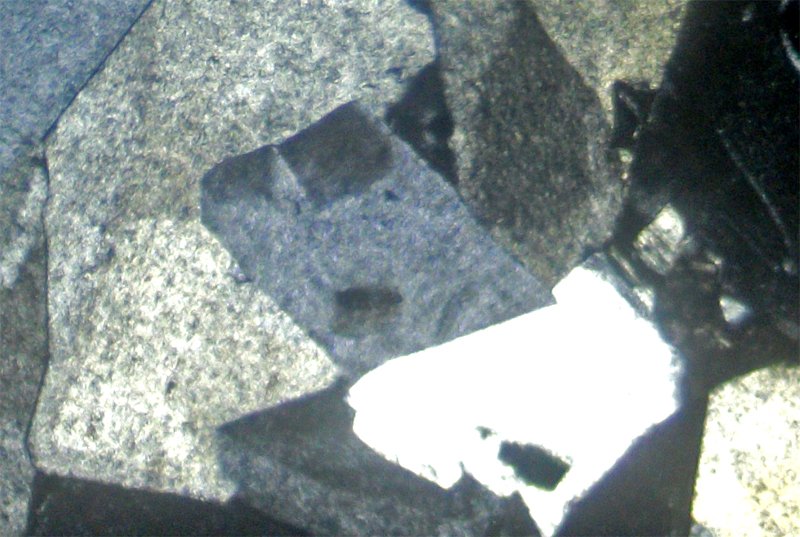
PPL: colorless, low relief, usually anhedral. Never shows cleavage or alteration.
XPL: dark gray to white. Parallel extinction (usually undulating), ES(+). Very common, easy to confuse with cordierite, nepheline(!) and untwinned, unaltered feldspars.
is U(-). Trigonal.
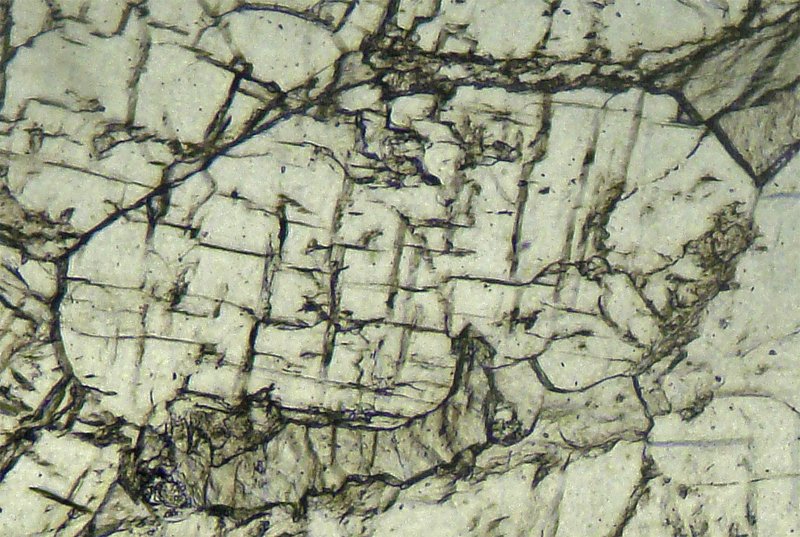
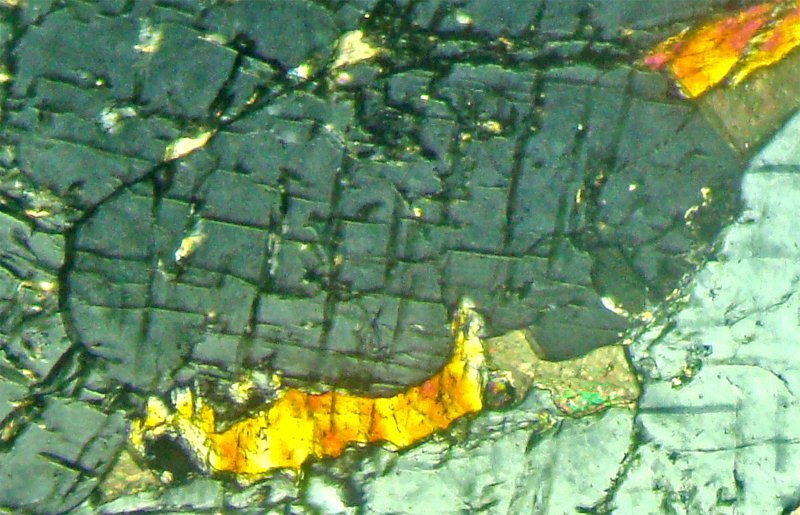
Rather rare tectosilicate, often found in skarns.
PPL: Prismatic, columnar crystals, may be granular. Two cleavages that intersect at 90º in the basal sections.
XPL: colors of up to 2nd order, can be strong. Parallel extinction, ES(-), without twins, typically with many inclusions. Feldspars are similar, but biaxial.
is U(-), but can have 2V from 0-6º. Hexagonal.
Rock-forming feldspatoid of Si-low magmatic rocks.
PPL: Usually interstitial (anhedral). Low relief, cleavage not visible.
XPL: Longitudinal sections with parallel extinction and ES(-). In volcanic rocks, it may be zoned. Easily alters to clays, calcite, sodalite and others.
is U(-). Hexagonal.
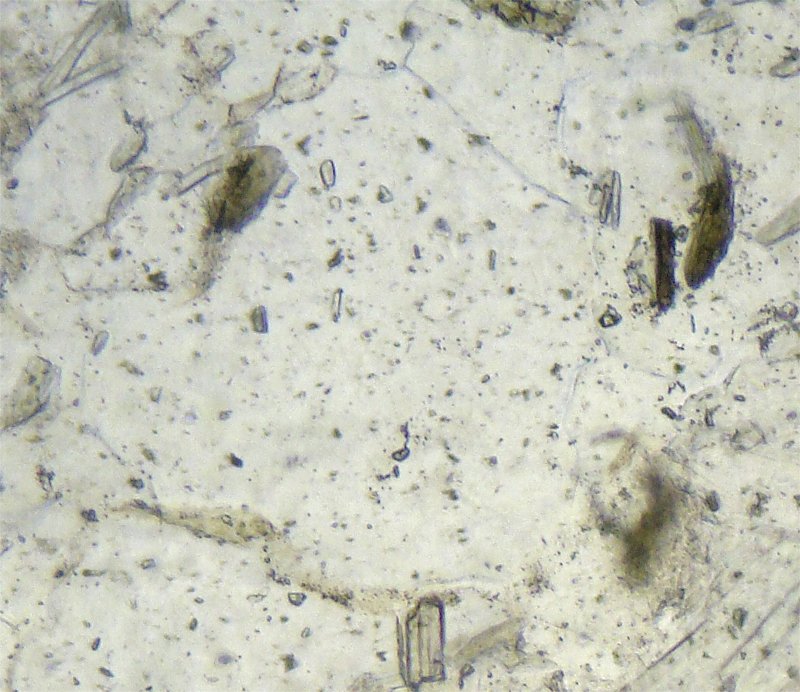
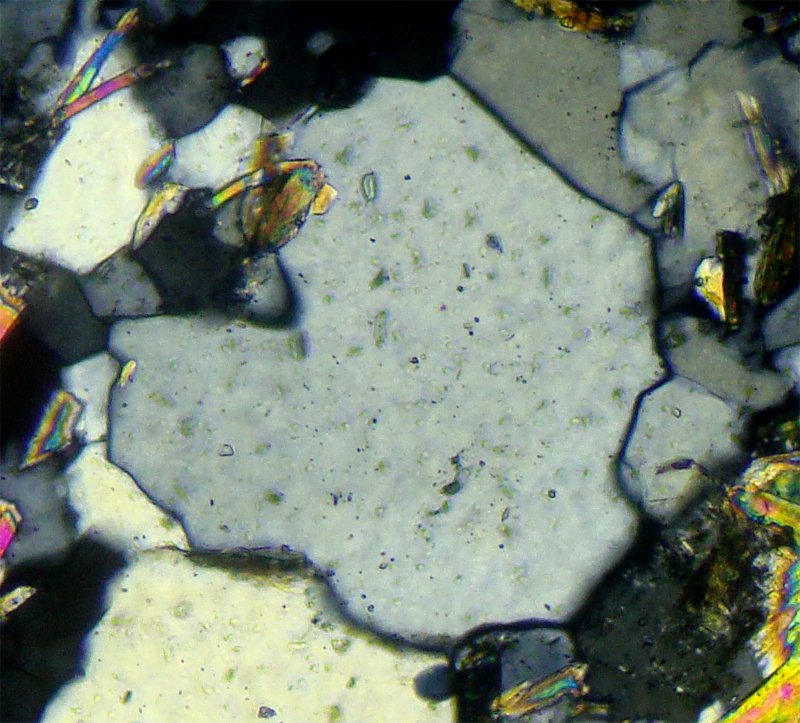
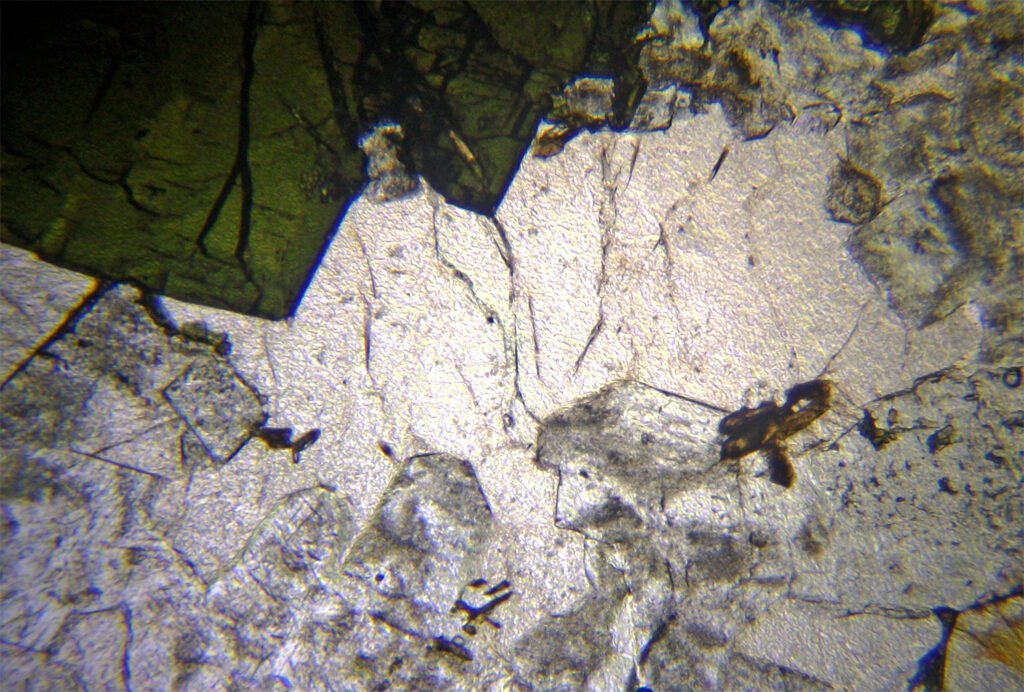
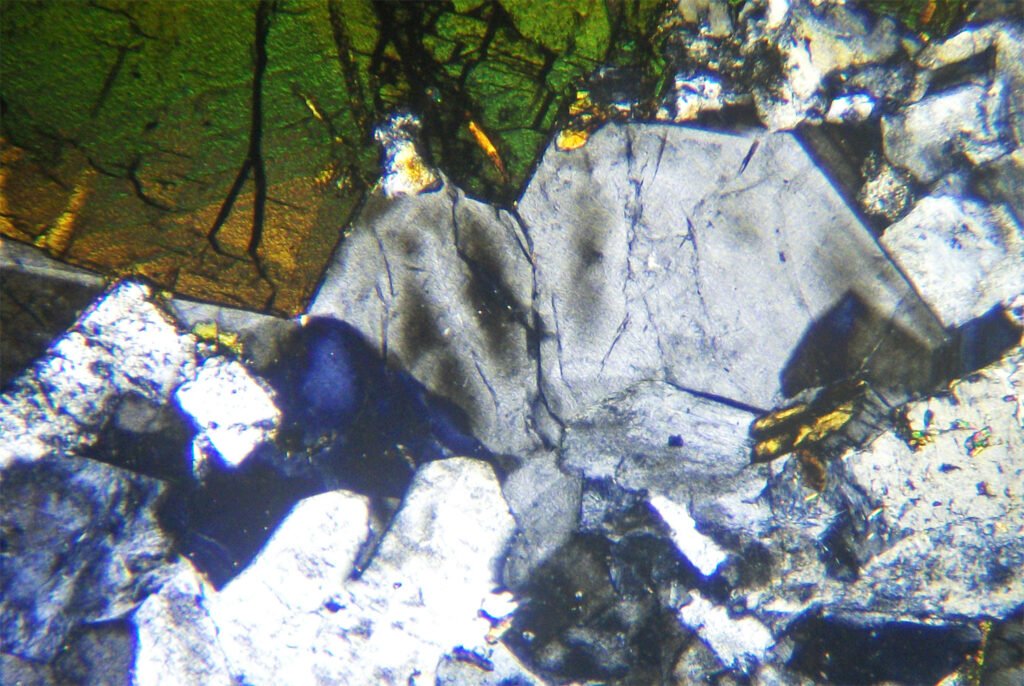
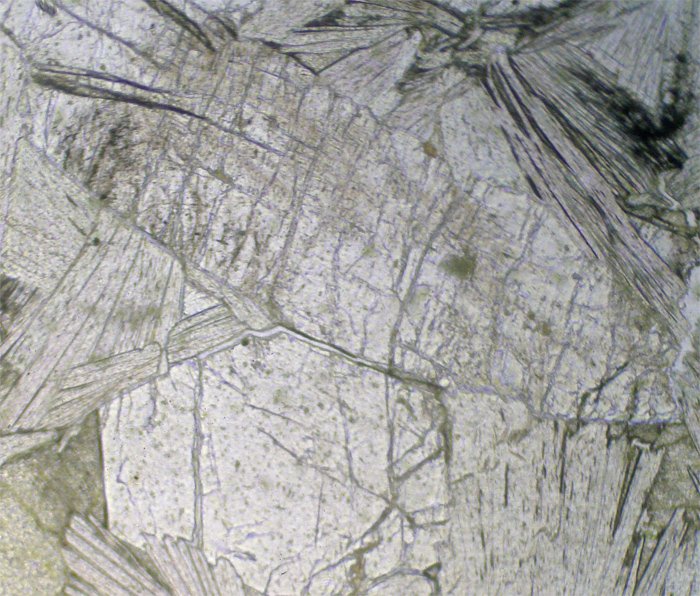
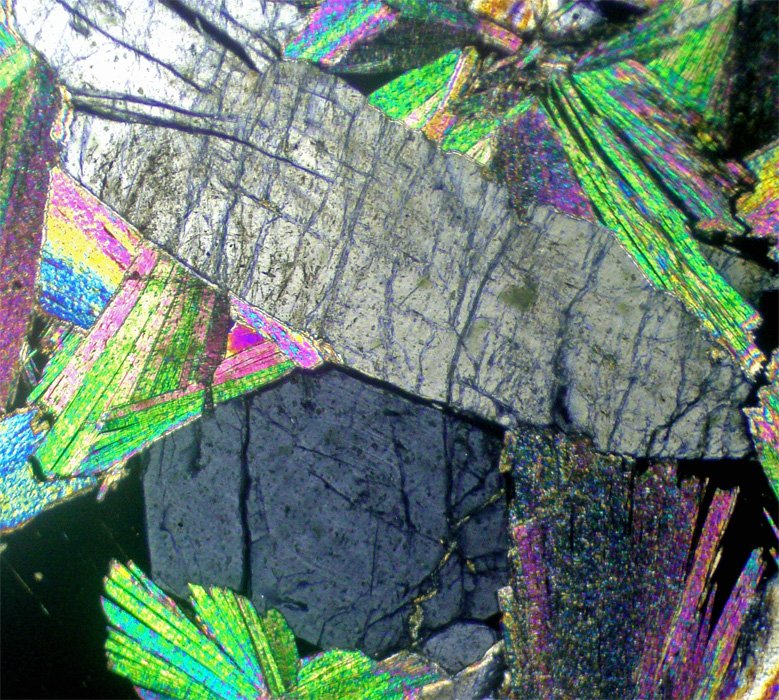
The only rock-forming phosphate, is present in many types of rocks.
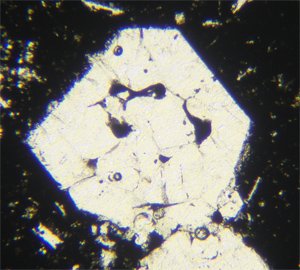
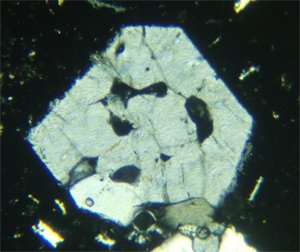
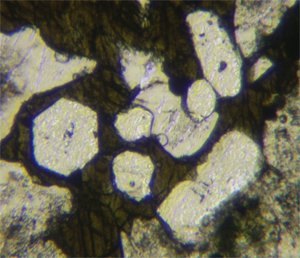
PPL: Usually forms small long-prismatic crystals with rounded ends, with parallel extinction. The basal sections tend to be six-sided and isotropic. In carbonatites it form large crystals and is biaxial (2V angle up to 20º). Cleavage absent.
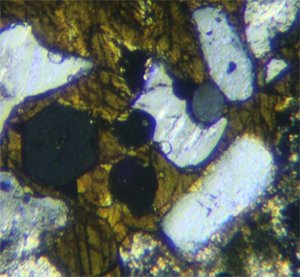
XPL: Gray colors. ES(-), twins are rare, no zonation.
Images: Apatite in volcanic rock in PPL and in XPL.
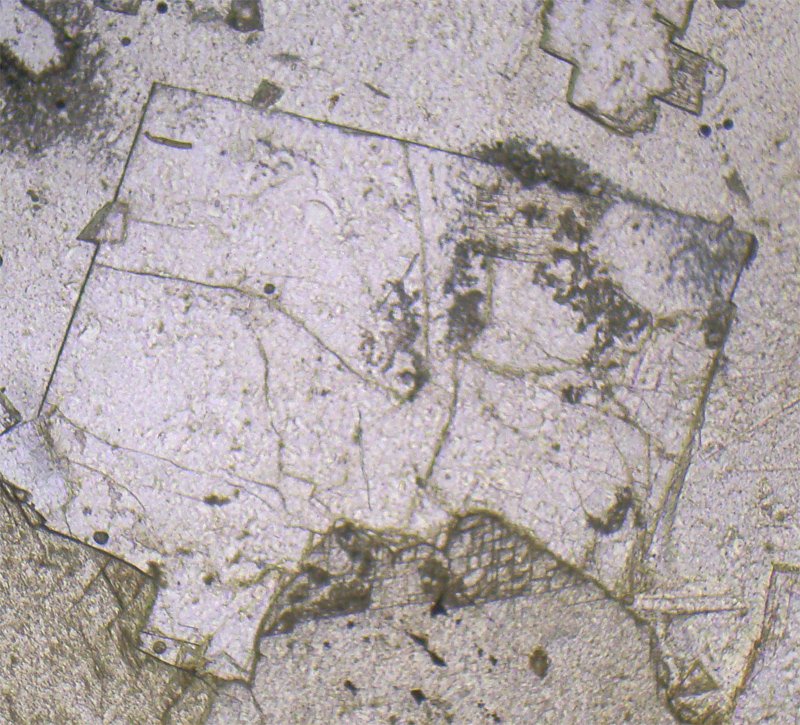
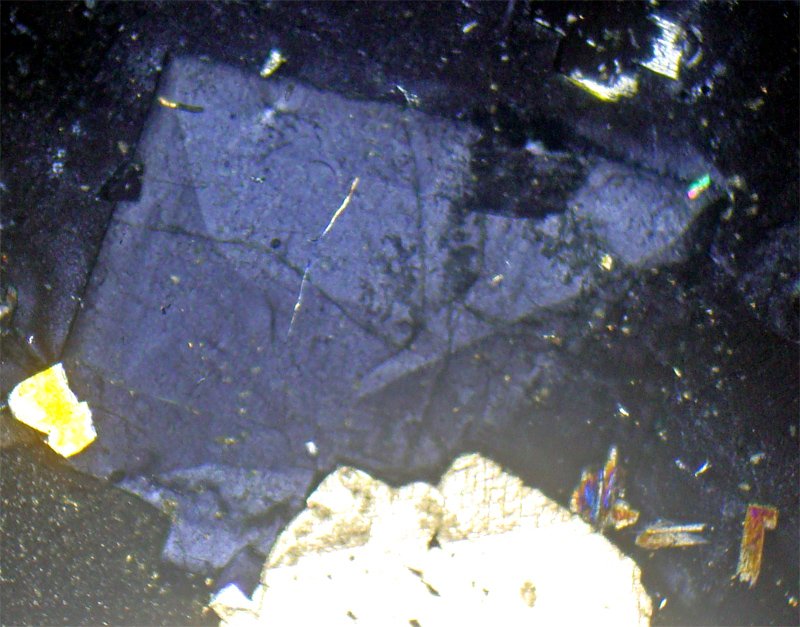
is U(+) or U(-). Tetragonal.
Rare sorosilicate, typical of alkaline volcanic rocks.
PPL: prismatic or tabular crystals, with square or elongated basal sections. Poor cleavages.
XPL: may have anomalous bluish interference colors. Parallel extinction, rare twins and zonation. Forms small crystals in the matrix of silica-poor volcanic rocks. Habits similar to plagioclases.
is U(-), but can have 2V up to 6º. Hexagonal.
Rare cyclosilicate, found only in rhyolites and in granitic pegmatites.
PPL: Medium relief, no visible cleavage, prismatic, hexagonal basal sections.
XPL: Parallel extinction, ES(-), rare twins, no zonation. It rarely alters. Very hard (Mohs: 7.5-8), may be thick in thin section. Very similar to several common minerals.