is B(+/-), 2V very variable. Triclinic.
Very common rock-forming tectosilicate.
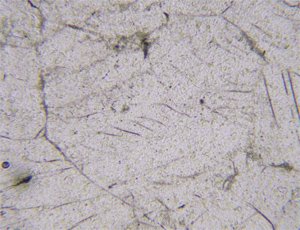
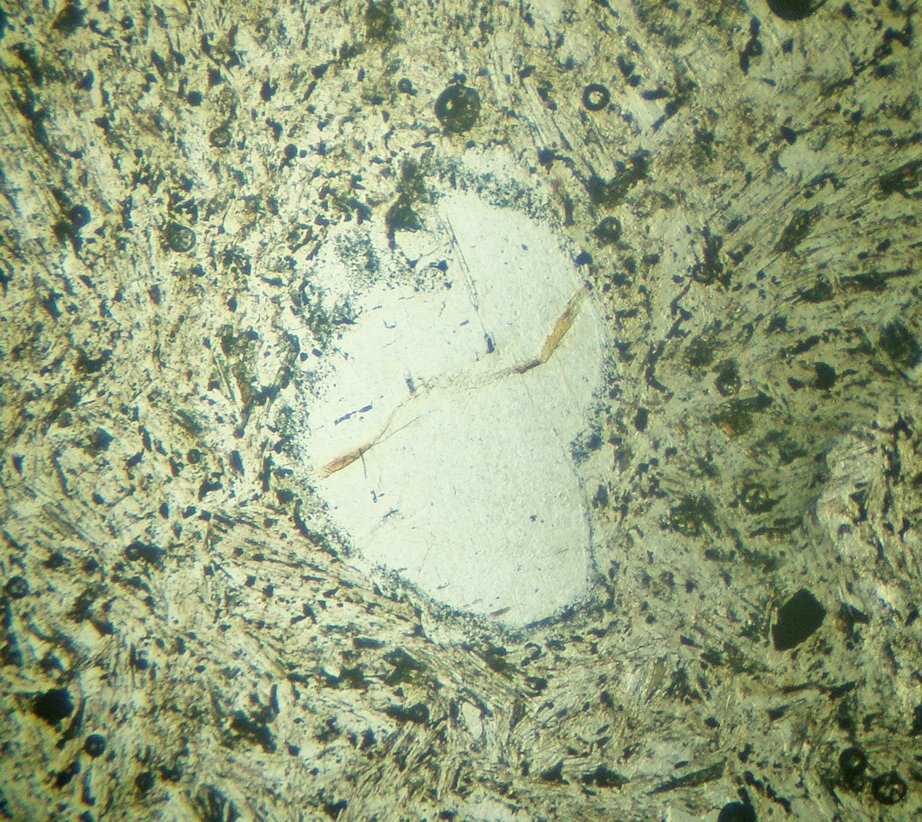
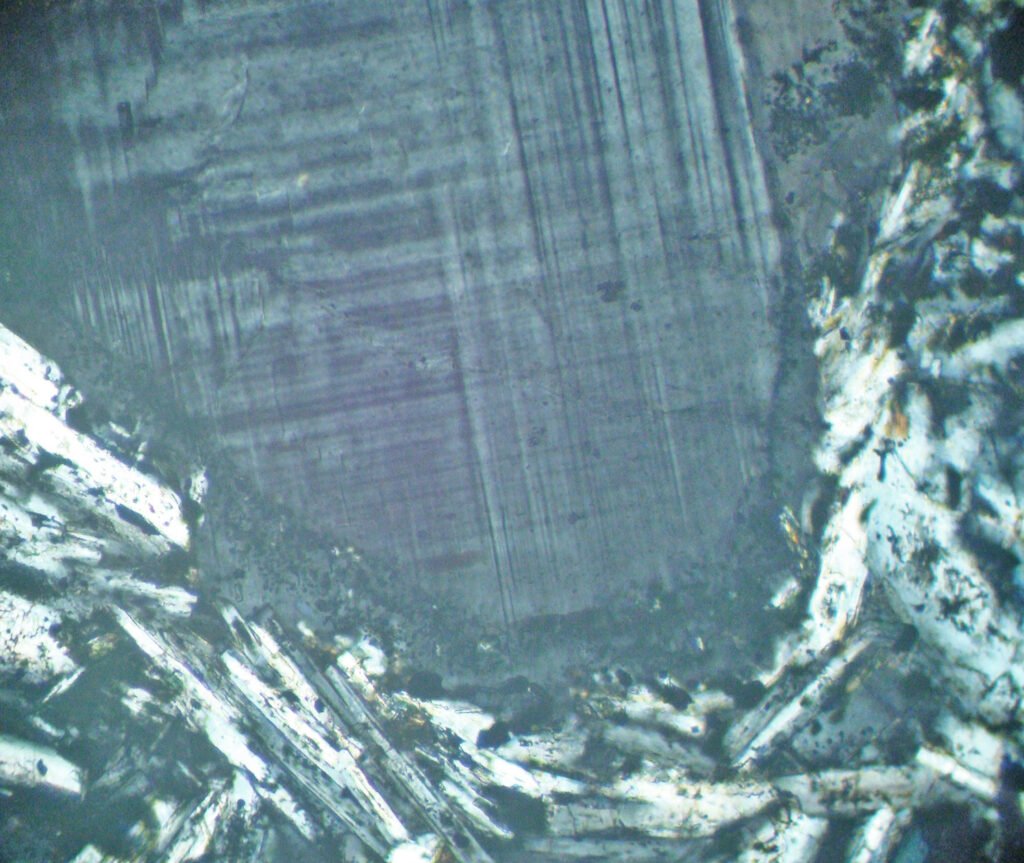
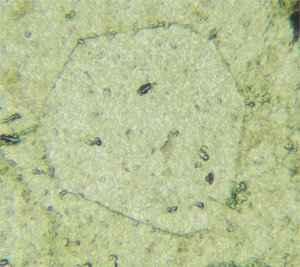
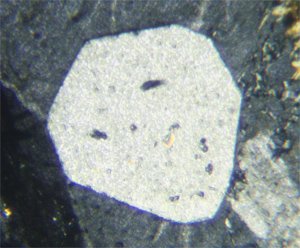
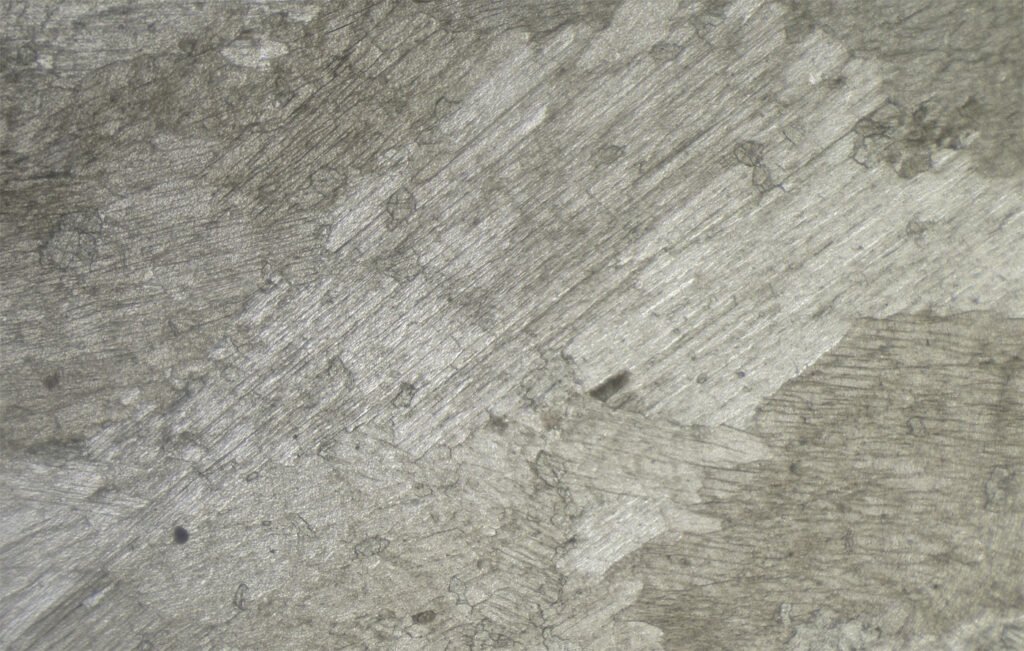
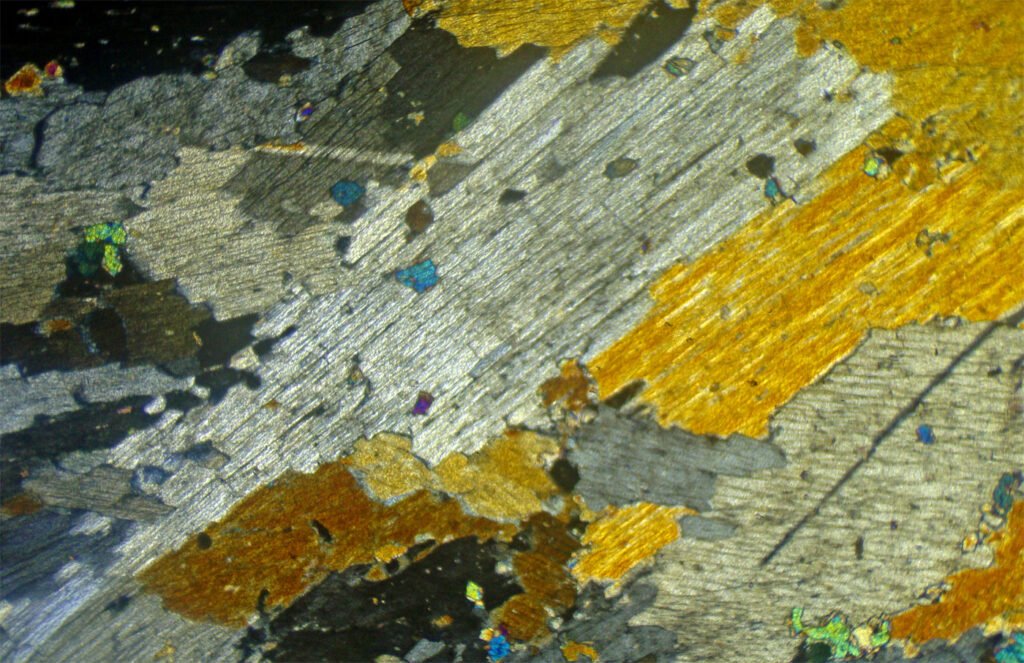
PPL: Colorless, cleavage usually not visible.
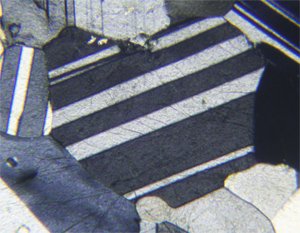
XPL: Polysynthetic twins (looks like a barcode) are typical. Oblique extinction (3-39º). Alters easily. Without twins, it look similar to quartz, nepheline and alkali feldspars.
is B(-), 2V>60º. Monoclinic.
Rock-forming tectosilicate, very common.
PPL: Colorless, cleavages rarely visible.Tabular to anhedral crystals.
XPL: Pertithes, Carlsbad twins and others are typical. Almost always altered to clay minerals and sericite, it becomes cloudy. Extinction and ES are not diagnostic.
is B(-), 2V = 66-103º. Triclinic.
Common rock-forming tectosilicate of granitoid rocks.
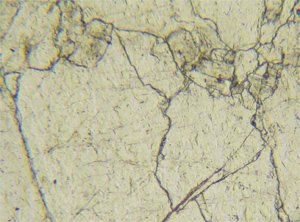
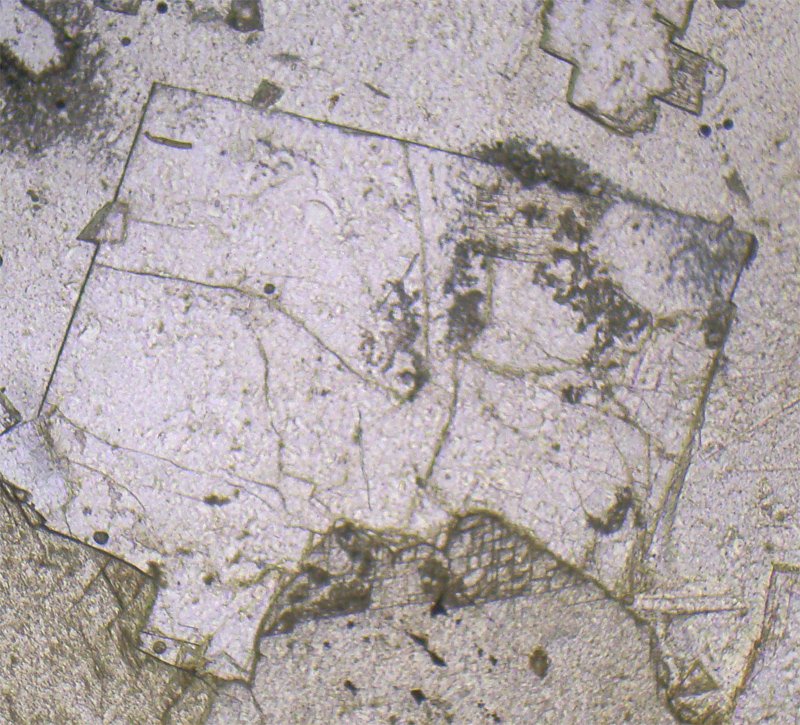
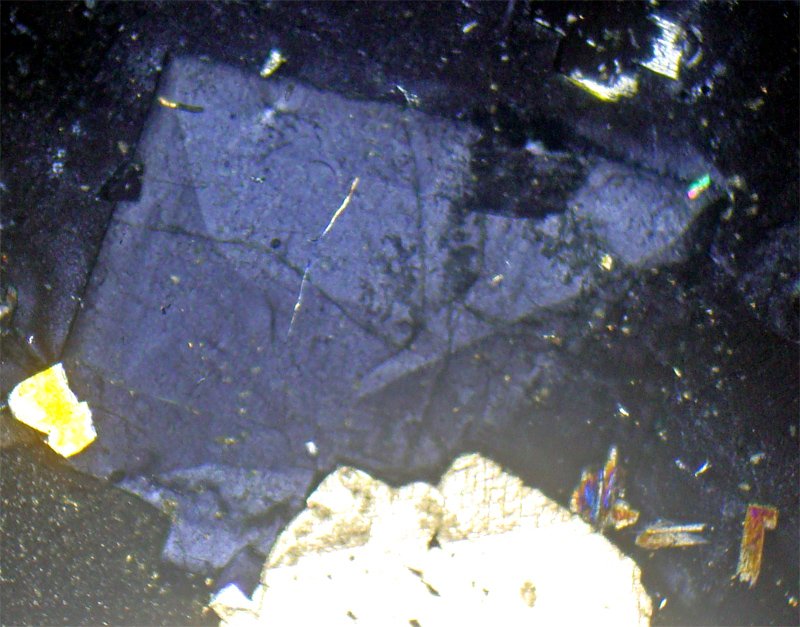
PPL: Colorless, cleavage usually not visible.
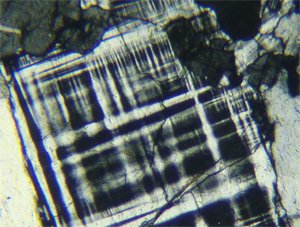
XPL: Extinction oblique, difficult to obtain due to twinning. ES(-), usually impossible to determine. Typical twins in two perpendicular directions, forming a twinning in a pattern of “parquet” or “chess”, which are intersections of albite and pericline twins.May be zoned.
is B(+/-), 2V = 35-106º. Orthorhombic, pseudo-hexagonal.
Rather rare cyclosilicate, of contact metamorphic rocks.
PPL: Colorless, usually in anhedral grains; poikiloblastic textures may occur. Cleavage is not visible.
XPL: Extinction tends to parallel. Polysynthetic and pseudohexagonal twins (triplets) are common. It easily goes unnoticed, confused with other feldspars and even quartz. Alters to sericite, chlorite and biotite (=pinitization).
is B(+/-). Monoclinic.
Very common as metamorphic mineral or alteration product.
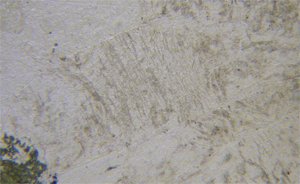
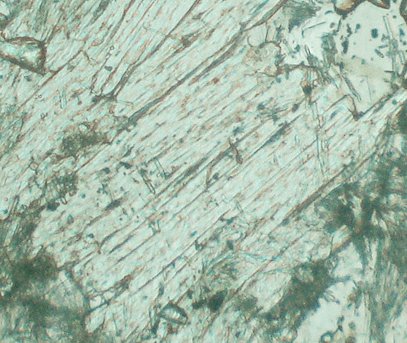
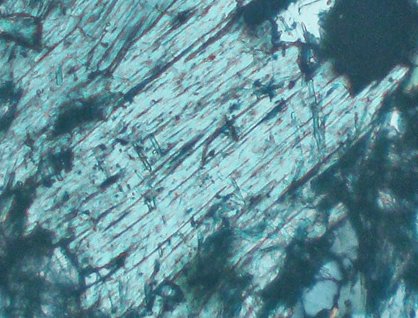
PPL: Pleochroic in pale green but may be colorless. Lamellae, fibers or masses.
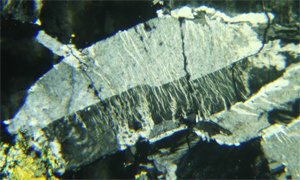
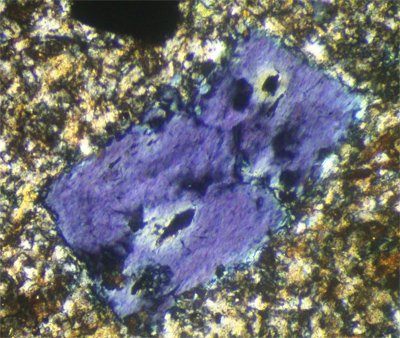
XPL: Anomalous blue (berlin blue), brown (leather brown) or bluish-gray colors. Extinction 0-9º, unmottled(!). ES(+/-). Very small crystals, convergent light usually not possible.
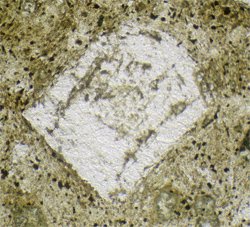
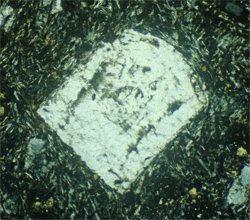
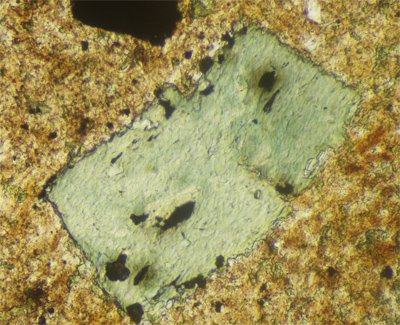
Images: phenocryst in volcanic rock that has undergone chloritization.
is B(+), 2V = 58º. Monoclinic.
Most common sulphate, typical of sedimentary rocks.
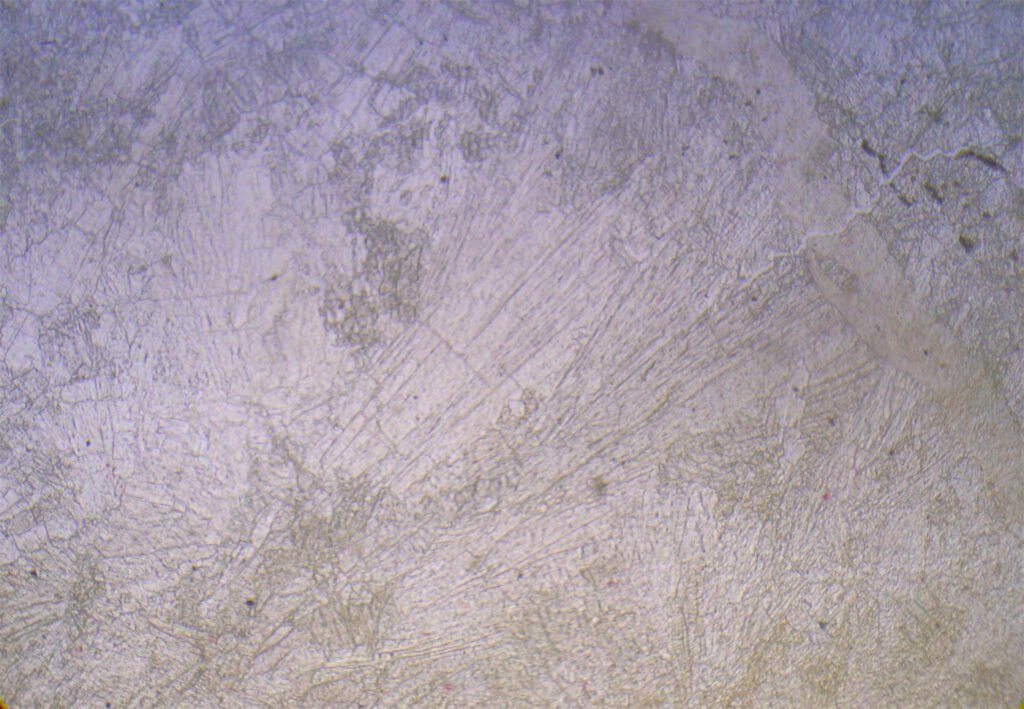
PPL: Colorless, perfect {010} cleavage, distinct {100} and {011} cleavages. It occurs in prismatic, tabular to acicular crystals, also anhedral grains.
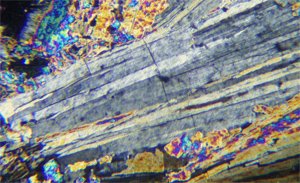
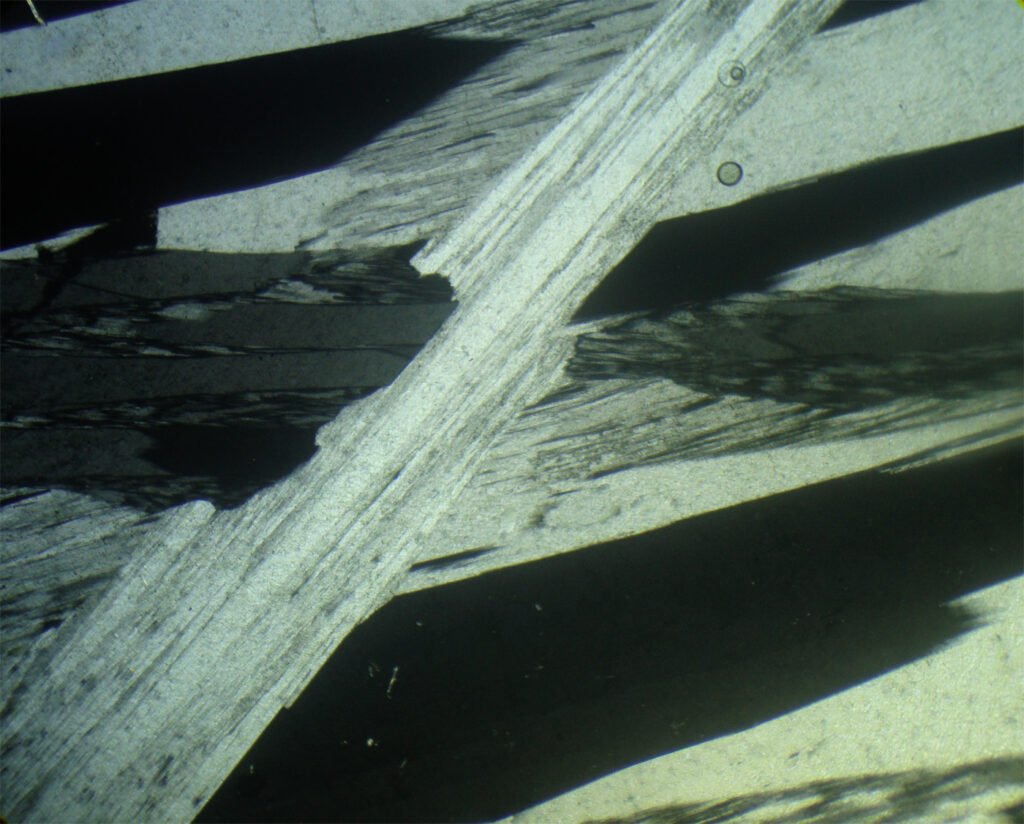
XPL: Gray to white colors. Extinction and ES are not diagnostic. Occurs with anhydrite (very colorful in XPL).
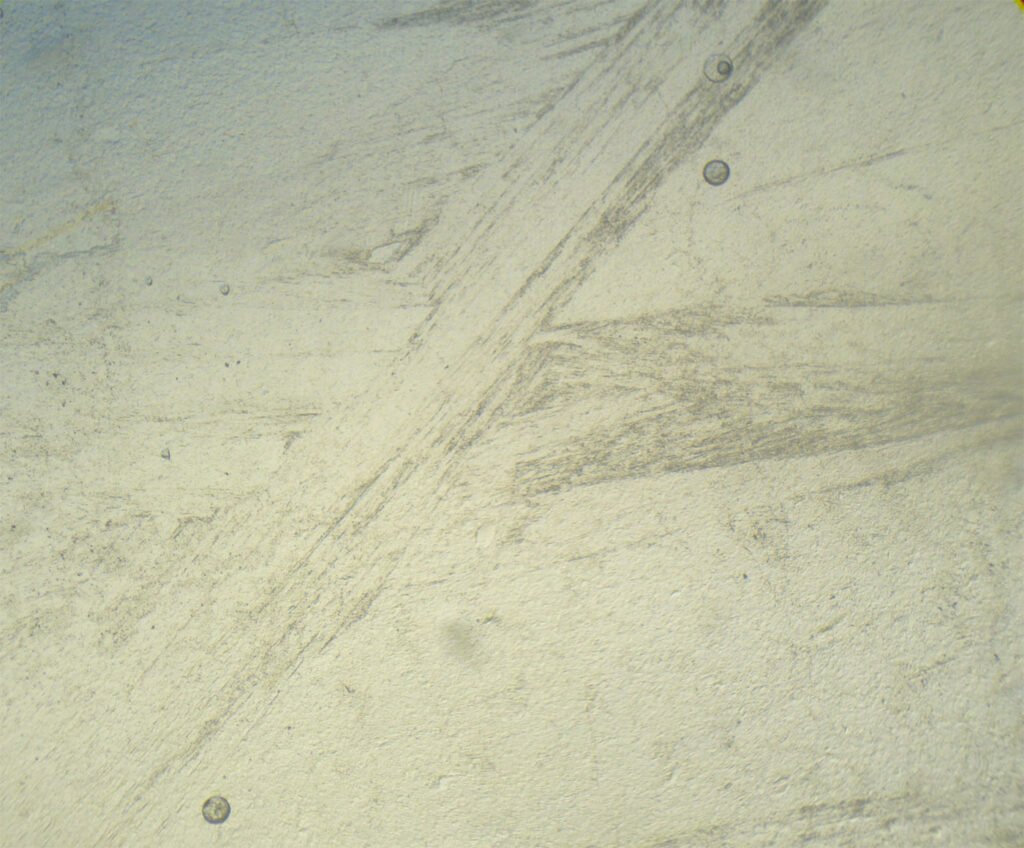
Images: In PPL and XPL, bundle of gypsum crystals (gray) with anhydrite (colorful).
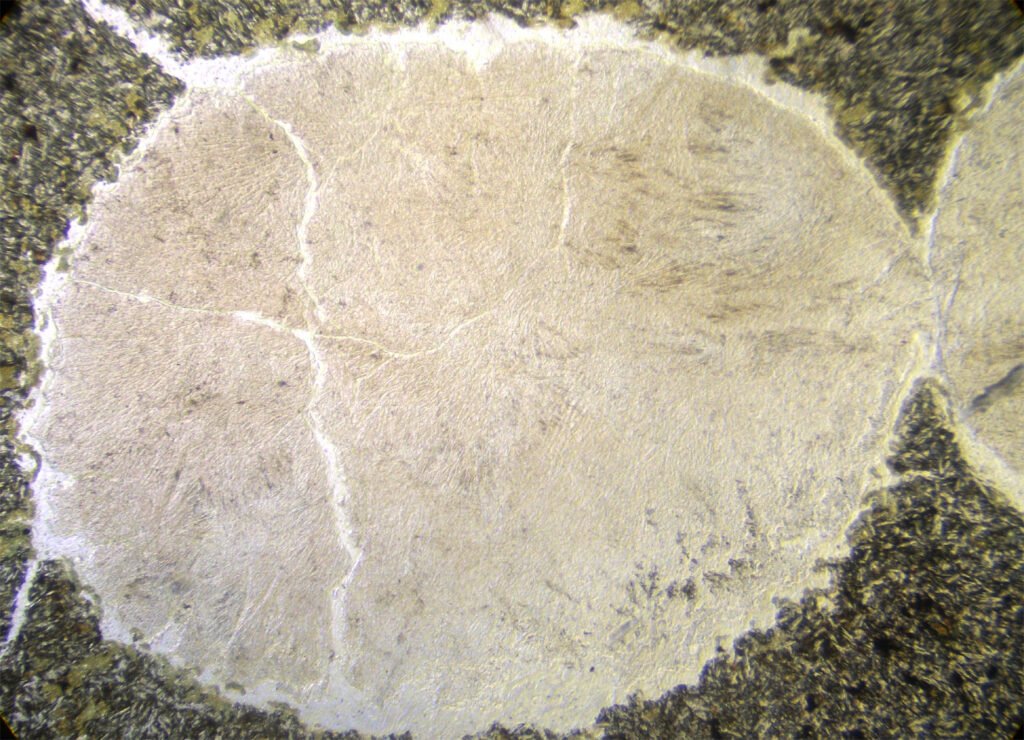
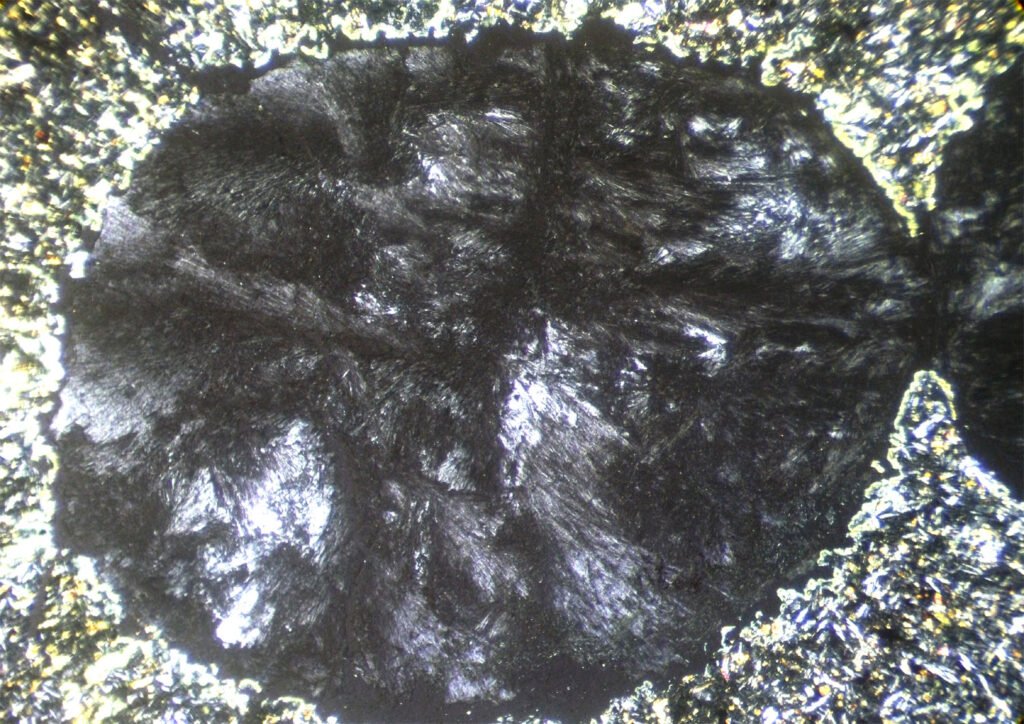
They usually occur as a filling of cavities (vesicles and fractures) in volcanic or hypabyssal rocks, some as cement in sedimentary rocks (e.g., sandstones).
In volcanic rocks, care must be taken not to confuse feldspathoids (generally isotropic or with very low birefringence (very dark)) with zeolites.
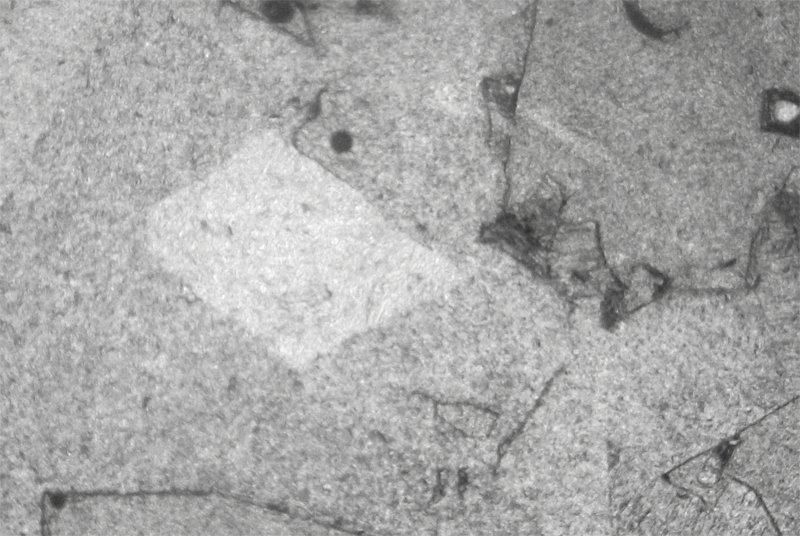
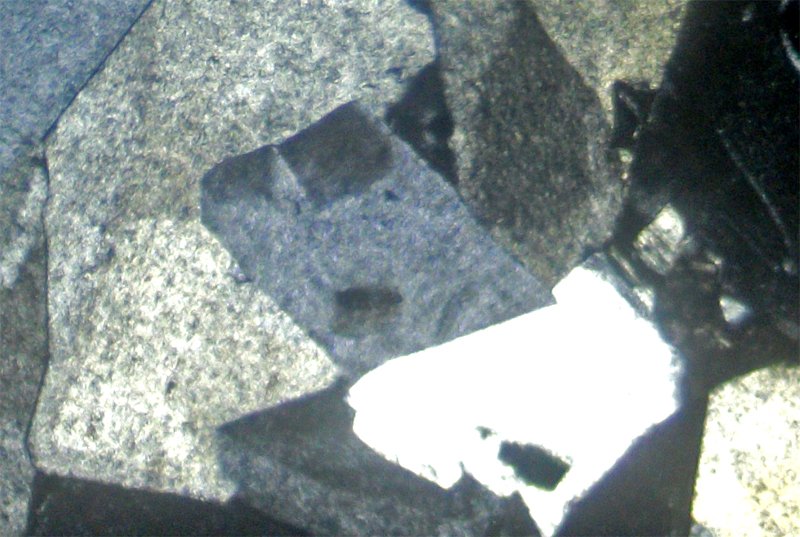
is B(+/-), usually B(+) with 2V from 0-32º; can simulate to be uniaxial. Triclinic, pseudo-hexagonal, has rhombic (pseudo-cubic) forms (twinning).
Uncommon tectosilicate, occurs as secondary mineral in volcanic rocks.
PPL: Colorless, without cleavage.
XPL: Very dark interference colors very dark. Twinning and sectorizing is common.