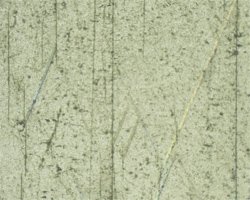
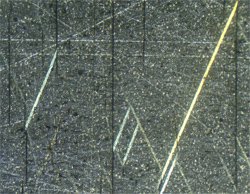
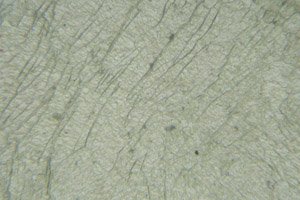
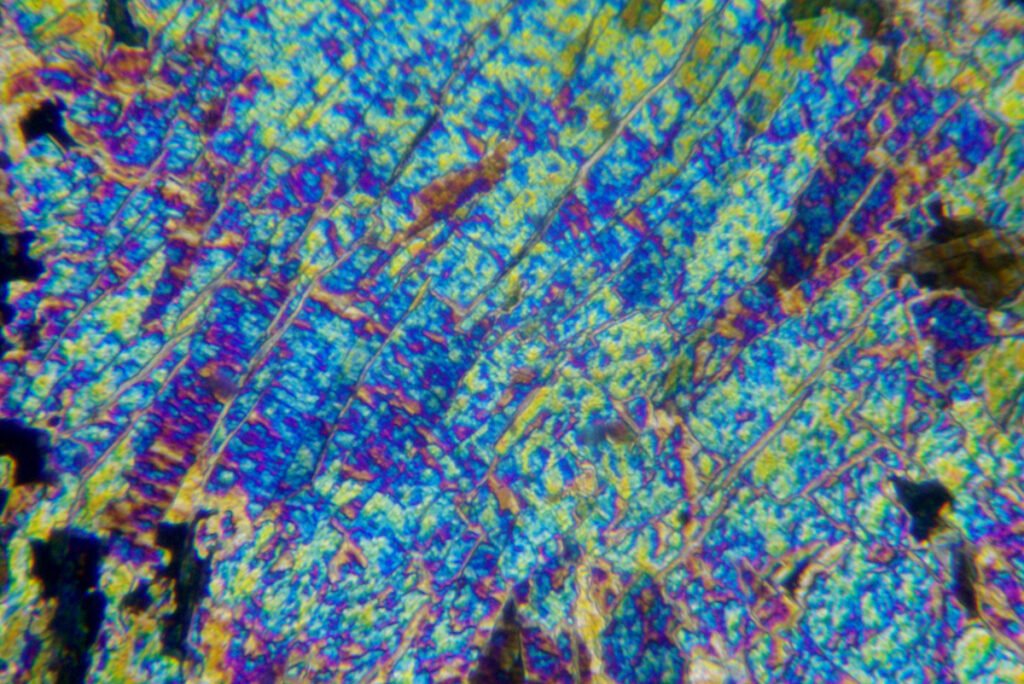
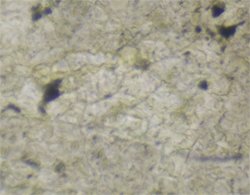
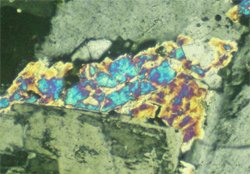
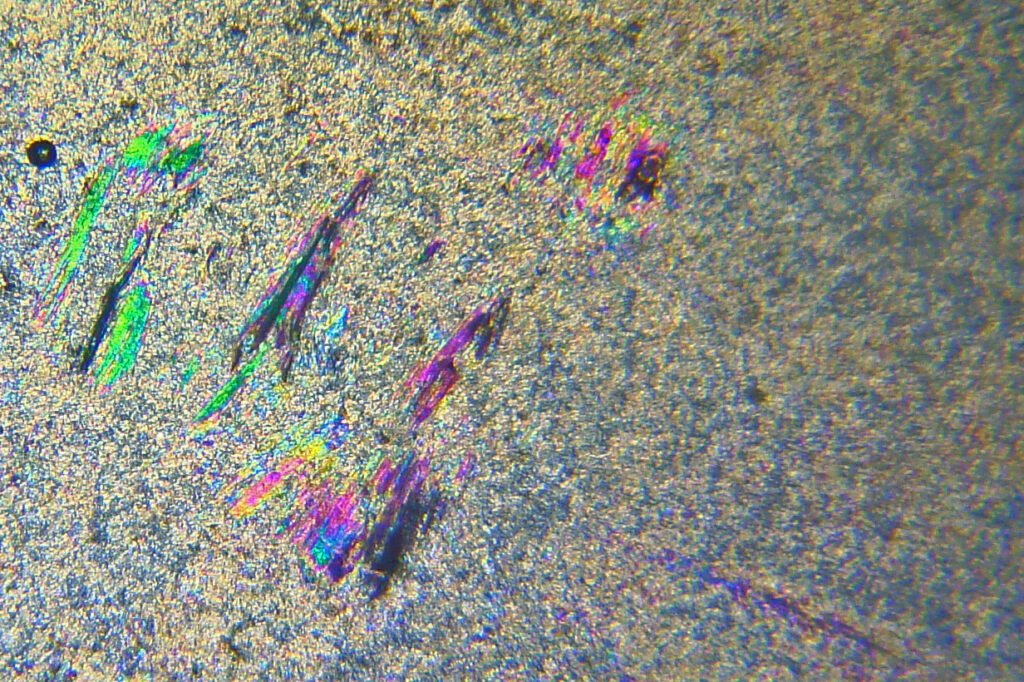
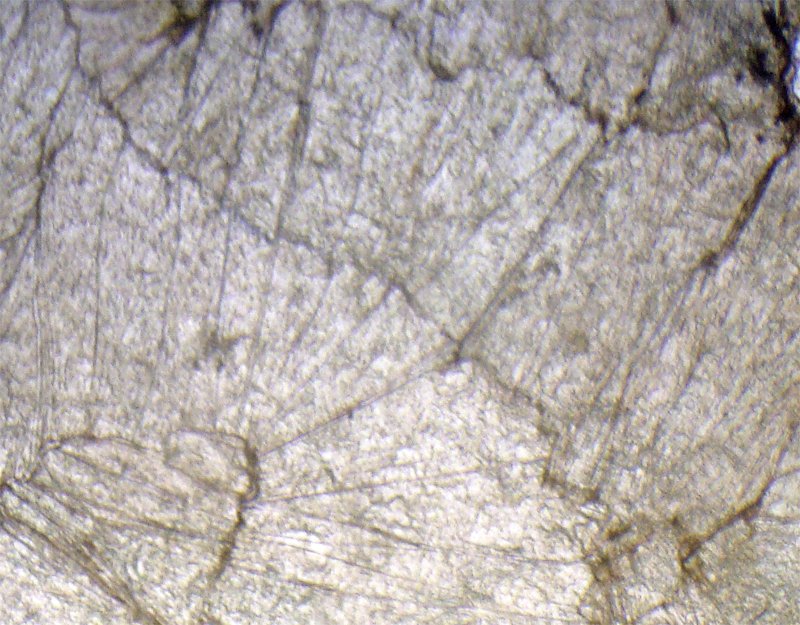
It is a trigonal carbonate with typical “relief pleochroism” or “chagrin change". May be calcite, dolomite, siderite, magnesite or rhodocrosite. It is NOT possible to differentiate these carbonates from each other under the petrographic microscope.
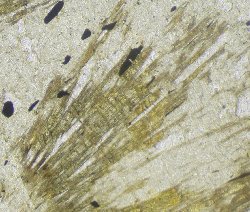
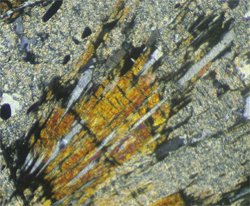
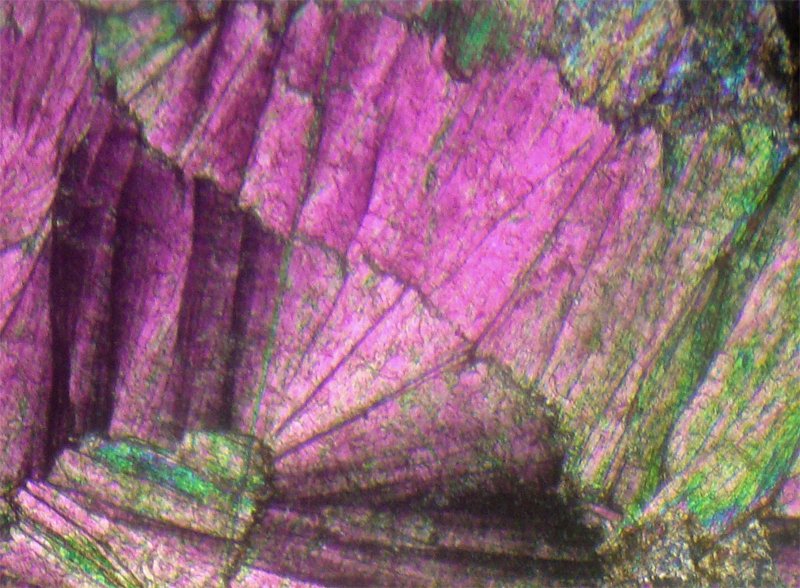
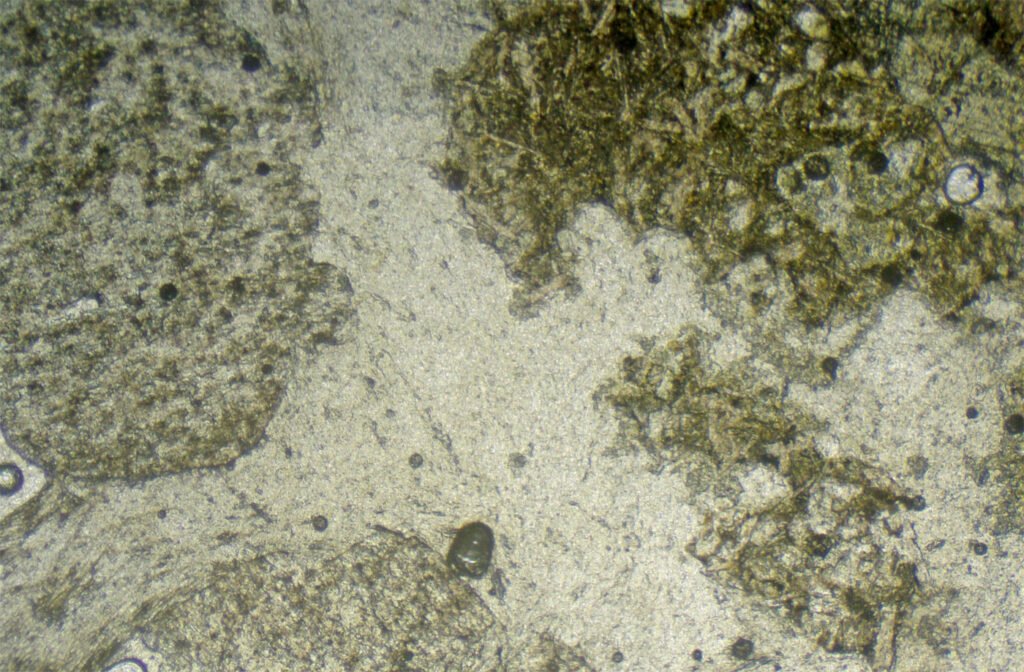
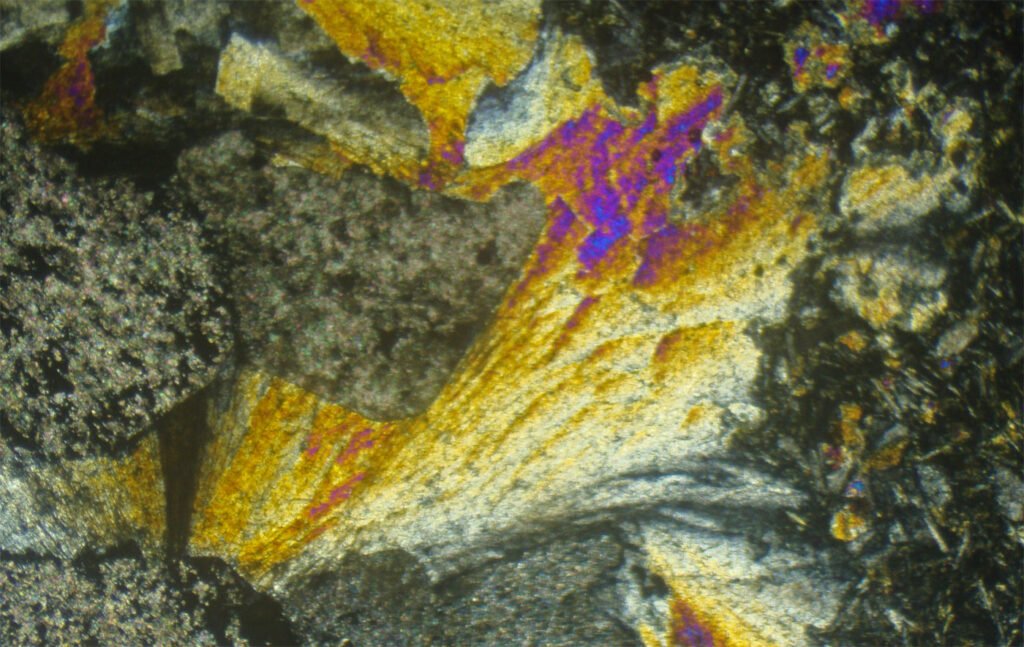
Orthorhombic carbonate: relief that changes from low to very high during the rotation of the stage (“relief pleochroism” or “chagrin change”). Acicular crystals in radial aggregates or prisms with only 1 cleavage. In XPL, 9th order cream colors. Diagnostic parallel extinction! SE(-), B(-) (2V of 18º). Occurs in basic rocks.
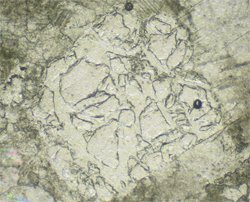
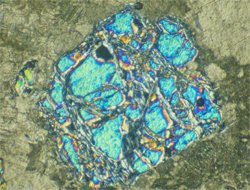
Very common. In volcanic rocks, it is hexagonal, octagonal or skeletal. In igneous/metamorphic rocks, anhedral. Orthorhombic, no cleavage. Many fractures with alteration products (gray = serpentine; red = iddingsite). In XPL, strong and vivid colors up to 3rd order. Extinction //, ES(+/-). B(+/-), 2V = 46-98º.
Rare mineral. Orthorhombic. May be pleochroic in pale colors. Low relief, 3 perfect cleavages, extinction parallel to cleavages. Anhedral, granular, massive to fibrous. In XPL, intense colors up to 3rd order green, can show twins, ES(+/-), B(+), 2V = 36-45º. Occurs associated with gypsum (XPL=gray).
Rare mineral. Amphibole exclusive of metamorphic rocks. Basal sections with 2 cleavages at 54.5º and 125.5º. Orthorhombic. Asbestiform, fibrous to lamellar. Extinction paralell, in basal sections symmetrical. In XPL, 1st and 2nd order colors. ES(+), no twins or zoning, B(+) or B(-).
Rare mineral. Hexagonal. Feldspathoid with low relief, usually occurs as small interstitial anhedral grains. One perfect cleavage. In XPL, colors from upper 1st order to mid 2nd order. ES(-) by cleavage, no twins or zoning, U(-) or anomalous B(-). Occurs in alkaline igneous rocks such as syenites.
Very rare pyroxene. Monoclinic. Anhedral, subhedral, fibrous. Basal sections with 2 cleavages intersecting at 56-124º. In XPL, colors up to middle of 2nd order. Oblique extinction (33-40º), simple twins possible. B(+) 2V=67-80º. Typical of high pressure, medium temperature metamorphic rocks.
Rare mineral. Monoclinic or Triclinic. Very small tabular subhedral flakes or spherulitic aggregates of acicular crystals. One perfect cleavage. In XPL, intense 3rd and 4th order colors. Extinction parallel and mottled, ES(+), no twins, no zoning, B(-), 2V = 53-62º. Very similar to muscovite!
Crystals tabular, prismatic or radiated, can be in bow-tie patterns. Orthorhombic. Medium relief. Good {001} cleavage. In XPL, 2nd order or anomalous colors (blue or brown). Extinction parallel, undulating or in chess pattern. ES(+/-). Twins rare, zoning possible. B(+), 2V from 64-71°.
Colorless minerals with low to medium relief, in XPL with colors higher than lower 1st order.